
Unknown's avatar

8 ways business managers can use fiction to prepare for the uncertain reality of coronavirus


It’s a brave new business world, so turning to novelists can help explore possible future scenarios.
(Shutterstock)

Nada Elnahla, Carleton University and Ruth McKay, Carleton University

Reading fiction has always been, for many, a source of pleasure and a means to be transported to other worlds. But that’s not all. Businesses can use novels to consider possible future scenarios, study sensitive workplace issues, develop future plans and avoid unplanned problematic events — all without requiring a substantial budget.

During the COVID-19 pandemic, many business leaders have learned how important it is for businesses to consider a wide range of possible outcomes and to enhance organizational adaptability. Relying on analyzing or projecting trends and extending what business leaders usually do is no longer enough to assure future success. When management is poorly prepared for the unexpected, businesses start getting into trouble.

Scenario planning, therefore, helps businesses keep themselves flexible and move quickly with market shifts. Scenario planning is a series of potential stories or possible alternate futures in which today’s decisions may play out. Such planning can help managers assess how they or their employees should respond in different potential situations.

How businesses can use novels

Unfortunately, scenario planning requires time and resources. And depending on its use, such as for an investigation, budgeting or legal matters, it can also require collecting sensitive data. That can include employees’ personal experiences of sexual, discriminatory or psychological harassment, suicide, mental health, drug abuse, etc.

The more sensitive the needed data is, the more difficult it is to collect while ensuring employee privacy. This is where literary texts come in.

A person reading at a table.
Novels can offer creative insight and wisdom to business managers.
(Helena Lopes/Unsplash)

As sources for possible future scenarios capable of providing strategic foresight, or producing alternative future plans, novels can also help businesses create dialogue on difficult and even taboo subjects.

Novels are, therefore, capable of helping managers become better, providing them with creative insight and wisdom. Science fiction can provide a means to explore morality tales, a warning of possible futures, in an attempt to help us avoid or rectify that future.

Brave new business world

Our research
uses Aldous Huxley’s 1932 novel Brave New World to explore possible scenarios related to situations that are usually kept confidential, such as employees’ mental health issues and drug use or abuse. We examined how employers encounter uncertainty around the impact that legalizing cannabis could have on the work environment, and ways to consider such potential effects.

Brave New World is set in a dystopian future and has been adapted numerous times, most recently into a 2020 TV series. It portrays a dystopic civilization whose members are shaped by genetic engineering and behavioural conditioning. Their happiness is maintained by government-sanctioned drug consumption. It is a world where countries are protected by walls that keep the undesired away — an eerily familiar scenario to Donald Trump’s promise of building a wall on the U.S.-Mexico border.
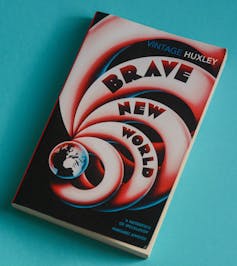
'Brave New World' book
Aldous Huxley’s ‘Brave New World.’
(Shutterstock)

By reading the novel, business managers can compare the world we live in today and the path our countries and corporations are on to the fictional events in the novel. This can help them pay attention to and address less comfortable, and sometimes often neglected, sensitive workplace issues that need to be considered when planning for the future.

For example, in Brave New World, the consumption of the drug “soma” becomes the norm upon which life is founded. When soma is taken away, individuals can no longer face their reality and they end up welcoming death.

Brave New World offers workplace leaders a look at what could happen if employees’ wellness, mental health or drug use are disregarded, and lead to isolation, absence, resignation or, in dire circumstances, suicide.

8-step action plan

To study sensitive workplace issues that could help generate new knowledge, lead to envisioning ways to act appropriately and develop future strategies, business managers can follow these steps:

  1. Form a team of managers and an HR representative who is aware of company policies and ethics protocols, and is in direct contact with employees.
  2. The team then decides which workplace issue(s) the organization needs to study.
  3. The team chooses a literary text, such as a novel, that discusses those issues.
  4. Each member of the team reads the literary text on their own before discussing it together in at least one session.
  5. The team researches the chosen workplace topics inside the organization and outside (for example, laws and regulations related to each issue).
  6. The team identifies insightful sections.
  7. The team analyzes the chosen extracts.
  8. The team writes a report with recommendations on workplace conditions and how best to improve them.

Reading has surged during lockdown. But literary works can provide us with more than a leisurely pastime. For businesses, novels represent a legitimate way to study the workplace, and this is accomplished by comparing the path our countries and corporations are on today to fictional events.The Conversation

Nada Elnahla, PhD Candidate, Sprott School of Business, Carleton University and Ruth McKay, Associate Professor, Management and Strategy, Sprott School of Business, Carleton University

This article is republished from The Conversation under a Creative Commons license. Read the original article.
Unknown's avatar

How public libraries can help prepare us for the future


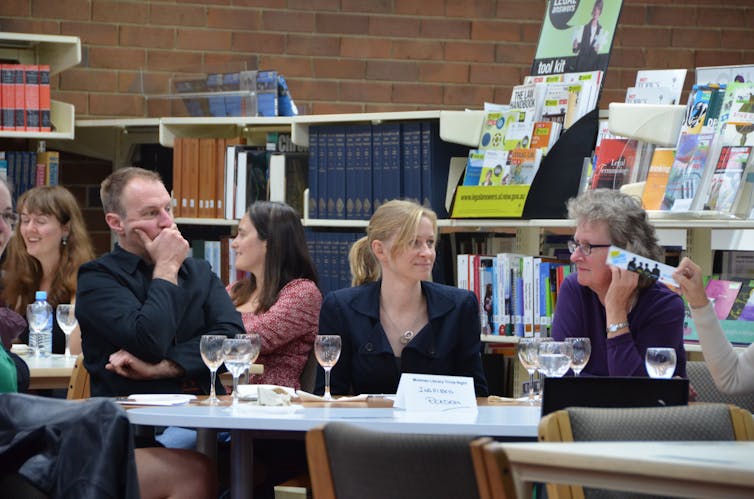
Public libraries can use their status as community hubs to engage the public in scenario planning for the future.
Mosman Library/Flickr, CC BY

Matthew Finch, University of Southern Queensland

For generations, libraries have helped people explore knowledge, information and culture. The invention of the public library meant more and more people got to use these collections and services.

In the digital age, a public library can connect even the most remote community to networks of knowledge and information. Today’s public libraries work to engage marginalised communities as users; pioneering projects like Townsville’s Murri Book Club explore ways to make the library meaningful to Indigenous people.

Despite all this, there is one area in which public libraries are underused. Libraries can also help us plan for the future.


Read more:
The Murri Book Club and the politics of reading for Indigenous Australians


Long-term planning is always challenging. It’s simply impossible to gather data from events that haven’t happened yet.

Sometimes we may detect trends, but these can fall apart under what some foresight experts call “TUNA conditions”, when we face Turbulence, Uncertainty, Novelty or Ambiguity.

Think of someone trying to predict that experiments with debt on Wall Street would lead to the global financial crisis and the political ripples that have followed. Think of trying, today, to foretell all the long-term consequences of climate change.

Enter scenario planning

That means we’ve had to find new ways to look at the unpredictable future. Big business has used scenario planning since the 1960s, when Pierre Wack pioneered the approach for Shell.

In scenario planning, people come together to imagine future settings that challenge how we currently think. You don’t judge a scenario’s value by whether it’s likely to happen: its value lies in helping us to rethink our assumptions about the future.

Shell’s scenarios became famous in the 1970s when the company successfully anticipated the oil crisis that followed the Yom Kippur War. Shell hadn’t predicted the conflict, but had imagined scenarios where Middle Eastern oil producers worked as a cartel to control global supply. When those countries did start an oil embargo, scenario planning meant Shell had already thought through this possibility ahead of its competitors.

Today, experts thinking about the future acknowledge the need for engagement from the bottom up as well as top down. For example, the European Union’s new proposal for “mission-oriented innovation” aims to get all of us focused on solving society’s problems. In turbulent times, it’s important that at every level of society we strengthen our ability to imagine the future that awaits us – and our own future choices.

What is libraries’ role in this?

This chimes with the finding of research at the University of Southern Queensland, in support of a new vision for public libraries, that public libraries are a grassroots connector of people, ideas and resources:

Public library services are built on relationships, not just transactions; they are entwined with the specific and deeply local context of everyday life in the communities they serve.


Read more:
Technology hasn’t killed public libraries – it’s inspired them to transform and stay relevant


Locally held scenario planning sessions, convened by communities at their public library, would make use of the library’s existing capacity to connect people – but this time with the goal of helping us reimagine the future.

Librarians would work with their local council to identify issues that call for a long-term perspective. Should we invest in “smart” tech for our small country towns? How much should we rely on recycled water or desalination in the big coastal cities?

Librarians would provide background research and host community workshops to develop local scenarios. People would start to have deeper, richer discussions about the future: there’s a reason scenarios have been called “the art of strategic conversation”.

The scenario process depends on bringing together a group of individuals in a trusted space, with enough information to give the scenarios detail and flavour. In a local community, the public library is that place of trust and information.

Much as public librarians use their skills to help with job seeking or support people’s health and well-being, as scenario planners they would apply their talents to a new domain.


Read more:
Friday essay: why libraries can and must change


Conversations that could transform politics

Playful events we have run in collaboration with Ann Arbor Public Library in Michigan, to capture the attention of children as well as adults, have begun to engage local people with the notion of the long-term future. The next step is to develop a more rigorous and substantive conversation.

A playful event at Ann Arbor Public Library to explore an imagined future.

If public libraries were supported to deliver strategic foresight to their communities, politics could transform. The electorate would be better informed, thinking deeper and further ahead about political issues. Councils could take decisions with confidence that the community had been consulted about the long-term consequences.

Scenarios would offer a playbook of potential futures, already imagined and rehearsed. Every Australian could have access to the kind of foresight tools that have been informing the decisions of government and big business for the past half century.

Imagine the conversations we, as a country, would be having about our future if we democratised those tools via the local library.


Read more:
Friday essay: the library – humanist ideal, social glue and now, tourism hotspot


The Conversation


Matthew Finch, Adjunct Research Fellow, University of Southern Queensland

This article is republished from The Conversation under a Creative Commons license. Read the original article.

Unknown's avatar

Giving Books as Gifts


The links below are to articles that take a look at giving books as gifts and how to prepare them as gifts.

For more visit:
http://www.readitforward.com/give-a-book-as-a-gift/
http://www.readitforward.com/5-creative-ways-to-wrap-a-book/