The link below is to an article reporting on the shortlist for the American Library Association’s shortlist for the 2019 Carnegie Medals for Excellence in Fiction and NonFiction.
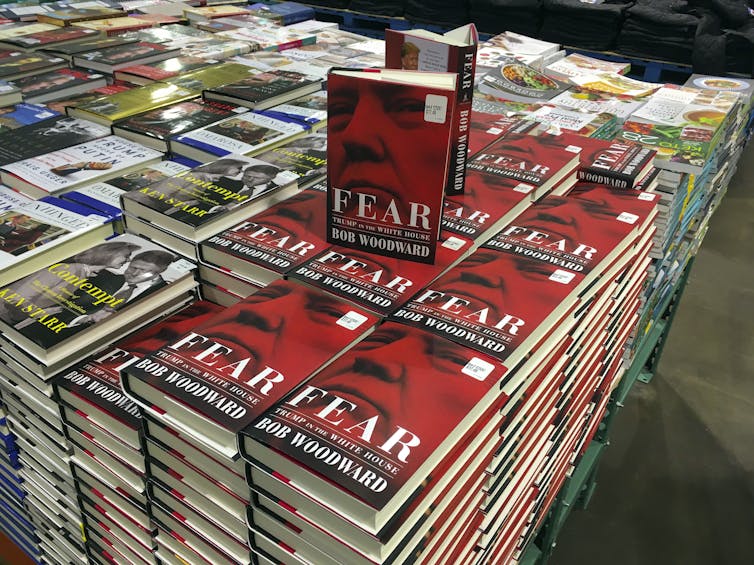
Like Michael Wolff’s “Fire and Fury: Inside the Trump White House,” it portrays President Donald Trump as an “emotionally overwrought, mercurial and unpredictable leader,” whose senior staff struggle to contain his most dangerous impulses.
This same view of Trump was reiterated in a Sept. 5 anonymous New York Times op-ed, which, as Nebraska Sen. Ben Sasse observed, is “just so similar to what so many of us hear from senior people around the White House, you know, three times a week.”
But whether “Fear” tells us something new matters less than the fact that the book is yet another broadside against Trump’s image. It adds more fuel to the suspicions many have about the president’s behind-the-scenes behavior.
In fact, Woodward’s “Fear” – together with Wolff’s “Fire and Fury,” Omarosa Manigault’s “Unhinged” and the anonymous op-ed – is part of a long tradition of political “secret histories,” a genre that recounts salacious and scandalous details about the dealings, relationships and temperaments of those in power. It’s a practice that goes back centuries, and it’s one that my co-editor and I explore in our book “The Secret History in Literature, 1660-1820.”
Secret histories tend to take two forms. There is the plain-spoken, just-the-facts approach, similar to Woodward’s “Fear.” Then there are novelistic accounts with major figures depicted using pseudonyms, as in “Primary Colors,” a lightly fictionalized dramatization of the Clinton White House.
But the secrets unveiled in these works usually don’t come out of nowhere. Instead, they contain anecdotes that have long been whispered or suspected. The goal of secret histories is to emphasize embarrassing stories about a ruler or government – to propel the drumbeat of negative coverage in order to strengthen the opposition and, in some instances, to even topple governments.
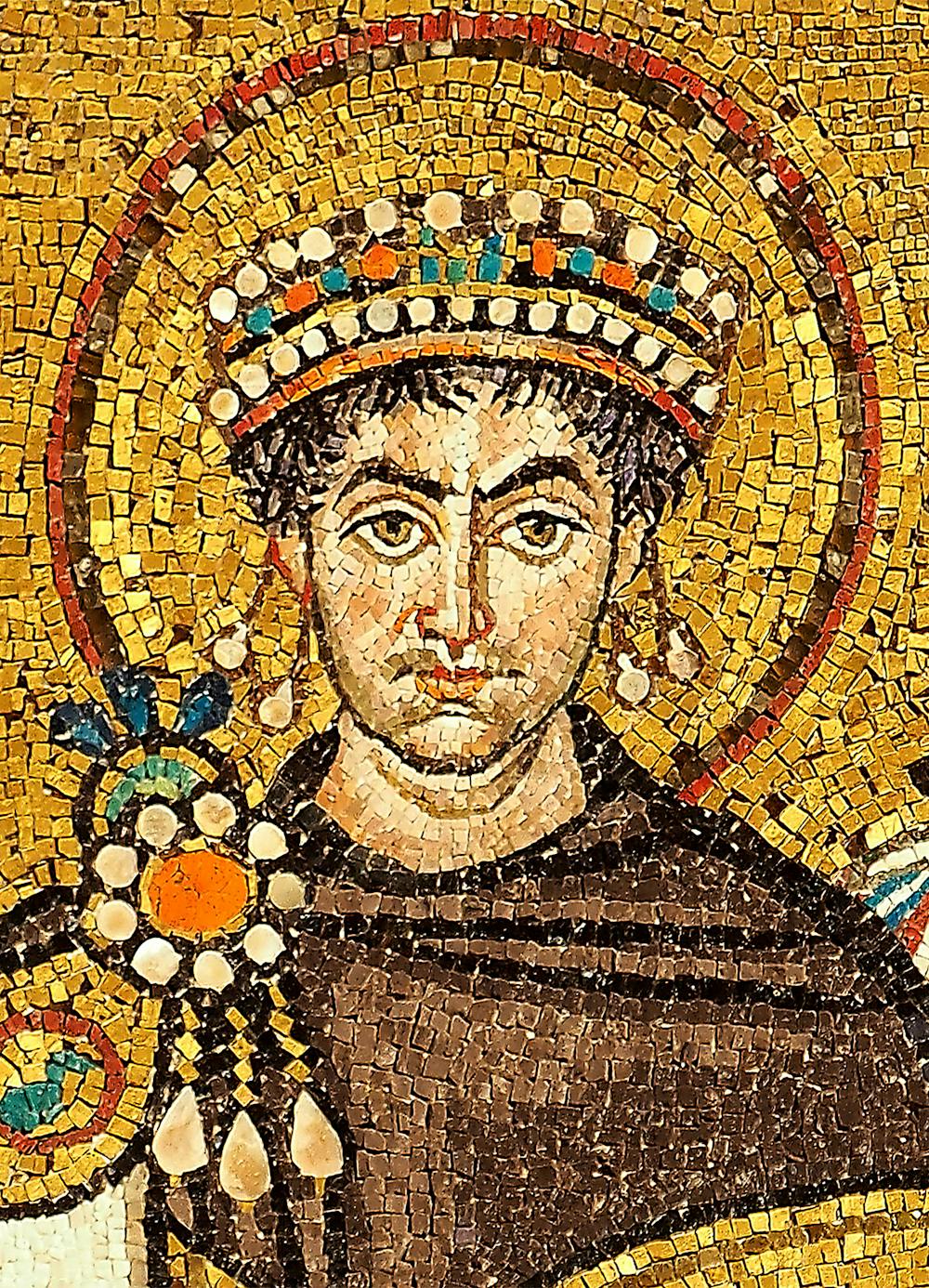
Justinian was the subject of a secret history circulated by the military historian Procopius. Petar Milošević
Secret histories date back at least to the sixth century, when the military historian Procopius wrote down sordid anecdotes about Byzantine Emperor Justinian and his wife, Theodora, in a work that became known as “Anekdota,” which translates to “unpublishable things.” Ten centuries later, it appeared in Latin as “Historia Arcana,” or “Secret History.”
As a military historian, Procopius had helped create the myth of Justinian’s greatness in his eight-book treatise “The Wars of Justinian.” But in his “Anekdota,” Procopius finally told the ugly backstory of Justinian’s reign: his lust, his seizure of others’ property, his petty vengefulness and his persecution of non-Christians. The work was almost certainly circulated in manuscript scroll among Justinian’s enemies. While it probably damaged his standing, Justinian was nonetheless able to retain his grip on power.
After French and English translations of Procopius’ “Anekdota” appeared in 1669 and 1674, secret histories in the same style began to appear about King Charles II of England.
These tended to focus on his mistresses – particularly the infamous Duchess of Cleveland, who manipulated Charles for over a decade, persuading him to grant her land and money and bestow titles of nobility on their illegitimate children.
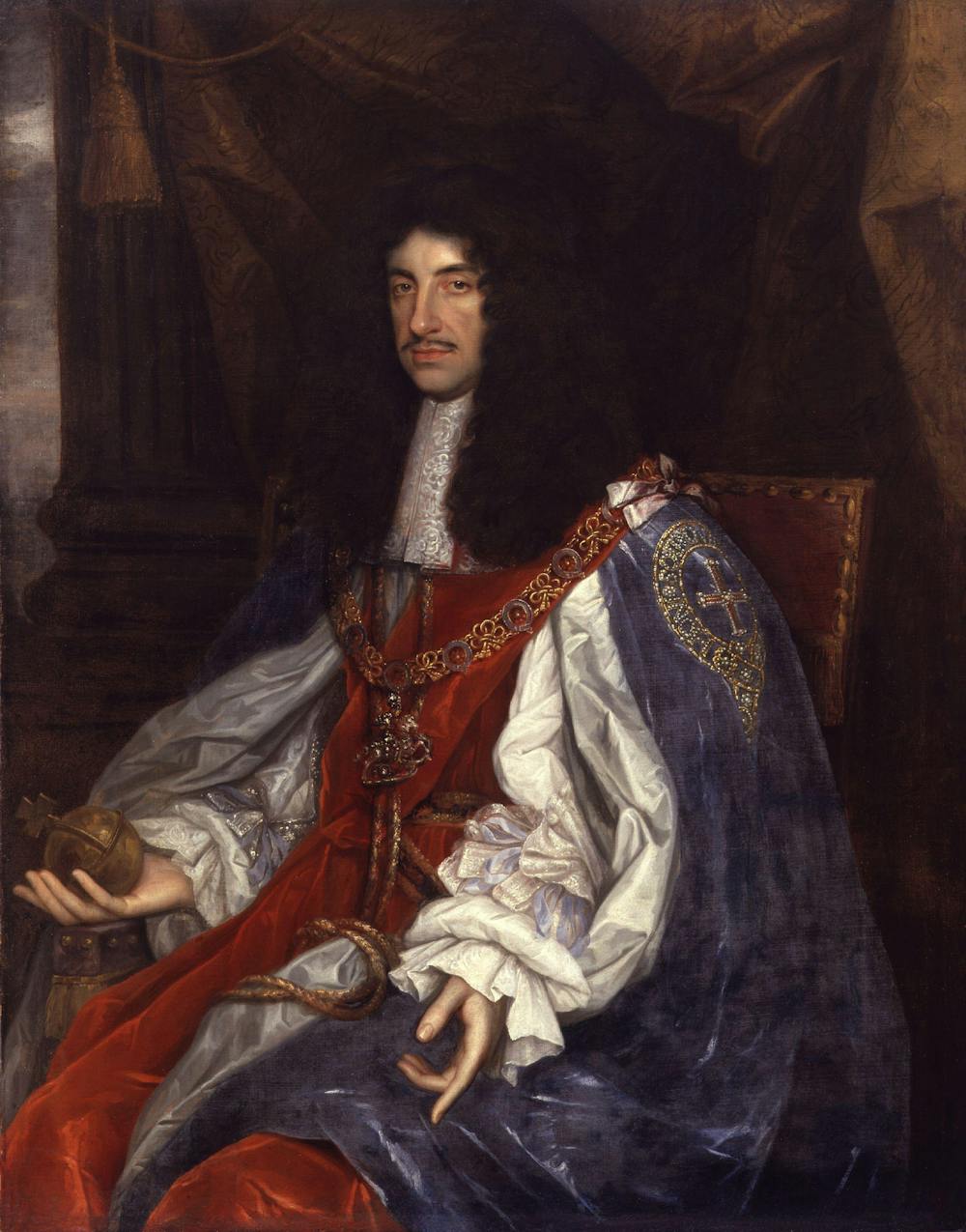
Speculation over King Charles II’s relationship with the Duchess of Cleveland was rampant during his reign. National Portrait Gallery
These reports, which read like tabloid-style gossip, were never just about sex.
Readers of one account, titled “The Amours of the King of Tamaran,” likely realized that if the king could be duped and controlled by his powerful mistress, he was also susceptible to being influenced by England’s adversaries.
These publications didn’t bring down the politically skilled Charles II, who was glad to take Louis XIV’s money but savvy enough to decide against changing his country’s religion.
They did, however, sow suspicion towards Charles II and his family. After Charles II’s death, his openly Catholic younger brother, James, ascended the throne in 1685, instilling fear that England would return to Catholicism. Seven Englishmen wrote to Prince William of Orange – who was a Protestant – pleading that he invade England. In the Glorious Revolution that ensued, James II fled to France, and Parliament declared William and his wife, Mary, joint monarchs of England.
The Glorious Revolution of 1688 helped inspire American colonists to rebel against another British monarch, with the not-so-secret history of George’s III’s “repeated injuries and usurpations” enshrined in the Declaration of Independence.
Some might disparage Woodward’s book as “anonymously-sourced gossip.”
But gossip has always been important to humankind. As Israeli historian Yuval Noah Harari notes in “Sapiens,” his best-selling account of early human history:
“It is not enough for individual men and women to know the whereabouts of lions and bison. It’s much more important for them to know who in their band hates whom, who is sleeping with whom, who is honest, and who is a cheat.”
Those who dismiss Woodward’s book underestimate the power that gossip and behind-the-scenes revelations wield over politics – and the way it has shaped the course of human history.
Like Michael Wolff’s “Fire and Fury: Inside the Trump White House,” it portrays President Donald Trump as an “emotionally overwrought, mercurial and unpredictable leader,” whose senior staff struggle to contain his most dangerous impulses.
This same view of Trump was reiterated in a Sept. 5 anonymous New York Times op-ed, which, as Nebraska Sen. Ben Sasse observed, is “just so similar to what so many of us hear from senior people around the White House, you know, three times a week.”
But whether “Fear” tells us something new matters less than the fact that the book is yet another broadside against Trump’s image. It adds more fuel to the suspicions many have about the president’s behind-the-scenes behavior.
In fact, Woodward’s “Fear” – together with Wolff’s “Fire and Fury,” Omarosa Manigault’s “Unhinged” and the anonymous op-ed – is part of a long tradition of political “secret histories,” a genre that recounts salacious and scandalous details about the dealings, relationships and temperaments of those in power. It’s a practice that goes back centuries, and it’s one that my co-editor and I explore in our book “The Secret History in Literature, 1660-1820.”
Secret histories tend to take two forms. There is the plain-spoken, just-the-facts approach, similar to Woodward’s “Fear.” Then there are novelistic accounts with major figures depicted using pseudonyms, as in “Primary Colors,” a lightly fictionalized dramatization of the Clinton White House.
But the secrets unveiled in these works usually don’t come out of nowhere. Instead, they contain anecdotes that have long been whispered or suspected. The goal of secret histories is to emphasize embarrassing stories about a ruler or government – to propel the drumbeat of negative coverage in order to strengthen the opposition and, in some instances, to even topple governments.
Justinian was the subject of a secret history circulated by the military historian Procopius. Petar Milošević
Secret histories date back at least to the sixth century, when the military historian Procopius wrote down sordid anecdotes about Byzantine Emperor Justinian and his wife, Theodora, in a work that became known as “Anekdota,” which translates to “unpublishable things.” Ten centuries later, it appeared in Latin as “Historia Arcana,” or “Secret History.”
As a military historian, Procopius had helped create the myth of Justinian’s greatness in his eight-book treatise “The Wars of Justinian.” But in his “Anekdota,” Procopius finally told the ugly backstory of Justinian’s reign: his lust, his seizure of others’ property, his petty vengefulness and his persecution of non-Christians. The work was almost certainly circulated in manuscript scroll among Justinian’s enemies. While it probably damaged his standing, Justinian was nonetheless able to retain his grip on power.
After French and English translations of Procopius’ “Anekdota” appeared in 1669 and 1674, secret histories in the same style began to appear about King Charles II of England.
These tended to focus on his mistresses – particularly the infamous Duchess of Cleveland, who manipulated Charles for over a decade, persuading him to grant her land and money and bestow titles of nobility on their illegitimate children.
Speculation over King Charles II’s relationship with the Duchess of Cleveland was rampant during his reign. National Portrait Gallery
These reports, which read like tabloid-style gossip, were never just about sex.
Readers of one account, titled “The Amours of the King of Tamaran,” likely realized that if the king could be duped and controlled by his powerful mistress, he was also susceptible to being influenced by England’s adversaries.
These publications didn’t bring down the politically skilled Charles II, who was glad to take Louis XIV’s money but savvy enough to decide against changing his country’s religion.
They did, however, sow suspicion towards Charles II and his family. After Charles II’s death, his openly Catholic younger brother, James, ascended the throne in 1685, instilling fear that England would return to Catholicism. Seven Englishmen wrote to Prince William of Orange – who was a Protestant – pleading that he invade England. In the Glorious Revolution that ensued, James II fled to France, and Parliament declared William and his wife, Mary, joint monarchs of England.
The Glorious Revolution of 1688 helped inspire American colonists to rebel against another British monarch, with the not-so-secret history of George’s III’s “repeated injuries and usurpations” enshrined in the Declaration of Independence.
Some might disparage Woodward’s book as “anonymously-sourced gossip.”
But gossip has always been important to humankind. As Israeli historian Yuval Noah Harari notes in “Sapiens,” his best-selling account of early human history:
“It is not enough for individual men and women to know the whereabouts of lions and bison. It’s much more important for them to know who in their band hates whom, who is sleeping with whom, who is honest, and who is a cheat.”
Those who dismiss Woodward’s book underestimate the power that gossip and behind-the-scenes revelations wield over politics – and the way it has shaped the course of human history.
History is a story about the past told by people who didn’t live there. Historical fiction and scholarly histories and biographies dominate the field, but a fresh approach, the literary nonfiction narrative of reflection, is making its presence felt.
As a writing genre, history is no spring chicken. Livy (59 BC – 17 AD) gave us the history of ancient Rome, while Australian histories have an even longer provenance, from the First Peoples’ Dreamtime narratives to Grace Karskens’ excellent scholarly account of European settlement in The Colony: A History of Early Sydney (2009). Historical novels are nothing new either, from Walter Scott’s Waverley (1814) to Hilary Mantel’s Wolf Hall (2009).
A relative newcomer to the field is the literary nonfiction historical narrative, in which the archive serves as a springboard into a pool of reflection for a contemporary writer. The latest example, published this month, is Kerrie Davies’ A Wife’s Heart, published by University of Queensland Press, a book that retells the life of poet and short story writer Henry Lawson, from multiple viewpoints. Central to Davies’ narrative is a sadly damning affidavit filed by Lawson’s wife Bertha when she sued for divorce in 1903 alleging domestic violence.
When journalist and academic Davies emerged blinking from the archives and into the glare of publication and media interviews, she was greeted by headlines like “Henry Lawson, voice of a nation, larrikin, likely wife beater”.
My excitement reading that headline was due not just to the fact that Davies is a colleague and friend. I was simply happy to see that unorthodox approaches to history are welcomed, and can ignite and enrich our readings of our past.
History, as we know, is a political football. We struggle over the meaning of the past in order to control the game of present and future. A marriage like Henry Lawson’s that began in 1896 and ended seven years later can be hijacked by anyone with an agenda. Davies adopts a light touch. She moves among the many contemporaneous perspectives on Henry from friends and foes as a man who struggled with poverty, ambition, deafness, a failed marriage and alcoholism.
Bertha, who struggled to raise two children while coping with Henry’s ups and down, had her critics as well. She ended up doing a long stint in a mental institution for what today might be called manic depression. Their fraught marriage and messy divorce provides Davies with a ball of historical wool to untangle. She chases it through the archives and across the landscapes through which her subjects drifted, including a grinding stint in London. The affective impact of this pursuit turns the pond of reflection into a whirlpool, inexorably drawing the reader in.
Not everyone sees it that way. Though he has not commented on Davies’ book specifically, Sydney journalist and author David Marr recently disclosed his distaste for biographies in which authors share the personal reflections and experiences they have had while researching and writing their books.
For evidence of the correctness of his position, Marr conveniently points to his own writing, quoting from a scene in Patrick White: A Life in which he reports a medical emergency he witnessed at White’s home not long before the Nobel Laureate’s death in 1991. Marr was witnessing what could have been (but wasn’t) his venerable subject’s demise. Yet his own voice is detached. He expresses no personal emotion or reaction, acting instead as a fly on the wall observer.
I’m on the side of invisible biographers. I don’t give a damn about their happy thoughts as they tread in the footsteps of their subjects. Spare me their personal reflections on the Straits of Gibraltar or the old House of Reps. I’m not interested in their research triumphs. I want the life, not the homework.
In A Wife’s Heart, Kerrie Davies transgresses Marr’s “law”, sharing generously of her own life story while telling Henry and Bertha’s. Readers learn that, like Bertha, Davies is a single parent whose marriage has ended in divorce. The pressures are financial as well as emotional, just as they were for the Lawsons.
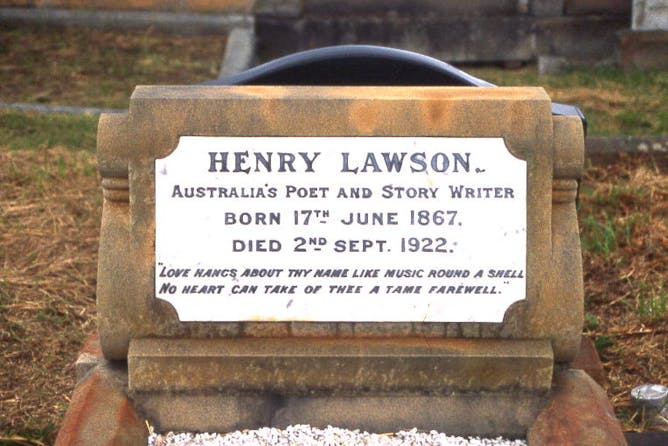
Lawson’s grave lies next to his wife’s in Waverley Cemetery. Sardaka, CC BY-SA
At first I found these personal references, which begin on page three of the book, jarring. I simply wasn’t ready to have the focus shifted so early in the story. However, as the book progresses the personal reflections merge with her subjects’ narratives. Conflicting accounts by the Lawsons’ friends and colleagues give the book the feel of a detective novel, a texture well suited to a story of marital failure in which there seems plenty of blame to go round.
Some readers no doubt share Marr’s views about biography, but there are good reasons why younger authors working in a less journalistic genre might profitably venture where Marr warns them not to go.
The distant voice of the “invisible” biographer – like the voice of God booming from above Mount Sinai – has a slightly anachronistic feel these days. To depart from this voice challenges readers who like being reassured by an authoritative tone, or perhaps, put less kindly, enjoy being told what to think. But others prefer more open, less conclusive arguments and reflections.
For some, Marr’s preference for invisibility is out of synch in a world in which readers routinely write back at authors, questioning their logic and exposing mistakes in the “comments section” that now follows most online articles. The invisible narrator’s biases are more implicit, or opaque. That may seem subversive in an era when transparency is valued.
Marr’s argument is that the reader is not well served by an introspective or performative narrator, and that is often true. Some of the worst nonfiction I’ve read in recent years was penned by authors who lost focus on their subject by sharing too much of themselves.
The changing economics of publishing are contributing to our evolving literary landscape. The ranks of subeditors patrolling the borders of mainstream media publications, beating the literary crap out of upstarts who dare to use the personal pronoun “I” are being depleted.
On the bright side, literary rules exist to be broken in the more diffuse structure of contemporary publishing. There never was a golden age.
The subjects of Marr’s early biographies, like White and former Attorney General Sir Garfield Barwick, were alive and highly influential when he started writing about them, good reasons for being careful and adopting an orthodox style. But for Davies, archival sources were all she had. No living witnesses of the trouble between Henry and Bertha survive. The author was left to curate documents. Personalising the narrative breathes life into documentary sources.
There are dangers in interpreting the facts of history. Historians grapple constantly with the problem, while historical novelists can choose whether to stick with the facts or alter them, sometimes radically. Literary nonfiction’s third path allows the juxtaposition of an author’s experience and perspective alongside the archival evidence. This might just reduce the temptation to invent or over egg.
Meanwhile, in the world outside the book, the world in which we live, marital violence is at epidemic levels, commanding our society and governments’ attentions. In that context, Davies’ personal story as a single parent acts as a footbridge connecting contemporary readers to the world of her subjects.
Beyond questions of literary technique, Davies’ academic writing on the Lawson story reveals that her literary reflection was catalysed by previous accounts by respected historians that favour Henry over Bertha.
The biographers of the iconic bush poet and writer – most notably Denton Prout (1963) Manning Clark (1978) and Colin Roderick (1982, 1991) – have all constructed a victim as hero narrative around Lawson’s life, blaming Bertha Lawson (nee Bredt) for his personal and creative decline. In their biographies, Lawson’s marriage breakdown and judicial separation from Bertha Lawson is narrated as a destructive turning point, with Bertha portrayed as a callous persecutor who “spun the wheel of retribution” … against her husband. The unanimous interpretation in these works is that Bertha Lawson in her legal claims disregarded Henry’s evident inability to pay child support, resulting in his imprisonment at Darlinghurst Gaol sporadically from 1905 to 1910.
Was Lawson a wife beater? Davies thinks so, but some who knew Bertha believed otherwise. We may never know, but it’s a worthwhile conversation in which all voices and literary styles are welcome.
Marr’s argument for invisibility is undermined somewhat by the fact – which he acknowledges – that he has previously put himself into his stories about others, including the White biography (in a note near the end of the book), and in essays on Kevin Rudd and the Bill Henson case. In all of these his narratives were better for it.
Kerrie Davies and David Marr will be speaking at separate events at next month’s Sydney Writers Festival.
Christopher Kremmer, Senior Lecturer in Literary & Narrative Journalism, School of the Arts & Media, UNSW
True crime writing isn’t famous for its impeccable gender politics. Think of how male criminals (e.g. the late Mark “Chopper” Read) have been glorified and women law-breakers demonised. Or how women who are victims of crime can be stereotyped as either virgins or vamps.
Two new books, Mark Morri’s Remembering Anita Cobby and Martin McKenzie-Murray’s A Murder without Motive, offer a fresh approach to the true crime genre. Both were published in early 2016. Both have been penned by male journalists. Both focus on men who find themselves involved (albeit in different ways) in murder cases where the victims are women.
The “Anita” in Morri’s title is Anita Cobby, a Sydney nurse who was gang-raped and murdered in January 1986. The book discusses the experiences of her husband, John Cobby, who was estranged from his wife at the time of her death, and who has (until now) purposely eluded media attention.
Morri met John around the time of the murder, and the two men developed a rapport. In conversation with the author, John describes the grief and horror that overwhelmed him in the wake of Anita’s death. He tells of trying to escape through alcohol and overseas travel and the homicidal fantasies he continues to harbour about taking revenge on his wife’s killers.
In A Murder without Motive, McKenzie-Murray addresses the murder of young Perth woman, Rebecca Ryle. In May 2004, Ryle was strangled to death by James Duggan, a man she had just met at a local pub. In the ensuing trial, no motive could be established for his actions (hence the book’s title).
The author was tenuously connected to the victim. He grew up in the same suburb as her, and his brother once personally knew Duggan.
McKenzie-Murray reflects on the “strains of misogyny” that could be detected in the milieu in which they lived. This was a world where young men were encouraged to flaunt their “virility”, and women existed “for sex, acquisition, bluster”.
Both books cast a critical eye on a toxic strand of masculinity.
It’s an eye that has been missing from many true crime books. Two such examples were the books Blood Stain (2002) and The Vampire Killer (1992), which reproduced crude and misogynist feminine stereotypes.
In both Morri and McKenzie-Murray’s books, the male protagonists are constrained by prevailing codes of masculinity. In A Murder without Motive, for instance, McKenzie-Murray recalls his teenage participation in a blokey, boozy culture.
Still, throughout the book, he demonstrates the ability to stand back and evaluate this harmful culture. The book’s broader aim is to provide a nuanced perspective on the Ryle case. McKenzie-Murray explicitly distances himself from “popular treatments of criminality”, which (he says) are “salacious and vampiric” – and, I would add, frequently sexist.
Yet, John Cobby and Mckenzie-Murray confront the excesses of toxic masculinity, seeing it as the lethal social construct it is – not something glamorous or natural.
Morri’s book is less overtly concerned with gender politics. Nevertheless, he does quote “Miss X” (the unnamed woman who obtained a confession from one of Cobby’s killers, John Travers) as saying that she reported Travers to police because of his “behaviour towards women”. “Miss X” was married to Travers’ uncle at the time of Cobby’s death. Morri never specifies what exactly Travers’ “behaviour towards women” entailed, though we can assume that this behaviour was derogatory.
Of course, it should not take a dead woman for men to recognise that masculinised brutality is unacceptable.
But Remembering Anita Cobby and A Murder without Motive are important because they depict men who confront and abhor a culture of misogyny. Hopefully, their work will influence other true crime writers, resulting in more nuanced gender perspectives.
This article is the fourth in a series examining the links, problems and dynamics of writing, recording and recreating history, whether in fiction or non-fiction. Read part one here, part two here and part three here.
We all love history. It helps us get our bearings, comforts us with the knowledge that we are part of the larger human narrative. But our love of history is often a jealous one that seeks to control the story and license those permitted to write it.
In 2006, at the height of the mudslinging that began when Kate Grenville allegedly claimed her novel The Secret River (2005) was a new form of historiography, historian Inga Clendinnen countered that the novelist’s only “binding contract” with their readers was “not to instruct or to reform, but to delight”.
The message was clear: if it’s reliable history you’re after, trust the experts (historians), not liberty-taking literary artists.
But is the line between truth and fiction really so clear when it comes to history? And if not, is there scope for historians and novelists to re-engage, with a view to learning from – rather than bludgeoning – each other?
It is difficult for many to imagine a solution to any practical difficulty arising from within the annals of literary theory. Yet the work of two great scholars with a literary bent – the late Russian philosopher and critic Mikhail Bakhtin, and the very much alive historian and critic Hayden White – provides scope for a rapprochement.
Let it be said immediately that a large measure of contention is a healthy thing in intellectual and public discourse. In a sense, that is the point that this reading of Bakhtin and White’s work on historiography seeks to make.
For White, historians should be more mindful of the effect their use of narrative storytelling techniques adapted from fiction can have on their non-fictional stories about the past. Narrativisation, in White’s words:
represents a mode of praxis which serves as the immediate base of all cultural activity … even of science itself. We are no longer compelled, therefore, to believe – as historians in the post-Romantic period had to believe – that fiction is the antithesis of fact (in the way that superstition or magic is the antithesis of science).
Put simply, a set of ten facts may be capable of sustaining a variety of meanings depending up how they are narrativised and interpreted. The facts of a long-lost past do not speak for themselves. Though the archive is rich, it is patchy in parts and full of lacunae. If we can’t know all the facts, how can we know the whole truth?
White resists the assertion that only historians have a legitimate role. Novelists, poets and playwrights too have a concern with observable events of the past, but unlike historians they also deal with “imagined, hypothetical and invented ones”. He calls neo-historical fiction “the dominant genre and mode of postmodernist writing”.
Openness to history’s failings and the possibilities of historical fiction is often associated with a kind of anti-historical nihilism ascribed to postmodernist thought.
A reading of White’s Tropics of Discourse (1985), in which he pillories Michel Foucault’s approach to history as an attempt “to destroy it as a discipline, as a mode of consciousness, and as a mode of (social) existence”, suggests this is not necessarily the case.
Celebrated critic David Lodge once suggested the work of Mikhail Bakhtin could provide a way out of the opposition between humanist and postmodernist thought.
Bakhtin challenged the structuralist concept of language as a system of signs, positing it instead as a social activity in which the meaning of words is generated in the flux of human polyphony.
Along the way, he insisted that dialogic discourses were impossible unless orientated towards referential objects, such as the events of history. He lauded the novel as a revolutionary successor to the anachronistic epic with its “single and unified world view, obligatory and indubitably true for heroes as well as for authors and audiences”.
Taken at face value, Bakhtin’s dislike of epic literature seems contradictory. Is not epic another legitimate voice? But his real grouse was his view that epic expunged inconvenient or dissenting viewpoints. Our recent orgy of commemoration of the abortive attack on Turkish territory at Gallipoli in 1915 – and the sacking of a journalist who dissented from it – would, to Bakhtin, have seemed emblematic of the dark side of epic history.
This month’s premiere of the television adaptation of The Secret River is a timely reminder that once the binary concept of true and false histories is admitted, history “wars” inevitably follow, eerily mimicking the real wars that histories chronicle.
In truth, most historians and novelists admire each other’s work, and well understand how it differs and what it shares in common. But headline-grabbing history warriors have conveyed a different impression, conflating what should be thoughtful discussions about the many ways we write history with existential anxieties about postmodernism.
It is galling, but inevitable, that the work of a good historian who cannot write well will enjoy less salience than that of an amateur historian who happily constructs and publishes heavily mythologised epics. The ability to narrativise is the key to literary, social and political power, for better or worse.
Rather than engaging in turf wars, historians and novelists might more usefully share a dialogue about that.
This article is based on an essay published in the academic journal Text and is the fourth in our series, Writing History. Keep an eye out for more in the coming days.
This article is the third in a series examining the links, problems and dynamics of writing, recording and recreating history, whether in fiction or non-fiction. Read part one here and part two here.
A more recent example is EP Thompson’s The Making of the English Working Class, first published in 1963. What is it about this text that leads so many to praise its literary qualities?
Vintage Books
The Making of the English Working Class tells the story of how English working people, who between 1790 and 1832 were experiencing the effects of the agrarian and industrial revolutions and of an authoritarian and oppressive political system, gradually came to have a sense of identity as a working class.
It is a historical drama, in which people find their old collectivities challenged and dispersed under conditions of massive technological, economic, political, and cultural change, and respond by forming new ones.
Against both sociological conceptions of class as a static category and economic determinist forms of Marxism, The Making of the English Working Class asserts the primacy of human action, or agency, in specific political, economic, and cultural contexts. Part of the attraction for generations of history students lies in the flow and rhythm of the writing, so wonderfully quotable in an essay:
The working class did not rise like the sun at an appointed time. It was present at its own making.
I do not see class as a “structure”, nor even as a “category”, but as something which in fact happens (and can be shown to have happened) in human relationships.
Like any other relationship, it [class] is a fluency which evades analysis if we attempt to stop it dead at any given moment and anatomise its structure.
Yet Thompson’s Marxism leads him into questions of structure, too, especially the changing character of the economy and its complex relations with politics and culture.
Just as frequently quoted are Thompson’s warnings against teleological and moralistic readings of history: of writing history too rigidly in light of our current preoccupations. In what have become The Making’s most memorable sentences, he writes:
I am seeking to rescue the poor stockinger, the Luddite cropper, the “obsolete” hand-loom weaver, the “utopian” artisan, and even the deluded follower of Joanna Southcott, from the enormous condescension of posterity. Their crafts and traditions may have been dying.
Their hostility to the new industrialism may have been backward-looking. Their communitarian ideals may have been fantasies. Their insurrectionary conspiracies may have been foolhardy. But they lived through these times of acute social disturbance, and we did not.
There has been no more stirring call to respect the aspirations, and to attempt to understand the experiences, of the people of the past.
Where narrative meets analysis
One of the most striking features of The Making is the way it mixes narrative and analysis. The text moves constantly from one to the other.
This happens in two ways. Sometimes the text begins with an anecdote, or story, about an individual person or event, and then pulls back to draw out the broader implications and context of this story, to illuminate some large-scale social processes.
In chapter one, for example, we read about the first meeting of a radical group called the London Corresponding Society in 1792, learning about its individual members and its rules. Then the text quickly widens the focus to comment on the nature of class relations at this time: the protagonists were, he writes, “rehearsing in curiously personal encounters the massive impersonal encounters of the future”.
Thompson’s technique here is similar to that of the historical novel, pioneered by women writers such as Maria Edgeworth and made famous by Walter Scott.
As often, though, the text reverses this process, and immerses us in a historiographical debate, perhaps even a discussion of problems of sources, before giving us a detailed narrative of particular events.
In the book’s extended section on Luddism, for example, we have a lengthy meditation on the limitations of the sources and the ongoing contest over the meaning of Luddism before we have any detailed story of the Luddite outbreaks. Whichever comes first, there is continual movement between the individual case study and the broad sweep of history.
Character studies
Readable history is novelistic and filmic, requiring not only plenty of action, a sense of agency, but also of character. For the narrative to matter, we have to care about what happens to these historical actors, and get a sense of their individuality and aspirations, their quirks and passions.
The Making has many characters, some well known, others not.
An 1831 portrait of William Cobbett by George Cooke. Wikimedia Commons
For some, such as William Cobbett, journalist and leading radical reformer of the first few decades of the 19th century, we have extensive information and the reader gets to know Cobbett well through the book.
For others, there are only brief references, such as attendance at a meeting or participation in a riot. Yet whether mentioned fleetingly or in considerable detail, these historical figures are always treated as characters, influencing the course of history in some way.
Quotations short and long appear throughout the text, bringing the narrative and the characters to life and reassuring the reader of the plausibility of its interpretation.
One of the charms of the book, to my mind, is its welcoming of historical disputation, seeing historical explanations as necessarily provisional and always open to revision.
It acknowledges the essentially collaborative nature of history, where historians develop knowledge and understanding jointly, bit by bit. “I by no means suppose that […] I have always uncovered the truth”, Thompson writes in the 1968 postscript.
“No single historian can hope to cover, in any detail, all this ground.” These are attractive ideas for a historian, perhaps for any non-fiction writer: share with your readers the nature and sources of your knowledge and the processes of exploring and extending it.
The Making’s focus was firmly on England and it assumed considerable familiarity (perhaps too much for many readers) with English history. Subsequent commentary has pointed to its limitations in giving so little attention, for example, to the wider British imperial context, even though it concerns a period in which imperial adventures were flourishing.
Thompson did, however, see English history as relevant beyond England’s borders, hoping his book would provide lessons for the developing world as it underwent industrialisation. “Causes”, he wrote in the preface “which were lost in England might, in Asia or Africa, yet be won”.
As it turned out, the lessons readers have actually drawn from The Making have had less to do with industrialisation than with historical method and conceptions of class and culture.
Even while we may challenge its particular arguments, and some of its lacunae on questions of empire, race, and gender, we can admire a text that combines originality of argument, depth of scholarship, and captivating writing. Little wonder, then, that it has become an enduring and inspiring international classic.
This article is based on an essay published in the academic journal Text and is the third in our series, Writing History. Keep an eye out for more in the coming days.
This article is the second in a series examining the links, problems and dynamics of writing, recording and recreating history, whether in fiction or non-fiction. Read part one here and part three here.
At the Brisbane Writers’ Festival some years ago, novelist Peter Carey responded to relentless historical questioning about his True History of the Kelly Gang (2000) by sinking in his chair and saying “I made it up”.
But the thing is, he didn’t.
As his title declares, Carey was playing a game with “truth”. He had long been fascinated by Ned Kelly’s Jerilderie Letter and his book was both a reworking of a real historical person and a conscious extrapolation of a real historical document. The stakes were high.
Peter Carey was trading in the power of a well-known past, and so his novel invited commentary on historical grounds as well as literary ones. He expected us to evaluate the authenticity of the voice and his ability to get inside the famous helmet.
He was playing with a past that he knows we know – indeed, our independent knowledge of the “true” history provides the grounds for his game.
I don’t think he could have written that novel until historian Ian Jones had written his 1995 biography of Ned Kelly, and equally, I think we cannot now write the history of the Kelly outbreak without learning from the extraordinary ventriloquism of Carey’s novel. This is the intriguing dance between history and fiction.
Let me describe this dance – this intertwining of history and fiction in a quest for understanding – as it has shaped debates about violence and dispossession on the Australian frontier over the past century.
From the 1930s it was novelists who led the way in imagining the other side of the Australian frontier.
Rewriting history
Eleanor Dark (1901-1985) was probably Australia’s most influential historical writer in the 20th century. Her trilogy of historical novels, especially the first volume, The Timeless Land (1941), grew out of long hours of research in the Mitchell Library.
Dark found herself sickened by the complacency of Sydney’s celebration of the sesquicentenary of British settlement in 1938. Aborigines, convicts and women were forgotten or suppressed in a triumphal national story that celebrated white free male pioneers planting the flag on a virgin continent.
Professional historians, the few that existed, were doing little to unsettle this complacency, applying their expertise mostly to imperial history and to situating Australian history as a footnote to it.
Dark wanted to write a more radical historical account, one from the inside, looking out at the swelling tide of invasion. Her novel began with an Aboriginal man, Wunbula, and his son, Bennilong, standing on an eastern headland scanning the horizon, watching for the return of the great ship with wings, the one that had visited briefly years before.
It was a stunning imaginative leap from the ships to shore, to the view from the edge of the trees.
Dark was decades ahead of Australia’s historians in realising that the big story about the British colonisation at Port Jackson was that of the encounter between settlers and Aborigines.
Judith Wright and historical awareness
By the 1970s historians were catching up with Dark’s imaginative leap – Henry Reynolds, Lyndall Ryan, Raymond Evans and others were investigating “the other side of the frontier”.
And one of the first and best frontier histories to be written was by a poet, Judith Wright.
The adversarial context of Wright’s campaigning drew from her a different kind of writing, something that went beyond metaphorical or poetic truth. She needed words that would be legally and historically defensible.
Twenty years after the publication of a novel about her forebears, The Generations of Men (1959), she returned to her family story and transformed that semi-fictional pastoral saga into a dispassionate and deeply researched history called The Cry for the Dead (1981). Her book gave a secure scholarly foundation to the political campaign of the Aboriginal Treaty Committee.
I think this turn to history is a fascinating moment in the career of a great writer.
Wright needed unique, grounded and localised truths that she could go out and do battle with. She had to be able to show that this happened exactly here, precisely then. So in the 1970s this poet and one-time writer of fiction chose history as her art for conveying truth.
Like Eleanor Dark, Judith Wright carefully set about becoming a historian. She read her way through the pastoral histories and the local pioneering chronicles. She was especially interested in the new work by historians on the frontier and she trawled the regional archives and newspapers.
“My reading and research”, she wrote in The Cry for the Dead, “took me into dark places, into which historians are only recently beginning to throw some light”. Over the next 20 years, historians would transform our understanding of Australia’s forgotten war.
Contested histories at the turn of the century
By the late 1990s, frontier conflict had become accepted in Australian historiography and there was a conservative backlash, seeking to discredit a generation of research.
Conservative critics initiated a fight over footnotes and tried to count the precise number of Aboriginal and settler dead on the frontier as if it decided the ethics of the issue.
It was the moral vacuum created by this critique that invited, indeed demanded, works such as Mark McKenna’s Looking for Blackfellas’ Point (2002), Inga Clendinnen’s Dancing with Strangers (2003), and Kate Grenville’s The Secret River (2005), all published in the early 2000s, and all stories that aimed to remind us of the intimacy and familiarity of the frontier, of its visceral, violent reality, and also of its alternative human possibilities.
These three books, two of history, one of fiction, sought to enlarge our capacity for compassion, to win back ground for tolerance and understanding.
Grenville’s commentary on her novel addressed this context directly. “The voice of debate might stimulate the brain”, she declared in 2005, “the dry voice of ‘facts’ might make us comfortable, even relaxed. It takes the voice of fiction to get the feet walking in a new direction.”
Her hunger for a new direction in the adversarial political debate was widely shared – and the solution she offered was “the oblique voice of fiction”.
But to Grenville’s frustration, she found herself questioned about history and fiction rather than frontier violence. And to her surprise, she found herself criticised by the very historians she might have expected to share her political quest, especially the two whose books had been shaped by the same public conversation.
She expressed dismay and a sense of betrayal, and commentators relished a “turf war” between history and fiction.
Grenville had expected and wanted a debate with the conservative critics of frontier conflict. But the targets of conservatives at that time were historians, and the debate was about the precise, grounded, evidenced truths of history.
In order to be a combatant on that ground, you needed time, place and specificity – just as Judith Wright had found in the battle over land rights in the 1970s.
Grenville’s “oblique voice of fiction” offered a new direction precisely because it was oblique. The Secret River was not a work of logic and argument, and it was never going to attract the counting-the-dead conservative critique because it didn’t deal in contextual, documented truth.
By “pillaging” the past, as she put it, and by moving incidents out of time and place, Grenville distilled a parable. “This is a story about all settlers, and settler psyche, in all places, throughout the colonial period”, historian Grace Karskens said of Grenville’s novel.
The Secret River was taken intravenously by its reading public and was a timely, powerful public intervention in exactly the way Grenville must have hoped.
But Grenville’s method, which contrasted with that of Eleanor Dark’s contextual historical fiction, left her outside the political debate.
In her public commentaries, she seemed to want it both ways – to wield the oblique power of fiction and the cachet of a researched past. She wanted to join the game of history but to play by different rules.
It’s not surprising or unreasonable, then, that historians would voice opinions about her historical methodology, as set out in her interviews and memoir, especially at a moment in public culture when they constantly had to defend their craft and explain the sources and methods of good history.
Thus Grenville unwittingly found herself in the middle of a debate that goes to the heart of the discipline of history, that matters very much in public affairs, and that was fundamentally not about her.
This debate over The Secret River concealed the sympathy and symbiosis that generally exists between history and fiction.
History and fiction journey together and separately into the past; they are a tag team, sometimes taking turns, sometimes working in tandem. They can be uneasy partners, but they are also magnetically drawn to one another in the quest for deeper understanding.
History doesn’t own truth, and fiction doesn’t own imagination, but there are times when the differences between history and fiction are very important indeed. At such times it is incumbent on historians – those who choose at certain moments to write history – to insist and reflect on the distinction.
Such explanations should not be misinterpreted as defending territory.
This article is based on an essay published in the academic journal Text and is the second in our series, Writing History. Keep an eye out for more in the coming days.






 At the BookShelf
.jpg)

You must be logged in to post a comment.