In our current context of rapidly improving technology, archives and museums must constantly make tough decisions about what to keep, what to refuse or even remove. (Shutterstock)
Was the decision to stop publishing six obscure Dr. Seuss titles containing racist imagery and messaging an erasure of history?
Media coverage of the controversy has presented it as an example of censorship, an attack on free speech and yet another example of cancel culture. These reactions are rooted in both a lack of awareness of the challenges and realities of maintaining collections and a false understanding of history.
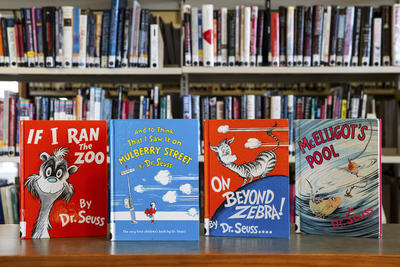
Dr. Seuss Enterprises is a children’s entertainment company that functions as both a business and a family estate dedicated to preserving and promoting Theodor Seuss Geisel’s legacy. After consulting with educators and other experts, they decided to halt publication of six books because, in their words, they “portray people in ways that are hurtful and wrong.” An examination of many of the images and text in question confirmed the use of racist tropes in depicting Asian and Black characters.
This decision reflects norms in publishing, archiving and collecting.
Making space for new materials
Publishing companies regularly review their titles and sales to determine and reassess print runs. This is a necessary part of making space for new publications, and maintaining desirable profit margins.
In this context, thinking about museums and archives is helpful.
For cultural institutions tasked with collecting, preserving, ordering and exhibiting, utility is derived from selectivity: not everything can be saved, or it would prove so overwhelming as to render everything inaccessible. That is why galleries, libraries, archives and museums don’t only collect new materials, but also regularly remove them.
The role of curating is key: as both a form of care taking and as a selection process that chooses specific works. Exhibits can serve a variety of roles: they can educate, inspire, call to action, memorialize, entertain. And as new works are being produced at unprecedented rates, space must be made for new material.
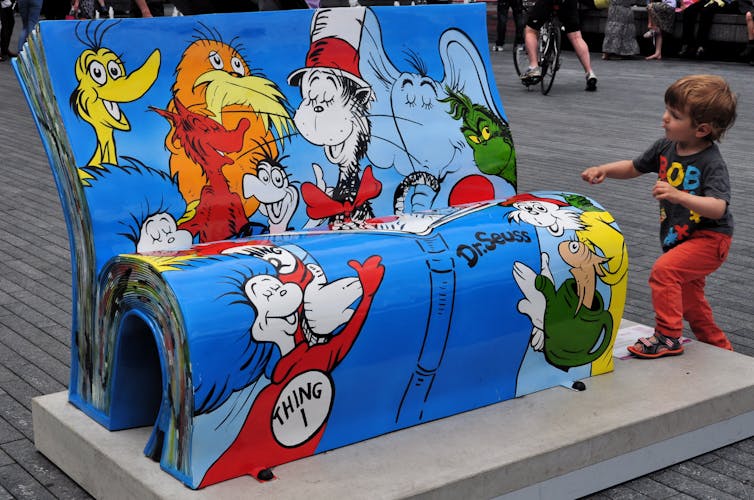
A child approaches a Dr. Seuss BookBench sculpture in London, U.K. (Shutterstock)
History is not neutral
Even in our current context of rapidly improving technology, archives and museums must constantly make tough decisions about what to keep, what to refuse or even remove — this often causes controversy.
Whether focused on removing confederate and colonial statues, or retiring a small handful of Dr. Seuss books, these moral panics and culture wars are often rooted in a false premise; that anything from the past comes from a pure and total point of origin, in other words, that representations of confederate soldiers tell a “true,” authentic and complete story that is neutral and objective.
“Don’t erase history!” people often cry, as if history itself wasn’t full of erasures from the beginning.
In historian and anthropologist Michel-Rolph Trouillot’s foundational book Silencing the Past, he examines the relationship between history, power and silence to explore the ways that certain experiences, historical actors and events are kept out of archival collections and the historical knowledge they help construct.
Trouillot illustrates this through highlighting the Haitian revolution: the possibility of Black slaves successfully revolting against their white colonizers was so inconceivable within the western ideology of white supremacy that it was effectively written out of history.
Recategorizing remnants of racism
The racist pages of Dr. Seuss books are not in danger of being lost forever, but recategorized as evidence of outdated attitudes grounded in racial denigration and stereotyping that no longer have a place in popular culture.
Scholars of racism, like myself, can draw on these images and use them to better understand the past.
Some of Geisel’s earlier work was even more explicitly racist than the titles in question, but hasn’t been erased or destroyed and can be found in museums around the world. His earlier work also appears in scholarship on histories of racism, the Second World War and children’s literature, which would be a great place for the images and text from these six books as well.
There are many ways that racism can and should be tackled that don’t result in the erasure of history. But it shouldn’t be shrugged off — especially by white people who are not in a position to make such determinations.
It is time to retire racist representations. (Shutterstock)
Not without value
I regularly take racist materials out of general circulation — through yard sales, used book stores, discount stores like Dollarama and in tourist shops — so they might be used in research and teaching. I have made many donations to the Jim Crow Museum of Racist Memorabilia, including some family heirloom photographs of one of my ancestors performing in vaudeville in blackface. In my classes on African history, I carefully use racist objects and texts to help teach students about histories of anti-Black racism.
While abhorrent, these texts, memorabilia and objects can be useful.
No children should see racism as something that is normal or funny. There is a lot of research that has examined the impact of the overwhelmingly negative representations of racialized people in popular culture. The research shows that images hurt people. That they contribute to assumptions that translate into discrimination in hiring, renting, selling, lending, treating, teaching and policing in ways that are hugely consequential for all of us.
These realities accumulate across people’s lifetimes in ways that devalue us all because they perpetuate unconscious and conscious racism and inequality.
Retiring racist texts from children’s literature is a crucial step in interrupting the racist legacies that continue to hurt and divide us. With careful contextualization, these historical materials can help document and teach people about the realities of racism that are so often belittled or denied. It also makes space, literally and figuratively, for new texts by diverse authors featuring diverse characters that provide a fuller picture of the world that better reflects the rich variety of people, experiences and perspectives it has to offer.
This is especially important considering how much work still needs to be done in galleries, museums, libraries and archives. These institutions are still overwhelmingly white and male.
It is past time we reach social consensus that racist caricatures should be obsolete. Not everything from the past should be kept alive through republication. Move this content to museums and books on racism where it belongs, but don’t keep it circulating among children.
Monica Eileen Patterson, Assistant Director, Institute for Comparative Studies in Literature, Art, and Culture (Curatorial Studies) and Associate Professor, Institute of Interdisciplinary Studies, Carleton University
No one is ‘cancelling’ Dr Seuss. The author, himself, is dead for one thing, which is about as cancelled as a person can get.
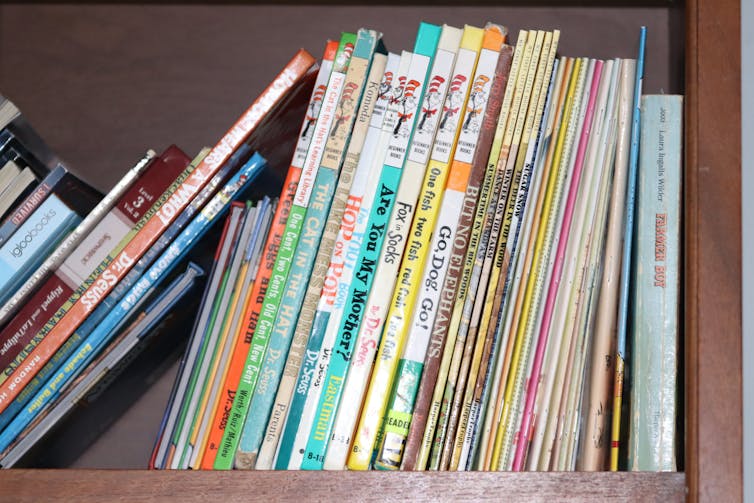
Laying aside a multimillion-dollar publishing business, tattered copies of Dr Seuss books clutter children’s bedrooms around the globe. Parents still grapple nightly with the tongue-twisters of Fox in Socks, Horton Hears a Who! or Hop on Pop, and try their best to keep their eyes open through a 20th reading of Green Eggs and Ham.
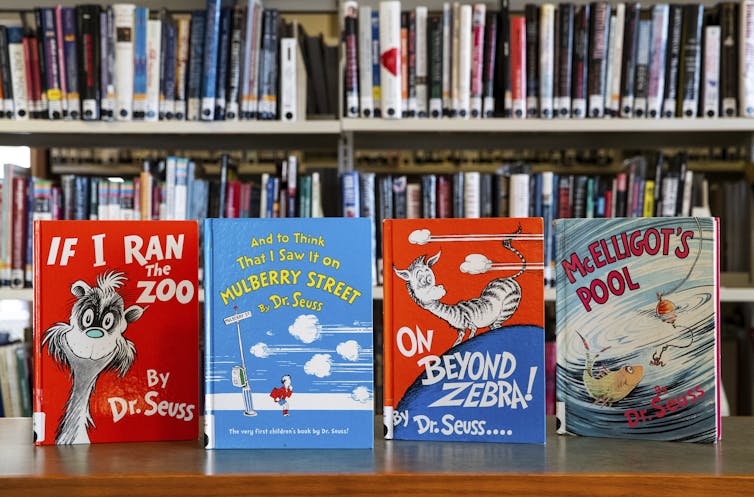
However, on Tuesday (what would have been Dr Seuss’s 117th birthday), the company that protects the late author’s legacy announced its plan to halt publishing and licensing six (out of more than 60) Dr Seuss books.
In If I Ran the Zoo, young Gerald McGrew builds a “Bad-Animal Catching Machine” to capture a turbaned Arab for his exhibit of “unusual beasts”.
“People will stare,” Gerald marvels, “And they’ll say, ‘What a sight!’”. Chinese “helpers” with “eyes at a slant” hunt exotic creatures in the mountains of Zomba-ma-Tant.
A reading recorded for Dr Seuss Day in 2019, removes the racist taunt. Instead of helpers who “wear their eyes at a slant”, the helpers “all wear such very cool pants”.
Nevertheless, pervasive racial imagery and subservient typecasting remain. That doesn’t mean Dr Seuss books should — or can — be scrapped altogether. Instead, these books present an opportunity to build awareness and teach young readers about history and context.
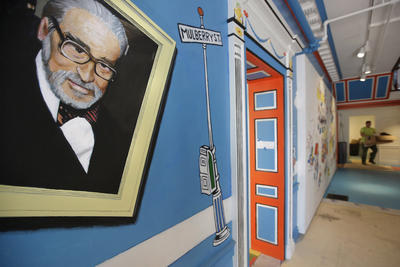
The visage of Theodor Seuss Geisel, known as Dr Seuss, at the Massachusetts museum that honours his legacy. AP Photo/Steven Senne, File
Children’s books are among those most often banned or censored. In this case, removing the Dr Seuss titles recognises that he was writing in a time and place when racial stereotyping was commonplace and frequently the focus of humour.
Elsewhere, controversy over golliwogs as racist caricatures was confrontingly played out in Enid Blyton’s Noddy stories. In her original telling of In the Dark, Dark Wood, Noddy is carjacked by three golliwogs who trap him, strip him naked, and leave him crying. “You bad, wicked golliwogs!” Noddy says. “How dare you steal my things!”
Similarly, in the first edition of Roald Dahl’s Charlie and the Chocolate Factory, the Oompa-Loompas are African pygmies who have been “rescued” by Willy Wonka and enslaved in his factory. When Charlie says, “But there must be people working there,” Grandpa Joe responds, “Not people, Charlie. Not ordinary people, anyway.”
In his political cartoons, which appeared in a New York newspaper in the early 1940s, Dr Seuss ran the gamut of racist depictions, from African-American people as monkeys to Japanese characters with yellow faces and “rice paddy” hats.
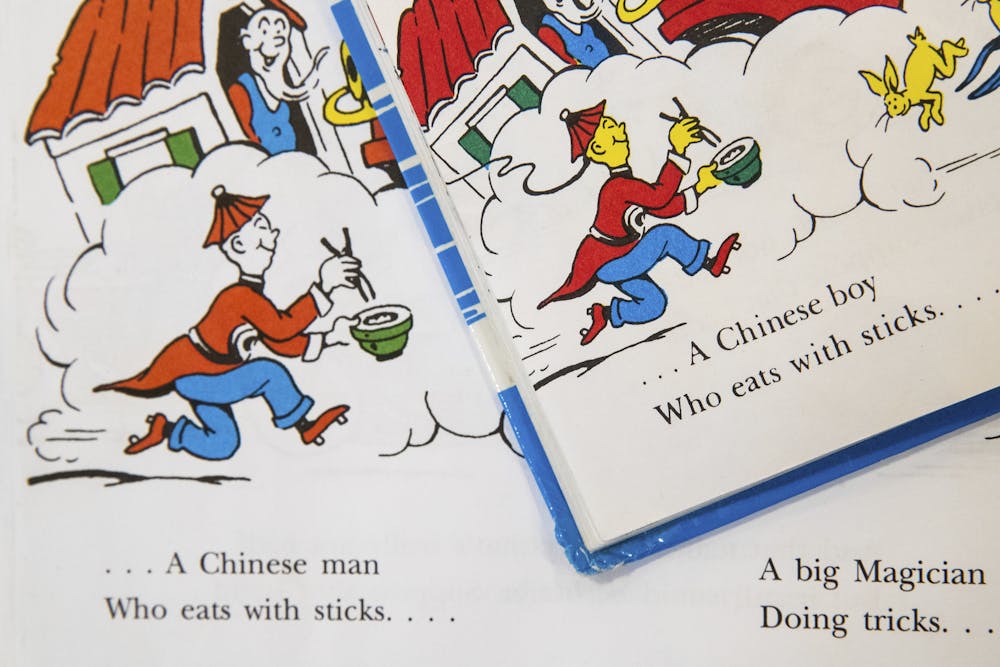
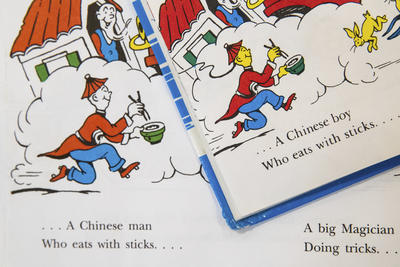
In the now-suspended The Cat’s Quizzer, there is “a Japanese” depicted in conical hat and stereotypical dress. On Mulberry Street, a Chinese man with bright yellow skin wears geta shoes and carries a bowl of rice.
In early editions, the caption underneath reads “A Chinaman who eats with sticks”. In 1978, over 40 years after the book was first published, the character’s skin tone and braid were changed. The caption was changed from “Chinaman” to “Chinese man”.
An earlier 1964 edition of And to Think That I Saw It on Mulberry Street features a character described as ‘a Chinese boy’ with yellow skin and a long ponytail, while a 1984 edition changes the character to ‘a Chinese man’ and alters his appearance. Christopher Dolan/The Times-Tribune via AP
If I ran the library … by today’s standards
Dr Seuss’s work contains racism and xenophobia, but should we judge him by today’s standards?
Children’s literature has always been subject to socio-historical shifts. It is a product of its time and the context in which it is created. Viewed through the changing lens of history, childhood itself is an unstable concept.
In other words, it is impossible to separate children’s literature from the ideological structure of our world, and from the particular historical moment in which it is produced.
While Dr Seuss’s best-loved characters — the Cat in the Hat, Horton the elephant, the Grinch — have earned their place in the canon, what we should be concerned about is the question of diversity in children’s literature.
We know from numerous studies that white children dominate children’s books, with talking animals and trains outnumbering the representations of First Nations, Asian, African and other minority groups.
More recently, Richard Scarry’s books were updated to depict Daddies cooking and Mummies going to work, while the latest film adaptation of The Witches cast actor of colour Jahzir Bruno as the boy protagonist.
Instead, finding meaningful ways to contextualise these historical aspects for young readers today might be a better focus, rather than withholding a few and letting more prominent titles slide by.
Kids and teens, like adults, need to see themselves in the books they read, and young white readers need to see other cultural groups as something more than illegal, or violent, or criminal.
As chidren’s literature expert Perry Nodelman notes: “Stories structure us as beings in the world”. In the same week a Lowy study found one in five Chinese Australians have been threatened or attacked, it could not be more important to invest in an inclusive future for our kids.
‘I literally know The Cat in the Hat by heart without the book,’ said Donald Trump Jr.
Stephen Colbert’s segment finishes with suggested books by authors of colour.






 At the BookShelf
You must be logged in to post a comment.