
Unknown's avatar

A criminal record: women and Australian true crime stories


File 20170822 13685 w0sgkd.jpg?ixlib=rb 1.1
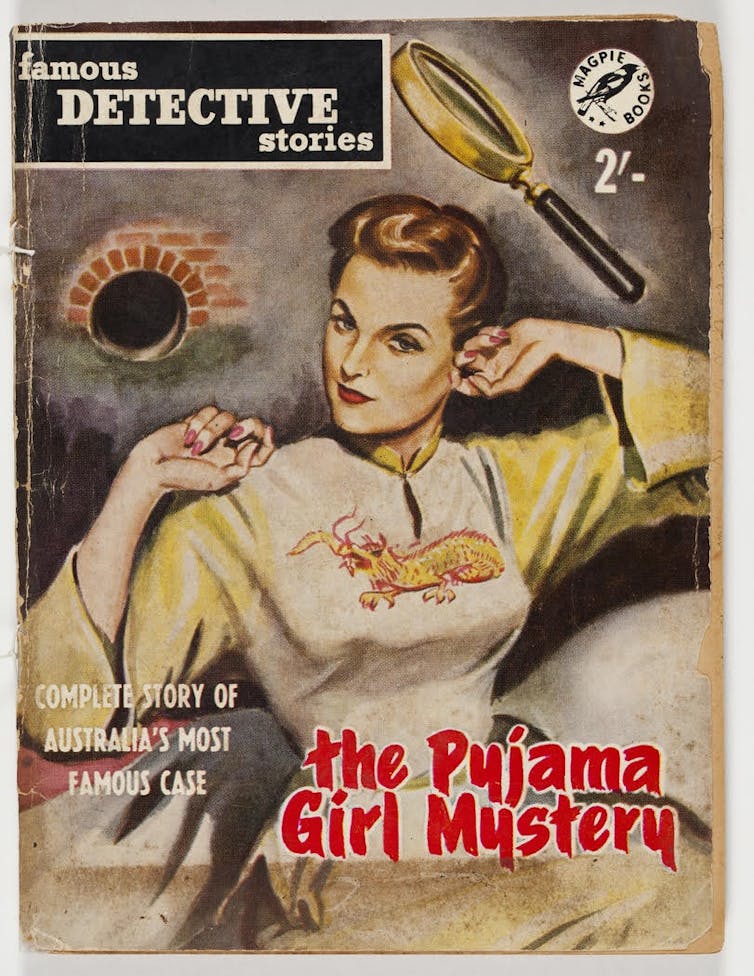
The pyjama girl mystery, as featured in Famous Detective Stories no. 6.
State Library of New South Whales, CC BY-ND

Rachel Franks, University of Newcastle

Women have always been central to true crime stories: as victims, perpetrators, readers, and (increasingly) as tellers of these tales. Indeed, these tales, often dismissed as sensationalised violence, offer important opportunities to reflect on crime and crime control.

Many true crime writers today – including numerous women, working in a once male-dominated market – have been biographers, coroners, detectives, historians, journalists, lawyers, and psychologists. These backgrounds bring a style of storytelling that educates us about, not just merely entertains us with, crime. Importantly, many privilege complex and nuanced storytelling over simplistic stereotypes of women as just “bad” or just “good”.
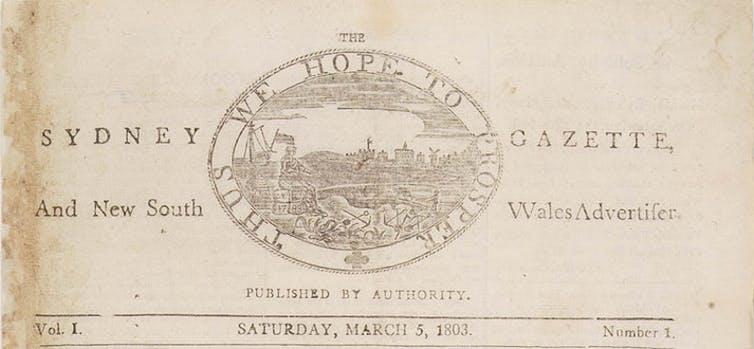
The Sydney Gazette and New South Wales Advertiser Vol. 1, No. 1, 5 March 1803 (Front Page).
Call number: DL F8/50, Mitchell Library, State Library of New South Wales, CC BY

The first Australian true crime stories were transmitted orally, jotted down in journals, and entered into official records. George Howe, editor of our first newspaper, The Sydney Gazette and New South Wales Advertiser, enthusiastically embraced the topic of crime: the paper’s first issue in 1803 included stories of fraud, attempted murder, and the brutal rape of 17-year-old Rose Bean.

The first Australian publication dedicated to true crime is Michael Howe: The Last and the Worst of the Bushrangers of Van Diemen’s Land (1818), by T.E. Wells. This short work is also the story of Howe’s companion, then victim, Mary Cockerill a young Indigenous woman. Cockerill supported Howe in a landscape forbidding and wild to the European settlers. After being betrayed by Howe – he shot her as they were being pursued, facilitating his own escape – Cockerill then used her knowledge of the bush to help authorities. Howe was captured and killed in 1818, bringing his bushranging career to an end.

In the colonial era, a woman’s status as a victim was upheld, or denied, based on her character and her ability to conform to social mores of the time. Today, women are often still judged by what they say and what they wear; their education and their occupation. How many sexual partners have they had? Are they too emotional? Are they not emotional enough? Likewise, some perpetrators have been seen as more heinous because they are women.

Women as perpetrators

In Captain Thunderbolt & His Lady (2011), Carol Baxter skilfully tells the story of Frederick Ward (“Captain Thunderbolt”), a bushranger in the mid-1800s, and his Indigenous partner-in-crime Mary Ann Bugg (“Mrs Thunderbolt”). Bugg – an intelligent, gutsy, trouser-wearing woman – is brought vividly to life, as she breaks the law and defies the feminine expectations of her time.

As Baxter notes, Bugg was dissatisfied with the social status quo, and, like many bushrangers, she received support and sympathy from the wider population. She was not all “bad” but not all “good” either. Indeed, some suggested Mrs Thunderbolt was merely blamed for the deeds of her husband. Bugg outlived her outlaw partner by 35 years, dying in obscurity in Mudgee in 1905.

One of the more dramatic true crime tales of the late colonial period, is the story of Louisa Collins. Caroline Overington looks at the life, and death, of Collins in Last Woman Hanged (2014). Accused of murder, Collins famously endured four trials in 1888, which, as Overington argues, were effectively trials of all Australian women. If women wanted equal rights, including the right to vote, “then, such equality had to be universal: women, too, would hang for murder”. In the first three trials, the juries failed to deliver a verdict. In the fourth trial, the jury found her guilty and Collins was hanged in 1889.
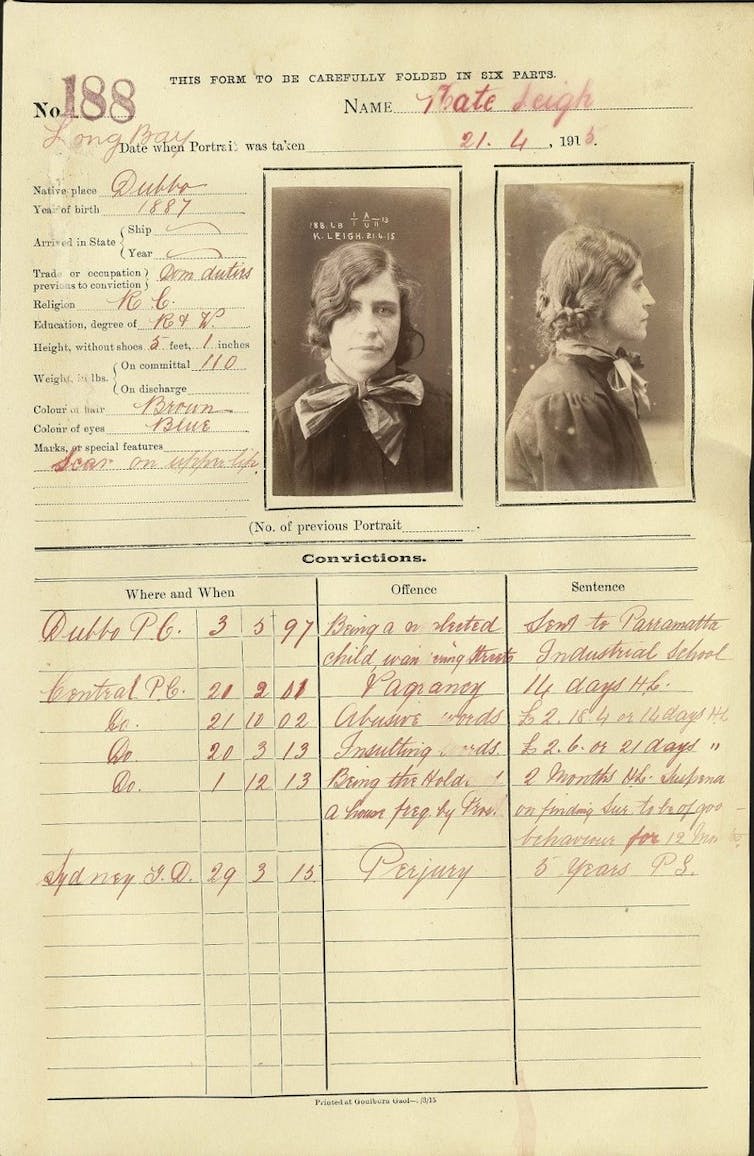
Kate Leigh’s mugshots and prison form.
State Archives of New South Wales, CC BY

The Worst Woman in Sydney (2016) by Leigh Straw documents the life of Kate Leigh, born Kathleen Beahan, an icon of Sydney’s underworld from the 1920s through to the 1950s. A “famed brothel madam, sly-grog seller and drug dealer”, she is best known for her involvement in the “Razor Wars” when Sydney gangs used razors instead of guns. Leigh could handle a rifle (or any other weapon) and was “an intelligent criminal entrepreneur” who quickly capitalised on opportunities as they emerged. A hardened crook (who was in and out of prison), Leigh was also very generous; her Christmas parties for poor children, in Surry Hills, were legendary for the food and presents given out.

In Nice Girl (2011), Rachael Jane Chin looks at the many dreadful secrets kept by Keli Lane. Found guilty of murder and of lying under oath, Lane’s case is one that is still difficult to believe. Gender, and gendered ideals, stand out within it. Chin unpacks how Lane was a solid, middle-class young woman. She had her boyfriends but was not promiscuous. She was a teacher and had worked hard to become an elite athlete.

But underneath Lane’s “good upbringing and clean-cut appearance”, which earned her the benefit of the doubt from those around her, were five secret pregnancies during the 1990s. Two pregnancies were terminated, two infants were put up for adoption and one baby, Tegan, was murdered. Lane is serving her prison sentence, the crimes she committed as shocking now as when they were discovered. She will be eligible for parole in 2023.

Women as victims

In 1921 the body of 12-year-old schoolgirl Alma Tirtschke was found in an inner-Melbourne alleyway. Colin Campbell Ross was charged with rape and murder, as described in Kevin Morgan’s Gun Alley (2005, updated 2012). We learn the victim, just a child, was quiet but also clever and creative. As readers, we cannot help but speculate who Tirtschke could have grown up to be.

Ross was hanged in 1922: a result of false allegations, a flawed investigation, and a trial held in the press and in the courtroom. He received a posthumous pardon in 2008. This case is particularly important in the history of Australian true crime writing because, as Tom Roberts explains, it highlights the commercialisation of crime, focusing on the headline of the defenceless female, and media-driven moral panics.
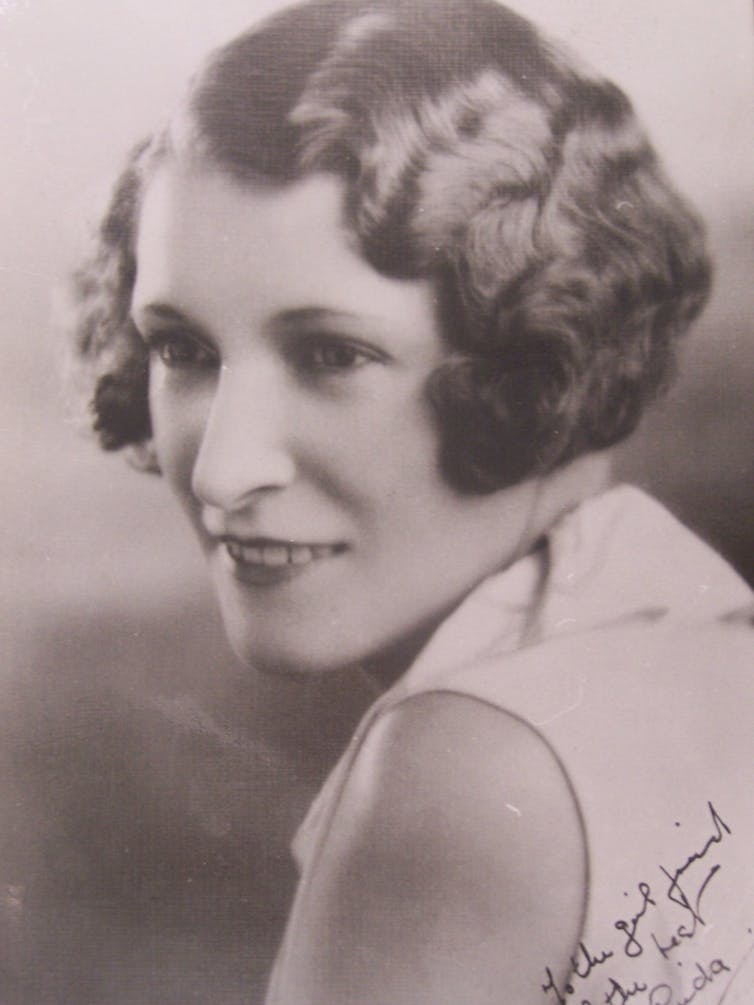
Florence Linda Agostini (née Platt; 12 September 1905 – 27 August 1934) was known posthumously as the Pyjama Girl.
Wikimedia Commons, CC BY

One of Australia’s most famous crimes is the “Pyjama Girl Case”. In 1934 the remains of Linda Agostini, born Florence Platt, was found. She had been shot, beaten, and burnt. Most notably, Agostini was wearing yellow, silk pyjamas, patterned with a dragon: a flamboyant garment in Depression-era Australia. Agostini’s body was placed on public display in an attempt by the police to discover the name of the murdered woman but it took 10 years to identify the victim. In the 1940s and 1950s, Frank Johnson published his Famous Detective Stories series, which included The Pyjama Girl Mystery. Like many of Johnson’s true crime storytelling efforts, the woman at the centre of the criminal case is presented as a sexual object.

The story of Anita Cobby, born Anita Lynch, has been told many times. The first major telling of the brutal rape and murder of the 26-year-old in 1986, is Julia Sheppard’s Someone Else’s Daughter (1991). Sheppard contrasts Cobby and her numerous contributions to the community, as a charity worker as well as a nurse, with the senseless cruelty of the men who took Cobby’s life. Stories like this one, which have stayed in the public imagination over decades, highlight how the impacts of crime extend beyond the victim, family, and friends. They also show how women can be victims of completely random acts of violence.

Many women are victims of domestic violence. The murder of Lisa Harnum, by her fiancé Simon Gittany, is described by Amy Dale in The Fall (2014). Gittany threw Harnum to her death from their apartment balcony, situated on the 15th floor of an inner-Sydney building in 2011. This is a story of control, surveillance, and toxicity. Harnum was trapped in an untenable position: too frightened to leave but also too frightened to stay. When she did try to escape, the result was tragic. Gittany was sentenced to 26 years in prison, with a non-parole period of 18 years.

Changing true crime narratives

The once “either/or” binary of “bad/good” women has given way to demands from readers to see women as complex figures within these works. As a result, more and more writers are now increasingly focussed on the human cost of crime.

Kerry Greenwood, known for crime fiction and true crime, has curated two important volumes On Murder (2000) and On Murder II (2002). Rachael Weaver, in The Criminal of the Century (2006), offers a rigorous exploration of colonial serial killer Frederick Deeming. More recently Alecia Simmonds has written on the terrible consequences seen when drug use, violence, masculinity, and psychosis collide in Wildman: The True Story of a Police Killing, Mental Illness and the Law (2015). A dominant force on the landscape of true crime writing is Helen Garner with several compelling works including Joe Cinque’s Consolation (2004) and This House of Grief: The Story of a Murder Trial (2014).

Women are also telling their own stories, as seen in Lindy Chamberlain’s work Through My Eyes (1990). Chamberlain was falsely imprisoned for the murder of her baby daughter, Azaria, at Uluru in 1980. This book delivers a very personal account of one of the greatest miscarriages of justice in Australian history.

The ConversationCrime is never without context and is never straightforward. Many writers – women and men – know that simplifying these stories with stereotypes, female or male, is just not good enough: for the innocent, for the guilty, or for readers.

Rachel Franks, Conjoint Fellow, School of Humanities and Social Science, University of Newcastle

This article was originally published on The Conversation. Read the original article.

Unknown's avatar

Take pity on forensic scientists – crime writers make their lives a nightmare 


File 20170907 9585 hbp7kb
The truth is not always out there.
Elnur

Aliki Varvogli, University of Dundee

A blackmailer steals a compromising letter from a woman of high standing. The police know he is keeping this letter in his home, but they cannot find it. Using the latest forensic tools they search every inch of the apartment, recording their efforts as follows:

We examined the rungs of every chair …. and, indeed, the jointings of every description of furniture, by the aid of a most powerful microscope. Had there been any traces of recent disturbance we should not have failed to detect it instantly.

A single grain of gimlet-dust, for example, would have been as obvious as an apple. Any disorder in the glueing – any unusual gaping in the joints – would have sufficed to insure [sic] detection.

Back in 1844, this description of the police using a powerful microscope with the promise of instant detection would have dazzled readers of Edgar Allan Poe’s The Purloined Letter. Yet this is not what solves the mystery. Instead the private investigator, Auguste Dupin, correctly surmises that the best place to hide such a letter is in plain sight. He finds it on the blackmailer’s mantelpiece.

The story is one of the earliest and best examples of crime fiction. It suggests that science and technology are sometimes not as powerful as empathy or intuition in solving crimes. Indeed, Poe queries science throughout his writings. In one poem he calls it a vulture that preys on the poet’s heart, replacing the magic of a writer’s imagination with its “dull realities”.

Bloody good.

Try telling that to modern readers of crime fiction. These days, forensic scientists are one of the great staples of the genre. They are integral to everything from popular TV franchises like CSI and Line of Duty to blockbuster names like Patricia Cornwell and Jeffrey Deaver to many of the works showcasing at the Bloody Scotland festival in Stirling. There is also something about their incredible achievements that we often overlook: they are often a long way from the reality.

Criminal comforts

We love crime fiction because it is reassuring. Yes, human beings are capable of evil and cruel deeds, but criminals are always caught and usually punished. This formula, as WH Auden suggested in a 1948 essay on the genre, restores us to a “state of grace”. It helps us believe we are basically innocent and good, and that criminality is an aberration.

Forensic science amplifies this sense of comfort in crime fiction: it produces evidence that cannot lie; it brings the most cunning of criminals to justice. In a world with no god and no certainty, these fictional scientists fill a void. They let us think that our world can be examined, analysed and rendered legible. They are modern-day magicians whose wizardry reveals indisputable truths.

Val McDermid.
Fenris Oswin, CC BY-SA

But does forensic science really hold all the answers? Sadly, no. Val McDermid, one of the big names appearing at Bloody Scotland, is one of the few authors who help us understand this. In Out of Bounds (2016) for example, the police are trying to determine whether a man was murdered or shot himself.

The amount of gunshot residue in his hand is inconclusive, we learn, and not inconsistent with a self-inflicted wound. How can scientific evidence be inconclusive? How come scientists talk of things being “not inconsistent”, rather than dealing in certainties?

This is where the trouble begins for forensic experts. Imagine a scientist giving evidence as a witness in court and having to explain the limitations of their field. Jurors are unlikely to appreciate that forensic evidence often relies on human interpretation; that blood spatter patterns or bite mark analysis do not tell a single, compelling and unambiguous story the way they do in books.

Yet the reality of the uncertainty of forensic science was recently laid bare in relation to the DNA laboratory of the office of New York City’s chief medical examiner. Seen as one of the most sophisticated forensics labs in the world, carrying out work for investigators across the US, certain scientists are now claiming some of its methods are unreliable. A group of prominent New York defence lawyers is calling for the inspections watchdog to carry out an investigation.

Meanwhile, America’s National Institute of Standards and Technology recently accused the forensics industry of lagging other professions when it comes to looking into and resolving errors. It said:

In recent years, high visibility errors have occurred at crime labs in almost every state. These have ranged from simple mistakes, such as mislabelling evidence, to testimony that overstates the scientific evidence, to criminal acts.

In thrillers, forensic evidence almost always leads the investigative team to a satisfying conclusion. We never finish a novel thinking the killer might be exonerated when the evidence is re-examined. Even when all is as it should be, forensic scientists have their work cut out trying to communicate the complexity of the evidence, while explaining how it might be both subjective and reliable at the same time.

Not perfect.
zoka74

To make their case, scientists need much more than hard facts. They need to make their expertise accessible by using similes, metaphors and narrative examples. In fact, they need to be a little like novelists – which is ironic given that they have to dispel some of the misconceptions created by novelists in the first place.

The ConversationIf there is a consolation in any of this, these experts can at least thank novelists for their public image. No matter how hard they have to work to seek and communicate knowledge, at least forensic scientists will always look glamorous while doing so. They might be the victims of our need for reassurance and certainty, but we don’t tend to treat them with the same hostility as Edgar Allan Poe.

Aliki Varvogli, Senior Lecturer in English and Associate Dean for Learning and Teaching, University of Dundee

This article was originally published on The Conversation. Read the original article.

Unknown's avatar

True crime interrogates toxic masculinity, at last


Jay Daniel Thompson, Victoria University

True crime writing isn’t famous for its impeccable gender politics. Think of how male criminals (e.g. the late Mark “Chopper” Read) have been glorified and women law-breakers demonised. Or how women who are victims of crime can be stereotyped as either virgins or vamps.

Two new books, Mark Morri’s Remembering Anita Cobby and Martin McKenzie-Murray’s A Murder without Motive, offer a fresh approach to the true crime genre. Both were published in early 2016. Both have been penned by male journalists. Both focus on men who find themselves involved (albeit in different ways) in murder cases where the victims are women.

The “Anita” in Morri’s title is Anita Cobby, a Sydney nurse who was gang-raped and murdered in January 1986. The book discusses the experiences of her husband, John Cobby, who was estranged from his wife at the time of her death, and who has (until now) purposely eluded media attention.

Morri met John around the time of the murder, and the two men developed a rapport. In conversation with the author, John describes the grief and horror that overwhelmed him in the wake of Anita’s death. He tells of trying to escape through alcohol and overseas travel and the homicidal fantasies he continues to harbour about taking revenge on his wife’s killers.

In A Murder without Motive, McKenzie-Murray addresses the murder of young Perth woman, Rebecca Ryle. In May 2004, Ryle was strangled to death by James Duggan, a man she had just met at a local pub. In the ensuing trial, no motive could be established for his actions (hence the book’s title).

The author was tenuously connected to the victim. He grew up in the same suburb as her, and his brother once personally knew Duggan.

McKenzie-Murray reflects on the “strains of misogyny” that could be detected in the milieu in which they lived. This was a world where young men were encouraged to flaunt their “virility”, and women existed “for sex, acquisition, bluster”.

Both books cast a critical eye on a toxic strand of masculinity.

It’s an eye that has been missing from many true crime books. Two such examples were the books Blood Stain (2002) and The Vampire Killer (1992), which reproduced crude and misogynist feminine stereotypes.

In both Morri and McKenzie-Murray’s books, the male protagonists are constrained by prevailing codes of masculinity. In A Murder without Motive, for instance, McKenzie-Murray recalls his teenage participation in a blokey, boozy culture.

Still, throughout the book, he demonstrates the ability to stand back and evaluate this harmful culture. The book’s broader aim is to provide a nuanced perspective on the Ryle case. McKenzie-Murray explicitly distances himself from “popular treatments of criminality”, which (he says) are “salacious and vampiric” – and, I would add, frequently sexist.

In Remembering Anita Cobby, we read that John kept his late wife’s murder “locked up inside for thirty years.” Anita’s death became “like a dirty little secret.” A key tenet of some masculinities has been an inability or unwillingness to express emotions, especially those (such as grief) that imply vulnerability.

Yet, John Cobby and Mckenzie-Murray confront the excesses of toxic masculinity, seeing it as the lethal social construct it is – not something glamorous or natural.

Morri’s book is less overtly concerned with gender politics. Nevertheless, he does quote “Miss X” (the unnamed woman who obtained a confession from one of Cobby’s killers, John Travers) as saying that she reported Travers to police because of his “behaviour towards women”. “Miss X” was married to Travers’ uncle at the time of Cobby’s death. Morri never specifies what exactly Travers’ “behaviour towards women” entailed, though we can assume that this behaviour was derogatory.

Of course, it should not take a dead woman for men to recognise that masculinised brutality is unacceptable.

But Remembering Anita Cobby and A Murder without Motive are important because they depict men who confront and abhor a culture of misogyny. Hopefully, their work will influence other true crime writers, resulting in more nuanced gender perspectives.

The Conversation

Jay Daniel Thompson, Sessional Lecturer, Victoria University

This article was originally published on The Conversation. Read the original article.

Unknown's avatar

True Blue? Crime fiction and Australia


Stewart King, Monash University

Australian Michael Robotham has taken home one of the most prestigious crime fiction awards around, the British Crime Writers’ Association Golden Dagger with Life or Death, beating out an impressive international field.


http://www.michaelrowbotham.com

Predictably, much has been made of Robotham’s nationality. The Guardian’s headline reads “Australian ghostwriter beats Stephen King and J.K. Rowling to top UK crime writing award” .

The Age’s Literary Editor Jason Steger notes that Robotham “is only the second Australian to win after Peter Temple in 2007 for The Broken Shore” .

While these writers take Robotham’s nationality for granted, I wonder whether
this is the best way to describe him or his fiction. As the winning novel is set in Texas and his earlier psychological thriller/crime fiction takes place in England, an interesting question is raised about the identity of his books.

Born and raised in country New South Wales, Robotham, spent a decade in England and returned in 2002. His literary peers consider him an Australian crime
writer, electing him chairman of the Australian Crime Writers’ Association.

He’s also won three Ned Kelly awards, a prize limited to Australians by birth, citizenship or long-term residency.

Robotham then is clearly Australian and he writes crime stories. So, what’s the problem with calling him an Australian crime writer? The answer depends on
whether we attribute nationality to the author or his work. In other words, does
Robotham write Australian crime fiction?

Locale and crime fiction

The crime genre is one of the most widespread literary genres. It has crossed
borders and languages to become a form of world literature. Its mobility and its
popularity are due to a combination of universal themes, portable conventions
and local settings.

Everywhere it has settled, writers have adapted it to reflect on
local issues. To some degree the local has become so important that it is
suggested that nationality be ascribed not to the author, but to the locus criminis of the novel itself.

Eva Erdmann argues that in the later half of the twentieth century, crime fiction has been used to interrogate increasingly specific national or regional identities:

Surprisingly, the crime novel of the last decades is distinguished by
the fact that the main focus is not on the crime itself, but on the
setting, the place where the detective and the victims live and to which
they are bound by ties of attachment.

Understood in this way, Robotham writes English and now American crime fiction. The late American author Alan Cheuse certainly embraced Robotham as one of his own, writing that Life or Death reads like a native Texan had written it.

Edgar Allen Poe.
Wikimedia Commons, CC BY

Assigning nationality to where novels are set raises all sorts of complications,
however. Is Edgar Allan Poe’s Murders in the Rue Morgue (1841) an example of French crime fiction because the story is set in Paris and features a French detective? Erdmann would say yes, but this is perhaps more due to his influence on French fiction through the translations of poet Charles Baudelaire.

Robotham is clearly good at offering readers convincing settings. His highly successful career as a ghost writer has perhaps prepared him to adopt alternative points of view with compelling strength. Not every writer has this talent. Returning to Australia, in Continent of Mystery (1997), Stephen Knight takes issue with:

English visitors who glimpsed a capital city, took a compulsory trip to the bush, and then dashed off a shallow thriller with sturdy stiff-jawed bush heroes and bush heroines as warm-hearted as the sun was hot.

If an author’s nationality or a novel’s setting are not satisfactory markers of
identity, then perhaps we should look at the author’s intended readership.

Although set in Texas, Life or Death has an Australian origin. It owes its existence to the true story of a career criminal who escaped from Sydney’s Long Bay jail the day before he was due to be released.

Robotham took the story and transposed it to Texas.

An 1852 illustration for The Mystery of Marie Roget.
Wikimedia Commons, CC BY

There is a long tradition of this in crime writing. In The Mystery of Marie Rogêt
Poe took a famous New York murder case and set it in Paris. Given Life or Death’s Australian origins, it’s fair to say Robotham had the opportunity to set the novel here, but he chose not to do so.

I don’t want to suggest that Australian crime writers have to write about
Australia, set their novels in Australia, treat Australian issues or have Australian characters.

The Miles Franklin Award has courted enough controversy in that area. Writers should be free to tackle any topic or to set their works wherever they want.

An example of the pitfalls of strict definitions of “Australian” is the exclusion of JM Coetzee’s The Childhood of Jesus (2013) from the Miles Franklin 2013 shortlist. This has been attributed to its imaginary Spanish-language setting, although the book was received as, among other things, an allegory for Australian attitudes to “boat-people”.

However, unlike Coetzee, Robotham does not engage with Australian national imaginary, its issues and identity. They address a different – international – audience.

If Robotham is an Australian writer who doesn’t write Australian crime fiction,
then how do we situate him and his novels? Google perhaps provides us with an
answer. Search “Michael Robotham” and Google adds “International Crime
Writer” to his name before taking you to his home page. In this globalised world,
that’s not such a bad category to belong to.

The Conversation

Stewart King, Senior Lecturer, School of Languages, Literatures, Cultures and Linguistics, Monash University

This article was originally published on The Conversation. Read the original article.
Unknown's avatar

Video: J.K. Rowling’s Crime Novel


Unknown's avatar

Article: J.K. Rowling is Robert Galbraith


The link below is to another article that reports on the novel written by Robert Galbraith, who is in fact J.K. Rowling. The crime novel is called ‘The Cuckoo’s Calling.’

For more visit:
http://www.huffingtonpost.com/2013/07/13/jk-rowling-pseudonym-robert-galbraith_n_3592769.html

Unknown's avatar

Article: J.K. Rowling’s Crime Novel


The link below is to an article reporting on a crime novel that J.K. Rowling wrote under a false name. The novel was called ‘The Cuckoo’s Calling’ and the name she wrote under was Robert Galbraith.

For more visit:
http://www.news.com.au/entertainment/books/harry-potter-writer-jk-rowling-writes-crime-novel-under-a-different-name/story-fn9412vp-1226679095853