In Dervla McTiernan’s book, The Scholar, published earlier this year, women are consistently used as the “fall guys” for men with high aspirations. Two young women are killed when they uncover fraud. Another female colleague is then framed for the murders.
Before writing crime fiction, McTiernan worked as a lawyer for 12 years, for international companies like the one in The Scholar. Her background lends her book authority, even though it’s fiction.
McTiernan joins a batch of crime writing women bringing professional clout to their books. Others are Kathy Reichs, Patricia Cornwell, Marcia Clark, Alafair Burke, Anne Holt, and Lisa Scottoline. This list is a tiny fraction of the trailblazing authors.
Crimes close to home
Last week, Elizabeth Farrelly wrote that “crime fiction is the morality drama of our time” that can “heighten and dissect the battle of good against evil enacted daily in our living rooms, cities and streets”. She compared crime books about violence against women with Australia’s deplorable record on domestic violence and rape.
In books written by ex-justice professionals, we are asked to examine our cultural and moral compasses. These authors don’t just write about serial killers – who are thankfully more common in the pages of crime books than in real life – they more often focus on murders by spouses, family members or colleagues of the victim. Some push for changes to how rape trials are prosecuted. They focus on the justice system problems that women face, as victims and as professionals.
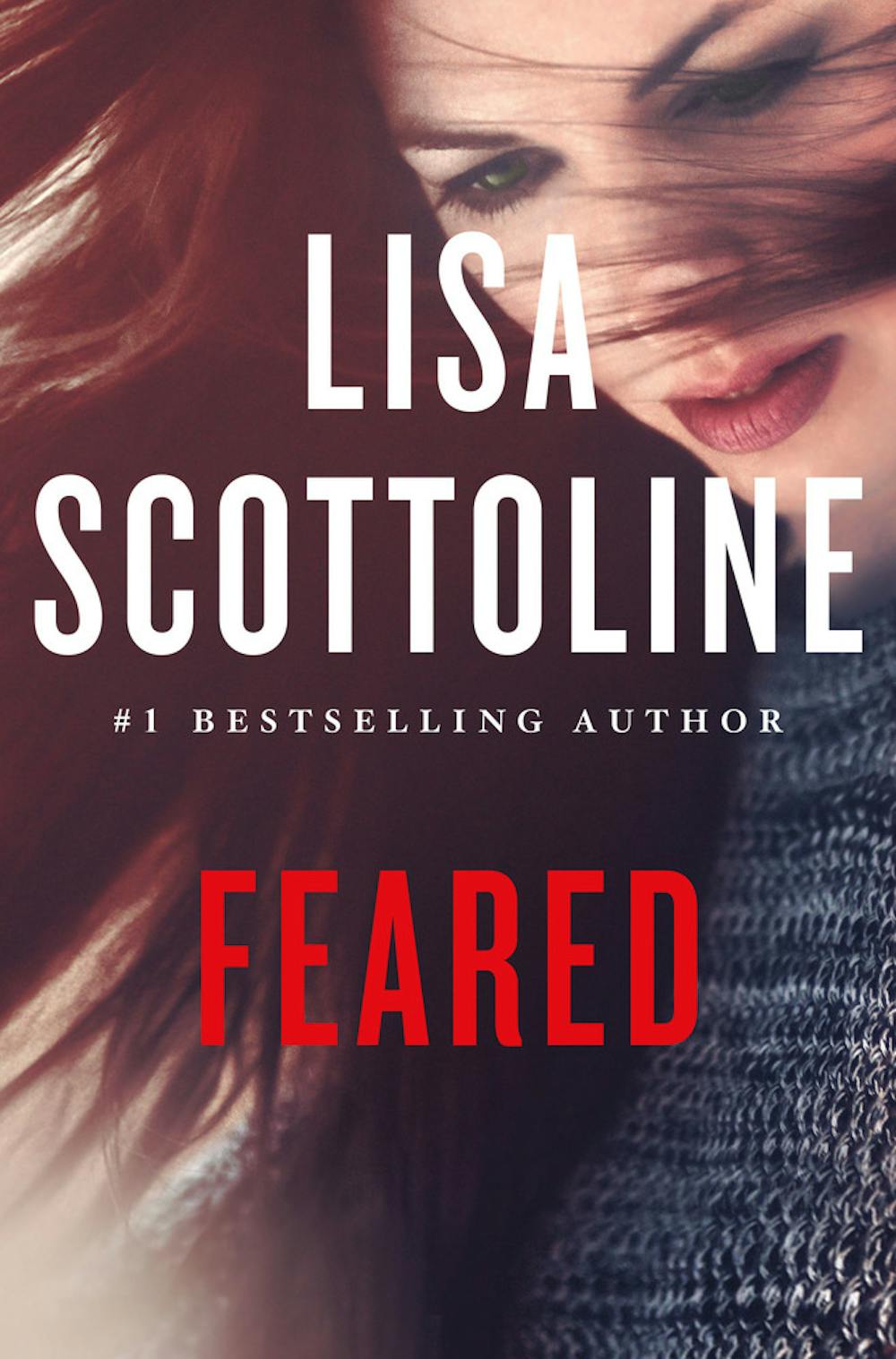
The stories also ask us to question how we perceive professional women. These authors’ characters, who often have much in common with their creators, face a barrage of harassment on the job. Lisa Scottoline’s fictional all-women law firm is consistently targeted by abusive prank callers. In her latest book, Feared, the firm is sued for “reverse” sexual discrimination.
What’s the appeal?
Australians are avid readers of crime fiction. In a 2017 study, 48.5% of respondents read crime fiction, making it the most popular genre for enjoyment.
While researching my book on the topic, I had the opportunity to read Dorothy Uhnak’s fan letters, held at the Howard Gotlieb Archival Research Center at Boston University. Readers (many of whom were prison inmates) repeatedly told Uhnak that her books touched on inequalities in the justice system that rang true for them, and reading her work was therapeutic.
Cosy vs hardboiled
Female crime writers have historically been pigeonholed as writing “cosy crime” novels as opposed to more graphic masculine representations of “hardboiled” detectives.
We are used to reading about women as amateurs, from Agatha Christie’s spinster sleuth, Miss Marple, to Janet Evanovich’s bumbling and untrained bounty hunter, Stephanie Plum. Since the 1970s, more authors have written about women as hardboiled private detectives.
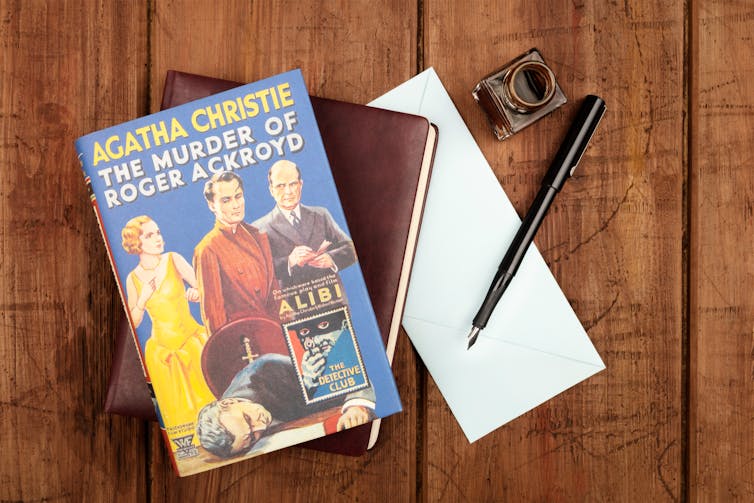
Agatha Christie is acknowledged as the grande dame of crime fiction. www.shutterstock.com
Now, we are increasingly seeing women characters in professional roles. When the author is also a professional, she has even more authority. She has “insider knowledge.” Priscilla Walton and Manina Jones surveyed women who read feminist crime series and found that readers identify with the struggles of characters who are realistic professional women. Often, the fictional investigations have similarities to real ones the author has worked on. Central Park 5 prosecutor turned crime author Linda Fairstein received pointed criticism about these similarities.
Ruth Rendell and other authors remember being discouraged from writing crime.
In Australia, ex-police officer Y.A. Erskine’s debut The Brotherhood tells the story of rookie cop Lucy Howard who is blamed when a senior sergeant is killed on a routine call-out. She can’t join the brotherhood of the Tasmanian police force, because, in her words, she doesn’t have the “standard-issue penis”. She is an outsider inside the system.
In Erskine’s follow-up, The Betrayal, Lucy is raped by a colleague. When she makes a complaint, she is vilified and blamed for tarnishing the reputation of the police. The complaint is briefly investigated before being dropped.
Another Australian ex-cop writing crime is P.M. Newton. Her debut, The Old School (notice the theme in the titles?), follows Australian-Vietnamese officer, Nhu “Ned” Kelly. She deals with the racism and corruption of her male colleagues before being shot by one of them.
Newton’s following book, Beams Falling (a reference to Dashiell Hammett’s Flitcraft parable within The Maltese Falcon), tracks Ned’s struggle with post traumatic stress disorder. While fictional detectives usually bounce back quickly after violence, Ned never fully gets over the trauma, and her work offers little support.
Ex-cop Karen M. Davis, has also created a character damaged by her policing experience. Davis’ Lexie Rogers has been stabbed in the neck, and fears facing her attacker in court – a fear exacerbated by her insider knowledge of the justice system. Davis has spoken about how she retired from the police because of trauma, and began writing as a kind of catharsis. Erskine has spoken out about how the rape of Lucy in her books is based on her own unreported rape by a colleague.
These authors have seen the inside of the criminal justice system, its flaws and the experience of women within it. They bring this cachet of lived experiences to their crime fiction. Bestsellers by Marcia Clark or Anne Holt could spark moral reflection, validate women’s experiences, and be part of the cultural shift needed to end violence against women.
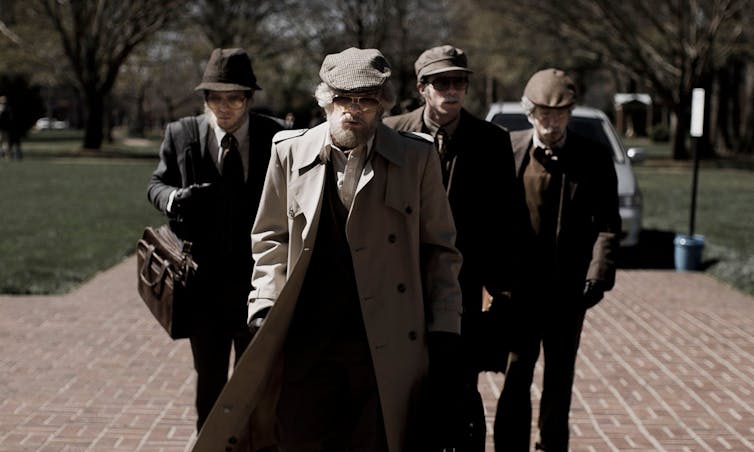
American Animals, a film recounting the true story of a 2004 rare book theft, was recently released in cinemas across the UK. The film is a dramatic retelling of events based on director Bart Layton’s interviews and written correspondence with the convicted book thieves – interactions which began while the thieves were serving seven-year prison sentences following their guilty pleas.
After a year in the planning, the heist involved the men disguising themselves as elderly, shooting librarian Betty Jean Gooch with a stun gun and simply shoving valuables into backpacks. When the day came, the men managed to escape with approximately US$750,000 worth of books in their backpacks, including a first edition of Charles Darwin’s On the Origin of Species, an illuminated medieval manuscript, and a copy of John James Audubon’s A Synopsis of Birds of North America.
Rushing from Lexington to New York, the men attempted to appraise their loot at Christie’s, but never managed to sell their ill-gotten gains. They returned home with the books and were tracked down by the FBI within a matter of months. The entire ordeal was so poorly organised that Vanity Fair deemed it “one part Oceans 11, one part Harold & Kumar”.
Light fingers
But this was by no means the only notable rare book heist in living memory. Earlier in 2018, an audit of the special collections of the Carnegie Library of Pittsburgh uncovered a series of thefts of rare books and book pages with a total value of around US$8m over a period of more than 20 years. It turned out that the former manager of the Carnegie Library’s rare book room, Gregory Priore, and bookseller John Schulman had been working together to sell the stolen goods through the rare book trade and auction houses.
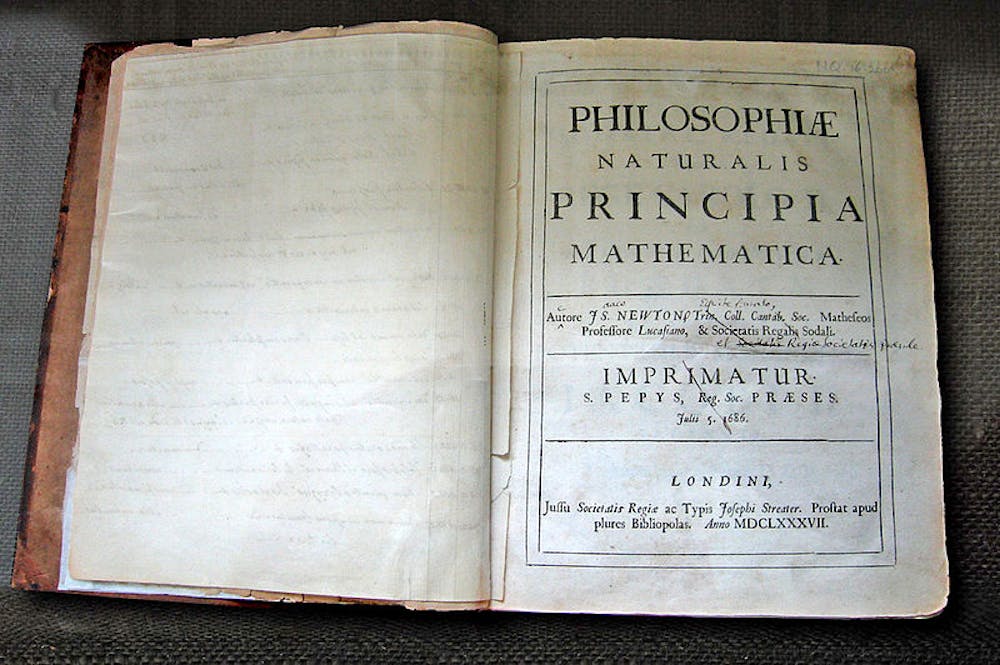
The books stolen from Carnegie included Isaac Newton’s Philosophiæ Naturalis Principia Mathematica, a first edition of The Journal of Major George Washington, and a first edition of Adam Smith’s The Wealth of Nations. Unaware of where these books came from, booksellers from across the globe bought and sold them on to their own private and institutional customers.
Sir Isaac Newton’s own first edition copy of his Philosophiae Naturalis Principia Mathematica with his handwritten corrections for the 20th edition. Andrew Dunn via Wren Library, Trinity College, Cambridge, CC BY-SA
These sales can be difficult to track on such a large scale and, while some works have been recovered (often at the booksellers’ own expense), hundreds of the stolen items remain missing. An up-to-date list of those items believed to have been stolen is provided by the Antiquarian Booksellers’ Association of America.
Library thefts are nothing new. Throughout the 1840s, Italian count Guglielmo Libri Carucci dalla Sommaja stole approximately 30,000 items in his job as chief inspector of French Libraries (he later made a comfortable living selling this loot in England).
More recently, in 1990, American bibiomaniac Stephen Blumberg was arrested for stealing more than 20,000 books valued at more than US$5m from more than 200 universities and museums across North America.
The Great Library of Alexandria, O. Von Corven, 19th century. Wikimedia commons, CC BY-NC
He served four years in prison and became known as the “Book Bandit”.
But on a more systemic and institutional level one could go as far back as the ancient Library of Alexandria, which supposedly seized any books found on ships arriving at the port. These books were copied by professional scribes who then deposited the original works into the library and gave the copies to the books’ owners.
Book ‘em
While library thefts are commonplace, the release of American Animals and the news of the recent Carnegie Library thefts have made this crime front page news. After all, the sheer value of some of these books makes them a very attractive proposition for thieves. But it’s not always just about money – the young men in American Animals fantasise about getting their hands on culturally revered items, while Guglielmo Libri and Blumberg were bibliomaniacs with a recognised condition. And the Library of Alexandria had a larcenous ambition to become a “universal library”, gathering all of the known world’s knowledge under a single roof.
The rare book trade is lucrative, certainly. Individuals and institutions are willing to spend healthy amounts to enhance their collections. But books represent more than just profit. They are cultural artefacts that span space and time to carry the voices of those who have meaningfully contributed to the world’s knowledge. As the primary means of communication for thousands of years, books reflect and perpetuate cultural heritage and – ultimately – help us understand what it means to be human.
Whether someone is stealing books for financial gain, the thrill of the game, or the overwhelming love of these objects, library theft is always underpinned by an understanding of books as valuable cultural artefacts. The young men in the American Animals heists are animals because they tried to plunder these relics of human development.
Food can serve many functions in crime fiction, from being used directly as a weapon to expressing cultural belonging, gender or class. from http://www.shutterstock.com, CC BY-SA
In English, we might claim we could “murder a good steak”. Italian and Spanish speakers might “kill for a coffee”, and Germans refer to acute hunger as Mordshunger or murderhunger – but do people really kill for food?
Cannibalism is by no means the only way in which crime and food are linked.
Disputes over food may lead to murder. In the Bible, when Abel’s sacrifice of meat is preferred to Cain’s second-rate offering of produce, jealousy results in a deadly attack.
Food may also be a deadly weapon, killing through poison, or as in Roald Dahl’s fiendish short story Lamb to the Slaughter, serving as a blunt instrument.
Indeed, research has shown that the brain does not differentiate between real-life and fictional sensory triggers. Food memories can really bring a story alive.
Luca Zingaretti in Inspector Montalbano: loves a good meal. Palomar,Rai Fiction
Rather than serving to highlight a limited range of functions (as a weapon, as an element of characterisation or setting), food has immense potential in crime fiction. Our book addresses a broad range of questions, including what role recipes play in these narratives, whether crimes can be committed against food and how eating rituals relate to cultural belonging, sex, gender or class.
In chef and author Anthony Bourdain’s fictional and factual writings, eating and the preparation and experience of food are always situated on the edge. The professional kitchen is not primarily a place where delicious food is produced but is instead a site of violence.
This kitchen-as-crime-scene contradicts its expected role as the cultural and emotional centre of the domestic and social sphere.
A mural in California commemorating the late Anthony Bourdain: his food writings depicted the kitchen as a site of violence. Eugene Garcia/EPA
Food is a pervasive element of Andrea Camilleri’s Inspector Montalbano franchise. Eating rituals may increase dramatic suspense, but they also mark place and cultural identity and contribute to the psychological characterisation of the detective hero.
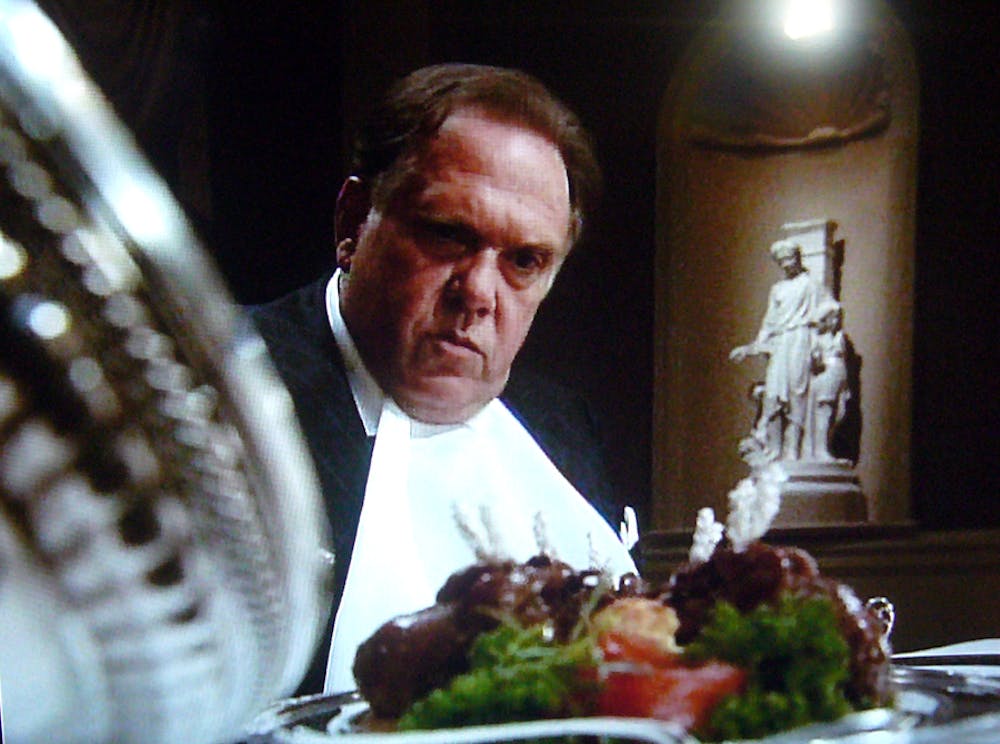
Maury Chaykin in The Golden Spiders: A Nero Wolfe Mystery (2000). A&E Television Networks,Jaffe/Braunstein Films,Pearson Television International
Food plays a crucial role in outlining Montalbano’s distinctive personality, just as it does for other famous detectives such as Georges Simenon’s Maigret, for whom eating is an essential part of any investigation. Rex Stout’s Nero Wolfe is a connoisseur of fine cuisine. Vázquez Montalbán’s Pepe Carvalho is both an experienced cook and a famous glutton.
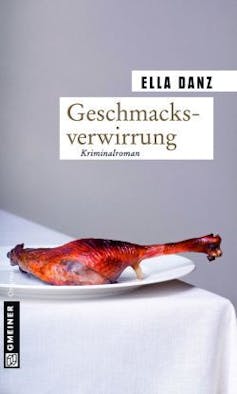
In recent years, culinary mysteries have become very popular in Germany, marketed to both fans of detective fiction and food aficionados. Ella Danz’s Georg Angermüller mystery series features a police inspector who likes to cook and eat. In her novel Geschmacksverwirrung (Taste Confusion), a food critic dies after being force-fed goose liver pâté in the same way geese and ducks are force-fed to produce foie gras.
While investigating the crime, the detective confronts issues like factory farming and ethical food production. Solving crimes requires skills that can equally be used to discover hidden truths about food. Truffled goose liver pâté may contain large amounts of pork fat and only a tiny amount of truffle. Factory animals never get to see the green grass and blue sky on the packaging.
Danz provides an appendix with recipes, a practice that has proven popular with readers. Adding recipes to culinary mysteries also allows bookstores to display the books in both the cook book and and mystery sections, thus doubling exposure.
Feminist food rituals
Feminist crime fiction sheds a different light on food. Sue Grafton, Sara Paretsky and Dominique Sylvain all portray eating as an expression of female independence and agency in opposition to gender norms, challenging the cultural ideal of thinness.
The eating habits of Grafton’s Kinsey Millhone not only signal that women are allowed to enjoy heavy food (McDonald’s), but they are just as much a commentary on the obsession with health and healthy food in American culture. In the French context, both Sylvain’s and Fred Vargas’s female detectives show strong appreciation for good food, prepared well.
Even eating McDonalds can be a sign of liberation for a fictional female detective. Shutterstock
Another, somewhat opposing idea in the novels is an indifferent or oblivious attitude to eating. The female detective who stares into her empty fridge is a recurrent scene in all the series, representing another blow to the traditional association of femininity and domesticity. Replacing marriage and family with friends is a typical feature of feminist crime fiction that rejects traditional gender roles, highlighting the female detective’s independence.
Bars and restaurants play a crucial role in this. The importance attached to the local eating place that functions as a headquarters inhabited by friends, as opposed to family, reflects the detective’s liberation from the domestic sphere and traditional femininity.
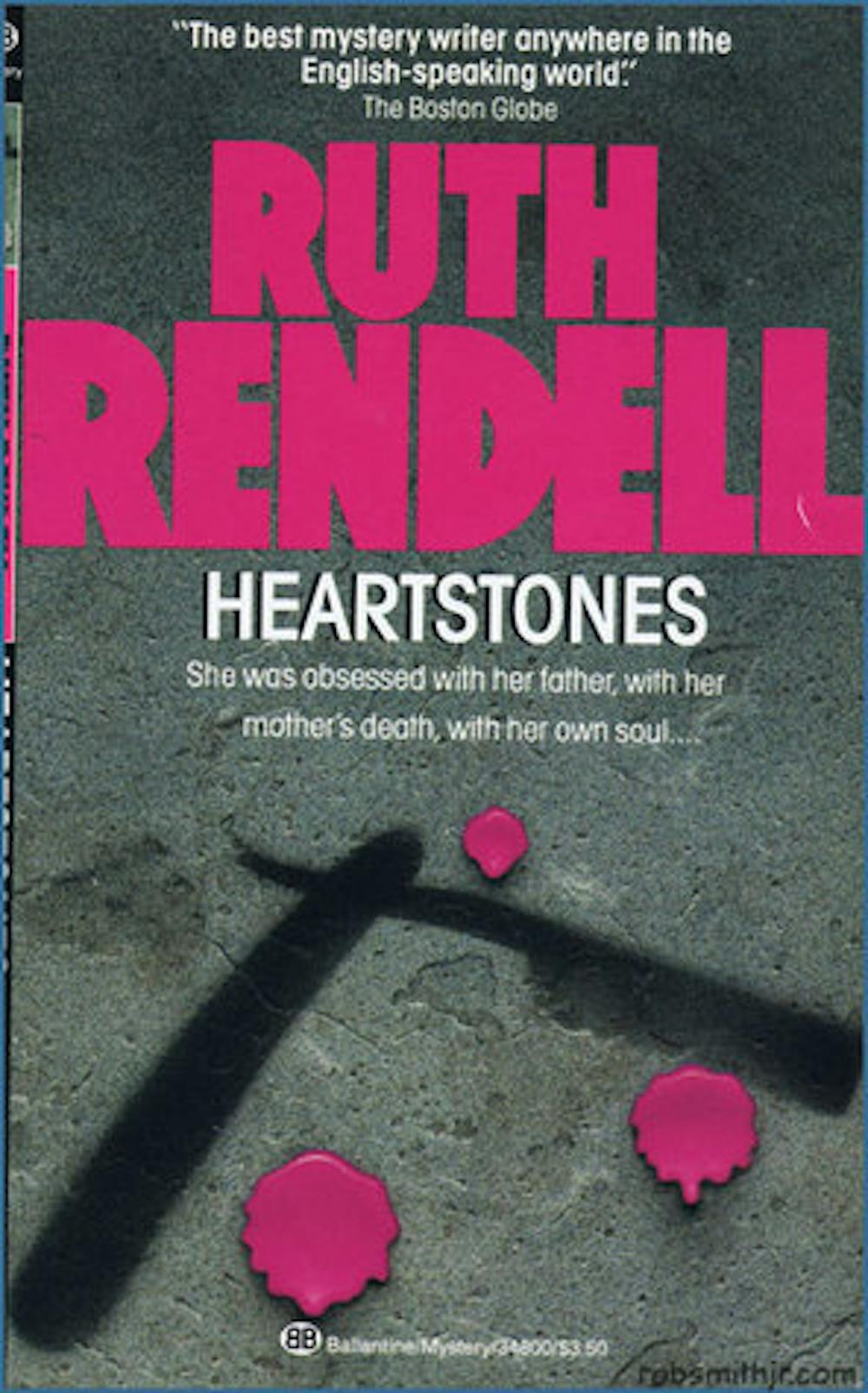
The female protagonist and first-person narrator of Ruth Rendell’s novella Heartstones is 16-year-old Elvira, whose mother has died from cancer. Through her retrospective narrative, the novella follows Elvira’s descent into anorexia, her obsession with her emotionally distant father Luke and her relationship with her younger sister Spinney, who overeats.
The clues Elvira later discovers suggest Spinney murdered Luke and his new fiancée, and may murder her, too. The narrative focuses on the denial of food and the compulsion either to eat or to avoid eating. Food is the enemy, a form of poison, and eating is the crime. Rendell uses the domestic noir genre, which highlights intimate experiences from the personal and domestic sphere to create a feminist critique of eating disorders and the patriarchal family as a “crime scene”.
Food and identity
Like Saga Noren (Bron/Broen) and Sarah Lund (The Killing), Lisbeth Salander in Stieg Larsson’s Millennium trilogy is lacking in emotional intelligence, which prevents her from establishing a personal relationship to the social code of food. The emphasis on the very narrow range of food she consumes stands in clear contrast to the other characters in the stories. She lives on frozen instant meals, mostly pizza, heated in the microwave or the oven, bread, apples, and of course coffee, which she usually consumes alone.
Rooney Mara as Lisbeth Sander in The Girl With the Dragon Tattoo: she lives on instant meals. Columbia Pictures Corporation,Metro-Goldwyn-Mayer (MGM),Scott Rudin Productions
Eating frozen pizza not only blurs the boundaries between child and grown-up, but also introduces a male characteristic — refusing to take on the female role in the kitchen — that fits perfectly in the masculine area of the nerd and the hacker.
Frozen pizza can be deeply symbolic. Wikimedia Commons
The relationship between food and identity, and the use of food as a symbol of the diversity of identities, place Cuban writer Leonardo Padura’s work in line with recent trends of international crime fiction. He uses traditional food and drink to expand and challenge the definition of Cubanness. Cooking is a way to preserve the richness and variety of local and traditional culture.
Many traditional Cuban dishes, such as the stew ajiaco, are under threat because of the scarcity of ingredients. Padura suggests here that the richness of Cuban culture is a victim of the revolutionary government’s attempt to create a coherent national narrative and a standardised identity model.
National dishes represent identity in other contexts, too. Cultural differences appear in Georges Simenon’s work through references to food. Where, when, what and with whom people eat are all potentially useful clues for Maigret. They can serve first, when among people of the same nationality, to underline difference and make clear the boundaries between people. Second, when foreigners are involved, they can confirm similarity, suggesting unity and togetherness.
Rupert Davies as Inspector Maigret in the 1960 television adaptation of Simenon’s novels. BBC
In the case of the English-born Australian writer Arthur Upfield, food offers insights into complex race relations and colonial influences on the traditional owners of the land. One example is seen in Upfield’s most famous protagonist, Napoleon Bonaparte (Bony), and the detective’s ability to identify, through observation alone, an Aboriginal Australian who has been living on a white man’s menu rather than a traditional indigenous diet.
Ranging from “meals” to “grub”, food is critical to establishing, maintaining and handing on cultural practices and social identity. The suspects in Bony’s investigations — male, female, single, married, working class, upper class — are separated by what, and how much, they eat and drink as easily as they are by gender, living situation and occupation.
<!– Below is The Conversation's page counter tag. Please DO NOT REMOVE. –>
The representation of food in international crime fiction, running the gamut from giggles to gore, is clearly a rich field for exploration.
Guy Pearce as the Chandleresque private investigator Jack Irish: in the early years of Australian crime fiction, convicts and bushrangers featured prominently. Lachlan Moore
Most countries produce crime fiction, but the versions vary according to national self-concepts. America admires the assertive private eye, both Dashiell Hammett’s late 1920s Sam Spade and the nearly as tough modern feminists, such as Sara Paretsky. Britain prefers calm mystery-solvers, amateurs like Hercule Poirot or Lord Peter Wimsey or sensitive police like Ian Rankin’s Edinburgh-based John Rebus. The French seem to favour semi-professionals who are distinctly dissenting – in 1943 Léo Malet’s Nestor Burma stood up to Nazi occupiers nearly as overtly as to Paris criminals.
Australia’s rich and varied tradition of crime fiction and detectives, though little-known and more rarely described, reveals a range of national myths, fantasies, and even elements of truth-telling about a country whose origin lay in convictions for crime.
The first Australian crime novel appeared in 1818, but production has been uneven. Most mysteries have been published here in the period since 1980, with substantial local publicity and reviewing. Before then, locally-written and Australia-set mysteries usually arrived from England, asserting colonial authority, and then banning American publishers through an “International Market Agreement”.
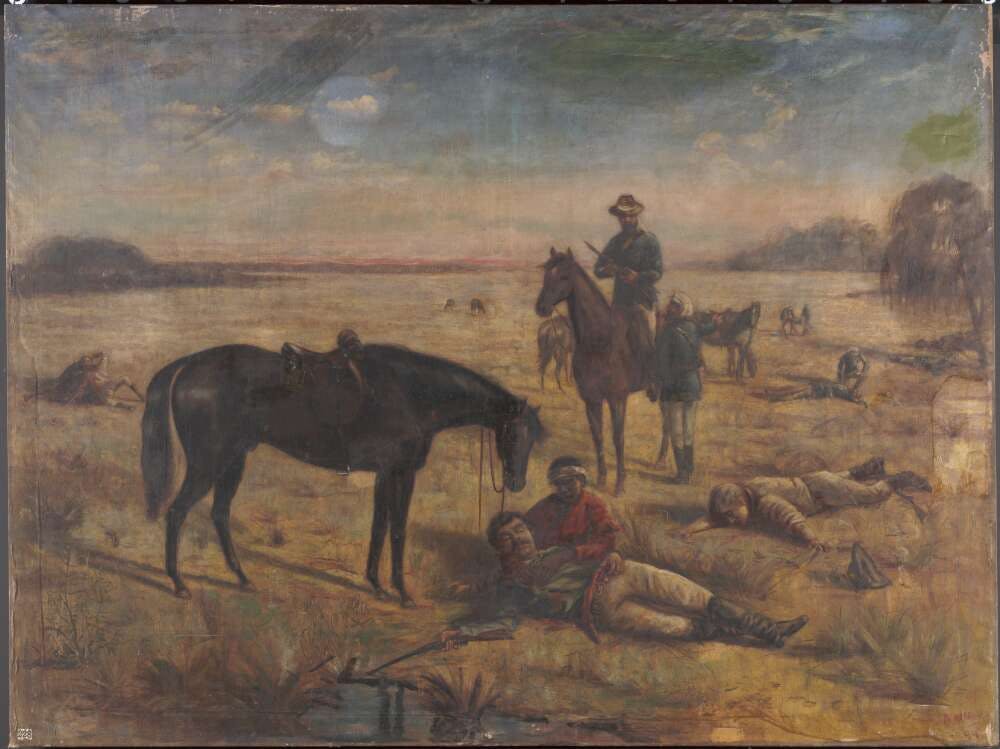
Death of Captain Starlight with his head in Warrigal’s lap, by Patrick William Marony (1858-1939). Australia’s first crime novel was about a bushranger. Wikimedia Commons
Writers sent manuscripts off to London, and a hundred or so hardbacks would arrive for local libraries, with almost no publicity and little impetus to develop the form here. But things changed with an American challenge to the “Agreement” in 1976 and the waning influence of Britain in general. In 1980 Peter Corris’s The Dying Trade began a flow of local productions – some from English firms now based here, like Allen and Unwin, who produced Jennifer Rowe with their Tolkien earnings.
Back at the start, transportation was a natural subject: in the first book of all, Thomas Wells’ Michael Howe, The Last and Worst of the Tasmanian Bushrangers (1818), Howe is a real escaped convict turned bushranger, with fictionally exaggerated adventures. Another theme was the wrongfully-convicted man like Quintus Servinton (1831) by Henry Savery.
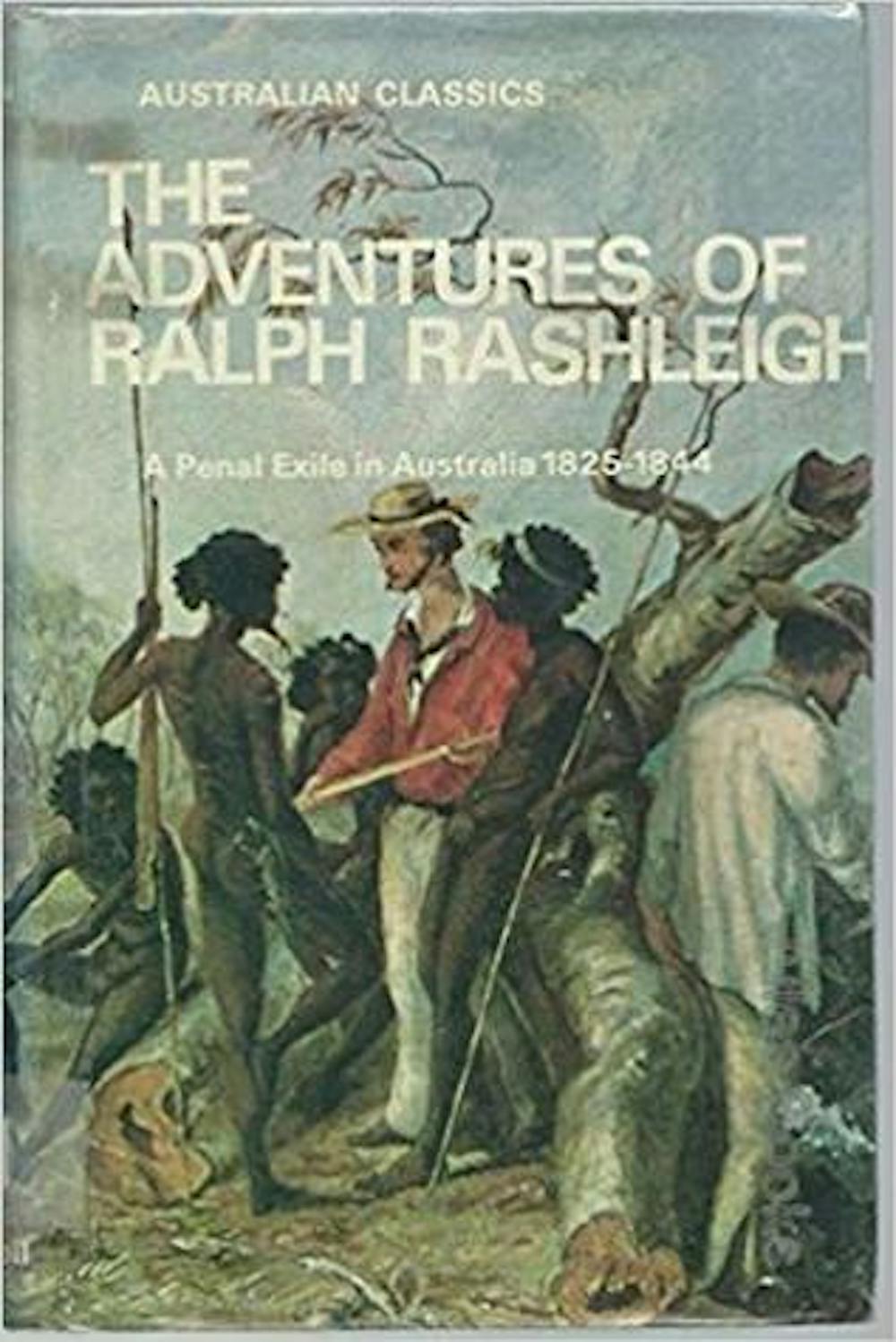
The strongest convict novel is The Adventures of Ralph Rashleigh: he experiences harsh imprisonment, then escapes to live with bushrangers, and then mostly genial Indigenes: written in 1845, probably by ex-convict James Tucker, the novel was not published for over 80 years.
Criminal threats to free settlers were central to Tales of the Colonies (1843) by Charles Rowcroft: an immigrant Tasmanian family encounters the exciting land and its fauna but also bushrangers and the historical and rather noble Indigenous leader Musquito.
In Alexander Harris’s The Emigrant Family (1849) English incomers meet a vigorous native-born family as well as a range of trouble-makers. The settler thriller moved up to squatter level in Henry Kingsley’s rambling The Recollections of Geoffry Hamlyn (1859), which offers “every known cliché of Australian life” according to Arcady in Australia: The Evocation of Australia in 19th Century English Literature, an excellent critical book by Coral Lansbury – mother of Malcolm Turnbull.
Author provided
Crime fiction illuminated the 1850s goldfields experience, mostly through short stories in the Australian Journal featuring police detectives known as “mounted troopers”, who controlled theft and crime of all kinds: they and the miners generated an early form of mateship.
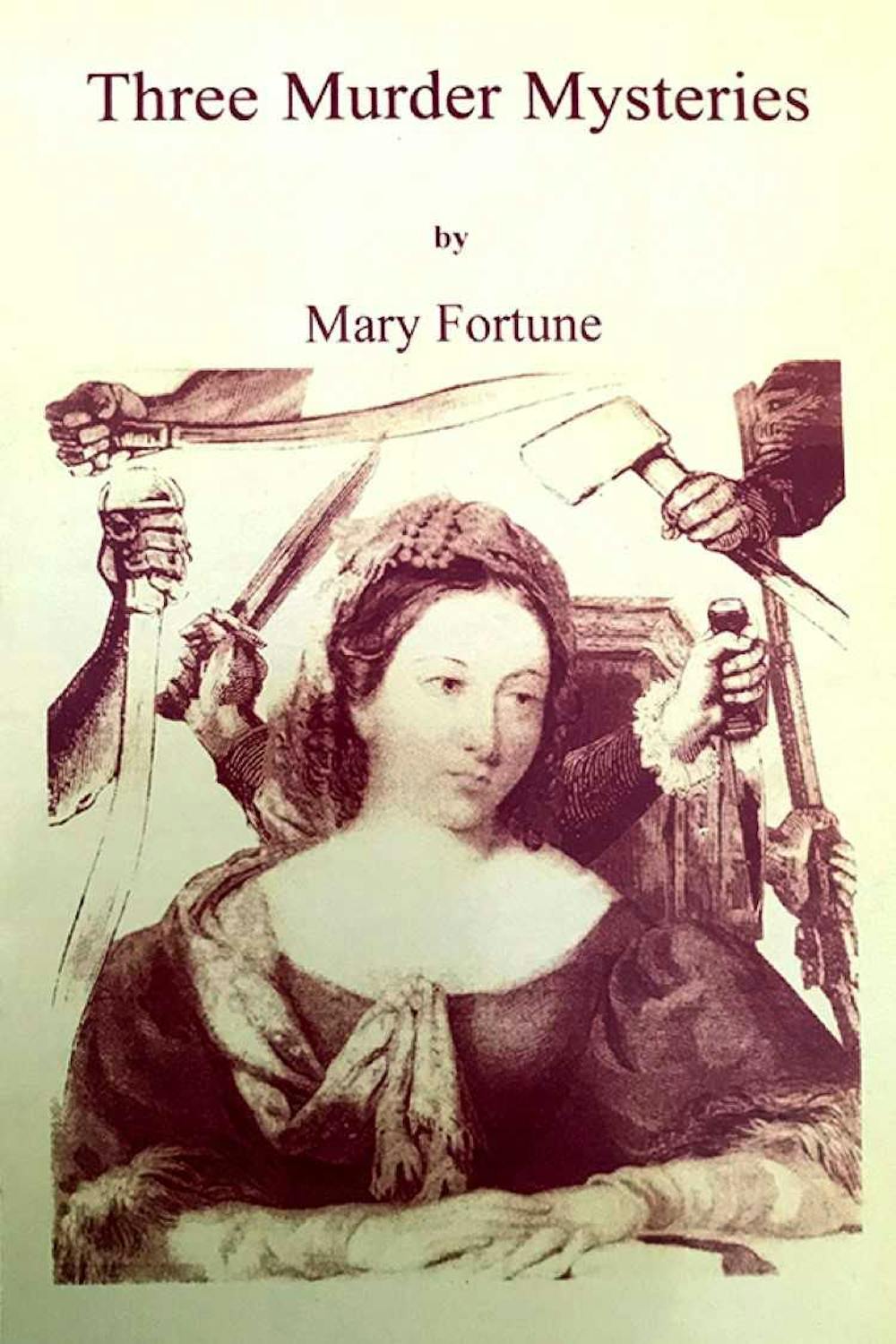
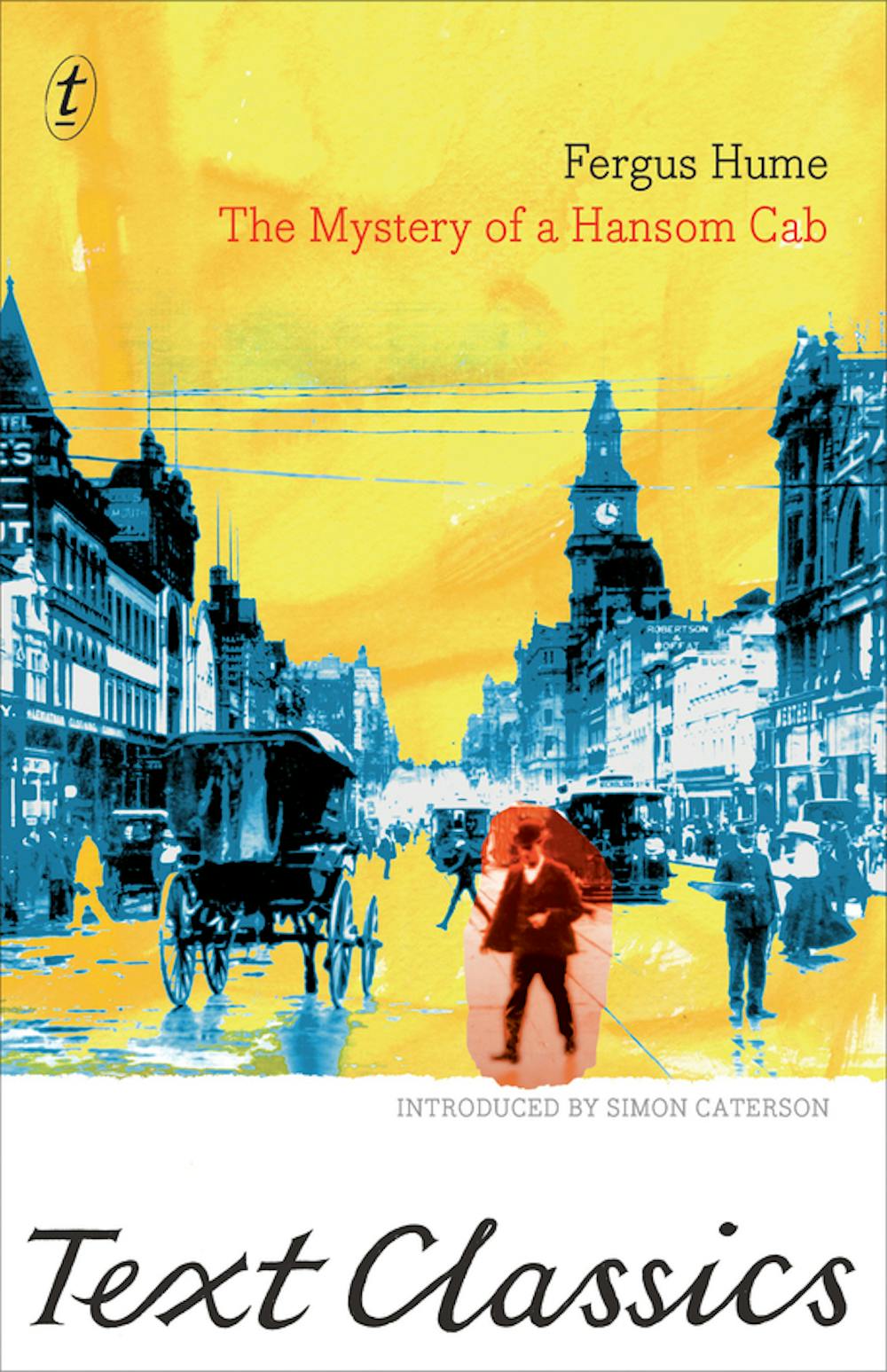
The most prolific author was Mary Fortune who, Lucy Sussex’s research has shown, wrote hundreds of crime stories to the end of the century, and has begun to be re-published. The new gold-rich urban Australia was explored, especially when Donald Cameron produced the intriguing, and almost totally forgotten, The Mysteries of Melbourne Life (1873), followed by Fergus Hume’s highly readable The Mystery of a Hansom Cab (1886): Melbourne-set and published, it then became in London the first best-seller in world crime fiction.
There had been retrospective fictions that essentially criticised the harsh convict colony and ennobled the transportees. The Broad Arrow (1859) by “Oliné Keese” (English visitor Caroline Leakey) is about a brave, true woman convict; His Natural Life by England-born Marcus Clarke offers a long, well-researched story of a maltreated, wrongly-convicted man, appearing first as a serial in the Australian Journal.
In that version he finally escapes from Norfolk Island, becomes a successful goldfields shopkeeper, and eventually returns wealthy to his much-diminished English family. But when it became a book Clarke was persuaded to drop the optimistic “Aussie-success” ending for popular novel melodrama: the escaping hero drowns tragically, and the title becomes the unironic For the Term of His Natural Life.
A more romantic and now fully Australian account of past crime and redemption was the very popular Robbery Under Arms (1881-2) by “Rolf Boldrewood”. The bushranger-turned-convict is no Anglo hero but a tough native Australian: he and his patient girlfriend end up as successful rural property-owners. So crime fiction developed a positive patriotic approach which would soon mesh with the bush myth asserted by popular writers like Lawson and Paterson – also fictional, as the cities grew.
Author provided
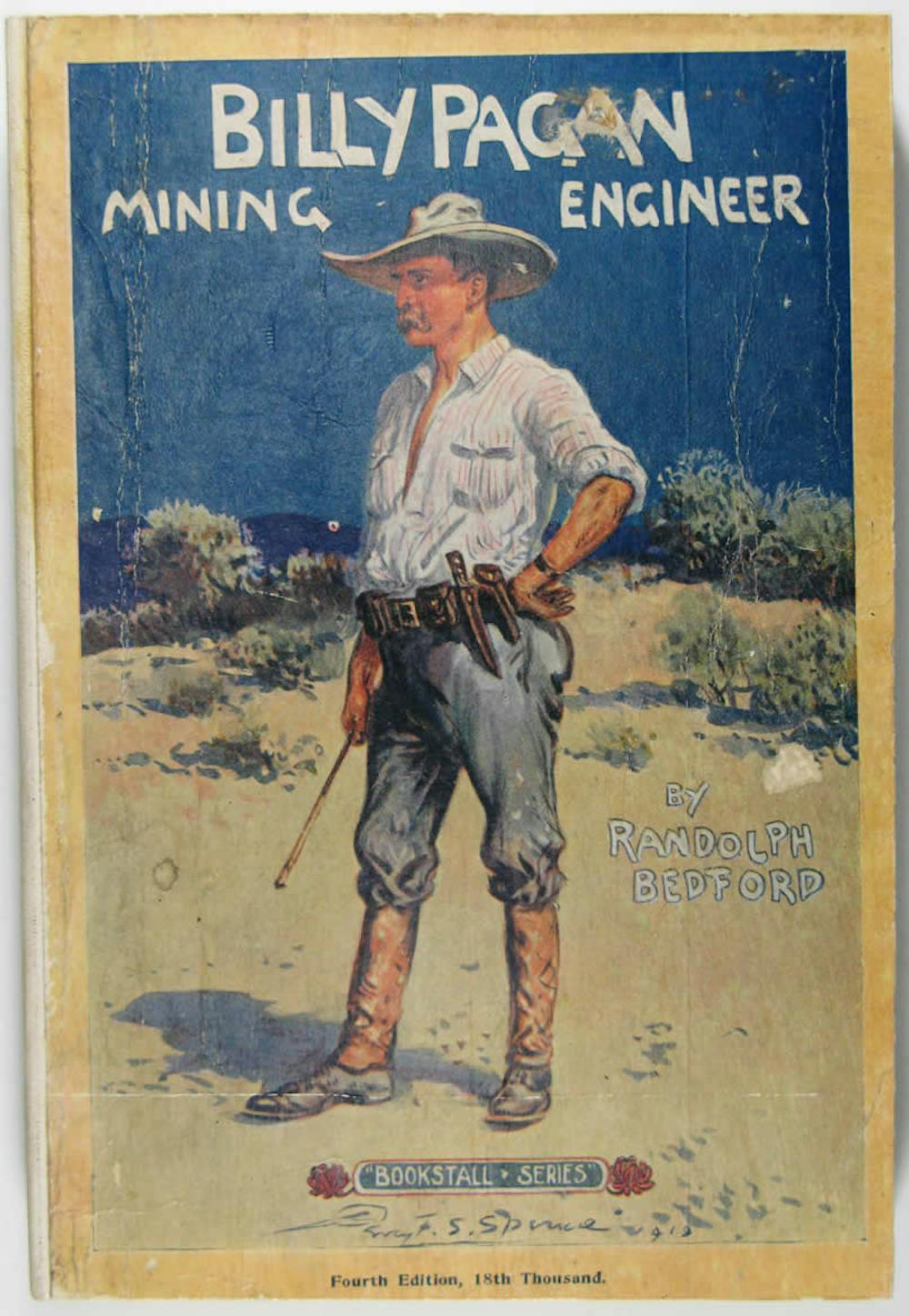
In the late 19th century there were predictable urban mysteries and better rural dramas by writers like Rosa Praed and Mary Gaunt, as well as the distinctly Australian sporting thriller, notably those set at the races by Nat Gould, and also bold roving amateur detectors such as Randolph Bedford’s Billy Pagan, Mining Engineer (1911).
But national mythic features could also be negative: notably absent have been police – while they were familiar overseas, here the memory of transportation limited them to Fortune’s people-friendly troopers, well-separated from convictism.
Equally lacking was any serious treatment of Indigenous people: they only appeared as lurking threats or helpful trackers, except in Arthur Vogan’s The Black Police (1890) in which an England-born New Zealander, who had taken a job in outback Queensland, told a bleak story about the racism he found there.
Between the wars, London publishers continued their dominance and there appeared two striking responses from local crime writers. Their novels can have “zero-setting”: though occurring in Australia they offer almost no local detail at all. Or they can be the opposite, “touristic” crime fiction, all bush and kangaroos, with the villain often consumed by the land itself in fire or flood.
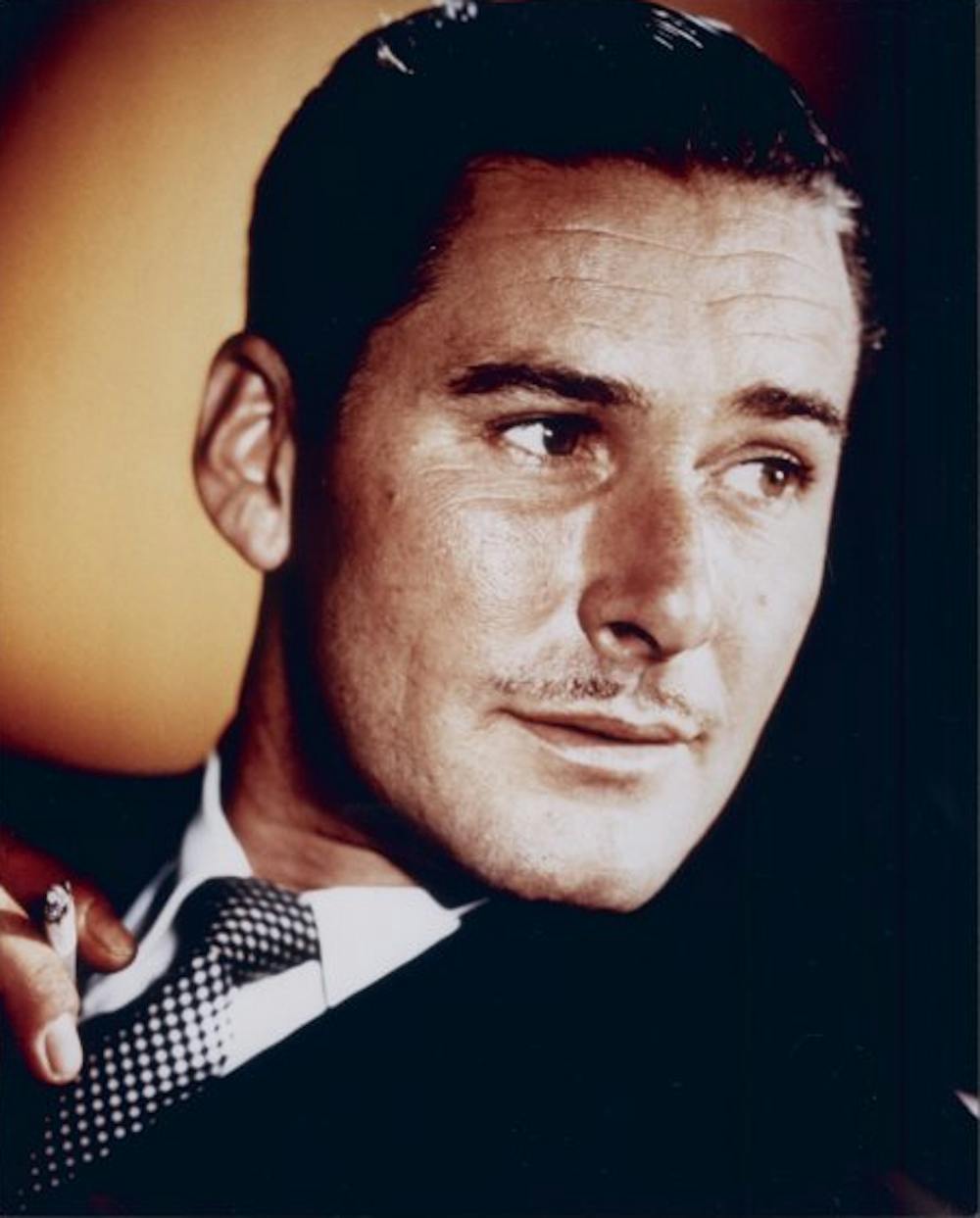
Errol Flynn, circa 1940: his thriller Showdown is very capable. Wikimedia Commons
The success of Arthur Upfield’s long series of “Bony” mysteries was not primarily based on his intelligent half-Indigenous detective but, including for overseas readers, came from the many grand outback landscapes that are so well described, to which Bony relates so strongly.
At the same time, interest developed in the formerly minor “crime novel”, the name for a story without detection and tending to sympathise with the criminal – an Adelaide-set series came from Arthur Gask. Classical mysteries were often set in the northern islands, as by Beatrice Grimshaw and Paul Maguire and, amazingly, the Hollywood actor and Tasmanian journalist, Errol Flynn, whose Showdown (1946) is a very capable thriller.
Successful women
In the 1930s Jean Spender, adopting the English style, deployed an under-heroic police detective and she was followed post-war by other successful women. June Wright’s restrained policemen usually marry the young Melbourne lady amateur detective, but she also created a fine nun-detective, Mother Paul. Sydney-based Pat Flower, from Hell for Heather (1962) on, produced a sequence of psychothrillers as potent as those by international stars such as Patricia Highsmith or Barbara Vine (the pseudonym of Ruth Rendell).
Effective post-war male crime writers existed, such as Sidney Courtier and A. E. Martin, but they too were mostly England-published and little noticed or remembered. The American private eye had a brief presence in and after World War II, with many Americans in the country and English book imports rare: both US-based and local tough-guys thrived like those by the ultra-prolific “Carter Brown” (Alan G. Yates).
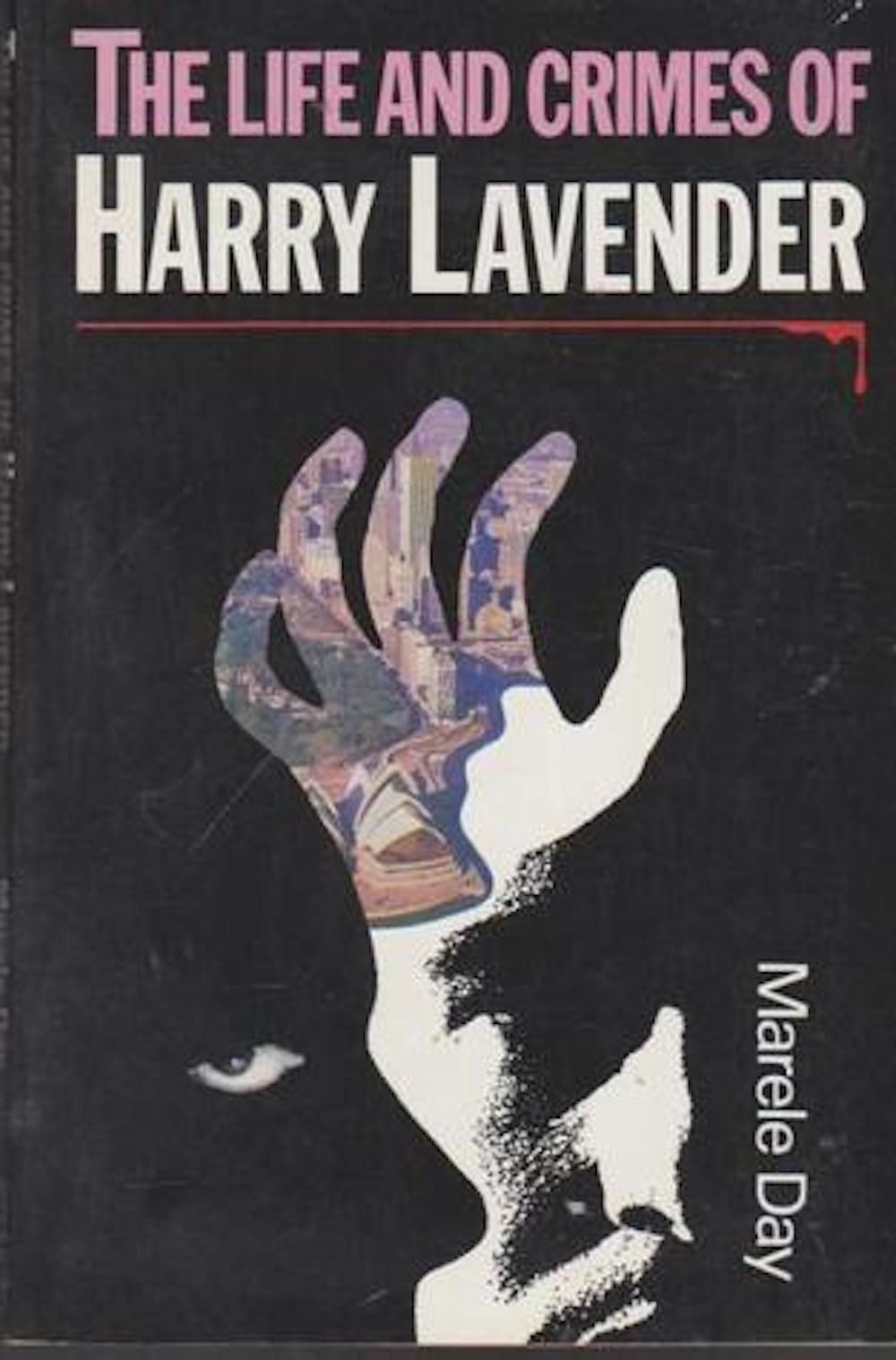
They faded, but the form would return when, feeling abandoned by Britain and looking more across the Pacific, readers were offered their own version of the American mode. The Dying Trade (1980), published in Sydney, with full local publicity, featured a truly Aussie tough guy, Cliff Hardy, and the author, Peter Corris, academic and journalist, stimulated more Sydney-based detectives, Marele Day’s elegant feminist Claudia Valentine, glamorous lesbian cop Carol Ashton by Claire McNab, and the thoughtful English-style amateur Verity “Birdie” Birdwood from publisher Jennifer Rowe. Now local readers could enjoy a wealth of their own national crime fiction, newly embodying many forms of contemporary conviction.
Melbourne soon followed with Shane Maloney’s wry amateur inquirer Murray Whelan and Peter Temple’s Chandleresque private investigator Jack Irish, so well realised on television by Guy Pearce.
The crime novel continued through Garry Disher and his genuinely tough Wyatt, while the psychothriller and other sub-genres flourished, especially from the ever-productive Gabrielle Lord. Finally, major male writers started to employ police – Disher by 1995 with Inspector Challis in The Dragon Man and Peter Temple’s very successful The Broken Shore (2005) introduced injured cop Joe Cashin.
Modern retrospection arose from Australian acceptance of the innovative mode of historical crime fiction pioneered by Umberto Eco in The Name of the Rose (1980). Melbourne led with Kerry Greenwood’s glamorous 1920s investigator Lady Phryne Fisher in Cocaine Blues (1989); later Marshall Browne offered a turn-of-the century Melbourne thriller series.
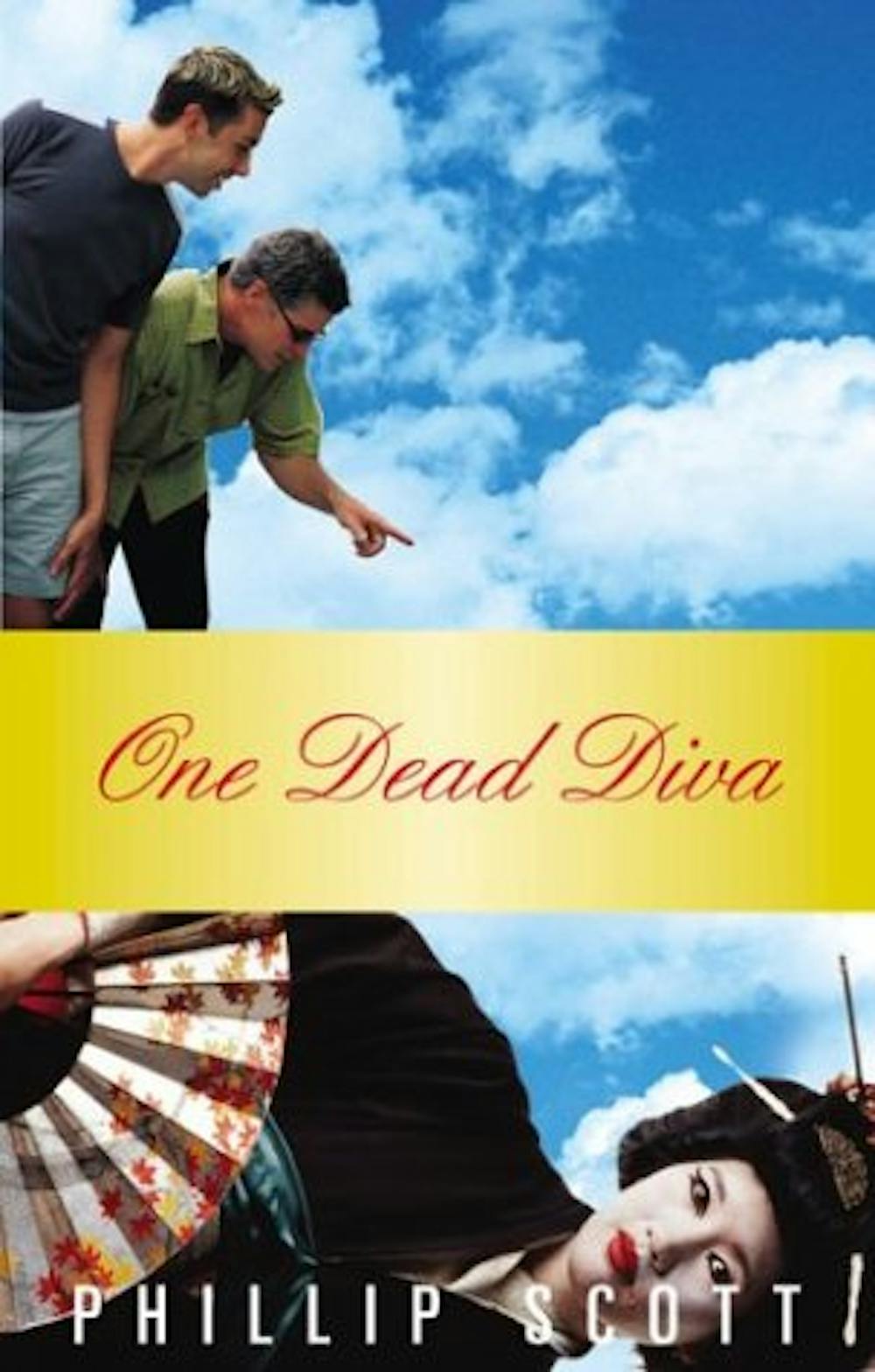
International gay crime fiction arrived: Claire McNab handled the female side forcefully, while for the men Adelaide’s notorious Duncan drowning was reworked in Roger Raftery’s The Pink Triangle (1981) and Phillip Scott’s amusing opera-related series started with One Dead Diva (1995).
Indigenous crime fiction writers also appeared. Mudrooroo Narogin produced, then as Colin Johnson, Wild Cat Falling (1965), a potent crime novel about a Perth teenager; later crime stories featured his Detective-Inspector Watson Holmes Jackamara, a figure both ironic and revealing. Archie Weller wrote a strong crime novel The Day of the Dog (1981) and tough short stories; Philip McLaren’s major novel Scream Black Murder (1995) has Indigenous police detectives, male and female, facing both public and personal challenges in Sydney’s Redfern.
Since 2000 Australian crime fiction has strengthened further, mostly with new voices. Day, Rowe and McNab all put an early end to their series and in 2017 Corris has called it a day – Cliff is smiling as the story finishes. Temple’s darkest novel, Truth, won the Miles Franklin national prize in 2010, but his recent death has saddened readers.
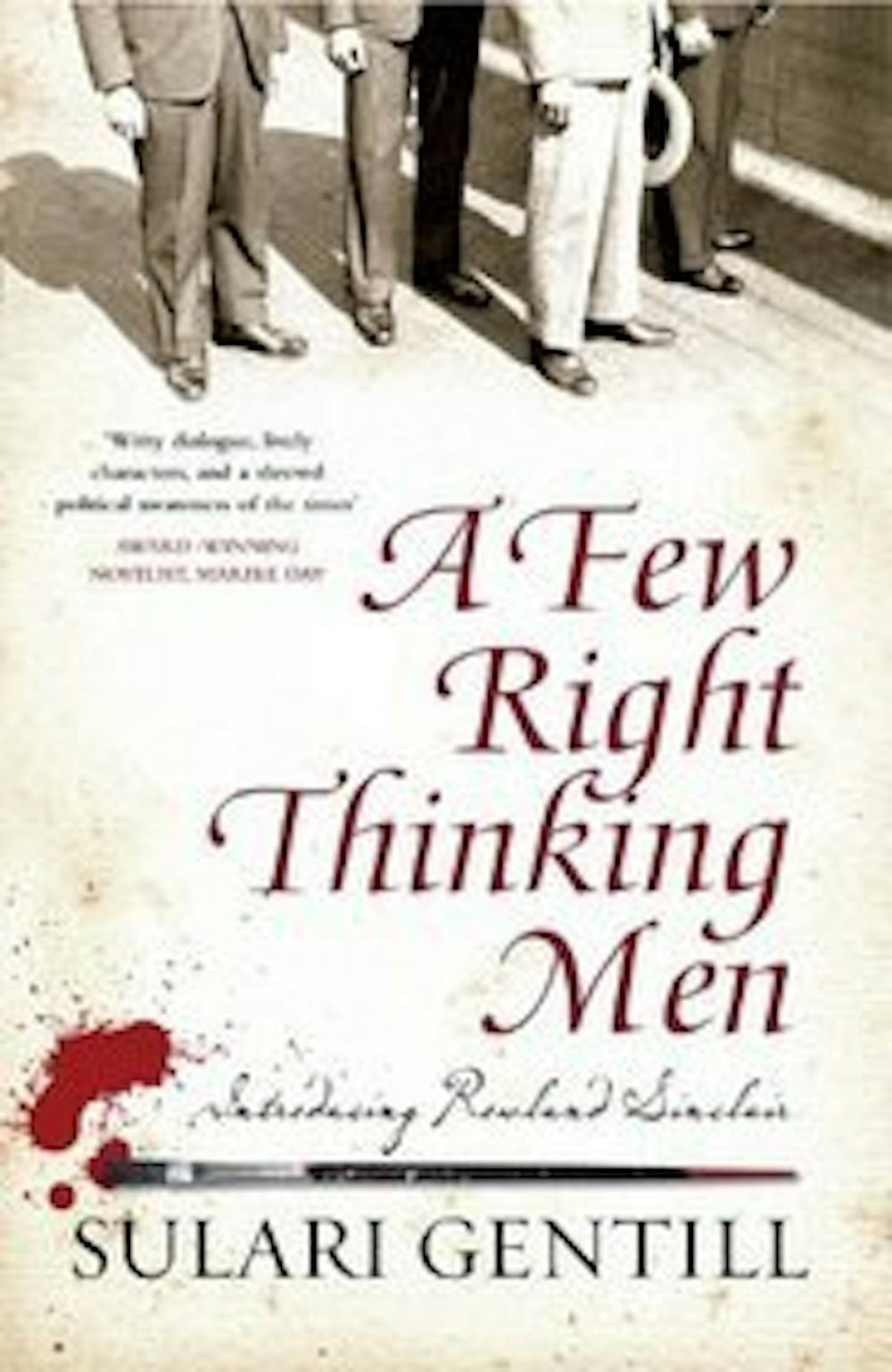
Historicism has continued. Sulari Gentill explores the politics of the 1930s in her Rowland Sinclair series, and Lady Phryne has re-appeared, but Greenwood now also turns to the “cozy” tradition with large detecting chef Corinna Chapman. Police presence has grown, with notably realistic treatments by former female officers, P.M. Newton, Karen M. Davis and Y.A. Erskine; and there are others, like Leigh Giarratano’s subtle detective Jill Jackson and Felicity Young’s Senior Sergeant Stevie Hooper, tall, brave and based in Perth, like several other modern investigators, including Alan Carter’s “Cato” Kwong, a police detective from a long-present Chinese family.
Australian women crime writers are now in a clear majority, and they also offer private eyes: Gabrielle Lord has a series about Gemma Lincoln, and Angela Savage’s well-developed Thailand-based novels feature Jayne Keeney. The psychothriller remains vigorous: journalist Caroline Overington produced the intriguing Ghost Child (2009), while Honey Brown offers deeply imaginative stories like Red Queen (2009).
The crime novel thrives among male writers — Disher’s man re-asserted his presence in Wyatt (2010) and Andrew Nette produced the both local and international Gunshine State (2016); the comic crime novel emerged in Robert G. Barrett’s series about the idiotic bogan Les Norton. Other traditions continue: Tara Moss keeps feminism alive in her Mak Vanderwall series, while Nicole Watson’s The Boundary (2011) is a powerful Brisbane-based, Indigenous-oriented narrative.
Unique features appear in Australian crime fiction, and not just the five different authors who focus their mysteries on the Melbourne Cup. More notable are Leigh Redhead’s series about Simone Kirsch, the stripper-detective, starting with Peepshow (2004), revealing in several ways, and the two fascinating poem-based mysteries by the sadly late Dorothy Porter: The Monkey’s Mask (1994) and El Dorado (2007).
Such brilliant exotics, and the richness of the tradition as a whole, show how far Australian crime fiction has come from convicts and bushrangers, without losing its continuing relationship with changing national concerns and the social and personal myths it can both test and validate.














 Stephen Knight is the author of
  At the BookShelf
You must be logged in to post a comment.