
The link below is to an article that looks at Sesame Street ebooks that are currently available for free, including Kindle.
For more visit:
https://goodereader.com/blog/e-book-news/100-sesame-street-ebooks-available-for-free

The link below is to an article that looks at Sesame Street ebooks that are currently available for free, including Kindle.
For more visit:
https://goodereader.com/blog/e-book-news/100-sesame-street-ebooks-available-for-free
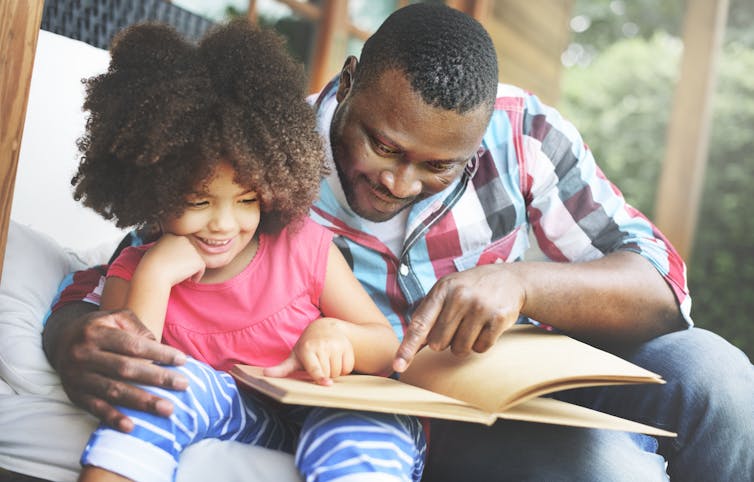
Sandra Martin-Chang, Concordia University and Stephanie Kozak, Concordia University
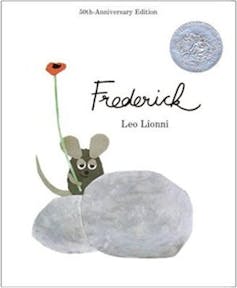
It started with Frederick, by Leo Lionni — a beautifully illustrated story about the importance of the arts.
Or it began with The Christmas Miracle of Jonathan Toomey by Susan Wojciechowski — an exquisite storybook about a sullen carver who is transformed by the love of a little boy.
These are some of our own first favourite books. That was before we understood the benefits behind storybook reading. But we gave the books to our nieces and nephews based on our pure appreciation of the stories themselves. And thus began family traditions of carefully selecting, signing and gifting cherished books to one another.
For educators, the importance of storybook reading in the home is well documented. Reading to children is associated with a heap of benefits, including more expansive expressive and receptive vocabularies, better language comprehension and better early math abilities. More recently, the study of reading has turned to examine the social and emotional benefits provided by storybook reading.
Different themes explored by storybooks can develop aspects of socio-emotional understanding, because a well-written story can transport the reader into fictional worlds and let them experience emotions by proxy.
Parents who are more familiar with storybooks (presumably through reading them with their children), have children who are better at identifying and separating their own emotions and desires from the emotions and desires of others. Such social and cognitive skills are part of developing towards what psychologists call a “theory of mind” — gaining the ability to understand that other people’s thoughts and beliefs may be different from your own, and to consider why.
Books may help children develop such skills and insights because the plots often focus on social relationships between characters and contain rich language related to feelings and identity formation. Books can also encourage children to think of ways to enrich the lives of those around them, thereby enriching their own.
Of course, it’s not enough to simply own many books; it’s the frequency of shared storybook reading with the quality of time that matters. But whether books are borrowed from the local library, or part of your own collection, having access to them in your home is a good place to start.
Here are some of our favourites.
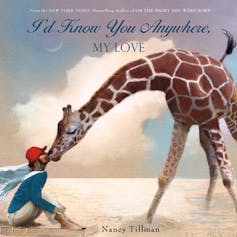
Books that explore themes of love and community: Porcupine’s Bad Day by Emilie Corbiere is an English- and Ojibway-langugage account of how porcupine’s friends help him move beyond his grumpy mood as he tries to sleep in the daytime — and to understand they all share the forest. Nancy Tillman’s I’d Know You Anywhere, My Love explores how intimacy and love are tied to recognition and acceptance, told through the delight of animal disguises and a woman narrator. Max and the Tag-Along Moon by Floyd Cooper narrates the love of a boy and his grandpa against the backdrop of the moon’s ever-present mystery.
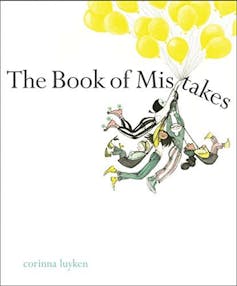
Books that celebrate the occasional misstep in creativity: The Book of Mistakes by Corinna Luyken, The Most Magnificent Thing by Ashley Spires, and Ish or The Dot, by Peter Reynolds. The Dot is about a schoolgirl, Vashti, who goes from believing she can’t draw to a celebration of self-expression and creativity — beginning with a dot. These books would make wonderful gifts for the creative but cautious children in your lives.
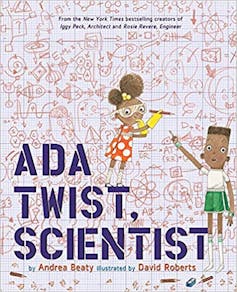
Books for young budding professionals: Andrea Beaty’s books, including Ada Twist, Scientist and Iggy Peck, Architect would make wonderful presents that showcase new worlds opening up through science and design, and that show children the road to success is often littered with road blocks that can be overcome.

Books that embrace challenge: What Do You Do With An Idea by Kobi Yamada is an encouraging book suitable for all ages. After the Fall (How Humpty Dumpty Got Back Up Again) by Dan Santat contains themes of perseverance and overcoming fears.
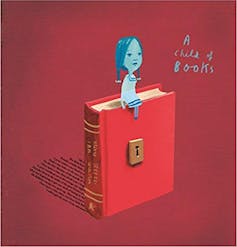
Books that celebrate themselves: The Good Little Book by Kyo MacLear, and It’s a Book by Lane Smith are stories about the love for reading, and the value of a good book. These support the message that reading is a beautiful thing. A Child of Books by Oliver Jeffers and Sam Winston is a lyrical celebration of a childhood filled with books.
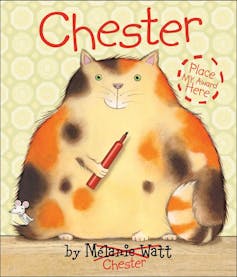
Books that don’t take themselves too seriously: Chester by Mélanie Watt,
The Book With No Pictures by B.J. Novak, Oddsockosaurus by Zanib Mian and I Want My Hat Back by Jon Klassen all provide a shared giggle between adult and child. Books like these reinforce the value that reading is a fun and intrinsically enjoyable activity.
Above we’ve included some of our favorite titles, but there is no one perfect book. We encourage you to spend some time talking to your local bookshop staff or librarians to find titles that will resonate in your family.
The psychosocial and educational benefits from shared storybook reading do not depend on whether the books are bought or borrowed or whether they’re new or used. All you need are books with convincing characters, good conversations and a place to snuggle up and read.
[ Like what you’ve read? Want more? Sign up for The Conversation’s daily newsletter. ]
Sandra Martin-Chang, Professor, Department of Education, Concordia University and Stephanie Kozak, PhD Candidate, Concordia University
This article is republished from The Conversation under a Creative Commons license. Read the original article.
Kym Simoncini, University of Canberra
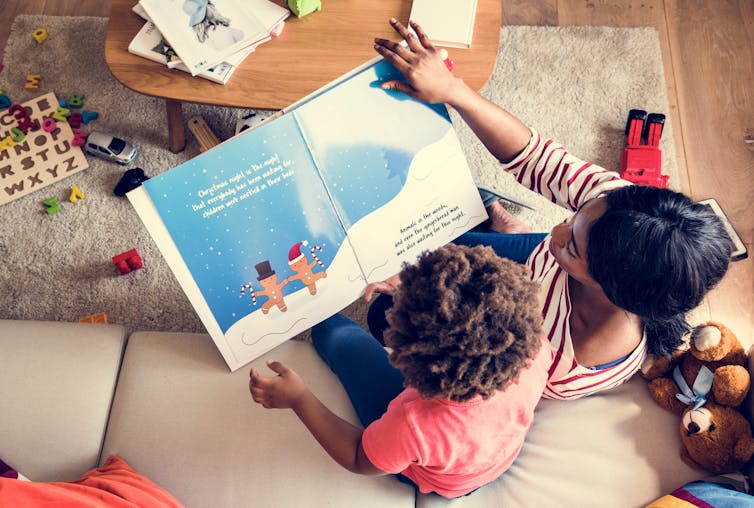
Christmas is just around the corner. If you’re wondering what to get your child, your friends’ children, your nieces, nephews or basically any very young person in your life – I highly recommend picture books.
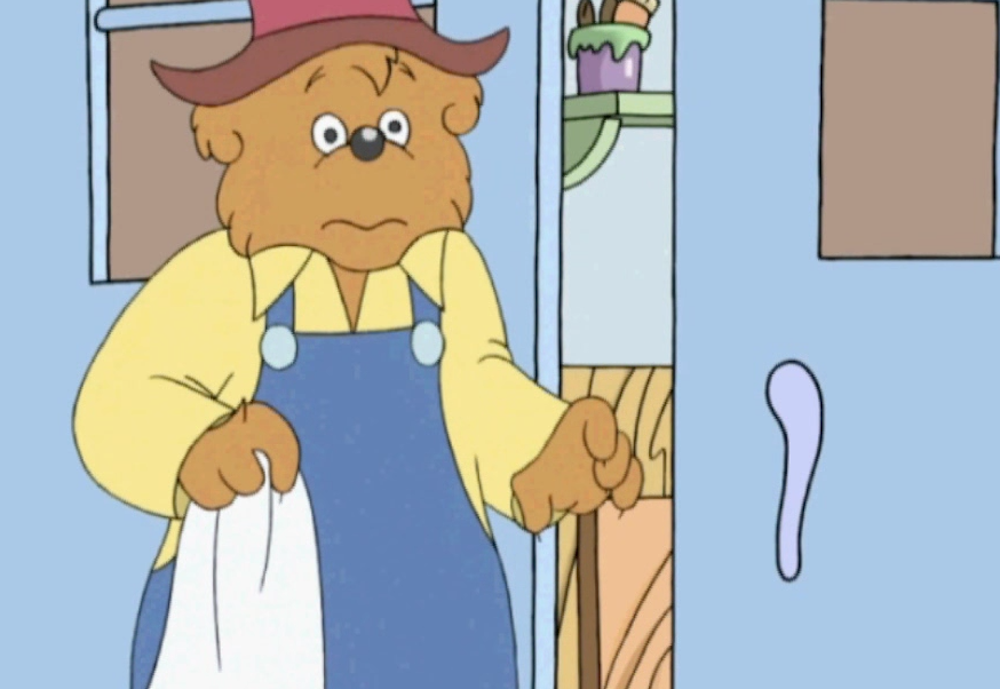
Many people can remember a favourite book when they were a kid. Some of my favourites were the Berenstain Bears with Papa Bear trying, unsuccessfully, to teach his children how to ride a bike or gather honey.
Sadly, a 2011 report from the UK showed the number of young people who say they own a book is decreasing. The report also showed a clear relationship between receiving books as presents and reading ability.
Children who said they had never been given a book as a present were more likely to be reading below the expected level for their age.
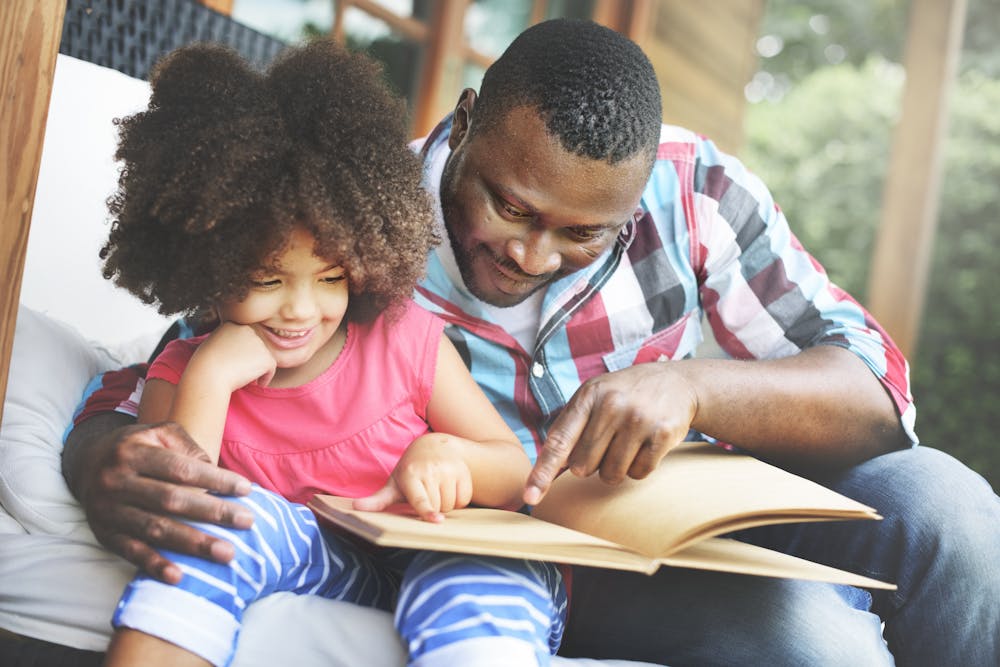
There are lots of benefits of reading aloud to young children, including developing children’s language and print awareness. These include knowing that the squiggles on the page represent words, and that the words tell a story.
Such knowledge gives children a head start when they go on to reading at school.
Research shows books have a greater variety of words than conversations. But it also suggests the conversations had during reading matter most.
Adults should discuss ideas in books with children, as they occur, as opposed to just reading a book from start to finish. Talking about the pictures, or what has happened, can lead to rich conversations and enhance language development.
The more words you know, the simpler it is to recognise them and comprehend the meaning of the text. Children who read more become better readers and more successful students.
Picture books show children maths and science concepts through a story, which helps kids grasp them easier.
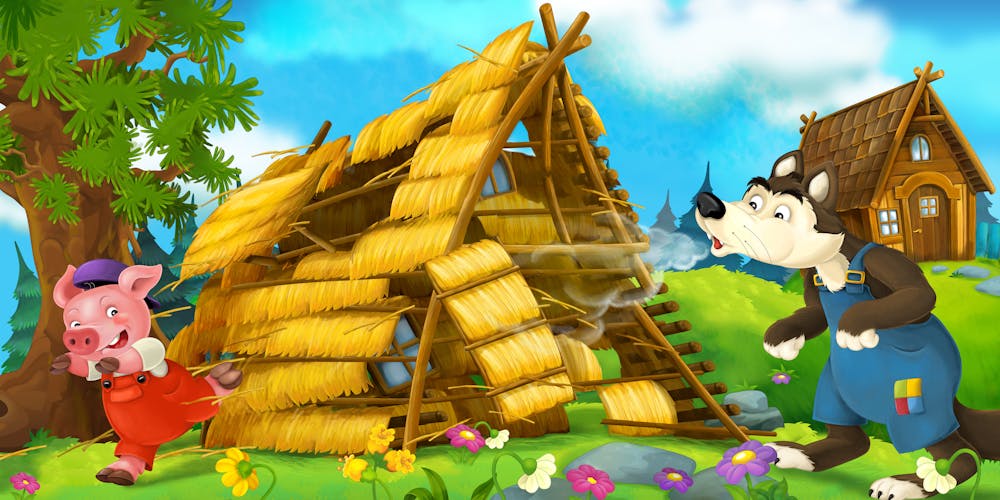
Some books (like How Many Legs and How Big is a Million) explicitly explore concepts such as numbers. Other stories, like the Three Little Pigs, have concepts embedded in them. Children can learn about the properties of materials when adults talk about the strength of hay, sticks and bricks.
A study in the Netherlands found kindergarten children who were read picture books, and were engaged in discussions of the maths concepts in the books, increased their maths performance, compared to a control group of children who weren’t read these books.
Early Learning STEM Australia has created a booklist which gives parents and teachers ideas for books that contain STEM (science, technology, engineering and maths) ideas. These include:
They All Saw a Cat, which shows the perspectives of different animals
Lucy in the City, where a cat loses her way home and an owl helps her
Dreaming Up, which contrasts children’s constructions with notable works of architecture.
Nearly 30 years ago, children’s literature professor, Rudine Sims Bishop, wrote how books can be windows, through which we see other worlds. These windows can become sliding doors when we use our imaginations and become part of them.
Books can also be mirrors, when we see our own lives and experiences in them. In this way, they reaffirm our place in the world.
Children need both types of books to understand people come from different cultures and have different ways of thinking and doing things. Books can show that children of all cultures are valued in society.
Children who never see themselves represented in books may feel marginalised. Unfortunately, the majority of books feature white children or animals, so many children only experience books as windows.
Examples of books that show the lives of Indigenous children include Big Rain Coming and Kick with My Left Foot (which is also a great book about left and right).
Children learn gender stereotypes from a very young age. Research shows by the age of six, girls are already less likely than boys to think girls are “really, really smart” and they begin to avoid activities thought to be for “really, really smart” children.
Picture books can challenge these and other stereotypes. Reading books that portray atypical behaviours such as girls playing with trucks or with girls in traditional male roles such as being doctors, scientists or engineers, can change children’s beliefs and activities.
Iggy Peck, Architect; Rosie Revere, Engineer; and Ada Twist, Scientist are very popular. And Sofia Valdez, Future Prez has just been released.
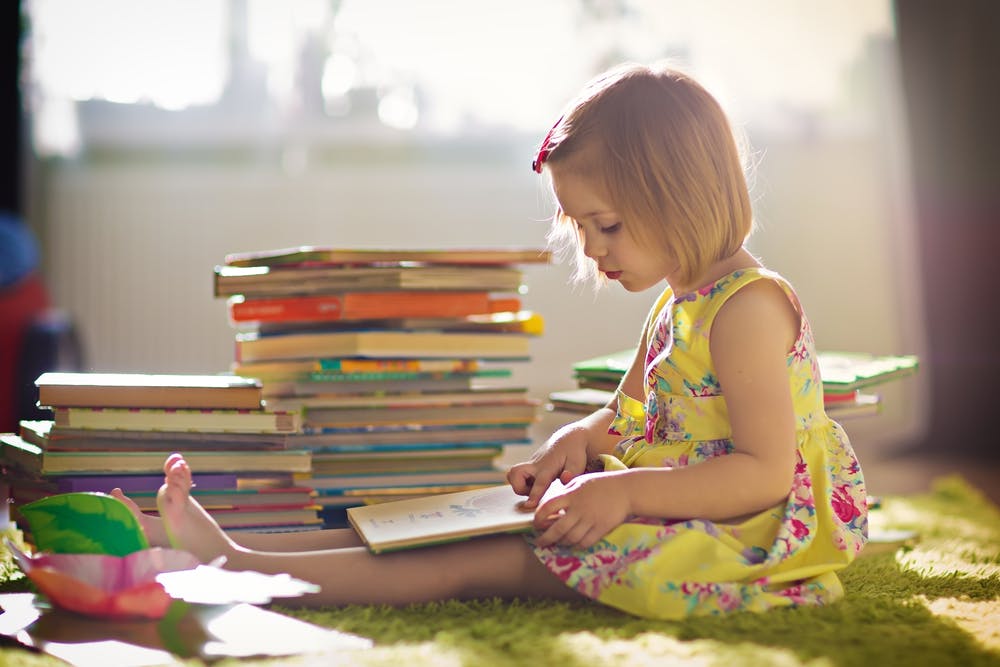
The City of Monash in Melbourne has created a list of children’s picture books that promote gender equality and challenge gender stereotypes. This includes one of my favourite books, The Paperbag Princess, who saves herself from a dragon and decides not to marry the prince after he complains she is a mess.
A study that looked at data from 27 countries, including Australia, found children growing up in homes with many books got three years more education than children from bookless homes. This was independent of their parents’ education, occupation and class.
Adults need to model good reading habits and their enjoyment of reading. Giving children a love of reading can be the best present we ever give.
Kym Simoncini, Associate professor Early Childhood and Primary Education, University of Canberra
This article is republished from The Conversation under a Creative Commons license. Read the original article.

Karen Sands-OConnor, Newcastle University
Cuddling up in a big chair with a good book, either with a familiar adult reading to you or starting the first chapter of a book on your own is a fundamental part of childhood – emotionally as well as intellectually. Reading about people who are like yourself affects both your self-image and the likelihood you will enjoy reading. Becoming a habitual reader, in turn, affects your life options. Reading about people different from yourself also encourages empathy and cultural understanding.
But if the world of children’s books doesn’t include people who look like you, it is difficult to feel welcomed into reading, as the writer Darren Chetty, among others, has pointed out. And recent research suggests that child readers, especially, but not exclusively, readers of colour, are being seriously shortchanged.
There simply aren’t enough authors and illustrators from diverse backgrounds being published, as academic Melanie Ramdarshan Bold pointed out in the 2019 Book Trust report on representation of people of colour among children’s book authors and illustrators. In fact, between 2007 and 2017, fewer than 2% of children’s book creators were British people of colour.
Authors of colour often feel isolated within the publishing industry. They are frequently encouraged to focus on racism and similar problem narratives, a recent report from Arts Council England (ACE) found. They do not have the freedom (as many white British authors do) to write across the broad spectrum of children’s literature genres if they want to be published.
While about a third of school-age children come from a minority ethnic background, the Centre for Literacy in Primary Education found that only 7% of children’s books published in Britain in 2018 had a Black, Asian or minority ethnic character. With so few diverse children’s books being published, these books are deeply important.
When characters of colour appear in children’s books, they are rarely the protagonist with the agency to effect change. Recent books sometimes still depict characters of colour as “sidekicks” who support and affirm the white main character. Other times, the “diversity” in a book appears in the background only.
Characters are defined by their colour, which makes them irreconcilably “other”. Descriptive words of character features compare them to food or animals. Sometimes characters appear early on in a narrative, only to quickly disappear in favour of a refocus on the white character. These techniques can dehumanise people of colour.
Children’s nonfiction, including history and science, either ignores contributions of people of colour to British society or pigeonholes particular ethnic groups into certain spaces only – such as the history of British slavery (and very specifically not the history of Afro-Caribbean uprisings against British slavery).
In a single children’s book, this “sidelining” of people of colour may not matter. However, when it is the enduring norm, as Nigerian writer Chimamanda Ngozie Adichie stressed in her 2009 Ted talk on the danger of a single story, it situates readers of colour on the sidelines, too. This affects the reader’s perception of who matters in books.
While it would be easy to suggest that the problem lies with the British publishing industry alone, this is too simplistic. All people involved with children’s books need to participate in changing the narrative so that the books being published better represent the population and encourage all children to become readers, according to the ACE report.
This can be done in a variety of ways, and involves committed effort. Seven Stories, the National Centre for Children’s Books, began dedicating some of its collecting efforts to culturally diverse children’s literature in 2015. This has resulted in the acquisition of materials relating to children’s books by the Guyanese-born British poets John Agard and Grace Nichols in 2019. The acquisition of diverse materials by a national museum is one way of indicating the importance of this material to Britain and to British children’s literature.
Another way of highlighting the critical importance of including all children in children’s books is through awards. The longest-running children’s book prizes, the Carnegie and Kate Greenaway Medal, have never been awarded to a British author of colour. Following the commissioning of a diversity review of the Carnegie and Kate Greenaway Medal, the Chartered Institute of Library and Information Professionals (CILIP) revised the judging criteria for the annual prizes. These new guidelines ask judges to consider representation within books as they are making selections. Other children’s book prizes, including the Little Rebels prize, focus on children’s literature that challenges the status quo in areas such as diversity.
These efforts, large and small, bring attention to children’s books with characters of colour that might otherwise slip under the book-buying public’s radar. And getting librarians, educators and parents, no matter what their ethnic, racial or cultural background, to buy books is critical.
Publishing is a market-driven industry. If books aren’t selling, publishers can make the case that there is no audience and therefore they do not need to publish more books with characters of colour. All children need to feel welcome in the book world, and all children need to understand the diversity of British society now and throughout history.
Karen Sands-OConnor, British Academy Global Professor, Newcastle University
This article is republished from The Conversation under a Creative Commons license. Read the original article.
The link below is to an article reporting on the winner of the 2019 Klaus Flugge Prize for the most promising newcomer to children’s picture book illustration, Jessica Love, for ‘Julian is a Mermaid.’
For more visit:
https://www.booksandpublishing.com.au/articles/2019/09/12/139109/love-wins-2019-klaus-flugge-prize/
In the UK, Jessica Love has won the £5000 (A$8990) Klaus Flugge Prize for most promising newcomer to children’s picture book illustration for Julian is a Mermaid
The link below is to an article that looks at how children’s books have changed.
For more visit:
https://globalnews.ca/news/5246618/how-childrens-books-have-changed/
The link below is to an article that reports on the US Library of Congress making available online a treasure trove of rare children’s books.
For more visit:
https://goodereader.com/blog/e-book-news/library-of-congress-digitizes-dozens-of-childrens-books-and-gives-them-away-for-free
The link below is to an article that provides advice on how to self publish children’s books.
For more visit:
https://www.blackenterprise.com/how-to-self-publish-kids-books/
Raluca Radulescu, Bangor University and Lisa Blower, Bangor University
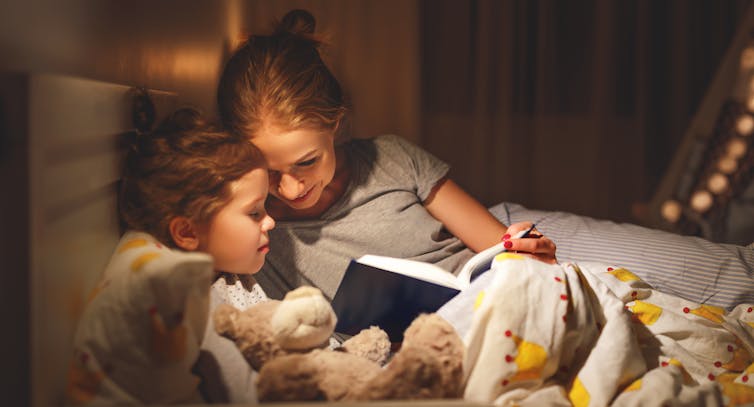
Speaking at the 2018 Hay Festival, His Dark Materials author Philip Pullman said: “To share a bedtime story is one of the greatest experiences of childhood and parenthood.” This couldn’t be more true. Besides helping sleepyheads absorb language through the familiar voices that nurture them, understand the complexities of their world, and the reasons behind their feelings, bedtime stories show how childhood can be the greatest adventure of all.
Age range: two to five years
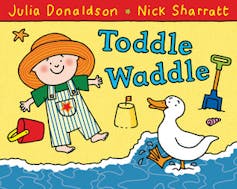
Even the youngest child can engage with sound, colour and fun, and this book (illustrated by Nick Sharratt) is filled with bright joy and wonderful onomatopoeia. From the sound of flip-flops to the excitement of slurping a drink at the beach and the music made by different instruments, the sounds, then words, are a wonderful introduction to the intricacies of language.
Age range: three years+
Hargreaves’ colourful 2D characters behaving to type are a wonderful way to identify with basic emotions by interpreting colour as a feeling. As journalist and author Lucy Mangan puts it in her memoir Bookworm: “Of course uppitiness is purple. Of course happiness is yellow.” These are no fuss, easy to follow collectables – and bitesize too, so you can gobble through second helpings before turning out the light.
Age range: three to eight years

No child should grow up without The Lorax. They’ll never be the same when they’ve learned about the Swannee-swans, Humming fish, and Bar-ba-loots bears, their Truffula trees being cut by the mysterious and scruple-free Once-ler. While the environmental message of the book is even more urgent now than it was when The Lorax was first published in 1971, the story is just as entrancing, instructive – without preaching – and, above all, as hopeful as ever. A wonderful wise Lorax speaks for the trees, and for all the world’s children, who want to keep the future green.
Age range: two to eight years
A funny picture book for younger readers that will resonate with many parents for its keen perspective on patience. It positively encourages under-fours to shout along with grumpy Bella who gets up on the wrong side of the bed. It shows the child that it’s ok to feel angry – heck, they’ll be a teenager soon enough – but it also gives them permission to express it, and reminds them that tomorrow is always a new day.
Age range: three to eight years
The Moomins’ home, Moominvalley, is a place of wonder and fun, populated by fairy-like, round creatures that resemble hippopotamuses, but enjoy human hobbies such as writing memoirs (Moomin papa), making jam (Moomin mama), and playing make-believe (Moomintroll and Snork Maiden). Their adventurous side comes out at all opportunities, stirred by friends Little My and Snufkin, or by mysterious intruders.
First published between 1945 and 1970, in recent years the stories have been tailored for both younger (soft and flap books) and older children (hardback storybooks). The Moomin books tell dream-like stories while tackling questions about love, friendships, encounters with strangers, and so on. An all-round winner.

Age range: four to 11 years
The first true book written for children about children never fails to bewitch and baffle. Young Alice-like readers can explore the topsy-turvey Wonderland, while the grown-ups reading to them will appreciate the metaphorical Mad Hatter and role of the white rabbit as leader in the adventure in a way they wouldn’t have been able to as a child. Carroll’s book is a celebration of a child’s wonder and curiosity, and fears of growing bigger too. It invites you to talk dreams and nightmares, to accept the weird and extraordinary and, best of all, to conjure up your own adventure down the rabbit hole. It’s a rite of passage, ideal for sharing.
Age range: five to 12 years
In a world where comic book superheroes and heroines reign supreme, these legends can entrance a young mind forever. This selection of Norse myths brings all the gritty dark stuff about trickster Loki together with tales of hammer-wielding Thor, and the machinations of Asgardean king Odin and goddess of love, battle and death, Freyja. It tickles the imagination of the young and challenges the parent too. Fabulous illustrations by Jeffrey Alan Love accompany Crossley-Holland’s delightful retelling, bringing these ancient stories to life in a way that no other anthology has.
Age range: eight to 12 years

This chocolate wonderland is the perfect read-aloud book, thanks to Dahl’s masterful use of the English language. Amid all the magic and invention is a wagging finger providing moral lessons on the perils of being greedy, or a brat or overly competitive – and that goes for the adult reader too. Thank goodness then for Willy Wonka, the man who really never grew up, and his band of oompa-loompahs who punish the bad, reward the good, then provide reason for it all through song.
In truth, there is no right book to share – there are plenty of them available these days – nor should there be any chronological order to how and what we read. These are just some suggestions on ways to make bedtime a little more magical. But never underestimate how marvellous it can be to reread a childhood favourite to the little one you’re now tucking in to bed. It could inspire a passion for reading and spark an interest that lasts a lifetime.
 The age ranges used in this article are mostly based on interest and reading level ratings from Book Trust.
Raluca Radulescu, Professor of Medieval Literature and English Literature, Bangor University and Lisa Blower, Lecturer in Creative Writing, Bangor University
This article was originally published on The Conversation. Read the original article.
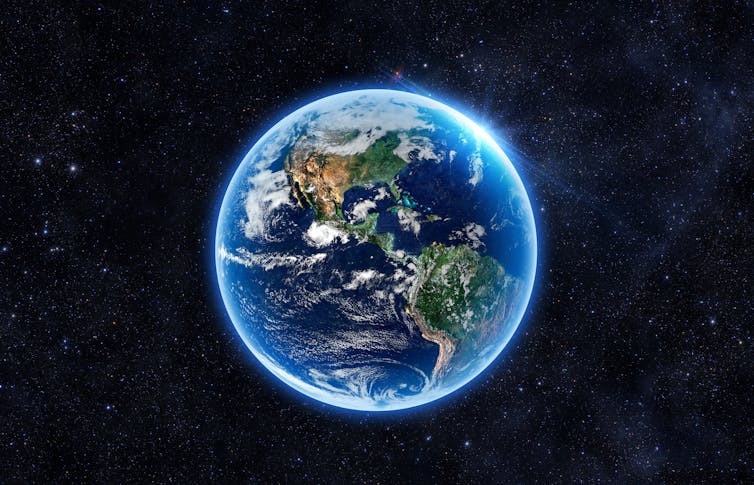
A changing climate means the frequency of extreme weather events such as heat waves, flooding, hurricanes and wildfires has become a common occurrence. Temperatures are increasing on the land and in the ocean, the sea level is rising and amounts of snow and ice are diminishing, as greenhouse gas emissions and concentrations have increased. Unfortunately, children and young people are taking the brunt of climate change and this will continue into the future.
Doctors are seeing the serious effects of global warming on children’s health and are concerned that it could reverse the progress made over the past 25 years in reducing global child deaths. Not only that, children are at risk of mental health issues such as depression and anxiety due to natural disasters caused by climate change.
A UNICEF survey of children aged nine to 18 in 14 countries showed that children are deeply concerned about global issues affecting their peers and them personally, including climate change. Children across all countries feel marginalised because their voices are not being heard nor that their opinions considered.
Given the enormity of the climate challenge, it is surprising how limited coverage of our changing climate receives in current children’s fiction. The children’s publishing sector is booming. UK sales of children’s books rose by 16% in 2016 with sales totalling £365m. Globally, children’s book sales have risen steadily across all age categories.
Some picture books do explain climate change (such as The Magic School Bus and Climate Change by Joanne Cole and Bruce Degen). And there are plenty of young adult novels that feature dystopian climate futures (such as Carbon Diaries by Saci Lloyd). But few fiction books for eight to 11-year-olds discuss the issue.
In my view, the lack of “environmental diversity” in children’s literature is just as important as the debate about the lack of cultural and social diversity. After all, children will be responsible for the future protection of our fragile planet, and so their knowledge and engagement are critical.
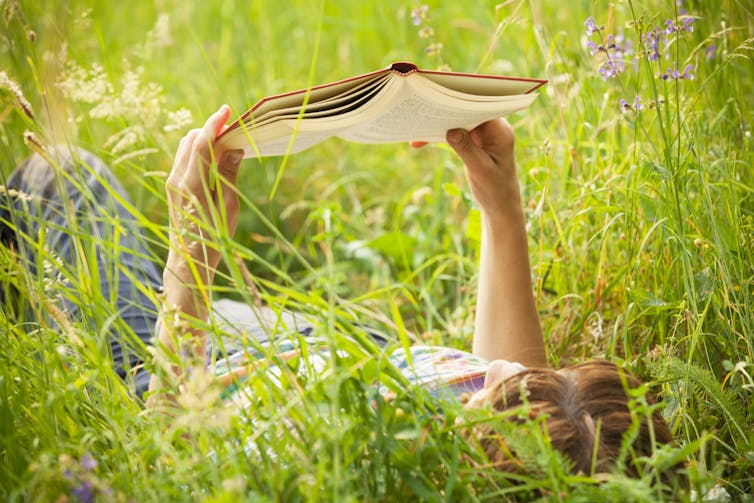
Stories not only develop children’s literacy but convey beliefs, attitudes and social norms which, in turn, shape children’s perceptions of reality. They allow children to move from a position of powerlessness to a position of possibility. Through fiction, children are able to explore different perspectives and actions beyond what they know by living in the story world of characters for whom they care.
Through literature, children can develop a better understanding of global issues and engage in critical inquiry about themselves in the world. And so combining narrative structure with factual information has the power to take children beyond what is on the page. This could allow them to expand their understanding of difficult scientific concepts such as climate change.
As children engage in the printed word, they can be inspired to make a difference in the real world. This is what a group of Portuguese children is doing after watching their district burn because of the worst forest fires in their country’s history. The fires that occurred in June 2017 have been linked to climate change, and killed over 60 people. The children are now seeking crowdfunding to take a major climate change case to the European Court of Human Rights alleging that the states’ failure to tackle climate change threatens their right to life.
When I decided to write my first children’s novel, I never intended it to be an eco-themed book. But given that I am an environmental researcher, it seemed the most natural thing to do. The result is My Dad, the Earth Warrior, a funny story about the relationship between a boy called Hero and his dad who have grown apart since the death of his mother. Then one day dad has a freak accident and wakes up claiming to be an Earth warrior sent to protect Mother Earth. This plunges Hero into an increasingly bizarre and dangerous world.
Climate change can be a dark, apocalyptic issue to discuss in a story to overcome this, I did not make it a central topic but used the changing weather as an underlying theme throughout this book. The persona of the Earth warrior provides an alternative perspective on our relationship with the natural world. At the end of the book, I encourage readers to join the tribe and become Earth warriors. I hope by taking a humorous approach to a serious topic, I can not only engage and entertain children but also inspire them to think beyond the book. This is something that writer and illustrator Megan Herbert has done by teaming up with climatologist, Michael Mann, for their crowdfunded picture book The Tantrum that Saved the World.
 We need children to care about the planet if they are to the tackle climate challenge that lies ahead. Storytelling can play a part in raising awareness and inspiring children and young adults to take action and become the next generation of Earth warriors.
Gary Haq, SEI Associate, Stockholm Environment Institute, University of York
This article was originally published on The Conversation. Read the original article.
 At the BookShelf

You must be logged in to post a comment.