Unknown's avatar

Review: Kate Grenville’s A Room Made of Leaves fills the silence of the archives


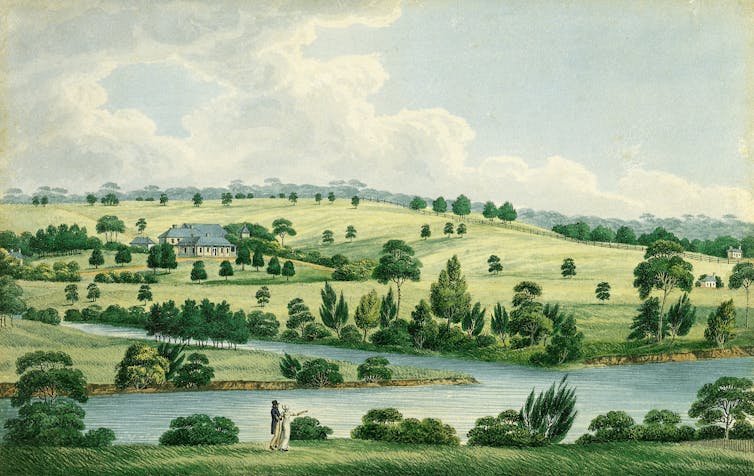
Elizabeth Farm, painted by Joseph Lycett, c1823.
Wikimedia Commons

Kerrie Davies, UNSW

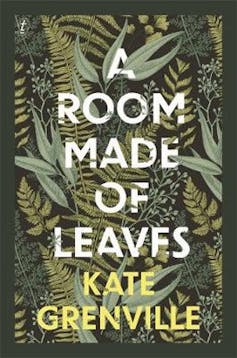
Review: A Room Made of Leaves, Text Publishing

Some time ago, during the renovation of a historic house in Sydney, a tin box, sealed with wax and wrapped in oiled canvas, was found wedged under a beam in the roof cavity. The house was Elizabeth Farm…

So begins A Room Made of Leaves’ editor’s note, detailing the discovery of the “long lost secret memoirs” of Elizabeth Macarthur, wife of colonial wool baron John Macarthur. The “editor and transcriber” is Kate Grenville, author of the acclaimed colonial novel based on her family history, The Secret River.
The discovery scenario is irresistibly believable. This month, a WWII diary was found at a Woolworths in Sydney’s North Shore. In 2011, James Bell’s 1838 account of his journey to Australia was published after being discovered at a market stall. In 2018, Miles Franklin’s final 1954 diary was discovered in an old suitcase.

Elizabeth Macarthur’s actual journal detailing her voyage on the Second Fleet was discovered at her daughter’s home in England, extracts of which were published as Some Early Records of the Macarthurs of Camden in 1914.

Grenville’s imaginary memoir of Elizabeth slips into the space between hoax and history, the paradox of purporting to be true while declaring it is not. Grenville openly plays with memoir’s “autobiographical pact”, where the reader unquestionably accepts an autobiography as truth. While a novel requires a suspension of disbelief, Grenville asks the reader to suspend their belief, akin to Peter Carey’s “feat of imposture”, True History of the Kelly Gang.


Read more:
True History of the Kelly Gang review: an unheroic portrait of a violent, unhinged, colonial punk


Grenville so convincingly creates Elizabeth’s voice it is easy to forget her opening warning: “Do not believe too quickly!”

Remains unsaid

In Grenville’s telling of Elizabeth’s telling of her marriage to John Macarthur, Elizabeth astutely understands how to manage the patriarchy rather than be a “true helpmate” to her husband as she is introduced in the family history.

She writes of the notoriously difficult John: “He could not be trusted not to destroy our hopes.” Elizabeth believes John is “dangerously unbalanced”.

Through her revision of the Macarthurs’ relationship, Grenville’s imaginary memoir joins the litany of (imaginary and authentic) revisionist biographies of wives overlooked or derided because of their husband’s fame.


Read more:
#ThanksforTyping: the women behind famous male writers


Elizabeth’s friendship with astronomer William Dawes is the central relationship. Grenville’s 2008 novel The Lieutenant was loosely based on Dawes, and she was inspired to write this imaginary memoir after reading Elizabeth’s passing reference to Dawes in an actual letter describing her astronomy lessons with the scientist and naval officer: “I blush at my error”.

This blush becomes a motif throughout A Room Made of Leaves: of the true nature of their friendship, and for what remains unsaid. “I blush at my error” was, in Grenville’s eyes, a rare glimpse of Elizabeth’s feelings hidden in what Grenville describes in her editor’s note as otherwise “unrevealing” and “dull” correspondence.
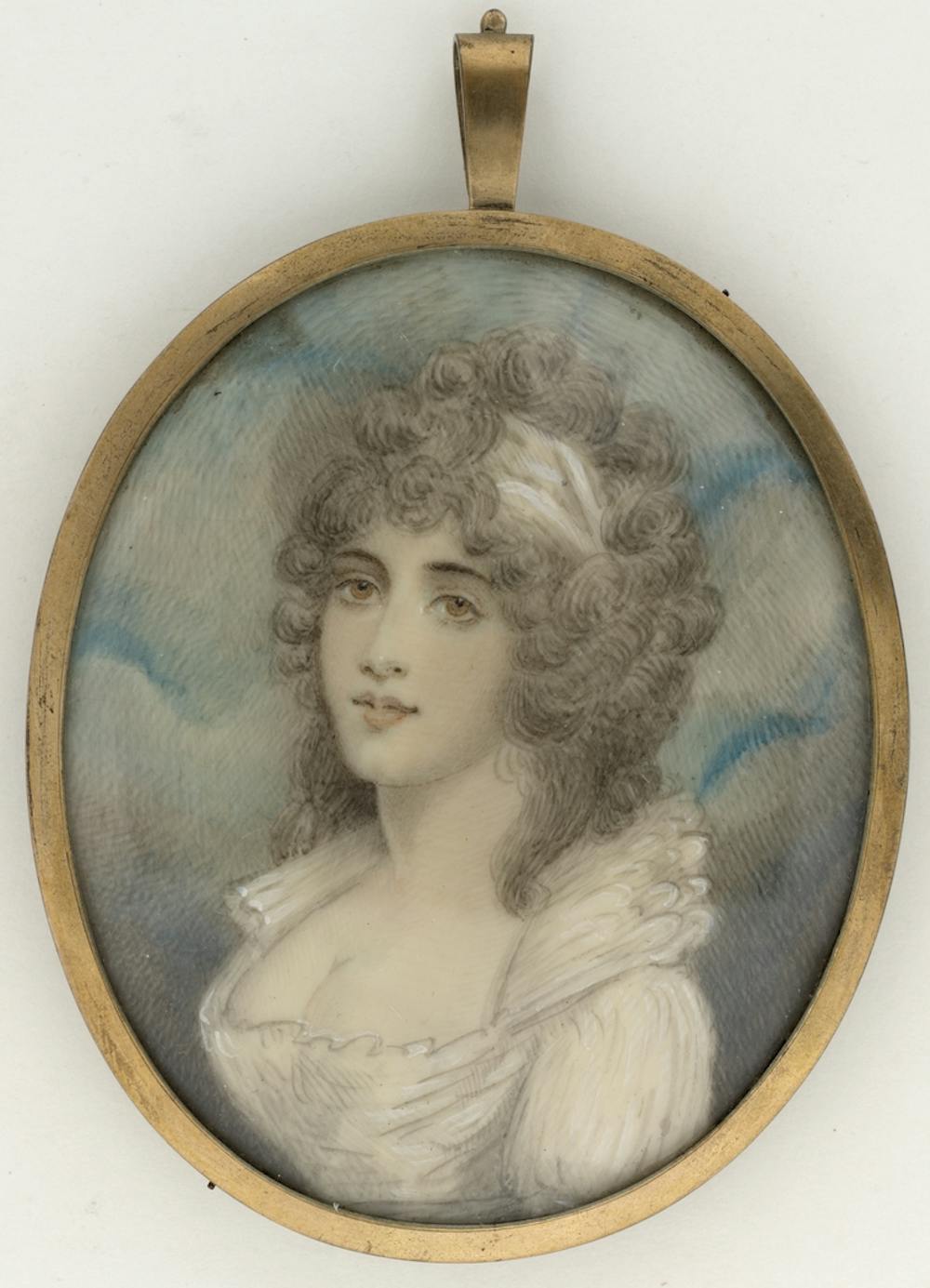
Reputedly Elizabeth Macarthur, 1785-1790 – watercolour on ivory miniature.
Dixson Library, State Library of New South Wales

As in The Secret River, Grenville once again writes of a brutal history of colonisation and resistance. Sensitive to previous suggestions of whitewashing (which she has refuted at length), in A Room Made of Leaves Grenville expresses her gratitude to the Darug Custodian Aboriginal Corporation and the Metropolitan Local Aboriginal Land Council for their assistance in writing the book.

After being told of the Battle of Parramatta led by resistance leader, Pemulwuy, Elizabeth visits the battle site and alludes to dominant colonial accounts:

There was nothing to show what had happened. Only the words of that story, snipped out and pasted onto the air.

Filling the silence

There is historical precedence for reading Elizabeth’s actual letters with the eye for the unsaid. 18th and 19th century women’s life writing was written with the expectation it was not private and adhered to social conventions of behaviour. Self-censorship and “silences in the archives” abound.

As Elizabeth, Grenville fills the silences:

I composed a glorious romance about all this for my mother. I would not lie, not outright. I set myself a more interesting path: to make sure that my lies occupied the same space as the truth.

Michelle Scott Tucker’s referenced biography, Elizabeth Macarthur: A Life at the Edge of the World is a tempting companion to come back to reality after reading A Room Made of Leaves. But Grenville’s Elizabeth stays with you.

As you see more curls of truth in Tucker’s biography that appear in Grenville’s imaginary memoir, you wonder about how the real Elizabeth felt — rather than what actually happened.The Conversation

Kerrie Davies, Lecturer, School of the Arts & Media, UNSW

This article is republished from The Conversation under a Creative Commons license. Read the original article.

Unknown's avatar

Finished Reading: Clear and Present Danger by Tom Clancy


Clear and Present Danger (Jack Ryan, #5; Jack Ryan Universe, #6)Clear and Present Danger by Tom Clancy
My rating: 5 of 5 stars

View all my reviews

Unknown's avatar

Finished Reading: Force of Nature by Jane Harper


Force of Nature (Aaron Falk, #2)Force of Nature by Jane Harper
My rating: 4 of 5 stars

View all my reviews

Unknown's avatar

Book Review: Hidden Hand – Exposing How the Chinese Communist Party is Reshaping the World


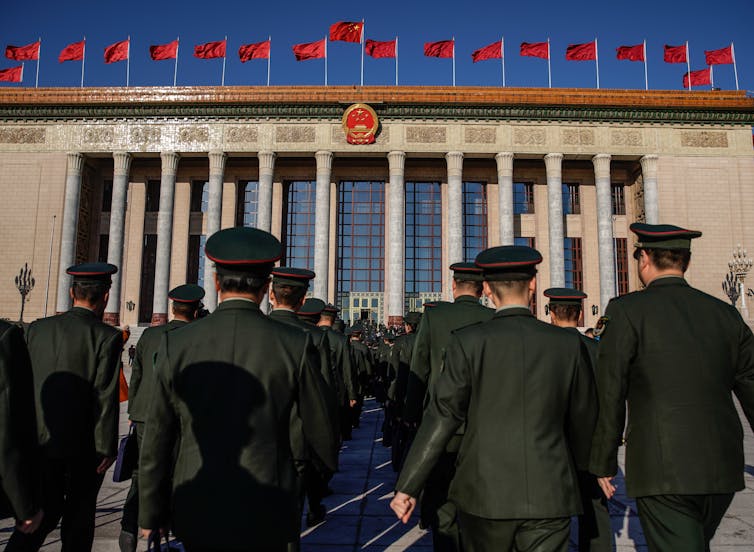
ROMAN PILIPEY/EPA

Andrew Podger, Australian National University

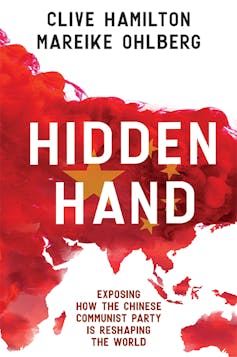
In Hidden Hand, China scholars Clive Hamilton and Marieke Ohlberg examine the Chinese Communist Party’s influence in Europe and North America in a similar way to how Hamilton dissected the CCP’s influence in Australia in his 2018 book, Silent Invasion.

In my review of the 2018 book, I wrote

Perhaps Hamilton’s book is a useful reminder that we must not be naïve about our relationship with China. But his prescription, premised on China being our enemy and determined to achieve world domination, is precisely the wrong direction for addressing the genuine issues he raises.

The new book warrants a similar conclusion, though President Xi Jinping’s continued strengthening of CCP controls and pursuit of hegemony in our region add to the importance of not being naïve.

Hamilton and Ohlberg chronicle the various ways the CCP has attempted to wield influence in North America and Europe, from political and business elites to the Chinese diaspora, media, think tanks and academia, as well as through espionage and diplomacy.

Central to the book’s thesis is the diagram on pages 124-5 summarising most of the channels of influence from Chinese institutions (particularly party institutions) to various groups and organisations in Western nations. This is a one-direction diagram and assumes a totally coordinated strategy.

The book’s presentation is extremely detailed, including not just the names of Chinese institutions but the individuals said to be directing the strategies of influence. Similarly on the receiving end, the authors describe not only the groups and organisations in the West they claim are being influenced, but many of the individuals involved.

This level of detail is highlighted by the book’s 113 pages of footnotes and a 24-page index.


Read more:
Politics with Michelle Grattan: Clive Hamilton and Richard McGregor on Australia-China relations


Despite this, the book is not a balanced, scholarly document. The narrative centres on a single-minded Communist Party that has always sought a Leninist world and is now taking advantage of its increased economic power to advance that objective more effectively.

There is little recognition of the huge shifts in Chinese economic, social and strategic policies over the past 50 years, or of the scale of the changes to its institutional arrangements and the role of government.

The authors also do not allow those in the West who they claim have been successfully (and naively) influenced the opportunity to respond, let alone to present evidence of their influence in the other direction.

Containment vs. ‘engage and constrain’

Hidden Hand is right to remind people that:

  • China and the CCP are not one and the same

  • China has a party-state system of government that is authoritarian and not democratic

  • China does not have Western-style rule of law

  • it does not recognise universal human rights in the way we understand them.

What is missing is a balanced discussion of the central debate about the appropriate approach to be taken in the West’s relations with China.

As Peter Varghese, the former head of DFAT, recently put it, the choice for Australia is between trying to “contain” China or “engage and constrain”.

Containment, he argues, is gaining traction in the US and among cheerleaders in Australia, but risks dismantling the global economic system and the supply chains that support it. For Australia, Varghese says, decoupling from our largest trading partner would be “sheer folly” irrespective of legitimate complaints about China’s behaviour.

The “engage and constrain” approach he favours involves expanding areas of cooperation where mutual interests are served, while holding firm to our values and strengthening our capacity to resist Chinese coercion through increased investment in defence and diplomacy.

This would show Beijing that “leverage is a two-way street” and that, with others, we are willing to “push back” if China pursues its interests in ways that do not respect our sovereignty.

While increasing investment in defence may well be justified, boosting our spending in diplomacy is even more important.


Read more:
Why do we keep turning a blind eye to Chinese political interference?


In this light, viewing China as our “enemy” is counterproductive and ignores the mutual benefits and increased sharing of interests that have resulted from China’s opening up since 1978. (Hidden Hand does not repeat the explicit description of China as our enemy found in Hamilton’s earlier book, but it comes close, saying for the past 30 years China has viewed both sides of the Atlantic as its enemies).

Diplomacy may influence China’s perceptions of its national interests and, where significant differences remain, help to forge important alliances elsewhere.

Hamilton and Ohlberg seem to favour the “containment” strategy, warning on page 96 that “in fact, today it (the party-state) is more powerful than ever because of market forces” (emphasis in original).

Engagement can still have a positive effect

The implication, presumably, is that we should no longer contribute to China’s economic growth. This dismisses the remarkable benefits involved in China’s growth, including not only massive reductions in poverty, but also, for most Chinese, freedoms that were unimaginable in the Mao Zedong era. There have also been flow-on benefits for the rest of the world.

China’s opening up has of course not led to Western-style democracy, and is unlikely to do so in the foreseeable future. Indeed, under Xi, the CCP’s position has been consolidated and many of the reforms of the 1990s and 2000s have been wound back. Human rights have been seriously curbed, most recently in Hong Kong.

But Hidden Hand’s presentation of a single, continuous CCP Leninist agenda ignores the existence of different views among the leadership and elsewhere in China, including those who favour further liberal reform (as described in Richard McGregor’s 2019 book, Xi Jinping: The Backlash).

And it fails to appreciate the underlying contradictions of China’s “socialist market economy” and Xi’s “China Dream”, which offer avenues for Western leaders and academics to influence debates in China through engagement – as has happened over the past 30 years.

As the main coordinator of the Greater China Australia Dialogue on Public Administration, which organises annual workshops of scholars and practitioners from across the PRC (including Hong Kong and Macau) and Taiwan, I have witnessed some of the winding back of academic freedoms since Xi’s 2016 restrictions on social science teaching and research. This includes some of the specific CCP restrictions mentioned in Hidden Hand.


Read more:
The world has a hard time trusting China. But does it really care?


But this surely makes it even more important to continue the engagement while resisting the pressures involved.

Similarly, I am not at all convinced by the book’s attacks on any cooperation with the Belt and Road Initiative.

While the Asian Infrastructure Investment Bank has more sound governance, there are similar arguments for participation in BRI, providing support from the inside for transparency, proper cost-benefit analysis of projects and good understanding of debt obligations. It would also limit opportunities for China to pursue improper methods of influence.

How the West should respond to Chinese influence

The book’s afterword provides a slightly more moderate position on what should be done to counter Chinese influence moving forward. It still overplays its hand in promoting an “active pushback strategy” and its recommendation the Western

elites who acquiesce to or actively support Beijing deserve public scrutiny and robust criticism.

But the other recommendations have merit: defending democratic institutions through greater transparency and foreign interference laws, addressing the underfunding of universities and financial challenges facing our media, reducing vulnerability of our industries to CCP pressure and promoting more alliances, including with developing countries.

We cannot lose faith in liberal economics as Hamilton and Ohlberg seem to suggest, relying only on democratic forces to ensure freedom. The truth is, we need both.The Conversation

Andrew Podger, Honorary Professor of Public Policy, Australian National University

This article is republished from The Conversation under a Creative Commons license. Read the original article.
Unknown's avatar

Politics with Michelle Grattan: Christopher Pyne on being ‘the ultimate insider’


Michelle Grattan, University of Canberra

Former Liberal Minister Christopher Pyne attracted critics for his political front. But he always had plenty of friends and networks, enabling him often to be a player, if not always a “fixer”.

After his election to the South Australian seat of Sturt at age 25, he went on to hold senior portfolios, notably education and defence, and to stride the parliamentary stage as Leader of the House of Representatives.

In his memoir, The Insider, the former politician provides his take, humorous and candid, on a tumultuous 26 parliamentary years.

In this podcast, Pyne talks about life after politics, and stories from the ‘Canberra bubble’.

“I don’t miss politics at all – because I left happy, and I wanted to go.

“So I’m not one of these politicians that was dragged kicking and screaming. I left when people wanted me to stay, which is a great rarity.”

Pyne is ultra candid about his ambition to be prime minister:

“I think when you’re 15, and you decided you want to be a member of the House of Representatives, you kind of think ‘I’m going to dream big.’ So of course I dreamt to be prime minister”.

Reality, it appears, didn’t hit for quite a while.

“I think that week when Malcolm [Turnbull] was deposed and nobody was suggesting that I should be running for leader, it dawned on me that the generation that was being elected, which was Scott Morrison and Josh Frydenberg, were a generation different to me.”The Conversation

Michelle Grattan, Professorial Fellow, University of Canberra

This article is republished from The Conversation under a Creative Commons license. Read the original article.
Unknown's avatar

Finished Reading: The Dry by Jane Harper


The Dry (Aaron Falk, #1)The Dry by Jane Harper
My rating: 4 of 5 stars

View all my reviews

Unknown's avatar

Guide to the classics: The War of the Worlds


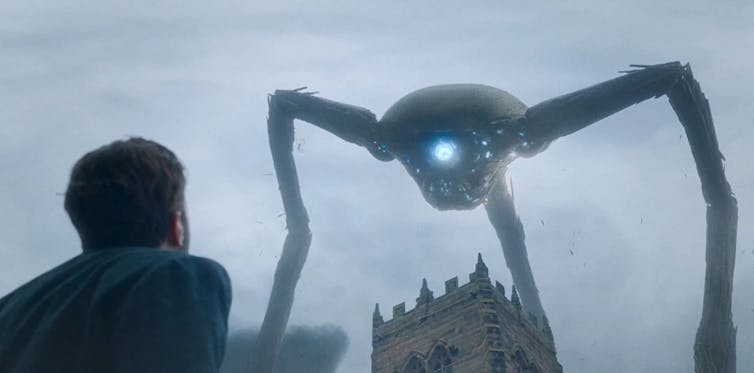
BBC/IMDB

Robert Hassan, University of Melbourne

Spoiler alert: this story details how The War of the Worlds ends.

The latest screen adaption of H. G. Wells’ 1898 modern masterwork The War of the Worlds will hit our screens this week. Continuously in print since its first publication, the book is a literary gift that keeps on giving for producers and screenwriters. They recognise the story’s unerring capacity to find its mark with each generation.

Wells – who also wrote The Time Machine (1895) and The Invisible Man (1897) – helped pioneer the science fiction genre when he conceived this astonishing book. With an eyewitness narration that reads grippingly still, it tells of a Martian invasion of Earth.

The new War of the Worlds stars Gabriel Byrne (ZeroZeroZero), Elizabeth McGovern (Downton Abbey) and Daisy Edgar-Jones (Normal People).

Shock and awe

Set in London, Wells depicts a complacent world; of men “serene in their assurance” of their dominion over the planet. But humans get the shock of another reality when suddenly visited upon by blood-feeding and squid-like creatures possessed of “intellects vast and cool” that are “unsympathetic” to Earthlings whose planet they had long “regarded with envious eyes”.


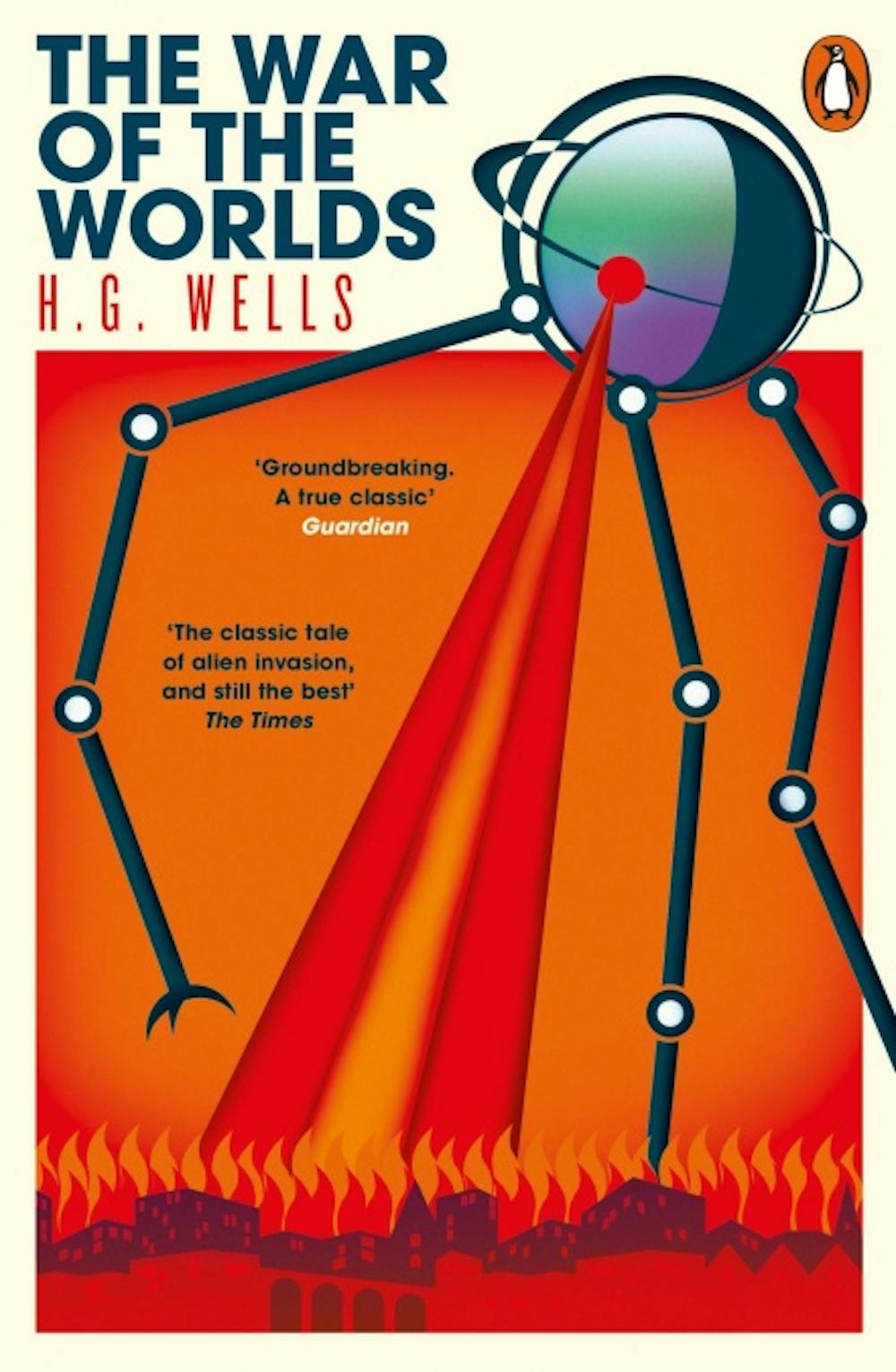
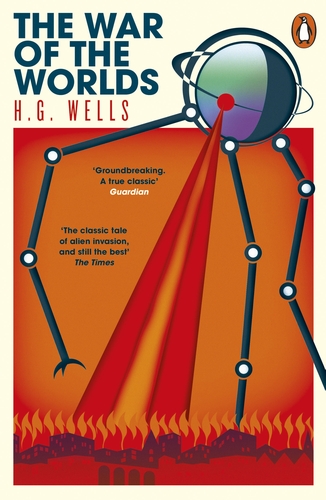
Penguin

An advance party arrives inside metal cylinders shot from giant cannons stationed on Mars. From the cylinders come dozens of Martians, each operating a three-legged metal “fighting-machine” that attacks London’s helpless population by means of a “heat ray”. From these “whatever is combustible flashes into flame”, metal liquifies, glass melts and water “explodes into steam”.

Fleeing like rats from a burning ship, panic spreads like a contagion. The narrator describes a breakdown of law and order, and undergoes something of a breakdown himself.

Upper-class women arm themselves as they cross the country, because traditional deference has gone up in smoke. The “social body” of organisation – police, army, government – suffers “swift liquefaction”.

The Martians, however, had become too intelligent for their own good. They had made the Red Planet disease-free but forgotten about germ theory. And so while laying waste to London, they inhale a bug; a simple bacteria “against which their systems were unprepared” and so suffered a “death that must have seemed to them as incomprehensible as any death could be”.

London will rise again. The world has been spared. Humanity gets lucky — this time.


Read more:
Science fiction helps us deal with science fact: a lesson from Terminator’s killer robots


A wider war

In the new Anglo-French television series, La Guerre Des Mondes, the action takes place in both London and France. Martian devastation is given wider latitude.

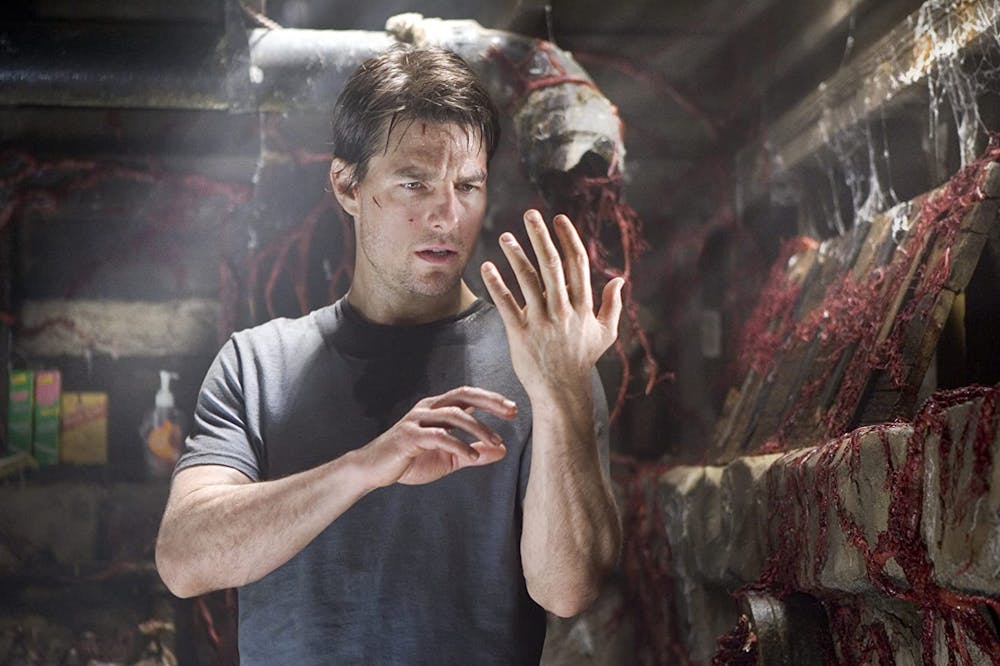
Why does this now-familiar story have such a hold on successive generations? Iterations include the Orson Welles’ radio broadcast of “fake news” bulletins about Martian invasion, to the 1978 contemporary music version with Richard Burton narration, to Steven Spielberg’s film blockbuster starring Tom Cruise. Last year also saw a BBC production set in Edwardian London.

Tom Cruise and the red weed in the 2005 film.
IMDB

One response is to consider our attraction to sci-fi. It sees the laws of science upended. Technology seems to make anything possible and to minds already accustomed to real technological transformation, sci-fi literature brings the now-thinkable future into the present.

But there’re less obvious elements to think about: themes that were important in 1898 and resonate still.

Invasion and imperialism

Wells’ book touched something existentially British during their Pax Britannica period of relative peace. Across the Channel, Europe seethed with diplomatic intrigue and tensions culminating in the first world war.

The new sci-fi genre connected to an older “invasion literature” genre; a long-standing British apprehension of the Continent, especially its renascent German threat. Wells hints at this when he writes that the arrival of the cylinders (before the Martians emerged from them) “did not [initially] make the sensation that an ultimatum to Germany would have done”.

Then there’s the imperialism angle. Was Wells tapping a source of late-Victorian shame at the true source of British wealth and power? Then, a quarter of the world map was coloured British Empire pink. London was the epicentre of modern imperialism — the coordination point for the suffering of millions and the plunder of their lands.

Moreover, Belgium, Germany, France, and also the USA, were engaged in the “scramble for colonies” in Africa and Asia. Under the veneer of sci-fi, Wells describes what it’s like to be a people facing a powerful invader.

A BBC version was set in Edwardian times.

Fear is the contagion

A very different perspective says something about our species and our idealised self-conception. In 1908 the Russian novelist and revolutionary Alexander Bogdanov, drew on WOTW for inspiration. In his novel Red Star protagonist Leonid travels to Mars to learn about communism from Martians who had made their own revolution and now lived in peace. Leonid despairs of the congenitally “unstable and fragile” nature of human relationships and looks to another planet for guidance.

The Earth-bound communist project of the 20th century ended badly, to say the least. But our human vulnerability to invasion, to tyranny, to economic catastrophe, and even to the bacteriological danger from microbes resistant to antibiotics, continues to haunt us.

The latest adaptation is set in our time with smartphones and the internet. Here again our 21st-century complacency is shattered, and our vulnerability laid bare.

Fear is a contagion in WOTW, and its Londoners show little heroism in the face of an alien invader.


Read more:
Science fiction builds mental resiliency in young readers


A new battle

Bacteria did in Wells’ Martians and might do for us too – unless drugs to overcome resistance are developed. Through sci-fi, we can explore our fear of the invisible foe.

Global warming might be our other enemy – the red skies of Australia’s last bushfire season fresh in our memory and reminiscent of Well’s novel.

Jeff Wayne created the progressive musical version of The War of the Worlds, featuring Justin Hayward (The Moody Blues), Chris Thompson (Manfred Mann’s Earth Band), Phil Lynott (Thin Lizzy), Julie Covington and David Essex.

The narrative provides a hugely enjoyable fantasy. But we need to think about what science fiction might be doing to our relationship with science fact, especially if we consume it as a tranquilliser to displace and sublimate our fears of invisible threats.

If we do, then the incomprehensibility felt by Wells’ Martians may add that little bit more to our discord regarding the sources and solutions to global warming. Humans got lucky in The War of the Worlds. They didn’t need to do anything to survive. We can’t count on luck to save us or our planet.

War of the Worlds double episode will premiere July 9 on SBS and continue weekly from July 16. Episodes will be available on SBS On Demand on the same day as broadcast.The Conversation

Robert Hassan, Professor, School of Culture and Communication, University of Melbourne

This article is republished from The Conversation under a Creative Commons license. Read the original article.

Unknown's avatar

Finished Reading: The Iron Queen – A Novel of Boudica by L. D. Goffigan


The Iron Queen: A Novel of BoudicaThe Iron Queen: A Novel of Boudica by L.D. Goffigan
My rating: 2 of 5 stars

View all my reviews

Unknown's avatar

Finished Reading: Macquarie by Grantlee Kieza


MacquarieMacquarie by Grantlee Kieza
My rating: 4 of 5 stars

View all my reviews

Unknown's avatar

Finished Reading: Plots and Prayers – Malcolm Turnbull’s Demise and Scott Morrison’s Ascension by Niki Savva


Plots and Prayers: Malcolm Turnbull’s demise and Scott Morrison’s ascensionPlots and Prayers: Malcolm Turnbull’s demise and Scott Morrison’s ascension by Niki Savva
My rating: 4 of 5 stars

View all my reviews