The links below are to articles reporting on the shortlist and winners of the 2020 Prime Minister’s Literary Awards (the most recent article is at the top).
Tara June Winch’s The Yield has won the fiction category of the Prime Minister’s Literary Awards. I wrote an enthusiastic review of this novel earlier in 2020, and my admiration has not abated in the months since it won the Miles Franklin award. If anything, the heart of the story — one of reclaiming language, culture, identity, and a possible future — seems only more potent now.
There is nothing new about the knowledge that whose stories are told, and how they are told, matters enormously. Or understanding that a significant part of what becomes the shared “truth” of a time and culture is the product of the stories told and told again until they are embedded in a reader’s sense of the world.
Nor is it new to recognise that language shapes our thinking; particular languages see the world in particular ways; and understanding the many ways in which the world is seen and told can only enrich the human community. But for so long, Indigenous languages have been smothered and Indigenous stories ignored.
It is not possible to keep ignoring writers of the quality of Tara June Winch. The Yield is, I am confident, a novel that is going to be read and reread over the coming years and decades.
There are three main stories braided together in the novel. The first is that of Poppy Albert, who has built a dictionary of his language, salted with personal stories that imbue words with sensibility. The second story belongs to his granddaughter August, returned home for his funeral, and in time to join a protest against the mining company that is about to desecrate the region. The third story is presented in the form of notes, reports and letters written in the 19th century by the Reverend Ferdinand Greenleaf, who claims the position of defender of “the decent Natives whom I have lived amongst”.
Together these three stories of past, recent past, and a present becoming future, offer a powerful account of settler violence and its continuing impacts, whether the direct assault of forces of power, or the exhausting paternalism enacted by do-gooders like Greenleaf.
For me, it is impossible to read this story, particularly the sections told by Poppy Albert, without shivering in empathy, hearing and feeling the passion, the ethics, and resilience.
Books like this will be profoundly important building blocks for a more equitable and ethical Australia.
The power of language to shape understandings of the world is a theme of other winners this year: the Gay’wu Group of Women’s Songspirals: Sharing Women’s Wisdom of Country through Songlines shared the non-fiction award with Christina Thompson, author of Sea People: The Puzzle of Polynesia.
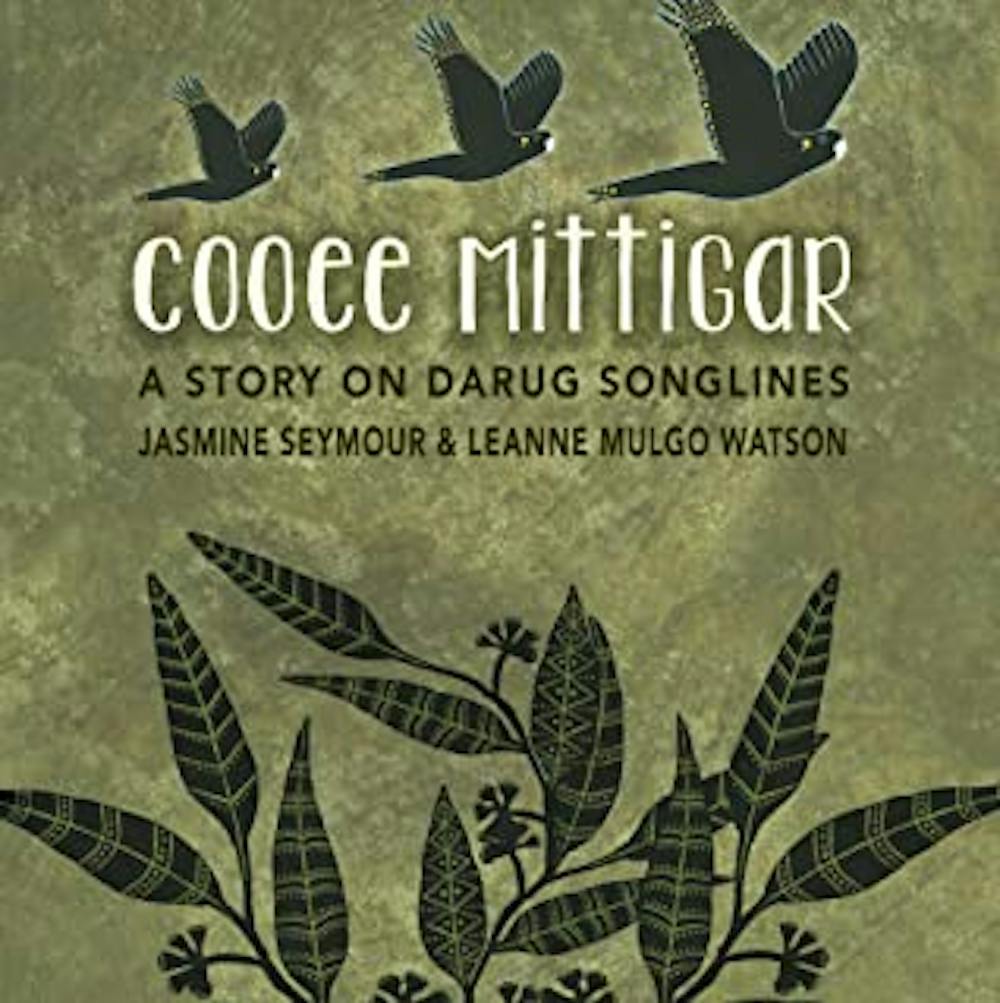
And the Darug duo of Jasmine Seymour and Leanne Mulgo Watson won the children’s category for Cooee Mittigar: A Story on Darug Songlines, described by its publisher as “introducing children and adults alike to Darug Nura (Country) and language”.
‘Old fashioned, elitist, white’
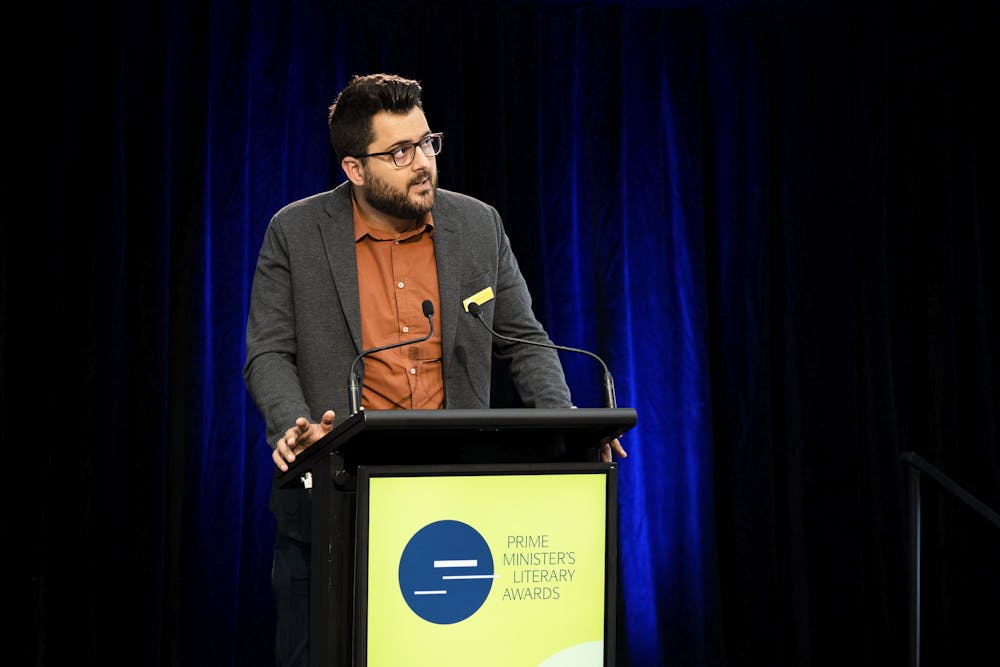
In an interview early this year, Omar Sakr, winner of the Prime Minister’s Award for poetry, said of poetry, “I always had a skewed perception of it as being old-fashioned, elitist, white, and concerning subjects that had nothing to do with me”. He’s not alone in that perception.
Academic Natalie Kon-yu has written eloquently about the lack of diversity in Australian literature and similar issues emerge across the Anglophone world. Add in the apparent elitism of poetry, and it can quickly appear to be a domain inaccessible to anyone whose identity is categorised as “diverse”.
Fortunately, the walls of privilege are capable of being scaled, and Sakr has shown commendable facility here. His first collection, These Wild Houses, was shortlisted for the Kenneth Slessor Prize in 2018. I read it hungrily, relishing the depictions of migrant life, of family interactions, of place and politics.
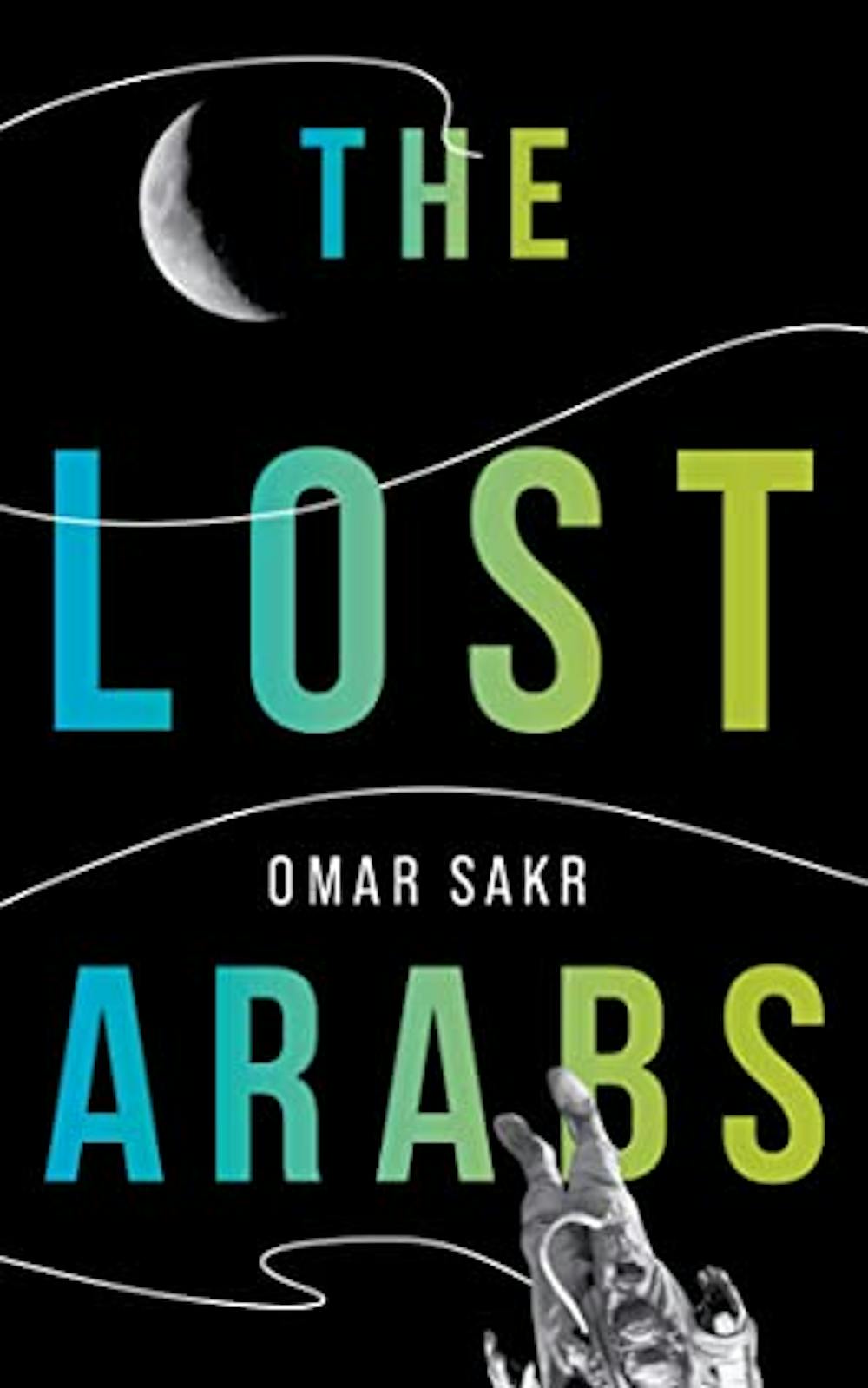
What was evident in that volume is only richer and stronger in the new, prize-winning collection, The Lost Arabs. As The Guardian noted, Sakr is “the first Arab Australian Muslim poet to be shortlisted — and then to win”.
And what a worthy win. The poems in this collection shimmer with energy, the imagery confronts and captivates, and Sakr’s lovely style blends control with compassion, moving fluidly between expressions of rage and of delight.
His writing is lyrical and closely observant; his poems shape words and lines in ways that make meanings tremble across the body, much as the mother in one poem, Sailor’s knot, feels the angels “dancing on my skin”.
At the end of an exhausting year, these two prize-winning books speak volumes about how we face trying times; how we might recognise the beauty in brokenness; how we can throw fragile lines across the cultural and linguistic and all the other divides to connect as humans, in all our flawed histories. And maybe — who knows? — find ways to repair the wounds of the past.
In August, the communications minister announced a series of changes to copyright laws to “better support the needs of Australians and public institutions to access material in an increasingly digital environment”.
These changes are long overdue. But the year is ending, and we are yet to see the legislation.
The most important change is to ensure access to so-called orphan works.
Orphan works are copyrighted works for which the copyright owner can no longer be found.
The Australian Law Reform Commission and the Productivity Commission found that orphan works present a particular problem for public institutions. These include libraries, galleries, archives, museums and broadcasters, whose collections necessarily include items with unclear lineage.
The National Film and Sound Archive says they comprise 20% of its collection.
Orphan works are inaccessible
In most circumstances, the existing law requires users to secure the copyright owner’s permission before copying or using a work, meaning that orphan works can’t be used.
The Film and Sound Archive says scores of projects that would have celebrated Australia’s heritage have been shelved because of the expense and impossibility of locating the descendants of copyright holders.
The proposed changes would permit people to use orphan works if they first conducted a “reasonably diligent” search and as far as reasonably possible clearly attributed the works to their authors.
The standard is high – users would need to show clear evidence of good-faith efforts to identify and locate copyright owners in order to seek permission.
If the copyright owner isn’t found but later comes forward, the user and the copyright owner would have to agree on reasonable terms for any continued use.
Other proposed changes include a new fair dealing exception for the quoting of copyrighted material for non-commercial purposes.
It’s not always clear what’s okay to quote
It is not always clear whether quoting from something infringes copyright. The exception will give researchers confidence.
The government says it will be narrowly tailored to reduce uncertainty and the administrative burden for schools, universities, libraries, museums, government agencies, academics and researchers who quote words from a book, passages from a piece of music or visual images taken from works of art.
As well, the reforms would streamline licensing arrangements and exceptions for libraries, archives and educational and government institutions to allow things including
making collections available online for browsing in a way that does not infringe copyright
teachers using copyrighted material in online lessons in the same way as they are presently allowed to in face-to-face lessons
schools playing sound recordings for activities such as school concerts
governments using correspondence and other material sent to them for non-commercial purposes
These reforms are simple, reasonable, and ought not to be in dispute.
Unfortunately, copyright is such a heated topic that even the easiest fixes are hard.
Governments drag their feet
In the past, proposals for more wide-ranging reform have been opposed by organisations representing copyright holders.
Australia legalised the use of video tape recorders as they became obsolete.
That’s what these changes are. They certainly don’t pose a financial threat to rights holders.
2020 is not the year to expect things to happen quickly. But these reforms are important partly because they respond to problems made apparent by COVID-19.
Proper access to copyrighted materials would enable educational institutions to deliver the same lessons online as they deliver in person. Cultural institutions would be able to service customers unable to visit in person and to people in lockdown.
Hopefully the government will introduce the changes quickly.
But we don’t have a good track record. Australia didn’t get an exception that legalised home use of video tape recorders until 2006, the year they began to be replaced by other recording systems.
These changes ought to be (and largely are) uncontentious. Researchers, librarians, filmmakers and teachers are waiting.
Just as writers and artists today are responding to the Anthropocene through climate fiction and eco art, earlier generations chronicled an environmental crisis that presaged humanity’s global impact.
The Anthropocene is a proposed geological epoch that powerfully expresses the planetary scale of the environmental changes wrought by human activity.
Yet almost a century ago, New Zealand and Australia were at the forefront of an environmental crisis that was also profoundly geological in nature: erosion. And it, too, left its mark on culture.
He warned that European colonisation threatened a similar fate for other parts of the world. These concerns came back with a vengeance in the 1930s, when the Dust Bowl in the United States began to raise alarm about the long-term security of global food supply.
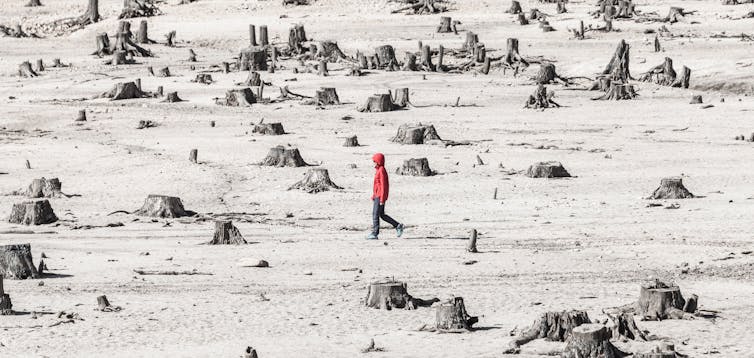
In the 1930s, south-eastern Australia was also plagued by dust storms. The biologist Francis Ratcliffe, in Flying Fox and Drifting Sand: The Adventures of a Biologist in Australia (1939), described the situation in South Australia as a fight for survival.
Nothing less than a battlefield, on which man is engaged in a struggle with the remorseless forces of drought, erosion and drift.
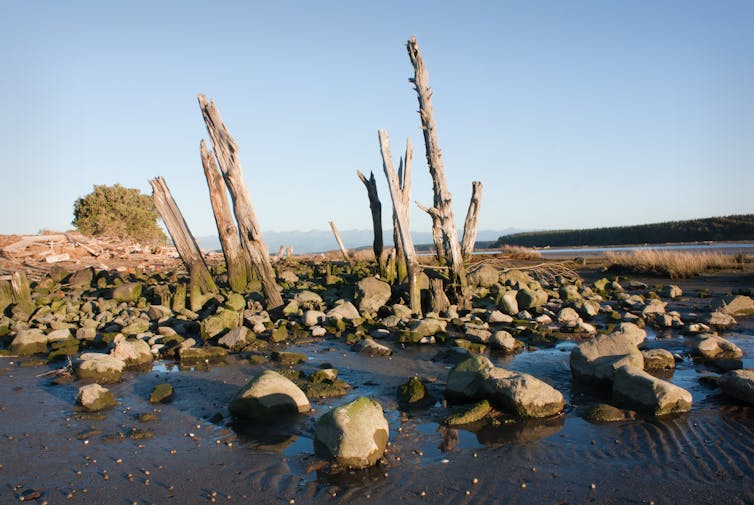
In New Zealand’s different climate and topography, another version of the erosion crisis was also becoming evident. Geographer Kenneth Cumberland described the growing desolation of the North Island’s hill-country pasture.
Miles upon miles of the Hawkes Bay, Poverty Bay, Wanganui and Taranaki- Whangamomona inlands have slip-scarred slopes […] The recent history of these regions is one of abandonment, of decreasing population, of a succession of serious floods, and of slip-severed communications.
Cumberland argued in 1944 that New Zealand’s soil erosion problems “attain the extreme national significance […] of those of the United States.”
Similarly, in 1946, the geographer J. M. Holmes claimed:
No greater peace-time issue faces Australia than the conquest of soil erosion.
Shutterstock/photolike
Cultural crisis
Because agriculture is so central to western ideas of civilisation, commentators found that cultural and environmental questions were inextricable. This overlapping of science and ideology is evident in G. V. Jacks and R. O. Whyte’s The Rape of the Earth: A World Survey of Soil Erosion (1939), written by two scientists at Oxford’s Imperial Bureau of Soil Science.
The organisation of civilised societies is founded upon the measures taken to wrest control of the soil from wild Nature, and not until complete control has passed into human hands can a stable superstructure of what we call civilisation be erected on the land.
The belief that nature must be subdued and remade was especially potent among the settler populations of Australia and New Zealand. There colonial identity and economic survival were both inextricably bound up with the success of agricultural and pastoral production.
Elyne Mitchell, now best known as the author of the Silver Brumby children’s books, wrote extensively in the 1940s about how cultural norms of white Australians were directly impacting the soil.
To fit Australia into the pattern of Western civilisation, economically and socially, we have upset the natural balance and turned ourselves into destroyers instead of creators.
The cultural commentator Monte Holcroft used even stronger language to express a similar thought in Creative Problems in New Zealand (1948).
But we see also the bare hillsides, the remnants of forest, the flooding rivers, and in some districts the impoverished soil. The balance of nature has changed. Are we to assume that a people which possessed the land in this manner — raping it in the name of progress — can remain untroubled and secure in occupation?
As the title says, erosion was now a “creative problem”. Even as they were committed to colonial forms of society, settler writers were increasingly aware that their environmental foundations were not as stable as had previously been assumed.
Shutterstock/brackish_nz
Soil mysticism
In New Zealand literature, the landscape wasn’t simply a backdrop: writers often depicted Pākehā identity as being produced through a direct confrontation with geology. The poet and critic Allen Curnow described the sense “that we are interlopers on an indifferent or hostile scene” as a “common problem of the imagination”. As Curnow wrote in his poem, The Scene, in 1941:
Here among the shaggy mountains cast away
Man’s shape must be recast
Settlement was also described as an encounter between “man” and the landscape in an influential poem by Charles Brasch, The Silent Land, in 1945:
Man must lie with the gaunt hills like a lover,
Earning their intimacy in the calm sigh
Of a century of quiet and assiduity.
Critic Francis Pound has described this nationalist preoccupation as a “soil mysticism”. In focusing so closely on the soil, Pākehā writers were also able to overlook its occupancy by Māori and their own deep knowledge of the land.
Awareness of erosion
Yet Brasch’s appeal is to “gaunt hills”: the landscape of literature was more often than not eroded rather than untouched.
Frank Sargeson’s 1943 short story, Gods Live in Woods, drew on the experience of his uncle, who had felled the forest to establish a hill country farm in Te Rohe Pōtae/the King Country.
And places where the grass still held were scarred by slips that showed up the clay and papa. One of these had come down from above the track, and piled up on it before going down into the creek. A chain or so of fence had been in its way and it had gone too. You could see some posts and wires sticking out of the clay.
Erosion also spread into the common stock of literary imagery. In a short poem by Colin Newbury, In My Country (1955), it appears as a metaphor for disappointed love.
He stands close to the earth,
My obdurate countryman,
Drawing from the wind’s breath,
The arid sweetness of flower and mountain;
Knows no green herb for the heart’s erosion.
Such texts demonstrate the ecological concept of “shifting baseline syndrome”, as described by Anna Lowenhaupt Tsing and her collaborators, whereby “newly shaped and ruined landscapes become the new reality”.
Shutterstock/Filip Fuxa
Alternative possibilities
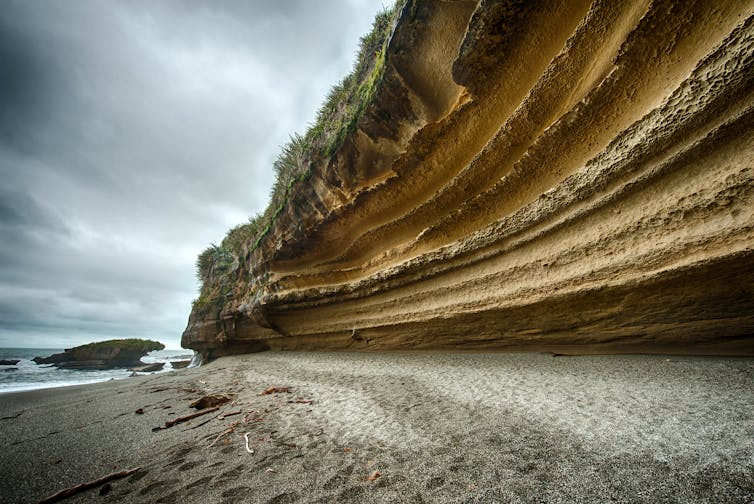
Although so much of Pākehā writing about geology from this time imagines the relationship between humanity and nature as hostile and irreversibly damaged, some offered glimpses of alternative possibilities. One was Ursula Bethell, whose poem Weathered Rocks (1936) stretched her Christian beliefs to find common ground with geology. Through this she imagined a less antagonistic relationship with nature.
When a block of land passes, as it may do through the hands of ten holders in half a century, how can long views be taken of its rights? Who under these conditions can give his acres their due?
Auē, taukari e, anō te kūware o te Pākehā kāhore nei i whakaaro ki te mauri o te whenua. Alas! Alas! that the Pākehā should so neglect the rights of the land, so forget the traditions of the Māori race, a people who recognised in it something more than the ability to grow meat and wool.
This view of the land as a political partner, endowed with independence and rights, appears to offer a new environmental perspective that in fact draws on the long-standing Indigenous legal principles of tikanga Māori.
Mid-20th century settler writing about erosion holds renewed interest today because it conveys a strikingly literal, visible sense of the Anthropocene: the geological impact of colonisation was plainly evident in sand drift, dust storms and scarred hillsides.
Writers were not blind to environmental damage, but in the main their responses are reminiscent of what critic Greg Garrard has called the present-day “gloomy trio of Anthropocenic futures — business-as-usual, mitigation and geo-engineering”.
But writers such as Bethell and Guthrie-Smith demonstrate the ongoing importance of creative work for questioning the values that created and sustain the Anthropocene we now all inhabit.
Fiction and non-fiction works about disability and Deafness are often hampered by stereotypical representations. A disability is frequently presented as something to “overcome”, or used to characterise someone (ever notice all those evil characters portrayed as disfigured?).
These representations obscure the joys, frustrations and creativity of living with disability and Deafness.
Dutch author Corinne Duyvis started the #OwnVoices movement on Twitter because she was frustrated that calls for diversity within the publishing industry did not extend to diverse authors. Originating in discussions of young adult fiction, #OwnVoices aims to highlight books written by authors who share a marginalised identity with the protagonist.
Life writing also provides firsthand accounts of disability and Deafness, showing what it is like to navigate a world designed for able-bodied people. In addition, these books help people with disability and Deafness learn more about their condition, and create community.
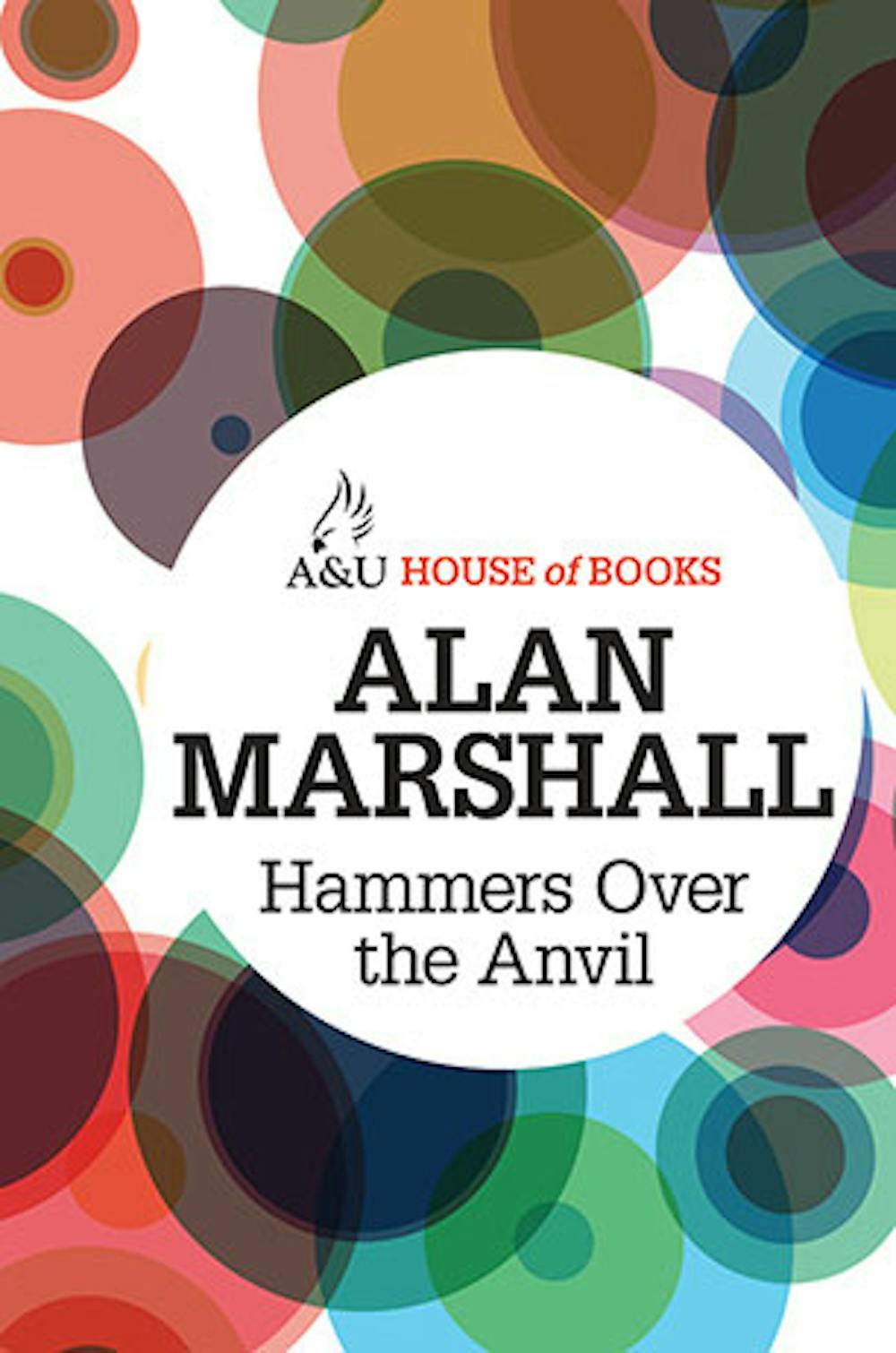
Many readers will be familiar with Marshall’s I Can Jump Puddles (1955), the first book in his series about growing up and living with polio in rural Australia.
Where that book is a cheerful and somewhat sanitised account of living with a disability, Hammers Over the Anvil (1975), the fourth and final book in Marshall’s series, is more realistic.
Marshall’s publisher refused to publish the book, thinking it would tarnish his image. Despite — or perhaps because of — his brutal treatment, Marshall shows a keen sympathy for disenfranchised people and also for animals.
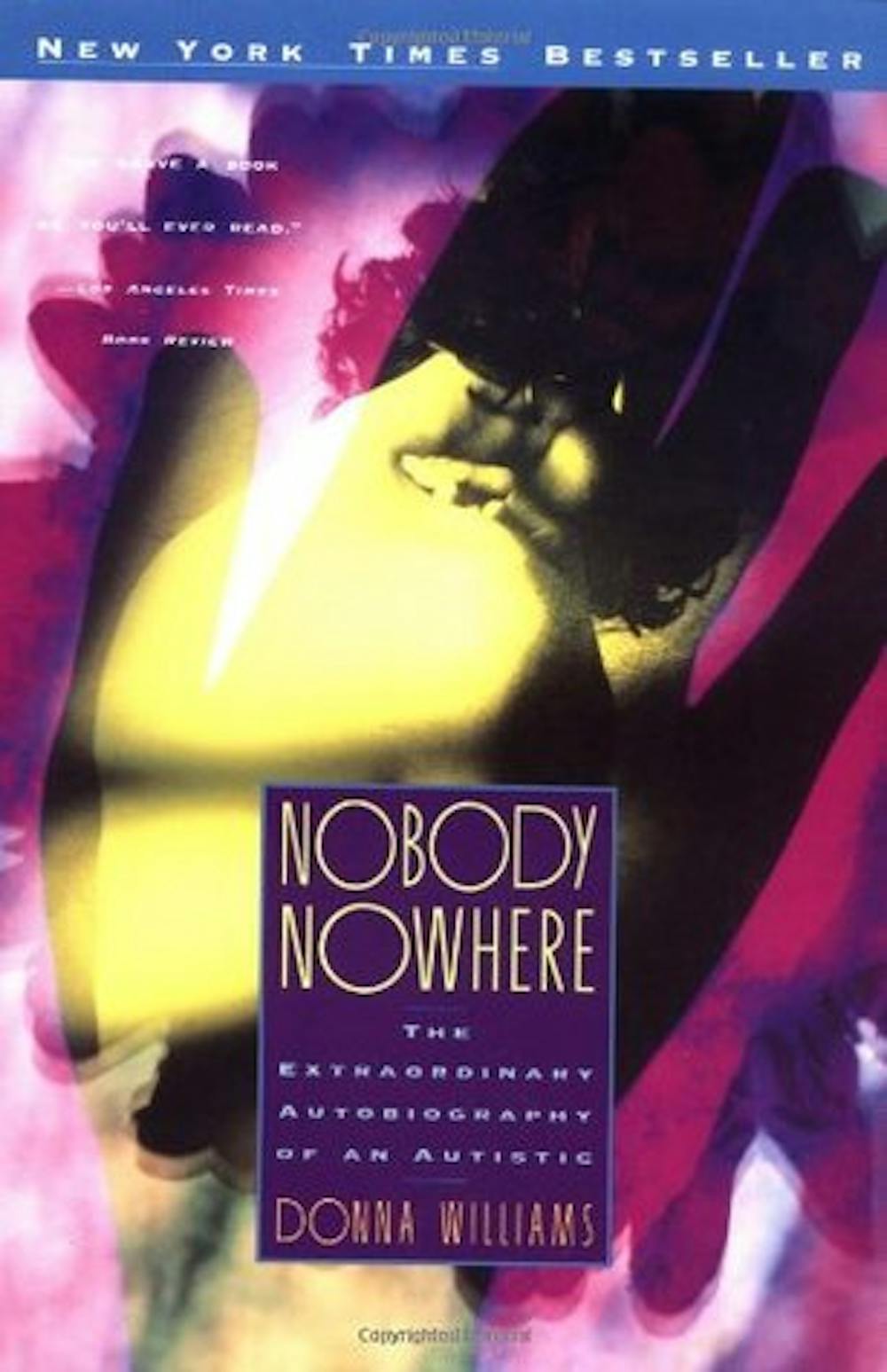
2. Donna Williams’ Nobody Nowhere: The Extraordinary Autobiography of an Autistic Girl (1991)
Donna Williams was not diagnosed with autism until she was an adult; prior to that she was thought to be deaf and psychotic.
Her story begins at age three and is thick with sensory details, which both delight and overwhelm Williams. She recounts interactions with hostile people — including her own mother, who wanted to admit Williams to an institution.
This book was the first full-length, published account by a person with autism in Australia. It became an international bestseller, spending 15 weeks on the New York Times bestseller list, and was translated into 20 languages.
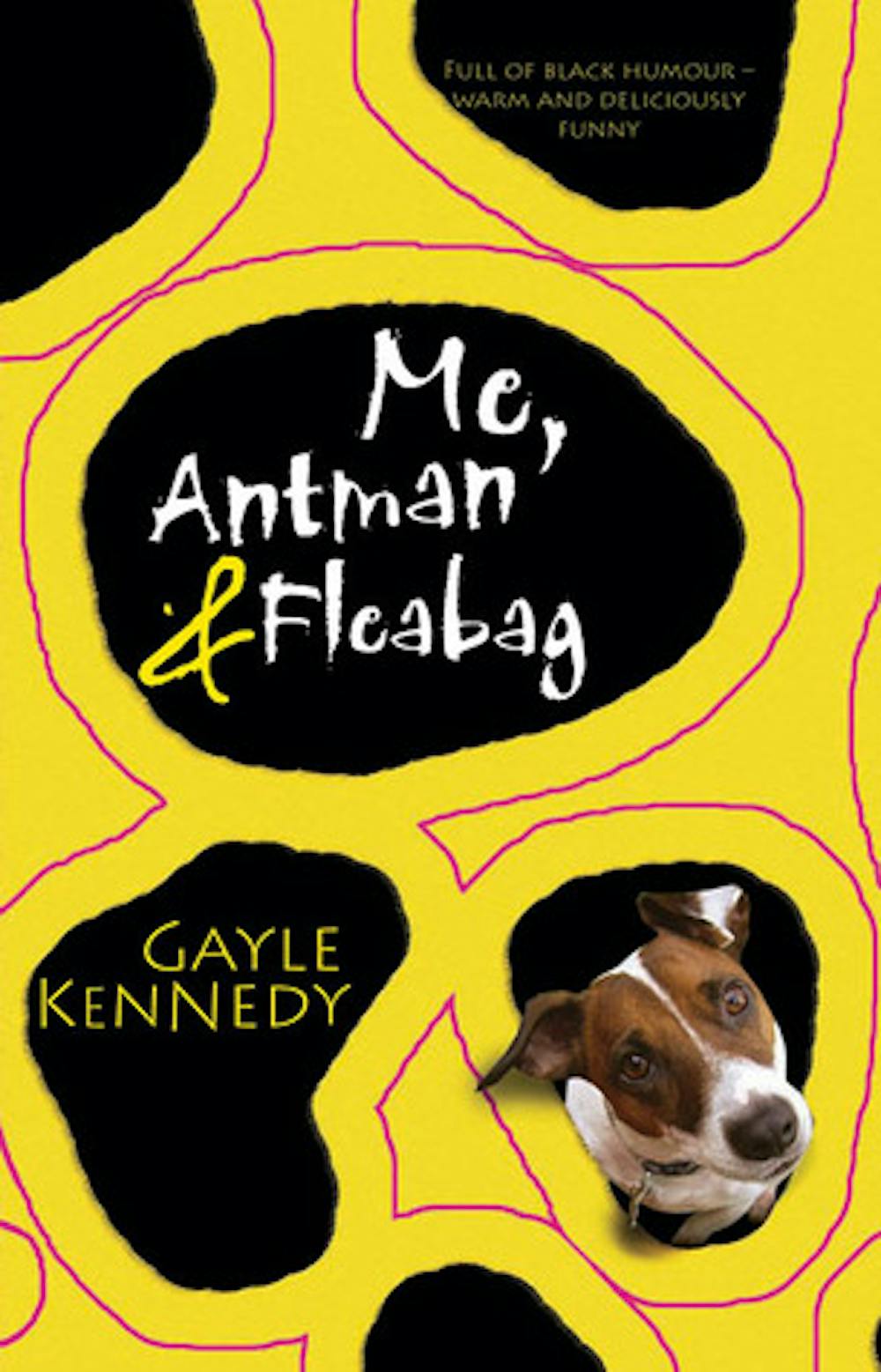
3. Gayle Kennedy’s Me, Antman & Fleabag (2007)
In this book, Gayle Kennedy, of the Wongaibon people of south west New South Wales, uses a series of engaging vignettes to describe her life as a First Nations woman who had polio.
Kennedy was sent away for treatment. When she returned, her parents seemed like strangers; it took a while to readjust. Though the subject matter sounds heavy, this humorous and accessible work is rich with stories about the importance of family (including dogs!) and the impact of racism.
It is also an important book because it chronicles some of the experiences of First Nations people with disability. It won the David Unaipon award in 2006.
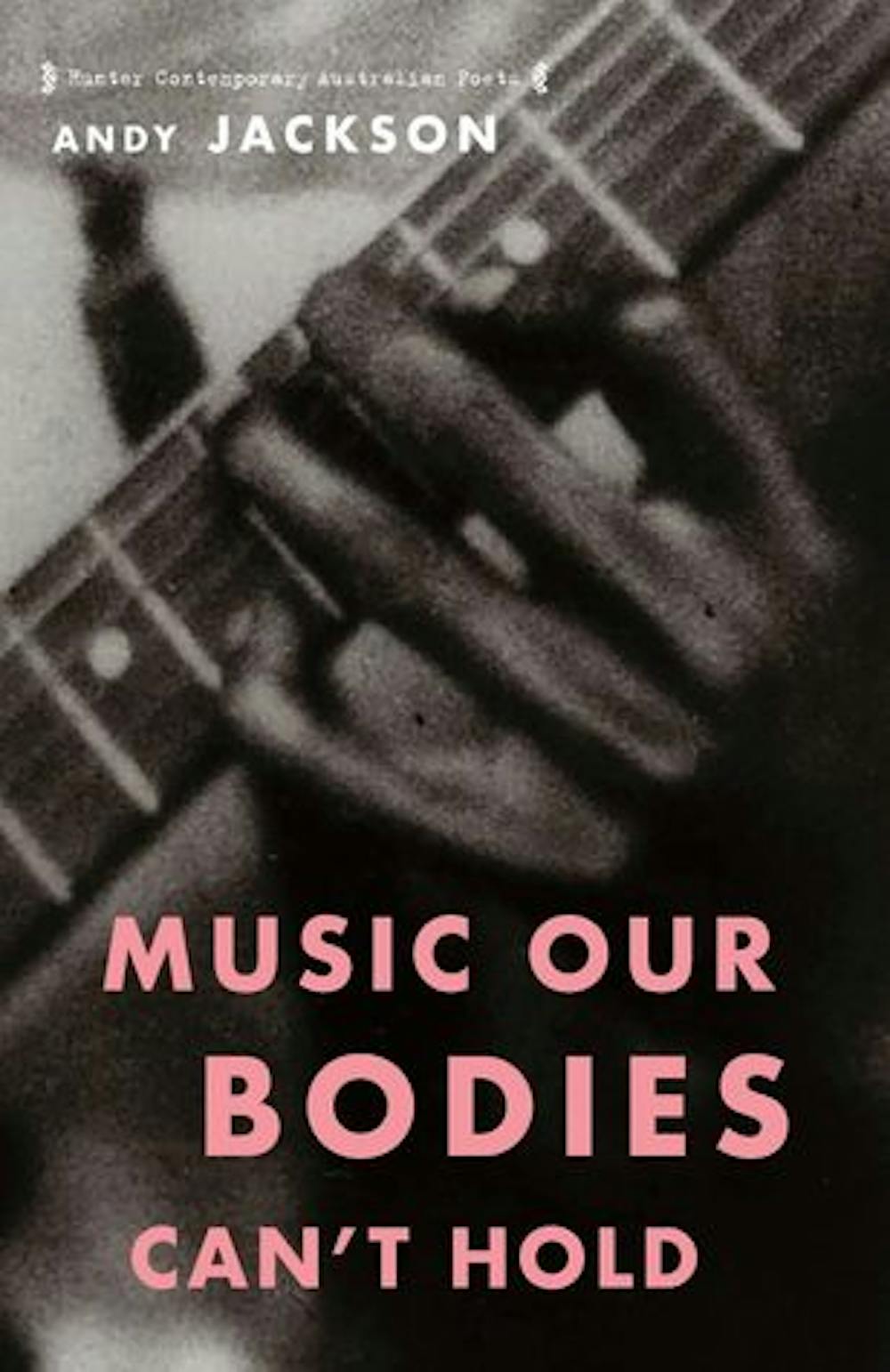
4. Andy Jackson’s Music Our Bodies Can’t Hold (2017)
Poet Andy Jackson, who has a condition called Marfan Syndrome that affects the body’s connective tissue, began performing poetry to give himself more control over representations of his body.
His collection consists of biographical poems of people with Marfan Syndrome, some of whom he interviewed, and historical figures who are thought to have had the condition, including Abraham Lincoln, the ancient Egyptian pharaoh Akhenaten, Mary Queen of Scots, composer Sergei Rachmaninoff and blues guitarist Robert Johnson.
Poetry, with its focus on voice, is strongly connected to the way that bodies express themselves, often in unique ways. As Jackson writes at the end of his poem Jess:
now look at this photo and tell me
you still want sameness.
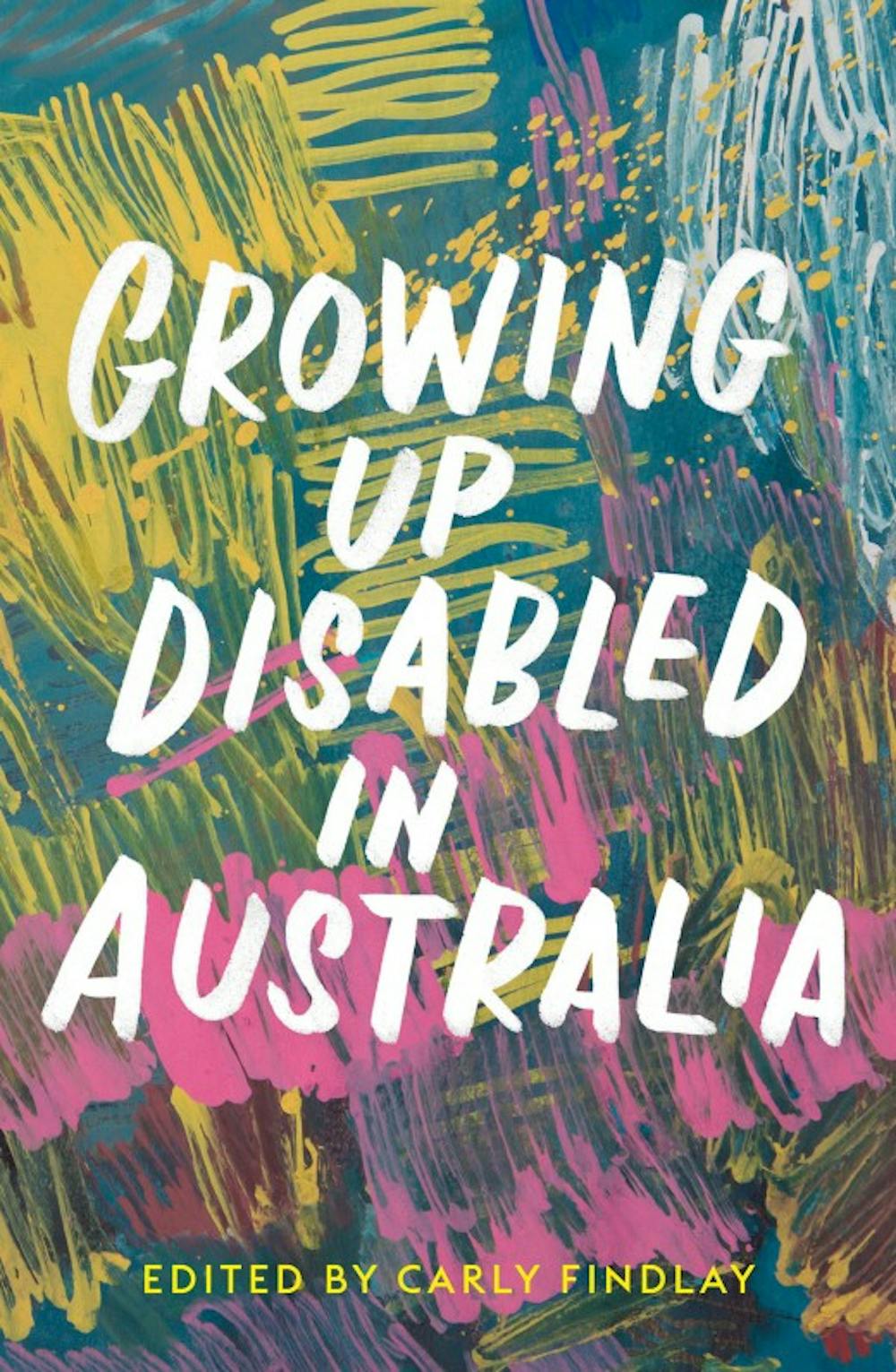
5. Carly Findlay (ed), Growing Up Disabled in Australia (2021)
The final book on my list is one I haven’t read yet — but I cannot wait until I can. Edited by Carly Findley, who has ichthyosis, this collection to be released early next year, will highlight the range of childhoods experienced by people with disability in Australia.
We will be able to read about how young people manage ableism and the (sometimes) soreness of not fitting in, and interviews with prominent Australians such as Senator Jordon Steele-John and Paralympian Isis Holt.
I lost most of my hearing when I was four, and when I was growing up I didn’t read a single book that featured a character who was Deaf. Books like Growing Up Disabled will help young Deaf and disabled people recognise themselves in Australian literature.
In my own hybrid memoir, Hearing Maud, I weave together my experiences of Deafness with those of Maud Praed, the Deaf daughter of 19th century expatriate Australian novelist Rosa Praed.
Maud and I were born 100 years apart, and although our lives went in radically different directions many of our circumstances are the same — especially the expectation that we conform to a hearing world. My disability is often invisible, and I wanted to explain the relentless and exhausting attention that is needed for me to function. Deafness is far more complex than simply not hearing.
There are thousands more examples of the ways authors can write about living with disability. The International Day of People with Disability is a great time to start reading.
Language is like archaeology. It lays down evidence for following generations to excavate and write PhD theses about. Layers of the stuff. And such has been the language of the year of COVID.
Not surprisingly, COVID has spawned an efflorescence of words and expressions. And these will certainly be dug up for analysis by our descendants.
In Australia we have a characteristic way of repurposing words, and we have applied it to COVID. Isolation became “iso”, which was crowned (joke: corona is Latin for crown) Word of the Year, or WOTY, by the Australian National Dictionary.
And coronavirus became “rona”, the Macquarie Dictionary’s COVID WOTY for 2020, announced today.
The Macquarie has departed from its usual practice (as has the Oxford English Dictionary) and anointed not one but two WOTYs (should that be WOTIES?): one to honour the way COVID has dominated our world, thinking and language this year; and another across-the-board WOTY as well. Their latter choice was “doomscrolling”, the practice of continuing to read news online or on social media when you know there’s nothing new in the news, and it’s all miserable.
Iso and rona are diminutives or hypocoristics. I have a database of over 6,000 of these in Australian English. These are derived forms of words that express an emotional overtone, usually amiable and solidaristic (“barbie” for barbecue; “servo” for service station), sometimes pejorative (“commo” for communist, “drongo” for well, an idiot).
But my personal nomination for the 2020 WOTY is “quazza” for quarantine. I predicted its birth and was fulfilled when it duly appeared.
Quazza follows a pattern in Australian English where R becomes Z: Terry gives “Tezza”, Barry gives “Bazza”, and quarantine yields “quazza”. Which is a long way from the Italian word quarantina, a reference to the 40-day period ships had to anchor off Italy in days gone by to prove there was no plague on board.
These diminutives serve an important purpose. They de-demonise threatening words. Without reducing the level of the words’ threat, the diminutives imply: this is something we can get our minds around and manage.
And gradually, with some temporary reversals, that is what we have done, and much more effectively than most other countries. Though whether the diminutives have medical force is not yet proven.
‘Doomscrolling’ captures the intersection of this year’s unfolding catastrophes and social media. Unsplash, CC BY
Getting the message
Of course, there’s more to the influence of language under COVID than diminutives. In terms of public health and communication, three key agencies have driven our handling of the pandemic: scientists, policymakers and the public.
In Australia, the passage of information and action between these three entities has worked rather well. Science has transmitted reliable and helpful analyses of coronavirus and COVID-19 to policymakers. They informed our understanding of specific pandemic terms like “incubation” and “reinfection”.
State and federal governments have issued action guidelines with terms like “COVID safe”. And the public has created their own shorthand like the diminutives described above to make it all a bit friendlier.
Australians have accessed the science through the media and the internet, and have generally acted responsibly.
Using words consistently and specifically is vital when it comes to health messages. Unsplash/United Nations, CC BY
The key mechanism for communicating along the three axes between science, policymakers and the public involves messaging. Words matter in this context. What is needed is simple, direct, transparent and plausible language. Translations for multilingual communities are also vital.
Australian authorities have used words effectively and fairly consistently (though not always). The words and terms have fallen within four broad lexical categories:
1. isolation — lockdown, isolation, quarantine
2. distance — social distancing, venue capacity
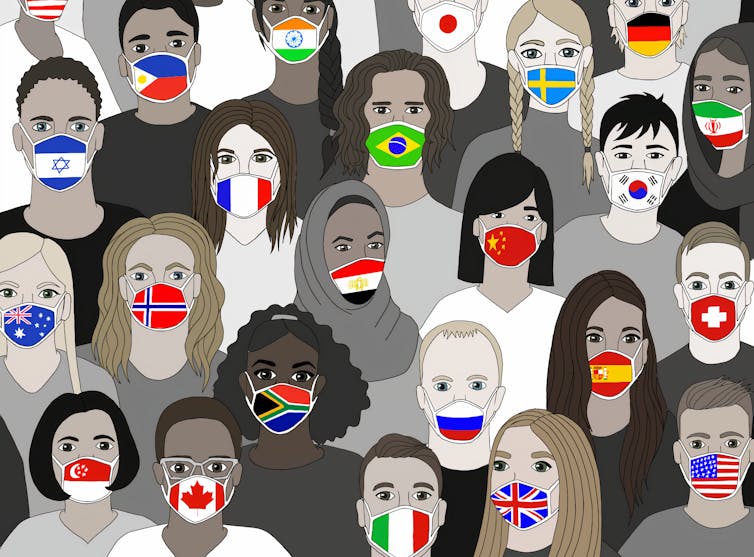
3. hygiene — handwashing, sanitiser (or “hand sanny” in Australian slang), masks
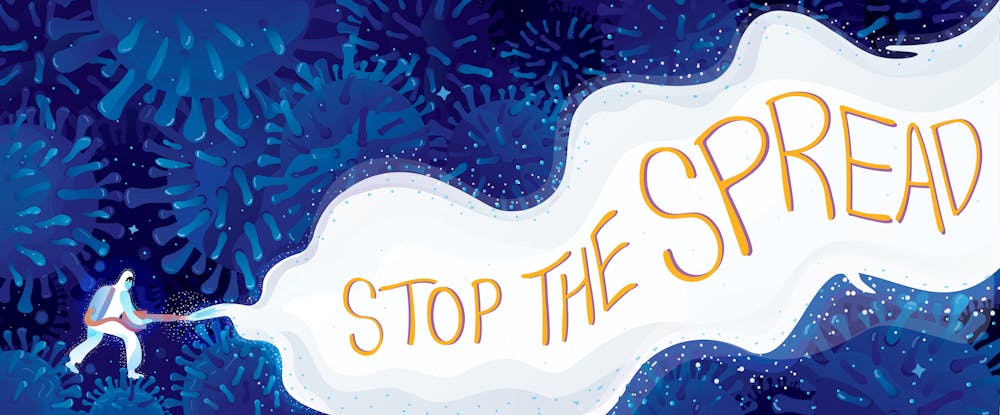
3. social — COVID safe, flatten the curve, stop the spread, WFH (work from home).
The British messaging was much less effective, moving from “Protect the NHS” (National Health Service) to “Stay alert” without specifying what people should be alert to.
Unfortunately, many countries took up the phrase “social distancing”, when what was needed was “physical distancing”, continuing social interaction as an important part of maintaining well being. The World Health Organisation agrees.
Next time — and there certainly will be a next time — we need to be better prepared.
There will be new vocabulary to describe, and perhaps to help tame, potential new threats. The messaging may be very similar, and we will know, from our experience with COVID-19 in 2020, how best to stop “covidiots” from acting “coronacrazy”.
The link below is to an article reporting on the winner of the 2020 Victorian Premier’s History Award, ‘Printed on Stone – The lithographs of Charles Troedel,’ by Amanda Scardamaglia.













 At the BookShelf
You must be logged in to post a comment.