You might picture a book club around your neighbour’s coffee table, or over beers at the local pub – but what if it took place in Parliament House?
This is the question being asked by Books Create Australia as they open up nominations for their inaugural parliamentary book club. Anyone can nominate an Australian book written in the last five years to their MP or senator, and one book will be picked for all participating representatives to read.
From fiction to essays to poetry, we asked our experts for their recommendations.
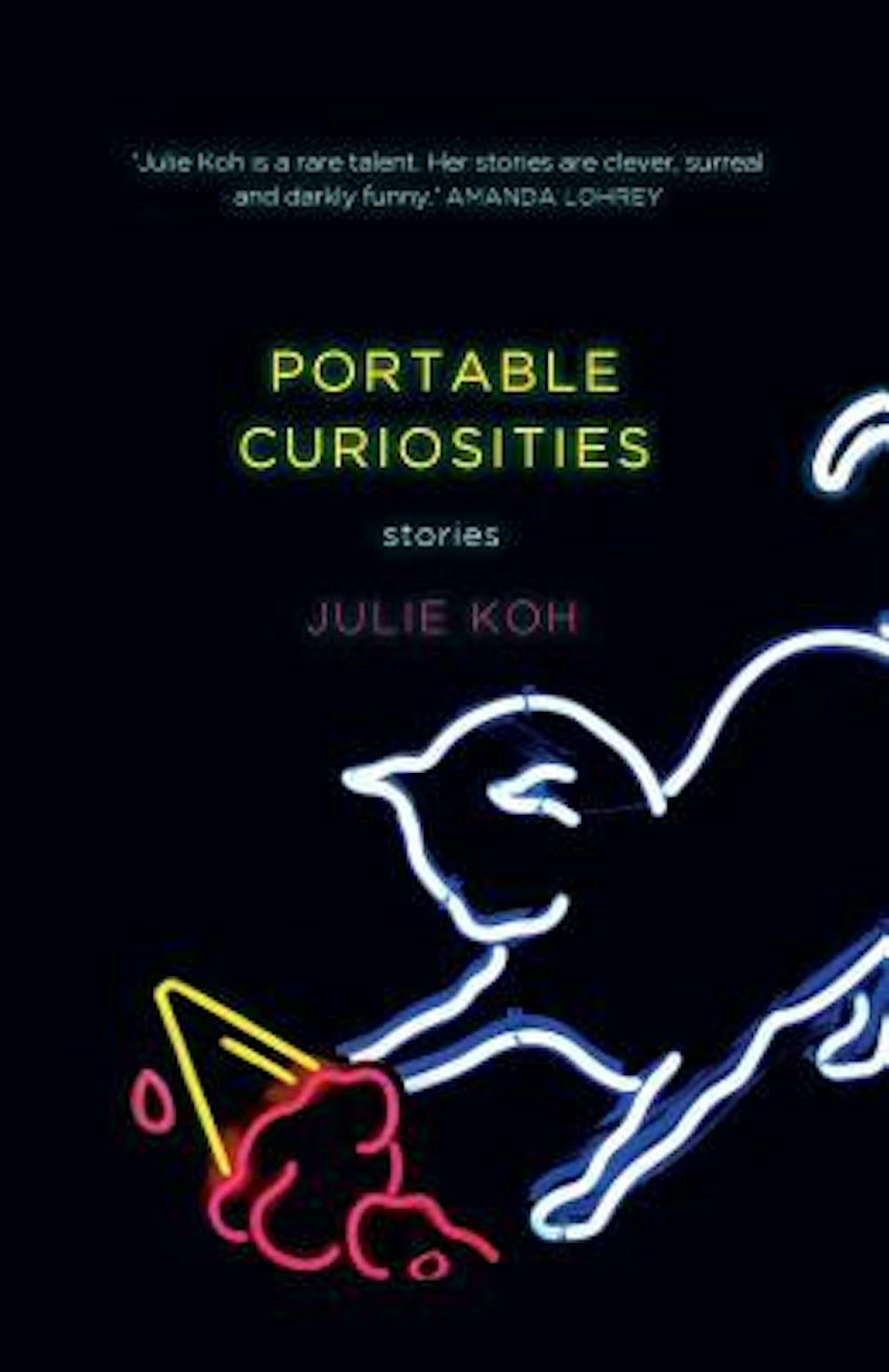
Portable Curiosities
For this crowd, I’d recommend Julie Koh’s Portable Curiosities (UQP, 2016). It’s a sharp and funny collection of stories that expanded my sense of what it is to be Australian. On the assumption that parliamentarians skew demographically to my (Anglo, male, privileged, economically secure) demographic, they too deserve a bit of satirical poking with Koh’s delicate and sharp instruments.
What would it be like to be a young, poor, bright woman born of Asian immigrants in our wealthy but extremely expensive cities? Many thousands are living exactly that, and millions are living parts of it. Koh provides a dark yet joyous window on that world. It wouldn’t do our representatives any harm to look through it for a bit.
Recommended for: our Anglo, male parliamentarians.
-Robert Phiddian, English Professor
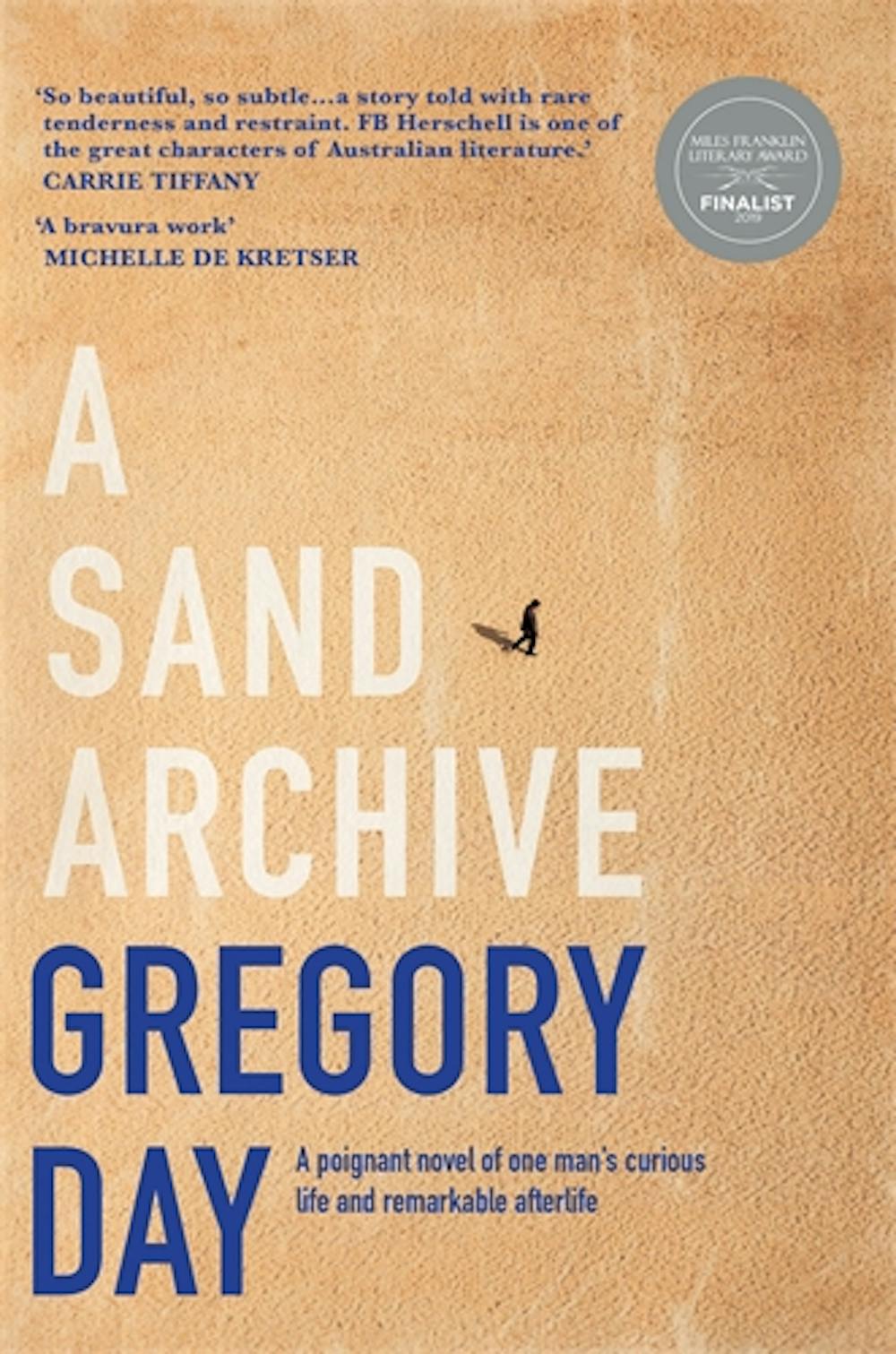
A Sand Archive
Gregory Day’s A Sand Archive (Pan Macmillan Australia, 2018) deals with perhaps the most crucial issue we face – environmental management – in lyrical mode. FB Herschell is an engineer concerned about how to maintain the Great South Road against the constant shifting of the sands on which they are built.
He selects marram grass to stabilise the dunes, but further research reveals that marram, an introduced species, harms the dunes, seabirds, and native plants. His appeals to reverse this, and all his evidence, fail to shift the local council, but the writings he leaves put on record the value of the environment, and the capacity of scientific investigation to help it heal.
Recommended for: Minister for the Environment Sussan Ley
–Jen Webb, Director of the Centre for Creative and Cultural Research
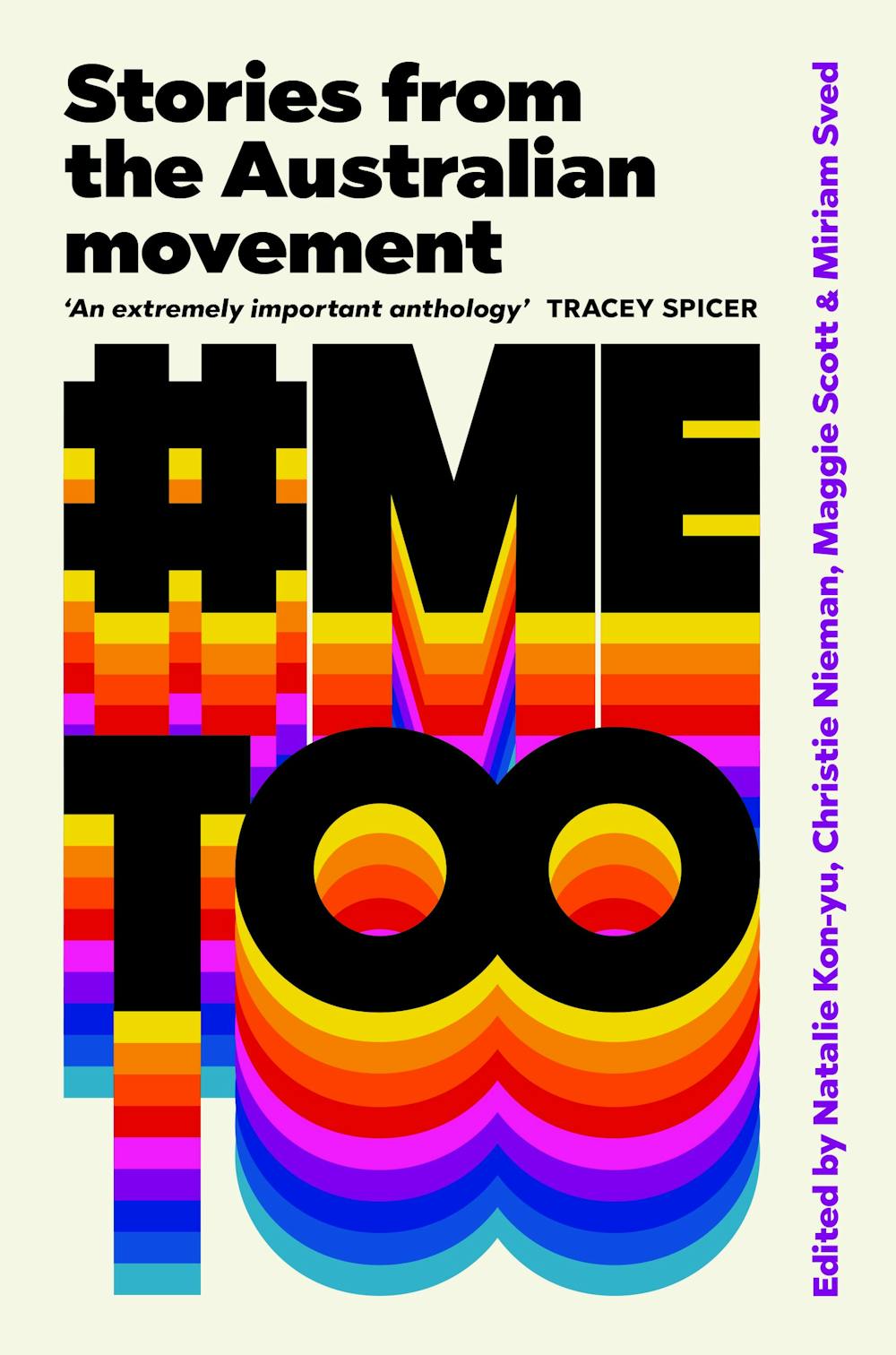
#MeToo: Stories from the Australian movement
Given the fact violence towards women is a national crisis, I would recommend #Me Too: Stories from the Australian movement (Pan Macmillan Australia, 2019), an anthology I co-edited. This book gives an overview of the problem of violence towards women and non-binary people in Australia. Through a myriad of different and diverse voices it points to the insidiousness of sexual violence and traces the roots of this problem to the everyday sexism which still permeates Australian culture. The book also offers ideas about how we might find a way through this crisis and into a more equitable and safer Australia.
Recommended for: Prime Minister Scott Morrison
–Natalie Kon-yu, Lecturer in Literature and Gender Studies
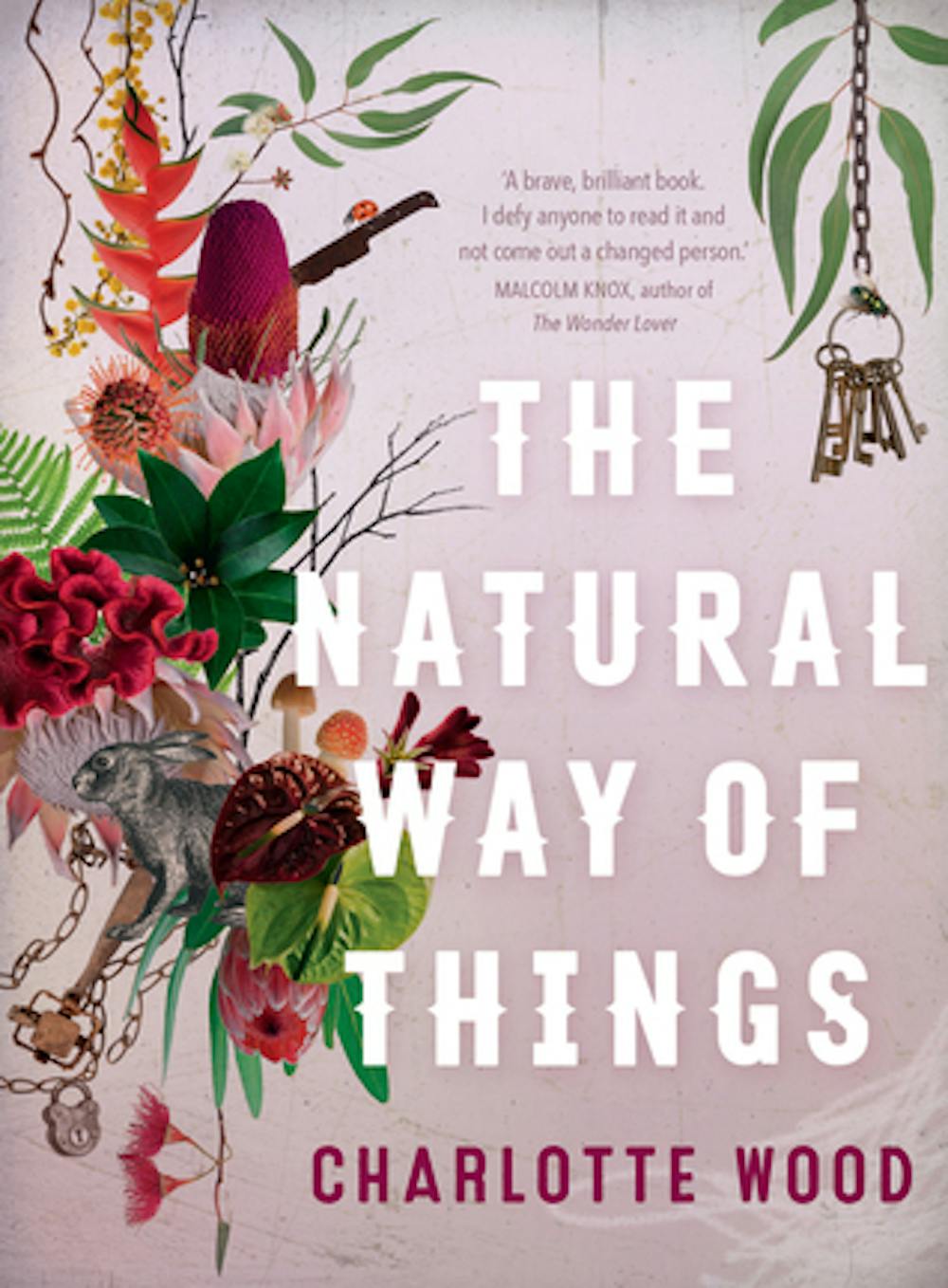
The Natural Way of Things
In Charlotte Wood’s The Natural Way of Things (Allan & Unwin, 2015), women who accuse men of sexual harassment or are themselves accused of illicit or improper sexuality are imprisoned and isolated in an outback prison. It’s like an Australian version of Margaret Atwood’s The Handmaid’s Tale.
Because it reads like a dystopian fantasy, it might be easy to dismiss the novel as “unrealistic”. But it is ruthless in its analysis of the way contemporary news media and gossip cycles still demonise and sexualise women. The novel explores the very different ways women resist or accommodate to their treatment; but it is really about the structures of patriarchy, influential far beyond the confines of the nuclear heterosexual family.
Recommended for: any male politician who says he is sympathetic to women because he is married to one or has daughters.
–Stephanie Trigg, English Literature Professor
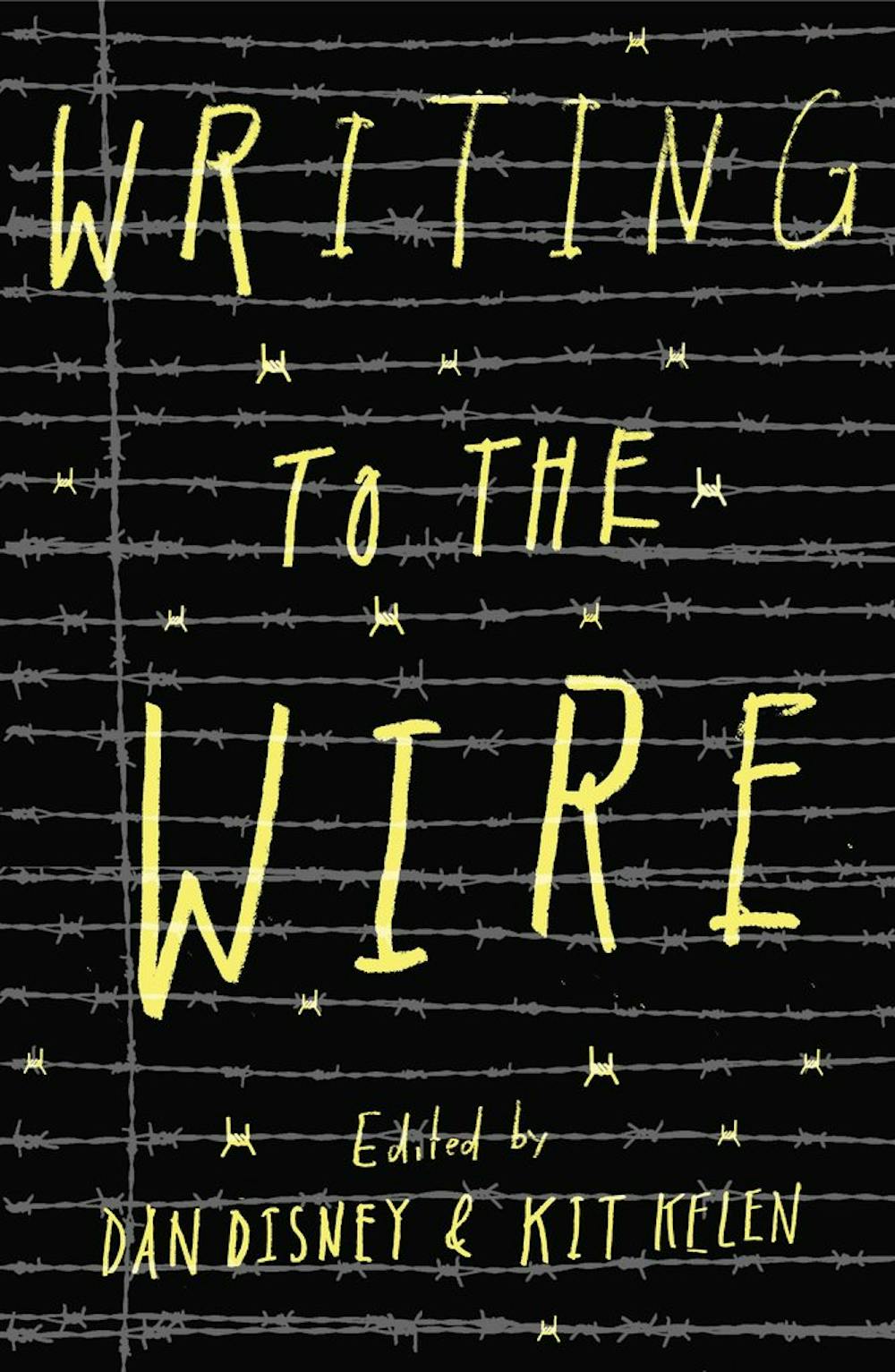
Writing to the Wire
I must acknowledge a possible conflict of interest here by noting that I have a poem in this anthology, but Writing to the Wire (UWA Publishing, 2019) is an extraordinarily powerful collection of poems by and about maritime asylum seekers. The anthology includes poems by senior and emerging Australian poets, and work by those who “would like to be Australians”, as the book’s blurb puts it. As the editors write in their introduction, Writing to the Wire is a little like “bashing your head against a brick wall [but also] very much a book of hope”.
Three years later, the editors and the contributors to this anthology — not to mention those indefinitely detained by the Australian government — are still hoping.
Recommended for: the whole parliament.
-David McCooey, Writing and Literature Professor
Hearing Maud: A Journey for a Voice
Hearing Maud (UWA Publishing, 2019) by Jessica White is a beautifully told story about two people living nearly one hundred years apart, and their experience of deafness. The first is the author herself, Jessica White, who suffered significant and permanent hearing loss following an illness at the age of four. The other is Maud Praed, the daughter of the Australian writer Rosa Praed (1851-1935). Jessica looks into the life of this forgotten daughter of a largely forgotten writer and finds haunting parallels with her own situation. The story is an insider’s account of hearing impairment but, more than this, reminds everyone — not least legislators and policy makers — that what we call disability has an interior life.
Recommended for: Minister for Families and Social Services Anne Ruston and the Minister for the National Disability Insurance Scheme Stuart Robert
–Tony Hughes-D’aeth, English and Cultural Studies Professor
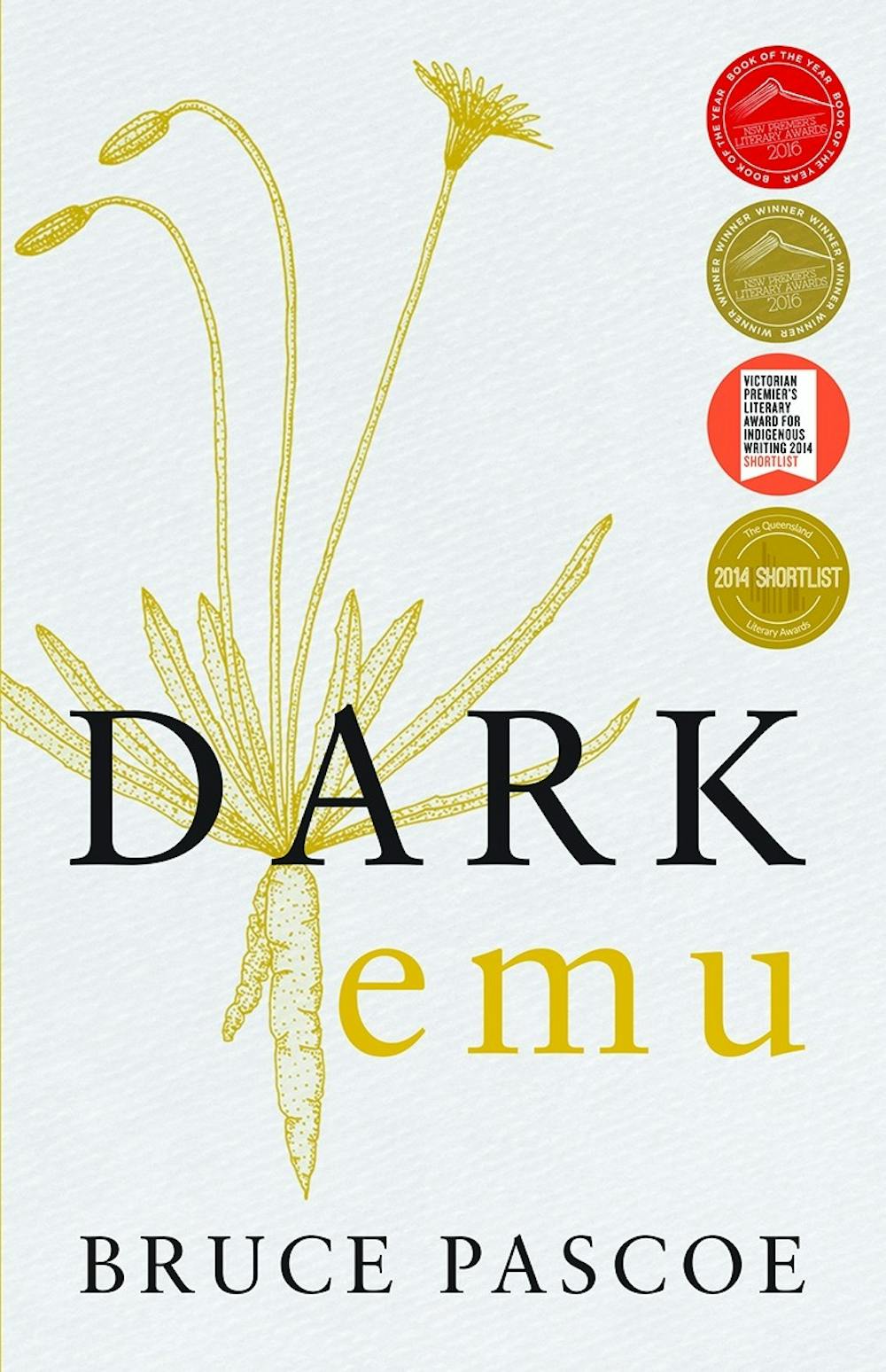
Dark Emu
In Dark Emu (Magabala Books, 2014), Bruce Pascoe amasses a cogent case that Indigenous Australians farmed their land, lived in villages, built houses, harvested cereals and built complex aquaculture systems – and how settler Australians wilfully misunderstood this.
Occupying the western Sydney fringe, Ed Husic’s electorate of Chifley has the rare distinction of a border that follows an important waterway (South Creek) and contains significant colonial-Darug contact sites. Western Sydney is home today to Australia’s largest Aboriginal population; the Aboriginal Land Council is the largest non-government land holder; and some 46 Indigenous organisations are working to sustain their community.
Recommended for: Ed Husic, MP for Chifley
–Heidi Norman, Social and Political Sciences Professor
hope for whole: poets speak up to Adani
It’s hard to go past The Swan Book (Alexis Wright) for its testimony regarding the climate crisis and the NT intervention, and Jess Hill’s new book See What You Made Me Do on the endemic of domestic abuse. But I’m settling on hope for whole: poets speak up to Adani (Plumwood Mountain, 2018) featuring many of Australia’s finest poets. Anne Elvey and Plumwood Journal: An Australian Journal of Ecopoetry and Ecopoetics hosted Poets Speak up to Adani Day of Action in 2017, an event during which poets poemed protests at Adani for 12 hours. The resulting anthology is even more pertinent post-Federal election, and the recent diplomacy fail in Tuvalu.
Recommended for: all parliamentarians who support the mine or seem soft on climate action.
–Meera Atkinson, Creative Writing Lecturer
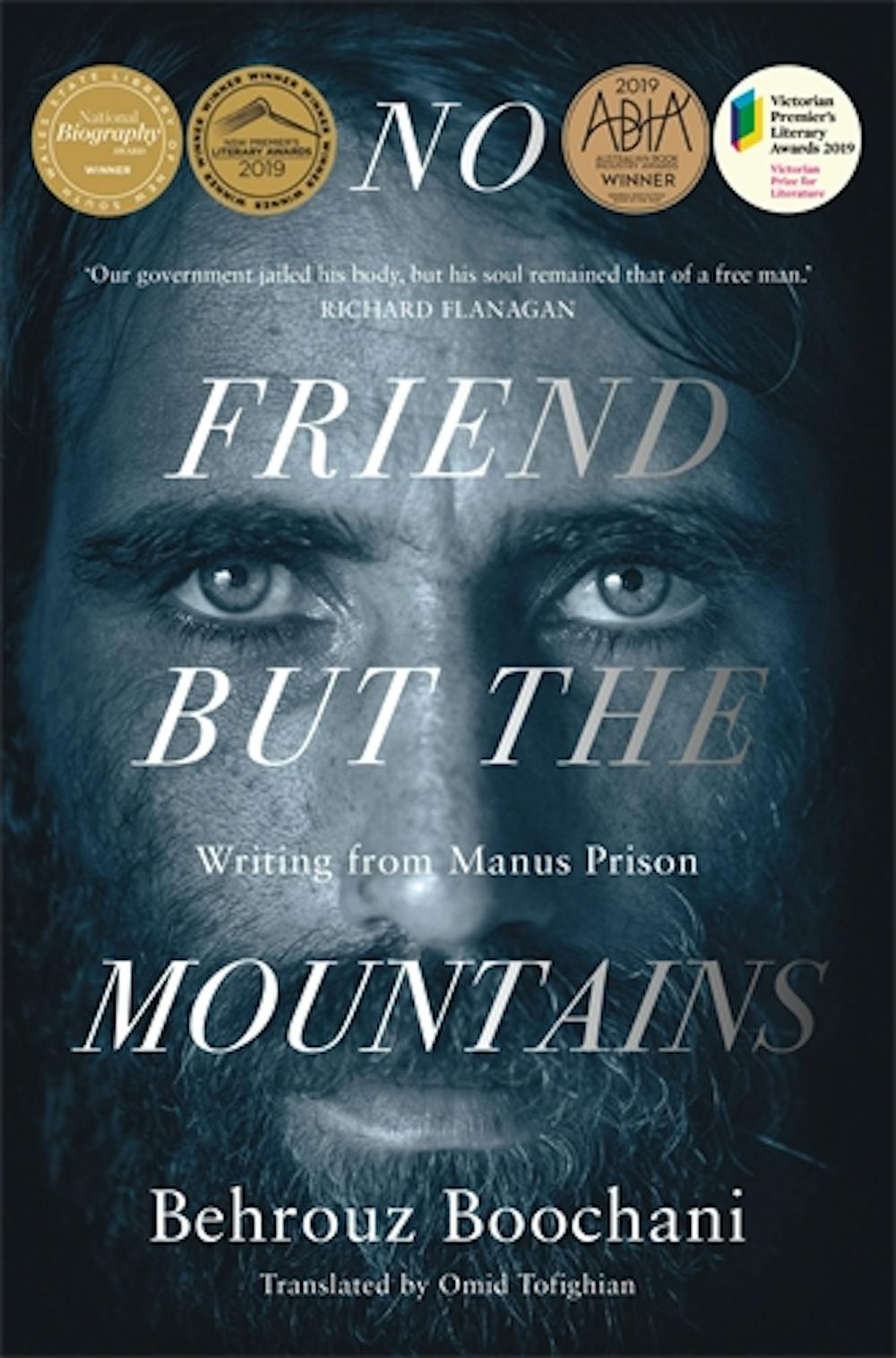
No Friend But the Mountains: Writing from Manus Prison
Reading expands our capacity for empathy. It forces us to exercise our ethical imagination by putting ourselves into somebody else’s situation; particularly somebody who may be unlike us in the way they think, speak, or feel, or in the situations that they face. No Friend But the Mountains (Pan Macmillan Australia, 2018), Behrouz Boochani’s work of prose poetry, sent out in text messages from Manus Island, bears witness to death, torture and traumatic deprivation. It asks its reader not to treat the fresh hell it narrates as an anomaly but to understand “Manus Prison” as part of a system of oppression and injustice that is far larger, and ongoing. But to learn from Boochani’s text, the reader must give themselves to the work, and read with generosity.
These values may be of assistance to all members of the parliamentary book club.
One recent Saturday morning, I once again drove my children to the street in Brisbane’s west where I grew up as a boy.
They had been on this journey too many times to remember: the pleasant drive through The Gap in the Taylor Range, past the old jam factory and the golf course, left into Payne Road and then sharp left into the dogleg that is Bernarra Street.
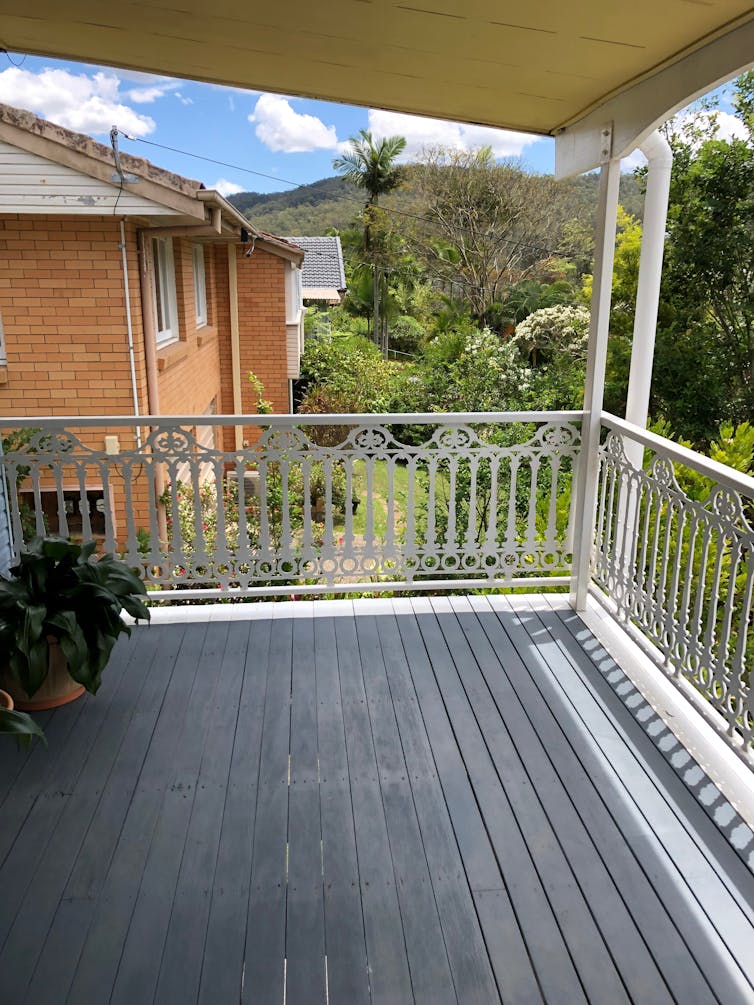
Here, in the early 1960s on the frontier of suburban Brisbane, my parents built a small rectangular house on a sloped block.
“We’re seeing the house again?” remarked my daughter, ten. I had lived in this street until I was 12. I had been her age in this strip of red-brick and weatherboard houses, part of an exciting new “estate” where the edge of the city met the bush and boulders of western Brisbane.
On this day, as we cruised into Bernarra Street, we approached the house and noticed, for the first time since my parents had sold it in 1974, that it was for sale again.
There, on the footpath where I had kicked thousands of winning goals for my rugby team, slipped in the wet and lacerated my cheek on the corner of a brick wall, was a real estate sandwich board that declared “Open House”.
Why did I keep returning here, to this stamp of land? I had lived in some of the great capital cities of the world, and yet these few hundred metres of street in Brisbane, a spine of outdated homes, a clutch of footpath jacarandas and poincianas, had become my touchstone.
I had some idea. Everything had started here, in the light of the house upstairs and the shadows of downstairs, with its concrete pillars and exposed timber and raw earth.
Here, the questions were posed. And I only understood, in that moment outside the old house, with my children, bored and rolling their eyes in the back seat of the car, that I had spent my life trying to answer those questions.
“I’m going in,” I told the kids. “I’ll be five minutes. Stay in the car.” “Dad.”
“Five minutes, that’s all.”
It’s hard now to remember what I felt walking up and into the house for the first time in almost 45 years because so many emotions were at play. Here, my view of the world was formed. Here, family secrets I didn’t know existed at the time were as solid and deeply buried as the giant boulders of granite on which the house sat. This molten mass had pushed up 200 million years earlier, and then my family came along and constructed a faux-colonial homestead on top.
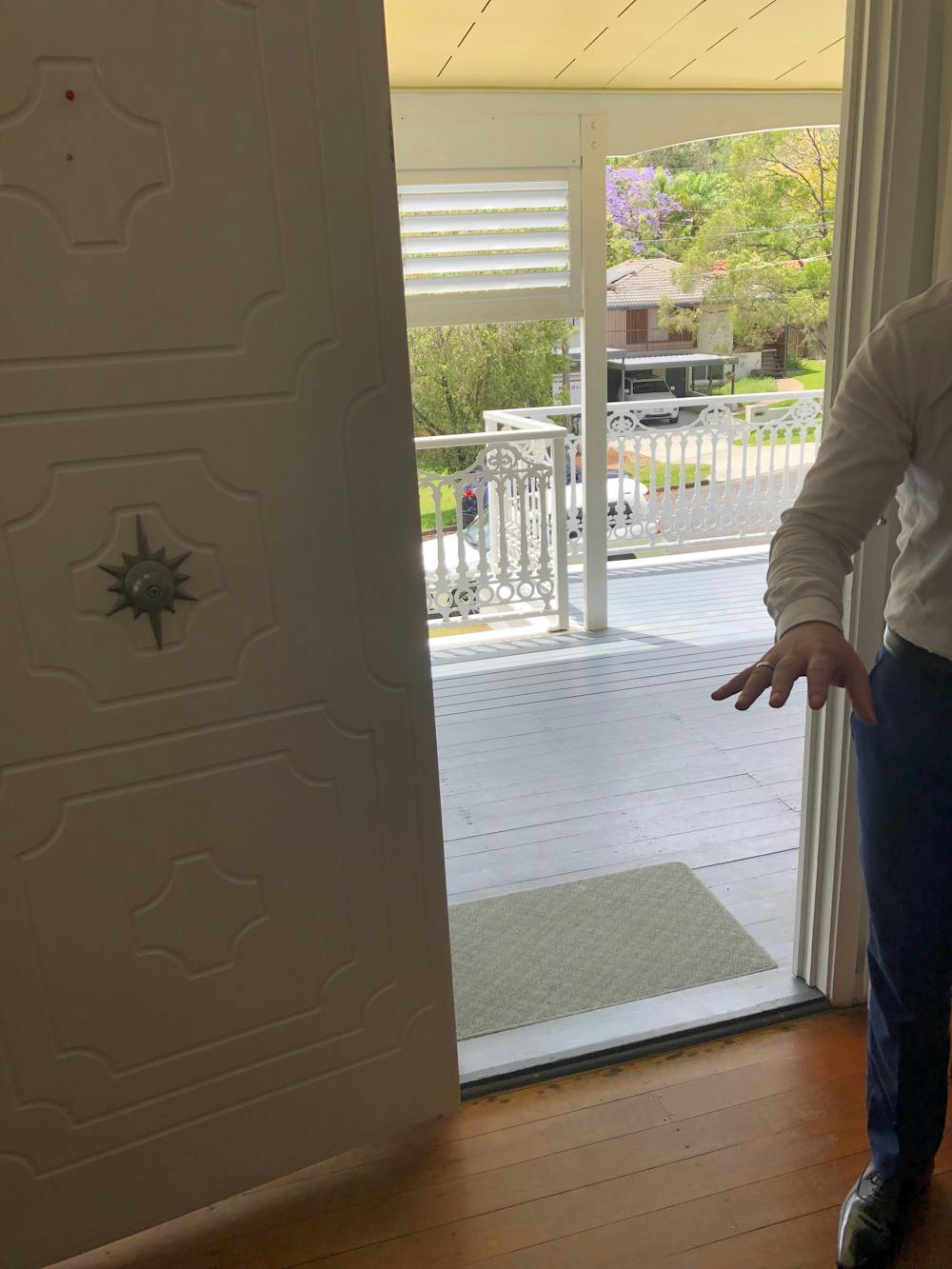
Like pushing back time… Author provided
Going up those stairs and through the front door was, for me, like pushing back time, through decades, thrashing and flailing through the accreted detritus of experience, of life, to the beginning of my existence.
But it was just a house on this hot and glary Saturday, with a real-estate agent in attendance, and some perambulating couples quietly assessing whether this might be where they would settle and raise their own children.
I wandered through the small lounge and dining room, then down the central hall. I peered into what had been my bedroom, an impossibly small space that overlooked the backyard, and had flashbacks so intense I felt dizzy and needed to retreat.
Here, I had met and endured the Dark Man. He was a character that lived in my closet, and sometimes at night he would step into the room. He was tall and wore a long, black coat and a black fedora and he had an infinite, featureless black face. He would stand and stare at me and then disappear into the closet again.
I remembered trying to scream whenever I saw the Dark Man, but no sound issued from my child’s mouth.
I went downstairs again and drifted into the garage area under the house.
I had spent countless hours here in the shadows, building a replica of Brisbane in the dirt beneath the floorboards, complete with roads and suburbs and the Brisbane City Hall clocktower, fashioned from a narrow rectangular offcut of wood.
Down in these cool shadows, I could hear my parents and my twin sister shifting about the house above, or the clang of a piece of dropped cutlery, or the flush of the toilet. Sometimes, in the early evening, I could smell from the kitchen the bilious odour of lamb’s fry or boiled chicken or cabbage.
I was always comfortable in this dark space, with my own company. I could play undisturbed for hours, and to be called to dinner was to be to be pulled out of a very real world of my own making. Upstairs, in the light, it comforted me to know that directly below my feet was this block of shadow that belonged to me, and where anything might happen.
On the day of the Open House, I noticed some words written in chalk on one of the house’s wooden supporting beams – “Condon job” – perhaps scrawled there by timber merchants before they loaded it onto a truck and drove it out to the blank concrete slab of our future house in Bernarra Street.
Condon job.
The wooden beam. Author provided
That the white cursive had survived for over a half a century was surprising enough. But seeing it now, me twice as old as my father was when we lived in this house, it seemed it could be a message for me that had been sent into the future. Then again, this house had always been my romantic Brigadoon and forever opened that little drawer of hyperbole in me.
I left the cool of the garage and walked down towards my car.
For almost a decade I had worked on the story of Queensland police and political corruption from the 1940s through to the 1990s. I have trawled through Brisbane’s underworld, conducted hundreds of interviews, spent three years of my life interrogating corrupt former Queensland Police Commissioner Terry Lewis, studied thousands of documents, visited the sites of former brothels and illegal gambling joints, had beers with murderers and lattes with old gangsters.
What had begun as a reflex, a seemingly banal decision influenced by curiosity, had swallowed me whole. As the months passed, then years, the exit doors became less frequent, and one phone call led to another email led to another interview led to another discovered document, clue, theory, possibility and conspiracy to the point where it felt as if I had created a map that nobody had ever seen before. It was as though I’d fallen through its co-ordinates and highways and byways and rivers and rivulets and streets and unsealed roads to become trapped on the other side, unable to penetrate a mesh of my own making.
Perhaps this had been the “Condon job” I’d been destined to acquit, the prophecy written in white chalk in the dank undercroft of a featureless suburban house.
But as I researched this story over the months, and then years, I was both surprised – and wearily not – that members of my own family had cameos in this narrative, and that I too had been in and around this drama since I was a boy.
Like the house in Bernarra Street, my family history was all light and windows upstairs with a nice view from the veranda, but shadowy and sometimes pitch black down below.
We become writers, I think, because we intuit from a very young age that the picture we see around us is not quite right. That windows stick and doors don’t close smoothly because everything is slightly off balance.
Early on we are riddled with questions that we can’t answer. Then we can’t shake the questions.
We look for that fissure in the wall.
With the story of Queensland crime and corruption, I had accidentally found my fissure.
Then pushed through to the other side.
Behind the cacti
As a child in the 1960s I was free range, exploring my immediate neighbourhood by foot or by bicycle. I knew every square centimetre of my immediate landscape, every tree and ant nest, every gutter and drain. Every car and motorcycle, adult and child.
Around 1968, in Barkala Street, immediately parallel to ours, I was fascinated by one particular vehicle that was often parked out the front of a small house. I found the house curious because its garden was bulging almost exclusively with cacti. The garden beds were like giant fists of swords and daggers, protecting the house’s inhabitants.
It was an ugly and violent and dangerous-looking place.
And then there was the car, an American-style limousine with long, smooth lines that looked as out of place as the garden.
Invariably, waiting beside the car was a man in a uniform and formal cap. I assumed he was the driver of the limousine. I saw the man and the car many times, walked past them and looped my Dragster bicycle in their orbit.
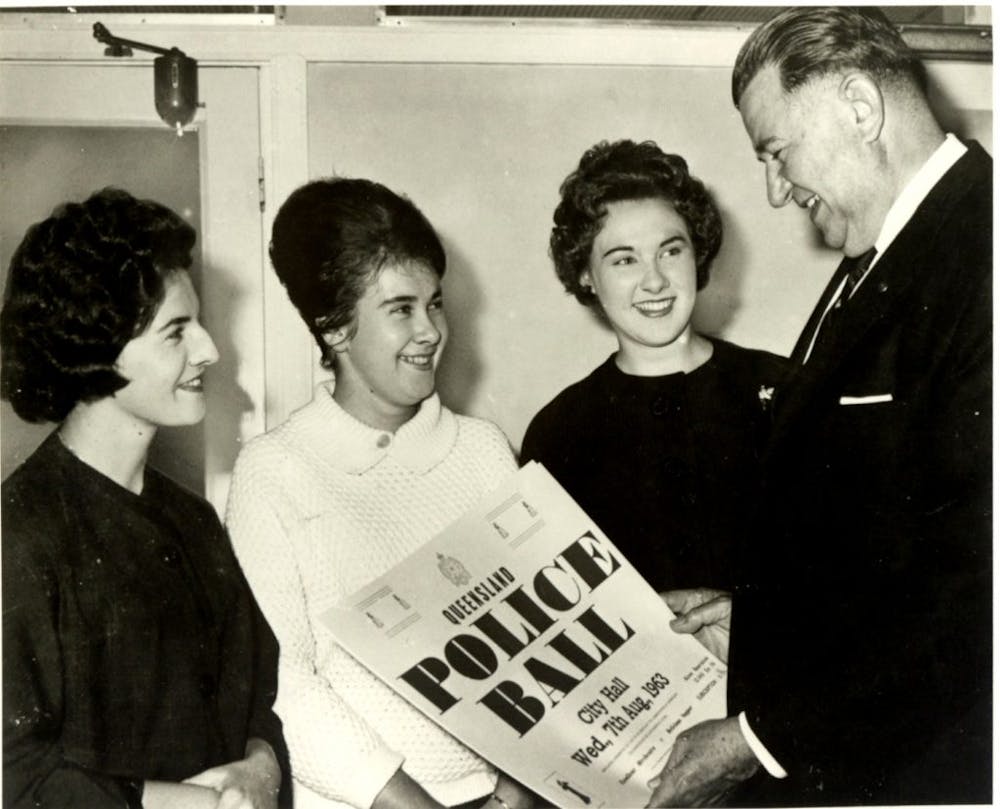
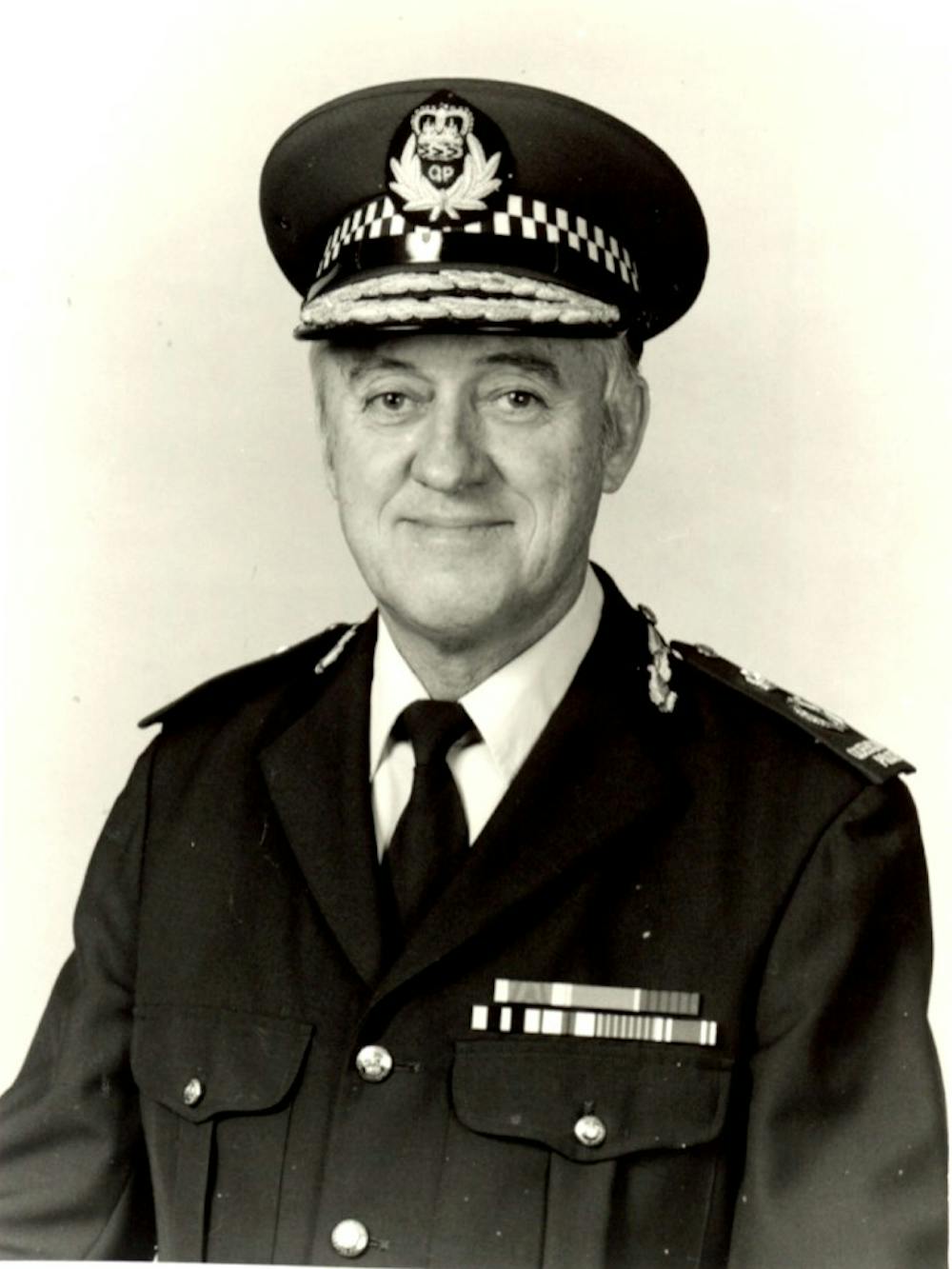
Only decades later, researching the true crime books, did I realise that the man who lived behind the wall of cactus was Queensland Police Commissioner (1958–69) Frank Bischof, father and perfector of the corrupt system known as “The Joke”, a network of graft that would ultimately infect almost every branch of the state’s government, judicial system, public service and community in general for decades.
Bischof was vile and self-interested. He was a thug, a bully, a braggart and a world-class liar.
Police Commissioner Frank Bischof discusses the upcoming police ball with three debutantes from the Main Roads Department in 1963. Wikimedia Commons
In the end, the little boy from Bernarra Street, happy-go-lucky on his bicycle, would expose Bischof as a paedophile.
Several of his victims approached me following the publication of the first volume of the Lewis trilogy – Three Crooked Kings (UQP, 2013) – and detailed their abuse at Bischof’s hands; some of those stories were published in the second volume, Jacks and Jokers (UQP, 2014), and in my later books Little Fish Are Sweet (UQP, 2016) and The Night Dragon (UQP, 2019).
Eerie connections
There were other gossamer threads between branches of my family tree and this corruption saga.
In the late 1930s, one particular relation of mine, tall and fit with his hair oiled back, was sent to the Westbrook Farm Home for Boys outside Toowoomba, west of Brisbane. Westbrook was a byword for hell. Here, troubled boys were, in theory, to be shown the path to the straight and narrow. Instead, they were abused, sexually assaulted, in some instances tortured by officials.
Westbrook was a criminal primary school where boys began learning the skills needed for a life of crime. It was where they established friendships that, on the outside, were maintained and morphed into criminal associations. Often, the Westbrook boys would end up together in “high school” – Boggo Road Gaol in Brisbane.
My relative was released from Westbrook when he was 18, in the late 1930s, and immediately embarked on a life of petty crime. He was arrested and incarcerated on multiple occasions. There is little doubt he would have been known to then Detective Frank Bischof, the big wheel down at the Brisbane Criminal Investigation Branch, who used the wartime black market to hone his own skills in extortion and blackmail, used to great effect when he later became police commissioner.
In the late 1940s, my relative was arrested, with another man, on a charge of attempted rape. At around 9pm one evening, he and his friend attacked a young woman and tried to molest her after she’d gotten off a tram.
When he was found guilty and sentenced to seven years’ hard labour, members of my family present in court that day caused such a ruckus – stomping, screaming, crying and shouting obscenities – that the story made national news.
Delving into Brisbane’s underworld, I discovered some eerie connections between this relative and myself.
In the early 1950s, on release from prison, he lived with his parents in the suburb of Red Hill before marrying a young woman, the sister of a friend he made in Boggo Road.
She would die of a mysterious “bowel obstruction” less than a year after their marriage, but not before they lived in a house on Paddington’s Latrobe Terrace in the city’s inner west. That house, I discovered, was less than 400 metres from the house where I raised my own children.
In the 1960s, according to family members, this relative also did “business” in the old Paddington Hotel nearby. That pub, albeit its more respectable modern incarnation, was my local.
Early that same decade, just as my family was settling into Bernarra Street, a young Terence Murray Lewis was raising his own family in Ellena Street in the suburb formerly known as Rosalie but later subsumed by Paddington. (Lewis would be elevated to Commissioner of Police in 1976, and would be jailed for official corruption in the 1990s.)
The Lewis home was two houses up from the local Baptist church. My grandfather George Baker, a motorcycle fanatic, and my grandmother Freda lived one street away from the Lewises in Beck Street. My grandfather helped build that Baptist church.
In the little village of Rosalie, with its butcher and barber and picture theatre, there is no doubt the Bakers crossed paths with the young policeman, Lewis, and his family. Both George and Terry were obsessed with motorcycles.
Also in the early 1960s, Bischof promoted Lewis to head of the new Juvenile Aid Bureau. Lewis’s job was to crack down on youth truancy and crime. Curiously, and to the puzzlement of other police, the bureau’s office was established immediately next to the office of the police commissioner.
They called the bureau staff “the bum smackers”, and the job necessitated almost constant contact between Lewis and Brisbane schools, their principals and their errant students.
On a Saturday morning, even Bischof lent a hand. He opened the doors of his office to concerned parents who could bring their naughty children in to be counselled by Uncle Frank. In Jacks and Jokers, I wondered if the “Saturday clinic” was a ruse to give Bischof unfettered access to children: after its publication, many people would tell me this was so.
Frank Bischof in 1962.
Lewis, a compulsive diarist, kept scrupulous notes on his work with the bureau. Dates, times, the names of schools and children, court cases and punishments filled his police diaries.
Decades later, preparing to write the story of Lewis’s life, he allowed me to read his bureau diaries. They were tremendously dull, and yielded little of importance to the story – until I found the names of some of my relatives. These were the children of the attempted rapist. They came to the attention of the bum smackers because they were discovered wandering the streets of Brisbane, wagging school, getting into trouble.
To see their names caught in the net of Lewis’s diary was jolting. Here was another generation of one side of my family emerging in the narrative threads of this story. Here was another point of intersection, where the upstairs floorboards met the shadows under the house.
My relative, he of Westbrook and the sexual assault and the “business” in the Paddo pub – was he the Dark Man in the cupboard at the end of my bed?
I remembered him as impossibly tall, with a handshake that could crush small bones. He was never impolite or aggressive towards me, on the few occasions I saw him. But I did get a glimpse into his family’s world through one of the children he had with his second wife who, when I was about ten, committed a foul and unspeakable act in front of me under the old Queenslander they rented, leaving me shocked and disturbed. Perhaps I was too innocent.
But I have never forgotten that moment, the brief opening and closing of a portal into another world – one most of us are sheltered from, one that speaks to a type of human behaviour guided by no rules or consequences.
I would come across this portal again and again through researching and writing the crime histories, and what I saw and heard I recognised instantly from that brief moment under the Queenslander.
A dream of death
In early 2010, courtesy of an introduction by a friend, I went to visit Terence Murray Lewis, then 82, in Brisbane’s suburban inner north. I had been told Lewis was ready to write his “story”, and that he needed some help. I instinctively knew that if I accepted this project, contingent on Lewis’s approval, it would take up several years of my life. I am now approaching my tenth year.
I have never kept diaries, but in the case of Lewis I decided to take down some notes after our meetings that would, in the end, result in three years of interviews.
We met for the first time at 9 am on 1 February 2010. I wrote:
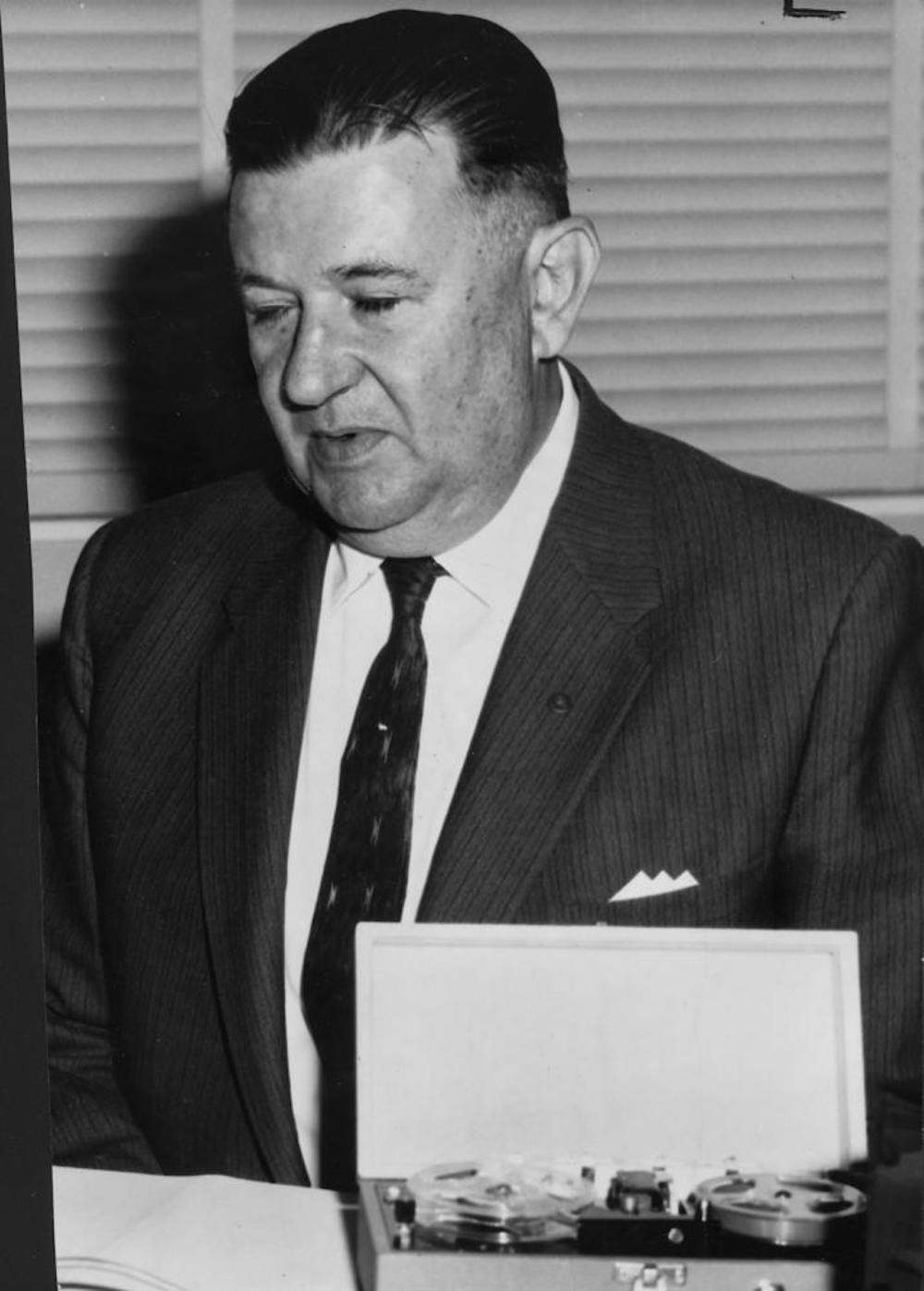
He is sharp and has a cunning air about him. He seems to quickly but expertly self-edit as he speaks. His dialogue is largely emotionless, except when it comes to the miscarriage of justice against him. A couple of times he slips out of character and there is an anger there, a temper beyond the façade, then he pulls it back in. It is the working-class scrapper, self-educated, that peers out from behind the former knight of the realm.
Terence Lewis. Wikimedia Commons
The book about Lewis’s life became two books, then a trilogy. It kept going with a fourth volume and a fifth. With the publication of each volume, hundreds of people came forward, volunteering information, personal recollections and documents, exponentially expanding the project, filling in gaps in the mosaic and spawning possibilities for other standalone books. A dozen more are waiting to be written. Whether they will be written by me, I can’t say.
At the time the second volume of the trilogy was published, Lewis severed ties with me and demanded the return of his many papers and documents. The project had not been to his liking, and I had not published the hagiography he had hoped for. I have not heard a single word from him since.
My Lewis diary ends on 11 May 2015, four years and three months after we first met.
“I dream of the death of Lewis,” I wrote. (Lewis, 91, lives in Brisbane.)
He’s driving what seems like an old Morris on a highway. He’s wearing a tweed sports coat and a pork pie hat.
I’m both in the car with him when it collides with something. And I’m in a separate car and I see the collision. There is what looks like a sweep
ing wave of liquid clay.
Lewis then turns into a black wolf, the wolf disappearing around the corner of a building. When I take a look, I see that he has turned into a black fox.
I recover a sheaf of Lewis’ diaries with his familiar handwriting and words highlighted and underlined.
There is a place Lewis has been trying to get to. I get a glimpse of it. A house. Hedges.
A woman. Lewis is now a middle-aged man. He’s wearing a singlet. He’s looking for friends. A green light traces across the sky.
I get a sense he’s truly himself in this place. That it’s the real man at last.
There are shadows.
Of course there are shadows. There have always been shadows. I fell into one as a child and I’ve been trying to work my way out of it ever since.
Hideous tales
It is a peculiar place, this shadow country. It can be strangely intoxicating. After a few years in it you begin to learn to find your way around. Over time you become harder to shock. You get to a point where you think you understand this place, only to discover that there’s a darker shadow behind it, and another behind that.
There have been some predictable and some unforeseen personal side effects as a result of working on a project of this magnitude, and one that has involved immersion in stories of murder, child sexual abuse, violence, betrayal and every other regrettable feature of human nature.
I have been told tales that I truly wish I hadn’t heard. Those hideous details can never be unheard.
But one of the worst side effects has been this.
For much of my life after we left that little house in Bernarra Street, I never again woke in the middle of the night to see the Dark Man, with his black fedora and coat and infinite face, at the end of the bed.
I left him behind in that room.
But now, after almost ten years of working in the shadow country, I have not just seen him again. I see him everywhere.
Australian authorities have been told to stop interfering in the case of the Chinese-Australian writer Dr Yang Hengjun who has been detained by China since January.
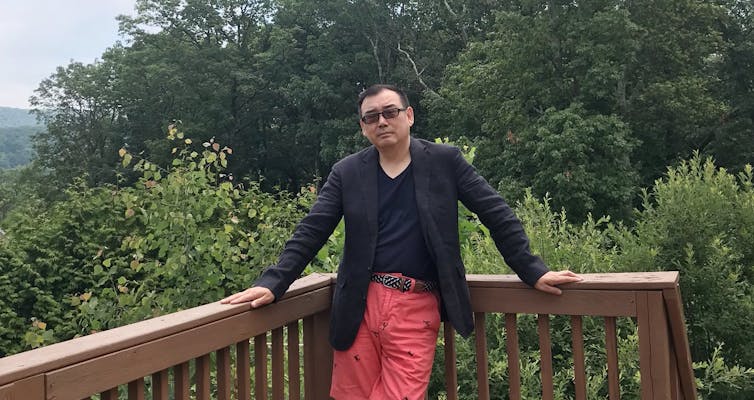
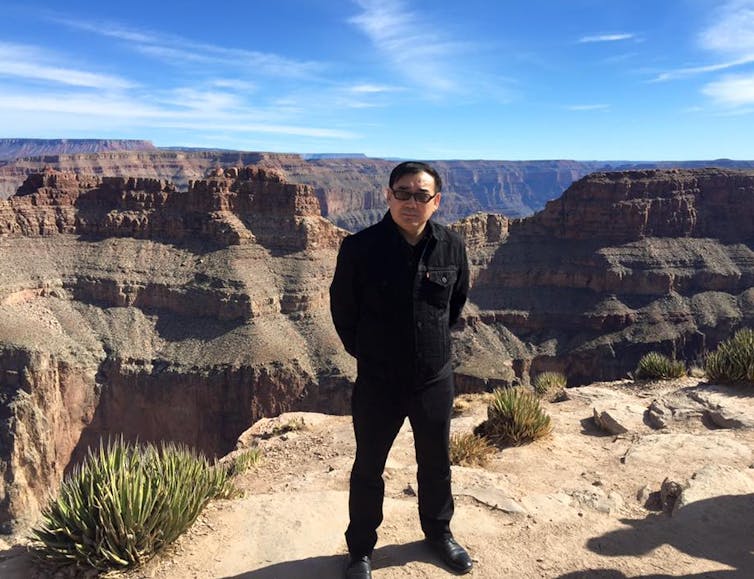
I’ve known Yang for many years – he is a former PhD student of mine – and I also believe he should be released.
I’ve seen reports sent to his wife, Yuan Xiaoliang, from Australian consul visits to Yang.
The reports say Yang is sealed off from the outside world without access to legal counsel or visits by relatives, and he has been subjected to interrogations twice a day.
A novel critic
So what has Yang done that has led to his detention for so long? In a nutshell, Yang is a political dissident no longer tolerated by the Chinese communist regime. He is paying a heavy price as a long-standing critic of the Chinese Communist Party (CCP).
Yang, aged 54, abandoned his career as a communist cadre to embrace freedom and democracy in his middle age.
He earned his first degree in politics from Fudan University in China in 1987 and was assigned to work in the Ministry of Foreign Affairs with connection to the Chinese secret police. He was eventually alienated by his job and developed a strong interest in literature.
He resigned from his post and moved to Australia with his wife and two sons in 1999 to pursue his dream of becoming a writer. In 2002-2005, he published a trilogy of spy novels, Fatal Weakness, Fatal Weapon and Fatal Assassination, in print and online.
These novels used his own experiences and those of his colleagues to tell the soul-stirring stories of a China-US double agent who ultimately serves the agenda for neither side but works for his own inspiration and conviction to serve the real interests of the people.
But the novels did not bring him the fame and wealth he expected, because they were published in Taiwan and banned in mainland China. An attempt to turn them into movies in Hong Kong also failed.
The rise of the blogger
At the end of 2005, Yang enrolled in a PhD in China Studies at the University of Technology Sydney under my supervision, starting his journey as a liberal scholar. By that time, I’d become a major contributor to the emergence of the Chinese liberal camp and Chinese liberal intellectuals.
Yang got his PhD in 2009 with a thesis titled The Internet and China: the Impacts of Netizen Reporters and Bloggers on Democratisation in China. The thesis was a timely, in-depth analysis of the complicated information warfare between the internet and the CCP regime.
As part of an experiment for his PhD thesis, Yang started his own blog (available now only on archive.org) and wrote commentaries on current affairs as a “citizen journalist”.
Yang is that rare combination of a scholar well trained in both China and the West, with a firm belief in the universal values of human rights, democracy and the rule of law.
He chose to devote his talent and passion to online journalism in Chinese, hoping to accelerate China’s transformation toward constitutional democracy. He has published more than ten million words of online articles on this theme, earning the nickname “democracy pedlar” with tremendous following in the Chinese speaking world.
Several collections of his online articles have been published to wide audience, such as Family, State and the World (2010), Seeing the World with Black Eyes: The World in the Eyes of a Democracy Pedlar (2011), Talking about China (2014), and Keeping You Company in Your Life Journey (2014).
Yang is extremely good at explaining the profound in simple terms, using moving examples in everyday life to expose the social ills of communist autocracy and promote democratic values and institutions.
In particular, he provides timely analysis on all sorts of events around the world reported in the news, revealing the stark contrast between the harsh reality and the official rhetoric of the CCP.
Yang rarely engages in social activism, although he has maintained extensive connections with some Chinese human rights and democracy activists.
Detained before
Yang has long been targeted by the Chinese security apparatus, which detained him in March 2011, taking him as one of the opinion leaders who has the capacity to mobilise nationwide social protests.
He was quickly released back to Australia due to the international media campaign and the diplomatic pressure of then Prime Minister Julia Gillard’s visit to China.
Why did he not learn his lesson? Well, he did tone down his voice after 2011. Since Xi Jinping’s rise to general secretary of the CCP in 2012, Yang adopted a soft strategy of packaging his advocacy for human rights and democracy as publicising “socialist core values” promoted by the CCP.
Yang was so successful with this new strategy that thousands of his followers organised support groups via the social media app WeChat in more than 50 cities around China. These include Beijing, Shanghai and Guangzhou in 2015, when human rights and democracy activists had met with brutal repression.
In 2016, when the political environment turned from bad to worse and Yang’s blogs were shut down one by one, he closed down all of the WeChat groups and substantially scaled down his online writing.
Moved to the US
He moved to New York as a visiting scholar at Columbia University in 2017. He was able to travel to China several times and Chinese authorities lifted the ban on several of his blogs in China towards the end of 2018. This gave him the impression it was safe for him to visit China.
Thousands of Yang’s supporters have been in despair, engaging in heated debates about his ordeal and its implications for political development in China.
Instead of following the international norm of presumption of innocence, the CCP regime continues Yang’s criminal detention despite the lack of evidence he’s done anything wrong.
This behaviour of political persecution and hostage diplomacy clearly demonstrates the contempt China has for human rights and international moral standards.
The Australian government and public are obligated to challenge the laws and practice of the CCP regime in safeguarding basic human rights of innocent citizens. The international community are also obligated to support this endeavour for human dignity, and thus the immediate release of Yang.
Australia’s relations with China will be further complicated by the news that Australian citizen Yang Hengjun is set to be charged with endangering state security.
This is a serious charge that carries the penalty of at least three years in jail.
Yang’s wife Yuan Xiaoliang was notified earlier today that her husband would be charged, a day before the six-month deadline determining whether he is to be released, charged or have his detention extended.
Charges against Yang appear to relate to his work as a writer and blogger in which he has been sharply critical of the Chinese regime. He developed a large following on Chinese social media and on Twitter, and his criticisms will have infuriated Chinese authorities.
Yang was arrested after he returned to China earlier this year with his family. He has been held in a Beijing state security prison since then, without access to lawyers, and denied contact with his family.
Australian attempts to secure access have been rebuffed.
Canberra’s relations with Beijing
China’s decision to charge Yang comes at an awkward moment in relations between Beijing and Canberra.
Australia this week was obliged to step up its consular efforts to persuade China to allow Uyghur families to leave Xinjiang to be reunited with their Australian families.
This followed broadcast an ABC four Corners program that drew attention to the plight of Uighurs in Xinjiang. Up to a million out of a population of 11 million in the region are reported to be in “re-education” camps.
China’s official media responded harshly to the ABC program and to criticism of China’s treatment of Uyghurs more generally. The Global Times newspaper, which tends to reflect a hardline nationalist view, accused critics of “recklessly attacking” China.
Yang’s case reflects China’s extreme sensitivity to criticism.
This episode won’t help Australia’s efforts to get its relationship with China on more stable footing after several years of difficulties.
China had objected to criticism of its attempts to interfere in Australian domestic politics via Chinese nationals associated with Beijing. This led to a freeze on visits to China by Australian political leaders. While that freeze has thawed, tensions remain.
Chinese laws affect other western democracies
Australia is far from alone among western democracies whose citizens have fallen foul of opaque and arbitary Chinese law and legal procedures.
Canada is wrestling with the cases of two of its citizens who have been held without charge since last year. China has accused the pair of stealing state secrets.
This is a serious charge that can result in the death penalty.
The two Canadians were detained after the arrest at Vancouver airport of Meng Wanzhou, daughter of the founder of the Chinese telecommunications giant, Huawei. Meng is appealing attempts by the United States to extradite her to face charge of fraud.
This is a highly contentious issue, and one that is complicating relations between Washington, Ottawa and Beijing.
Apart from arresting the Canadians accused of stealing state secrets, China has also taken aim at Canada economically. It has stopped Canadian rapeseed oil imports, dealing a hefty blow to a multibillion dollar canola industry.
What the Canadian arrests, and now that of an Australian writer, demonstrates is that relations with China are unlikely to become less complicated. Rather, it is likely they will become more so.
Among challenges for countries like Australia is how to quarantine issues of mistreatment of its citizens and broader human rights abuses, from the functioning of broad-ranging bilateral relations.
During the conference The Conversation is publishing a selection of articles by the authors of papers being delivered at the conference. Others are here.
The Disability Support Pension is important in the lives of the Australians who receive it. The latest figures show that’s 4% of the working age population.
Yet a huge proportion of claims for it are rejected. Over the four years from 2011-12 to 2014-15 the average “grant rate” was 43%, meaning 57% of claims were rejected.
The largest non-medical reason given for rejection is failure to supply the requested information, accounting for one in eight rejections.
In a paper to be presented to the Australian Conference of Economists in Melbourne on Tuesday I examine the extent to which that is due to a specific kind of disability – an inability to properly complete the form.
Does form-filling matter?
The Bureau of Statistics survey of disability, ageing and carers provides rich data the on employment, socio-demographic characteristics and health conditions of disabled Australians, including the extent to which they have assistance with reading and writing.
One question is
do/does you/he/she receive assistance from any organised services to help with reading and writing tasks?
Another is
do/does you/he/she receive assistance from anyone else, such as a partner or spouse/parent, family, friends or neighbours to help with reading and writing tasks?
I combined the answers to these questions to create a yes/no answer to the broader question of whether or not an applicant for the Disability Support Pension obtained help with reading and writing from any source.
Confidentialised unit record files from 2003, 2009 and 2015 gave me data on 18,141 disabled Australians between the ages of 16 to 64.
Help with reading does matter…
I found that reading and writing assistance is associated with an increase of about 20% in the probability of getting the Disability Support Pension.
Most of that reading and writing support comes from informal sources (family, friends and neighbours) rather than formal ones.
And it seems to be more than an association. Using statistical techniques to set aside the impact of other things that might be driving the effect, I find that the impact of help with literacy is even greater.
Ideally, help shouldn’t have much impact, but the claim form for the Disability Support Pension is 33 pages long.
The government has introduced new assessment tables in a legitimate and successful attempt to restrain the growth of the Disability Support Pension.
But there can be no case for (unintentionally) using complexity as another means of restraining growth in use of the pension.
…we should be taking it mainstream
The strong positive impact of the reading assistance that has been available builds a case for providing more of it, through formal means, to ensure that fewer people are deterred from applying for benefits for which they are eligible.
Greater formal provision of help would also ease the pressure on informal helpers, making it easier for them to stay in the workforce and improving their emotional well-being.
This finding has implications for the National Disability Insurance Scheme, for which reading and writing is even more important to navigate. The NDIS emphasises individual choices, making the application process particularly complex.
Disability with paperwork should not be a barrier to receiving disability benefits.
The link below is to an article about an Australian, Chris Browne, and his library of 12 000 books. This is a library of traditional books and he has me there. I have something like 2000. But if you were to add digital books I think I could give Chris a run for his money. In the comments below share with us (if you are willing of course) what your library is like.
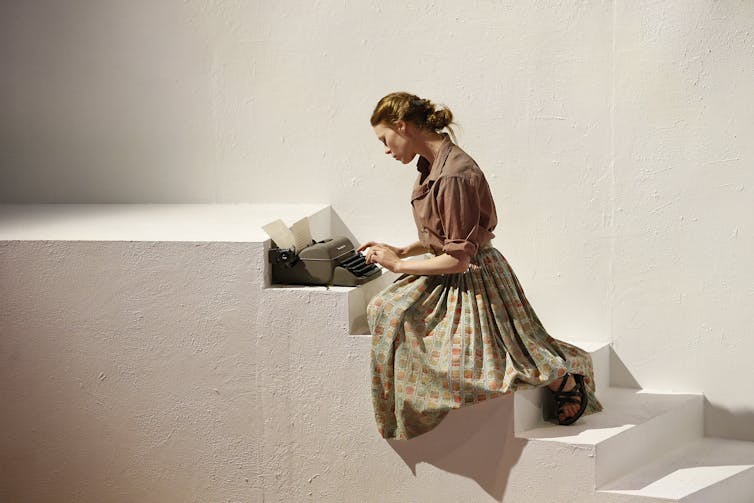
Anna McGahan as Charmian Clift in Sue Smith’s play Hydra. Long overshadowed by her husband George Johnston, recent years have seen a resurgence of interest in Clift’s life and work. Jeff Busby/Queensland Theatre
Fifty years after her death, Australian writer Charmian Clift is experiencing a renaissance. Born in 1923, Clift co-authored three novels with her husband George Johnston, wrote two under her own name, produced two travel memoirs, and had weekly column widely syndicated to major Australia papers during the the 1960s.
Clift has long been overshadowed by the legacy of Johnston, whose novel My Brother Jack is considered an Australian classic. Her novels and memoirs are sadly out of print, yet she is increasingly recognised for her important place in Australian culture.
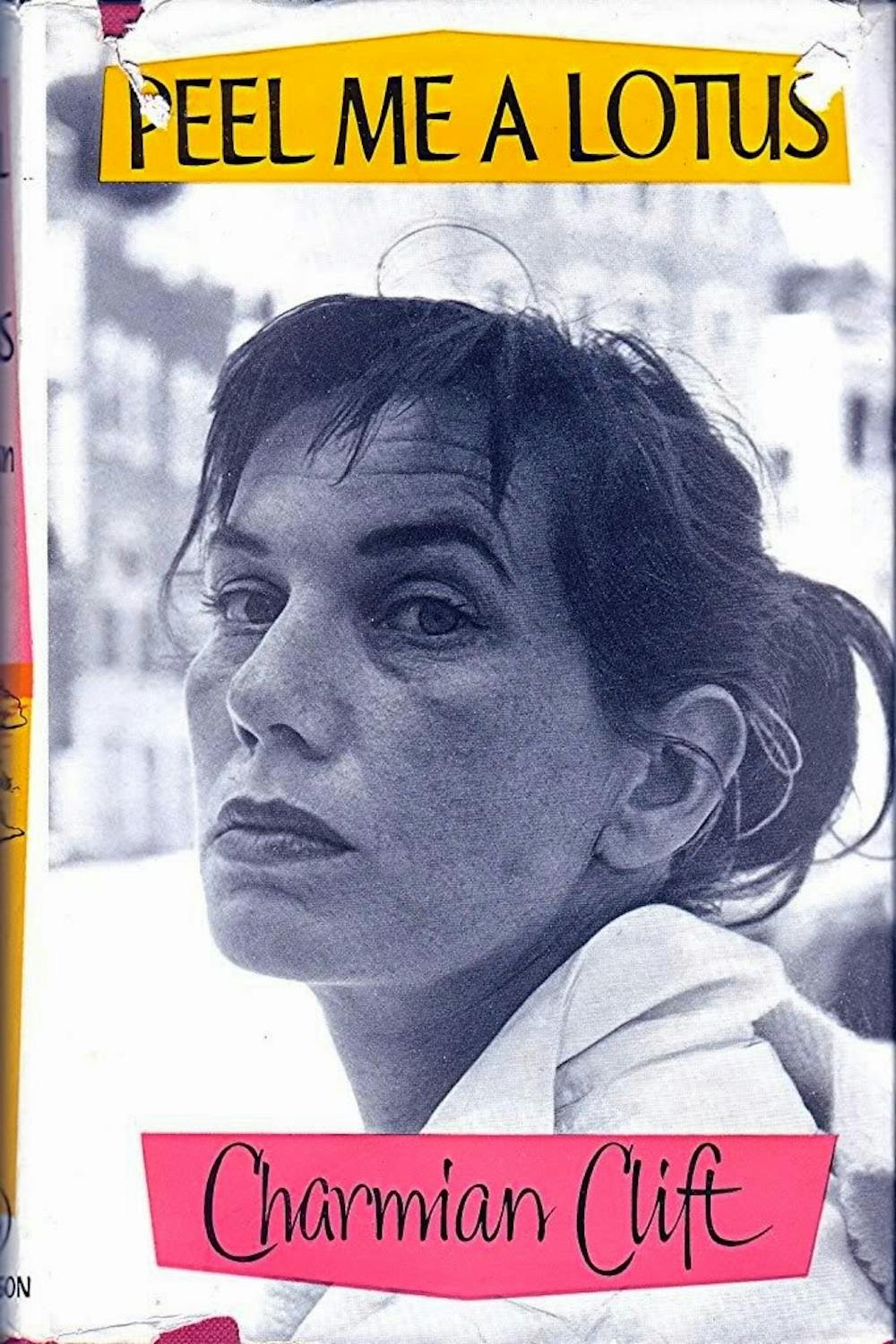
Charmian Clift, pictured on the front cover of her memoir, Peel Me a Lotus. Hutchinson, 1959
In 2018 she, along with Johnston, was inducted into the Australian Media Hall of Fame in recognition of her work as a columnist. She is also being reimagined in fiction, as the subject of A Theatre of Dreamers (2020), a forthcoming novel by English author, Polly Samson, and in Tamar Hodes’ The Water and the Wine (2018).
The revival of interest in Clift is more than a collective nostalgia or feminist correction of the historical record, although both are relevant. Many of her readers from the 60s still remember her newspaper column, and the impact that it had on their view of Australia’s place in the world, with great affection.
Younger generations, particularly women, have also been exposed to Clift’s clear and passionate voice after the columns were published in several volumes in the years following her death. That Clift and her writing continue to resonate with contemporary Australia tells us something about both her and the nation.
The Hydra years
Much of the renewed interest in Clift is focused not only on her writing, but also on the near decade that she and Johnston lived on the Greek Island of Hydra. In late 2015, artist Mark Schaller’s Melbourne exhibition, Homage to Hydra, featured paintings depicting Clift and Johnston’s island lives, with several featuring other residents from Hydra’s international population of writers and artists, including Canadian poet and songwriter, Leonard Cohen.
The same year, Melbourne musicians Chris Fatouros and Spiros Falieros debuted Hydra: Songs and Tales of Bohemia, marrying Cohen’s songs to a narrative about Clift and Johnston’s time on Hydra.
To date in 2019, Sue Smith’s play, Hydra, has been staged in Brisbane and Adelaide, casting Clift in ways that resonate sympathetically with the concerns of contemporary audiences. As Smith writes in her script’s introduction:
Charmian was a woman ahead of her time. We see this in the choices she made both in her personal life, whether it be scandalising the Greek locals by wearing trousers and drinking in bars, to insisting upon her personal and sexual freedom and, of course, through her work.
Modern readers might respond to Clift the writer, but the focus on her years on Hydra suggests there is also great interest in her charismatic personality and tempestuous life with Johnson, as their dream of a cheap and sun-soaked creative island life slowly soured.
While researching the couple’s lives on Hydra, we came across a suggestive, eye-witness diary entry by a fellow writer, New Zealander Redmond Wallis, written in 1960.
Charm is her greatest creation, Charmian Clift, the great Australian woman novelist. Charmian is very curious. She is, potentially at least, a better writer than George but she has and is deliberately creating a picture of herself … which one feels she hopes will appear in her biography some day.
The head of a literary coterie, beautiful, brilliant, compassionate but still the mother of 3 children, running a house. Sweating blood against almost impossible difficulties – a husband inclined to unfounded jealousy, the heat, creative problems, the children, the problems foisted on her by other people … and yet producing great art.
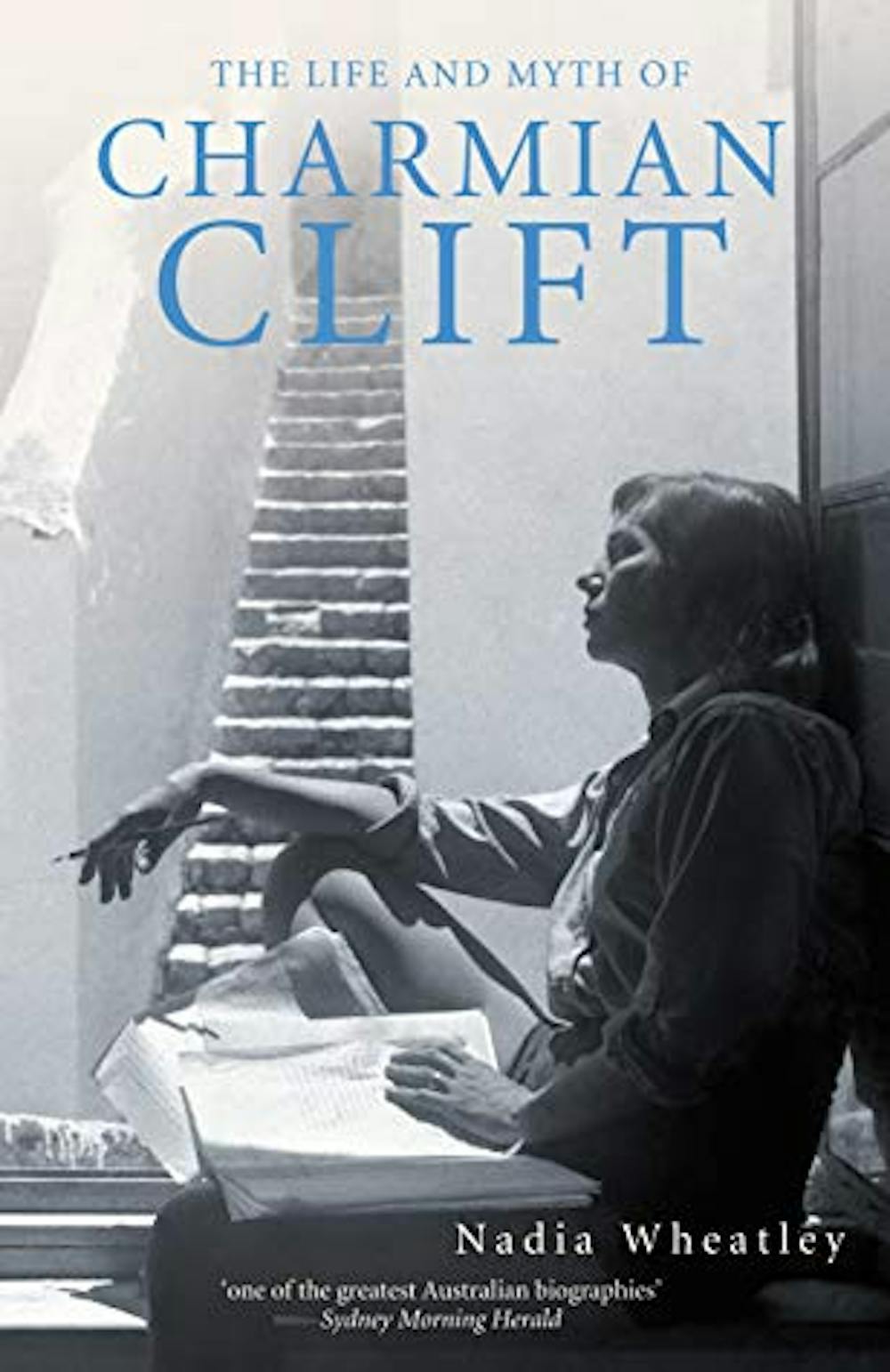
Wallis’s observations are accurate, and prophetic, in noting Clift’s capacity for self-mythologising and her belief that both she and her Hydra idyll would be remembered. Nearly four decades after Clift returned from Greece to Australia amid the acclaim for My Brother Jack, she did become the subject of an excellent biography, Nadia Wheatley’s The Life and Myth of Charmian Clift (2001).
Nadia Wheatley’s biography of Clift. Goodreads
But there were also failures amongst the success. The vision she and Johnston shared for a writing life on Hydra floundered amid poverty, alcoholism and illness. Their return to Australia in 1964 was an unlikely triumph for Johnston following the success of My Brother Jack, but Clift did not return with the same profile.
Wheatley also traced another of Clift’s great disappointments – her failure to complete her long-dreamt of autobiographical novel The End of the Morning, a struggle that was the subject of Susan Johnson’s 2004 novel, The Broken Book.
Clift did, however, leave an autobiography of sorts, in her newspaper articles. These often focused on domestic circumstances and everyday thoughts – ranging from conscription, to the rise of the Greek military junta after she left Hydra, to the changing social circumstances in Australia, and her daughter’s engagement.
These articles might not have always reflected the experiences of her readers – not everyone invited Sidney Nolan over for drinks – but Clift’s first-person narratives of a life lived with great passion and a sceptical eye to the consequences, garnered a large readership.
These readers responded to an incisive intellect with a vision of a culturally enriched Australia. She understood well the need for the country to outgrow its entrenched conservatism in order to realise its potential; and she emerged as a generous spirit who realised that the dreams and passions that drove her life were found everywhere in Australian suburbs.
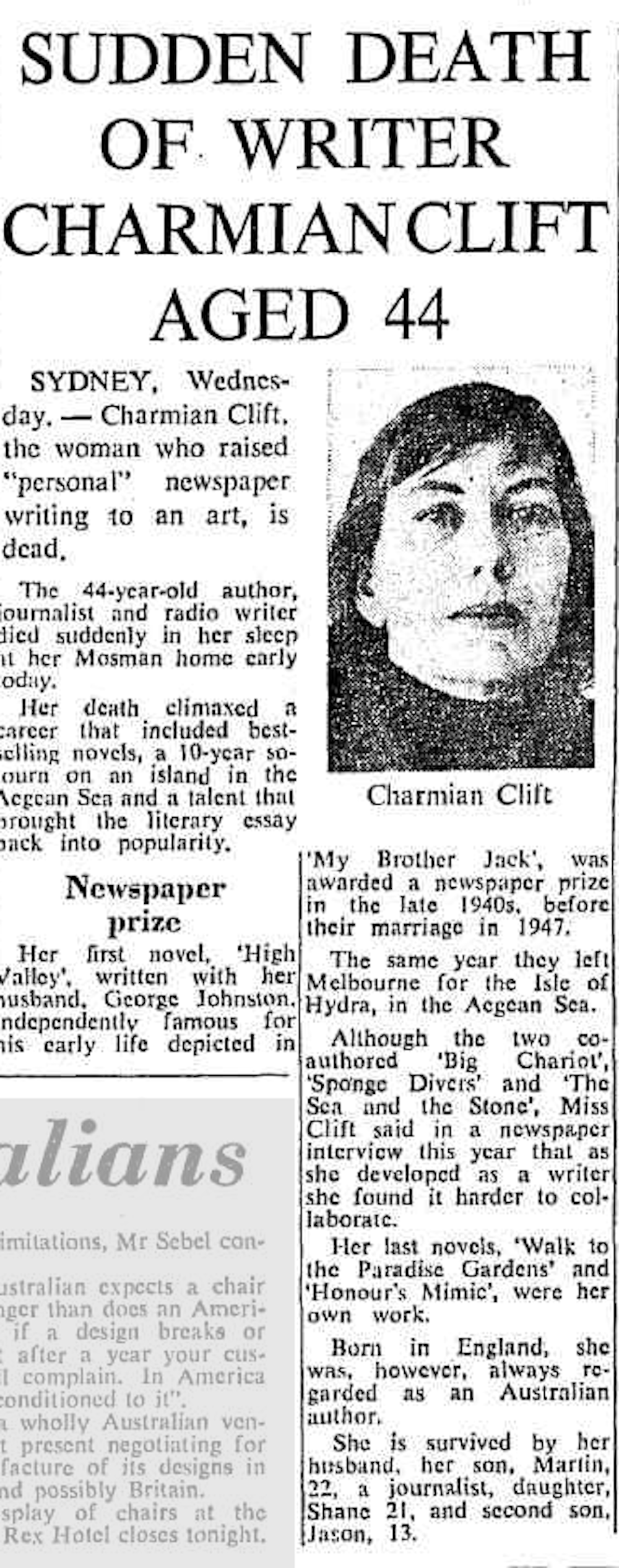
Clift’s death reported by The Canberra Times in July, 1969.
Wallis’s detection of Clift’s hubris and narcissism paints her as a potentially tragic figure. It was a fate she perhaps fulfilled, when Johnston eventually wrote of Clift’s infidelities on Hydra. Clift took her own life on July 8 1969, an event that curtailed her voice while leaving behind a legacy of loyal and grieving readers.
A natural cosmopolitan
Clift’s is one of the voices – and one of the most important female voices – that rose above the crowd during the post-war period, as the western world unknowingly girded itself for the social revolution that was to come.
Through her columns she advocated for a bolder, more outward looking future, and as someone who was naturally cosmopolitan she was avidly interested in seeing Australia become more open to the world and better integrated into the Asia-Pacific.
She didn’t always get it right (an essay decrying the rise of the Beatles and the Rolling Stones stands out!), but she helped navigate the path to a more broad-minded and inclusive vision of Australia.
Over the years Clift has emerged as someone who was not only modern, but also engaged in that most post-modern of activities, self-creation. For while Wallis scorned Clift’s self-mythologising at the time, it might now be recognised as the finest gift of the creative artist – to re-make oneself in the image of a world yet to be made. It was her gift to her readers and Australia.










 At the BookShelf
You must be logged in to post a comment.