Unknown's avatar

Nobel Prize winner Abdulrazak Gurnah: an introduction to the man and his writing


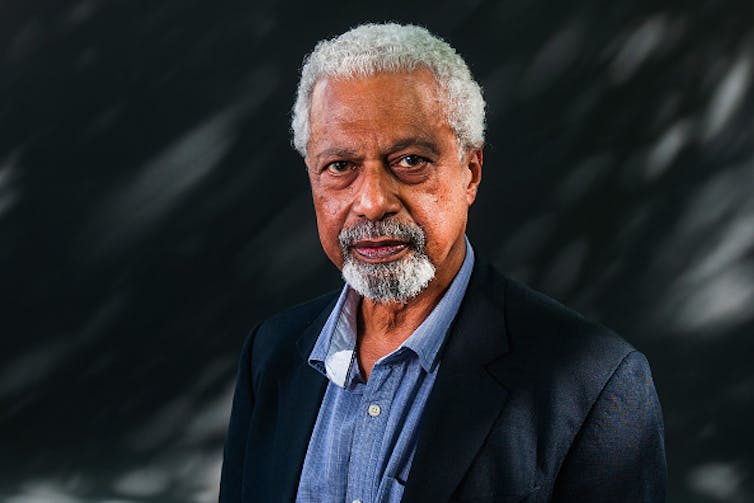
Abdulrazak Gurnah during the Edinburgh International Book Festival 2017.
Simone Padovani/Awakening/Getty Images

Lizzy Attree, Richmond American International UniversityThe Nobel Prize in Literature, considered the pinnacle of achievement for creative writers, has been awarded 114 times to 118 Nobel Prize laureates between 1901 and 2021. This year it went to novelist Abdulrazak Gurnah, who was born in Zanzibar, the first Tanzanian writer to win. The last black African writer to win the prize was Wole Soyinka in 1986. Gurnah is the first black writer to win since Toni Morrison in 1993. Charl Blignaut asked Lizzy Attree to describe the winner and share her views on his literary career.

Who is Gurnah and what is his place in East African literature?

Abdulrazak Gurnah is a Tanzanian writer who writes in English and lives and works in the UK. He was born in Zanzibar, the semi-autonomous island off the east African coast, and studied at Christchurch College Canterbury in 1968.

Zanzibar underwent a revolution in 1964 in which citizens of Arab origin were persecuted. Gurnah was forced to flee the country when he was 18. He began to write in English as a 21-year-old refugee in England, although Kiswahili is his first language. His first novel, Memory of Departure, was published in 1987.

He has written numerous works that pose questions around ideas of belonging, colonialism, displacement, memory and migration. His novel Paradise, set in colonial east Africa during the first world war, was shortlisted for the Booker Prize in 1994.

Comparable to Moyez G. Vassanji, a Canadian author raised in Tanzania, whose attention focuses on the east African Indian community and their interaction with the “others”, Gurnah’s novel Paradise deploys multi-ethnicity and multiculturalism on the shores of the Indian Ocean from the perspective of the Swahili elite.

A distinguished academic and critic, he recently sat on the board of the Mabati Cornell Kiswahili Prize for African literature and has served as a contributing editor for the literary magazine Wasafiri for many years.

He is currently Professor Emeritus of English and Postcolonial Literatures at the University of Kent, having retired in 2017.

Why is Gurnah’s work being celebrated – what is powerful about it?

He was awarded the Nobel

for his uncompromising and compassionate penetration of the effects of colonialism and the fates of the refugee in the gulf between cultures and continents.

He is one of the most important contemporary postcolonial novelists writing in Britain today and is the first black African writer to win the prize since Wole Soyinka in 1986. Gurnah is also the first Tanzanian writer to win.
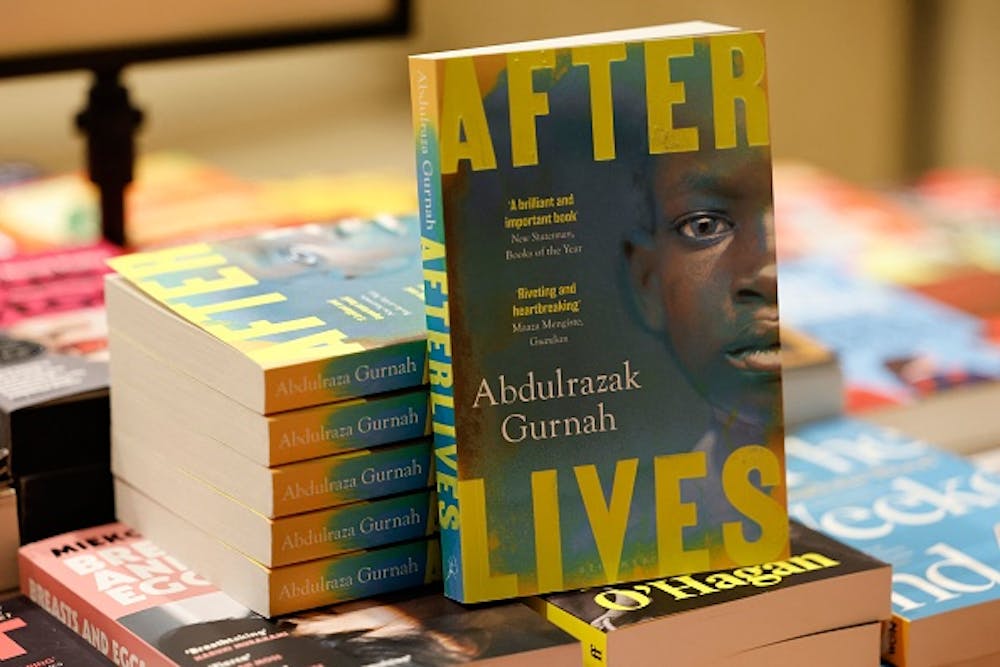
Copies of Afterlives by Tanzanian-born novelist Abdulrazak Gurnah.
Photo by TOLGA AKMEN/AFP via Getty Images

His most recent novel, Afterlives, is about Ilyas, who was taken from his parents by German colonial troops as a boy and returns to his village after years of fighting against his own people. The power in Gurnah’s writing lies in this ability to complicate the Manichean divisions of enemies and friends, and excavate hidden histories, revealing the shifting nature of identity and experience.

What Gurnah work stands out for you and why?

The novel Paradise stands out for me because in it Gurnah re-maps Polish-British writer Joseph Conrad’s 19th century journey to the “heart of darkness” from an east African position going westwards. As South African scholar Johan Jacobs has said, he

reconfigures the darkness at its heart … In his fictional transaction with Heart of Darkness, Gurnah shows in Paradise that the corruption of trade into subjection and enslavement pre-dates European colonisation, and that in East Africa servitude and slavery have always been woven into the social fabric.

The tale is narrated so gently by 12-year-old Yusuf, lovingly describing gardens and assorted notions of paradise and their corruption as he is pawned between masters and travels to different parts of the interior from the coast. Yusuf concludes that the brutality of German colonialism is still preferable to the ruthless exploitation by the Arabs.

Like Achebe in Things Fall Apart (1958), Gurnah illustrates east African society on the verge of huge change, showing that colonialism accelerated this process but did not initiate it.

Is the Nobel literature prize still relevant?

It’s still relevant because it is still the biggest single prize purse for literature around. But the method of selecting a winner is fairly secretive and depends on nominations from within the academy, meaning doctors and professors of literature and former laureates. This means that although the potential nominees are often discussed in advance by pundits, no-one actually knows who is in the running until the prize winner is announced. Ngugi wa Thiong’o, for example, is a Kenyan writer whom many believe should have won by now, along with a number of others like Ivan Vladislavic from South Africa.

Winning puts a global spotlight on a writer who has often not been given full recognition by other prizes, or whose work has been neglected in translation, thus breathing new life into works that many have not read before and deserve to be read more widely.The Conversation

Lizzy Attree, Adjunct Professor, Richmond American International University

This article is republished from The Conversation under a Creative Commons license. Read the original article.
Unknown's avatar

‘Goodreads’ readers #ReadWomen, and so should university English departments


The social network website Goodreads provides insight into what some women are reading.
(Flip Mishevski/Unsplash)

Karen Bourrier, University of CalgaryEven in the 21st century, women writers are often consigned to what American novelist Meg Wolitzer has called “the second shelf.” Women’s novels are designed and marketed with a female audience in mind and publishers still presume that novels about women won’t appeal to male readers. Unfortunately, even in 2021 there may be some truth to this presumption.

This sexism can be seen in the continued speculation that female-identifying novelist Elena Ferrante is actually a man.
Vanity Fair contributing editor and book columnist Elissa Schappell summarized the assumptions behind the speculation: the novelist’s prolific output of “serious” books that interweave history, politics, violence, sex and domestic life, while “unflinchingly showing women in an unflattering light.”

Books by female-identifying authors are also less likely to be reviewed in prestigious literary magazines. In 2019, more than 60 per cent of reviews in magazines including London Review of Books, The Atlantic, and Harper’s, were of books written by men. This is actually an improvement since 2010, when between 69 per cent and 80 per cent of reviews in these magazines were of male-authored books.

The popular #readwomen hashtag on Twitter has been one response to the marginalization of women authors or sexism about their work. The social network website Goodreads can also provide insight into what women are reading.

Reading women

My collaborative research with data science professor Mike Thelwall has explored the reading habits of a cohort of mostly female readers (76 per cent) on the popular social network site Goodreads. As a group, Goodreads users also skew younger, whiter and more educated than the general population.

We examined what books readers read on Goodreads compared to what university professors assign in the classroom, using data from the Open Syllabus Project.

In past decades, researchers relied on handwritten diaries, letters and surveys of readers to find out how everyday readers responded to the books they read. Goodreads, which collects book reviews and ratings from 90 million members, offers one portal into reading habits.

On average, women Goodreads users read twice as much as male Goodreads users, and are more willing to read books by both male and female authors.

We scraped data from Goodreads and found that most Goodreads book club members were likely to have read books in common by women authors.

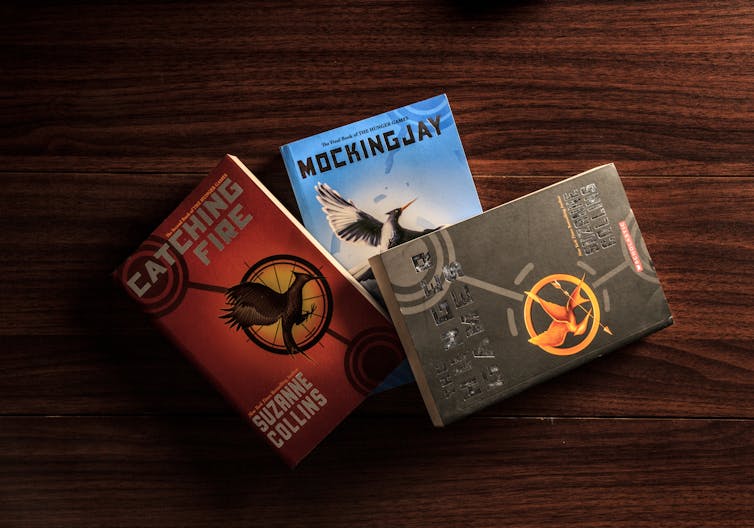
These women authors fell into two categories: young adult authors (J.K. Rowling, Suzanne Collins, Stephanie Meyer and Veronica Roth) and 19th- or early 20th-century authors (Jane Austen and Harper Lee). The popularity of young adult series by women, including the Harry Potter and Hunger Games series, means that 13 of the 19 most popular titles are by women.

Cover of three books from the Hunger Games series
A study found that that most Goodreads book club members were likely to have read books in common by women authors.
(Shutterstock)

Compared to what professors teach

In a second study, we compared what books Goodreads users read to what university professors assign in the classroom, using data from the Open Syllabus Project. The Open Syllabus Project originated at Columbia University. It amasses syllabi, or college reading lists, from openly accessible university websites. Open Syllabus currently has a corpus of over nine million syllabi from 140 countries.

Our study focused on Victorian literature, literature published during Queen Victoria’s reign (1837-1901), which is both commonly taught at the university level and still read by general readers.

For the most part, we found that Goodreads users read books — including classic works by Charles Dickens, Arthur Conan Doyle and Oscar Wilde — about as often as university professors taught them.

However, we also found that the books that Goodreads users read more often than they were assigned in university tended to be by women writers, to feature strong female protagonists and to be aimed at a young adult audience — or all three.

Taking women writers seriously

This research is important because it suggests that professors who want to connect to students should take women writers more seriously.

Women writers show up less often than male writers on university syllabi. A survey conducted at McGill University in 2018 showed that 73 per cent of writers assigned on the university’s English literature syllabi are men.

Unfortunately, this is no surprise: English Prof. John Guillory’s work on canon formation captures the state of college English classes 30 years ago (and sometimes even more recently) when it was not uncommon for English professors to teach only white men.

Works by women writers are formative for many readers. For example, Wuthering Heights and Jane Eyre are often among the first “adult” novels that young English-language readers read. Their combination of romance and strong female protagonists continues to appeal to 21st-century readers outside the classroom.

Our study also showed that Frances Hodgson Burnett’s The Secret Garden and A Little Princess, and Lewis Carroll’s Alice’s Adventures in Wonderland — three works of young adult fiction featuring girls — were also read more on Goodreads than we would predict given how often they were assigned on syllabi.


Read more:
Jane Eyre translated: 57 languages show how different cultures interpret Charlotte Brontë’s classic novel


It is more than time that publishers, book reviewers and university professors give women writers the respect they deserve. In an era of declining English majors when most English majors are women, English departments can at least start by assigning more women writers.The Conversation

Karen Bourrier, Associate Professor of English, University of Calgary

This article is republished from The Conversation under a Creative Commons license. Read the original article.

Unknown's avatar

Bigme S3 Color Ebook Reader Review


The link below is to an article that reviews the Bigme S3 Color Ebook Reader.

For more visit:
https://goodereader.com/blog/reviews/bigme-s3-color-e-reader-and-e-note-review

Unknown's avatar

2021 ‘NIBs’ Longlist


The link below is to an article reporting on the longlist for the 2021 Nib Literary Awards.

For more visit:
https://www.booksandpublishing.com.au/articles/2021/08/30/192249/nib-literary-award-2021-longlist-announced/

Unknown's avatar

2021 National Biography Award Winner


The link below is to an article reporting on the winner of the 2021 National Biography Award, Cassandra Pybus for ‘Truganini – Journey Through the Apocalypse.’

For more visit:
https://www.booksandpublishing.com.au/articles/2021/08/27/192214/pybus-wins-2021-national-biography-award-for-truganini/

Unknown's avatar

Five of the best new crime novels to read this autumn (and one golden oldie)


Pexels

Alec Charles, University of WinchesterAs the nights draw in and we spend more time indoors, autumn can be a good time to get stuck into the literary world’s latest murder mysteries. And the last few months have seen the publication of major new works by some of the genre’s most respected authors.

So here are half a dozen recommendations that might help to keep you warm – or at least offer the homeliest of chills – on an evening in.

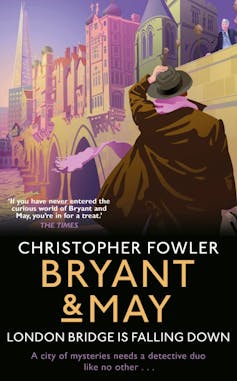
Book cover shows back of person walking over a bridge.

Penguin

London Bridge is Falling Down by Christopher Fowler

Long trailed as the final outing for Christopher Fowler’s duo of decrepit detectives, Arthur Bryant and John May, the 20th book in a saga that started in 2004 answers a lot of the series’ unanswered (and unasked) questions.

Fowler has recently hinted that this might not be quite the end for these stalwarts of London’s Peculiar Crimes Unit, whose adventures the series follows from the Blitz to the present day, through an extraordinarily erudite exploration of the mythic geography of the metropolis. Let’s pray there’s a little more life to be drawn out of these enthralling creations of Fowler’s absurdly fertile imagination.

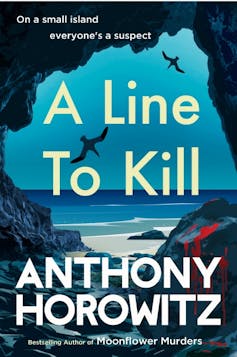
Book cover shows beach scene with birds

Penguin

A Line to Kill by Anthony Horowitz

This third novel in Anthony Horowitz’s chronicles of the adventures of private investigator, Daniel Hawthorne, again sees a fictionalised version of the author himself play biographer to the enigmatic consulting detective. He is Watson to Hawthorne’s Holmes, although he likes him rather less: while Hawthorne’s self-assured brilliance enchants others, it constantly infuriates Horowitz himself.

Set on the island of Alderney, Horowitz’s witty and crafty narrative is as evocative of the detachment and claustrophobia of rural isolation as last year’s Moonflower Murders: “The road didn’t seem to go anywhere. In the distance, a hillside rose steeply, blocking anything that might tell me which century I was actually in”. Unputdownable stuff.

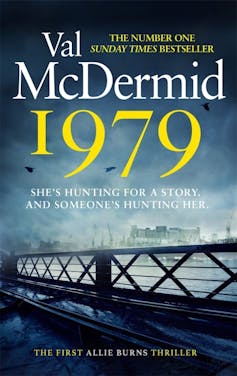
Book cover shows bridge with buildings in background

Hachette

1979 by Val McDermid

Late revisions to Val McDermid’s previous novel, published last August, brought us extraordinarily up to date with a Scotland teetering on the verge of the pandemic. By contrast, her latest work harks back to four decades before COVID-19. Her tale of dodgy dealings in 1970s Glasgow, set against a backdrop of familiarly fervent independence controversies, introduces her latest heroine, the bright and determined young reporter Allie Burns.

Burns is a breath of fresh air, from her first appearance on a snowbound train returning to the city from a family Christmas, she is eminently sympathetic, engaging and likeable. And she doesn’t yet bear the baggage of McDermid’s long-running protagonists Carol Jordan and Karen Pirie (at least not to begin with).

McDermid invokes the shoddy, gloomy zeitgeist of the late seventies with her characteristic deftness of touch: “blizzards, strikes, unburied bodies, power cuts, terrorist threats and Showaddywaddy’s Greatest Hits topping the album charts; 1979 was a cascade of catastrophe”.

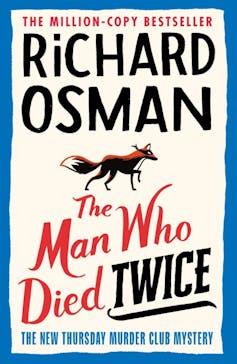
Book cover shows an illustrated fox

Penguin

The Man Who Died Twice by Richard Osman

Richard Osman’s debut novel, The Thursday Murder Club, was the publishing phenomenon of 2020. That book was both clever and funny, but more importantly it was reassuringly parochial: a conundrum worthy of the golden age of detective fiction, investigated by an emphatically charming group of residents of a retirement community.

Osman’s writing is reminiscent, in its tone and textual economy, of Sophie Hannah’s splendid reboot of Hercule Poirot (as ingenious as Christie but rather more nuanced and progressive). His sequel, a tale of stolen diamonds, involving the Mafia, MI5 and multiple murders, all kicked off by “an invitation from a dead man”, has just come out, and will likely send Penguin’s printing presses into overdrive.

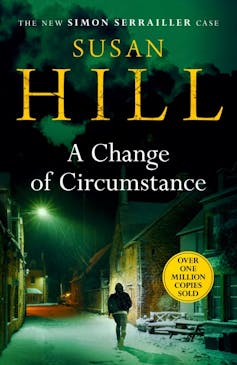
Book cover shows young boy walking at night in residential area.

Penguin

A Change of Circumstance by Susan Hill

October sees the publication of the 11th book in Susan Hill’s series of Simon Serrailler novels. Hill’s elegant provincial cop may be the most rounded of today’s fictional detectives. As with P. D. James’s Adam Dalgleish, it seems the author herself is a little enamoured of her dashing but troubled hero – romantically misguided and prone to a perhaps unnecessary degree of listlessness.

As she drags him onto another emotional rollercoaster, her readers surely cannot fail to share that bittersweet attachment. Approaching her 80th birthday in February next year, Hill’s writing has lost none of its immediate relevance and urgency – this time focusing upon the impacts of county lines drug-running networks. Fans of the series will find the prospect of an update on the lives of its central characters absolutely irresistible.

Book cover shows dead bird with metal window bars in the background.

Bantam/Penguin

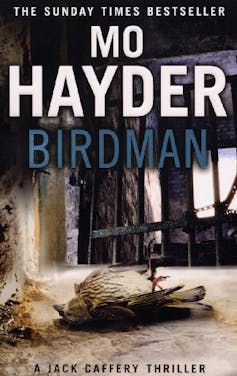
Birdman by Mo Hayder

In July, British fiction suffered the loss of one its most compelling and commanding voices. If there is to be any consolation from Mo Hayder’s death, at the age of 59, then let it be that it might draw a new generation of readers to her work.

The best place to start is her stunning breakthrough novel, the justly celebrated Birdman, published at the turn of the millennium. The opening ordeal for her problematic protagonist, Detective Inspector Jack Caffery, offers readers a gripping ride – one that makes the darkest of Nordic noir look decidedly beige by comparison. Hayder’s work will take you through autumn, to winter and beyond.The Conversation

Alec Charles, Dean of the Faculty of Arts, University of Winchester

This article is republished from The Conversation under a Creative Commons license. Read the original article.

Unknown's avatar

How Zimbabwean artist Kudzanai Chiurai has reinvented the idea of a library


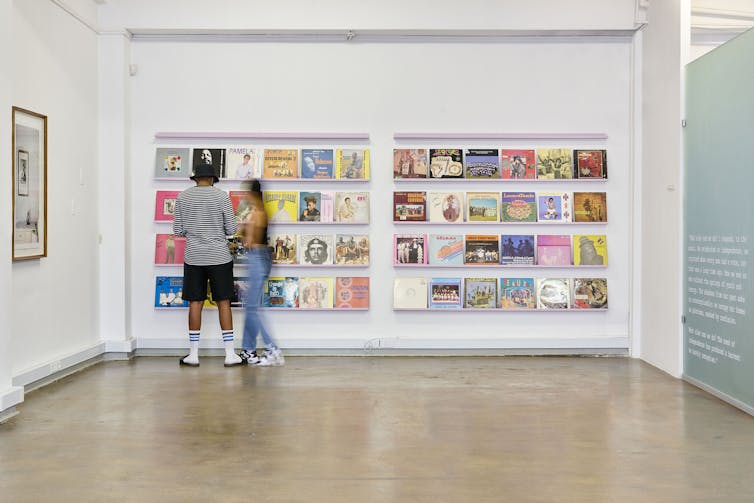
The Johannesburg version of the library.
Anthea Pokroy/Courtesy Kudzanai Chiurai

Tinashe Mushakavanhu, University of the WitwatersrandZimbabwe born artist Kudzanai Chiurai is a phenomenon. He is one of the most challenging and inventive figures in contemporary African art. From large scale photos of fictional African dictators to experimental films and protest posters, rich oil paintings and minimal sculptures, his work is housed in the world’s top galleries and collections.

Chiurai, though, frequently shrugs off gallery spaces to show in warehouses, on the street or in urban locations. His latest project, The Library of Things We Forgot to Remember, is housed in a boutique shopping complex, 44 Stanley, in Johannesburg. It is built around his collecting practice focused on preserving archives and memorialising social and cultural history from southern Africa. He’s turned his own personal library and archive into a public art project.

It’s an idea informed by Chiurai’s obsessive interest in history and accumulation of artefacts such as books, pamphlets, zines, newspapers, vinyl records, political posters, audio recordings and other ephemera – materials that explore the relationship between cultural production and social movements.

The work takes a pointedly nontraditional approach to archivism. The selection and acquisition is determined by interaction. It is managed as a kind of commons where people can share and benefit from the artist’s collection and what is donated by others. Whereas most archives and libraries stress the preservation of materials, Chiurai’s library promotes access, physical engagement, and active use of the materials to maintain their continued relevance.


Read more:
How artists have preserved the memory of Zimbabwe’s 1980s massacres


The library reflects Chiurai’s artistic repertoire, which deploys the use of mixed media to address social, political and cultural issues. It calls to mind his groundbreaking 2011 exhibition State of the Nation which explored conflict by constructing an African utopia that enabled him to merge forms and mediums, juxtapose political ideas, evoke historical figures – like a speech by slain Congolese independence leader Patrice Lumumba delivered by artist Zaki Ibrahim – alongside a performance by contemporary musician Thandiswa Mazwai.

In his work Chiurai imagines new ways to activate, share, present and reinvent the archives, as he does with his latest project, the library.

The library

Initially, in 2017, The Library of Things We Forgot to Remember was of no fixed abode, usually incorporated into the artist’s own exhibitions. But the concept of a mobile library was altered by the COVID-19 pandemic, which restricted movement and live events. The library is about gathering, not just materials, but people. It is supposed to be a meeting place.

Now, Chiurai also invites others to curate this archive, to re-arrange it for regular public viewing in a rented space. He considers the library to be:

Itself a form of liberated zone. It functions independently – I find a different librarian every time … and different people see the process of cataloguing differently. Some look at it visually, and some aurally – and so different librarians bring different things to my attention.

a structure within a room, two smaller rooms. One contains a large filing cabinet and the other a couch, record player and political posters. A man sits on the couch listening to a record.

Anthea Pokroy/Courtesy Kudzanai Chiurai

The library includes the artist’s extensive collection of vinyl records associated with liberation movements in southern Africa from the 1970s-80s, notably Zimbabwean Chimurenga and South African anti-apartheid struggle music. There are also recordings of speeches by historical political figures such as Ian Smith, Kwame Nkrumah, Mobutu Sese Seko, Dr Martin Luther King and even a dramatic re-enactment of the trial of Black Panther Party co-founder Bobby Seale.

The collection has continued to grow. In 2018 it obtained digital recordings from the US-based educational project, Freedom Archives – radio interviews with political figures and women involved in the liberation movements in Zimbabwe, South Africa, Namibia, Guinea- Bissau, as well as the US civil rights movement. Other materials are donated by individuals and institutions.

Accordingly, Chiurai treats these traces of struggle with great care. Some of these historical documents and posters are now framed and hung on the white walls. Once, these materials chronicled life in Black Africa or Black America as it happened. Now, they are artefacts of frozen moments in history. His library is conceived as a place of contemplation and reflection. There is a big green couch and listening stations.

against a backdrop of angular colour block paintings, a bald bearded man in glasses smiles as he talks into a microphone.
Kudzanai Chiurai in Accra, Ghana, 2018.
Linus Petit, CC BY-SA

The art of remembering

The Library of Things We Forgot to Remember is part of an effort to expand ideas of what a library can be and its decolonisation. It is an extension of new ways people are using the ‘library’ as a place of inquiry and conversation with the past.

Perhaps, what is fascinating is that Chiurai’s library is not static, but re-arranges in the hands of a guest librarian, and has travelled from its first iteration in Harare, to Cape Town, Kalmar, Södertälje and Johannesburg. Previous librarians have been the political writing platform Chimurenga in Harare, writer and DJ El Corazone in Cape Town, and film director and deejay Sifiso Khanyile in Johannesburg.

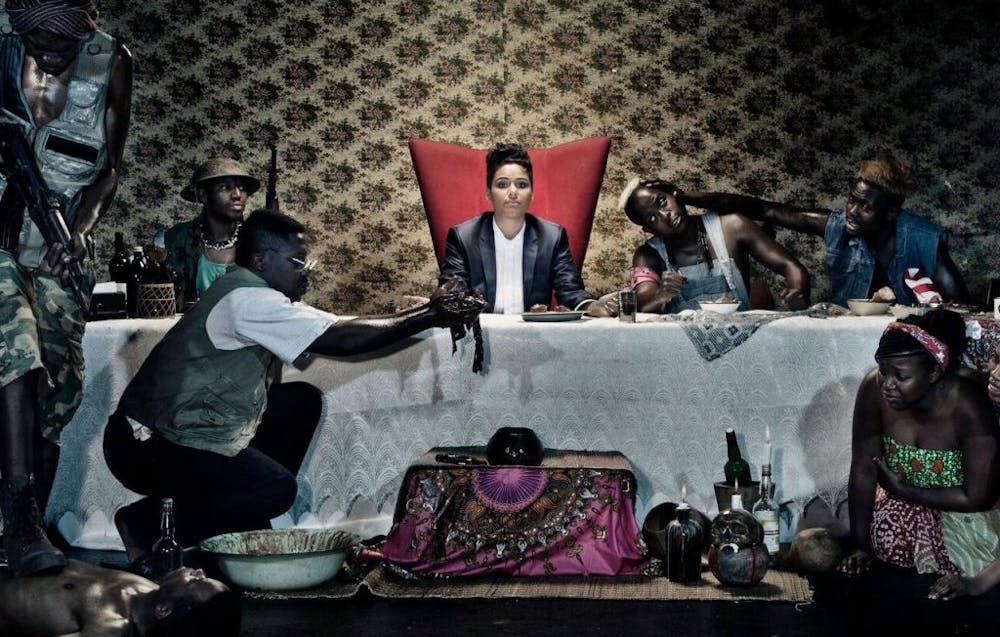
A depiction of The Last Supper with a black female Jesus figure.
A still from Kudzanai Chiurai’s film Iyeza.
Screengrab courtesy Kudzanai Chiurai

What Chiurai is doing is to incubate a new model for artistic creation and knowledge production that interferes with the circulation, display and preservation of cultural objects. Who has a right to assign value? Who decides what is history? What kinds of materials should be collected? How can access be expanded to new publics?

Visitors also have a responsibility. They are not just passive observers, but collaborators, interpreters, and readers. The library becomes a place of provocation that allows multiple registers of value, because value is negotiated. It’s also about the reinvention of the library as a space for multiple forms of contemplation. It is still a destination for artists, scholars, curators, and collectors to research and engage with southern African history.

Remembering is a virtue that Chiurai extols. In Black communities it is often an expensive luxury, a privilege. But through this new space arranged in the form of a hybrid gallery, community center, library and archive, remembering is translated into a collective process of reimagining and of sharing heritage. It is also testament of the generosity behind Chiurai’s art practice, of care and community.The Conversation

Tinashe Mushakavanhu, Post-Doctoral Fellow, University of the Witwatersrand

This article is republished from The Conversation under a Creative Commons license. Read the original article.
Unknown's avatar

2021 New South Wales Premier’s History Awards Winners


The link below is to an article reporting on the winners of the 2021 NSW Premier’s History Awards.

For more visit:
https://www.booksandpublishing.com.au/articles/2021/09/06/192708/nsw-premiers-history-awards-2021-winners-announced/

Unknown's avatar

2021 Carmel Bird Digital Literary Award Winner


The link below is to an article reporting on the winner of the 2021 Carmel Bird Digital Literary Award.

For more visit:
https://www.booksandpublishing.com.au/articles/2021/09/03/192512/wright-wins-2021-carmel-bird-digital-literary-award/

Unknown's avatar

2021 Accessible Books Consortium Award Shortlist


The link below is to an article reporting on the shortlist for the 2021 Accessible Books Consortium Award.

For more visit:
https://publishingperspectives.com/2021/09/shortlist-named-for-the-2021-accessible-books-consortium-award/