In children’s literature, a small number of classics are remembered for their illustrations as much as they are for the author’s words. Sir John Tenniel’s original drawings for Lewis Carroll’s “Alice” books are, for many readers, impossible to disentangle from the text. Roald Dahl’s stories have become almost inseparable from Quentin Blake’s pictures, and Thomas Henry’s images of William defined him as succinctly as the writing of Richmal Crompton.
The relationship between author and artist can vary greatly. Tensions occasionally run high between the creators of verbal and visual versions of a narrative. It has been said that Tenniel was sometimes exasperated by the sheer volume of Carroll’s requested amendments to his drawings. This may have been a contributing factor to the artist’s apparent reluctance to commit to illustrating Through the Looking-Glass.
It can be difficult for authors to accept an illustrator’s interpretation of their creation. Many writers are reluctant to see their work illustrated at all, feeling that any imagery is an intrusion into the reader’s visual imagination.
Illustration itself is something of a hybrid art form, somehow straddling the worlds of graphic design and fine art, but traditionally always subservient to the written word. The UK has a particularly rich tradition of graphic art – from Hogarth, Rowlandson and Gillray through Randlolph Caldecott, Walter Crane, Beatrix Potter and on to Edward Ardizzone and Ronald Searle.
Yet compared to many nations, until recently it has never seemed entirely comfortable with according illustration and illustrators the highest status in its cultural institutions. Searle was honoured with a major retrospective at the Bibliothèque Nationale in Paris – but was never similarly celebrated in his home country.
So I welcome the opening of an exhibition which will shine a light on a great British illustrator whose drawings are known around the world. Winnie the Pooh: Exploring a Classic at the Victoria Albert Museum in London will offer visitors the chance to see much of the original art and preparatory sketches of E.H. Shepard, whose work surely stands alongside that of Tenniel in the pantheon of great book illustration.
The exhibition will explore the interesting working relationship between Shepard and Winnie the Pooh’s creator, A.A. Milne, and the way the visual identities of their characters evolved.
Many of the drawings from the museum’s own collection are so fragile that they have not been exhibited for over 40 years. Correspondence between the two men and recently discovered early Shepard sketches reveal a great deal about the gradual emergence of Pooh as we have come to know him.
In particular, the process of making connections between drawing directly from observation and drawing from imagination, will be on display. Shepard’s Pooh Bear was initially modelled on the real toy bear of Milne’s son, Christopher Robin. But author and artist felt that he was too harsh and gruff-looking – not quite appealing enough. Instead, Shepard made a sketch of his own son Graham’s teddy bear, who was named Growler. Growler turned out to be just right and it was he who gradually “became” Pooh.
Bear necessities
Shepard’s great-granddaughter is married to James Campbell, who has overseen the Shepard estate since 2010. He recently uncovered a hoard of early drawings the artist had filed away and labelled as being of little importance. But they include what must have been some of the very first iterations of Pooh. In one of them, the bear is holding what appears to be a barrel, which Campbell suggests may have evolved into the familiar jar of honey.
Shepard’s meticulous, exacting draughtsmanship meant that he produced thousands of working drawings, which are key to understanding his process. This draughtsmanship was honed from an early age. Initially encouraged by his mother, who died when he was ten years old, Shepard continued to draw compulsively and gained entry to the Royal Academy Schools at the age of 19.
It was after he had become a regular contributor to Punch magazine that Shepard was recommended to Milne. The writer was not immediately convinced that his style was suitable, but he was pleased by the drawings for his collection of verse, When We Were Very Young.
Over time, artist and illustrator became friends. They collaborated closely on the Pooh books, not just on how or what to illustrate, but on the actual interplay between word and image. The term “picturebook” is now used to describe the book for young children that tells its story through a synthesis of words and pictures, neither of which would make sense if “read” independently of the other.
Word-image game playing has since become increasingly sophisticated. Back in the early 1920s, Milne and Shepard were among the first to explore the potential of the page as a kind of stage – where words might be adjusted and adapted to coexist and harmonise with the pictures they accompany.
When I was asked a few years ago if I would like to edit one of Jane Austen’s novels, I quickly answered that I would be happy to, and especially if I could edit her greatest novel.
“I’m sorry, Rob,” was the reply. “Someone is already editing Pride and Prejudice.”
“That’s ok,” I said, much relieved. “Pride and Prejudice is not Austen’s greatest novel. Jane Austen’s greatest novel is Persuasion.”
It is – among many other things – the most moving love story she ever told. Anne Elliot is the second daughter of the absurdly vain baronet Sir Walter Elliot of Kellynch Hall. Frederick Wentworth is an officer in the British navy during the Napoleonic Wars.
Eight years before the novel begins, Wentworth proposes to Anne and she accepts him after a brief and intense courtship, only to be persuaded by her father and her older friend Lady Russell to break off the engagement. Wentworth, angry and badly hurt, goes back to sea, where he conducts a successful series of raiding expeditions on enemy ships, and amasses a fortune in prize money.
When Napoleon abdicates for the first time in April 1814, Wentworth returns to England and soon pays a visit to his sister, who now lives near Anne. Throughout his absence, meanwhile, Anne has found no one who compares to him, and has pined away to the point where now, at 27 years old, her bloom is gone and she has begun the descent into spinsterhood.
Many critics have argued that, as a result of suffering and regret, Anne is already “mature” when the novel opens, while the rich and carefree Wentworth has a good deal of growing up to do before he recognizes – or, rather, re-recognizes – her worth.
On the contrary, for all that divides them when he returns, Anne has as much to learn about love as Wentworth does, and her journey toward their reconciliation contains as much confusion as his. Indeed, part of the enormous appeal of Persuasion is Austen’s ability to convey the ways in which Wentworth and Anne are moving steadily toward one another even as their various missteps, flirtations and assumptions seem to be driving them still further apart.
Their reunion is the finest scene in all of Austen, and in it they do not even speak face to face, for Austen understood that mediated and misdirected messages frequently carry a far greater charge than explicit declarations.
Anne and Wentworth are both in a room at the White Hart Inn in Bath. He is sitting at a desk writing a letter. She is nearby speaking to a mutual friend, Captain Harville, about men, women and constancy.
Harville believes that men feel more deeply than women. Anne takes the opposite view, and while she does not mention Wentworth or her own circumstances, everything she says is clearly with him in mind.
She has spoken to no one about her grief over Wentworth, and it is not long before eight years of pent-up anguish flood out of her. “We certainly do not forget you, so soon as you forget us,” she tells Harville. “It is, perhaps, our fate rather than our merit. We cannot help ourselves. We live at home, quiet, confined, and our feelings prey upon us.”
Wentworth, still writing his letter, overhears Anne’s comments and knows immediately that she is speaking about their relationship, and about all that has been lost.
Seizing another sheet of paper, he begins a second letter in which he records his feelings toward her as she utters hers toward him, and which he leaves behind on the desk for her to read.
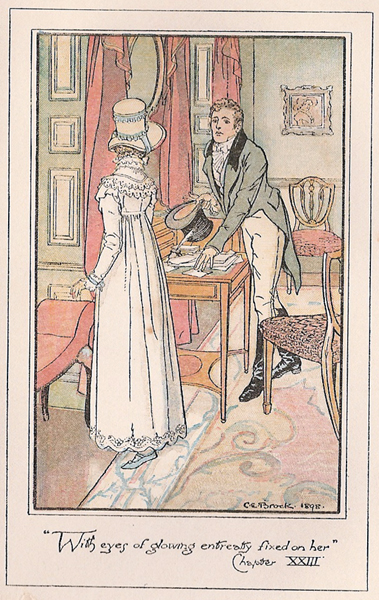
Captain Wentworth shows his letter to Anne, with eyes of glowing entreaty fixed on her. (C. E. Brock)
Ralph Waldo Emerson objected to Austen’s novels because he found them “imprisoned in the wretched conventions of English society, without genius, wit, or knowledge of the world.”
But Austen knew that love is the very largest concern of life, then as now, and in Persuasion she makes Anne’s whole world hang on a single letter. It is a moment that demonstrates both the superb compression and the enduring appeal of her art.
If Wentworth loves Anne, she has a future that stretches as far as the seas. If he does not, she has only a past that will increasingly consume her. She reads the letter. He does love her. Her joy is inexpressible. So is ours.
What’s more, Austen has contrived to tell both Anne and the reader at the same time, and her passionate affirmation of personal preference and individual desire far transcends the “wretched conventions of English society.”
“You pierce my soul,” Wentworth’s letter reads. “I am half agony, half hope. Tell me not that I am too late, that such precious feelings are gone for ever. I offer myself to you again with a heart even more your own, than when you almost broke it eight years and a half ago.” Anne is overwhelmed.
During the novel she has been transformed, from faded to blooming, from nobody to somebody, from “only Anne” within her family to Wentworth’s “only Anne.”
Persuasion is Austen’s last published work. She began it when she was nearly 40 years old, and when she finished it she was within a year of her death. Perhaps not surprisingly, it is one of her shortest – and it is certainly her saddest – novel.
But it is also her subtlest and most impassioned. “After a long immersion in [Austen’s] work,” British novelist Martin Amis writes, “I find that her thought rhythms entirely invade my own.”
For me, nowhere are Austen’s “thought rhythms” more haunting than in Anne’s conversation with Harville, and Wentworth’s response to her in his letter. More broadly, in its blend of the public and the personal, Persuasion explores both the torment of silence and the value of hope.
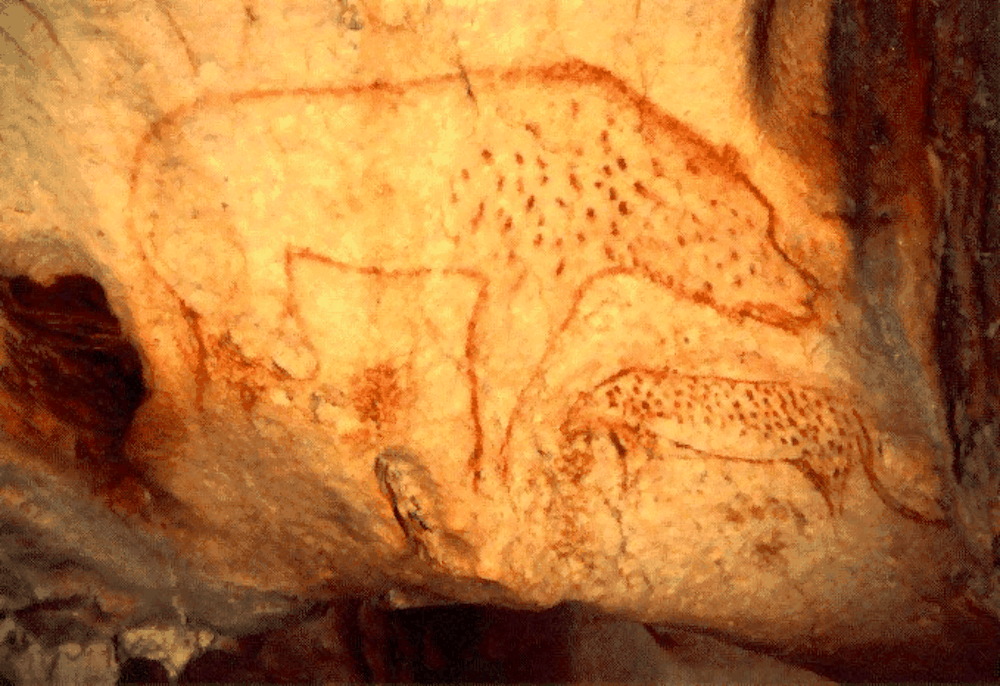
For as long as we have been able to stand upright and speak, we have told stories. They explained the mysteries of the world: birth, death, the seasons, day and night. They were the origins of human creativity, expressed in words but also in pictures, as evidenced by the cave paintings of Chauvet (France) and Maros (Indonesia). On the walls of these caves, the paintings, which date back to around 30-40,000 BC, tell us myths or sacred narratives of the spirits of the land, the fauna of the regions, and humankind’s relationship to them.
A hyena painting found in the Chauvet cave. Wikimedia images
As humanity progressed, other types of stories developed. These were not concerned with the mysteries of the meaning of life but with everyday, domestic matters. While they were more mundane in the issues they explored, such tales were no less spectacular in their creativity and inclusion of the supernatural.
These smaller, everyday stories, combining the world of humans with fantastical creatures and seemingly impossible plots are now classified as fairy tales or folk tales. Such tales, originating in pre-literate societies and told by the folk (or the average person), capture the hopes and dreams of humanity. They convey messages of overcoming adversity, rising from rags to riches, and the benefits of courage.
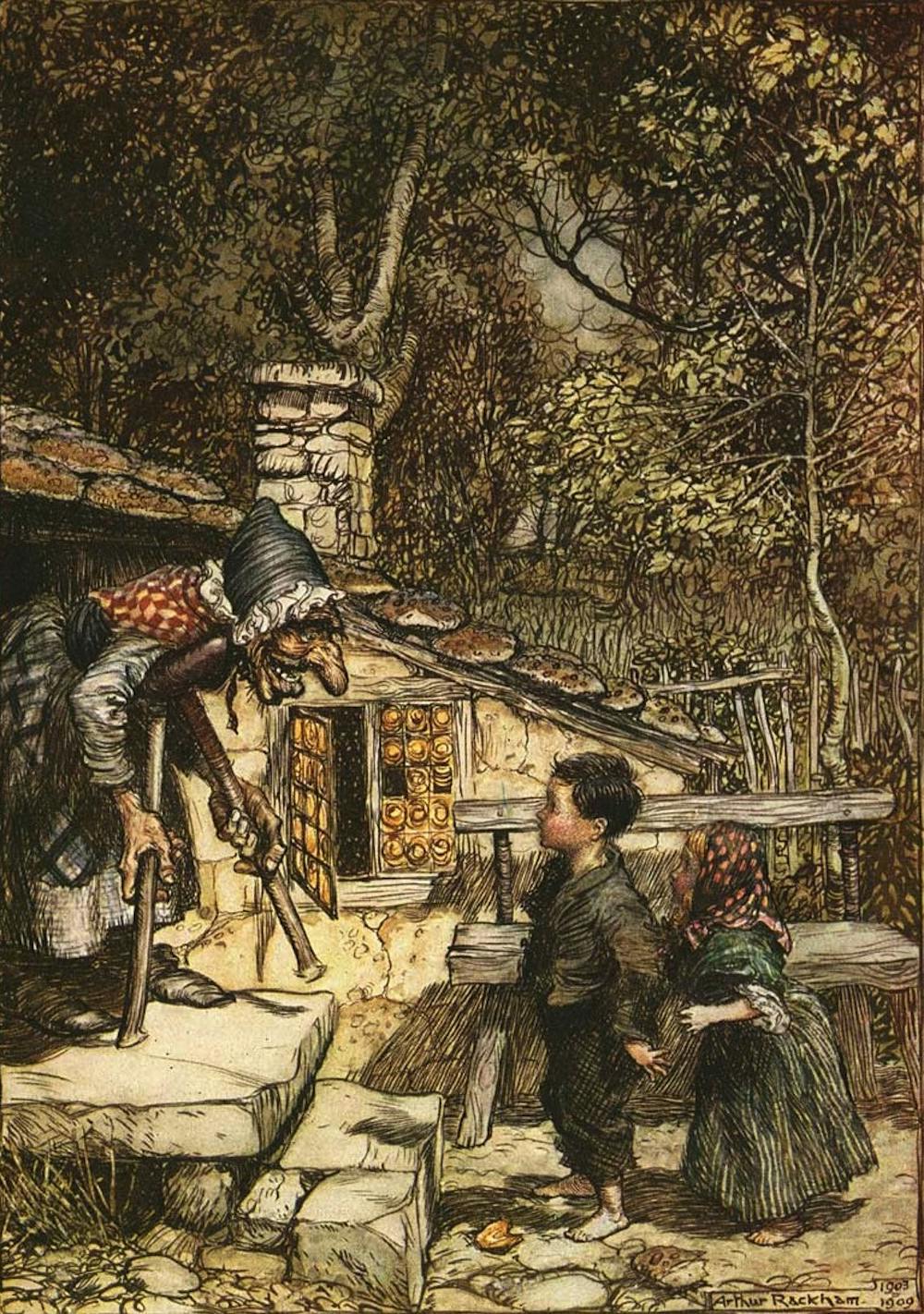
Hansel and Gretel by Arthur Rackham. Wikimedia images
Fairy tales are also extremely moral in their demarcation between good and evil, right and wrong. Their justice references the ancient tradition of an eye for an eye, and their punishments are ruthless and complete. Originally for adults (sometimes for children), fairy tales can be brutal, violent, sexual and laden with taboo. When the earliest recorded versions were made by collectors such as the Brothers Grimm, the adult content was maintained. But as time progressed and Christian morality intervened, the tales became diluted, child-friendly and more benign.
Despite these changes, it is apparent that fairy tales are still needed today, even for grown-ups. In an uncanny, sometimes inexplicable way, we consciously and unconsciously continue to tell them, despite advances in logic, science and technology. It’s as if there is something ingrained in us – something we cannot suppress – that compels us to interpret the world around us through the lens of such tales. And if we are not the tellers, we are the greedy consumers.
‘Fairy tale’ princesses and ‘wicked witches’
The 20th anniversary of the death of Diana, Princess of Wales, for example, has been cast – like her life – as a fairy tale. Throughout the year, she has been commemorated in articles with headings such as “a troubled fairy tale”, “beyond a fairy tale”, and “just another fairy tale”. While these articles have endeavoured to deconstruct the familiar narrative, they have not been entirely successful.
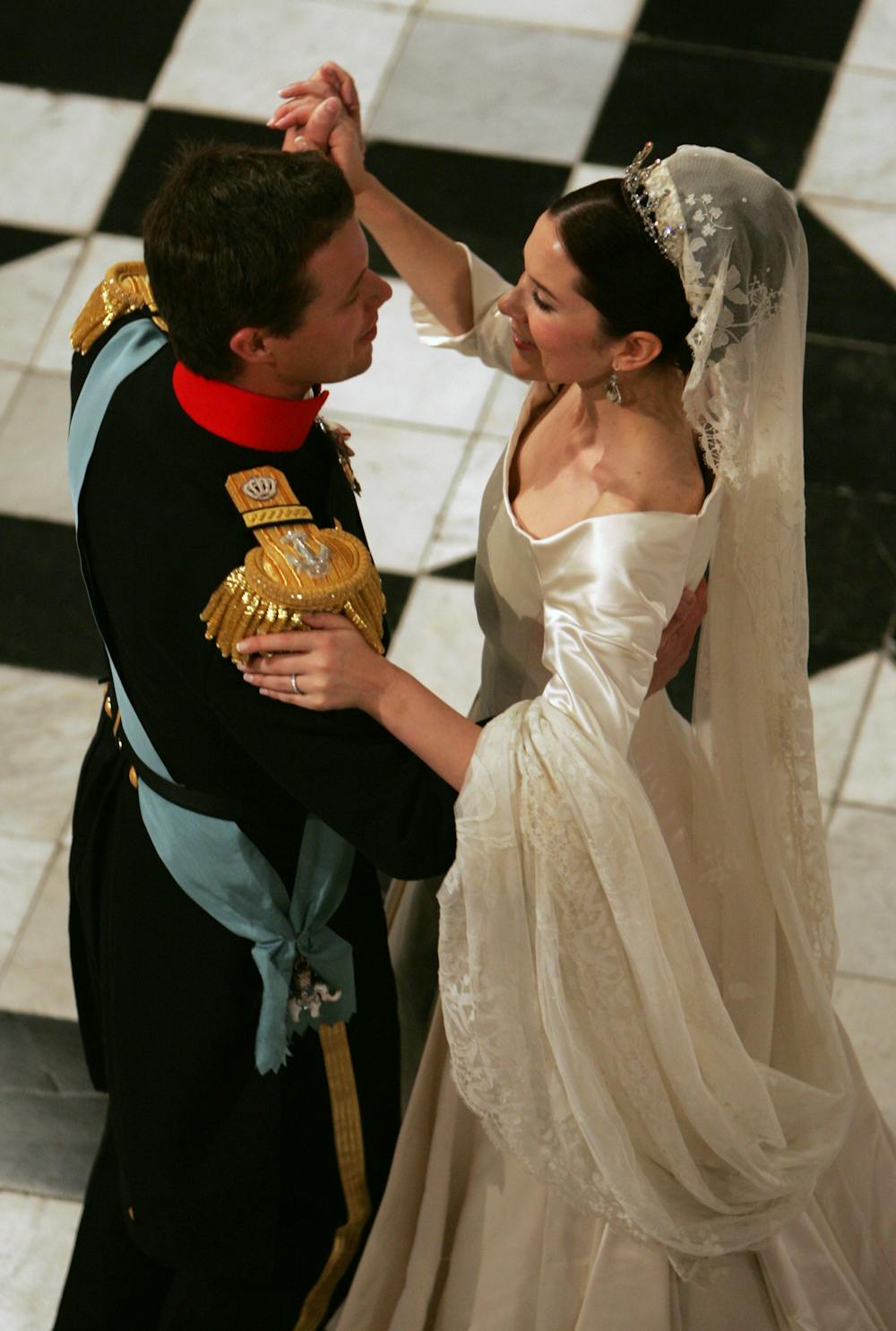
Fairy tale wedding? Prince Frederik and Princess Mary. Jerry Lampen/Reuters
The notion of a fairy tale princess has also characterised the coverage of Princess Mary of Denmark and Duchess Catherine of Cambridge. Even after 13 years of marriage, our own “Aussie princess” is described as living a fairy tale, evident in 2017 media stories with titles such as “Princess Mary and Prince Frederik’s fairy tale royal romance”. Likewise, Kate, once a commoner, now a princess, has featured in articles titled “Prince William and Duchess Kate’s fairy-tale love story” and “Kate’s Most Royal Fairy Tale Gown (To Date)”. As the titles of some of these stories show, they also feature the mandatory prince charming (William), or the prince who is revealed to be not-so-charming after all (Charles). Others extend the fairy tale formula to include wicked stepmothers (Di’s real life stepmother) and wicked witches (Camilla).
Is such recourse to fairy tales merely a media stunt to sell stories packaged in an easily consumable, gossip-laden snack box? Or do these articles reflect that deep-seated compulsion of ours to tell and, in turn, to listen to stories? The answers are “yes” and “yes”. But let’s forget the media’s role and look at the more interesting latter point.
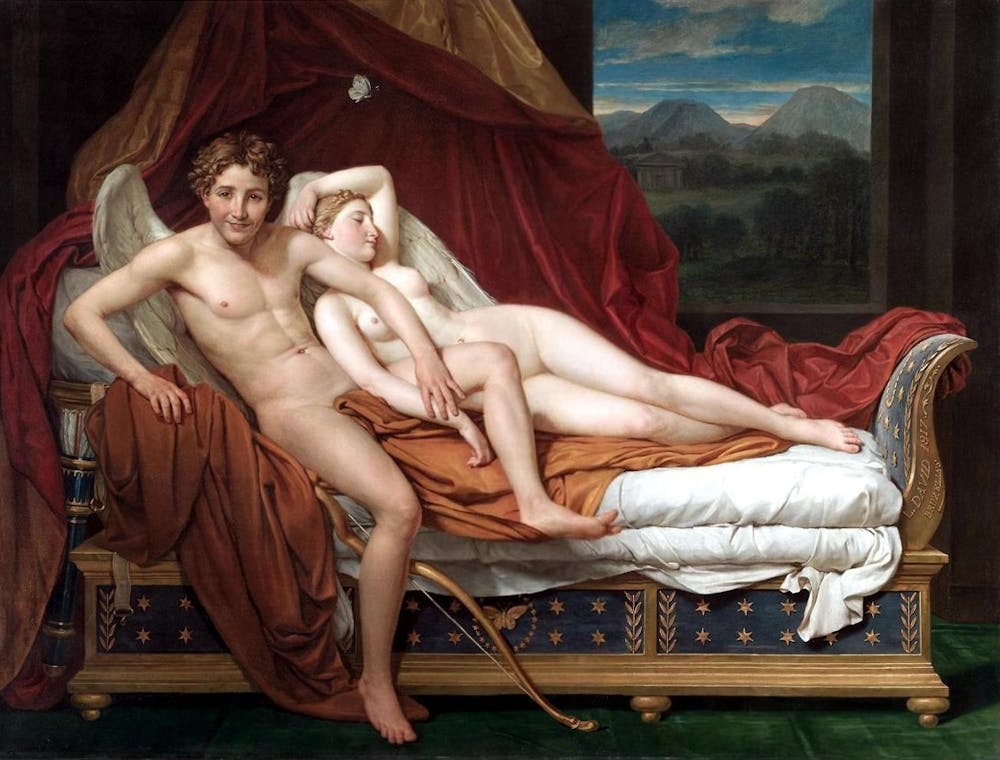
Many fairy tales began thousands of years ago, the age depending on the tale itself. Beauty and the Beast has its origins in the story of Cupid and Psyche from the Greek novel, The Golden Ass, from the second century AD.
Jacques-Louis David’s 1817 painting of Cupid and Psyche, the inspiration for Beauty and the Beast. Wikimedia images
In this tale, the beautiful Psyche is visited at night by an invisible lover – hearing only a voice – whom she is led to believe is a monster. While recorded by the novelist, Apuleius, the story is almost certainly much older; perhaps having its origins in myth and ritual, and handed down by word of mouth.
The research of Dr Jamie Tehrani has unearthed an early date for Red Riding Hood, which he has traced back to at least 2,000 years; not originating in Asia, as once believed, but most likely in Europe. Other tales studied by Tehrani have been dated to as early as 6,000 years ago.
Fairy tales are excellent narratives with which to think through a range of human experiences: joy, disbelief, disappointment, fear, envy, disaster, greed, devastation, lust, and grief (just to name a few). They provide forms of expression to shed light not only on our own lives but on the lives beyond our own. And, contrary to the impression that fairy tales always end happily ever after, this is not the case – therein lies much of their power.
They helped our ancestors make sense of the unpredictability or randomness of life. They repeated familiar experiences of unfairness, misfortune, bad luck, and ill-treatment and sometimes showed us how courage, determination and ingenuity could be employed even by the most disempowered to change the course of events.
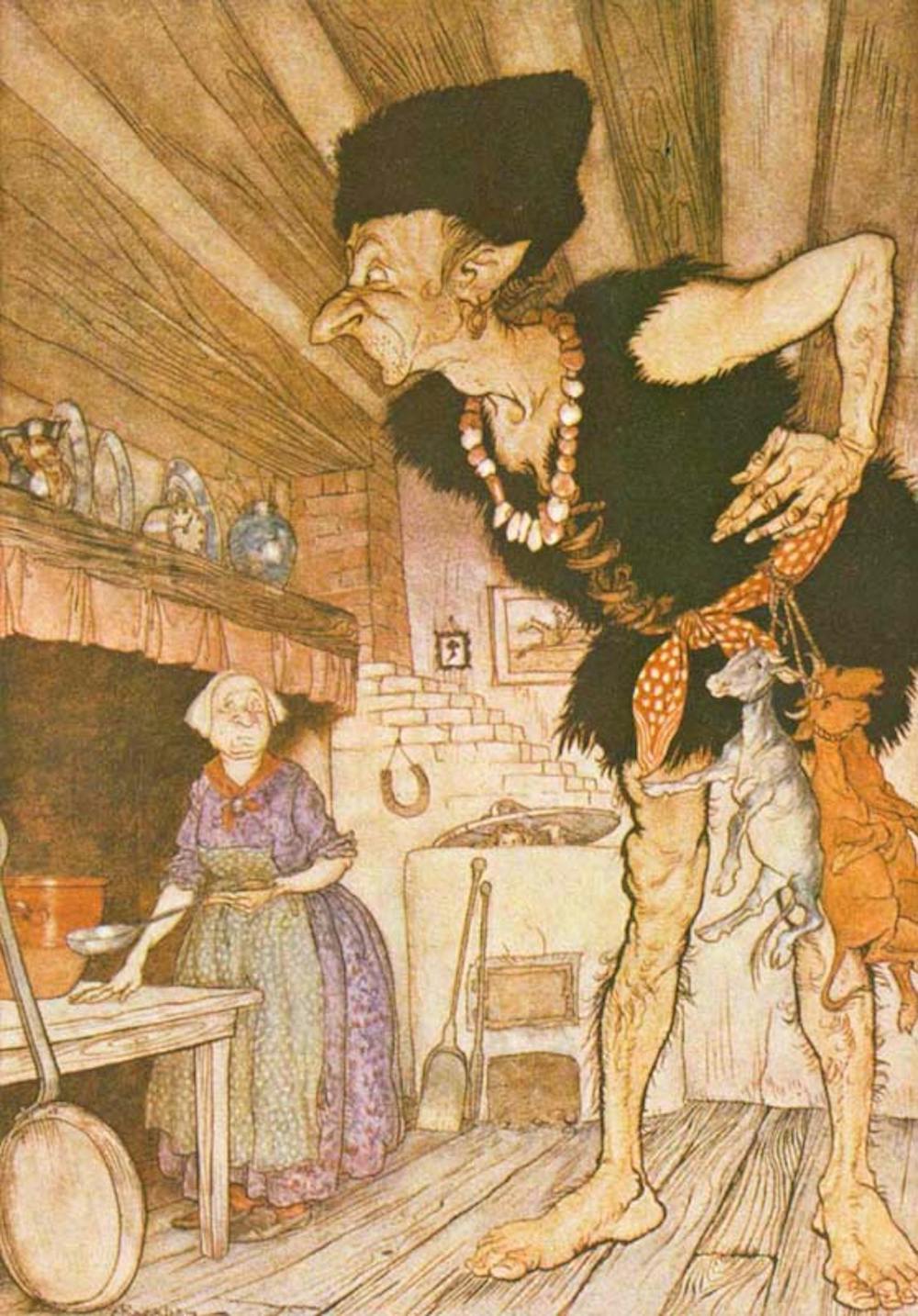
Arthur Rackham’s Jack and the Beanstalk Giant. Wikimedia images
Jack and the Beanstalk, for example, tells how a chance encounter with a stranger (an old man who provides magic beans) can bring about terrible danger (meeting a giant) but also terrific good fortune (acquiring a hen that lays golden eggs). The tale also celebrates how a poor boy can make the most of an arbitrarily dangerous situation that could have gone either way – being eaten or becoming rich – through his bravery and his intellect.
Fairytales also celebrated unexpected good fortune and acts of kindness and heroism, thereby reinforcing – even restoring – our faith in humanity. As tales of the folk, they not only entertained, but reflected the turmoils and triumphs of the lower classes, and enabled them to fantasise about how the “other half” lived.
Cinderalla and social criticism
But tales of kings, queens, princes and princesses – of which there are many – are not only a means of mental escape for the poor. They are also a means of social criticism.
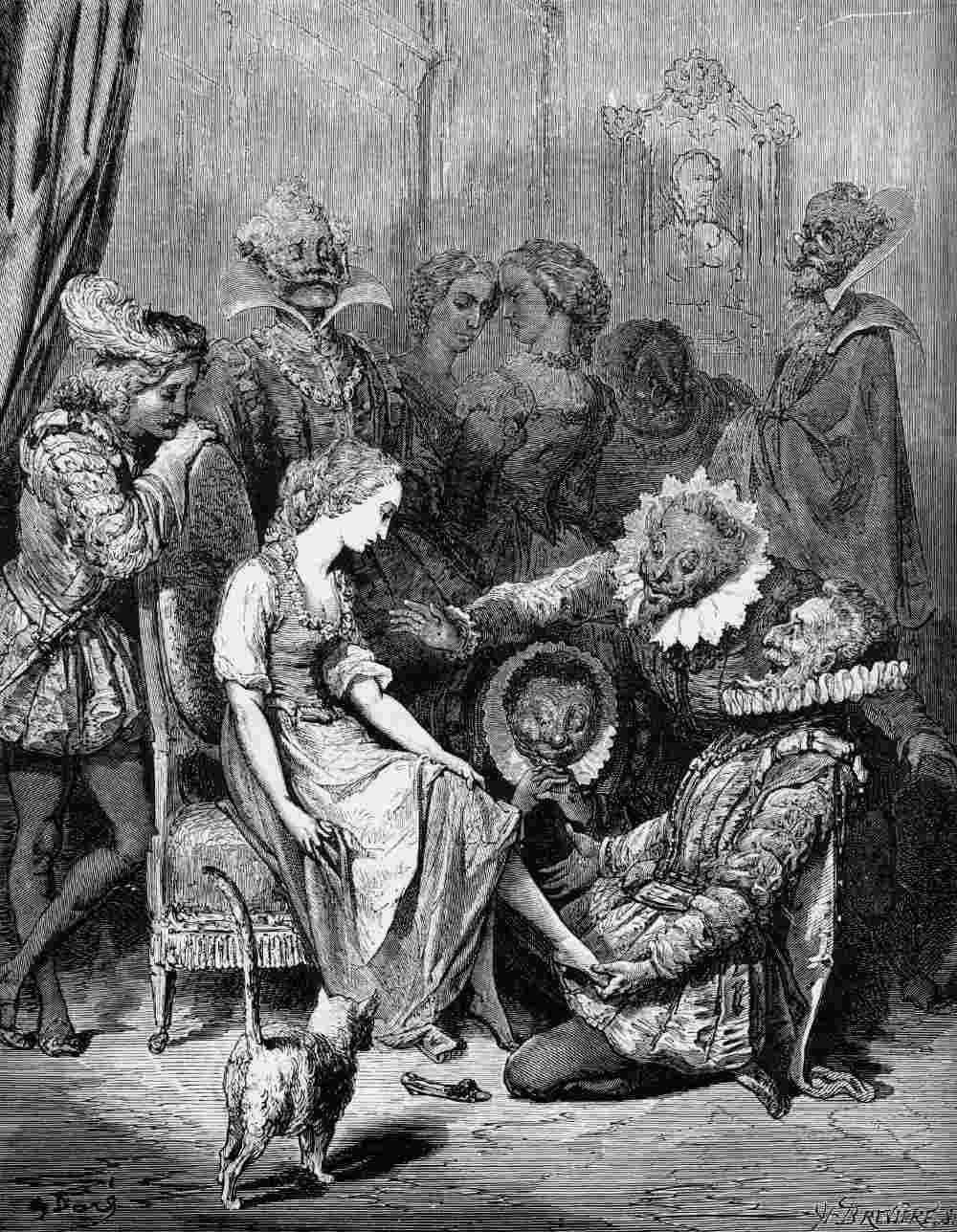
19th century engraving of Gustave Doré’s Cendrillon – Cinderella. From Dore’s 1864 edition of Stories or Fairy Tales from Past Times with Morals, originally published in 1697. Wikimedia images
In Cinderella, as recorded by Charles Perrault, the two stepsisters may have every material possession imaginable, but their cruelty renders them grotesque. And, of course, the lowly Cinderella triumphs. In the German version, Aschenputtel, recorded by the Brothers Grimm, the fate of the stepsisters is very different. Whereas Perrault’s version has the kindly Cinderella forgive them, the Grimms – clearly working from another tradition – describe how they have their eyes plucked out by pigeons!
Such stories of fantasising about a royal life and simultaneously despising it may have functioned as an emotional release similar to the ancient Greek experience of catharsis (the shedding of anxieties through watching outrageous tragedies and obscene comedies).
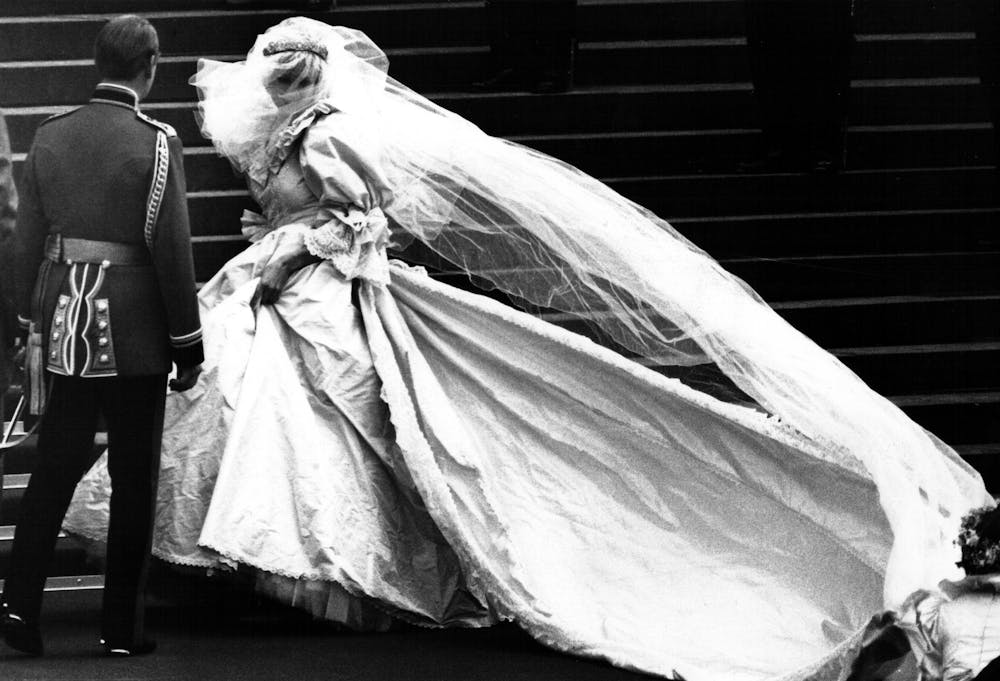
Taking the fascination with Diana’s life as a fairy tale, for example, we still employ the cathartic release of the genre to interrogate her and, for those of us so inclined, to find some meaning in the Di phenomenon. From the romantic courtship, to the wedding of the century and that dress, to motherhood, glamour, betrayal, heartbreak, divorce, alienation and a new love cut short by an early death.
Diana on her wedding day in 1981. Mal Langsdon/Reuters
Some, of course, have criticised the warm, fuzzy emotionalism that has sprung from the fairy tale of Di’s life. If it is not to your liking, there are more robust tales with powerful messages of resistance and resilience. In tales such as Hansel and Gretel and Donkeyskin, the young protagonists are persecuted and abused by predators.
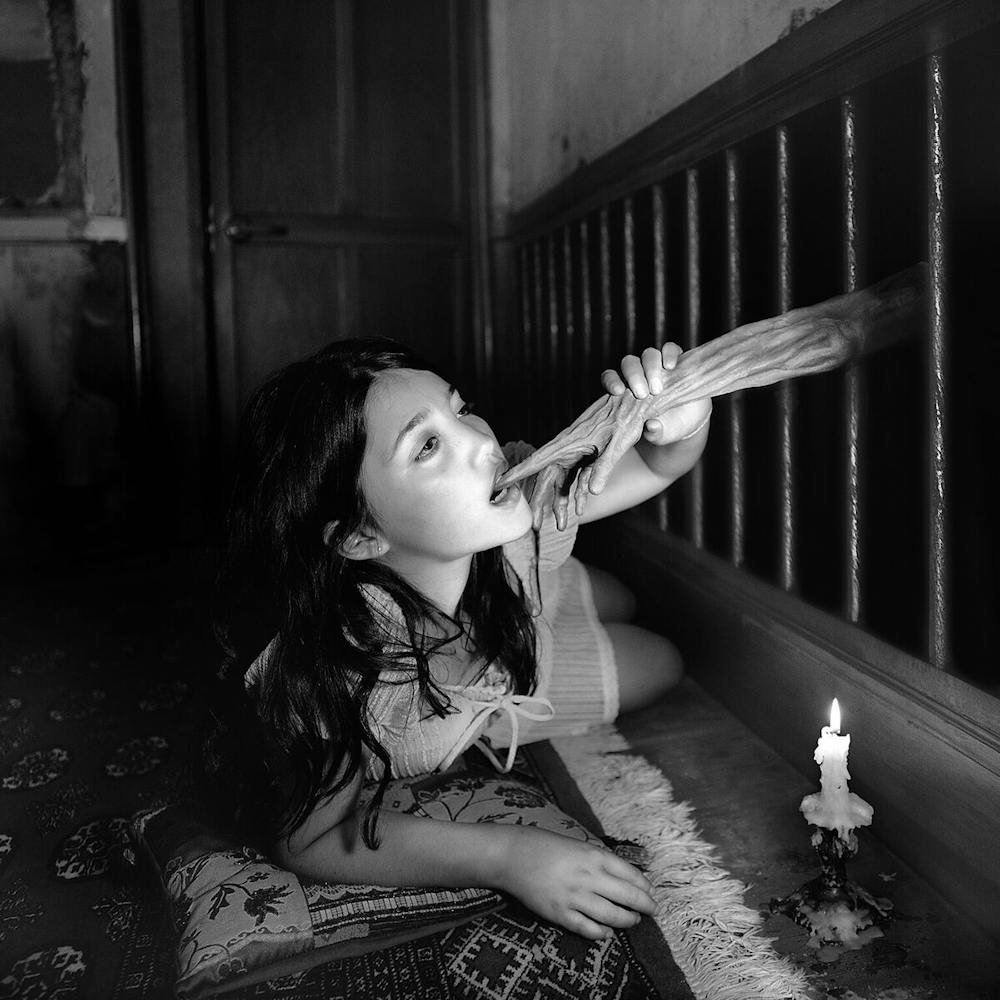
There is much to complain about in these tales from a politically correct or feminist perspective. They are violent and subversive: Gretel pushes a witch into an oven and in Perrault’s version of Donkeyskin, a king wishes to marry his daughter following the death of his wife. But they are more than narratives of abuse. They are also about courage and ingenuity on the part of the young survivors.
Miwa Yanagi, Gretel 2004, gelatin silver print.
Collection of the Hara Museum of Contemporary Art Courtesy of the artist and Yoshiko Isshiki Office, Tokyo
Donkeyskin, variants of which are extant in English (Catskin) and German (All-Kinds-Of-Fur), champions the bravery and inherent goodness of the young heroine who dresses in the skin of a donkey and leaves the palace in order to escape her father’s desires. Her subsequent life as a servant, filthy, humiliated, reviled and renamed “Donkeyskin” by her fellow servants, never crushes her soul.
Within the fantasy and the convenient appearance of supernatural assistants or a romantic ending, both of which feature in Donkeyskin, these stories are powerful reminders that evil exists in the world in the form of human beings – but it is not definitive or unconquerable.
Contemporary reworkings
With the publication of the Grimms’ Children’s and Household Tales in 1812, artists and illustrators were the first interpreters of fairy tales. Visual responses have ranged from famous works by Gustave Doré, Arthur Rackham and Edmund Dulac to Maurice Sendak and Jan Pieńkowski.
More dissident responses have included the photographs of Dina Goldstein, whose Fallen Princesses series (2007-2009) is an astute response to the Disney princess phenomenon of unattainable, debilitating images of femininity and romance in bowdlerised versions of the original tales. Here, Goldstein critiques the superficiality of the princess stereotype, reminding us that it is as facile for children as the Diana fairy tale dream is for adults.
Before Goldstein, photographer Sarah Moon also challenged the dilution of fairy tales in the modern west through her provocative (sometimes banned) interpretation of Little Red Riding Hood. In this powerful rendition, Moon takes her child reader back to the original and raw meanings embedded in the tale through her exploration of the theme of the human predator in the symbolic guise of the wolf.
Moon’s decision to return to the terror and drama of the Grimms’ version is testimony to the need to challenge the dilution and contamination of the tales. Even the Grimms were guilty of adding and subtracting to the material, particularly when it came to the insertion of overt Christian morality. Equally if not more so, the Disneyfication of fairy tales has stripped them of the power and the pain to which Moon returns.
Writers and poets have also responded to the tales and, like Moon, have regularly sought to return them to their once formidable status. Women authors in particular have created powerful, sometimes heartbreaking – but always real and truthful – new versions.
Among the thousands of old tales in new clothes is the literature of second wave feminists, including the suite entitled Transformations (1971) by renegade poet Anne Sexton, who takes the domesticity of the original tales and mocks, ridicules, cherishes and – literally – transforms them. Angela Carter’s The Bloody Chamber (1979), a magnificent collection of retellings of famous fairy tales, is full of female empowerment, sensuality and violence in a tour de force that both reinstates the potency of the stories and re-imagines them.
Novelist, poet and essayist, Margaret Atwood also transforms the originals. Her response to The Girl Without Hands, which tells the story of a young woman who agrees to sacrifice her hands in order to save her father from the devil, in a poem of the same name is a profound meditation on the continuation of both abuse and survival.
The fairy tales first preserved by collectors such as the Brothers Grimm – retold, bastardised, edited, annotated, banned and reclaimed – belong ultimately to the folk who first told them. And the folk continue to tell and retell them. Closer to home than the Black Forest, a new show at the The Ian Potter Museum of Art contains work by international and Australian artists, including Tracy Moffatt and Sally Smart. The show returns – once again – to fairy tales to express social concerns and anxieties surrounding issues such as the abuse of power, injustice and exploitation.
Dina Goldstein, Snowy 2008 from the Fallen Princess series.
digital photograph Courtesy of the artist
Fairy tales are, indeed, good to think with, and their retellings shed light on cultural, societal and artistic movements. Both children and adults should read more fairy tales – both the original and the transformed versions, for they are one of our cultural touchstones.
Jeremy Hutchinson, who has died at 102, was one of England’s finest criminal barristers. He was counsel of choice for some of the most high-profile cases of his era. He defended the likes of Christine Keeler and Great Train robber Charles Wilson and also obscenity cases against novels like Fanny Hill and Lady Chatterley’s Lover.
Later known as Lord Hutchinson of Lullington, his role defending Penguin Books after it published the unexpurgated version of the DH Lawrence classic is particularly memorable. It remains the landmark case in British obscenity law.
But look at the details and something extraordinary emerges: Penguin’s decision to publish 200,000 copies on the advice of Hutchinson and joint lead counsel Gerald Gardiner was a massive gamble. It set up a case that were it not for the incompetence of the prosecution could easily have gone the other way.
Obscenity and England
Lady Chatterley’s Lover had only ever been legally published in abridged versions in the UK, starting in 1932. Though by 1960 the unexpurgated edition was sold in Europe and America and could be obtained under the counter in London if you knew where to go, Penguin co-founder Allen Lane wanted to publish a cheap paperback of the full thing.
The idea was to put it out at 3s 6d, the same price as ten cigarettes, to make it affordable for the “young and the hoi-polloi”. The excuse was the 30th anniversary of Lawrence’s death from tuberculosis at the age of 45.
When Penguin consulted Hutchinson and Gardiner, the lawyers retreated to reflect. A trial under the new Obscene Publications Act seemed inevitable. The act’s first paragraph stated that material will be deemed obscene if it contains elements that tend as a whole “to deprave and corrupt persons who are likely … to read, see or hear” it.
The act included a new defence in cases where the offending segments were “for the public good on the ground that [they are] in the interests of science, literature, art or learning”. In consultation with several literary experts, Hutchinson and Gardiner felt most of the racy scenes and bad language – including (30) “fucks” and (14) “cunts” – could fall under this defence. Lawrence, after all, was one of the most highly regarded writers of his era.
Hutchinson was concerned about page 258, however, where anal sex crops up – albeit obliquely. It has Oliver Mellors, the lover in the book’s title, trying to divorce his wife Bertha Coutts and being accused by her “of all unspeakable things”. Clifford Chatterley writes a letter to his own wife saying that Coutts has aired details about her marriage to Mellors which are “usually buried down in the deepest grave of matrimonial silence”.
But, he comments:
Humanity has always had a strange avidity for unusual sexual postures, and if a man likes to use his wife, as Benvenuto Cellini says, ‘in the Italian way’, well that is a matter of taste.
Lady Chatterley has pause for thought:
Connie remembered the last night she had spent with [Mellors], and shivered. He had known all that sensuality, even with a Bertha Coutts! It was really rather disgusting. It would be well to be rid of him, clear of him altogether.
Her friend Duncan Forbes then makes light of it:
If he’s made love to his wife all ends on, hasn’t he a right to? She ought to be proud of it.
While homosexual anal sex between consenting men was legalised 50 years ago in the UK, the heterosexual equivalent became legal only at the millennium in England and Wales and was highly illegal in 1960. (The 2001 film Bridget Jones’ Diary celebrated legalisation with a pretty explicit scene between Renée Zellweger and Hugh Grant.)
Illegal acts could still potentially use the public good defence, but Hutchinson feared it made the case much harder to win. Gardiner and the experts at the meeting dismissed his fears. In these more innocent times, they were betting that the prosecution wouldn’t grasp the point and omit it from their case. Hutchinson agreed to go ahead and advised Penguin accordingly.
Your witness
The defence called 35 professors of literature, authors, journalists, editors, critics, publishers and child education experts, and four Anglican churchmen. Each declared the book had sufficient literary merit to deserve publication for the public good. (Those less convinced of Lawrence’s genius begged off – Enid Blyton declared she had never read the book and “my husband said no at once”.)
Lead prosecutor Mervyn Griffith-Jones cross-examined only 14 of the 35. He lost most of those rounds, and sometimes his temper in the process. It was only in his closing speech he said to the jury:
Would you look at page 258. It is a passage which I have not – and I do not think anybody has – referred to during the course of cross-examination, or indeed at any time during this trial. It … describes what is called the ‘night of sensual passion’.
He read out the whole passage remarking: “Not very easy, sometimes, not very easy, you know, to know what in fact he is driving at in that passage.”
It’s not clear how many jurors understood the passage; some were said to be visibly shocked. Certainly Griffith-Jones had missed the significance entirely, having referenced it only to underline the book’s general depravity. Mr Justice Byrne summed up with no reference to anal sex either. The issues were, he said, promiscuity and adultery described in words that were “normally obscene”.
The jury returned in three hours and found Penguin not guilty. Neither the clergy nor any of the other experts had been examined on anal sex and it is not clear whether they realised they were implicitly defending it or not. A watershed in British obscenity law had been achieved without any discussion about the illegal sex acts central to the novel.
In the wake of this case, publishing in Britain became considerably more liberal. Had Hutchinson not agreed to advise Penguin to take that extraordinary gamble, things could have panned out very differently.


 Word-image game playing has since become increasingly sophisticated. Back in the early 1920s, Milne and Shepard were among the first to explore the potential of the page as a kind of stage – where words might be adjusted and adapted to coexist and harmonise with the pictures they accompany.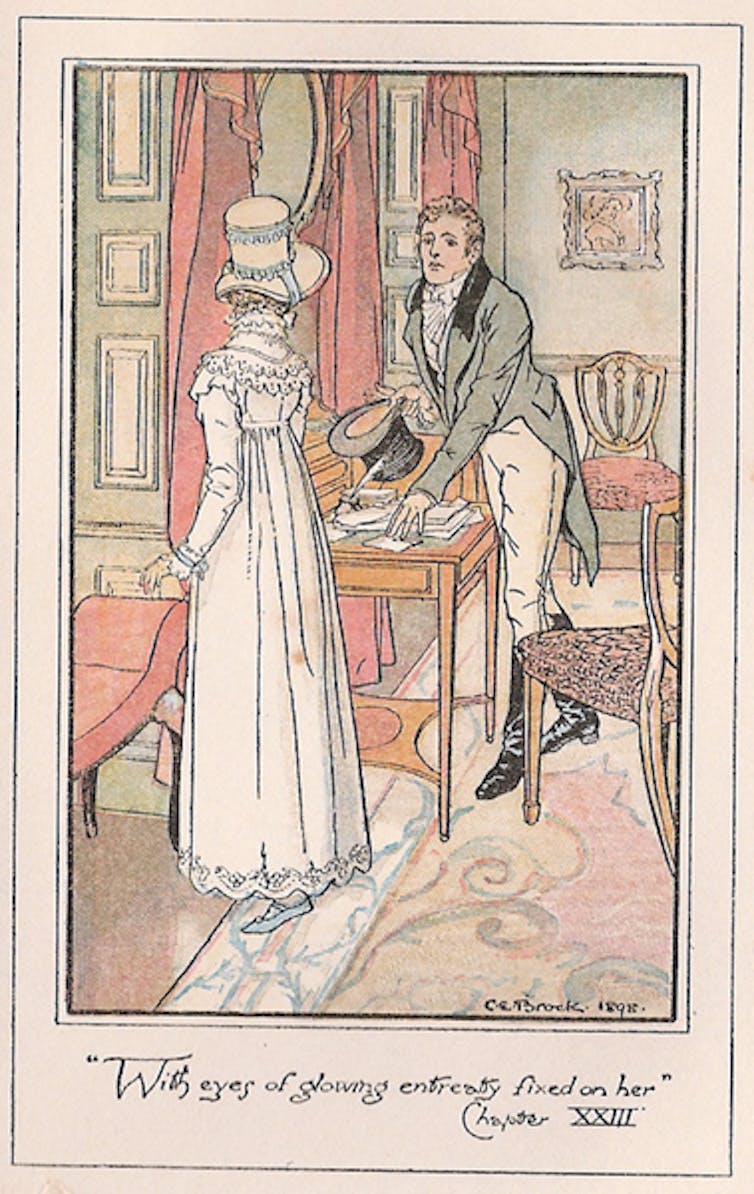
 For me, nowhere are Austen’s “thought rhythms” more haunting than in Anne’s conversation with Harville, and Wentworth’s response to her in his letter. More broadly, in its blend of the public and the personal, Persuasion explores both the torment of silence and the value of hope.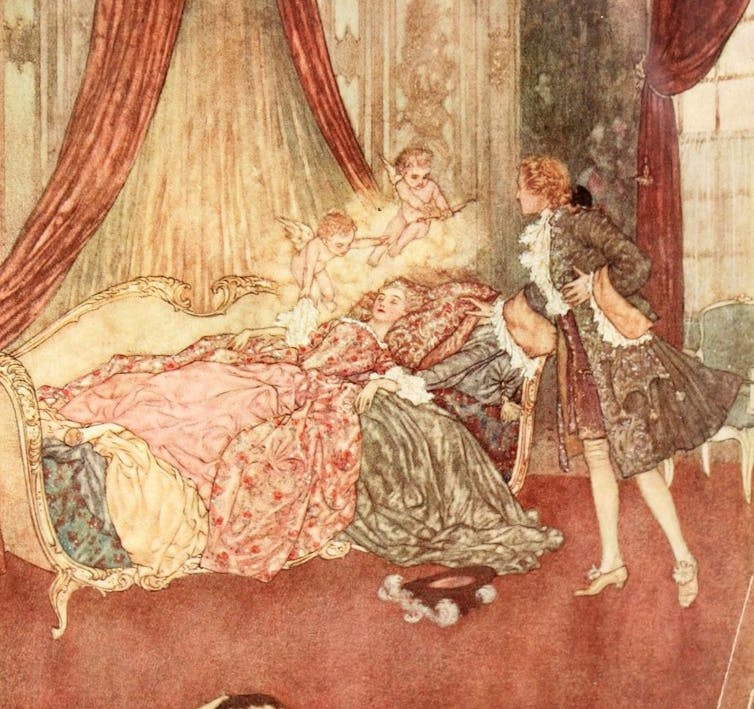


 In the wake of this case, publishing in Britain became considerably more liberal. Had Hutchinson not agreed to advise Penguin to take that extraordinary gamble, things could have panned out very differently.
 At the BookShelf
You must be logged in to post a comment.