Unknown's avatar

From sleeping beauty to the frog prince – why we shouldn’t ban fairytales


File 20171213 31706 1k3e5cs.jpg?ixlib=rb 1.1
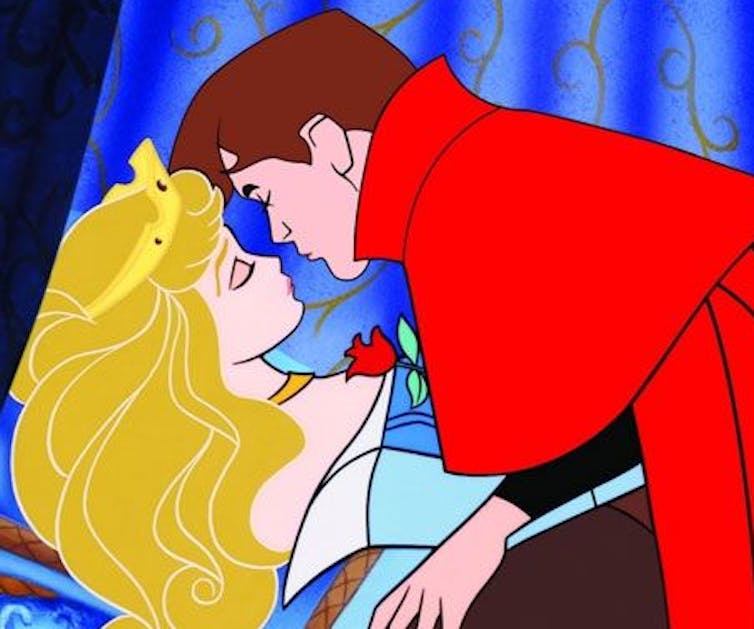
The famous ‘kiss’ scene from Sleeping Beauty.
Disney

Michelle Smith, Monash University

Recently, an English mother, Sarah Hall, prompted worldwide media coverage in response to her suggestion that Sleeping Beauty should be removed from the school curriculum for young children because of the “inappropriate sexual message” it sends about consent.

It’s not the only time fairytales have come under scrutiny recently. They are increasingly being targeted for “banning” within schools or avoidance by parents because of their perceived sexism, passive princesses, and reinforcement of marriage as girls’ ultimate goal. But can fairy tales actually be harmful as their critics believe?
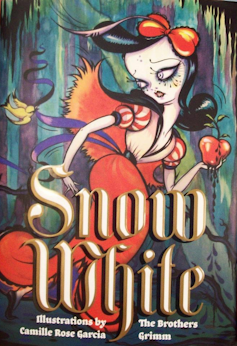
‘Snow White’ by the Brothers Grimm, as illustrated by Camille Rose Garcia.
Flickr CC

Fairy tales were once told – and then written – by adults for adult audiences. Early versions of many tales were often bawdy, salacious and replete with sexual innuendo. Since the Grimm Brothers removed these elements to reconfigure the fairy tale for children in the early 19th century, fairy tales have been seen as ideal, imaginative stories for young people. Almost all of us know the most popular stories from childhood reading or Disney films.

Tradition is not reason enough to continue a cultural practice that has become outmoded. Nevertheless, there are a range of reasons why these calls to restrict children from reading fairy tales such as Sleeping Beauty are misguided.

Children’s literature needn’t model ‘ideal’ behaviour

Initially, most children’s literature was didactic and preoccupied with instructing children in correct morals and drilling them with information.


Read more: A new twist on an old fairytale as a daughter dances away from the patriarchy


Adult readers today would struggle to find any pleasure in children’s literature prior to 1850, let alone today’s kids. In order to provide “delight” as well as “instruction”, children’s books represent a range of behaviour, including, in the case of fairy tales, the attempted murder of children, and punishments such as feet being severed and birds pecking out human eyes.
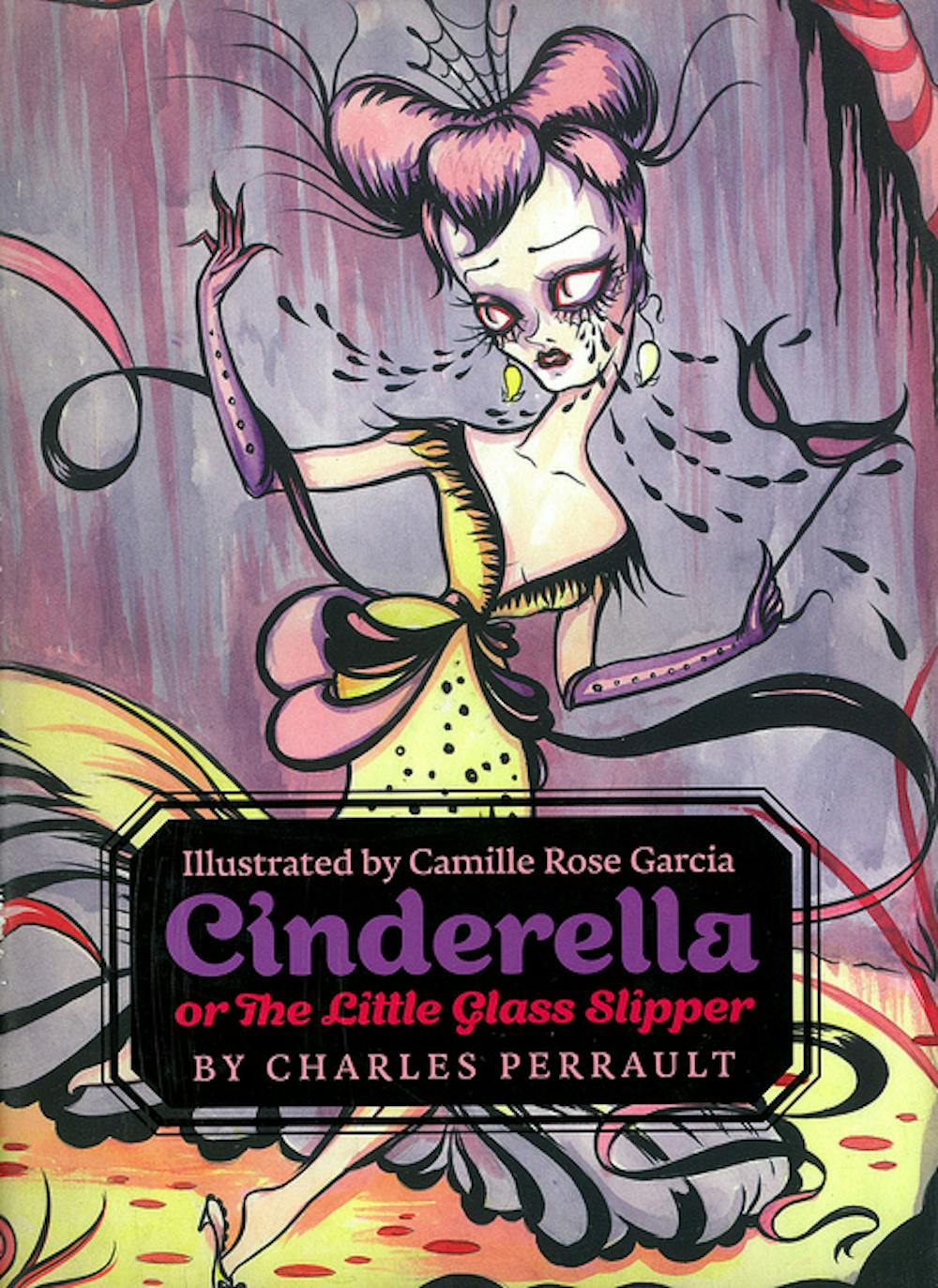
In Charles Perrault’s version of Cinderella, or the Little Glass Slipper (illustrated by Camille Rose Garcia) Cinderella leaves behind a glass slipper.
Flickr CC

Charles Perrault was the French author who added the famous motifs of the glass slipper and pumpkin coach to the Cinderella tale. In his version of Sleeping Beauty, after the Princess and the Prince marry in secret and have two children, the Prince’s mother is entirely unimpressed. Unsurprisingly within a fairy tale, the Prince’s mother is descended from ogres and she demands that the two children be killed and eaten for dinner by the whole family, with the macabre detail that the boy is to be served with Sauce Robert.

As in Snow White, in which the Huntsman refuses to kill the heroine and substitutes an animal heart for that of Snow White’s, no actual harm comes to the princess or her children but not before the ogress has prepared a tub full of vipers in a typical last-ditch attempt at villainy.

When we consider the norms of evil and violence in fairy tales – most of which are usually punished – it is bizarre to imagine every detail serving as a behavioural model for children. If we insisted that every character in children’s literature behaved precisely as we wish to teach children to behave then we would likely be presenting bland stories that no child would actually read.
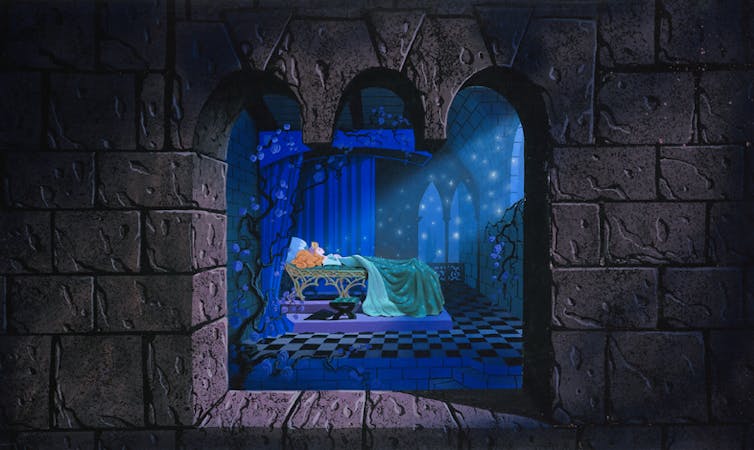
Maleficent’s curse came to pass on the Princess’ 16th birthday…but the good fairies changed the curse so the Princess would not die, but sleep ‘til awakened by true love’s kiss.
Flickr CC

Considering plot points in context

If we focus on one plot point, like the kiss in Sleeping Beauty, we can overlook the overall narrative context.

Within the tale, it becomes legend that the sleeping spell that has been cast on the Princess will only be broken after one-hundred years by the kiss of a king’s son. The narrative premise includes a premonition about how the magic will unfold and demands the resolution of the prince’s kiss to “save” the princess who must wait to be returned to consciousness.

While we might critique the emphasis on romance and passivity from a feminist perspective, the idea that the tale is promoting the equivalent of a Steubenville scenario in which an unconscious young woman is sexually assaulted ignores the magical logic of the fantasy world.


Read more: Once upon a time: a brief history of children’s literature


By that measure, we might see Prince Charming as a maniacal stalker as he demands all women in the kingdom try on the glass slipper in order to track down the attractive girl who failed to slip him her address before running off from the ball.

In Sleeping Beauty, it is significant that the Prince is told about the Princess being doomed to sleep until she is awakened by a king’s son. The Prince recognises that he is one of few people who can end the curse and resolves to tackle the brambles and thorns that surround the castle in which she is trapped in slumber.

Significantly, in the Grimms’ version, Little Brier-Rose, numerous young men try to push themselves through the thorny hedge and die miserably in the attempt. However the hedge turns into flowers for the Prince and allows him through. Only the right man, with the right motivations, and the one who can release the Princess from the curse – is permitted through.

Rather than being a parallel to a kiss taken without consent, the Sleeping Beauty kiss is akin to a paramedic giving mouth-to-mouth resuscitation to an unconscious person who would most usually want to be revived.

Many versions of every fairy tale

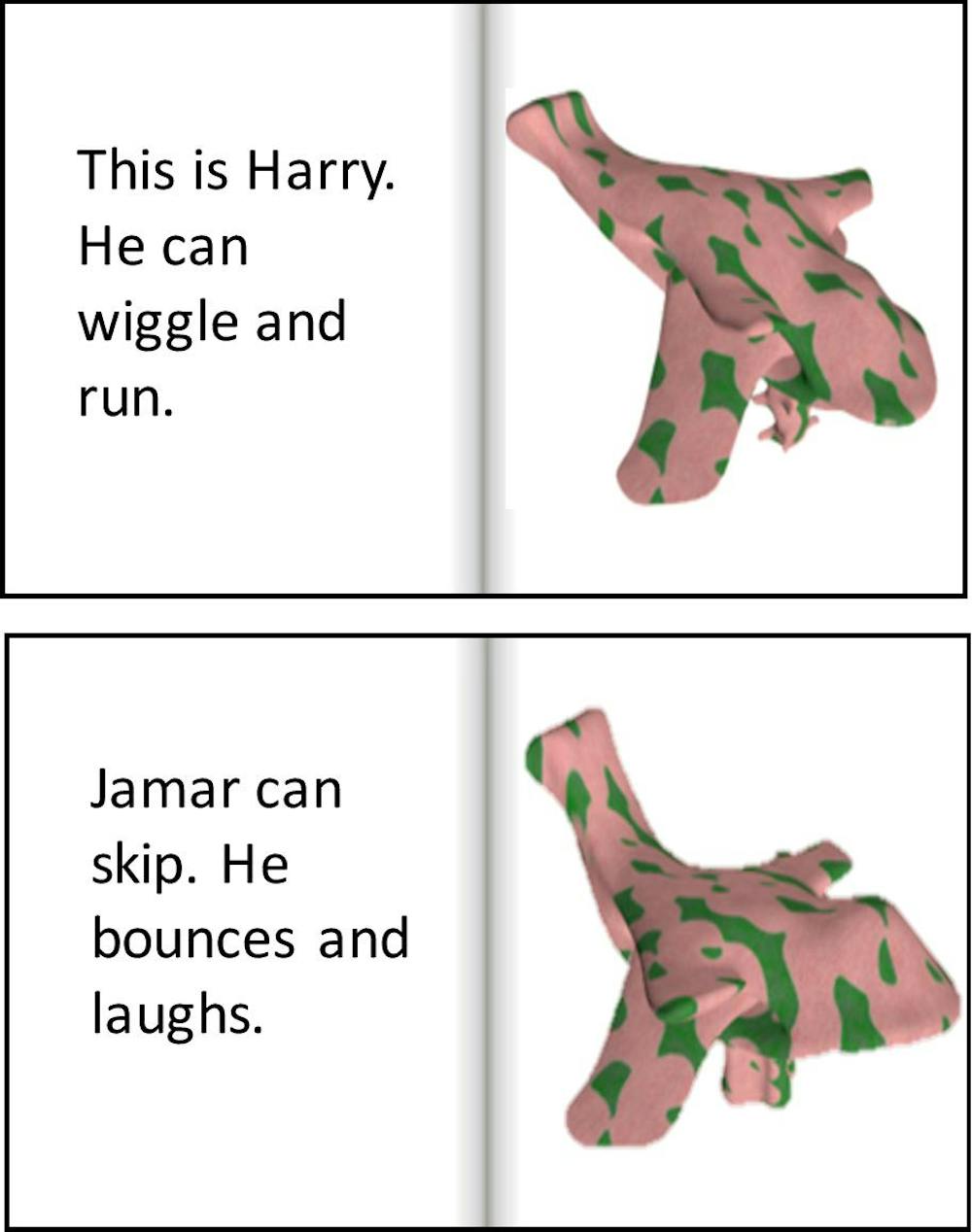
The version of Sleeping Beauty targeted in the UK is part of the “Biff, Chip and Kipper” series designed to teach children to read. These books aim to educate children in the mechanics of reading and, as such, some of the literary nuance, symbolism, and visual artistry present in many fairy tales and picture books based upon them are no doubt lacking.

It is important to recall that there is no definitive version of a fairy tale. Calls for “bans” of a particular tale ignore variations between, say, Perrault’s Sleeping Beauty complete with cannibalistic, viper-wielding ogress and the Grimms’ less violent adaptation.


Read more: Friday essay: why grown-ups still need fairy tales


Rather than eschewing fairy tales entirely, parents and educators would be better placed to look to quality adaptations and retellings by outstanding children’s authors, such as Neil Gaiman’s The Sleeper and the Spindle, which merges Snow White and Sleeping Beauty.
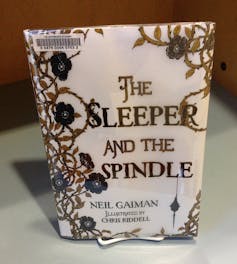
Neil Gaiman’s The Sleeper and the Spindle.
Flickr CC

In this tale, the Queen sets out on a journey armed with a sword to save the Princess and is the one who rescues her through a kiss.

There is even a picture book version called Sleeping Bobby in which the gender roles are entirely reversed. Numerous parodies such as John Scieszka’s The Frog Prince Continued, in which the Princess’s married life with the frog is far from “happily ever after”, can also be a way for older readers to begin to question and play with the conventional gender expectations of some fairy tales.

Reweaving old stories into new

Fairy tales have been undergoing a continuous process of being rewoven into new stories for hundreds of years.

Just as many old tales have fallen out of favour and are no longer known, so too might some contemporary favourites eventually stop being told to children, potentially replaced by reworked versions or entirely new stories.

The ConversationThis storytelling method of old wine being poured into new bottles has a rich tradition and does not require our intervention. After all, the people who ban books in stories are always the villains, not the heroes.

Michelle Smith, Senior Lecturer in Literary Studies, Monash University

This article was originally published on The Conversation. Read the original article.
Unknown's avatar

Five great reads to help teens become critical thinkers


File 20171212 9404 1vk4zo3.jpg?ixlib=rb 1.1
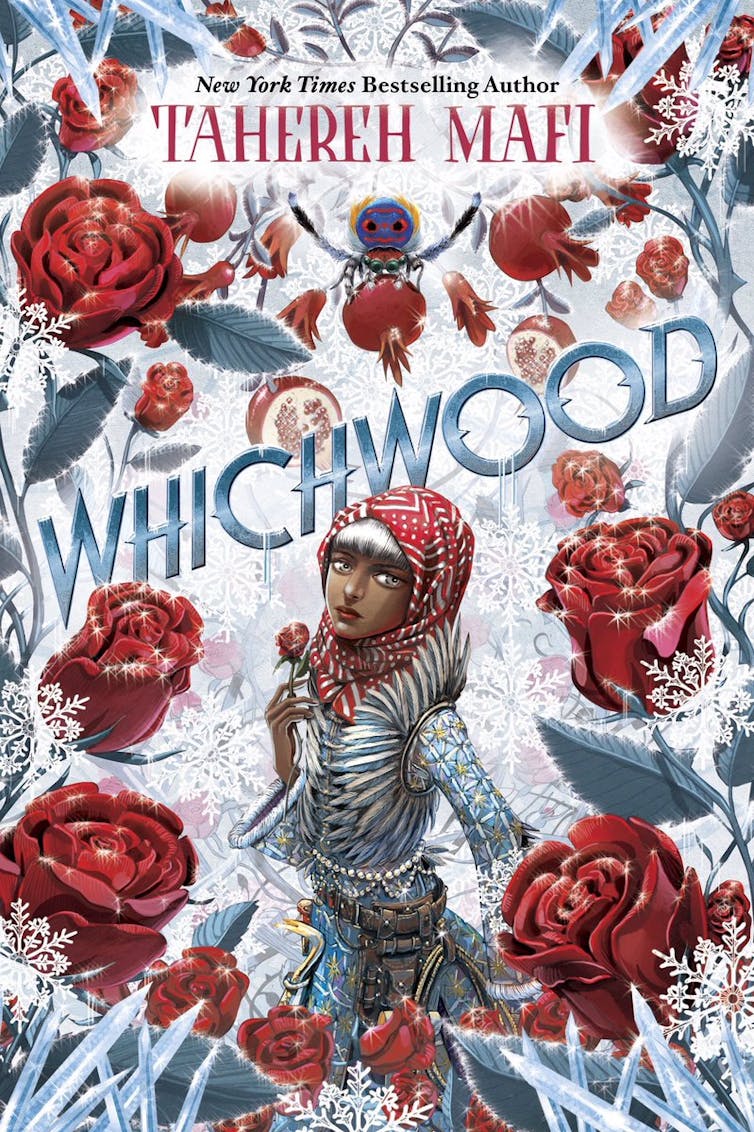
Whichwood is one of five great reads for teens that highlight authentic experiences, marginalized voices and critical thinking.
(Dutton Books)

Heba Elsherief, University of Toronto

Young adults who are, perhaps, still figuring out their needs don’t need to be overburdened with books they won’t like. The last thing we want is for a young reader to get turned off and lose out on the immeasurable benefits reading provides.

As a researcher looking at diverse representations in young adult literature, I often get asked for book recommendations.

Since I believe all readers are looking for an emotional connection to a story, I start with authenticity as my keystone. In order to form a connection with the experiences of characters, including their travel and journeys to new places, the writing should emerge from a place of authenticity.

Diversity plus critical issues

Author Corinne Duyvis started the hashtag #Ownvoices in 2015 to promote this idea of authenticity and “to recommend kidlit about diverse characters written by authors from that same diverse group.”

Very basically, when an author shares one or more of the marginalities of their diverse protagonists, it is considered to be included in #Ownvoices. In terms of diversity, most publishers use the definition put out by We Need Diverse Books: “…including (but not limited to) LGBTQIA, Native, people of colour, gender diversity, people with disabilities, and ethnic, cultural, and religious minorities.”

The hashtag has taken on a life of its own since Duyvis recommended its use. Many published books now market themselves based on #Ownvoices. And Goodreads lists have taken up this call as well. Readers looking for #OwnVoices will find many suggestions – and many more coming in the new year.

I hope this is a turn in publishing and that the well of marginalized stories written by authors most qualified to tell them never runs dry. It’s the surest way to an authentic, empathy-promoting experience for readers.

The current Top Five

Many of the teachers or parents asking for recommendations are hoping to give young adult readers an exercise in critical literacy to provide them with the opportunity to think about something long after the final page is turned. By “something,” I mean an important social issue or nuanced knowledge about a difficult concept or historical time period.

If a book meets both of these criteria — and if I’ve read it myself or have placed it on my “to be read” shelf — it warrants a recommendation.

Here are five books, very recently published (between September and December of 2017), that have made my list. At the end of each book description, I’ve included a question that might serve a critical thinking discussion once the book has been read.

This list is clearly not exhaustive and I present these as suggestions — ones that may warrant further research. Teachers or parents who know the readers they’re offering books to may need to look up any trigger warnings beforehand.

I recommend adults read books along with younger readers: It’s vital to meaningful conversations. I have left questions in my descriptions to prompt some discussion. Furthermore, I think adult readers may be pleasantly surprised with the rich and important storytelling happening in the young adult literary world.

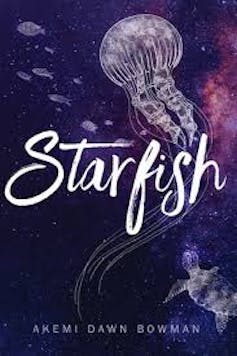
Starfish by Akemi Dawn Bowman

Starfish.
(Simon Pulse)

Starfish (Simon Pulse) features Kiko, who suffers from anxieties. She’s waiting to escape an abusive family situation by getting into the art school of her dreams but when she doesn’t get in, she takes the opportunity presented by a childhood friend to tour other schools.

Kiko, the main character who is half-Japanese, takes a journey that ends up being one of personal growth. The journey allows Kiko to embrace who she is, to learn more about her heritage and to speak up for herself. The writing is lyrical and endearing and we get a lot of Kiko’s internal thoughts and feelings.

There’s a love story here too. I would have liked it if Kiko’s path to self-love was not so knotted up with her childhood friend. But perhaps that’s me being old and young adult readers will like this aspect the best. What will you and your young adult readers think?

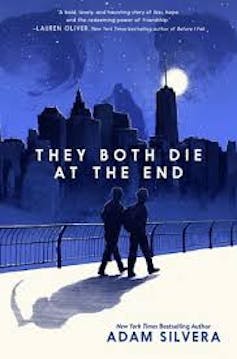
They Both Die at the End by Adam Silvera

They Both Die at the End.
(Harper Collins)

They Both Die at the End (Harper Collins) is an interesting genre mashup — both speculative and contemporary. With the whole “there’s an app for that” times we live in, it feels very timely.

In an alternate reality, two teen boys spend a day together after learning it will be their last. There’s diverse representation here and definitely a message that seems suitable for young people attached to their phones at the expense of experiencing the world and making real connections.

In my literature classes, we talk a lot about how classic children’s books tend to have “didactic” elements – morals embedded into them and modes of socialization or teaching children how to be in the world. Thinking through themes a writer develops, how do contemporary didactic modes operate here or in young adult literature more generally?

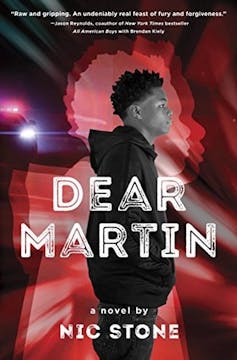
Dear Martin by Nic Stone

Dear Martin.
(Crown Books)

Dear Martin (Crown Books) takes up the story of Justyce McAllister, a full-scholarship, Ivy League-bound, Black 17-year-old boy who learns that when it comes to racism, none of these accomplishments matter.

The title takes its name from the letters Justyce writes to Martin Luther King, Jr. while he grapples with racial tensions and police oppression. It’s a story that seems ripped straight from the headlines and has been compared to The Hate U Give, this year’s very successful YA book by Angie Thomas. Both of these books are important and necessary, and sadly, deal with inequalities that plague young adults of colour. How can literature combat systematic oppression and social ills?

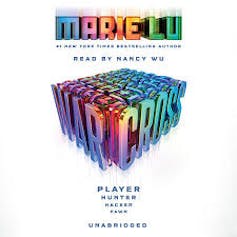
Warcross by Marie Lu

Warcross.
G.P. Putnam’s Sons Books for Young Readers

Warcross (G.P. Putnam’s Sons Books for Young Readers) has already wracked up a record number of positive reviews from readers. It’s a new series by the author of other YA favourites, including The Young Elites series.

In it, teenage hacker Emika Chen finds herself embroiled in a virtual reality game that’s taken over the globe. It’s an international spy adventure with a diverse cast in a near-future sci-fi world and it’s pretty awesome!

I think this one will organically prompt a discussion about “global virtual crazes” – and while its clear these virtual crazes might be ‘bad’ I wonder if there are positives to be found also?

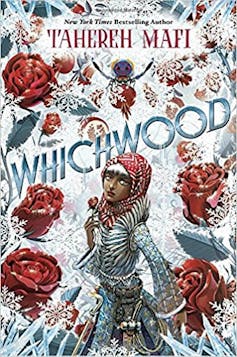
Whichwood by Tahera Mafi

Whichwood.
(Dutton Books)

Whichwood (Dutton Books for Young Readers) is the second book set in the Furthermore world. The first was a middle grade book but this one has been aged up to Young Adult. Inspired by Mafi’s Persian culture, it tells the story of Laylee, a 15-year-old with so much tragedy in her life, tasked with washing bodies of the dead to prepare them for the afterlife.

The ConversationI’ve long been a fan of Mafi’s — her writing is lush and her worlds are so imaginative. Moreover, it always feels like everything she writes is a metaphor for something larger. But because her plots are so gripping, it’s not always apparent what exactly. Notwithstanding that themes in literature vary depending on individual reader’s responses to content, what do your readers find are the takeaways in this one?

Heba Elsherief, PhD Candidate, Language and Literacies Education, University of Toronto

This article was originally published on The Conversation. Read the original article.

Unknown's avatar

An idiosyncratic survey of great Canadian reads


File 20171214 27562 mit28f.jpg?ixlib=rb 1.1
What better season than winter to curl up with some interesting books? University of Toronto English professor Randy Boyagoda recommends five from his personal Canadian literature library.
(João Silas/Unsplash)

Randy Boyagoda, University of Toronto

Editor’s note: What better season than winter to curl up with some interesting books? We went to ScotiaBank Giller Prize nominated novelist and University of Toronto English professor Randy Boyagoda and asked him to recommend to us five of his personal book choices from the shelves of Canadian literature.

Randy Boyagoda published his first novel, Governor of the Northern Province, in 2006, followed by Beggar’s Feast in 2011. His new novel, Original Prin, is forthcoming in 2018.

Randy surveyed his shelves and here are his five idiosyncratic choices:

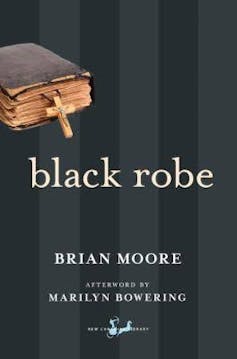
Black Robe

Written by Brian Moore (1985)

Black Robe is historical fiction set in the 17th century Canada — meaning New France. It’s a novel involving an encounter that French Jesuit missionaries have with members of the Algonquin, Huron and Iroquois.

What I found so remarkable about the book is its potential contribution to our contemporary conversation about truth and reconciliation especially given that it was written in a very different cultural moment. I think the book is honest and bracing and has a certain spaciousness of vision that attempts to provide full and meaningful lives for every character.

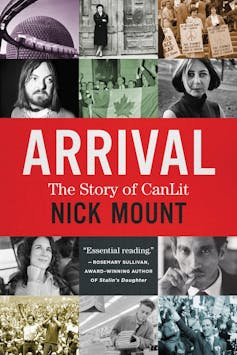
Arrival: The Story of CanLit

Written by Nick Mount (2017)

Arrival (Anansi) by Nick Mount, has rightly been generating a great deal of both public and critical attention this fall.

Nick’s book is an ambitious and readable effort to tell the story of how we went from being a nation without a literature to a literature without a nation. The book explores a specific interest in what we might think of as the “boom time” of Canadian literature, from the late ‘60s through the early ‘70s.

What I found especially interesting about Nick’s book is his willingness to offer a series of evaluations, ratings even, of various Canadian novels. We live in a culture that sometimes shies away from making aesthetic and critical judgements. I think what’s great in Arrival is that Nick invites us to read these books and disagree with him.

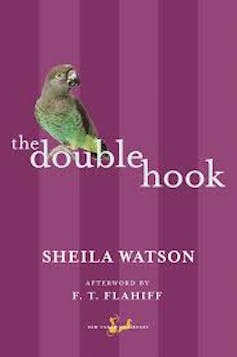
The Great Canadian Novel

I’m trying to decide whether I disagree with Nick when he says in his book, Arrival, that The Double Hook by Sheila Watson (1959), which is a slim and complex mid-century Canadian novel, is the Great Canadian Novel.

That’s a big claim. If I were going to make the same claim, I’d assign that honour to Solomon Gursky Was Here by Mordecai Richler (1989).

I’ve decided to read Double Hook in the coming weeks and decide if I agree with Nick or not.

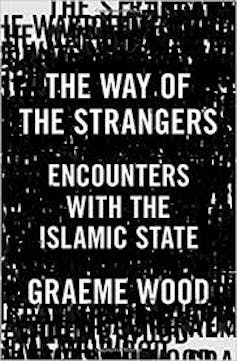
The Way of the Strangers

Written by Graeme Wood (2017)

The Way of the Strangers is a work of striking literary journalism. It recently won the Governor General’s Award for non-fiction. Wood is best known for his cover story in The Atlantic two years ago, on ISIS. His book is a series of first-person essays, travelogues and analyses of radical Islam.

Wood goes to various Middle Eastern states, places in the U.S., and elsewhere. There’s wide, personal contact with people in various forms of radicalization and he’s also subjected to various attempts at conversion—reading about that is also fascinating.

Wood’s care, seriousness and persuasive criticisms of radical Islam shows that understanding his subject only in political terms or as a misrepresentation of Islam does not do justice to the complex and riven reality of contemporary Islam. As an outsider who’s interested in these matters, I found the book really engaging.

A news-minded audience would find a book like this of real interest. It really does give you a sense of the inner lives of people who have committed to a radical interpretation of Islam and are trying to live that out in the world around them.

The quality of writing and reporting is excellent and the book is especially timely now for obvious reasons. I think that it will be an important historical document in global affairs thirty years from now.

Fifteen Canadian Poets x 2

Edited by Gary Geddes (1978)

My last pick involves a family tradition.

Most Sunday nights, the Boyagoda family gathers in our own library and we each read a poem. I choose my Sunday poem out of Fifteen Canadian Poets x 2 edited by Gary Geddes. It came out in 1978. The book was a very important and timely anthologizing of new Canadian poetry and also at that point, established poets. There are people in there ranging from E.J. Pratt to then emerging voices, such as Michael Ondaatje and Margaret Atwood.

The ConversationWhen I pick a writer out of that anthology, the writers I go for most often are poets like P.K. Page, Raymond Souster and Alden Nowlan. Here are people who write beautiful, arresting, strange and funny poetry. Reading from it is a double break: it’s a nice break, frankly, from the usual suspects, and it also introduces my American-born wife, who has a PhD in twentieth century American and Caribbean poetry, I add, and our American children, to all the wonders of Canadian literature, poetically.

Randy Boyagoda, Professor of English, University of Toronto

This article was originally published on The Conversation. Read the original article.

Unknown's avatar

For baby’s brain to benefit, read the right books at the right time


File 20171209 27683 qnf9a7.jpg?ixlib=rb 1.1
How can you maximize reading’s rewards for baby?
aijiro/Shutterstock.com

Lisa S. Scott, University of Florida

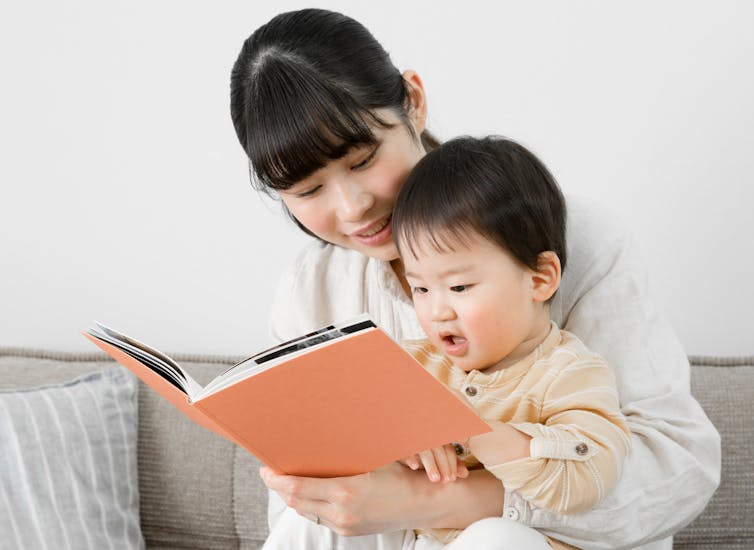
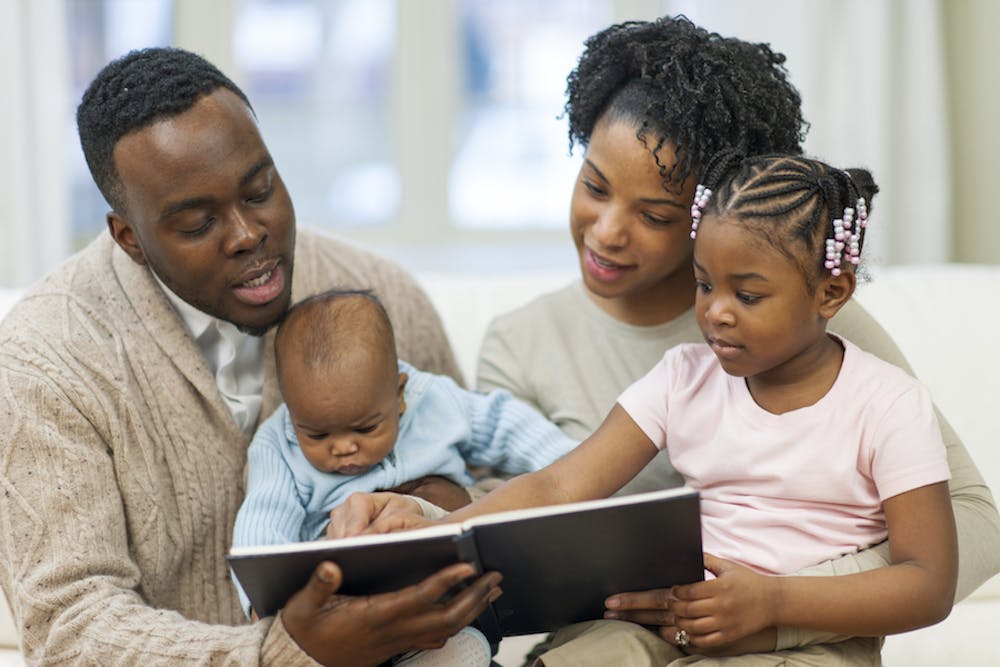
Parents often receive books at pediatric checkups via programs like Reach Out and Read and hear from a variety of health professionals and educators that reading to their kids is critical for supporting development.

The pro-reading message is getting through to parents, who recognize that it’s an important habit. A summary report by Child Trends, for instance, suggests 55 percent of three- to five-year-old children were read to every day in 2007. According to the U.S. Department of Education, 83 percent of three- to five-year-old children were read to three or more times per week by a family member in 2012.

What this ever-present advice to read with infants doesn’t necessarily make clear, though, is that what’s on the pages may be just as important as the book-reading experience itself. Are all books created equal when it comes to early shared-book reading? Does it matter what you pick to read? And are the best books for babies different than the best books for toddlers?

In order to guide parents on how to create a high-quality book-reading experience for their infants, my psychology research lab has conducted a series of baby learning studies. One of our goals is to better understand the extent to which shared book reading is important for brain and behavioral development.

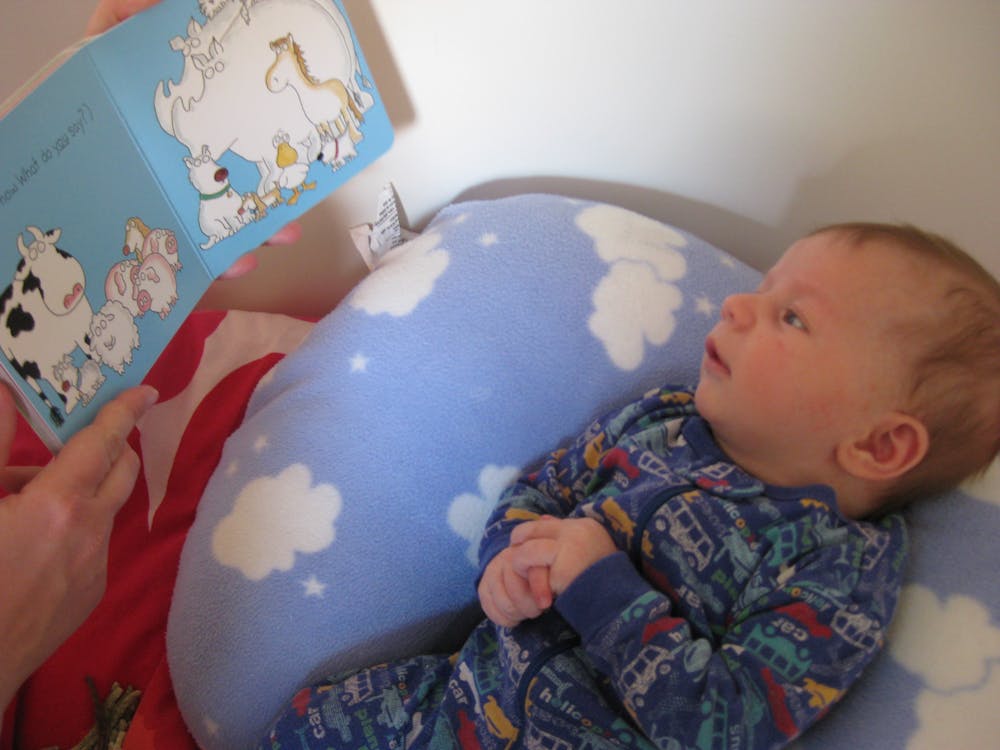
Even the littlest listeners can enjoy having a book read to them.
Maggie Villiger, CC BY-ND

What’s on baby’s bookshelf

Researchers see clear benefits of shared book reading for child development. Shared book reading with young children is good for language and cognitive development, increasing vocabulary and pre-reading skills and honing conceptual development.

Shared book reading also likely enhances the quality of the parent-infant relationship by encouraging reciprocal interactions – the back-and-forth dance between parents and infants. Certainly not least of all, it gives infants and parents a consistent daily time to cuddle.

Recent research has found that both the quality and quantity of shared book reading in infancy predicted later childhood vocabulary, reading skills and name writing ability. In other words, the more books parents read, and the more time they’d spent reading, the greater the developmental benefits in their 4-year-old children.

This important finding is one of the first to measure the benefit of shared book reading starting early in infancy. But there’s still more to figure out about whether some books might naturally lead to higher-quality interactions and increased learning.

EEG caps let researchers record infant volunteers’ brain activity.
Matthew Lester, CC BY-ND

Babies and books in the lab

In our investigations, my colleagues and I followed infants across the second six months of life. We’ve found that when parents showed babies books with faces or objects that were individually named, they learn more, generalize what they learn to new situations and show more specialized brain responses. This is in contrast to books with no labels or books with the same generic label under each image in the book. Early learning in infancy was also associated with benefits four years later in childhood.

Our most recent addition to this series of studies was funded by the National Science Foundation and just published in the journal Child Development. Here’s what we did.

First, we brought six-month-old infants into our lab, where we could see how much attention they paid to story characters they’d never seen before. We used electroencephalography (EEG) to measure their brain responses. Infants wear a cap-like net of 128 sensors that let us record the electricity naturally emitted from the scalp as the brain works. We measured these neural responses while infants looked at and paid attention to pictures on a computer screen. These brain measurements can tell us about what infants know and whether they can tell the difference between the characters we show them.

We also tracked the infants’ gaze using eye-tracking technology to see what parts of the characters they focused on and how long they paid attention.

Eye-tracking setups let researchers monitor what infants are paying attention to.
Matthew Lester, CC BY-ND

The data we collected at this first visit to our lab served as a baseline. We wanted to compare their initial measurements with future measurements we’d take, after we sent them home with storybooks featuring these same characters.

Example of pages from a named character book researchers showed to baby volunteers.
Lisa Scott

We divided up our volunteers into three groups. One group of parents read their infants storybooks that contained six individually named characters that they’d never seen before. Another group were given the same storybooks but instead of individually naming the characters, a generic and made-up label was used to refer to all the characters (such as “Hitchel”). Finally, we had a third comparison group of infants whose parents didn’t read them anything special for the study.

After three months passed, the families returned to our lab so we could again measure the infants’ attention to our storybook characters. It turned out that only those who received books with individually labeled characters showed enhanced attention compared to their earlier visit. And the brain activity of babies who learned individual labels also showed that they could distinguish between different individual characters. We didn’t see these effects for infants in the comparison group or for infants who received books with generic labels.

These findings suggest that very young infants are able to use labels to learn about the world around them and that shared book reading is an effective tool for supporting development in the first year of life.

Best book choices vary as kids grow.
Penn State, CC BY-NC-ND

Tailoring book picks for maximum effect

So what do our results from the lab mean for parents who want to maximize the benefits of storytime?

Not all books are created equal. The books that parents should read to six- and nine-month-olds will likely be different than those they read to two-year-olds, which will likely be different than those appropriate for four-year-olds who are getting ready to read on their own. In other words, to reap the benefits of shared book reading during infancy, we need to be reading our little ones the right books at the right time.

For infants, finding books that name different characters may lead to higher-quality shared book reading experiences and result in the learning and brain development benefits we find in our studies. All infants are unique, so parents should try to find books that interest their baby.

My own daughter loved the “Pat the Bunny” books, as well as stories about animals, like “Dear Zoo.” If names weren’t in the book, we simply made them up.

The ConversationIt’s possible that books that include named characters simply increase the amount of parent talking. We know that talking to babies is important for their development. So parents of infants: Add shared book reading to your daily routines and name the characters in the books you read. Talk to your babies early and often to guide them through their amazing new world – and let storytime help.

Lisa S. Scott, Associate Professor in Psychology, University of Florida

This article was originally published on The Conversation. Read the original article.

Unknown's avatar

Australian tech start-ups stand to lose out in proposed copyright reforms


File 20171208 11318 io08ds.jpg?ixlib=rb 1.1
YouTube and Facebook are protected from Australia’s copyright laws, since they already operate within the US safe harbours.
from www.shutterstock.com

Kylie Pappalardo, Queensland University of Technology

The Australian government quietly introduced the Copyright Amendment (Service Providers) Bill 2017 to the Senate on Wednesday. If enacted, the bill will extend the scope of Australia’s copyright safe harbours – very slightly.

Safe harbours protect internet hosts and platform providers from monetary liability for copyright-infringing content posted or shared by their users. For example, if you post the latest Thor movie to YouTube, YouTube won’t be responsible for copyright infringement if it takes down that video. In Australia, we only extend this protection to internet services providers, not general purpose websites.

This matters because technology firms rely on limits to liability to manage their risks. Companies like Facebook or YouTube, which host millions of pieces of user content, would face serious difficulty starting in Australia because our laws on copyright infringement are so strict.


Read more: It’s time to future-proof Australia’s copyright laws for the 21st century


The new legislation is a step in the right direction, but it doesn’t go far enough to create an environment that fosters Australian innovation.

Excluding platforms from safe harbours doesn’t make much difference to tech giants like YouTube and Facebook, since they already operate within the United States safe harbours. But it does discourage Australian tech start-ups from the chance to experiment in a reduced-risk environment.

It is not just the US with broader copyright safe harbours than Australia – jurisdictions around the world extend safe harbours to internet intermediaries beyond ISPs.

The European Union, for example, provides that member states must ensure that any hosting provider will not be liable for unlawful content posted by users, provided it acts quickly to remove the content upon notice.

Low hanging fruit

It’s the second time this year that the government has amended Australia’s copyright laws. The first was the Copyright Amendment (Disability Access and Other Measures) Act 2017, passed in June, which provides greater access to copyrighted content for people with disabilities such as vision impairment.

Both measures are low hanging fruit for the government. They improve our existing copyright law, but they don’t advance us far from the status quo.

The government is staying well clear of the more contentious, though far more impactful, potential reforms to the Copyright Act recommended by bodies such as the Australian Law Reform Commission and the Productivity Commission.

What are the copyright safe harbours?

The copyright safe harbours came about as a result of the US Digital Millennium Copyright Act (DMCA) in 1998. The DMCA represented an important bargain struck between the established content industry, such as big film and TV studios, and the burgeoning tech industry.

The content industry got a “notice-and-takedown” regime that required online service providers to remove material that infringes copyright. In exchange, the tech industry got copyright safe harbours.

Under this system, the service provider must quickly and efficiently remove infringing content if they are informed about it by the copyright owner. This notice-and-takedown scheme has become fundamentally important to the way the internet works today.

Why are Australian safe harbours so limited?

In the 2005 Australia-US Free Trade Agreement, Australia agreed to adopt these provisions into Australian domestic law.

But in enacting the copyright safe harbours, parliament made a drafting error. Instead of extending protection to “service providers”, as the US law does, we gave protection to “carriage service providers” as defined in the Telecommunications Act.

Essentially, Australia only gave protection to internet service providers like Telstra, Optus and TPG, and not to platform providers like Whirlpool, RedBubble, YouTube or Facebook. For more than a decade, this has been a critical difference between US and Australian copyright law.

What’s changing?

The new bill appears to close the glaring gap between US and Australian law by replacing the term “carriage service provider” with, simply, “service provider”.

But the bill defines “service provider” to be either a carriage service provider; an organisation assisting persons with a disability; or a body administering a library, archives, cultural institution or educational institution.

It does not extend the safe harbour to those who actually need it the most – Australia’s internet hosts and platform providers.

This is a seriously missed opportunity for Australian innovators. There is a real risk for businesses, both large and small, who want to provide online spaces for people to communicate.


Read more: Australian copyright laws have questionable benefits


Our copyright laws potentially make hosts liable for much of the copyright infringing content that users may upload or share. But it can be prohibitively expensive and time-consuming to pre-screen all content before it is uploaded.

This is one of the reasons why many large social media platforms don’t base their operations in countries like Australia, and why Australian businesses are at a major competitive disadvantage compared to those in other countries.

Why not extend the safe harbour to Australian innovators?

There were early indications that the Australian government intended to extend the safe harbours to all online service providers, but these amendments were shelved.

Entertainment industry groups have been lobbying hard in recent years for measures that go beyond the notice-and-takedown scheme that the safe harbours provide. They want what they call notice-and-staydown: proactive filtering of unlicensed copyright content by service providers.


Read more: Explainer: what is ‘fair dealing’ and when can you copy without permission?


At the same time, copyright owners want higher payments. They use the term “value gap” to describe what they see as the difference between sites like Spotify that pay hefty licence fees to make content available to users and sites like YouTube that do not.

Content owners are no longer happy with the bargain they struck in the DMCA – they allege that sites like YouTube are gaming the system of the safe harbours.

There is a false equivalency at work here. Spotify is not a site for user-generated content and does not purport to be; sites like YouTube have everyday users at their core. If we believe that creative discourse, engagement and play matters then there is a cogent reason why sites that facilitate user-generated content might need some legal latitude.

However, this debate misses a more fundamental point. Limited safe harbour provisions hurt Australian creators and innovators. They increase the risk to innovators developing new technology products and platforms.

The ConversationAnd, importantly, Australian creators miss the opportunity to exercise greater control over their creations through notice-and-takedown mechanisms that are easy to use and far cheaper than copyright lawsuits.

Kylie Pappalardo, Lecturer, School of Law, Queensland University of Technology

This article was originally published on The Conversation. Read the original article.

Unknown's avatar

Goodreads Choice Awards 2017


The link below is to an article that takes a look at the winners in the Goodreads Choice Awards for 2017.

For more visit:
https://www.goodreads.com/choiceawards/best-books-2017

Unknown's avatar

International study shows many Australian children are still struggling with reading


File 20171205 22982 1s7m2am.jpg?ixlib=rb 1.1
Despite improvements in the national average score, the 2016 PIRLS report confirms many Australian children continue to be left behind.
wavebreakmedia/Shutterstock

Jennifer Buckingham, Macquarie University

The results of an international study into the reading skills of Year 4 students offer reason for optimism for Australian children.

The latest Progress in International Reading Literacy Study (PIRLS) shows that, on average, reading achievement among the Australian children surveyed improved significantly between 2011 and 2016. This is excellent news.

However, there is still cause for concern about Australia’s literacy standards, with the PIRLS study showing that a substantial minority of Year 4 children continue to struggle with reading.

The Progress in International Reading Literacy Study

The study has been running internationally every five years since 2001. In 2016, it encompassed 50 countries. Australia has participated twice – in 2011 and 2016.

In 2016, 6,341 Year 4 students from 286 Australian primary schools took part.

The study focuses on two reading abilities – reading for literary experience, and reading to acquire and use information. Students were given texts to read and then asked to answer multiple choice and short answer questions. Example questions include:

How does the author show you what the red hen is like?

According to the article, what is one way people have made the sea more dangerous for turtles?

Signs of improvement

The results show Australia’s national average performance improved significantly between 2011 and 2016.

With the exception of the Australian Capital Territory, all the states and territories showed an improvement. The improvement was statistically significant in Western Australia, Queensland and Victoria.


https://datawrapper.dwcdn.net/Hl6Ly/8/


The increase in the average scores in many states is due to better performance by students at the top end of the scale. This is a wonderful outcome for those students.

While the 2016 PIRLS results run counter to the trends in the most recent PISA and TIMSS international assessments, the improvement isn’t entirely unexpected. Recent years of NAPLAN results have shown an improvement in average reading scores for Year 3 students.

It’s difficult to draw any firm conclusions about the reason for this improvement. But it’s fair to say there has been a strong focus on early reading since NAPLAN was introduced in 2008, putting a spotlight on progress in this vital area of education.

Indeed, the PIRLS results provide a very useful external validation of the reliability of the NAPLAN results, as they report similar trends in reading over similar periods.

The sting in the (long) tail

The improvement in average scores is certainly heartening. But the PIRLS data also show that when it comes to reading, many Australian children are still being left behind.

In 2016, 6% of Australian children did not meet the minimum (low) international benchmark for Year 4 reading. This is only a very small improvement from the 2011 figure of 7%.


https://datawrapper.dwcdn.net/FXkgd/5/


Some 19% of Australian children in Year 4 did not achieve the intermediate benchmark. To reach this benchmark, children needed to be able to:

  • make straightforward inferences about things that weren’t explicitly stated in the text
  • work out the order of events in the text, and/or
  • find and repeat explicitly stated actions, events, and feelings in the text.

PIRLS describes this benchmark as a “challenging but reasonable expectation”.

In 2011, 24% of Australian children in Year 4 did not achieve this benchmark. So the figure of 19% in 2016 is an improvement. But it’s a poor outcome compared to other countries, including England, Canada, and the United States.

Despite some improvements, Australia still has the second-largest proportion of children below the international intermediate benchmark for reading among English-speaking countries.


https://datawrapper.dwcdn.net/Fc49e/4/


Early identification of low progress readers

Research shows that children who struggle with reading in their early school years are unlikely to ever catch up. These children need to be identified and supported much earlier.

This year, an expert advisory panel to the Australian government (which I chaired) reviewed early years reading assessments used around Australia. We found a deficit in the assessment of phonics skills in particular.

Phonics is the ability to translate the letters on a page into their respective sounds. It’s a skill that children (and adults) need so they can read and learn unfamiliar words. Without the ability to read and learn unfamiliar words, children have little hope of reading for meaning.

Based on the outcome of the review, the panel recommended (as have other experts) a trial and possible subsequent adoption of the Year 1 Phonics Check that has been statutory in English primary schools since 2012.

In this context, it’s worth noting that England’s results in PIRLS 2016 – the first group to take the Year 1 Phonics Check – are the best they have ever been.


https://datawrapper.dwcdn.net/H14jX/3/


The Phonics Check is a quick (five-minute) and effective reading check. It’s neither stressful for children nor onerous for teachers, and provides immediate information to teachers about this fundamental aspect of literacy development.

The expert panel acknowledged that phonics is one of five essential components, alongside:

But of those five components, there is good reason to believe that phonics isn’t being taught effectively or assessed consistently in many schools. For the children most at-risk of reading failure – including those from socioeconomically or language impoverished homes, and children with learning difficulties – the consequences are devastating.

Literacy on the agenda

This Friday, Australia’s federal, state and territory education ministers will come together for the year’s final Education Council meeting. Their agenda will include the need for a national Year 1 literacy and numeracy check.

The PIRLS statistics will be thoroughly dissected and debated. But it’s important to remember these statistics represent real children.

What does it mean to be unable to read? One mother of a Year 6 child poignantly described it as “not being able read the jokes in Christmas crackers around the table at Christmas lunch”.

The ConversationThis should not be the case for a child who has spent seven years at school. A literacy check in Year 1 could prevent many Australian children from falling through the cracks, and facing a lifetime of disadvantage.

Jennifer Buckingham, Senior Research Fellow, The Centre for Independent Studies; Associate Investigator, ARC Centre of Excellence in Cognition and its Disorders, Macquarie University

This article was originally published on The Conversation. Read the original article.

Unknown's avatar

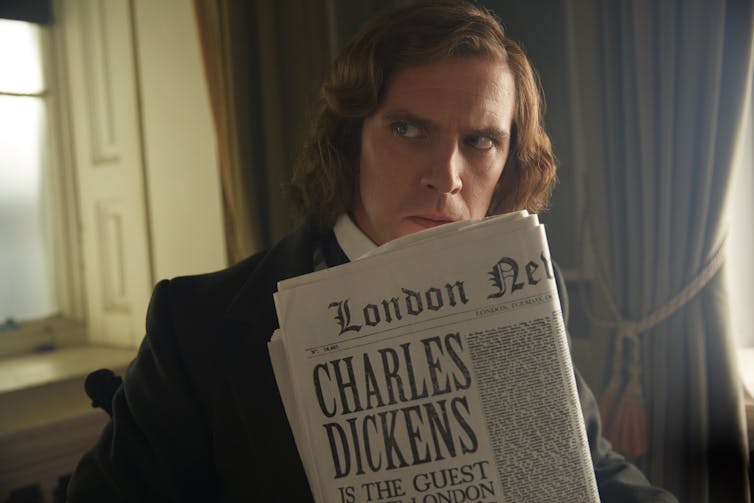
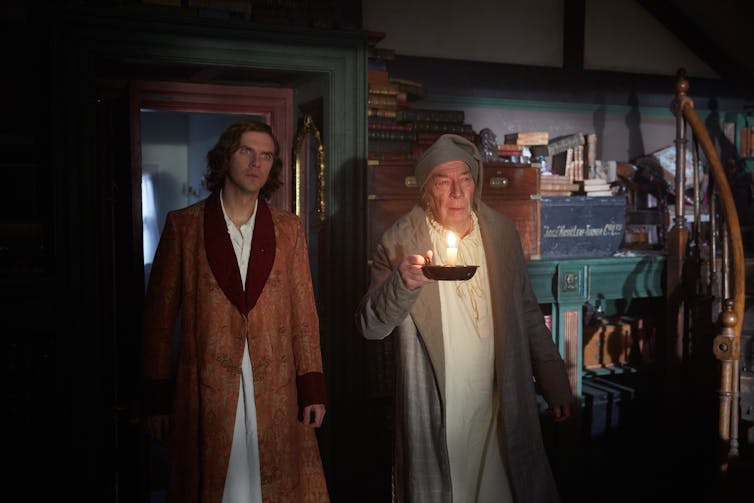
Charles Dickens: The man who invented Christmas plagiarized Jesus


File 20171207 11318 p5aocn.jpg?ixlib=rb 1.1
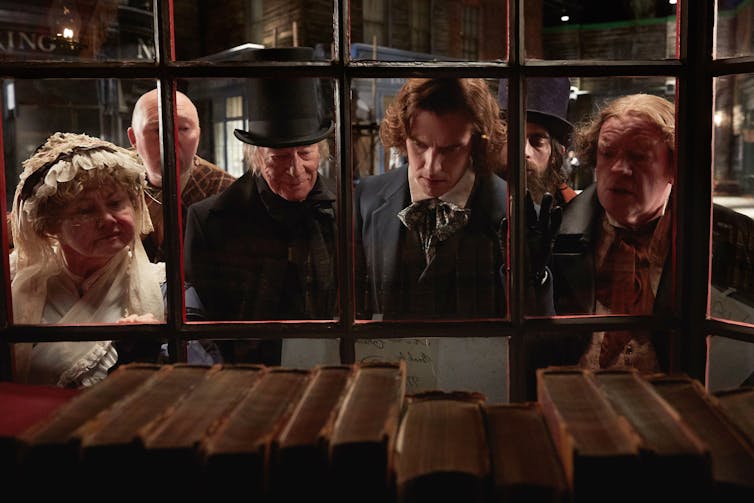
A Christmas Carol can be seen as a mirror to biblical parables.
(Bleeker Street Media/Elevation Pictures)

Matthew Robert Anderson, Concordia University

Everyone knows the story of Scrooge, a man so miserly his name has become synonymous with penny-pinching meanness. Scrooge’s conversion from miser to benefactor has been told and retold since Charles Dickens first wrote A Christmas Carol in the fall and winter of 1843. Ebenezer is a wonderful character, so richly portrayed and fascinating he’s echoed in stories from The Grinch to It’s a Wonderful Life.

Pop culture has embraced both Dickens and his tale. With this season’s The Man Who Invented Christmas, Hollywood has done it again.

But who was Scrooge before he was, well, Christopher Plummer? The inspiration for the crotchety Christmas-hater may have been those who put Dickens’ own father into debtor’s prison and were responsible for young Charles working in a shoe-blacking factory.

Some Dickens scholars believe the author’s 1843 visit to sooty Manchester, or to “the black streets of London,” (as he described them in a letter to a friend) influenced him. It may be that the fable was a moral reminder from Dickens to himself, as he teetered on financial ruin. This is the theory proposed in the book by Les Standiford on which this year’s movie is based.

Did Dickens in fact invent Christmas, as we know it? Hollywood may think so, but others, like David Parker in his Christmas and Charles Dickens vehemently disagree.

Many believe Dicken’s version of Christmas isn’t religious.
Bleeker Street Media/Elevation Pictures)

Whatever your opinion, the prevailing wisdom is that A Christmas Carol isn’t particularly religious. As a professor of biblical studies at Concordia University and also a Lutheran minister, I have a different reading.

It’s true that the celebration of the season which Scrooge discovers has much more to do with generosity, family gatherings and large cooked birds, than the Nativity. But maybe those seeking explicit scriptural references in Dickens’ story are underestimating the Victorian novelist’s skill — and his audacity. Perhaps A Christmas Carol contains an alternative to the Bible rather than a simple borrowing from it. And perhaps that’s the point.

Jesus was a master story-teller

Jesus, by all accounts another master story-teller, told a parable that, stripped of Dickens’ English waistcoats, ledgers, fog and shutters, could almost be a mirror to A Christmas Carol:

“There once was a rich man. A poor man named Lazarus lived at his gate, with nothing to eat. Lazarus died and was carried by the angels to Abraham’s side. The rich man also died.”

There follows, in Jesus’ tale, an exchange between the rich man, who is in torment, and Abraham, who acts as the guardian of paradise. It’s hard not to think of the innocent Lazarus as a precursor to Tiny Tim.

First the rich man asks for his own relief from hell. When that’s denied, he pleads: “I beg you, send Lazarus to my father’s house. I have five brothers. Let him warn them so they don’t come to this place of agony.” Abraham replies: “They have Moses and the prophets. They must listen to them.”

“No, Father Abraham!” cries the rich man, “But if someone from the dead goes to them, they will change” (Luke 16:19-31).

One can almost hear the chains of Morley’s ghost rattling. What would have happened if Father Abraham had said yes? Something very like a first-century version of A Christmas Carol.

Let’s not forget that the people of our western English-speaking past, especially artists and writers, were imbued with Biblical references and ideas. As Northrop Frye, among others, has argued, they lived and created in a world shaped by the rhythms, narratives, images and conceptions (or misconceptions) of the King James Bible.

Was Dickens familiar with Christian scriptures? All evidence points to the fact that he was more acquainted than most. Despite an antipathy to organized religion, from 1846 to 1849 Dickens wrote a short biography of Jesus for his children, titled The Life of our Lord.

He forbade that his small retelling of Jesus’ life should be published, until not only he, but also his children, had died. The “Parable of Lazarus and the Rich Man” was one of eight stories of Jesus that Dickens chose to include in that volume. But in his story of Scrooge, Dickens was too much of a writer to leave Jesus’ parable as is, and his age too suspicious of scripture to leave it “unbroken.”

A Christmas Carol unites the deliciously horrific sensibility of the Gothic movement with the powerfully simple narrative style, joined to moral concern, typical of parables.

A Christmas Carol may be heavily influenced by The Parable of Lazarus.

Was Dickens perhaps dozing off some Sunday while the rector droned on about Lazarus, until he wakened with a start dreaming of Scrooge? We will never know. But it’s an intriguing possibility.

Happy endings for the rich

Surprisingly, the Sunday after Dickens was buried in Westminster Abbey, Dean Arthur Penrhyn Stanley, preaching on exactly this text, spoke of Dickens as the “parabler” of his age. Stanley said that “By [Dickens] that veil was rent asunder which parts the various classes of society. Through his genius the rich man…was made to see and feel the presence of Lazarus at his gate.”

I would go further: Dickens took the parable, and then retold and changed it, so that the rich man gets a second chance. As a privileged societal figure who had gone through financial difficulties and who cared about the poor himself, Dickens freely adapted Jesus to come up with a story that’s ultimately more about love than judgement.

When confronted with Marley’s spectre, Scrooge, unnerved but unrepentant, addresses the apparition: “You may be an undigested bit of beef, a blot of mustard, a crumb of cheese, a fragment of underdone potato.”

The perceptive reader (or viewer) of A Christmas Carol can point a finger at Marley’s ghost and add: “Or maybe you’re an ironic but hope-filled riff on Jesus, by a famous nineteenth-century author who wanted to write his own story of redemption.”

The ConversationDickens not only invented this Christmas genre, but imagined a happy ending for himself in it. He penned an enduring story about the second chance even a rich person can receive, if haunted by persistent-enough ghosts.

The Man Who Invented Christmas (Bleeker Street Media/Elevation Pictures)

Matthew Robert Anderson, Affiliate Professor, Theological Studies, Loyola College for Diversity & Sustainability, Concordia University

This article was originally published on The Conversation. Read the original article.

Unknown's avatar

South Africa has a reading crisis: why, and what can be done about it


File 20171208 11331 1dvz4ia.jpg?ixlib=rb 1.1
Children must be taught to read for comprehension, not just to parrot what they hear.
Shutterstock

Peter Rule, Stellenbosch University

The teacher stands in front of her Grade 4 class. The 45 nine and ten-year olds are crammed together at desks, huddled over shared books. Some are sitting on the floor. “Now, class, read from the top of the page,” the teacher says. They comply in a slow sing-song drawl.

“Stop,” says the teacher. “It is not ‘Wed-nes-day’, you say it ‘Wensday’. It is what?” “Wensday,” the class responds. “Again.” “Wensday.” The reading resumes, the teacher frequently stopping to correct her pupils’ pronunciation.

Sometimes the children read aloud in groups. At other times, she calls a child to come to the front and read aloud. Not once does she ask a question about what the story means. Nor do the children discuss or write about what they have read.

This is the typical approach to how teaching is read in most South African primary schools. Reading is largely understood as an oral performance. In our research, my colleague Sandra Land and I describe this as “oratorical reading”. The emphasis is on reading aloud, fluency, accuracy and correct pronunciation. There is very little emphasis on reading comprehension and actually making sense of the written word. If you were to stop the children and ask them what the story is about, many would look at you blankly.

Pronunciation, accuracy and fluency are important in reading. But they have no value without comprehension. Countries around the world are paying increasing attention to reading comprehension, as indicated by improving results in international literacy tests.

The problem with the oratorical reading approach is evident in the results of the recent Progress in International Reading Literacy Study (PIRLS) 2016 tests. PIRLS’ purpose is to assess reading comprehension and to monitor trends in literacy at five-year intervals. Countries participate voluntarily. Learners write the test in the language of learning and teaching used in Grades 1 to 3 in their school.

The tests revealed that 78% of grade 4 pupils in South Africa fell below the lowest level on the PIRLS scale: meaning, in effect, that they cannot understanding what they’re reading. There was some improvement from learners writing in Sesotho, isiNdebele, Xitsonga, Tshivenda and Sepedi from a very low base in 2011, but no overall improvement in South Africa’s performance.

South Africa was last out of 50 countries surveyed. It came in just behind Egypt and Morocco. The Russian Federation came first followed by Singapore, Hong Kong and Ireland.

South Africa also performs poorly in the Southern and Eastern Africa Consortium for Monitoring Educational Quality surveys. These show that in reading and numeracy South Africa is lagging behind much poorer African countries such as Tanzania and Zimbabwe.

Our research on reading at a rural primary school and an adult centre in the KwaZulu-Natal province showed that the oratorical approach to teaching reading was dominant both in the school and adult classes. Both adults and children were not learning to read with meaning, and so were not achieving literacy despite attending classes. Our findings confirmed the results of other South African studies.

So where does the problem lie and how can South Africa address it?

Rote learning

To understand the situation more deeply we interviewed teachers and explored how they had learned to read. We found that they teach as they were taught; an indication that oratorical reading is a cycle repeated from one generation to the next unless it is broken.

Teachers told us they assessed pupils’ reading ability just as they were assessed by their teachers: by having them read aloud. Marks were allocated for individual oral reading performance. This was based not on understanding the passage, but on fluency and pronunciation. There was no written assessment of reading comprehension. Reading was about memorising sounds and decoding words.

This suggests that the problem in learners’ performance lies in how reading is taught in most South African schools. Learners are taught to read aloud and pronounce correctly, but not to understand the written word and make sense of it for themselves. Another consequence is that the pleasure and joy of discovery and meaning-making are divorced from school reading.

New approaches

There are no quick fixes, but there certainly are slow and sure ones. The first is to get reading education in pre-service teacher training right. A report by JET Education Services, an independent non-profit organisation that works to improve education, found that universities don’t give enough attention to reading pedagogies.

Universities need to teach reading as a process that involves decoding and understanding text in its context, not just as a “mechanical skill”. Countries such as India, with its great diversity and disadvantaged populations, have begun to address the need for this change in how reading is taught.

The second “fix” concerns in-service training. The Department of Basic Education has a crucial role to play here. Teachers need to reflect on how they themselves were taught to read and to understand the shortcomings of an oratorical approach.

Effective reading instruction, such as the “Read to Learn” and “scaffolding” approaches, should be modelled and reinforced. In a multi-lingual African context, strategies that allow teachers and learners to use all their language resources in making meaning should be encouraged. Teachers’ own reading is vital, and can be developed through book clubs and reading groups.

The school environment is also crucial. According to the PIRLS interviews with principals, 62% of South African primary schools do not have school libraries. These are central to promoting a reading culture, as work in New Zealand shows.

Schools should develop strategies such as Drop Everything and Read slots in the timetable, library corners in classrooms, prizes for reading a target number of books and writing about them, and creating learners’ reading clubs. Learners can draw on local oral traditions by gathering stories from elders, writing them and reading them to others.

Finally, the home environment is vital. The PIRLS research showed that children with parents who read, and especially read to them, do better at reading. Our research found that children with parents who attended adult classes were highly motivated to learn and read with their parents. Even if parents are illiterate, older siblings can read to younger children. The Family Literacy Project, a non-profit organisation in KwaZulu-Natal, has done excellent work in creating literate family and community environments in deep rural areas, showing what is possible.

The ConversationDeveloping families as reading assets rather than viewing them as deficits can help to strengthen schools and build a reading nation.

Peter Rule, Associate Professor, Centre for Higher and Adult Education, Stellenbosch University

This article was originally published on The Conversation. Read the original article.
Unknown's avatar

Literature has long been sounding the alarm about sexual violence in Hollywood


File 20171204 22986 1u52pg0.jpg?ixlib=rb 1.1
For decades, novels have implored readers to look beyond the glamour and riches.
Trey Ratcliff, CC BY-NC-SA

Billy J. Stratton, University of Denver

Recent revelations about Hollywood’s culture of sexual harassment and violence might come as a surprise to many Americans.

After all, Los Angeles – home of what some call “the American image factory” – has long carried the allure of glamour, wealth and fame. Beckoned by the iconic Hollywood sign in the Santa Monica Mountains, the city, in many regards, has become synonymous with the American dream.

People familiar with the industry might tell a more complicated story. That group includes writers who have made Los Angeles and Hollywood their subjects: F. Scott Fitzgerald, Nathanael West, Evelyn Waugh, Gore Vidal, Joan Didion and Bret Easton Ellis. All have chronicled a seamier side of the California dream, a world awash with drugs, sex, violence and abuses of power.

So how did so many of us miss this? Could it have anything to do with the fact Americans who read literature recently fell to a three-decade low?

At the very least, the works of these writers show that literature can play an imperative role in our culture – that novels can give us a means of facing difficult issues that many of us may prefer to ignore, or don’t want to believe exist.

A city of vampires

In numerous novels since the 1930s, Hollywood’s underbelly has been revealed as a landscape rife with peril. And while many writers have explored the vice, corruption and disillusionment at the heart of Hollywood, few have gone deeper into the shadows than Nathanael West and Bret Easton Ellis.

West’s 1939 novel, “The Day of the Locust,” depicts the struggles of Faye Greener, an aspiring actress in pursuit of Hollywood fame and fortune – a dream laid waste by the men she meets along the way, who see her as little more than an object of their desires.

Pursued and stalked throughout the novel, Greener eventually turns to prostitution to make a living. Worse yet, to the novel’s protagonist, she’s the subject of disturbing rape fantasies. The story ends in a frenzy of violence at a Hollywood movie premiere – West’s ultimate denunciation of a culture and a city.

More than 40 years later, the characters of Bret Easton Ellis’s fiction are subjected to almost unspeakable forms of trauma and sexualized violence in “Less Than Zero” and “The Informers.”

In “Less Than Zero,” billboards emblazoned with the words “Disappear Here” loom over the landscape. They’re apparently advertisements that invite a blissful escape to some far-off resort. But for the novel’s main character, they become a menacing warning of a city that devours all who live and work there.

The novel’s main character, Clay, descends into the darkest recesses of this world – a journey to, as he puts it, “see the worst.” And indeed he does.

Although some of the horrors he witnesses occur in back alleys and basement clubs, the most shocking forms of violence – rapes, the viewing of snuff films – transpire at ritzy hotels and posh homes in Malibu, Bel Air and Beverly Hills. We are led to the realization that self-destruction, dehumanization and violence are built into the very fabric of Hollywood’s being.

Meanwhile, the young characters in “The Informers” live in a Los Angeles “swarming with vampires.” Many turn to alcohol, drugs and sex to cope with the depravity of lives that are hopelessly artificial and empty. For some, entertainment has devolved into watching videos of women being terrorized by “near-naked masked men.”

At one point, a main character, the son of a movie executive, meets a struggling actor.

“Unless you’re willing to do some pretty awful things,” the actor says, “it’s hard getting a job in this town.” The reader can almost anticipate the despairing surrender conveyed in his final words: “and I’m willing.”

Other novels, set outside of Hollywood, speak to what can be seen only as an epidemic of sexual violence: Toni Morrison’s “Beloved,” Louise Erdrich’s “The Round House,” Frances Washburn’s “Elsie’s Business,” Jessica Knoll’s “Luckiest Girl Alive.”

All hold a mirror to a world that many would prefer not to face.

Literature as ‘equipment for living’

Novels cannot replace the immediacy of the testimony offered by the courageous women who, in recent months, have publicly shared their experiences with sexual violence.

Nonetheless, such works can function as a vital corroboration for the heartbreaking truths that these women have revealed. They give a voice to perspectives that are marginalized and silenced.

The critic Kenneth Burke viewed literature not just as a form of amusement or intellectual reward, but as a way of addressing social problems by teaching, as he put it, “strategies for dealing with situations.”

An implicit element of all literature, he argued, is that it gives readers opportunities to imagine how they’d respond to complicated scenarios, from “what is promising” to “what is menacing” – all from the relative safety of our homes. He observed that readers can gain what he called an “equipment for living,” a means to help navigate our daily experiences.

Recent studies reveal other benefits. One found that deep reading makes us “smarter and nicer,” while another showed that reading literary fiction (as opposed to mass market fiction) helps people develop a greater sense of empathy.

The ConversationIn a country whose people have become increasingly isolated from and suspicious of one another, it’s something we need now more than ever.

Billy J. Stratton, Professor of American Literature and Culture; Native American Studies, University of Denver

This article was originally published on The Conversation. Read the original article.