
The link below is to an article that looks at Libre Office 6.0 and the ability to make Epub files with it.
For more visit:
https://the-digital-reader.com/2018/02/01/libre-office-6-0-now-makes-epub-ebooks/

The link below is to an article that looks at Libre Office 6.0 and the ability to make Epub files with it.
For more visit:
https://the-digital-reader.com/2018/02/01/libre-office-6-0-now-makes-epub-ebooks/
The link below is to an article that looks at how to borrow ebooks from the Kindle Owner’s Lending Library.
For more visit:
https://the-digital-reader.com/2018/02/02/borrow-book-kindle-owners-lending-library/
Chris Larson, University of Colorado
When “Fifty Shades Freed” opens in theaters on Feb. 9, fans will no doubt flock to see bad boy Christian Grey (played by Jamie Dornan) bested by naughty-but-nice heroine Anastasia Steele (Dakota Johnson).
A less racy but equally thrilling story, my research shows, is how romance writers are getting ahead in the digital era.
While economists and labor scholars wring their hands over the rise of the precarious gig economy, these freelancers have developed innovative business practices over the past four decades that have set them up for success in the digital era.
Although few have reached the flabbergasting success of “Fifty Shades” author E.L. James, a former fan fiction writer whose net worth now totals more than US$58 million, I found that the median income for romance authors has tripled in the e-book era. And more and more are earning a six-figure income.
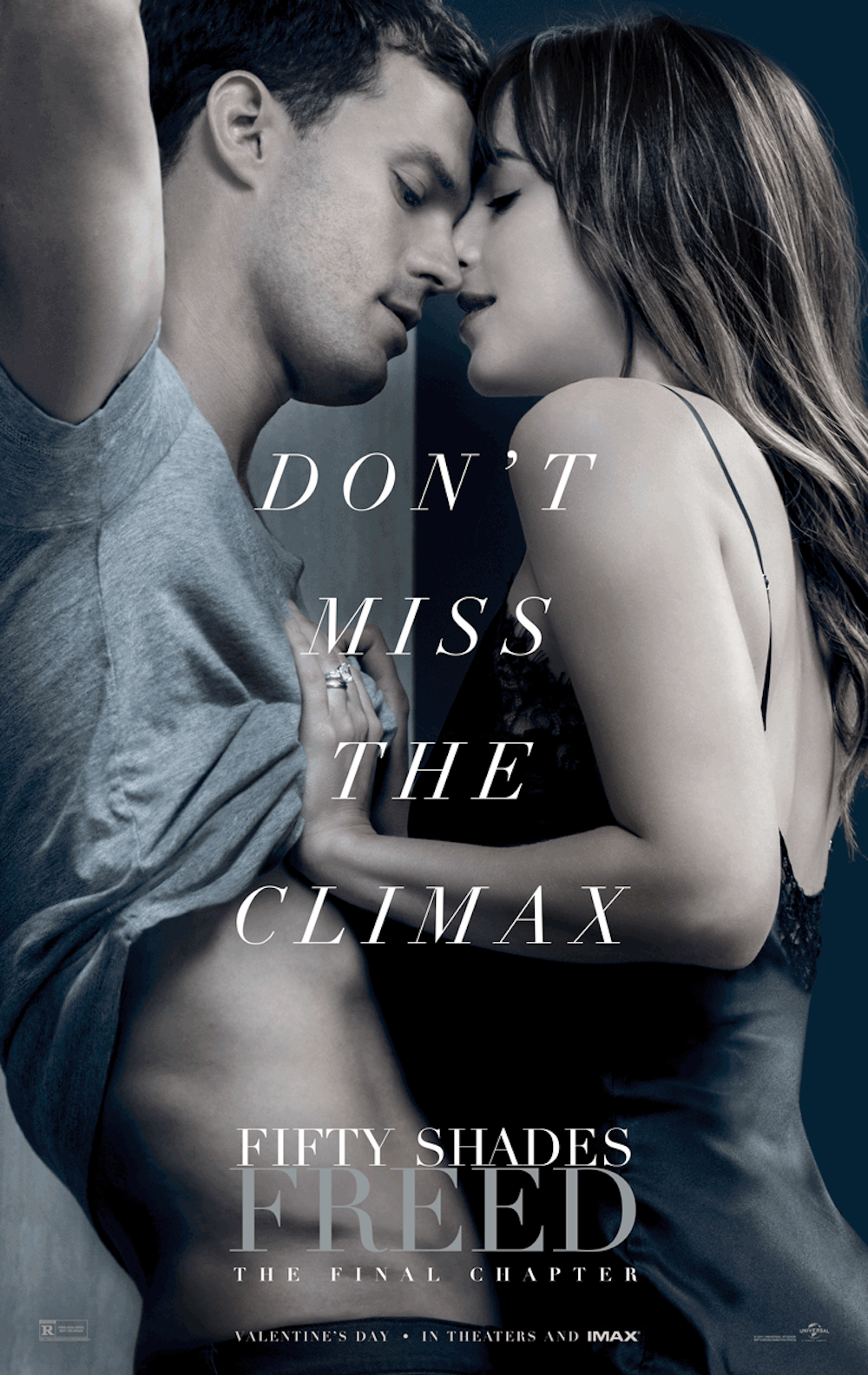
This uptick occurred as other types of writing became less profitable. During the same period, a survey of 1,095 Authors Guild members found that their median income from writing fell by at least 30 percent.
Clearly, romance writers know something that other authors, and many struggling freelancers, don’t. The one-third of American workers toiling in the gig economy can learn a few lessons from them.
Some 57.3 million U.S. workers freelanced in 2016, according to research firm Edelman Intelligence. Economists Lawrence Katz and Alan Krueger found that 15.8 percent of Americans work in “alternative work arrangements” (freelancing, contracting, temp work, etc.), up from 9.1 percent in 1995. In fact, they found that all net job growth in the U.S. from 2005 to 2015 came from such work.
If you’re not already freelancing, you may be soon. Edelman predicts that given current growth rates, more than half of the American workforce will freelance by 2027.
Experts don’t agree whether this trend is good or bad for workers and the economy. The freedom is nice but freelancing often pays poorly.
While few writers are getting rich off books alone – I found that half of romance writers earned less than $10,000 in 2014 – more and more are able to support themselves. While only 6 percent earned at least $100,000 in 2008, more than 15 percent did in 2014. Most gig workers, including authors, patch together a living through multiple occupations.
You might speculate that romance writers’ succeed because smut sells. But that doesn’t explain why romance writers are faring better than their peers with digital sales.
Instead, three surprising practices set romance writers up for success: They welcome newcomers, they share competitive information, and they ask advice from newbies.
https://datawrapper.dwcdn.net/r0E4m/7/
Faced with rejection and ridicule from other writing groups in the 1970s, romance writers formed their own professional association, Romance Writers of America. It now has some 10,000 members.
From its start in 1980, the group embraced newcomers. Unlike other major author groups – and most professional associations – this one welcomes anyone seriously pursuing a career in the field. Newcomers may join once they’ve completed an unpublished romance manuscript.
//platform.twitter.com/widgets.js
Similar groups, including the Authors Guild, Mystery Writers of America and Science Fiction and Fantasy Writers of America, limit full membership to published authors. In some cases, these groups only accept members whose work has been published by specific companies or who have earned a specified amount of money in royalties.
Unlike Romance Writers of America, most traditional guilds, unions and trade associations only admit established professionals.
These barriers to entry can stultify and stagnate industries, especially with today’s transitions. Network theorists Walter Powell and Jason Owen-Smith, for instance, found that the most successful biotech companies in the 1990s formed strategic alliances with newcomers.
This phenomenon isn’t new.
Political science professor John Padgett of the University of Chicago found that upper-crust families in Renaissance Florence who allied themselves with new, upstart families prospered, while members of the elite who shunned newcomers lost influence over time.
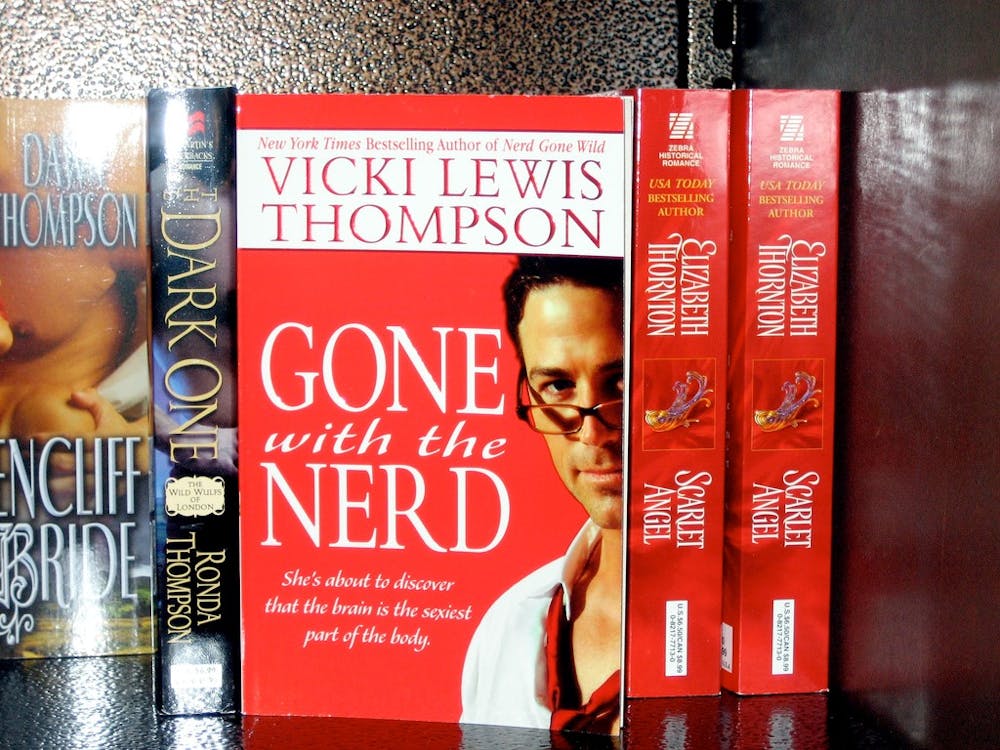
A strong tradition of mentoring pervades the culture. Romance Writers of America runs contests for unpublished writers and schedules conference tracks for newbies, and informal Yahoo loops, Google groups and meetups help newcomers get oriented.
These networks proved valuable when new digital self-publishing avenues opened up 10 years ago.
Numerous self-published romance writers, including blockbuster author Bella Andre, known for her Sullivan family books, shared their mistakes and successes with other writers as they tried new digital methods of publishing and promotion. Marie Force, best-selling author of the Gansett Island series, started an online self-publishing advice group. Some authors, like Brenna Aubrey, whose romantic stories are about geek culture, even declare their earnings.
This radical transparency that propelled many romance writers to digital success can work in other fields.
For instance, openly sharing local rates and best practices could prove valuable to workers who find jobs through sites like Upwork and TaskRabbit, many of whom set their own prices.
The openness of romance writers has yielded an unexpected side benefit: access to innovators. The most successful romance writers I studied were experienced authors who asked newcomers for advice.
Using social network analysis tools, my colleague Elspeth Ready and I looked at advice patterns among 4,200 romance writers I surveyed.
While you might presume that novice writers would seek advice more often than anyone else, this wasn’t the case. While 72 percent of unpublished authors in my survey sought advice in the past year, a subset of established writers asked advice just as often. These were established authors interested in shifting to self-publishing.
Many of them did, successfully. I found that, by 2014, traditionally published authors who had added self-publishing to their portfolio out-earned all other romance writers: These so-called “hybrid” authors had a median income of $87,000.
Of course, most writers weren’t earning nearly that much: Half earned less than $10,000 a year. And my survey relied on self-reported income, which can be imprecise. Still, as a whole, these writers saw their prospects improve as the digital gig economy grew and other authors were earning less than before.
 At a time when work is becoming increasingly solitary, it only seems fitting that a model involving mutual care and support comes from the freelancers who earn a living from imagining successful connections.
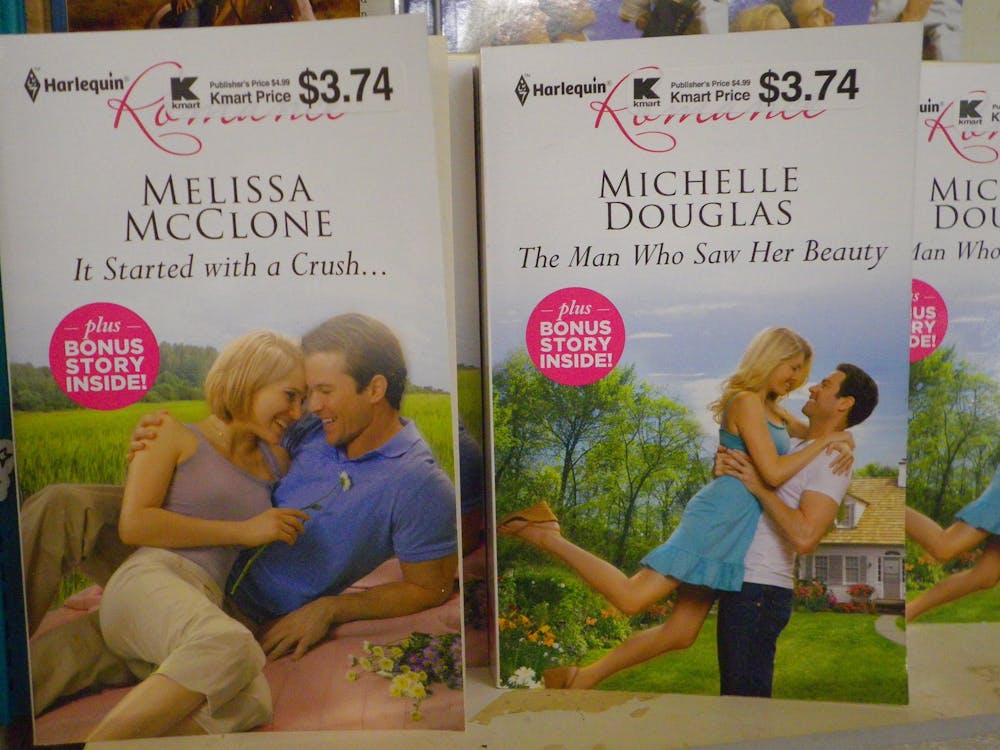
Chris Larson, Assistant Professor of Journalism, University of Colorado
This article was originally published on The Conversation. Read the original article.
The links below are to articles that report on Scrib bringing back unlimited ebook reading and audiobooks.
For more visit:
– http://blog.the-ebook-reader.com/2018/02/06/scribd-brings-back-unlimited-ebook-and-audiobook-plans/
– https://ebookevangelist.com/2018/02/06/scribd-brings-back-unlimited-reading-sort-of/
– https://goodereader.com/blog/e-book-news/scribd-reintroduces-unlimited-audiobooks-and-ebooks
Philip W. Scher, University of Oregon
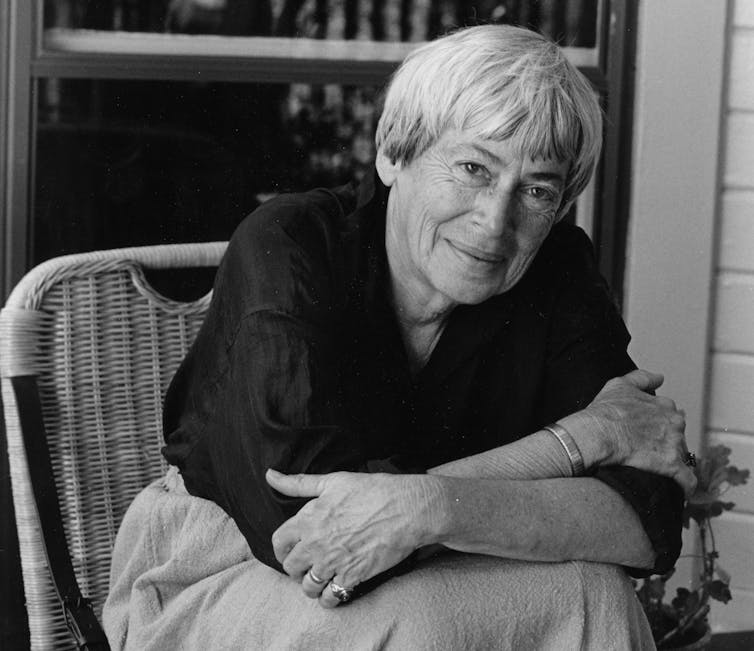
On Jan. 22, Ursula K. Le Guin died in Portland, Oregon. Since then, much has been written memorializing her genre-defying body of work, her contributions to feminism and science fiction, and her broad interest in human society and government.
But as a cultural anthropologist, I’ve always been interested in the relationship between Le Guin and her father, anthropologist Alfred Louis Kroeber.
Kroeber’s ideas – which had a profound influence on his daughter’s writing – stemmed from an important development in the discipline of anthropology, one that viewed human culture as something that wasn’t ingrained, and had to be taught and learned.
Kroeber’s mentor was a Columbia University anthropologist named Franz Boas. Kroeber was especially drawn to Boas’ newly developed notion of culture and the broader theory of “cultural relativism.”
Cultural relativism emerged in the late 19th century as an alternative to theories like social Darwinism that linked culture to evolution. These theories – widely accepted at the time – tended to rank human societies on an evolutionary scale. Not surprisingly, Western European civilizations were seen as the pinnacle of culture.
But Boas proposed something radically different. He insisted, based on field-based research, that humans live in stunningly diverse cultural worlds shaped by language, which creates institutions, aesthetics, and ideas and notions of right and wrong. He further argued that each society needs to reproduce its culture through teaching and learning.
Kroeber described culture as “superorganic.” According to this idea, the “civilizational achievements” of any group of people weren’t passed down biologically and could only be taught. If we’re deprived of our access to human instruction – books, guides, teachers – we won’t know how to build buildings, write poetry and compose music. Humans, Kroeber knew, are hardwired to create, but there’s no such thing as a “hereditary memory” that allows a people to intuitively know how to recreate specific things.
He told the hypothetical story of a baby taken from France and brought to China. She would, he argued, grow up speaking perfect Chinese and would know no French. His point – as obvious as it might seem today – was that there was no hereditary quality to “Frenchness” that would carry over, genetically, to a child born of French parents.
The idea of culture as “superorganic” says that people are organic lifeforms, like ants or dogs or fish, but culture is “added” to them, which influences their behaviors. Ants and dogs don’t need culture to reproduce their behaviors: Raised in isolation from their own kind, they still do the things they were programmed to do.
Kroeber, along with many of his fellow anthropologists, were drawn to these ideas because they depicted culture as universally human, but not universally rankable, racially predetermined or inherently more or less sophisticated.
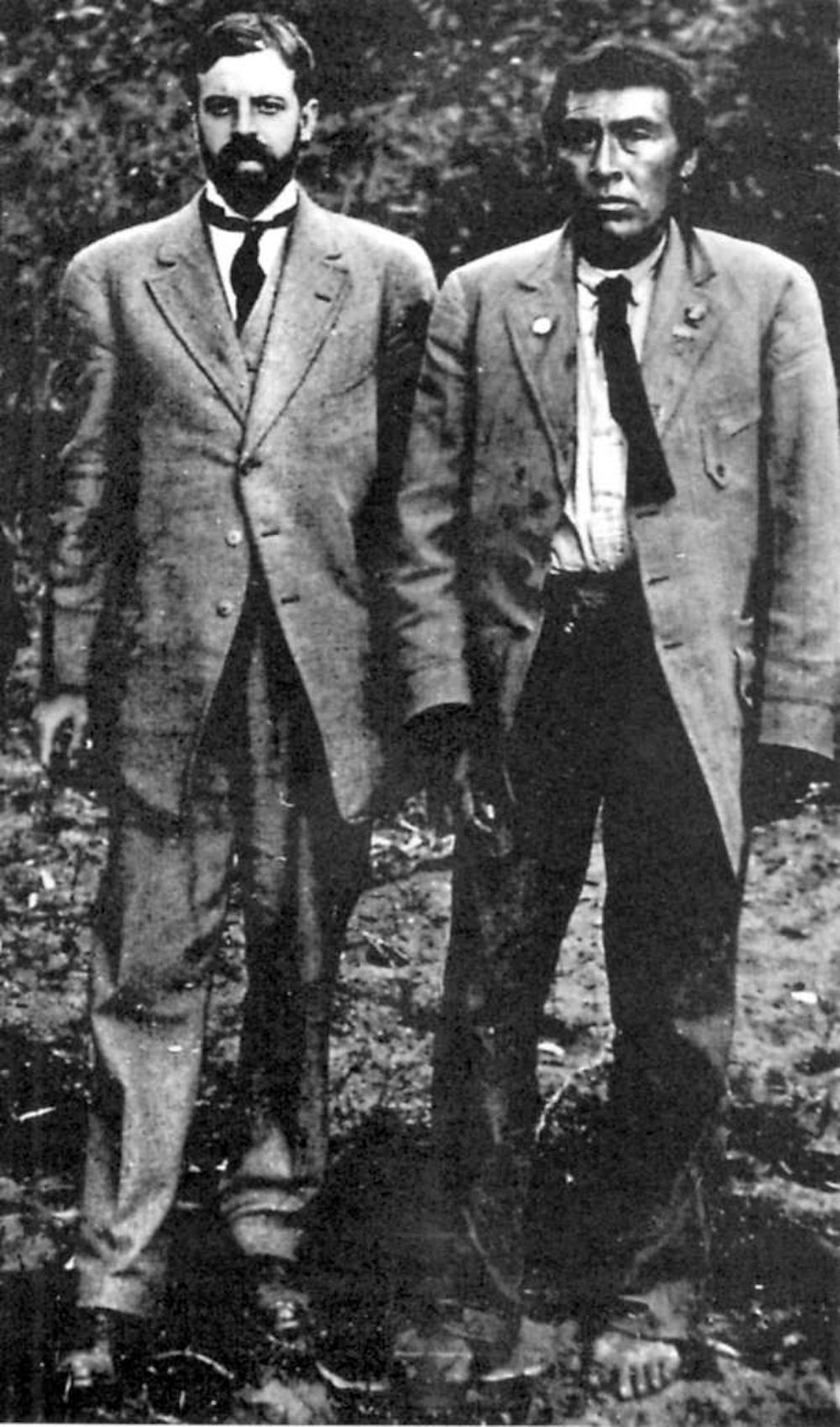
For example, it was common in the late 19th century for expansionists to justify their imperialist ambitions with “scientific” evidence that Native Americans were culturally inferior. They pointed to language: Native Americans, they claimed, didn’t have words for the passage of time. For this reason, they couldn’t grasp a complex concept like history.
But Kroeber and his colleagues pointed out the Hopi did have a complex way of reckoning time. They just didn’t count things, like days or hours, using the same terminology they might use to count men, or rocks or clouds, which are objects you can actually see. To the Hopi, a day is in no way like a rock. So it shouldn’t be treated as such.
Kroeber’s peers included African-American anthropologist and folklorist Zora Neale Hurston, Jewish linguist and anthropologist Edward Sapir, and female scholars such as Ruth Benedict and Margaret Mead. All grappled with discrimination and cultural denigration.
In response, Kroeber was compelled to write that history, geography and the environment influenced cultural differences. No culture simply emerged naturally.
“Social agencies are so tremendously influential on every one of us,” he wrote, “that it is very difficult to find any test that, if distinctive racial faculties were inborn, would fairly reveal the degree to which they are inborn.”
The only reason, according to Kroeber, that someone would insist on innate differences between human population would be to preserve the status quo: societies built on racial discrimination and colonialism.
Throughout her childhood in Berkeley, California, Ursula Le Guin was exposed to these ideas. They very likely formed the basis of her worldview.
Her writing was never simply about creating a magical or strange world. It was about crafting a laboratory to play with identities – race, ethnicity, gender, sexuality or class – in a way that forced readers to think about how cultural prejudice colored their views of other people.
“Entertaining them is all well and good,” she told New York Times reporter John Wray, “but does it make them think?”
With Le Guin, it always struck me that the point of her imagined universes was precisely to show that nothing human was universal, and that what was “alien” was only a matter of perspective.
In “The Left Hand of Darkness,” Le Guin tackled the idea of gender norms. Here, I think she was channeling Margaret Mead’s breakthrough study “Sex and Temperament in Three Primitive Societies,” in which Mead was able to demonstrate that gender norms can significantly diverge across cultures.
In “The Word for World Is Forest,” Le Guin didn’t simply pen an environmentalist fable about the destruction of a forest and its people. She built off the insights of indigenous scholars like Vine Deloria Jr., who put native peoples’ voices and worldviews at the center of the indigenous rights movement. In “The Dispossessed,” she contrasts the different political systems of two neighboring worlds not to argue which one is best, per se, but to show that in order for these systems to exist, humans need to actively participate in and reproduce them.
In 2015 I planned an anthropology class that I hoped could use speculative fiction and fantasy as a way to understand basic concepts in cultural anthropology. The class was built around Kroeber and Le Guin.
A mutual friend gave my syllabus to Le Guin, and she wrote to me. She suggested some other works to include and seemed to appreciate the concept of the course.
 “I think my pa would be tickled,” she wrote, “that he and I have ended up on the same [syallabus].”
Philip W. Scher, Professor of Anthropology and Folkore, University of Oregon
This article was originally published on The Conversation. Read the original article.

Johan Lidberg, Monash University
Australia is a world leader in passing the most amendments to existing and new anti-terror and security laws in the liberal democratic world. Since September 11, 2001, it has passed 54 laws.
The latest suggested addition is the Turnbull government’s crackdown on foreign interference. The bill has been heavily criticised by Australian Lawyers for Human Rights, Human Rights Watch, and major media organisations for being too heavy-handed and far-reaching in the limits it would place on freedom of expression and several other civil liberties.
The government’s own intelligence watchdog, the Inspector-General of Intelligence and Security, argues the bill is so widely worded that its own staff could break the law for handling documents they need to access to do their job.
A case…
View original post 821 more words
The link below is to an article that reports on the launch of Bookport, an ebook subscription service in the Czech Republic.
For more visit:
https://publishingperspectives.com/2018/01/czech-publisher-grada-opens-bookport-ebook-subscription/

Sunanda Creagh, The Conversation
From the initial avalanche of mail triggered by Germaine Greer’s book The Female Eunuch grew a collection of 50 years of letters, emails, faxes, telegrams and newsletters from academics, schoolchildren, radicals and housewives all over the world. They’re now stored in 120 grey, acid-free boxes at the University of Melbourne Archives.
Lachlan Glanville, assistant archivist of the Germaine Greer Archive at the University of Melbourne has pored over these letters.
In the latest episode of Essays On Air, the audio version of our Friday essay series, Glanville says the collection offers a powerful, often amusing, sometimes perplexing glimpse into the lives of the people affected by her work, as well as the many faces of Greer herself – academic, feminist, provocateur, confidant.
Today, Conversation editor Lucinda Beaman reads Glanville’s fascinating essay, Reading Germaine Greer’s mail.
Find us and subscribe in Apple Podcasts, in Pocket Casts or wherever you get your podcasts.
Snow by David Szesztay
Dreaming in the Non-Dream by Chris Forsyth and the Solar Motel Band
Germaine Greer interview (1999)
TV Heaven 1971 – Germaine Greer – The Female Eunuch
 This episode was edited by Jenni Henderson. Illustration by Marcella Cheng.
Sunanda Creagh, Head of Digital Storytelling, The Conversation
This article was originally published on The Conversation. Read the original article.
The link below is to an article that takes a look at 14 apps that help make ebooks.
For more visit:
https://the-digital-reader.com/2017/04/06/8-apps-help-make-ebooks/
The link below is to an article reflecting on state censorship by Antony Beevor, who had his book ‘Stalingrad’ banned by the Ukraine government.
For more visit:
https://www.theguardian.com/books/2018/feb/03/antony-beevor-stalingrad-ukraine-ban-censorship

 At the BookShelf

You must be logged in to post a comment.