Unknown's avatar

Should writers only write what they know? What I learned from my research


File 20180829 86153 6o6iww.jpg?ixlib=rb 1.1
Writing is an act of imagination – but when it comes to imagining other people’s lives, it pays to do your research.
Shutterstock.com

Tresa LeClerc, RMIT University

As an academic in creative writing, I attend a lot of literary events. One question I can always count on being asked is, “can I write characters of other backgrounds?” This has been a growing concern since Lionel Shriver at the 2016 Brisbane Writers Festival unleashed a tirade against what she called “censorship” in writing – referring to criticism of her book The Mandibles.

The recent ABC Q&A episode, Stranger Than Fiction, in conjunction with the Melbourne Writers’ Festival, showed the many sides of the “write what you know” debate. Dr Michael Mohammed Ahmad and Sofie Laguna argued that space should be given for marginalised groups to represent themselves. Maxine Beneba Clarke pointedly discussed when appropriation can be harmful, as was the case with Shriver’s representation of Latino and African American characters. Meanwhile, Trent Dalton argued that appropriation leads to a good story, which also takes empathy and care.


Read more:
Lionel Shriver and the responsibilities of fiction writers


But is taking a walk in other people’s shoes as effective a writing method as many authors believe? To find out, I wrote a novel manuscript about four people from refugee backgrounds. I did it in three drafts, each using a different method. I wrote the first draft while observing and empathising as a volunteer working with asylum seekers, and refugees. I wrote the second after interviews with 15 people from refugee backgrounds (some of whom I had observed) and the third after getting feedback from three of the interviewees about the manuscript. Then I compared the drafts. The findings were very interesting.

Even before I had begun my interviews I had an interesting instance regarding the fallibility of my own memory. I had kept a journal while I was volunteering. As I sat down to write the novel manuscript, I remembered an instance when a young girl, who happened to be in the same public place, approached the group with an origami boat she had made. She offered it to one of the volunteers. It was beautiful – with crayon scribbles on the outside and three different sized paper cranes lined up in a row inside. In my memory, the attendees recoiled and anxiously said, “we hate boats!”

I began to write this into the manuscript, when I remembered the journal. I opened it to the day of the event, and found I’d recorded that the attendees were not anxious at all, nor did they recoil. They were joking and laughing about how they hated boats.

One criticism of stories about refugees is that they tend to show refugees as helpless victims. Was I drawing on existing stereotypes when I remembered this instance? Another possibility is that my feelings about the highly emotional issue of asylum were influencing how I interpreted the conversation.


Read more:
Indigenous cultural appropriation: what not to do


In another instance, I wrote a character that was verbally and racially attacked on public transport. White Australians came to her rescue. I was thinking that was what I would have done. But after interviews with refugees, I discovered the instances of racial abuse were much more violent and common than I imagined.

One interviewee related a story about an apple being thrown at her head; another described how her foot was stomped on. Contrary to what I had written, they expressed resilience and stood up for themselves.

I once watched author Claire G. Coleman in a debate by ABC RN on the topic of writing what you know. She said that cultural appropriation is dangerous because authors can only “contextualise that character as a version of themselves”. That certainly seemed to be the case. I was just writing what I thought would happen, from my perspective – not theirs.

So how can we get it right? It’s difficult to tell unless we ask someone from the background we are writing about. In getting feedback, I found that there were parts of my manuscript that resonated with interviewees’ experiences, such as an instance where an Iranian man was told that he was lucky to be here by a white Australian. The character didn’t feel that he was lucky. One interviewee said that he felt the same, that he had everything in Iran, including education and a job, and now he had to start over.

But even gaining feedback from interviewees did not mean they were going to tell me everything I “got wrong”. Those giving feedback wanted to give advice, not to criticise.

Walking in someone’s shoes is useful as a method, but it is far from perfect. As writers, we need to ask ourselves whether we are contributing to the oppression of a group of people by speaking for them, and reinforcing racist stereotypes as we do so.

This is not to say that we should never write characters from other backgrounds, just that we need to accept criticism by people who identify from that group rather than dismissing it as censorship (as Beneba Clarke also pointed out on Q&A), and to be more realistic about our own limitations as empathetic writers.The Conversation

Tresa LeClerc, Sessional teacher, RMIT University

This article is republished from The Conversation under a Creative Commons license. Read the original article.
Unknown's avatar

Peter Corris’s Cliff Hardy was a genuine Australian international crime fiction hero


File 20180830 195316 ih5fs6.jpg?ixlib=rb 1.1
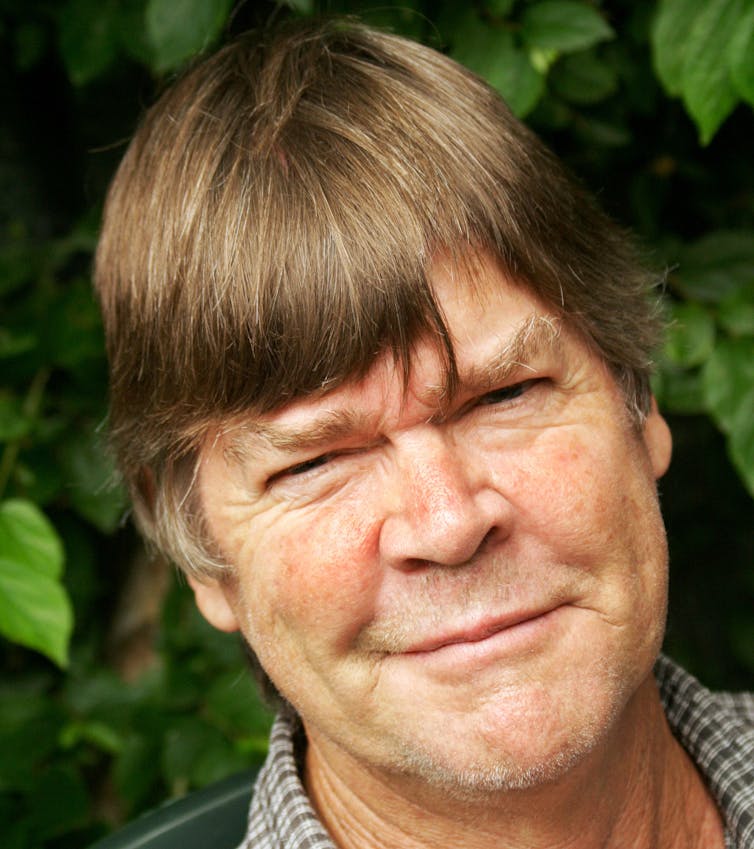
Australian crime fiction author Peter Corris published 102 novels in lifetimes, including 52 centred on the private investigator Cliff Hardy.
ALLEN AND UNWIN

Stephen Knight, University of Melbourne

Peter Corris, author of the Cliff Hardy novels, died on August 30 2018 age 76.


By the 1970s Australian crime fiction was drifting.

The genre had a long history, back to convict days, when it dealt with unfair convictions and brutal treatments, most famously in Marcus Clarke’s For The Term Of His Natural Life (1870-2).

Being mostly published in London for the curiosity of the English, Australian crime fiction had followed European models, with some major success like Fergus Hume’s best-selling The Mystery of a Hansom Cab (1886), and the fine series of mysteries by post-second world war women writers June Wright, “Margot Neville”, Pat Flower and Pat Carlon. But local crime fiction was little publicised and had little impact – the books mostly came into libraries from London.

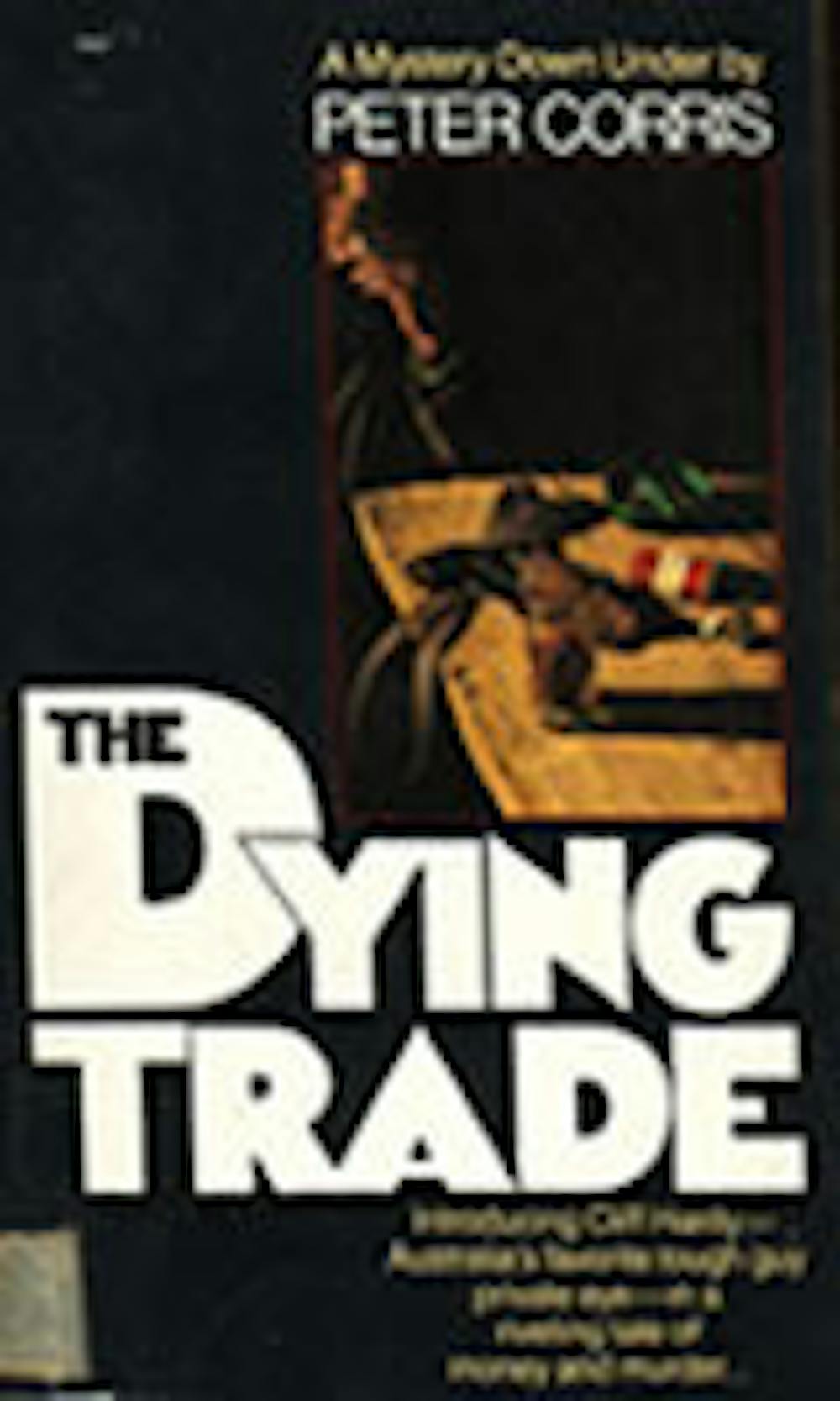
The Drying Trade introduced Peter Corris’s private investigator Cliff Hardy.
Goodreads

English business interests and Australian outlooks changed as time passed. Then, in 1980, Peter Corris’s The Dying Trade appeared, a crime story which was American in its influence, fully Australian in its spirit, and both published and strongly publicised at home. The novel was the first adventure of a tough, but at times sensitive, Sydney private eye with the wonderfully Australian name, offering both geography and morality, Cliff Hardy.

Published by McGraw Hill, an American company newly adventuring across the Pacific, the novel was very well-received, and started Peter’s own long series of fiction. But it was also the first of a very striking renaissance (or even naissance) in Australian crime writing.


Read more:
Friday essay: from convicts to contemporary convictions – 200 years of Australian crime fiction


Within ten years Marele Day, Jennifer Rowe and Claire McNab were producing their sharp variants of female detection. By 2000, major producers such as Gabrielle Lord, Gary Disher and the powerful Peter Temple, who also recently passed away, were busily at work. They were asserting that the mysteries of death and detection could have a distinctly local and socially investigative thrust – as Corris had established back in 1980. No wonder he has been named the “godfather” of modern Australian crime fiction.


Goodreads

Cliff Hardy, though tough in his name, could be subtle. He lives in Sydney’s Glebe; he spent some time at the nearby university; and is capable of close analysis when needed. His cases are brought to him, but, as the masters of the form Dashiell Hammett and Raymond Chandler established, the P.I. will also assert his privacy and make decisions about where his investigation is going to go.

As with the major American writers, the primary themes of the Cliff Hardy novels are urban corruption. But Corris’s expertise in Pacific history informs his writing. The first novel involves Pacific misdoings. White Meat (1981) makes Indigenous themes important – which return strongly in The Black Prince (1998).


Read more:
True Blue? Crime fiction and Australia


Like the detective of Peter Temple, who no doubt learnt both confidence and approach from Corris, Hardy shows how local malpractice can have its roots in national and international criminal evil.

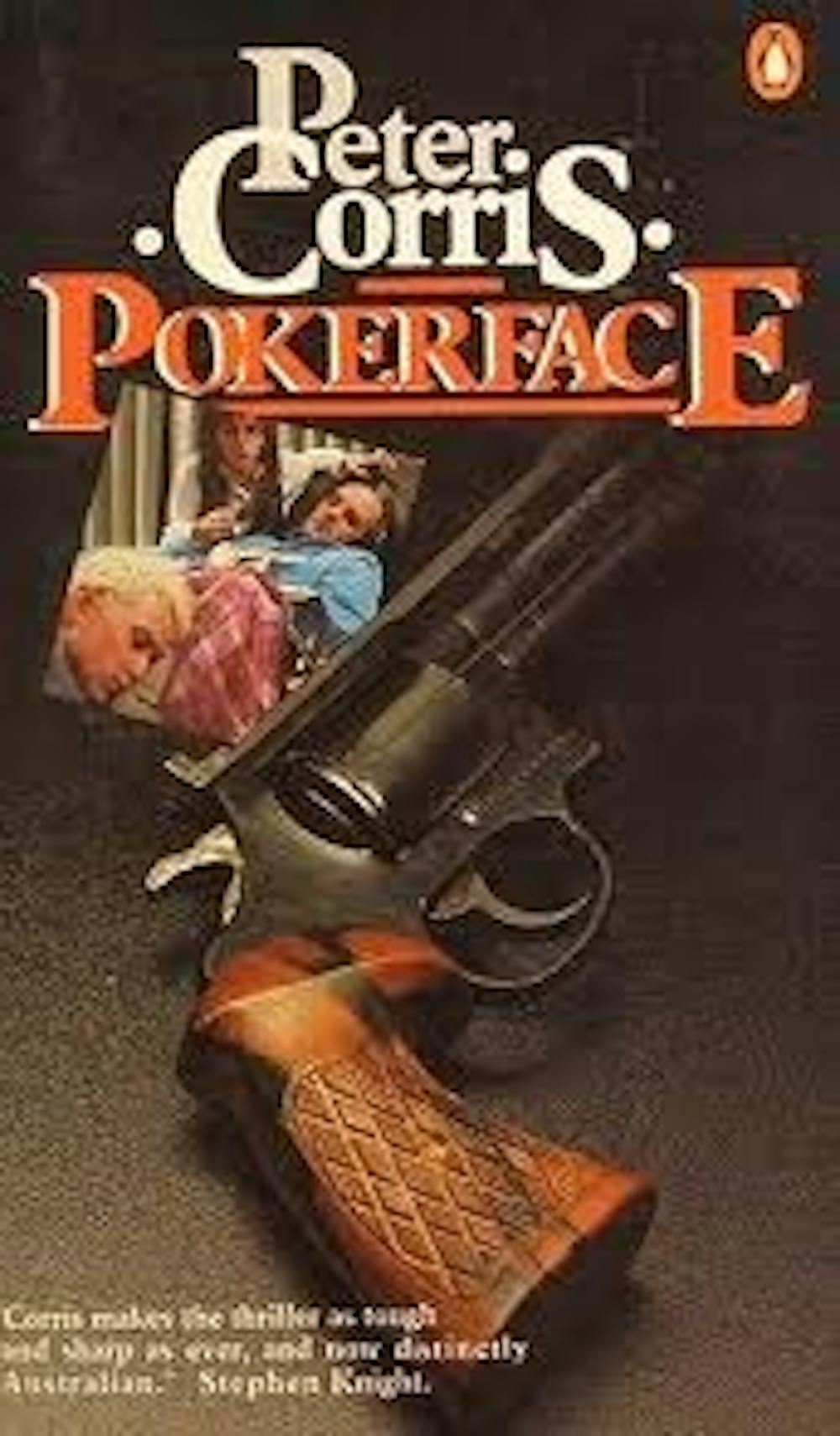
Though Australian crime writers have had very little success with the spy thriller, Corris’s Ray Crawley series – eight novels from Pokerface (1985) to The Vietnam Volunteer (2000) – are a capable version of the form.

More remarkable is his eight-book “Browning” series, from Box Office Browning (1987) to Browning Without a Cause (1995). In the series, the popular investigator Browning (one wonders why Corris chose the name of the wry learned 19th century English poet) adventures in part comically around the world, meeting on his way his compatriot Errol Flynn.

In the Browning series, journeyed around the world having misadventures with celebrities.
Goodreads

Corris also assented to the recent (and internationally very late) male Australian crime-writer engagement with police detectives – some of his leanest and sharpest novels are the three in the Luke Dunlop series about an undercover police agent, from Set-Up (1992) to Get Even (1994).

At first an academic historian, in the 1970s Corris became the literary editor of the much-regretted serious weekend newspaper The National Times. He had a wide range of knowledge and interests.

But what Corris will be most remembered for, and what he kept flowing in novels — and also in a number of short stories – were the adventures of Cliff Hardy. Cliff was drinking and chasing women a lot back in 1980. He calmed down in both departments, but kept at his investigations of corruption and malpractice, both business-oriented and personal.

Through his hero, with his physical and moral echt-Australian name Cliff Hardy, and through his lucid, calm plotting, Corris has matched Raymond Chandler in the modern world’s dominant crime form.

Both citified and individualist, the private eye story at its best demands personal, deep referential knowledge of the author – and calm stylistic skills. We have seen all this in the Hardy novels.

At the very end of Corris’s last Hardy novel, Win, Lose or Draw (2017) – in Australia, sport is always there – Hardy is smiling. So should his creator have been. With Hardy, he made a richly entertaining, very widely-admired, genuinely, lastingly, Australian international crime fiction hero.The Conversation

Stephen Knight, Honorary Research Professor, University of Melbourne

This article is republished from The Conversation under a Creative Commons license. Read the original article.
Unknown's avatar

Guide to the classics: Donald Trump’s Brave New World and Aldous Huxley’s dystopian vision


File 20180723 189335 20dgan.jpg?ixlib=rb 1.1
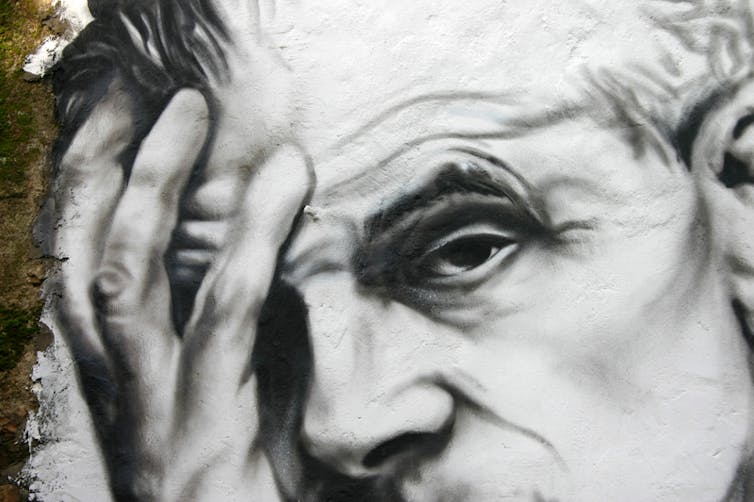
A graffiti portrait of Aldous Huxley, author of Brave New World.
Thierry Ehrmann/Flickr, CC BY

Keith Booker, University of Arkansas and Isra Daraiseh

In our series, Guide to the classics, experts explain key works of literature.


A year-and-a-half into the presidency of Donald Trump, some see this administration as the stuff of dystopian nightmares. Trump’s apparent disrespect for truth is suspiciously similar to the manipulation of history in George Orwell’s Nineteen Eighty-four. The crass, three-ring-circus texture of the current crowd in Washington recalls the degraded America depicted in Mike Judge’s 2006 cinematic farce Idiocracy. However, the English writer Aldous Huxley’s 1932 classic Brave New World might provide the best dystopian gloss on our contemporary predicament.

Like most good dystopian fiction, Brave New World is not a prediction but rather a diagnosis of dangerous tendencies in Huxley’s present. One of the most striking elements of Huxley’s vision of the future involves factories in which infants are designed to perform specific social functions.


Read more:
How the moral lessons of To Kill a Mockingbird endure today


These Stepford babies are later conditioned through standardised educational practices. This motif is not primarily a cautionary tale about the potential abuse of genetic engineering. Rather, it is a commentary on existing class inequalities and the use of education to reinforce social obedience. It exemplifies the fundamental tendency of capitalism to convert humans into commodities, interchangeable and bereft of genuine individualism.

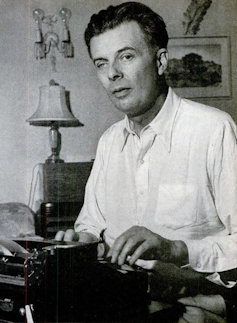
Aldous Huxley.
LIFE Magazine/Wikimedia Commons

Certain aspects of Huxley’s dystopian society strikingly resemble our current situation. A lack of respect for history, a population conditioned to consume goods at breakneck pace, a tendency toward globalisation, and the pacification of individuals via an entertainment culture curated to squelch any inchoate rumblings of critical thought: all of these are hallmarks of Huxley’s and our worlds.

An illustrious family

Born in Surrey, England, in 1894, Aldous Leonard Huxley was a member of one of England’s most illustrious intellectual families. He also went on to become one of the most important English writers of the 20th century, though he was also important as a social and philosophical commentator — and spent the last 26 years of his life living in the United States.

His brother, Julian, was a prominent biologist knighted by the queen. Aldous and Julian were the grandsons of well-known naturalist Thomas Henry Huxley, a leading 19th-century advocate for Charles Darwin’s theory of evolution. Aldous himself considered a career in biology or medicine, though he eventually turned to literature instead.

By the time Huxley wrote Brave New World in 1931, he was well established as a British novelist; works such as Crome Yellow (1921), Antic Hay (1923), and Point Counter Point (1928) arguably made him the most important English novelist of the 1920s, while also prefiguring Brave New World in important ways with their satirical treatment of British society.

A trip to the US shortly before the writing of Brave New World also contributed to Huxley’s formulation of his thoughts for the novel. (He moved there in 1937, where he would write more dystopian and utopian novels such as Ape and Essence (1948), Brave New World Revisited (1958) and Island (1962).)

History is bunk

In Brave New World, Huxley’s World State has arisen in the wake of a global war that nearly destroyed humanity. Its policies are officially driven by a desire to prevent a recurrence of this war at all costs. Stability and placidity in every aspect of life are of paramount concern. The public is protected from anything that might upset them and rock the social boat. However, the underlying goal is to ensure the smooth operation of the consumer capitalist economy and to remove any historical reminders that things might be other than they are.

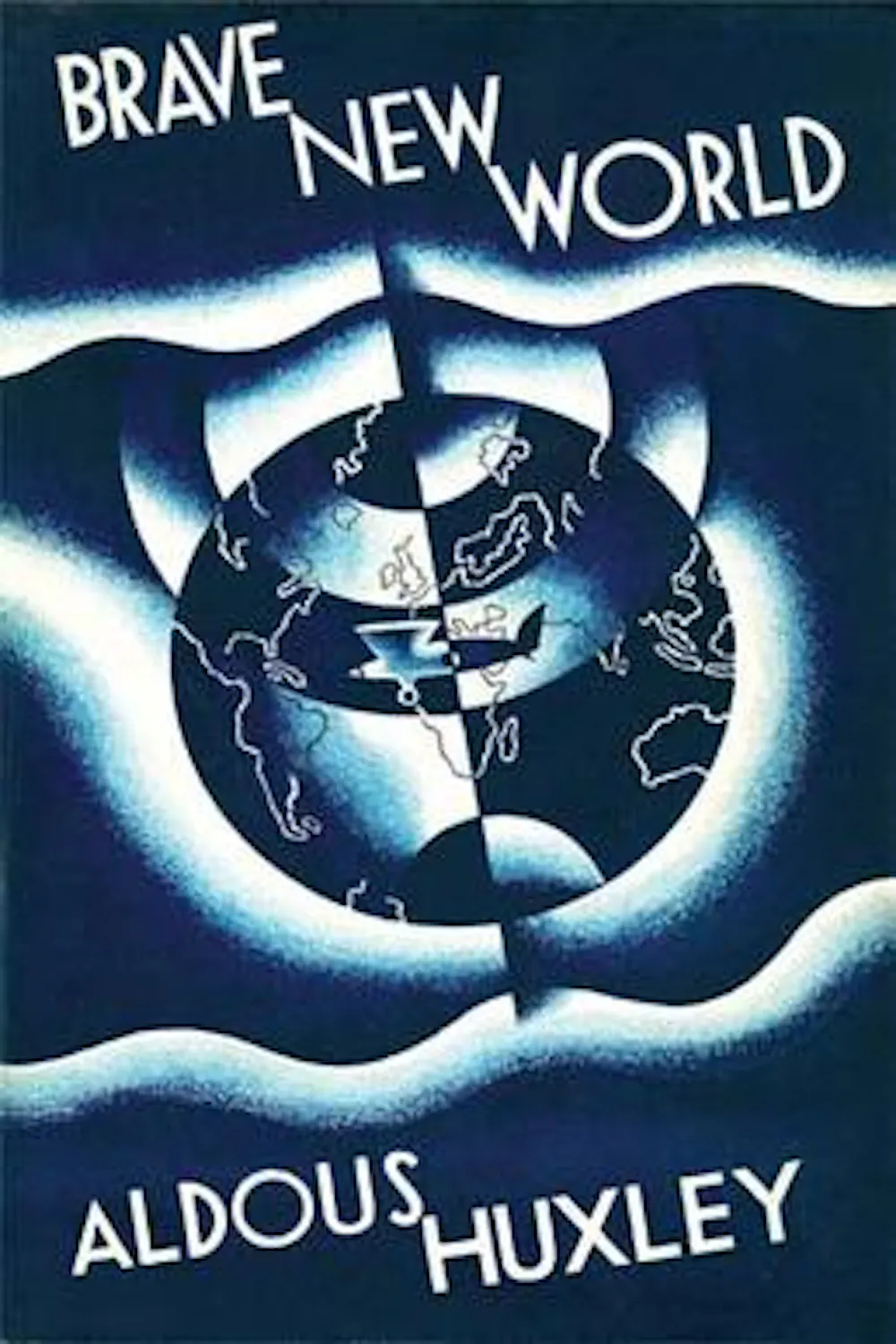
The first edition of Brave New World.
Wikimedia

Huxley presents us with the basic characteristics of his dystopian society through a loosely constructed narrative told largely from the point of view of Bernard Marx. An “alpha” who has been engineered and conditioned to be among the society’s intellectual elite, Bernard finds that his own individualist tendencies make him unable to function comfortably in this conformist society.

We are also introduced to Mustapha Mond, a “world controller” who attempts to explain to Bernard the rationale for the State’s policies, including its rejection of literature and history as sources of wisdom.

Also important to the narrative is “John the Savage.” Born biologically on a “Savage Reservation” and brought up reading the works of Shakespeare, John grows to adulthood outside the controls of the World State. He is eventually brought to London, where he finds himself so unable to fit in that he is driven to suicide.

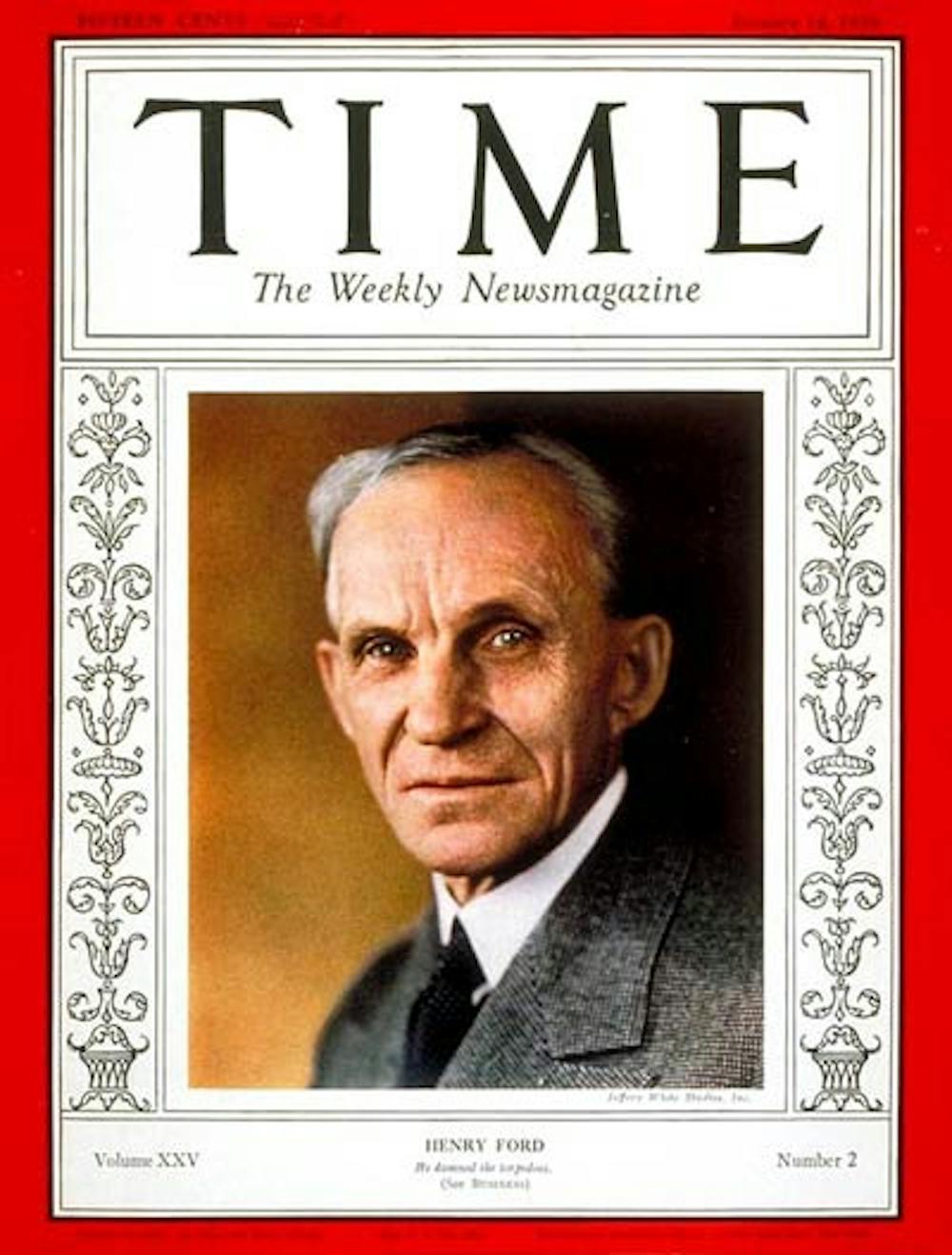
The lack of respect for history in Huxley’s world is encapsulated in the slogan “history is bunk”. The phrase is but one of many slogan-like modules of prepackaged “wisdom” that pass for public discourse. This particular phrase is attributed in the novel to Henry Ford – the central cultural hero of the society – who was at the height of his influence at the time Brave New World was written. A true forerunner of Donald Trump (but a much better businessman), Ford is an honoured icon of American capitalism even today. Yet, he was also an admirer of Adolf Hitler and a philistine with no respect for culture.

Henry Ford on the cover of Time in 1935.
Wikimedia

It should thus come as no surprise that the devaluation of genuine understanding in Huxley’s imagined world includes the suppression of most of the great works of world literature. This is ostensibly done because they might trigger strong emotions. The true reason is that such works are not easily reduced to consumer commodities.

The World State is the ultimate consumer society, even if it cannot match the marketing sophistication of today’s global capitalism. Designed along “Fordist” lines, this society is devoted to economic efficiency, but only in the narrow consumerist sense of boosting sales.

Not only are individuals treated like commodities, but they live in a world that is saturated with the ethos of marketing. They are constantly bombarded by jingle-like slogans that encourage as much consumption as possible. Individuals are urged to replace rather than repair, because “ending is better than mending”.


Read more:
Guide to the classics: The Tale of Genji, a 1,000-year-old Japanese masterpiece


Disturbing resonances

Huxley’s vision of a World State underestimates the staying power of nationalist rhetoric, of which Trump’s “America First” agenda is but one example. Yet, amid the mad scramble to exploit all potential sources of cheap labour, we have established trade networks that extend into all the nooks and crannies of the global market.

These networks involve individuals and institutions from a wide variety of cultures. When combined with the current trend toward the globalisation of world culture, these networks are so effective that a World State seems redundant, if only in terms of capitalist business practices.

Culture is key to the functioning of Huxley’s entertainment-oriented society. The populace is numbed by happy-making drugs that have “all the advantages of Christianity and alcohol; none of their defects”.

Huxley’s World State was centred on consumerism and entertainment.
Shutterstock.com

Huxley’s future humans are fed a nonstop dose of popular culture. Designed to amuse and stupefy, this breed of pop culture neither challenges nor inspires. Content is delivered via high-tech mechanisms which foreshadow our own world wide web. Artefacts such as virtual reality “feelies” (echoing the then-new “talkies”) seem highly familiar to a modern audience. As does their effect on the general population.

In Huxley’s world, even human relationships have been made an arm of pop culture. Sexual promiscuity is encouraged and emotional attachments forbidden. Relations between the sexes are just another form of entertainment. Sexual reproduction has become obsolete. Motherhood is an unthinkable obscenity and the parent-child bond has been eliminated. These details differ from Donald Trump’s recent proposed changes to abortion regulations, but they are equally misogynistic.

Frighteningly, although the characteristics of Trump’s America differ from the World State, the differences almost all make 21st-century America seem worse than Huxley’s nightmare consumerist world, from racial hatred to a looming climate crisis.

We are not just in danger of achieving a Huxleyesque dystopia. We are in danger of blowing past it to something Huxley couldn’t possibly have imagined.The Conversation

Keith Booker, Professor of English, University of Arkansas and Isra Daraiseh, Assistant professor, Arab Open University, Kuwait

This article is republished from The Conversation under a Creative Commons license. Read the original article.

Unknown's avatar

‘Insta Novels’


The links below are to articles that take a look at novels on Instagram.

For more visit:
https://bookriot.com/2018/08/22/nypl-insta-novels/
https://goodereader.com/blog/e-book-news/will-anyone-read-ebooks-on-instagram
https://publishingperspectives.com/2018/08/new-york-public-library-initiates-insta-novels-classics-instagram/

Unknown's avatar

Amazon Prime


The link below is to an article that looks at Amazon Prime and if it is worth it.

For more visit:
https://www.makeuseof.com/tag/is-amazon-prime-worth-it/

Unknown's avatar

What to Read Next?


The link below is to an article that looks at 11 websites that assist in finding a book to read.

For more visit:
https://www.makeuseof.com/tag/7-sites-decide-book-read/

Unknown's avatar

Amazon Rapids


The link below is to an article that takes a look at Amazon Rapids.

For more visit:
https://www.makeuseof.com/tag/amazon-storytelling-app-kids-free/

Unknown's avatar

Time to Read?


The link below is to an article that looks at whether there has ever been time to read?

For more visit:
https://lithub.com/have-we-ever-had-enough-time-to-read/

Unknown's avatar

Malcolm Fraser’s political manifesto would make good reading for the Morrison government


File 20180827 149490 16hhwe9.jpg?ixlib=rb 1.1
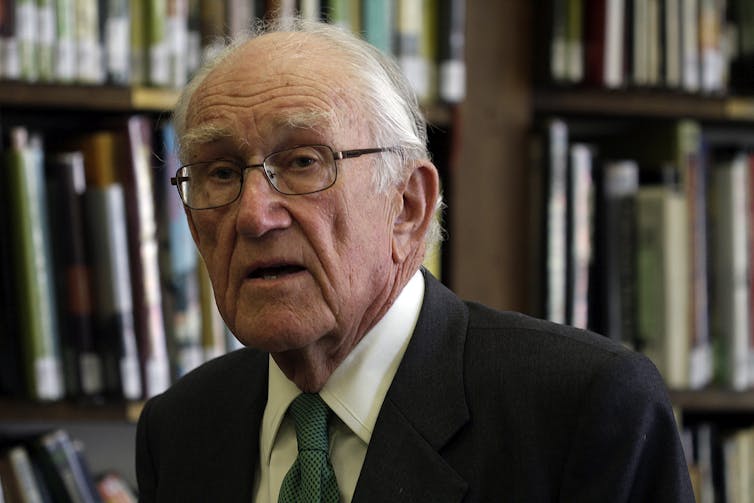
Members of the Liberal Party’s latter-day “broad church” could do worse than secure copies of these Malcolm Fraser’s manifesto for a new political party.
AAP/ Luis Enrique Ascui

Tony Walker, La Trobe University

Malcolm Fraser died on March 20, 2015, just a little more than three years ago. One can only speculate what he would have made of a three-year Malcolm Turnbull interregnum, but it is a fair assumption he would have been disgusted by the behaviour of the Liberal party’s hard right and its media acolytes.

At the time of his death, Fraser had quixotically lent himself to efforts to establish a “reform” party as a centrist alternative – in the tradition of Menzies and Deakin – to the existing political parties.

So no doubt the former Liberal prime minister’s disgust would have been aggravated during last week’s leadership upheavals, in which reactionary elements came within a handful of votes of hijacking the party of Robert Menzies, and before that Alfred Deakin.


Read more:
If the Liberals have any hope of rebuilding, they might take lessons from Robert Menzies


While this attempted hijacking may has been averted – for now – the danger has not passed, nor has the possibility of a split between the Liberal Party’s conservative and moderate wings.

Scott Morrison is from the conservative flank of the Liberal Party, as is his deputy Josh Frydenberg.

If the two leaders were in doubt about the task confronting them in restoring confidence in a Coalition government, this should have been dispelled by the latest Newspoll. It revealed a collapse in support for the government whose primary vote plunged four points to 33%, while Labor’s increased six points to 41%. This was the first poll since Malcolm Turnbull was deposed as prime minister.

Turnbull’s mistake, among several in the wake of his 2016 near-death political experience, was to allow himself to be persuaded that, to shore up support in the conservative heartland and outflank Pauline Hanson, he needed to shift further to the right.

In the end, he was devoured by those he had sought to appease, or as Winston Churchill might’ve advised: “An appeaser is one who feeds a crocodile hoping it will eat him last”.

This brings us back to Malcolm Fraser and the “forgotten people” of Australian politics. This is the phrase Menzies used when he established the Liberal Party in 1944 out of the embers of the United Australia Party he had led at the outset of the second world war.

Menzies’ “forgotten people” were defined as those caught between a union-dominated Labor Party and a conservative establishment. What the father of the Liberal Party had in mind was the artisan and small business class, broadly defined.

As Menzies put it in his slight memoir, Afternoon Light.

We took the name “Liberal” because we were determined to be a progressive party, willing to make experiments; in no sense reactionay, but believing in the individual, his rights and his enterprise…

It is interesting that the word “progressive” has become a weapon wielded by the right in its relentless culture wars against the left, in what has proved to be a debilitating era in Australian politics.

In this debasement of the political debate, phrases like “political correctness” and “identity politics” and “virtue signalling” have been weaponised to the point where these phrases have corrupted reasonable discussion.

Fraser’s attempt before he died to promote a centrist liberal alternative to the existing parties was aimed at representing the “forgotten people” in Australian politics.

These were not Menzies’ “forgotten people” who had found a home in John Howard’s “broad church” of latter-day Liberals, but a small “l” liberal wedge in the centre. They have long felt disenfranchised.

The so-called “sensible centre”, caught between a conservative party trending reactionary and a Labor party led by union-backed factional apparatchiks is more numerous than party operatives on either side would have you believe.


Read more:
Memo Scott Morrison: don’t chase the ‘base’


As mentioned in a previous column the same-sex marriage vote demonstrated a much larger cohort in the centre of Australian politics than might be conceded by the political class.

But back to Fraser. While his “reform” party never saw the light of day beyond a small circle of small “l” Melbourne liberals, members of the Liberal Party’s latter-day “broad church” could do worse than secure copies of these documents.

This is not because I believe Fraser’s reformist movement would have gained traction, necessarily, but because its 24-point manifesto reflects views widely held in the liberal and moderate centre of Australian politics.

Space does not permit publication of the Fraser manifesto in its entirety, but salient points include:

  • calls for tougher ethical sanctions on members of parliament who breached a code of conduct along with the establishment of an anti-corruption commission

  • a cap on donations to political parties and a requirement these donations be disclosed in real time

  • the introduction of a market-based emissions trading scheme and bold targets for renewable energy

  • early moves to a Republic

  • an end to the incarceration of asylum seekers in off-shore detention centres

  • an independent foreign policy

  • a requirement for a two-thirds majority in parliament to sanction the commitment of Australia’s armed forces to war.

In this latest period, disenfranchised voters of the moderate centre vote for minor parties, including the Greens, as a protest. This is not because they feel affinity for the more doctrinaire positions of the Greens, but out of despair at the Hobson’s choice being offered by the major parties.

In their calculations about how to rebuild the Coalition’s shattered credibility, Morrison and Frydenberg should remind themselves that a lot of Australians are fed up with politics as usual.

<!– Below is The Conversation's page counter tag. Please DO NOT REMOVE. –>
The Conversation

People are antagonistic to attempts by unscrupulous politicians and their friends in the media to hijack the political debate. They are sick of being caught in the slipstream of the tiresome culture wars.

Tony Walker, Adjunct Professor, School of Communications, La Trobe University

This article was originally published on The Conversation. Read the original article.
Unknown's avatar

Online Ebook File Converters


The link below is to an article that takes a look at 5 online ebook file converters.

For more visit:
https://www.makeuseof.com/tag/online-ebook-converters/