Unknown's avatar

Writing from 130 years ago shows we’re still dealing with the same anti-Asian racism


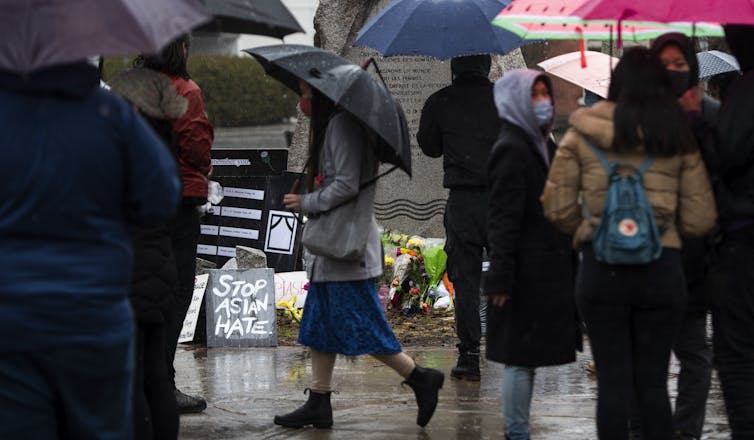
Community members gather for a vigil in memory of the victims of the Atlanta shootings and to rally against anti-Asian racism in Ottawa.
THE CANADIAN PRESS/Justin Tang

Mary Chapman, University of British Columbia

In March, when a white man targeted and killed eight women in Atlanta, six of whom were Asian, mainstream media and police initially refused to categorize it as a racially motivated hate crime. But for Asian people, across North America and globally, this tragedy was one more episode in a long history of anti-Asian violence.

Over 150 years ago, white settlers in the United States rounded up Chinese merchants and miners and put them onto burning barges, threw them into railway cars and even lynched them. But this story is not limited to the U.S. — early Chinese immigrants were not welcome in Canada either.


Read more:
Asian Americans top target for threats and harassment during pandemic


This is documented in the life and works of Chinese-Canadian author and journalist Edith Eaton (1865-1914). While researching Becoming Sui Sin Far: Early Fiction, Journalism, and Travel Writing by Edith Maude Eaton, I discovered numerous accounts of early Canadian anti-Chinese racism in her work.

Memoirs from the past show similar hatred

In Eaton’s memoir Leaves from the Mental Portfolio of an Eurasian, she recalls being called “Chinky, Chinky, Chinaman, yellow-face, pig-tail, rat-eater,” after moving to North America with her family — a white father, Chinese mother and five siblings — in 1872.

Soon after the family’s arrival in Montréal, locals would call out “Chinese!” “Chinoise!” as they walked down the street. Classmates would pull Eaton’s hair, pinch her and refuse to sit beside her.

These taunts and torments were felt deeply by Eaton throughout her life. She wrote:

“I have come from a race on my mother’s side which is said to be the most stolid and insensible to feeling of all races. Yet I look back over the years and see myself so keenly alive to every shade of sorrow and suffering that it is almost a pain to live.”

Eaton published a book of short stories depicting Chinese immigrants’ encounters with racism under the pseudonym “Sui Sin Far” (Cantonese for narcissus). And her advocacy was appreciated by Chinese people in Montréal who erected a memorial beside her grave with the inscription “Yi bu wang hua,” which means “The righteous one does not forget China.”

Since the Atlanta shootings, Asian women have been assaulted and even killed. Asian people have been accused of causing COVID-19, stealing intellectual property and more. What Eaton described in her fiction and memoir continues to happen today.
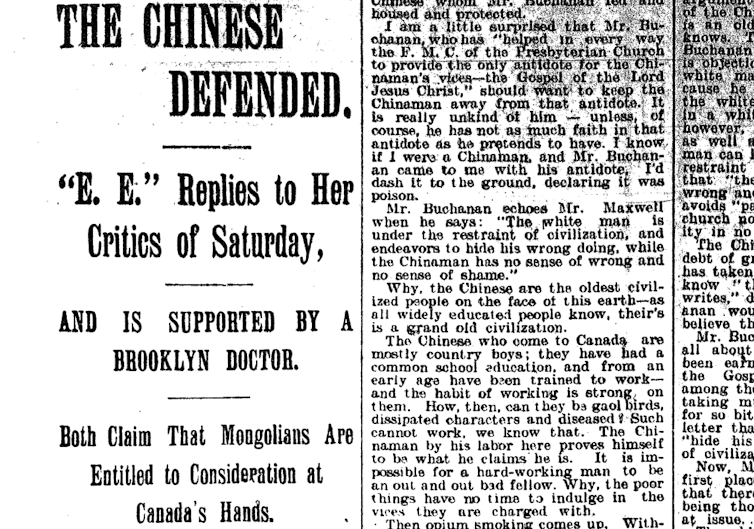
1896 newspaper article titled 'The Chinese Defended'
In a signed letter to the editor, Edith Eaton defends Chinese people in Montréal who have been the target of hate.
Montréal Daily Star

1890s headlines interchangeable with today’s

Eaton also documented anti-Chinese violence and championed the rights of Chinese immigrants in stories published in the Montréal Star and the Montréal Witness throughout the 1890s.

At the time, white men were convinced that Chinese immigrants were taking their jobs away and that Chinese men — many of whom lived alone behind their shops (because of the Head Tax — had an unfair advantage over white men with families.

In the Montréal Star, Eaton published A Plea for the Chinaman, in which she called out politicians for mistreating Chinese men in Canada:

“Every just person must feel his or her sense of justice outraged by the attacks which are being made by public men upon the Chinese who come to this country.… It makes one’s cheeks burn to read about men of high office standing up and abusing a lot of poor foreigners behind their backs and calling them all the bad names their tongues can utter.”

Anti-Chinese violence was so common in 1890s Montréal that Chinese men carried police whistles in their pockets. In an 1895 article, titled Beaten to Death, Eaton noted that even when they blew their whistles, no one would come to Chinese men’s aid. Bystanders often refused to identify their assailants and police told the men who had been assaulted that they should be arrested for bothering them.

The recent reports of a security guard’s refusal to act when a Filipino woman was brutally beaten uncannily recall the anti-Asian violence Eaton documented 125 years ago.

My research leads me to suspect that Eaton published other unsigned articles documenting anti-Chinese racism in Montreal newspapers at this time. She may have written a Gazette article reporting on youth who would gather nightly in Montreal’s Chinatown to throw stones at passing Chinese men and through the plate glass windows of their businesses, or those describing Chinese men being punched, kicked or beaten to death.

What was written when?

Looking at literature and journalism of the past such as Eaton’s can help illuminate the challenges of today. Her observations about people’s motivations — ignorance, jealousy, suspicion, competition — invite us to reflect on the motivations of today’s perpetrators of anti-Asian violence and conclude that not much has changed.

The anti-Asian racism recorded in Eaton’s work and journalism across Montreal persists today. Recent reports of racist violence, hate crimes, verbal harassment, opaque policing and passive bystanders could have been written more than a century ago.

We have a long way to go and a lot of work to do to make up for over a century of treating Asian people like they do not belong.The Conversation

Mary Chapman, Professor of English and Academic Director of the Public Humanities Hub, University of British Columbia

This article is republished from The Conversation under a Creative Commons license. Read the original article.
Unknown's avatar

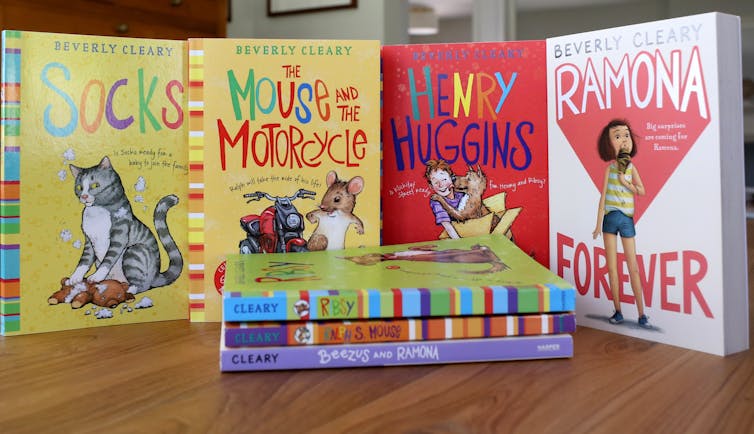
Beverly Cleary refused to teach kids how to be good — and generations of young readers fell in love with her rebel Ramona


Beverly Cleary’s beloved characters, including Ramona Quimby and Henry Huggins, have enthralled readers for decades.
AP Photo/Anthony McCartney

Kristin Girten, University of Nebraska Omaha

There’s nothing like being reasoned with by a 4-year-old girl.

“‘Stop it,’ ordered Beezus. ‘Stop it this instant! You can’t eat one bite and then throw the rest away.’

‘But the first bite tastes best,’ explained Ramona reasonably, as she reached into the box again.

Beezus had to admit that Ramona was right. The first bite of an apple always did taste best.”

The author of this scene is Beverly Cleary, who died on March 25, 2021, at the age of 104. The book is “Beezus and Ramona.” Most readers appreciate Ramona’s arguments, admiring the innocence, the free-spiritedness, the insight that inspires her to take a whole carton of apples and indulge in one first bite after another, only ever tasting “the reddest part.”

Many fans love Cleary’s work for a lifetime – first as young children, then as adults. As a mother of twin boys, I have been surprised at how her writing continues to resonate. But what is it that makes Cleary’s characters so enduring?

Novels that teach

As a scholar of 18th-century British literature, I recognize the pressure on novelists to teach children through their writing. This expectation was set in the 18th century when it was assumed that the modern novel, newly developed, would teach as well as please. Reading was expected to be, in the words of Horace, both “dulce” (literally sweet, or enjoyable) and “utile” (literally useful, or instructive).

Though readers have, at least since the early 20th century, generally let go of this expectation for authors who write for adults, the expectation persists for those who write for children. With a writing career beginning in the early 1950s, Cleary directly challenged such a notion.

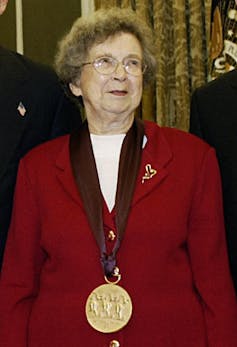
Beverly Cleary wearing a red suit and gold medal
Cleary was a 2003 recipient of a National Medal of Arts, which honors artists and patrons of the arts.
Getty Images/Time Sloan

Cleary once told PBS that her fans love Ramona “because she does not learn to be a better girl.” She went on to explain what inspired her to create Ramona’s character: “I was so annoyed with the books in my childhood because children always learned to be better children, and in my experience, they didn’t.”

In fact, Cleary’s Ramona doesn’t just challenge the assumption that readers must learn “from” and “with” fictional characters; one of Ramona’s distinguishing characteristics is rebelliousness.

Take, for example, the time Ramona’s parents are disappointed by her report card:

“‘Now, Ramona.’ Mrs. Quimby’s voice was gentle. ‘You must try to grow up.’

Ramona raised her voice. ‘What do you think I’m doing?’

‘You don’t have to be so noisy about it,’ said Mrs. Quimby.”

The scene continues:

“Ramona had had enough. … She wanted to do something bad. She wanted to do something terrible that would shock her whole family, something that would make them sit up and take notice. ‘I’m going to say a bad word!’ she shouted with a stamp of her foot.”

Then, in the culmination of the scene: “Ramona clenched her fists and took a deep breath. ‘Guts!’ she yelled. ‘Guts! Guts! Guts!’ There. That should show them.”

Gendering Ramona

So exactly where does Cleary’s Ramona fit? She doesn’t. She’s an outlier of school standards and gender expectations. Before there were terms like “gender nonbinary,” “gender nonconforming” or “genderqueer,” there was Ramona. Ramona defies categorization. Her friendship with Howie offers one of many examples:

“‘At my grandmother’s,’ said Howie. ‘A bulldozer was smashing some old houses so somebody could build a shopping center, and the man told me I could pick up broken bricks.’

‘Let’s get started,’ said Ramona, running to the garage and returning with two big rocks. … Each grasped a rock in both hands and with it pounded a brick into pieces and the pieces into smithereens. The pounding was hard, tiring work. Pow! Pow! Pow! Then they reduced the smithereens to dust. Crunch, crunch, crunch. They were no longer six-year-olds. They were the strongest people in the world. They were giants.”

This passage is from “Ramona the Brave,” which both is and isn’t of its time. Published in 1975, the novel may be seen as an expression of second-wave feminism, which sought to recognize gender as a social construct and to challenge how mainstream society kept women from fulfilling their potential. However, it also previews third-wave feminism by insisting that women need not abandon their femininity to claim equity for themselves.

Ramona, though quite boyish, insists on writing her last name, “Quimby,” with the “Q” shaped into a cat “with a little tail,” reminding the reader of her feminine side.

I see in Cleary’s writing a nostalgia for the time in childhood before gender is clearly defined. By looking back to that time, children and adult readers alike may imagine a future in which people are able to think beyond gender.

Cleary now

Most of Cleary’s books are set in the mostly white Grant Park neighborhood of Portland, Oregon, where she grew up. The lack of racial diversity in Cleary’s work is a likely consequence of her having followed the adage adhered to by many writers: “Write what you know.” However, current readers might wish that she had stretched herself and her abilities a bit further to have imagined a more racially or ethnically diverse cast of characters.

Nevertheless, many assert the “universality” of Cleary’s stories. One such reader is young-adult author Renee Watson, who, upon Cleary’s death, commented that Ramona “wasn’t afraid to take up space.”

“I needed a friend like Ramona,” Watson said. “Cleary introduced to me this rambunctious girl, and I love her. … The power of her storytelling is the respect she had for young readers. She had a deep understanding that a girl articulating how she feels is an asset, not a flaw.”

As I’ve read Cleary’s books to my own Gen-Z sons, I have been particularly struck by how her writing has gotten them interested and invested in female as well as male protagonists. They love the books about Henry and Ribsy, but they love the Ramona books too. When it is so common for boys and men to ignore–or merely “glance” at–women’s writing about girls, this is significant. Through Cleary’s work, my sons can see that the big guys don’t always know best or win. Such perspectives can create new normals that are less, well, normative.

[You’re smart and curious about the world. So are The Conversation’s authors and editors. You can get our highlights each weekend.]The Conversation

Kristin Girten, Assistant Vice Chancellor for Arts and Humanities/Associate Professor of English, University of Nebraska Omaha

This article is republished from The Conversation under a Creative Commons license. Read the original article.

Unknown's avatar

Brittany Higgins’ memoir will join a powerful Australian collection reclaiming women’s stories of trauma. Here are four


Marina Deller, Flinders University

Brittany Higgins has signed a book deal with Penguin Random House Australia. Not just any book — a memoir.

Higgins says her book will be a chance to tell “a firsthand account of what it was like surviving a media storm that turned into a movement”.

Memoir can help readers explore and understand trauma from a very personal perspective. Research suggests writing can be used to work through, or even heal from, trauma. It is a chance for a writer like Higgins,
who alleges she was raped in a senior minister’s office, to reclaim her story.

Here are four powerful Australian examples of women’s memoirs about trauma and abuse.

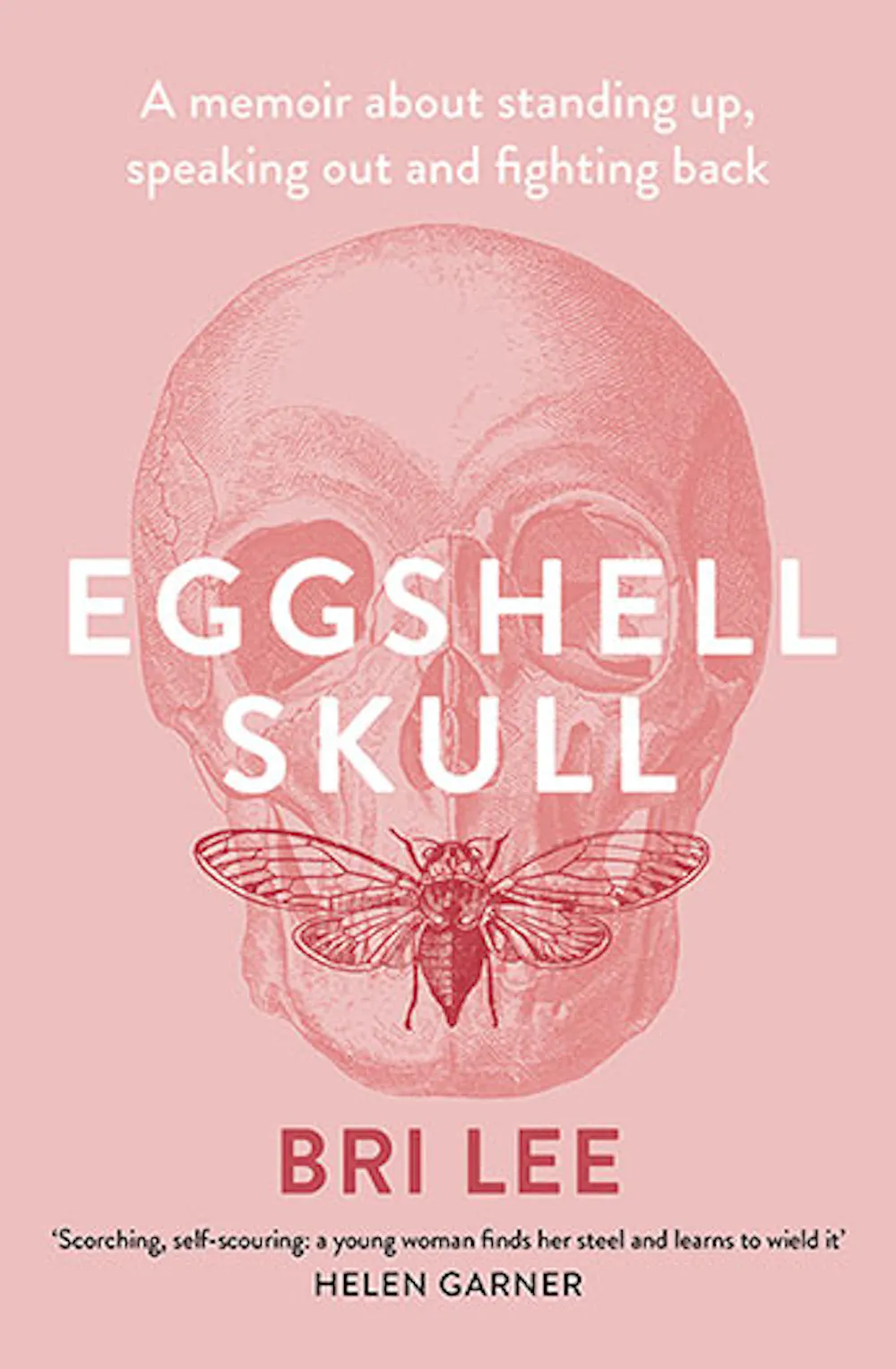
1. Eggshell Skull by Bri Lee

book cover: eggshell skull

Allen & Unwin

Sydney-based author, writer, and researcher Bri Lee witnessed justice and heartbreak while working as a judge’s associate in the Queensland District Court. Two years later, she took her own abuser to court.

Although the abuse occurred in childhood, Lee pursued a conviction for the perpetrator (a family friend) in young adulthood. In her 2018 book, she acknowledges that the longer the time between an incident and investigation, the more potential hurdles may arise; her journey for justice is far from straightforward.

Lee acknowledges this in the way she explores personal, public, and legal discourse surrounding abuse. She jumps back and forth in time, and weaves her story with others in the Australian legal system in a blend of journalistic and personal storytelling. This approach also acknowledges trauma can affect memory. Details can be unbearably clear, difficult to remember, or both.

Through poetic reflection, and searing critique, Lee carves a space for her story.


Read more:
This week’s news has put sexual assault survivors at risk of ‘secondary trauma’. Here’s how it happens, and how to cope


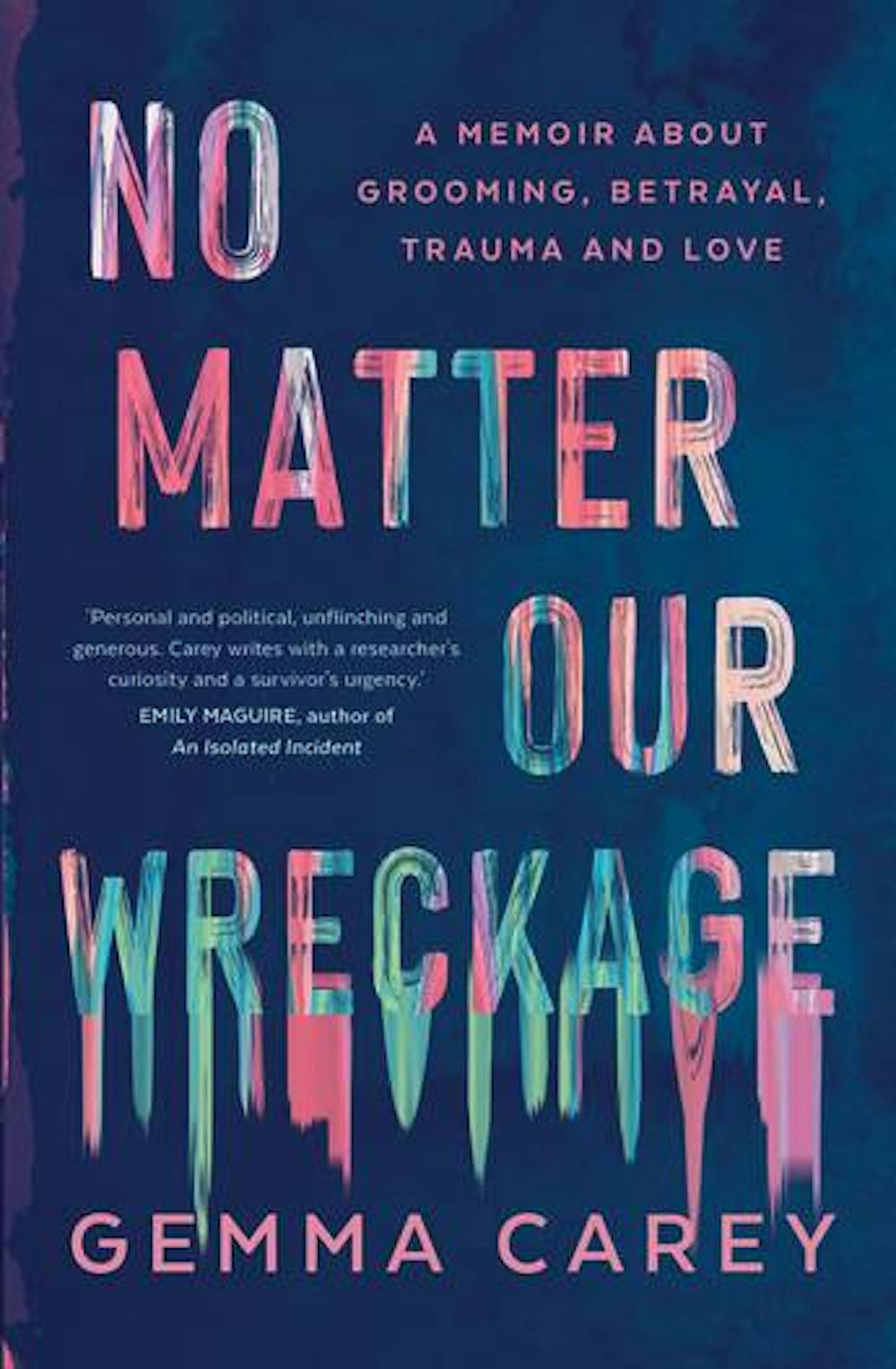
2. No Matter Our Wreckage by Gemma Carey

book cover: No matter our wreckage

Allen & Unwin

From age 12, Gemma Carey was groomed and abused by a man twice her age. In young adulthood, Carey discovers her mother knew about the abuse. When her mother dies, the enduring effects of this betrayal surface.

Family memoirs are often taboo; family memoir about child abuse and complicity even more so. Despite fraught themes, the Sydney-based author and academic writes with rigour and honesty. Her 2020 memoir asks us to examine social — and family — structures which allow these injustices.

Carey’s tone is dark but inquisitive. She speaks directly to readers, incorporating research, and unpicking the threads of trauma and grief.

Carey emphasises writing about abuse doesn’t always fit a mould. In an interview, she explains, “Writing trauma stories that will change societal narratives around abuse and victims involves showing the contradictions that exist in trauma and grief”.

In her book, she reflects on her younger self,

I was broken and trying to work out how to fix myself … no one had ever given me the tools… I had to figure it out on my own.

This rebuilding took time. At 12, Carey buried her experience, at 17 she successfully took the perpetrator to court, in adulthood, she wrote her memoir.


Read more:
Friday essay: why we need children’s life stories like I Am Greta


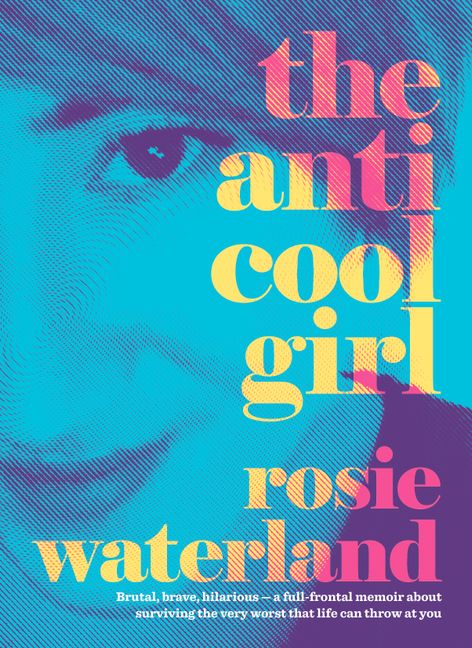
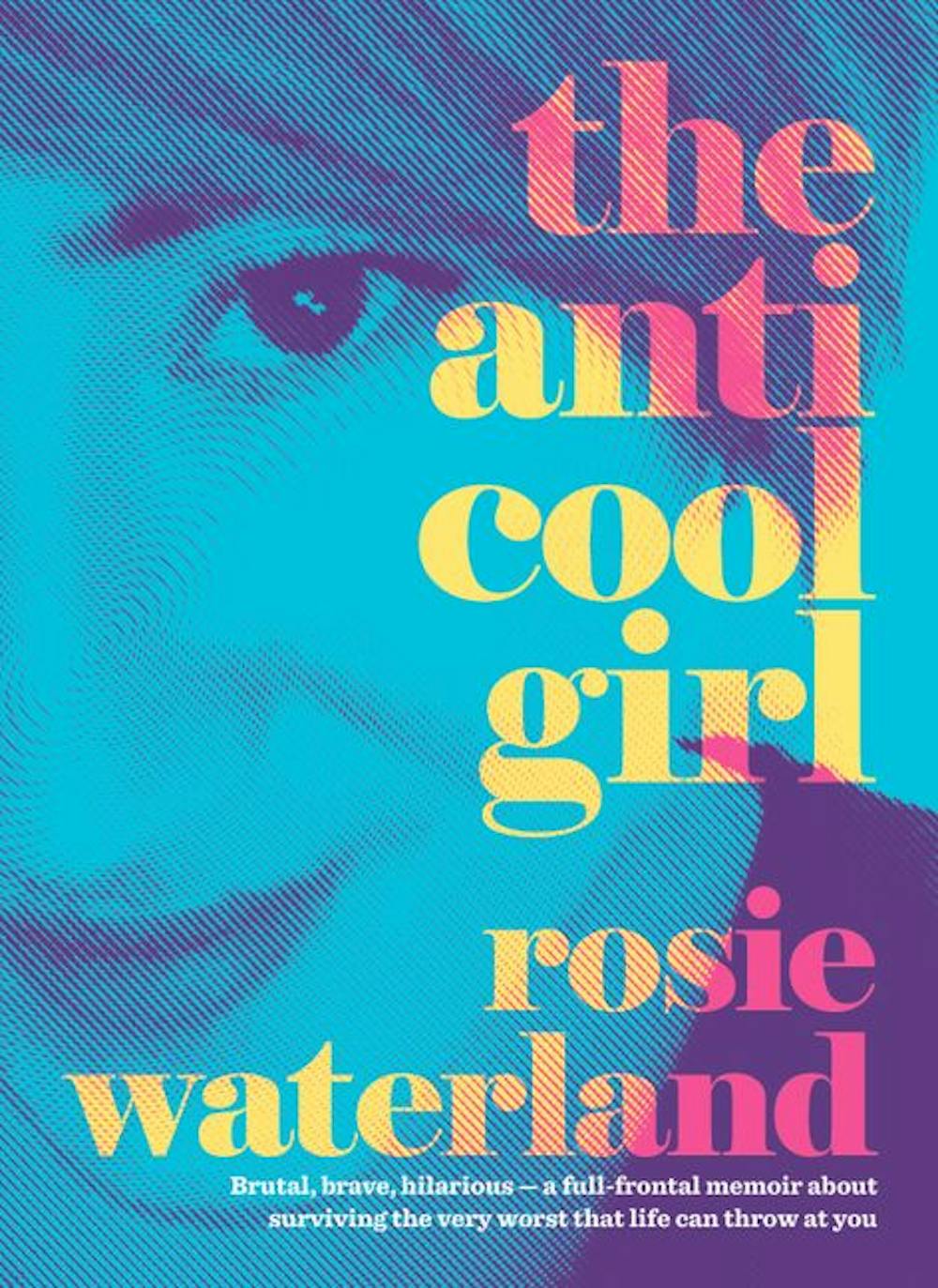
3. The Anti-Cool Girl by Rosie Waterland

book cover: the anti cool girl

Harper Collins

In The Anti-Cool Girl (2018), comedian and writer Rosie Waterland reveals a turbulent childhood; drug and alcohol-addicted parents, absent family, death and loss, poverty, mental health struggles, and sexual abuse experienced within the Australian foster care system.

Waterland writes unflinchingly. She tackles difficult subjects with intelligence and humour. Each chapter is addressed to herself: “You will be in rehab several times before you’re ten years old”, or “Your foster dad will stick his hands down his pants, and you will feel so, so lucky”. Like Carey, Waterland acknowledges trauma often manifests in ways which might seem “odd” or “unconventional” to others.

While comedic throughout, Waterland approaches her trauma with care and, understandably, anger. She later lamented that she was unable to name her abuser, due to fears of litigation.

The Anti-Cool Girl, blending humour and pain, remains a testament to Waterland’s endurance and survival.

4. The Girls by Chloe Higgins

book cover: the girls

Pan Macmillan

Chloe Higgins’ sisters — Carlie and Lisa — died in a car accident when Higgins was 17. In her 2019 memoir Higgins — a Wollongong-based author and academic — asks us to consider the nature of ongoing grief and the way trauma stretches over different experiences.

Higgins’ grief influences her sexual experiences in often troubling ways — but the way she discusses it is revolutionary. She explores the weaponisation of sex, how it is a form of self-harm; sex and substance abuse, and the pleasures and pressures of sex work.

She jumps between stories of gentility (caring lovers, exploration, sex clients who felt more like friends) and horror stories featuring coercion and fear, threats, and sex without consent. Higgins examines her own experiences and links them to memory, identity, and control.

In her Author’s Note, Higgins reflects: “Publishing this book is about stepping out of my shame”.

These are not the only parts of me, but they are the parts I’ve chosen to focus on … Since that period of my life, I have begun to recover.

These books signal the importance of memoir as a platform where personal trauma stories are told, reclaimed, and witnessed. They are a valuable (and intimate) contribution to the conversation about trauma and sexual abuse in Australia.


Read more:
Inside the story: writing trauma in Cynthia Banham’s A Certain Light


The Conversation


Marina Deller, PhD Candidate, Flinders University

This article is republished from The Conversation under a Creative Commons license. Read the original article.
Unknown's avatar

Unusual Libraries


The link below is to an article that takes a look at some of the more unusual libraries from around the world.

For more visit:
https://bookriot.com/unusual-libraries-around-the-world/

Unknown's avatar

Microfiction


The link below is to an article that takes a look at microfiction and four sites that provide it.

For more visit:
https://lithub.com/looking-for-a-quick-read-here-are-4-literary-sites-that-publish-great-microfiction/

Unknown's avatar

Library Explorer at The Internet Archive


The link below is to an article that takes a look at Library Explorer at The Internet Archive.

For more visit:
https://lithub.com/if-you-miss-visiting-the-library-try-the-internet-archives-new-virtual-browsing-tool/

Visit the Library Explorer at:
https://openlibrary.org/explore

Unknown's avatar

In an AI world we need to teach students how to work with robot writers


Shutterstock

Lucinda McKnight, Deakin University

Robots are writing more of what we read on the internet. And artificial intelligence (AI) writing tools are becoming freely available for anyone, including students, to use.

In a period of rapid change, there are enormous ethical implications for post-human authorship — in which humans and machines collaborate. The study of AI ethics needs to be central to education as we increasingly use machine-generated content to communicate with others.

Robots can write, too

AI robot writers, such as GPT-3 (Generative Pre-trained Transformer) take seconds to create text that seems like it was written by humans. In September, 2020 GPT-3 wrote an entire essay in The Guardian to convince people not to fear artificial intelligence.

AI does this through what’s called natural language processing and generation. This involves converting human language to computer commands and vice versa. To do this, machine algorithms study millions of text samples, words, sentences and paragraphs humans use to gain a general understanding of the context of human language. Then machines use that knowledge to put together text.

As recently as 2019, this kind of technology seemed a long way off. But today, it is readily available.

For example, the free Zyro content generator provides text for websites. I can select the categories “Health and Living” and “Personal Trainer” (I happen to be one, as well as an academic). In two seconds, the following text appears:

I am experienced with personal training, athletic performance, and nutrition. This includes working with children, pregnant women, older adults, people with disabilities, athletes, and anyone looking to achieve a competitive edge, improve their overall health, and overall performance. I also have an interest in alternative health, including wellness coaching and nutrition counselling. In my spare time, I enjoy spending time with my family, the outdoors, and writing.

This sums me up (despite the program knowing nothing about me) and would be fine for my website, if I had one. I have the option to generate more responses, and in two seconds, the program offers:

I am experienced in working with adults and children to improve their overall physical and emotional well-being. I have a strong desire to help you reach your goal […] I love helping others achieve their goals. I love working with others to achieve their goals. I am a mother of two healthy children and a wife to two incredible people.

While this is repetitive and Zyro does not notice the apparent error in the last sentence, these issues would be easy to correct. Text, even for niche purposes, can now be generated in a few clicks.

There are other digital tools such as paraphrasers and rewriters that can generate up to 1,000 articles from a single seed article, each of them substantially unique. Quillbot and WordAI, for instance, can rapidly rewrite text and make it difficult to detect plagiarism. WordAI boasts “unlimited human quality content at your fingertips”.

Questions for schools and universities

So what does this mean for education, writing, and society?

Of course, there’s the issue of cheating on essays and other assignments. School and university leaders need to have difficult conversations about what constitutes “authorship” and “editorship” in the post-human age. We are all (already) writing with machines, even just via spelling and grammar checkers.

Tools such as Turnitin — originally developed for detecting plagiarism — are already using more sophisticated means of determining who wrote a text by recognising a human author’s unique “fingerprint”. Part of this involves electronically checking a submitted piece of work against a student’s previous work.

Many student writers are already using AI writing tools. Perhaps, rather than banning or seeking to expose machine collaboration, it should be welcomed as “co-creativity”. Learning to write with machines is an important aspect of the workplace “writing” students will be doing in the future.


Read more:
OK computer: to prevent students cheating with AI text-generators, we should bring them into the classroom


AI writers work lightning fast. They can write in multiple languages and can provide images, create metadata, headlines, landing pages, Instagram ads, content ideas, expansions of bullet points and search-engine optimised text, all in seconds. Students need to exploit these machine capabilities, as writers for digital platforms and audiences.

Perhaps assessment should focus more on students’ capacities to use these tools skilfully instead of, or at least in addition to, pursuing “pure” human writing.

But is it fair?

Yet the question of fairness remains. Students who can access better AI writers (more “natural”, with more features) will be able to produce and edit better text.

Better AI writers are more expensive and are available on monthly plans or high one-off payments wealthy families can afford. This will exacerbate inequality in schooling, unless schools themselves provide excellent AI writers to all.

We will need protocols for who gets credit for a piece of writing. We will need to know who gets cited. We need to know who is legally liable for content and potential harm it may create. We need transparent systems for identifying, verifying and quantifying human content.


Read more:
When does getting help on an assignment turn into cheating?


And most importantly of all, we need to ask whether the use of AI writing tools is fair to all students.

For those who are new to the notion of AI writing, it is worthwhile playing and experimenting with the free tools available online, to better understand what “creation” means in our robot future.The Conversation

Lucinda McKnight, Senior Lecturer in Pedagogy and Curriculum, Deakin University

This article is republished from The Conversation under a Creative Commons license. Read the original article.
Unknown's avatar

How Black poets and writers gave a voice to ‘Affrilachia’


‘Untitled’ from the series ‘Imaging/Imagining.’
Photo by Raymond Thompson, Jr.

Amy M. Alvarez, West Virginia University and Jameka Hartley, University of Alabama

Appalachia, in the popular imagination, stubbornly remains poor and white.

Open a dictionary and you’ll see Appalachian described as a “native or inhabitant of Appalachia, especially one of predominantly Scotch-Irish, English, or German ancestry.”

Read J.D. Vance’s “Hillbilly Elegy” and you’ll enter a world that’s white, poor and uncultured, with few, if any, people of color.

But as Black poets and scholars living in Appalachia, we know that this simplified portrayal obscures a world that is far more complex. It has always been a place filled with diverse inhabitants and endowed with a lush literary history. Black writers like Effie Waller Smith have been part of this cultural landscape as far back as the 19th century. Today, Black writers and poets continue to explore what it means to be Black and from Appalachia.

Swimming against cultural currents, they have long struggled to be heard. But a turning point took place 30 years ago, when Black Appalachian culture experienced a renaissance centered around a single word: “Affrilachia.”

Upending a ‘single story’ of Appalachia

In the 1960s, the Appalachian Regional Commission officially defined the Appalachian region as an area encompassing counties in Alabama, Georgia, Kentucky, Maryland, North Carolina, South Carolina, Pennsylvania, Tennessee, Virginia and the entirety of West Virginia. The designation brought national attention – and calls for economic equity – to an impoverished region that had largely been ignored.

When President Lyndon B. Johnson declared his “war on poverty” in 1964, it was with Appalachia in mind. However, as pernicious as the effects of poverty have been for white rural Appalachians, they’ve been worse for Black Appalachians, thanks to the long-term repercussions of slavery, Jim Crow laws, racial terrorism and a dearth of regional welfare programs.

Black Appalachians have long been, as poet and historian Edward J. Cabbell put it, “a neglected minority within a neglected minority.”

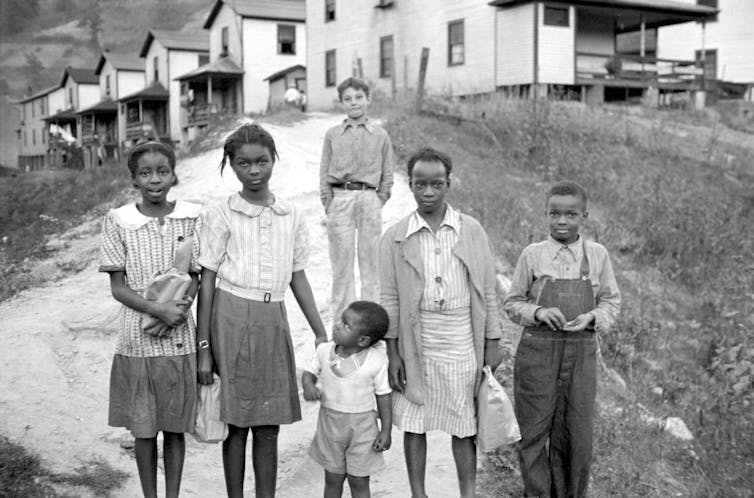
Five Black children stand in the foreground while a white boy stands in the background.
A 1935 Farm Security Administration photograph of kids in Omar, West Virginia.
Library of Congress

Nonetheless, throughout the 20th century, Black Appalachian writers like Nikki Giovanni and Norman Jordan continued to write and wrestle with what it meant to be both Black and Appalachian.

In 1991, after a poetry reading that included Black poets from the Appalachian region, Kentucky poet Frank X. Walker decided to give a name to his experience as a Black Appalachian: “Affrilachian.” It subsequently became the title of a poetry collection he released in 2000.

By coining the terms “Affrilachia” and “Affrilachian,” Walker sought to upend assumptions about who is part of Appalachia. Writer Chimamanda Ngozi Adichie has spoken of the danger of the single story. When “one story becomes the only story,” she said in a 2009 TED Talk, “it robs people of dignity.”

Rather than accepting the single story of Appalachia as white and poor, Walker wrote a new one, forging a path for Black Appalachian artists.

It caught on.

In 2001, a number of Affrilachian poets – including Walker, Kelly Norman Ellis, Crystal Wilkinson, Ricardo Nazario y Colon, Gerald Coleman, Paul C. Taylor and Shanna Smith – were the subjects of the documentary “Coal Black Voices.” In 2007, the journal Pluck! was founded out of University of Kentucky with the goal of promoting a diverse range of Affrilachian writers at the national level. In 2016, the anthology “Black Bone: 25 Years of Affrilachian Poetry” was published.

A unique style emerges

Roughly 9% of Appalachian residents are Black, and this renders many of the region’s Black people “hypervisible,” meaning they stick out in primarily white spaces.

Many Affrilachian poems explore this dynamic, along with the tension of participating in activities, such as hunting, that are stereotyped as being of interest only to white Americans. Food traditions, family and the Appalachian landscape are also central themes of the work.

Affrilachian poet Chanda Feldman’s poem “Rabbit” touches on all of these elements.

Her poem shifts from the speaker hunting for rabbits with their father to the hunt as a larger metaphor for being Black in Appalachia – and thus seen as both predator and prey:

        He told me
  of my great uncle who, Depression era,
  loaned white townspeople venison
  and preserves. Later stood off
  the same ones with a gun
  when they wanted his property.

An Affrilachian future

We reached out to Walker and asked him to reflect on the term, 30 years after he coined it.

Walker wrote back that it created a “solid foundation” that “encouraged a more diverse view of the region and its history” while increasing “opportunities for others to carve out their own space” – including other poets, musicians and visual artists of color throughout the region.

In her book “Sister Citizen,” journalist and academic Melissa Harris-Perry writes, “Citizens want and need more than a fair distribution of resources: they also desire meaningful recognition of their humanity and uniqueness.”

Affrilachian artistry and identity allows Appalachia to be fully seen as the diverse and culturally rich region that it is, bringing to the forefront those who have historically been pushed to the margins, out of mind and out of sight.

[You’re smart and curious about the world. So are The Conversation’s authors and editors. You can read us daily by subscribing to our newsletter.]The Conversation

Amy M. Alvarez, Assistant Teaching Professor, English, West Virginia University and Jameka Hartley, Instructor of Gender & Race Studies, University of Alabama

This article is republished from The Conversation under a Creative Commons license. Read the original article.
Unknown's avatar

Virginia Woolf: writing death and illness into the national story of post-first world war Britain


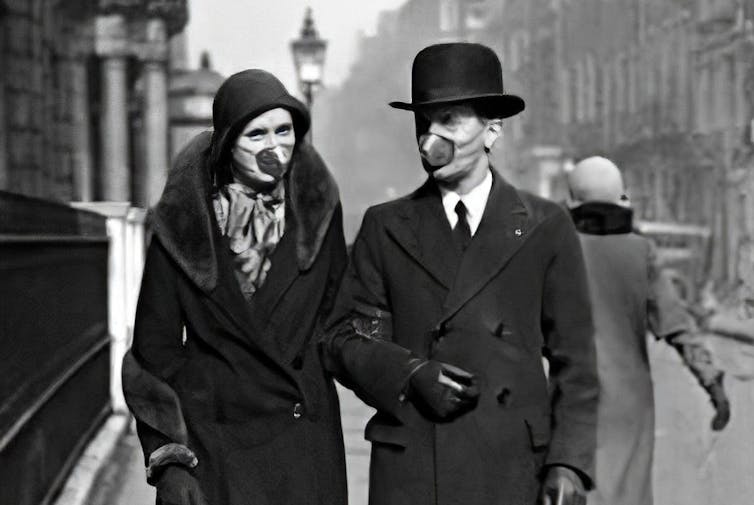
Spanish Flu spread around the world in 1918 and 1919. At least 20 million died.
Vintage_Space/Alamy

Jess Cotton, Cardiff University

Illness, unlike war, as English academic and writer Elizabeth Outka brilliantly demonstrates in her book Viral Modernism (2019), is a story that easily slips out of cultural and historical memory.

In illness, the modernist writer Virginia Woolf observed, “We cease to be soldiers in the army of the upright; we become deserters.” Woolf, writing in the wake of the first world war, saw the threat that the Spanish flu of 1919 posed to the stories of national triumph. Influenza moves in invisible and unpredictable ways. It renders everyone potentially vulnerable.

This interest in illness was personal. Woolf came down with several bouts of influenza between 1916 and 1925 and needed to confine herself to bed for stretches of time.

She documents the experience of the Spanish flu in her diary in 1918, noting, as an aside, how “we are, by the way, in the midst of a plague unmatched since The Black Death, according to the Times, who seem to tremble lest it may seize upon Lord Northcliffe and thus precipitate us into peace.”

Her tone is mocking. She would later appreciate the seriousness the threat of influenza posed. But here she suggests that what illness promises to bring is the end of the profit of war that fuels the nationalist sentiments churned out by the newspapers owned by Lord Northcliffe’s vast empire of popular journalism.

Reading Woolf’s work, particularly her 1925 novel Mrs Dalloway, on the 80th anniversary of her death and in the midst of our own pandemic, we see how she tried to rewrite death and illness back into the national story of post-first world war glory and strength.

Sidelining death

I’m a lecturer in English at Cardiff University, and teaching literature in a sparsely filled lecture theatre during the pandemic has been a discombobulating experience. Mrs Dalloway provided an entry point to make sense of the business of studying and thinking while a new national emergency unfolded around us. The protagonist of Mrs Dalloway is a survivor of the Spanish flu of 1919 and the sense of life that permeates the text emerges from her experience of rediscovering the pleasures of life. We meet Mrs Dalloway as she weaves her way through London, experiencing the quiet intensity of life one morning in June.


Read more:
Virginia Woolf on the magic of going to the cinema


The novel’s famous opening line – “Mrs Dalloway said she would buy the flowers herself” – has taken on new resonance this year as the pandemic has made all our worlds much smaller. Clarissa wants to buy the flowers herself because she is delighted to go out – as we might appreciate – having spent so long indoors.

In class, the students and I thought about what it meant to see Clarissa as a character who has lived through a pandemic and come out the other side. Clarissa’s commitment to life, after a long confinement, is hopeful, though it comes at a cost.

At the centre of Clarissa’s party, which the novel builds to, comes the news that Septimus Smith, a young war veteran, has killed himself. In Woolf’s original plans for her novel, Septimus did not appear and Clarissa was to kill herself during the party. In creating Septimus as Clarissa’s double, Woolf is able to move death to the sidelines – as we all would like to.

Woolf revolutionises character by radically tunnelling inwards – giving us not a description of a character, but a map of their psychic life. We experience the protagonist intimately from within – through their stream of consciousness – but peripheral characters also proliferate in the modernist novel.

Woolf recognises how easy it is to cast characters to the sidelines of life. This is, after all, how national fictions work, by making space for protagonists at the expense of those who are pushed further out of view. In the case of post-war Britain, space was made for the glory of war but not for the the Spanish flu.

Collective memory

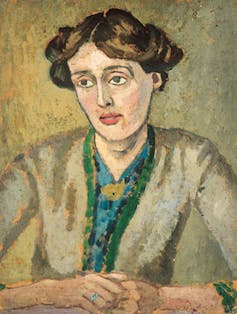
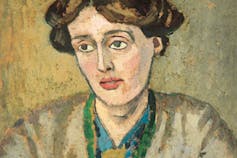
Painting of Virginia Woolf.
Virginia Woolf painted by Roger Eliot Fry.
Leeds Museums and Galleries, CC BY-NC

Mrs Dalloway is a text that shows how memory and mourning work to uphold the values of the British Empire. Its attention on how emotions circulate between people allows us to understand how national structures of feeling are created through newspapers and through the orchestration of symbolic identifications.

“In all the hat shops and tailors’ shops strangers looked at each other,” Woolf writes, “and thought of the dead; of the flag of Empire.” Woolf is interested in showing something that is hard to pinpoint: how national communities are created and sustained; how the war’s dead continue to underpin an inexorable sense of Britishness.

Woolf saw that a subjective perspective was required to make sense of how death continues to inflect the mood of a generation. Mourning, as Sigmund Freud also realised at a similar point, is ongoing, illusory work. What is remarkable about her writing is that Woolf draws our attention to how death pushes us beyond what we can know. In this unknowing, we are forced to admit that our lives are more fragile and dependent on the lives of others.

As one of her characters articulates in The Voyage Out (1915):

“It seems so inexplicable,” Evelyn continued. “Death, I mean. Why should she be dead, and not you or I? It was only a fortnight ago that she was here with the rest of us?”

Woolf’s ability to show how hard it is to explain death helps us understand the difficulty of living with its presence. In the face of the loneliness of death, the growing demise of its communal forms, the diminished structures of public mourning, she provides us with a language for death outside of national structures of commemoration.The Conversation

Jess Cotton, Lecturer at School of English, Communication and Philosophy, Cardiff University

This article is republished from The Conversation under a Creative Commons license. Read the original article.

Unknown's avatar

How Virginia Woolf’s work was shaped by music


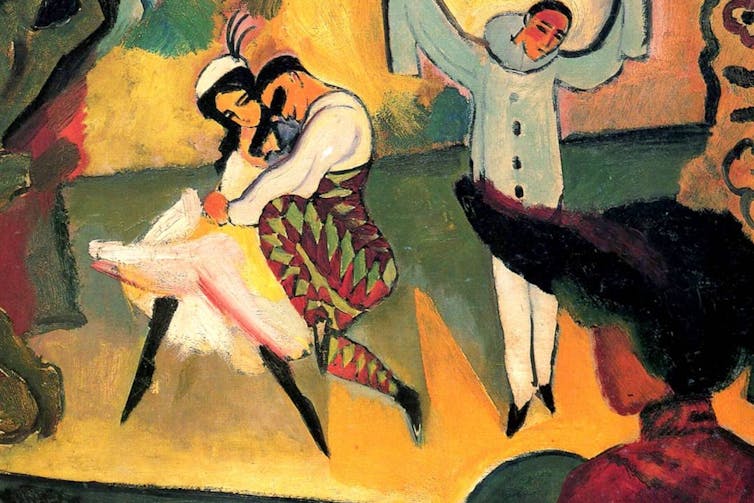
Virginia Woolf listened to a wide variety of music, including Russian ballet music which she heard when the Ballets Russes visited London in 1912.
Wikimedia

Emma Sutton, University of St Andrews

Many of Virginia Woolf’s early reviewers noted parallels between her literary innovations and those of contemporary composers, such as Claude Debussy. Woolf’s interest in music was overlooked after her death. However, 80 years on, we are now beginning to explore how her extraordinary experimental uses of narrative perspective, repetition and variation derive from her close study of particular musical works and specific musical forms.

Music provided Woolf (and other modernists including James Joyce, Ezra Pound, Gertrude Stein and Katherine Mansfield) with a vocabulary to imagine and describe their creative practice and formal innovations. Woolf, for instance, compares her diary writing to a pianist practising their scales. She describes her reading as a process of “tuning up” for her writing. And in 1940 she famously observed:

It’s odd, for I’m not regularly musical but I always think of my books as music before I write them.

Music in Woolf’s life

Woolf grew up immersed in music. As a young woman, she attended operas and concerts at the Royal Opera House three or four times a week – sometimes, every night. Like most women of her age and social class, she had received basic music education in singing and piano. But her passion as a listener far outstripped her abilities as a performer.

Her letters and diaries repeatedly convey her love of classical repertoire – particularly the works of Bach, Mozart, Beethoven and Wagner. But she heard a wide variety of music in varied settings. She heard folk music as she travelled in England, Scotland and continental Europe. Took in comic and patriotic songs in music halls. Delighted in the work of Arnold Schoenberg and another avant-garde repertoire through her subscription membership of the National Gramophonic Society, and Russian ballet music when the Ballets Russes visited London in 1912.

Portrait of Virginia Woolf.
Virginia Woolf painted by Roger Eliot Fry.
Leeds Museums and Galleries, CC BY-NC

Woolf’s Hogarth Press also published studies of contemporary music, composers and popular books of music appreciation. Her understanding of – and in some cases intimate friendships with – leading composers, music critics, conductors and other musicians of her time gave her an insight into professional musical life, too. Friends included the composers and critics Eddy Sackville-West and Gerald Berners, the conductor and educator Nadia Boulanger, and the composer and feminist Ethel Smyth.

Music in Woolf’s writing

Woolf’s feminism, pacificism and cosmopolitanism were significantly shaped by her enduring, passionate love of music. The social conventions surrounding music education, performance and composition catalyse some of her wittiest and most acerbic social comedy but also inform her critiques of, for example, women’s unequal access to music education.

In her first novel, The Voyage Out (1915), Woolf references specific musical works to challenge the established expectation that men and women should play different repertoire. The novel’s female protagonist, who is an accomplished amateur pianist, plays Beethoven’s late piano sonatas. These works were frequently characterised as too technically and intellectually demanding for women performers. Essays addressed to amateur female pianists characterised the works as “simply unattainable”.

Music also influences Woolf’s creative innovations. The double narrative structure of Mrs Dalloway, for example, which contrasts and entwines the lives of society hostess Clarissa Dalloway and traumatised veteran Septimus Warren Smith, may well be modelled on the double form of musical fugues (“fugue” was a contemporary term for shell shock).

Woolf observed in 1909 that, “We are miserably aware how little words can do to render music.” But this difficulty frequently catalyses and becomes a subject of her writing.

It’s perhaps unsurprising, then, that her prose has been a rich source of creative inspiration for composers. For instance, her work inspired Dominick Argento’s 1974 song cycle From the Diary of Virginia Woolf and more oblique responses, such as Max Richter’s music for the 2015 ballet Woolf Works.

In the last 15 years, musical responses to Woolf’s writing have proliferated, from the string quartet and songs premiered by the Virginia Woolf and Music project, to the recent announcement that composer Thea Musgrave is writing an opera inspired by Orlando.

In a 1905 essay, Woolf invited contemporary writers to remember words’ allegiance to music and take inspiration from that. Scholars of Woolf’s work and composers are now, it seems, doing just that.The Conversation

Emma Sutton, Professor of English, University of St Andrews

This article is republished from The Conversation under a Creative Commons license. Read the original article.