
The link below is to an article that takes a look at recycling books.
For more visit:
https://bookriot.com/2019/02/02/its-okay-to-recycle-unwanted-books/

The link below is to an article that takes a look at recycling books.
For more visit:
https://bookriot.com/2019/02/02/its-okay-to-recycle-unwanted-books/
The links below are to articles reporting on the new sponsor for the Booker Prize.
For more visit:
– https://www.theguardian.com/books/2019/feb/28/booker-prize-silicon-valley-billionaire-takes-over-as-new-sponsor
– https://publishingperspectives.com/2019/02/uk-booker-prize-announces-crankstart-new-anchor-sponsor-literary-awards/
– https://www.bbc.com/news/entertainment-arts-47393880
Rhea Seren Phillips, Swansea University
Poetry has played an important role in the history of Wales. From the medieval courts, to the ongoing National Eisteddfod (the largest music and poetry festival in Europe), writers have used verse to document the land’s culture. But while male writers, such as the 12th century poets of the princes and more recently Dylan Thomas, have presented one perspective of Welsh history and culture, female poets have documented a very different take on Wales through the centuries. Here are four who bring a different perspective.
Gwerful Mechain is one of the few Welsh medieval poets from whom a substantial body of work has survived to this day. One of the loudest voices speaking up for women of the time, Mechain was also one of the first poets in Wales to write about domestic abuse. To Her Husband for Beating Her is a poignant and powerful poem full of enraged language and energetic imagery.
Born into a noble family, Mechain was free to explore her own poetic interests without the pressure of securing patronage, unlike many of her male contemporaries. She became a prolific writer who was not restricted to one style. Her work includes religious, humorous and socially conscious poetry. One of her most well-known works, To the Vagina, chastises her male counterparts for praising a woman’s body from her hair to her feet but ignoring one hidden feature. She was bold and did not shy away from what some may consider crude imagery, as in her poem, To the Maid as she Shits.
This extract, in Welsh then English, is from Cywydd y cedor (The Female Genitals):
Pob rhyw brydydd, dydd dioed,
Mul frwysg, wladiadd rwysg erioed,
Noethi moliant, nis gwarantwyf,
Anfeidrol reiol, yr wyfEvery poet, drunken fool,
Thinks he is just the king of cool,
(Everyone is such a boor,
He makes me so sick, I’m so demure)
Born in London, Katherine Philips – who later wrote under the moniker “The Matchless Orinda” – moved to Wales when she was around 15 years old. From her home in Cardigan she became a significant female British poet, as well as the first woman to have a commercial play staged, Pompey.
Despite the stigma against women publishing their work, Philips succeeded by circulating handwritten letters and volumes, as her male contemporaries did, while upholding supposedly feminine virtues such as humility and chastity in her works.
Though she was married with two sons, much discussion around Philips’ poetry and life concentrates on whether she was or was not a lesbian. The emotional focus of her poetry was often on women and the passionate relationships she had with them. Regardless of Philips’ own sexual orientation, her work was the first British poetry to express same-sex love between women.
Sarah Jane Rees (also known by the bardic name Cranogwen) is perhaps one of the most pioneering poets in this list. Born in Llangrannog, west Wales, she spurned all attempts to enforce gender stereotypes – her family wanted her to work as a dressmaker – and instead joined her father on board his ship for two years after leaving school. She continued her education, eventually gaining her master mariner certificate. Returning home by the age of 21, Cranogwen fought against opposition to run her old school, and taught children as well as providing navigation and seamanship education to young men.
In 1865 she entered the Eisteddfod festival as Cranogwen with
Y Fodrwy Briodasal (The Wedding Ring), a satirical poem about a married woman’s destiny. When she was announced as the first woman to win the prize, there was disgust from the established and renowned male writers who had been competing. Cranogwen became famous overnight and a collection of her poems was released in 1870.
The following lines are taken from My Friend:
Ah! Annwyl chwaer, ‘r wyt ti i mi,
Fel lloer I’r lli, yn gyson;
Dy ddilyn heb orphwyso wna
Serchiadau pura’m calonOh! My dear sister, you to me
As the moon to the sea, constantly,
Following you restlessly are
My heart’s pure affections
Lynette Roberts was born in Buenos Aires, Argentina to parents of Welsh origin. A friend of Dylan Thomas, during World War II Roberts moved to Carmarthenshire with her then husband, journalist and poet Keidrych Rhys, and stayed in Wales for the rest of her life.
Although now her work is seeing a resurgence, for a long time Roberts has been overlooked. She was a poet ahead of her time and her use of language is refreshing. Roberts was influenced by the rich colours and landscape of her childhood, which she entwined with the rural landscape and culture of Wales during a time of upheaval – World War II.
Roberts’s poem Swansea Raid is perhaps one of her most powerful and insightful works. It depicts a snapshot of a relationship between herself and fellow villager Rosie and the tension between war and home. The changing technological world of war brought out warm, colourful language in her work, setting the colloquialisms of quiet, rural Wales against the starkness of bombing and constant threat of loss. Her most influential work has to be the heroic poem Gods with Stainless Ears, on the war’s disruption of domestic life.
This verse is from Roberts’ 1944 Poem from Llanybri:
Then I’ll do the lights, fill the lamp with oil,
Get coal from the shed, water from the well;
Pluck and draw pigeon, with crop of green foil
This your good supper from the lime-tree fell.
Rhea Seren Phillips, PhD Researcher in Welsh Poetry, Swansea University
This article is republished from The Conversation under a Creative Commons license. Read the original article.
Sarah Lawson Welsh, York St John University
Prize-winning British novelist Andrea Levy, who died on February 14, will be remembered affectionately for raising awareness of black British writing and the closely intertwined histories of Britain and the Caribbean more than any other British writer of recent times (save perhaps Zadie Smith). In a career spanning 25 years, during which she published five novels (two of which were successfully adapted for television) and a luminous collection of short stories and essays – a significant legacy in itself – Levy garnered an unusually wide readership which crossed literary, popular and academic lines.
Like Angela, the protagonist of her first, semi-autobiographical novel, Every Light in the House Burnin’ (1994), Levy was of Jamaican parentage, her father being one of the original Windrush passengers arriving in Britain in 1948, her mother following shortly after. Levy herself grew up in a working-class household with few books, recalling in characteristically frank terms that “being a working-class girl I mainly watched telly”.
Like Faith, the protagonist of her third novel, Fruit of the Lemon (1999), Levy knew little about her heritage and took little interest in Caribbean history and culture until a startling experience in a Racism Awareness training session at work launched her on a journey of rediscovery. As Faith’s mother says: “Child, everyone should know where they come from.”
Levy’s meticulously researched fictions interrogate the human experience of migration to and from the Caribbean in different periods. In Small Island (2004), Levy explores the ways in which Caribbean people were racially “othered” and made to feel unwelcome outsiders in Britain, despite being invited to migrate as British subjects in the post-1945 period.
In her final novel, The Long Song (2010), Levy harnesses fiction to, in her words, “go farther” – imaginatively excavating the human experiences of slavery from a variety of perspectives. Later on, in a twist stranger than fiction, Levy discovered that she herself, like her fictional character Miss July, was descended from a mixed-race liaison between a slave and a white overseer.
Although happy to be termed a black British writer, Levy importantly always saw the long historical connection between Britain and the Caribbean as a profoundly British concern, rather than a niche interest only relevant to those of Caribbean heritage. Indeed, reading her nuanced and inclusive explorations of what it is to be British and of Caribbean heritage might be seen as more urgent than ever in these heated times of Brexit and the Windrush scandal.
Levy started to write only in her 30s – but her writing achieved that rare thing: critical acclaim and commercial success (notably after Small Island which won the Orange Prize for Fiction, the Whitbread Book of the Year and the Commonwealth Writers’ Prize). Her texts now have a place on academic curricula across the globe but also – crucially – a huge popular readership as her books fill a permanent place on ordinary peoples’ bookshelves.
As the many tributes from her readers, those who worked with her and from prominent black British figures such as Sir Lenny Henry testify, it is clear that Levy’s writing played a hugely important role in helping many readers learn about, connect to and make sense of the complex, brutal and often hidden nature of Britain’s slave history and its lasting legacies. As Levy always made clear: the history of her heritage was also a British story.
Small Island is Levy’s hugely significant contribution to the fictional retelling and exploration of West Indians’ migration to Britain in the Windrush era. Levy’s compelling neo-slave novel, The Long Song, is a historiographic metafiction, a playfully self-conscious probing of the nature of narrative and the telling of history, this time from a slave perspective in an attempt to imaginatively reenter the harsh world of plantation society and give voice, agency and humanity to the enslaved.
Levy’s earliest novels, Every Light in the House Burning (1994), set in 1960s London; Never far from Nowhere (1996), set on a North London council estate in the 1970s; and Fruit of the Lemon (1999), set in the Thatcherite Britain of the 1980s (as well as Jamaica), document domestic experiences of black British life and the particular manifestations of racism – National Front attacks, skinhead violence – prominent in British society during these periods. Later short texts, such as the short story Uriah’s War (2014), return to an earlier period and remind us that Britain and the Caribbean have long been closely connected and that West Indians – as British colonial subjects – also fought valiantly for “King and Country” in both world wars.
Levy seems to have been driven by a strong ethical imperative to tell these stories of West Indian arrival in Britain, of later generations “growing up black under the Union Jack”, to address the widespread British amnesia about its colonial history and the relative silence about Caribbean slavery in so many British institutions, including the school system.
The Small Island of Levy’s title is, of course, both Jamaica and Britain, two islands intimately and often violently yoked together by more than 300 years of shared history and culture. While Levy’s novels are set during different periods, they are all part of a longstanding, shared British-Caribbean history.
Thus, Small Island shows how the experience of the Windrush generation was marked by many of the same attitudes, inequalities and tensions found in the earlier period of plantation slavery in Jamaica, as explored in The Long Song. Levy’s 2014 essay Back to My Own Country, meanwhile, is a moving and powerful account of family, racism and her turn to writing. All are part of the largely forgotten history of Britain’s deep relationship with the Caribbean – a history which Levy’s texts show us is not just “out there” but “here (in Britain) too”.
Ultimately, what links all Levy’s texts is their deep humanity. Fittingly, Levy herself said that: “None of my books is just about race … They’re about people and history.” She described Miss July, the protagonist and chief narrator of The Long Song as “human, very smart, feisty”. There could be no better way of describing Levy as a writer.
Sarah Lawson Welsh, Reader & Associate Professor in English & Postcolonial Literatures, York St John University
This article is republished from The Conversation under a Creative Commons license. Read the original article.
The link below is to an article reporting on the winners of the 2019 PEN America Literary Awards.
For more visit:
https://bookmarks.reviews/congratulations-to-the-2019-pen-america-literary-award-winners/
The link below is to another article reporting on the finalists for the 2019 Audie Awards.
For more visit:
https://www.booklistreader.com/2019/02/27/book-awards/2019-audie-award-finalists-announced/
Nancy Kang, University of Manitoba
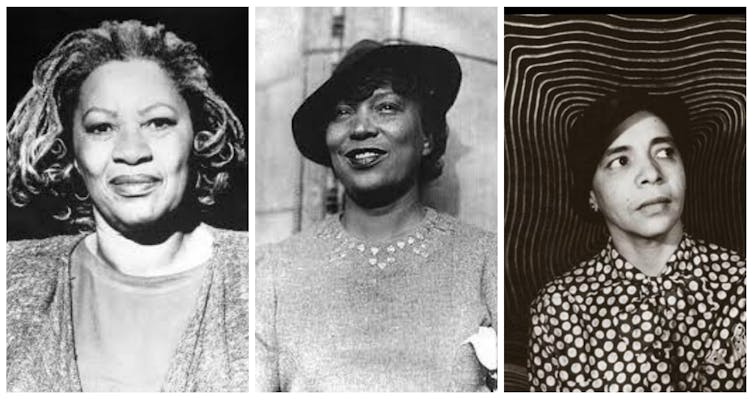
In Mules and Men (1935), anthropologist, creative writer and Harlem Renaissance upstart Zora Neale Hurston relays the evocative folktale “Why the Sister in Black Works Hardest.” Fatigued after the work of Creation, God casts a massive bundle onto the earth. Intrigued by the mysterious object, a white Southern woman during the antebellum era asks her husband to retrieve it. Reluctant to tote the load himself, the master instructs a slave to fetch it.
Soon wearied of the task, the slave then commands his wife to shoulder the burden. She does so, excited at the prospect of exploring the contents. When she opens the package, however, what leaps out at her and Black women for all posterity is none other than hard work.
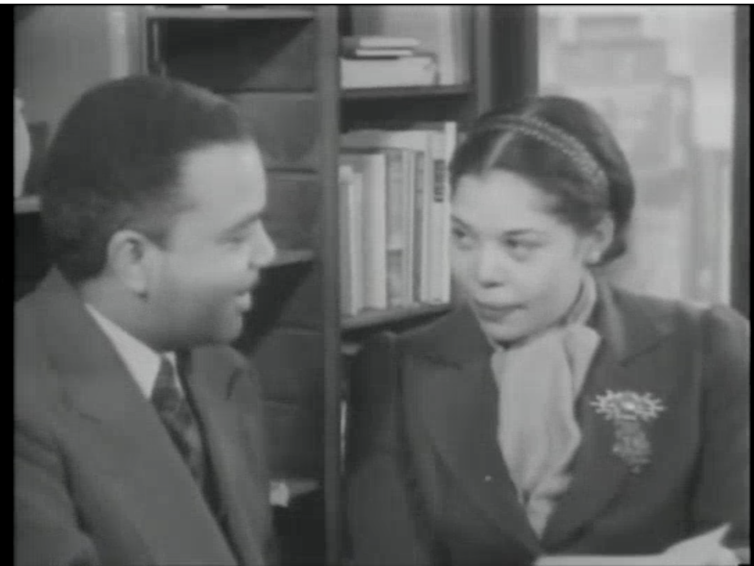
African American women writers have tackled the hard work of representing a diverse spectrum of lived and imagined experiences, including and especially their own. This labour occurs against the backdrop of centuries-long struggles with racist oppression and gender-based violence, including — but not limited to — slavery’s culture of endemic rape, forced or interrupted motherhood, infanticide, concubinage, fractured families and egregious physical and mental abuse.
Renowned abolitionist Frederick Douglass recalls in his 1845 slave narrative how witnessing the serial whippings of his Aunt Hester impacted him “with awful force.” He explains, “it was the blood-stained gate, the entrance to the hell of slavery, through which I was about to pass. It was a most terrible spectacle.”
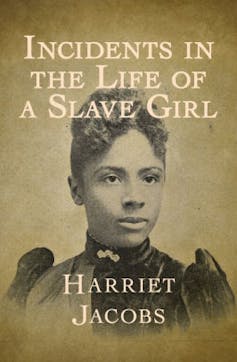
These ordeals also emerge in slave narratives by women. Harriet Jacobs’ Incidents in the Life of a Slave Girl (1861) emphasizes such travails. A target of relentless sexual harassment by her much-older master, Jacobs laments, “When they told me my new-born babe was a girl, my heart was heavier than it had ever been before. Slavery is terrible for men; but it is far more terrible for women.”
Once emancipated, African American women still faced staggering impediments when pursuing educational, entrepreneurial and employment opportunities. Political participation meant restrictions on voting rights both as women and as people of colour. Racist caricatures impugned everything from a woman’s intelligence and moral capacity to her skin color, texture of hair and body shape. Stereotypes like the docile Mammy, the Tragic Mulatta, the clownish Topsy, the oversexed Jezebel, the greedy Welfare Queen, the amoral Hoodrat and the Mad Black Woman (still prevalent today) remain testaments to a history of disrespect and erasure.
Hurston’s tale symbolizes the enduring social struggles Black women have faced living in what feminist critic bell hooks has termed white supremacist capitalist patriarchy.
In addition to influential autobiographers like Maya Angelou, dramatists like Lorraine Hansberry and poets like Gwendolyn Brooks, fiction writers have consistently demonstrated how imaginative art can simultaneously inform, persuade, entertain, catalyze social change and address individual as well as collective concerns.
Here is a short list of pivotal texts by African American women from the past century. These writers are but a small sample of the artists and intellectuals whose output resisted the force of what contemporary feminist critic Moya Bailey has termed misogynoir, or the corrosive fusion of anti-Blackness and misogyny prevalent in popular culture today. These women have completed the groundwork — and hard work — of envisioning a more just, inclusive society going forward.
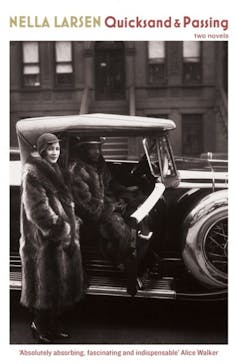
These novellas follow mixed-race women whose uneasy status on the colour line (including the lure of passing as white) complicates their lives in dangerous, even fatal ways. Passing is revolutionary for its depiction of homoerotic tension between two upper-middle-class Black women. Quicksand offers insight into the exoticization of African American women abroad and the contest between art and domesticity as viable avenues for a fulfilling life.
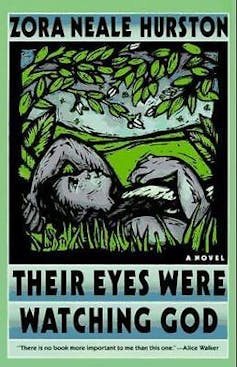
This story is the lyrical account of thrice-married Janie Crawford who finds a mature vision of love and fulfillment amid incessant gossip and a difficult family history. The all-Black township of Eatonville, Fla., and the rich “muck” of the Everglades contribute to a portrait of community health, daily striving and resolute self-awareness.
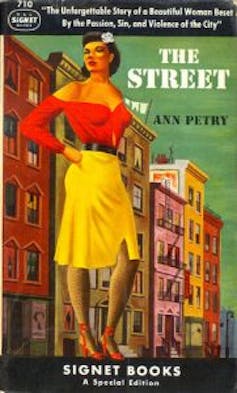
This social realist novel follows single mother Lutie Johnson as she attempts to make a life for her young son in a predatory urban space. Weathering sexism, racism, classism, poverty and intense personal frustration, Lutie attempts to resist the brutality of the environment that gives the novel its loaded name.
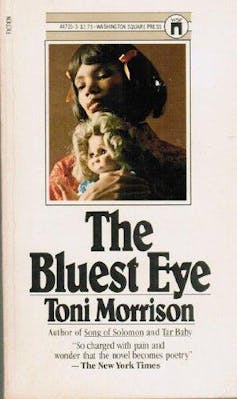
This book is a searing portrait of a young girl’s coming-of-age and eventual undoing in the years following the Great Depression. Tumultuous family dynamics, psychological trauma and incest, the quest for compassion and self-love, and the toxic myth of Black ugliness coalesce in this first novel by the Nobel Laureate and author of neo-slave narrative Beloved (1987).
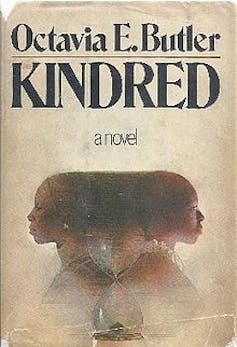
Oscillating between the 1970s and the early 19th century, this science fiction odyssey (re)connects a contemporary Black woman writer and her white husband with her ancestors on a Maryland plantation. The novel is buoyed up by the dramatic tension of time travel and the juxtaposition of the pre-civil War Antebellum-era with Civil Rights-era racial attitudes, including those about interracial love and allyship.

Structured like a narrative quilt, these interconnected experiences of seven women span different generations, professions, class backgrounds and understandings of their place in the world. The eroded apartment complex that links them is the backdrop for unbearable pain as well as the promise of transformation and reconciliation.
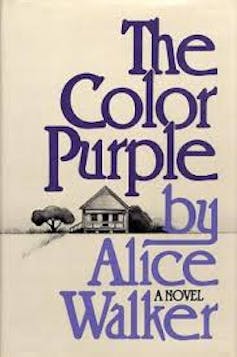
A tale of two sisters, Celie and Nettie, this novel constellates their love and longing via letters and imagined conversations across the Atlantic. Unsparing in its critique of domestic violence and toxic masculinity, yet tender in its treatment of various human weaknesses, the novel underscores Black women’s need for self-regard and mutual care. Not only are these acts revolutionary, but they also offer a glimpse of the divine.
Nancy Kang, Assistant Professor of Women’s and Gender Studies and Canada Research Chair in Transnational Feminisms and Gender-Based Violence, University of Manitoba
This article is republished from The Conversation under a Creative Commons license. Read the original article.
The link below is to an article that takes a look at reading what you want to read, regardless of what others might think.
For more visit:
https://www.theguardian.com/books/2019/feb/08/theres-no-shame-in-reading-whatever-books-you-want-literary-snobs-be-damned
The link below is to an article that takes a look at the history of ebook reader screen sizes.
For more visit:
https://goodereader.com/blog/electronic-readers/a-brief-history-of-e-reader-screen-sizes
The link below is to an article and infographic on 2019 International Book Fairs.
For more visit:
https://ebookfriendly.com/timeline-international-book-fairs-2019/

 At the BookShelf
You must be logged in to post a comment.