Unknown's avatar

Shakespeare: research blows away stereotypes and reveals teenagers actually love the Bard


Cathy Baldwin, The Open University

When you think of inner-city teenagers, what springs to mind? For many, it’s hoodies, video games – and probably hating Shakespeare. But my research proves that this stereotype is far from the truth.

Shakespeare holds a contested place in the English national curriculum as the only compulsory writer to be studied between the ages of 11 and 16. This imposed curriculum attempts to situate Shakespeare’s plays as part of national culture, rather than purely as an exemplar of high art. But teens are rarely asked directly about their experiences of education, and about its relevance to them.

Instead, they are often represented as a homogenous group who are bored and resistant to studying Shakespeare, particularly when it comes to struggling with the language he used.

However, my research with over 800 students in four London secondary schools offers a very different picture. I asked these 13 to 14-year-olds what they think and/or feel when they hear the word “Shakespeare” – and some of their answers defied expectations.

What students say

Many students told me that they actually enjoy studying Shakespeare in school. From comments such as “I feel happy because I like most of his plays”, to “I feel excited because Shakespeare was the best writer ever […] a legend or genius”, they expressed levels of interest in Shakespeare that are rarely acknowledged.

These students also did not see the language as a barrier, but as a challenge to be embraced. One commented: “I also get quite happy because we do not often look at texts with old English.”

In this large cohort of students, some comments stand out, showing how varied and individual their responses are. One described Shakespeare as “one of my inspirations for writing poetry”, while another said that “although I don’t really like English, I like his plays a lot”.

Teachers seem to play a key role in developing a positive attitude in some of their students. One student said that “all the work I’ve done on Shakespeare has been interesting and fun”, while another said she “really enjoyed the last play that we did”.

This study did not look in detail at what actually happens in the classroom, but many of the students’ comments suggest that having the confidence to approach a Shakespeare text with a positive attitude partly comes from the teacher’s attitude to him and his work.

‘Be not afraid of greatness …’

In addition to the wholly positive comments, some students demonstrated a more mixed response to the subject. One student told me that “sometimes it’s interesting and sometimes it’s just boring ‘cause in Year 7 I remember we did this one play for a very long time and it was just kind of the same thing every lesson for a double lesson”.

Here, the lessons were clearly not varied enough to hold this student’s attention all the time, although the comment suggests that the student knew that studying Shakespeare could be interesting and fun, even if it isn’t always like that in practice.

For others, the choice of play is key: “Some Shakespeare plays are more interesting than others, in my opinion.” One of the students I interviewed also articulated a clear tension in her attitudes towards studying Shakespeare. She said:

The good part is because everyone goes through different stuff, some people can relate and they can feel like they’re not alone or like this has happened before and studying Shakespeare makes you see the world differently, […] and the bad thing about it [is] learning how to write in the Shakespeare kind of structure when it won’t be useful in the future.

For a number of students, there are perhaps inevitable negative connotations attached to the word “Shakespeare”. Some did describe Shakespeare simply as “boring”, but others explained their reservations in more detail. One said: “I feel like I’ve heard the word Shakespeare too much and that I don’t want to talk about him.” Another thought “about long complicated language that no one understands”, while further complaints were about how “it is unnecessary to learn about as I don’t understand what’s beneficial for us as students”.

Overall, the students involved in this research demonstrated a breadth and depth of response to Shakespeare that counters the generalised belief that teenagers respond poorly to his work. Indeed, used as an introductory question to establish students’ attitudes to Shakespeare before attending a production at Shakespeare’s Globe theatre, in London, I have been fascinated by the variety and subtlety of thought they have demonstrated.

As one said: “I feel honoured that I’ve covered Shakespeare in school, because telling people you have read his plays makes you sound smart.” The sense of privilege inherent in this comment, despite the fact that everyone studies Shakespeare at school, is clearly something to cherish.The Conversation

Cathy Baldwin, PhD Candidate in Education, The Open University

This article is republished from The Conversation under a Creative Commons license. Read the original article.
Unknown's avatar

The Library of the Son of Christopher Columbus


The link below is to an article that takes a look at the library of the son of Christopher Columbus, and it was huge.

For more visit:
https://www.npr.org/2019/04/24/716600905/christopher-columbus-son-had-an-enormous-library-its-catalog-was-just-found

Unknown's avatar

How to Sell Books on Amazon


The link below is to an article that takes a look at how to sell books on Amazon.

For more visit:
https://www.businessinsider.com/how-to-sell-books-on-amazon/

Unknown's avatar

The Benefits of Reading Multiple Books at Once


The link below is to an article that takes a look at the benefits of reading multiple books at once.

For more visit:
https://www.thefussylibrarian.com/newswire/for-readers/2019/04/23/the-benefits-of-reading-multiple-books-at-once

Unknown's avatar

Newly discovered Du Maurier poems shed light on a talented writer honing her craft


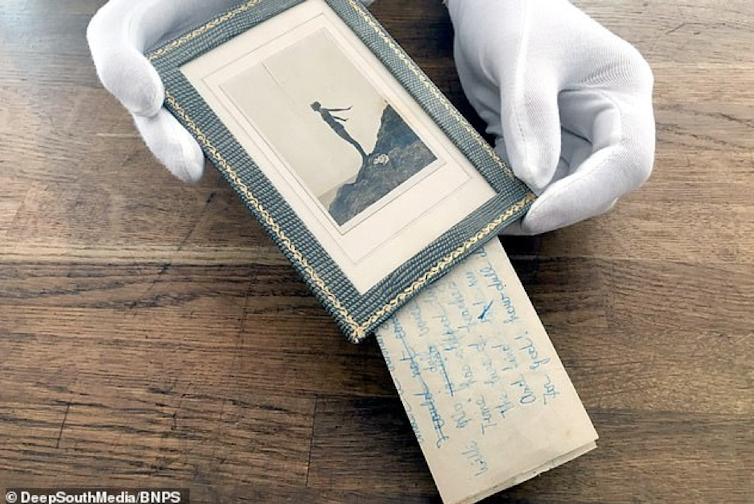
File 20190419 28106 nkdeg4.png?ixlib=rb 1.1
For decades, Du Maurier poems were hidden behind this picture.
Image courtesy of Deep South Media

Laura Varnam, University of Oxford

Daphne du Maurier remains one of the 20th century’s most popular and enigmatic writers, her life captivating readers as much as her works, as the most recent biography, Manderley Forever by Tatiana de Rosnay, has shown. Her literary reputation is also finally on the rise and, although her most popular novel Rebecca has often overshadowed her wide-ranging achievements as a writer, the celebration of its 80th anniversary last year reinforced Du Maurier’s place in the canon of English Literature as a serious and influential author.

This will be aided by the recent discovery of unknown poems, written early in her writing career, hidden behind a stunning photograph of the young Du Maurier in a bathing costume on the rocks, poised to take flight into the sea that was such an inspiration to her work.

The poems were discovered by auctioneer Roddy Lloyd of Rowley’s auction house, Ely, as he prepared the archive of Du Maurier materials belonging to the late Maureen Baker-Munton for auction on April 27. Baker-Munton was PA to Daphne’s husband, Lt Gen Sir Frederick “Boy” Browning and she became a close and important friend to the Du Maurier Browning family, as expert Ann Willmore explains on the Du Maurier website.

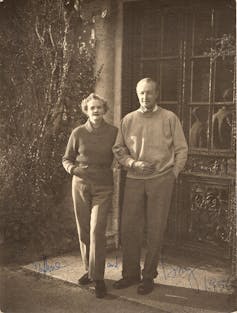
Du Maurier with her husband Frederick ‘Boy’ Browning in 1956.
Image courtesy of Deep South Media

Du Maurier is still primarily known as a novelist – as well as the bestseller Rebecca she is also rightly revered for the great Cornish novels, Jamaica Inn (1936), Frenchman’s Creek (1941) and My Cousin Rachel (1951). But, as I argue in the book I am writing on Du Maurier, she was a far more versatile, wide-ranging, and experimental writer than is currently recognised. Du Maurier wrote plays, short stories and biographies throughout her career but she was also a poet, as her son Kits Browning explained to me when we spoke over the telephone recently.


Read more:
Du Maurier’s Rebecca at 80: why we will always return to Manderley


Honing her craft

The newly discovered poems were written when Du Maurier was honing her craft as a writer in the late 1920s. At that stage she was primarily writing short stories but, as Browning told me: “My mother wrote poetry throughout her life and career.” Indeed Du Maurier often used poetry as a way of exploring an experience or emotion or testing out a character before then expanding on her ideas in a short story or novel. One of the newly discovered poems focuses on loneliness:

When I was ten, I thought the greatest bliss,
would be to rest all day upon hot sand under a burning sun…
time has slipped by, and finally I’ve known,
The lure of beaches under exotic skies,
and find my dreams to be misguided lies,
For God! How dull it is to rest alone.

Du Maurier’s work is preoccupied by the difference between fantasy and reality – and the dangers of dreaming – and her work repeatedly returns to the tension between the desire for independence and the need for companionship and human contact.

Gender and sexuality

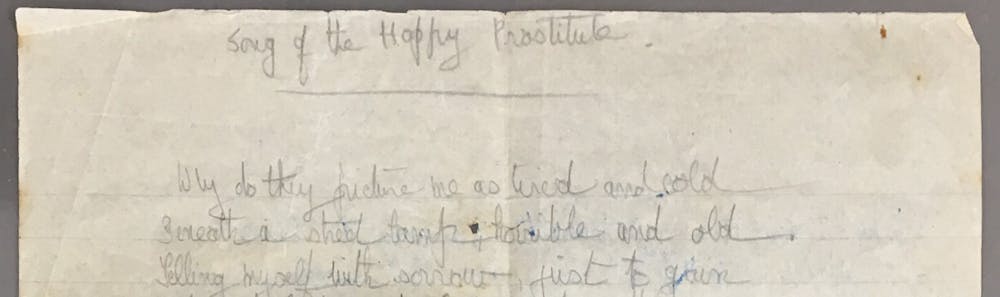
Another poem: Song of the Happy Prostitute, portrays a woman who is frustrated with the way her profession is represented.

Why do they picture me as tired and old…
selling myself with sorrow,
just to gain a few dull pence to shield me from the rain.

Song of the Happy Prostitute.
Image courtesy of Deep South Media

What on first sight might seem an unusual, even controversial, topic for the young writer in fact reflects the dominant themes of her early work, as Ann Willmore, of Bookends of Fowey, explained to me recently. Willmore discovered the unpublished Du Maurier short story The Doll in which a young woman, suggestively named Rebecca, protects her personal independence by keeping a sex doll. “The Happy Prostitute poem fits in with Daphne’s interests in gender and sexuality, especially in her early work, and she did seem to want to shock her readers”, Willmore told me.

The poem also, in my view, relates to two early short stories from the same period of Du Maurier’s life in which she created the character of a prostitute called Mazie who boldly claimed that her work enabled her to be independent. “I’m free, I don’t owe anything to no one, I belong to myself”, Mazie declares in the short story Piccadilly. Growing up in the 1920s, when the freedom and autonomy of women was increasingly a topic for public debate, Du Maurier’s choice of subject matter reflects the concerns of her day.

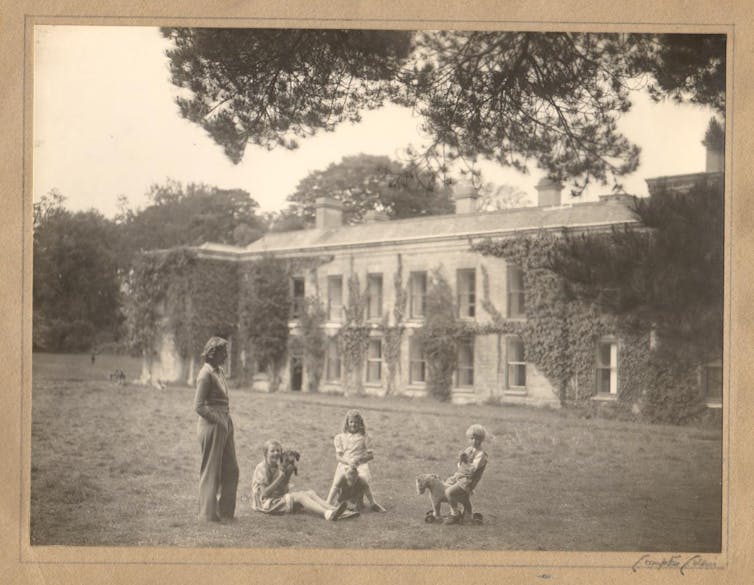
Du Maurier and her children at Menabilly, the house near Fowey in Cornwall in which she and her family lived for many years. The house was the inspiration for the novel Rebecca.
Image courtesy of Deep South Media

Du Maurier was a very privileged young woman, growing up in the grandeur of Cannon Hall in Hampstead – but her background was theatrical and Bohemian, as the daughter of celebrated actor-manager Sir Gerald du Maurier and stage actress Muriel Beaumont. And, as her son Kits Browning stressed, she was an avid reader and gained much imaginative experience of the world from the books she devoured as a teenager.

As to why the poems were hidden behind the photograph – either by Du Maurier herself or someone else – we are unlikely ever to find out. Browning told the Daily Telegraph that perhaps she did not want her parents to read them. Perhaps the Happy Prostitute found fuller expression in the Mazie short stories.

These newly discovered poems shed important light on Du Maurier’s early work and writing practice. Still often dogged by the incorrect label of “romantic novelist”, these poems highlight the important themes of independence, gender, and sexuality that were to fascinate Du Maurier throughout her career, in both prose and poetry. They show her boldness, spirit, and strength, just like the photograph behind which they were concealed for all these years.The Conversation

Laura Varnam, Lecturer in English Literature, University of Oxford

This article is republished from The Conversation under a Creative Commons license. Read the original article.
Unknown's avatar

BookTube


The link below is to an article that takes a look at BookTube.

For more visit:
https://www.huffingtonpost.com.au/entry/what-is-booktube_l_5cc06c21e4b01b6b3efb45ec

Unknown's avatar

2019 International Prize for Arabic Fiction Winner


The links below are to articles reporting on the winner of the 2019 International Prize for Arabic Fiction, Hoda Barakat for ‘The Night Mail.’

For more visit:
https://bookmarks.reviews/hoda-barakat-wins-the-2019-international-prize-for-arabic-fiction/
https://publishingperspectives.com/2019/04/internationa-prize-for-arabic-fiction-2019-winner-hoda-barakat/
https://www.theguardian.com/books/2019/apr/24/lebanese-author-hoda-barakat-wins-international-prize-for-arabic-fiction

Unknown's avatar

Victorian women poets of WW1: capturing the reverberations of loss


File 20190423 15227 1k20sjh.jpg?ixlib=rb 1.1
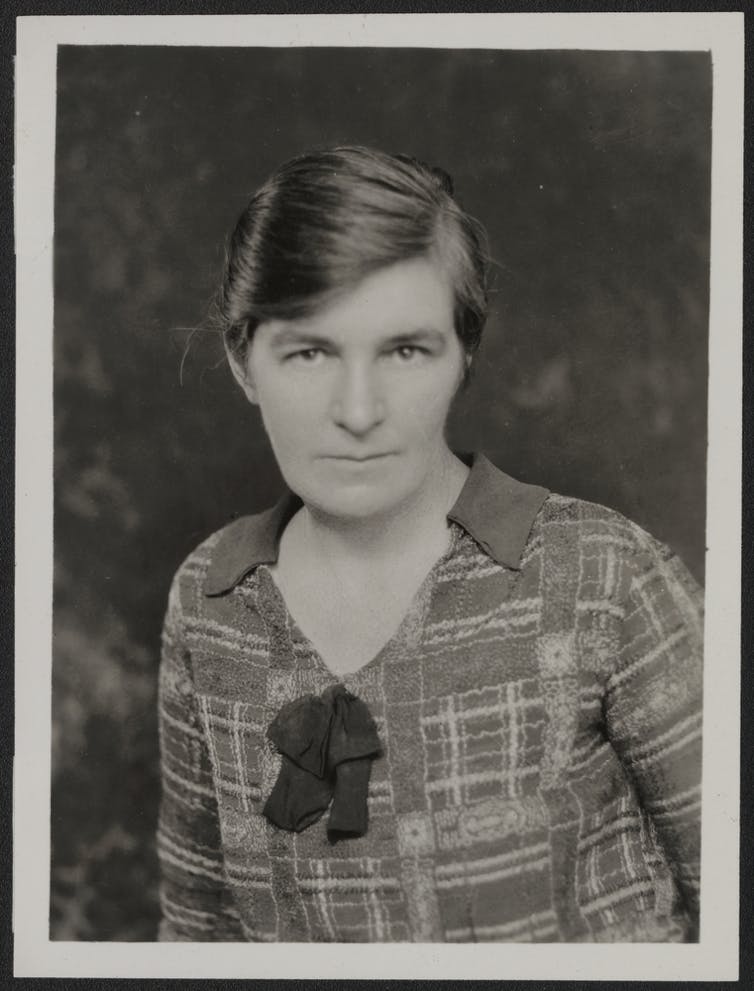
Nettie Palmer’s ’s 1916 poem, Birds, was a love song from a wife to a soldier-husband.
photographer unknown. State Library of Victoria

Kevin Brophy, University of Melbourne

Just as fiction’s George Smiley made sense of the world – and even made his baffling way about a world at war through knowing the works of minor German poets – our own very real Michael Sharkey (who has an equally resonant and unlikely name) has found that his passion for a certain strain of minor poets also intersects with history, war, intrigue, political resistance and troubling nationalism.

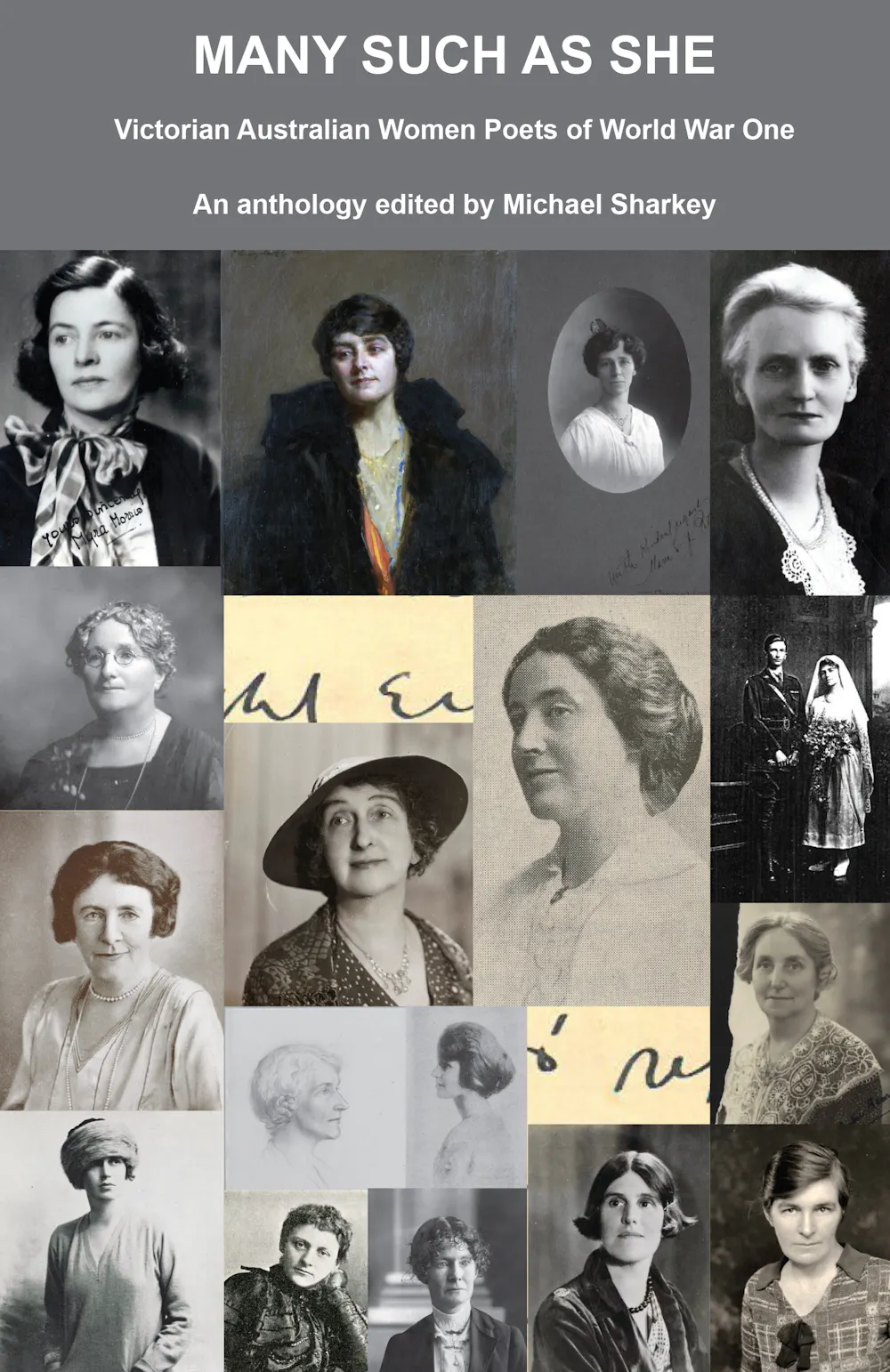
His remarkable new anthology, Many Such as She: Victorian Australian Women Poets of World War One, arose from Sharkey’s interest in civilian poets’ responses to the war that produced those soldier poets still gracing school and university curriculums a century on.

But why civilian poets, and why women? In the spirit of redress, Sharkey has uncovered expressions of how the war felt, how it was imagined, and how it was negotiated as a moral, political and deeply personal though socially shared phenomenon by those who were doubly separated from the conflict — through being so far away in Australia, and by the fact of being women.

Paradoxically, such a project, he suggests, makes a lot more sense and is closer to home for Australians than reading anthologies of poems by British soldier-poets. Like the best writers and researchers, Sharkey went about producing the book that he wanted to read.

We know that difficult times and extreme events can take us to poetry, and perhaps this impulse was embraced in the early 20th century with more grace, confidence and a deeper conviction of what is fitting than could have been the case earlier or later, especially among women.

A natural expression of thought and emotion

As an anthology of largely unrecognised minor poets, the reader’s interest is inevitably drawn to the limitations of the works selected, and to their representative significance. It seems that many women were not only capable of turning to poetry, but that there was something natural, even expected about this avenue to public expressions of thought and emotion. Sharkey notes in his introduction that the 24 women poets included, and the many others whose poetry was not, were consistently eloquent and technically competent, a testimony to the high standards of education early in the 20th century.

Universal education though, brings with it inevitable nudging towards “prevailing tastes” and narrowing of the imagination. These poets, working with readers’ and editors’ expectations, were themselves heirs to 19th century English traditions in poetry. Hence, as Sharkey observes, much of this minor poetry tends to read to us now as “lilting or lolloping”.

Against this observation (and taking a lesson from it), the current vogue for a colloquial, free verse in English language poetry might read in the future as a sign of how far contemporary poetry has drifted from song and lyric.

Some lines that might suffice as an example of the skill and musicality in this poetry come from Nettie Palmer’s 1916 poem, Birds, a love song from a wife to a soldier-husband, written when Nettie lived at Emerald in the Dandenongs.

The rhyming on a falling meter at the moment of each stanza’s inserted couplet, together with the dramatically long line following a two-beat line, work to bring both delicacy and the sense of a faltering, yearning spirit to lines that can’t help but touch our hearts:

At morning, when white clouds like leaves drop down
Filling the hollows,
And make vast, milk-white lakes and silence follows,
There on a stump some laughing jackass clown
Stiller than wood thought all the world his own.
But all the world was ours! The birds were ours,
Because we knew them,
The trees were ours, because our love passed through them,
And every dome of cloud and all the flowers
And mountain mists that built our silent bowers.
Enough, we had been jubilant too long,
The gods have judged us,
Such vital joy their tranquil eyes begrudged us.
You fight in France: here when the thrushes throng
How can I bear alone to hear their song.

The poetry in the anthology ranges, as we would expect, from imperialistic nationalism rife with improving sentiments and sentimentality all the way to poetry of open protest against the war. In the many nuances of reaction between these extremes, Sharkey perceives that the sheer quantity of poetry by women in response to that war “pointed to a catastrophic intellectual and emotional crisis experienced by the poets.”

There was so much of this poetry that any plan to publish it would be not only grandiose, but uneconomic. Hence, the interestingly narrowed state focus of this anthology: Victorian Australian women poets: presented in alphabetical order, with each poet introduced by several pages of historical context and life history (each one meticulously referenced).

Wit and sympathy

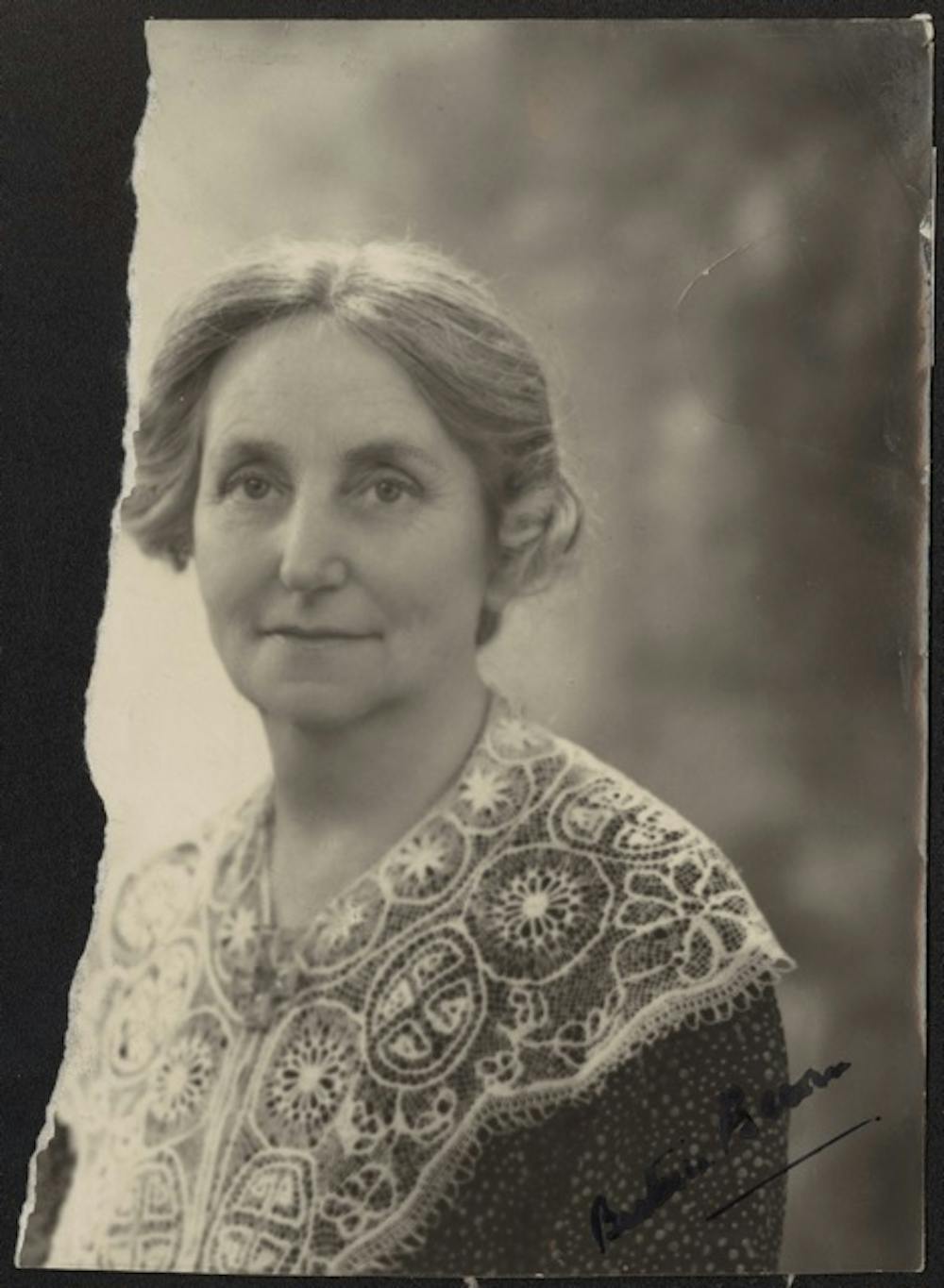
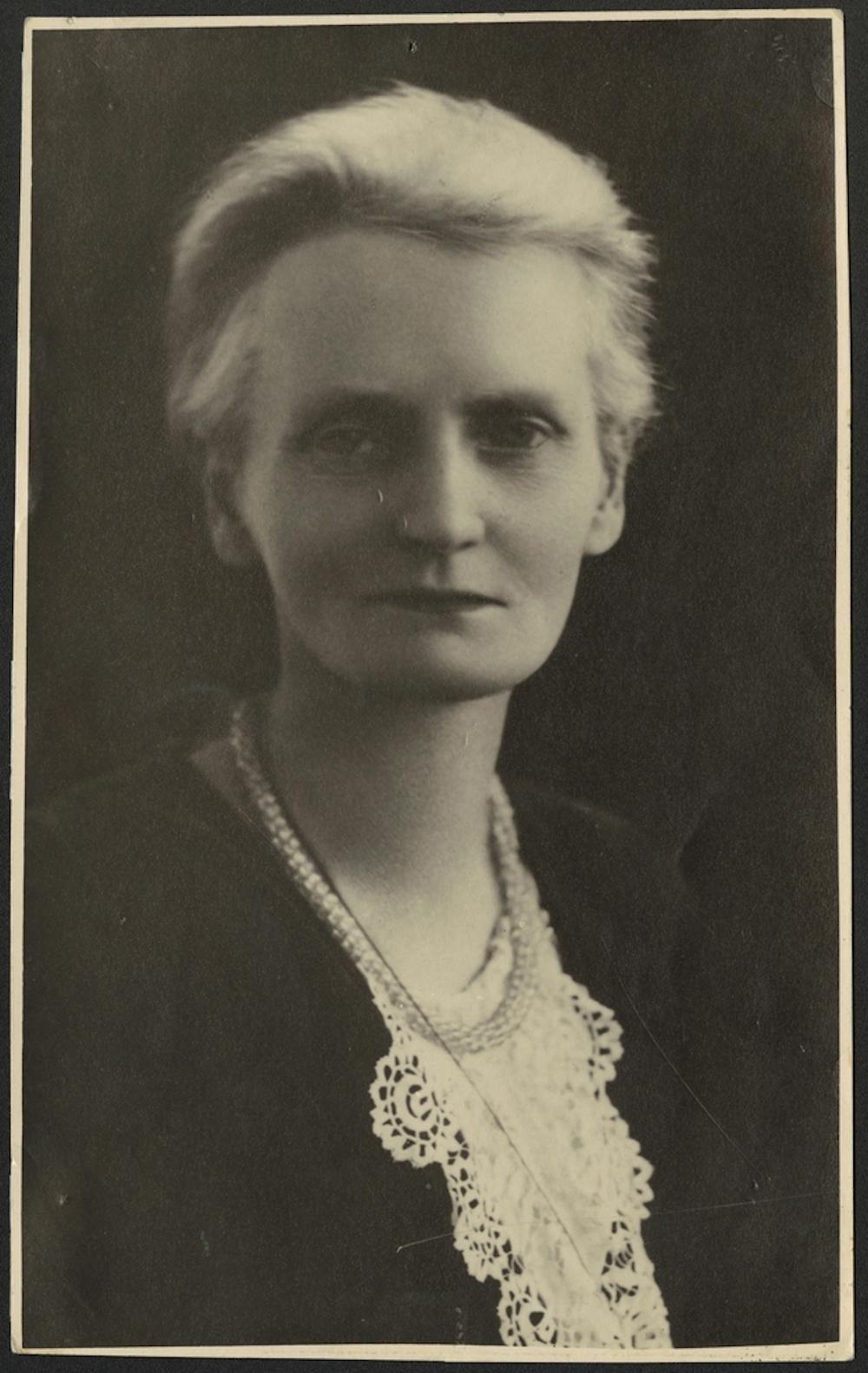
Beatrice Vale Bevan.
Photographer unknown. State Library of Victoria.

Beatrice Vale Bevan (1876-1945) is one of those whose poetry might lilt and lollop through its paces, but nevertheless what shines through is her wit, her sympathy and her plainly human reaching towards a language that might come somewhere near sensing and expressing how deplorable death had become.

At the end of her poem debating William Locke’s statement, “Human nature is only capable of a certain amount of deploring”, in the poem that offers the book its surtitle (Many Such as She), Bevan reflects upon the flowers on the twin graves of a soldier in France and his young widow at home who, it seems, had suicided: the final stanza goes:

And he and Margaret, now above,
(since heaven’s above?) no loss deplore,
But love each other more and more!
Why say we ‘dead?’ ‘Immortal dead!’
‘Immortal living!’ some have said,
When was this violet in my hand,
When summer scorched and dried the land?

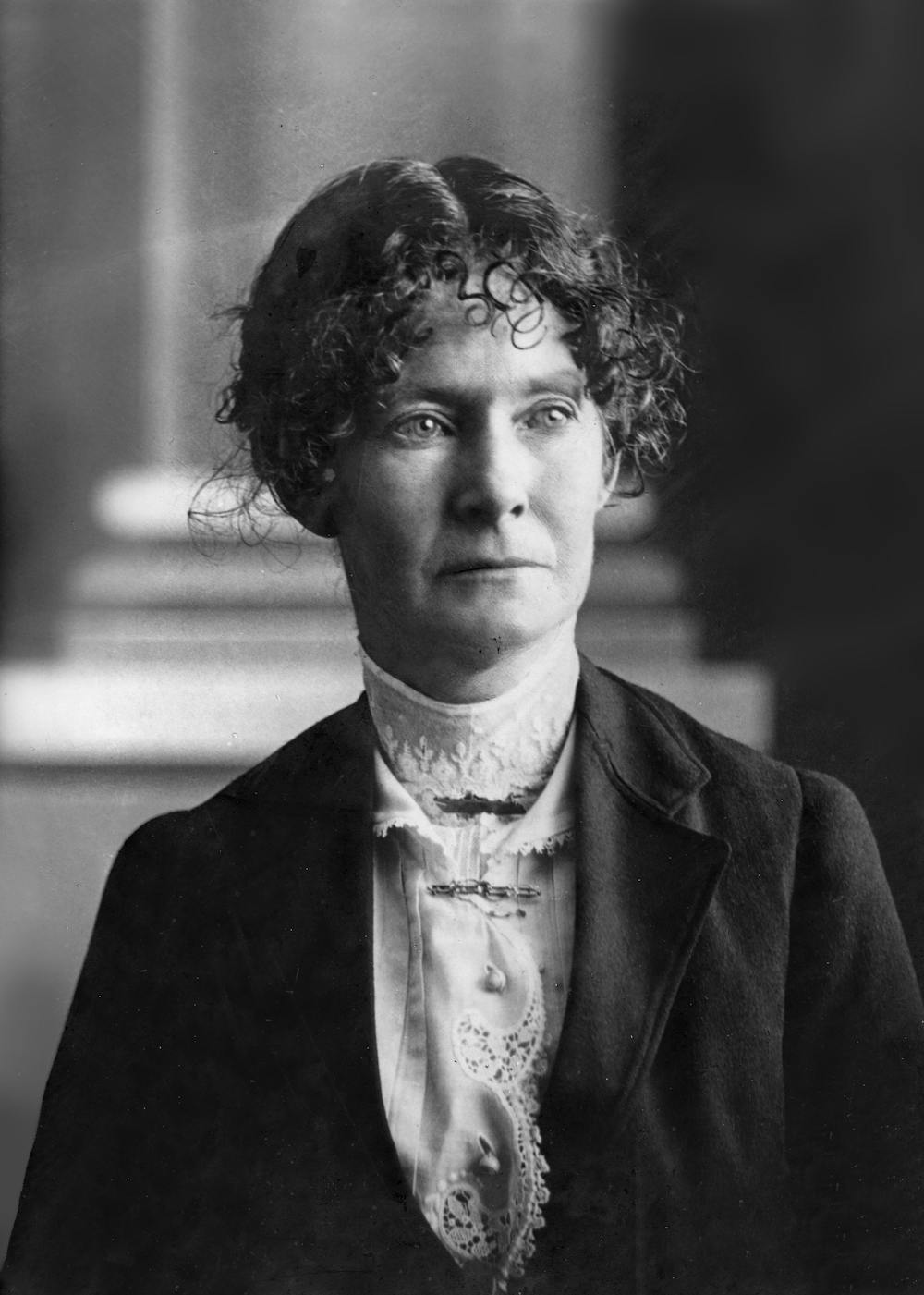
Martha Coxhead, photo by J. Ward Symons Studio, Footscray, 1916.
Courtesy of Maxwell Coxhead.

As the wife of a high ranking Congregational minister and school headmaster, Beatrice’s climactic questions, and even her asides, are hard won and bravely spoken, and do go some considerable way towards expressing a vision of widening circles of deplorable grief that a war leaves in its wake.

Among those whose poetry sees death and life as equally noble when offered to the cause of the empire, are Marion Bray (1885-1947) who offers in a short poem a simple pair of knitted socks to a soldier far away, Muriel Beverley Cole, Martha Coxhead, Violet Cramer and others.

War sprung sprightly into tripping verse

Mary Bright, a deeply committed poet and spiritualist with many publications in her lifetime, and like several of the women here, one who had lost her husband and a nephew and cousins to the war, was unafraid of imagining herself into the maddened, bewildered and patriotic minds of soldiers being killed and maimed on the battle fronts:

… we couldn’t find our mates.
They were all scattered far and wide
Through death’s untimely gates.
…. We didn’t want to die—for fame
Nor for glory did we care.
We had to go, our country called—
We did but do our share.

-From Pozières

‘E’ — Mary E. Fullerton, photo by Marietta Studio, Melbourne. Australasian, 3 July 1925, p. 14.
State Library of Victoria.

It can be difficult to know what to make of such verse. It can be a chilling experience to find that war sprung so sprightly into tripping verses. But this would be, perhaps, to mistake the tone of public literary activity in these years.

The poetry does not pretend to more than papering over what is beyond the deplorable and nearly beyond meaning. We do read tragedy between the lines here, and there is no reason this would not have been the case in 1916, perhaps especially through the prism of awareness regarding imposed and self-dictated censorship in public utterances.

Outspokenness

This situation makes the poetry of Mary Fullerton (1868-1946) remarkable for its outspokenness:

In many a cot the woman,
With the babe on her shelt’ring breast,
Is nursing his limbs for battle
A-crooning her son to rest.
All over the world the women
Give service and love and life;
While over the world the tyrants
Are brewing the brew of strife.

-From The Targets

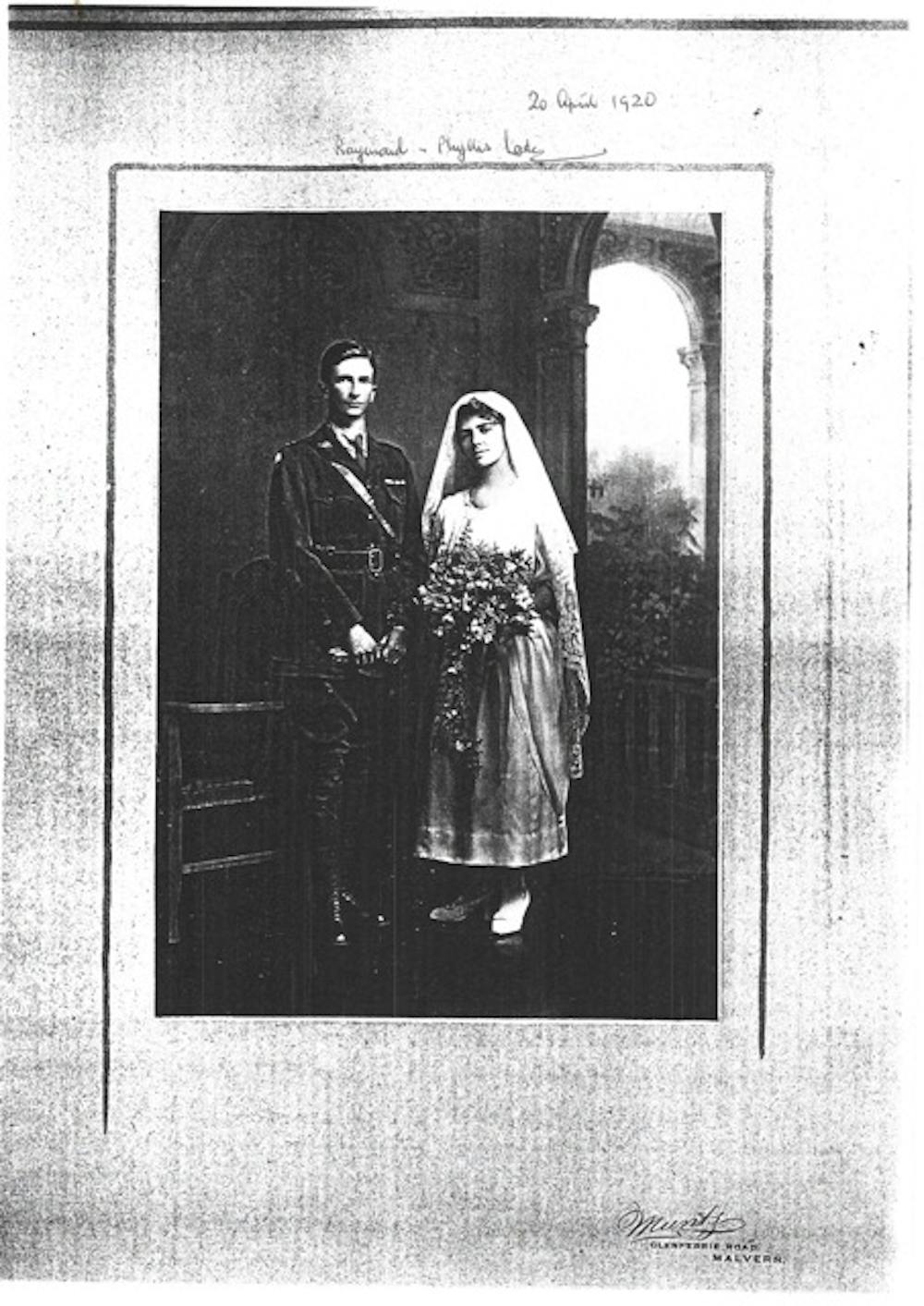
Among the bereft was Phyllis Lewis (1894-1986), a gifted teacher and briefly fiancée to a certain Robert Menzies.

Lieutenant Raymond Lade and Phyllis Lewis (wedding photo), 20 April 1920. Photograph by David Livingston Muntz, Glenferrie Road, Malvern.
Courtesy of Penny Lade.

Her one published poem, 1918, was a eulogy to her brother Owen, killed in a plane accident near Amiens: “Oh lawless howling wind—/Oh darkness none can lift—Oh hopeless night—/Oh gibbering shadows making heavy flight—/Oh soundless gloom of mind!” her long four-part poem goes when she must face what the war took from her and her family.

Recently my father died and I have inherited some boxes of papers that detail a kind of family history. Among these papers is the telegram informing my grandmother that her son, my father’s brother, died in action in New Guinea in the last week of WWII on that island.

This loss hung over my grandmother and over the whole of her family, for that war really could not stop reverberating until they died with this loss still in them. Such reverberations are the true subject matter of this anthology, and giving them our attention might be more important than we could ever suppose.

Sharkey is to be thanked for finding a way to present these 24 poets to Victorians and to Australians, and for giving us another way to understand and hear our own history. Walleah Press have done a fine job of packaging the anthology as a sturdy paperback.

Many such as She: Victorian Australian Women Poets of World War One, is edited by Michael Sharkey and published by Walleah Press.The Conversation

Kevin Brophy, Emeritus Professor of Creative writing, University of Melbourne

This article is republished from The Conversation under a Creative Commons license. Read the original article.