
The link below is to an article that takes a look at women and African publishing.
For more visit:
https://lithub.com/how-women-are-changing-the-face-of-african-publishing/

The link below is to an article that takes a look at women and African publishing.
For more visit:
https://lithub.com/how-women-are-changing-the-face-of-african-publishing/
Shutterstock
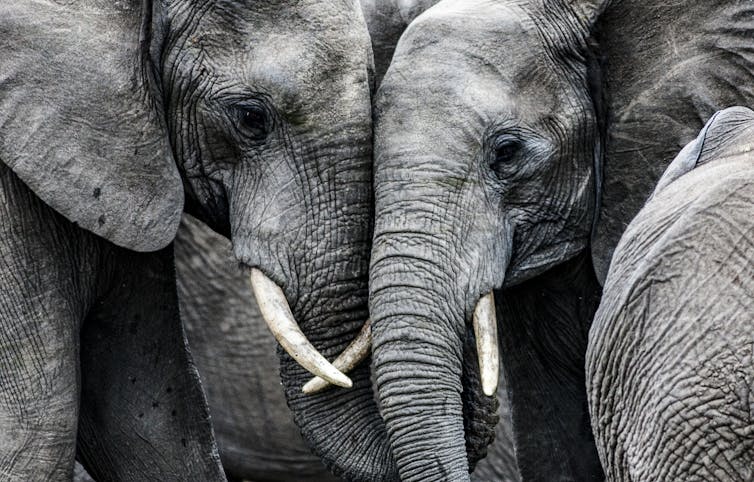
About 15 years ago I was in a Minneapolis conference centre, about to deliver a paper on elephants in Southern African fiction, when I encountered a curious local in an elevator. When I told her that one of my subjects was Wilbur Smith’s thriller, Elephant Song, she enthused,
Oh, I just loved that book; I contribute every year now to the Hohenwald Elephant Sanctuary.
I didn’t tell her that my paper critiqued the novel for being exploitative, and grossly sensationalist. Despite its title, the book is only tangentially interested in elephants – at least in comparison with Dalene Matthee’s famous Circles in a Forest, perhaps South Africa’s most eco-sensitive novel ever.
There’s no telling what people will get out of their reading. Even in our era of super-saturating graphics and television, photography and film, literature still has a considerable effect on public perceptions of environmental issues. Until very recently, of course, reading was the primary mode of information transfer. Many attitudes towards, say, elephants were established through literature, and persist in other media today.
This is the purview of my new book, Death and Compassion: The elephant in Southern African Literature. The book takes the region south of the Zambezi as its stamping-ground. It explores how various genres of literature reflect attitudes towards elephants. It takes literature in a broad sense, probing beyond the standard fiction and poetry into non-fiction forms such as hunting accounts and game-ranger memoirs.
Each chapter asks questions crucial to our understanding of our place in the natural world. It does so conscious that this understanding is the great problem of our times, superseding and enveloping all more localised and political squabbles. What is the relationship between science and compassion? Why do men hunt? How do we educate the young about animals, the environment and us? What sense of “community” might include wild and even dangerous animals?
Elephants raise the conflicting emotions involved in humanity’s ongoing struggle to balance exploitation and well-being, damage and compassion to a particularly intense pitch.
Can we look to indigenous cultures for guidance, as conveyed by rock art, folktales and proverbs? The rock art is relatively opaque, while oral productions are now so refracted through translation into modern literary media that it’s hard to be sure what the originals’ attitudes towards elephants might have been. Reverence, awe, and taboo are evident enough, but it seems that animal compassion is an invention of modernity.
Compassion, at least as it emerges in this literature, seems to develop in response to destruction. It strengthens belatedly but proportionately to the catastrophic decimation of wildlife under invading white firepower, and the consequent sense of loss. I found the chapters on the 18th Century travel accounts (from Pieter Kolbe through François Le Vaillant to John Barrow), and the later nineteenth-century hunting accounts (from Roualeyn George Gordon-Cumming to Frederick Courteney Selous) the hardest to write.
The unremitting slaughter related by these adventurers is stomach-turning to say the least. Not that the hunters were oblivious to an ethical issue: without exception they engage at some level with already-nascent arguments for compassion.
Without exception they find literary methods to evade or suppress any emotions which impede the drive to kill. The genre is distinguished by its evasive manoeuvres designed to avoid thinking about it at all.
The adult fictions, from H. Rider Haggard to Wilbur Smith, are little better, being largely gratuitously gory adventure-tales which come to centre repetitively on a duel-like situation: single hunter versus great old tusker. It seldom ends well for the elephant.
Still, a shift becomes discernible in mid twentieth-century novels. “Conservation” is gaining traction, so the novel, just as it had migrated out of the hunting account, now drifts into some commonalities with the modern game-ranger memoir. The ranger becomes the hero, saving the tusker from poachers.
Of course, shadowing all this is the ivory trade. It had existed for centuries, drove most of the early slaughter and drives the renewed slaughter today. In some estimates, an African elephant is being killed every 15 minutes.
Ironically, because of the colonial-era establishment of game reserves like Kruger, southern Africa’s elephants so flourished that that other side of slaughter – the organised “cull” – for a time became the management tool of choice. The ethics of culling preoccupy both late novels and memoirs by rangers, scientists and managers (such as Caitlin McConnell and Lawrence Anthony).
In most recent works, the relatively new perception of elephants not just as mobile repositories of ivory but as emotionally sensitive, uniquely communicative and socially complex – almost human, even a model for humans – achieves unprecedented prominence.
This is especially so in fiction for children, in which compassion and empathy seem more acceptable, as if they are merely childish motivations for action in the world. A disastrous stance.
Poachers and ivory traders are unlikely to be persuaded by literature. Nevertheless, understanding stories – those of the murderous as well as of the compassionate – is vital to generating the critical mass necessary to save natural environments and their multiple denizens, from elephants to herons, from octopi to ants – and ourselves – from the myopia of Mammon.
Compassion alone, unanchored by economic and legislative power, is unlikely to reverse the tide of environmental destruction, but without cross-species compassion, we are surely lost.
Death & Compassion: The elephant in Southern African Literature is published by Wits University Press
Dan Wylie, Professor of English, Rhodes University
This article is republished from The Conversation under a Creative Commons license. Read the original article.
Jeanne-Marie Jackson, Johns Hopkins University
African literature is the object of immense international interest across both academic and popular registers. Far from the field’s earlier, post-colonial association with marginality, a handful of star “Afropolitan” names are at the forefront of global trade publishing.
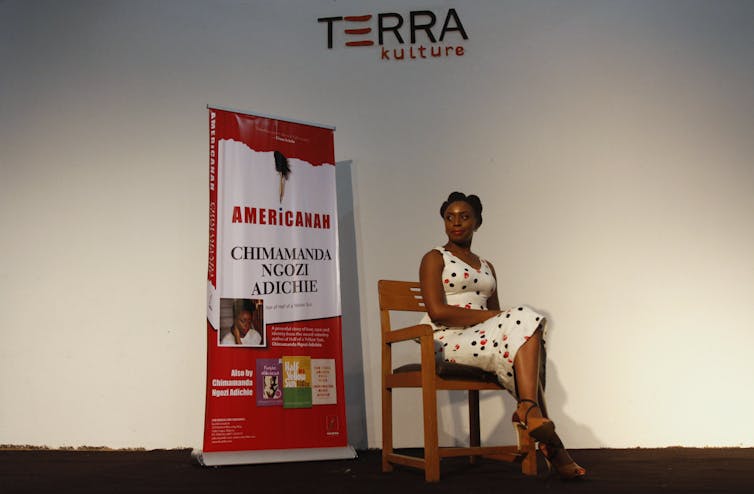
Books like Chimamanda Adichie’s “Americanah” and “Half of a Yellow Sun”, Teju Cole’s “Open City”, Taiye Selasi’s “Ghana Must Go” and Yaa Gyasi’s “Homegoing” have confounded neat divisions between Western and African literary traditions. The Cameroonian novelist Imbolo Mbue captured a million-dollar contract for her first book, “Behold the Dreamers”. That’s even before it joined the Oprah’s Book Club pantheon this year.
Such commercial prominence, though, has attracted considerable and unsurprising push back from Western and Africa-based critics alike. Far from advancing narratives with deep roots in local African realities, such critics fear, many of Africa’s most “successful” writers hawk a superficial, overly diasporic, or even Western-focused vision of the continent.
The most visible of these critiques has been directed at the Zimbabwean writer NoViolet Bulawayo’s “We Need New Names” (2013). The Nigerian novelist Helon Habila worried in a review in the London Guardian that it was “poverty-porn”. The popular Nigerian critic Ikhide Ikheloa (“Pa Ikhide”) frequently makes a similar point. Fellow Nigerian writer Adaobi Nwaubani critiqued the West’s hold on Africa’s book industry in a much-circulated New York Times piece called “African Books for Western Eyes”.
Such debates about African writing could, and likely will, go on forever. Questions about Africa’s place in the current global literary marketplace broaden some of the most urgent queries of the postcolonial era. Who gets to document African realities? Who are the “gatekeepers” of African publishing traditions?
It goes on: To what sort of audience does African writing cater? What is the role – and what should it be, if any – of Western institutions in brokering cultural prestige?
All these issues merit concern.
Too often, though, African writing ends up volleyed between two default poles of “corporate global” and “activist local”. Some onlookers, as in a recent essay by the Canadian scholar Sarah Brouillette, go as far as to name the biases of even Africa-based print outlets. Kenya’s Kwani Trust is exposed as “Western-facing” due to a web of donor relations. “West” here is code for neoliberal. “Western-facing” is for complicity with a market that skews toward British and American interests.
Faced with a “world system” argument like Brouillette’s, African literature would seem trapped between a rock and a hard place.
But, in fact, this tells only a small part of the story of how African writing now makes its way through the world. It is incomplete to the point of being outdated, given the boom over the past five years in new, globally conscious small US literary presses collaborating with African writers.
A “West subsuming Africa” brand of critique works fine for scholars with no real skin in the game of literary publishing. It also denies real agency to a lot of African writers and other literary professionals. On the ground the literary field is far more forward-thinking and diverse.
There is an entire new body of African writing that escapes this closed circuit of damning truisms. A wave of new or recently galvanised independent literary presses in the US and the UK are working in tandem with some of Africa’s most generative outlets. Together they are publishing and promoting work by young and adventurous African writers.
Books published originally by presses like Umuzi (South Africa), amaBooks (Zimbabwe) and Kwani (Kenya) find second lives with international publishers working to defy the constraints of profitability. They’re mostly labours of love with skeleton staffs that speak to a transcontinental commitment to innovative African writing.
Here are a few key examples of African texts published by independent American outlets – “independent” here refers to presses beyond the “Big Five” US trade publishers (Hachette Book Group, HarperCollins, Macmillan, Penguin Random House and Simon and Schuster.
These include Jennifer Nansubuga Makumbi’s Ugandan epic “Kintu” which was originally launched by Kwani. It was the first Anglophone novel put out by the brand-new Transit Books based in Oakland, California. The press seeks maximum visibility for translated fiction alongside texts originally written in English. They advocate for more ethical legal and financial dealings with translators, as well as international writers.
A number of similarly tiny, ambitious ventures have published some of the most acclaimed recent African writing in translation. Deep Vellum Publishing was behind the English translation of Fiston Mwanza Mujila’s Etisalat Prize-winning “Tram 83”.
Also dedicated exclusively to works in translation, LA-based Phoneme Media in 2016 published the first ever Burundian novel in English, Roland Rugero’s deeply contemplative “Baho!”. Phoneme’s tagline, fittingly, is “curious books for curious people”.
In a similar vein, Brooklyn’s Restless Books was founded to combat “parochial, inward-looking, and homogenised trends in American publishing”. Among their forthcoming titles, translated from the French is Naivo’s “Beyond the Rice Fields”. It’s the first novel from Madagascar to see its way to English.
Veteran nonprofit press Archipelago Books is also in Brooklyn. In 2015, it published the translation from the Portuguese of Angolan writer Jose Eduardo Agualusa’s “A General Theory of Oblivion”.
Every one of these throws a wrench in a clear, cynical sense of what kind of novel Western presses prize. That is not to mention the many African writers, publishers, and editors working in concert to promote these same texts.
It applies to the Anglosphere too. Books that offer a decidedly more locally textured experience than those of the “Afropolitan” rock stars have made their way abroad through small, focused channels.
These works might include Tendai Huchu’s “The Maestro, the Magistrate, and the Mathematician” (published originally by amaBooks, and in the US by Ohio University Press); Imraan Coovadia’s “Tales of the Metric System” (from Umuzi, and again by Ohio University Press); and Masande Ntshanga’s “The Reactive” (also Umuzi; in the US by family-run Two Dollar Radio.
Clearly, this collection just scratches the surface. But what these works have in common is an investment in stylistic and structural experimentation that confounds rather than caters to an international taste for “digestible” fiction, or to mostly Western points of cultural and institutional reference.
This counter-current of transnational African literary life complicates the equation of culture, geopolitics and economics in more useful ways than stale materialist critiques.
As such titles and presses continue to gain acclaim and recognition by an international readership that is aware of and hostile to shallow representations of Africa – and who crave engagement with challenging fiction, regardless of its origin – critics will need to rethink some of their orthodoxies.
 There is more to both African literature and Western publishing than meets an eye too practised in its suspicion. If literature is doomed only to echo the failings of globalisation, then why bother? On the contrary, a new generation of writers and publishers deserve our awareness of the “global literary marketplace” as a meaningfully multidimensional space.
Jeanne-Marie Jackson, Assistant Professor of World Anglophone Literature, Johns Hopkins University
This article was originally published on The Conversation. Read the original article.
The link below is to an article that takes a look at African fiction.
For more visit:
http://www.theguardian.com/books/2016/apr/06/how-not-to-talk-about-african-fiction
One of the most disadvantaged areas in the world is Africa, where so many people live in poverty, along with all of the accompanying issues associated with poverty. It is a tragic situation, which the West can do a lot more about.
To help the African situation visit:
A response to reading ‘365 Ways to Change the World,’ by Michael Norton
 At the BookShelf