Unknown's avatar

The Murri Book Club and the politics of reading for Indigenous Australians


File 20180706 122271 16toi9s.jpg?ixlib=rb 1.1
Australian book clubs are overwhelmingly white, middle-aged, middle-class and female.
Shutterstock.com

Maggie Nolan, Australian Catholic University

Although the 2018 Closing the Gap report on Indigenous disadvantage highlighted the importance of literacy for Indigenous Australians, progress remains slow. But, while reading is widely considered an unmitigated good and a marker of prestige, it is not a simple issue for some Indigenous Australians.

I have been investigating the politics of reading for Indigenous Australians by visiting the Murri Book Club, an Indigenous book club, in Townsville and discussing the role of books and reading in its members’ lives. As one woman told me:

No one ever read to me as a child. The only reading we ever had was church … reading at Bible studies. We had to get hit with a stick to sit still and stop moving and making noises … And so, to me, reading was restrictive, I suppose, and boring because of that part. It was never fun.

One of the concerns for members of the Murri Book Club is that books and reading are linked to the ongoing history of assimilation that, even now, presumes a divide between Indigenous oral story-telling and non-Indigenous literacy. This is why the members of the club show more ambivalence towards reading than might be expected of a typical book club.

Book clubs have been described by scholar Marilyn Poole as “one of the largest bodies of community participation in the arts in Australia”. Current research suggests that these clubs are overwhelmingly white, middle-class, middle-aged and female. Members of most mainstream book clubs are part of what Wendy Griswold has termed “the reading class”, which is small in size but immense in cultural influence.


Read more:
Three reasons why the gaps between Indigenous and non-Indigenous Australians aren’t closing


Reading and power

Janeese Henaway, the Indigenous Library Resources Officer at the library, started the book club in 2011 and introduced me to the group. Janeese was raised just south of Townsville in a town called Ayr. When Janeese was asked to facilitate a book club, it was suggested to her that they follow the model practised by the Brisbane-based Reconciliation Reading Group that has met monthly in the Queensland State Library for over 15 years.

But Janeese was unsure about how to proceed.

I didn’t know at that point how to run the club in a way that was culturally appropriate … I explained that we did not then want to go to a book club and have heavy discussions on Indigenous issues. The group predominantly wanted a light, entertaining and enjoyable experience. Although we’re Murris, we are also readers.

One woman told me she joined the group because she wanted to set an example for her son. While many book clubs operate within an unspoken discourse of self-improvement, it is rare for book club members to be so explicit.

For this member, reading is a cultural resource that carries significant weight. As she tells it, her son is much more interested in (Indigenous) culture and, for him, reading and culture are “two separate things”. She recalls him asking, “Why I gotta read for? I’m gonna be an Island boy, man, when I grow up. You don’t need to read”. For her son, culture is about story, not about reading.

There is a long history, particularly throughout the assimilation era, of Aboriginal and Torres Strait Islander people being actively prevented from speaking their languages. Members of the Murri book club are aware that policies of assimilation mean less access to oral stories. The imposition and authority of the written word can be seen to clash with Indigenous practices of oral story-telling. A commitment to reading can make some Indigenous people feel that they must sacrifice other cultural values that have sustained them as individuals, families and communities for millennia.


Read more:
Read, listen, understand: why non-Indigenous Australians should read First Nations writing


Members of the Murri book club experience this sacrifice as a cultural compromise. One member, an Aboriginal and Torres Strait Islander Indigenous Liaison Officer at a tertiary institution, suggested the solution is more Indigenous-authored texts that record Indigenous knowledge. But he is also aware that the focus on reading has come at a cost:

But these guys … [the others in the Murri book club] I envy them … Like the oral stories are there [for me], but they’re not in that layer that these guys have. And then because of that book, the authority of the book, when you get them old people to talk, they say, ‘Ah, that’s not true. It’s not in a book.’ Only, every now and then, they say, ‘It doesn’t all have to be in a book.’

In response to this recollection of the authority of books as a source of truth, another member responded: “But keep in mind that you were trained in that way … Print had authority over the spoken word.”

Although she loves reading, this member rarely reads the book club books. She comes along primarily for social reasons — for connecting with community. In spite of her love of books and reading, she is very conscious of the fact that books, and the authority of written language, were key tools in undermining oral traditions in her home of the Torres Strait. Indeed, the Murri book club, as a whole, are more aware than most that reading is connected to power.

The ConversationIn their discussions, the Murri Book Club has taken a communal institution so often associated with white, middle-class culture and remade it as a force for decolonising contemporary cultures of reading. It challenges assumptions not only about book clubs, but also about Aboriginal and Torres Strait Islander Australians. While reading can come with significant cultural baggage for some Indigenous people, it can also be a powerful tool.

Maggie Nolan, Senior lecturer in Humanities, Australian Catholic University

This article was originally published on The Conversation. Read the original article.

Unknown's avatar

Read, listen, understand: why non-Indigenous Australians should read First Nations writing


File 20170703 32578 hod947
Alexis Wright won the Miles Franklin award for her 2006 novel Carpentaria.
AAP Image/Dean Lewins

Meera Atkinson, University of Sydney

Do you read Australia’s First Nations (Indigenous) writers? If not, why not? People read for many reasons: information, entertainment, escape, to contemplate in company, to be moved. Reading can also be a political act, an act of solidarity, an expression of willingness to listen and to learn from others with radically different histories and lives.

In his new book, Australia’s Unthinkable Genocide, professor Colin Tatz writes that Australia suffers from “wilful amnesia”; storytelling is a way of remembering.

Despite good intentions, Royal Commissions, and endless policy initiatives such as Closing the Gap, conditions for many First Nations people remain unacceptable. During National Reconciliation Week, the Uluru Statement from the Heart was released, calling for “the establishment of a First Nations Voice enshrined in the Constitution”. Even if there remain differences of opinion within First Nations communities as to process and aims, the onus is on non-Indigenous Australians to respect First Nations demands to speak and be heard.

The time is well overdue for non-Indigenous Australians to engage with the First Nations of this country, and their narratives, on their terms. Interest in the experience and concerns of others is crucial to combating social ills like racism. Writing and reading literature can be acts of intimacy, and as such reading can be a vital form of listening.

Where to start?

In Australia, white writers and scholars are more read than writers and scholars of colour. Non-Indigenous Australians often simply fail to seek out other voices and perspectives. Sometimes it’s a case of not knowing where to start.

Tony Birch and Sandra Phillips have offered excellent suggestions for those keen to explore First Nations writing, and as Michelle Cahill points out, literary journals are also a rich source of discovery.

My own list is by no means definitive or exhaustive. It is but a handful of books I view as important reading. These are unique literary voices that command attention.

Don’t Take Your Love to Town
Ruby Langford Ginibi (Penguin Books 1988, UQP 2007)


Goodreads

This bestselling autobiography precedes the impressive entries into the emerging 21st century First Nations canon that follow. It is a contemporary classic of Australian literature, and it was the first book I read by a First Nations writer. Published the same year of Australia’s contested “bicentenary”, Langford Ginibi’s story continues to test the learned indifference of white Australians. Written during the Royal Commission into Aboriginal Deaths in Custody, Don’t Take Your Love to Town tells the tale of a woman caught at the intersection of gendered and raced injustice with admirable and endearing honesty.

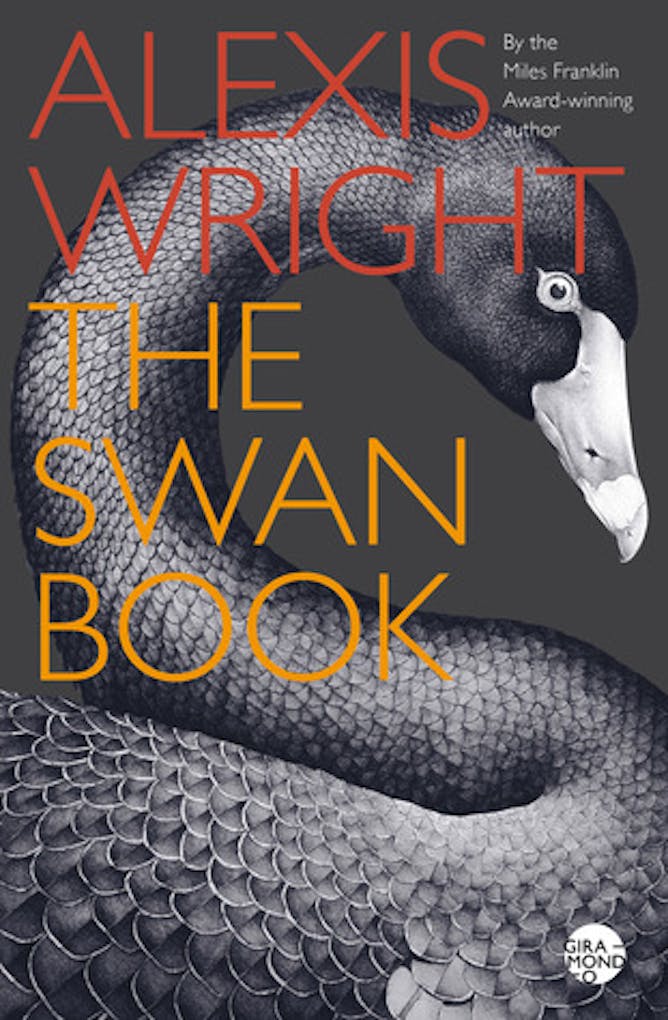
Carpentaria and The Swan Book
Alexis Wright (Giramondo 2006, 2013)


Goodreads

I’ve written about Carpentaria in an essay for Reading Australia, and I discuss both books at length in my forthcoming academic book The Poetics of Transgenerational Trauma. In short, these books matter. This is innovative writing forging cross-cultural trauma testimony that portrays a country in crisis and in desperate need of recovery from the devastating realities of colonialism and racism. There’s no way around it, Wright is not an easy read. These two novels are as far from literary comfort food as it gets. But those able to relax into Wright’s wildly experimental world-making are rewarded with insights and nothing less than a renewed vision of this land and appreciation for the complex communities that inhabit it.

Dirty Words
Natalie Harkin (Cordite Books 2015)

One of my favourite books of recent years, Dirty Words is a whip-smart conceptual collection of poems about the state of the nation and the spectre of its shameful history. Authored by a Narungga scholar and creative practitioner, this slim volume may well knock your socks off and leave you questioning everything you read and hear. Harkin’s poems about the domestic servitude of her Narungga forebears might even move you to tears.

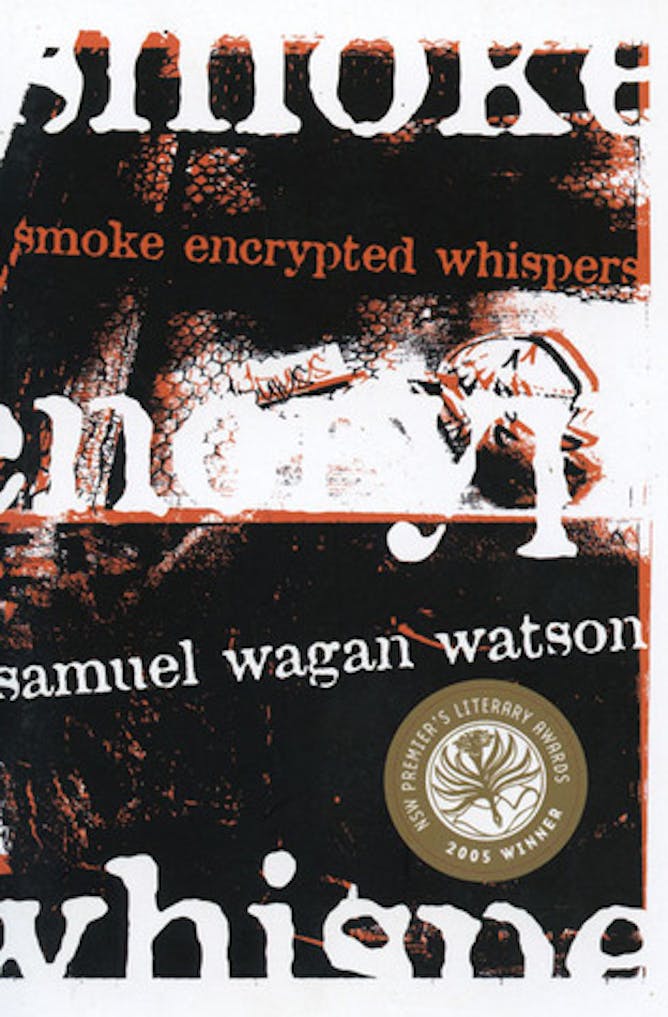
Smoke Encrypted Whispers
Samuel Wagan Watson (UQP 2004)

“Childhood anxieties would eventually help me realise the power of imagination”, writes Wagan Watson in “author’s notes # 1”. This generous, award-winning collection of poems later became a multi-modal arts project when its cycle of 23 poems served as inspiration for musical compositions. Poems like “white stucco dreaming” evoke familial ties within societal divides and the daily rituals of suburbia, while “a verse for the cheated” depicts the hidden tragedies of Queensland’s glamorous coastal tourist traps. At times Wagan Watson turns his muscular lyricism outward to consider the world at large, but he soon circles back to home-grown griefs and wonders.

Other highly recommended titles

Heat and Light
Ellen van Neerven (UQP 2014); Inside my Mother
Ali Cobby Eckermann (Giramondo Poets 2015); Mogwie-Idan: Stories of the Land
Lionel Fogarty (Vagabond Press 2012)

These books do the crucial work of testifying to transgenerational trauma and representing and celebrating surviving First Nations cultures and peoples. Each demonstrates, as Tony Birch puts it, the “potential for Aboriginal writing to productively shift the national story”.

Witnessing trauma

Australians, generally speaking, have an inadequate understanding of transgenerational trauma and underestimate the effects of the extreme and sustained traumas experienced by First Nations communities. Transgenerational trauma is the process by which trauma is passed down through successive generations.

There is some debate about if and how this takes place, but transmission likely has various pathways through families, individuals, and culture at large. Colonialism and its aftermath – frontier wars, slavery, dispossession, and stolen children – proved a hotbed for severe traumas and legacies of transmission. The challenge is for non-Indigenous Australians to take responsibility for their own education and become familiar with the voices and concerns of those who have peopled this continent for eons.

Given the depth and scope of the inequity, clearly much more than reading alone is called for. But reading truth-telling accounts of our history and contemporary Australia by First Nations writers is one way of participating in a national dialogue.


What’s your favourite book by a First Nations writer? Leave your recommendations in the comments below.

The ConversationRead also: a Warlpiri translation of ‘Dreamtime’ and ‘The Dreaming’ – an introduction.

Meera Atkinson, Sessional Tutor, Creative Writing, University of Sydney

This article was originally published on The Conversation. Read the original article.

Unknown's avatar

Indigenous picture books offering windows into worlds


File 20170602 8008 xu0xn4
Front cover of Tjarrany Roughtail – the book features a collection of Dreaming stories.
Magabala Books

Ambelin Kwaymullina, University of Western Australia

In this series, we’ll discuss whether progress is being made on Indigenous education, looking at various areas including policy, scholarships, school leadership, literacy and much more.


In a town by the sea that lies in the homeland of the Yawuru people, there sits a small publisher. But in the scope of its ambition, the depth and complexity of its range, and its commitment to bringing the voices of Aboriginal and Torres Strait Islander peoples to all Australians, Magabala Books looms large on the Australian literary landscape.

The Broome-based publisher was established in the 1980s, partly in response to concerns that Indigenous stories were being taken and published without permission by non-Indigenous academics and storytellers.

Today, Magabala has the most extensive list of Indigenous children’s literature of any Australian publisher. So for parents and teachers looking to introduce children to the many worlds of Aboriginal and Torres Strait Islander peoples, Magabala Books is a good place to begin.

And anyone who buys a Magabala publication also has the comfort of knowing that they are purchasing an ethically published book. Indigenous peoples hold copyright in their stories and there is a return of benefits to the Indigenous storytellers and/or their communities.

While it is not possible to cover the depth of Magabala’s range in a single article, I offer here, as a starting point, five picture books that have wisdom to share with all ages. While most of these books are listed as suitable for lower primary, I’d suggest this is the point at which children can begin reading the books but not where enjoyment of these texts ends.


Magabala Books

Tjarany Roughtail

By Gracie Greene, Joe Tramacchi and Lucille Gill

Ability: lower primary

First published in 1992, this book is rightly considered a classic. A collection of Tjukurrpa (Dreaming) stories of the Kukatja people of the Kimberley region of Western Australia, Tjarany Roughtail is a bilingual illustrated narrative in which the pictures speak as powerfully as the words. It is also a book that can grow with children through the layers of knowledge it offers.

Young children will enjoy the stories of the Dreaming ancestors. Older children can explore the diagrams that explain the meaning of the symbols used in the artwork, as well as the maps of the Kukatja kinship system which shows the web of relationships between Aboriginal peoples and their homelands. And all ages can treasure a book that is at once a culture, language, art and philosophy text.


Magabala Books

Stolen Girl

By Trina Saffioti and Norma MacDonald

Ability: lower primary

This is a Stolen Generations tale written by Trina Saffioti (Gugu Yulangi people) and illustrated by leading artist Norma MacDonald (Yamatji and Nyungar peoples). It is told in nuanced, sparse text accompanied by illustrations that convey the warmth of family, the terror of removal, and the loneliness of life in an institution. The book ends with the hope of returning home, captured through the image of a girl stepping through a half open door into a sunlit landscape.

Stolen Girl is a moving tale that gently introduces children to a traumatic aspect of Australian history that echoes through the lives of Indigenous peoples today.


Magabala Books

Fair Skin Black Fella

By Renee Fogorty

Ability: lower primary

This masterful work by Wiradjuri writer and illustrator Renee Fogorty addresses Aboriginal identity, and in particular that being Indigenous is about culture, community and family rather than skin colour. The story is brought to life by illustrations that sensitively and appropriately capture the message of a tale that speaks to the importance of inclusiveness and belonging.


Magabala Books

Our World

By the One Arm Point Remote Community School

Ability: Upper primary

What is life like in worlds different from your own? This book tells of the Bardi Jaawi people of the Ardiyooloon community, weaving together history and traditional stories with the seasons and rhythms of everyday existence.

Our World features the children’s artwork as well as photographs of them undertaking activities such as fishing, constructing windmills from pandanus leaves, and learning animal tracks. As a whole, the book conveys a wonderful sense of Bardi Jaawi children speaking of their lives to the child-readers of the text in a meeting of lives and worlds.


Magabala Book

Once

By Dub Leffler

Ability: lower primary

This reconciliation tale by artist and writer Dub Leffler (Bigambul and Mandandanji people) is an evocative tale of friendship across difference, with the poetic text given full expression in illustrations that capture the beauty of the story and speak straight to the heart.

These books, along with the many other narratives by Indigenous storytellers, offer opportunities for children and adults to journey through diverse Indigenous realities – and in so doing, to begin to build bridges across worlds.


The ConversationRead more articles in this series.

Ambelin Kwaymullina, Assistant Professor (Law School), University of Western Australia

This article was originally published on The Conversation. Read the original article.
Unknown's avatar

‘The Fatal Shore,’ by Robert Hughes


This is not the usual book review I guess, as I haven’t yet read the entire book. I have however started to read this book, which I think is now regarded as a must read on early Australian history. I have read the first 5 chapters or the first 157 pages – it is a 688 page work.

‘The Fatal Shore’ is by Robert Hughes and was first published in Great Britain by Collins Harvill in 1987. My edition is the paperback edition of 1996, published by The Harvill Press in London.

‘The Fatal Shore’ is the story of convict settlement in Australia, from the early history of transportation from England to Australia, including the steps that led to it. It describes in straight forward, matter of fact way, the plight of English convicts being sent to Botany Bay in all of its brutal reality. The reality of the picture painted by Robert Hughes removes any lingering thoughts of pioneering adventure with which the convicts may have been involved in. It is a harsh world, where the punishment dished out far exceeded the crimes involved in many, many cases.

There are individual accounts of convicts and their crimes, with detailed descriptions of the horrors they endured on a voyage to New South Wales or one of the other colonies as they were established around Australia.

It is not just a story of the convicts, it is a story of invasion, as Aboriginal Australia gave way before the steady push of colonial endeavour by the English invaders. It is the story of the red coats, of the sailors, of the governors, etc. In short, it is a history of the convict era in Australia and all that it brought with it.

I am enjoying this account of early Australian history and would recommend it to anyone who has not yet read it – especially those living in Australia. It seems to me to be a more honest account of Australia’s early history than that which we may hear about in school – if we hear much about it at all. A must read.