
The link below is to a book review of ‘God Is – A Devotional Guide to the Attributes of God,’ by Mark Jones.
For more visit:
https://derekzrishmawy.com/2017/07/06/god-is-by-mark-jones-review/

The link below is to a book review of ‘God Is – A Devotional Guide to the Attributes of God,’ by Mark Jones.
For more visit:
https://derekzrishmawy.com/2017/07/06/god-is-by-mark-jones-review/
The link below is to a book review of ‘This Changes Everything,’ by Jaquelle Crowe.
For more visit:
https://www.9marks.org/review/book-review-this-changes-everything-by-jaquelle-crowe/

Bryan Gaensler, University of Toronto
Editor’s note: The Conversation Canada asked our academic authors to share some recommended reading. In this instalment, Bryan Gaensler, an astronomer who wrote about life in 2167, highlights a few of his recent picks.
My passion is science fiction. Here are my favourite sci-fi books that I’ve read this year:
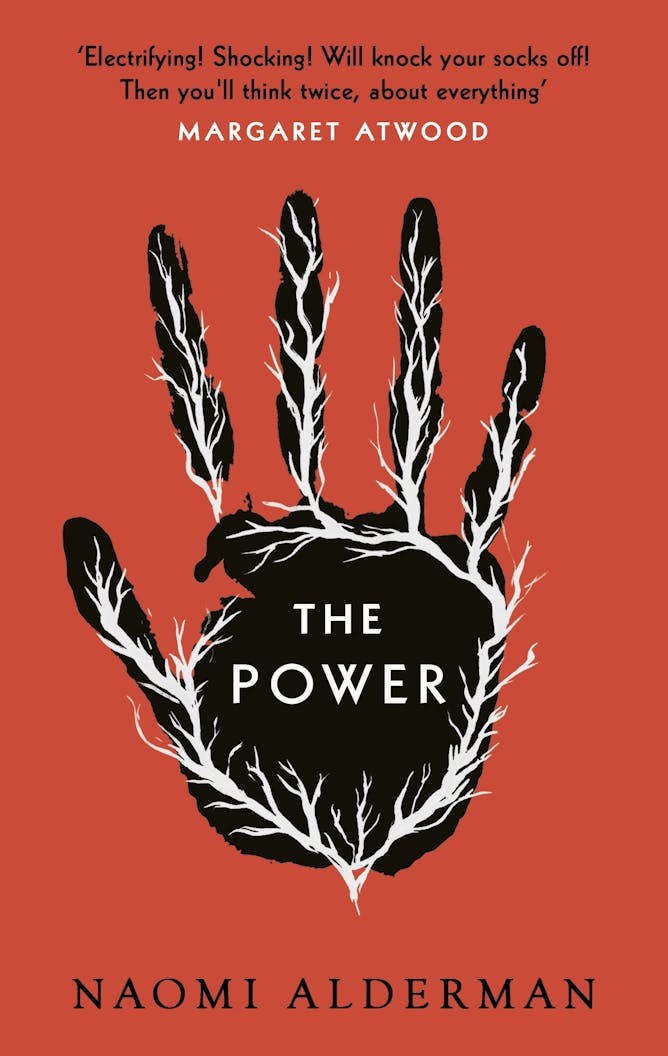
by Naomi Alderman (Penguin)
Women around the globe spontaneously develop the ability to deliver electric shocks through their fingertips. As they begin to use this power to intimidate, control and kill, the world order is turned upside down.
A spectacular novel, and surely the favourite to sweep all the sci-fi book awards for 2017. People can be both cruel and good-intentioned, often at the same time. Introduce a new power imbalance, and society is abruptly transformed. Wonderful writing, and a whopper of a story twist. Turns The Handmaid’s Tale on its head.
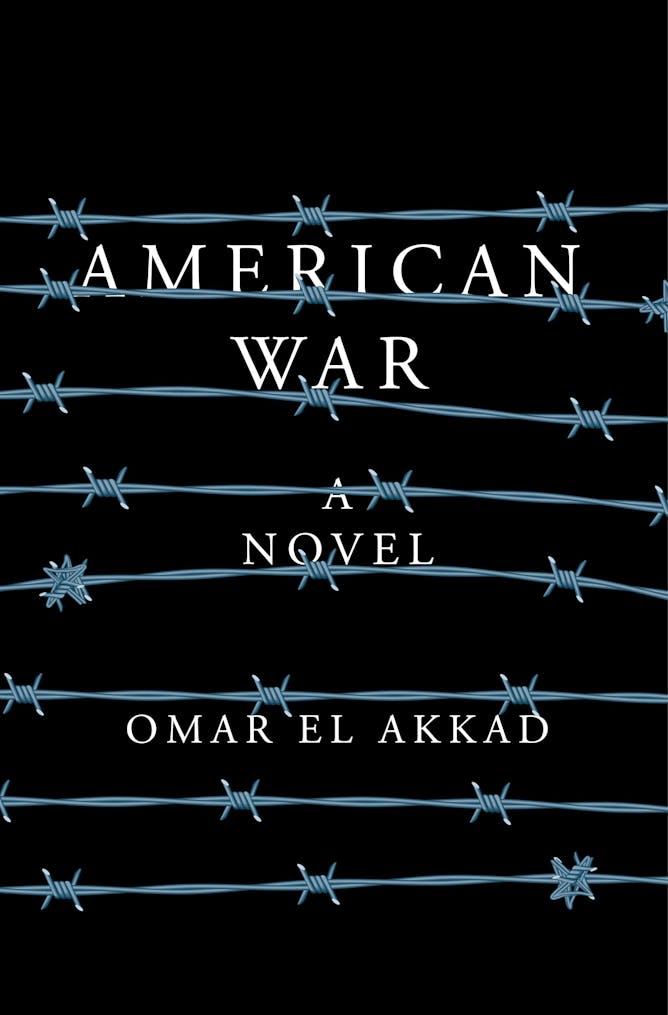
by Omar El Akkad (McClelland & Stewart)
A hundred years from now, Florida has vanished under the seas, the Bouazizi Empire is the new world superpower, and the United States has begun its second civil war. In the South, a young woman ends up in a refugee camp and is slowly radicalized into terrorism.
An intense, moving portrait of a future America that maybe isn’t the future after all. The characters are complex and the story is all too real. A spectacular debut.

by Elan Mastai (Doubleday Canada)
Tom Barren travels back in time, accidentally alters the course of history, and returns to a horrifically changed, dystopian present day. The catch? Tom grew up in a utopia of flying cars and moon bases, and the dystopia that he finds himself trapped in is our timeline, warts and all.
A gem of a story that provides several new twists on time travel. If you’ve screwed up the timeline, should you fix it? What if there were two different ways to travel through time, with different rules and different consequences? And under all of this is the classic sci-fi question writ on the scale of billions of lives: Do the needs of the many outweigh the needs of a few? Hard to put down, with a lovable lead character.

by Paul Auster (McClelland & Stewart)
The life story of Archibald Isaac Ferguson, born in 1947 in Newark, N.J. Except that this is the story of four identical Fergusons, each of whom take divergent paths as their lives play out.
A tour de force story of adolescence and the path not taken. It’s hard to believe a single author could possibly cram so many real-life details, emotions and characters into a single book. Extraordinarily memorable and engaging.
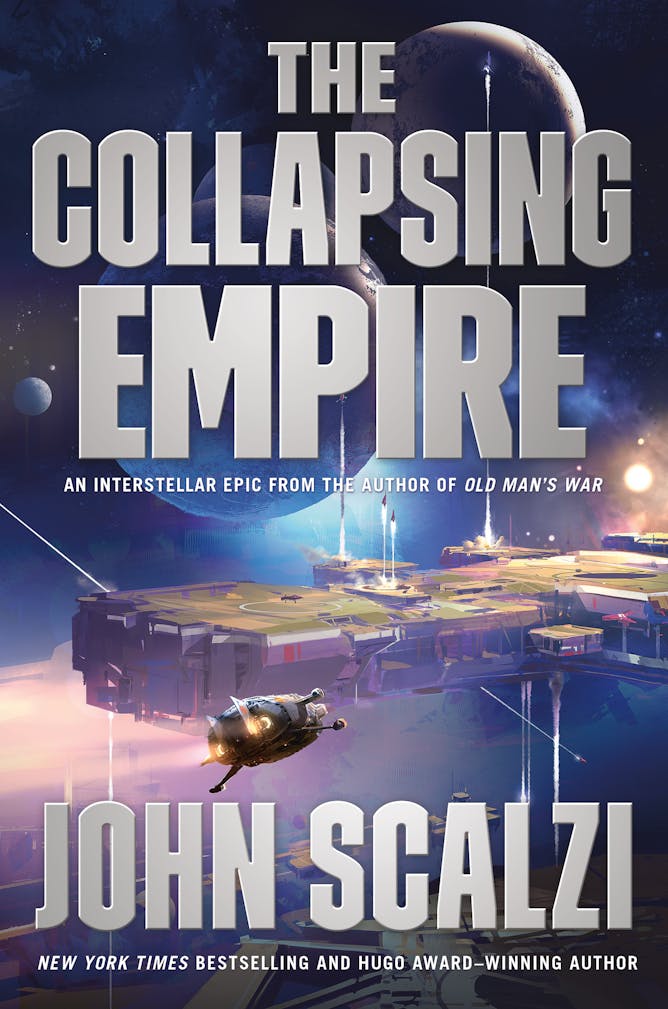
by John Scalzi (Tor)
Humans have spread throughout a galactic empire, our worlds interconnected by faster-than-light wormholes. But what happens to trade, the economy and civilisation itself when the wormholes start to break down?
 A fun and fast-spaced space opera, centred on some forthright women and some fresh ideas. In the spirit of Asimov’s Foundation, Scalzi explores the theme of the downfall of empire on a galaxy-spanning scale.
Bryan Gaensler, Director, Dunlap Institute for Astronomy and Astrophysics, University of Toronto
This article was originally published on The Conversation. Read the original article.

Chawton House Library
Catriona Seth, University of Oxford
Two prominent writers died in July 1817. The first was arguably the most famous woman in Europe. The other was a country clergyman’s daughter whose life had revolved around her family and her home county.
Germaine de Staël travelled widely and her work had been translated into several languages. She was the only daughter of wealthy Swiss banker Jacques Necker, who became finance minister to Louis XVI, and was brought up in the stimulating environment of Parisian society. She published major treatises on the influence of passions on individuals and nations, on literature and its relationship to society, not to mention on Germany (1813). She wrote on Marie Antoinette’s trial, on peace, on translation, on suicide.
Her novels Delphine (1802) and Corinne or Italy (1807) were bestsellers throughout Europe. She was also a commentator on, and historian of, the French Revolution in texts which only appeared after her death. Most periodicals felt that anything she penned, fact or fiction, political or philosophical, was worthy of a mention – whether to praise or to condemn it.
Unlike Staël’s father, George Austen encouraged his daughter Jane’s literary pursuits: he bought her notebooks for her early stories, gave her a mahogany writing desk and attempted (unsuccessfully) to get her work into print in 1797. Jane Austen’s first published book, Sense and Sensibility, “a new novel by a lady”, which came out in 1811, bore no author’s name on its title page. The same would go for the other novels published in her lifetime – all sold well and brought a welcome income but, to the outsider, nothing could connect them with the discreet woman who, through her richer brother’s generosity, lived with her mother and sister in a cottage on his estate.
Staël’s death in Paris was widely reported. The Monthly Magazine, before commenting at length on the funeral arrangements, opened a “Further Notice of Madame de Staël” with the following assertion:
To speak of the literary celebrity of Madame de Staël, of the elevated talent which distinguished her, of all the talent which placed her among the first writers of the age, would be to speak of all things known to all France and to all Europe … To speak of her generous opinions, her love for liberty, her confidence in the powers of intelligences and of morality, confidence which honours the soul which experiences it, would be, perhaps, in the midst of still agitated parties, to provoke ill-disposed impressions.
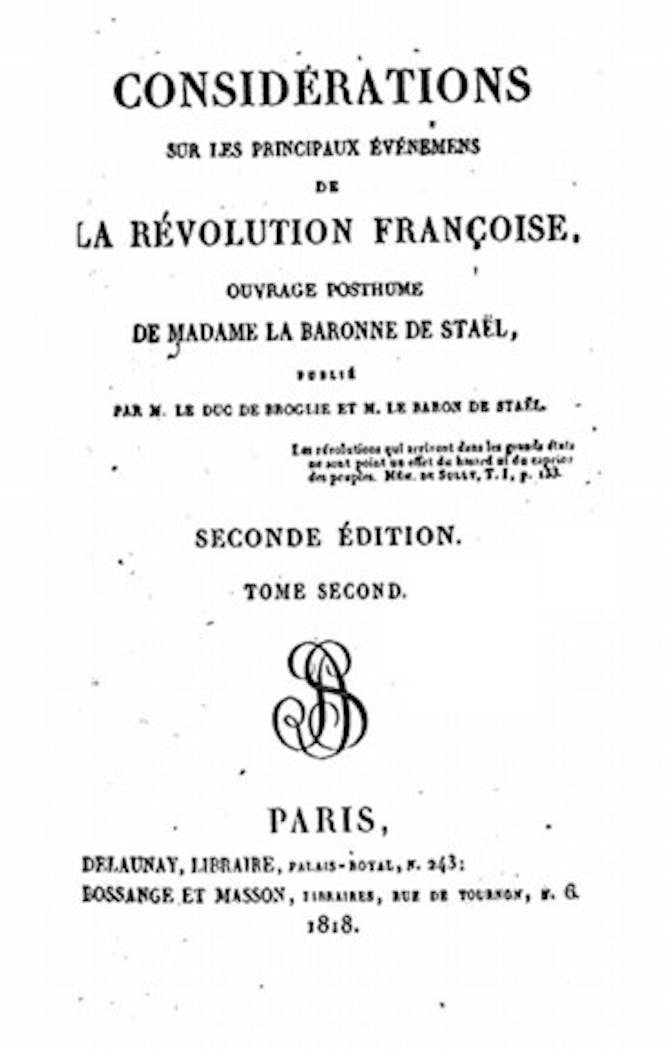
Staël had been reviled for her political ideas, caricatured by the gutter press for her unconventional looks and lifestyle, exiled by several regimes, and treated by Napoleon as a personal enemy, to the extent that it was said that the emperor recognised three powers in Europe: England, Russia and Madame de Staël.
When the unmarried “Miss Jane Austen” died in Winchester four days after Staël, the announcement her family (probably) wrote recalled she was the daughter of a clergyman and acknowledged that she was the author of Emma, Mansfield Park, Pride and Prejudice and Sense and Sensibility. It added:
Her manners were most gentle, her affections ardent, her candour was not to be surpassed, and she lived and died as became a humble Christian.
Future biographical notes, including the one penned by her nephew – A Memoir of Jane Austen – developed this image. He wrote of his aunt:
Of events her life was singularly barren: few changes and no great crisis ever broke the smooth current of its course. Even her fame may be said to have been posthumous: it did not attain to any vigorous life till she had ceased to exist. Her talents did not introduce her to the notice of other writers, or connect her with the literary world, or in any degree pierce through the obscurity of her domestic retirement.

To this day, in the only authenticated portrait of her – a sketch by her sister Cassandra – she looks the part in her simple cap and dress, so unlike Staël’s flamboyant turban and scarlet gown. More than “Miss Austen”, she is “Jane Austen”, someone to whom we feel we can relate. Her admirers, readers but also cinephiles who have enjoyed the adaptations, come from all the corners of the earth, are known as “Janeites”.
Many of Staël’s works have long been out of print or available only in pricey scholarly editions. She is recognised as one of the forerunners of 19th-century liberalism but does not have the common appeal and widespread recognition that time has brought to Austen.
The seeds for the “fickle fortunes” – to borrow the title of the current exhibition at Chawton House (the “Great House” lived in by her brother Edward Austen-Knight which is now home to a library of early women’s writing) – of the international literary superstardom of Austen and the waning of Staël’s fame are partly present in these obituaries.
Austen’s family cleverly crafted a reputation for demureness and devotion to both God and family as a way of deflecting from the sometimes ambiguous contemporary attitude towards women authors. Her life was presented as quintessentially English and uneventful and her character as modest and self-effacing – in many ways the opposite of Staël’s.
In a late addition to his biographical sketch about his sister, 15 years after the death of both women, Henry Austen claimed that when invited to a party Staël was due to attend, Austen “immediately declined”.
 This probably imaginary anecdote illustrates an essential reason for Austen’s success: yes, she is a great writer, but so too is Staël. Austen’s existence threatened nobody. Staël’s championing of republican ideals, consideration of the role of emotion in politics and use of fiction to promote geopolitical and societal reflections meant her life could be discussed and her works forgotten. Considering them jointly can help us question what shapes our canon of great writers.
Catriona Seth, Marshal Foch Professor of French Literature, University of Oxford
This article was originally published on The Conversation. Read the original article.

Chris Mackie, La Trobe University
Homer’s Iliad is usually thought of as the first work of European literature, and many would say, the greatest. It tells part of the saga of the city of Troy and the war that took place there. In fact the Iliad takes its name from “Ilios”, an ancient Greek word for “Troy”, situated in what is Turkey today. This story had a central place in Greek mythology.
The poem deals with a very short period in the tenth year of the Trojan war. This sometimes surprises modern readers who expect the whole story of Troy (as, for instance, in Wolfgang Petersen’s 2004 film Troy). But Homer and other early epic poets confined their narratives to particular periods in the war, such as its origins, key martial encounters, the fall of the city, or the returns of the soldiers to Greece. There is no doubt that Homer and other early poets could rely on a very extensive knowledge of the Trojan war among their audiences.

The central figure in the Iliad is Achilles, the son of Peleus (a mortal aristocrat) and Thetis (a sea-goddess). He comes from the north of Greece, and is therefore something of an outsider, because most of the main Greek princes in the poem come from the south. Achilles is young and brash, a brilliant fighter, but not a great diplomat. When he gets into a dispute with Agamemnon, the leading Greek prince in the war, and loses his captive princess Briseis to him, he refuses to fight and remains in his camp.
He stays there for most of the poem, until his friend Patroclus is killed. He then explodes back on to the battlefield, kills the Trojan hero Hector, who had killed Patroclus, and mutilates his body.
The Iliad ends with the ransom of Hector’s body by his old father Priam, who embarks on a mission to Achilles’ camp in the gloom of night to get his son’s body back. It is worth noting that the actual fall of Troy, via the renowned stratagem of Greeks hidden within a Wooden Horse, is not described in the Iliad, although it was certainly dealt with in other poems.
All of this takes place under the watchful gaze of the Olympian gods, who are both actors and audience in the Iliad. The Olympians are divided over the fate of Troy, just as the mortals are – in the Iliad the Trojan war is a cosmic conflict, not just one played out at the human level between Greeks and non-Greeks. Ominously for Troy, the gods on the Greek side, notably Hera (queen of the gods), Athena (goddess of wisdom and war), and Poseidon (god of the land and sea), represent a much more powerful force than the divine supporters of Troy, of whom Apollo (the archer god and god of afar) is the main figure.
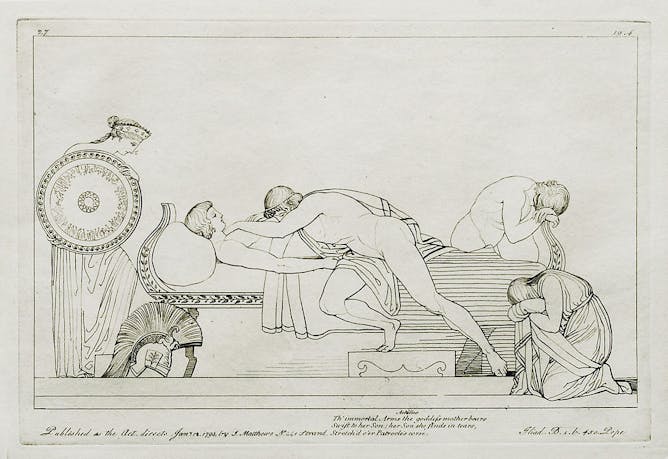
The Iliad is only one poetic work focused on the war for Troy; many others have not survived. But such is its quality and depth that it had a special place in antiquity, and probably survived for that reason.

We know virtually nothing about Homer and whether he also created the other poem in his name, the Odyssey, which recounts the return journey of Odysseus from the Trojan war, to the island of Ithaca. The Iliad was probably put together around 700 BC, or a bit later, presumably by a brilliant poet immersed in traditional skills of oral composition (ie “Homer”). This tradition of oral composition probably reaches back hundreds of years before the Iliad.
Early epic poetry can be a way of maintaining the cultural memory of major conflicts. History and archaeology also teach us that there may have been a historical “Trojan war” at the end of the second millennium BC (at Hissarlik in western Turkey), although it was very unlike the one that Homer describes.
The Iliad was composed as one continuous poem. In its current arrangement (most likely after the establishment of the Alexandrian library in the early 3rd century BC), it is divided into 24 books corresponding to the 24 letters of the Greek alphabet.
It has a metrical form known as “dactylic hexameter” – a metre also associated with many other epic poems in antiquity (such as the Odyssey, and the Aeneid, the Roman epic by Virgil). In the Odyssey, a bard called Demodocus sings on request in an aristocratic context about the Wooden Horse at Troy, giving a sense of the kind of existence “Homer” might have led.
The language of the Iliad is a conflation of different regional dialects, which means that it doesn’t belong to a particular ancient city as most other ancient Greek texts do. It therefore had a strong resonance throughout the Greek world, and is often thought of as a “pan-Hellenic” poem, a possession of all the Greeks. Likewise the Greek attack on Troy was a collective quest drawing on forces from across the Greek world. Pan-Hellenism, therefore, is central to the Iliad.
A central idea in the Iliad is the inevitability of death (as also with the earlier Epic of Gilgamesh). The poignancy of life and death is enhanced by the fact that the victims of war are usually young. Achilles is youthful and headstrong, and has a goddess for a mother, but even he has to die. We learn that he had been given a choice – a long life without heroic glory, or a short and glorious life in war. His choice of the latter marks him out as heroic, and gives him a kind of immortality. But the other warriors too, including the Trojan hero Hector, are prepared to die young.
The gods, by contrast, don’t have to worry about dying. But they can be affected by death. Zeus’s son Sarpedon dies within the Iliad, and Thetis has to deal with the imminent death of her son Achilles. After his death, she will lead an existence of perpetual mourning for him. Immortality in Greek mythology can be a mixed blessing.
The Iliad also has much to say about war. The atrocities in the war at Troy are committed by Greeks on Trojans. Achilles commits human sacrifice within the Iliad itself and mutilates the body of Hector, and there are other atrocities told in other poems.
The Trojan saga in the early Greek sources tells of the genocide of the Trojans, and the Greek poets explored some of the darkest impulses of human conduct in war. In the final book of the Iliad, Achilles and Priam, in the most poignant of settings, reflect upon the fate of human beings and the things they do to one another.

It was often said that the Iliad was a kind of “bible of the Greeks” in so far as its reception within the Greek world, and beyond, was nothing short of extraordinary. A knowledge of Homer became a standard part of Greek education, be it formal or informal.
Ancient writers after Homer, even the rather austere Greek historian Thucydides in the 5th century BC, assume the historicity of much of the subject-matter of the Iliad. Likewise, Alexander the Great (356-323BC) seems to have been driven by a quest to be the “new Achilles”. Plutarch tells a delightful story that Alexander slept with a dagger under his pillow at night, together with a copy of Homer’s Iliad. This particular copy had been annotated by Alexander’s former tutor, the philosopher Aristotle. One can only imagine its value today had it survived.
In the Roman world, the poet Virgil (70-19BC) set out to write an epic poem about the origins of Rome from the ashes of Troy. His poem, called the Aeneid (after Aeneas, a traditional Trojan founder of Rome), is written in Latin, but is heavily reliant on Homer’s Iliad and Odyssey.
 My own view is that Virgil knew Homer off by heart, and he was probably criticised in his own life for the extent of his reliance on Homer. But tradition records his response that “it is easier to steal Heracles’ club than steal one line from Homer”. This response, be it factual or not, records the spell that Homer’s Iliad cast over antiquity, and most of the period since.
Chris Mackie, Professor of Greek Studies, La Trobe University
This article was originally published on The Conversation. Read the original article.
The link below is to a book review of ‘Reset,’ by David Murray.
For more visit:
https://www.9marks.org/review/book-review-reset-by-david-murray/
The link below is to a book review of ‘Reflections on the Revolution in France,’ by Edmund Burke.
For more visit:
https://www.theguardian.com/books/2017/jul/31/100-best-nonfiction-books-reflections-on-the-revolution-in-france-edmund-burke

Kara Allen, University of Melbourne
The French refer to the emergence from general anaesthesia as “réanimation” – literally to restore consciousness. This is a crucial attribute – that consciousness will return following the desired period of oblivion. This is skilfully explored in Kate Cole-Adams’ book Anaesthesia.
Cole-Adams delves into questions about consciousness and self. Are we restored fully to self or does the experience of anaesthesia change us in a way that may not be measurable? The result is a nuanced, powerful book, grounded in Cole-Adams’ decision to undergo scoliosis surgery, and developed around the analogy of submerging in a bottomless sea and breaking into wakefulness like a swimmer surfacing from the depths.
Anaesthetists have a short time to establish rapport with a patient who is quite literally putting their life in our hands. We know our purpose is to provide unconsciousness and analgesia, so short-term harm can take place for long-term gain. Cole-Adams writes eloquently:
It is a form of denial that enables them to act upon us in ways that would otherwise be unthinkable. To ignore the ghostly griefs and joys and hopes that trail each of us into the operating rooms, and to get on with the vital business of slicing, splicing and excision.
Occasionally the book strays into the sensational, particularly with reference to studies investigating situations where people have become aware while under anaesthesia, but don’t have a memory of this happening. But predominantly, Cole-Adams writes compassionately and competently about the art and science of anaesthesia, and of practitioner and patient.
As a practitioner, it’s fascinating and beautifully written. Some 50% of the population of Australia and New Zealand are not sure that anaesthetists are doctors, so a book that outlines the contribution of a specialist anaesthetist is very welcome.
Much of Cole-Adams’ focus is on two of the biggest aims of anaethesia: rendering the person unaware of what is happening, and ensuring they don’t remember it later. She also explores the complex question of consciousness – if we don’t form memories of an experience, and have no detectable conscious perception at the time, does the experience cause us harm?
Cole-Adams explores the phenomenon where people become aware during surgery, and can remember it. This is known as “awareness with recall”. There’s no doubt awareness with recall is an important problem with profound implications for the patient.

A large study found the number of patients aware during surgery was extremely low (measured by validated questionnaires administered after the operation), although some procedures (such as those with very large volumes of blood lost) and patients (such as those with severe heart or lung disease) were at higher risk than others.
Most cases were brief and not associated with distress or pain. Compassionate, timely disclosure of the events leading to the awareness and psychological support decreased long-term implications such as post-traumatic stress disorder, which could otherwise be severe.
She examines several “spooky little studies” that found people were aware under anaesthetic, but spends less time on the studies that failed to find evidence these things occur. The popular press like to focus on graphic and shocking stories, but it’s important to remember these are rare and extreme cases.
She also explores “perception under anaesthesia” – where a person may show a preference for certain words or images they heard or saw under anaesthesia. Studies have shown the overwhelming majority of patients have no detectable memories or evidence of consciousness under general anaesthesia.
And does it matter if someone perceives they’re in surgery while under anaesthetic if they don’t remember it afterwards? We don’t have enough information to say perception while undergoing surgery won’t affect someone psychologically if they don’t remember it. The process of surgery and post-operative recovery can all take a psychological and physical toll. It’s an interesting question, but almost impossible to answer.
Awareness is a rare but real problem that should be examined, whereas we’re not really sure perception under anaesthesia exists. And if it does, we don’t know if it would affect the patient at all since they have no memory of it.
Consciousness is a continuum – from drowsy through to completely inert. In situations where sedation is required, anaesthetists will administer drugs to cause amnesia, reduce pain and occasionally cause brief periods of unconsciousness. There are no hard and fast barriers between sedation and general anaesthesia – “deep sedation” often looks very much like general anaesthetic.
As consciousness recedes, harm to heart and lung function are more likely. This is particularly concerning when sedation is administered by health professionals without specialty training or indeed medical training. Only the term “specialist anaesthestist” is protected, so a less qualified person may administer anaesthesia or sedation, for example by the proceduralist in cosmetic surgery or dentistry. It’s one thing to put a patient to sleep; it may be a more difficult task to wake them up again.
This is fundamentally a story, not a scientific text, and has the potential to be slightly alarming for the uninitiated. We are fortunate in Australia that anaesthesia is extremely safe and highly reliable, but often there is emphasis on complications in the media. Cole-Adams has thought deeply about these topics, resulting in a book that is an exploration of the psychological, physiological and at times philosophical roles of anaesthesia and the implications for modern surgery.
 For the interested reader, it’s an outline of the science, with an emphasis on the unknown. For the practitioner, it’s a patient experience, eloquently expressed. There’s much more to anaesthesia than meets the eye, and this book provides a glimpse into the depths.
Kara Allen, Clinical Lecturer, Anaesthetist, University of Melbourne
This article was originally published on The Conversation. Read the original article.
 At the BookShelf
_(14779852741).jpg)
You must be logged in to post a comment.