English has achieved prime status by becoming the most widely spoken language in the world – if one disregards proficiency – ahead of Mandarin Chinese and Spanish. English is spoken in 101 countries, while Arabic is spoken in 60, French in 51, Chinese in 33, and Spanish in 31. From one small island, English has gone on to acquire lingua franca status in international business, worldwide diplomacy, and science.
But the success of English – or indeed any language – as a “universal” language comes with a hefty price, in terms of vulnerability. Problems arise when English is a second language to either speakers, listeners, or both. No matter how proficient they are, their own understanding of English, and their first (or “native”) language can change what they believe is being said.
When someone uses their second language, they seem to operate slightly differently than when they function in their native language. This phenomenon has been referred to as the “foreign language effect”. Research from our group has shown that native speakers of Chinese, for example, tended to take more risks in a gambling game when they received positive feedback in their native language (wins), when compared to negative feedback (losses). But this trend disappeared – that is, they became less impulsive – when the same positive feedback was given to them in English. It was as if they are more rational in their second language.
While reduced impulsiveness when dealing in a second language can be seen as a positive thing, the picture is potentially much darker when it comes to human interactions. In a second language, research has found that speakers are also likely to be less emotional and show less empathy and consideration for the emotional state of others.
For instance, we showed that Chinese-English bilinguals exposed to negative words in English unconsciously filtered out the mental impact of these words. And Polish-English bilinguals who are normally affected by sad statements in their native Polish appeared to be much less disturbed by the same statements in English.
In another recent study by our group, we found that second language use can even affect one’s inclination to believe the truth. Especially when conversations touch on culture and intimate beliefs.
Since second language speakers of English are a huge majority in the world today, native English speakers will frequently interact with non-native speakers in English, more so than any other language. And in an exchange between a native and a foreign speaker, the research suggests that the foreign speaker is more likely to be emotionally detached and can even show different moral judgements.
And there is more. While English provides a phenomenal opportunity for global communication, its prominence means that native speakers of English have low awareness of language diversity. This is a problem because there is good evidence that differences between languages go hand-in-hand with differences in conceptualisation of the world and even perception of it.
In 2009, we were able to show that native speakers of Greek, who have two words for dark blue and light blue in their language, see the contrast between light and dark blue as more salient than native speakers of English. This effect was not simply due to the different environment in which people are brought up in either, because the native speakers of English showed similar sensitivity to blue contrasts and green contrasts, the latter being very common in the UK.
On the one hand, operating in a second language is not the same as operating in a native language. But, on the other, language diversity has a big impact on perception and conceptions. This is bound to have implications on how information is accessed, how it is interpreted, and how it is used by second language speakers when they interact with others.
We can come to the conclusion that a balanced exchange of ideas, as well as consideration for others’ emotional states and beliefs, requires a proficient knowledge of each other’s native language. In other words, we need truly bilingual exchanges, in which all involved know the language of the other. So, it is just as important for English native speakers to be able to converse with others in their languages.
The US and the UK could do much more to engage in rectifying the world’s language balance, and foster mass learning of foreign languages. Unfortunately, the best way to achieve near-native foreign language proficiency is through immersion, by visiting other countries and interacting with local speakers of the language. Doing so might also have the effect of bridging some current political divides.
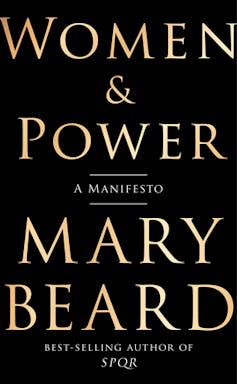
Professor Mary Beard’s latest book Women & Power: A Manifesto is a short, sharp analysis of women in the West and their ongoing struggles for a voice in the public domain. Based on two lectures delivered in 2014 and 2017, Beard chronicles some of the major obstacles women continue to face, framing her analysis through the lens of the legacies of ancient Greece and Rome.
In her first essay, Beard provides some examples from antiquity to illustrate the social and gender dynamics inherited in the West. In short, she traces the long heritage of women being told to shut up.
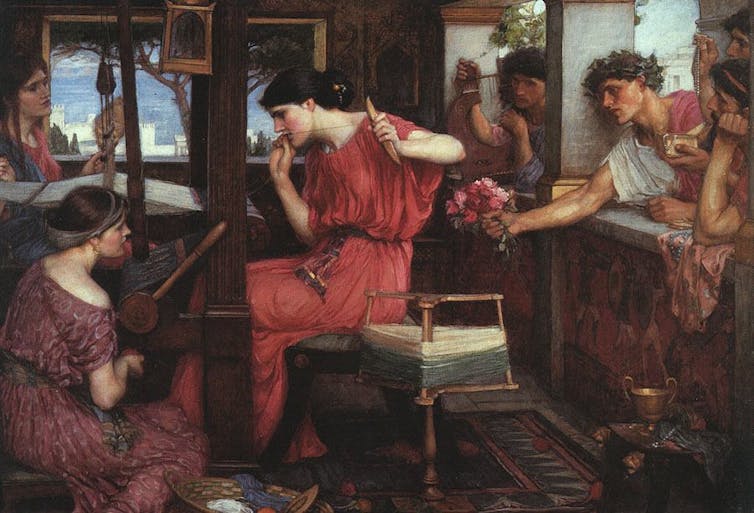
Beard’s first example is Penelope. A main character in Homer’s Odyssey, Penelope is the faithful wife of the epic’s eponymous hero Odysseus. A hero of the Trojan War, Odysseus spends 10 years at Troy and then another 10 years trying to return to his home in Ithaca, where Penelope and their adolescent son Telemachus wait.
In a scene from Odyssey Book One, Penelope enters the communal (read male) space of her husband’s palace and complains about a song that is being performed by one of the entertainers. Telemachus immediately orders her to return to her chambers and resume women’s work. He further reminds her that stories are the preserve of men. Men engage in public discourse. Women face exclusion from it.
This is not the only example of silencing women in the Homeric epics. In Book One of the Iliad, thought to be composed at least a generation earlier than the Odyssey, Zeus is confronted by his wife Hera who challenges him on a matter concerning the course of the Trojan War. In an assertion of his divine authority, Zeus demands Hera’s silence and threatens her with violence if she persists in opposing him.
In both instances, the message is clear. As Beard observes, “right where written evidence for Western culture starts, women’s voices are not being heard in the public sphere”. On Telemachus telling his mum to “zip it”, Beard points out that “as Homer has it, an integral part of growing up, as a man, is learning to take control of public utterance and to silence the female of the species”.
It may seem incredible that some 2,500 years since the Homeric epics, women are still silenced in public. But the myths of Archaic Greece continue to maintain relevance to modern reality. Even when women occupy a public platform, they are regularly met with verbal and written ripostes.
We’re still being silenced
In 2017, Tony Abbott told Ray Hadley on 2GB that Australia’s Sex Discrimination Commissioner Kate Jenkins should “pull her head in” after her organisation recommended that Commonwealth Government contractors aim for at least 40% of female employees as part of a strategy to address workplace gender imbalance.
Tony Abbott in 2017. Lukas Coch/AAP
“Pull your head in” means, essentially, shut up and mind your own business. Abbott’s reprimand mirrors Telemachus’ command to Penelope to pull her head in and retreat to the private (female) sphere.
In Scotland, meanwhile, in 2016, then UK Independence Party leadership candidate, Raheem Kassam, tweeted about the First Minister, Nicola Sturgeon: ‘Can someone just, like … tape Nicola Sturgeon’s mouth shut? And her legs, so she can’t reproduce’.
Nicola Sturgeon in 2018. Will Oliver/EPA
In Canada, in the same year, MP Michelle Rempel described how a male parliamentary colleague had once asked that she refrain from speaking until she was “less emotional”.
Beard also recounts the myths of Ovid’s Metamorphoses, including the tales of Io “turned by the god Jupiter into a cow, so she can cannot talk but only moo”, “the chatty nymph” Echo “punished so that her voice is never her own, merely an instrument for repeating the words of others” and Philomela, who is raped and silenced by her violator, who cuts out her tongue after she tries to scream out the crime.
These may seem like frivolous tales of make-believe. But like all myths, legends and fairy tales, they contain subtle layers of meaning both for the ancients who invented them and for those today who experience their content in new forms.
Beard, no stranger to virtual threats similar to those meted out to Philomela, has opened a public space for women to name and to challenge their silencing. By detailing examples from the past to illuminate the present, she has shown us how far women in the West have come. But compellingly, she has also shown us how close we are at times to the ancient Greeks and Romans.
Women & Power’s most important contribution to the current advances and failures of feminism in the West is its encouragement of contemplation and understanding. To reflect on the silencing of women addresses urgent feminist issues of the 21st century, including the low number of cases of domestic violence, sexual harassment and assault that are reported to authorities, the opposition to the public voice of the #MeToo movement and the vileness of trolling.
Beard reminds us that women need to claim the public space and speak. To scream, yell and rewrite the script we have been assigned to deliver since the mythical age of Penelope.







 Beard reminds us that women need to claim the public space and speak. To scream, yell and rewrite the script we have been assigned to deliver since the mythical age of Penelope.
 At the BookShelf
You must be logged in to post a comment.