
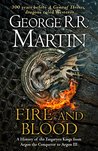
 Fire and Blood: A History of the Targaryen Kings from Aegon the Conqueror to Aegon III as scribed by Archmaester Gyldayn by George R.R. Martin
My rating: 3 of 5 stars

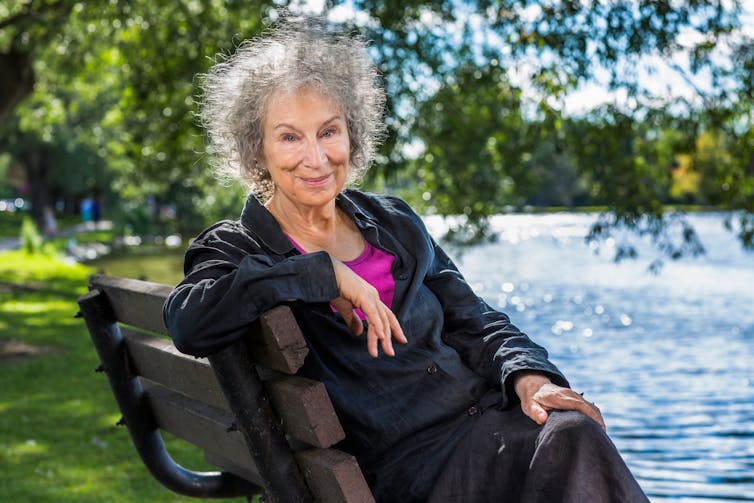
Camilla Nelson, University of Notre Dame Australia
The crimson cloaks and white bonnets of Margaret Atwood’s dystopian feminist classic The Handmaid’s Tale have become a distinctive feature of Trump’s America. They’ve been worn by protestors outside state legislatures across the country, as elected officials attempt to enact laws limiting women’s reproductive rights.
Let’s face it, there are few costumes in classic or contemporary literature that will immediately tell everybody exactly why you’re there. But for the unfamiliar, the cloaks are invariably accompanied by posters with slogans like “The Handmaid’s Tale is not an instruction manual” and “Make Margaret Atwood fiction again”.
Atwood’s dystopia was undoubtedly on the minds of the hundreds of people – nearly all of them women – who filled the concert hall at the Sydney Opera House on Sunday to listen to her speak. So eager were they to hear that the tickets to the talk hosted by UNSW’s Centre for Ideas sold out in a record 45 minutes.
Read more:
Why women are dressing up as Margaret Atwood’s Handmaids
The Handmaid’s Tale describes a toxic world in which misogyny and environmental degradation has turned the US into a totalitarian theocracy. The fictional republic of Gilead has enforced a system of gender-based violence, enslaving the few women capable of bearing children to serve as “handmaidens” to the ruling class.
In Gilead, lesbians and “gender traitors” are hanged. Citizens are tracked, watched, and spied upon. Women are not permitted to read. Children are torn from the arms of their birth mothers. There are deadly skirmishes at the borders, as refugees attempt to flee.
Little wonder so many critics have remarked on the unexpected parallels with the present – in a US in which a resurgence of threats to rollback women’s rights are accompanied by wider attacks on media freedom. News from the US border with Mexico – and from Australia’s detention centres – reads like something out of Atwood’s darkest imaginings.
It is tempting to stretch this looking-glass analogy to suggest the only substantive difference between The Handmaid’s Tale and our present moment is that environmental degradation is a pressing concern for the rulers of Gilead.
Atwood’s mind seldom runs in a straight line. It dances around what she wants to say – before skewering her point with a flash of dark humour. She recounted with affection some fashion advice from Dame Edna Everage about her hairstyle and – to the delight of her audience – actually sung. Then acknowledging the audience had possibly gathered to hear more about the “end of the human race”, said she would not delay them.
Control of women and children has been a feature of every repressive political regime on the planet and throughout history, Atwood told her audience. And oppression comes in many forms.
Writers write about the things that worry them. And Atwood’s work spans the major concerns of the century – climate change, species extinction, designer humans, the control and subjugation of women. Her work has been astonishingly adept at incorporating “each fresh hell” – as she calls them – as it arises.
And it was clear from the anxious laughter in the auditorium that the audience believed Gilead was already here – or at least, “there” in Trump’s America.
Atwood’s books paint a speculative or parallel reality. But she is careful to point out that they are also of their own historic moment. They contain nothing that has not already become part of what James Joyce once called the “nightmare of history” – no technology, no atrocity, “nothing goes on that has not already gone on”, she says.
She is also quick to insist that she is not a “prophet”. Atwood says – looking back on the Pollyanna decades of the 1990s – it could have gone the other way. She wished it had. We could have “all gone shopping” in Francis Fukuyama’s consumer capitalist utopia, she jokes. It would have been preferable.
Atwood is well known for her belief in the power of language to change things – something of an occupational hazard for writers. But she is also clear that words can obscure. They can damage. And they are often manipulated. “Who is going to decide how fake a piece of fake news is before it’s fake?”
One member of the audience claimed that she felt her whole life – from Ronald Reagan to Donald Trump – had been an experience of living through a series of “high literary dystopias”, lurching from atomic threat to species extinction.
Atwood had an answer for that, too. The solutions, says Atwood, will not come to you as novels.
They will also not be hers to find. She is – she claims – already an old lady who is arranging her own “environmentally friendly funeral”, without plastics.
Perhaps the reality is that in these dark times words are simply not enough. Words can be sharp instruments. They often seem to cut through a maelstrom to catch at the truth. But what we need is not just words, but also actions on a global scale. And so perhaps it’s time to don the cloaks and bonnets.
Camilla Nelson, Associate Professor in Media, University of Notre Dame Australia
This article is republished from The Conversation under a Creative Commons license. Read the original article.

Derek Hook, Duquesne University
This year marks the 59th anniversary of the Sharpeville massacre in South Africa. On 21 March 1960 the apartheid police opened fire on unarmed marchers protesting against a law that forced black people to carry identity documents. Over 200 were injured and 69 killed. The following edited excerpt is from a new book featuring the prison letters of Robert Sobukwe, who organised and led the march.
In a letter of condolence written on 5 August 1974 to Nell Marquard, a friend who he had been corresponding since his time on Robben Island, South African pan-Africanist leader Robert Mangaliso Sobukwe made a telling observation:
I learnt some time ago that one cannot put oneself in another’s position. We may express sympathy, feel it and even imagine the pain. But we cannot feel it as the one who suffers it. They have a saying in Xhosa that the toothache is felt by the one whose tooth is aching.
Sobukwe, who clearly knew about suffering, loneliness and the impossibility of ever fully communicating one’s pain to another, was writing just after the death of Nell’s husband, the noted Cape liberal, author and historian, Leo Marquard. Given that Leo was a prominent liberal, and that white liberals had not always been friendly to the aims and agendas of the Pan Africanist Congress (PAC) – the organisation that Sobukwe led from 1959 until his arrest in 1960 – one might have expected coolness from Sobukwe. Not at all. Sobukwe, as always, was gracious:
I am thankful that I was able to talk to you two years before Leo’s death and more thankful that he died knowing how much his contribution had been appreciated.
Touching as this acknowledgement of his contribution would have been for Marquard, the real poignancy of Sobukwe’s letter comes a little further on, when he starts speaking of the myriad difficulties he has faced since leaving Robben Island, where most of South Africa’s liberation struggle leaders were jailed.
It has not been a good year for me. I had planned to leave [from Kimberley] … by car on the 31st May and make straight for Cape Town. But these boys [apartheid security police] beat me to it. They came on the 30th May, 1974 to serve the fresh lot of bureaucratic output. Well it’s good to know that our security is entrusted to such alert people.
Despite the fact that he makes light of it, one senses in Sobukwe’s letter that the constant surveillance and harassment of the security police was taking its toll. Behind the ironic salute to the astuteness of the police, there is also a disturbing foreshadowing. Steve Biko, in many respects Sobukwe’s most direct political heir, would be stopped and arrested on a not dissimilar road trip from Cape Town four years later, an event which would lead directly to his death at the hands of the Security Police. Sobukwe continues:
Veronica (Sobukwe’s wife) has had a major operation as you probably read in the papers. She should have had this operation last year, but did not and the condition got worse. She has made a remarkable recovery, thanks to my very efficient and tender nursing, and has now gone back to Joh’burg for a check up. From there she will be in Durban to spend a week or so with her sister before proceeding to Swaziland to see the children.
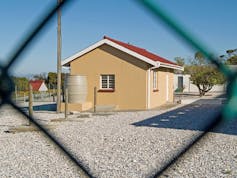
Between May 1963 and May 1969 was to spend six years of near-complete solitary confinement on Robben Island.
These circumstances had their origins in a momentous historical event organised by Sobukwe himself. On 21 March 1960, Sobukwe had led the Pan Africanist Congress in what he called a “positive action” campaign, protesting against the oppressive pass laws that governed the movements – and indeed the lives – of black South Africans.
This mass action resulted in the Sharpeville massacre later that same day, in which at least 69 people were killed when the South African police opened fire on a crowd of protesters. This event, which drew international attention to the injustices and brutality of apartheid, was a watershed moment in the history of South Africa. It led to a three-year jail sentence for Sobukwe for inciting people to protest against the laws of the country.
Not content that by 3 May 1963 Sobukwe would have served his sentence, the apartheid government passed an amendment to the General Law Amendment Act, the notorious “Sobukwe Clause”, which enabled the Minister of Justice to prolong the detention of any political prisoner year after year.
He was then relocated to Robben Island, and kept apart from other prisoners, where he remained for six years. The clause – never used to detain anyone else – was renewed annually by the Minister of Justice.
Sobukwe, in a very significant sense, was never a free man again after his 1960 imprisonment. The apartheid government unleashed a series of bureaucratic cruelties upon him after his May 1969 release from Robben Island. They forced him to live in the geographically remote town of Kimberley – far removed from any friends, family or associates.
They insisted he take on a low-ranking job that would have made him complicit in the apartheid policies that he went to jail protesting. He refused. They repeatedly refused to allow him to leave the country to take up job offers he had received from the United States; and they obstructed his attempts to get the medical treatments that he needed, and that would have extended his life (he died of lung cancer on 27 February 1978).
This then is the background to the consolations that Sobukwe sought to offer Nell Marquard in his 1974 letter. It’s only on the last page of that letter that he seemed to finally find the words that suited both his emotions and the note of commiseration that he wished to convey to Nell:
The Xhosa have standard words of condolence. They say
Akuhlanga lungehlanga lala ngenxeba (There has not occurred what has not occurred before … lie on your wound).
God bless you. Affectionately, Robert.
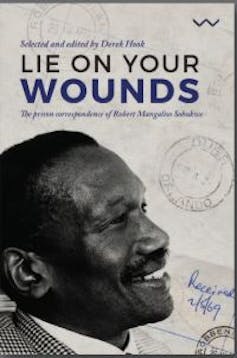
This resonant phrase – which also appears in Sobukwe’s letters to his friend Benjamin Pogrund – applies equally, if not more so, to Sobukwe himself. “Lie on your wound(s)” is a call to bide one’s time, to heal, and to reconstitute one’s self despite evident suffering. It is a call to have courage, to bear the moral burden of pain, and it provides an apt title for what was the most difficult period of Sobukwe’s life, namely his time on Robben Island, which the selection of letters collected in this book, published by Wits University Press, represents.
Derek Hook, Associate professor of Psychology, Duquesne University
This article is republished from The Conversation under a Creative Commons license. Read the original article.

Mark Canada, Indiana University and Christina Downey, Indiana University
Each new year, people vow to put an end to self-destructive habits like smoking, overeating or overspending.
And how many times have we learned of someone – a celebrity, a friend or a loved one – who committed some self-destructive act that seemed to defy explanation? Think of the criminal who leaves a trail of evidence, perhaps with the hope of getting caught, or the politician who wins an election, only to start sexting someone likely to expose him.
Why do they do it?
Edgar Allan Poe, one of America’s greatest – and most self-destructive – writers, had some thoughts on the subject. He even had a name for the phenomenon: “perverseness.” Psychologists would later take the baton from Poe and attempt to decipher this enigma of the human psyche.
In one of his lesser-known works, “The Imp of the Perverse,” Poe argues that knowing something is wrong can be “the one unconquerable force” that makes us do it.
It seems that the source of this psychological insight was Poe’s own life experience. Orphaned before he was three years old, he had few advantages. But despite his considerable literary talents, he consistently managed to make his lot even worse.
He frequently alienated editors and other writers, even accusing poet Henry Wadsworth Longfellow of plagiarism in what has come to be known as the “Longfellow war.” During important moments, he seemed to implode: On a trip to Washington, D.C. to secure support for a proposed magazine and perhaps a government job, he apparently drank too much and made a fool of himself.
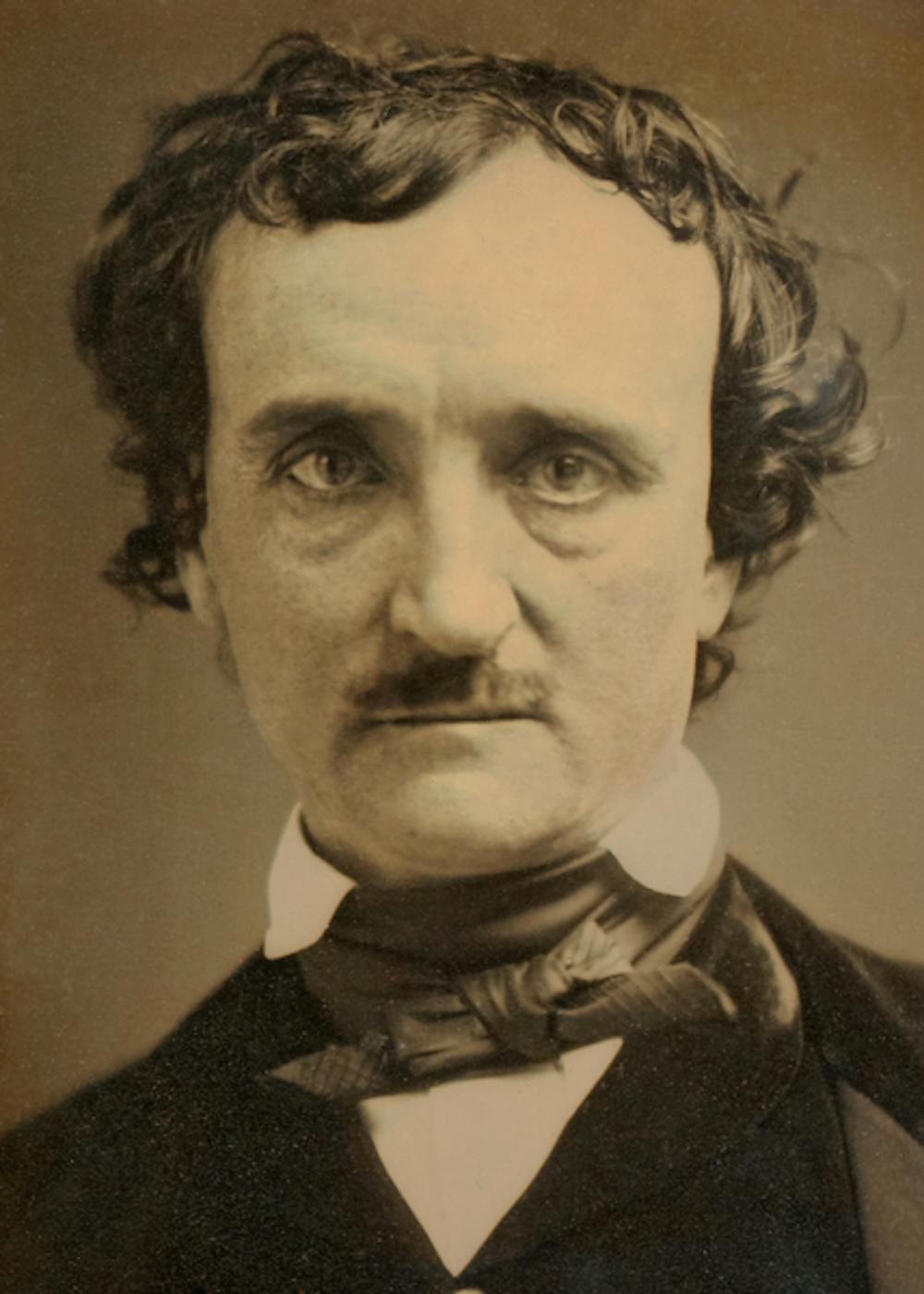
After nearly two decades of scraping out a living as an editor and earning little income from his poetry and fiction, Poe finally achieved a breakthrough with “The Raven,” which became an international sensation after its publication in 1845.
But when given the opportunity to give a reading in Boston and capitalize on this newfound fame, Poe didn’t read a new poem, as requested.
Instead, he reprised a poem from his youth: the long-winded, esoteric and dreadfully boring “Al Aaraaf,” renamed “The Messenger Star.”
As one newspaper reported, “it was not appreciated by the audience,” evidenced by “their uneasiness and continual exits in numbers at a time.”
Poe’s literary career stalled for the remaining four years of his short life.
While “perverseness” wrecked Poe’s life and career, it nonetheless inspired his literature.
It figures prominently in “The Black Cat,” in which the narrator executes his beloved cat, explaining, “I…hung it with the tears streaming from my eyes, and with the bitterest remorse at my heart…hung it because I knew that in so doing I was committing a sin – a deadly sin that would so jeopardise my immortal soul as to place it – if such a thing were possible – even beyond the reach of the infinite mercy of the Most Merciful and Most Terrible God.”
Why would a character knowingly commit “a deadly sin”? Why would someone destroy something that he loved?
Was Poe onto something? Did he possess a penetrating insight into the counterintuitive nature of human psychology?
A half-century after Poe’s death, Sigmund Freud wrote of a universal and innate “death drive” in humans, which he called “Thanatos” and first introduced in his landmark 1919 essay “Beyond the Pleasure Principle.”

Many believe Thanatos refers to unconscious psychological urges toward self-destruction, manifested in the kinds of inexplicable behavior shown by Poe and – in extreme cases – in suicidal thinking.
In the early 1930s, physicist Albert Einstein wrote to Freud to ask his thoughts on how further war might be prevented. In his response, Freud wrote that Thanatos “is at work in every living creature and is striving to bring it to ruin and to reduce life to its original condition of inanimate matter” and referred to it as a “death instinct.”
To Freud, Thanatos was an innate biological process with significant mental and emotional consequences – a response to, and a way to relieve, unconscious psychological pressure.
In the 1950s, the psychology field underwent the “cognitive revolution,” in which researchers started exploring, in experimental settings, how the mind operates, from decision-making to conceptualization to deductive reasoning.
Self-defeating behavior came to be considered less a cathartic response to unconscious drives and more the unintended result of deliberate calculus.
In 1988, psychologists Roy Baumeister and Steven Scher identified three main types of self-defeating behavior: primary self-destruction, or behavior designed to harm the self; counterproductive behavior, which has good intentions but ends up being accidentally ineffective and self-destructive; and trade-off behavior, which is known to carry risk to the self but is judged to carry potential benefits that outweigh those risks.
Think of drunk driving. If you knowingly consume too much alcohol and get behind the wheel with the intent to get arrested, that’s primary self-destruction. If you drive drunk because you believe you’re less intoxicated than your friend, and – to your surprise – get arrested, that’s counterproductive. And if you know you’re too drunk to drive, but you drive anyway because the alternatives seem too burdensome, that’s a trade-off.
Baumeister and Scher’s review concluded that primary self-destruction has actually rarely been demonstrated in scientific studies.
Rather, the self-defeating behavior observed in such research is better categorized, in most cases, as trade-off behavior or counterproductive behavior. Freud’s “death drive” would actually correspond most closely to counterproductive behavior: The “urge” toward destruction isn’t consciously experienced.
Finally, as psychologist Todd Heatherton has shown, the modern neuroscientific literature on self-destructive behavior most frequently focuses on the functioning of the prefrontal cortex, which is associated with planning, problem solving, self-regulation and judgment.
When this part of the brain is underdeveloped or damaged, it can result in behavior that appears irrational and self-defeating. There are more subtle differences in the development of this part of the brain: Some people simply find it easier than others to engage consistently in positive goal-directed behavior.
Poe certainly didn’t understand self-destructive behavior the way we do today.
But he seems to have recognized something perverse in his own nature. Before his untimely death in 1849, he reportedly chose an enemy, the editor Rufus Griswold, as his literary executor.
True to form, Griswold wrote a damning obituary and “Memoir,” in which he alludes to madness, blackmail and more, helping to formulate an image of Poe that has tainted his reputation to this day.
Then again, maybe that’s exactly what Poe – driven by his own personal imp – wanted.
Mark Canada, Executive Vice Chancellor for Academic Affairs, Indiana University and Christina Downey, Professor of Psychology, Indiana University
This article is republished from The Conversation under a Creative Commons license. Read the original article.

Emma Vardy, Coventry University
For book lovers, reading to their children may seem obvious. Why would they not want to pass on their love of literature? However, researchers have shown there are more benefits for both adult and child that come with reading than just building a bond – particularly when it comes to education.
A lot of research has been done into the effects of children engaging with literacy related activities at home. Much of this focuses on the early years, and how the literacy environment helps to develop emergent literacy skills. Shared book reading early on stimulates language and reading development, for example.
But the home literacy environment doesn’t stop being important once children have learnt to read. The opportunities that a child has to read at the home, and parental beliefs and behaviours, continue to impact on children’s reading throughout the school years. Here are just five ways that reading with your child can help their general education.
Reading together as a family can instil a love of books from an early age. By taking the time to turn the pages together, adults can help children see that reading is something to enjoy and not a chore. Some schoolchildren read because they like it but others do it because they will be rewarded – with stickers in a school reading diary for example. Those children who read because they enjoy it read more books, and read more widely too. So giving your child a love of books helps expand their horizons.
Children judge their own ability to read from observing their classroom peers, and from conversations with parents and teachers. When sharing a book, and giving positive feedback, parents can help children develop what is known as self-efficacy – a perceived ability to complete the specific activity at hand. Self-efficacy has been shown to be important for word reading. Children who think they cannot read will be less inclined to try, but by using targeted praise while reading together, parents can help children develop belief in their own skills.
Studies have shown that the more opportunities a child has to engage with literacy based activities at home, the more positive their reading attitudes tend to be. Children are more likely to read in their leisure time if there is another member of the family that reads, creating a reading community the child feels they belong to. Parental beliefs and actions are related to children’s own motivations to read, though of course it is likely that this relationship is bidirectional –- parents are more likely to suggest reading activities if they know that their child has enjoyed them in the past.

When reading a book together, children are exposed to a wide range of language. In the early stages of literacy development this is extremely important. Good language development is the foundation to literacy development after all, and increased language exposure is one of the fundamental benefits of shared book reading.
Shared book reading early on can have a long-term benefit by increasing vocabulary skills. And if they encounter a word they don’t understand, they have a grown up on hand to explain it to them in a way that makes sense to them. When children are taught to read while sharing a book, it can improve alphabet knowledge, decoding skills, spelling, and other book-related knowledge (such as how to actually read a book). Doing something as simple as sounding out the letters of a word they do not understand can vastly improve a child’s skills.
Formal shared reading can also involve the use of intonation, rhythm and pauses to model what is known as prosody. This is not a skill that is directly taught, but by simply pausing when needed or changing the tone of your voice can help children develop fluency when reading aloud. This is one of the reasons that shared book reading is not just for pre-schoolers. Demonstrating what is involved in reading complex text aloud fluently is very valuable for children of all ages.
You don’t need a lot of money, or even hours of spare time to read with children. Even small efforts can have big benefits. Nor does it have to be just at bedtime. Sharing a book, a magazine or a comic can take place any time of the day.
The most important thing to remember is to have fun. Interest in reading emerges from enjoying it with a parent. If you’re interested and make an effort, it can have a huge impact on a child’s engagement with reading.
Emma Vardy, Research Associate, Psychology of Education, Coventry University
This article is republished from The Conversation under a Creative Commons license. Read the original article.
Jeanne Britton, University of South Carolina
As a rare books curator, I get to interact with first editions of novels I love, illustrated versions of my favorite poets’ works, and lavish editions of historical engravings.
In 2015, I started using the University of South Carolina’s first edition of “Lyrical Ballads” in my survey of British literature courses. Written by William Wordsworth and Samuel Taylor Coleridge, this collection of poems is commonly thought to have launched British Romanticism.
I would bring the volume to class to discuss its visual appearance as a printed text. But each time I shared the volume with a new group of students, we found ourselves drawn to the comments written in the book’s margins by its early owner, John Peace.
Peace was, I learned, an acquaintance of Wordsworth. And some of his comments in the margins of one of the volume’s most well-known poems, “Tintern Abbey,” explore the poem’s themes of memory, place and return.
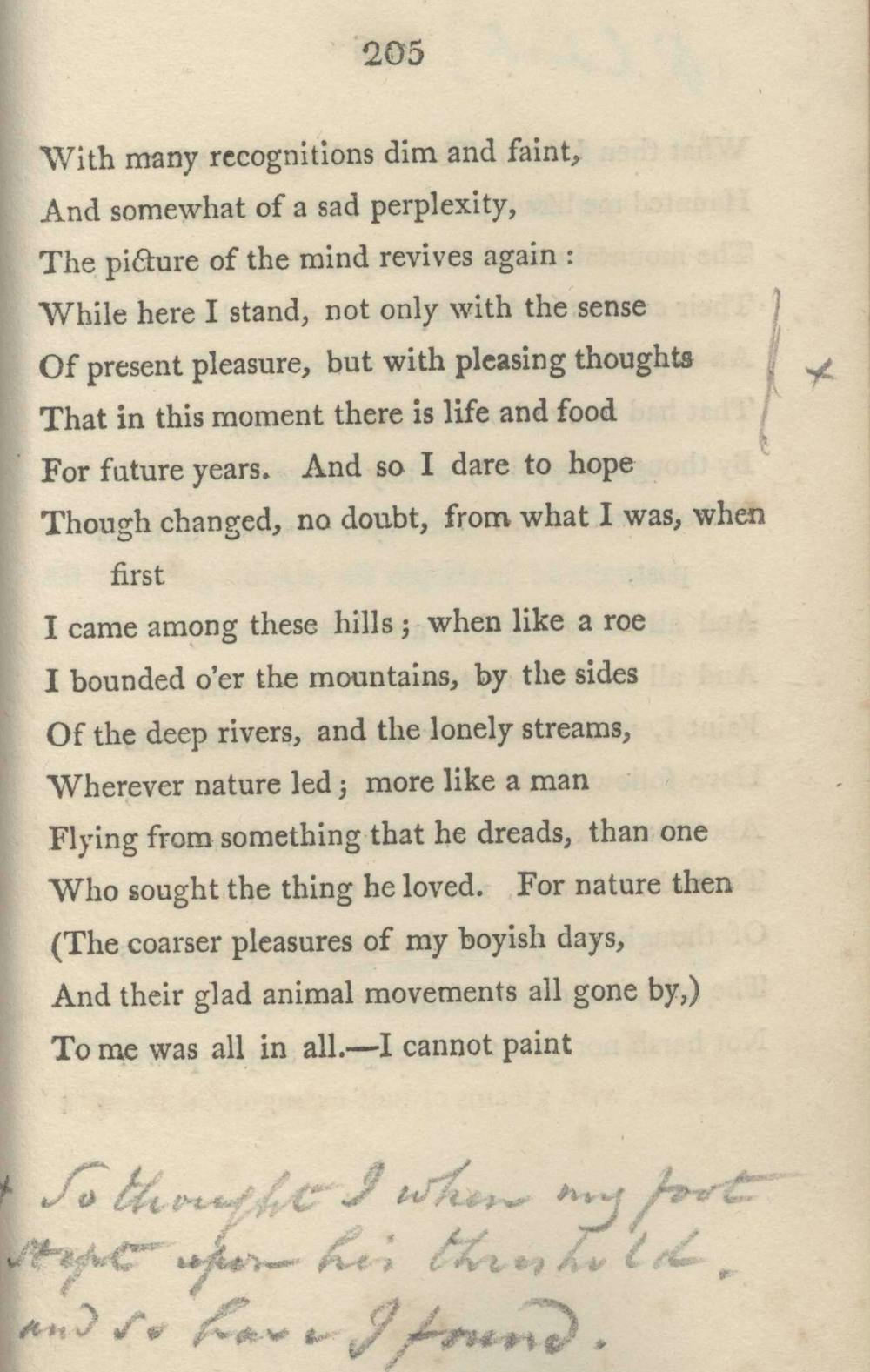
In this poem, Wordsworth describes his return to the Wye River valley after an absence of five years. He also recalls his memories of his first visit to the valley and looks forward to the memories this second visit will create.
“In this moment,” he writes, “there is life and food / For future years.”
When Peace responds to these lines, he describes a different kind of experience – visiting the poet in his home – in a similar way: “So thought I when my foot first step’t upon his threshold, and so have I found.”
It is a singular piece of literary history, and it’s one example of how the study of words written in the margins of historic texts – called “marginalia” – can illuminate the history of reading in new ways.
As prominent book historian Roger Chartier has noted, marginalia can reconstruct past reading experiences through the “sparse and multiple traces” ordinary readers left behind.
One particularly vivid example that is far from ordinary is Sylvia Plath’s copy of “The Great Gatsby.”
Acquired by the University of South Carolina in 1994 from a former professor, the Matthew J. & Arlyn Bruccoli Collection of F. Scott Fitzgerald includes Fitzgerald’s personal ledger, a flask from his wife Zelda, and early drafts of his works.
It also includes an inexpensive 1949 edition of “The Great Gatsby.” Compared to other items in this collection, it might not seem like anything special.
But the book’s owner – and the words she wrote in its margins – are quite noteworthy.
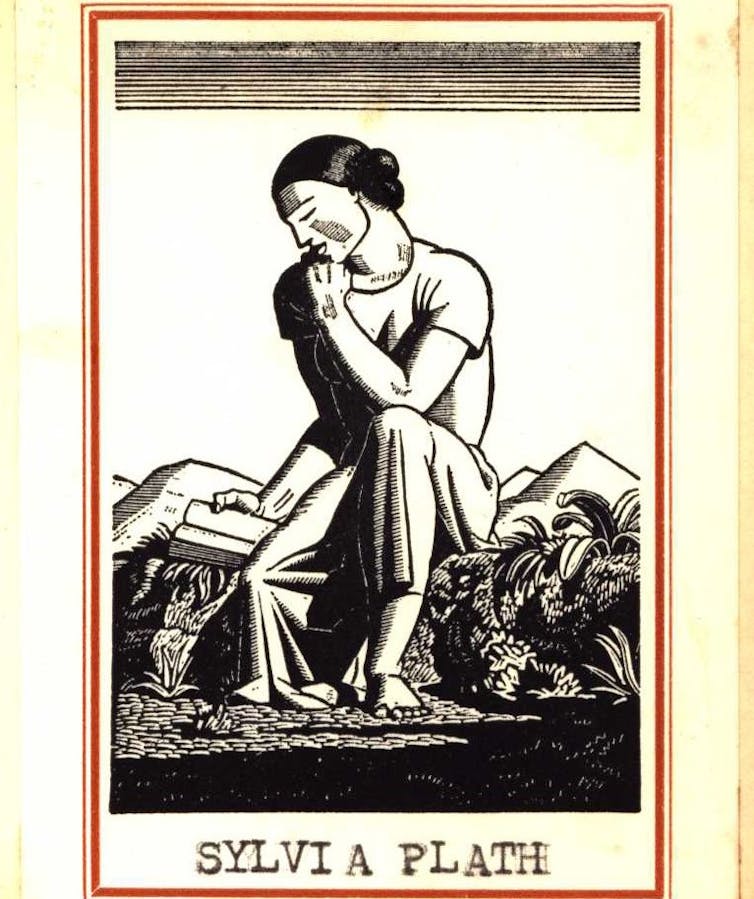
The bookplate identifies Sylvia Plath as the owner of this copy, which she most likely read as an undergraduate at Smith College. Some marginal comments were probably notes she took during lectures about the novel. But others show the way Fitzgerald’s novel sparked her imagination and inspired her own work.
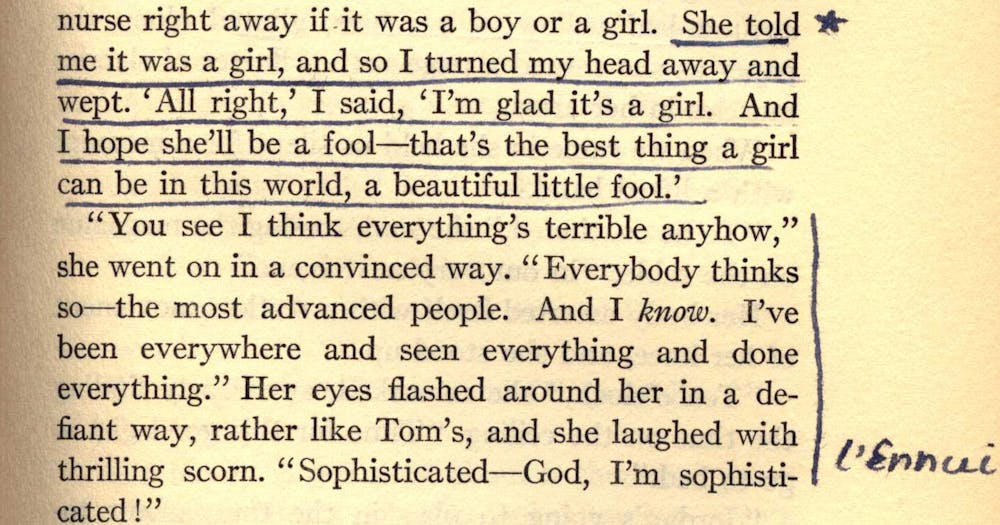
She wrote on almost every page, underlining passages in black and blue ink, drawing stars beside her favorites and occasionally writing notes – some quite arresting – in the margins.
Plath wrote “L’Ennui” – a French word that describes a feeling of listlessness and boredom – next to a description of the character Daisy’s world-weary view of life: “I’ve been everywhere and seen everything and done everything.” “L’Ennui” would become the title of a poem Plath is thought to have written shortly after reading this novel.
Other notes are, in the context of Plath’s painful life and tragic suicide, haunting.
She writes that Daisy shows a “desire for a secure future” – a longing that seems to have struck a chord for Plath.
On another page, she hints at masculine aggression when she comments, as Gatsby watches the Buchanans from outside their home, “knight waiting outside – dragon goes to bed with the princess.” This was a motif that would reappear in her own life: In her recently published letters, Plath details the physical and emotional abuse her husband, the poet Ted Hughes, inflicted upon her in the months before her death.
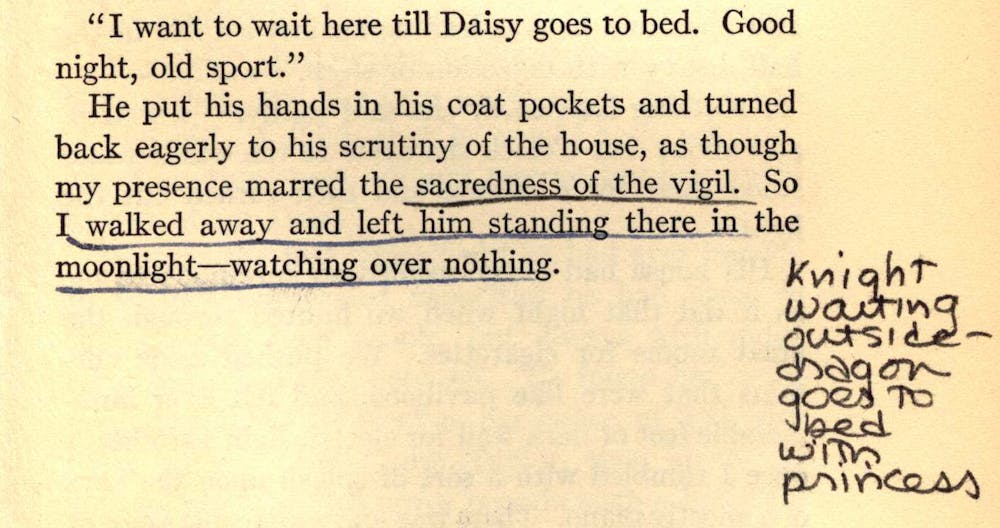
Sylvia Plath’s copy of “The Great Gatsby” speaks to the value of marginalia. As Makenzie Logue, a student of mine who is currently studying the volume, put it, preserving these notes means that you can “read The Great Gatsby with Sylvia Plath.”
In recent years, marginalia left by ordinary readers has become a subject of large-scale data collection efforts.
At the University of Virginia, English professor Andrew Stauffer leads a team that has made a book’s annotations, inscriptions and insertions discoverable as part of UVA’s online library catalog. Any user will be able to find such markings through a simple online search.
At the University of California, Los Angeles, librarians are developing ways to discover marginalia digitally – and quickly – across large digital collections.
Using the methods developed at the University of Virginia, my colleague Michael Weisenburg and I have organized searches for historical markings in library books at the University of South Carolina. Student workers and library staff have enhanced records for annotated volumes in the school’s online catalog.
While digital technology has made marginalia more accessible, digital reading has made the actual habit of writing in books much less common.
What would Sylvia Plath and John Peace have done if they had a Kindle? Would they have still left traces of their reactions to the texts – so valuable to scholars today – behind?
Jeanne Britton, Curator, Irvin Department of Rare Books and Special Collections, University of South Carolina
This article is republished from The Conversation under a Creative Commons license. Read the original article.

Sally O’Reilly, The Open University
My happiest times in childhood were spent reading the books of E. Nesbit, C.S. Lewis and Joan Aiken. Preferring to read in hidden corners where nobody could find me, I immersed myself completely in these stories and believed utterly in their magic, even attempting to enter Narnia via the portal of my grandmother’s wardrobe. As an adult, I still call myself a passionate reader, but sometimes feel as if I’ve lost my way compared to my childhood self. I buy vast quantities of books, talk about books, read as many as possible, sometimes even write them – but it’s not often I find that same pure immersion in an imagined world which has been such a lasting inspiration.
Celebrations like World Book day promote children’s reading and remind us all of the pleasures of a good book. Many of us make resolutions to read more, but these days there’s increasing pressure to read the “right” thing. The adult world presents a constant temptation to turn every activity into a competitive sport, and reading is no exception: it is beset with targets, hierarchies and categorisations. We guilt-read chick-lit and crime, skim-read for book groups and improvement-read from book prize shortlists.
Underpinning this is a relentless quest for self-improvement, demonstrated by the popularity of reading challenges, in which readers set themselves individual book consumption targets. On Good Reads, some participants have modest goals, others aim for as many as 190 in the year, which translates to 15.8 books a month, 3.6 a week or just over half a book each day. Impressive? Maybe, but others are reading even faster. One journalist recently embarked on a seven day social media detox and read a dozen books in that time. It’s a far cry from my days with Mr Tumnus.
This raises a fundamental question: why do we read at all? Do we want to enjoy books, or download them into our brains? Are we so obsessed with being able to tick a book title off a check-list that we risk forgetting that reading is a physical and emotional activity as well as an intellectual one? The perceived benefits of reading are often given more attention than the experience itself: campaigners tend to stress its utilitarian value and research findings that it increases empathy and even life expectancy.
But the reading experience is important. A sure sign of loving a book is slowing down when you come to the final pages, reluctant to leave the world it creates behind. As the UK reading agency puts it, “in addition to its substantial practical benefits, reading is one of life’s profound joys”. Children seem to know this intuitively, and engage fully with a story, often to the exclusion of all else. They are demanding, honest readers, more interested in what happens in a tale and where it takes them than whether it’s a Carnegie prize-winner.

As an adult, it is possible to recapture that immersive involvement with a book. What we need is the opportunity to focus entirely on the words, and a willingness to ignore stress-inducing challenges and targets. When I was writing my second novel I lived in Barcelona for a year, day-job free. During that time I read just six books, one of them Joseph Conrad’s The Secret Agent. At a recent writing retreat, I spent two hours a day reading Michel Faber’s The Crimson Petal and the White. I engaged completely with these novels, forgetting the outside world, and they have stayed with me, their characters and plot twists vivid and familiar when other books, read hurriedly in snatches amid distractions, have faded from my mind.
I’m not alone in seeing the value of immersive, non-competitive reading. In a recent Guardian article, author Sarah Waters admitted to feeling out of the loop when current writing is discussed. Asked which book she is “most ashamed not to have read” (a telling phrase), she responded, “Anything people are currently raving about. I’m a slow reader, and I read old books as often as new ones, so I always feel like a hopeless failure when it comes to keeping up with brand new titles”.
There are already advocates of slow living, and a cultural shift toward slowing down life’s pace, savouring experience and rediscovering human connection. Perhaps it is time for this to encompass reading too. 184,000 books are published each year in the UK alone, and we’re not going to make much of a dent in that pile even if we read 12 books a week. Indeed, no matter how fast we read, the vast majority of books will remain unknown to us. If there is one skill that adult readers can usefully learn from children, it is that of reading purely for pleasure.
Sally O’Reilly, Lecturer in Creative Writing, The Open University
This article is republished from The Conversation under a Creative Commons license. Read the original article.
Donna Mazza, Edith Cowan University
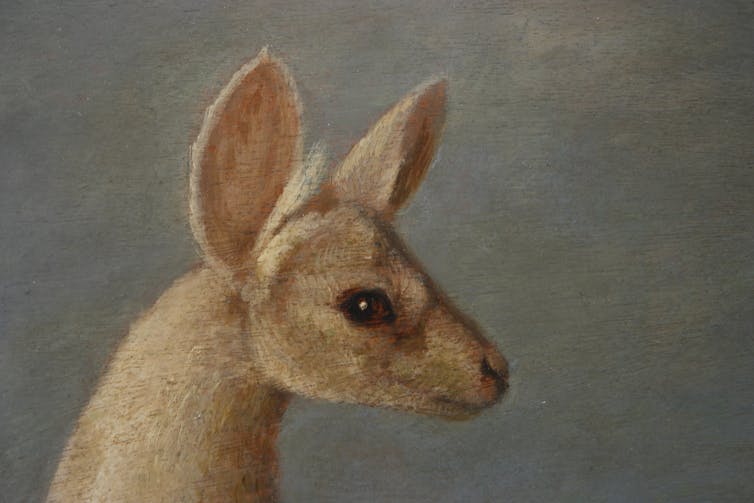
Kangaroos are the most visible of Australia’s unique animals, but despite their charm and national icon status, Australian writers perpetually kill them off.
A kangaroo appears struggling in a rabbit trap, doomed and dying in Charlotte Wood’s The Natural Way of Things, while Tim Winton has one killed on the road, dissected and fed to dogs in Breath. These are just two of many Australian authors who have represented the kangaroo as a victim.
Kangaroos were a creature of wonder for early European explorers such as Dampier and Banks, but it didn’t take long for their public image to descend to that of a pest. Early settlers considered them competition, nibbling all the best pasture quicker than their sheep and cows, and they soon took up arms against the bounding menace.
The wild kangaroo population of Australia is still commercially slaughtered for dog food. In New South Wales, landholders and volunteers can be simply licensed to kill them for reasons of damage control, and some parts of Western Australia have an open permit system for non-commercial shooting. On any given day, there are usually several being mashed into the blue metal of highways, surrounded by crows and in various states of decomposition.
The expendable nature of the kangaroo may be a widely held view in Australia, but it’s a bitter irony that the creature which defines us to the rest of the world is perpetually under siege, in life and in literature.

In Stephen Daisley’s 2016 novel Coming Rain, the author kills off a kangaroo with “a great thump” against the side of a truck, giving a gruesome description of the sweetening of the tail for stew.
The live joey almost has its head smashed against a tree but, owing to its “cuteness” it becomes a pet, wearing a straw hat. The stereotype of the cute joey is alive and well in children’s fiction too, but in adult fiction the kangaroo is dead.
In Tim Winton’s Breath, narrator Pikelet comes across surf guru, Sando, who has hit a kangaroo with his Kombi ute. Sando finishes it off with the jack handle from the car, pounded a couple of times into its head. His response to this act is very matter-of-fact: “This is what happens. And it isn’t lovely.”
Sando drags the “roadkill” into the tray of his ute and takes it home to butcher it. He is prepared for this, with a meat hook hanging from a tree, and he skins and guts the kangaroo. Pikelet observes this with some emotional discomfort, “shrinking from him a little” but accepts the flourbag of meat to take home to his parents who “wouldn’t eat roo meat in a million years”. He “hoiks” the meat into the bushes on the ride home.
Charlotte Wood considers the horror of roadkill in The Children, where Australian animals are killed by passing traffic and compared to contaminated “cushions”. Wood also kills a kangaroo (and a lot of rabbits) in The Natural Way of Things. Central character Yolanda snares a “large grey kangaroo” in a rabbit trap and finds it still alive:
Vainly, the kangaroo shifts and scuffles again. Then it lowers its head and lengthens its mighty neck, black eyes fixed on them, and lets out three long, hoarse snarls. Its snout fattens, nostrils flared.
Fearful of the sharp claws on its “delicate forefeet” they sit beside it, wondering how to set it free and instead bring it water and leave it to die slowly.
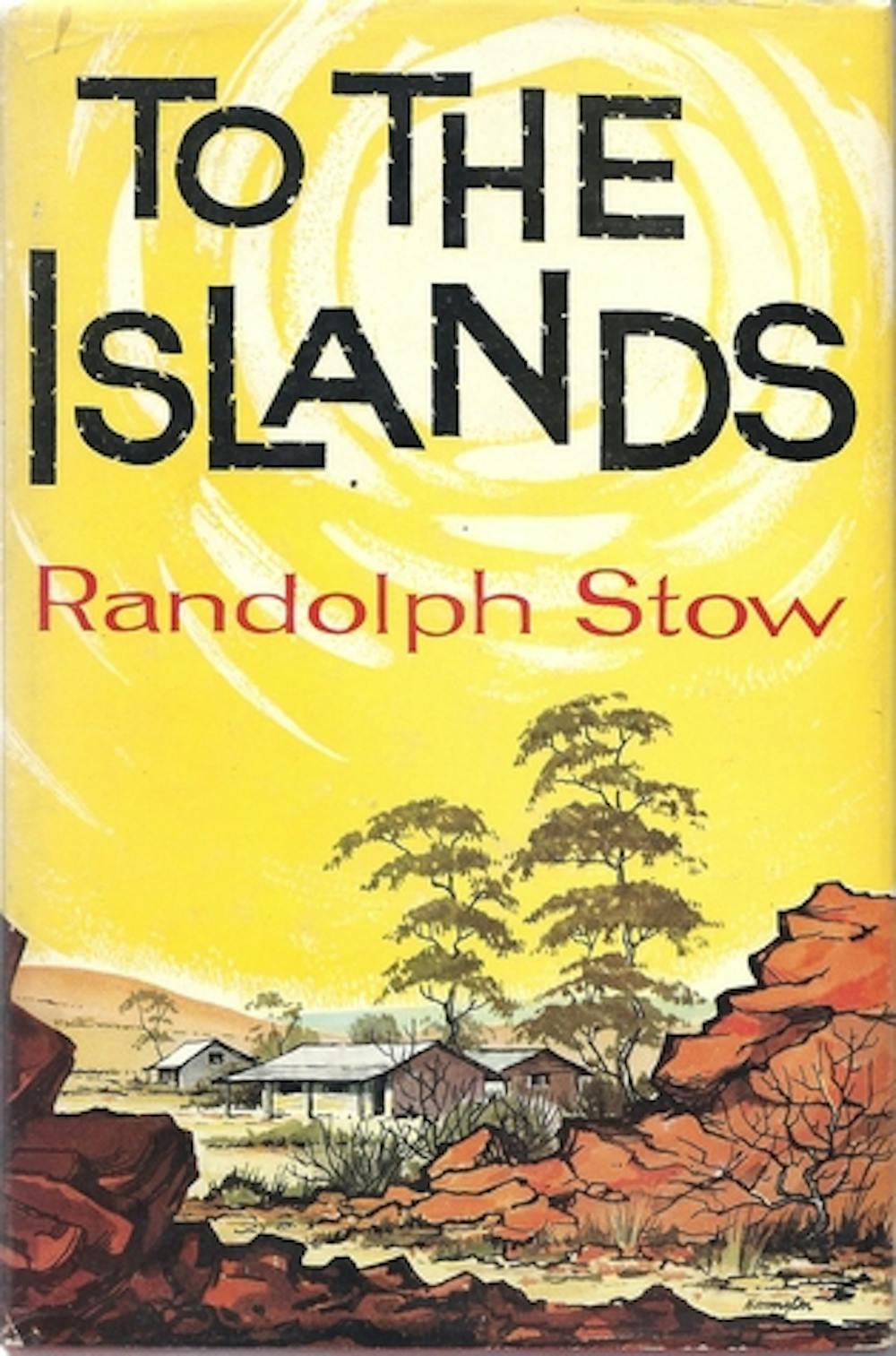
The image of the kangaroo is linked to death through earlier works from Australian authors too. The iconic 1940 poem, Native-Born by Eve Langley presents a detailed account of a dead kangaroo, while Randolph Stow’s 1958 novel To the Islands features kangaroos and wallabies being shot and eaten.
Australian fiction is, so often, deeply entangled with nature. Anxiety around the bush, as described in D.H. Lawrence’s novel Kangaroo back in the 1920s, is a feature of settler Australian fiction, tied together with violence, trauma and a sense of the uncanny.
Docile and violent all at once, the watchful gaze and twitching ears of kangaroos are, perhaps, reminders of that uneasiness the settlers felt.
The fact that Australian literature seems intent on killing off this national icon is deeply disturbing – but it is also deeply ingrained.
In contrast with kangaroos, thylacines are well and truly alive in Australian literature despite being extinct since 1936. They appear in over 250 works listed in the AustLit database of Australian literature, including 18 novels since 1988.
Among these are Julia Leigh’s The Hunter, Sonya Hartnett’s Stripes of the Sidestep Wolf and Louis Nowra’s Into That Forest, as well as children’s fiction, drama, film, short fiction and poetry. These thylacines often meet with violent ends, but their aliveness in fiction is astounding compared to the kangaroo.
Contemporary Australia is sentimental about the thylacine as a strange creature lost because of “ignorance”. They are now a thing of wonder, destroyed by misguided colonial settlers who are long gone. But if they weren’t extinct, would we treat them any better? Would we protect them? Often that is the point writers are trying to make by invoking the extinct “tiger” in the first place.
Our relationship with kangaroos (and thylacines), both in fiction and in reality, is symptomatic of what Stow called our “bitter heritage”. So perhaps it is unsurprising, given the violence of colonisation, that it has had (and is still having) an impact on the way writers represent the Australian landscape and all who inhabit it.
This article is based on research published in a forthcoming article for Antipodes.
Donna Mazza, Senior Lecturer in Creative Arts, Edith Cowan University
This article is republished from The Conversation under a Creative Commons license. Read the original article.
 At the BookShelf


.jpg)
You must be logged in to post a comment.