
The link below is to an article that takes a look at the 2018 *Book Shimmy* Awards, for young adult novels published in the USA in 2018.
For more visit”
https://www.epicreads.com/blog/2018-book-shimmy-awards-nominations/

The link below is to an article that takes a look at the 2018 *Book Shimmy* Awards, for young adult novels published in the USA in 2018.
For more visit”
https://www.epicreads.com/blog/2018-book-shimmy-awards-nominations/
The link below is to an article that looks at the 2018 Inky Award Shortlist.
For more visit:
Michelle Smith, Monash University
An 18-year-old girl prepares to die to enable the birth of her half-vampire baby. Her spine is broken in the process, and the fanged baby begins to gnaw its way through her stomach before the girl’s husband performs a vampiric Cesarean section. This is a crucial moment in Stephenie Meyer’s Twilight novel series, published from 2005 to 2008.
Meyer’s books heralded a new, and continuing, wave of Gothic fiction for Young Adult readers, which revisits familiar literary Gothic conventions: ancient, ruined buildings and monstrous supernatural figures like the vampire, werewolf, ghost and witch.
The Gothic romances of the 18th century, such as the novels of Ann Radcliffe, and the enduringly popular Bram Stoker’s Dracula (1897), sought to recreate feelings of terror and horror for an audience of adult readers. Today, however, most Gothic fiction is being published for, and read by, young people. Surprisingly, it has proved to be the ideal genre for exploring the grotesque and frightening aspects of coming of age, and metaphorically representing pressing social issues such as racism and gender inequality.
Read more:
Friday essay: what might heaven be like?
The phenomenally popular YA genre, targeted at readers between 12 and 18 years old, evolved from realist novels of the 1960s. These books were preoccupied with the struggles of adolescence set against a backdrop of social issues. Now, though, the genre often looks to the supernatural. Beyond Twilight, some of the most popular YA Gothic series also focus on the “lives” of vampires who are protagonists rather than foes.
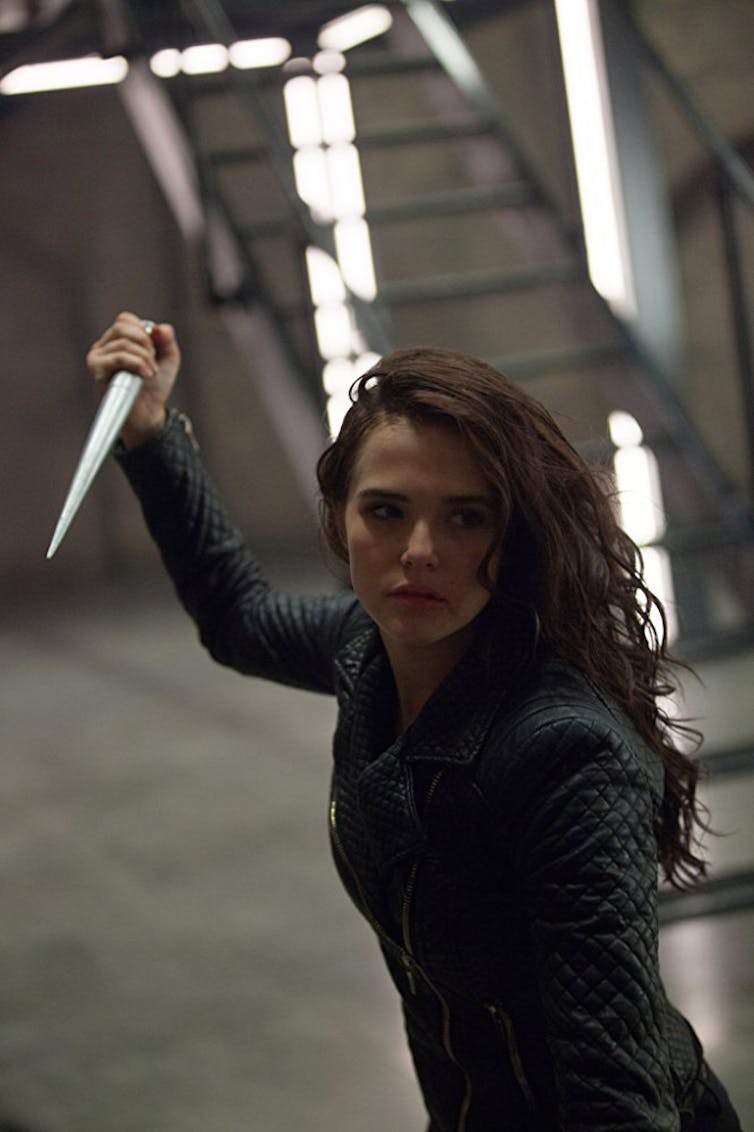
Richelle Mead’s six-book Vampire Academy (2007-2010), now adapted into a TV series, is about a teenage girl who is a Dhampir (half-human, half-vampire). She becomes entangled in a forbidden romance with her instructor as St Vladimir’s Academy, while learning how to defeat evil vampires named Strigoi.
The YA Gothic revival has also embraced a wide range of supernatural entities. Cassandra Clare’s Shadowhunter Chronicles, a cross-media franchise that includes the Infernal Devices and Mortal Instruments novel series, charges angel-blooded humans with the task of protecting regular humans from a range of supernatural beings.
The Nephilim, or Shadowhunters, are busy controlling demons, warlocks, werewolves, faeries and vampires, but critically, it is their part-supernatural status that enables them to serve as protectors.
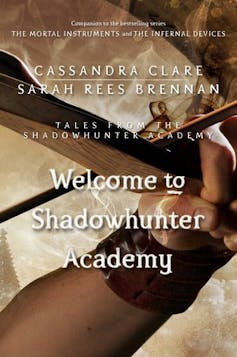
Clare has said that she did not write her series for young adults (and indeed almost half of the readership of YA fiction might be adults). Nevertheless, her teenage protagonists have resonated with readers of the same age.
The Gothic, and its newer sub-genres like paranormal romance, have a unique resonance with teenagers. They are poised in a transitional space between childhood and adulthood, neither quite embodying the stage they are leaving behind nor fully the thing that they are in the process of becoming. It is unsurprising, then, that they have eagerly embraced the Gothic’s themes of the liminal and the monstrous, as well as its fixation on romance and sex.
Another significant element of the current YA Gothic revival is the emergence of the girl monster. In earlier manifestions of the “female Gothic”, first published in the 18th century by women writers, female protagonists were often courageous, but simultaneously passive and victimised. The plots of the female Gothic reflected the comparative powerlessness of women at the time and their fears about their vulnerability and entrapment within domestic roles and patriarchal society.
In contemporary YA Gothic, girl monsters, who can constitute a threat to others and themselves, disrupt the plotline of male monster and female victim.
The most obvious catalyst for the embrace of Gothic conventions in literature for young people is J.K. Rowling’s Harry Potter series. Its popularity signalled a warm embrace of fantasy fiction that confronted the eternal dilemma of the battle between good and evil, charging a child – and later teenage protagonist – with the ability to save the world. While Hogwarts School of Witchcraft and Wizardry was not necessarily Gothic, the Potter phenomenon opened the way for the publication of numerous titles that embraced the possibilities of young protagonists with supernatural abilities.
Read more:
Rethinking Harry Potter twenty years on
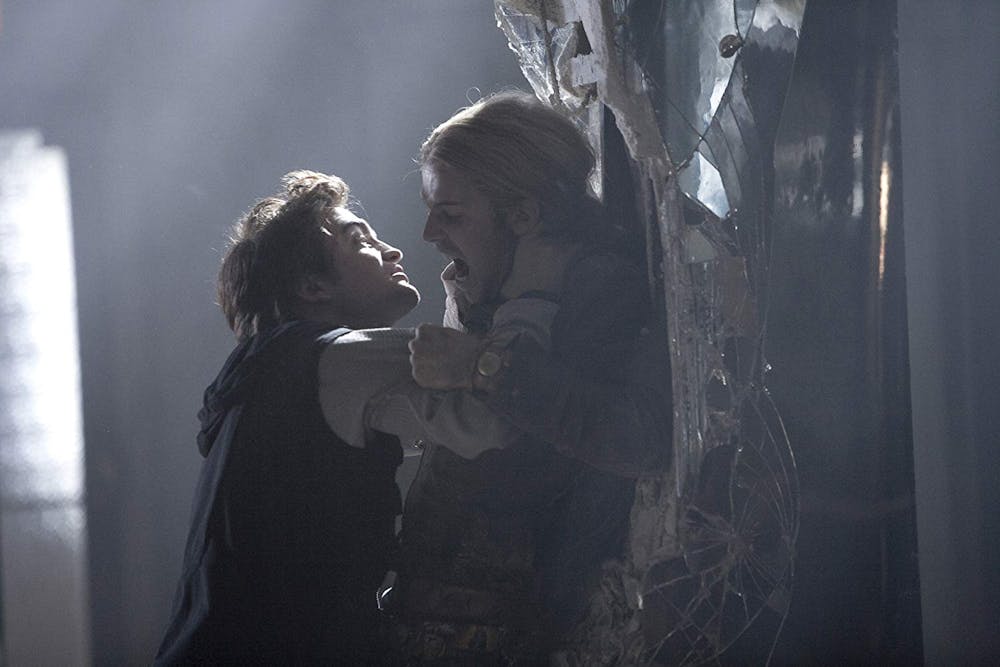
Most significantly, Meyer’s Twilight series about human Bella Swan and “sparkling” vampire Edward Cullen, combined this staple figure of Gothic fiction with the teen romance novel. The Twilight novels were bestsellers internationally and the saga was voted into the number one position in Australian book chain Angus & Robertson’s Top 100 Books poll of 2010. The Twilight universe expanded from books into a highly successful film series.
The Gothic has had several major periods of popularity since its first appearance in 18th-century England, with Horace Walpole’s novel The Castle of Otranto (1764). In each subsequent revival of Gothic fiction, the genre has been reworked and reinvented to address current cultural concerns.
In particular, the monsters that haunt the pages of Gothic novels are transformed with shifting fears and anxieties. In her influential book Our Vampires, Ourselves Nina Auerbach explains that “every age embraces the vampire it needs”, and this comment can be extend to Gothic monsters more generally.
Contemporary YA fiction blurs the line between good and evil. In Gothic novels of the 19th century, monsters were usually wholly “Othered”. A Victorian-era vampire such as Stoker’s Dracula, for instance was depicted as evil, foreign, and frighteningly different to the British human.

But contemporary monsters are no longer necessarily imagined as racially different or set in opposition to the human. Moreover, they are often represented sympathetically, especially in stories told from their perspective.
These include the iZombie comic series, in which the protagonist must eat brains on a monthly basis to survive, and Claudia Gray’s Evernight series, in which the reader is not even aware that the girl protagonist is a vampire for half of the first book. Indeed, as Anna Jackson explains in New Directions in Children’s Gothic, “the monsters have become the heroes” in contemporary children’s Gothic.
Most Gothic novels for young people contain a romance plot. This is often because the protagonists’ age places them in the transitional zone for entering adulthood, which is demarcated by sexual experience.
Read more:
How long have we believed in vampires?
In a typical YA Gothic novel, such as Twilight, a plot in which a human or monstrous girl protagonist falls for a boy who is not her “type” can dissolve the boundaries between monster and human. These monstrous love interests range from traditional Gothic ones – vampires, werewolves, zombies, ghosts and witches – to newer figures such as fallen angels and faeries. The key challenge to be overcome in these novels is the barriers posed to love by supernatural monstrosity, including the physical dangers to humans, as well as social discrimination about “cross-species” love.
In one of few major studies of teen romance fiction, published almost 30 years ago, Linda Christian-Smith described these novels as a “site of ideological struggles for young women’s hearts and minds”. In particular, she refers to teen romance fiction’s emphasis on heteronormative coupling and motherhood. Little has changed with respect to depictions of sexuality since, despite the YA Gothic’s embrace of diverse human-monster relationships.
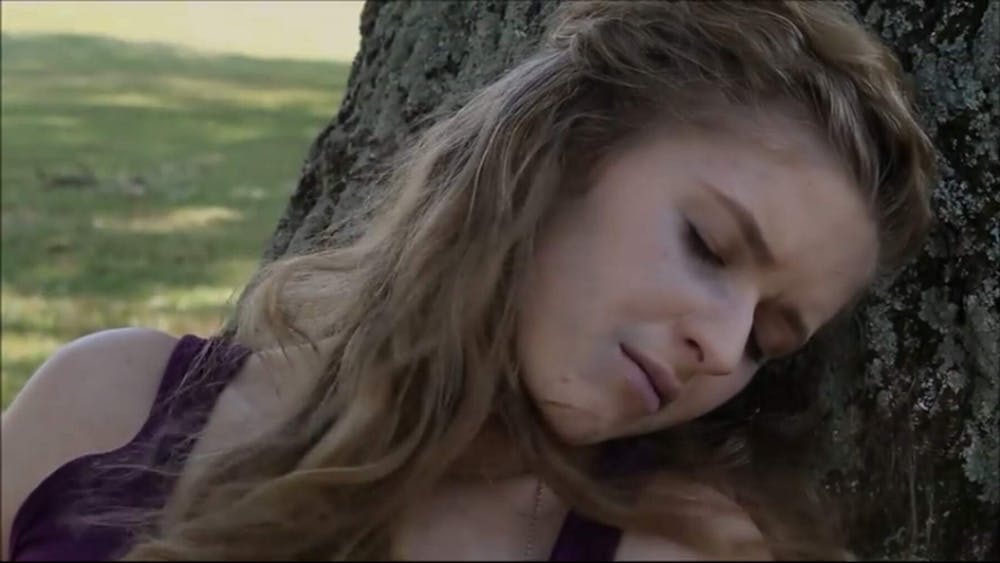
Most romances in the genre are heterosexual. They do often emphasise the heroine’s agency through her supernatural abilities and ability to choose between men or move between relationships. However, the human heroines of the Twilight series and Lauren Kate’s Fallen series, in which the heroine becomes drawn to a boy who is a fallen angel, are comparatively indecisive and continue to need rescuing.
Tellingly, Joss Whedon, the creator of the TV series Buffy, The Vampire Slayer (1997-2003), has described Twilight’s Bella as lacking empowerment, overly fixated on her romantic options, and “completely passive”.
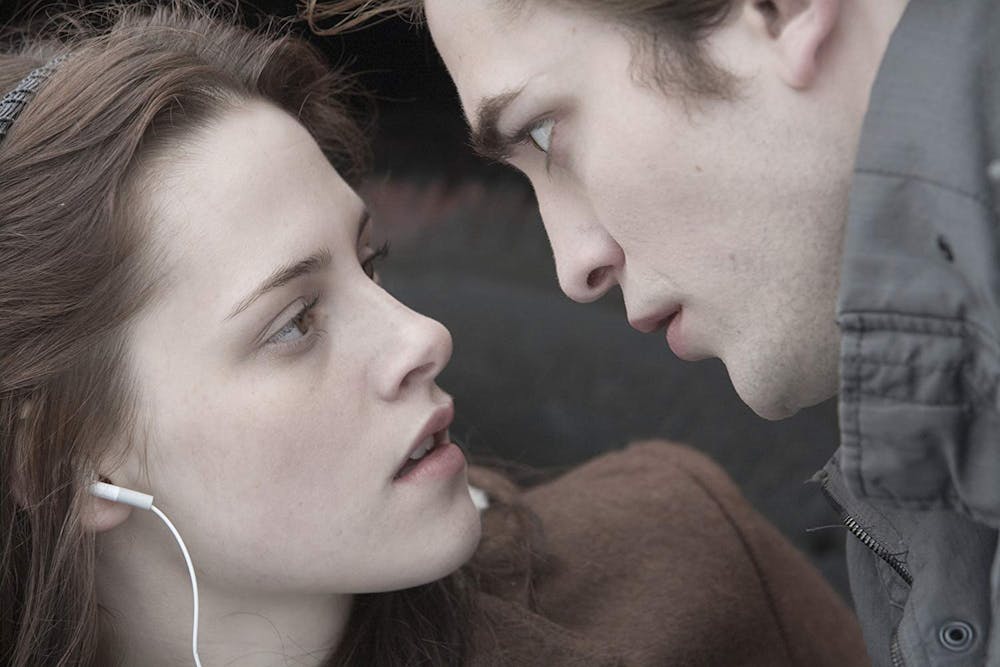
Novels with passive human heroines allow the reader to use the fantasy of romance as a temporary escape from real-world gender inequality. Yet they also reinforce its reality for female readers.
Supernatural heroines, however, are often able to breach the confines of traditional femininity and become extraordinary in ways that Twilight’s Bella and other human characters cannot. In a number of YA Gothic novels, such as Mead’s Vampire Academy, the protagonists disrupt expectations of feminine behaviour because of their unique, and often poorly understood, supernatural abilities. These special powers become the focus of anxieties about the girls’ coming of age, as they pursue romances that place their broader communities under threat.
The Vampire Academy series was sufficiently popular in 2010 for three of its six titles to sell between 300,000 and half a million copies in hardcover in the US alone, according to Publishers Weekly. However, unlike the Twilight series, on which it likely attempted to capitalise, its protagonist, Rose, is half-vampire, half-human and a monster in her own right. Rose shares a close bond with vampire Lissa, and is driven to break the Academy’s rules in order to save her friend when she is kidnapped, highlighting that girls are also capable of protecting and rescuing people they love.
Vampire Academy positions Rose as a sexual object, particularly in the eyes of a privileged type of vampire (Moroi), who find Dhampir women especially attractive because of racial differences. Rose enjoys her sexuality and dresses to take advantage of it, but this sexuality operates within her definition as a strong young woman:
First they saw my body and the dress. Testosterone took over as pure male lust shone out of their faces. Then they seemed to realize it was me and promptly turned terrified. Cool.
Rose is able to reject unwelcome advances and possesses the physical strength and skills to stand up for herself, suggesting a fantasy of empowerment and equality.
Lissa, meanwhile, thwarts what amounts to an attempted gang rape of a drugged girl. A group of male Moroi students attempt to take advantage of a female feeder (person who permits their blood to be sucked) at a party, “doing a sort of group feeding, taking turns biting her and making gross suggestions. High and oblivious, she let them”.
The supernatural female protagonists in YA gothic novels are responsible for their own safety and protection, yet they also have a responsibility to keep others safe.
These heroines have some romantic and sexual agency in a way that can be considered progressive. However, their desire is also framed as disruptive and dangerous and there is an obsessive fixation on the pursuit of romance above the girl’s own development, education and safety.
In other words, the superficially radical potential of girl heroines with superhuman physical strength, mind-reading abilities, and the potential to kill can merely be a decorative smokescreen for the reinforcement of traditional feminine values.
The recent proliferation of Gothic YA novels is skewed toward a female readership with a focus on girl protagonists, and significant emphasis on their quest for romance. Nevertheless, there are a number of series with boy heroes. For example, Ransom Riggs’ Miss Peregrine’s Home for Peculiar Children (the first book of which was recently filmed by director Tim Burton), focuses on a 16-year-old human boy, Jacob.
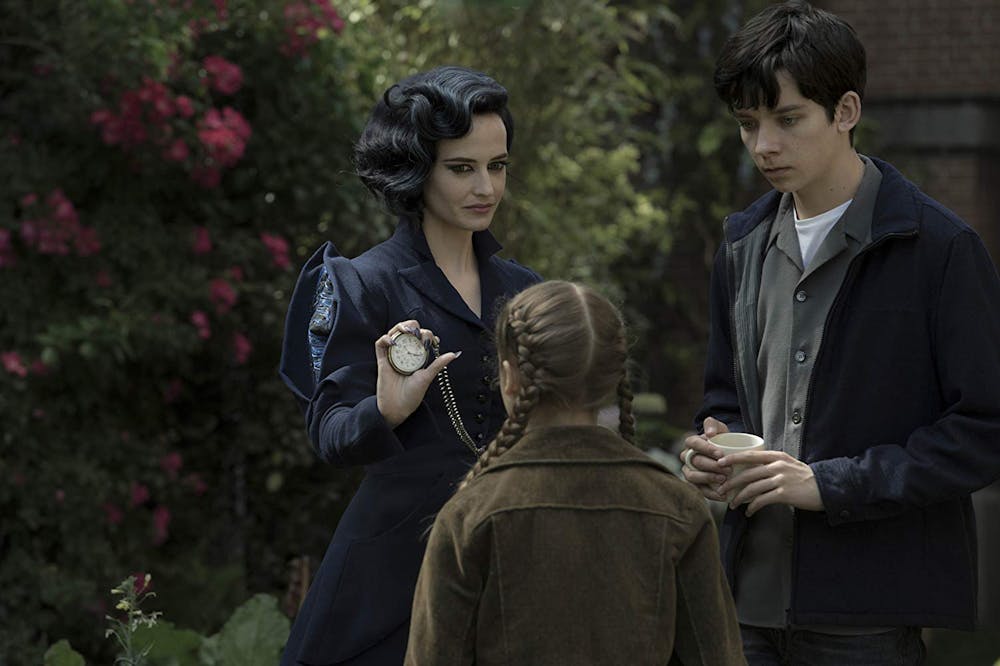
Jacob has inherited an ability that makes him uniquely able to help the supernatural peculiar children of the title, who are threatened by creatures named hollowgasts who are driven to murder peculiar children in order to feed upon their souls. For Jacob, his transition to adulthood is less about romance and more about self-discovery, connections with his ancestors, and finding a way to negotiate his new-found abilities and responsibilities.
In The Gothic Child, Maria Georgieva suggests that the traditional Gothic novel is preoccupied with “the growth and transformation of the child, the crisis of adolescence and the sometimes painful transition into adulthood”. She is referring to the child’s potential to grow into the hero, heroine or villain.
However, the recent surge in YA Gothic fiction takes this fascination with the darker aspects of childhood in a different direction. The girl heroine, in learning to manage the physical and emotional shifts of her development and more complex relationships in romance, can both be a threat and a saviour to others.
The fuzziness of her nature reflects both the liminal status of the teenager and new cultural understandings of the monster, who now more often resembles the typical American teen than an undead Romanian count.
 Instead of contemplating a child’s potential to head towards either good or evil, recent Gothic YA acknowledges the possibility of both the good and the monstrous residing in one person.
Michelle Smith, Senior Lecturer in Literary Studies, Monash University
This article was originally published on The Conversation. Read the original article.
Gillian James, University of Salford
At the Hay Festival on June 2, Melvin Burgess received the Andersen Press Young Adult Book Prize Special Achievement Award for his novel Junk, first published 20 years ago. Since then, the young adult novel has come of age.
Burgess and his publisher, Andersen Press, took a risk when Junk was first released in 1996, when books for teenagers were hardly as gritty as the typical dystopian fare of today. A book about drug addiction and prostitution aimed at “young adults” was then a very daring thing, and many thought that this was a book that was simply too depressing for the market and would languish on the library shelves. It was, after all, one in which 14- and 15-year-olds take high risks, living away from home in a squat and fuelling their heroin addiction through theft.
Actually, it didn’t languish on the library shelves at all. It became a bestseller and was translated into 28 languages. Unsurprisingly, it received some negative commentary, but as Burgess himself has pointed out (in the latest edition of Junk), most of that came from people who had not read the book. There was also plenty of positive commentary: “An honest, authentic look at the drug culture,” said Time Out. “May just be the best YA book ever,” thought Robert Muchamore. “It is the real thing – a teenage novel for teenage readers,” argued The Scotsman. Burgess was awarded the Carnegie medal for Junk in 1997.

As its title hints, it’s a grim story, and now slightly dated. The young people involved have to make phone calls from phone boxes and have little access to computers. Yet the main characters, Gemma and Tar, are believable and rounded. The addiction is real. Homelessness is still an issue. It was Burgess’s aim to tell an authentic story but by his own admission, “authentic is informative”.
Arguably, the young adult and the young adult novel have existed for some time. Mark Twain, Louisa May Alcott, Jane Austen, the Bronte sisters, Charles Dickens and even Goethe featured them and wrote them, of a kind. The Bildungsroman, or coming of age story, was aimed at all ages (think David Copperfield).
More recently, in the 1970s, Judy Blume and Christine Nöstlinger wrote for the older teen. These books featured some of the challenges facing young people: growing sexual awareness, peer pressure and the need to take responsibility for the world. But the young people in these novels do not take such high risks as Burgess’s characters nor is the description of their activity as explicit. Not quite (young) adult.
The term “young adult” did not come into common parlance until sometime after the appearance of Junk (though some educationalists have used the word since 1957 when the Young Adult Library Division, now known as the Young Adult Services Association (YALSA), was formed).
The bookshop chain Ottakar’s relabelled their teen fiction “young adult” in 1999. Waterstone’s changed the description back to “teen fiction” in 2006. At this point, the book-producing industry could not quite define what was meant by “young adult”. But Junk is often considered to have launched the Young Adult novel. Burgess may not have seen this as permission to write for this newly defined reader. He just wanted to write that particular story. Now he admits, however, that “the time was ripe for YA to grow up, and I was the right person in the right place at the right time”.
Other writers began to write for this newly defined reader. Kate Cann and Louise Rennison started writing what might be termed “Chicklet-Lit” – chick lit for a slightly younger readership. Jacqueline Wilson and Judy Waite gradually started writing for older teenagers. Several vampire and other paranormal romance books began to appear.
Other novels by Burgess push boundaries, too: Lady, My Life as a Bitch (2001) tells the story of a girl who becomes a dog and enjoys being promiscuous. Doing It (2003) is a frank examination of young male sexuality at the same time as showing the vulnerability of his three main characters. Nicholas Dane (2009) raises the issue of abuse but Burgess keeps the protagonist human. The Hit (2013) includes drugs again and violence on the streets of Manchester (yet is really about something else).
The young adult novel, after all, is a story told by one invented young adult (Burgess and many other writers of young adult literature are certainly not young adults) to another. In Junk, Burgess uses a series of close first person narratives, most of them from the point of view of two main characters. He offers us a character closeness, high stakes and risk-taking in our young people that was innovative at the time. After Junk, these were identified as traits of the young adult novel. He also offers us the young adult’s voice:
Maybe if I get off, I’ll get back with Gemma again. I know, I know. She didn’t chuck me because I was using … I was as clean as a whistle at the time, more or less. But you have to have hope.
Junk is 20 years old – and it still speaks to us. As Malorie Blackman, former Children’s Laureate, says in her introduction: “It may not be real but as with every great fictional story – every word is true.”

Gillian James, Senior lecturer in English and Creative Writing, University of Salford
This article was originally published on The Conversation. Read the original article.
Marcella Purnama, University of Melbourne and Mark Davis, University of Melbourne
Before JK Rowling, critics and experts predicted that young adult (YA) literature would finally die, as sales continued to decline. In 1997, a mere 3,000 YA books were published. A decade later that number was 30,000.
The success of Harry Potter changed everything. YA is now embraced by teenagers and adults alike – a 2012 Bowker Market Research study in the US found that 55 per cent of people buying YA books are over 18.
We’re currently living in the second golden age of YA literature. But why is there a sudden demand for these coming-of-age books?
Apart from the undeniable quality of the books themselves, a generation of online readers are creating new ways to discuss, dissect and celebrate their favourite stories. And it’s driving sales in a big way.
Take John Green’s The Fault in Our Stars (2012). It reached #1 on the Amazon and Barnes & Noble bestseller lists six months before the book was published. It received thousands of five-star reviews, ranked by readers who hadn’t even held their copies.
The reason? Green told his fans – the Nerdfighters – on Twitter, Tumblr and YouTube, that he would personally sign the first print of the pre-ordered books. He ended up signing 150,000 of them, but a pain in the wrist was a small price to pay.
John Green isn’t the only author embracing social media to engage readers.
Amulet Books, in conjunction with Puffin UK, created the campaign “Uncover the Color” to promote the eighth book of the famous Diary of Wimpy Kid series in 2013. The campaign included interactive mini-games and trivia challenges, and was advertised in other children’s websites such as FunBrain.com and CartoonNetwork.com. It resulted in 1.3 million copies sold worldwide in the first week of the book’s launch.
In 2015, Harlequin Teen created a “digital oracle” on Twitter to promote the first book in Eleanor Herman’s new Greek-inspired series, Legacy of Kings. They invited readers to ask @HarlequinTeen on Twitter using hashtag #asklegacyofkings. The program responds with one of 100 statements from various gods, including Poseidon and Athena.
If content is king, to repeat that somewhat hackneyed and sexist Silicon Valley mantra, social media has undoubtedly become queen.
Should publishing be “more about culture than book sales”, as a recent article published in The Conversation has it? The point is moot. Publishing has always been about both culture and commerce.
Art and commerce has come together in a related trend: the resurgence of the middlebrow reader. Academic Beth Driscoll describes these readers as middle-class and aspirational, seeking emotional connections with book characters, other readers and authors.
In other words, reading has become more than ever an emotional, cultural and social act. YA readers are at the forefront of this: discussing books, connecting with other fans and tweeting to their favourite authors to ask about plot holes.
They create drawings, songs, poems and fan fictions to declare their love towards a certain book character (in late 2000s, the debate of the Twilight decade seemed to be: Are you Team Edward or Team Jacob? They dress in Gryffindor robes and bring their wands to bookshops to queue for J.K. Rowling’s final Potter book.

This level of engagement has not been seen in readers of other genres, and increasingly it has an impact on the success of a book. A 2014 study of over 10,000 Facebook and Twitter posts proved that social media activity helps drive book sales.
Yet it’s not just the quantity of social media mentions that creates success, but their quality.
Recently, Marcella Purnama studied readers’ emotional engagement and its impact on the success of YA author John Green’s books, drawing on the Goodreads reviews of Green’s four books. The results showed that high levels of emotional engagement from readers correlated with better Goodreads ratings.
The more emotion readers show online, the more they interact with others about the books. And the more interaction, the greater the success of the books.
This creates a snowball effect, driven by high levels of social media engagement among YA readers, that has helped drive the growth of the category as a whole.
Sadly, some publishers and authors are still reluctant to use social media to market their books. Often publishers depend on booksellers and authors to connect directly with the readers, while authors hope that the publishers’ expertise and connections will increase book sales.
Readers are eager to share their reading experience. They share their latest reads on Facebook, write reviews on their blogs and actively find fan communities to talk about their favourite characters.
The books that rise to the top will be the books with the most engaged readers. And it’s up to publishers and authors to keep the fire going.

Marcella Purnama, Masters Candidate in Publishing and Communications, University of Melbourne and Mark Davis, Lecturer in Publishing and Communications, University of Melbourne, University of Melbourne
This article was originally published on The Conversation. Read the original article.
Rebecca Ciezarek, Victoria University
Discussion on diversity in young adult (YA) fiction is not difficult to come by. Over the last couple of years, awareness of the need for greater representations of characters and lives in the literature produced for young people has increased.
In Battling Dragons: Issues and Controversy in Children’s Literature (1995), Judith Morley and Sandra Russell sum up this argument for diversity by saying:
The cultures explored in certain books may be foreign to [some] children, but the common bonds of humanity are very evident. The human emotion of empathy and an awareness of diversity are fostered through careful reading and discussion of literature.
“Diversity” in YA fiction is a broad concept, and can include (but is not limited to) the experiences of the LGBTQI community, gender diversity, people of colour, indigenous cultures, disability (physical, sensory, cognitive, intellectual, or developmental disabilities, chronic conditions, addiction, and mental illnesses) and ethnic, cultural, and religious minorities.
Academia is also responding to issues of diversity. Last year, the Children’s Literature Association focused its conference on race, immigrants and refugees, (dis)ability, sexuality, religion, marginalisation, agency, and social justice.
Similarly, the Australasian Children’s Literature Association for Research 2016 conference will include discussion on changing representations of gender, race, class, age, nation, ability, and censorship.
While the International Board on Books on Young People is looking at diversity for its 2016 conference, with a focus on global, local, and indigenous literature, as well as diversity of literary forms.
The following list of novels, all published this year, provides some insight into the variety of narratives being created for readers of YA fiction. It was a challenging list to create, not because the number of titles was lacking, but because 2015 saw so many notable books, looking at a diverse range of experiences.

Magabala Books
Jane Harrison’s Becoming Kirrali Lewis (2015) has a dual narrative, telling the story of Kirrali, an Aboriginal girl entering Melbourne University in the 1980s, and Kirrali’s mum, a white woman who, after an affair with an Aboriginal man, made the decision to put their baby (Kirrali) up for adoption in the 1960s.
Adopted by a white family, Kirrali does not explore or question her cultural heritage until compelled to by a series of violent and political events.
Vân Uoc Phan, the protagonist in Cloudwish (2015) by Fiona Wood, is the Australian-born daughter of Vietnamese refugees. Living with her family in government housing in Melbourne, Vân Uoc struggles to fit in at her private school, caught between her Australian identity and Vietnamese heritage. And there is potential romance to contend with as well.
In The Flywheel (2015) (Erin Gough), 17-year-old Delilah has dropped out of high school after her relationship with another girl ends, and dealing with the subsequent homophobia from her fellow students becomes too much. Del instead takes over running her dad’s café, and from that experience, readers learn about love, failure, family, bulling, and overcoming life’s hurdles.

Walker Books Australia and New Zealand
The Foretelling of Georgie Spider (2015) by Ambelin Kwaymullina is book three in The Tribe series, and it is an incredible journey to undertake.
It follows the story of three girls (one per book), who hold the unique ability to see into the past, present, and future.
Woven throughout is the history of the Aboriginal Dreaming, passing on important knowledge, cultural values, and belief systems to later generations.
The above titles are by Australian authors, but many publications this year came out of the US, where, in spite of a culture of challenging books, a range of topics were explored which defied mainstream literary conventions:
Some of these books use humour to tackle their difficult content, while others rely on the emotional vulnerability of their protagonists. Whatever the narrative strategy employed, what makes these books (and others not listed) so meaningful to readers is that they’re telling stories that have a long history of being overlooked in conventional literature.

David Fickling Books
The publication of these stories, however, does not necessarily mean there is a straight path to readers. Censorship and the banning of young adult books was a hot issue this year.
Laura Reiman and Ellen Greenblatt, writing in Serving LGBTIQ Library and Archives Users (2011), highlight that challenging children’s literature is one of the most enduring forms of censorship. Its enactment is based on the desire to “protect” young people.
Peter Hunt identifies this in Understanding Children’s Literature (1998) to mean characterising children as impressionable, simpleminded, and unable to take a balanced view.
The greater issue, I would suggest, is not the extent to which young people may or may not be influenced by what they read in a text, but rather the potential texts have to offer advice, encouragement, courage, recognition, and comfort.
As YA researcher and editor Michael Cart argues:
Teenagers urgently need books that speak with relevance and immediacy to their real lives and to their unique emotional, intellectual, and developmental needs and that provide a place of commonality of experience and mutual understanding […]. But books can’t do that unless their authors trust young readers with the truth.
Authors, yes, but this can be expanded to include editors, publishers, booksellers, libraries, reviewers, parents, and guardians.
It only makes sense that we continue with the progress made this year with regard to diversity in YA fiction, to make widely available texts that speak to the greatest number of readers, and trust that young readers know what they want.

Rebecca Ciezarek, PhD candidate in Children’s Literature, Victoria University
This article was originally published on The Conversation. Read the original article.
Ambelin Kwaymullina, University of Western Australia
There’s a conversation gaining momentum in Australia about the lack of diversity in Young Adult (YA) and children’s literature. It’s been inspired in part by debate in the US, which many critics date back to a seminal essay by Nancy Larrick titled The All-White World of Children’s Books that was published in the Saturday Review in 1965.
The question of diversity has been raised periodically by critics, readers and writers alike – here and overseas – ever since. In the US, it was reinvigorated in May last year when a group of authors launched the We Need Diverse Books campaign. Its mission? To change the publishing industry so that it produced literature “that reflects and honours the lives of all young people”.

Courtesy of Sarah Ayoub
The campaign has quickly grown from a grassroots movement into a global phenomenon that’s also generated widespread debate in Australian literary circles.
Aussie authors who have written on diversity in youth literature include myself, Erin Gough, Gabrielle Wang, Danielle Binks, Sarah Ayoub, and Rebecca Lim.
There is, of course, no single diverse experience. I am an Aboriginal author (Palyku people), but there are differences between my experiences and those of other Indigenous writers, and indeed those of diverse writers more broadly. We Need Diverse Books defines diversity as:
all diverse experiences, including (but not limited to) LGBTQIA, people of colour, gender diversity, people with disabilities, and ethnic, cultural, and religious minorities.
But while there are many differences between diverse peoples and identities, there are also points of intersection, and one of them is the degree to which our young people are being failed by literature.
Why is diversity important? Author Malindo Lo, one of the founders of We Need Diverse Books, gave this answer:
Diversity is not important. Diversity is reality … Let’s stop erasing that.
Many minority writers cite the experience of being erased from reality as the reason they began writing in the first place. As Lebanese Australian Sarah Ayoub recently said of her YA novel Hate is Such a Strong Word (2013):
I wrote this book to reconcile everything I felt as a teenager. When I go out and speak to schools with students from different cultures, I always say that you don’t have to change who you are to fit into the world and that your story is just as relevant as any white story.
A lack of diversity not only influences how diverse peoples see themselves, but how they are seen (or not seen) by those of the dominant culture. The situation is not helped by the fact there is often a long history of distortion of diverse identities in narratives written about the (so-called) “other”. In relation to Australian Indigenous peoples, Aboriginal writer Melissa Lucashenko has described this as “the great poisoned well of historic writing of Aboriginal people”.
The representation of diverse peoples, and especially of colonised or oppressed peoples by those who have inherited the benefits of colonisation or oppression, remains a fraught area. As Latino author Daniel Jose Older has commented:
Authors of colour struggle to get our voices heard, and publishing houses that espouse diversity publish more white authors writing characters of colour than anything else. Cultural appropriation matters in this context because it is about who has access and who gets paid, even beyond the problems of a poorly crafted, disrespectful representation.

Mark Crocker/AAP, CC BY
As a diverse YA author I am often asked, usually by teens searching in vain for their own reflection in the novels they read, whether I think things will ever change. I do, mostly because I believe there is a limit to how long literature can peddle the fantasy of a non-diverse world to readers who are living in a diverse reality.
And in relation to cultural diversity, increasing minority populations will change readership and hence (eventually) world markets. In the US, the Census Bureau has forecast that by 2043 minorities will comprise a majority of the US population, while the 2015 UK Writing the Future report noted that predicted increases in minority groups meant the book trade would have to change to remain relevant:
[P]ublishers’ present concentration on People Like Us – White, aged 35 to 55 and female – will not reflect the society of the future, no matter how much that elides with their own current workforce […] the book industry risks becoming a 20th century throwback increasingly out of touch with a 21st century world.”
A country with as many voices as Australia has much to offer the children and teens of the globalised and pluralist 21st century. Except that, even within the Australian market, it can be difficult for Aussie voices to be heard (and correspondingly more difficult for diverse Australian voices to be heard).
This is where weneeddiversebooksau intersects with another campaign – that of LoveOzYA.
LoveOzYA was started this year, partly in response to concerns that Australian titles were struggling to be noticed among the onslaught of US blockbusters, many of which had been the subject of big-screen adaptions. In the words of Australian author Ellie Marney:
When a book is promoted online, on screens, in films, in print ads and bookstores and toy stores and fast-food outlets ad infinitum – it’s kinda hard to ignore.
LoveOzYa is not suggesting teens should stop reading books they enjoy. Simply that there may well be other Australian books they’d enjoy as much (but that were published in the comparatively tiny Aussie market and hence do not have the benefit of the marketing resources behind the US titles dominating the shelves).
In short, the goal is that Australian literature receives the proverbial “fair go”. Perhaps in this sense, the end game of both weneeddiversebooksau and LoveOzYA converges upon a vision of a more equitable future: a world in which all voices have an equal chance to be heard, and all voices are heard equally.

Ambelin Kwaymullina is Assistant Professor (Law School) at University of Western Australia
This article was originally published on The Conversation. Read the original article.
Diana Hodge, University of South Australia
For children and adolescents, the tyranny of adults can make any world dystopian. Real or fictional – no apocalypse required. But how does our Australian young adult fiction (of the dystopian variety) differ from that being produced in the US? And why do teenagers love dystopia so much?
In recent years, we have seen quite a few blockbuster novels produced for adolescents in this genre. You will no doubt have heard of at least one of these dystopian trilogies from the US: The Hunger Games (2008-2010) by Suzanne Collins, Divergent (2011-2013) by Veronica Roth and the Uglies (2005-2006) by Scott Westerfeld.
Australia has a strong tradition of dystopian fiction for young adults as well. Tomorrow, When the War Began and the accompanying six books in the Tomorrow series (1993–99) by John Marsden is, of course, one of the favourites, although it isn’t set in a post-apocalyptic world – rather, we see teenagers fighting and surviving in a current war.
Lesser known dystopian Australian novels – although no less noteworthy – include Taronga by Victor Kelleher (1986), The Obernewtyn Chronicles by Isobelle Carmody (1987-2015) and, more recently, The Tribe: The Interrogation of Ashala Wolf (2012) and The Disappearance of Ember Crow (2013), both by Aboriginal author Ambelin Kwaymullina.
There are many similarities between the Australian and US novels. All of those mentioned above are post-apocalyptic and all indicate a man-made disaster involving war, environmental destruction or nuclear disaster.
The Obernewtyn Chronicles are post-nuclear-holocaust and Taronga is post-war, probably nuclear. The events of The Interrogation of Ashala Wolf play out after a man-made environmental disaster.
The US novels cover similar ground: events in The Hunger Games follow an environmental disaster and war, while Uglies has an original disaster – a virus that infects petroleum products and causes them to explode, resulting in widespread environmental degradation. In Divergent, it’s a bit harder to tell which disaster struck, but it was probably a war.
Other commonalities between the US and Australian dystopian novels are feisty heroines, persecution of individuals because of special abilities and a primitive future that looks like our past – that is, communities living basic agrarian lifestyles, whether openly or in hiding.
All of these novels depict oppressive regimes that persecute the young protagonists – the burden of creating a more inclusive, fairer and more tolerant society is carried by the younger generation.
With so much in common between the Australian and American novels, is there anything that sets our home-grown dystopias apart from their US counterparts?
There are two main points of difference: the role of the natural environment, and the use of technology or “the fantastic” to fight battles and change society.
In Obernewtyn, The Interrogation of Ashala Wolf and Taronga, the stories are set almost exclusively in a natural – rather than an urban – landscape. Those natural worlds are not distinctly Australian. Obernewtyn feels far more like a European landscape.
The Interrogation of Ashala Wolf seems to be set against a hybrid of the two, with some local elements, such as a forest of tuarts and peppermint gums, but with some unfamiliar wildlife such as “saurs” – giant lizard- or crocodile-like carnivorous reptiles. Taronga is split between a very recognisable Australian bush and Taronga Zoo, Sydney.
But it’s not just the use of the natural world that distinguishes the Australian texts – it’s also the relationship the young characters have with the environment and animals.
In all three Australian novels, there are characters who have the ability to communicate with animals via telepathic means. There are differences in the role of animals in these stories, but animals are always characters, not just companions, pets or beasts of burden.
Both Taronga and The Interrogation of Ashala Wolf include elements of Australian Aboriginal legend and connection with the natural world. In the Australian novels, the characters are at home in the wild, at one with nature and find support in the natural world. The environment can be harsh in these novels, but it also provides comfort and sustenance.
Of course, Uglies and The Hunger Games are not devoid of nature. The rebels in the Uglies series are referred to as “Smokies” and live a rustic and somewhat precarious life in the wild; while protagonist Tally Youngblood admires the beauty of this natural setting. Her time with the Smokies is spent trying to bring order to the natural world. The Hunger Games protagonist, Katniss Everdeen, has to survive in the simulated “natural” world of the arena – using skills to hunt for food.
These relationships with the environment and the animal world are one area in which the Australian novels make use of the fantastic as a plot element.
In The Interrogation of Ashala Wolf, most of the young characters (including the protagonist, Ashala Wolf) have special abilities that are the cause of their persecution. This is the same literary device used in The Obernewtyn Chronicles. Abilities include telepathy (with people and animals), control of the environment, healing powers and superhuman physical abilities.
In Taronga, both of the young protagonists (Ben and Ellie) communicate with animals – Ben through a telepathic link and Ellie through strongly developed empathy. In all three books of this trilogy those shamanic abilities allow the youngsters to succeed against adult adversaries.
The US teen characters have well-above-average physical and mental abilities, but these are less intrinsic qualities and more the result of training or surgery (Uglies) – they are technical skills of fighting, knife throwing or shooting, and are not linked with anything mystical or with the greater natural world.
All of these stories are set in worlds rich with technology, surveillance equipment, advanced computers and a blurring of the man/ machine interface, with the exception of Taronga, which was written before our current computer age. But Taronga is themed on a spiritual return to nature and an escape from the urban world.
Perhaps Australian authors cling to a romantic ideal of childhood and see that the solution to environmental degradation and war can only come about through a return to nature. Maybe their US peers envisage technical skill as the attribute most needed in the young to save the human race from annihilation.
Given the huge success of the American novels, it appears that this picture of themselves is the one contemporary adolescents prefer.

Diana Hodge is Manager Academic Library Services, Casual Lecturer in the School of Communication, International Studies and Languages at University of South Australia.
This article was originally published on The Conversation.
Read the original article.
Margaret Kristin Merga, Murdoch University
Children are heartily encouraged to read in their early years of school. However, once students have mastered this skill and they move from learning to read, to reading to learn, the role of pleasure in the activity can be forgotten.
If reading is just seen as a tool for learning, the will to read may not be fostered in young people. Recreational book reading involves voluntary reading for pleasure, and research suggests that students in Australia and internationally are reading less over time.
Regular recreational book reading is one of the easiest ways for a student to continue developing their literacy skills. The ability to read fluently is by no means the end of development of literacy skills.
Reading for pleasure has been associated with a range of benefits, including achievement across a range of literacy outcomes, with literacy levels linked to advantages for academic and vocational prospects. Regular recreational reading also offers benefits for cognitive stamina and resistance to cognitive decline, the development of empathy, and even achievement in other subjects, including mathematics.
While much of the discussion around reading is concerned with skill acquisition, which usually (but not always) occurs during the early years of schooling, there is little focus on will acquisition, where students who have developed the skill to read continue to choose to do so.
Students with the skill to read, but without this will, are deemed aliterate. They exclude themselves from the range of benefits conferred by regular reading, perhaps without ever understanding the consequences of their recreational choices.
The West Australian Study in Adolescent Book Reading (WASABR) examined adolescent attitudes to reading and how often they do it, as well as how teachers, schools and parents can contribute to supporting it. The WASABR found that the most common reason for infrequent reading was related to preference for other recreational activities.
Teachers and parents may cool off in encouragement once students have demonstrated that they can read. Research suggests that adolescent aliteracy may be inadvertently perpetuated by withdrawn encouragement from both parents and teachers.

Lettuce/Flickr, CC BY
Parents may assume that once the skill of reading has been acquired, their job is complete. They may assume the role of encouraging further literacy development lies with the school.
Teachers may struggle to find time to encourage reading within the demands of a crowded curriculum, which focuses on reading skill, without recognising the role that reading for pleasure plays in fostering reading skills. The WASABR study sought to provide insight into how teachers and parents can successfully continue to encourage recreational book reading into the teen years.
Take students to the school or community library and encourage them to take self-selected reading materials home
don’t curtail reading aloud to young people at secondary level — this practice is enjoyed by teens, too
explicitly teach strategies for choosing books – don’t assume that this has been learned in primary school
be a model – read and show an interest in reading
find out what your young people like to read so that you can connect them with books of interest to them
talk about books in class or at home, not limiting the discussion to course texts
allow and encourage an aesthetic response – love characters, loathe characters, give up on books halfway through, re-read favourite books. Share what it means to be a passionate reader
communicate the value of the practice by putting aside class time or time at home for reading books for pleasure
finally, don’t assume that equipping them with an e-reader will automatically lead to increased engagement in reading. Research does not yet support the popular contention that young people prefer using e-readers. Thus continuing to provide access to paper books is important.
There may be confusion about what to read to experience literacy benefits. Books are the text type most consistently associated with literacy benefit; neither comics nor web pages have been associated with the same level of benefit at present.

Margaret Kristin Merga is Lecturer in English and the Curriculum and Researcher in Adolescent Literacy at Murdoch University.
This article was originally published on The Conversation.
Read the original article.
 At the BookShelf
You must be logged in to post a comment.