
The link below is to an article that takes a look at Sweek, a free writing and reading app.
For more visit:
http://www.noshelfrequired.com/free-mobile-reading-and-writing-platform-for-all-to-use-yes-please-and-thank-you-sweek/

The link below is to an article that takes a look at Sweek, a free writing and reading app.
For more visit:
http://www.noshelfrequired.com/free-mobile-reading-and-writing-platform-for-all-to-use-yes-please-and-thank-you-sweek/
Roslyn Petelin, The University of Queensland
Writing an article like this is just asking for trouble. Already, I can hear one reader asking “Why do you need just?” Another suggesting that like should be replaced by such as. And yet another saying “fancy using a cliché like asking for trouble!”
Another will mutter: “Where’s your evidence?”
My evidence lies in the vehement protestations that I face when going through solutions to an editing test or grammar quiz with on-campus students in my writing courses at The University of Queensland, and no, that’s not deferential capitalisation. It is capital ‘T’.
Confirming evidence lies in the querulous discussion-board posts from dozens of students when they see the answers to quizzes on the English Grammar and Style massive open online course that I designed.

Further evidence lies in the fervour with which people comment about articles such as the one that you are currently reading. For instance, a 2013 article 10 grammar rules you can forget: How to stop worrying and write proper by the style editor of The Guardian, David Marsh, prompted 956 comments. Marsh loves breaking “real” rules. The title of his recent book is For Who the Bell Tolls. I’d prefer properly to proper and whom to who, but not everybody else would.
Marsh’s 10 forgettable rules are ones that my favourite grammarian, Professor Geoffrey Pullum, co-author of The Cambridge Grammar of the English Language calls zombie rules: “though dead, they shamble mindlessly on”. A list of zombie rules invariably includes never beginning a sentence with “and”, “but”, or “because”, as well as the strictures that are a hangover from Latin: never split an infinitive and never end a sentence with a preposition. It (should it be they?) couldn’t be done in Latin, but it (they?) can be done in English. Just covering my bases here.
So, what’s my stance on adhering to Standard English? I’m certainly not a grammar Nazi, nor even a grammando, a portmanteau term that first appeared in The New York Times in 2012 that’s hardly any softer. Am I a vigilante, a pedant, a per(s)nickety person? Am I a snoot? Snoot is the acronym that the late David Foster Wallace and his mother — both English teachers — coined from Sprachgefühl Necessitates Our Ongoing Tendance or, for those with neither German nor a cache of obsolete words in their vocabulary, Syntax Nudniks of Our Time.

Foster Wallace reserves snoot for a “really extreme usage fanatic”, the sort of person whose idea of Sunday fun would have been to find mistakes in the late William Safire’s On Language column in the New York Times magazine. Safire was a style maven who wrote articles with intriguing opening lines such as this: “A sinister force for solecism exists on Madison Avenue. It is the work of the copywrongers”.
Growing up with a mother who would stage a “pretend” coughing fit when her children made a grammar error clearly contributed to Foster Wallace’s SNOOTitude. His 50-page essay “Authority and American Usage”, published in 2005, constitutes a brilliant, if somewhat eccentric, coverage of English grammar.
I need to be a bit of a snoot because part of my brief as a writing educator is to prepare graduates for their utilitarian need to function as writing workers in a writing-reliant workplace where professional standards are crucial and errors erode credibility. (I see the other part of my brief as fostering a love of language that will provide them with lifelong recreational pleasure.)
How do I teach students to avoid grammar errors, ambiguous syntax, and infelicities and gaucheries in style? In the closing chapter of my new book on effective writing, I list around 80 potential problems in grammar, punctuation, style, and syntax.
My brief for this article is to highlight eight of these problems. Should I identify ones that peeve me the most or ones that cause most dissonance for readers? What’s the peevishness threshold of readers of The Conversation? Let’s go with mine, for now; they may also be yours. They are in no particular order and they depend on the writing context in which they are set: academic, corporate, creative, or journalistic.
Archaic language: amongst, whilst. Replace them with among and while.
Resistance to the singular “they” Here’s an unbearably tedious example from a book published in 2016 in London: “The four victims each found a small book like this in his or her home, or among his or her possessions, several weeks before the murder occurred in each case”. Replace his or her with their.
In January this year, The American Dialect Society announced the singular “they” as their Word of the Year for 2015, decades after Australia welcomed and widely adopted it.
Placement of modifiers. Modifiers need to have a clear, direct relationship with the word/s that they modify. The title of Rob Lowe’s autobiography should be Stories I Tell Only My Friends, not Stories I Only Tell My Friends. However, I’ll leave Brian Wilson alone with “God only knows what I’d be without you”, though I know that he meant “Only God knows what I’d be without you”.
And how amusing is this commentary, which appeared in The Times on 18 April 2015? “A longboat full of Vikings, promoting the new British Museum exhibition, was seen sailing past the Palace of Westminster yesterday. Famously uncivilised, destructive and rapacious, with an almost insatiable appetite for rough sex and heavy drinking, the MPs nevertheless looked up for a bit to admire the vessel”.
Incorrect pronouns. The irritating genteelism of “They asked Agatha and myself to dinner” and the grammatically incorrect “They asked Agatha and I to dinner”, when in both instances it should be me .
Ambiguity/obfuscation “Few Bordeaux give as much pleasure at this price”. How ethical is that on a bottle of red wine of unidentified origin?
The wrong preposition The rich are very different to you and me. (Change “to” to “from” to make sense.) Not to be mistaken with. (Change “with” to “for”). No qualms with. (Change “with” to “about”.)

Alastair Bennett/Flickr
The wrong word. There are dozens of “confusable” words that a spell checker won’t necessarily help with: “Yes, it is likely that working off campus may effect what you are trying to do”. Ironically, this could be correct, but I know that that wasn’t the writer’s intended message. And how about practice/practise, principal/principle, lead/led, and many more.
Worryingly equivocal language. After the Easter strike some time ago, the CEO of QANTAS, Alan Joyce, sent out an apologetic letter that included the sentence: “Despite some sensational coverage recently, safety was never an issue … We always respond conservatively to any mechanical or performance issue”. I hoped at the time that that’s not what he meant because I felt far from reassured by the message.
Alert readers will have noticed that I haven’t railed against poorly punctuated sentences. I’ll do that next time. A poorly punctuated sentence cannot be grammatically correct.

Roslyn Petelin, Associate Professor in Writing, The University of Queensland
This article was originally published on The Conversation. Read the original article.
Beth Younger, Drake University
Banned Books Week, held this year from Sept. 25 to Oct. 1, is an annual event designed to draw national attention to the harms of censorship. Created in 1982 by the American Library Association in response to a growing number of “challenged” books in schools and libraries, the week is really about celebrating the freedom to read.
Much of the practice of book banning takes the form of challenging a book deemed subversive and objectionable, with profanity or sexual content often the book challengers’ source of ire.
These days, such campaigns can elicit an eye roll: everyone knows that teens are regularly exposed to profanity and sex online and on TV. (Rather than try to ban books, a better approach is to instead teach media literacy so young people are better able to contextualize what they’re exposed to.)
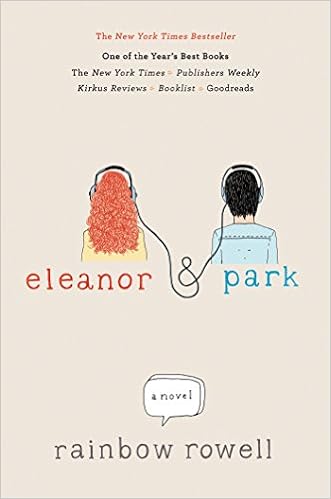
The problem is that when you go after books for swears or sex, you might also be threatening books that are truly subversive: the ones that confront our unconscious biases, whether it’s weight or race, and question the way we tend to think about ourselves and others. One frequently challenged book – Rainbow Rowell’s 2013 young adult novel “Eleanor & Park” – does just that.
“Eleanor & Park” is a romance novel about two misfits who become friends, fall in love and endure the cruelties of the world: abusive parents, poverty and bullying.
The same year it was published, a parent group in the Anoka-Hennipin school district in Minnesota tried (and failed) to get the book removed from the curriculum and school libraries. But they did manage to get the author’s visit to Anoka High School canceled.
Citing 227 instances of profanity, the parents alleged that “Eleanor & Park” was “littered with extreme profanity and age inappropriate subject matter that should never be put into the hands and minds of minor children, much less promoted by the educational institutions and staff we entrust to teach and protect our children.”
Banning books in the United States is nothing new, and there’s a long history of trying to prevent people (mostly kids and teens) from reading things some think they shouldn’t read.
It seems that the only thing worse than sex or the “f word” in young adult literature is being a lesbian. Depicting a gay couple got copies of Nancy Garden’s 1982 lesbian romance novel “Annie on My Mind” burned on the steps of the Kansas City School District headquarters in 1993.

Judy Blume’s books are famous for pushing the “decency” envelope. Her 1972 novel “Forever…” is also frequently banned for sexual content and for profanity. (Pretty much yearly since its publication, “Forever…” has been challenged by Focus on the Family or The Christian Coalition.)
But there’s another aspect to “Forever…” that’s rarely discussed: It has a fat character who has lots of sex. Sybil is often seen as a foil to the main character Katherine, a rail-thin control freak who loses her virginity deliberately and with purpose.
Sybil is the other side of the body image spectrum: She’s fat and “has been laid” by six guys. At least she gets to have sex, which is pretty uncommon for a fat girl in 1972 young adult fiction. (And there’s a penis named Ralph in the book, yet another reason to read this classic.)
But “Forever…” is an extreme outlier. The way the media depicts fat characters – and fat people – has been a problem for generations. In 2011 NPR aired a piece on fat stereotypes in pop culture. The report dissected the typical fat character in TV shows and films: someone “self-loathing” and “desperate to be loved.”
Of course, the lives of fat people aren’t much different from those of thin people. But you wouldn’t know that from the way fat bodies are portrayed on TV and in film. Research on “weight bias in the media” suggests that most representations of fat people in media are stigmatizing. More research suggests that shows like “The Biggest Loser” and “More to Love” reinforce anti-fat bias rather than fat acceptance.
This is why “Eleanor & Park” is so refreshingly different.
Like many protagonists in young adult novels, Eleanor is a teenager who’s desperate to be an adult so she can escape her awful circumstances. But while the parents trying to ban the book pounced on the profanity, they ignored one of the novel’s biggest triumphs: Eleanor is fat. Yes, Eleanor is a fat female protagonist in a young adult romance novel and she’s in love – she even has a cute boyfriend named Park.

As author John Green wrote in a review of the novel, “…the obstacle in ‘Eleanor & Park’ is simply the world. The world cannot stomach a relationship between a good-looking Korean kid and Big Red.” (Big Red is Eleanor’s nickname.)
Last year, Buzzfeed writer Kaye Toal penned a beautiful personal essay about discovering Eleanor in an airport bookstore. Part of what struck Toal as significant about Eleanor is that she is fat yet is not required to become thin or change in order to be loved. Despite the recent increase in fat characters appearing on television and in movies, many of them are required to change in order to be accepted. Not surprisingly, another study published in 2013 connects the prevalence of the “thin ideal” in popular literature to low self-esteem in female readers.
Letting Eleanor be fat and be loved is much needed in today’s climate of “the obesity epidemic” and misplaced concerns with fatness. Park loves Eleanor; she loves him back. A simple story, but with a difference. Eleanor’s fat is not really a crucial aspect of her being. She doesn’t need to be fixed.
That’s what makes this lovely and painful novel subversive – and what makes efforts to ban it all the more misguided.

Beth Younger, Associate Professor of English & Women’s and Gender Studies, Drake University
This article was originally published on The Conversation. Read the original article.
Camilla Nelson, University of Notre Dame Australia
Writers, over the last decade, have been waxing lyrical about the rise of the present tense in English fiction. But this morning I read something entirely new – for me, at least. I read a manuscript written almost uniformly in the continuous tense and I found myself getting – the pun is irresistible – tense. Rather than the much-vaunted vivifying effects attributed to present tense narration, this piece of formal trickery hinted at a qualitatively different thing – the potential flattening effect of mono-tense fiction.
Historically, English language fiction, for the most part, has been written in an unobtrusive past simple tense, sometimes called the narrative tense. Odes to the past simple do not exist in writer’s style or “how to” manuals, because, when it comes to fiction, at least, past simple is relatively invisible and it’s every other tense that stands out.
Of course, the danger is that the past simple fits the reader like a comfortable old shoe. In your average past tense narrative, everything already exists, so the argument goes, in a tidy and predetermined sequence. It provides a stable point of reference from which the reader looks safely back on the story.
For this reason, present tense narration is billed as the roar of late modernity. It is the tense of real time technologies, soundbites and satellite relays. It signals an inability to find a stable place from which to speak in a complicated world in which everything has an undetermined future.

Jay McInerney’s 1980s extravaganza Bright Light, Big City is often said to have entrenched the present tense craze among the fashionable affectations of the instant gratification generation – but this is perhaps because it calls attention to its present tense by shouting it out in the second person (“You are not the kind of guy who would be at a place like this at this time of the morning”).
Raymond Carver produced work in the present tense back in the psychedelic seventies (“I am sitting over coffee and cigarettes at my friend Rita’s and I am telling her about it.”), as did Malcolm Bradbury. Margaret Atwood produced Surfacing, followed by Cat’s Eye and The Handmaid’s Tale.
More recently, present tense is a feature in DBC Pierre’s Vernon God Little and Ian McEwan’s Saturday. It is mobilised to brilliant effect in JM Coetzee’s Disgrace, creating an edgy sort of atmosphere in which anything is possible (“He goes straight through to the bedroom, which is pleasant smelling and softly lit, and undresses”). In Wolf Hall, Hillary Mantel uses it to pull the distant past over the threshold of the present, creating the present tense as the new tense du jour for the historical novel (“He turns his head sideways, his hair rests on his own vomit, the dog barks”).
In fact, it’s perfectly possible to find a surprising amount of present tense in the nineteenth century novel, including works by Charlotte Bronte and Charles Dickens (where it is used to create a sense that, as Inspector Bucket puts it in Bleak House, “You don’t know what I’m going to say and do, five minutes from this present time … ”).
It’s tempting to spot a steady diffusion of the present tense marking the era from the industrial revolution to the information age, and to equate this with a sense of the world speeding up. (Or alternatively, to equate the death of the author’s distant God-like omniscience with the rise of democracy.)
But there’s another way to see it, too. Any individual past-tense novel may well contain every one of the English language’s twelve tenses. In comparison, a present tense novel tends to contain only two or three.
Take Virginia Woolf, for example:
Mrs Dalloway said she would buy the flowers herself. For Lucy had her work cut out for her. The doors would be taken off their hinges. Rumpelmayer’s men were coming. And then, thought Clarissa Dalloway, what a morning – fresh as if issed to children on a beach. What a lark! What a plunge! For so it had always seemed to her when, with a little squeak of the hinges, which she could hear now, she had burst open the French windows and plunged at Bourton into the open air.

Here Woolf uses past simple to frame the sentence, followed by future tense for the reported speech. The next sentence is in the past perfect (“For Lucy had her work cut out for her.”) followed by the future tense (“The doors would be taken off their hinges.”) An internal dialogue bursts into life with two short exclamatory sentences (“What a lark! What a plunge!”) before returning once again to past perfect. Indeed, as Mrs Dalloway runs on, the tenses constantly shift, conjuring up a flux of emotions.
By way of contrast, the ubiquity of the continuous past tense (typified by the use of the word “was”) in the manuscript I read this morning makes the reader feel as if you are a long way off from the action, as you are no longer talking about specific actions or events, but generalised or ongoing actions, such as actions that occur everyday. It lacks specificity. The continuous tense is always begging to be interrupted.
For garden-variety writing, the rule probably holds true: “Jesus wept” is stronger than “Jesus was weeping”, while the passive form, “the weeping was done by Jesus”, is a little ridiculous. The other problem is that sentences (like my three preceding clauses) also get longer and less economical as you need to add in additional words, very often verbs and gerunds that aren’t really doing much.
Gertrude Stein had a particular fascination with the continuous present tense, and the continuous past is a feature in quite a few of William Faulkner’s long recursive sentences, which can yank together half a dozen different temporal zones. But this kind of recursion, like subordination, creates complexity, and requires formidable skill. At risk of sounding like a pipe-smoking, tweed-wearing literary Luddite, mono and duo-tense novels can begin to feel a little thin.

Camilla Nelson, Senior Lecturer in Writing, University of Notre Dame Australia
This article was originally published on The Conversation. Read the original article.
The link below is to an article that looks at how to legally use quotes.
For more visit:
http://www.thebookdesigner.com/2016/08/how-to-legally-use-quotations-in-your-book/
Jen Webb, University of Canberra
It comes up, from time to time. Ethics and writing. Two concepts that are chained together in a dysfunctional marriage. How to write, ethically? How to write ethically while remaining true to the aesthetic imperative, the narrative trajectory, a reader’s requirements? And, by the way, what is ethical writing?
In the field of education the answer is straightforward: to write ethically means avoiding plagiarism, and resisting the impulse to make up “facts”.
For Milan Kundera, the answer is straightforward.
A novel that does not discover a hitherto unknown segment of existence is immoral. Knowledge is the novel’s only morality.
For Oscar Wilde, the answer is straightforward. “There is no such thing as a moral or an immoral book”, he writes, in the preface to his The Picture of Dorian Grey.
Books are well written or badly written. That is all.
These answers don’t help much. Creative writers necessarily avoid plagiarism, but we necessarily make things up. Not all writers feel impelled to contribute knowledge. And, Mr Wilde, what is the actual difference between “well written” and “badly written”?
Good; bad: like “ethics”, these words are what scholars of semiotics call “empty signifiers”. Any word stands in for the object or concept it names. But, except for proper nouns, no word really stands in for anything else; all any of them can do is direct our attention to the thing or concept being named. Empty signifiers are words that point to no concrete object, no agreed meaning; words that “absorb rather than emit meaning”.
To say “good writing” and “ethical writing” is to name concepts that apparently “we all” recognise, but on which “we all” are unlikely to agree. (My “good writing” is your pulp fiction. Et cetera.)
It’s an issue of taste, to some extent; or of contemporary values; or of politics. Which is where we come back to ethics. I won’t try to summarise the vast literature on ethics here. My concern is how we tell stories, and produce images, that contain a certain organic “truth” (that word very deliberately rendered in scare quotes, since it is yet another empty signifier), and that avoid didacticism.
Joan Didion begins her essay Why I Write by describing the art as one of
imposing oneself upon other people, of saying listen to me, see it my way, change your mind.
Yes certainly; but continually “imposing oneself upon other people” can leave us looking rather like the monks in Monty Python and the Holy Grail: endlessly chanting the same phrase, endlessly hitting ourselves (and our readers) over the head.
There is no complete answer to the question of ethical writing; but perhaps Michel Foucault comes close in his observation that
ethics is the considered form that freedom takes when it is informed by reflection.
That is, ethical writing is the writing we do when we have consciously reflected on the meanings we are making, or the world we are representing. I may not like a work, and I may not agree with its worldview, but (pace Oscar Wilde) if it was written under the conditions of reflective practice, it is necessarily ethical.
Writers are always making representations: materialising the world and relationships within that world; because words do more than simply name the things for which they stand. Organized into phrases, sentences, paragraphs, whole works, words can construct a context that readers will feel, see, hear, smell.
Words, organized in this way, can bridge the divide between the abstraction of language, and the concreteness of the material world; can make things (seem, and feel) real.
Perhaps this is a way to think about ethical writing: we can use language to make work that addresses the actuality of things, and the lived experience of many people.
The power of narrative and poetic representation is evident in the emotional, visceral, responses people have to works that manage materiality well. Whether it’s laughter or tears or recounting the experience to friends, “good” writing moves us.
The efforts of governments to censor representational works also points to the power of such works. The attempt by the Australian government, in 2001, to ensure that “there were no personalising or humanising images” of refugees is one such example.
Australian writers and artists have, over the past 15 years, responded to this decree not with silence or abstractions, but with works that personalize and individualise. Writers in detention centres in Australia or the Pacific are also writing poems and stories and recording impressions that personalize, individualise, humanize those communities.
Some such works may be agitprop, others naïve or didactic. But for me, many are ethical in the terms defined by Wilde and Kundera: they are “well written”, using elegant sentences, fresh approaches; and they expose “a hitherto unknown segment of existence”.

Jen Webb, Director of the Centre for Creative and Cultural Research, University of Canberra
This article was originally published on The Conversation. Read the original article.
Jen Webb, University of Canberra
On 8 June, with less than a month before the 2016 election, the arts advocacy group ArtsPeak staged a national debate on the topic of arts policy. Minister for Communications and the Arts Mitch Fifield, Shadow Minister for the Arts and Shadow Attorney General Mark Dreyfus, and the Greens’ spokesperson for the arts, Adam Bandt, spoke to the question: “What’s your vision for Australia’s arts and culture and what’s your plan for making this happen?”
As each took the stage, he expressed the conventional encomiums about the arts (it’s good for you, it’s good for the economy, it’s good for the country). There is some validity to this view. The Australia Council for the Arts shows that this sector contributes four per cent of our GDP: more than agriculture, forestry and fishing combined.
When it comes to social and cultural wellbeing, the data is also convincing. The majority of Australians (85%) report that art provides them with a richer and more meaningful life; and a majority of Australians report that they read literature (87%).
This supports the politicians’ comments about the value of art to the community and the economy. However, very few individual creators get much economic benefit from their contribution to the arts sector; and this brings us to the second focus of the politicians’ comments: which was to affirm the inherent value of art.
This is a view that sails close to the 19th century doctrine of “l‘art pour l’art” —that art must be without purpose if it is to have purpose.
These two lines of thought bring to light the complexity of art, and the contradictory roles it plays. On the one hand, art is a space of autonomous practice, where creators make their work free from political or economic or other imperatives.
On the other hand, it is an important site for the making and selling of commodities, for the representation of national identity, and for contributions to employment and GDP and social wellbeing. We must make art, for art’s sake; we must contribute to the society in which we find ourselves.
And, to add a degree of difficulty, writers and other artists must support themselves financially. But, as David Throsby and colleagues have demonstrated, Australian writers earn less than $13,000 a year from their creative work, which doesn’t cover even basic living expenses.
The best way to fund yourself is to ensure you have wealthy parents; or try to win the Lotto. More practically, it is possible to make a living as a generalist, producing advertising copy, politicians’ speeches, didactic panels for cultural institutions et al. But this sort of portfolio career is characterised by precarity and deep economic insecurity. Selling a story here, picking up a short-term contract there: it’s not a good option for anyone wanting to support themselves.
It is possible to make a living, too, writing marketable genre fiction — or more than a living. A truism attributed to James Michener is:
A writer can make a fortune in America, but he can’t make a living.
Ian Rankin, an extremely successful crime novelist, says that it took 14 years of writing and publishing before he began to see financial returns. JK Rowling did indeed make a fortune, but her experience is akin to winning the Lotto: that is, not likely (the chance of winning was recently estimated at one in 8,145,060).
If neither the precarious life nor the genre fiction life appeal, a further alternative is to find a steady job doing … well, almost anything.
If this is your choice, you will enter what Bernard Lahire calls “the double life of writers”. In one of those lives you will enjoy stability and continuity, along with freedom from economic want and precarity. But in your other life — your writing life — your daily job spent working as teacher or public servant or taxi driver will eat into the time, and the emotional and intellectual energy required, to write literary works.
Of course there may be little in the matter. Even Richard Flanagan, one of our top literary authors, contemplated taking a job in the mines just to make ends meet; and his earnings from the much-awarded The Narrow Road to the Deep North are unlikely to sustain him for the rest of his life.
This is a bleak picture for anyone eager to build a life as a writer. But the impossible contradiction at the heart of writing, between the imperative to make art and the counter-imperative to make a living, is one that many writers tackle, successfully.
Australia has an impressive list of writers, both experienced and emerging, who maintain a commitment to their creative practice. It’s not for everyone; but if you must write, you will find a way to do it.

Jen Webb, Director of the Centre for Creative and Cultural Research, University of Canberra
This article was originally published on The Conversation. Read the original article.
Christopher Kremmer, UNSW Australia
If it’s an election, you can bet that our cash-strapped publishing industry is preparing to unleash another volley of those hardy perennials known as the election campaign diaries. Penned by seasoned political observers who tail our leaders on their madcap journey to the ultimate opinion poll, you can expect several of these to be appearing soon in bookshops near you.
Political writing encompasses many different types of books. There are histories of governments, biographies and memoirs of politicians (John Howard’s 2013 Lazarus Rising), scholarly studies of the political process (Ian McAllister’s 2011 The Australian Voter: 50 years of change) and diaries.
This last category may be written by practitioners (The Latham Diaries (2005) and Bob Carr’s Diary of a Foreign Minister (2014)) or observers, usually journalists, and of these, the election diary has been a growing niche.
For publishers, I suspect, not much thought goes into them. The logic is, “If we don’t publish a campaign book, someone else will. Let’s be proactive. Somebody call Laurie Oakes”.
The popularity of the campaign diary owes much to the prevalence of tragic intrigues and power plays in recent Australian politics. The opinion poll-driven cutting down of leaders by their colleagues, inextricably linked as it is to the election cycle, personalises political discourse, thereby accentuating the gladiatorial, or perhaps Shakespearean aspects of the campaigns that follow.
From the journalist’s point of view, it’s money for nothing. Keeping a diary is just another form of taking notes, very useful when checking your facts down the track. The advance will cover drinks and won’t need to be repaid if the thing doesn’t sell.
For the public, campaign diaries are a godsend for spouses and relatives of impossible-to-buy-for men who are expected to be (but aren’t) interested in that kind of thing. It’s a slightly upmarket version of getting Dad a pair of his favourite socks.
Within the sub-genre of campaign books there are a variety of approaches to telling us what happened, or analysing what it means, or both.
At one end of the spectrum lie books that discern and expand on a theme, like Christine Jackman’s 2008 Inside Kevin 07: The people, the plan, and to a lesser extent Barrie Cassidy’s The Party Thieves: The story of the 2010 election (2011). At the other end, lie documentary-style first person accounts like Mungo MacCallum’s The Mad Marathon: The story of the 2013 election (2013).
The irony of political books generally is that, while publishers are fixated on them, they are usually the first to be remaindered, a sure sign of having over-estimated the market.
Despite, or perhaps because of, his chronic intake of massive doses of dangerous drugs, the American “Gonzo” journalist Hunter S. Thompson found politics compelling. But as he confessed in Fear and Loathing: On the Campaign Trail ’72 (1973), most political reporting disappointed him.
The most consistent and ultimately damaging failure of political journalism in America has its roots in the clubby/cocktail personal relationships that inevitably develop between politicians and journalists – in Washington or anywhere else where they meet on a day-to-day basis. When professional antagonists become after-hours drinking buddies, they are not likely to turn each other in.
My sense is that we have less to fear on that front in Australia, where competition for stories between news organisations remains vigorous. When it comes to campaign diaries the problem is not timidity, but a lack of ambition when it comes to the writing itself.
Political journalists place great weight on the quality of their information, but are less prone to crafting beautiful sentences. Because their books are produced in a hurry, they fail generally to take full advantage of the techniques of Longform journalism. They also assume there is intense, widespread interest in election campaigns.
This is a courageous assumption that leads to an even more toxic presumption; that the significance of the outcome of an election necessarily makes every detail of the campaign gripping. Not so.
It is 40 years this year since Laurie Oakes published a quickie that is arguably the finest work of book-length narrative non-fiction ever written about Australian politics, Crash through or crash: The unmaking of a Prime Minister (1976).
As anniversaries go, this one is passing quietly, but amid the cacophony of a federal election campaign it’s worth noting. Crash was the third in a trilogy of books Oakes wrote about the rise and fall of Labor leader Gough Whitlam, who died in 2014.
Whitlam’s victory at the 1972 polls ended a 23-year drought for his party, and ushered in an era of unprecedented reform and upheaval in Australian politics which ended with his dismissal by the Governor-General. Oakes, who was already regarded by many as the country’s leading political journalist, published his book the following year. From its opening sentence there is a sense of a writer in full command of the literary form.
The study at Government House is an imposing room. The mushroom colored walls provide a suitably muted background for the Governor-General’s collection of aboriginal bark paintings and for a beaten copper plaque presented to him during an official visit to Papua New Guinea. There are bookshelves on two sides. One wall is dominated by a large window overlooking the spacious grounds and Lake Burley Griffen beyond. The window forms an alcove, furnished with comfortable lounge chairs upholstered in brown fabric, for informal conversation. At the end of the room furthest from the door there is a carved desk where Sir John Kerr conducts formal business.
There had been no shortage of tumultuous moments in Whitlam’s career. Any of them might have made an arresting opening for the book. But Oakes’ chose instead to set the scene by juxtaposing the stillness and quietude of the room against the savage political act that would take place there, when an Australian prime minister was trapped, deceived and disposed of by the unelected representative of our foreign head of state.
It is exactly the right place and moment to begin the book, as the journalist-author uses the authority of his material, and the research and reporting skills that gathered it, to best advantage.
Even Oakes doesn’t write books like this anymore. The reason? We are all in a terrible rush, and in our increasingly fast, complex world, we are taking refuge in commentary and opinion, as opposed to reporting and analysis.
It’s 13 years since another literary landmark. Don Watson’s erudite and majestic Recollections of a Bleeding Heart: A portrait of Paul Keating PM (2002) set the bar for quality in political writing so high. But not all the quickies are bad.
Bob Ellis is an acquired taste, which many of us have never acquired, and I came to his book about the 2010 federal election Suddenly, Last Winter: An election diary (2010) with deep foreboding.
The rather lengthy author bio that precedes it informs readers that Lord Bob has written “twenty-one books, fifty-five screenplays, two hundred poems, five-hundred political speeches (including one for Kamahl), a hundred songs and two thousand film reviews”. But, hey, who’s counting? We’re into quality, right?
Okay, so he’s a character, and part of his character is a Promethean capacity for name dropping which does tend to intrude upon the job at hand, that is, writing about the election that pitted Australia’s first female Prime Minister, Julia Gillard against Tony Abbott.
9.40 a.m – A call from Denny Lawrence in New York. The play we co-wrote, Intimate Strangers, has just been given a public reading at the Vaudeville Theatre in London…
11.40 a.m. – A phone call from George Miller (for whom I’m writing spare dialogue in Fury Road) eager to know how Canberra was
4.40 p.m. I begin a journal-letter to John Ralston Saul (the world’s greatest thinker)…
Diaries, by their very nature, include much minutiae, such as when Ellis’s beloved northern beaches retreat is invaded by a bush turkey that knocks over chairs, plates, DVDs and bookshelves, “banging his fool head against closed windows, and with shrill cries beseeching whatever deity he worships to help him”.
But the book survives all its author’s efforts to ruin it, mainly due to a bravura 40-page preface, or as Lord Bob prefers to call it a “curtain-raiser” (written by a Hell-raiser), that hurls the reader into the world it describes.
Bob’s world is one in which politics still matters, and Australia is a country in which politics is still imbued with sectarian passion. However, those who practice politics as opposed to observing it are, shall we say, distracted, a “generation of drongos”, as Ellis describes them, “seizing their preselections and bringing us to ruin.”
A typical drongo leader may be
in make-up for the Today show at six-thirty. He may then be at a business breakfast attempting genial oratory at eight and at a Caucus meeting at nine-thirty for an hour of punitive admonition. His brain arrives at eleven, there’s a press conference at noon, a lunch with the President of Palau at twelve-thirty and Question Time at two…In all this he’s supposed to be running the country and he can’t…And so the roof-batts crisis occurs, and the climate change backflip, and the fight with the mining giants … None of these things he would have done had he been awake. And he hasn’t been awake for two years.
The above description is of Kevin Rudd, who is later characterised as “a cocksure twerp who deserved his downfall richly”. But the debilitating political culture it evokes hasn’t changed, except perhaps in degree.
Like Hunter Thompson, Ellis casts off the fetters that neuter most political reporters. The reader may not share the author’s view that the political rivalry between Julia Gillard and Tony Abbott was “erotic”, but the observation is interesting.
Ellis reports, but from a subjective point of view that is at turns, lively, cranky, contentious, silly, surprising, but rarely dull. It’s the kind of writing that lasts, partly because it doesn’t report politics on the campaign’s own terms, but translates it into a conversation that the rest of us can participate in, get irritated by, and at times even enjoy.
When the dust had settled and the minority government was formed, Ellis surveyed the political landscape and found signs of life in the north.
I look forward especially to the ramshackle, whinnying rural-socialist manifestos of Bob Katter. Because I do admire this brilliant wayward white-hatted yodelling dingo-kelpie cross and his untamed, yelping twists of soul.
We get the politics we deserve, but not always writing about it of the quality we expect. Bob’s rude charm saves the campaign diary from itself, and his foibles at some point become endearing.
Always has it been so. Just ask our current Prime Minister Malcolm Turnbull, who as a university student once planned to write a political musical based on the life of the Depression era New South Wales Premier Jack Lang.
Bob recalls it well, as he himself (who else?) was involved. He even has a few surviving scraps of some of the songs, one of which features Hitler, as he reveals to Annabel Crabb in this year’s best quickie so far. Crabb’s Stop at Nothing: The Life and Adventures of Malcolm Turnbull showcases the journalist’s knack for the well-turned phrase. Take this, for example
Something is missing in Australia. It’s been missing since about 9.30 p.m. on 14 September 2015… It’s the sound of Malcolm Turnbull wanting to be prime minister.
Crabb has a fine ear for the quotable quotes of others too. Recalling his mother Coral’s decision to leave his father (and nine-year-old Malcolm) Turnbull suspects she “sort of got bored with the role.”
Elsewhere in the book, discussing the PM’s diverse pre-politics careers in journalism, law and business, Attorney-General George Brandis remarks that “Malcolm has more hinterland than any previous Australian prime minister”.
And referring to the strains between our current leader and his party, another supporter observes that,
Malcolm doesn’t always realise that in the Liberal Party, when somebody raises an eyebrow at you, it actually means something.
But the chatty spiel that makes Crabb such a successful communicator on television doesn’t always translate well to the page. A blow is “ghastly”, a family farm is “beautiful”, the loss of death of Turnbull’s father (whose affairs were “tangled”) “smashed him up” and the son’s subsequent decision to keep the farm was “crazy brave”. That’s just from page one, and the “adjectivitis” keeps resurfacing throughout the text and becomes very wearing.
Yet the book succeeds mightily, due mainly to the author’s bower-bird instincts, her deep interest in character and astute choice of subject. The reader of her book, and Paddy Manning’s Born to Rule (2015), will find themselves observing those TV images of Malcolm on the campaign trail through the lens of the stories told by these writers.
And they will worry that, win or lose, the current truce between Mr Turnbull and all the people he has offended along the way, including many in his own party, might be short-lived.

Christopher Kremmer, Senior Lecturer in Journalism, School of the Arts & Media, UNSW Australia
This article was originally published on The Conversation. Read the original article.
Camilla Nelson, University of Notre Dame Australia
This week’s Sydney Writers’ Festival not only celebrates the art of writing, but the art of reading. Of course, it is difficult not to worry that this might be because the art of reading – that is, deep, critical, transformative reading – has been so radically transformed in the age of big data and Internet skimming that – along with ink and paper – it might be considered to be endangered, too.
Much of the program seems focused on the special kind of paying attention that reading demands – and its pay off in intangible commodities such as curiosity, wonder and awe. It features events that are dedicated not just to the new, but to the enduring influence of the old, in which writers have been asked to talk less about their own work, and more about the works of others that inspired them.
Deborah Adelaide talks about The Women’s Pages (2015), but also about her lifelong fascination with Emily Bronte’s Wuthering Heights that inspired it. Frank Moorhouse talks about reading that Victorian marvel George Eliot, and the debt that his own capacious volumes featuring Edith Campbell Berry might owe to it.
Gail Jones talks about the strange excitement of reading Nabokov. Don Watson, in conversation Delia Falconer, discusses the wondrous works of Gabriel Garcia Marquez. Tegan Bennett Daylight brings the spotlight to bear on the wry, self-deprecating humour of the mid-twentieth century American short-form author JS Perelmen, who may well be new to festival audiences. Jonathan Franzen, in conversation with Daylight, not only talks about Purity (2015), his latest book, but also his vociferous reading life, encompassing the works of obscure and dazzling authors who are seldom read today, including, no doubt, Franzen’s long-standing infatuation with the scathing social satires of the early twentieth-century Austrian writer, Karl Kraus.
There are many different kinds of reading. The festival concentrates on the sort that brings art and life together. Artistic Director Jemma Birrell says, “A good festival, like a good book, should bring real-life benefits.“ Consequently, the program bristles with panels on the Books that Made Me, the Books that Changed Me, and the Books that Saved Me. It features a Literary Healing Room tended by bibliotherapists – that is, book doctors – who administer small doses of book buying as remedy and solace in an alienated world. (You can find these curious doctors at the School of Life in Sydney, Melbourne, and London, where they can be consulted in person or via Skype, at all hours.)
Marcel Proust, with his unsparing insight into human passions and illusions, recognised that there are “pathological circumstances” in which reading can become a sort of “curative discipline”.
But there’s something a little disquieting in the therapeutic cure. I find it odd, for example, that you can also purchase a “philosopher’s jumper” made of trendy black wool from the School of Life’s online shop – a touch overpriced at A$258.94 – in the hope that it will bestow wisdom or insight whenever you wear it. (It’s advertised as modelled on one that belonged to Martin Heidegger, which also seems an odd choice, given Heidegger was a Nazi.)
Also at the festival, philosopher Damon Young talks about the “ethics of reading” and the “virtues” that he claims reading engenders. In an era of clickbate, when articles have transformed into listicles, in which many of us struggle to read a text more than 140 characters long – and more are happy to outsource our critical capacities to a data algorithm known as Google – reading a book certainly demands something that is increasingly harder to find.
According to Young, reading has the capacity to teach us curiosity, patience, courage, pride, temperance and justice, to gloss the chapters of his recent book, The Art of Reading (2016).
In Young’s model of reading, it is not the book but the reader who bring these virtues into being. He argues – as, indeed, literary scholars have argued for several decades – that it may not be the reader who writes the book, but it is the reader who completes its meaning.
It is the imagination of the reader that brings the book into existence. Without a reader, a book is just a strange pattern of black marks on a page.
It is not that Young confuses art and life. He argues,
Ordinary life has a hazy atmosphere to it, whereas language illuminates brightly and sharply.
Life, in short, is much harder to navigate.
Young’s model of reading for moral self-improvement, like the bibliotherapists’ model of reading for therapy, or the current Sydney festival’s model of reading for life, can occasionally feel a little grim and prescriptive, because they skip over the idea of reading for pleasure or plain fun.
It is often a mistake to go straight for what is said, ignoring how it is said. However tempting it may be to feel that novels contain a world complete, novelistic characters are, as Samuel Beckett unkindly said of Balzac, mere “clockwork cabbages” in comparison to real people.
Books bring solace because they provide meaning when life does not. They do this because they are aesthetically patterned in a way that the real world is not.
Sometimes it is just the happy syntax of a sentence – the way it unwinds and surprises and satisfies. In this, books can also be deceptive. The fact is, how something is said is more often than not the thing that makes the reader feel what they do.

Camilla Nelson, Senior Lecturer in Writing, University of Notre Dame Australia
This article was originally published on The Conversation. Read the original article.
 At the BookShelf
.jpg)
You must be logged in to post a comment.