Words are powerful, and a rich vocabulary can provide young people with significant advantages. Successful vocabulary development is associated with better vocational, academic and health outcomes.
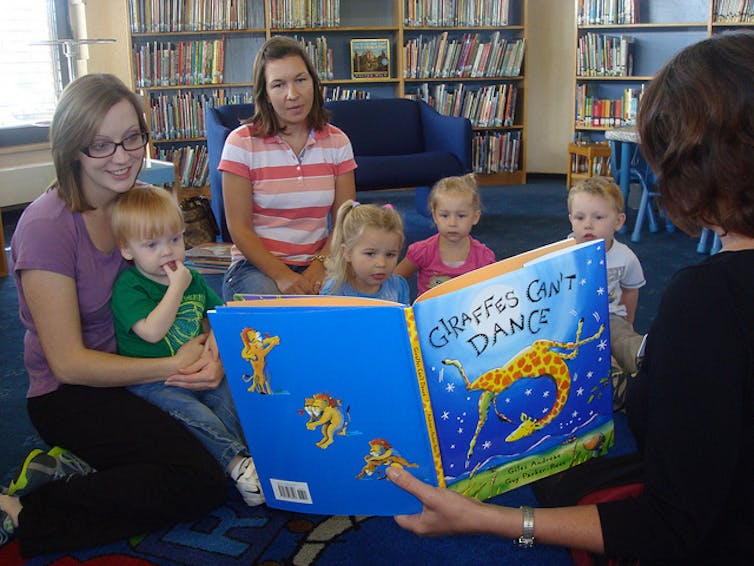
When parents read books aloud to their children from an early age, this offers notable advantages for children’s vocabulary development. This gives them a broader range of possible word choices.
Research also suggests children who don’t have the opportunity for shared reading are comparatively disadvantaged. If we want our children to be able to draw on a rich vocabulary to express themselves clearly, we need to read to them. Developing a child’s vocabulary is a valuable investment in their future.
Benefits of reading aloud
In the very early years, spoken vocabularies have been associated with higher achievement in reading and maths, and better ability to regulate behaviour. Vocabulary is also linked to success in reading comprehension and related word recognition skills.
Much of a child’s vocabulary is acquired through daily conversations. Shared reading aloud can provide a valuable additional source of new words children can use to power their expression. Research suggests the text of picture books offers access to more diverse vocabulary than child-directed conversations.
At some point, most of us have experienced the frustration of searching for an elusive word that is essential to clearly communicate an idea or a need. When children speak or write, they draw on their vocabulary to make word selections that will optimise the clarity and accuracy of their expression.
Beyond vocabulary, reading aloud offers numerous additional benefits for children. Reading aloud may support students to develop sustained attention, strong listening skills, and enhanced cognitive development.
Recent research also suggests children who are read to from an early age may be less likely to experience hyperactivity. Children who are at risk of reading difficulties may particularly benefit from being read to. Children who are learning English as an additional language may experience better reading comprehension when they are read to in English.
Reading aloud with your child is also valuable parent-child time. It can strengthen the parent-child relationship and foster reading engagement, which is essential if we want our children to enjoy the benefits of being a life-long reader.
How can I optimise vocabulary growth for my child?
Vocabulary development can be improved through explicit teaching techniques such as providing definitions for new words. For example, while reading to your child, when you encounter a new word you may pause and ask the child what they think it means.
If they’re unsure, you can then read a little further along so the word is encountered in a context that can give valuable clues about meaning. If the meaning is still unclear, you can provide a definition for your child so you can move on.
A recent study found approaches that involve pointing, providing definitions, and asking some questions as you read together can be good for vocabulary building.
Recent research found nearly identical gains in vocabulary where children were read to either using explicit techniques (such as pointing and giving definitions) or a more engaging storytelling approach. In the storytelling approach, the adult reading to the child added contextual information, which made the child more interested and engaged in the story.
Children will also benefit from hearing the same story a number of times. It’s also a good idea to use some of the new language in subsequent conversation if possible. This can increase exposure and strengthen retention of new words.
We may not always have a book at hand. In these cases, you can draw on your creativity and tell a story, which can also benefit vocabulary.
While there is limited research in this area, one study compared telling a child a story or reading them a story with a child reading silently to themselves. The study found all three groups of children learned new words. But telling a story and reading a story to a child offered superior gains in vocabulary.
Beating the barriers
Research suggests that children may be aware of the benefits of listening to books read aloud. This awareness can be a source of regret for the child when reading aloud at home ends, but they still enjoy shared reading. Children may continue to enjoy and benefit from being read to beyond the early years. You should keep reading with your children as long as they let you.
By far, the biggest barrier raised by parents to reading aloud to their children was the formidable barrier of time. If reading aloud becomes a routine part of family life, like dinner and bedtime, this barrier may be overcome as the practice becomes an everyday event.
Due to diverse issues faced in homes and families, not all parents will be able to read their child a book, or tell them a story. This is why it’s still so important for schools to provide opportunities for students to regularly listen to engaging and culturally diverse books.
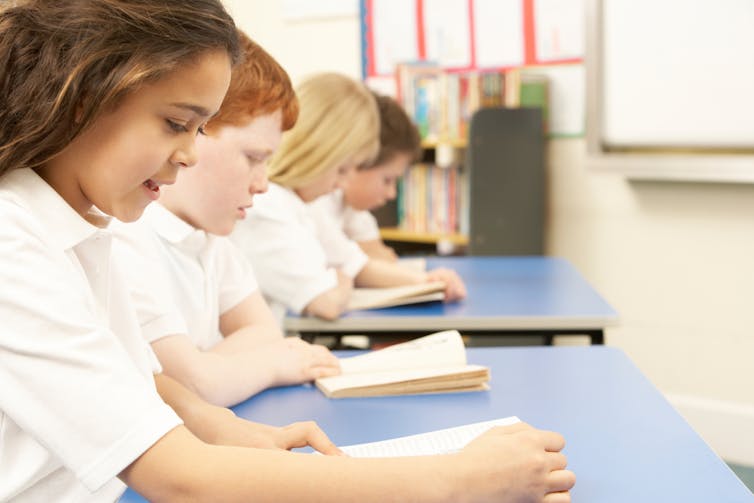
But reading aloud is not a typical daily classroom practice. We should increase the number of opportunities children have to hear stories both at home and in schools so children can experience the many benefits of a rich and varied vocabulary.
Anyone who’s watched “Bridget Jones’s Diary” knows one of her New Year’s resolutions is “Not go out every night but stay in and read books and listen to classical music.”
The reality, however, is substantially different. What people actually do in their leisure time often doesn’t match with what they say they’ll do.
Economists have termed this phenomenon “hyperbolic discounting.” In a famous study titled “Paying Not to Go to the Gym,” a couple of economists found that, when people were offered the choice between a pay-per-visit contract and a monthly fee, they were more likely to choose the monthly fee and actually ended up paying more per visit. That’s because they overestimated their motivation to work out.
Hyperbolic discounting is just one challenge of operating in a creative industry. Tastes are highly subjective, and the elements of plot and narrative that make one movie a tremendous hit could easily make another a critical and commercial failure.
For decades, advertisers and marketers struggled to predict the consumption of leisure products such as movies and books. It’s equally challenging to decide the timing. Which weekend should a studio release a new movie? When a publisher releases a hard copy of a book, how do they decide when to release the e-book version?
Today, big data offers new visibility into how people experience entertainment. As a researcher who studies the impact of artificial intelligence and social media, there are three forces that stand out to me as especially powerful in predicting human behavior.
1. Economics of the long tail
The internet makes it possible to distribute entertainment products that are less popular than mainstream successes. Streaming shows can acquire a larger audience than what is economically feasible for distribution through prime-time television. This economic phenomenon is referred to as the long tail effect,
Since streaming media companies such as Netflix do not have to pay to distribute content in movie theaters, they can produce more shows that cater to niche audiences. Netflix used data from their individual customers’ viewing habits to decide to back “House of Cards,” which was rejected by television networks. Netflix data showed that there was a fan base for movies directed by Fincher and movies starring Spacey, and that a large number of customers had rented DVDs of the original BBC series.
2. Social influence in the era of artificial intelligence
With social media, people can share what they are watching with their friends, making otherwise independent entertainment experiences become more social.
By mining data from social sites like Twitter and Instagram, companies can track in real time what moviegoers think about a given movie, show or song. Movie studios can use a treasure trove of digital data to decide how to promote shows and release dates for movies. For instance, the volume of Google searches of a film’s trailer during the month before its premiere is a leading predictor of Oscar winners as well as box office revenue. Movie studios can combine historical data about movie release dates and box office performance with search trends to predict ideal release dates for new movies.
In a study I conducted with Yong Tan of the University of Washington and Cath Oh from Georgia State University, we showed how such social influence determines not only which YouTube videos become more popular, but also that videos shared by influential users become even more widely viewed.
One study shows that when studios pay attention to social media buzz before a movie’s release, the difference between the predicted revenue and the actual revenue, known as the forecast error, reduced by 31 percent.
3. Consumption analytics
Big data provides better visibility into what books and shows people actually spend their time enjoying.
The mathematician Jordan Ellenberg pioneered the use of the Hawking index, a measure of the average page number of the five most highlighted passages in a Kindle book as a proportion of that book’s total length. The Hawking index shows when people give up on a book. If a 250-page book’s average Kindle highlight appears on page 250, that would give it a Hawking index of 100 percent.
The theory gets its name from Stephen Hawking’s “A Brief History in Time.” While this book still sells millions of copies a year, it is also seldom read, with a dismal Hawking index of 6.6 percent.
When a company such as Amazon decides which books to recommend to potential readers or which Prime shows to produce, they look at detailed digital traces of which plot points engaged audiences and which did not. This might help them to promote an upcoming release or to make better recommendations to individual users.
What’s more, new types of artificial intelligence can investigate what makes people engage with creative content. For instance, a company named Epagogix pioneered an approach using a neural network – an artificial intelligence tool that looks for patterns in very large amounts of data – on a set of screenplays rated by experts in the entertainment industry. The computer could then predict the financial success of a movie. According to some reports, such artificial intelligence can predict up to 75 percent of films’ actual opening grosses.
Given new big data insights like these, entertainment companies may soon know what exactly Bridget Jones would like to do with her leisure time better than Bridget herself does.
The love of reading is one of the greatest gifts an adult can give to a child. Pragmatically, reading proficiently helps with school work. But it also widens children’s horizons. It can help readers to understand their own world better, and to explore other worlds.
Parents often see reading as “school business” – something that teachers are responsible for. But there’s a lot of research that shows the value of reading at home and in the community. Children who read at home with parents or caregivers have an educational advantage that lasts their whole lives. In fact, reading to children helps them develop the language and literacy skills they need to begin formal literacy instruction.
Parents, as their children’s first and most important teachers, can make reading fun and inspire a lifelong love of reading. If parents themselves cannot read, others such as older siblings, friends and relatives can play this role.
Here, based on our own research studies about reading and drawing from the work being done by organisations dedicated to literacy, are some ideas to get kids reading for fun.
Reading as play
Children can have fun with reading even before they can read themselves. Reading feeds their fertile imaginations and they do the rest. In one of our research studies, pre-schooler Shafeek* spontaneously dressed up and acted out a story that his mother had read to him. Ashwariya* played “school” by “reading” a story to her toys. Again, she could not yet read but used the pictures and her memory for her game.
These examples show that reading can be made fun by linking it to play – through acting out, drawing pictures, dressing up, creating objects, or many other creative activities. Sometimes children do this on their own. But parents and teachers can also provide guided play activities.
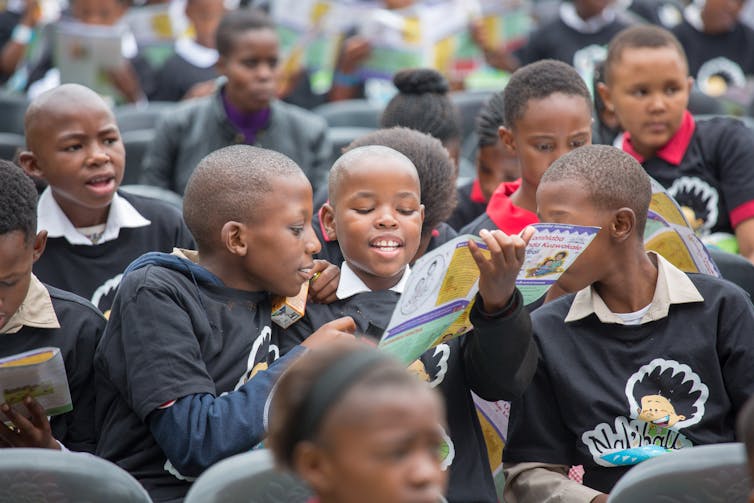
Melanie Lippert, Nal’ibali FUNda Leader, at the festival.
Reading routines are important at home. This could take the form of “bedtime story”, reading prayers or verses from a sacred book, or regular weekend reading. Young children often love to hear the same story again and again. This is important for their emergent literacy as they learn how stories work, and how to “read” backwards and forwards.
Children enjoy singing songs and rhymes and this is a fun activity for reading development too. These allow children to play with words and sounds which is the first step in developing their phonological awareness, an integral skill to develop for reading.
Family reading
Children can have fun by joining in family reading activities. This could mean looking at advertisements and, even if they cannot yet read, identifying pictures of items. It could mean turning the pages of newspapers or magazines for a parent and learning how to hold a book the right way up. Family photo albums are also great for learning to “read” pictures and hear family stories. Children learn to respect and handle books by seeing their caregivers do so.
Above all, caregivers should read to their children as an activity that’s designed to make meaning with a focus on understanding.
One of the weaknesses of teaching reading at South African schools, for instance, is that it often does not focus on comprehension. Parents can make reading meaningful getting children to preview a text (look at the title, cover and pictures before they read) and guess what it will be about.
They can also ask questions as they read (“Why did she/he do that? Do you think it was the right thing? What do you think will happen next?”), link the story to children’s lives and experiences, and get them to make up their own endings.
Some older children enjoy keeping a “reading diary” of books they have read with their impressions. Reading can also be a prompt for writing their own stories. Creating and writing for a school newspaper or magazine can be great fun and can be adapted to suit the technology available in the school.
Reading their own texts
Reading is difficult but it can be made more accessible if children are presented with opportunities to develop their own texts to read. An example of this could be to write a story with the child and have them read it themselves. Such a text would consist of vocabulary familiar to the child and it would scaffold comprehension of reading. If children are involved in developing their own texts for reading, it becomes a personal and authentic experience based on their own interests and needs. Producing their own texts also gives children a sense of ownership that helps them to take responsibility for the process.
Finding the right stuff
While there is no shortage of children’s books in English, finding suitable reading material in African languages and about African contexts can be a problem.
Many public libraries stock such books. Nalibali has a great range of stories in South African languages. The Family Literacy Project has developed many wonderful ideas for developing reading, including box libraries, reading clubs and Umzali Nengane (Parent and Child) journals.
Paulo Freire, the great Brazilian educator, talked about “reading the word in order to read the world”. He showed how reading critically and creatively can help people change their lives and create a better world. Something so important should not be left to teachers alone.
Australians flock to the beach over the summer holidays: Bondi alone had 2.9 million visitors in 2017 – 2018. But while tourism campaigns often portray the beach as an idyllic, isolated haven, many of our beach stories depict it as a darker, more crowded and complex place.
Here are ten Australian beach stories (in no particular order) worth reading this summer.
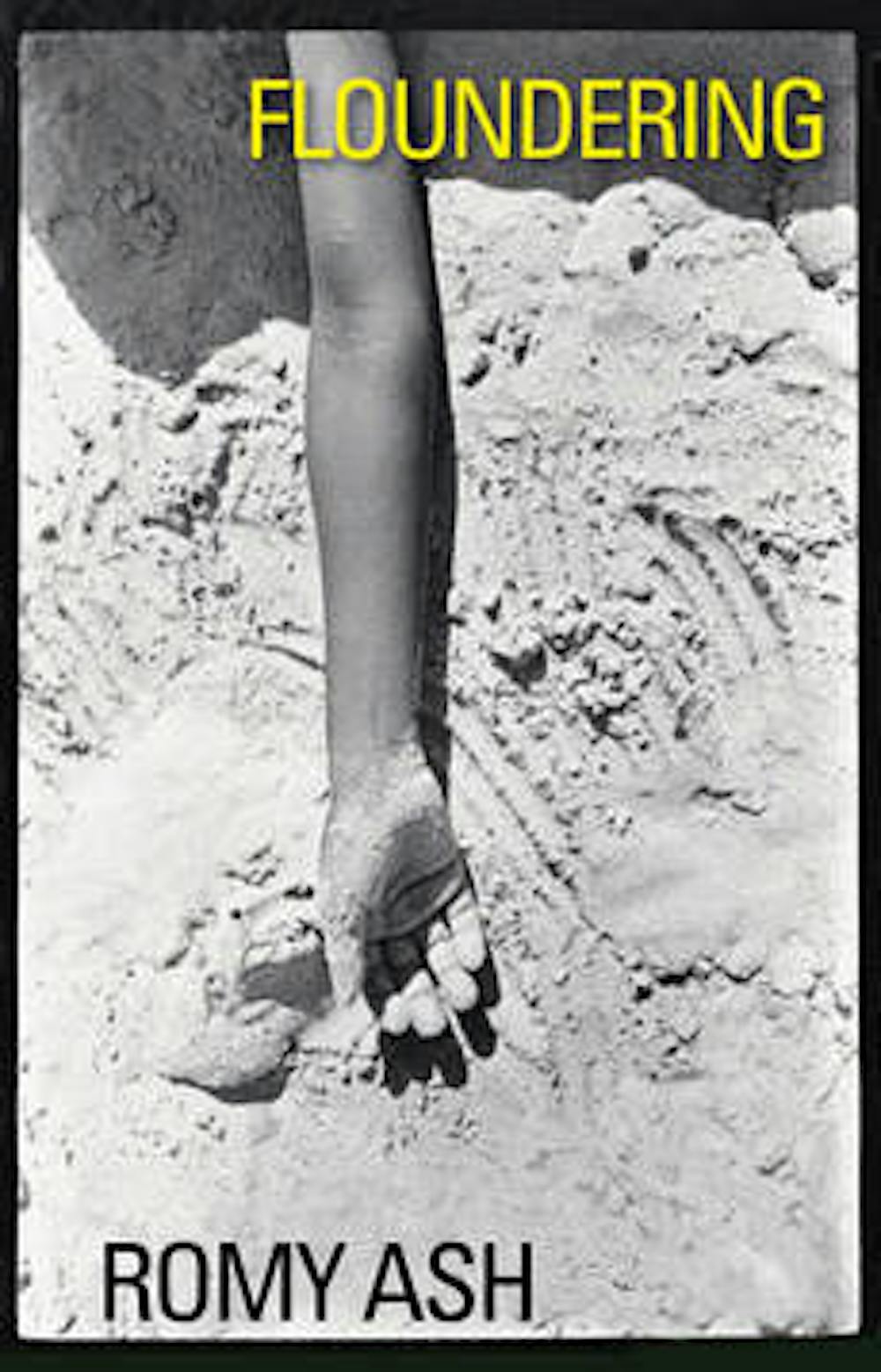
Floundering by Romy Ash
Romy Ash’s debut novel Floundering, shortlisted for the 2013 Miles Franklin award, is a captivating, sometimes chilling story of two young boys who are taken, without warning, by their mother to a beachside caravan park.
Left to their own devices, the boys must make the most of their time by the beach without anything but their school bags and uniforms.
The un-named regional beach in this novel is uncomfortable, “a location of risk and danger” as author Robert Drewe once described it, and sometimes reveals the worst ways in which nature and humanity meet. It’s a refuge for people looking to escape from city life, a stark comparison to more urbanised beaches.
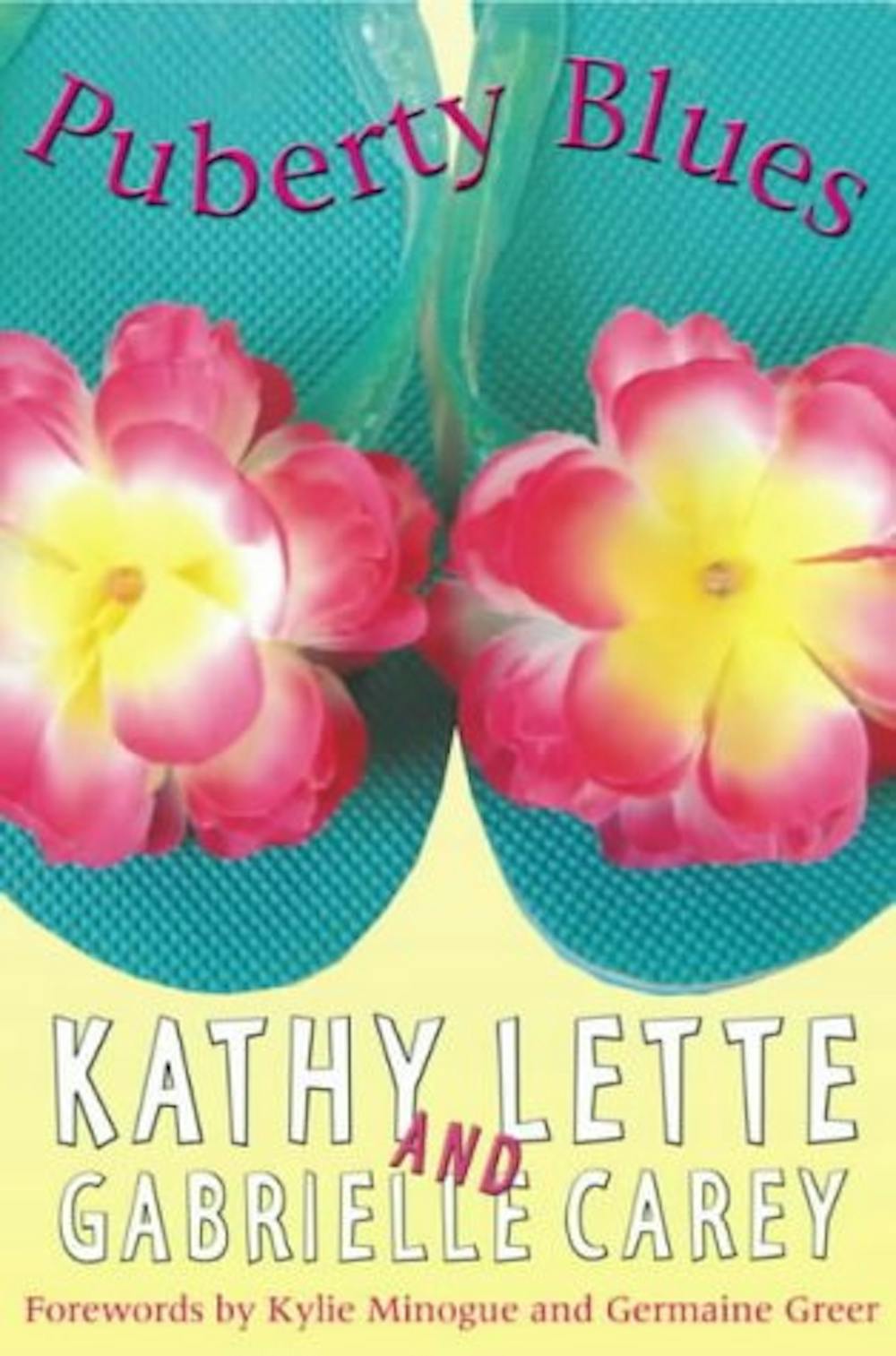
Puberty Blues by Kathy Lette and Gabrielle Carey
When I tell people that I research the Australian beach, often their first response is to ask if I’ve watched Puberty Blues. Perhaps Australia’s most iconic beach text, the book (first published in 1979) is the story of two friends growing up in beachside suburbs of Sydney. It was adapted for film by Bruce Beresford in 1981.
Both the book and film, with their characteristic colloquialisms and Australian slang, capture a sense of Australian coastal identity while revealing uncomfortable truths about gender, sex, and drugs for the teenagers they depict.
Australian stories about the beach are often male-centred and written by men. Puberty Blues is an important contribution to beach literature because of Debbie and Sue, its female protagonists, and their perspectives on a blokey world.
Time’s Long Ruin by Stephen Orr
In 1966, the three Beaumont children disappeared from Glenelg Beach near Adelaide. They were last seen in the company of a tall, blond man. Despite continued searching, even earlier this year, they have never been found.
Time’s Long Ruin (2010) is a fictionalised account of the disappearance of three children as told through the eyes of their young neighbour. Loosely based on the Beaumont story, Orr captures the dread of the aftermath for those left behind who knew and loved the children, the challenge of dealing with false leads and unreliable information, and the growing realisation that they will likely never be found.
The case of the Beaumont children had an enormous impact on Australian culture. My mother, who was a young girl when they disappeared, still recalls how her parents would worry about her momentarily being out of sight at the beach at this time.
On the surface, this novel is about surfing. But it asks deep questions about masculinity, and boys’ attitudes towards sex, while capturing the feel of Australian coastal life in the 1970s.
Winton’s writings often engage with the ocean, the coast, and the beach – usually in West Australia, where he lives. His memoirs have revealed his love for the coastal landscape. As he writes in Land’s Edge (1993): “There is nowhere else I’d rather be, nothing else I’d rather be doing. I am at the beach looking west with the continent behind me as the sun tracks down to the sea. I have my bearings”.
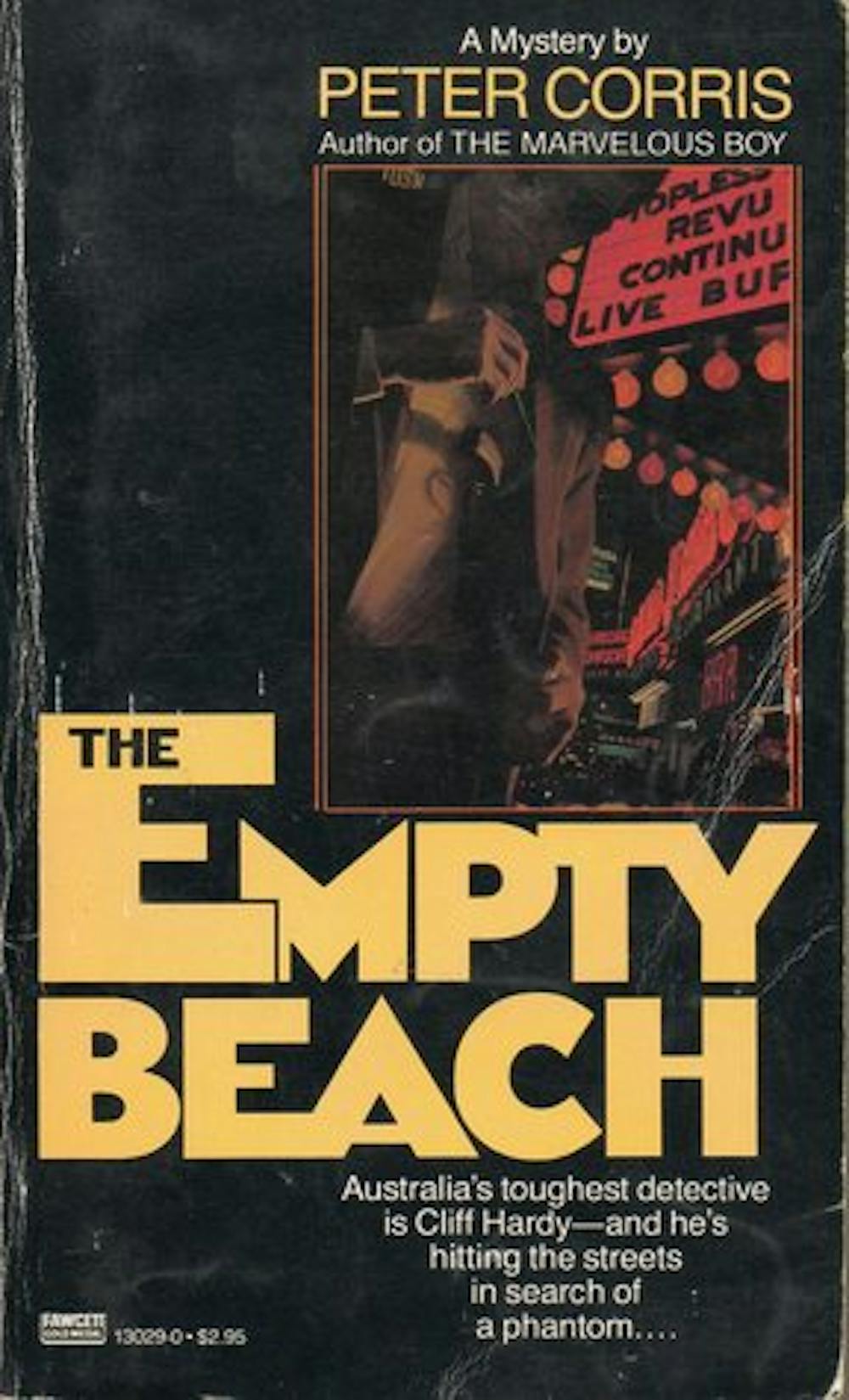
The Empty Beach by Peter Corris
Peter Corris died in August, after publishing 102 novels. The Empty Beach (1983) was released early in his career and is the fourth novel featuring the private investigator Cliff Hardy – a homegrown, hard-boiled detective, firmly located in Sydney. It was adapted for film in 1985.
In this book, Hardy is investigating the disappearance of John Singer, missing and presumed dead. He begins his probe in the rough, working class Bondi of the early 1980s. Corris captures Bondi Beach through the eyes of his protagonist, depicting it as a seedy extension of the city.
Hassled by junkies, threatened by mobsters; Hardy spends much of the novel embroiled in the corrupt underbelly of Sydney’s criminal kingpins, never far from the now infamous shoreline.
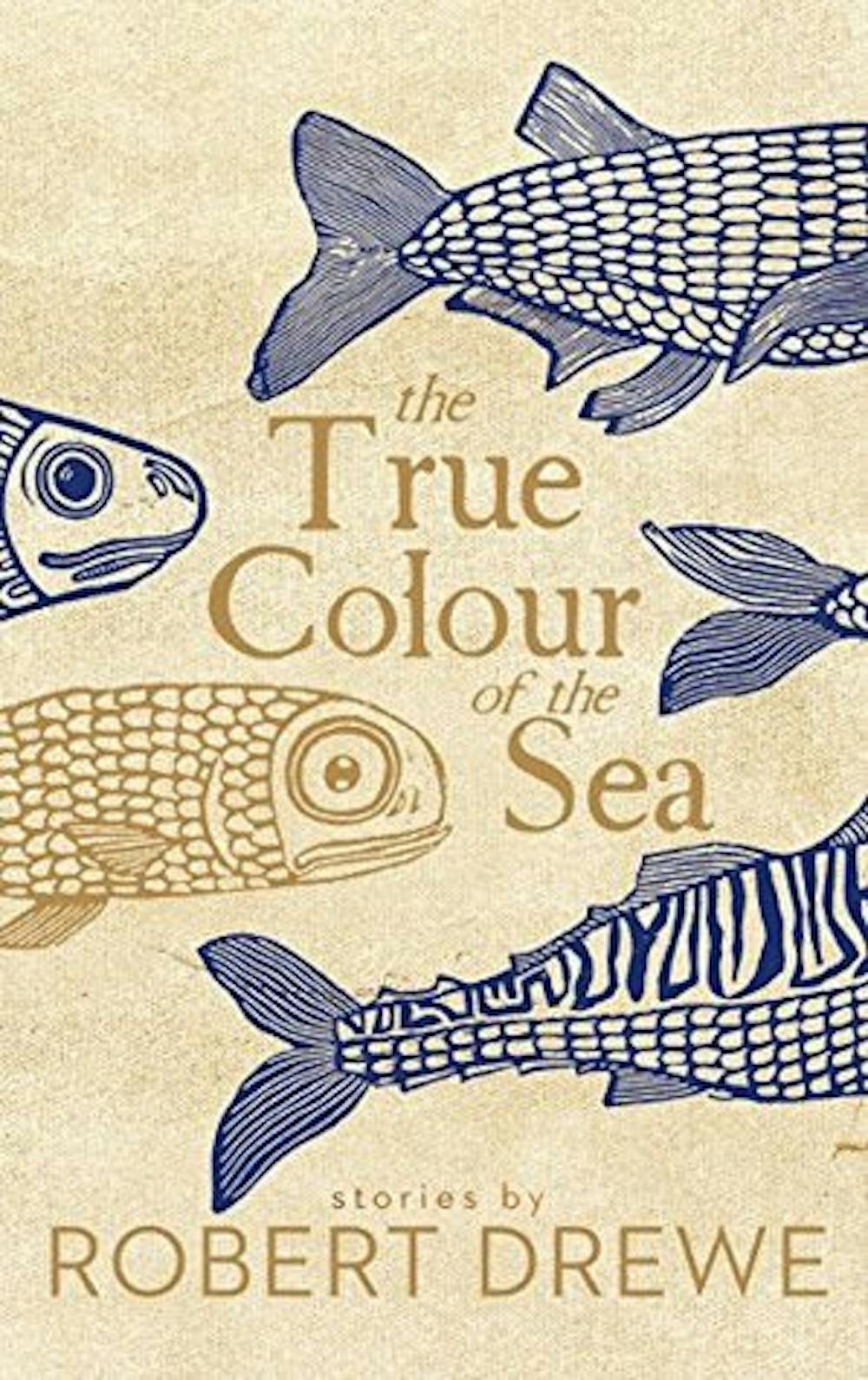
The True Colour of the Sea, by Robert Drewe
Having lived in many coastal spots across the country, including Perth, Sydney, and Byron Bay, Robert Drewe’s stories regularly capture that very familiar, domestic sense of a beachside life.
Drewe’s The Bodysurfers (1987), a collection of short stories, became a bestseller.
His memoirs and short stories are all infused by the beach landscape, and this latest collection is no different.
As the narrator writes in Dr Pacific, the opening story in his new collection:
“One thing’s for sure – it’s my love of the ocean that keeps me going. You know what I call the ocean? Dr Pacific. All I need to keep me fit and healthy is my daily consultation with Dr Pacific.”
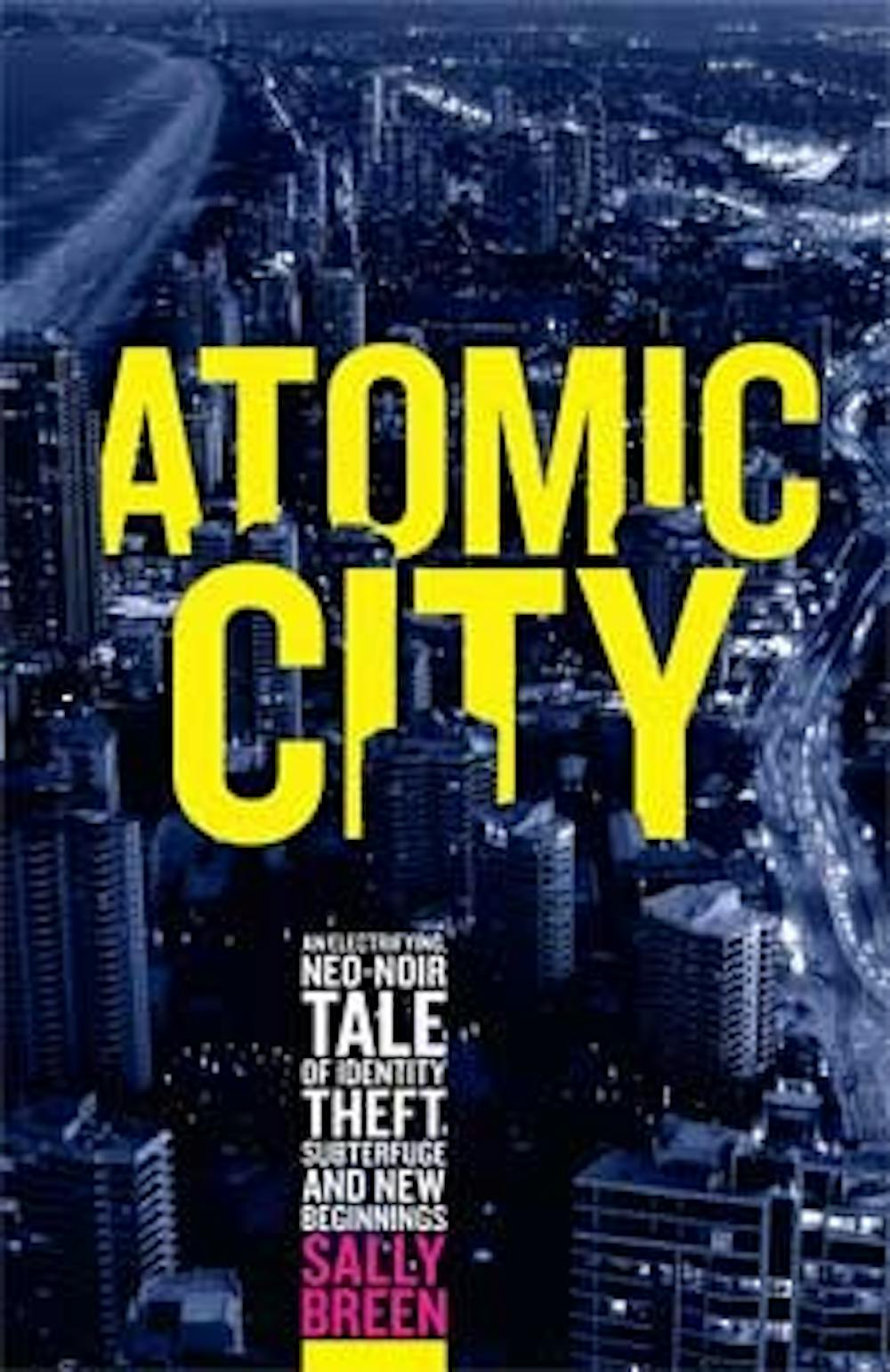
Atomic City by Sally Breen
Sally Breen lives and works on the Gold Coast, and that strip of high density development on the beach works its way into much of her writing.
With its high rise skyline under a big sky, Surfers Paradise has been called a “pleasure dome” by Frank Moorhouse. But Atomic City (published in 2013), set largely in the lofty apartment buildings and businesses that abut, and look out on, the beach, captures perfectly the grift and graft of this place.
Jade arrives on the Gold Coast to make herself over and get rich. Together with shady croupier “The Dealer” this is a beach tale of cons, scams and identity theft.
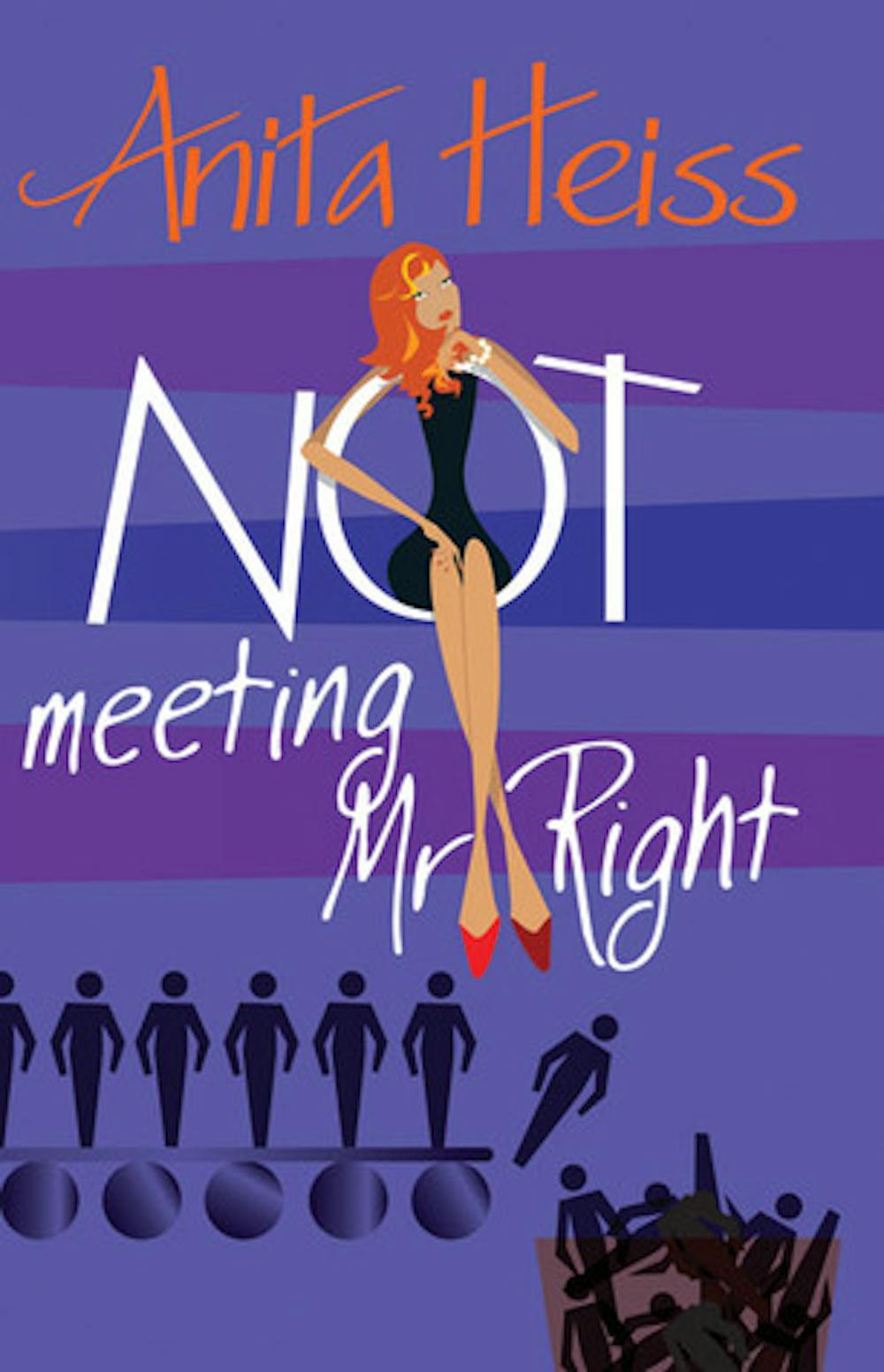
Not Meeting Mr Right by Anita Heiss
Prominent Australian Indigenous author Anita Heiss straddles both fiction and non-fiction, with her work often grounded in ideas around Indigenous identity. Her series of “chick lit” novels includes Not Meeting Mr Right (first published in 2007).
In the novel, Alice lives beachside in Coogee and regularly walks the coastal path between it and Bondi. A proudly single, Indigenous woman, Alice has a change of heart about marriage and decides to get serious about settling down – which means embarking on the rocky road towards finding love. In contrast to the challenges – including racism – she encounters along the way, the beach is a comfortably ordinary presence in this novel. However, Heiss also parodied the white Australian beach experience in an earlier book Sacred Cows (1996).
After January by Nick Earls
If you grew up in Brisbane when I did, there was a high chance you were reading a Nick Earls novel or seeing one adapted into a play. After January (first published in 1996) is one of Earls’ first works for young adult readers, and is set in the long break after finishing high school.
Alex is on holidays at Caloundra in his family’s beach house, a teenage boy uncomfortable in his skin but comfortable in the ocean. Although now more than 20 years old, this story still captures the uncertainty of burgeoning adulthood and the comfort the ocean can bring.
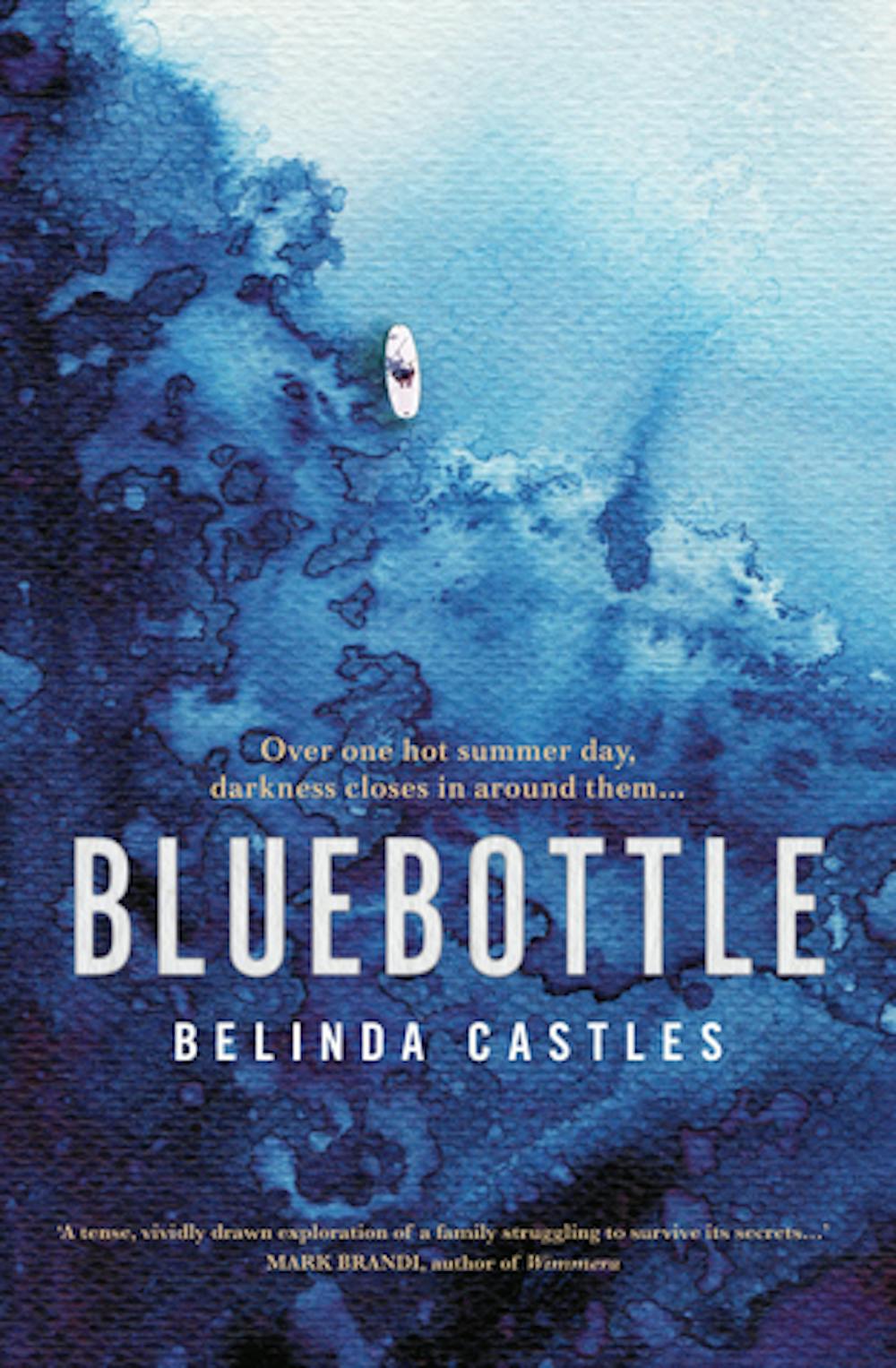
Bluebottle by Belinda Castles
For many Australians, the beach can be wrapped up in childhood memory. These memories can blend and blur. In my mind, my summers spent at the beach with my grandparents were never-ending, from the moment school finished until the day before I was set to return. In reality, we spent some time there, often weekends, and certainly never the entire school holidays.
Belinda Castles’ Bluebottle tells the story of the Bright family, and is filled with that uncomfortable tension that arises when we realise memory is fallible. Siblings Jack and Lou recount key moments from their childhood, starting with the disappearance of a local school girl and their father’s unpredictable purchase of a beachside property in Bilgola, Sydney. However, they learn that growing older can change perspectives on the past and, like the beach, it can be hard to tell what’s under the surface while the waves distort our view.












 At the BookShelf
You must be logged in to post a comment.