Unknown's avatar

I’m a novelist – and this is why I choose middle-aged women as the heroes of my crime thrillers


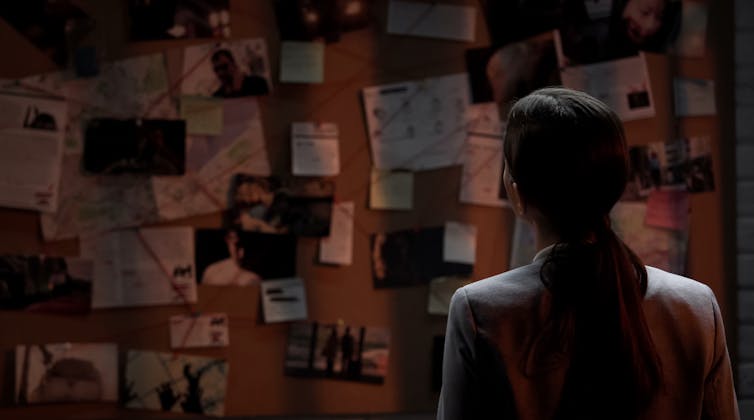
Motortion Films via Shutterstock

Emily Bernhard Jackson, University of Exeter

Mystery is the bestselling genre in literature. Crime/mystery fiction, to give the genre its full title, beats inspirational, science fiction, horror and apparently even romance to take the top spot.

And why not? There’s someone for everyone in crime/mystery – elderly lady sleuths, amateur Palestinian sleuths, professional Belgian sleuths, thoughtful Scottish police officers, embittered Scottish police officers, damaged Irish police officers, weary Scandinavian police officers, former army officer detectives, amateur girl detectives, sad drunk amateur girl detectives. There’s even a detective who partners up with a skeleton.

What there doesn’t seem to be much of in mystery fiction, however, is female detectives who begin detecting in middle age (two cases in point: Sara Paretsky’s V.I. Warshawski was 32 when we began to follow her adventures, while Patricia Cornwell’s Kay Scarpetta was 36). Women in the 40-to-60 range don’t get much of a showing as main characters in literature generally, so maybe it’s no surprise that they don’t show up as headliners in the mystery genre.

But it’s a surprise if you’re a woman in your 40s who is beginning to write mystery novels – which not so long ago I was. And while it’s a cliche that people write what they know, when I decided to write a mystery I entered into that cliche wholeheartedly. I started writing mysteries in my 40s – and I made my detectives two women in their 40s.
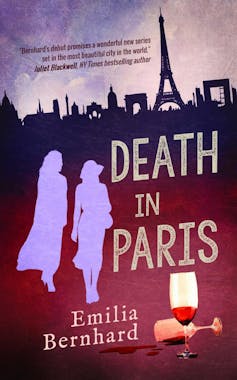
Two middle-aged American women and a dead man in a bowl of Vichyssoise.
Amazon

But while I designed my detectives in part to mirror myself, I also chose their age for entirely different reasons. For all its advances and improvements, contemporary culture remains uncomfortable, not just with middle-aged women, but to an even greater degree with contentedly single middle-aged women – and to an even greater degree than that with childless women who are childless by choice. I wanted to confront this odd aversion head on, so I made sure that between them my detectives fill all these categories.

This decision is a small one, but for me it engaged with a question I’ve long struggled with, the question of what, intellectually, literature is supposed to do. Should it report on the world as it is, or should it model the world as it might – could, should, would – be?

Angry women

Recent fiction may not have been filled with middle-aged women, but it has been filled with angry ones. It’s jam packed with dystopian models of female repression and with women and men implacably set against one other: look at Naomi Alderman’s The Power, Leni Zumas’s Red Clocks, Margaret Atwood’s The Testaments. As I began to create my fictional world, I was troubled by the question of whether these outpourings of rage, all justified, all earned, are enough.


Read more:
Review: The Testaments – Margaret Atwood’s sequel to The Handmaid’s Tale


In one way this literature is unquestionably good: female rage is something else culture has assiduously avoided considering for centuries, and during those centuries women have been subjugated, silenced, used and abused in ways that deserve outpourings of anger.
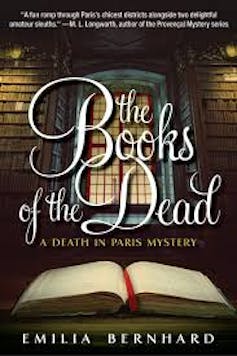
The sleuths return.
Amazon

Nor is this landscape of female repression changing quickly, and there is value in forcing it before readers’ eyes. In a recent article for The Guardian about the Staunch Prize, the new award for the best crime/mystery novel that does not feature violence against women, the novelist Kaite Welsh wrote that she wouldn’t “sanitise my writing in service of some fictional, feminist utopia … my work lies in marrying my imagination with the ugly truth”. This is an important argument.

Modeling the future

But while I don’t care about the absence of feminist utopias, I do care about the absence of writing that models the future we want. What will it be like, the world we’re striving for where the playing field is level and men and women are just people being people together? I believe that we can only imagine based on what we’ve seen, and that it’s part of literature’s job to help us see what doesn’t yet exist but could.

For this reason, although I grounded my novels firmly in the present (well, Death in Paris is set in 2014 and The Books of the Dead in 2016), I made some specific choices about that present. In my books, every person in a powerful position is a woman. Department heads and doctors, sources of knowledge and implacable foes: all are female.

More importantly, as far as I was concerned, no one draws attention to that. It’s so normal as to be unworthy of note. Nor does anyone comment on the fact that both my detectives are childless, and one remains happily unmarried in her mid-40s. Both of these detectives are heterosexual, but I made that decision so I could give each a husband or boyfriend who sees them as an intellectual and emotional equal, and for whom that equality is also the norm. The women in my books have and enjoy good sex, and they have and enjoy good conversations – almost none of them about men.

My books are full of oversights and omissions, and I’m far from satisfied with them. But what I aimed to do, and am still trying to do, is to augment the justifiable depictions of anger, the honest depictions of ongoing brutality and violence against women, with a small model that allows for a morsel of hope.The Conversation

Emily Bernhard Jackson, Lecturer in English, University of Exeter

This article is republished from The Conversation under a Creative Commons license. Read the original article.
Unknown's avatar

I’m a novelist – and this is why I choose middle-aged women as the heroes of my crime thrillers


Motortion Films via Shutterstock

Emily Bernhard Jackson, University of Exeter

Mystery is the bestselling genre in literature. Crime/mystery fiction, to give the genre its full title, beats inspirational, science fiction, horror and apparently even romance to take the top spot.

And why not? There’s someone for everyone in crime/mystery – elderly lady sleuths, amateur Palestinian sleuths, professional Belgian sleuths, thoughtful Scottish police officers, embittered Scottish police officers, damaged Irish police officers, weary Scandinavian police officers, former army officer detectives, amateur girl detectives, sad drunk amateur girl detectives. There’s even a detective who partners up with a skeleton.

What there doesn’t seem to be much of in mystery fiction, however, is female detectives who begin detecting in middle age (two cases in point: Sara Paretsky’s V.I. Warshawski was 32 when we began to follow her adventures, while Patricia Cornwell’s Kay Scarpetta was 36). Women in the 40-to-60 range don’t get much of a showing as main characters in literature generally, so maybe it’s no surprise that they don’t show up as headliners in the mystery genre.

But it’s a surprise if you’re a woman in your 40s who is beginning to write mystery novels – which not so long ago I was. And while it’s a cliche that people write what they know, when I decided to write a mystery I entered into that cliche wholeheartedly. I started writing mysteries in my 40s – and I made my detectives two women in their 40s.

Two middle-aged American women and a dead man in a bowl of Vichyssoise.
Amazon

But while I designed my detectives in part to mirror myself, I also chose their age for entirely different reasons. For all its advances and improvements, contemporary culture remains uncomfortable, not just with middle-aged women, but to an even greater degree with contentedly single middle-aged women – and to an even greater degree than that with childless women who are childless by choice. I wanted to confront this odd aversion head on, so I made sure that between them my detectives fill all these categories.

This decision is a small one, but for me it engaged with a question I’ve long struggled with, the question of what, intellectually, literature is supposed to do. Should it report on the world as it is, or should it model the world as it might – could, should, would – be?

Angry women

Recent fiction may not have been filled with middle-aged women, but it has been filled with angry ones. It’s jam packed with dystopian models of female repression and with women and men implacably set against one other: look at Naomi Alderman’s The Power, Leni Zumas’s Red Clocks, Margaret Atwood’s The Testaments. As I began to create my fictional world, I was troubled by the question of whether these outpourings of rage, all justified, all earned, are enough.


Read more:
Review: The Testaments – Margaret Atwood’s sequel to The Handmaid’s Tale


In one way this literature is unquestionably good: female rage is something else culture has assiduously avoided considering for centuries, and during those centuries women have been subjugated, silenced, used and abused in ways that deserve outpourings of anger.

The sleuths return.
Amazon

Nor is this landscape of female repression changing quickly, and there is value in forcing it before readers’ eyes. In a recent article for The Guardian about the Staunch Prize, the new award for the best crime/mystery novel that does not feature violence against women, the novelist Kaite Welsh wrote that she wouldn’t “sanitise my writing in service of some fictional, feminist utopia … my work lies in marrying my imagination with the ugly truth”. This is an important argument.

Modeling the future

But while I don’t care about the absence of feminist utopias, I do care about the absence of writing that models the future we want. What will it be like, the world we’re striving for where the playing field is level and men and women are just people being people together? I believe that we can only imagine based on what we’ve seen, and that it’s part of literature’s job to help us see what doesn’t yet exist but could.

For this reason, although I grounded my novels firmly in the present (well, Death in Paris is set in 2014 and The Books of the Dead in 2016), I made some specific choices about that present. In my books, every person in a powerful position is a woman. Department heads and doctors, sources of knowledge and implacable foes: all are female.

More importantly, as far as I was concerned, no one draws attention to that. It’s so normal as to be unworthy of note. Nor does anyone comment on the fact that both my detectives are childless, and one remains happily unmarried in her mid-40s. Both of these detectives are heterosexual, but I made that decision so I could give each a husband or boyfriend who sees them as an intellectual and emotional equal, and for whom that equality is also the norm. The women in my books have and enjoy good sex, and they have and enjoy good conversations – almost none of them about men.

My books are full of oversights and omissions, and I’m far from satisfied with them. But what I aimed to do, and am still trying to do, is to augment the justifiable depictions of anger, the honest depictions of ongoing brutality and violence against women, with a small model that allows for a morsel of hope.The Conversation

Emily Bernhard Jackson, Lecturer in English, University of Exeter

This article is republished from The Conversation under a Creative Commons license. Read the original article.

Unknown's avatar

The State of Crime Writing


The link below is to an article that considers the state of crime writing.

For more visit:
https://crimereads.com/the-state-of-the-crime-novel-a-roundtable-discussion-with-crime-authors/

Unknown's avatar

2019 Ngaio Marsh Award Winner


The link below is to an article reporting on the winner of the 2019 Ngaio Marsh Award for Best Crime Novel, Fiona Kidman for ‘This Mortal Boy.’

For more visit:
https://www.booksandpublishing.com.au/articles/2019/09/16/139302/ngaio-marsh-award-2019-winners-announced/

Unknown's avatar

2019 Davitt Awards Winners


The link below is to an article that takes a look at the winners of the 2019 Davitt Awards for crime books by Australian women writers.

For more visit:
https://www.booksandpublishing.com.au/articles/2019/09/02/138489/the-ruin-wins-best-novel-at-2019-davitt-awards/

Unknown's avatar

From crime fighters to crime writers – a new batch of female authors brings stories that are closer to home


Lili Pâquet, University of New England

In Dervla McTiernan’s book, The Scholar, published earlier this year, women are consistently used as the “fall guys” for men with high aspirations. Two young women are killed when they uncover fraud. Another female colleague is then framed for the murders.

Before writing crime fiction, McTiernan worked as a lawyer for 12 years, for international companies like the one in The Scholar. Her background lends her book authority, even though it’s fiction.

McTiernan joins a batch of crime writing women bringing professional clout to their books. Others are Kathy Reichs, Patricia Cornwell, Marcia Clark, Alafair Burke, Anne Holt, and Lisa Scottoline. This list is a tiny fraction of the trailblazing authors.

Crimes close to home

Last week, Elizabeth Farrelly wrote that “crime fiction is the morality drama of our time” that can “heighten and dissect the battle of good against evil enacted daily in our living rooms, cities and streets”. She compared crime books about violence against women with Australia’s deplorable record on domestic violence and rape.


Macmillan

In books written by ex-justice professionals, we are asked to examine our cultural and moral compasses. These authors don’t just write about serial killers – who are thankfully more common in the pages of crime books than in real life – they more often focus on murders by spouses, family members or colleagues of the victim. Some push for changes to how rape trials are prosecuted. They focus on the justice system problems that women face, as victims and as professionals.

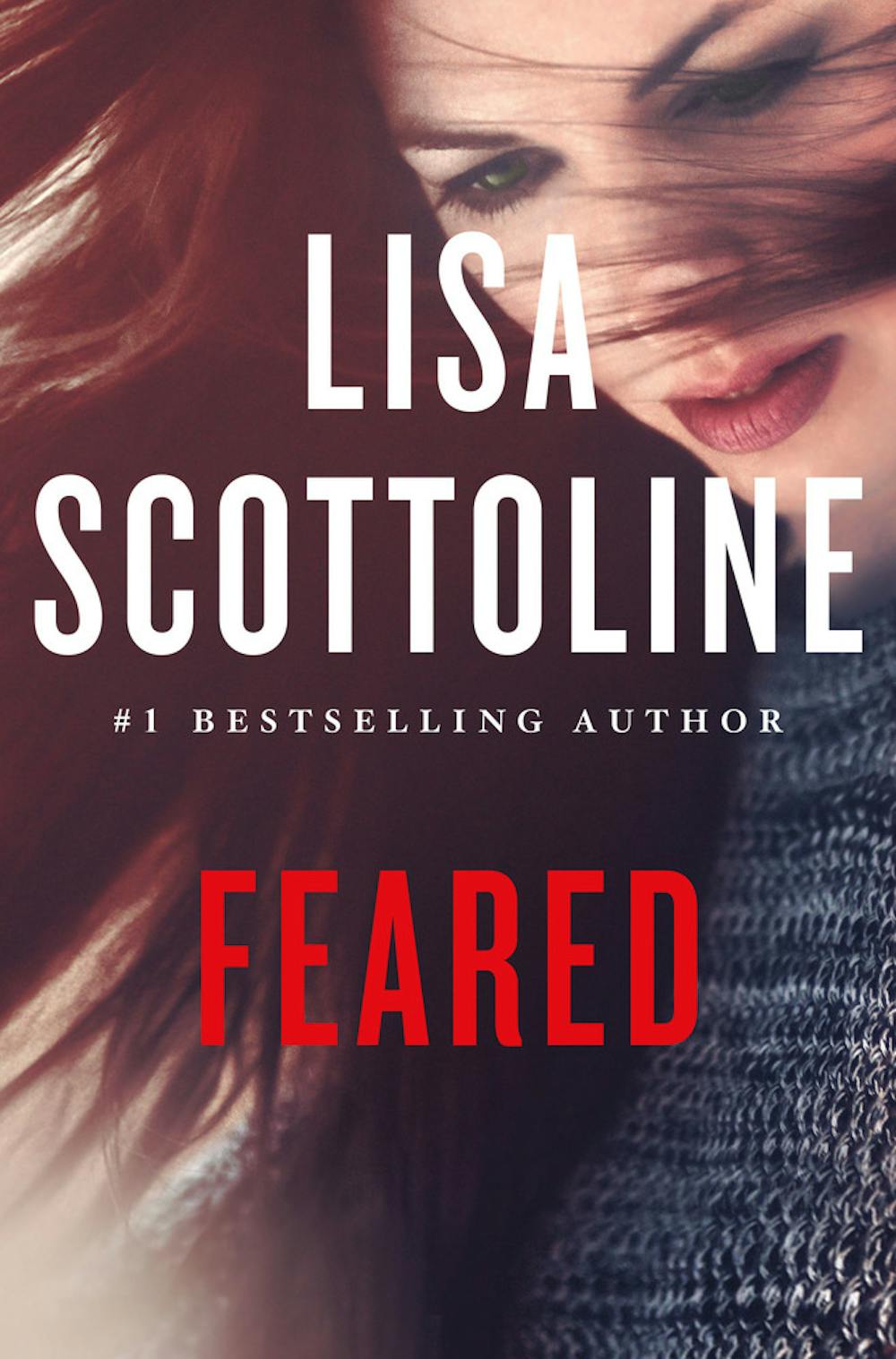
The stories also ask us to question how we perceive professional women. These authors’ characters, who often have much in common with their creators, face a barrage of harassment on the job. Lisa Scottoline’s fictional all-women law firm is consistently targeted by abusive prank callers. In her latest book, Feared, the firm is sued for “reverse” sexual discrimination.

What’s the appeal?

Australians are avid readers of crime fiction. In a 2017 study, 48.5% of respondents read crime fiction, making it the most popular genre for enjoyment.

While researching my book on the topic, I had the opportunity to read Dorothy Uhnak’s fan letters, held at the Howard Gotlieb Archival Research Center at Boston University. Readers (many of whom were prison inmates) repeatedly told Uhnak that her books touched on inequalities in the justice system that rang true for them, and reading her work was therapeutic.

Cosy vs hardboiled

Female crime writers have historically been pigeonholed as writing “cosy crime” novels as opposed to more graphic masculine representations of “hardboiled” detectives.

We are used to reading about women as amateurs, from Agatha Christie’s spinster sleuth, Miss Marple, to Janet Evanovich’s bumbling and untrained bounty hunter, Stephanie Plum. Since the 1970s, more authors have written about women as hardboiled private detectives.

Agatha Christie is acknowledged as the grande dame of crime fiction.
www.shutterstock.com

Now, we are increasingly seeing women characters in professional roles. When the author is also a professional, she has even more authority. She has “insider knowledge.” Priscilla Walton and Manina Jones surveyed women who read feminist crime series and found that readers identify with the struggles of characters who are realistic professional women. Often, the fictional investigations have similarities to real ones the author has worked on. Central Park 5 prosecutor turned crime author Linda Fairstein received pointed criticism about these similarities.

Ruth Rendell and other authors remember being discouraged from writing crime.

The force


Penguin

In Australia, ex-police officer Y.A. Erskine’s debut The Brotherhood tells the story of rookie cop Lucy Howard who is blamed when a senior sergeant is killed on a routine call-out. She can’t join the brotherhood of the Tasmanian police force, because, in her words, she doesn’t have the “standard-issue penis”. She is an outsider inside the system.

In Erskine’s follow-up, The Betrayal, Lucy is raped by a colleague. When she makes a complaint, she is vilified and blamed for tarnishing the reputation of the police. The complaint is briefly investigated before being dropped.

Another Australian ex-cop writing crime is P.M. Newton. Her debut, The Old School (notice the theme in the titles?), follows Australian-Vietnamese officer, Nhu “Ned” Kelly. She deals with the racism and corruption of her male colleagues before being shot by one of them.

Newton’s following book, Beams Falling (a reference to Dashiell Hammett’s Flitcraft parable within The Maltese Falcon), tracks Ned’s struggle with post traumatic stress disorder. While fictional detectives usually bounce back quickly after violence, Ned never fully gets over the trauma, and her work offers little support.

Ex-cop Karen M. Davis, has also created a character damaged by her policing experience. Davis’ Lexie Rogers has been stabbed in the neck, and fears facing her attacker in court – a fear exacerbated by her insider knowledge of the justice system. Davis has spoken about how she retired from the police because of trauma, and began writing as a kind of catharsis. Erskine has spoken out about how the rape of Lucy in her books is based on her own unreported rape by a colleague.

These authors have seen the inside of the criminal justice system, its flaws and the experience of women within it. They bring this cachet of lived experiences to their crime fiction. Bestsellers by Marcia Clark or Anne Holt could spark moral reflection, validate women’s experiences, and be part of the cultural shift needed to end violence against women.The Conversation

Lili Pâquet, Lecturer in Writing, University of New England

This article is republished from The Conversation under a Creative Commons license. Read the original article.

Unknown's avatar

Shortlists for the 2019 Ned Kelly Awards


The link below is to an article that takes a look at the shortlists for the 2019 Ned Kelly Awards.

For more visit:
https://www.booktopia.com.au/blog/2019/08/19/the-2019-ned-kelly-award-finalists-are-here/

Unknown's avatar

Longlists for the 2019 Ned Kelly Awards


The link below is to an article that takes a look at the longlists for the 2019 Ned Kelly Awards.

For more visit:
https://www.booktopia.com.au/blog/2019/07/26/see-the-ned-kelly-awards-longlist-for-2019/

Unknown's avatar

Ngaio Marsh


The link below is to an article that takes a look at New Zealand’s crime fiction writer Ngaio Marsh.

For more visit:
https://crimereads.com/ngaio-marsh-a-crime-readers-guide-to-the-classics/

Unknown's avatar

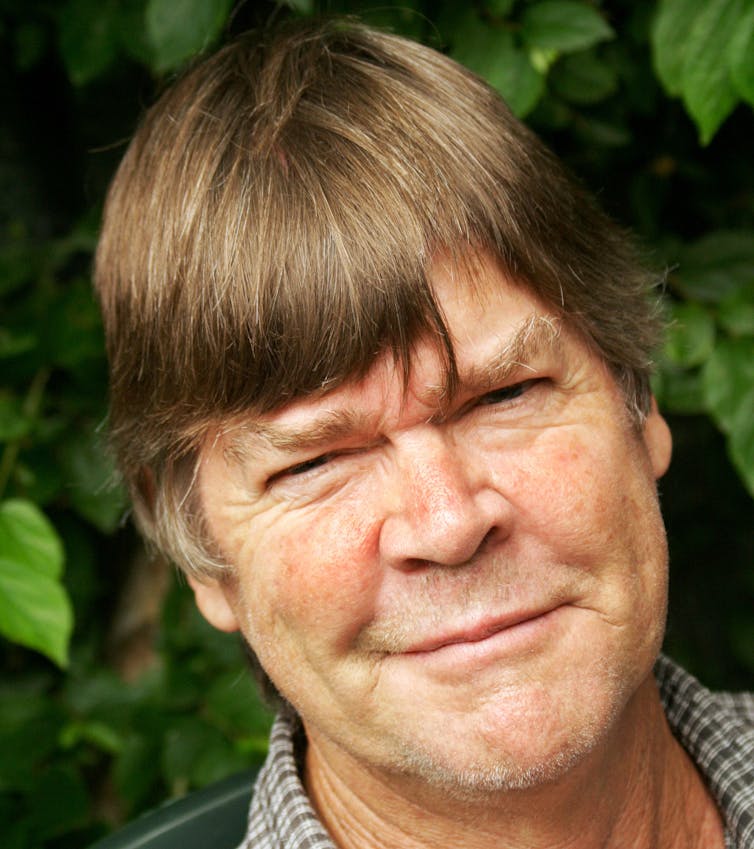
Peter Corris’s Cliff Hardy was a genuine Australian international crime fiction hero


File 20180830 195316 ih5fs6.jpg?ixlib=rb 1.1
Australian crime fiction author Peter Corris published 102 novels in lifetimes, including 52 centred on the private investigator Cliff Hardy.
ALLEN AND UNWIN

Stephen Knight, University of Melbourne

Peter Corris, author of the Cliff Hardy novels, died on August 30 2018 age 76.


By the 1970s Australian crime fiction was drifting.

The genre had a long history, back to convict days, when it dealt with unfair convictions and brutal treatments, most famously in Marcus Clarke’s For The Term Of His Natural Life (1870-2).

Being mostly published in London for the curiosity of the English, Australian crime fiction had followed European models, with some major success like Fergus Hume’s best-selling The Mystery of a Hansom Cab (1886), and the fine series of mysteries by post-second world war women writers June Wright, “Margot Neville”, Pat Flower and Pat Carlon. But local crime fiction was little publicised and had little impact – the books mostly came into libraries from London.

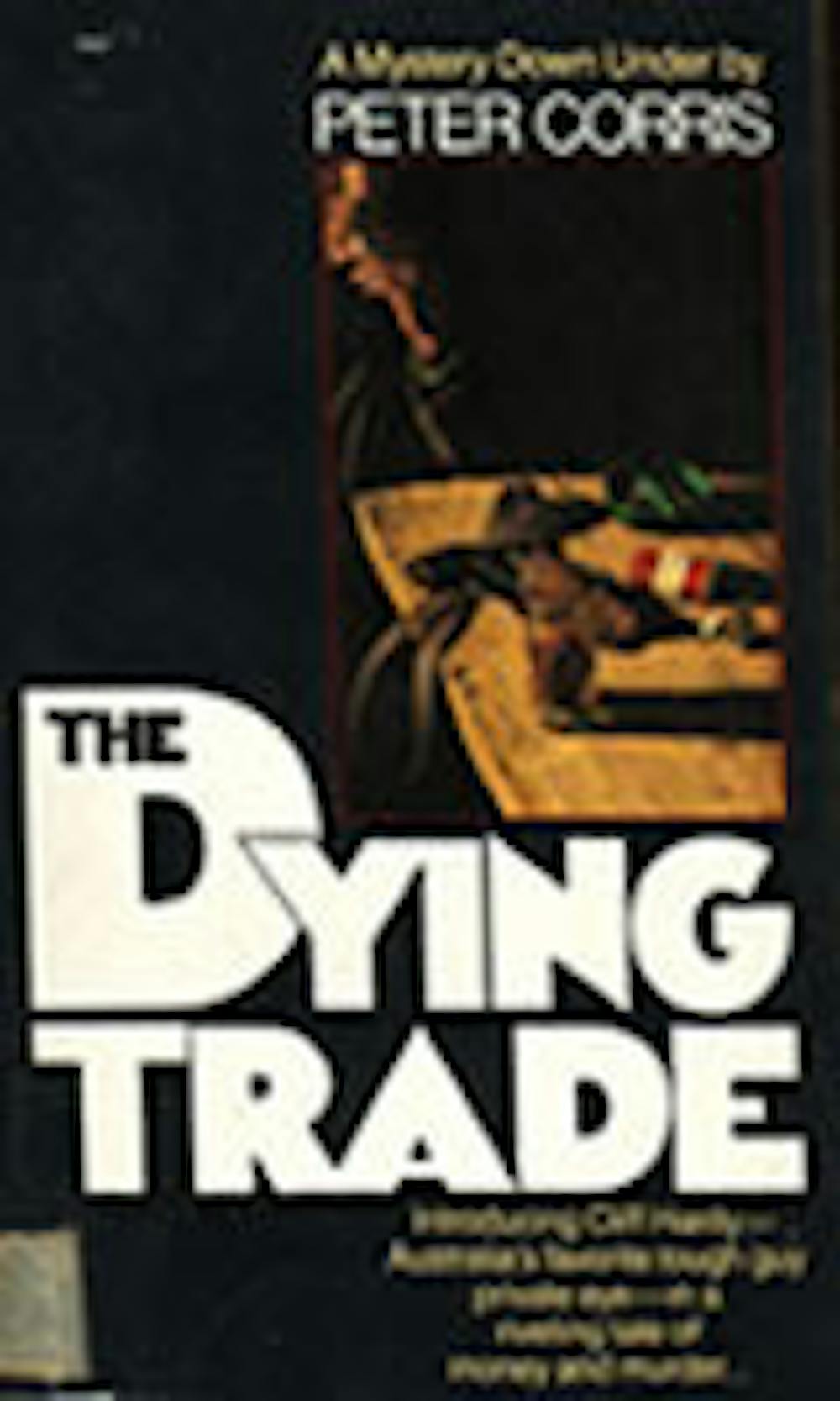
The Drying Trade introduced Peter Corris’s private investigator Cliff Hardy.
Goodreads

English business interests and Australian outlooks changed as time passed. Then, in 1980, Peter Corris’s The Dying Trade appeared, a crime story which was American in its influence, fully Australian in its spirit, and both published and strongly publicised at home. The novel was the first adventure of a tough, but at times sensitive, Sydney private eye with the wonderfully Australian name, offering both geography and morality, Cliff Hardy.

Published by McGraw Hill, an American company newly adventuring across the Pacific, the novel was very well-received, and started Peter’s own long series of fiction. But it was also the first of a very striking renaissance (or even naissance) in Australian crime writing.


Read more:
Friday essay: from convicts to contemporary convictions – 200 years of Australian crime fiction


Within ten years Marele Day, Jennifer Rowe and Claire McNab were producing their sharp variants of female detection. By 2000, major producers such as Gabrielle Lord, Gary Disher and the powerful Peter Temple, who also recently passed away, were busily at work. They were asserting that the mysteries of death and detection could have a distinctly local and socially investigative thrust – as Corris had established back in 1980. No wonder he has been named the “godfather” of modern Australian crime fiction.


Goodreads

Cliff Hardy, though tough in his name, could be subtle. He lives in Sydney’s Glebe; he spent some time at the nearby university; and is capable of close analysis when needed. His cases are brought to him, but, as the masters of the form Dashiell Hammett and Raymond Chandler established, the P.I. will also assert his privacy and make decisions about where his investigation is going to go.

As with the major American writers, the primary themes of the Cliff Hardy novels are urban corruption. But Corris’s expertise in Pacific history informs his writing. The first novel involves Pacific misdoings. White Meat (1981) makes Indigenous themes important – which return strongly in The Black Prince (1998).


Read more:
True Blue? Crime fiction and Australia


Like the detective of Peter Temple, who no doubt learnt both confidence and approach from Corris, Hardy shows how local malpractice can have its roots in national and international criminal evil.

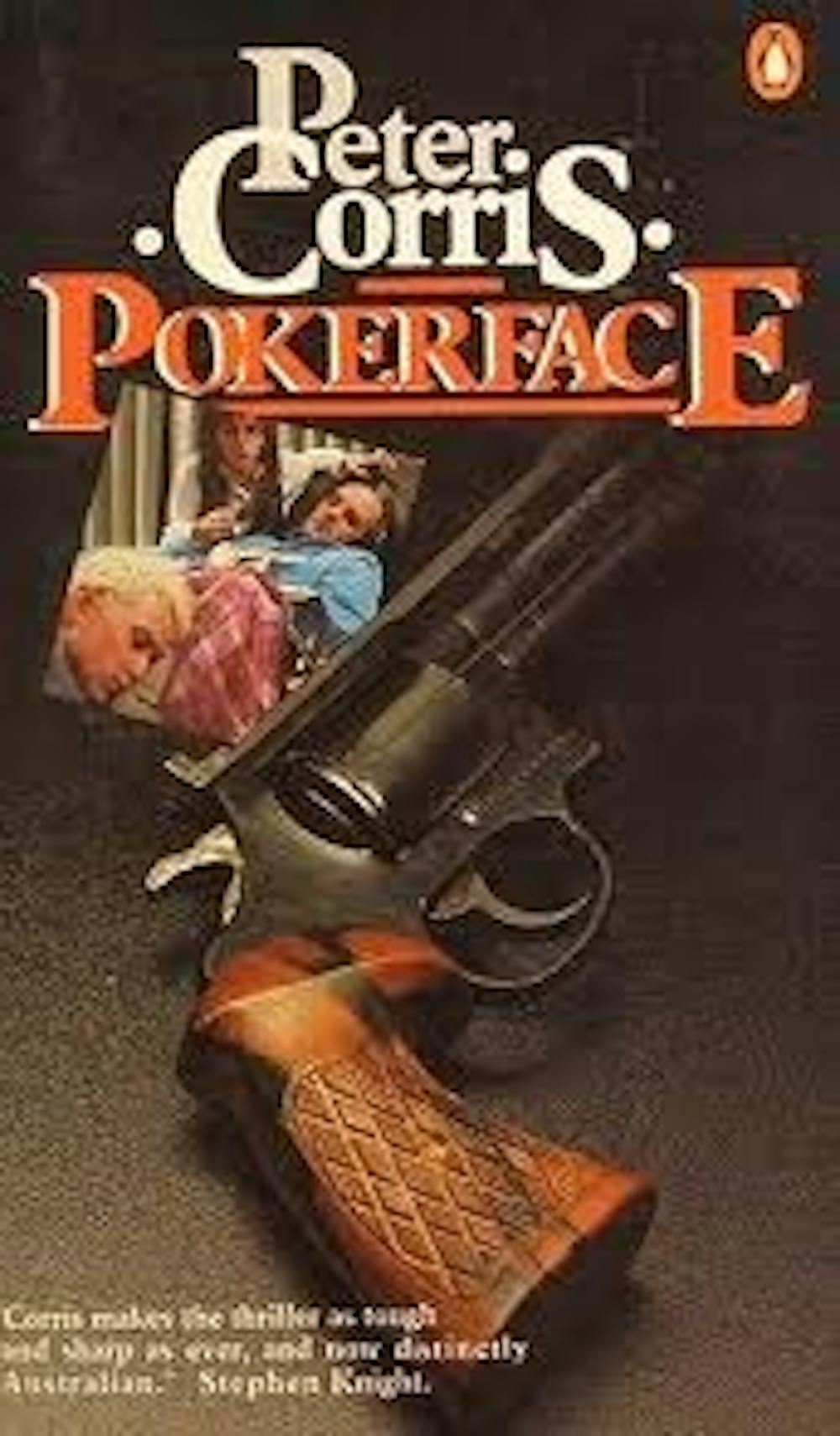
Though Australian crime writers have had very little success with the spy thriller, Corris’s Ray Crawley series – eight novels from Pokerface (1985) to The Vietnam Volunteer (2000) – are a capable version of the form.

More remarkable is his eight-book “Browning” series, from Box Office Browning (1987) to Browning Without a Cause (1995). In the series, the popular investigator Browning (one wonders why Corris chose the name of the wry learned 19th century English poet) adventures in part comically around the world, meeting on his way his compatriot Errol Flynn.

In the Browning series, journeyed around the world having misadventures with celebrities.
Goodreads

Corris also assented to the recent (and internationally very late) male Australian crime-writer engagement with police detectives – some of his leanest and sharpest novels are the three in the Luke Dunlop series about an undercover police agent, from Set-Up (1992) to Get Even (1994).

At first an academic historian, in the 1970s Corris became the literary editor of the much-regretted serious weekend newspaper The National Times. He had a wide range of knowledge and interests.

But what Corris will be most remembered for, and what he kept flowing in novels — and also in a number of short stories – were the adventures of Cliff Hardy. Cliff was drinking and chasing women a lot back in 1980. He calmed down in both departments, but kept at his investigations of corruption and malpractice, both business-oriented and personal.

Through his hero, with his physical and moral echt-Australian name Cliff Hardy, and through his lucid, calm plotting, Corris has matched Raymond Chandler in the modern world’s dominant crime form.

Both citified and individualist, the private eye story at its best demands personal, deep referential knowledge of the author – and calm stylistic skills. We have seen all this in the Hardy novels.

At the very end of Corris’s last Hardy novel, Win, Lose or Draw (2017) – in Australia, sport is always there – Hardy is smiling. So should his creator have been. With Hardy, he made a richly entertaining, very widely-admired, genuinely, lastingly, Australian international crime fiction hero.The Conversation

Stephen Knight, Honorary Research Professor, University of Melbourne

This article is republished from The Conversation under a Creative Commons license. Read the original article.