
The link below is to a book review of ‘Too Much and Never Enough,’ by Mary L. Trump.
For more visit:
https://www.theguardian.com/us-news/2020/jul/12/too-much-and-never-enough-review-mary-trump-donald

The link below is to a book review of ‘Too Much and Never Enough,’ by Mary L. Trump.
For more visit:
https://www.theguardian.com/us-news/2020/jul/12/too-much-and-never-enough-review-mary-trump-donald
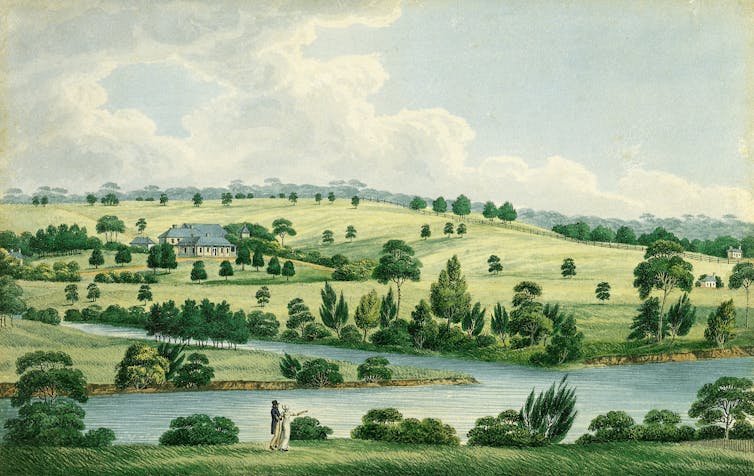
Review: A Room Made of Leaves, Text Publishing
Some time ago, during the renovation of a historic house in Sydney, a tin box, sealed with wax and wrapped in oiled canvas, was found wedged under a beam in the roof cavity. The house was Elizabeth Farm…
So begins A Room Made of Leaves’ editor’s note, detailing the discovery of the “long lost secret memoirs” of Elizabeth Macarthur, wife of colonial wool baron John Macarthur. The “editor and transcriber” is Kate Grenville, author of the acclaimed colonial novel based on her family history, The Secret River.
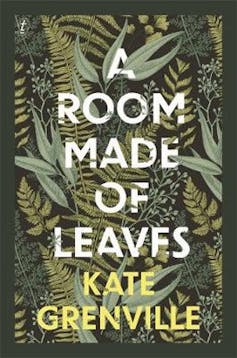
The discovery scenario is irresistibly believable. This month, a WWII diary was found at a Woolworths in Sydney’s North Shore. In 2011, James Bell’s 1838 account of his journey to Australia was published after being discovered at a market stall. In 2018, Miles Franklin’s final 1954 diary was discovered in an old suitcase.
Elizabeth Macarthur’s actual journal detailing her voyage on the Second Fleet was discovered at her daughter’s home in England, extracts of which were published as Some Early Records of the Macarthurs of Camden in 1914.
Grenville’s imaginary memoir of Elizabeth slips into the space between hoax and history, the paradox of purporting to be true while declaring it is not. Grenville openly plays with memoir’s “autobiographical pact”, where the reader unquestionably accepts an autobiography as truth. While a novel requires a suspension of disbelief, Grenville asks the reader to suspend their belief, akin to Peter Carey’s “feat of imposture”, True History of the Kelly Gang.
Read more:
True History of the Kelly Gang review: an unheroic portrait of a violent, unhinged, colonial punk
Grenville so convincingly creates Elizabeth’s voice it is easy to forget her opening warning: “Do not believe too quickly!”
In Grenville’s telling of Elizabeth’s telling of her marriage to John Macarthur, Elizabeth astutely understands how to manage the patriarchy rather than be a “true helpmate” to her husband as she is introduced in the family history.
She writes of the notoriously difficult John: “He could not be trusted not to destroy our hopes.” Elizabeth believes John is “dangerously unbalanced”.
Through her revision of the Macarthurs’ relationship, Grenville’s imaginary memoir joins the litany of (imaginary and authentic) revisionist biographies of wives overlooked or derided because of their husband’s fame.
Read more:
#ThanksforTyping: the women behind famous male writers
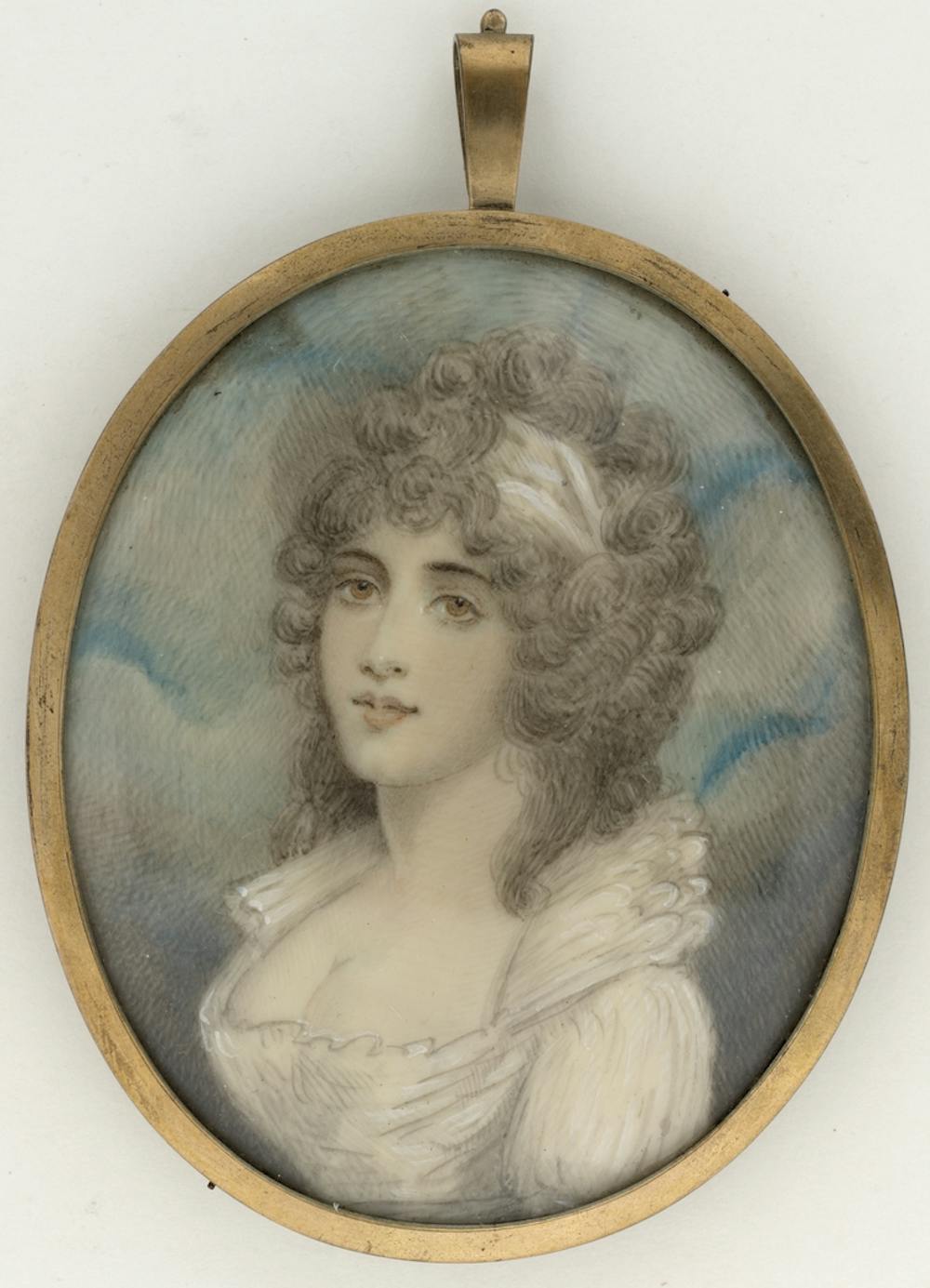
Elizabeth’s friendship with astronomer William Dawes is the central relationship. Grenville’s 2008 novel The Lieutenant was loosely based on Dawes, and she was inspired to write this imaginary memoir after reading Elizabeth’s passing reference to Dawes in an actual letter describing her astronomy lessons with the scientist and naval officer: “I blush at my error”.
This blush becomes a motif throughout A Room Made of Leaves: of the true nature of their friendship, and for what remains unsaid. “I blush at my error” was, in Grenville’s eyes, a rare glimpse of Elizabeth’s feelings hidden in what Grenville describes in her editor’s note as otherwise “unrevealing” and “dull” correspondence.
As in The Secret River, Grenville once again writes of a brutal history of colonisation and resistance. Sensitive to previous suggestions of whitewashing (which she has refuted at length), in A Room Made of Leaves Grenville expresses her gratitude to the Darug Custodian Aboriginal Corporation and the Metropolitan Local Aboriginal Land Council for their assistance in writing the book.
After being told of the Battle of Parramatta led by resistance leader, Pemulwuy, Elizabeth visits the battle site and alludes to dominant colonial accounts:
There was nothing to show what had happened. Only the words of that story, snipped out and pasted onto the air.
There is historical precedence for reading Elizabeth’s actual letters with the eye for the unsaid. 18th and 19th century women’s life writing was written with the expectation it was not private and adhered to social conventions of behaviour. Self-censorship and “silences in the archives” abound.
As Elizabeth, Grenville fills the silences:
I composed a glorious romance about all this for my mother. I would not lie, not outright. I set myself a more interesting path: to make sure that my lies occupied the same space as the truth.
Michelle Scott Tucker’s referenced biography, Elizabeth Macarthur: A Life at the Edge of the World is a tempting companion to come back to reality after reading A Room Made of Leaves. But Grenville’s Elizabeth stays with you.
As you see more curls of truth in Tucker’s biography that appear in Grenville’s imaginary memoir, you wonder about how the real Elizabeth felt — rather than what actually happened.
Kerrie Davies, Lecturer, School of the Arts & Media, UNSW
This article is republished from The Conversation under a Creative Commons license. Read the original article.
ROMAN PILIPEY/EPA
Andrew Podger, Australian National University
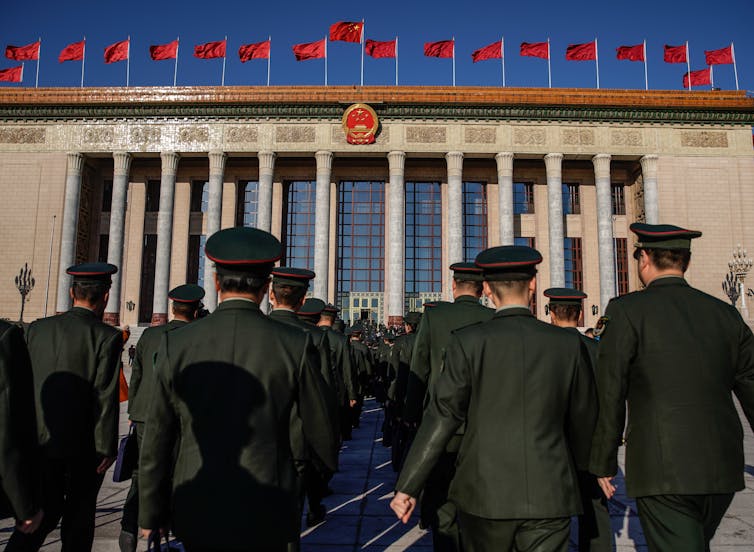
In Hidden Hand, China scholars Clive Hamilton and Marieke Ohlberg examine the Chinese Communist Party’s influence in Europe and North America in a similar way to how Hamilton dissected the CCP’s influence in Australia in his 2018 book, Silent Invasion.
In my review of the 2018 book, I wrote
Perhaps Hamilton’s book is a useful reminder that we must not be naïve about our relationship with China. But his prescription, premised on China being our enemy and determined to achieve world domination, is precisely the wrong direction for addressing the genuine issues he raises.
The new book warrants a similar conclusion, though President Xi Jinping’s continued strengthening of CCP controls and pursuit of hegemony in our region add to the importance of not being naïve.
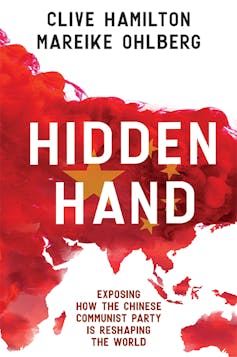
Hamilton and Ohlberg chronicle the various ways the CCP has attempted to wield influence in North America and Europe, from political and business elites to the Chinese diaspora, media, think tanks and academia, as well as through espionage and diplomacy.
Central to the book’s thesis is the diagram on pages 124-5 summarising most of the channels of influence from Chinese institutions (particularly party institutions) to various groups and organisations in Western nations. This is a one-direction diagram and assumes a totally coordinated strategy.
The book’s presentation is extremely detailed, including not just the names of Chinese institutions but the individuals said to be directing the strategies of influence. Similarly on the receiving end, the authors describe not only the groups and organisations in the West they claim are being influenced, but many of the individuals involved.
This level of detail is highlighted by the book’s 113 pages of footnotes and a 24-page index.
Read more:
Politics with Michelle Grattan: Clive Hamilton and Richard McGregor on Australia-China relations
Despite this, the book is not a balanced, scholarly document. The narrative centres on a single-minded Communist Party that has always sought a Leninist world and is now taking advantage of its increased economic power to advance that objective more effectively.
There is little recognition of the huge shifts in Chinese economic, social and strategic policies over the past 50 years, or of the scale of the changes to its institutional arrangements and the role of government.
The authors also do not allow those in the West who they claim have been successfully (and naively) influenced the opportunity to respond, let alone to present evidence of their influence in the other direction.
Hidden Hand is right to remind people that:
China and the CCP are not one and the same
China has a party-state system of government that is authoritarian and not democratic
China does not have Western-style rule of law
it does not recognise universal human rights in the way we understand them.
What is missing is a balanced discussion of the central debate about the appropriate approach to be taken in the West’s relations with China.
As Peter Varghese, the former head of DFAT, recently put it, the choice for Australia is between trying to “contain” China or “engage and constrain”.
Containment, he argues, is gaining traction in the US and among cheerleaders in Australia, but risks dismantling the global economic system and the supply chains that support it. For Australia, Varghese says, decoupling from our largest trading partner would be “sheer folly” irrespective of legitimate complaints about China’s behaviour.
The “engage and constrain” approach he favours involves expanding areas of cooperation where mutual interests are served, while holding firm to our values and strengthening our capacity to resist Chinese coercion through increased investment in defence and diplomacy.
This would show Beijing that “leverage is a two-way street” and that, with others, we are willing to “push back” if China pursues its interests in ways that do not respect our sovereignty.
While increasing investment in defence may well be justified, boosting our spending in diplomacy is even more important.
Read more:
Why do we keep turning a blind eye to Chinese political interference?
In this light, viewing China as our “enemy” is counterproductive and ignores the mutual benefits and increased sharing of interests that have resulted from China’s opening up since 1978. (Hidden Hand does not repeat the explicit description of China as our enemy found in Hamilton’s earlier book, but it comes close, saying for the past 30 years China has viewed both sides of the Atlantic as its enemies).
Diplomacy may influence China’s perceptions of its national interests and, where significant differences remain, help to forge important alliances elsewhere.
Hamilton and Ohlberg seem to favour the “containment” strategy, warning on page 96 that “in fact, today it (the party-state) is more powerful than ever because of market forces” (emphasis in original).
The implication, presumably, is that we should no longer contribute to China’s economic growth. This dismisses the remarkable benefits involved in China’s growth, including not only massive reductions in poverty, but also, for most Chinese, freedoms that were unimaginable in the Mao Zedong era. There have also been flow-on benefits for the rest of the world.
China’s opening up has of course not led to Western-style democracy, and is unlikely to do so in the foreseeable future. Indeed, under Xi, the CCP’s position has been consolidated and many of the reforms of the 1990s and 2000s have been wound back. Human rights have been seriously curbed, most recently in Hong Kong.
But Hidden Hand’s presentation of a single, continuous CCP Leninist agenda ignores the existence of different views among the leadership and elsewhere in China, including those who favour further liberal reform (as described in Richard McGregor’s 2019 book, Xi Jinping: The Backlash).
And it fails to appreciate the underlying contradictions of China’s “socialist market economy” and Xi’s “China Dream”, which offer avenues for Western leaders and academics to influence debates in China through engagement – as has happened over the past 30 years.
As the main coordinator of the Greater China Australia Dialogue on Public Administration, which organises annual workshops of scholars and practitioners from across the PRC (including Hong Kong and Macau) and Taiwan, I have witnessed some of the winding back of academic freedoms since Xi’s 2016 restrictions on social science teaching and research. This includes some of the specific CCP restrictions mentioned in Hidden Hand.
Read more:
The world has a hard time trusting China. But does it really care?
But this surely makes it even more important to continue the engagement while resisting the pressures involved.
Similarly, I am not at all convinced by the book’s attacks on any cooperation with the Belt and Road Initiative.
While the Asian Infrastructure Investment Bank has more sound governance, there are similar arguments for participation in BRI, providing support from the inside for transparency, proper cost-benefit analysis of projects and good understanding of debt obligations. It would also limit opportunities for China to pursue improper methods of influence.
The book’s afterword provides a slightly more moderate position on what should be done to counter Chinese influence moving forward. It still overplays its hand in promoting an “active pushback strategy” and its recommendation the Western
elites who acquiesce to or actively support Beijing deserve public scrutiny and robust criticism.
But the other recommendations have merit: defending democratic institutions through greater transparency and foreign interference laws, addressing the underfunding of universities and financial challenges facing our media, reducing vulnerability of our industries to CCP pressure and promoting more alliances, including with developing countries.
We cannot lose faith in liberal economics as Hamilton and Ohlberg seem to suggest, relying only on democratic forces to ensure freedom. The truth is, we need both.
Andrew Podger, Honorary Professor of Public Policy, Australian National University
This article is republished from The Conversation under a Creative Commons license. Read the original article.
Michelle Grattan, University of Canberra
Former Liberal Minister Christopher Pyne attracted critics for his political front. But he always had plenty of friends and networks, enabling him often to be a player, if not always a “fixer”.
After his election to the South Australian seat of Sturt at age 25, he went on to hold senior portfolios, notably education and defence, and to stride the parliamentary stage as Leader of the House of Representatives.
In his memoir, The Insider, the former politician provides his take, humorous and candid, on a tumultuous 26 parliamentary years.
In this podcast, Pyne talks about life after politics, and stories from the ‘Canberra bubble’.
“I don’t miss politics at all – because I left happy, and I wanted to go.
“So I’m not one of these politicians that was dragged kicking and screaming. I left when people wanted me to stay, which is a great rarity.”
Pyne is ultra candid about his ambition to be prime minister:
“I think when you’re 15, and you decided you want to be a member of the House of Representatives, you kind of think ‘I’m going to dream big.’ So of course I dreamt to be prime minister”.
Reality, it appears, didn’t hit for quite a while.
“I think that week when Malcolm [Turnbull] was deposed and nobody was suggesting that I should be running for leader, it dawned on me that the generation that was being elected, which was Scott Morrison and Josh Frydenberg, were a generation different to me.”
Michelle Grattan, Professorial Fellow, University of Canberra
This article is republished from The Conversation under a Creative Commons license. Read the original article.
Robert Hassan, University of Melbourne
Spoiler alert: this story details how The War of the Worlds ends.
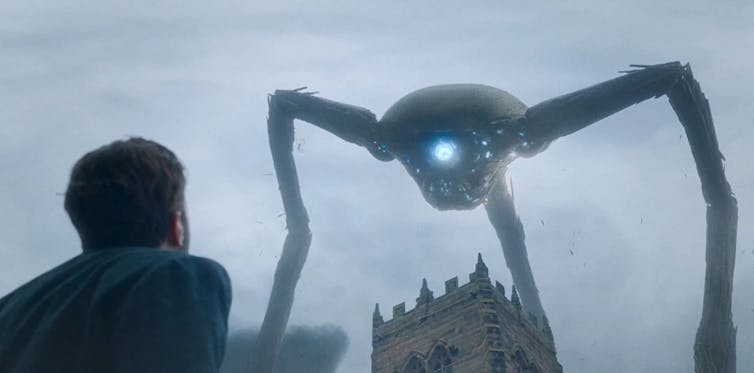
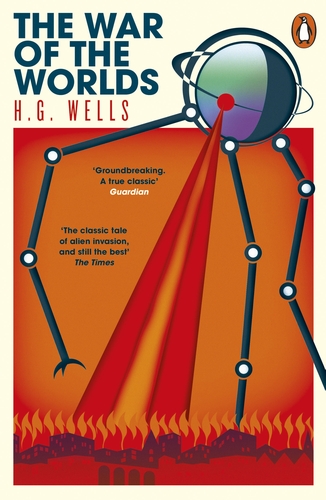
The latest screen adaption of H. G. Wells’ 1898 modern masterwork The War of the Worlds will hit our screens this week. Continuously in print since its first publication, the book is a literary gift that keeps on giving for producers and screenwriters. They recognise the story’s unerring capacity to find its mark with each generation.
Wells – who also wrote The Time Machine (1895) and The Invisible Man (1897) – helped pioneer the science fiction genre when he conceived this astonishing book. With an eyewitness narration that reads grippingly still, it tells of a Martian invasion of Earth.
Set in London, Wells depicts a complacent world; of men “serene in their assurance” of their dominion over the planet. But humans get the shock of another reality when suddenly visited upon by blood-feeding and squid-like creatures possessed of “intellects vast and cool” that are “unsympathetic” to Earthlings whose planet they had long “regarded with envious eyes”.
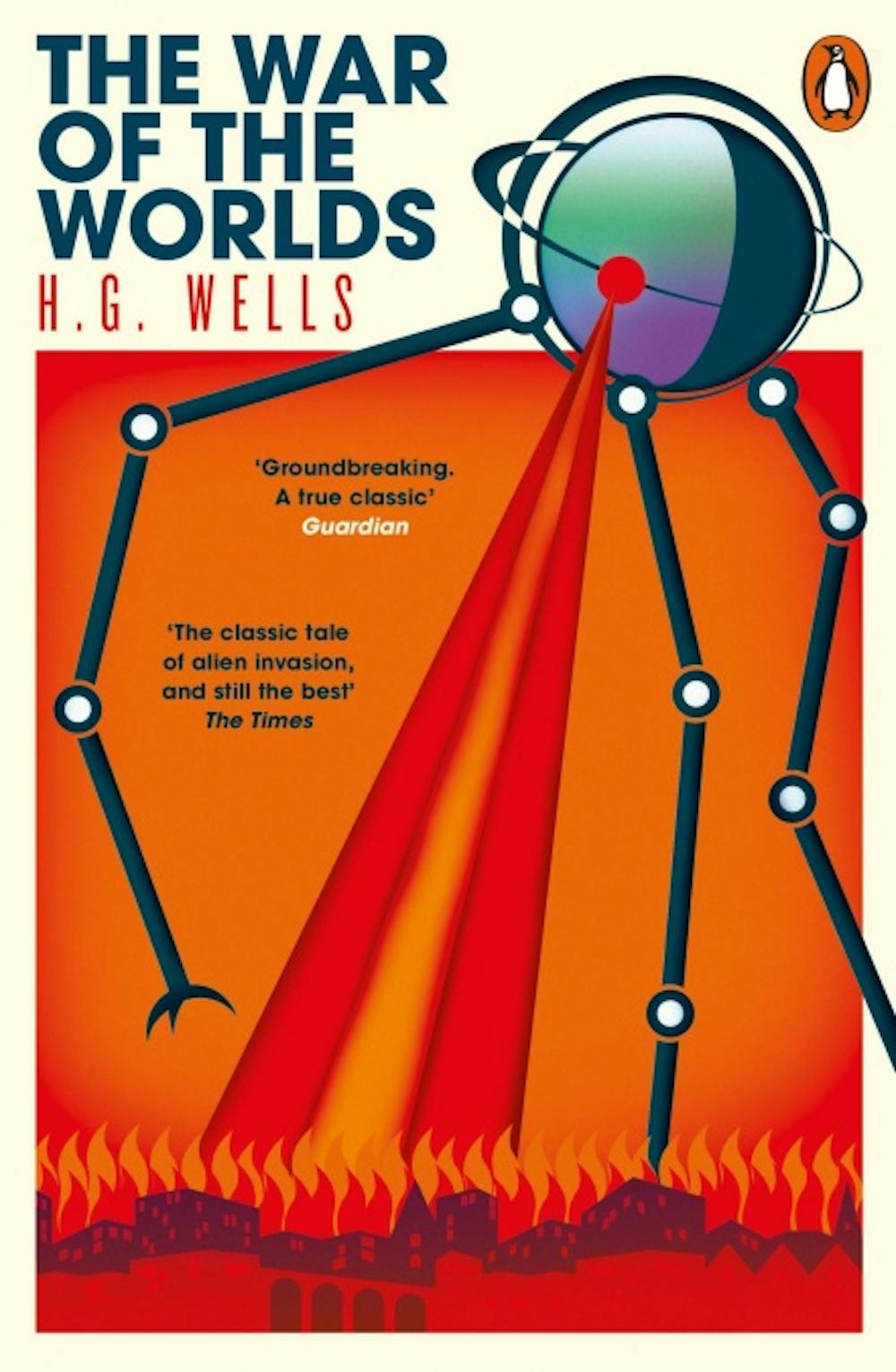
An advance party arrives inside metal cylinders shot from giant cannons stationed on Mars. From the cylinders come dozens of Martians, each operating a three-legged metal “fighting-machine” that attacks London’s helpless population by means of a “heat ray”. From these “whatever is combustible flashes into flame”, metal liquifies, glass melts and water “explodes into steam”.
Fleeing like rats from a burning ship, panic spreads like a contagion. The narrator describes a breakdown of law and order, and undergoes something of a breakdown himself.
Upper-class women arm themselves as they cross the country, because traditional deference has gone up in smoke. The “social body” of organisation – police, army, government – suffers “swift liquefaction”.
The Martians, however, had become too intelligent for their own good. They had made the Red Planet disease-free but forgotten about germ theory. And so while laying waste to London, they inhale a bug; a simple bacteria “against which their systems were unprepared” and so suffered a “death that must have seemed to them as incomprehensible as any death could be”.
London will rise again. The world has been spared. Humanity gets lucky — this time.
Read more:
Science fiction helps us deal with science fact: a lesson from Terminator’s killer robots
In the new Anglo-French television series, La Guerre Des Mondes, the action takes place in both London and France. Martian devastation is given wider latitude.
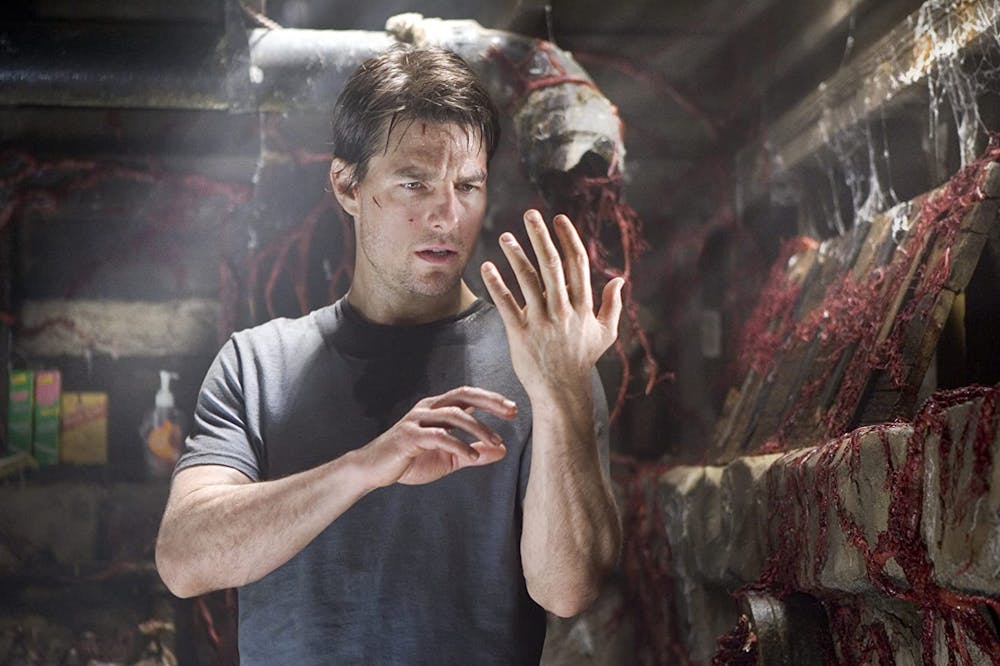
Why does this now-familiar story have such a hold on successive generations? Iterations include the Orson Welles’ radio broadcast of “fake news” bulletins about Martian invasion, to the 1978 contemporary music version with Richard Burton narration, to Steven Spielberg’s film blockbuster starring Tom Cruise. Last year also saw a BBC production set in Edwardian London.
One response is to consider our attraction to sci-fi. It sees the laws of science upended. Technology seems to make anything possible and to minds already accustomed to real technological transformation, sci-fi literature brings the now-thinkable future into the present.
But there’re less obvious elements to think about: themes that were important in 1898 and resonate still.
Wells’ book touched something existentially British during their Pax Britannica period of relative peace. Across the Channel, Europe seethed with diplomatic intrigue and tensions culminating in the first world war.
The new sci-fi genre connected to an older “invasion literature” genre; a long-standing British apprehension of the Continent, especially its renascent German threat. Wells hints at this when he writes that the arrival of the cylinders (before the Martians emerged from them) “did not [initially] make the sensation that an ultimatum to Germany would have done”.
Then there’s the imperialism angle. Was Wells tapping a source of late-Victorian shame at the true source of British wealth and power? Then, a quarter of the world map was coloured British Empire pink. London was the epicentre of modern imperialism — the coordination point for the suffering of millions and the plunder of their lands.
Moreover, Belgium, Germany, France, and also the USA, were engaged in the “scramble for colonies” in Africa and Asia. Under the veneer of sci-fi, Wells describes what it’s like to be a people facing a powerful invader.
A very different perspective says something about our species and our idealised self-conception. In 1908 the Russian novelist and revolutionary Alexander Bogdanov, drew on WOTW for inspiration. In his novel Red Star protagonist Leonid travels to Mars to learn about communism from Martians who had made their own revolution and now lived in peace. Leonid despairs of the congenitally “unstable and fragile” nature of human relationships and looks to another planet for guidance.
The Earth-bound communist project of the 20th century ended badly, to say the least. But our human vulnerability to invasion, to tyranny, to economic catastrophe, and even to the bacteriological danger from microbes resistant to antibiotics, continues to haunt us.
The latest adaptation is set in our time with smartphones and the internet. Here again our 21st-century complacency is shattered, and our vulnerability laid bare.
Fear is a contagion in WOTW, and its Londoners show little heroism in the face of an alien invader.
Read more:
Science fiction builds mental resiliency in young readers
Bacteria did in Wells’ Martians and might do for us too – unless drugs to overcome resistance are developed. Through sci-fi, we can explore our fear of the invisible foe.
Global warming might be our other enemy – the red skies of Australia’s last bushfire season fresh in our memory and reminiscent of Well’s novel.
The narrative provides a hugely enjoyable fantasy. But we need to think about what science fiction might be doing to our relationship with science fact, especially if we consume it as a tranquilliser to displace and sublimate our fears of invisible threats.
If we do, then the incomprehensibility felt by Wells’ Martians may add that little bit more to our discord regarding the sources and solutions to global warming. Humans got lucky in The War of the Worlds. They didn’t need to do anything to survive. We can’t count on luck to save us or our planet.
War of the Worlds double episode will premiere July 9 on SBS and continue weekly from July 16. Episodes will be available on SBS On Demand on the same day as broadcast.
Robert Hassan, Professor, School of Culture and Communication, University of Melbourne
This article is republished from The Conversation under a Creative Commons license. Read the original article.
Kaeten Mistry, University of East Anglia
Former US national security adviser John Bolton is the latest ex-government official to rebuke the misconduct, ignorance and self-serving behaviour of the president, Donald Trump, in the form of a tell-all book. The Room Where It Happened details Trump’s idiosyncrasies, offers of favours to authoritarian leaders, lack of basic knowledge, and “obstruction of justice as a way of life”.
Promoting the book in a series of interviews, Bolton told one reporter that he hopes it will be a one-term presidency: “Two terms, I’m more troubled about,” he said.
Yet the battle around the publication is more than another Trumpian political scandal. It centres on the disclosure of US national security information, particularly the concept of “prior restraint” that allows the government to censor speech or expression before it has occurred.
The issues originate in whistleblowing in the 1970s when former officials spoke out against government wrongdoing. Bolton is certainly no whistleblower although the legacy of that era informs an ongoing struggle today around first amendment freedom of speech rights and state secrecy.
In many respects, the case is emblematic of Trump’s White House. Bolton was in post from April 2018 to September 2019, the longest serving national security adviser under Trump, but now asserts the president “lacks the competence to carry out the job” and is not “fit for office.” When the first excerpts from the book emerged, Trump characteristically lashed out with a tweet full of insults and accusations.
The politics are certainly messy. Bolton, a hawkish Republican, is an opportunistic political operative. With publication of the book, he has angered Trump’s supporters. At the same time his revelations have not won him friends among the president’s numerous opponents.
Bolton’s refusal to testify during the impeachment hearings at the beginning of the year, preferring to save his material for his book, has led to accusations that he was putting personal interest before national interest as well as profiteering, and trying to save his legacy.
The crux of the matter is not individual politics but whether Bolton was authorised to publish the memoir. On June 20, Judge Royce C Lamberth of the Federal District Court of the District of Columbia denied a last-ditch Justice Department motion to block its release. Noting that excerpts were already printed and the book widely in circulation, he stated that: the “the damage is done. There is no restoring the status quo.”
The author nonetheless remains in trouble. The judge concluded that: “Bolton has gambled with the national security of the United States” by potentially exposing secrets. The government could still sue Bolton for not following the prepublication review process that applies to everyone who signs a secrecy agreement.
The prepublication review system was created following a wave of whistleblowing that exposed government abuse in the 1970s. The most famous example was Daniel Ellsberg’s revelation of the Pentagon Papers, a top secret military report on US involvement in the Vietnam War. Other whistleblowers including Frank Snepp, Philip Agee, and Victor Marchetti wrote books detailing their experiences working for the Central Intelligence Agency. Not all of them revealed secrets but the fact they were speaking publicly raised concerns.
In response, the US government created a process requiring all current and former national security officials to submit material intended for a public audience before it could be published. This vetting process was intended to protect classified information.
The system has been riddled with problems from the beginning, including lengthy review processes and arbitrary decision-making around what can and cannot be published. The issues have afflicted both works that criticise and support US foreign relations. In 2019 the Knight First Amendment Institute and the American Civil Liberties Union filed a lawsuit challenging the system as dysfunctional and placing too much power in the hands of reviewers.

Authors who refuse to submit work for prepublication review are liable to be prosecuted. After publishing a 1977 book without approval, Snepp was ordered by the Supreme Court to forfeit all royalties to his former employer, the CIA. The court ruled that the book had caused “irreparable harm” to national security.
Bolton’s legal team claims he did not violate the secrecy agreement because he had satisfied all issues raised by the National Security Council’s senior director for prepublication review.
But the nature of the secrecy system and the review process is nebulous and allows the executive branch significant room for manoeuvre. While Trump’s assertion that “every conversation with me… [is] highly classified” is a stretch, the suggestion that “Bolton broke the law” and “must pay a very big price for this, as others have before him” is consistent with the broad authority afforded to presidents on national security matters.
The White House recently opened a second prepublication review process of Bolton’s book. The outcome of this latest review, which will be overseen by Judge Lambert, will determine his fate. If the courts follow historical precedent and rule in favour of the government, like Snepp before him, Bolton stands to forfeit his reported $2 million advance, and could face criminal liability that includes the possibility of a jail sentence.
While the author remains in legal peril, Bolton’s revelations continue to receive widespread attention. That the press can report national security secrets is rooted in another seminal whistleblowing case, Ellsberg’s release of the Pentagon Papers to the New York Times and other outlets. The Supreme Court ruled that prior restraint of the press was unconstitutional.
The First Amendment of the US constitution protects freedom of speech and freedom of the press from government interference. But when it comes to discussing national security information, the press enjoys greater protection than government employees.
In hyper-partisan times, it can be hard to look beyond the immediate political stakes. Yet the issues raised by this episode predate Bolton and Trump and are likely to persist long after them.
Kaeten Mistry, Senior Lecturer in American History, University of East Anglia
This article is republished from The Conversation under a Creative Commons license. Read the original article.
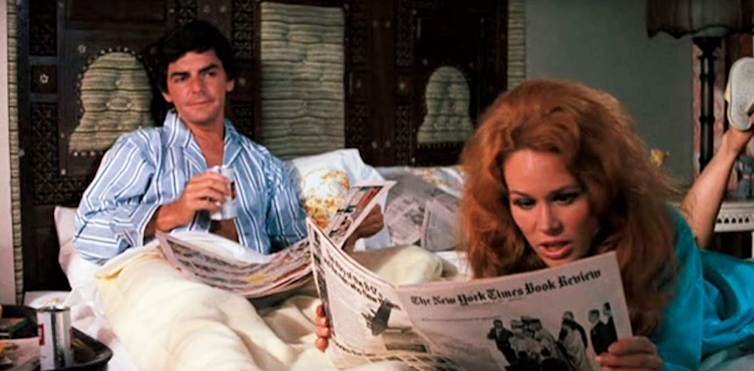
IMDB
Patrick Mullins, University of Canberra
One grey morning in October 1970, in a crowded, tizzy-pink courtroom on the corner of Melbourne’s Russell and La Trobe Streets, crown prosecutor Leonard Flanagan began denouncing a novel in terms that were strident and ringing.
“When taken as a whole, it is lewd,” he declared. “As to a large part of it, it is absolutely disgusting both in the sexual and other sense; and the content of the book as a whole offends against the ordinary standards of the average person in the community today – the ordinary, average person’s standard of decency.”

The object of Flanagan’s ire that day was the Penguin Books Australia edition of Portnoy’s Complaint. Frank, funny, and profane, Philip Roth’s novel — about a young man torn between the duties of his Jewish heritage and the autonomy of his sexual desires — had been a sensation the world over when it was published in February 1969.
Greeted with sweeping critical acclaim, it was advertised as “the funniest novel ever written about sex” and called “the autobiography of America” in the Village Voice. In the United States, it sold more than 400,000 copies in hardcover in a single year — more, even, than Mario Puzo’s The Godfather — and in the United Kingdom it was published to equal fervour and acclaim.
But in Australia, Portnoy’s Complaint had been banned.
Read more:
Philip Roth was the best post-war American writer, no ifs or buts
Politicians, bureaucrats, police, and judges had for years worked to keep Australia free of the moral contamination of impure literature. Under a system of censorship that pre-dated federation, works that might damage the morals of the Australian public were banned, seized, and burned. Bookstores were raided. Publishers were policed and fined. Writers had been charged, fined and even jailed.
Seminal novels and political tracts from overseas had been kept out of the country. Where objectionable works emerged from Australian writers, they were rooted out like weeds. Under the censorship system, Boccacio’s Decameron had been banned. Nabokov’s Lolita had been banned. Joyce’s Ulysses had been banned. Even James Bond had been banned.
There had been opposition to this censorship for years, though it had become especially notable in the past decade. Criticism of the bans on J.D. Salinger’s The Catcher in the Rye and Norman Lindsay’s Redheap had prompted an almost complete revision of the banned list in 1958.
The repeated prosecutions of the Oz magazine team in 1963 and 1964 had attracted enormous attention and controversy.
Outcry over the bans on Mary McCarthy’s The Group and D.H. Lawrence’s Lady Chatterley’s Lover had been loud and pronounced, and three intrepid Sydney activists had exposed the federal government to ridicule when they published a domestic edition of The Trial of Lady Chatterley, an edited transcript of the failed court proceedings against Penguin Books UK for the publication of Lady Chatterley’s Lover in Britain in 1960.
Read more:
Friday essay: the Melbourne bookshop that ignited Australian modernism
Penguin Books Australia had been prompted to join the fight against censorship by the three idealistic and ambitious men at its helm: managing director John Michie, finance director Peter Froelich, and editor John Hooker.
In five years, the three men had overhauled the publisher, improving its distribution machinery and logistics and reinvigorating its publishing list. They believed Penguin could shape Australian life and culture by publishing interesting and vibrant books by Australian authors.
They wanted Penguin’s books to engage with the political and cultural shifts that the country was undergoing, to expose old canards, question the orthodox, and pose alternatives.
Censorship was no small topic in all this. Those at Penguin saw censorship as an inhibition on these ambitions. “We’d had issues with it before, in minor ways,” Peter Froelich recalled, “and we’d have drinks we’d say, ‘It’s wrong! How can we fix it? What can we do? How do we bring it to people’s attention, so that it can be changed?’”
The answer emerged when they heard of the ban placed on Portnoy’s Complaint. Justifiably famous, a bestseller the world over, of well-discussed literary merit, it stood out immediately as a work with which to challenge the censorship system, just as its British parent company had a decade earlier.
Why not obtain the rights to an Australian edition, print it in secret, and publish it in one fell swoop? As Hooker — who had the idea — put it to Michie, “Jack, we ought to really publish Portnoy’s Complaint and give them one in the eye”.
The risks were considerable. There was sure to be a backlash from police and politicians. Criminal charges against Penguin and its three leaders were almost certain. Financial losses thanks to seized stock and fines would be considerable. The legal fees incurred in fighting charges would be enormous. Booksellers who stocked the book would also be put on trial. But Penguin was determined.
John Michie was resolute. “John offered to smash the whole thing down,” Hooker said, later. When he was told what was about to happen, federal minister for customs Don Chipp swore that Michie would pay: “I’ll see you in jail for this.” But Michie was not to be dissuaded.
In July 1970, Penguin arranged to have three copies of Portnoy smuggled into Australia. In considerable secrecy, they used them to print 75,000 copies in Sydney and shipped them to wholesalers and bookstores around the country. It was an operation carried out with a precision that Hooker later likened to the German invasion of Poland.
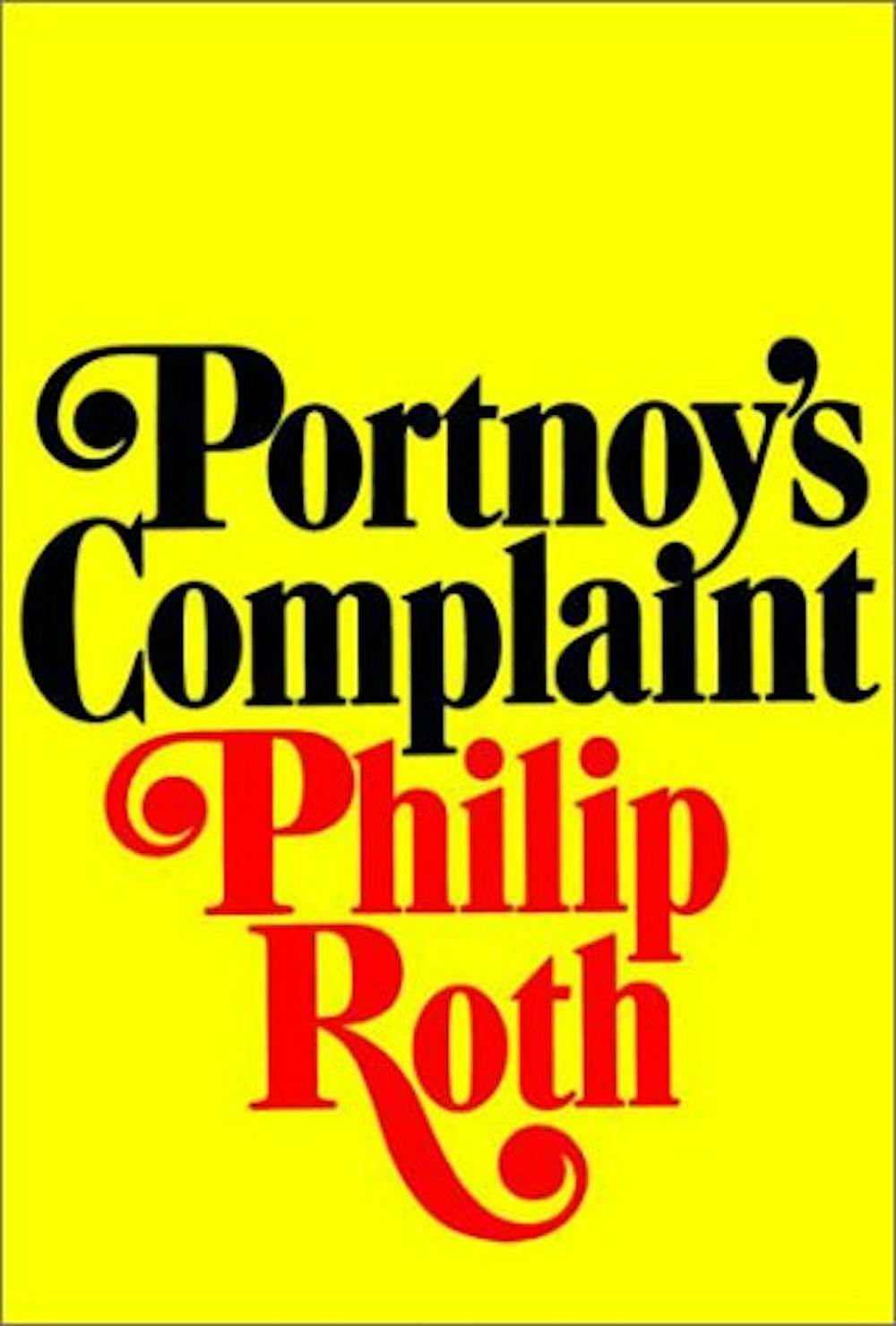
The book was unveiled on August 31 1970. Michie held a press conference in his Mont Albert home, saying Portnoy’s Complaint was a masterpiece and should be available to read in Australia. Neither he nor Penguin were afraid of the prosecutions: “We are prepared to take the matter to the High Court.”
The next morning, as the trucks bearing copies began to arrive, bookstores everywhere were rushed. At one Melbourne bookstore, the assistant manager was knocked down and trampled by a crowd eager to buy the book and support Penguin. “It was a stampede,” he said later. A bookstore manager in Sydney was amazed when the 500 copies his store took sold out in two-and-a-half hours.
All too soon, it was sold out. And with politicians making loud promises of retribution, the police descended.
Bookstores were raided. Unsold copies were seized. Court summons were delivered to Penguin, to Michie, and to booksellers the whole country over. A long list of court trials over the publication of Portnoy’s Complaint and its sale were in the offing.
So the trial that opened on the grey morning of October 19 1970, in the Melbourne Magistrates Court, was only the first in what promised to be a long battle.
Neither Michie nor his colleagues were daunted. They had prepared a defence based around literary merit and the good that might come from reading the book. They had retained expert lawyers and marshalled the cream of Australia’s literary and academic elite to come to their aid.
Patrick White would appear as a witness for the defence. So too would academic John McLaren, The Age newspaper editor Graham Perkin, the critic A.A. Phillips, the historian Manning Clark, the poet Vincent Buckley, and many more. They were unconcerned by Flanagan’s furious denunciations, by his shudders of disgust, and by his caustic indictments of Penguin and its leaders.
They were confident in their cause. As one telegram to Michie said:
ALL BEST WISHES FOR A RESOUNDING VICTORY FOR LITERATURE AND LIBERTY.
This is an edited extract from Trials of Portnoy by Patrick Mullins, published by Scribe.
Patrick Mullins, Adjunct assistant professor, Centre for Creative and Cultural Research, University of Canberra
This article is republished from The Conversation under a Creative Commons license. Read the original article.
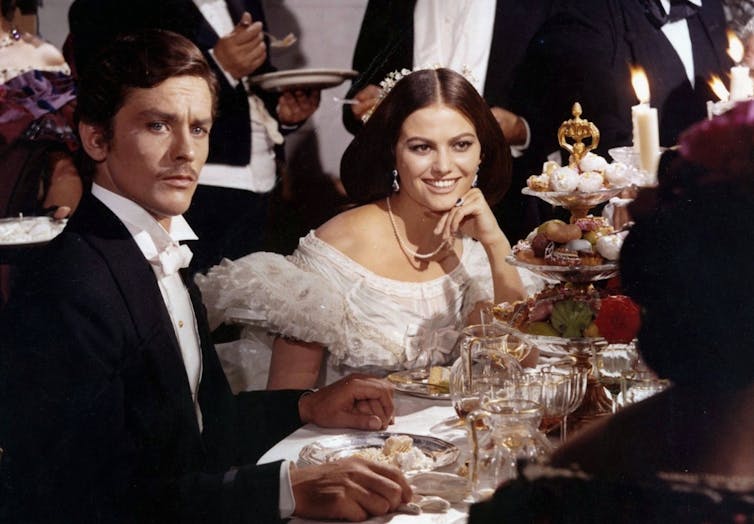
Giorgia Alù, University of Sydney
Aridly undulating to the horizon in hillock after hillock, comfortless and irrational, with no lines that the mind could grasp, conceived apparently in a delirious moment of creation.
This is the description of a scorched, unruly Sicilian landscape – both protagonist and spectator of the story of its people – in Giuseppe Tomasi di Lampedusa’s The Leopard.
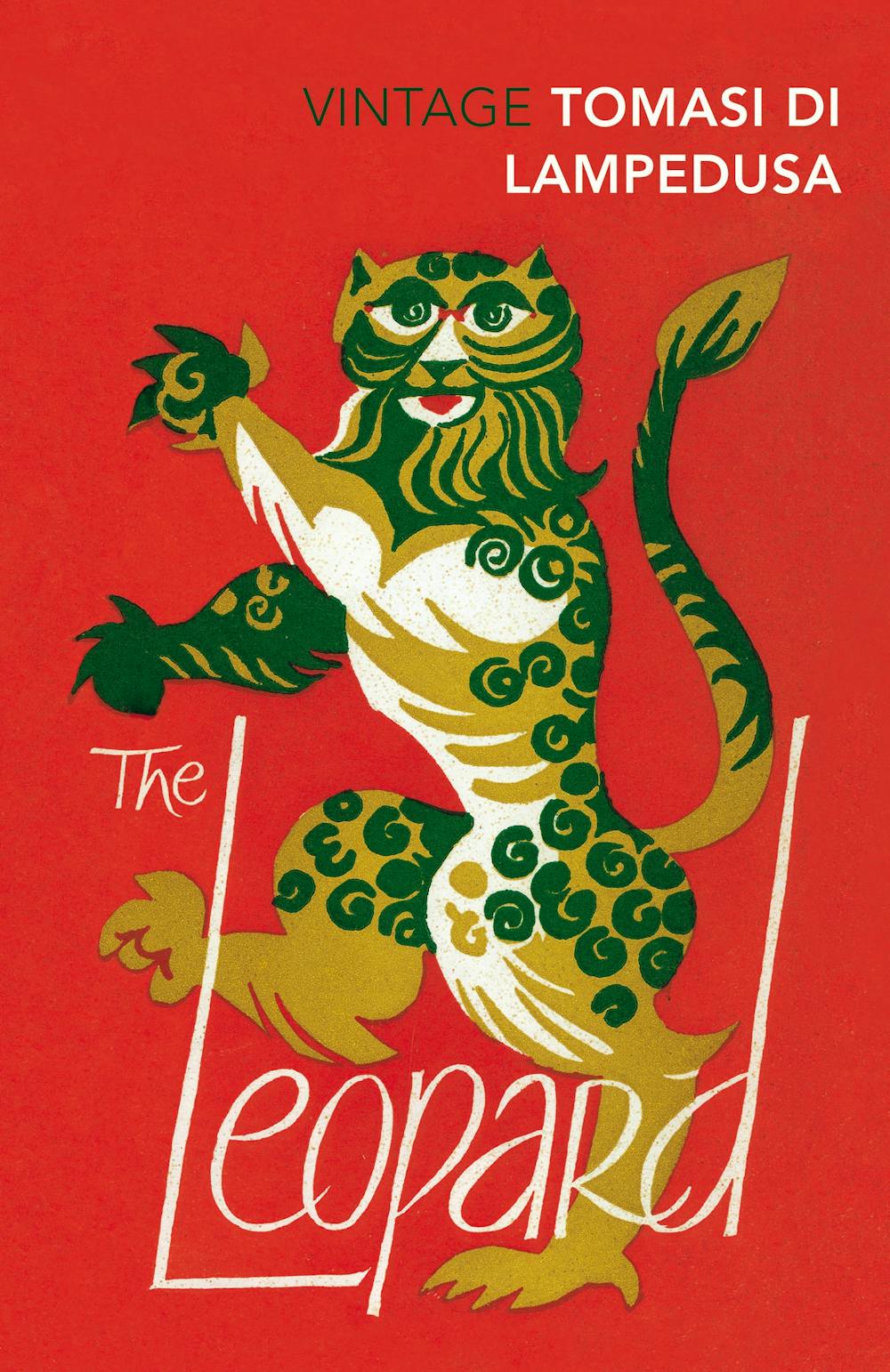
The Leopard (Il Gattopardo) is one of the greatest Italian literary works of the 20th century. Since its publication in 1958, it has been regarded as a classic of European literature. Written by a Sicilian nobleman and set in the 19th-century during the Risorgimento – the movement for Italian Unification – it recounts the decline and fall of Sicily’s aristocracy.
The action begins in 1860 when Italian general and patriot Giuseppe Garibaldi and his thousand volunteers land in Sicily to take the island from the Bourbons. They aim to unify the Kingdom of Naples – also known as the Kingdom of the Two Sicilies – with the Italian peninsula under the monarchy of Victor Emmanuel II. Events in the novel mark the passing of feudalism and the advent of modernity.
Yet everyday activities foreground the novel: daily recital of the Rosary, evening readings around the fire, faded grandeur of meals where “monumental dishes of macaroni” are served among massive silver and splendid glass, a walk and hunting expedition in the sunburnt Sicilian countryside, a magnificent ball.
The central character of the story is the irascible and reclusive Don Fabrizio Corbera, Prince of Salina, an aristocratic landowner and lover of astronomy, faithfully accompanied by his Great Dane Bendicò.
His family’s ancestral coat-of-arms shows an African serval or ocelot (mistakenly translated as leopard). The prince’s favourite nephew, the impoverished ambitious and frivolous Tancredi Falconeri, opportunistically supports the unification efforts of Garibaldi.

Tancredi falls in love with the beautiful Angelica, leaving a cousin who loves him devastated and his aunt distraught. Angelica is the daughter of Don Calogero Sedàra, a member of the merchant class ascending to power.
The novel’s main tension lies in class struggle: between the falling elites represented by the house of Corbera and the climbing middle class represented by the unscrupulous Sedàra. The national unification led by Piedmont in Northern Italy – and by statesman Camillo Benso, Count of Cavour – will mark the end of the aristocracy’s as well as of the church’s privileges in Italy.
Don Fabrizio reluctantly realises the only way to ensure the career of his nephew, who aims to become a diplomat, is to give his blessing to Tancredi’s marriage with Angelica. The union will provide Tancredi with the money he will need to succeed in the new regime. It will also bestow a title of nobility on Angelica and her parents. By the book’s end, set in 1910, the prince has died and his line has ended.
Read more:
Guide to the classics: Tacitus’ Annals and its enduring portrait of monarchical power
The manuscript was initially rejected in 1956 and 1957. Important Italian publishers such as Mondadori and Einaudi thought it ideologically deficient, reactionary for its representation of an immobile history, and structurally weak. It also failed to align with the mainstream Italian literature of the time.
The manuscript was subsequently reviewed by writer Giorgio Bassani and published for Feltrinelli in 1958, a year after its author’s death.
Generally classified as a historical novel, The Leopard became a bestseller both in Italy and abroad, with 52 editions printed in the first four months. It won the prestigious Strega literary prize in 1959.
But critical debate erupted. The book appeared during an economic boom and when Italian intellectual culture was strongly politicised. Leftist intellectuals saw it as a backward, conservative portrayal of Sicilian elites written by a little-known man with no sense of progress.
After a few years, initial objections waned and the novel came to be appreciated for its writing and modern narrative structure.
With supple and ornate language, the book has an introspective storyline and alludes to the works of Shakespeare, Sterne, Tolstoy, Baudelaire, Keats, Proust and Stendhal. The narration is characterised by stylistic shifts that reflect both Prince Salina’s varying points of view and the unnamed but all-knowing narrator’s perceptions of history.
In 1963 director Luchino Visconti recreated The Leopard’s opulence in an unforgettable screen adaptation starring Burt Lancaster.
Although The Leopard is a representation of 19th century Sicilian aristocracy, it is also a contemplative and ironic distancing from this same world. It is, above all, a novel that provides a profound meditation on transition and historical causality.
Besides, The Leopard is an ambitious political book. Critical interpretations of the novel have divided on whether the author was bemoaning the decline of the traditional ruling class, mercilessly critiquing it, or reflecting on the limits of political reforms.
In the plot, we can find similarities between the Bourbons’ supremacy and fascism, between Garibaldi’s conquest and the allied occupation at the end of the second world war. The book foreshadows political life in the newly unified kingdom and economic transformations that paved the way for corruption and criminal organisations in post-1945 Italy.
Read more:
Looking back at Italy 1992: the rise and fall of King Midas
As journalist and author, Luigi Barzini, once said, the book “made all us Italians understand our life and history to the depths.”
The most memorable – and misread – line in the book is
If we want things to stay as they are, things will have to change.
Spoken by Tancredi, it references Sicilian society’s resistance to change. It is also the narrator’s rumination on modern Italy with its various paradoxes and divisions.
The Leopard is a family saga, a psychological novel, a meditation on death and on the loss of collective memory. It has been read as a lyrical and prophetic contemplation on the experience of modernity and on the risks that it involves, such as ambition, and loss of beauty and traditions.
A solitary, melancholic man, author Tomasi di Lampedusa was deeply aware of his own mortality. The Leopard was his only novel that, together with a collection of short stories and literary studies, was published posthumously. His book would sell more than 3.2 million copies, be translated into more than 37 languages, and rightly honoured as an “immortal” masterpiece.
Giorgia Alù, Associate Professor, Department of Italian Studies, University of Sydney
This article is republished from The Conversation under a Creative Commons license. Read the original article.

Simon Maisch/Unsplash
Jennifer Gribble, University of Sydney
Chronicling four generations of two families, Felicity Volk’s Desire Lines is set against landmarks of 20th century Australian history, encompassing a geographical span that begins in the Arctic Circle and ends in the Blue Mountains of New South Wales.
Desire Lines is a richly textured celebration of Australia – its landscape, sights, sounds, seasons – while holding in close focus the inner lives of its characters. It is epic in scale, but also an unfolding love story that keeps the reader guessing until the very end.
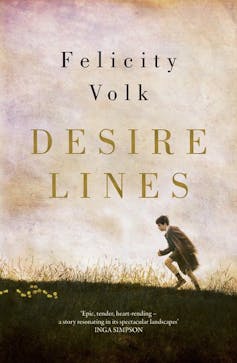
Paddy O’Connor’s trajectory is set by the flip of his gambler father’s “lucky coin” abandoning him (rather than his infant brother) to the systematic cruelties of a London orphanage, and then the hard labour of a farm school far west of Sydney.
This spinning coin makes a recurrent trope for decision-making. The inability to decide; the urgencies and waylaying of desire.
Desire lines are the paths formed not by designers, but by human feet: the paths of dirt traced into grass as people walk the route they desire, not the route of the path laid out for them.
As Paddy, now a successful architect, reflects:
… when deciding where to put footpaths around an edifice, a pragmatic architect would plant grass and watch for where the trampled tracks appeared. A pragmatic architect would pave those.
Evie’s first meeting with Paddy at her grandparents’ market stall initiates love scenes of unusual tenderness and physical immediacy, overseen by a writer whose nuanced style moves with ease between the lyrically descriptive and the gently ironic.
Building and planting and travelling bring the parallel storylines of Paddy and Evie into convergence, setting up their rhythm of meeting and parting and meeting again.
Paddy and Evie’s inner lives are finely delineated from earliest childhood, to sexual awakening, to “the sweetness of rapprochement” in old age.
Volk acutely observes seven-year-old Paddy’s suffering in the face of his father’s violent abuse of his mother. In the agony of separation and loss he continues to write to Mammy, who “comes to him in dream, her face sharp and familiar”. He is always imagining their reunion. But before long, her sparse replies cease.
The bond Paddy forged with his friends from the orphanage, Rusty and Fionnoula, is shockingly broken when he discovers their dead bodies in a farm shed, covered by brown hessian:
… guttural noises spilled from his mouth. He was a stranger to his ears.
Seeing without fully understanding their grooming and sadistic punishments, he blames himself for not preventing their suicide pact:
It would walk beside him and be buried with him, preparing the way before him, so that he would fall into its abyss over and over again with every step that he took.
The reader understands Paddy’s failures of courage. Evie will find impossible to forgive him.
As a child, in the Edenic space of a lavender maze, Evie becomes aware of a man watching and grunting in an activity that threatens her:
with a dread she didn’t know but seemed to have known forever […] a truth so ugly it may as well have been a lie; best not to give words to it.
Rescued by a kindly Aboriginal gardener and presented with one of his yam daisies, she is is confirmed in her life’s work as a conservator of botanical species.
The high-point of Evie’s work as a conservationist comes in her depositing Australian seeds in the Global Seed Vault in Norway. Invested in her seeds is hope for the survival of the planet and its ecology; hopes for people and what they hold dear.
Volk’s novel asks: to what extent are our lives laid out for us by the determinations of heredity and environment? What degrees of freedom can we claim? And how can the integrity of the self be reconciled with the needs and rights of others?
“Are you still a liar?” Evie fires off in a text message to her estranged lover as the novel’s first sentence. She has learnt lying is endemic in the adult world, and the nation’s history.
Being true to her love for Paddy, she is forced to lose custody of her children. He maintains the lie of a happy and faithful marriage to Ann; his children enjoy the stability and security he was denied.
Eventually, Evie realises she has reached the end of her patience. “Are you still a liar?” she keeps sending on their anniversaries across years and miles: a question that keeps hope alive by its very constancy. Hope that by coincidence, determination and vulnerability, desire will draw them together at last.
Desire Lines is out now through Hachette
Jennifer Gribble, Honorary Associate Professor, University of Sydney
This article is republished from The Conversation under a Creative Commons license. Read the original article.
The link below is to a book review of ‘ Diary of a Yuppie’ by Louis Auchincloss.
For more visit:
https://www.insidehook.com/article/books/louis-auchincloss-diary-yuppie-review
 At the BookShelf


You must be logged in to post a comment.