
The link below is to an article that looks at the shortlist for the 2017 Miles Franklin Award.
For more visit:
https://www.theguardian.com/books/2017/jun/18/miles-franklin-award-shortlists-five-first-time-nominees

The link below is to an article that looks at the shortlist for the 2017 Miles Franklin Award.
For more visit:
https://www.theguardian.com/books/2017/jun/18/miles-franklin-award-shortlists-five-first-time-nominees
Bill Birnbauer, Monash University
Non-profit investigative journalism centres have invigorated watchdog reporting in the United States over the past decade, a period commonly associated with despair over the state of serious journalism. My research attributes a sharp increase in the number of such centres in the United States directly to philanthropic funding, made more attractive by tax deductibility, and this same model could work in Australia.
This rescue mission of quality journalism has seen philanthropically funded news centres winning the most prestigious awards in journalism including several Pulitzer Prizes. Millions of Americans access stories written by non-profit investigative journalists, either on non-profit websites or published in mainstream media such as The New York Times, The Washington Post, NPR, PBS and other outlets.
Three key ways exist to fund the labour intensive and time consuming work of investigative journalism. The traditional media model, which today is characterised by market failure. Funding by government such as the ABC’s Four Corners program – a model that has worked well in Australia but that elsewhere raises questions of independence and funding security.
And there’s funding by foundations, wealthy benefactors and individuals. That’s different from crowd sourcing which may finance a specific story project but does not fund the necessary infrastructure (office, computers, rent, salaries etc.) or build the journalistic capacity required for a sustainable model.
In the United States, there are about 150 independent non-profit centres doing investigative and public interest journalism. The budgets of the biggest centres such as ProPublica, the Center for Public Integrity and Reveal at the Center for Investigative Reporting are about US$10 million a year; smaller centres less than US$100,000.
Non-profit investigative and public interest news centres see their work as a form of public service. In the United States, these centres are recognised by the Internal Revenue Service (IRS) as eligible for non-profit status under Section 501©(3) of the Internal Revenue Code.
Non-profit status enables these organisations to avoid federal and some state taxes and donations to them can be tax deductible. The IRS does not have a distinct category for media organisations. Instead, investigative and public interest news organisations attract non-profit status under a broad education category.
There has been a profound cultural transformation in the way mainstream media organisations regard non-profit centre stories. Collaborations between legacy and non-profit media are commonplace in the United States because non-profit journalists have the same ethics, news values and editorial practices as journalists in the commercial and public media.
Foundation-funded journalism does not come close to replacing what has been lost due to staff and other cuts by mainstream media since the financial crisis. But it has been embraced by key media outlets as a means of boosting the quality of their stories. Non-profit centres do not compete with mainstream media; they complement it.
A recent study found only a handful of Australian not-for-profit news organisations have been granted deductible gift recipient status by the Australian Tax Office and that news organisations face seemingly challenging obstacles in gaining such status. This may well discourage the creation of news organisations.
Given the diminished resources of Australian media to hold power to account, other measures to bolster democratic processes should be considered. Investigative journalism cannot readily be monetised.
It is expensive to do, takes a long time, sparks legal action and upsets powerful interests. It takes a big commitment by media organisations.
But the societal benefits can be huge: lives saved, corruption exposed, environments improved, governments and corporate interests held accountable. A recent book by a media economist found that for each US$1 spent on a specified investigative story, US$287 in policy benefits resulted.
Tax deductibility for independent journalism centres would provide incentives for individuals and philanthropic organisations to donate to producers of quality journalism.
The availability of tax deductions has the potential to increase the sum of quality journalism in Australia, enhance our democratic processes and better serve the community. I believe legacy and digital media in future would enter collaborative partnerships with non-profit investigative and public interest centres, ensuring a wider distribution and impact of their stories.
The Public Interest Journalism Foundation has some recommendations for the Australian Tax Office to consider when it comes to determining who should be granted deductible gift recipient status.
First is the history and background of the journalist who is applying, particularly their adherence to professional and ethical standards and whether the organisation they work for has conventional editorial practices. The organisation should create stories that are in the public interest and educate audiences rather than covering news of popular interest.
Another is introducing a commitment that the media nonprofit lists funding sources, including publication of the identities of donations of more than A$1,000, on its website. It also says anonymous grants, or funding from political and other entities where the source of the funding is not transparent, should be banned.
The foundation emphasises that individuals and organisations that advocate particular causes, should not be granted non-profit status under any media category.
No-one knows how sustainable the non-profit model will prove over time. However since 2007, I estimate that more than US$350 million has been donated to US non-profit investigative news centres; others have said closer to US$500 million.
 We are in the midst of financial and technological disruption of traditional media models. No-one has yet worked out how to bolster accountability journalism that is essential to healthy democracies. The United States’ experience to date offers a potential solution that we should not ignore.
Bill Birnbauer, Adjunct senior lecturer , School of Media, Film and Journalism, Monash University
This article was originally published on The Conversation. Read the original article.

Ambelin Kwaymullina, University of Western Australia
In this series, we’ll discuss whether progress is being made on Indigenous education, looking at various areas including policy, scholarships, school leadership, literacy and much more.
In a town by the sea that lies in the homeland of the Yawuru people, there sits a small publisher. But in the scope of its ambition, the depth and complexity of its range, and its commitment to bringing the voices of Aboriginal and Torres Strait Islander peoples to all Australians, Magabala Books looms large on the Australian literary landscape.
The Broome-based publisher was established in the 1980s, partly in response to concerns that Indigenous stories were being taken and published without permission by non-Indigenous academics and storytellers.
Today, Magabala has the most extensive list of Indigenous children’s literature of any Australian publisher. So for parents and teachers looking to introduce children to the many worlds of Aboriginal and Torres Strait Islander peoples, Magabala Books is a good place to begin.
And anyone who buys a Magabala publication also has the comfort of knowing that they are purchasing an ethically published book. Indigenous peoples hold copyright in their stories and there is a return of benefits to the Indigenous storytellers and/or their communities.
While it is not possible to cover the depth of Magabala’s range in a single article, I offer here, as a starting point, five picture books that have wisdom to share with all ages. While most of these books are listed as suitable for lower primary, I’d suggest this is the point at which children can begin reading the books but not where enjoyment of these texts ends.

By Gracie Greene, Joe Tramacchi and Lucille Gill
Ability: lower primary
First published in 1992, this book is rightly considered a classic. A collection of Tjukurrpa (Dreaming) stories of the Kukatja people of the Kimberley region of Western Australia, Tjarany Roughtail is a bilingual illustrated narrative in which the pictures speak as powerfully as the words. It is also a book that can grow with children through the layers of knowledge it offers.
Young children will enjoy the stories of the Dreaming ancestors. Older children can explore the diagrams that explain the meaning of the symbols used in the artwork, as well as the maps of the Kukatja kinship system which shows the web of relationships between Aboriginal peoples and their homelands. And all ages can treasure a book that is at once a culture, language, art and philosophy text.

By Trina Saffioti and Norma MacDonald
Ability: lower primary
This is a Stolen Generations tale written by Trina Saffioti (Gugu Yulangi people) and illustrated by leading artist Norma MacDonald (Yamatji and Nyungar peoples). It is told in nuanced, sparse text accompanied by illustrations that convey the warmth of family, the terror of removal, and the loneliness of life in an institution. The book ends with the hope of returning home, captured through the image of a girl stepping through a half open door into a sunlit landscape.
Stolen Girl is a moving tale that gently introduces children to a traumatic aspect of Australian history that echoes through the lives of Indigenous peoples today.

By Renee Fogorty
Ability: lower primary
This masterful work by Wiradjuri writer and illustrator Renee Fogorty addresses Aboriginal identity, and in particular that being Indigenous is about culture, community and family rather than skin colour. The story is brought to life by illustrations that sensitively and appropriately capture the message of a tale that speaks to the importance of inclusiveness and belonging.

By the One Arm Point Remote Community School
Ability: Upper primary
What is life like in worlds different from your own? This book tells of the Bardi Jaawi people of the Ardiyooloon community, weaving together history and traditional stories with the seasons and rhythms of everyday existence.
Our World features the children’s artwork as well as photographs of them undertaking activities such as fishing, constructing windmills from pandanus leaves, and learning animal tracks. As a whole, the book conveys a wonderful sense of Bardi Jaawi children speaking of their lives to the child-readers of the text in a meeting of lives and worlds.

By Dub Leffler
Ability: lower primary
This reconciliation tale by artist and writer Dub Leffler (Bigambul and Mandandanji people) is an evocative tale of friendship across difference, with the poetic text given full expression in illustrations that capture the beauty of the story and speak straight to the heart.
These books, along with the many other narratives by Indigenous storytellers, offer opportunities for children and adults to journey through diverse Indigenous realities – and in so doing, to begin to build bridges across worlds.
 • Read more articles in this series.
Ambelin Kwaymullina, Assistant Professor (Law School), University of Western Australia
This article was originally published on The Conversation. Read the original article.
The link below is to an article that takes a look at a survey conducted by the Australia Council and Macquarie University on Australian reading habits.
For more visit:
http://www.australiacouncil.gov.au/research/reading-the-reader/
Beth Webster, Swinburne University of Technology and Mitchell Adams, Swinburne University of Technology
As the Australian Copyright Agency comes under pressure for appearing to use member royalties to enshrine self-serving copyright laws, it’s time to question the purpose of copyright. Some argue current laws ensure artists are fairly paid and make more local content. The evidence doesn’t support this idea. 
Copyright is primarily concerned with creative works.
Exploitation of copyright occurs when the author of a creative work excludes all others from reproducing or otherwise using their work for up to 70 years after their death, unless they, the authors, agree to authorise any such use (i.e. pay a fee or a royalty under voluntary or compulsory licences).
On the pro-copyright side, we have the global movie and music industry, many IP lawyers and prominent authors.
Opposing copyright, we have academics, economists and other public policy analysts.
The intention of copyright laws is to encourage people to create cultural products such as books, songs, movies and fine art etc. The argument goes that if the authors of these works (or their owners) can charge royalties to those who enjoy these works, then more people will decide to work as authors.
The author gets an income and can therefore spend more time creating works.
However, there are strong arguments that copyright may have gone too far. Royalties only go to a small amount of people, and they mostly prop up the incomes of “rent seekers”. Rent seeking is when income from copyright just makes existing creators wealthier and does not encourage more people to become creators.
The contra-copyright group see some advantage from copyright lasting a few decades, but not the current system, which grants copyright for life plus 70 years after death (there are some exceptions).
Royalties should not be paid beyond the point at which the income stream has an effect on decisions to create more now. Existing copyright laws (which can give control for over 100 years) are merely lining the pockets of movie houses and the heirs of dead authors, without having any effect on the current group of artists.
The next argument in favour of copyright is that the true value of copyright is the ability for the owner to control the use of their work through licensing.
Given the ubiquity of the internet, it is now very easy to copy works and local authors will not be able to make a living from their work.
Hence, any time or effort they put into creations will be in their spare time after working elsewhere. Enabling authors to receive some royalties goes some way towards providing them with independent income.
But the contra-copyright group say the fact that most royalties go to very few authors, or go overseas to the big music and movies houses and publishers, means copyright does little for emerging and local artists.
In fact, the best way to encourage the local cultural sector might be to offer stipends or grants directly to local artists.
It is not to use copyright to overcharge the ordinary householder; prosecute those who illegally download movies; or to waste the time of students and school teachers filling in royalty forms.
Another pro-copyright argument is that copyright is needed to ensure authors are credited for, and control, their work. This is also known as “moral rights”, and creates the obligation to attribute creators and treat their work with respect.
But we could question whether this is the role of copyright. Gifting moral rights does not necessarily mean the artist should be able to decide who can read or watch his or her work for the purpose of genuine enjoyment.
The pro-copyright group claim that royalties are justified on fairness grounds. People should be rewarded according to their contribution to society and as royalties are linked to use (reading or watching), it is a clever way to link contributions.
However, in terms of value to society, a case can be made that primary school teachers, civil engineers or surgeons should be paid more. And as copyright only delivers a living wage to very few artists, we can question whether the current laws are a fair system.
The Productivity Commission recently agreed with the Australian government to reform the education statutory licensing scheme, but commented that this decision was missing a recommendation to move to a “fair use” system of copyright exceptions.
Fair use allows for certain circumstances where people can use copyrighted material without the copyright holder’s permission.
Australia does not have a fair use exception. It only has a more limited “fair dealing” exception which means we can only avoid permission for uses that are on a list.
A fair use system would allow users such as schools and universities to use works in some situations without paying any royalties. Maybe, we should limit copyright to 20 years and increase our stipends to local artists instead.
Beth Webster, Director, Centre for Transformative Innovation, Swinburne University of Technology and Mitchell Adams, Research Fellow in Intellectual Property Law, Swinburne University of Technology
This article was originally published on The Conversation. Read the original article.
Elisa Lee, University of Technology Sydney
What are people looking for when they browse the State Library of NSW’s collection of six million items? 
There are books in there, of course, but also photographs, soldiers diaries from World War One, locks of childrens’ hair, a vast array of paintings and sketches, maps, diaries from First Fleet officers and soldiers, Aboriginal artefacts and even floppy disks from the 1980s.
As winners of the inaugural DX Lab Fellowship at the State Library of NSW, we wanted to reveal the breadth and diversity of this collection (most of which is held in the library’s underground stacks), and show what odd and interesting items pop up when people search the collection online.
The result is Unstacked, launched this week by the library’s DX Lab, Australia’s first cultural-heritage innovation lab. DX Lab aims to build and support new ways of design thinking, experimentation and research with digital technologies.
So what is Unstacked? It is a webpage that updates to show what items people are accessing from the State Library of NSW’s collection. When people look at a collection item, it pops up on Unstacked. It is essentially a window into the collection, and an insight into what people are interested in at any given time.
Unstacked because it presents in a visual form items which are physically or digitally coming delivered from “the stacks”; the underground space where the library stores holds much of their collection.
You can view Unstacked on your computer, mobile phone or device. The plan is to display this project over a large space in the library for everyone to see. We’ve found that when it is shown in a public space, it provokes conversation and this was one of our aims.
The work reveals that the library’s users have very different interests and this highlights the diversity of the collection.
People use the library for all types of research. On any given day you might see searches ranging from Shakespeare, the psychology of teenagers or HSC papers to subdivision plans, kisses, houses in Lilyfield in the 1970s, or mosquito management.
For example, if you were looking at Unstacked when someone accessed a photograph of colonial houses from the collection, then you would see that photograph appear.
If you were interested in finding out more about this photograph then you could enlarge it and see more details. You could then click on the link to its record in the library’s online catalogue.
You may well see this photograph displayed alongside a book on The History of the Bean Bag, war diaries or Snugglepot and Cuddlepie. It depends on what other people are looking at, at that moment.
And because people access the collection chiefly through the library’s web-based catalogue, the search queries displaying on Unstacked could be coming from anywhere – in the library, in regional NSW or on the other side of the world.
In respect to design, we wanted to showcase items with minimal fuss and let the contents of the collection speak for themselves. We thought a lot about how much information to show and when to show it.
In consultation with the library, we settled on a visualisation that balances communication and aesthetics. In other words, it looks good but is still easy for anyone to understand what they’re looking at. One of the challenges we encountered was how to deal with items from the collection that don’t have images attached to their records.
For published items including books, we used a palette of colours created by Chris Gaul for the UTS Library, which represent the different Dewey Decimal topics. For example, blue represents social sciences and orange represents geography and history.
We’ve had responses like “I had no idea the State Library of NSW had things like that” and “I’m going to look that up too”. People have been surprised by just how interesting and diverse the State Library’s collection is. They’re also amazed that anyone undertaking research can go into the library and look at the originals whether they be rare books, photographs or drawings.
We hope that Unstacked will increase the number of visits to the library both virtual and physical and inspire people to explore the State Library of NSW’s incredible collection.
This article was co-authored by Adam Hinshaw, a creative technologist specialising in interactive installation and a co-creator of Unstacked.
Elisa Lee, Lecturer and tutor in Visual Communications, University of Technology Sydney
This article was originally published on The Conversation. Read the original article.

Camilla Nelson, University of Notre Dame Australia
There are certain books that have the knack of getting under your skin. This is why George Bernard Shaw declared Charles Dickens’ Little Dorrit to be a far more “seditious” text than Karl Marx’s Das Capital. 
What he was getting at is the power of books to work on your emotions. The intellect can be too cold an instrument to engender empathy, to bring people who are distant from you into your “circle of concern”. And it is precisely this, as philosopher Martha Nussbaum argues, that matters for the pursuit of social justice.
In 2017, the Stella Prize judges have again come up with a shortlist of books that will engage your brain, but also your heart. They illuminate all the aspects of life that make us frail and vulnerable – sickness, dying, inequality – realities that many of us would prefer to ignore.
Two of the remarkable writers shortlisted, Cory Taylor and Georgia Blain, have died since the publication of their work: Blain of brain cancer; Taylor of melanoma-related cancer. And yet their books – alongside all those on this list – fasten our attention on the means to live better, more ethically, and with greater generosity. It is in the smallest things, in embracing everyday joys and sorrows, that we can learn to live large.
These are books that matter because they show us how to live in desperate times.
Let me draw them to your attention, one by one.

Hilary is a 70-year-old filmmaker, dying of cancer, determined to choose the moment and manner of her death. She has not told her daughters, Ester and April, about her illness or her plans. Ester is the mother of young twins, a family therapist whose consulting rooms contain a world of pain – “post-natal depression, school aversion, relationship crisis, death, and loneliness”. Ester is estranged from her sister April, a once famous singer who never realised her potential, and from her one time husband, Lawrence, who has lied and cheated in his work.
The action unfolds in the space of a single rainy day – ending in the mauve light of dusk, “between a wolf and a dog”, a place filled with ambiguity and irresolution. Here, like Hilary’s last film – a “seemingly random scatter of images” – the characters find “narrative order”.
Blain is a quietly profound writer with an astonishing eye for the ways in which human beings hurt and heal one another. This, her final novel, addresses the significant questions of life, “what to keep, what to discard, what clings despite all efforts to dispel it, and what slides away”. It is modern, unflinching, and unsentimental.
Maxine is brown.
Maxine has brown skin.
Maxine has funny curly hair.
Maxine thinks her family comes from England.
Maxine has dark brown skin.
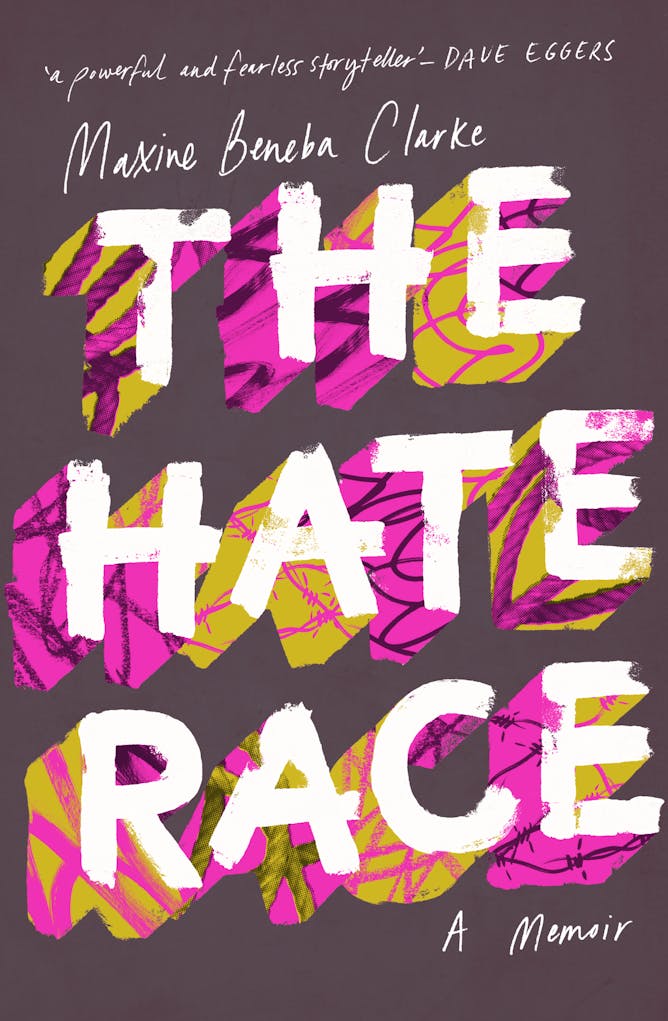
There is an utterly transfixing, yet deeply disturbing moment in this memoir in which the young Maxine, growing up in suburban, middle-class Australia, believes that she is turning white.
In a realist, not magic realist work, the fervently desired “miracle … quietly brewing” on her skin, turns out to be a rare skin condition, diagnosed after a trip to the dermatologist’s office. What the poignant humour of the memoir conceals is the extraordinary violence of a society that would cause a child to want this transformation.
Clarke’s story charts the experience of everyday racism, tracing the lives of her British-Caribbean parents on their journey to a better life. This ideal life is turned upside down by shredded school books, abusive notes left in bags and pencil cases, and the hapless ineffectuality of teachers and school administrators.
Positive experiences seem few and far between: her friend Jennifer’s kind words written in her album, or the high school teacher who had the foresight to advise Maxine that the things she’d been told in primary school were as “bizarre as I’d suspected”. It takes courage to speak out again and again on issues that many of us would prefer to think did not exist. The book soars above its subject matter, demonstrating humanity in the face of the inhuman.
Emily Maguire’s novel centres on the sexual assault and murder of a young woman in a tough-talking, truck-stop town midway between Sydney and Melbourne. It is in the form of a thriller, but the author is perhaps less interested in seeking out the murderer than studying the town’s reaction.

Chris Rogers, the victim’s sister, is an astonishing character, reeling from the breakdown of her relationship to the love of her life; the death of her mother, and the murder of her sister. Chris struggles with men, alcohol and society’s obsession with cleavage. Then there is May Norman, a city-based journalist who arrives in Strathdee to cover the murder, and who, like Chris, is no stranger to the sexual double standard through which women – and not men – are judged for their conduct.
This novel tackles the insidious idea that rape is “never simple” but a “murky and confusing” situation in which the “lines of consent” are “blurred”. Maguire has a keen eye for the practices that excuse, tolerate and trivialise sexual violence, and for the language of misogyny that demeans women, blaming the victim for what she wore, what she did, or where she went.
What starts out as a realist venture ultimately lands in the territory of the gothic. Ghosts drift over scorched landscapes, and the bodies of murdered women rise up to haunt the living. “It’s always the men,” says the local historian. “I’ve never had a female hear the scream.” The novel’s title is, of course, ironic – it turns out that the violent death it investigates is not an isolated incident at all.
If everything goes to crap, it won’t be art that saves us. Art won’t matter one iota. You can’t write your way alive, or paint your way out of death.
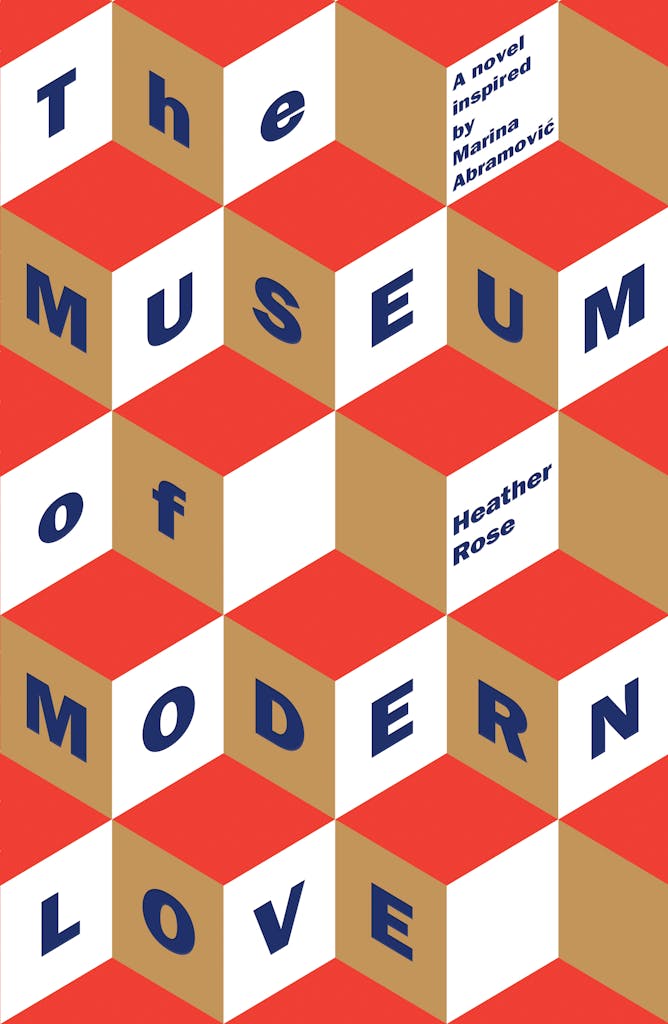
Against the odds, this is exactly what Heather Rose achieves in her startlingly original and strangely beautiful novel. It is built around the 75-day performance piece by Serbian artist Marina Abramović that took place at the Museum of Modern Art in New York in 2010.
Rose’s novel has a crystalline structure, tracing the lives of the characters who are transformed by the artwork. At its centre is Arky Levin, an emotionally-crippled composer who is cut off from life: from his daughter Alice, a medical student, and his wife, Lydia, an architect, facing the final stages of a potentially fatal illness in a nursing home without him.
Arky is joined at the performance by Jane Miller, an art teacher, who is mourning the death of her husband, Karl. There is also Brittika, a student; Healayas, a journalist assigned to cover the final days of the performance, and Danica – the ghost of Marina Abramović’s mother – who drifts, unsurprisingly, through its pages.
The unexpected oddity of the characters and their situations, and the luminous intensity of the language, marks out a philosophical territory that will be familiar to readers of Milorad Pavić, Dubravka Ugrešić or Danilo Kiš. This is an astonishingly beautiful book. In a culture that incessantly questions the worth and relevance of art for life, the novelist mounts a defence that is all the more astonishing for being successful.

De Saint Phalle’s memoir is narrated through the eyes of a child who is beguiled and bewildered by her parents’ relationship, and the secret they appear to be hiding. They lead a fabled Parisian existence, always at some distance from their child. Her mother crosses herself frequently, talking incessantly about “the nuns” and what they might think. Her parenting mainly consists of reeling off long verses from The Odyssey.
Saint Phalle’s father regales her with tales of Napoleon, and could “convince me that Karl Marx was a practising Catholic” or “a bird that the sky is full of water”. He appears and disappears in the child’s life, for no apparent reason. A string of unknown aunts, cousins and siblings also arrive and depart unannounced, accentuating the book’s unstated sense of loss and abandonment, and the adults’ lack of awareness that a child may require a little more in the way of stability or commitment.
Written in soft, cloud-like prose, with a sense of elegy, this book is finally about the power of stories to conjure hope and possibility, and impart a sense of acceptance.
My suicide note was by way of apology. ‘I’m sorry,’ I wrote. ‘Please forgive me, but if I wake up from the surgery badly impaired, unable to walk, entirely dependent on other people to care for me, I’d prefer to end my own life.
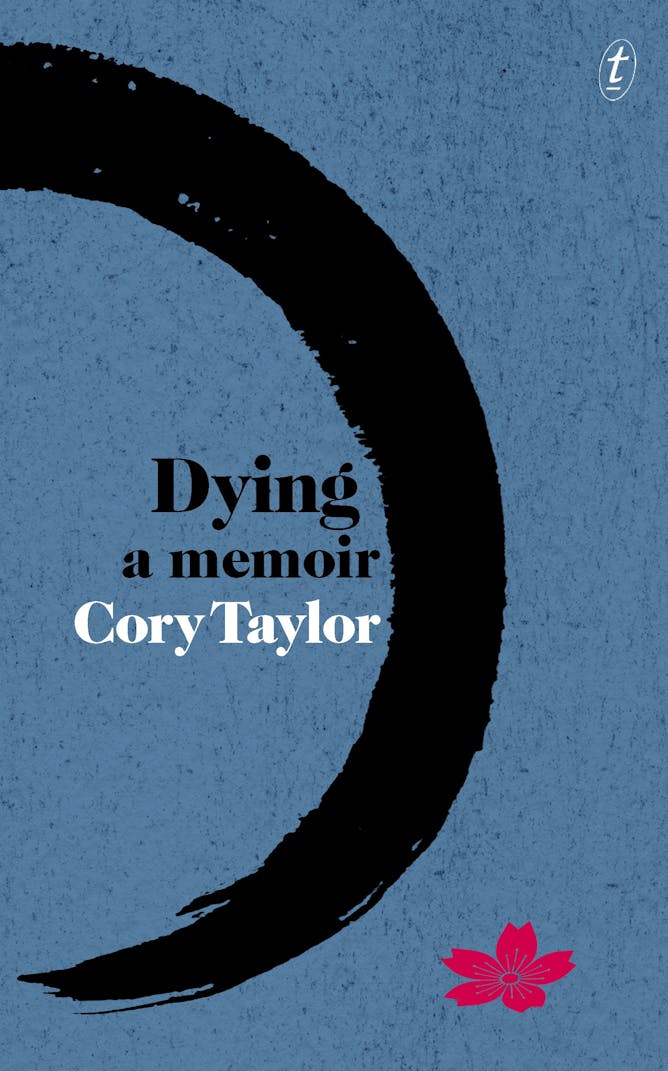
Cory Taylor did not finally choose to take her life. Ultimately, she feared the trauma such a death would have inflicted on other people. Suicide, she writes, remains shrouded in a sense of “mental angst, hopelessness, weakness, the lingering whiff of criminality”.
In short, the problem is not hers but ours. We have “lost our common rituals and common language for dying,” becoming a society that only understands death, as “a form of failure”, as Taylor’s doctors seem to do. But living longer also means dying longer, and because of this the dying “are probably lonelier now than they’ve ever been”.
Taylor had already seen what it meant to die “badly”, witnessing her parents’ long, drawn out deaths from dementia in a nursing home. And so the desire to choose the way you die – assisted dying – becomes a source of comfort to her and a means of facing the things that are most terrifying about death – its total randomness, and our lack of control.
What is truly profound about this book is that – though it ought to be harrowing – it is astonishingly easy, if not strangely uplifting, to read. In part, this is because the narrative voice is so gentle, and tightly controlled. Every scene has a radiant quality; it glows.
The memoir ends with a “coming into dying”, a kind of effloresce that occurs at the edge of life – “the edge of words”. Images take over: “an over-exposed home movie footage of a girl with a dog in dappled sunshine, a car speeding down the road.” And then “The jet takes off. A kookaburra sits on a branch laughing.”
Taylor does not speak of death so much as she shows it to us, leaving the reader with an inexpressible sense of gratitude. This is writing that matters.
The winner of the 2017 Stella Prize will be announced in Melbourne tonight.
Camilla Nelson, Associate Professor of Writing, University of Notre Dame Australia
This article was originally published on The Conversation. Read the original article.

Nicolas Suzor, Queensland University of Technology
Proposed changes to Australia’s copyright law should make it easier for people to create and distribute versions of copyrighted works that are accessible to people with disabilities. 
The Copyright Amendment (Disability Access and other Measures) Bill was introduced to Parliament on Wednesday.
If passed, it would enable people with disabilities to access and enjoy books and other material in formats they can use, such as braille, large print or DAISY audio.
The Australian Human Rights Commission has long been calling for action to end the “world book famine” – only 5% of books produced in Australia are available in accessible formats. This means that people with vision impairment and other reading disabilities are excluded from a massive proportion of the world’s knowledge and culture.
Under the current law, educational institutions and other organisations can produce accessible copies of books, but the system is slow and expensive. Only a small number of popular books are available, and technical books that people need for work are often out of reach.
Technology should make accessibility much easier, but publishers have been slow to enable assistive technologies.
People with disabilities have long complained that they are not able to take advantage of new technologies such as inbuilt screen reading software on computers and smartphones.
Amazon’s Kindle, for example, used to allow text-to-speech to help blind people read books, but Amazon gave in to publishers’ fears and allowed them to disable the feature. Apple’s electronic books are much better, but there are still major gaps.
Our research looked at books available through electronic academic databases, and found that most ebook libraries have some features that frustrate full accessibility.
The Copyright Act in its current form does grant statutory licences for copying by institutions that assist people with disabilities, but there are no comprehensive exceptions for individuals. Research shows that even students in resourced universities have trouble accessing the materials they need to study.
The new Bill aims to create a clear right for individuals to copy materials into accessible formats. Critically, this new “fair dealing” exception also allows other people to help out by creating and sharing accessible versions of books and other materials.
This is a major milestone in making copyright law more fair. It implements Australia’s obligations under the Marrakesh Treaty, a landmark international agreement designed to stop copyright getting in the way of accessibility.
The Marrakesh Treaty, once implemented around the world, will enable organisations to share accessible books to the people who need them in other countries. This is an extremely important change as the costs of scanning and making a book accessible are so high that most blind people are denied access to most works.
Once the laws are clarified, the accessibility of books will increase dramatically. Google has been busy digitising the world’s books, and it has given those books to a charity called Hathi Trust. Soon, Hathi Trust will be able to share those books with blind people around the world.
Google’s partnership with Hathi Trust means that blind people will soon be able to access more than 14 million volumes almost overnight. This figure may grow quickly as Google has already digitised more than 30 million books. Very soon, the proportion of accessible books might jump from 5-10% to closer to 30%.
The Bill also proposes a number of other long awaited updates to Australian copyright law. But one thing the Bill does not do is fix a drafting error that has plagued Australian copyright law for the past decade.
When Australia signed the Australia – US Free Trade Agreement, we introduced a system of “notice-and-takedown” that would protect copyright owners. The system provides a way for people to ask online service providers to remove content that infringes copyright.
But the law was poorly drafted. It applied only to a small number of Internet Service Providers (such as Telstra, Optus and iiNet) but not the larger category of search engines and content hosts.
This means it does not apply to giants such as Google and Facebook. It also means that other organisations that host content uploaded by users, such as The Conversation, are also excluded.
These safe harbours provide a shield in case people – outside of the service provider’s control – use their networks to upload content that infringes any copyright laws.
The reason they are so critical is that it is often prohibitively expensive for the companies that host internet content to check all content before a user uploads it.
But the safe harbours aren’t free. The quid pro quo is that the ISP must introduce a notice and takedown scheme. This is one of the few effective mechanisms to get content removed from the internet, and has been a crucial part of protecting the rights of publishers and authors online.
When the new Bill was first drafted, it was set to fix the drafting error that excludes content hosts, search engines, universities and other organisations from the scheme. But the Bill introduced this week contains no such fix.
The extension of these safe harbours has become highly politicised, with major rightsholders warning that it looked like a win for Google and Facebook.
The past two decades of the internet in the United States have shown how critical the safe harbours are to all developers, both large and small. They reduce uncertainty and allow innovation in the ways that people access content.
So while this new Bill is important, it is also a missed opportunity. The drafting error in Australia’s copyright safe harbours means that neither tech companies or authors and publishers are well protected.
Tess Van Geelen, a Research Assistant at the Faculty of Law, Queensland University of Technology, contributed to this article.
Nicolas Suzor, Associate professor, Queensland University of Technology
This article was originally published on The Conversation. Read the original article.
Nicolas Suzor, Queensland University of Technology and Shereen Parvez, Queensland University of Technology
The Australian Government has just released the Productivity Commission’s report into Australia’s Intellectual Property Arrangements.
It’s a move that appears to have been designed to avoid some of the controversy of the copyright wars by releasing the report just before most Australians settle into their summer break.
The report does something that is very difficult in copyright debates: it sets out a rigorous, evidence-based case for reform. Academics have praised the “independent and systematic study that has assessed the effectiveness, efficiency, adaptability and accountability of Australia’s IP [intellectual property] laws”.
Good evidence about how well intellectual property laws are working is sometimes hard to come by. Intellectual property laws, including copyright and patent law, have to be very carefully calibrated. If they are too weak, it is difficult for investors to recoup their expenses in bringing new inventions, books, music and films to the market.
But when intellectual property laws are too strong, they restrict innovation and access to knowledge. They prevent people from making new inventions and creating new works, because access to existing materials becomes too expensive or difficult.
For consumers, they can make access to knowledge and culture much more expensive, and they can get in the way of education and the legitimate needs of disadvantaged members of society.
Scholars have pointed out for many years that the optimal balance between protection and access to knowledge is extremely difficult to pinpoint. As a result, intellectual property policy is a deeply controversial and emotional political arena. In the past, decisions about IP policy have been made on the basis of heavy corporate lobbying, gut-instinct, hunch and guesswork.
The Productivity Commission’s report is important because it reviews the available evidence and provides recommendations that we have good reason to think will improve Australia’s intellectual property laws.
After reviewing the evidence, the Productivity Commission’s view is that copyright law is not balanced, and that our laws:
[…] are skewed too far in favour of copyright owners to the detriment of consumers and intermediate users.
Probably the most significant – and controversial – recommendation is that Australia should introduce a “fair use” exception for copyright infringement.
Fair use allows people to use copyright material in ways that are fair, without asking for permission first. It has been extremely important in the United States for many different industries.
Filmmakers use it to make documentaries, libraries use it to digitise and preserve their collections, scholars use it for important data- and text-mining research, and search engines use it to index the web.
The Productivity Commission’s report is just the latest in a string of reports to recommend that Australia introduce a fair use exception. It found that Australia’s current exceptions to copyright:
[…] are too narrow and prescriptive, do not reflect the way people today consume and use content, and do not readily accommodate new legitimate uses of copyright material.

The report is detailed and comprehensive, and covers a lot of ground. The Productivity Commission recommended a raft of other changes to modernise Australia’s copyright laws, including:
preventing copyright owners from overriding consumer rights through restrictive contractual agreements
allowing Australian consumers to break digital locks on content that prevent lawful activities (like fixing a tractor)
fixing a decade-long oversight in our “safe harbour” regime that makes it extremely difficult for home-grown equivalents of YouTube or social media platforms to host content in Australia
clarify the law to ensure Australian consumers can use VPNs to access content lawfully available in other countries
ensure that the results of publicly funded research are made freely available to the public under Open Access policies
remove an exception from competition law that allows software and content companies to create exclusive deals and other restrictive licensing agreements that would otherwise be anti-competitive.
The timing of this report seems to be designed to minimise some of the controversy that it will generate. The commission’s report warns that it will be extremely difficult to “pursue change in the face of strong vested interests”.
The Copyright Agency, the Australasian Performing Right Association and the Australasian Mechanical Copyright Owners Society (APRA AMCOS), prominent players in the book industry and several authors have all issued statements that are highly critical of the commission’s report.
Their essential concern is that the expansion of user rights will result in reductions in revenues and investment in Australian creative industries and Australian creators.
The great difficulty here is that copyright law is extremely complex, and the debate is so emotive that the details often get lost in the heated arguments. What little empirical evidence we do have to guide policy is glossed over in a strong reaction against change.
The reaction of the established copyright industries is understandable. It has been very difficult for publishers and distributors to adapt to the internet, and they are only now beginning to develop business models that work in the digital age. The process has been painful to say the least.
In this context, many publishers, distributors, and creators feel besieged by efforts to reform copyright law for the digital age. But it is too late now to go back to a pre-digital world.
The restrictions on parallel importation, which have kept prices high for books in Australia, are a good example of laws that just don’t work for digital markets. If we expect consumers to obey copyright rules, it is clear that we need to work to make sure that the law and business models treat them fairly.
The great shame about the copyright wars is that sensible, evidence-based proposals for reform get mixed up with highly emotive reactions to “piracy”. The proposals by the Productivity Commission are careful and well justified. The evidence we have is that they are not likely to harm the actual revenues of Australian creators.
There is no doubt that we need new business models – and public funding – to support creators in the digital age. This is the hard work of real practical change that needs to happen to enable our creative industries to thrive.
The good news is that overseas examples show that it is possible for creators to make money in the digital economy. The Productivity Commission’s recommendations are a bet that digital is the future, and that making Australia’s laws more efficient and effective is critical to the health of our future industries.
We’re looking forward to the government’s plans to implement these recommendations, but it looks like 2017 will be a heated year for copyright debates.

Nicolas Suzor, Associate professor, Queensland University of Technology and Shereen Parvez, Graduate Research Fellow, Intellectual Property & Innovation Law Research Program, Queensland University of Technology
This article was originally published on The Conversation. Read the original article.
Natalie Kon-yu, Victoria University
In January 2016, I began working with The Stella Prize to set up their first ever Diversity Count. This meant widening their count of books reviewed according to the author’s gender to examine how issues of race, ethnicity, disability and sexuality affected the rate of books reviewed by women.
Until 2015, there’d been no recognition of these various intersections. Like the organisation VIDA: Women in the Literary Arts in the US, Stella had concentrated its early counts on the male/female binary and, as in the US, this began to annoy women whom the industry defines not only by their gender, but also by their race, ethnicity, sexuality, ability or gender-identity.
And Stella, which not only performs the count, but also awards The Stella Prize to the best book published by an Australian woman, has also come under increasing critique by women of colour about the whiteness of the prize’s longlists.

Undertaking the Stella Count is laborious and fairly crude work. Someone has to sit down and sift through newspapers and microfiches with a notepad and a running tally of the female and male names of authors whose work is reviewed.
That is, the distinction rests on name alone. This works to a degree, though not always; think of Lionel Shriver, JK Rowling (names that don’t reflect a gender) as well as authors who are gender-queer. And it doesn’t work at all if you’re taking into consideration race, ability and sexuality. It is difficult to look at a female name on a book and assess whether or not the author is a member of the LGBTI or queer community or if she has a disability.
It may be easier to distinguish race or ethnicity by a name, but this is fraught territory for a number of reasons, not least because names lie. Then what? In the case of race, do you look up pictures of all authors and assess the colour of their skin? Do you search for non-British sounding names? How do you tell?
So, after much discussion between myself and the Stella Count Coordinator, Veronica Sullivan, we designed a survey for women-identifying authors who had their work reviewed in 2015.
This was long and often difficult work. We set up a public forum for members of the writing community to give their feedback on drafts of the survey and also established a consultative committee, which had input into the final version of the Diversity Survey.
Then, after many months, we sent the survey out to writers. When the results came back they were underwhelming and statistically insignificant. This broke our hearts a little. But then I began to think about why we had such a small uptake from those we’d surveyed.
In the case of race and ethnicity (the qualifiers I feel I am best placed to speak about), I have a feeling that counting reviews comes too late in the game. I would guess that the Australian publishing industry simply does not publish enough books by women who are not white, but there are no figures for this.
For example, thanks to a recent report from Macquarie University we know that within the genre of fiction in Australia, 65.2% of literary fiction writers, 76.2 % of genre fiction writers and 86.9% of children’s book authors are women. This makes those graphs showing that men get far more reviews than women all the more infuriating. But, as yet, we don’t have the figures for racial or ethnic diversity.
How many Indigenous writers are published each year? How many non-white writers are published? And what kinds of books are being published?

Part of this lack, I think, comes from constraints placed on writers who are “othered” by the industry. For example, I think that it is probably easier for an indigenous author to be published if they write about epic struggles, rather than breezy romantic comedy. Likewise, I think that migrant writers will have an easier time getting into print if they follow the well-established trope of the happy, grateful migrant.
American author Morgan Parker writes that “we often find ourselves either being asked to ‘emphasize’ (read: exoticize) our identities (‘I love your writing about race,’ one editor told me. ‘Do you have anything else like that?’)”. And while Parker is speaking of the US, I think the same rules apply in Australia.
It seems to me that the job of Indigenous writers and other writers of colour is to keep themselves and their stories at the margins of Australian literary culture. Safe, exotic, far away.
This begs questions about representation and what this means for a national literature. I listened to Indigenous author Jane Harrison speaking at the Diverse Women Writers Workshop in September and she pointed out that while Australia’s Indigenous population is (now) only about 2.44%, Australian Indigenous writing ought to make up a much larger percentage of our national literature, as our national literature should reflect Australian cultural heritage.
She’s right, of course. Toni Morrison writes that in the US the canon is,
unshaped by the 400-year-old presence of, first, Africans and then African Americans in the United States. It assumes that this presence – which has shaped the body politic, the Constitution, and the entire history of culture – has no significant place or consequence in the origin or development of that culture’s literature.

The Whiteness of the literary canon means that our ideas of good and bad writing are very narrow and, often, exclusionary.
In Australia, as in the US, only certain stories are allowed to take centre stage in our literary culture and the universal subject is still presumed to be a white, middle-class, cis-gendered, heterosexual and fully-abled male. The more deviations from this (limited and highly problematic) notion of personhood you possess, the more estranged from the centre you become.
As Australian poet Lia Incognita writes:
work that draws from non-Anglo cultural references befuddles institutions (festivals, venues, funding bodies) whose understanding of ‘traditional’ and ‘contemporary’ is structured around Western practice.
Does this mean that the Diversity Count is doomed? Maybe, but that’s not necessarily a bad thing. Failures teach us that we have to look harder for answers. For me this entails a lot more quantitative as well as qualitative work, which comes at the stage of publication, rather than at the reviewing stage.
I’d like to undertake a comprehensive demographic survey of the Australian publishing industry (like those that Publisher’s Weekly perform in the US), examining both those people who work within the industry, as well as the authors who get published.
At the same time we need to look through our syllabuses in high-schools and universities and think about the kinds of stories that are upheld about non-white people in Australian Literature. By including a multitude of voices to speak fully and freely about the Australian experience, we have nothing to lose and everything to gain.
Natalie will be online for an Author Q&A between 4 and 5pm AEDT on Tuesday, 13 December, 2016. Post any questions you have in the comments below.

Natalie Kon-yu, Lecturer in Creative and Professionaln, Literature and Gender Studies, Victoria University
This article was originally published on The Conversation. Read the original article.
 At the BookShelf
You must be logged in to post a comment.