Of course, this hasn’t been the best year for a lot of things as a result of the COVID-19 pandemic and subsequent isolation protocols. It is curious, then, that this beleaguered franchise — so dear to the hearts of a generation of readers — and the lockdown of the global population might combine to create something with resonance, entirely by accident.
The first six books of the Harry Potter series took place at Hogwarts School of Witchcraft and Wizardry, an enchanted boarding school filled with danger, mystery and magic. But for the seventh book, Harry Potter and the Deathly Hallows, Rowling chose to deviate from her established practice by setting it in isolation. Harry, Hermione and (sometimes) Ron were cut off from their familiar routines and lives, suffering through loneliness, resource shortages, cabin fever, frustration and a terrifying new world order.
The trailer for ‘Harry Potter and the Deathly Hallows.’
Transforming meanings
For a lot of people looking back on this story, it screams 2020 — it has everything but the surgical masks.
We can write this off to an accident of history, but it also connects us to a number of compelling developments in literary theory, including French philosopher Michel Foucault’s theory of the episteme, American literary historian Stephen Greenblatt’s New Historicism and British semiotician Gunther Kress’s theory of semiotic resources, all of which point (in one way or another) to the simple fact that the meaning of a text is dependent on the cultural circumstances surrounding it.
As our world changed, the cultural significance of Harry Potter changed with it.
In a pandemic society, reading lines like “the pure, colourless vastness of the sky stretched over him, indifferent to him and his suffering” takes on a new capacity for immersion. Harry’s experiences of isolation and anxiety now bring him closer to us, make him more relatable and identifiable, just as a pandemic-addled society can now, in turn, grow closer to Harry and understand in greater depth the heavy psychological toll that being cut off from his life at Hogwarts must be taking on him.
This is especially true for high school students in 2020. The interruption of Harry’s education, adolescence and general pathway to the adult world is again all too familiar to the average 12th grader, who could not possibly have expected their steady progression through the curriculum to be waylaid by a virus any more than Harry could have expected to lose his final year at Hogwarts to a Death Eater coup.
We can reach further too, and allow that deepened understanding of Harry’s isolation to ripple through the narrative, enhancing things like the joy of his return to Hogwarts and overthrow of Voldemort, or the depth of his friendship to Hermione for standing by him through the worst of it. Our familiarity with his isolation makes his victories all the sweeter.
Re-visiting literature
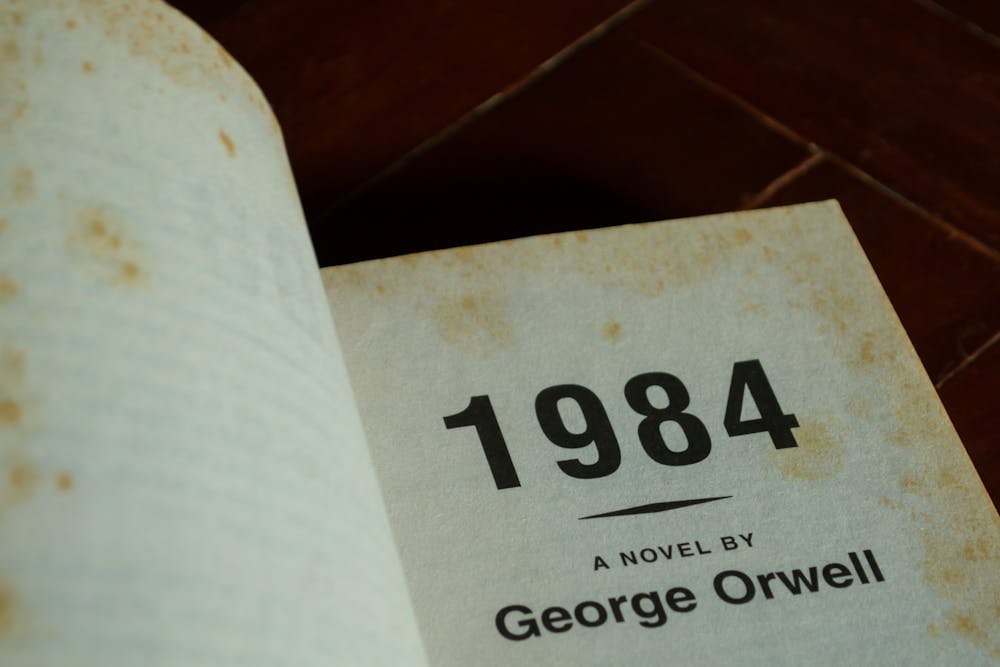
This phenomenon is nothing new. Consider, for example, George Orwell’s Animal Farm, a treatise on the dangers of communism, and Nineteen Eighty-Four: A Novel, a dire warning about government surveillance and totalitarianism. At the height of the Cold War, Animal Farm provided sharp criticism of the hypocrisy of Communist regimes, one that resonated with a western audience affronted by the so-called “red scare.”
As the Cold War diminished, so too did the immersive potential of Animal Farm as a novel, which reads as more of a barnyard fable to an audience unfamiliar with the U.S.S.R. As for Nineteen Eighty-Four, it saw a renaissance during the George W. Bush era with the passing of the Patriot Act and the surveillance initiatives it contained.
George Orwell’s novel ‘1984’ keeps receiving new significance, even though its original context may be unfamiliar to contemporary readers. (Shutterstock)
The point is simple: a story’s longevity and the legacy of its author are deeply dependent upon historical context, and since the author can’t see into the future, we have to acknowledge the role of chance as a co-author of some our most beloved texts. Even the Bard himself has had his fair share of happy accidents.
So where does this leave Harry Potter, our most recent literary phenomenon? Adrift, perhaps, but not entirely. Both Shakespeare and Orwell’s works acquire new meanings as the times change, and so too does Rowling’s series, which is a dynamic and engaging fictional world that has the potential to stand outside of time itself, to some degree, if it needs to.
How Harry’s journey is met by each subsequent generation of enthusiasts is changing, and will continue to change with the world that surrounds us. The perception that texts are stable entities is an illusion.
When COVID-19 went viral, Harry Potter caught it and was changed by it, just as we all were. Having a new excuse to read an old favourite in the light of a new world is by no means the worst thing in these trying times, especially when we’re all stuck at home anyway.
In a new series, writers pay tribute to fictional detectives on the page and on screen.
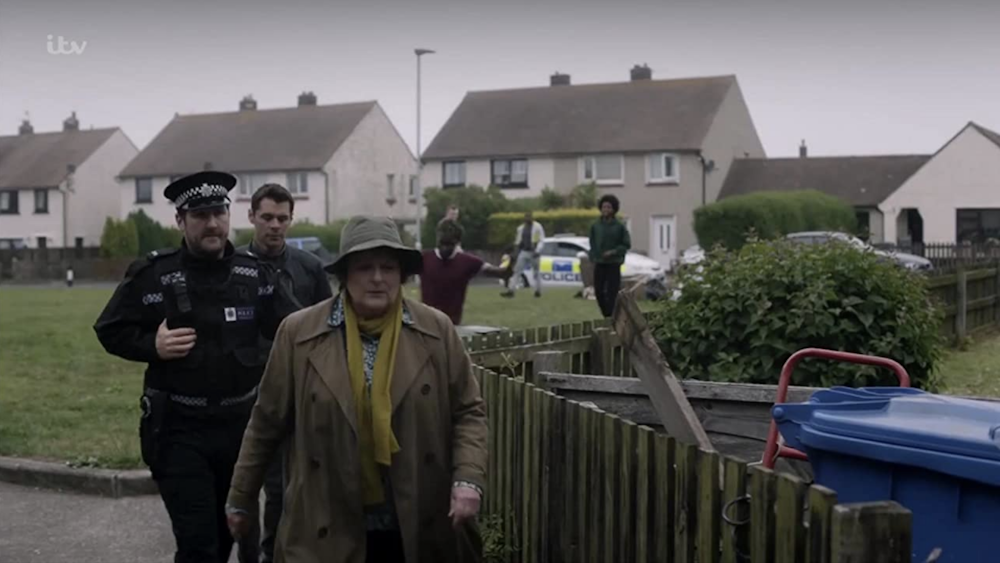
Vera stands on a windswept headland contemplating the disgruntled North Sea. She’s clad in her usual garb; the battered hat, the annoying scarf and the tent-like mac that swirls around her stocky legs and scruffy boots.
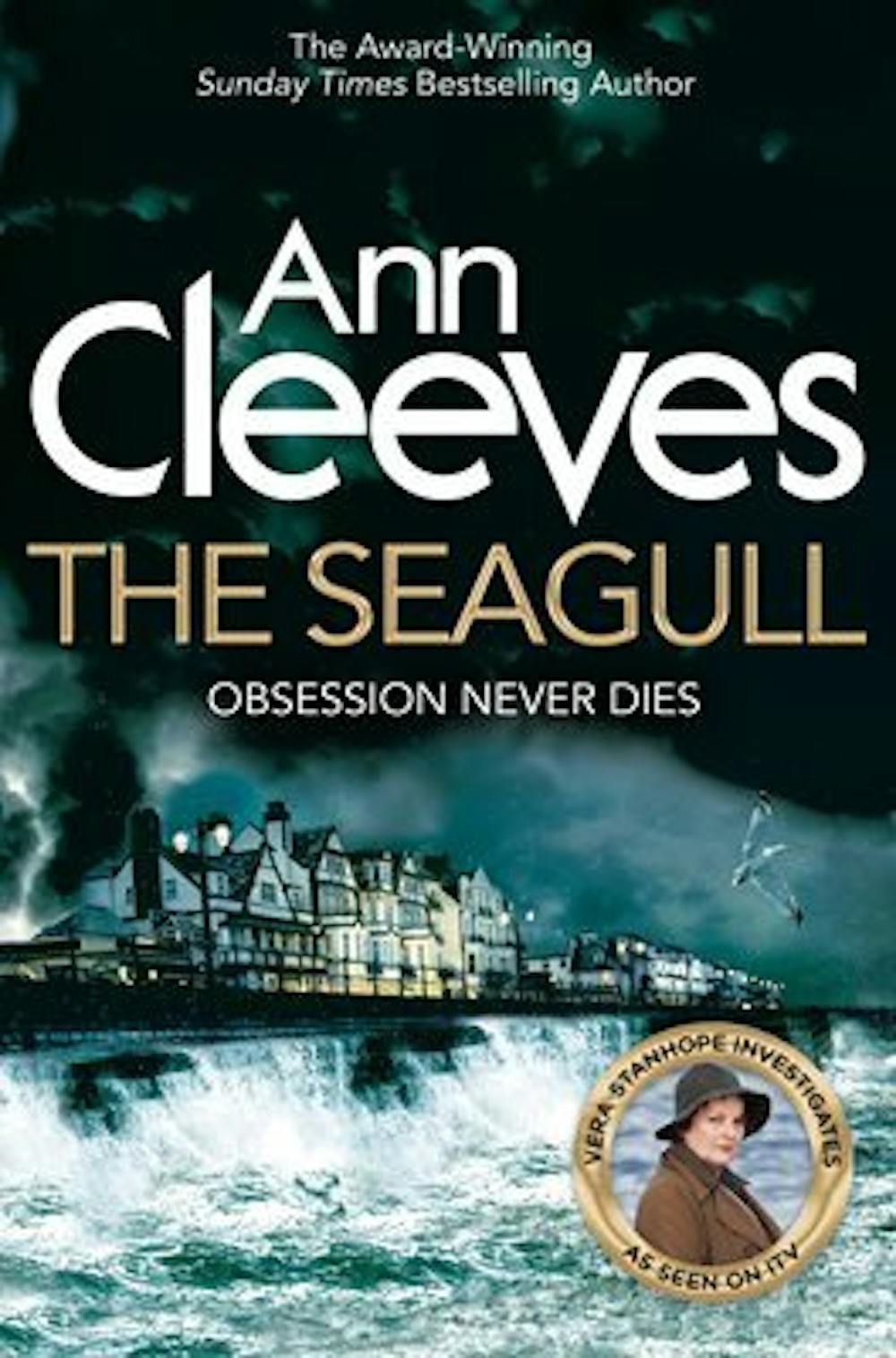
When I first met Vera Stanhope in the crime fiction of Ann Cleeves, I liked her, but not so much. It wasn’t until Brenda Blethyn brought her to life in the 2011 ITV series Vera that I became truly enamoured.
Ten seasons later, with series 11 already commissioned, Blethyn has made Vera well and truly hers through a variety of mannerisms that are easy to mock but hard to get right.
A woman with quirks
Emily Taheny recently had a go on Sean Micaleff’s Mad as Hell but didn’t quite get there. Vera is much more than the hat, the Columbo mac and the attitude.
Blethyn’s version of Vera includes a wide range of audible “hmmphs”, the interrogative “hmmmms?”, and a chesty cackle. Blethyn also does a lot with her eyes. There’s Vera’s hawk-like gaze that can spot a lie at a hundred paces. There’s the evasive sidelong glance when she’s got something to hide, usually her drinking or a sugar fix.
And let’s not forget Vera’s walk, that determined short-legged stride that somehow gets her where she wants to be faster than anyone else.
Brenda Blethyn’s Vera teeters on the verge of comedy at times, but she pulls it off.
In terms of genre, Vera sits within the tradition of the elderly female sleuth. This would include Miss Amelia Butterworth who first appeared in Anna Katherine Green’s That Affair Next Door first published in 1897. Thirty years later, Miss Marple picked up her knitting and nosed onto the scene of crime.
The key difference is that Vera is no amateur, but a Detective Chief Inspector in charge of a major team whom she routinely berates like recalcitrant school pupils who haven’t done their homework.
No doubt about it, Vera can be rude and impatient. She’s also partisan, favouring her young male colleagues over her female ones, while torturing Detective Constable Kenny Lockhart (Jon Morrison) with endless boring routine investigations. Sometimes she’s hard to like.
But Vera also has extraordinary empathy with the hard done by in an area where people have been doing it tough for a very long time. The North East of England is a region of spectacular beauty, deeply scarred by the effects of the industrial revolution that ended with the closing of the mines and the shipyards in the 1980s. It’s also my home, although I left it a long time ago.
One of the now well recognised pleasures of reading crime fiction or watching a TV crime drama is the sense of place. Whether the location is evoked on screen or on the page there is always a significant relationship between the characters and the environment that has shaped them.
In a fascinating essay on the phenomenon of the TV detective tour, cultural heritage professor Stijn Reijnders outlines the difference between two sorts of places: the lieux de mémoire (places of memory, as described by Pierre Nora) and his concept of lieux d’imagination (places of imagination).
While the former are “real” locations that serve as places of pilgrimage to memorialise past events (think Gallipoli), lieux d’imagination are the places we visit that are associated with fictional happenings, such as the Morse tour of Oxford or the Wallander tour of Ystad.
Such forms of cultural tourism enable readers, or indeed viewers, to pass from the real world into the fictional one and back again on a journey of the imagination.
As convincing as Reijnders’ argument might be, it doesn’t quite encompass how I relate to the landscape inhabited by Vera which evokes my own lieux de mémoire.
Vera’s stone cottage on the moors reminds me of our family holidays in Northumbria where I would ride the moors on a grumpy, rotund, Shetland pony that might well have been called Vera.
From the moors to council flats, Vera evokes a strong sense of place. IMDB
Every time Vera goes to Newcastle, I’m fascinated by how much cleaner the quayside looks since I last stood on the sooty pavement and contemplated the mucky Tyne bridge, the junior sibling of the Sydney harbor bridge: two bridges that connect where I was then with where I am now.
And I’m particularly delighted when Vera ends up in South Shields, my home town, and has an intense conversation with a witness or a suspect on the foreshore when there’s no reason to be outside except to capture the view.
Although I take great delight in the familiar locations, I’m constantly arguing with the geographic logic of the series while being surprised that it’s not raining — although in my memory it always is.
And so I oscillate, between the fictional and the remembered, with Vera as the character who tethers me to both through a narrative that takes me to another time and place where the answers will always be found by a smart, dumpy, older woman in a raincoat.






 At the BookShelf
You must be logged in to post a comment.