
The link below is to an article that takes a look at new features for Google Audiobooks.
For more visit:
https://goodereader.com/blog/audiobooks/google-audiobooks-unveils-a-slew-of-new-features

The link below is to an article that takes a look at new features for Google Audiobooks.
For more visit:
https://goodereader.com/blog/audiobooks/google-audiobooks-unveils-a-slew-of-new-features
The link below is to an article reporting on the rise in ebook piracy.
For more visit:
https://goodereader.com/blog/e-book-news/ebook-piracy-is-on-the-rise-in-2018
Margaret Kristin Merga, Curtin University; Paul Gardner, Curtin University; Saiyidi Mat Roni, Edith Cowan University, and Susan F Ledger, Murdoch University
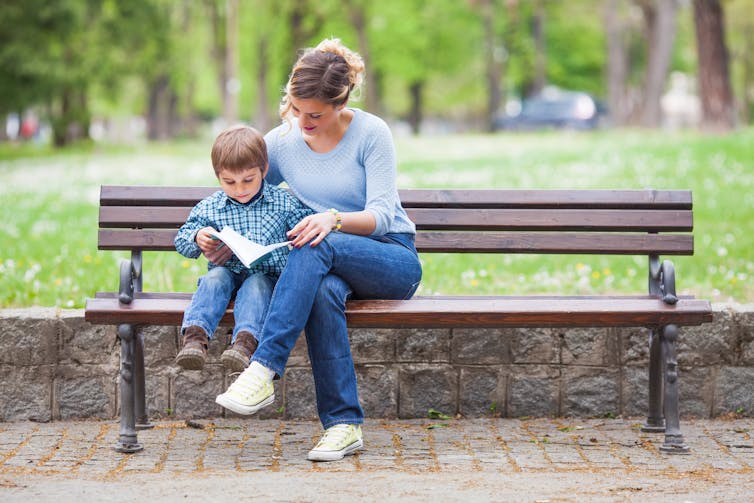
Reading to your child is one of the most successful ways of instilling a love of reading in them. But in our recent study, more than one-quarter of primary-school-aged respondents claimed they were never read to at home.
Children typically enjoy being read to, and see educational, social and emotional benefits to the practice. But families are busy, and finding time to read aloud can be eaten up by the demands of everyday life.
Not all parents have been read to themselves as children, so may not have experienced a model they can then follow with their own children. And many adult Australians may be struggling readers themselves.
With this in mind, here are five suggestions that can help make the experience of reading to your children fun, relaxing and educational.
For many people, the best time to read with their children is at night, once the children are in bed. But if you find your child too cranky and disengaged at this time (or if you are feeling tired yourself), you might want to try reading to them earlier in the day.
Read more:
Three easy ways to get your kids to read better and enjoy it
Whatever the time, it’s important to give the book and your children all of your attention. Phones and other devices with enabled notifications should be switched off. Everyone should be comfortable, and children should associate time spent being read to with enjoyment.
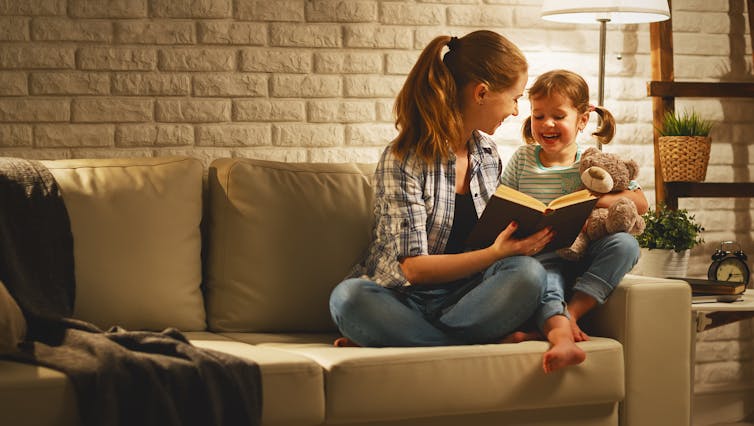
Where possible, we strongly suggest reading to your child becomes part of the daily routine. The more often children are read to, the more substantial the benefits. Reading to children is both an opportunity to model how the written word sounds and a chance for family bonding.
Children don’t typically enjoy having the story stopped every few seconds for comprehension checking, so we suggest you keep interruptions to a minimum.
But recapping is useful when picking up a book again after a break. If parents let their children provide this recap (“So, where are we up to?”) this also enables informal comprehension checking. Opportunities for prediction are also beneficial (“Wow… what do you think might happen next!”).
Sharing your response to a book and encouraging children’s responses stimulates critical thinking. These techniques and others can enhance learning and comprehension, but they shouldn’t upset the fluidity of the reading experience or turn it into a test.

You can share the task of the reading itself with your children if they want to. This is beneficial for a range of reading skills, such as reading comprehension, word recognition and vocabulary building.
You can start reading to your child from early infancy to support their developing language abilities, so it’s never too early to start. The skills infants and young children develop through shared reading experiences can set them up for literacy achievement in their subsequent schooling years.
Read more:
Research shows the importance of parents reading with children – even after children can read
Reading to your children remains important beyond the early years, too, with continuing benefits for literacy development and cognitive skills.
We should read to young people for as long as possible. There is no age where the benefits of being read to completely expire.
Very recent research in the UK found struggling adolescent readers can make remarkable gains on their reading comprehension when books are read to them at school. This is perhaps due to the opportunity for students to enjoy books that are too hard for them to read themselves.
We suggest you select a book that interests both you and your child. Reading together is a great opportunity to share your passions while broadening your children’s horizons through making diverse book choices.
Don’t be afraid to start reading chapter books to your children while they are still very young. The age to begin this will vary depending on your child’s attention span, but it’s often possible to begin this with pre-schoolers.
As long as the story isn’t too complex, children love to be taken on an enjoyable journey into books that are too hard for them to read independently. This can also help to extend child’s vocabulary, among other benefits.
Read more:
How building your child’s spoken word bank can boost their capacity to read
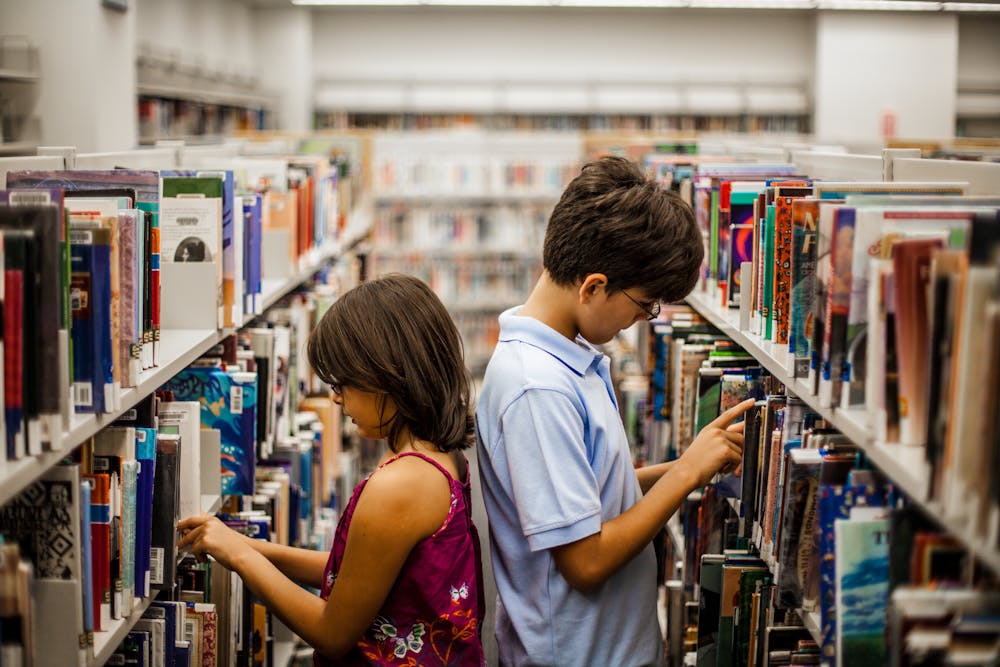
It’s a good idea to take your children to the library and model how you choose interesting books for shared reading. Research shows many primary and high school children are easily overwhelmed by choice when they attempt to pick what books to read independently, so helping them with this is a valuable skill.
Not all of us are destined to be award-winning voice actors, and that’s OK. It’s great to use expression and adopt different voices for the characters in a book, but not everyone will feel able to do this.
At multiple points in our research, we’ve come across people who have praised the reading efforts of parents who weren’t confident readers, but who prevailed nonetheless. For example, in our recent paper a respondent described being read to by her mother who struggled with dyslexia. This mother, and many other parents, have inspired a love of reading in their children through their persistence.
 Being taken into the virtual reality of story is a memorable, pleasurable experience that stays with us forever. Reading aloud provides parents with a valuable opportunity to slow down, relax and share the wonderful world of books with their children.
Margaret Kristin Merga, Senior Lecturer in Education, Curtin University; Paul Gardner, Senior Lecturer: Literacy Education, Curtin University; Saiyidi Mat Roni, Lecturer, Edith Cowan University, and Susan F Ledger, Associate Dean Engagement, Murdoch University School of Education, Murdoch University
This article was originally published on The Conversation. Read the original article.
The link below is to an article that takes a look at the question, ‘what does a librarian do.’ Hint – the answer is not, ‘not very much.’
For more visit:
https://lithub.com/what-exactly-does-a-librarian-do-everything/
The link below is to an article that takes a look at the subject of author photos.
For more visit:
https://lithub.com/the-agony-and-the-ecstasy-of-taking-author-photos/
The link below is to an article that takes a look at how to visit dead writers, or better still perhaps, on how to find them.
For more visit:
https://lithub.com/how-to-visit-the-graves-of-75-famous-writers/
The link below is to an article that looks at 5 ‘hidden’ Kindle features (less well-known would be a better way of putting it).
For more visit:
https://goodereader.com/blog/electronic-readers/5-hidden-kindle-features-every-student-should-be-using
The link below is to a review (of sorts) of the InBook Infinity being developed by a company called Artatech.
For more visit:
https://goodereader.com/blog/electronic-readers/inkbook-infinity-is-a-new-10-3-inch-e-reader

Katy Shaw, Northumbria University, Newcastle
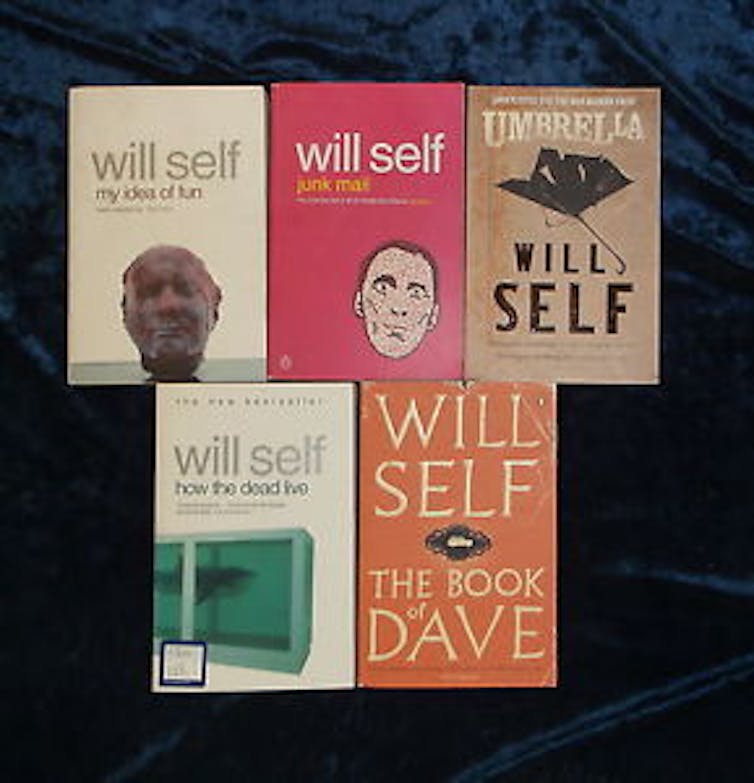
Will Self has declared the novel is “absolutely doomed” – ironically, in an interview to promote Phone, his latest outing in the very medium he is condemning to death. Even casual readers will note that this isn’t the first time that the reigning Eeyore of British literature has announced the imminent passing of our most popular literary form.
Since 2000, Self has used the occasion of the release of his own books to repeatedly argue that the novel is destined to “become a marginal cultural form, along with easel painting and the classical symphony”. During his promotional duties for Umbrella, Self asked whether we are evolving beyond the need to tell stories, while in 2014 he announced the declining cultural centrality of the novel due to the digitisation of print culture in an article to promote Shark.
Self’s obsession with killing off the novel might be more about ego than revenge, but his repeated attempts to plot its downfall form part of a much wider lament. For centuries, writers have been proclaiming the imminent passing of the novel form. More than 60 years ago, JB Priestley called it “a decaying literary form” which “no longer absorbs some of the mightiest energies of our time”. More recently, Zadie Smith complained of novel-nausea, while David Peace has asked how it is still possible to “believe in the novel form” because “storytelling is already quite ruined by the individualism of Western society”.
Reading beyond the exhausted sentiments and sensationalist headlines provided by self-harming novelists, what these sentiments collectively highlight is not the death of the novel at all, but the decline of “literary fiction”. Self’s explicit cultural fear is that a serious kind of novel – novels such as his own – that confront us with “difficult reading” are destined for relegation to the realms of classical music and fine art. What Self’s repeated attempts on the life of the novel actually articulate is a deep-seated fear of the devaluation of literary fiction and its dethroning from a position of economic, popular and critical dominance as a result of the new contexts provided by a social media age.
//platform.twitter.com/widgets.js
Prophesying the imminent demise of the novel at the hands of digital technology has become popular in contemporary critical discourse, especially as the form entered the new millennium. Self is one of many authors who have publicly debated the challenges of writing novels in a digital era.
Andrew O’Hagan recently argued that the intense personal perspective offered by platforms such as Twitter and Facebook means that the novel has nowhere left to go in offering an inside account of the lives of others. The crux of both O’Hagan and Self’s sandwich-board arguments ultimately lie in a belief that future readers will be unwilling to disable connectivity and engage only with a physical form of text in relative isolation from the hyper-networked society around them.
But the “death” of literary fiction does not have to come at the expense of the rise of the popular – or of the digital. Smartphones and streaming can sit alongside literary awards and “difficult” novels and offer us vital insights into, and ways of representing, contemporary experience. The novel is perhaps the most hospitable of all forms and opens itself willingly to new voices, languages and technologies. And not all writers are hostile to the impact of the digital on literary form – in their use of social media to tell stories in new ways, both David Mitchell and Jennifer Egan have proved that the novel has an innate ability to ingest and adapt to a rapidly changing world.
Importantly, the novel also presents us with perspectives and experiences different from our own. In its contemporary concern with the trope of an “other” who transgresses the boundary of the domestic home, the 21st-century novel offers a vital consideration of the implications of a post-Brexit Britain. The novel disrupts and challenges, and in turn elicits responses from readers to, the contemporary concerns it presents.
The etymology of the word “novel” lies in the “new” – and all evidence suggests that the form will continue to evolve – and ingest, rather than ignore, the new languages of the contemporary. The novel – whether in the form of literary or “popular” fiction – helps us to understand the world in which we now live and informs our attempts to navigate both the past and the future. As well as its long-argued innate value, this capacity of the novel to help us negotiate the changes of the present is also key to its survival – and evolution – in the coming century.
As a case for its vitality, Self’s pervasive campaign against the novel couldn’t be more helpful. In repeatedly citing the death of the novel, Self and his band of merry naysaying novelists whip up resolve and resurrection of the form in a context of challenge and change. In doing so, their comments remind us to value this familiar, yet continually innovative form that continues to adapt, ingest and shape-shift, remaining relevant to each generation of readers – and writers.
Literary snobbery and Modernist nostalgia aside, Self’s headline-grabbing soundbites encourage new understandings of wider shifts in novel writing and reading in the 21st century. With writers continually sticking more nails in its half-open coffin, the novel seems destined to remain stuck in critical debates that remain wilfully oblivious to its sustained success in the new millennium.
 Emerging from a long winter of discontent, perhaps it is the strange fate of the novel to exist in a permanent state of imminent demise and doom, with an innate awareness of itself as the one genre that literature simply cannot do without.
Katy Shaw, Professor of Contemporary Writings, Northumbria University, Newcastle
This article was originally published on The Conversation. Read the original article.
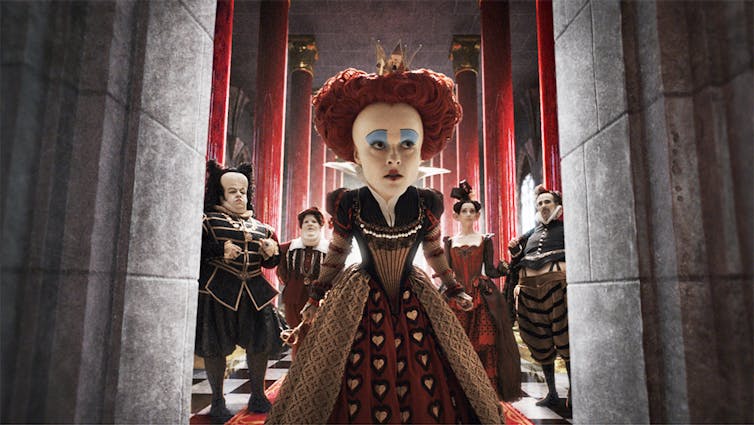
Still from DIsney’s Alice Through the Looking Glass (2016)
Anna Cermakova, University of Birmingham and Michaela Mahlberg, University of Birmingham
This year, women’s history month follows what seems an unprecented upsurge of events that revealed the widespread abuse of women in both professional and private life. So it is not surprising to also see an increased interest in the representation of gender in literature – or rather, as a recently published big data study shows, a significant under-representation of women in literature.
Both female writers as well as female protagonists have been lagging behind their male counterparts for centuries. Gender inequality has naturally become a contemporary topic that has also made it into schools. To mark World Book Day, which we celebrated on the first day of women’s history month, Votes For Schools, a voting platform for schools, in collaboration with Let Toys Be Toys, a campaign promoting gender equality in the toy and publishing industries, published a lesson plan for primary schools asking the question “Do bestselling books encourage sexism?”
Votes For Schools then put this question to primary school pupils and got an interesting result: 79% of students said “No” and only 21% said “Yes”. But another vote on “Do we need more female villains in books?” tells a bit of a different story: the result is 67.5% “Yes” and 32.5% “No”. The response further revealed that 80% of female pupils wanted more female villains in books compared to 54% of male voters.
Stories in which male heroes go through all sorts of adventures before they come to the rescue of the beautiful, but passive, princesses are all too familiar. The Observer newspaper collaborated with Nielsen research on a large market study which found that lead characters were 50% more likely to be male than female, and male villains were eight times more likely to appear compared to female villains. This kind of gender stereotyping is, however, just a continuation of a tradition established in children’s literature much earlier than that.
It was in the latter half of the 19th century that booksellers and book reviewers – “the cultural gate-keepers” as the American literary critic Anne Lundin calls them – started to distinguish between reading suitable for boys and that for girls. At the beginning of the 19th century, the book market was much more general, it did not even clearly delineate between adult and child readers.
From the 1880s, The Times newspaper started to devote separate review essays to literature for boys and for girls. Lundin notes it was rather critical particularly of the books addressed at girls – and it was not the quality of writing that was criticised so much as the subject matter: “Writing for girls … lacked the dynamism of boys’ books.”
Research at the University of Birmingham looks at gender in children’s literature with the help of corpus linguistic methods. As part of the GLARE project, which explores gender in children’s literature from a cognitive corpus stylistic perspective, a specialised corpus of 19th-century children’s books has been collected. This collection of 71 books was selected to represent what has been called the “Golden Age” of English children’s literature and contains classics such as Alice in Wonderland and The Water Babies.
A quick look in the GLARE corpus confirms observations on bias of gender representation. Among the books written by female authors, there are only seven where the word “girl” is used much more frequently than “boy”. Among the books by male authors, there are only two where “girl” is used more frequently than “boy”.
The highest relative frequency of “girl” is in the 1886 book A World of Girls: The Story of a School by the female author L. T. Meade. The book was greeted by The Academy review journal on publication (November 20, 1886) as “light and pleasant reading” with “many a quiet, useful hint about the education and general training of young girls”. The highest relative frequency of the occurrence of “boy” can be found in the 1858 cautionary tale Eric, Or, Little by Little: A Tale of Roslyn School by Frederic William Farrar.
But women who wrote books for children also often dealt with male worlds – the relative frequency of “boy” is similarly high in the 1883 novel Jackanapes by the female writer Juliana Horatia Ewing. A review described it as: “The wistful tale of heroic sacrifice in which the orphaned son of a Waterloo cavalry officer … dies saving the life of his childhood friend on the field of battle.”
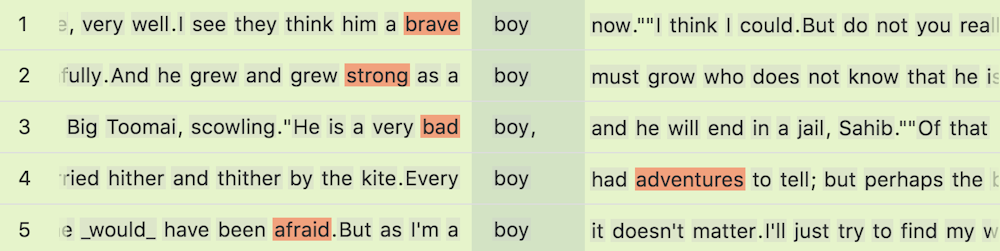
These books are good examples of reading expectations of boys and girls at the time – and the following selection from the corpus provides us with some insights.
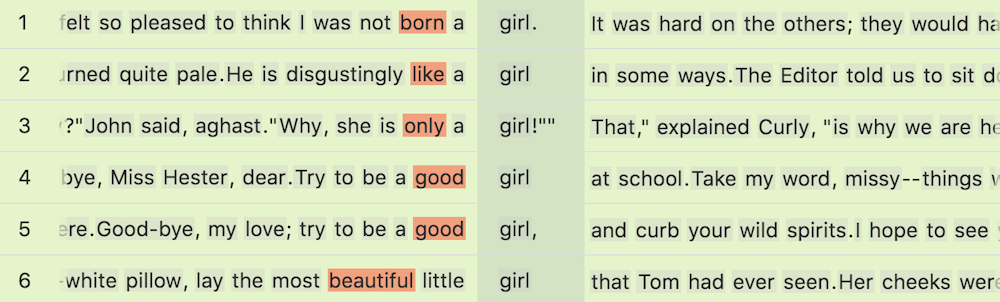
In these examples, girls are well behaved and beautiful – and they certainly appear inferior to boys. Boys are strong and brave and ready for the adventures ahead of them. But boys are also trouble sometimes. In many respects, this has not changed much.
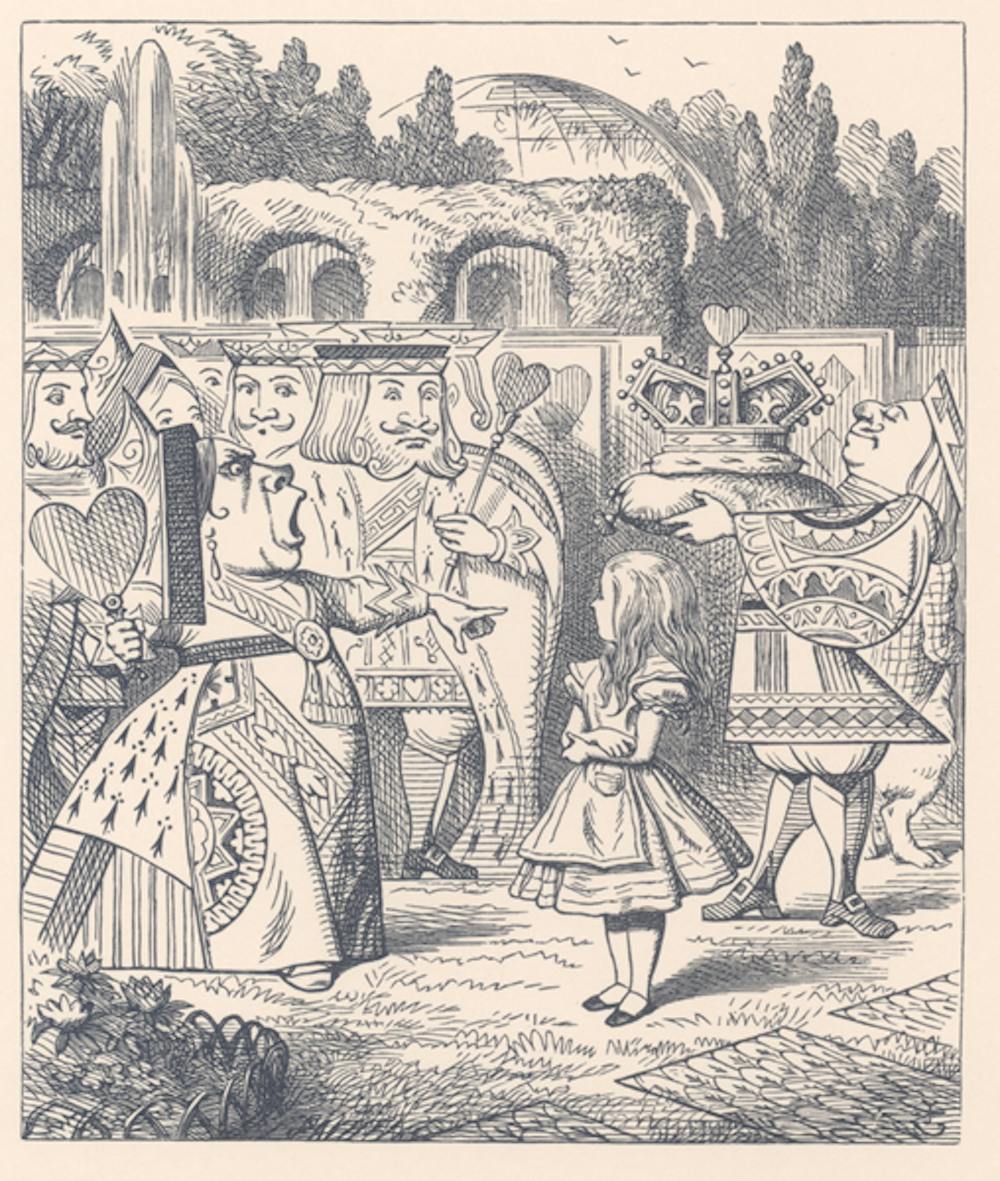
Male villains in children’s books outnumber their female counterparts. In fact, not everyone might easily come up with a top ten list like that of the British author MG Leonard. Her list features the likes of Mrs Wormwood in Matilda, Bellatrix Lestrange in Harry Potter, Cruella de Vil in The Hundred and One Dalmatians or Mrs Coulter in His Dark Materials.
The female villain is usually represented as a witch – as the White Witch from Narnia – or a queen, as the wicked queen in Snow White or the Queen of Hearts in Alice in Wonderland. Witches embody an unattractive (often old), powerful female figure who is turned to for advice or help when everything else fails – as with the witch in the Little Mermaid fairy tale. Witches are feared and excluded from society, as illustrated in this example from The Book of Dragons (1899) by Edith Nesbit quoted from the GLARE corpus:
And besides a King he was an enchanter, and considered to be quite at the top of his profession, so he was very wise, and he knew that when Kings and Queens want children, the Queen always goes to see a witch. So he gave the Queen the witch’s address, and the Queen called on her, though she was very frightened and did not like it at all. The witch was sitting by a fire of sticks, stirring something bubbly in a shiny copper cauldron.
 Children’s books are not only fiction. They provide vital opportunities for children to make sense of their own world. How many more women’s history months will it take to see a greater variety of fictional female characters, not just beautiful princesses, good girls and evil queens?
Anna Cermakova, Marie Sklodowska-Curie Fellow, Centre for Corpus Research, University of Birmingham and Michaela Mahlberg, Professor of Corpus Linguistics, University of Birmingham
This article was originally published on The Conversation. Read the original article.


You must be logged in to post a comment.