
The link below is to an article that looks at packing books for vacation.
For more visit:
https://bookriot.com/2018/09/21/how-to-pack-books-for-vacation/

The link below is to an article that looks at packing books for vacation.
For more visit:
https://bookriot.com/2018/09/21/how-to-pack-books-for-vacation/
The link below is to another article reporting on the 2018 Man Booker Prize shortlist.
For more visit:
https://www.npr.org/2018/09/20/649853483/from-everything-under-to-overstory-the-2018-man-booker-prize-shortlist
The link below is to an article with further reporting on the canceling of the 2018 Nobel Prize in Literature.
For more visit:
https://www.nytimes.com/2018/09/20/books/review/nobel-prize-literature-critics-discussion.html
Andrew Biswell, Manchester Metropolitan University
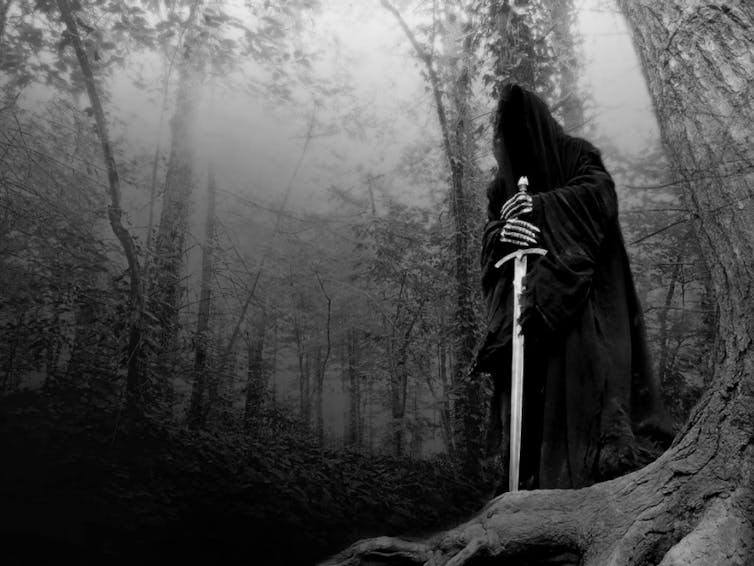
The publication of The Fall of Gondolin by JRR Tolkien completes a publishing project that began in the distant past of 1977, when Christopher Tolkien edited The Silmarillion, the first volume of his father’s posthumous stories.
When Tolkien senior died in 1973, he left four full length published novels and a mass of uncollected papers behind him. His youngest son Christopher, now aged 93, has spent almost half a lifetime annotating his father’s work and preparing it for publication. The 12 volumes of the History of Middle-earth provide an astonishingly detailed account of the languages and landscapes of Tolkien’s fictional world.
This monument of scholarship allows readers of The Lord of the Rings to gain the fullest possible understanding of the careful preparation which stood behind the handful of books published by Tolkien in his lifetime.
As a literary critic who specialises in archival work, I admire the heroic labours of the Tolkien estate in presenting the author’s private papers, letters and illustrations to a wide readership of scholars and enthusiasts. But not all heirs and executors take the same view when it comes to publishing posthumous work, and there are often ethical problems arising from an author’s drafts and manuscripts.
When the first edition of Philip Larkin’s posthumous Collected Poems appeared in 1988, many readers were dismayed to find that the editor had chosen to include a large number of unfinished poems and apprentice work written when Larkin was a student. Critics of that volume argued that Larkin would never have allowed publication of this inferior work, and the overall effect was to diminish the impact of the poems he valued.
Publication of the Collected Poems was followed in 1992 by a volume of Larkin’s letters (heavily cut to remove libels), which revealed the poet to have been seething with racist prejudices. It took many years for Larkin’s reputation to recover from these deep wounds, which had been administered by his own literary executors. There will be no posthumous edition of Larkin’s diaries, which were shredded shortly after his death, according to his own instructions.
Read more:
After years of scandal, Philip Larkin finally has a spot in Poets’ Corner
Virginia Woolf’s letters and journals offer a positive counter example. Edited by her nephew Quentin Bell and published posthumously, Woolf’s Diaries have established themselves as an inspiring series of books for everyone who studies her novels. The pleasure of watching over Woolf’s shoulder as she documents the ups and downs of her writing life is immense.
Other writers have attempted to take control of their reputations more directly. W.H. Auden, who died in 1973, stipulated in his will that no edition of his letters should be published, and he requested that anyone who had letters in their possession should burn them. Fortunately for posterity, many of his friends had already sold their batches of Auden letters to university archives, and other people simply ignored his wishes. Nevertheless, it is unlikely that an edited collection of Auden’s letters will ever appear.
Edward Mendelson, who is Auden’s literary executor, recently wrote an article in which he discussed his own ethical dilemmas as the editor of the Collected Poems. Mendelson’s guiding principle has been to value the poems that Auden chose to include in his two volumes of Collected Longer Poems and Collected Shorter Poems.
But what to do about the poems published in magazines but excluded from Auden’s books? Those appear in the Collected Poems on the grounds that Auden had signed them off for publication. And what about the rejected early work, such as the poem “Spain” – a response to the Spanish Civil War published in pamphlet form but later excluded from the Collected Shorter Poems? That does appear in The English Auden, an edition of poems written in the 1930s, but it is absent from the Collected Poems.
There is another category of “lost” work by Auden, existing only in manuscripts and notebooks, but never collected in book form. Mendelson has recently unveiled his plans to publish some of these poems, carefully edited and contextualised, in a volume of Auden’s “Personal Writing”, which will include poems and verse-letters written for friends. But none of this work will be finding its way into the next edition of the Collected Poems.
Anyone who manages a literary estate faces hard questions about what should or should not be published. In September 2018 Manchester University Press will publish Paul Wake’s edition of Puma, a science fiction novel by Anthony Burgess. The manuscript, completed in 1976, was unpublished in Burgess’s lifetime, but letters in the archive confirm that he was actively seeking to find a publisher shortly after he’d written it. What readers will make of this “lost” novel by Burgess remains to be seen.
The Tolkien example is a story of a son’s devotion to his father’s work and there is much to admire in Christopher Tolkien’s determination to put as much unpublished writing as possible into the public domain.
For the future, as electronic communication becomes more pervasive, it seems likely that writers will find it harder to delete published work from the record, or to edit their past in the ways evidenced by Auden and Larkin. If only they had survived into the age of social media, their Collected Tweets might have been required reading for every diligent student of their poems.
Andrew Biswell, Professor of Modern Literature, Manchester Metropolitan University
This article is republished from The Conversation under a Creative Commons license. Read the original article.
Rachel Stenner, University of Sheffield and Frances Babbage, University of Sheffield
A dense work of early English prose, strewn throughout with serious and teasing marginalia from its author, might not be the most likely candidate for stage adaptation – but this project has just been undertaken by a team of artists and academics in Sheffield. William Baldwin’s Beware the Cat, written in 1553, will be performed in September as part of the university’s 2018 Festival of the Mind.
As a literary form, the novel is usually thought to have developed in the 18th century with the mighty classics Robinson Crusoe by Daniel Defoe and Tristram Shandy by Laurence Sterne. But researchers believe we should be looking back to the relatively neglected prose fictions of the Tudor era to find the earliest English examples. Beware the Cat, an ecclesiastical satire about talking cats, is a prime candidate and is now thought to be the earliest example of the novel form in the English language.
Baldwin is barely known outside the circles of Renaissance literature, but he was highly celebrated and widely read in Tudor England. In the mid-16th century, he was earning an inky-fingered living as a printer’s assistant in and around the central London bookmaking and bookselling area of St Paul’s Cathedral. As well as writing fiction, he produced A Mirror for Magistrates, the co-written collection of gruesome historical poetry that was highly influential on Shakespeare’s history plays. He also compiled a bestselling handbook of philosophy, and translated the controversial Song of Songs, the sexy book of the Bible.
Beware the Cat tells the tale of a talkative priest, Gregory Streamer, who determines to understand the language of cats after he is kept awake by a feline rabble on the rooftops. Turning for guidance to Albertus Magnus, a medieval alchemist and natural scientist roundly mocked in the Renaissance for his quackery, Streamer finds the spell he needs. Then, using various stomach-churning ingredients, including hedgehog’s fat and cat excrement, he cooks up the right potion.
And it turns out that cats don’t merely talk – they have a social hierarchy, a judicial system and carefully regulated laws governing sexual relations. With his witty beast fable, Baldwin is analysing an ancient question, and one in which the philosophical field of posthumanism still shows a keen interest: do birds and beasts have reason?

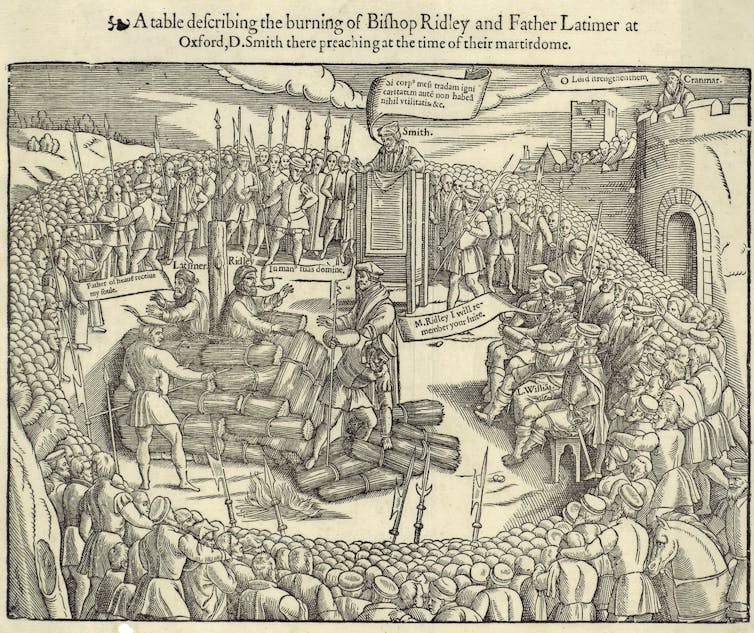
But rights and wrongs of a different order coloured Baldwin’s book release. He self-censored for several years before making the work public. Beware the Cat was written in 1553, months before the untimely death of the young Protestant king, Edward VI. Next on the throne (if you disregard the turbulent nine-day reign of Lady Jane Grey) was the first Tudor queen, Mary I. Her Catholicism was fervent and these were terrifying days. By the mid-1550s, Mary was burning Protestant martyrs. One of her less alarming, but still consequential, decisions was to reverse the freedoms accorded the press under her brother Edward.
At the height of his power during the 1540s, the Lord Protector during the young Edward’s reign, Edward Seymour, Duke of Somerset, had relied on particular printers to spread the regime’s reformist message. Men such as John Day (printer of Foxe’s Book of Martyrs) and Edward Whitchurch – Baldwin’s employer – printed and circulated anti-Catholic polemic on behalf of the state. Not content to persecute these men by denying them the pardon she accorded other Protestant printers, Mary I banned the discussion of religion in print unless it was specifically authorised by her officials.
As a print trade insider, Baldwin was intimately connected with the close community of this radical Protestant printing milieu – and Beware the Cat is deliberately set at John Day’s printing shop. Having written a book that parodies the Mass, depicts priests in some very undignified positions and points the finger at Catholic idolatry, Baldwin thought better of releasing it in the oppressive religious climate of Mary’s reign. But by 1561, Elizabeth I was on the throne and constraints on the press were less severe – despite the infamous case of John Stubbs, the writer who in 1579 lost his hand for criticising her marriage plans.
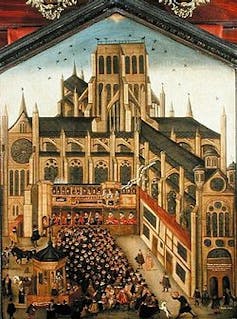
Baldwin, now in his 30s, had become a church deacon. He was still active as a writer and public figure, working on his second edition of A Mirror for Magistrates and preaching at Paul’s Cross in London, a venue that could attract a 6,000-strong congregation.
Once it was released, Beware the Cat went through several editions. It was not recognised for the comic gem that it is until scholars such as Evelyn Feasey started studying Baldwin in the early 20th century and the novel was later championed by American scholars William A. Ringler and Michael Flachmann.
Now, it has been adapted for performance for the first time and is being presented as part of the University of Sheffield’s Festival of the Mind. This stage version of Beware the Cat has been created by the authors with Terry O’Connor (member of renowned performance ensemble Forced Entertainment) and the artist Penny McCarthy.
Baldwin’s techniques of embedded storytelling, argument and satirical marginalia are all features that have been incorporated into this interpretation of the text. The production also includes an array of original drawings (which the cast of four display by using an onstage camera connected to a projector), but none of the cast pretends to be a cat. Instead, it is left to the audience to imagine the world Baldwin’s novel describes, in which cats can talk and – even if just for one night – humans can understand them.
Rachel Stenner, Teaching Associate in Renaissance Literature, University of Sheffield and Frances Babbage, Professor of English Literature, University of Sheffield
This article is republished from The Conversation under a Creative Commons license. Read the original article.
Xavier Aldana Reyes, Manchester Metropolitan University
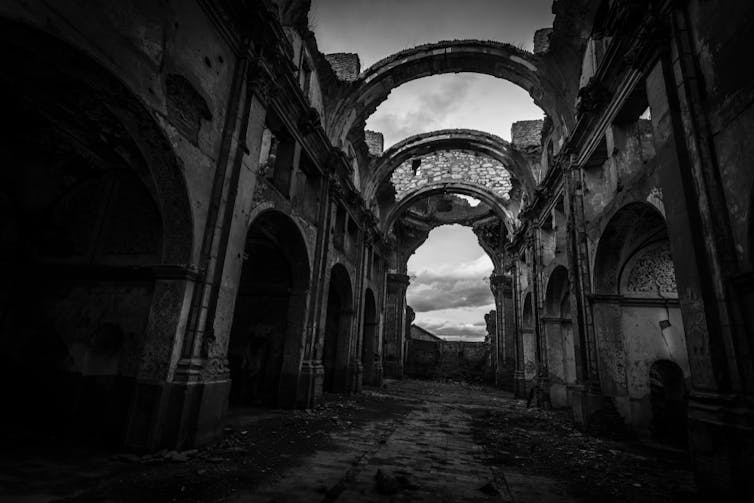
The spectre of the Civil War continues to haunt Spain in many different ways. It manifests itself overtly in conflicts over Catalan independence but also more subtly through art, literature and film. Many will remember Guillermo del Toro’s haunting Mexican-Spanish co-productions The Devil’s Backbone (2001) and Pan’s Labyrinth (2006). But it is especially prevalent in the works of writer Carlos Ruiz Zafón. His novel The Labyrinth of the Spirits, the last in the international best-selling quartet The Cemetery of Forgotten Books, is being published in English in September.
Those who can read Spanish had access to El Laberinto de los Espíritus as early as 2016. But as it is just shy of 1,000 pages, it is not surprising it has taken nearly two years for this mammoth conclusion to see the light of day in translation. Its epic proportions, as well as Ruiz Zafón’s usual concoction of suspense, melodrama and humour – all set against a heavily Gothic Barcelona – is sure to delight his readers.
The introduction of a new character, the detective Alicia Gris, also provides some much needed new blood to a series of books that has been steeped in an exploration of the horrors and silences of the Spanish Civil War.
The other volumes in Ruiz Zafón’s quartet, namely The Shadow of the Wind (2001), The Angel’s Game (2008) and The Prisoner of Heaven (2011), are also variously set during the Civil War and its direct aftermath. They each interweave the classic formulae of Gothic literature with a revisionist social realism strongly imbued with the war and Spain’s recovery from it as traumatic event – the perception of which has been affected by recent historical and social changes.
As I have argued in my book on the Spanish Gothic, the fear in these novels is not strictly spectral. It is derived from the war, the subsequent fascist regime and its followers. The Gothic anti-hero in The Shadow of the Wind, Julián Carax, turns out not to be the villain of the novel, but the man who saves the protagonist from the real monster: police officer Fumero.
The Civil War is imagined in all its cruelty and visceral brutality in Ruiz Zafón’s novels. The war is Gothicised as much as its setting, a fallen, rainy and depressed Barcelona which contrasts strongly with images of the city in the contemporary tourist industry.
Even the library that becomes the catalyst of all events – appropriately named the Cemetery of Forgotten Books – stands as a poetic image for those killed in the war. It is described in The Shadow of the Wind as an “endless necropolis” where volumes “remain unexplored, forgotten forever” until rescued by a daring reader who may become their protector. These daring readers are naturally modern day Spaniards, some of whom have been quite literally digging up the dead since the first exhumation of a war mass grave in 2000.
This casual injunction, a phrase I heard often when growing up in Spain in the 1980s and 1990s, may be read as a distillation of the country’s attitude towards a conflict that took place 80 years ago, but which is still very much present in the lives of the Spanish. It is a bit like a ghost, but more like a cursed legacy. It is an echo of “the sins of fathers (being) visited on their children to the third and fourth generation” that Horace Walpole suggested was the main moral of his The Castle of Otranto (1764) – broadly seen as the first Gothic novel.
It has been suggested that the repression of trauma (a typical Gothic trope) may not be appropriate for the case of the Spanish Civil War. The reason for the relative lateness of the “memory boom” (1990s and 2000s) could be due to a reluctance on the part of those who lived through the conflict to tell their stories. The decision to break with the past after Franco’s death, the argument continues, may have more to do with not wanting to let the past affect the future than with deliberately attempting to silence it.
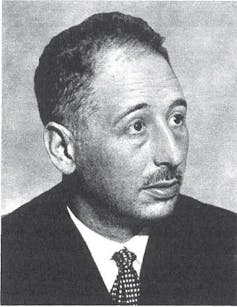
However, the conflicts over the Catalan independence vote in 2017 demonstrate that the very idea that the past may not affect the future is not only untenable, but reactionary. This position may inadvertently mask a desire to let the status quo go unchallenged. On this note, it is interesting that Ruiz Zafón’s books are set in Catalonia, a part of Spain with a history of resistance to centralist policies and whose president during the War, Lluís Companys, was eventually executed by the regime.
The Civil War remains Spain’s favourite modern Gothic tale. This is because Spain, as a country, is only beginning to deal with the war’s legacy openly, with its impact on the lives of those directly affected by it. It could not have begun to do so any sooner given that the crimes committed during Francoism have not even been legally recognised, let alone sanctioned.
Whether the past can ever be truly laid to rest is a contentious issue, but it seems to me that only the recognition of its effects – and the way that current discourses around nationalism have been coloured by them – can lead to the end of the type of alienation, fear and anger that Ruiz Zafón and other artists have been working through in their work. We should continue to read and talk about the Civil War and to condemn the brutal acts of murder and repression that have affected Spain for at least three generations. As philosopher George Santayana once warned, “those who cannot remember the past are condemned to repeat it”.
Xavier Aldana Reyes, Senior Lecturer in English Literature and Film, Manchester Metropolitan University
This article is republished from The Conversation under a Creative Commons license. Read the original article.
The link below is to an article that takes a look at some book craft and art ideas.
For more visit:
https://bookriot.com/2018/09/13/diy-crafts-with-old-books/
The link below is to an article that looks at Instagram tips for Librarians.
For more visit:
https://bookriot.com/2018/08/28/instagram-tips-for-librarians/
Tom Collins, University of Stirling
My first job as a trainee reporter was on a Sunday title. Sundays are a breed apart. We had contempt for our daily sister, were drunk until Thursday and staffed by some of some of the oddest journalists in town. Unsurprisingly, the paper doesn’t exist any more.
There is a different rhythm to newsgathering. Much of the Sunday paper has to be away early, with stories that won’t date. Front page leads have to be exclusives, it’s just too risky relying on events to bail you out – even in Northern Ireland in the 1980s where I was working. This is one reason why the sting and the “kiss-and-tell” are among Sunday staples.
If you are a Sunday paper news editor, you live in fear that the splash (the front page story) you have been nursing all week will leak to another title. The news business is a kleptocracy, and colleagues on your sister title are the enemy. All’s fair in love, war and newsgathering.
Sunday newspaper readers are different, too. They still have a little time on their hands, and a desire to be entertained. They will frequently buy titles at odds with their daily habits: Guardian readers flirting with the Sunday Times; Sun readers, bereft of the News of the World, picking up the Sunday Mirror or heading “upmarket” to the Mail on Sunday.
Sunday is also the day readers are tempted to take a second title; and in those parts of the UK the BBC euphemistically calls “the nations and the regions”, indigenous papers rub shoulders with the big London players from what is still called Fleet Street.
But as the economics of publishing a newspaper become increasingly challenging, stand-alone titles published once a week look like a luxury to the accountants who now run media organisations. So seven-day operations make sense. In 2012, Rupert Murdoch replaced the discredited News of the World with a Sunday edition of the Sun.
Newsquest executives in Scotland came to the same conclusion when they announced in August that the Herald – its daily broadsheet – was to run seven days a week. The victim was the Sunday Herald, then without an editor.
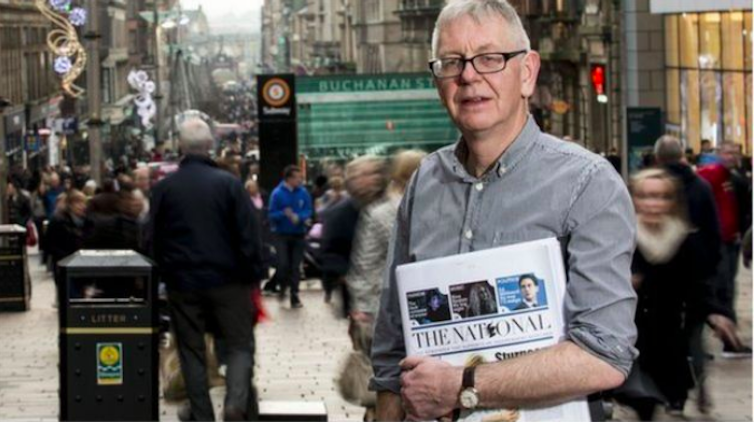
In normal circumstances, that would have been that. But this is Scotland, and Scotland is not normal. Newsquest’s problem was the Sunday Herald’s editorial support for Scottish independence. Taken down that road by its urbane editor, Richard Walker, the Sunday Herald was the lone media voice supporting independence in the 2014 referendum. Walker went on to become founding editor of the National – designed to tap into nationalist sentiment after the independence referendum.
Although the Herald claims to be neutral on independence – even the dogs in the street know where it sits on the issue. It may not wear a sash and a bowler hat, but it is temperamentally unionist.
With the SNP now established as the natural party of government in Scotland, and with a second independence referendum on the political agenda, killing off the only Sunday in favour of Scotland as a sovereign nation would have displayed a distinct lack of pragmatism.
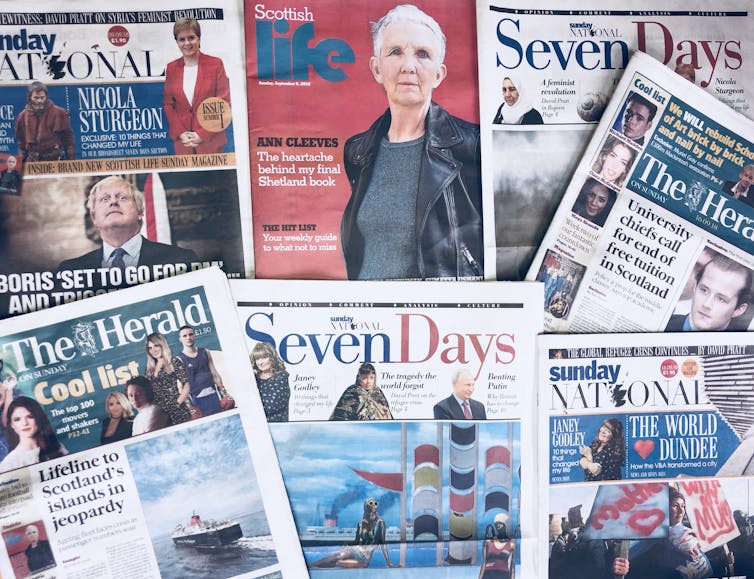
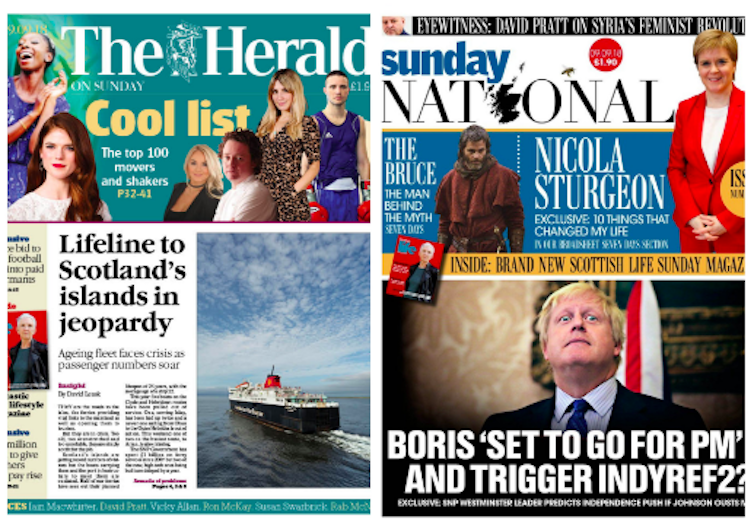
So, against the tide of consolidation, Newsquest’s single title was replaced by two. Say hello to the “neutral” Herald on Sunday in a racy tabloid livery, and the Sunday National – with Richard Walker again as launch editor.
It’s a brave move for both titles. It is notoriously difficult to persuade readers to change their habits. Can a Herald reader who is wedded to the Observer or Mail on Sunday be seduced back? And what about the fledgling National? It’s tough out there.
The journalism is solid, but – in the first two weeks at least – neither generated the front pages they needed to compete effectively. Rule 101 of a launch edition is to have an exclusive. The Herald’s “Lifeline to Scotland’s islands in jeopardy” did not cut it. The Sunday National led on “Boris ‘set to go for PM’ … and trigger Indyref2”. Billed as an “exclusive”, it was one of those exclusives nobody else would want.
Inside, the National was pacier than the Herald. Even Sundays need news, and it delivered. The internet sensation “giggling granny” was a classic Sunday read, and Jennifer Johnston’s big spread on Scotland’s postcode lottery for primary one parents deserved its prominence.
Foreign correspondent David Pratt brings insight, gravitas and an international perspective to the Sunday National’s broadsheet Seven Days section; its news and features agenda is not quite as unremittingly politically driven as the daily, though Nicola Sturgeon got star billing.
The Herald suffers most from the transition. In tabloid form, it’s like an ageing uncle wearing a baseball cap. The daily broadsheet can sell a story; on the tabloid, the squeezed-in lead barely makes a splash. Inside, the flow of news and features is clunky. “The Week” section, opening the paper, is a mess. A spread on Strictly Come Dancing up front jarred, and the big read on pages six and seven kills the pace up front.
That may change as the paper settles down. But it should be taken as a warning not to mess with the format of the daily, especially if trying to align the titles.
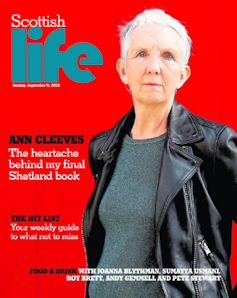
Oddly, both share the same sports coverage and an unbranded Sunday Life supplement. The National needs it to bulk up. It’s a catch-all lifestyle supplement that doesn’t have a clear sense of purpose. The papers also share David Pratt – a great journalist, but sharing writers and sections muddies the waters. Sundays need to be individualistic.
At their best, Sundays are distinctive, tribal and totally attuned to their readers. If they are to carve out a place for themselves, these two new Sundays are going to have to do more to break exclusives that set the agenda for the week ahead – and give Scottish readers the excuse they need to change their buying habits.
Tom Collins, Senior lecturer, Communications, Media and Culture, University of Stirling
This article is republished from The Conversation under a Creative Commons license. Read the original article.
Tomas Bokedal, University of Aberdeen
In the years after Jesus was crucified at Calvary, the story of his life, death and resurrection was not immediately written down. The experiences of disciples like Matthew and John would have been told and retold at many dinner tables and firesides, perhaps for decades, before anyone recorded them for posterity. St Paul, whose writings are equally central to the New Testament, was not even present among the early believers until a few years after Jesus’ execution.
But if many people will have an idea of this gap between the events of the New Testament and the book that emerged, few probably appreciate how little we know about the first Christian Bible. The oldest complete New Testament that survives today is from the fourth century, but it had predecessors which have long since turned to dust.
So what did the original Christian Bible look like? How and where did it emerge? And why are we scholars still arguing about this some 1,800 years after the event?
Historical accuracy is central to the New Testament. The issues at stake were pondered in the book itself by Luke the Evangelist as he discusses the reasons for writing what became his eponymous Gospel. He writes: “I too decided to write an orderly account … so that you may know the certainty of the things you have been taught.”
In the second century, church father Irenaeus of Lyons argued for the validity of the Gospels by claiming that what the authors first preached, after receiving “perfect knowledge” from God, they later put down in writing. Today, scholars differ on these issues – from the American writer Bart Ehrman stressing how much accounts would be changed by the oral tradition; to his Australian counterpart Michael Bird’s argument that historical ambiguities must be tempered by the fact that the books are the word of God; or the British scholar Richard Bauckham’s emphasis on eye-witnesses as guarantors behind the oral and written gospel.
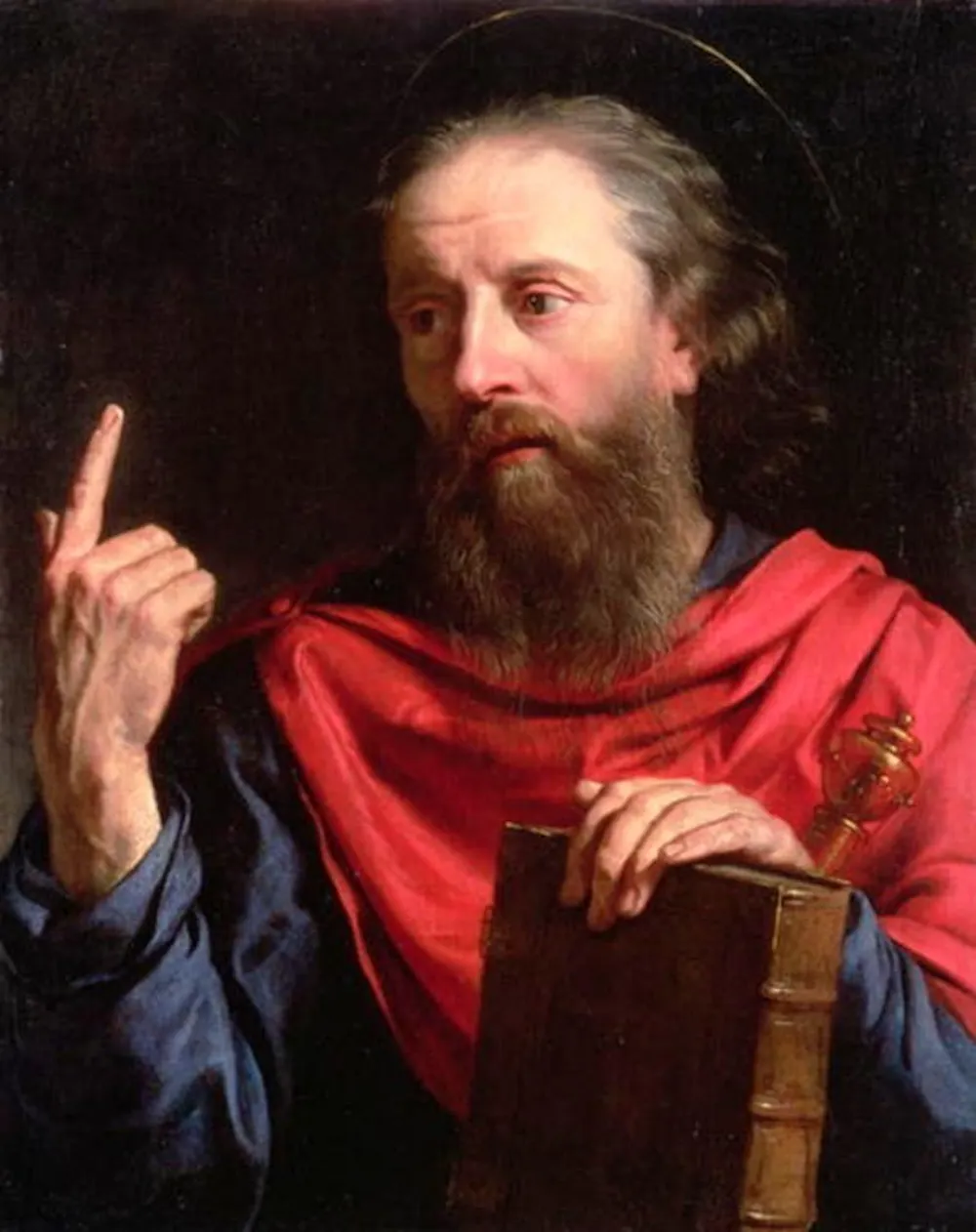
The first New Testament books to be written down are reckoned to be the 13 that comprise Paul’s letters (circa 48-64 CE), probably beginning with 1 Thessalonians or Galatians. Then comes the Gospel of Mark (circa 60-75 CE). The remaining books – the other three Gospels, letters of Peter, John and others as well as Revelation – were all added before or around the end of the first century. By the mid-to-late hundreds CE, major church libraries would have had copies of these, sometimes alongside other manuscripts later deemed apocrypha.
The point at which the books come to be seen as actual scripture and canon is a matter of debate. Some point to when they came to be used in weekly worship services, circa 100 CE and in some cases earlier. Here they were treated on a par with the old Jewish Scriptures that would become the Old Testament, which for centuries had been taking pride of place in synagogues all over latter-day Israel and the wider Middle East.
Others emphasise the moment before or around 200 CE when the titles “Old” and “New Testament” were introduced by the church. This dramatic shift clearly acknowledges two major collections with scriptural status making up the Christian Bible – relating to one another as old and new covenant, prophecy and fulfilment. This reveals that the first Christian two-testament bible was by now in place.
This is not official or precise enough for another group of scholars, however. They prefer to focus on the late fourth century, when the so-called canon lists entered the scene – such as the one laid down by Athanasius, Bishop of Alexandria, in 367 CE, which acknowledges 22 Old Testament books and 27 New Testament books.
The oldest surviving full text of the New Testament is the beautifully written Codex Sinaiticus, which was “discovered” at the St Catherine monastery at the base of Mt Sinai in Egypt in the 1840s and 1850s. Dating from circa 325-360 CE, it is not known where it was scribed – perhaps Rome or Egypt. It is made from parchment of animal hides, with text on both sides of the page, written in continuous Greek script. It combines the entire New and Old Testaments, though only about half of the old survives (the New Testament has some fairly minor defects).
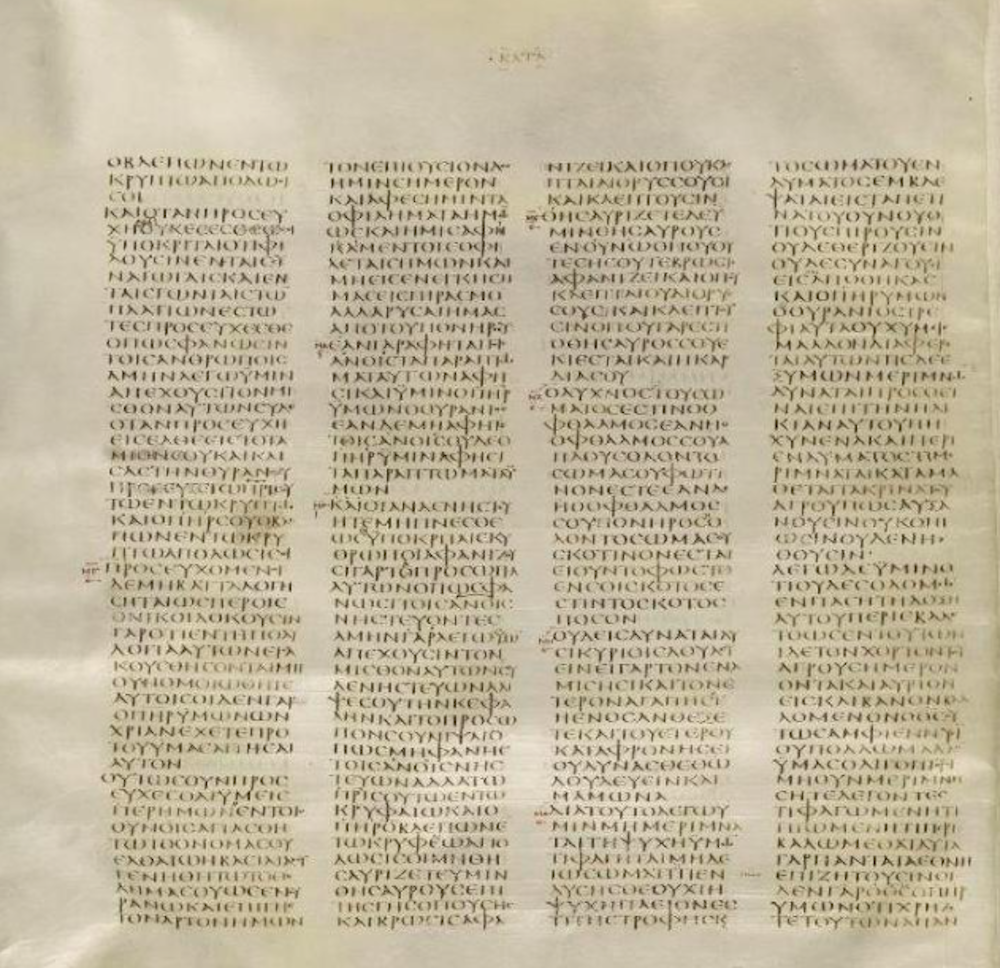
Sinaiticus may not be the oldest extant bible, however. Another compendium of Old and New Testaments is the Codex Vaticanus, which is from around 300-350 CE, though substantial amounts of both testaments are missing. These bibles differ from one another in some respects, and also from modern bibles – after the 27 New Testament books, for example, Sinaiticus includes as an appendix the two popular Christian edifying writings Epistle of Barnabas and Shepherd of Hermas. Both bibles also have a different running order – placing Paul’s letters after the Gospels (Sinaiticus), or after Acts and the Catholic Epistles (Vaticanus).
They both contain interesting features such as special devotional or creedal demarcations of sacred names, known as nomina sacra. These shorten words like “Jesus”, “Christ”, “God”, “Lord”, “Spirit”, “cross” and “crucify”, to their first and last letters, highlighted with a horizontal overbar. For example, the Greek name for Jesus, Ἰησοῦς, is written as ⲓ̅ⲥ̅; while God, θεός, is ⲑ̅ⲥ̅. Later bibles sometimes presented these in gold letters or render them bigger or more ornamental, and the practice endured until bible printing began around the time of the Reformation.
Though Sinaiticus and Vaticanus are both thought to have been copied from long-lost predecessors, in one format or the other, previous and later standardised New Testaments consisted of a four-volume collection of individual codices – the fourfold Gospel; Acts and seven Catholic Epistles; Paul’s 14 letters (including Hebrews); and the Book of Revelation. They were effectively collections of collections.
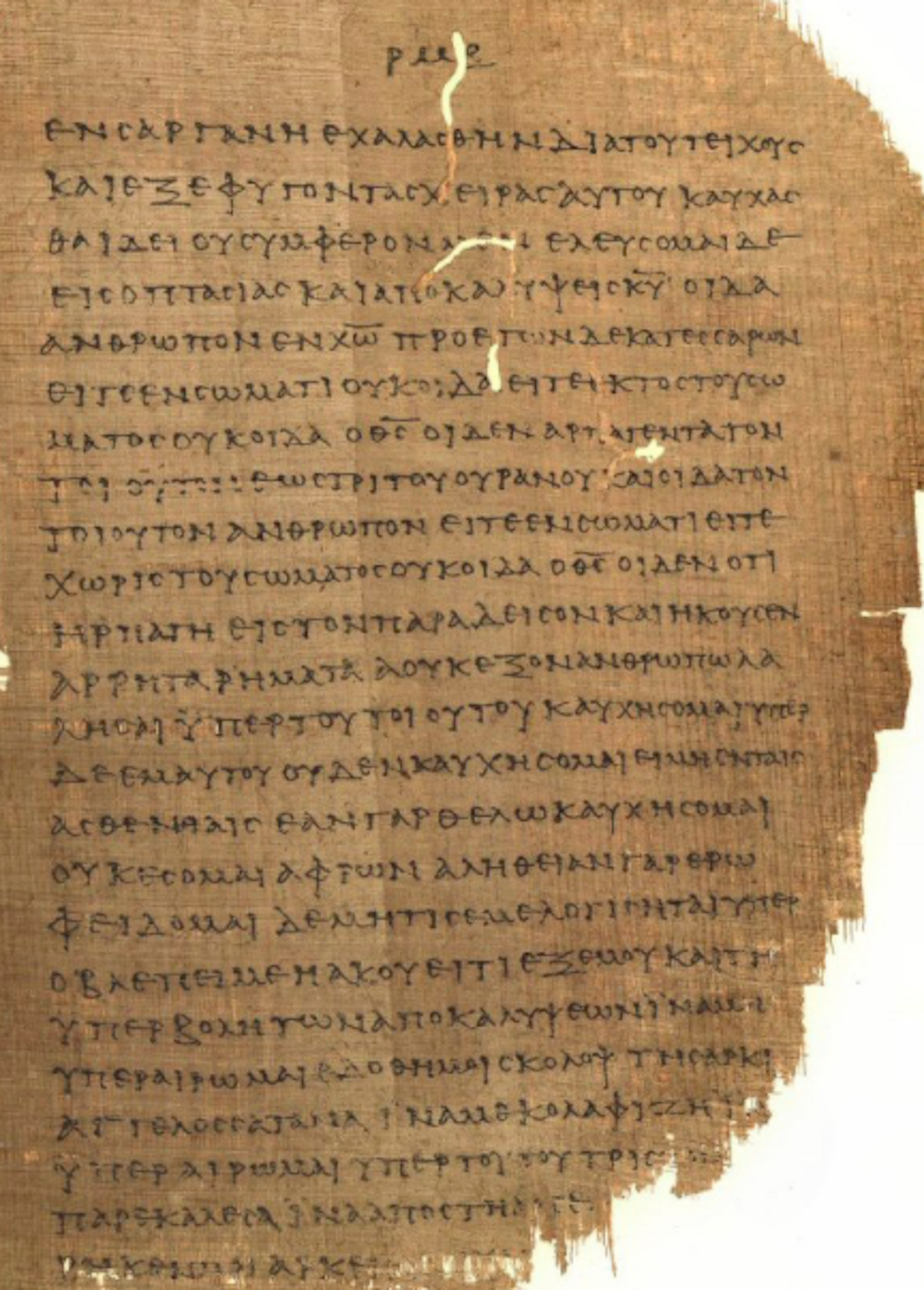
But in the absence of a single book prior to the fourth century, we have to content ourselves with the many surviving older fragments sensationally found during the 20th century. We now have some 50 fragmentary New Testament manuscripts written on papyrus that date from the second and third centuries – including the valuable Papyrus 45 (fourfold Gospel and Acts), and Papyrus 46 (a collection of Pauline letters). In all, these comprise almost complete or partial versions of 20 of the 27 books in the New Testament.
The quest will likely continue for additional sources of the original books of the New Testament. Since it is somewhat unlikely anyone will ever find an older Bible comparable with Sinaiticus or Vaticanus, we will have to keep piecing together what we have, which is already quite a lot. It’s a fascinating story which will no doubt continue to provoke arguments between scholars and enthusiasts for many years into the future.
Tomas Bokedal, Associate Professor in New Testament, NLA University College, Bergen; and Lecturer in New Testament, University of Aberdeen
This article is republished from The Conversation under a Creative Commons license. Read the original article.
 At the BookShelf


You must be logged in to post a comment.