
The link below is to an article that considers one bookbinder’s ongoing relevancy and legacy.

The link below is to an article that considers one bookbinder’s ongoing relevancy and legacy.
The link below is to an article concerning listening to an audiobook and a car accident that happened as a result.

Karen Sands-OConnor, Newcastle University
Cuddling up in a big chair with a good book, either with a familiar adult reading to you or starting the first chapter of a book on your own is a fundamental part of childhood – emotionally as well as intellectually. Reading about people who are like yourself affects both your self-image and the likelihood you will enjoy reading. Becoming a habitual reader, in turn, affects your life options. Reading about people different from yourself also encourages empathy and cultural understanding.
But if the world of children’s books doesn’t include people who look like you, it is difficult to feel welcomed into reading, as the writer Darren Chetty, among others, has pointed out. And recent research suggests that child readers, especially, but not exclusively, readers of colour, are being seriously shortchanged.
There simply aren’t enough authors and illustrators from diverse backgrounds being published, as academic Melanie Ramdarshan Bold pointed out in the 2019 Book Trust report on representation of people of colour among children’s book authors and illustrators. In fact, between 2007 and 2017, fewer than 2% of children’s book creators were British people of colour.
Authors of colour often feel isolated within the publishing industry. They are frequently encouraged to focus on racism and similar problem narratives, a recent report from Arts Council England (ACE) found. They do not have the freedom (as many white British authors do) to write across the broad spectrum of children’s literature genres if they want to be published.
While about a third of school-age children come from a minority ethnic background, the Centre for Literacy in Primary Education found that only 7% of children’s books published in Britain in 2018 had a Black, Asian or minority ethnic character. With so few diverse children’s books being published, these books are deeply important.
When characters of colour appear in children’s books, they are rarely the protagonist with the agency to effect change. Recent books sometimes still depict characters of colour as “sidekicks” who support and affirm the white main character. Other times, the “diversity” in a book appears in the background only.
Characters are defined by their colour, which makes them irreconcilably “other”. Descriptive words of character features compare them to food or animals. Sometimes characters appear early on in a narrative, only to quickly disappear in favour of a refocus on the white character. These techniques can dehumanise people of colour.
Children’s nonfiction, including history and science, either ignores contributions of people of colour to British society or pigeonholes particular ethnic groups into certain spaces only – such as the history of British slavery (and very specifically not the history of Afro-Caribbean uprisings against British slavery).
In a single children’s book, this “sidelining” of people of colour may not matter. However, when it is the enduring norm, as Nigerian writer Chimamanda Ngozie Adichie stressed in her 2009 Ted talk on the danger of a single story, it situates readers of colour on the sidelines, too. This affects the reader’s perception of who matters in books.
While it would be easy to suggest that the problem lies with the British publishing industry alone, this is too simplistic. All people involved with children’s books need to participate in changing the narrative so that the books being published better represent the population and encourage all children to become readers, according to the ACE report.
This can be done in a variety of ways, and involves committed effort. Seven Stories, the National Centre for Children’s Books, began dedicating some of its collecting efforts to culturally diverse children’s literature in 2015. This has resulted in the acquisition of materials relating to children’s books by the Guyanese-born British poets John Agard and Grace Nichols in 2019. The acquisition of diverse materials by a national museum is one way of indicating the importance of this material to Britain and to British children’s literature.
Another way of highlighting the critical importance of including all children in children’s books is through awards. The longest-running children’s book prizes, the Carnegie and Kate Greenaway Medal, have never been awarded to a British author of colour. Following the commissioning of a diversity review of the Carnegie and Kate Greenaway Medal, the Chartered Institute of Library and Information Professionals (CILIP) revised the judging criteria for the annual prizes. These new guidelines ask judges to consider representation within books as they are making selections. Other children’s book prizes, including the Little Rebels prize, focus on children’s literature that challenges the status quo in areas such as diversity.
These efforts, large and small, bring attention to children’s books with characters of colour that might otherwise slip under the book-buying public’s radar. And getting librarians, educators and parents, no matter what their ethnic, racial or cultural background, to buy books is critical.
Publishing is a market-driven industry. If books aren’t selling, publishers can make the case that there is no audience and therefore they do not need to publish more books with characters of colour. All children need to feel welcome in the book world, and all children need to understand the diversity of British society now and throughout history.
Karen Sands-OConnor, British Academy Global Professor, Newcastle University
This article is republished from The Conversation under a Creative Commons license. Read the original article.

Julien Lefort-Favreau, Queen’s University, Ontario
The story is all too familiar – yet it should command more attention from Canadians.
Recently, the Globe and Mail reported the Ben McNally bookstore, located on Bay Street a stone’s throw from Union Station, would close in 2020. Two days later, Rupert McNally, the founder’s son, confirmed the news on the store’s website. It had been open since 2007.
The reason for the closure is simple: the store will be replaced by an alleyway linking Bay Street to the alley behind it. This redevelopment is part of a project that the owner calls (ironically?) “The Bay Street Village.”
It is therefore a stupid example of gentrification that pits a modest shopkeeper against a greedy landowner.
The increase in the value of Toronto’s real estate is not exactly new. But we can see here an example of a paradigm that is not reassuring for the future of large cities: the profitability of businesses devoted to cultural property is hardly compatible with the overbidding in real estate.
Montréal is facing the same problem, and it affects all independent businesses. In August, the City gave the Commission on Economic and Urban Development and Housing the mandate to conduct public consultations on vacant space on commercial arteries. Several of these areas have rates ranging from 10 to 15 per cent.
It has already been demonstrated that gentrification is largely based on a city’s ability to offer an interesting and diversified cultural life. Some, such as Richard Florida, have linked this phenomenon to the emergence of a “creative class.”
Geographer Oli Mould, in his excellent book, Against Creativity, published in 2018, attacks the very notion of creativity. He criticizes Richard Florida with virulence by brilliantly showing how “creative” gentrification can also act as a form of hygienization in urban centres that, ironically, hinders spontaneous citizen initiatives. To put it bluntly, once gentrification is completed, culture is more or less eliminated from the central districts.

We are interested in the case of the closure of the Ben McNally bookstore because it shows the consequences of real estate speculation on the vitality of a city and, ultimately, on culture on a national scale. Very quickly, after the announcement by the owners of the bookstore, many players in the Canadian publishing ecosystem expressed serious concerns.
That is because independent bookshops, Ben McNally in particular, do not belong to a large group or chain and aren’t limited to the sole function of selling books. They are truly a place of cultural mediation.
The purpose of booksellers is to introduce readers to more complex works that have received less media attention. In Kingston, Ont., the city where I live, the Novel Idea bookstore is part of the community life. It organizes meetings with local authors and federates a community of readers. In Montréal, bookstores such as Le port de tête, L’Écume des jours and Gallimard also have a clearly established cultural function.
Independent bookstores are places where demanding literature or radical essays can find readers. In short, the exact opposite of a virtual library where algorithms – certainly effective – guide readers’ tastes. There is no doubt that these algorithms favour books that are already selling well, regardless of the careful work of smaller publishers.
Why defend the independence of Canadian literature? Out of pure nationalism? Not exactly.
Rather, it is a question of how the bookstore can, in an era of advanced globalization, be a place of defence for the diversity of cultures, what some have referred to as bibliodiversity: a diversity of languages (in the case of Canada, English, French and Aboriginal literatures), but also socially equitable modes of production and dissemination. In this case, it ensures that cultural property produced with our public funds finds takers.
To put it simply, a book in Canada will sometimes be subsidized at the time of writing through creation grants, in its production through operating grants to publishers, and then sold by Amazon or, in the worst case, unsold due to a lack of suitable distribution locations. The Canadian book system provides a relatively good framework for its authors and publishers to deal with the horrors of the free market, in a spirit of cultural and economic protectionism. But in the current configuration, booksellers seem to be abandoned.
But it is not simply a matter of defending a blurred Canadian identity. It is also a matter of making a diversity of identities visible. Think of the Racines bookstore in Montréal North, which highlights the culture and history of racialized authors. Or, the bookstore L’Euguélionne, which, by settling in the gay village in Montréal and adopting a cooperative structure, has made it its mission to offer a wide selection of literature on women and LGBPT2QIA groups.
An independent bookstore is therefore a meeting place for people from the neighbourhood but also, possibly, for affinity groups. Bookstores can be, in some contexts, sources of resistance. André Schiffrin states in L’argent et les mots – the third volume of a trilogy essential to understanding the effects of cultural globalization – that the number of New York bookstores has been divided by 10 since the post-war period.
Capitalism has its own rhythm, but also its own specific geography. Urban space is profoundly transformed by financial capitalism. Urban spaces are becoming expensive, and the closure of cultural spaces is, metaphorically and by extension, a reduction in the space for ideas and expression.
[ Deep knowledge, daily. Sign up for The Conversation’s newsletter. ]
Julien Lefort-Favreau, Assistant Professor, French Studies, Queen’s University, Ontario
This article is republished from The Conversation under a Creative Commons license. Read the original article.

John Kinsella, Curtin University
I start with a disclaimer: I am a UWA Publishing poet. I have published a book of poetry with them (as well as a novel), and have two books forthcoming with them in 2020 — The Weave, a collection of poetry co-written with Thurston Moore, and an edited and introduced volume, The Collected Poems of C.J. Brennan, the great, Sydney-dwelling, symbolist poet (1870-1932).
Now, with UWAP on the verge of being shut down, partly through what I and many others see as a misguided sense of what constitutes an interface between universities and the broader public, the fate of these books is unclear.
The University of Western Australia has proposed that “UWA Publishing operations, in their current form, come to an end” to be replaced by an open-source digital publishing model. The jobs of its employees and director Terri-ann White would likely be “surplus to requirements”. In a statement released late last week it said
Current publishing works already in train this year and next year are expected to continue, as will consultation on innovation that will assist UWA Publishing to adapt to the demands of modern publishing, with options to examine a mix of print, greater digitisation and open access publishing.
But even if contracted books are published, the closure of this publisher would be catastrophic for Australian poetry. It would be as if those books didn’t exist as something connected to a future vision of writing with purpose and community. It’s a way of killing a humanistic, inter-cultural conversation. It ignores the people who do so much to make these conversations happen.
UWAP, especially since 2016, publishes many poetry books a year — a very unusual act of creative support and belief. Its dynamic list includes such essential voices as Ania Walwicz, Candy Royalle, Peter Rose, Quinn Eades, Kate Lilley, David McCooey, and so many other voices of the now, along with collected and selected “greats” like Francis Webb, Lesbia Harford, and Dorothy Hewett.
Yes, I speak here from the inside, as an author. Yet I also speak from the outside as a reader of poetry, and with the incredible feeling of loss I get as a reader, at this ill-thought out proposal.
UWAP publishes many “big name” writers and scholars, but also many marginalised voices and/or voices that might find it hard to publish through purely market-driven publishing houses. It is part of the country’s literary and scholarly collective conscience.
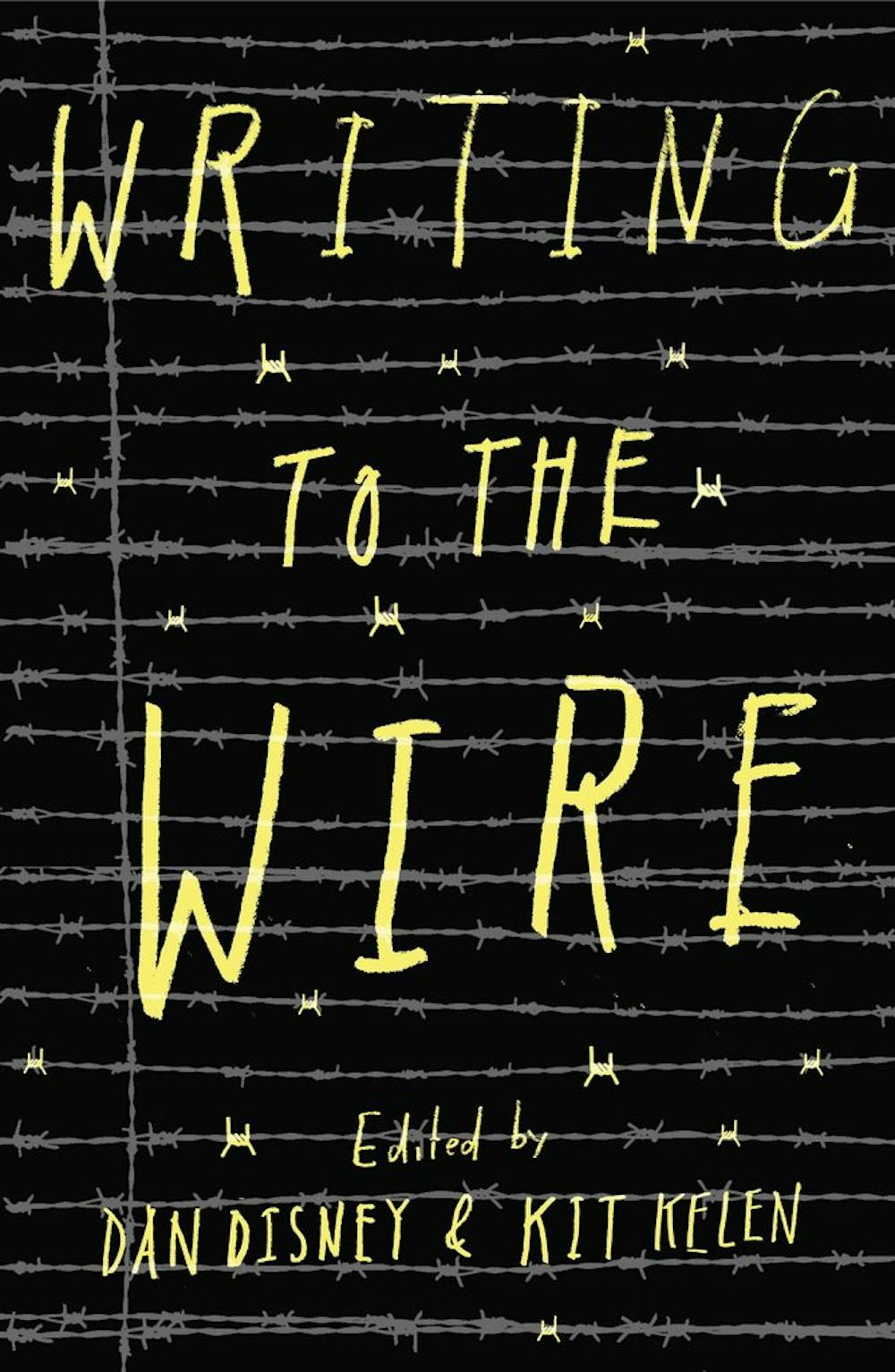
Poetry is an active ingredient of social justice not only in what it can say and talk about, but in the way that it places language under pressure, and questions how expression is used in general discourse, and why. Words of oppression are so easily accepted — poetry questions the uses and “deployment” of language.
UWAP, under Terri-ann White, is part of a clutch of poetry publishers in Australia — and there are not many — who make a commitment to poetry beyond the canonical, and with a strong sense of the need to enact this scrutiny of language. What is said in poetry is seen to matter, and I believe it does.
I will never forget speaking to the late Fay Zwicky in 2017, in her last weeks, about her forthcoming Collected Poems (UWAP, edited by Lucy Dougan and Tim Dolin) and her discussion of proofs and the book itself. A life’s work — one of the great bodies of poetry produced in Australia.

Zwicky had published volumes of poetry with other vital publishers in the Australia poetry community, University of Queensland Press and Giramondo. And then the collation of a life’s work — a big project that required so much attention and goodwill. It was clearly necessary, if not essential, to her.
One of the many titles on the UWAP list that had a remarkable effect on so many readers, and which I noted in the Australian Book Review’s 2018 Books of the Year feature, was a collation of Lisa Bellear’s poetry — Aboriginal Country. As I said then, “the emphatic, committed voice of this remarkable Goernpil woman, feminist, poet, photographer, and activist shines through.” Not to have had access to Bellear’s work is unimaginable now we have encountered it gathered in this way.
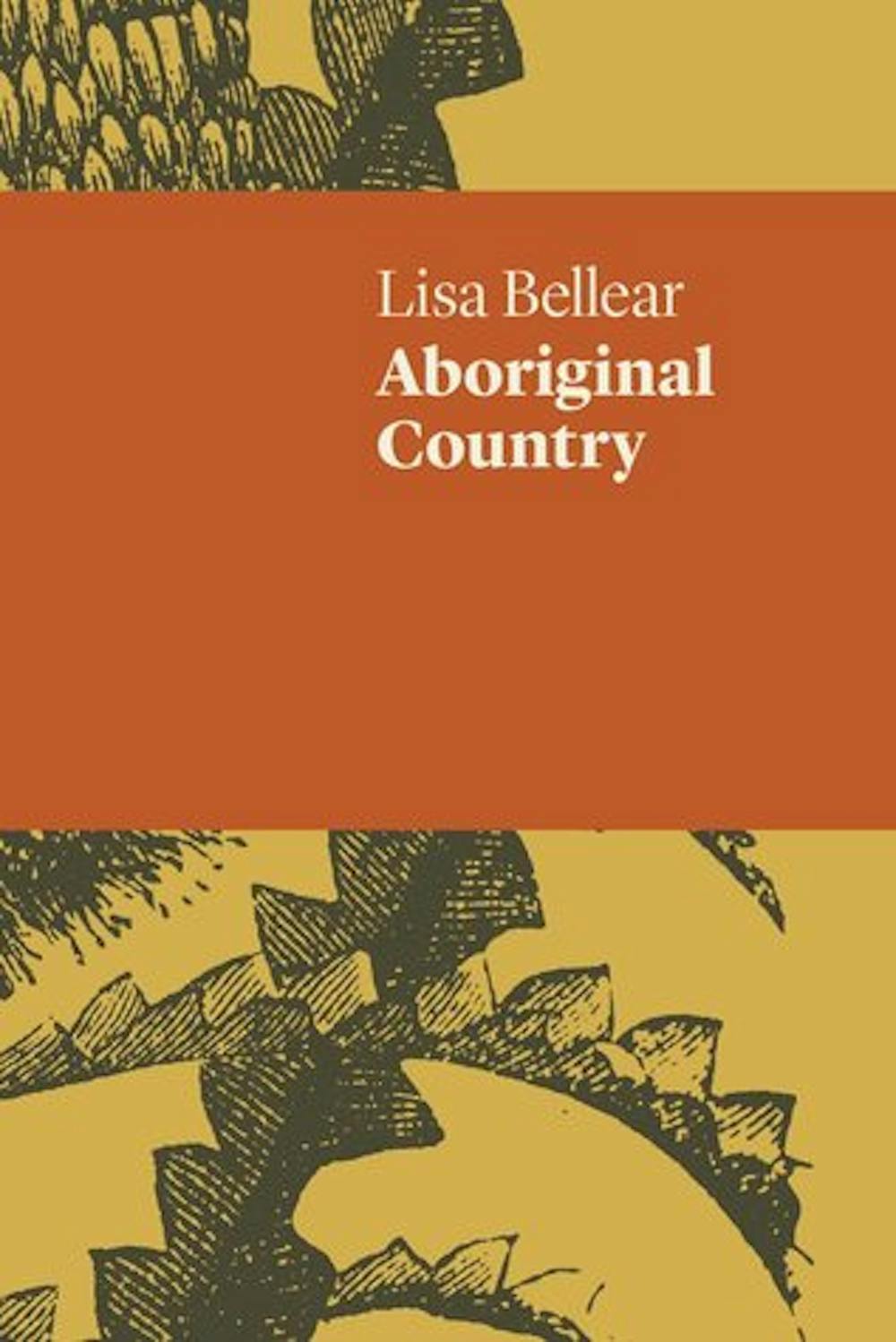
There is huge engagement in seeing such a work through to press. It was edited (by Jen Jewel Brown), supported and seen onto the shelves via UWAP. An act of belief and support, among many such acts in a given year; all necessary.
Vitally, UWAP’s poetry list effectively manages that seemingly complex interaction between local work and that from the rest of the country. It seems too often assumed that a WA publisher will necessarily only publish WA work. Now, don’t get me wrong, I am a total believer in local publishing, but there’s also a strong necessity for a publisher that brings many localities together, as Magabala Books in Broome does with Australian Aboriginal writing.
UWAP publishes poets (and writers in general) from all over the country, and brings in some overseas titles as well. Terri-ann White actively takes her lists to readers and publishers outside Australia, and is an energetic and steadfast voice in international publishing for her authors, and for Australian and world literature.
To close UWAP would be a damaging of shared difference, of making community and discussion out of diverse voices.
While I have had the good fortune over the years to publish with some of the major poetry houses around the English-speaking world, I am especially proud and excited when a book of mine is selected for the UWAP list.
Shutting down UWAP would sever many ties and disrupt many conversations just begun, or prevent other conversations, especially of conscience, ever taking place.
John Kinsella, Professor of Literature and Environment, Curtin University
This article is republished from The Conversation under a Creative Commons license. Read the original article.

Katina Zammit, Western Sydney University
When I was younger I decided to learn Greek. I learnt the letter-sound correspondences and could say the words – the sounds, that is. But although I could and still can decode these words, I can’t actually read Greek because I don’t know what the words mean.
Being able to make the connection between the letters, their combinations and the sounds that make up the words wasn’t all I needed to be able to read. It was an easy way to learn but it didn’t provide me with the whole picture.
As we read, and understand what we are reading, we don’t just use our knowledge of the letter-sound correspondences, which you may know as phonics or phonemic awareness, we also use other cues. These include our knowledge of the topic, the meaning of words in the context of the topic, and the flow and sequence of the words in a sentence.
Good readers use a full repertoire of skills, each dependent on the other. And a whole language approach to teaching reading is about arming new readers with this repertoire.
A whole language approach to teaching reading was introduced into primary schools in the late 1970s. There have been many developments in this area since, so the approach has been adapted and today looks quite different from 40 years ago.
To begin with, let’s dispel some myths about a whole language approach to teaching reading. It is not learning to read individual words by sight. Nor is it learning a list of vocabulary only.
A whole language approach to teaching reading is not opposed to teaching the correspondence of a letter or letters to sounds to help sound out unfamiliar words. Nor is it opposed to learning how to blend sounds together to decode a word by using the first letter/s of a word, the end of the word and the letter/s in the middle.
Read more:
Reading progress is falling between year 5 and 7, especially for advantaged students: 5 charts
But just knowing sounds is not the same as knowing how to read. In 2000, the US National Reading Panel’s analysis of scientific literature on teaching children to read found systematic phonics instruction (teaching sounds and blending them together) should be integrated with other reading instruction to create a balanced reading program.
The panel determined that phonics instruction should not be a total reading program, nor should it be a dominant component.

In 2011, the UK introduced a mandatory phonics screening check, for year 1 students, to address the decline in literacy achievement in the middle years of school. Children were prepared for the test using a government-approved synthetic phonics program. But in 2019 around 25% of year 6 students failed to reach the minimum requirements in reading.
Read more:
The Coalition’s $10 million for Year 1 phonics checks would be wasted money
Australia’s own national inquiry into teaching literacy noted the same conclusions as the US national reading panel.
This view aligns with the whole language approach in the 21st century, which advocates a balanced way of teaching reading in the early years. This includes:
The whole language approach provides children learning to read with more than one way to work out unfamiliar words. They can begin with decoding – breaking the word into its parts and trying to sound them out and then blend them together. This may or may not work.
They can also look at where the word is in the sentence and consider what word most likely would come next based on what they have read so far. They can look beyond the word to see if the rest of the sentence can assist to decode the word and pronounce it.
We do not read texts one word at a time. We make best guesses as we read and learn to read. We learn from our errors. Sometimes these errors are not that significant – does it matter if I read Sydenham as “SID-EN-HAM” or “SID-N-AM”? Perhaps not.
Does it matter that I can decode the word “wind” but don’t pronounce the two differently in “the wind was too strong to wind the sail”? Yes, it probably does.
Teaching children to read or to see reading with a focus on phonics and phonemic awareness gives them the illusion “proper” reading is mere decoding and blending. In fact, it has been argued this can put children off reading when entering school. While some gain may occur in the first years, over time achievement deteriorates for children in high-performing and low-performing schools.
Read more:
Enjoyment of reading, not mechanics of reading, can improve literacy for boys
A whole language approach doesn’t argue against the importance of phonemic awareness. But it acknowledges it is not all that should be included in reading instruction.
It is important to assess children’s reading from the beginning of schooling and continually determine how they are progressing. Teachers can then select specific strategies to improve individual children’s reading competence and increase their skills to build fluent and confident readers.
A whole language approach to teaching reading advocates for teaching phonics and phonemic awareness in the context of real texts – that use the richness of the English language – not artificial, highly constructed texts. However, it also acknowledges this is not sufficient. Being able to decode the written word is essential, but it isn’t enough to set up a child to be a competent reader and to be successful during and after school.
Read the accompanying article on teaching to read using explicit phonics instruction here.
Katina Zammit, Deputy Dean, School of Education, Western Sydney University
This article is republished from The Conversation under a Creative Commons license. Read the original article.

Emmett Stinson, Deakin University
There has been no shortage of bad news for Australia’s literary and publishing sector in the last year. Major literary journals Island and Overland have been defunded. Only 2.7% of Australia Council funding went to books and writing. The Chair in Australian Literature at University of Sydney is not being renewed.
Two major projects by literary academics were recommended for funding by the Australian Research Council’s peer-review process in 2018, but were rejected by ministerial discretion. Melbourne University Publishing’s CEO, Louise Adler, resigned after the university asked for a change in editorial direction.
And now University of Western Australia has announced dramatic changes to its highly-decorated press, University of Western Australia Publishing. These changes involve not renewing the contract of Director Terri-ann White, deemed “surplus to requirements”, and an end to current publishing activities.
It would be hard to blame writers and literary academics for feeling paranoid. Just because you’re paranoid, it doesn’t mean they’re not out to get you.
In 2006, Mark Davis published The Decline of the Literary Paradigm in Australian Publishing.
He argued that between WWII and the 1990s, Australian publishers embraced their role in shaping national culture by subsidising unprofitable literary works with profits from more commercial titles. But by the 2000s, publishers had become neoliberal organisations that sought to maximise profits rather than support literary culture.
We are now seeing this same logic applied by universities.
Universities are increasingly focused on metrics driving enrolments, international rankings and research excellence. This, in turn, supports government funding and research grant income. Universities increasingly prioritise these metrics over cultural contributions that are harder to quantify.
Read more:
Why Australia needs a new model for universities
A statement released by UWA claims the changes will help “to guarantee modern university publishing into the future”, foreshadowing “a mix of print, greater digitisation and open access publishing.”
This statement might appear to mirror recent events at Melbourne University Press last year, but these situations are very different.
Academics had long questioned Melbourne University Press’ publication of works with commercial and political appeal but no clear scholarly or cultural value.
Professor Ronan McDonald summed up this view earlier this year when he wrote that Melbourne University Press was “a trade press irritatingly obliged to publish a few academic titles”.
Melbourne University reaffirmed its commitment to the Press by hiring a respected scholarly publisher, founding director of Monash University Publishing Nathan Hollier, with a track record of producing scholarly titles alongside prize-winning works for a general readership.
UWA Publishing, on the other hand, is one of our leading literary publishers, cultivating authors and significant titles often overlooked by commercial publishers.
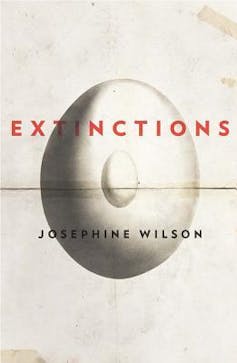
It published Josephine Wilson’s Extinctions, which won the Miles Franklin Award in 2017; is one of Australia’s foremost publishers of poetry; and has published scholarly works by leading Australian humanities academics, such as John Frow, Ross Gibson, and Ken Gelder. It has also published a series of traditional Noongar stories retold by the award-winning author Kim Scott
It has always balanced commitments to scholarly publishing with a significant literary list.
The notion that a respected publishing house can be replaced by open access publishing is disproved by examining other Australian university presses, such as the now-closed University of Adelaide Press, founded in 2009 with a mission to be an open access publisher.
While the press generated many interesting titles, it failed to have a cultural impact. Open access enables free and easy dissemination of work, but this does not meant that it engages with literary culture. Scholars can access works freely, but titles are isolated from bookshops, reviews, and cultural conversations.
Sydney University Press, which was relaunched in 2003 after closing in 1987, has employed a “hybrid approach” to open access. It is now returning to a more standard university publishing model, establishing a research series with dedicated editorial boards of academics, and even publishing a novel, Joshua Lobb’s The Flight of Birds, shortlisted for the Readings New Fiction Prize in 2019.
Open access has an important role to play in academic publishing, but it is laughable to claim UWA Publishing’s cultural impact can simply be replaced through open access.
There is a campaign underway to save UWA Publishing, including a petition with over 6,000 signatures.
It is hard to know at this stage if it will have any effect. It may be the publishing house is the victim of larger financial pressures currently affecting University of Western Australia.
This, of course, is the problem for the literary sector more generally: when cuts are needed, literature is always first on the chopping block.
Emmett Stinson, Lecturer in Writing and Literature, Deakin University
This article is republished from The Conversation under a Creative Commons license. Read the original article.

There is a hidden problem with reading in Australian schools. Ten years’ worth of NAPLAN data show improvements in years 3, 5 and 9. But reading progress has slowed dramatically between years 5 and 7.
And, somewhat surprisingly, the downward trend is strongest for the most advantaged students.
Years 5-7 typically include the transition from primary to secondary school. Yet the reading slowdown can’t just be blamed on this transition, because numeracy progress between the years has improved. So, what is going wrong with reading?
Progress in reading is like climbing a mountain. The better your reading skills, the higher you are. The higher you are, the further you can see. And the further you can see, the more sense you can make of the world.
Like a real mountain, the reading mountain must be tackled in stages. NAPLAN – the National Assessment Program, Literacy and Numeracy – provides insight into those stages, by measuring reading skills at years 3, 5, 7 and 9.
The good news is that the average level of reading skills of year 3 students – reading base camp – is getting higher.
To make the results easier to interpret, I’ve converted the NAPLAN data into the equivalent year level of reading achievement. For instance, in 2010, children in year 3 were reading at equivalent year level 2.6 when they sat NAPLAN. This means they were four-and-a-half months behind a benchmark set at the long-run average for metropolitan non-Indigenous students.
By 2019, the mean reading achievement among all year 3 children was equivalent to year 3.0, meeting this benchmark.
Over ten years, the improvement has been worth about five months of extra learning.
There is more good news in secondary school. Recent cohorts have made better progress between years 7 and 9 than earlier cohorts. My best estimate is that learning progress has increased by almost three months of learning over this two-year stage of schooling.
Students in years 3-5 haven’t made the same gains. But (if anything) they are heading in the right direction.
Something is going wrong between year 5 and 7. Students are making six months less progress than they used to. It’s not that they are getting worse at reading; they just aren’t climbing as fast as previous cohorts.
This drop in reading progress can’t simply be attributed to the transition from primary to secondary. Among other things, numeracy progress during this stage of schooling has increased by about six months since 2010.
It’s as if students have started skipping a term in each of their final two years of primary school, but only in English, not in maths. And not all groups of students are affected equally.
Reading progress has slowed the most for students from advantaged backgrounds. For instance, students whose parents are senior managers make ten months less progress from year 5 to 7 than earlier cohorts.
Interestingly, the student groups with the biggest slowdown in years 5-7 have also shown the most improvement in year 5 reading.
This pattern – big gains in year 5 that evaporate by year 7 – rules out poor early reading instruction as a cause. This reading problem isn’t about phonics, but a failure to stretch students in upper primary school.
My analysis also shows:
Maybe some primary school teachers focus more on helping students reach a good minimum standard of reading, and not on how far they go. This fits with the trend in year 5; no need to push hard if students are already doing well.
But it doesn’t explain the large drop in progress in Queensland and WA the year they shifted year 7 to secondary school.
Maybe schools push hard on literacy and numeracy until students have done their last NAPLAN test in that school. This would help explain the 2015 drop in reading progress for Queensland and WA, but not the divergent picture for reading and numeracy progress, including in the Queensland/WA change-over year.
Maybe students are reading less as technology becomes ubiquitous. This could explain the difference between reading and numeracy. But why would it reduce progress between years 5 and 7 but not between years 3 and 5 or 7 and 9?
Increased use of technology also fails to explain the sudden slump in Queensland and WA in 2015.
Other potential explanations need to explain the complex pattern of outcomes, including the fact the reading slowdown is so widespread even while numeracy progress is going the other way.
My best guess is that some advantaged primary schools focus on literacy and numeracy until the year 5 NAPLAN tests are done, but then switch to project-based learning, leadership or year 6 graduation projects. These “gap year” activities don’t displace maths hour (which drives numeracy progress) but may disrupt reading hour or other activities that build reading skills.
Meanwhile, disadvantaged primary schools are very aware of the need to keep building their students’ reading levels to set them up for success in secondary school.
This story is speculative, but it fits the data.
Education system leaders need to figure out what is happening in reading between years 5 and 7, and quickly. They should look closely at upper primary years, as well as the transition to secondary school. This is much more subtle than a traditional back-to-basics narrative.
In the meantime, teachers in years 5, 6 and 7 should be aware their students are making less progress than previous cohorts, and focus on extending reading capabilities for students who are already doing well. All students deserve to climb higher on their reading mountain.
Peter Goss, School Education Program Director, Grattan Institute
This article is republished from The Conversation under a Creative Commons license. Read the original article.
The link below is to an article that takes a look at websites and web applications that provide book summaries.
For more visit:
https://www.makeuseof.com/tag/7-alternatives-to-sparknotes-cliffsnotes-for-book-summaries/
The link below is to an article that looks at how to download ebooks from Google Books.
For more visit:
https://www.makeuseof.com/tag/download-books-for-free-from-google-books/
 At the BookShelf
You must be logged in to post a comment.