
The link below is to an article that takes a look at finding a book at the library.
For more visit:
https://bookriot.com/2019/11/29/how-to-find-a-book-in-the-library/

The link below is to an article that takes a look at finding a book at the library.
For more visit:
https://bookriot.com/2019/11/29/how-to-find-a-book-in-the-library/
The link below is to an article that takes a look at the 2019 Staunch Book Prize Winner (for the best thriller novel in which no woman is beaten, stalked, sexually exploited, raped or murdered), Samantha Harvey for ‘The Western Wind.’
For more visit:
https://www.booksandpublishing.com.au/articles/2019/11/26/142923/medieval-mystery-the-western-wind-wins-2019-staunch-book-prize/
The link below is to an article that takes a look at expansion plans for Scribd.
For more visit:
https://goodereader.com/blog/e-book-news/scribd-intends-on-expanding-into-other-markets
The link below is to an article that considers the best books of 2019 for adults, according to the New York Public Library.
For more visit:
https://www.nypl.org/bestbooksadults2019
The link below is to an article that takes a look at ebooks and libraries.
For more visit:
https://www.washingtonpost.com/technology/2019/11/26/e-books-libraries-are-huge-hit-leading-long-waits-reader-hacks-worried-publishers/

Leah Henrickson, Loughborough University
Christmas is coming, and gifting is at the forefront of many minds. The latest tech changes from year to year, as do the latest fashions. But the gift that never seems to go out of style? A book.
The publishing world is at its busiest in the months leading up to Christmas. In Iceland, there is even a name for this: jólabókaflóð (pronounced yo-la-bok-a-flot) or “Christmas book flood”. The term has also come to refer to the Icelandic custom of exchanging books on Christmas Eve. As a result, a substantial portion of annual hardcover sales are during this period and nearly 850 new titles were released in 2019’s Icelandic book flood alone.
The UK’s annual Christmas book flood begins on Super Thursday: when publishers release a barrage of new titles just in time for the Christmas shopping rush. Some of the heavy hitters among the 426 hardcovers released on October 3 included Philip Pullman’s The Secret Commonwealth, Jojo Moye’s The Giver of Stars, and MP Jess Phillips’ Truth to Power.
People were giving books as gifts even before words were ever put to paper. In one of his books of epigrams, the ancient Roman poet Martial recommended the works of famous Roman writers like “Ovid’s Metamorphoses on parchment” (animal skin) and “Livy (the Roman historian) in a single volume” (appearing in a scroll, on papyrus, or on parchment) as presents for the December festival of Saturnalia. Martial’s recommendations also included book-related items like “a book-case” and “a wooden book-covering”.
As Christmas grew more commercialised, the holiday became increasingly important for the book trade. In his Battle for Christmas, American history professor, Stephen Nissenbaum, argued that books were “on the cutting edge of a commercial Christmas, making up more than half of the earliest items advertised as Christmas gifts”, citing examples from the 18th century. By the Victorian era, periodicals were regularly featuring Christmas book reviews to promote book sales during the holidays.
One such article from a 1914 issue of the New York Times begins with the declaration that “the war is not the greatest thing in the world. It cannot destroy Christmas … The publishers are ready to help”. This article touts various “gift books” suitable for Christmas exchanges: “Sumptuous books, books in the making of which illustrator and printer and binder have exercise their art at its best.”
These 20th-century gift books follow from a tradition of sumptuous books given as holiday gifts. Medieval manuscripts, for example, were gifted for a range of religious, romantic, diplomatic, and festive reasons. A 2015 exhibition about medieval gift gifting at the Getty Museum in Los Angeles, now archived online, further supports the understanding of manuscripts as gifts with personal and social value.
Writing about medieval manuscripts, Geert Claassens noted that a book – whether a medieval manuscript or a modern mass market paperback – always functions as both an object and a text. This observation is especially relevant in a world with e-books, which largely remove the “object” aspect of the book. However, a recent series of focus groups conducted by Laura Dietz at Anglia Ruskin University as part of a wider study about social perceptions of e-books has indicated that readers still prefer gifting and receiving print books over e-books. Maybe this is because it’s remarkably difficult to wrap an e-book and place it underneath the Christmas tree.
In a recent article for the international READ-IT project (Reading Europe Advanced Data Investigation Tool), media professor, Brigitte Ouvry-Vial, describes reading as “a social imaginary” that contributes to both personal and collective development. That is, reading has perceived benefits for both individuals and communities. However, she wrote:
The very motivation for non-prescribed reading has clearly shifted across time from an essentially knowledge-driven cognitive activity, to a broad information-driven cultural experience as well as a leisure activity.
This shift has also led to an association being made between being well-read or reading a lot with well-being, as books are more regularly valued according to the level of psychological uplift and self-healing they provide.
Books represent more than just knowledge; they’ve also taken on the role of highly personalised home decor. This is because books can say things about their owners. Likewise, the book you choose to give someone for Christmas can speak volumes about your relationship with that person. It’s not enough to just give someone a book and call it a day – it has to be the perfect choice.
Books have a long history of being given as Christmas gifts, and there seems little chance of the trend going away. So why not take Martial’s recommendations and bestow upon your loved one “Ovid’s Metamorphoses on parchment”? Alternatively, and more realistically, consider a nice hardcover edition found through consulting members of the Antiquarian Booksellers’ Association or the Provincial Booksellers Fairs Association.
For more modern options, YouTube is teeming with video reviews of the latest releases, as well as of “bookish” gifts to give in lieu of or alongside a book. There are also a variety of monthly book subscription boxes. By giving a book or book-related item in 2019, you’ll be contributing to a long and lovely tradition.
Leah Henrickson, Doctoral Graduate, Loughborough University
This article is republished from The Conversation under a Creative Commons license. Read the original article.
Sally O’Reilly, The Open University
Our fascination with ghostly tales around Christmas time goes back thousands of years and is rooted in ancient celebrations of the winter solstice. In the depths of winter, pagan traditions included a belief in a ghostly procession across the sky, known as the Wild Hunt. Recounting tales of heroism and monstrous and supernatural beings became a midwinter tradition. Dark tales were deployed to entertain on dark nights.
Ghosts have been associated with winter cold since those ancient times. According to art historian Susan Owens, author of The Ghost, A Cultural History, the ode of Beowulf is one of the oldest surviving ghost stories, probably composed in the eighth century. This is the tale of a Scandinavian prince who fights the monster Grendel. Evil and terrifying, Grendel has many ghostly qualities, and is described as a “grimma gaest” or spirit, and a death shadow or shifting fog, gliding across the land.
In 1611, Shakespeare wrote The Winter’s Tale, which includes the line: “A sad tale’s best for winter, I have one of sprites and goblins.” Two centuries later, the teenage Mary Shelley set her influential horror story Frankenstein in a snowy wasteland, although she wrote it during a wet summer in Switzerland.
The Victorians invented many familiar British Christmas traditions, including Christmas trees, cards, crackers and roast turkey. They also customised the winter ghost story, relating it specifically to the festive season – the idea of something dreadful lurking beyond the light and laughter inspired some chilling tales.
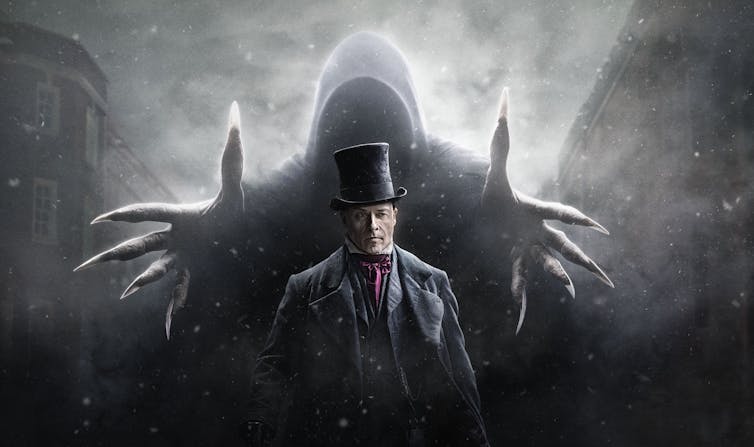
Both Elizabeth Gaskell and Wilkie Collins published stories in this genre, but the most notable and enduring story of the period was Charles Dickens’ A Christmas Carol (1843). In this vivid and atmospheric fable, gloomy miser Ebenezer Scrooge is confronted first by the spirit of his dead business partner, Jacob Marley, and thereafter by a succession of Christmas ghosts.
Their revelations about his own past and future and the lives of those close to him lead to a festive redemption which has spawned a host of imitations and adaptations.
Dickens wrote the story to entertain, drawing on the tradition of the ghostly midwinter tale, but his aim was also to highlight the plight of the poor at Christmas. His genius for manipulating sentiment was never used to better effect, but perhaps the most enjoyable elements of the story are the atmospheric descriptions of the hauntings themselves – the door knocker which transforms into Marley’s face and the sinister, hooded figure of the Ghost of Christmas Yet to Come.
The tradition was further developed in the stories of M R James, a medieval scholar who published Ghost Stories of an Antiquary in 1904. His chilling Gothic yarns focused on scholars or clergymen who discovered ancient texts or objects with terrifying supernatural consequences.
Typically, James used the framing device of a group of friends telling stories around a roaring fire. In the introduction to Ghost Stories he said: “I wrote these stories at long intervals, and most of them were read to patient friends, usually at the seasons of Christmas.”
Seminal stories in his oeuvre include Number 13, Oh Whistle & I’ll Come to You and A School Story. Like Dickens, James has been widely imitated and adapted, with Stephen King citing him as an influence. King’s The Shining certainly fits into to the genre of ice-bound chiller.
Christmas ghost stories morph into new forms as time passes, like ectoplasm. Spin offs of A Christmas Carol include Frank Capra’s 1946 classic It’s a Wonderful Life, in which the story is transposed to small town America, and the 2019 film Last Christmas, the tale of a dysfunctional young woman permanently dressed as a Christmas elf, ripe for Yuletide redemption. This contemporary version conveys messages about integration and the value of diversity.
A new, high-octane version of A Christmas Carol will be shown on TV this Christmas, written by Peaky Blinders creator Stephen Knight. And M R James’ Martin’s Close, the story of a 17th century murder and its supernatural outcome, has also been adapted for the small screen.
So it seems the atavistic desire to lose oneself in tales of the supernatural is still with us. Christmas ghost stories enhance our enjoyment of the mince pies and mulled wine, and the frisson of a paranormal tale offsets the “feel-good” festive spirit that might otherwise be cloying.
Some things never change – we still have a fear of the unknown, a yearning for what is lost and a desire to be secure. In an uncertain, fast-paced world, mediated through smartphones and social media, the seasonal ghost story is here to stay. The jolt of fear and dread such stories convey make the Christmas lights glitter even more brightly.
Sally O’Reilly, Lecturer in Creative Writing, The Open University
This article is republished from The Conversation under a Creative Commons license. Read the original article.

Sandra Martin-Chang, Concordia University and Stephanie Kozak, Concordia University
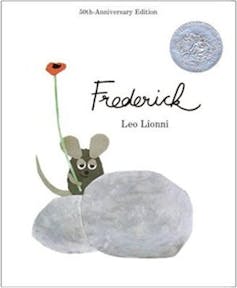
It started with Frederick, by Leo Lionni — a beautifully illustrated story about the importance of the arts.
Or it began with The Christmas Miracle of Jonathan Toomey by Susan Wojciechowski — an exquisite storybook about a sullen carver who is transformed by the love of a little boy.
These are some of our own first favourite books. That was before we understood the benefits behind storybook reading. But we gave the books to our nieces and nephews based on our pure appreciation of the stories themselves. And thus began family traditions of carefully selecting, signing and gifting cherished books to one another.
For educators, the importance of storybook reading in the home is well documented. Reading to children is associated with a heap of benefits, including more expansive expressive and receptive vocabularies, better language comprehension and better early math abilities. More recently, the study of reading has turned to examine the social and emotional benefits provided by storybook reading.
Different themes explored by storybooks can develop aspects of socio-emotional understanding, because a well-written story can transport the reader into fictional worlds and let them experience emotions by proxy.
Parents who are more familiar with storybooks (presumably through reading them with their children), have children who are better at identifying and separating their own emotions and desires from the emotions and desires of others. Such social and cognitive skills are part of developing towards what psychologists call a “theory of mind” — gaining the ability to understand that other people’s thoughts and beliefs may be different from your own, and to consider why.
Books may help children develop such skills and insights because the plots often focus on social relationships between characters and contain rich language related to feelings and identity formation. Books can also encourage children to think of ways to enrich the lives of those around them, thereby enriching their own.
Of course, it’s not enough to simply own many books; it’s the frequency of shared storybook reading with the quality of time that matters. But whether books are borrowed from the local library, or part of your own collection, having access to them in your home is a good place to start.
Here are some of our favourites.
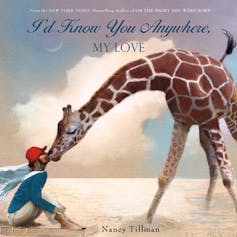
Books that explore themes of love and community: Porcupine’s Bad Day by Emilie Corbiere is an English- and Ojibway-langugage account of how porcupine’s friends help him move beyond his grumpy mood as he tries to sleep in the daytime — and to understand they all share the forest. Nancy Tillman’s I’d Know You Anywhere, My Love explores how intimacy and love are tied to recognition and acceptance, told through the delight of animal disguises and a woman narrator. Max and the Tag-Along Moon by Floyd Cooper narrates the love of a boy and his grandpa against the backdrop of the moon’s ever-present mystery.
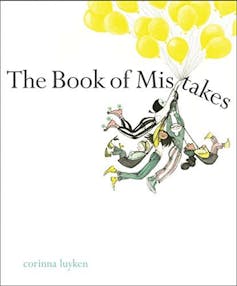
Books that celebrate the occasional misstep in creativity: The Book of Mistakes by Corinna Luyken, The Most Magnificent Thing by Ashley Spires, and Ish or The Dot, by Peter Reynolds. The Dot is about a schoolgirl, Vashti, who goes from believing she can’t draw to a celebration of self-expression and creativity — beginning with a dot. These books would make wonderful gifts for the creative but cautious children in your lives.
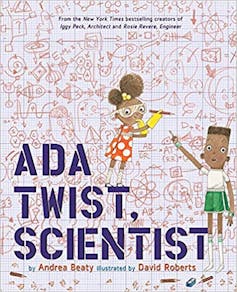
Books for young budding professionals: Andrea Beaty’s books, including Ada Twist, Scientist and Iggy Peck, Architect would make wonderful presents that showcase new worlds opening up through science and design, and that show children the road to success is often littered with road blocks that can be overcome.

Books that embrace challenge: What Do You Do With An Idea by Kobi Yamada is an encouraging book suitable for all ages. After the Fall (How Humpty Dumpty Got Back Up Again) by Dan Santat contains themes of perseverance and overcoming fears.
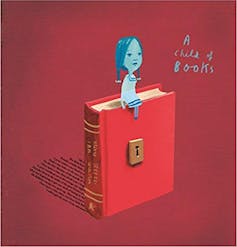
Books that celebrate themselves: The Good Little Book by Kyo MacLear, and It’s a Book by Lane Smith are stories about the love for reading, and the value of a good book. These support the message that reading is a beautiful thing. A Child of Books by Oliver Jeffers and Sam Winston is a lyrical celebration of a childhood filled with books.
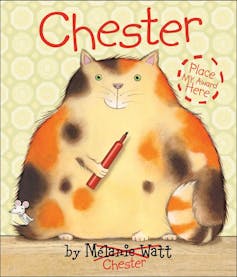
Books that don’t take themselves too seriously: Chester by Mélanie Watt,
The Book With No Pictures by B.J. Novak, Oddsockosaurus by Zanib Mian and I Want My Hat Back by Jon Klassen all provide a shared giggle between adult and child. Books like these reinforce the value that reading is a fun and intrinsically enjoyable activity.
Above we’ve included some of our favorite titles, but there is no one perfect book. We encourage you to spend some time talking to your local bookshop staff or librarians to find titles that will resonate in your family.
The psychosocial and educational benefits from shared storybook reading do not depend on whether the books are bought or borrowed or whether they’re new or used. All you need are books with convincing characters, good conversations and a place to snuggle up and read.
[ Like what you’ve read? Want more? Sign up for The Conversation’s daily newsletter. ]
Sandra Martin-Chang, Professor, Department of Education, Concordia University and Stephanie Kozak, PhD Candidate, Concordia University
This article is republished from The Conversation under a Creative Commons license. Read the original article.
Jan Haywood, The Open University
The story of the epic war fought over a woman has been told many times. It now lies at the heart of an exhibition at the British Museum opening on November 21. Troy: Myth and Reality introduces audiences to the history of the archaeological site of Troy (modern-day Hisarlik, Turkey), many of the different individuals caught up in the Trojan War, and various later responses to this powerful legend in drama and literature.
That the story of the Trojan War should be the subject of a blockbuster exhibition comes as little surprise. Ever since classical antiquity, audiences have been consistently telling and retelling stories about the site of Troy and the heroic war that was fought there between the Trojans and the Achaeans (later conflated with the Greeks). The most famous telling of all perhaps is the Iliad from the eighth century BCE, composed by Homer, a figure shrouded in mystery.
The Homeric poem captures the story of a dreadful, ten-year war fought between two nations. It shows the major influence of powerful men on the battlefield, such as the Trojan prince Hector and the commander of the Myrmidons, Achilles. For these individuals, deeds performed in war will secure them “everlasting fame” (κλέος ἄφθιτον in ancient Greek).
But the poem also illustrates the horrendous impact of the war far away from the battlefield. In one memorable passage, Briseis, the captive prisoner of Achilles, laments the slaughter of her husband and children. It is a heartbreaking account that shows acutely the universal misery brought on by the bloodshed of war.
Ever since Homer, people have looked to expand on and retell different aspects of the Trojan War in light of their own circumstances.
The fifth century BCE Athenian playwright Euripides produced several plays that depicted the aftermath of the conflict. In his Trojan Women, Euripides centres the widows of Troy and the hardships they endure at the hands of their Greek oppressors, who divide the women like booty between themselves. It is an uncompromising account that many have read as a biting commentary on the civil war fought between Athens and Sparta at the end of the fifth century BCE. The play does not glorify war and instead highlights its horrors through Troy’s displaced women.
Of course, the creation of refugees through warfare and the transportation of human bodies across geographic boundaries is a profound concern for audiences today. The ongoing Syrian civil war has created around 6.7m refugees, who have been dispersed across the globe. And the recent shocking discovery of 39 Vietnamese nationals’ bodies in a lorry in Grays, Essex on 23 October, 2019 is a ghastly reminder of the terrible conditions that many refugees have faced past and present.
In contemporary culture too, there has been a spate of interest in the stories and myths of Troy. The exhibition shows clearly the impact it has had on the visual arts. Highlights include a 1978 collage by the African-American artist Romare Bearden, titled The Sirens’ Song, which recasts Odysseus’ journey home after the war with African-American subjects. Bearden’s work employs the familiar story of Troy to give the African-American experience a universal and classical representation.
Another notable work is a print called Judgement of Paris (2007), pictured above, by the conceptual artist Eleanor Antin. The photo, which riffs on Peter Paul Ruben’s Judgement of Paris (1639), highlights the powerlessness of Helen who sits looking outwards, forced to the margins of the image. Antin’s work turns this on its head. Featured as part of a series called Helen’s Odyssey, the photo challenges a tradition that has often vilified the Spartan queen Helen for her involvement in the war.
A recent significant development has been the growing number of English-language fictional accounts about Troy written by women. These works retell and expand on various aspects of the Trojan War story from the perspective of the women involved. They range from Pat Barker’s The Silence of the Girls, which retells the Iliad from the perspective of the story’s women, to Madeline Miller’s bestseller Circe, a feminist exploration of certain events from the Odyssey. Such works offer a potent challenge to a tradition that has been wholly dominated by male authors and male-centred stories.
An especially impressive entry in this burgeoning group of women writers’ works on Troy is Alice Oswald’s 2011 poem Memorial, an idiosyncratic translation of the Iliad. The poem evokes various contemporary war memorials, such as the Vietnam Veterans Memorial in Washington DC, in its opening which lists the names of almost all the men whose deaths are reported in the Iliad.
What’s more, the poem records moments in which the soldiers of the Iliad die on the battlefield. In doing so, as in the Iliad, Oswald repeatedly draws attention to bereaved parents, widowed partners and fatherless children. In an age where technology has changed the methods and image of warfare, desensitising us to such violence, works like Memorial are a timely reminder of the human costs of deadly conflict.
It is clear, then, that Troy and the stories that surround it continue to shape culture thousands of years after the Trojan War ostensibly occurred. This is what makes the British Museum exhibition so relevant for audiences today. The story of the Trojan War is a story of universal suffering that stretches past the battlefield. It is a story that highlights the absurdity of war, which at its core holds sentiments that ring as true today as they did in antiquity.
Troy: Myth and Reality is on at The British Museum from November 21, 2019 – 8 March 8, 2020
Jan Haywood, Lecturer in Classical Studies, The Open University
This article is republished from The Conversation under a Creative Commons license. Read the original article.

Adeline Johns-Putra, University of Surrey
Every day brings fresh and ever more alarming news about the state of the global environment. To speak of mere “climate change” is inadequate now, for we are in a “climate emergency”. It seems as though we are tripping over more tipping points than we knew existed.
But our awareness is at last catching up with the planet’s climate catastrophes. Climate anxiety, climate trauma, and climate strikes are now all part of many people’s mental landscape and daily lives. This is almost four decades after scientists first began to warn of accelerated global warming from carbon dioxide increases in the atmosphere.
And so, unsurprisingly, climate fiction, climate change fiction, “cli-fi” – whatever you want to call it – has emerged as a literary trend that’s gained astonishing traction over the past ten years.
Just a decade ago, when I first began reading and researching literary representations of climate change, there was a curious dearth of fiction on the subject. In 2005, the environmental writer Robert Macfarlane had asked plaintively: “Where is the literature of climate change?”. When I went to work in 2009 on one of the first research projects to attempt to answer this question, I found that some climate change novels were only beginning to emerge. Ten years later, the ubiquity of cli-fi means that the question of how many cli-fi novels there are seems irrelevant. Equally irrelevant is any doubt about the urgency of the climate emergency.
But the question of how to deal with such a complex challenge is paramount. The climate emergency demands us to think about our responsibilities on a global scale rather than as individuals, to think about our effects not just on fellow humans but on all the species that call this planet home, and to think about changing the resource-focused, profit-seeking behaviours that have been part of human activity for centuries.
This is where literature comes in. It affords us the headspace in which to think through these difficult and pressing questions.
Cli-fi has a central role in allowing us to do the psychological work necessary to deal with climate change. I am often asked to identify the climate novel that is the most powerful and effective and, just as often, I reply that no one novel can do this. The phenomenon of cli-fi as a whole offers us different ways and a multitude of spaces in which to consider climate change and how we address it.
Here, then, is my list of a range of novels that offer just such a diverse set of perspectives. These books provide readers with a range of thought (and feeling) experiments, from dystopian despair to glimmers of hope, from an awareness of climate change impacts on generations to come to vivid reminders of how we are destroying the many other species that share our planet.
Australian novelist George Turner’s book is one of the earliest examples of cli-fi and is prescient in more ways than one. Set in Melbourne in the 2030s, skyscrapers are drowning due to sea-level rise: a setting for a stark division between the rich and the poor. Like many cli-fi novels, this novel’s dystopian future provides a sophisticated thought experiment on the effects of climate change on our already divided society. Turner’s book deserves to be reread — and reissued — as classic and still relevant cli-fi.
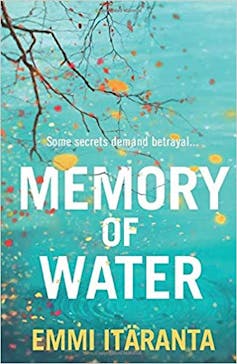
Water has become a precious commodity in this cli-fi dystopia by Finnish author Emmi Itäranta. In Nordic Europe in the distant future, a young girl must decide whether to share her family’s precious water supply with her friends and fellow villagers and risk being accused of “water crime”, punishable by death. This tender coming-of-age narrative is thus also a meditation on the value of resources taken entirely for granted by the contemporary, westernised reader.
At first glance, John Lanchester’s novel could be a comment on the rise of anti-refugee sentiment in Britain. In a not-so-distant future, every inch of British shoreline is guarded by an immense wall, a bulwark against illegal migrants as well as rising sea levels. But through the experiences of a young border guard, the novel shows us how this national obsession with borders not only distracts from the climate emergency at hand; it diminishes our responsibility to fellow humans around the world, whose lives are threatened by climate change and for whom migration is a desperate solution.
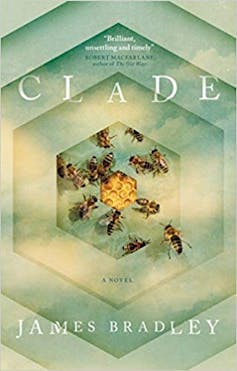
Australian author James Bradley’s novel chronicles several generations of one family in an increasingly devastated world. The day-to-day detail of their lives, as relationships hold together or break apart, unfolds against the backdrop of environmental and thus societal breakdown. The novel contrasts the mundane miscommunications that characterise human relations with the big issue of global warming that could rob future generations of the opportunity to lead meaningful lives.
Jeanette Winterson’s stab at cli-fi offers, like Bradley’s novel, a long view. The novel ranges over three vastly different timeframes: a dystopian, future civilisation that is fast ruining its planet and must seek another; 18th-century Easter Island on the verge of destroying its last tree; and a near-future Earth facing global environmental devastation. As readers time travel between these stories, we find, again and again, the damage wrought by human hubris. Yet, the novel reminds us, too, of the power of love. In the novel, love signifies an openness to other humans and other species, to new ideas, and to better ways of living on this planet.
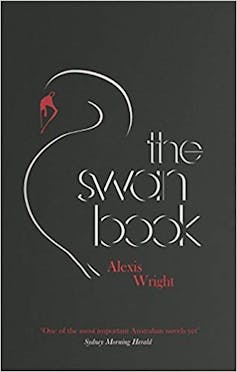
This novel by indigenous Australian author Alexis Wright is unconventional, fable-like cli-fi. Its protagonist is a young indigenous girl whose life is devastated by climate change but most of all by the Australian government’s mistreatment of its indigenous populations. Weaving indigenous belief with biting satire, Wright’s novel is a celebration of her people’s knowledge of how to live with nature, rather than in exploitation of it.
Unlike the other novels on this list, this one, by Barbara Kingsolver, is a realist novel set entirely in the present day. A young woman from Tennessee stumbles upon thousands of monarch butterflies roosting on her in-laws’ land, the insects having been thrown off course by extreme weather events brought about by climate change.
From the scientists who come to study the problem, she learns of the delicate balance that is needed to keep the butterflies on course. Kingsolver’s rich descriptions of an impoverished Appalachian community are combined with her biologist’s training, so that reader empathy is eventually shifted from the likeable heroine to the natural wonder that is the butterflies. We are reminded of how climate change risks not simply human comfort but the planet’s ecological complexity.
Adeline Johns-Putra, Reader in English Literature, University of Surrey
This article is republished from The Conversation under a Creative Commons license. Read the original article.
 At the BookShelf
You must be logged in to post a comment.