Unknown's avatar

Summer reads: When you can’t travel, let a book transport you


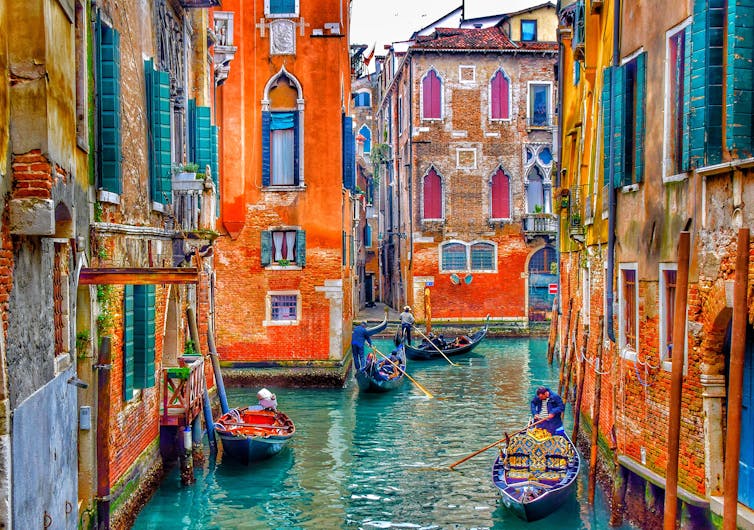
If you can’t get to Venice, Italy, allow a book translated from Italian to transport you there.
Tom Podmore/Unsplash

Amy McLay Paterson, Thompson Rivers University

I don’t understand beach reads. And I’m not the only one. There’s no universal consensus about the category, though the marketing tends to revolve around those books popularly considered disposable, unserious, or at the very least, books “you don’t mind getting wet.”

Last year, I toted Anna Karenina along with me — it got soaked, and I abandoned it in an AirBnB in Dubrovnik, Croatia, after I’d finished reading it. It lasted nearly the whole trip and left a gaping, souvenir-sized hole in my suitcase; it was perfect. So as much as I’d like to dissolve the beach read label entirely, I must also admit I have a type: I want a meaty, absorbing book that takes me further into a vacation by connecting with the cultures that produced it. I want a book that can’t be disposed of, one that will take me somewhere entirely new.

What I really want is to decouple the notion of summer reading as a lifestyle marker of class or gender. If the “pursuit of intellectual betterment” feels inaccessible or off-putting, I would like to propose at least the pursuit of expanding our emotional connections.

In a cultural climate where the limits of empathy are increasingly under a microscope, forging cross-cultural connections feels like a pressing task. Much has been made of the relationship between fiction reading and empathy, but what happens when the limits of our worldview are bounded by the English language? While linguistic diversity is growing in Canada, the majority of Canadians still speak only English at home, and comparatively few books are translated into English. If, as José Ortega y Gasset proposes, reading in translation should transport the reader into the language — and therefore the perspective — of the author, then reading translated works may be one of the best ways to expand empathy beyond the boundaries of language.

I’m not going abroad this summer, at least not physically. I’ll be staying in Canada, with only my books to pull me to other times and places. While in recent years, I’ve focused on keeping up with new releases, this year I’m fixated on atmosphere and transportation, in a mix of old favourites and new-to-me classics from around the world.

Italy

‘Arturo’s Island,’ 1957.
Arnoldo Mondadori Editore

I won’t tell you to read Elena Ferrante, because you’ve probably heard that before. Instead, I will be delving into the work of Elsa Morante, a possible inspiration for Ferrante’s pseudonym. Arturo’s Island, originally published in English in 1959, has been published in a new translation by Ann Goldstein (translator of Ferrante’s Neapolitan novels). The novel promises a mix of the remote island setting steeped in Morante’s preoccupation with social issues and the spectre of war.


Poland

‘Flights,’ 2018.
Riverhead Books

One of my favourite themes in European literature is that of movement and fluidity, the running sense of unity of purpose amidst myriad diverse pockets of culture. The ubiquity of trains and boats support transcontinental journeys by characters who switch language mid-conversation. Last year’s Man Booker International winner, Flights by Olga Tokarczuk takes traveling and travelers as the subject of its interconnected musings, making it an ideal choice for the vacation headspace. This year’s winner, Celestial Bodies from Oman’s Jokha Alharthi, has an English edition but has not yet been published in Canada.


Croatia
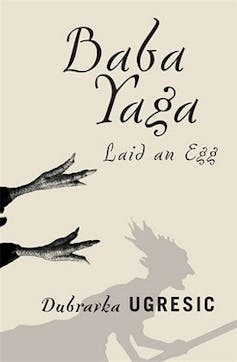
‘Baba Yaba Laid an Egg’ 2009.
Canongate Books

In my opinion, no contemplation of Pan-European lore can be complete without Dubravka Ugrešic’s Baba Yaga Laid an Egg. Once labeled a witch herself and driven into exile from Croatia, Ugrešic’s take on Baba Yaga explores the shifting nature of popular folklore.


Nigeria

‘Half of a Yellow Sun,’ 2006.
Knopf

Half of a Yellow Sun by Nigerian author Chimamanda Ngozi Adichie is not a translation, but it will take you to a place that only briefly existed: Biafra, a West African state founded in 1967. While the brutality of recent war may not make a particularly appetizing subject for vacation, Adichie contrasts the brutality with sumptuous descriptions of pre-war food and luxury, giving her vision of Biafra the aura of a lost dream. Adichie has referred to the war as a shadow over her childhood.


Norway

‘Kristen Lavransdatter,’ 2005.
Penguin Books

There are no beaches in Kristen Lavransdatter and many more Christmases than summers, but if you start Nobel Prize-winner Sigrid Undset’s oeuvre now, it may take you until winter to finish it. Set in Medieval Norway, the book follows the titular Kristen from childhood until death, focusing on her tumultuous love affair and marriage to Erlend Nikulaussøn. Tiina Nunnally’s translation, focusing on plain, stripped-down language, presents a change in philosophy from the first English translation that cut large portions of the text and enforced stiff, archaic language absent from the original Norwegian.


Argentina
‘Fever Dream,’ 2017.
Riverhead Books

Samanta Schweblin’s Fever Dream is slight in length but packs a heavy punch in both atmosphere and psychological investment. The story of a vacation gone terribly wrong, the novel’s Spanish title closely translates to “rescue distance,” a recurring concept instantly familiar to parents of young children and terrifying as it becomes repeatedly destabilized. Fever Dream is so unsettling that I sometimes hesitate to recommend it, but I’ve found myself repeatedly drawn back to its tantalizing surrealism.


Canada

‘Secwépemc People, Land and Laws,’ 2017.
McGill-Queen’s University Press

I’ve spent much of my life moving around, and as a recent settler on unceded Secwepemc territory, I want to learn more about the land I live on. In a summer steeped in fiction, Secwépemc People, Land, and Laws by Marianne and Ronald Ignace is the only history on my list, but in many ways it feels similar to the others, reaching out to add a new dimension to a place in which I’m still mostly an outsider. For better or for worse, Kamloops feels the most like itself in summer, the climate wants to have its stories told. It can feel intimidating to contemplate a 10,000 year history I know nothing about, but also comforting and necessary to reach back and hear the tales of the land I now call home.The Conversation

Amy McLay Paterson, Assessment and User Experience Librarian, Thompson Rivers University

This article is republished from The Conversation under a Creative Commons license. Read the original article.

Unknown's avatar

10 ways to get the most out of silent reading in schools


Children need time and space to enjoy the books they choose to read in schools.
Shutterstock/wavebreakmedia

Margaret Kristin Merga, Edith Cowan University

Reading aloud can help young children learn about new words and how to sound them. There’s great value too in providing opportunities for children to enjoy regular silent reading, which is sustained reading of materials they select for pleasure.

But not all schools consistently offer this opportunity for all of their students. We regularly hear from teachers and teacher librarians who are concerned about the state of silent reading in schools.


Read more:
Read aloud to your children to boost their vocabulary


They’re worried students don’t have enough opportunity to enjoy sustained reading in school. This is important, as many children do not read at home.

For some young people, silent reading at school is the only reading for pleasure they experience.

Silent reading silenced

Research suggests silent reading opportunities at school are often cancelled and may dwindle as students move through the years of schooling.

Where silent reading opportunities still exist, we’re often told that the way it is being implemented is not reflective of best practice. This can make the experience less useful for students and even unpleasant.

Yet regular reading can improve a student’s reading achievement. Reading books, and fiction books in particular, can improve their reading and literacy skills.

Opportunity matters too, as the amount we read determines the benefits we get from reading. Regular reading can help with other subjects, such as maths.

So, what should silent reading look like?

Silent reading in school should be fun.
Shutterstock/wavebreakmedia

Here are ten important things we need to do to make the most of silent reading in our schools.

1. Enjoyment is the focus

Enjoyment of reading is associated with both reading achievement and regular reading.

If we want young people to choose to read more to experience the benefits of reading, then silent reading needs to be about pleasure and not just testing.

2. Students choose the books

Young people should not be prevented from choosing popular or high-interest books that are deemed too challenging. Books that are a bit too hard could motivate students to higher levels of achievement.

Students have reported enjoying and even being inspired by reading books that were challenging for them, such as J.R.R. Tolkein’s The Lord of the Rings.

Silent reading of text books or required course materials should not be confused with silent reading for pleasure.

3. The space is right

Like adults, children may struggle to read in a noisy or uncomfortable space.

Schools need to provide space that is comfortable for students to enjoy their silent reading.

Children need space to enjoy silent reading.
Shutterstock/weedezign

4. Opportunities to chat (before or after)

Discussion about books can give students recommendations about other books and even enhance reading comprehension.

But silent reading should be silent so all students can focus on reading.

5. Inspired by keen readers

If students see their teachers and teacher librarians as keen readers this can play a powerful role in encouraging avid and sustained reading.

School principals can also be powerful reading models, with their support of silent reading shaping school culture.

6. Students have access to a library

Even when schools have libraries the research shows students may be given less access to them during class time as they move through the years of schooling.

Not all students are given class time to select reading materials from the library.

All students should be encouraged to access the school library.
Shutterstock/mattomedia Werbeagentur

7. It happens often

This is particularly important for struggling readers who may find it hard to remember what they are reading if opportunities for silent reading are infrequent.

These students may also find it difficult to get absorbed in a book if time to read is too brief.

8. Paper books are available

Reading comprehension is typically stronger when reading on paper rather than a screen.

Screen-based book reading is not preferred by most young people, and can be associated with infrequent reading. Students can find reading on devices distracting.

9. There is a school library and a teacher librarian

Teacher librarians can be particularly important in engaging struggling readers beyond the early years of schooling. They may find it hard to find a book that interests them but which is also not too hard to read.

Librarians are also good at matching students with books based on movies they like, or computer games they enjoy.

10. We need to make the school culture a reading culture

Reading engagement is typically neglected in plans to foster reading achievement in Australian schools.

Practices such as silent reading should feature in the literacy planning documents of all schools.

Allowing students to read for pleasure at school is a big step toward turning our school cultures into reading cultures. Students need opportunities to read, as regular reading can both build and sustain literacy skills.

Reading should be part of the culture of a school.
Shutterstock/wavebreakmedia


Read more:
There’s a reason your child wants to read the same book over and over again


Unfortunately, literacy skills can begin to slide if reading is not maintained.

We need people to continue to read beyond the point of learning to read independently, though research suggests this message may not be received by all young people.

Where children do understand reading is important, they may be nearly twice as likely to read every day. So silent reading is important enough to be a regular part of our school day.


This article was co-authored by Claire Gibson, a librarian who’s studying a master in education by research at Edith Cowan University.The Conversation

Margaret Kristin Merga, Senior Lecturer in Education, Edith Cowan University

This article is republished from The Conversation under a Creative Commons license. Read the original article.

Unknown's avatar

David Copperfield on screen: Charles Dickens’ masterpiece is a celebration of everyday heroes


Image courtesy of Lionsgate

Beth Palmer, University of Surrey

Charles Dickens’ great masterpiece David Copperfield begins with uncertainty:

Whether I shall turn out to be the hero of my own life, or whether that station will be held by anybody else, these pages must show.

With those few words the author gives us one of the most memorable lines to be found in 19th-century fiction and gets us thinking about who or what a hero might be.

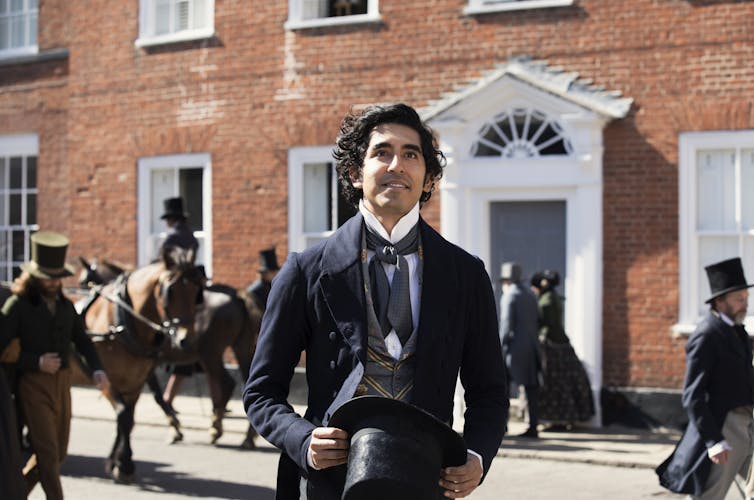
A new film version of the novel is about to open in cinemas in the UK after being premiered at the Toronto International Film Festival in September 2019 and opening the 63rd BFI London Film Festival the following month to glowing reviews. Written by Armando Ianucci and Simon Blackwell, the movie stars Dev Patel in the title role, who – as producer Kevin Loader told The Guardian, is one of those “actors who are capable of embodying the character as perfectly as possible, regardless of their ethnicity”.

The young Copperfield certainly shows some heroic promise: he’s an orphan – which is often a good start for a Victorian hero – and he manages to walk from London to Dover alone as a young boy to extricate himself from a life of dull labour. But he also lacks a certain amount of agency: Copperfield is buffeted around by chance and coincidence, relying on the hospitality and generosity of those he meets. So the strange and eccentric characters he encounters also operate as heroes to him.

We could argue, in fact, that the book meditates on the necessity of everyday heroism in a world that is often cruel and unfair. Copperfield witnesses these acts of generosity from early on in his life. When he visits Daniel Peggotty (his beloved nurse’s brother) Copperfield openly admires his heroism in offering a home to his orphaned nephew and niece and to the morbidly depressed widow, Mrs Gummidge.

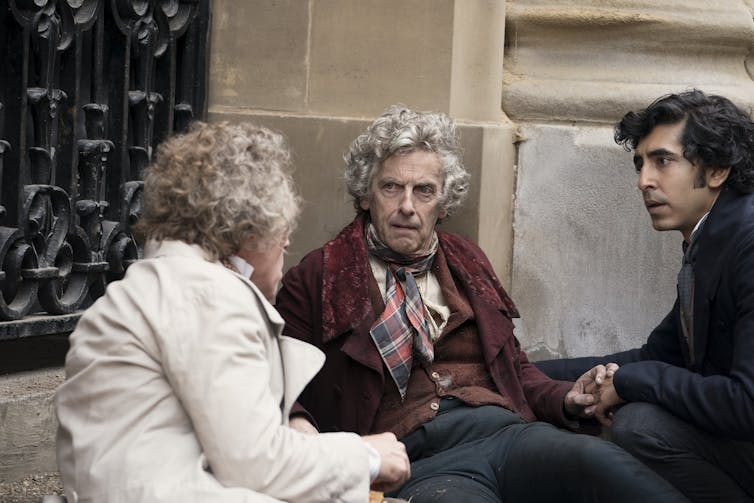
Copperfield soon has cause to rely on this sort of heroism himself – when he too is orphaned, set to work, and then runs away to throw himself on the mercy of his aunt. His aunt, the eccentric Betsey Trotwood, adopts Copperfield, having already taken on the care of the troubled but amiable Mr Dick, who had been destined for life in an asylum when emotionally traumatised by an undisclosed event in his past.

Star-studded: Peter Capaldi as Mr Micawber.
Lionsgate

And of course, we must admire the ultimate heroism shown by Ham who drowns attempting to rescue the shipwrecked Steerforth – seducer of Ham’s beloved Little Em’ly. Fostering children, prison visiting, care for the elderly, the homeless, and the mentally unwell, are the acts of heroism that make Copperfield’s life liveable. They are the stitches through which a 19th-century society, without the mechanisms of a modern welfare state, holds itself together.

Everyday evil

Of course, the novel also has plenty of antiheroes, most memorably the sadistic Edward Murdstone, who squelches Copperfield’s childhood freedoms, and the insidious Uriah Heep, who defrauds Copperfield’s family. At times the novel’s small individual acts of heroism seem to be overwhelmed by forces of wrongdoing, indifference and ignorance represented by characters such as those two.

But, of course, this is Dickens – and the way in which David Copperfield’s plotlines come together reveals Dickens’ vision of the world as interconnected. The handy coincidences of converging plots are not just a sop to satisfy mawkish readers, but an embodiment of Dickens’ philosophy.

In the preface to his magazine, Household Words, Dickens tells us that he wants literature to: “bring the greater and the lesser in degree, together … and mutually dispose them to a better acquaintance and a kinder understanding”. By inculcating sympathy with others in his fiction, Dickens thought he could encourage minor acts of heroism such as those that run through the plotlines of David Copperfield.

New vision

The new film version promises to give us an energetic and modern re-working and has received 11 British Independent Film Awards nominations, including best screenplay and best actor.

Dev Patel: one of those actors who can inhabit a character regardless of its ethnicity.
Lionsgate

By all accounts it will entertain us with its fast-paced frolics through a diverse Victorian London and its cast of eccentrics played by Hollywood stars including Tilda Swinton as Betsey Trotwood, Hugh Laurie as Mr Dick and Peter Capaldi as the incorrigible Mr Micawber. But it will also show us the poverty, child labour and homelessness that form the backdrop to Copperfield’s early life.

Ianucci’s film is part of a long succession of adaptations. As soon as the novel was published, adaptors began working on stage versions. It was actually the Little Em’ly fallen woman sub-plot that had most appeal for Victorian theatregoers who were already more than familiar with the poverty of industrial London.

More recent film versions of Dickens’ novels have had to make similar choices about which of Dickens’ multiple plotlines should be emphasised. David McGrath’s 2002 adaptation of Nicholas Nickleby favoured the joyful romp over the brutality of the novel’s early scenes. But McGrath’s Nickleby retains more of the Dickensian sentimentality than seems to be the case in the new David Copperfield.

The snappy trailer gives a curt but comic announcement of the death of Copperfield’s mother, whereas the novel narrates the deathbed scene in a chapter I defy anyone to read without crying. Even Dora, Copperfield’s young wife, apparently receives a reprieve from her untimely fate in the new film.

Screenwriters and directors have become wary of Dickensian sentimentality but I hope that this new version of Dickens’ own favourite novel retains those links of sympathy and acts of everyday heroism that bind the novel together. If it shows us a hero navigating his way through a difficult world aided by humour, eccentricity and kindness it will be an adaptation that sends us back to the novel to locate those elements once again in Dickens’ work.The Conversation

Beth Palmer, Senior Lecturer in English, University of Surrey

This article is republished from The Conversation under a Creative Commons license. Read the original article.

Unknown's avatar

I’m a novelist – and this is why I choose middle-aged women as the heroes of my crime thrillers


Motortion Films via Shutterstock

Emily Bernhard Jackson, University of Exeter

Mystery is the bestselling genre in literature. Crime/mystery fiction, to give the genre its full title, beats inspirational, science fiction, horror and apparently even romance to take the top spot.

And why not? There’s someone for everyone in crime/mystery – elderly lady sleuths, amateur Palestinian sleuths, professional Belgian sleuths, thoughtful Scottish police officers, embittered Scottish police officers, damaged Irish police officers, weary Scandinavian police officers, former army officer detectives, amateur girl detectives, sad drunk amateur girl detectives. There’s even a detective who partners up with a skeleton.

What there doesn’t seem to be much of in mystery fiction, however, is female detectives who begin detecting in middle age (two cases in point: Sara Paretsky’s V.I. Warshawski was 32 when we began to follow her adventures, while Patricia Cornwell’s Kay Scarpetta was 36). Women in the 40-to-60 range don’t get much of a showing as main characters in literature generally, so maybe it’s no surprise that they don’t show up as headliners in the mystery genre.

But it’s a surprise if you’re a woman in your 40s who is beginning to write mystery novels – which not so long ago I was. And while it’s a cliche that people write what they know, when I decided to write a mystery I entered into that cliche wholeheartedly. I started writing mysteries in my 40s – and I made my detectives two women in their 40s.

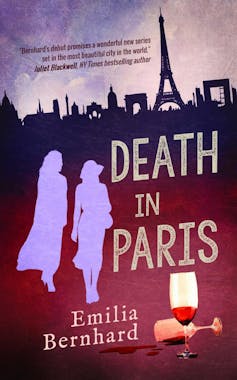
Two middle-aged American women and a dead man in a bowl of Vichyssoise.
Amazon

But while I designed my detectives in part to mirror myself, I also chose their age for entirely different reasons. For all its advances and improvements, contemporary culture remains uncomfortable, not just with middle-aged women, but to an even greater degree with contentedly single middle-aged women – and to an even greater degree than that with childless women who are childless by choice. I wanted to confront this odd aversion head on, so I made sure that between them my detectives fill all these categories.

This decision is a small one, but for me it engaged with a question I’ve long struggled with, the question of what, intellectually, literature is supposed to do. Should it report on the world as it is, or should it model the world as it might – could, should, would – be?

Angry women

Recent fiction may not have been filled with middle-aged women, but it has been filled with angry ones. It’s jam packed with dystopian models of female repression and with women and men implacably set against one other: look at Naomi Alderman’s The Power, Leni Zumas’s Red Clocks, Margaret Atwood’s The Testaments. As I began to create my fictional world, I was troubled by the question of whether these outpourings of rage, all justified, all earned, are enough.


Read more:
Review: The Testaments – Margaret Atwood’s sequel to The Handmaid’s Tale


In one way this literature is unquestionably good: female rage is something else culture has assiduously avoided considering for centuries, and during those centuries women have been subjugated, silenced, used and abused in ways that deserve outpourings of anger.

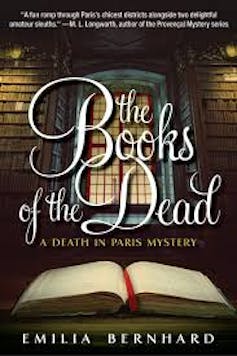
The sleuths return.
Amazon

Nor is this landscape of female repression changing quickly, and there is value in forcing it before readers’ eyes. In a recent article for The Guardian about the Staunch Prize, the new award for the best crime/mystery novel that does not feature violence against women, the novelist Kaite Welsh wrote that she wouldn’t “sanitise my writing in service of some fictional, feminist utopia … my work lies in marrying my imagination with the ugly truth”. This is an important argument.

Modeling the future

But while I don’t care about the absence of feminist utopias, I do care about the absence of writing that models the future we want. What will it be like, the world we’re striving for where the playing field is level and men and women are just people being people together? I believe that we can only imagine based on what we’ve seen, and that it’s part of literature’s job to help us see what doesn’t yet exist but could.

For this reason, although I grounded my novels firmly in the present (well, Death in Paris is set in 2014 and The Books of the Dead in 2016), I made some specific choices about that present. In my books, every person in a powerful position is a woman. Department heads and doctors, sources of knowledge and implacable foes: all are female.

More importantly, as far as I was concerned, no one draws attention to that. It’s so normal as to be unworthy of note. Nor does anyone comment on the fact that both my detectives are childless, and one remains happily unmarried in her mid-40s. Both of these detectives are heterosexual, but I made that decision so I could give each a husband or boyfriend who sees them as an intellectual and emotional equal, and for whom that equality is also the norm. The women in my books have and enjoy good sex, and they have and enjoy good conversations – almost none of them about men.

My books are full of oversights and omissions, and I’m far from satisfied with them. But what I aimed to do, and am still trying to do, is to augment the justifiable depictions of anger, the honest depictions of ongoing brutality and violence against women, with a small model that allows for a morsel of hope.The Conversation

Emily Bernhard Jackson, Lecturer in English, University of Exeter

This article is republished from The Conversation under a Creative Commons license. Read the original article.

Unknown's avatar

The hangover in literature, from Shakespeare and Burns to Bridget Jones


Africa Studio via Shutterstock

Jonathon Shears, Keele University

What a subject! And, in very truth, for once, a ‘strangely neglected’ one.

So Kingsley Amis began his famous 1971 essay on the hangover How different is our present moment, when it would be hard to find a media outlet on New Year’s Day not featuring an item about the effectiveness of remedies. Every age has its preferred cure: Pliny the Elder advocated raw owl’s eggs in wine. Shakespeare refers to “small ale”, which remained popular into the 19th century. The early 20th century was the golden age of hangover cocktails such as the Bloody Mary and the Prairie Oyster – but also of Alka-Seltzer. Amis recommends a “Polish Bison” – vodka mixed with hot Bovril.

Even scientists have got involved and hangover research is a subfield of medicine and psychology. Studies have explored links between hangover severity and alcohol use disorders, the hangover’s economic cost, the effectiveness of remedies and the ethical implications of a pharmaceutical cure.

The bad news is that, if you’re feeling unwell this morning, all reputable studies have shown that the only thing guaranteed to relieve symptoms is the passing of time.

To be fair, Amis never thought that remedies – and physical after-effects including headache, nausea and dehydration – had been ignored. What had really been neglected was what he termed the hangover’s “metaphysical superstructure”. That is all the emotional baggage that often follows drinking: guilt, shame, self-pity and the more nebulous “hangxiety”.


Read more:
What causes hangovers, blackouts and ‘hangxiety’? Everything you need to know about alcohol these holidays


Science can tell us why we feel sick after heavy drinking: dehydration, contracted blood vessels causing headaches and the build-up of acetaldehyde. But when a hangover makes us unwell we don’t just mean physical symptoms.

Science finds emotions less susceptible to measurement than physical effects. For the former, we require literature and the arts. Literature is an outlet for feeling, but also an expression of individual and cultural values. There is a surprisingly rich tradition of hangover literature in western culture – in writers as diverse as Shakespeare and Jane Austen, Robert Burns and George Eliot, Jean Rhys and Helen Fielding – that has been largely ignored and goes some way to explaining why hangovers might make us feel like mending our ways.

Hangover literature

In a 1791 epistle to Maria Riddell, a wretchedly hungover Burns apologises for an unwanted sexual advance on her sister-in-law. “I write you from the regions of hell, amid the horrors of the damned”, he begins, before bemoaning his “aching head reclined on a pillow of ever-piercing thorn”, and “an infernal tormentor” called “Recollection”.

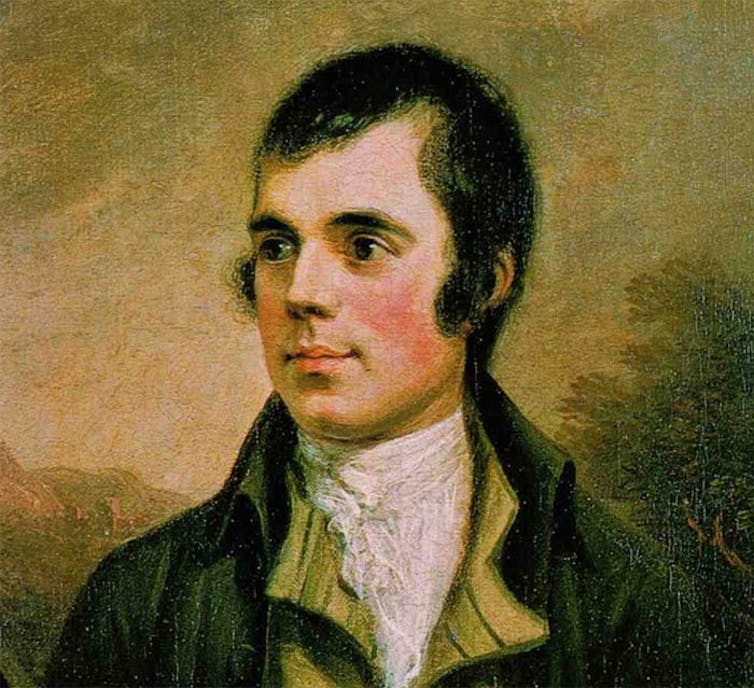
Robert Burns: recollection seems to be the hardest word.
Alexander Nasmyth

This is penitent’s rhetoric, reminding us that Burns lived in rigidly moral Presbyterian Scotland. Pounding head and dehydration are just reprisal for his indiscretion and his letter is an apology for sinfulness. Shame is a powerful cultural force: if there is a cure here it will be found in forgiveness.

Hangovers often reveal the personal and social values that make us feel “bad”. In other words, the hangover is both a physical and cultural deterrent. Guilt and shame are not just nervous reflexes but part of a superstructure of values – Amis chose his words wisely – without which they cannot be understood.

Men and women

Science argues that hangover severity is different for men and women, focusing on metabolism and body mass. But surely the real differences are sociocultural? We could compare the hangovers of the alcoholic journalist, Peter Fallow, from Tom Wolfe’s The Bonfire of the Vanities (1987), with those suffered by Helen Fielding’s ladette, Bridget Jones.

Bridget Jones the morning after the night before.
Bridget Jones: The Edge of Reason (Universal Pictures)

When hungover, Fallow seeks penance through strenuous exercise: “Never again. He would begin an exercise regimen tonight. Or tomorrow, in any case.” Wolfe makes it evident that hangxiety is not free floating, but derives from Fallow’s impression of being culturally tarnished: “It wouldn’t be this pathetic American business of jogging, either. It would be something clean, crisp, brisk, strenuous … English.” The body is a site of cultural meaning.

Jones faces low self-esteem when hungover. Her worries superficially recall those of Fallow, but her negative self image involves the distinctive pressures put upon women to marry and have children. She obsesses about weight gain, her looks (“Oh why am I so unattractive? Why?”), her ability to attract a partner and her ticking body clock.

Family values

The hangover’s impact on family life has been the focus of hangover studies. Here literature also points us to cultural variables.

The wife who nags her husband for his drunken ways is a stock figure of comic fiction from the 16th century to the present day. John Taylor captures the type in his colourful Skimmington’s Lecture (1639):

What not a word this morning … have you lost your tongue, you may be ashamed, had you any grace in you at all, to bee such a common drunkard, a pisse-pot.

But in the Victorian period Janet Dempster in Eliot’s Janet’s Repentance (1857) tells us of a different domestic power dynamic. Because she is unable to reproach her abusive, though popular, husband, she drowns her sorrows. While Robert’s “good head” for drink is legendary, Janet’s hangovers mean she neglects housework and loses her “good” reputation. Her shame shows that she is held to a different set of standards than her husband, the “stigmatising subject position” of women drinkers. (Janet is, however, able to repent, while Robert ends up dying after delirium tremens.)

Cultural resistance

It is possible to defy moral judgement for our lack of self-care, wasted time or embarrassment. However, even the most rebellious of literature’s drinkers feel self-doubt bite during hangovers. Martin Amis’s John Self (Money, 1984), Alan Sillitoe’s Arthur Seaton (Saturday Night and Sunday Morning, 1958) and A. L. Kennedy’s Hannah Luckraft (Paradise, 2004) are notorious for recklessness and defiance when drunk. Their hangovers are, however, some of the most crippling in literature. Luckraft revels in blackouts and casual sexual encounters, but admits: “Inside, I am mostly built out of remorse.” Self’s hangovers are a necessary curb on a particularly toxic brand of masculinity. Seaton’s motto is “don’t let the bastards grind you down”, but the hangover of Sunday morning succeeds boozy Saturday nights and he eventually submits to marriage and a steady job.

Literature shows that hangovers are rarely just a collection of physical symptoms. A recent leader article in The Guardian was given the headline: “The Guardian view on the science of hangovers: no more research needed”. Perhaps we don’t need another article about the best remedies – but it is worth reflecting that there is much more to a hangover than bodily symptoms.

Hangover literature tells us quite a lot about our attitudes to alcohol, how they form and what they mean. This New Year, alongside the Bloody Mary, it might just be worth picking up a book. I don’t claim it will make anyone feel better, but it could help us understand a little more about why drinking often makes us feel bad about ourselves.The Conversation

Jonathon Shears, Senior Lecturer in English Literature, Keele University

This article is republished from The Conversation under a Creative Commons license. Read the original article.

Unknown's avatar

5 great reads for young critical thinkers


An image from the book cover for ‘SLAY,’ one of the top 2019 five books for young critical thinkers.
(Simon and Schuster)

Heba Elsherief, L’Université d’Ottawa/University of Ottawa

At this time of year, “best of” lists abound, vying for our attention. But teachers and parents committed to principles of social justice are generally left searching for something more than the usual top 10 list of best-of books.

We hope the reads we give are not just entertaining but also educational.

I’ve previously written on children’s literature and presented book lists for critical thinkers on The Conversation Canada. The authors I listed lead to a treasure trove — for example, S.K. Ali’s Love from A to Z — but what follows is a new list of recommendations. They are books published from September 2019 that I hope will both entice readers and foster critical thinking.

This book list is not exhaustive and I present it more as suggestions — ones that may warrant further research. Teachers and parents will want to look up any trigger warnings.

Also, I recommend adults read books along with younger readers: it’s vital to meaningful conversations. I think adult readers may be pleasantly surprised by the rich and important storytelling happening in the young adult literary world.


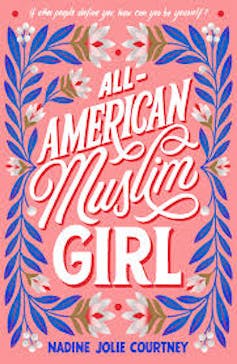
‘All American Muslim Girl’ book cover.
(Macmillan Publishers)

All-American Muslim Girl, by Nadine Jolie Courtney, defies what you think you might know about female Muslim representation in an American context.

Allie Abraham is the main character whose born-Muslim father dislikes that she’s becoming more spiritual. The family has just moved to a small town, a microcosm of a nation where Islamophobia has become normalized. Allie falls for the son of Jack Henderson, the county’s “shock jock” behind the spread of hatred.

It’s a quiet but complex story about the search for identity and learning to find your own way. Allie is a likable character whose moral compass is wholesome and whose struggles to sift through opposing influences read as authentic and heart-warming. There’s an education and historical element to be found here on Circassian Muslims.


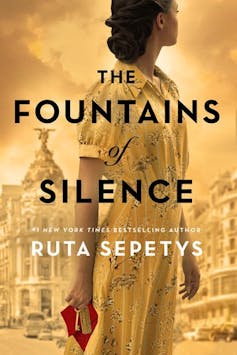
Book cover for ‘The Fountains of Silence.’
(Penguin Random House)

The Fountains of Silence, by Ruta Sepetys. Since reading Sepetys’ Salt to the Sea, probably one of my most recommended historical YA novels, I’ve been on the lookout for her work. In her latest, Sepetys takes readers to Spain in the 1950’s under the fascist dictatorship of Francisco Franco. Beyond giving us a look into the sorrow-filled aftermath of civil war, there are lessons here for those dealing with questions of privilege and the responsibilities to do something positive with that privilege.

Daniel Matheson is the protagonist photographer and son of an American oil tycoon who falls in love with Ana, the hotel maid and daughter of parents killed and imprisoned by the regime. She needs to keep silent in a country that relies on controlling people by fear. But Ana finds herself confiding in Daniel and Daniel begins to look beyond what he thinks he sees on the surface.

The best historical novels say something about contemporary times as well and Sepetys doesn’t disappoint. Readers will find parallels that speak to our silences regarding blatant injustices happening today.


SLAY, by Brittney Morris, is one I’d been hearing about for a long time before its September release. People called it a mash-up of The Hate U Give, and Ready Player One with a Black Panther-esque gaming world at its core.

Kiera Johnson is pretty much the only Black girl into STEM at her mostly white school. Beneath her honours persona, she’s hiding a secret life as the developer of an online game called SLAY. The game is supposed to be a safe-space for hundreds of thousands of Black gamers but when a teen is murdered in real life over a dispute in the game world, the game is exposed to accusations and threats.

Kiera fights to protect the world she created on several fronts. Although this is a novel that defies what stereotypes of Black girlhood may look like, it is also a super-inspiring read about the power of aligning your dreams with making the world a better, more inclusive space.


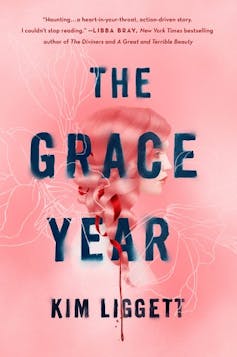
Book cover for ‘The Grace Year.’
(Macmillan)

The Grace Year, by Kim Liggett, has already been optioned for film and been compared to The Hunger Games and The Handmaid’s Tale. It does not have an obvious diversity element built into it but it does have its strengths for critical readers.

It’s a dystopian story about Tierney James who lives in a patriarchal, puritanical society that sends girls in their 16th year out to “release their magic” into the wild. The belief is that girls on the cusp of womanhood have an energy that, unless expended, would bring the moral degeneration of their community. In the author’s note at the end, Liggett tells the story of how she was inspired to tell this story because of “the things we do to young girls.”

This book isn’t for the faint of heart. The prose is elegant and captivating, but the world is cruel and disturbing. The book was hard to read at times despite its female empowerment message. Accordingly, for this recommendation, I’d stress the necessity of reviewing the trigger warnings.


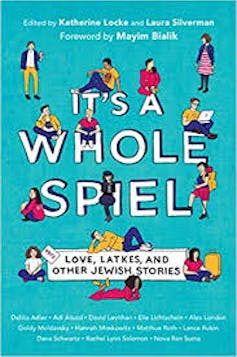
Book cover for ‘It’s a Whole Spiel.’
(Knopf)

It’s a Whole Spiel: Love, Latkes, and Other Jewish Stories, edited by Katherine Locke and Laura Silverman, is for readers who prefer shorter stories rather than one long tale. Some are funny, others are sad, but all, in one way or another, address what growing up Jewish meant to the writer.

Bursting with diverse and intersectional representations (there’s queer and disabled reps here too, for instance), this anthology, much like All-American Muslim Girl, demonstrates that people of marginalized faiths aren’t a monolith and defy the stereotypes around them.

This book would be great for young Jewish readers, certainly for the chance to see themselves reflected in the books they read, but I see the benefit for non-Jewish readers as well. As children’s literature scholar Rudine Sims Bishop explains, books can be as windows, mirrors and sliding doors. Bishop wrote:

Books are sometimes windows, offering views of worlds that may be real or imagined, familiar or strange. These windows are also sliding glass doors, and readers have only to walk through in imagination to become part of whatever world has been created and recreated by the author. When lighting conditions are just right, however, a window can also be a mirror. Literature transforms human experience and reflects it back to us, and in that reflection, we can see our own lives and experiences as part of the larger human experience. Reading, then, becomes a means of self-affirmation, and readers often seek their mirrors in books.

Rudine Sims Bishop, author of the essay ‘Windows, Mirrors and Sliding Glass Doors’

[Expertise in your inbox. Sign up for The Conversation’s newsletter and get a digest of academic takes on today’s news, every day.]The Conversation

Heba Elsherief, Adjunct professor in Education, L’Université d’Ottawa/University of Ottawa

This article is republished from The Conversation under a Creative Commons license. Read the original article.
Unknown's avatar

When capitalism kills culture: Gentrified real estate puts squeeze on indie bookstores


Independent bookstores are places where culture is collected and disseminated. The gentrification of city centres makes their existence increasingly precarious.
Kévin Langlais on Unsplash, CC BY-NC

Julien Lefort-Favreau, Queen’s University, Ontario

The story is all too familiar – yet it should command more attention from Canadians.

Recently, the Globe and Mail reported the Ben McNally bookstore, located on Bay Street a stone’s throw from Union Station, would close in 2020. Two days later, Rupert McNally, the founder’s son, confirmed the news on the store’s website. It had been open since 2007.

The reason for the closure is simple: the store will be replaced by an alleyway linking Bay Street to the alley behind it. This redevelopment is part of a project that the owner calls (ironically?) “The Bay Street Village.”

It is therefore a stupid example of gentrification that pits a modest shopkeeper against a greedy landowner.

The increase in the value of Toronto’s real estate is not exactly new. But we can see here an example of a paradigm that is not reassuring for the future of large cities: the profitability of businesses devoted to cultural property is hardly compatible with the overbidding in real estate.

Montréal is facing the same problem, and it affects all independent businesses. In August, the City gave the Commission on Economic and Urban Development and Housing the mandate to conduct public consultations on vacant space on commercial arteries. Several of these areas have rates ranging from 10 to 15 per cent.

A “hygienization” of urban centres

It has already been demonstrated that gentrification is largely based on a city’s ability to offer an interesting and diversified cultural life. Some, such as Richard Florida, have linked this phenomenon to the emergence of a “creative class.”

Geographer Oli Mould, in his excellent book, Against Creativity, published in 2018, attacks the very notion of creativity. He criticizes Richard Florida with virulence by brilliantly showing how “creative” gentrification can also act as a form of hygienization in urban centres that, ironically, hinders spontaneous citizen initiatives. To put it bluntly, once gentrification is completed, culture is more or less eliminated from the central districts.

An Amazon bookseller opened its doors last February in New York. Will only multinationals or large chains be able to have a presence in city centres in the future?
AP Photo/Mark Lennihan

We are interested in the case of the closure of the Ben McNally bookstore because it shows the consequences of real estate speculation on the vitality of a city and, ultimately, on culture on a national scale. Very quickly, after the announcement by the owners of the bookstore, many players in the Canadian publishing ecosystem expressed serious concerns.

That is because independent bookshops, Ben McNally in particular, do not belong to a large group or chain and aren’t limited to the sole function of selling books. They are truly a place of cultural mediation.

The purpose of booksellers is to introduce readers to more complex works that have received less media attention. In Kingston, Ont., the city where I live, the Novel Idea bookstore is part of the community life. It organizes meetings with local authors and federates a community of readers. In Montréal, bookstores such as Le port de tête, L’Écume des jours and Gallimard also have a clearly established cultural function.

Independent bookstores are places where demanding literature or radical essays can find readers. In short, the exact opposite of a virtual library where algorithms – certainly effective – guide readers’ tastes. There is no doubt that these algorithms favour books that are already selling well, regardless of the careful work of smaller publishers.

For a “bibliodiversity”

Why defend the independence of Canadian literature? Out of pure nationalism? Not exactly.

Rather, it is a question of how the bookstore can, in an era of advanced globalization, be a place of defence for the diversity of cultures, what some have referred to as bibliodiversity: a diversity of languages (in the case of Canada, English, French and Aboriginal literatures), but also socially equitable modes of production and dissemination. In this case, it ensures that cultural property produced with our public funds finds takers.

To put it simply, a book in Canada will sometimes be subsidized at the time of writing through creation grants, in its production through operating grants to publishers, and then sold by Amazon or, in the worst case, unsold due to a lack of suitable distribution locations. The Canadian book system provides a relatively good framework for its authors and publishers to deal with the horrors of the free market, in a spirit of cultural and economic protectionism. But in the current configuration, booksellers seem to be abandoned.

Make the less visible visible

But it is not simply a matter of defending a blurred Canadian identity. It is also a matter of making a diversity of identities visible. Think of the Racines bookstore in Montréal North, which highlights the culture and history of racialized authors. Or, the bookstore L’Euguélionne, which, by settling in the gay village in Montréal and adopting a cooperative structure, has made it its mission to offer a wide selection of literature on women and LGBPT2QIA groups.

An independent bookstore is therefore a meeting place for people from the neighbourhood but also, possibly, for affinity groups. Bookstores can be, in some contexts, sources of resistance. André Schiffrin states in L’argent et les mots – the third volume of a trilogy essential to understanding the effects of cultural globalization – that the number of New York bookstores has been divided by 10 since the post-war period.

Capitalism has its own rhythm, but also its own specific geography. Urban space is profoundly transformed by financial capitalism. Urban spaces are becoming expensive, and the closure of cultural spaces is, metaphorically and by extension, a reduction in the space for ideas and expression.

[ Deep knowledge, daily. Sign up for The Conversation’s newsletter. ]The Conversation

Julien Lefort-Favreau, Assistant Professor, French Studies, Queen’s University, Ontario

This article is republished from The Conversation under a Creative Commons license. Read the original article.
Unknown's avatar

Brexit Britain: was Jane Austen an original little Englander?


Jane Austen based on a portrait by her sister Cassandra.
Wikimedia Commons

Thomas McLean, University of Otago

In revealing the charms and follies of genteel English society, Jane Austen has few competitors. Yet as Britain limps towards Brexit, I can’t help wondering why there are no foreigners in her major fiction. Many thousands of continental Europeans settled in Britain after the French Revolution and during the Napoleonic wars. Couldn’t just one of the Bennet sisters have fallen in love with a charming Belgian or a wealthy German? Wouldn’t the well-travelled Frederick Wentworth of Persuasion have a dear friend from Spain or Italy?

Such questions may seem trivial, but they gain significance at a time when we expect a lot from Austen. In the past few decades, scholars have regularly turned to her novels for insights into the larger issues of her era (women’s education, slavery, war) and our own (climate change). Some even want to see her as a radical.

I’m not so convinced by this progressive – or even subversive – Austen. She was unquestionably sensitive to the epoch-defining events taking place around her. Two of her brothers were officers in the Royal Navy during the Napoleonic wars; another was a banker who was ruined in the post-war financial crisis. Certainly, there are moments in the novels when these larger events make an appearance. How could they not?


Read more:
Jane Austen’s curious banking story makes her an apt face for the £10 note


But are such moments enough to make Austen’s works a source of great insight into the social issues of her era? In matters of love, friendship and the societal expectations of the landed gentry, Austen is always astute and entertaining. But consider all the elements of her society that Austen left out.

Are there, for instance, any Catholics in Austen’s novels? Any Jews? Mark Twain wrote that Austen’s novels made him feel like a “barkeeper” surrounded by “ultra-good Presbyterians” – but are there any actual Presbyterians in her novels? So far as I can tell, all of her principal characters are Anglican.

Are there any foreigners – a Frenchman, say, or a visiting Spaniard? Nope. Northanger Abbey mocks the English affection for gothic novels set on the continent, but no one from the continent appears in the novel. In a scene from Emma that Priti Patel might applaud, Frank Churchill rescues Harriet Smith from a group of “loud and insolent” Romany children.

How about representatives from other parts of the UK? In Austen’s novels, Scotland is mainly a place to which giddy young women elope. As for Wales, well, there’s a “Welch cow” in Emma. Ireland does a little better: in Pride and Prejudice, Mary Bennet annoys her sister by playing Irish songs on the piano; and in Emma, an honest to goodness Irishman, one Mr Dixon, plays a minor role – though, like so many other male characters in Austen’s novels, he isn’t important enough to earn a first name.

Home and away

Austen is deservedly recognised for bringing greater realism to the Anglophone novel and for presenting a new psychological depth in her characters. Yet this position should not be confused with the idea that Austen somehow tells us more about Regency England than any of her contemporaries – or that her works contain all the complexities of her era if only we look closely enough. They tell us very little about the way the English looked on their British and European neighbours.

Jane Austen could hardly be more English.
Ben Sutherland via Flickr, CC BY-SA

I hear you ask, well come now, you don’t really expect a Regency-era author to include foreigners, revolutionaries and exiles in her novel, do you? Well, yes, actually I do. Many of Austen’s forgotten contemporaries – writers like Charlotte Smith, Frances Burney, and Maria Edgeworth – did just that. Another more famous contemporary, Mary Shelley, created the era’s greatest study of an outsider ostracised by society, Frankenstein. If we imagine that Austen provides a complete picture of Regency life, these authors prove us wrong with their more international and political perspectives.

This is not to say that they are better writers than Austen. Reading Austen’s contemporaries illuminates what makes Austen a great (in many ways superior) writer. Austen is utterly in command of the order and organisation of her best narratives – every character, every encounter, every character foible is there for a well-planned purpose.

Similarly, Austen’s protagonists are true to themselves. It is rare indeed for a reader to feel that her characters act in ways that were not foreseeable from the start. Her narrators keep a respectable distance from the action of the story: they provide enough information to leave readers feeling secure, but they rarely call attention to themselves or comment at length on the unfolding action. In all of these aspects, Austen has no Regency-era peer.

Doing the continental

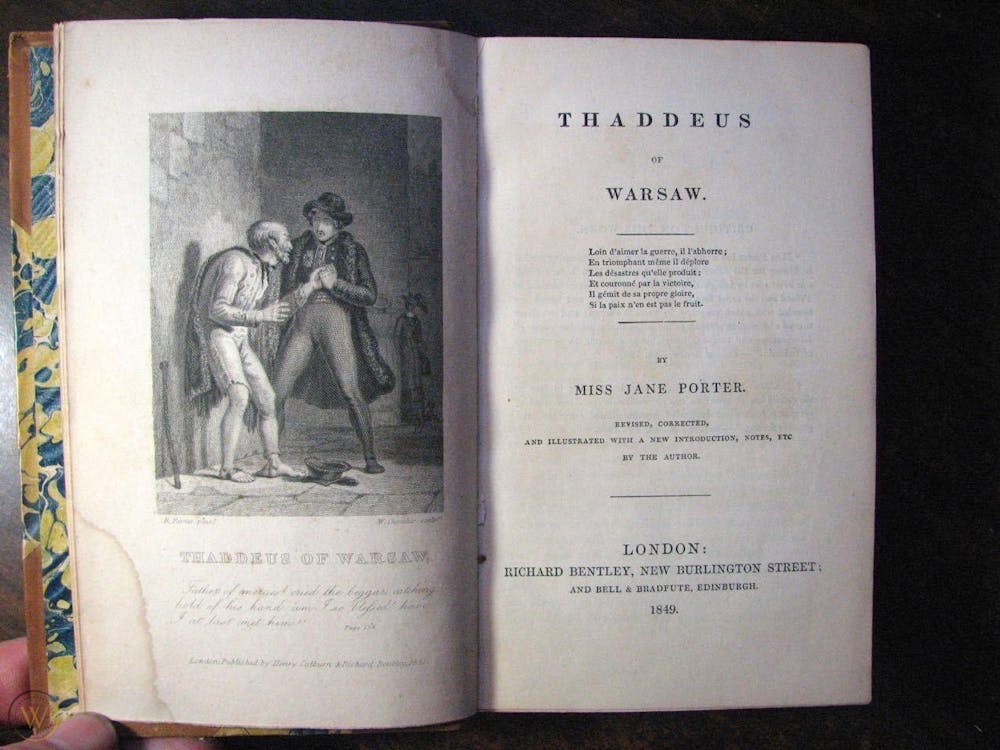
Nevertheless, some of these forgotten works illustrate the storytelling pathways that Austen never attempted. If I were to choose one work from Austen’s time that speaks most clearly to our own moment and showcases all that Jane left out, it would be Jane Porter’s novel from 1803, Thaddeus of Warsaw. Porter’s novel was a great success when it first appeared, and it remained in print for most of the 19th century.

Thaddeus of Warsaw, by Austen’s contemporary, Jane Porter.
Worthopedia

Thaddeus – an early 19th-century forerunner to Walter Scott’s Waverley and William Makepeace Thackeray’s Vanity Fair – tells the story of Count Thaddeus Sobieski, who escapes to Britain after his homeland falls to Russian invaders. Penniless, he hides his identity and makes his way among the rich and poor of London, finding work where he can, and coming to the aid of those less fortunate than he. He is befriended by a group of women, who assist or punish him, according to their impulses.

Imagine a Jane Austen novel with a Polish protagonist. Imagine an Austen novel where British women welcome an immigrant into their lives. Imagine an Austen novel where a character goes looking for work.

The passages in Thaddeus that resonate the most today, however, are the commentaries by British characters who are troubled by the presence of Polish exiles, like Thaddeus, among them. One character announces, “it is our duty to befriend the unfortunate; but charity begins at home … and, you know, the people of Poland have no claims upon us”. Another declares, “Would any man be mad enough to take the meat from his children’s mouths, and throw it to a swarm of wolves just landed on the coast?” No question that these characters would have voted “Leave”.

Today there are almost one million people living in the UK who were born in Poland. No matter what happens with regard to Brexit, these people have already changed their adopted homeland. While writers like Agnieszka Dale and Wioletta Greg create a new body of Anglo-Polish literature, Thaddeus of Warsaw reminds readers of the long links between the two countries.

It also reminds us that a satisfying romance, whether it concerns Emma Woodhouse or Thaddeus Sobieski, needs to please its readers. It won’t be giving too much away to note that, at the conclusion of Thaddeus of Warsaw, the meeting of wealth and love allows for a happy ending. That was one lesson that Jane Austen taught us a long time ago.The Conversation

Thomas McLean, Associate Professor, English and Linguistics, University of Otago

This article is republished from The Conversation under a Creative Commons license. Read the original article.

Unknown's avatar

Reading More in 2020


The link below is to an article that takes a look at reading more in 2020.

For more visit:
https://www.goodreads.com/blog/show/1751-super-readers-share-their-best-tips-to-read-more-in-2020

Unknown's avatar

Reading Challenges


The link below is to an article that takes a look at reading challenges and in particular the Goodreads reading challenge.

For more visit:
https://bookriot.com/2019/12/05/failing-the-goodreads-challenge/