Unknown's avatar

Why nonfiction books dominate bestseller lists in South Africa


File 20190423 175510 1w4md7.jpg?ixlib=rb 1.1
Pieter-Louis Myburgh’s “Gangster State” is one of South Africa’s top sellers.
Charles Leonard

Beth le Roux, University of Pretoria

Books in South Africa don’t often make headline news. But a controversial subject, protests and disruptions at a book launch, and threats of book burning are sufficient to get South Africans talking about the place of books in society once again.

This is exactly what has happened with investigative journalist Pieter-Louis Myburgh’s latest book “Gangster State”.

“Gangster State” is an exposé of current African National Congress (ANC) Secretary General Ace Magashule’s alleged murky dealings as premier of the Free State province, and his rise to one of the governing party’s most influential positions. The book has stirred up passionate reactions, both for and against its contents.

This last happened in late 2017 when another investigative reporter Jacques Pauw published a similar book, “The President’s Keepers”. That book dealt with South Africa’s previous head of state, Jacob Zuma, who’s been closely linked to massive corruption. Zuma denies the allegations.


Read more:
Two books that tell the unsettling tale of South Africa’s descent


Clearly, this kind of book touches a certain chord in South African society. A quick glance through the top-selling books in the past few years shows that non-fiction, and particularly political non-fiction dealing with very topical events, is the most popular genre.

The trend can be traced back through a number of years, with nonfiction consistently dominating the Nielsen’s BookScan sales charts – the most comprehensive figures collected on book sales through commercial booksellers. This raises the question: why do political books do so well in South Africa?

Celebrities

This isn’t a uniquely South Africa phenomenon. Nonfiction is popular around the world. Celebrities’ memoirs or biographies, as well as history titles, are more likely to become bestsellers than any other kinds of nonfiction. Indeed, Michelle Obama’s memoir “Becoming” caused a paper shortage in the US towards the end of 2018, as it was reprinted in such large quantities and at short notice to keep up with audience demand. This title has now sold more than 10 million copies worldwide.

Where South Africa differs is in the balance of sales between nonfiction and fiction. In most of the largest publishing markets, fiction is bought at much higher rates than nonfiction. In the US, for instance, average sales for fiction titles are between 4 000 and 8 000 copies, while the nonfiction average is lower, at 2 000 to 6 000 copies.

In South Africa, it’s the reverse. Nonfiction outsells fiction. This is not a new trend, either: political books found a ready audience throughout the apartheid period.

There are a few categories of nonfiction that do particularly well: political nonfiction, South African history (especially political history), religious books – and the ubiquitous cookbooks. The authors that have the edge tend to be journalists rather than academics, probably because their writing is so much more accessible.

Statistically, too, men write more nonfiction than women in South Africa, and so are more likely to produce top-selling titles, as was found by one of my post-graduate students, Kelly Ansara, in her Master’s study of the gender balance in SA publishing.

South African trends

In analysing the publishing lists and sales figures of the local nonfiction publishers – Pan Macmillan, Jonathan Ball, Penguin SA, Tafelberg and Jacana, on the whole – another difference becomes apparent. Books by and about celebrities are not as popular in South Africa as in the US and UK. Their sales are thus less predictable.

For instance, while former Springbok rugby coach Jake White’s “In Black and White” sold more than 60 000 copies in a week in 2008, star rugby player Joost van der Westhuizen’s “Man in the Mirror” was less successful. Comedian Trevor Noah’s memoir, “Born a Crime”, has been extremely successful, but titles by local musicians and actors such as Bonang Matheba and Somizi Mhlongo have sold comparatively few copies.

The raft of competing titles that hit the shelves after the murder conviction of former Paralympian athlete Oscar Pistorius did not take off as well as expected. Excellent titles on topics as diverse as climate change and South African art sell a respectable number, but don’t make the bestseller list.

Many of the country’s nonfiction titles sell several thousand copies very quickly, but few of them have staying power. Current interest is intense in topics like state capture and corruption scandals. But it fades quickly, leading to a short shelf-life for a number of political books. Only a few gain the perennial interest and staying power of a title like “I Write What I Like” by Steve Biko or Nelson Mandela’s “Long Walk to Freedom”.

Making sense

Many commentators suggest that the interest in political and current affairs titles reflects a nation trying to make sense of its tumultuous political environment. The huge political and social shifts of the past 20 to 30 years are still influencing South Africans’ daily lives. With one corruption scandal following another, trust in the authorities is low. But citizens still seek authoritative overviews and answers – in the nonfiction titles that line our shelves.

There is little reason to predict that the trend will change. However, if the threats mount, then we may see authors and publishers shifting to less controversial topics. For now, it’s great to see books in the news again.The Conversation

Beth le Roux, Associate Professor, Publishing, University of Pretoria

This article is republished from The Conversation under a Creative Commons license. Read the original article.
Unknown's avatar

A must-read list: The enduring contributions of African American women writers


File 20190221 148520 ceix1w.jpg?ixlib=rb 1.1
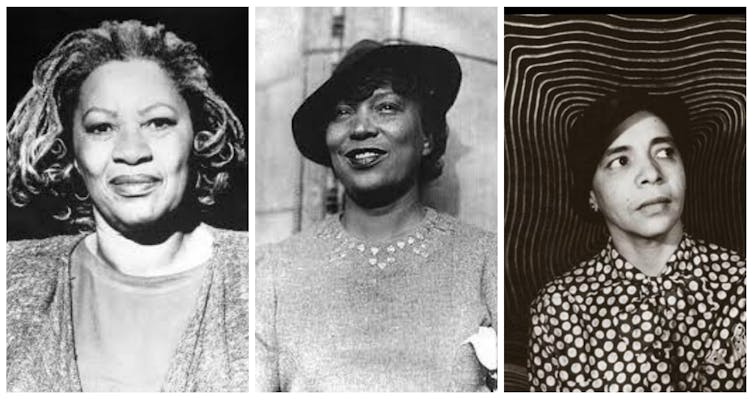
Toni Morrison, Zora Neale Hurston and Nella Larsen are on this short list of enduring must-read writers.
Left to right: Nobel Prize, U.S. Library of Congress, Yale archive

Nancy Kang, University of Manitoba

In Mules and Men (1935), anthropologist, creative writer and Harlem Renaissance upstart Zora Neale Hurston relays the evocative folktale “Why the Sister in Black Works Hardest.” Fatigued after the work of Creation, God casts a massive bundle onto the earth. Intrigued by the mysterious object, a white Southern woman during the antebellum era asks her husband to retrieve it. Reluctant to tote the load himself, the master instructs a slave to fetch it.

Soon wearied of the task, the slave then commands his wife to shoulder the burden. She does so, excited at the prospect of exploring the contents. When she opens the package, however, what leaps out at her and Black women for all posterity is none other than hard work.

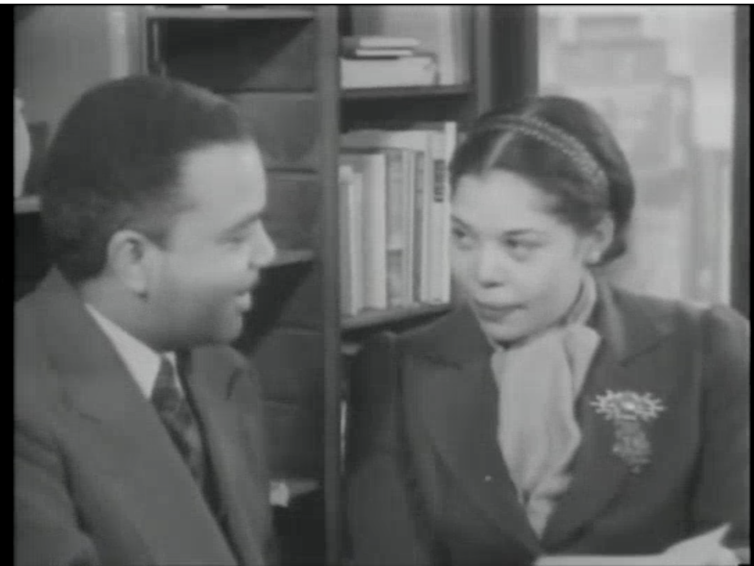
Ann Petry (right) was interviewed after she won a fiction award for ‘The Street.’
All-American news 4 / All American news IV / All-American news reel no. 4/Library of Congress

African American women writers have tackled the hard work of representing a diverse spectrum of lived and imagined experiences, including and especially their own. This labour occurs against the backdrop of centuries-long struggles with racist oppression and gender-based violence, including — but not limited to — slavery’s culture of endemic rape, forced or interrupted motherhood, infanticide, concubinage, fractured families and egregious physical and mental abuse.

Hard work as groundwork

Renowned abolitionist Frederick Douglass recalls in his 1845 slave narrative how witnessing the serial whippings of his Aunt Hester impacted him “with awful force.” He explains, “it was the blood-stained gate, the entrance to the hell of slavery, through which I was about to pass. It was a most terrible spectacle.”

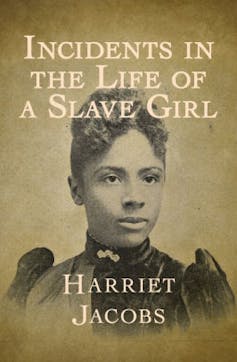
These ordeals also emerge in slave narratives by women. Harriet Jacobs’ Incidents in the Life of a Slave Girl (1861) emphasizes such travails. A target of relentless sexual harassment by her much-older master, Jacobs laments, “When they told me my new-born babe was a girl, my heart was heavier than it had ever been before. Slavery is terrible for men; but it is far more terrible for women.”

Once emancipated, African American women still faced staggering impediments when pursuing educational, entrepreneurial and employment opportunities. Political participation meant restrictions on voting rights both as women and as people of colour. Racist caricatures impugned everything from a woman’s intelligence and moral capacity to her skin color, texture of hair and body shape. Stereotypes like the docile Mammy, the Tragic Mulatta, the clownish Topsy, the oversexed Jezebel, the greedy Welfare Queen, the amoral Hoodrat and the Mad Black Woman (still prevalent today) remain testaments to a history of disrespect and erasure.

Hurston’s tale symbolizes the enduring social struggles Black women have faced living in what feminist critic bell hooks has termed white supremacist capitalist patriarchy.

In addition to influential autobiographers like Maya Angelou, dramatists like Lorraine Hansberry and poets like Gwendolyn Brooks, fiction writers have consistently demonstrated how imaginative art can simultaneously inform, persuade, entertain, catalyze social change and address individual as well as collective concerns.

Here is a short list of pivotal texts by African American women from the past century. These writers are but a small sample of the artists and intellectuals whose output resisted the force of what contemporary feminist critic Moya Bailey has termed misogynoir, or the corrosive fusion of anti-Blackness and misogyny prevalent in popular culture today. These women have completed the groundwork — and hard work — of envisioning a more just, inclusive society going forward.

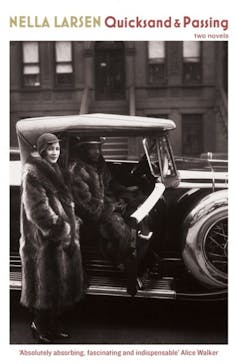
Quicksand (1928) and Passing (1929) by Nella Larsen

These novellas follow mixed-race women whose uneasy status on the colour line (including the lure of passing as white) complicates their lives in dangerous, even fatal ways. Passing is revolutionary for its depiction of homoerotic tension between two upper-middle-class Black women. Quicksand offers insight into the exoticization of African American women abroad and the contest between art and domesticity as viable avenues for a fulfilling life.


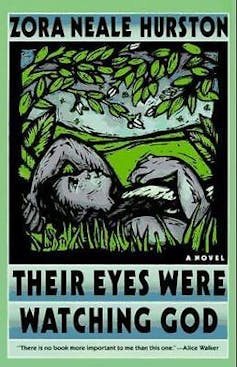
Their Eyes Were Watching God (1937) by Zora Neale Hurston

This story is the lyrical account of thrice-married Janie Crawford who finds a mature vision of love and fulfillment amid incessant gossip and a difficult family history. The all-Black township of Eatonville, Fla., and the rich “muck” of the Everglades contribute to a portrait of community health, daily striving and resolute self-awareness.


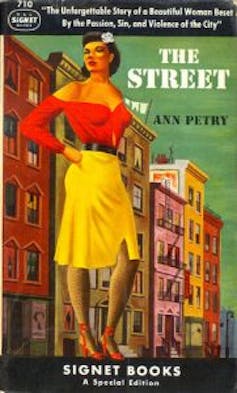
The Street (1946) by Ann Petry

This social realist novel follows single mother Lutie Johnson as she attempts to make a life for her young son in a predatory urban space. Weathering sexism, racism, classism, poverty and intense personal frustration, Lutie attempts to resist the brutality of the environment that gives the novel its loaded name.


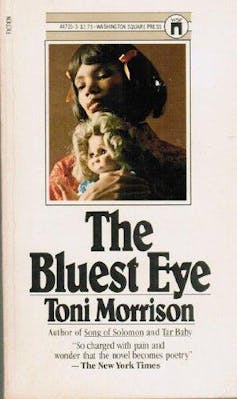
The Bluest Eye (1970) by Toni Morrison

This book is a searing portrait of a young girl’s coming-of-age and eventual undoing in the years following the Great Depression. Tumultuous family dynamics, psychological trauma and incest, the quest for compassion and self-love, and the toxic myth of Black ugliness coalesce in this first novel by the Nobel Laureate and author of neo-slave narrative Beloved (1987).


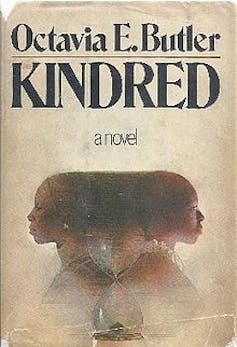
Kindred (1979) by Octavia Butler

Oscillating between the 1970s and the early 19th century, this science fiction odyssey (re)connects a contemporary Black woman writer and her white husband with her ancestors on a Maryland plantation. The novel is buoyed up by the dramatic tension of time travel and the juxtaposition of the pre-civil War Antebellum-era with Civil Rights-era racial attitudes, including those about interracial love and allyship.


The Women of Brewster Place (1982) by Gloria Naylor

Structured like a narrative quilt, these interconnected experiences of seven women span different generations, professions, class backgrounds and understandings of their place in the world. The eroded apartment complex that links them is the backdrop for unbearable pain as well as the promise of transformation and reconciliation.


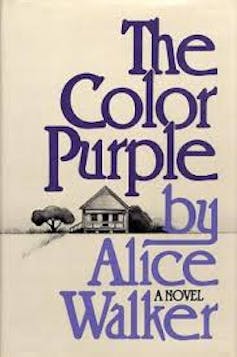
The Color Purple (1982) by Alice Walker

A tale of two sisters, Celie and Nettie, this novel constellates their love and longing via letters and imagined conversations across the Atlantic. Unsparing in its critique of domestic violence and toxic masculinity, yet tender in its treatment of various human weaknesses, the novel underscores Black women’s need for self-regard and mutual care. Not only are these acts revolutionary, but they also offer a glimpse of the divine.The Conversation

Nancy Kang, Assistant Professor of Women’s and Gender Studies and Canada Research Chair in Transnational Feminisms and Gender-Based Violence, University of Manitoba

This article is republished from The Conversation under a Creative Commons license. Read the original article.
Unknown's avatar

Hugh Lewin: South African journalist, author, militant and prisoner


File 20190118 100261 1k7xtdw.png?ixlib=rb 1.1
Hugh Lewin served on the Truth and Reconciliation Commission.
Institute for the Advancement of Journalism

Franz Krüger, University of the Witwatersrand

Hugh Lewin, who provided a unique voice on the South African story over many decades as militant, prisoner, journalist, author and much else, has died in Johannesburg at the age of 79.

Lewin is perhaps best known for two books that arose from his early involvement in the anti-apartheid underground. Bandiet, Seven years in a South African Prison, which has been described as a remarkable piece of prison literature, and Stones against the Mirror, published decades later, in which he describes grappling with the betrayal of the man whose testimony sent him to jail.

But his poetry, his children’s books and his work in publishing and the training of journalists and refugees leave as big a legacy. An outpouring of tributes has greeted news of his death. He has been called “an incredible writer and courageous soldier” by President Cyril Ramaphosa. and “a courageous stalwart” by Lord Peter Hain.

I first encountered him when he ran the small publishing house Baobab Books in Zimbabwe. Later I worked with him at the Institute for the Advancement of Journalism in Johannesburg, and will mainly remember his gentle humour, a sharp intellect that was never cutting, his ability to listen and his concern for others. It made him a great friend and outstanding teacher and mentor to many.

I will also remember the quiet dignity with which he dealt with his gradually failing health over the past decade, cared for by his partner Fiona Lloyd. His wit was still on clear display when I saw him just about a week before his death, despite frailty and struggling with the words that were his life – “I keep bumping against empty sentences,” he had previously said.

Radical politics

Lewin was born in the small town of Lydenburg in 1939 into an Anglican missionary family. He studied at Rhodes University before entering journalism at the Natal Witness in Pietermaritzburg.

He was quickly drawn into anti-apartheid politics of an increasingly radical kind, and got involved in the National Committee of Liberation, later renamed as the African Resistance Movement. This group of activists grew out of the Liberal Party and embarked on a campaign of sabotage of infrastructure targets, which it carried out between 1961 and 1964.

In July 1964, Lewin, then 24, was sentenced to jail for seven years for sabotage. He served this time in Pretoria Central prison, where he kept notes of his experiences in his Bible. After his release, he left the country on a “permanent departure permit”, to begin life as an exile in London.

Bandiet was published during this time. It manages both to provide harrowing detail of life in an apartheid jail and to use prison as a metaphor for the system as a whole. Reviewer Daniel Roux described the book as deserving, “its place in the global canon of prison writing”. Roux called it an,

understated, elegant and honest memoir that resists self-pity and self-glamorisation, and shows in careful detail what it feels like to drop out of one reality and to enter a completely different world.

Long banned in South Africa, the book was republished in 2002 as Bandiet – out of jail, including additional later material.

Anti-apartheid causes

His family remember an additional result of the prison years: his skill at sewing, from sewing mailbags in jail. His stitching was apparently large but very neat.

During 10 years in London, he worked as a journalist and for the International Defence and Aid Fund, a support organisation for anti-apartheid causes.

Another 10 years of exile followed, this time in Zimbabwe, where he worked as publisher and wrote a series of children’s stories, the Jafta series, whose simple narratives spoke to the ordinary reality of Southern African children.
Hugh returned to South Africa in 1992 and began work at the Institute for the Advancement of Journalism, the institution founded by Allister Sparks to train journalists for the new democracy.

He served on the Truth and Reconciliation Commission before returning to the Institute for the Advancement of Journalism in 1998 as its executive director. It was during this time that he was involved in the early initiatives that led to the establishment of the journalism programme at Wits University.

But processing of the traumatic events of his youth was clearly not complete, and after retiring from the Institute for the Advancement of Journalism, he worked on the memoir that became Stones against the Mirror. Published in 2011, the book deals with a friendship that ended in betrayal. Adrian Leftwich was the man who gave his name to the security police and testified against him in court, and the book describes Lewin’s 40-year search for some kind of resolution.

South African author Nadine Gordimer wrote about the book:

There have been many accounts of life in the active struggle against the apartheid regime but this one is a fearless exploration into the deepest ground – the personal moral ambiguity of betrayal under brutal interrogation.

It won the Alan Paton Award in 2012 – one of many honours he has received.

During these later years, Lewin also continued his involvement in training, travelling to the Myanmar border to work with refugees with his partner Fiona Lloyd. However, failing health made this more and more difficult.

Lewin leaves his partner, two daughters from an earlier marriage and three grandchildren.The Conversation

Franz Krüger, Adjunct Professor of Journalism and Director of the Wits Radio Academy, University of the Witwatersrand

This article is republished from The Conversation under a Creative Commons license. Read the original article.
Unknown's avatar

Nigerian writers compare genocide of Igbos to the Holocaust


File 20190208 174864 ldpkgf.jpg?ixlib=rb 1.1
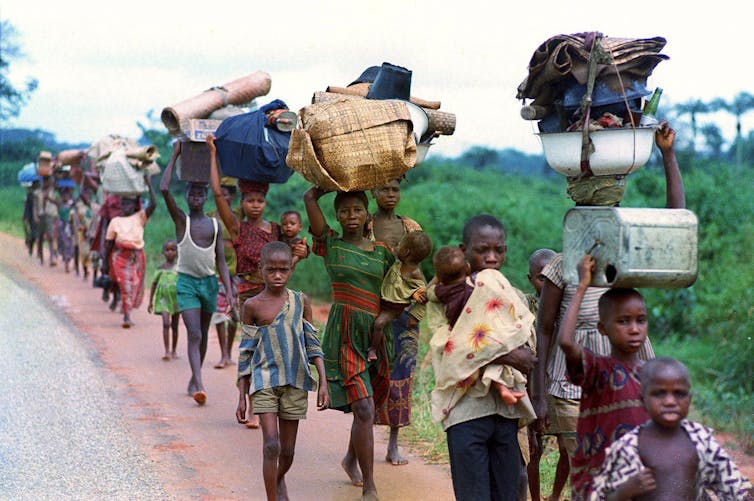
Biafran refugees flee federal Nigerian troops on a road near Ogbaku, Nigeria in this 1968 photo. Between one and three million people are estimated to have died.
(AP Photo/Kurt Strumpf)

Chigbo Arthur Anyaduba, University of Winnipeg

During the massacre of Igbos in Nigeria between 1966 and 1970, one to three million people died. In the decades since, writers have worked to make sense of the immense human tragedy.

These literary representations of the massacres use the Holocaust as an important point of reference.

The war in Nigeria, with its associated mass atrocities, is arguably one of the first major moments in postcolonial Africa when accusations of genocide were made. Following military coups in Nigeria in 1966, the military and ethnic extremists systematically targeted and killed Igbos across the then Northern and Western regions of Nigeria.

Massacres of Igbos and other Easterners across the country led to thousands of deaths and the displacement of millions.

The massacres led the Eastern Region of Nigeria to declare its secession from Nigeria. The region was renamed the republic of Biafra. Nigeria invaded Biafra in July 1967, leading to a protracted war. The federal government used starvation tactics which led to upwards of three million civilian deaths in Biafra. Biafra officially surrendered to Nigeria in January 1970.

After its genocidal war, the Nigerian government proceeded to engineer a culture of denial.

To counter that propaganda, writers reflecting on that past have often framed the war as genocide. A common feature in the writings is the comparison of Igbo experiences of atrocities to Jewish ones during the Holocaust.

The Holocaust as cultural icon of genocide

During the Biafran War, U.S.-based Igbo poet, Onwuchekwa Jemie, compared the murder of Igbos in Nigeria to the Nazi German murder of Jews during the Second World War. His poem, “Requiem” (from his 1970 poetry collection, Biafra: Requiem for the Dead in War) reflects this:

Once in 53 
Three times in 66 
Nigerians shoot civilians
through the ears
rehearsing all known tortures
murdering all males
and raping old women
forcing teenage girls in leper clinics
hundreds butchered…
the 30,000 innocents
mowed down Nazi fashion
a final solution
that failed again. 

In “Requiem,” Jemie catalogues the systematic persecutions and murders of Igbo civilians, which he considers similar to the Nazis’ “final solution.”

The lines “a final solution / that failed again” encapsulate the poet’s defiant view that Biafra will survive the genocidal onslaught from Nigeria.

Global history scholar Lasse Heerten has explained in his work on Biafra, that such comparisons of Igbo suffering to the Nazi genocide of Jews reveal the growing awareness of the Holocaust in African conflict zones at the time.

The comparison of Igbo suffering to the Holocaust offers a way for the writers to internationalize Igbo experience in Nigeria. In so doing, they are sharing a moral message about the universal condition of human cruelty.

The cruel human condition

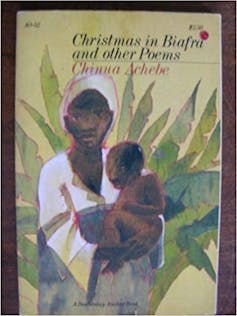
Similarly, the 1971 poem “Vultures” by Chinua Achebe reflects on the troubling realization that humans possess simultaneously a capacity for human care and a vulture’s inhumane savagery. The poet imagines a Nigerian military commander as a vulture and compares him to the Commandant of the Nazis’ death camp at Belsen:

Thus the Commandant at Belsen 
Camp going home for 
the day with fumes of 
human roast clinging 
rebelliously to his hairy 
nostrils will stop 
at the wayside sweetshop 
and pick up a chocolate 
for his tender offspring 
waiting at home for Daddy’s 
return… 
‘Christmas in Biafra and other Poems’ by Chinua Achebe was published in 1973 and includes ‘Vultures.’
Anchor Books

Achebe’s reference to the Holocaust evokes the Nazi death camps as a site of savagery: “fumes of / human roast.” He seems to be alluding to Paul Celan’s 1948 poem, “Death Fugue,” which describes the cremation of Jewish victims in the Nazi camps as a “grave in the sky.”

Reference to the Holocaust in Achebe’s poem provides a way to meditate on the ironic condition of human cruelty.

Another writer who used the Holocaust as a metaphor for moralizing about the human condition is Nobel laureate Wole Soyinka, who was jailed for his attempts to mediate between Biafra and Nigeria. His 1972 prison memoir The Man Died expresses his frustration over the unending cycles of brutality and the pattern of genocidal murders taking place in Nigeria. Soyinka’s other books, plays and poems on the 1966-1970 crisis equally draw on the Holocaust as a way to comment on cruelty.

‘And the World Has Remained Silent’

Half of a Yellow Sun.

Such comparison between Igbo suffering and the Holocaust intending to convey a moral message on human condition can be found in several other writings, including Flora Nwapa’s Never Again, Chris Abani’s Graceland (2004), Nnedi Okorafor’s fantasy novels, Who Fears Death (2010) and The Book of Phoenix (2015), and notably too in Chimamanda Ngozi Adichie’s novel, Half of a Yellow Sun (2006).

In Half of a Yellow Sun, there are several instances comparing the experiences of Igbos to those of Jews under the Nazis.

For example, the title of the character Ugwu’s story, ‘The World Was Silent When We Died,’ echoes the original Yiddish title of Elie Wiesel’s Holocaust memoir, Un di Velt Hot Geshvign, (“And the World Has Remained Silent”).

Universalize can also mean generalize

I believe these literary analogies between Jewish and Igbo experiences have helped to make the atrocities public and known. However, these analogies can also overwhelm the particulars of the Nigerian context of the crisis.

Because the political contexts of such historical mass atrocities being compared vary significantly, these comparisons may come at the cost of our understanding of genocide in African states. Both African and European historical contexts within which these atrocities occurred may become de-territorialized and depoliticized.

In the meantime, local suppression of political questions of Igbo self-determination and justice in the war’s aftermath remain unaddressed.The Conversation

Chigbo Arthur Anyaduba, Assistant Professor, University of Winnipeg

This article is republished from The Conversation under a Creative Commons license. Read the original article.
Unknown's avatar

The story of an alliance between two poets — one Cuban, one South African


File 20190131 109820 z11yq3.jpg?ixlib=rb 1.1
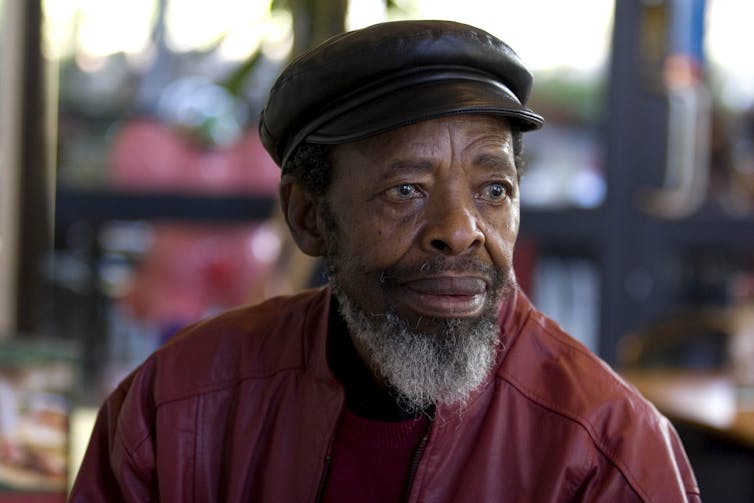
Keorapetse Kgositsile.
Oupa Nkosi/Mail & Guardian

Cynthia Gabbay, Freie Universität Berlin and Karin Berkman, Hebrew University of Jerusalem

It’s a little more than a year since the death of Keorapetse Kgositsile, South Africa’s first post-apartheid poet laureate. Kgositsile, born in Johannesburg in 1938, became a prominent and vocal activist for the African National Congress (ANC). In 1961, at the behest of the ANC, he went into exile, initially to Dar es Salaam in Tanzania, and subsequently to the US where he became involved in the Black Arts Movement.

In 1990 he returned to South Africa and in 2006 was appointed Poet Laureate. In the many volumes published during his exile and after his return, Kgositsile repeatedly and fearlessly addressed the crimes both of apartheid and of global racism, advocating a revolutionary politics of resistance.

Kgositsile’s death in January 2018 was mourned across South Africa and indeed across the globe.


Read more:
A tribute to Keorapetse Kgositsile, South Africa’s poet laureate


In a moving tribute in the introduction to Kgositsile’s final volume Homesoil in My Blood the poet, novelist and activist, renowned South African writer Mandla Langa draws attention to Kgositsile’s poetic skill and to his unwavering conviction,

“that art to mean anything must be involved in social activism.”

In a short aside Langa notes Kgositsile’s fertile association with prominent activists and writers across the globe like Pablo Neruda from Chile, and Cubans Nicolás Guillén and Nancy Morejón. The brief mention of Morejón belies the importance of the relationship between two activist poets, one which has rarely been addressed.

A consideration of Morejón’s engagement with Kgositsile as a fellow poet – and her visit to South Africa – shed new light on her poetic practice. It allows too, a reaffirmation of Kgositsile’s uniquely South African voice and to highlight the reach and impact of his transnational status.

Revolutionary writers

Nancy Morejón.
Potosino/WikiMedia

Morejón, born in 1944, is, with Guillén, among Cuba’s most important revolutionary writers: internationally renowned for her work as a poet, critic and essayist, she has been widely translated. In 2001, Morejón was awarded Cuba’s National Prize in literature. Issues of race and gender are central to her oeuvre. Through her poetry she acknowledges the centrality and complexity of her Afro-Cuban identity from both pan-Caribbean and pan-African perspectives.

Morejón addresses the origins of her relationship with Kgositsile in a telling anecdote in her essay, “Viaje a Suráfrica” (Voyage to South Africa). In 1987 she attended the International Conference of Writers held in Congo, together with the Cuban poet and translator of African poetry, Rogelio Martínez Furé. She wrote:

We went to drink coffee with one of the writers who had intervened very boldly. He was a small, petite man, with broad and thick lips, with a physical fragility that contrasted with the strength of his word and his overwhelming sympathy.

Furé … decided to ply this new friend with questions. The last question was filled with anguish since we both expected a tragic response: ‘Do you know the whereabouts of the poet Keorapetse Kgositsile from Johannesburg? The only thing we know is that he is one of the poets who has been the longest time in exile and we have not heard from him for so long … Many fear for his life…’

With a smile full of mischief, our interlocutor, impassively, replied: ‘Keorapetse Kgositsile… that is me.’ At that moment my personal history with South Africa was born.

(Translation: Cynthia Gabbay)

The anecdote conveys Kgositsile’s frequently noted playfulness and the affection he commanded. It equally suggests the high regard in which he was held amongst the global community of writer–activists.

The importance of Africa, and of South Africa in particular, as a focus of Morejón’s poetics of resistance, and the extent of her identification with the struggle is evident in her 1989 volume, Baladas para un sueño (Ballads for a dream). In the poem “Silent Lullaby for South African Children” , Morejón addresses the iniquities of South Africa’s pass laws:

Mommy had no pass

and there was no bread.

Daddy had no pass

and he was punished.

Mommy had no pass

and there was no bread.

Daddy had no pass

and he died, slaughtered.

Mommy had no pass

and there was no bread.

(Translation: Cynthia Gabbay and Karin Berkman)

The poem makes clear the impossibility of any peaceful sleep for the child who voices the lament. Its evocation of the simple vocabulary of a child and its spare, plaintive refrains serve to accentuate its concern with the poverty and violence that are the legacies of apartheid.

Travelling across South Africa

In June 1992, in the dying throes of the apartheid regime, Morejón was invited to deliver the keynote address at the annual conference of the Congress of South African Writers. After the conference she travelled across South Africa, giving workshops and lectures. She was accompanied throughout by Kgositsile, whom she terms her “cicerone” (guide).

In her essay on this journey, Morejón expresses her wonder at the beauty of the South African landscape, and her pleasure at the fraternity she develops with the poet and with her new South African friends. At the same time, her confrontation with the terrifying realities of apartheid induce in her a profound, almost unbearable sense of estrangement. With Kgositsile as her guide, she visited Crossroads, the shantytown near Cape Town.

She describes an intense loss of bearings, a “sensation of living in Hitler’s dream”: the public toilets at the edge of the camp are indefinable, part sarcophagi, part public amenities. The location loses its specificity, at once a dumping ground and a cemetery, the evidence of apartheid as “a diabolical aberration”.

Morejón closes her essay with a tribute to the people she encounters:

South Africa pulses in my memory for the same story that runs through my own veins, for its art and literature, for the friends of the Congress of South African Writers, for the travelling musicians, the muleteers, the stevedores, the sangomas, the maids who told me their griefs experienced under apartheid, their hopes of making it disappear even after its theoretical death.

(Translation: Cynthia Gabbay)The Conversation

Cynthia Gabbay, Alexander von Humboldt Fellow and former Research Associate at ERC Project “Apartheid Stops” (at Hebrew University), Freie Universität Berlin and Karin Berkman, Post-doctoral researcher, Hebrew University of Jerusalem

This article is republished from The Conversation under a Creative Commons license. Read the original article.
Unknown's avatar

Books paint contrasting pictures of Winnie Madikizela-Mandela


File 20190115 152995 2n81iy.jpg?ixlib=rb 1.1
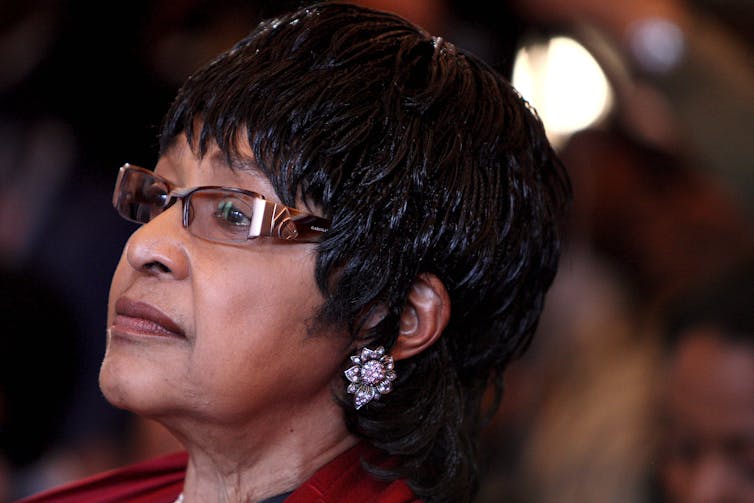
South African liberation struggle icon Winnie Madikizela-Mandela.
EPA-EFE/Jon Hrusha

Keith Gottschalk, University of the Western Cape

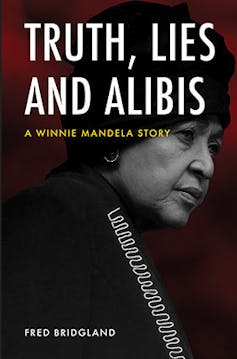
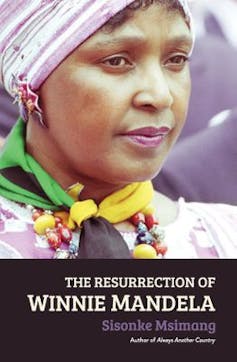
Writings on South African liberation struggle icon Winnie Mandela almost all fall into one of two categories – either hagiography or demonology. These two books – Truth, Lies and Alibis. A Winnie Mandela Story, by Fred Bridgland and Sisonke Msimang’s The Resurrection of Winnie Mandela. A Biography of Survival, try to be more nuanced.

Bridgland was a correspondent for Britain’s leading right-wing newspaper, the Daily Telegraph. For years, he dispatched empathetic reports on an anti-communist hero of the cold war, Jonas Savimbi and his UNITA movement, which were at war with Angola’s ruling MPLA – an ally of the ANC.

Readers might take it for granted that anything he writes would be hostile to the ANC. So Bridgland makes a point of prefacing his book on Winnie Mandela by first placing on record that Savimbi became paranoiac, and committed massacres of entire families of his leading officials. Bridgland is currently writing up these atrocities; in effect he attempts to so show his even-handedness.

Sisonke Msimang, author of Always Another Country: A Memoir of Exile and Home, has also written articles for the New York Times, the Guardian, and Al Jazeera. She writes near the start of her biography: “I will not pretend otherwise: I am interested in redeeming Ma Winnie”.

But towards the end, she writes: “It is deeply uncomfortable to acknowledge Winnie’s involvement in Stompie’s death, and in the disappearances of Lolo Sono and Sibuniso Tshabalala, while also holding her up as a hero.

She qualifies her views further:

In a perfect world, her place is not on a pedestal… I am prepared to raise her up in the hopes that, one day, South Africans might ethically and in good conscience take her down.(p.157)

Msimang also writes in her conclusion that she’s even prepared to say give up her admiration for the complicated Winnie Madikizela-Mandela. “I cannot do so, however, without a few conditions … The past must be opened up not just to grief, but to the structural nature of racism.” She means the class exploitation coloured by colonialism and finally apartheid.

This review needs to start with three disclosures. This reviewer is a member of the African National Congress. He is also a friend of the Horst Kleinschmidt mentioned in Bridgland’s book. And he has, in the company of others, briefly met Winnie Madikizela-Mandela, Zindi Mandela, and Nelson Mandela.

Double standards

The issues these two biographies raise, of liberators’ wartime actions, are not unique to South Africa. For example, post-WW2 readers, with their knowledge of the holocaust of six million Jews and three million Christian Poles, also have to debate Bomber Harris’ saturation bombing of German residential downtown areas and suburbs.

In chapter two Bridgland summarises the South African police’s Special Branch’s persecution of her. The remaining 27 chapters and epilogue summarise Madikizela-Mandela’s persecution of others. The overwhelming majority of facts in his book were published two decades ago – and never refuted.

His book also flags the issue of those who lobbied the then Chief Justice Corbett about Winnie’s pending trial. This included the then Minister of Justice, Kobie Coetsee, the then head of the National Intelligence Service Neil Barnard, and the then British ambassador Robin Renwick. He evidently didn’t rebuke any of them.

Msimang’s most persuasive arguments are when she points out the sexist double-standards in much of the condemnation of Zanyiwe Madikizela, better known as Winnie Mandela. She emphasises that it’s strange to perceive Winnie’s actions as motivated by psychiatric reasons rather than political.

She highlights that Winnie was not a radical outlier, but that during 1985-86 many ANC leaders and Radio Freedom, the then banned ANC’s underground radio station, made similar statements about insurrection, killing informers, and necklaces:

Winnie was not the only ANC leader who traded in recklessness and fiery rhetoric. But she was the only woman who was visibly doing so. (p.13)

Msimang also points out that Harry Gwala and other ANC warlords were committing in substance the same actions as Winnie Mandela, but with far less condemnation.

The same double-standards also apply to men and women political leaders having adulterous affairs:

If the roles had been reversed and you had been imprisoned, things would have been very different. Nelson would have remarried and you would have languished forgotten on the island, and it would have been no reflection on him. Men have needs. Women sacrifice.

Unsurprisingly, two such contrasting biographies also differ over the facts. Bridgland writes that the two hit men who assassinated Dr. Abu-Baker Asvat – the Black consciousness exponent and doctor who tended to Stompie after his brutally assault to which Madikizela-Mandela was part – gave statements that Winnie Mandela had offered them R20 000 to kill him. Msimang writes that these were merely “rumours” and “No link has ever been established between Dr. Asvat’s death and Winnie Mandela.”

As this review goes to press, the ANC has posthumously awarded Winnie Mandela its highest honour, the Isithwalandwe.

The controversy continues in death as in life.The Conversation

Keith Gottschalk, Political Scientist, University of the Western Cape

This article is republished from The Conversation under a Creative Commons license. Read the original article.
Unknown's avatar

Hugh Lewin: South African journalist, author, militant and prisoner


File 20190118 100261 1k7xtdw.png?ixlib=rb 1.1
Hugh Lewin served on the Truth and Reconciliation Commission.
Institute for the Advancement of Journalism

Franz Krüger, University of the Witwatersrand

Hugh Lewin, who provided a unique voice on the South African story over many decades as militant, prisoner, journalist, author and much else, has died in Johannesburg at the age of 79.

Lewin is perhaps best known for two books that arose from his early involvement in the anti-apartheid underground. Bandiet, Seven years in a South African Prison, which has been described as a remarkable piece of prison literature, and Stones against the Mirror, published decades later, in which he describes grappling with the betrayal of the man whose testimony sent him to jail.

But his poetry, his children’s books and his work in publishing and the training of journalists and refugees leave as big a legacy. An outpouring of tributes has greeted news of his death. He has been called “an incredible writer and courageous soldier” by President Cyril Ramaphosa. and “a courageous stalwart” by Lord Peter Hain.

I first encountered him when he ran the small publishing house Baobab Books in Zimbabwe. Later I worked with him at the Institute for the Advancement of Journalism in Johannesburg, and will mainly remember his gentle humour, a sharp intellect that was never cutting, his ability to listen and his concern for others. It made him a great friend and outstanding teacher and mentor to many.

I will also remember the quiet dignity with which he dealt with his gradually failing health over the past decade, cared for by his partner Fiona Lloyd. His wit was still on clear display when I saw him just about a week before his death, despite frailty and struggling with the words that were his life – “I keep bumping against empty sentences,” he had previously said.

Radical politics

Lewin was born in the small town of Lydenburg in 1939 into an Anglican missionary family. He studied at Rhodes University before entering journalism at the Natal Witness in Pietermaritzburg.

He was quickly drawn into anti-apartheid politics of an increasingly radical kind, and got involved in the National Committee of Liberation, later renamed as the African Resistance Movement. This group of activists grew out of the Liberal Party and embarked on a campaign of sabotage of infrastructure targets, which it carried out between 1961 and 1964.

In July 1964, Lewin, then 24, was sentenced to jail for seven years for sabotage. He served this time in Pretoria Central prison, where he kept notes of his experiences in his Bible. After his release, he left the country on a “permanent departure permit”, to begin life as an exile in London.

Bandiet was published during this time. It manages both to provide harrowing detail of life in an apartheid jail and to use prison as a metaphor for the system as a whole. Reviewer Daniel Roux described the book as deserving, “its place in the global canon of prison writing”. Roux called it an,

understated, elegant and honest memoir that resists self-pity and self-glamorisation, and shows in careful detail what it feels like to drop out of one reality and to enter a completely different world.

Long banned in South Africa, the book was republished in 2002 as Bandiet – out of jail, including additional later material.

Anti-apartheid causes

His family remember an additional result of the prison years: his skill at sewing, from sewing mailbags in jail. His stitching was apparently large but very neat.

During 10 years in London, he worked as a journalist and for the International Defence and Aid Fund, a support organisation for anti-apartheid causes.

Another 10 years of exile followed, this time in Zimbabwe, where he worked as publisher and wrote a series of children’s stories, the Jafta series, whose simple narratives spoke to the ordinary reality of Southern African children.
Hugh returned to South Africa in 1992 and began work at the Institute for the Advancement of Journalism, the institution founded by Allister Sparks to train journalists for the new democracy.

He served on the Truth and Reconciliation Commission before returning to the Institute for the Advancement of Journalism in 1998 as its executive director. It was during this time that he was involved in the early initiatives that led to the establishment of the journalism programme at Wits University.

But processing of the traumatic events of his youth was clearly not complete, and after retiring from the Institute for the Advancement of Journalism, he worked on the memoir that became Stones against the Mirror. Published in 2011, the book deals with a friendship that ended in betrayal. Adrian Leftwich was the man who gave his name to the security police and testified against him in court, and the book describes Lewin’s 40-year search for some kind of resolution.

South African author Nadine Gordimer wrote about the book:

There have been many accounts of life in the active struggle against the apartheid regime but this one is a fearless exploration into the deepest ground – the personal moral ambiguity of betrayal under brutal interrogation.

It won the Alan Paton Award in 2012 – one of many honours he has received.

During these later years, Lewin also continued his involvement in training, travelling to the Myanmar border to work with refugees with his partner Fiona Lloyd. However, failing health made this more and more difficult.

Lewin leaves his partner, two daughters from an earlier marriage and three grandchildren.The Conversation

Franz Krüger, Adjunct Professor of Journalism and Director of the Wits Radio Academy, University of the Witwatersrand

This article is republished from The Conversation under a Creative Commons license. Read the original article.
Unknown's avatar

Decolonising literary studies requires ditching finality and certainty


File 20190115 152986 qbpls7.jpg?ixlib=rb 1.1

Rodrigo S Coelho/Shutterstock

Peter D. McDonald, University of Oxford

Decolonising literary studies isn’t simply a matter of relieving the symptoms, substituting this author for that or setting up a new canon in place of the old. The challenge is to address the chronic underlying condition by thinking beyond the guiding assumptions and aspirations of any colonial-era curriculum.

To start with, this means ditching the ideas of language that were central to colonial linguistics. On that logic, for instance, the curriculum was thought to affirm one supposedly unitary, national language (let’s say French). Or at best, in the case of Comparative Literature, it affirmed two supposedly unitary, national languages (for example, French and English).

The reason? Language, it was assumed, is the expression of the national “character”, “genius” or “soul” – to put it in the most idealistic terms. Or it is the bearer of “the culture”. This was usually understood as the shared, often ancestral values, practices and forms of knowledge by which a people (or national community) sees itself and understands its place in the world.

This way of thinking informed the selection of great writers that gave the colonial-era literary curriculum its content. And it defined one of its core aims: to provide the means by which the nation could come to know and affirm itself as a community rooted in one language, one history, one culture and one state.

At home this was a quasi-theological exercise in self-knowledge – the talk was all about encountering the “national soul” through literature. Abroad it was a rather more worldly instrument of self-imposition – the export version of the curriculum serving to assert the sovereignty of the colonising culture and the primacy of its language, values and ways of knowing.

To design a decolonising curriculum, then, we need to start by abandoning the dubiously assured, dubiously otherworldly assumptions underpinning this legacy.

More secular

This means conceptualising language in more secular or earthy terms. Language as a river, say, the source of which is ultimately obscure, the mouth always somewhere further on. It’s a strange kind of river too. Many other major rivers, not just minor tributaries, constantly flow in and out of it. And no state or community (national or otherwise) can claim exclusive rights over it.

Push this rather benign, naturalising analogy too far, however, and you gloss over colonisation’s destructive effects. Backed most often by the state and its allies, some languages, after all, became vast, transcontinental canals – think of English or Spanish. And constructing these often caused others to dry up altogether – think of Aushiri or |Xam.

So what would a curriculum founded on this alternative idea of language look like?

For one thing, given its central premise – no language is the product of any one history or the property of any one community – this more secular conceptualisation would put pressure on the inherited disciplinary structures of the university itself. Think of all those separate departments of English, French, Spanish, etc. Yet it need not follow that they should fall. What has to go are the canal-building assumptions on which they were often founded, and the silo mentalities they still tend to foster.

Taking the more benign river perspective first, a decolonising curriculum would begin by encouraging students to uncover the many “foreign” languages within those they have chosen to study. This would reveal how translation, far from being an anomalous or specialist activity, is integral to the ordinary life of all languages.

In a similar spirit, it would make it possible for them to follow the shifting contours of linguistic geography, which seldom coincide with state boundaries. This would leave them free to trace the complex movement of languages through multiple speech communities and across all media.

The canal perspective would require other lines of enquiry. Here the curriculum would ask students to reflect critically on the legacies of colonial linguistics, the interconnected histories of standardisation and marginalisation, and the impact they had on the way all languages were understood in the past.

Beyond colonial-era silos

The river and canal perspectives inevitably raise different questions of ownership, multilingualism and translation. Yet both open up ways of thinking beyond theologically inspired, colonial-era silos. And both make it possible for a properly decolonising linguistics to emerge in which the interdependence of self- and other-knowledge is central.

Literary writing, too, would have a transformed status. Since a decolonising curriculum would treat linguistic inventiveness as an ordinary feature of language, like translation, it would have no need of the colonial-era’s sacralised canon of great writers.

Equally, it would not assume that writers all sign up to canal-building national traditions simply by default. Many may have in the past, and some may well continue to see themselves in similar terms today, but the presumption has lost all currency. How innovative writers relate to communities, whether national, sub-national or supranational, can now seldom be known in advance of actually reading their work.

A decolonising curriculum would therefore consider the multiple ways in which writers negotiate the linguistic, literary and cultural legacies of the colonial era. Some reject them, some indigenise them, some re-foreignise them, and others refuse all clear-cut options, choosing to work between languages and traditions instead.

Does this mean a decolonising literary curriculum is simply “world literature” by another name? Possibly, but only in the sense in which the Bangla poet-philosopher and Nobel Literature Prize-winner, Rabindranath Tagore, used the phrase over a century ago when he affirmed the promise of what he called বিশ্ব সাহিত্য (Vishva Sahitya). For Tagore, this was a call to decolonise knowledge and to reinvent the university. It was also a call to learn to think (and live) creatively amid the world’s turbulence without any craving for otherworldly certainty or finality.

It is a call worth heeding again.The Conversation

Peter D. McDonald, Professor of English and Related Literature, University of Oxford

This article is republished from The Conversation under a Creative Commons license. Read the original article.

Unknown's avatar

A view of Johannesburg through lenses from a different era


File 20181102 83632 1eg4s21.png?ixlib=rb 1.1
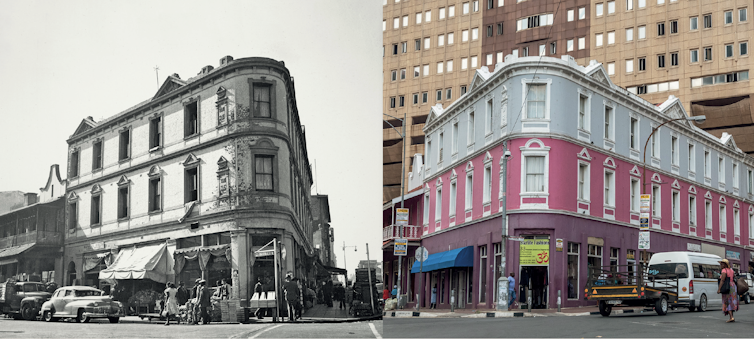
Carmel Building in Diagonal Street, Johannesburg.
Museum Africa (left) Yeshiel Panchia (right)

Kathy Munro, University of the Witwatersrand

Johannesburg was always a much photographed place from its earliest days. It was a city that grew up with photographers and their cameras. As a town of migrants and immigrants, people wanted to send postcards and photographic souvenirs back home.

Some proof is in a new book, Johannesburg Then and Now, by history blogger, Marc Latilla. It is a series of photographic juxtapositions of early photographs of the city – dating from the 1880s to the 1940s – with contemporary images of the same street scene or building by photographer Yeshiel Panchia.

The book is descriptive rather than analytical, with the emphasis on Johannesburg buildings, places and streets and not its people. Latilla’s love and passion for his city comes through in his descriptions.

Young city

At a mere 132 years Johannesburg is a young city compared with cities of the world. London and Rome go back over 2000 years.

It started as a mining camp with a gold bonanza once George Harrison had found gold on the Main Reef in 1886. The new mining settlement was named Johannesburg – the origins of the name and who precisely was the “Johannes” of Johannesburg is still in dispute. The camp grew over time to a city. Today it is a metropolis that dominates the province of Gauteng, both as the provincial capital and the financial heartland of South Africa.

Johannesburg is a fractured city, divided in all sorts of ways. Geographically it’s split by the mines of the Witwatersrand – one can still see their remains south of the city while the north has a very different landscape.

Another divide was created by the railway which cut the town in half with the most affluent suburbs to the north and the less affluent to the south.

The city’s economic divide was also evident in the architectural styles of the residential areas which reflected status: from the working class, to the lower and upper middle class, and then at the very top end the grand estates on the northern ridges for the Randlords and newly enriched capitalist class.

The town was also divided by race from its earliest days. While there was always economic integration, segregated residential areas for different racial groups were the norm. The township of Soweto was created in the 1930s when the white government started separating black people from white people.

This policy of racial and class separation was perpetuated further when apartheid became official policy in 1948. It also led to forced removals of black people to townships outside the “white” city.

Growing in circles

Johannesburg has always grown in concentric circles. Municipal boundaries were periodically extended, mapped and basic services of water, sewerage, lighting, tramways financed by an increasing number of ratepayers brought into the net to support the city. Soweto, once the internationally recognised site of the 1976 youth uprising, is now part of the city, but so is the glitzy new glass and concrete post-modern city of Sandton.

The Johannesburg that has been captured in this book though is the old Johannesburg; what was called the Central Business District and its surrounding suburbs. This is Johannesburg from 1886 to a date more or less 50 years later when the city celebrated its jubilee with the Great Empire exhibition at Milner Park in 1936.

I should declare an interest – I was first asked by Penguin Books if they could use an image of an old early title deed that I had written about and then to give the book a preliminary early opinion. As historian I found myself drawn in to assist in some fact checking and comments to help the author. Of course the selection of photographs and his commentary remain his entirely.

The old photographs were taken by countless unknown and mainly anonymous photographers. They are remarkable in their own right. It was so much more difficult to take and make a photograph in 1900 than in our digital age. Those old photos in black and white are works of art as much as are the perfect colour and light reflected images of today. The sources of the old photographs are primarily from collections held by the University of the Witwatersrand, Museum Africa and the Transnet Heritage library. The early photographs are tend to be undated, so that the “then” can be any time from circa 1890 to the 1930s and even later, while the now photographs are all in colour and clearly belong to the last few years.

Superb find

My favourite photo is the old aerial view of the Harrow Road redevelopment when the first Johannesburg freeway was engineered (Harrow has since been renamed after a famous Johannesburger, the liberation struggle stalwart Joe Slovo). The photo allows us to see precisely how Harrow Road was widened and changed direction in the fifties. This single photo is a superb find.

A book such as this makes a contribution to heritage because it captures, assembles and documents the old and now the new. Where old photographs have been found recording what a particular building looked like and the building is still there, such photographic documentation strengthens the heritage preservation case.

However, none of the grit, crime, grime, litter or lack of maintenance we battle against today is visible in the modern photographs. This is the Johannesburg we don’t see: the crisis of homelessness and densification of dwellings. Who, for example, would know in the photo of Plein Street park that it is actually now a dormitory area for dozens of homeless people without jobs? Is it the city or history or harsh economic realities that has failed them? Of course one can argue that modernization and urbanization always left victims and the city of gold did not bring fabled wealth to all .

Johannesburg Then and Now is a fascinating book. It’s important for cities to preserve their pasts , because “Roots” matter as much as “shoots”. This book can perhaps start a discussion about what ought to be appreciated and “saved”. The book will remind city planners to include heritage in their planning for a 21st century city.

Johannnesburg Then and Now is published by Penguin.The Conversation

Kathy Munro, Honorary professor in the School of Architecture and Planning, University of the Witwatersrand

This article is republished from The Conversation under a Creative Commons license. Read the original article.
Unknown's avatar

African elephants in literature — lessons in exploitation and compassion


File 20181031 76416 11d6v9z.jpg?ixlib=rb 1.1

Shutterstock

Dan Wylie, Rhodes University

About 15 years ago I was in a Minneapolis conference centre, about to deliver a paper on elephants in Southern African fiction, when I encountered a curious local in an elevator. When I told her that one of my subjects was Wilbur Smith’s thriller, Elephant Song, she enthused,

Oh, I just loved that book; I contribute every year now to the Hohenwald Elephant Sanctuary.

I didn’t tell her that my paper critiqued the novel for being exploitative, and grossly sensationalist. Despite its title, the book is only tangentially interested in elephants – at least in comparison with Dalene Matthee’s famous Circles in a Forest, perhaps South Africa’s most eco-sensitive novel ever.

There’s no telling what people will get out of their reading. Even in our era of super-saturating graphics and television, photography and film, literature still has a considerable effect on public perceptions of environmental issues. Until very recently, of course, reading was the primary mode of information transfer. Many attitudes towards, say, elephants were established through literature, and persist in other media today.

This is the purview of my new book, Death and Compassion: The elephant in Southern African Literature. The book takes the region south of the Zambezi as its stamping-ground. It explores how various genres of literature reflect attitudes towards elephants. It takes literature in a broad sense, probing beyond the standard fiction and poetry into non-fiction forms such as hunting accounts and game-ranger memoirs.

Each chapter asks questions crucial to our understanding of our place in the natural world. It does so conscious that this understanding is the great problem of our times, superseding and enveloping all more localised and political squabbles. What is the relationship between science and compassion? Why do men hunt? How do we educate the young about animals, the environment and us? What sense of “community” might include wild and even dangerous animals?

Conflicting emotions

Elephants raise the conflicting emotions involved in humanity’s ongoing struggle to balance exploitation and well-being, damage and compassion to a particularly intense pitch.

Can we look to indigenous cultures for guidance, as conveyed by rock art, folktales and proverbs? The rock art is relatively opaque, while oral productions are now so refracted through translation into modern literary media that it’s hard to be sure what the originals’ attitudes towards elephants might have been. Reverence, awe, and taboo are evident enough, but it seems that animal compassion is an invention of modernity.

Compassion, at least as it emerges in this literature, seems to develop in response to destruction. It strengthens belatedly but proportionately to the catastrophic decimation of wildlife under invading white firepower, and the consequent sense of loss. I found the chapters on the 18th Century travel accounts (from Pieter Kolbe through François Le Vaillant to John Barrow), and the later nineteenth-century hunting accounts (from Roualeyn George Gordon-Cumming to Frederick Courteney Selous) the hardest to write.

The unremitting slaughter related by these adventurers is stomach-turning to say the least. Not that the hunters were oblivious to an ethical issue: without exception they engage at some level with already-nascent arguments for compassion.

Without exception they find literary methods to evade or suppress any emotions which impede the drive to kill. The genre is distinguished by its evasive manoeuvres designed to avoid thinking about it at all.

The adult fictions, from H. Rider Haggard to Wilbur Smith, are little better, being largely gratuitously gory adventure-tales which come to centre repetitively on a duel-like situation: single hunter versus great old tusker. It seldom ends well for the elephant.

Still, a shift becomes discernible in mid twentieth-century novels. “Conservation” is gaining traction, so the novel, just as it had migrated out of the hunting account, now drifts into some commonalities with the modern game-ranger memoir. The ranger becomes the hero, saving the tusker from poachers.

Of course, shadowing all this is the ivory trade. It had existed for centuries, drove most of the early slaughter and drives the renewed slaughter today. In some estimates, an African elephant is being killed every 15 minutes.

Ironically, because of the colonial-era establishment of game reserves like Kruger, southern Africa’s elephants so flourished that that other side of slaughter – the organised “cull” – for a time became the management tool of choice. The ethics of culling preoccupy both late novels and memoirs by rangers, scientists and managers (such as Caitlin McConnell and Lawrence Anthony).

Perception of elephants

In most recent works, the relatively new perception of elephants not just as mobile repositories of ivory but as emotionally sensitive, uniquely communicative and socially complex – almost human, even a model for humans – achieves unprecedented prominence.

This is especially so in fiction for children, in which compassion and empathy seem more acceptable, as if they are merely childish motivations for action in the world. A disastrous stance.

Poachers and ivory traders are unlikely to be persuaded by literature. Nevertheless, understanding stories – those of the murderous as well as of the compassionate – is vital to generating the critical mass necessary to save natural environments and their multiple denizens, from elephants to herons, from octopi to ants – and ourselves – from the myopia of Mammon.

Compassion alone, unanchored by economic and legislative power, is unlikely to reverse the tide of environmental destruction, but without cross-species compassion, we are surely lost.

Death & Compassion: The elephant in Southern African Literature is published by Wits University PressThe Conversation

Dan Wylie, Professor of English, Rhodes University

This article is republished from The Conversation under a Creative Commons license. Read the original article.