Unknown's avatar

Print isn’t dead: major survey reveals local newspapers vastly preferred over Google among country news consumers


Shutterstock

Kristy Hess, Deakin University and Lisa Waller, RMIT University

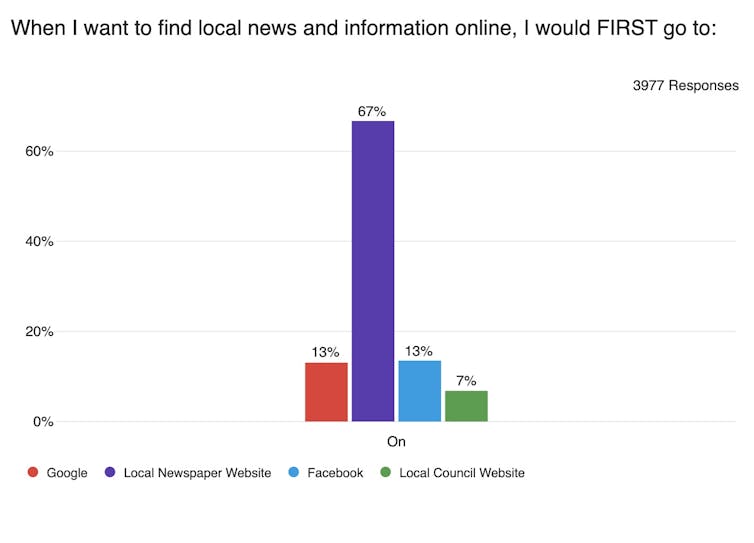
Newspaper readers in rural and regional Australia are five times more likely to go directly to their local newspaper website than Google or Facebook for local information, and almost 10 times as likely to go to their local news website over a council website for news and information.

Nearly two-thirds of local newspaper readers also indicate policies affecting the future of rural and regional media would influence the way they vote at the next federal election.

These are some of the key findings of a national survey of almost 4,200 Australian country newspaper readers we recently conducted as part of a project to drive greater innovation in the rural and regional media landscape.

Many small newspapers in Australia faced closure after their advertising budgets shrunk during the global pandemic, while others moved to digital-only editions to cut costs.

In our survey — the largest conducted of country press audiences in Australia — we found local newspapers still play a vital role in providing information to residents in these communities, even with the proliferation of news available on Facebook and Google.

This is a significant finding, given how much focus has been placed on the role of the tech giants as a central point for digital news and information.

Australia is targeting Google and Facebook with new law.
Australia’s new law aimed at forcing Google and Facebook to pay for news content has been fiercely opposed by the tech companies.
Mark Lennihan/AP

The federal government recently implemented a mandatory news media bargaining code that forces tech companies like Facebook and Google to pay news producers for content that appears on their platforms.

Last week, the ACCC granted interim approval for Country Press Australia to negotiate with the tech giants on behalf of its 160 newspapers.

This funding is desperately needed to help support publishers of credible, reliable local news who are losing the advertising dollar to social media platforms — but for some, it still may not be enough.


Read more:
As Facebook ups the ante on news, regional and elderly Australians will be hardest hit


Resistance to local papers going online only

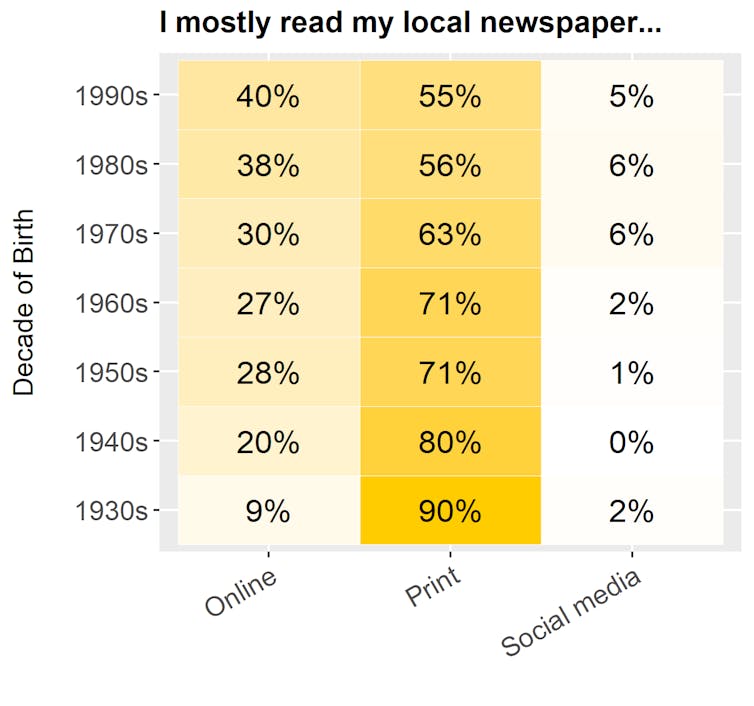
Our survey also reveals just how passionate people are about local newspapers in rural and regional Australia — that is, the print version. In fact, the majority of country press audiences (71%) prefer to read their local paper in print than online.


Author provided

Many respondents expressed resistance to their newspaper being made available in digital format only. They offered comments such as:

There is always room for improvement, but if this newspaper went digital, I would not be interested.

And this from another:

The day it goes digital only will be the day I stop reading it.

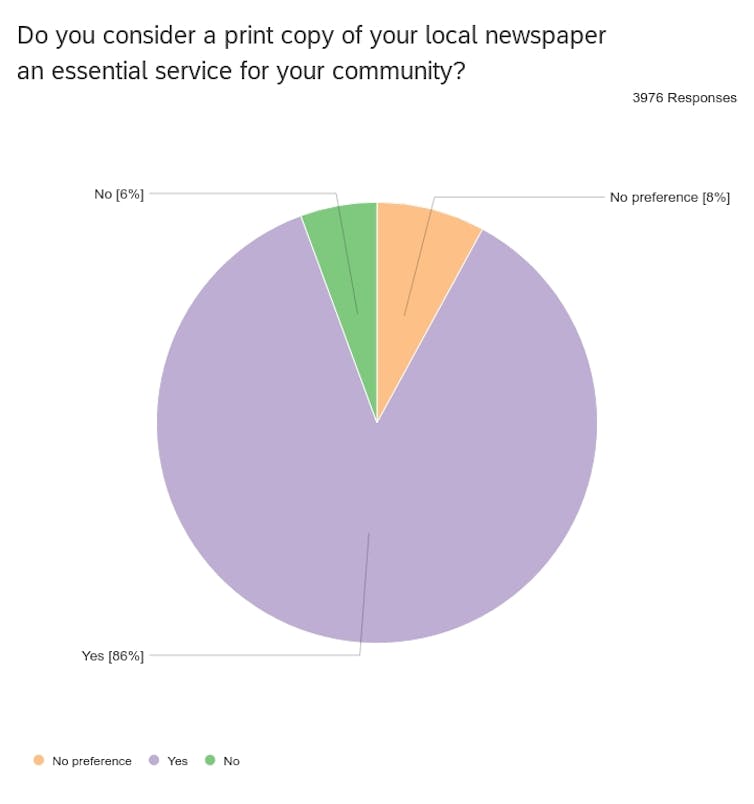
Our survey also found that respondents overwhelmingly (86%) view a printed copy of their newspaper as an essential service for their community.


Author provided

This accords with our previous research that has advocated for the federal government to recognise the vital importance of the printed paper to regional communities.

While the average age of our survey respondents was 60-61, this demographic will continue to represent a large portion of local news readership for many years.

This means local news organisations need strategies to aid the transition for all audiences into digital formats and/or advocate for the survival of the printed product in the interests of social connection and democracy.

Age NewsSource graph.
Author provided

Locals want a say in the future of their papers

Our survey also found 94% of respondents want a much bigger say about government policies and decisions affecting the future of local newspapers. This finding sends a message to policymakers to rethink their strategies for engaging the public in ideas to support the future of local media.

When it comes to solutions for struggling rural and regional media outlets, our survey found:

  • audiences believe local newspapers should be collaboratively funded by a range of relevant stakeholders (media companies, advertisers, subscribers, social media, government and philanthropic organisations) to ensure their future
  • while some media lobbyists and academics — both in Australia and overseas — have called for newspaper subscriptions to be made tax deductible, 71% of respondents are not in favour of such initiatives
  • respondents also overwhelmingly said any additional government funding for local news should be used to employ more local journalists (71%) over increasing digital connectivity (13%) and digital innovation products (17%).


Read more:
Local news sources are closing across Australia. We are tracking the devastation (and some reasons for hope)


The voices of loyal readers must be heard

Our findings also reaffirm that local newspaper audiences are loyal and develop life-long connections with newspapers wherever they live and work. As an 88-year-old man from Victoria said,

I have always looked forward to the local paper, and whilst the format is now different, it is still a ‘must’ to catch up on whatever is happening in my town.

While there have been Senate inquiries into the future of public interest journalism, media diversity and the role of the ABC in regional and rural areas, the public submissions to these important policy discussions are lacking the voices of local newspaper readers like our respondents.


Read more:
Local newspapers are an ‘essential service’. They deserve a government rescue package, too


This is not because people in the bush don’t care, but because such formal mechanisms are arguably not the best way to engage with and listen to media audiences beyond the major cities.

What is clear from our research is local independent newspapers really matter to their audiences, and many loyal readers are ready to defend them at the ballot box.The Conversation

Kristy Hess, Associate Professor (Communication), Deakin University and Lisa Waller, Professor of Digital Communication, RMIT University

This article is republished from The Conversation under a Creative Commons license. Read the original article.
Unknown's avatar

Not My Review: Arc of a Scythe (Book 1) – Scythe by Neal Shusterman


Unknown's avatar

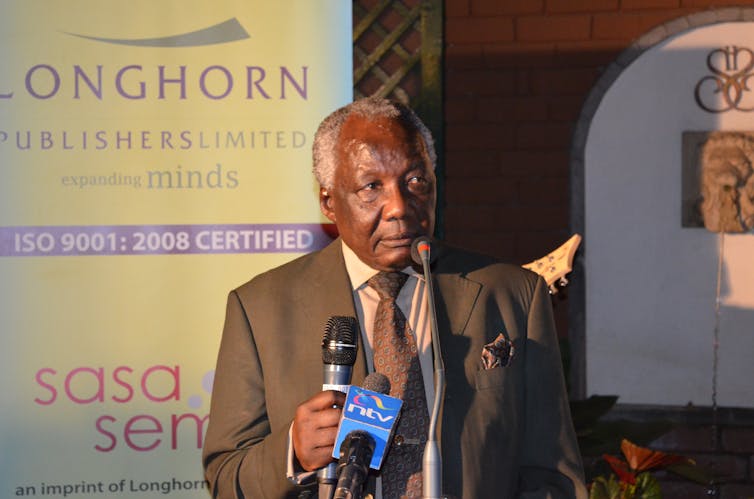
Philip Ochieng: Kenyan editor and author who did it his way and inspired a generation


Philip Ochieng, the Kenyan journalist who made his mark across East Africa.
Author provided

Elizabeth Gitonga, Moi University

Philip Ochieng – who has died at the age of 83 – was a celebrated Kenyan editor, author and hard-hitting columnist who made his mark across East Africa. He was an East African par excellence who counted former Tanzanian president Benjamin Mkapa and revered Ugandan academic Mahmood Mamdani among his circle of friends.

Ochieng began his journalism career in 1966 when he joined the Nairobi-based Nation newspaper group, which was then only a few years old, at the invitation of then editor-in-chief George Githii. Within a year he was entrusted with a regular column debating the social, political and economic issues of a country that had gained independence from Britain only a few years earlier in 1963.

Mastering his environment in such a short space of time was typical of Ochieng. In Awendo, Migori County, close to Lake Victoria where he was born in 1938, his classmates remembered him as a genius who topped his class from the time he set foot in primary school. This fast-tracked him to the prestigious Alliance High School, a national school for high achievers near Nairobi.

Soon after he finished school, he joined the pre-independence airlift of young Kenyan students to the US. These students were being prepared to take over positions of leadership in anticipation of the country’s independence. The programme was organised by the former politician and trade unionist Tom Mboya and his colleague Julius Kiano.

In the US, Ochieng joined Roosevelt University but he did not complete his degree. He moved on to France and East Germany as well but he never graduated with a degree. On the eve of independence, Ochieng returned home, where he was employed as an English teacher in Migori. Later, he would be employed as a protocol officer in the ministry of External Affairs. While here, the letters he wrote to the editor of the Daily Nation caught the attention of Githii, who hired him as a cub reporter. This would mark the beginning of his life-long journey in journalism, which took him back and forth between Kenya, Tanzania and Uganda.

East Africa reach

Ochieng emerged as a towering figure in the three East African countries. His brilliance was matched only by his willingness to mentor young journalists in the profession, many of them untrained as he had been. Wherever he worked, he helped many improve their writing skills through constant drilling – but also straight in your face memos delivered in his stern newsroom manner.

In the course of this, Ochieng wrote two books. The first, The Kenyatta Succession, was co-authored with fellow journalist the late Joseph Karimi. The second was I Accuse the Press: An Insider’s View of the Media and Politics in Africa.

But he was dogged by controversy in his early years. In 1970 he was forced to resign his Nation job after poking a colleague with the burning end of a cigarette.

He was then already being wooed by the Tanganyika Standard after President Julius Nyerere had nationalised it from its private owners, Lonrho. The Standard Tanzania, as it was first renamed, was merged with The Nationalist, a party newspaper belonging to the ruling Tanzania African National Union party. The title was later changed to Daily News in 1972.

Ochieng made his presence felt as soon as he arrived in Dar es Salaam, beginning a column weekly soon after. He resigned and left Tanzania in 1973.

After another stint at the Nation in Nairobi, Ochieng appointed the editor of the Sunday Times of Uganda in 1981. But it was short-lived. After only three weeks he was incarcerated after one of his sharp, take-no-prisoners pieces.

Upon release from the cells, he was hosted by his friend Mamdani, who arranged his flight out to East Germany.

Mentor and confidante

Mamdani, who hosted him in Kampala after his release from prison in Uganda, told me of Ochieng’s contribution to journalism:

People who were literate and of age in the 1980s in Uganda certainly remember his role in Ugandan journalism and his writing. I have no doubt that Ochieng would have played a noteworthy role in advancing the cause of political journalism in Uganda had he been able to stay longer.

John Agunda, a Kenyan journalist who worked with Ochieng in Kenya for decades, remembers him too as the mentor of many.

He came across as a very meticulous and creative man and a workaholic. He was always at his typewriter either writing something to go into the following day’s paper or working on his manuscripts. He was also a very good teacher of up-and-coming journalists.

In the final years of his life – and with his poor health beginning to slow him down – Ochieng persisted in his love for teaching. His long running column, Mark My Word, was aimed at the general public as much as it was at journalists.The Conversation

Elizabeth Gitonga, PhD Candidate in Communication Studies, Moi University

This article is republished from The Conversation under a Creative Commons license. Read the original article.
Unknown's avatar

Xiaomi Moaan Inkpalm 5 Mini eReader Review


Unknown's avatar

Not My Review: A Court of Thorns and Roses (Book 4) – A Court of Silver Flames by Sarah J. Maas


Unknown's avatar

Pakistan’s Camel Library


Unknown's avatar

‘Famously fed up’. How the work of feminist writer Kate Jennings changed Australia


Text Media

Nicole Moore, UNSW

Any social movement needs inspiration. It needs people who can imagine a different future and, more than that, make that future graspable.

Kate Jennings did that for the Australian women’s movement — with her incandescent anger, her sharp tongue and her courage, ready and able to speak straight into the face of power. Her death, in New York aged 72, offers a moment to reflect on the role of writers and literature as forces of social transformation.

many women are beginning to feel the necessity to speak for themselves, for their sisters.

i feel that necessity now.

When Jennings lined up for her turn to speak at a Vietnam moratorium rally on the lawns of Sydney University in 1970, she was a half-drop-out from Sydney’s English Department, living in Glebe.

With the group of determined women libbers at her back, she perhaps wasn’t clear what her speech would do — that it would effectively inaugurate second-wave feminism in Australia and help it become a movement with its own momentum. A new chapter for the world’s longest revolution. But she did know that the time had come.


Read more:
Brazen Hussies: a new film captures the heady, turbulent power of Australia’s women’s liberation movement


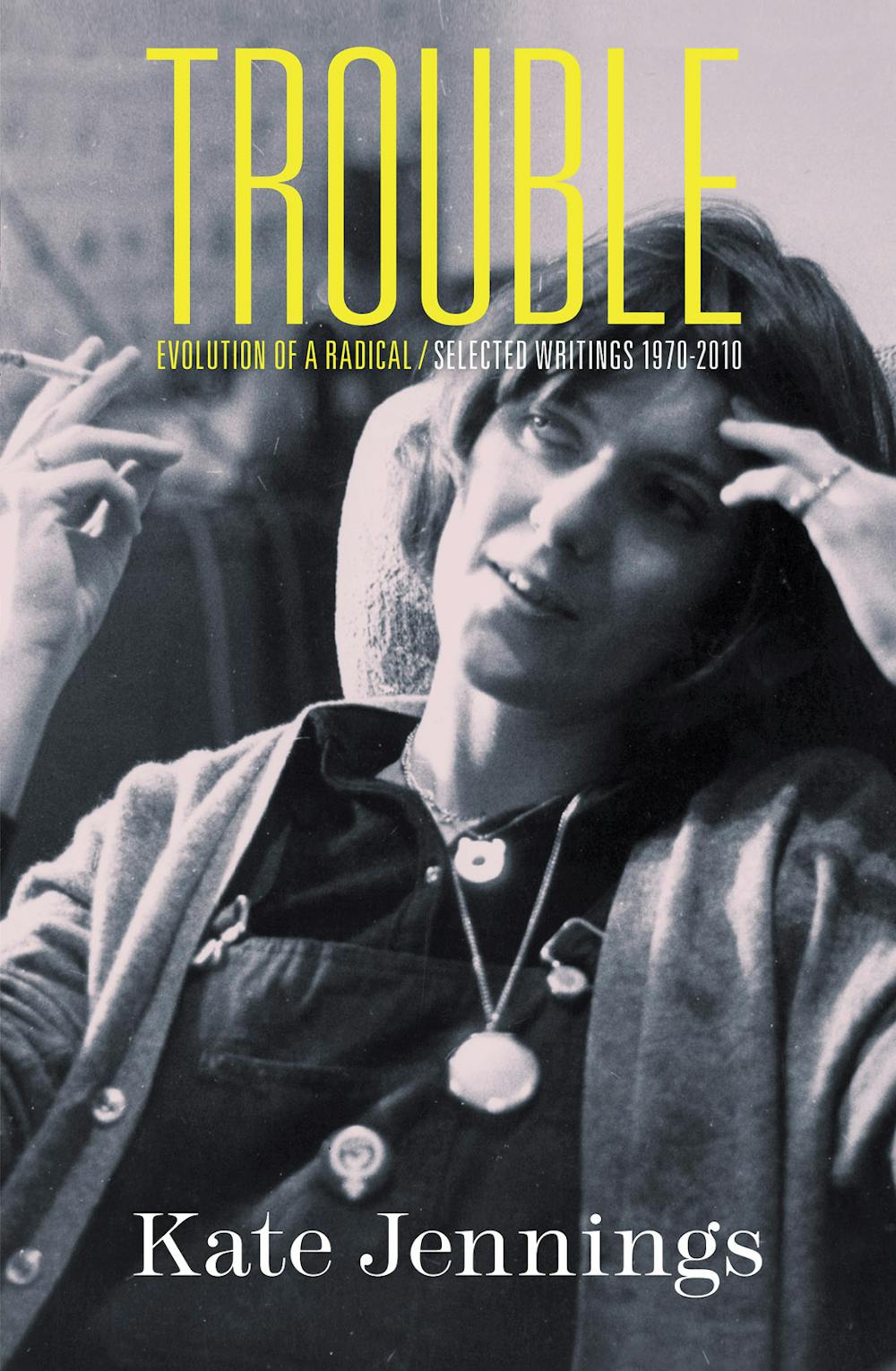
When the speech appeared as a performative poem in her 2010 retrospective collection Trouble: Evolution of a Radical, she recalled that the group had conceived it as deliberately incendiary.


Black Inc

“Call the speech what you like — agitprop, political theatre, over the top, in your face — but we were genuinely angry, famously fed up. I wrote the speech at a boil: we were getting nowhere asking the men in the movement to listen to us.”

Written from within the mix of galvanising struggles then being fought around the world, the speech tore shreds off those for whom women’s issues were secondary or trivial. She compared the number of Australian men who’d died in Vietnam with the number of women who’d died from illegal abortions.

It was a shocking thing to do then: a similar comparison, now, of the victims of domestic violence to the number of Australian soldiers lost to recent conflicts or suicide, would be met with outrage too. The speech was hardline, uncompromising, militant.

okay i’ve stopped trying to understand my oppressor

i know who my enemy is

i will tell you what i feel, as an individual, as a woman

i feel that there can be no love between men and women

And that passion came from poetry. It wasn’t the theorists or social commentators who inspired the radical feminism powering the speech, she recalled, but the eloquence of visionaries.

In 2010, she listed Robin Morgan, Ti-Grace Atkinson, Valerie Solanas’s SCUM (Society for Cutting Up Men) Manifesto as her touchstones. This was writing that was “unafraid to be emotional, luminous with rage,” she recalled. “Manifestos and poems that jumped off the page. I loved it.”

Mother I’m Rooted

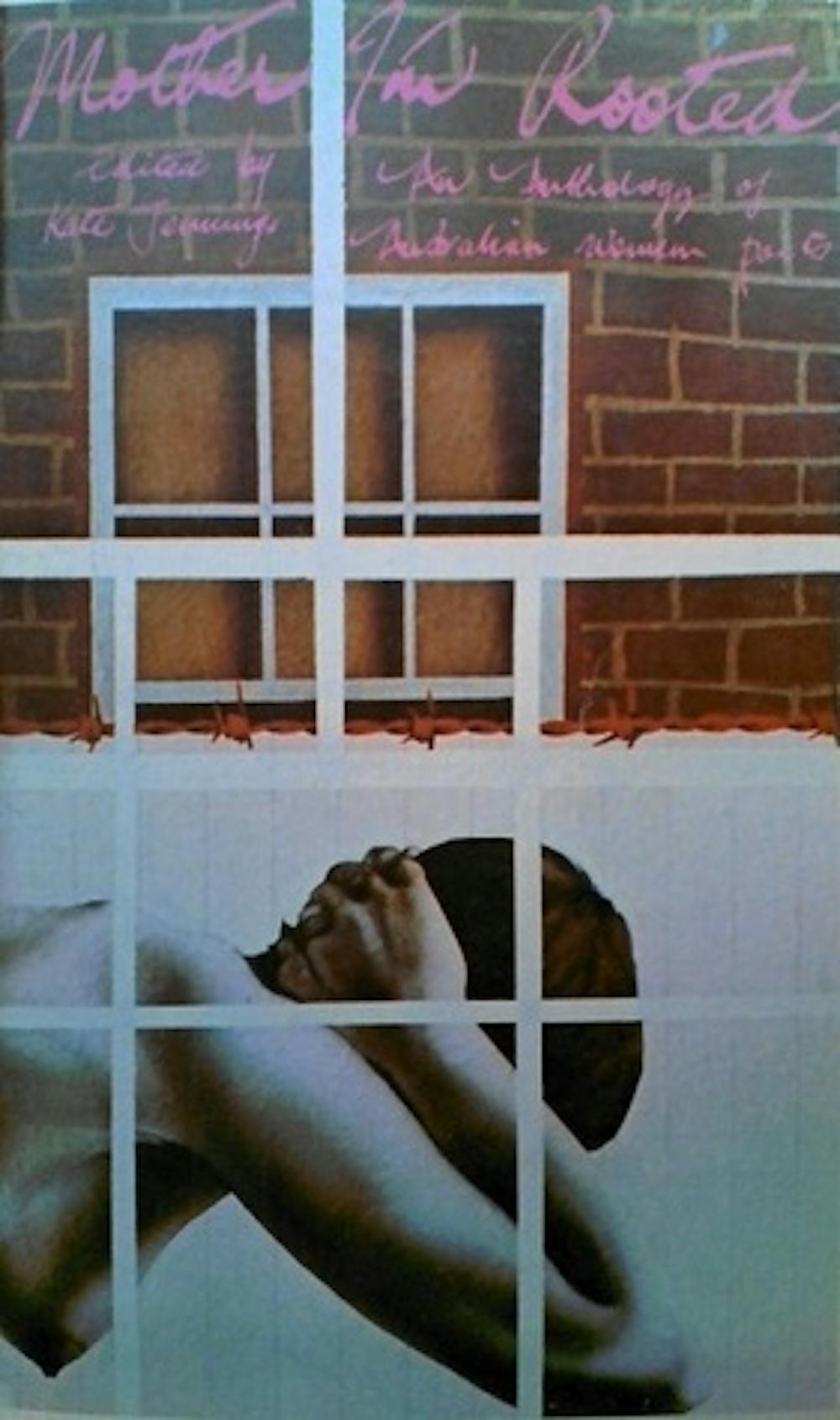
Jennings’ other extraordinary contribution to the transformational feminism of the 1970s is one of its most revelatory — the huge, collaborative women’s poetry collection called Mother I’m Rooted, published in 1975.

Its confronting title is a distillation of the protest and exhaustion she saw in the poems. With Alison Lyssa, another poet and activist, she planned an anthology as inclusive as possible and advertised for poems — “trying to reach the women Out There”. Within two months they had over 500 replies.

The final volume lists 152 poets, including established ones, unknowns with new feminist pseudonyms, seasoned activists from the old left and many names that would go on to make their marks. It has experimental, Greek-Australian writers contesting the definition of poetry and forthright, white, working-class women writing about the washing — though no First Nations poetry.

It is a beautiful social document now, broken up by lambent photographs of ordinary women together. And its call for women’s control over not just what counted as poetry but over the publishing process itself was hugely influential, arguably changing the literary landscape in Australia forever.

Fierce honesty

Across her writing life, Jennings produced essays, novels, short stories and journalism, as well as poetry, all written with a fierce honesty and wit, refusing what she saw as cant and sentiment.

After she moved to New York in 1979, she continued to write about and for Australia, but often with an outsider’s cynicism. Women Falling Down in the Street, a collection of short stories from 1990, won a Queensland Premier’s Literary Prize and perhaps typified her interest in revisionary engagement with her part in Australia’s cultural life.

The novel Snake, from 1994, explored with concision and power her country childhood on a farm outside Griffith in NSW, and found an international readership.

In 2002, after her husband’s death from Alzheimer’s disease, she published Moral Hazard, a short but perfectly voiced novel about a writer making a living on Wall Street to support a dying partner. One of the few Australian novels to confront the operations of capital directly, even pre-empting the 2008 global collapse, it won a number of prizes, including the ALS Gold Medal.

The legacy she leaves is complex and multi-voiced, marked often by a reassessment of her younger self by the older Jennings and, perhaps, by a certain distrust of any shared story she couldn’t control.

But that legacy has been transformative and extraordinary, by any measure.The Conversation

Nicole Moore, Professor of English, UNSW

This article is republished from The Conversation under a Creative Commons license. Read the original article.
Unknown's avatar

Who Decides What’s in the Dictionary?