Unknown's avatar

In our own voices: 5 Australian books about living with disability


Shutterstock

Jessica White, The University of Queensland

Fiction and non-fiction works about disability and Deafness are often hampered by stereotypical representations. A disability is frequently presented as something to “overcome”, or used to characterise someone (ever notice all those evil characters portrayed as disfigured?).

These representations obscure the joys, frustrations and creativity of living with disability and Deafness.

Dutch author Corinne Duyvis started the #OwnVoices movement on Twitter because she was frustrated that calls for diversity within the publishing industry did not extend to diverse authors. Originating in discussions of young adult fiction, #OwnVoices aims to highlight books written by authors who share a marginalised identity with the protagonist.

Life writing also provides firsthand accounts of disability and Deafness, showing what it is like to navigate a world designed for able-bodied people. In addition, these books help people with disability and Deafness learn more about their condition, and create community.

Australia has an established literary tradition of writing about disability. Here are five books by Australian disabled writers that reveal insights into their lives and conditions.


Read more:
Creating and being seen: new projects focus on the rights of artists with disabilities


1. Alan Marshall’s Hammers Over the Anvil (1975)
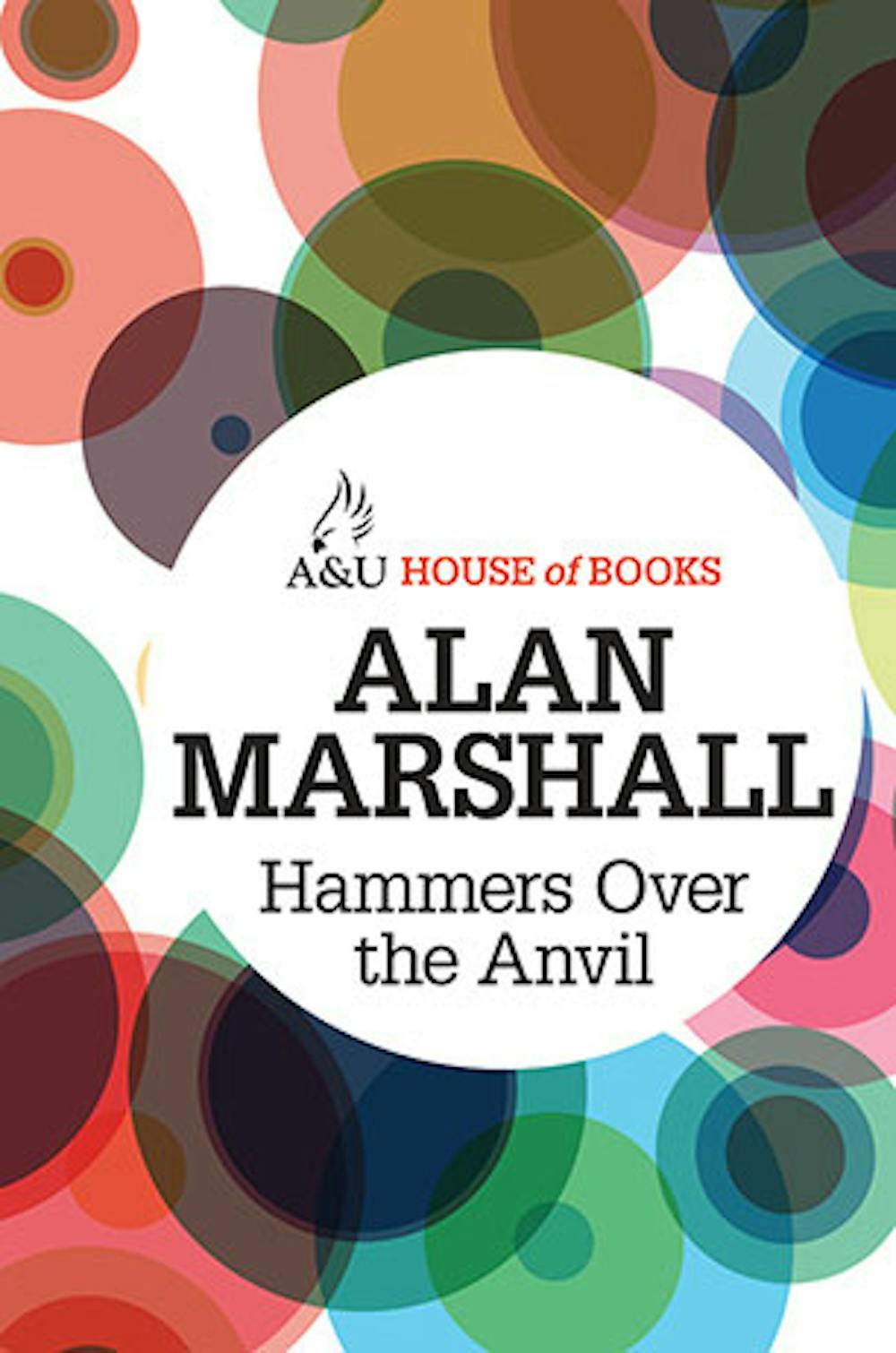
Hammers Over the Anvil book cover

Many readers will be familiar with Marshall’s I Can Jump Puddles (1955), the first book in his series about growing up and living with polio in rural Australia.

Where that book is a cheerful and somewhat sanitised account of living with a disability, Hammers Over the Anvil (1975), the fourth and final book in Marshall’s series, is more realistic.

Marshall’s publisher refused to publish the book, thinking it would tarnish his image. Despite — or perhaps because of — his brutal treatment, Marshall shows a keen sympathy for disenfranchised people and also for animals.

2. Donna Williams’ Nobody Nowhere: The Extraordinary Autobiography of an Autistic Girl (1991)
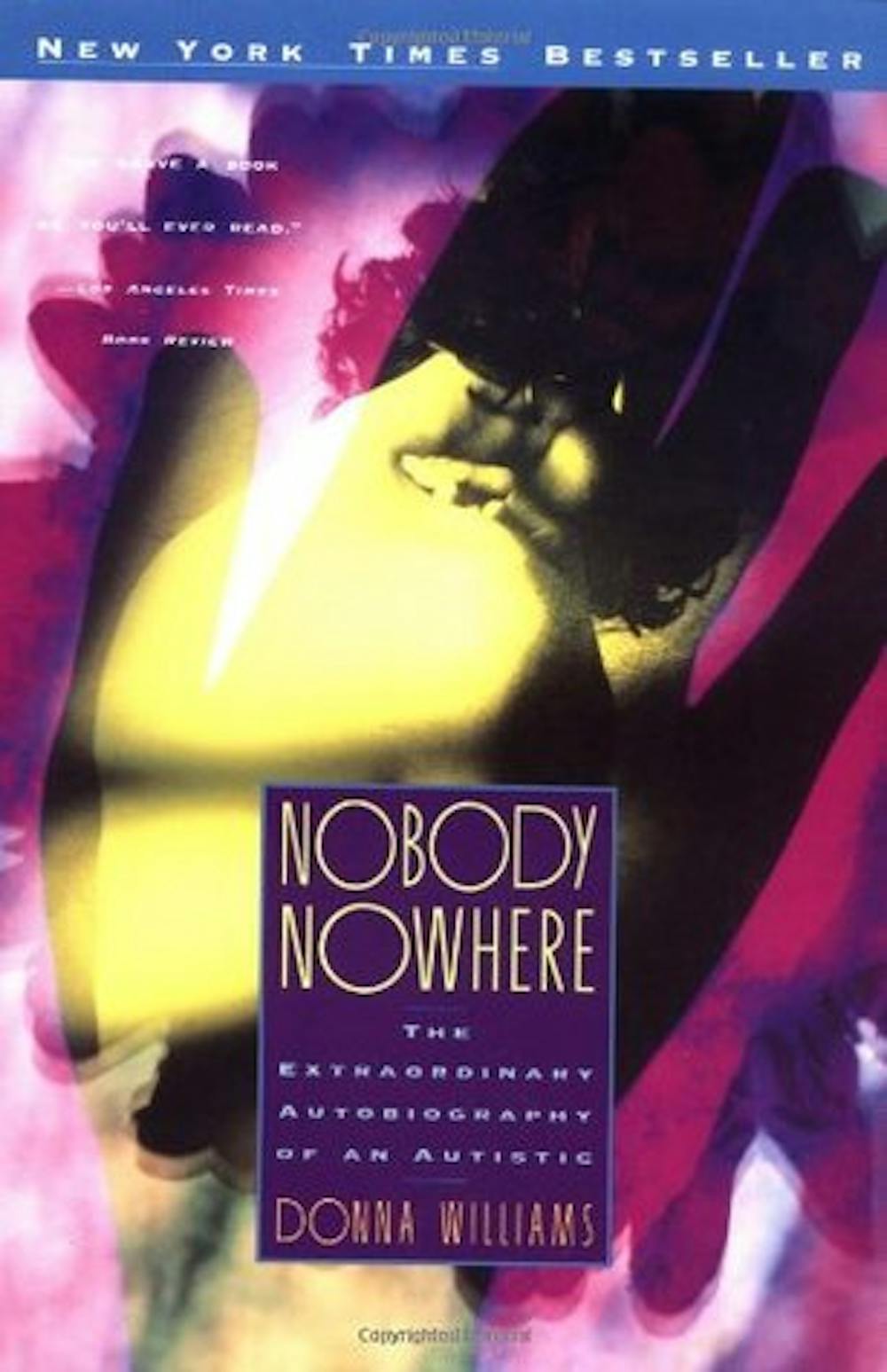
Nobody Nowhere book cover

Donna Williams was not diagnosed with autism until she was an adult; prior to that she was thought to be deaf and psychotic.

Her story begins at age three and is thick with sensory details, which both delight and overwhelm Williams. She recounts interactions with hostile people — including her own mother, who wanted to admit Williams to an institution.

This book was the first full-length, published account by a person with autism in Australia. It became an international bestseller, spending 15 weeks on the New York Times bestseller list, and was translated into 20 languages.

3. Gayle Kennedy’s Me, Antman & Fleabag (2007)
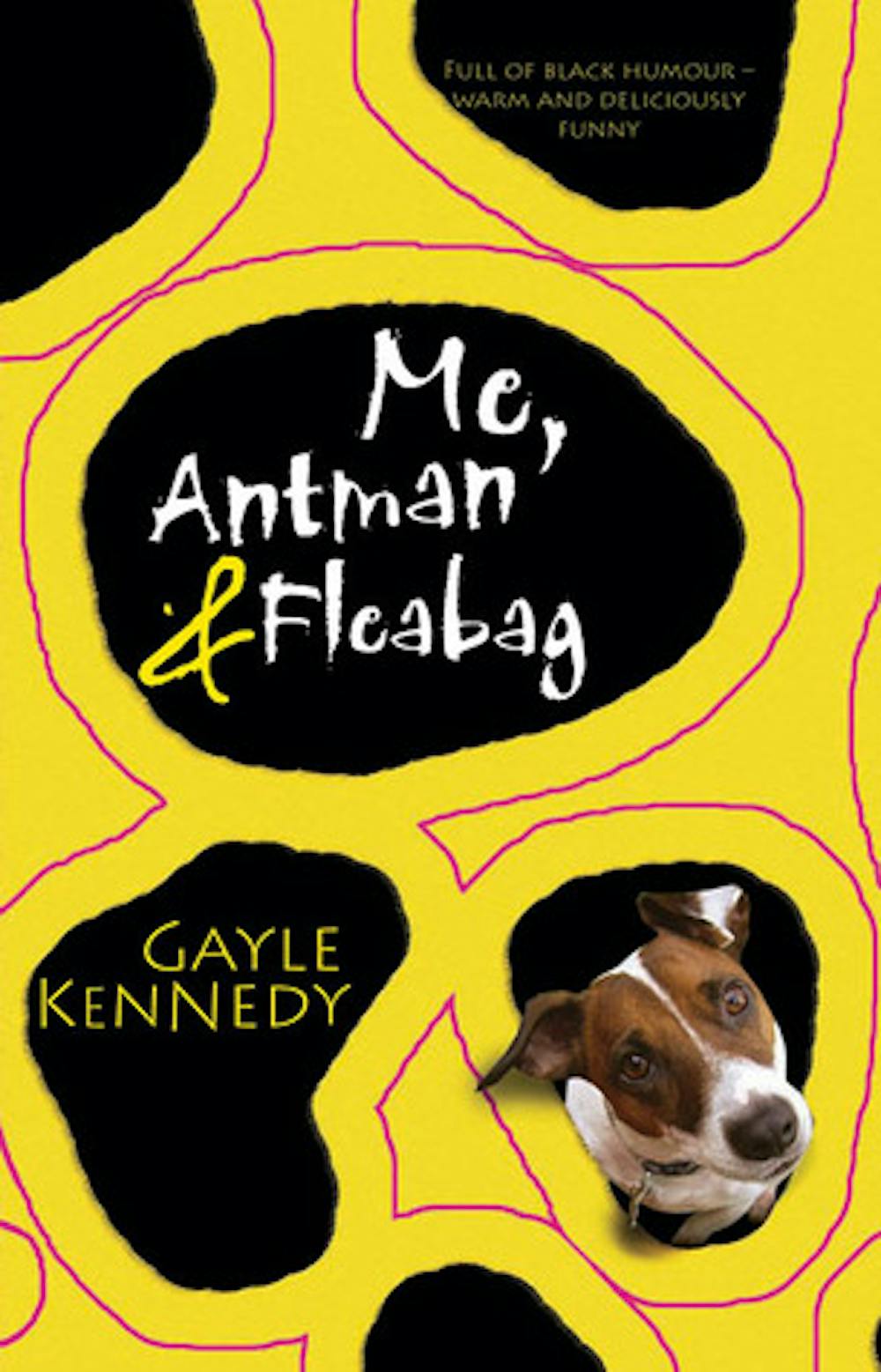
Me, Antman & Fleabag book cover

In this book, Gayle Kennedy, of the Wongaibon people of south west New South Wales, uses a series of engaging vignettes to describe her life as a First Nations woman who had polio.

Kennedy was sent away for treatment. When she returned, her parents seemed like strangers; it took a while to readjust. Though the subject matter sounds heavy, this humorous and accessible work is rich with stories about the importance of family (including dogs!) and the impact of racism.

It is also an important book because it chronicles some of the experiences of First Nations people with disability. It won the David Unaipon award in 2006.

4. Andy Jackson’s Music Our Bodies Can’t Hold (2017)
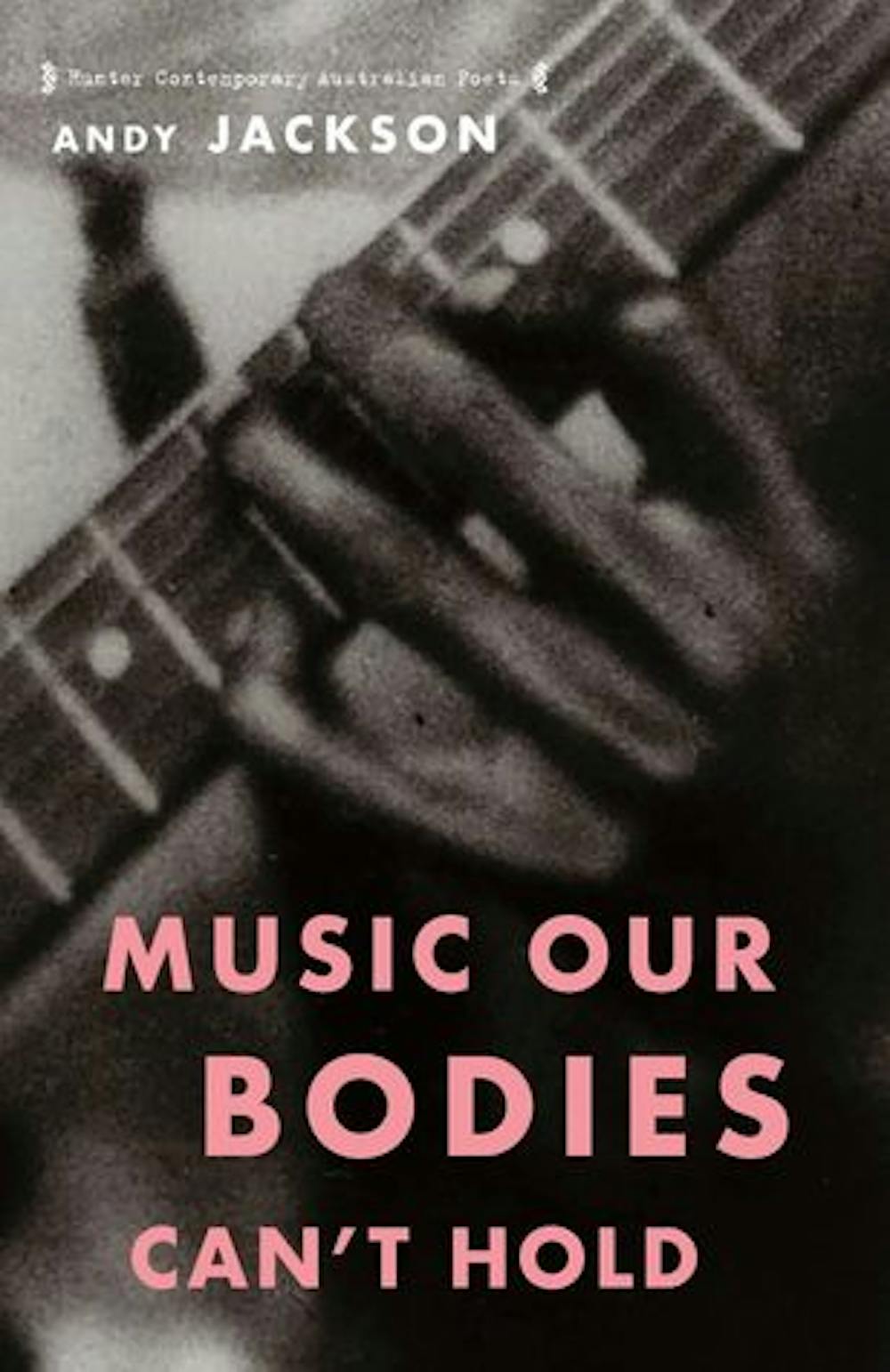
Music Our Bodies Can’t Hold book cover

Poet Andy Jackson, who has a condition called Marfan Syndrome that affects the body’s connective tissue, began performing poetry to give himself more control over representations of his body.

His collection consists of biographical poems of people with Marfan Syndrome, some of whom he interviewed, and historical figures who are thought to have had the condition, including Abraham Lincoln, the ancient Egyptian pharaoh Akhenaten, Mary Queen of Scots, composer Sergei Rachmaninoff and blues guitarist Robert Johnson.

Poetry, with its focus on voice, is strongly connected to the way that bodies express themselves, often in unique ways. As Jackson writes at the end of his poem Jess:

now look at this photo and tell me

you still want sameness.

5. Carly Findlay (ed), Growing Up Disabled in Australia (2021)
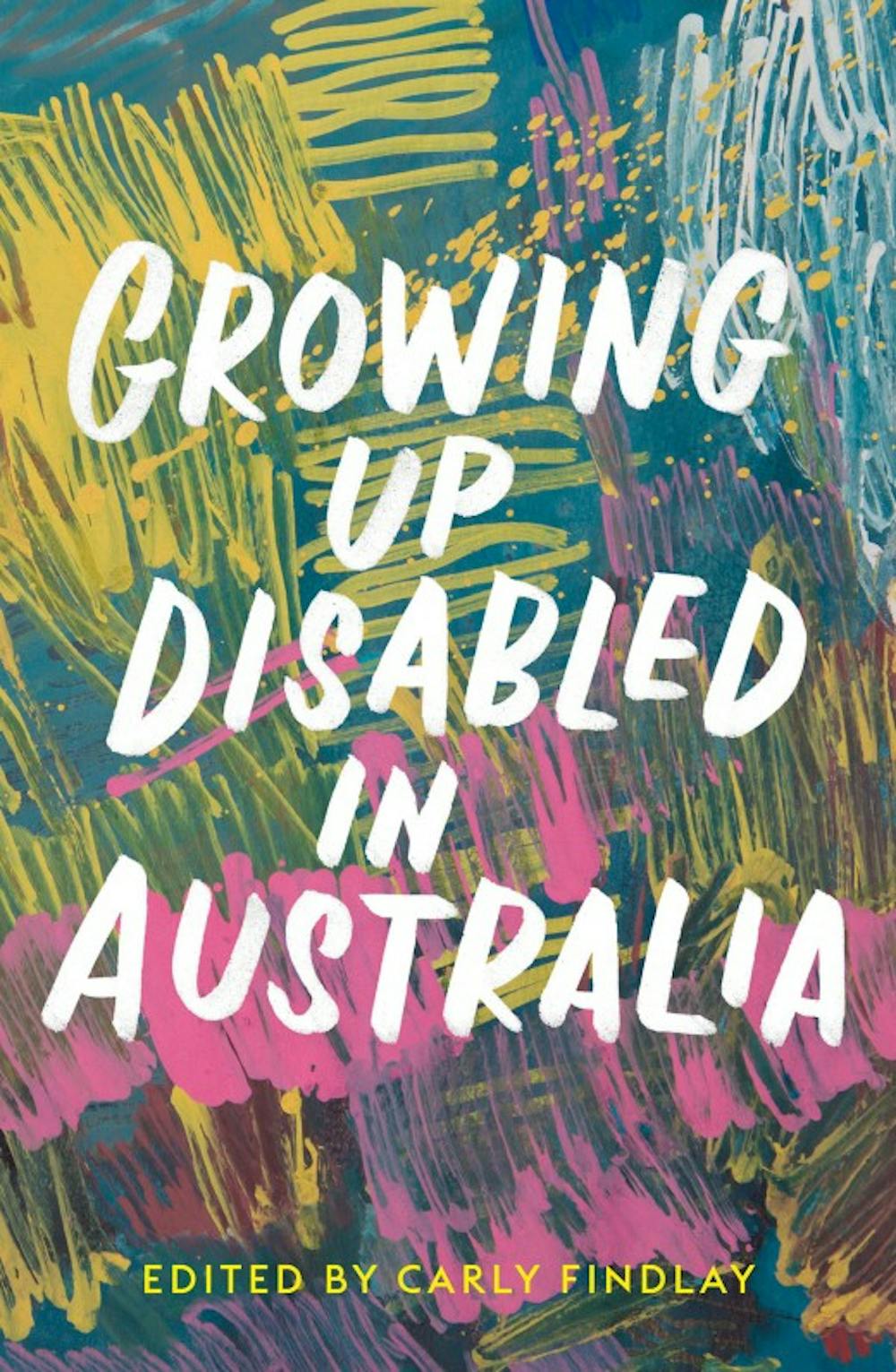
Growing up Disabled book cover

The final book on my list is one I haven’t read yet — but I cannot wait until I can. Edited by Carly Findley, who has ichthyosis, this collection to be released early next year, will highlight the range of childhoods experienced by people with disability in Australia.

We will be able to read about how young people manage ableism and the (sometimes) soreness of not fitting in, and interviews with prominent Australians such as Senator Jordon Steele-John and Paralympian Isis Holt.

I lost most of my hearing when I was four, and when I was growing up I didn’t read a single book that featured a character who was Deaf. Books like Growing Up Disabled will help young Deaf and disabled people recognise themselves in Australian literature.


Read more:
The Shadow Whose Prey the Hunter Becomes review: Back to Back Theatre’s exciting reframing of disability


In my own hybrid memoir, Hearing Maud, I weave together my experiences of Deafness with those of Maud Praed, the Deaf daughter of 19th century expatriate Australian novelist Rosa Praed.

Maud and I were born 100 years apart, and although our lives went in radically different directions many of our circumstances are the same — especially the expectation that we conform to a hearing world. My disability is often invisible, and I wanted to explain the relentless and exhausting attention that is needed for me to function. Deafness is far more complex than simply not hearing.

There are thousands more examples of the ways authors can write about living with disability. The International Day of People with Disability is a great time to start reading.


Read more:
On screen and on stage, disability continues to be depicted in outdated, cliched ways


The Conversation


Jessica White, UQ Amplify Associate Lecturer, The University of Queensland

This article is republished from The Conversation under a Creative Commons license. Read the original article.

Unknown's avatar

The History of Dust Jackets


The link below is to an article that considers the history of dust jackets.

For moire visit:
https://bookriot.com/history-of-dust-jackets/

Unknown's avatar

2020 Richell Prize Winner


The links below are to articles reporting on the winner of the 2020 Richell Prize for Emerging Writers, Aisling Smith, for ‘Petrichor’.

For more visit:
https://www.booksandpublishing.com.au/articles/2020/11/09/159166/smith-wins-2020-richell-prize-for-petrichor/
https://www.theguardian.com/books/2020/nov/06/richell-prize-2020-aisling-smith-wins-10000-emerging-writers-award-for-evocative-novel

Unknown's avatar

Chrome Extensions to Increase Reading Speed


The links below are to articles that look at Chrome Extensions that aim to increase reading speed.

For more visit:
https://ebookfriendly.com/spreed-chrome-extension-read-twice-faster/
https://the-digital-reader.com/2020/11/05/read-at-triple-your-normal-speed-with-one-of-these-five-chrome-extension/

Unknown's avatar

Goodreads


The link below is to an article in which the writer explains why she still uses Goodreads.

For more visit:
https://bookriot.com/why-i-still-use-goodreads/

Unknown's avatar

2020 Danger Prize Winner


The link below is to an article reporting on the winner of the 2020 Danger Prize, Tanya Bretherton, for ‘The Killing Streets.’

For more visit:
https://www.booksandpublishing.com.au/articles/2020/11/04/158972/the-killing-streets-wins-2020-danger-prize/

Unknown's avatar

‘Rona’, ‘iso’, ‘quazza’ — words of the year speak to our Australian take on COVID


Unsplash/United Nations, CC BY

Roland Sussex, The University of Queensland

Language is like archaeology. It lays down evidence for following generations to excavate and write PhD theses about. Layers of the stuff. And such has been the language of the year of COVID.

Not surprisingly, COVID has spawned an efflorescence of words and expressions. And these will certainly be dug up for analysis by our descendants.

In Australia we have a characteristic way of repurposing words, and we have applied it to COVID. Isolation became “iso”, which was crowned (joke: corona is Latin for crown) Word of the Year, or WOTY, by the Australian National Dictionary.

And coronavirus became “rona”, the Macquarie Dictionary’s COVID WOTY for 2020, announced today.

The Macquarie has departed from its usual practice (as has the Oxford English Dictionary) and anointed not one but two WOTYs (should that be WOTIES?): one to honour the way COVID has dominated our world, thinking and language this year; and another across-the-board WOTY as well. Their latter choice was “doomscrolling”, the practice of continuing to read news online or on social media when you know there’s nothing new in the news, and it’s all miserable.


Read more:
‘Iso’, ‘boomer remover’ and ‘quarantini’: how coronavirus is changing our language


Short, not necessarily sweet

Iso and rona are diminutives or hypocoristics. I have a database of over 6,000 of these in Australian English. These are derived forms of words that express an emotional overtone, usually amiable and solidaristic (“barbie” for barbecue; “servo” for service station), sometimes pejorative (“commo” for communist, “drongo” for well, an idiot).

But my personal nomination for the 2020 WOTY is “quazza” for quarantine. I predicted its birth and was fulfilled when it duly appeared.

Quazza follows a pattern in Australian English where R becomes Z: Terry gives “Tezza”, Barry gives “Bazza”, and quarantine yields “quazza”. Which is a long way from the Italian word quarantina, a reference to the 40-day period ships had to anchor off Italy in days gone by to prove there was no plague on board.

These diminutives serve an important purpose. They de-demonise threatening words. Without reducing the level of the words’ threat, the diminutives imply: this is something we can get our minds around and manage.

And gradually, with some temporary reversals, that is what we have done, and much more effectively than most other countries. Though whether the diminutives have medical force is not yet proven.

Person in mask looks at laptop in darkened room
‘Doomscrolling’ captures the intersection of this year’s unfolding catastrophes and social media.
Unsplash, CC BY

Getting the message

Of course, there’s more to the influence of language under COVID than diminutives. In terms of public health and communication, three key agencies have driven our handling of the pandemic: scientists, policymakers and the public.

In Australia, the passage of information and action between these three entities has worked rather well. Science has transmitted reliable and helpful analyses of coronavirus and COVID-19 to policymakers. They informed our understanding of specific pandemic terms like “incubation” and “reinfection”.

State and federal governments have issued action guidelines with terms like “COVID safe”. And the public has created their own shorthand like the diminutives described above to make it all a bit friendlier.


Read more:
We’re not all in this together. Messages about social distancing need the right cultural fit


Australians have accessed the science through the media and the internet, and have generally acted responsibly.

Using words consistently and specifically is vital when it comes to health messages.
Unsplash/United Nations, CC BY

The key mechanism for communicating along the three axes between science, policymakers and the public involves messaging. Words matter in this context. What is needed is simple, direct, transparent and plausible language. Translations for multilingual communities are also vital.

Australian authorities have used words effectively and fairly consistently (though not always). The words and terms have fallen within four broad lexical categories:

1. isolation — lockdown, isolation, quarantine

2. distance — social distancing, venue capacity

3. hygiene — handwashing, sanitiser (or “hand sanny” in Australian slang), masks

3. social — COVID safe, flatten the curve, stop the spread, WFH (work from home).

The British messaging was much less effective, moving from “Protect the NHS” (National Health Service) to “Stay alert” without specifying what people should be alert to.


Read more:
Coronavirus anti-vaxxers: one in six British people would refuse a vaccine – here’s how to change their minds


Going the distance

Unfortunately, many countries took up the phrase “social distancing”, when what was needed was “physical distancing”, continuing social interaction as an important part of maintaining well being. The World Health Organisation agrees.

Next time — and there certainly will be a next time — we need to be better prepared.

There will be new vocabulary to describe, and perhaps to help tame, potential new threats. The messaging may be very similar, and we will know, from our experience with COVID-19 in 2020, how best to stop “covidiots” from acting “coronacrazy”.


Read more:
How COVID-19 is changing the English language


The Conversation


Roland Sussex, Professor Emeritus, The University of Queensland

This article is republished from The Conversation under a Creative Commons license. Read the original article.
Unknown's avatar

Finished Reading: Children of Nazis – The Sons and Daughters of Himmler, Göring, Höss, Mengele, and Others – Living with a Father’s Monstrous Legacy by Tania Crasianski


Children of Nazis: The Sons and Daughters of Himmler, Göring, Höss, Mengele, and Others— Living with a Father’s Monstrous LegacyChildren of Nazis: The Sons and Daughters of Himmler, Göring, Höss, Mengele, and Others— Living with a Father’s Monstrous Legacy by Tania Crasnianski
My rating: 3 of 5 stars

View all my reviews

Unknown's avatar

2020 World Fantasy Awards Winners


The links below are to articles reporting on the winners of the 2020 World Fantasy Awards.

For more visit:
https://lithub.com/here-are-the-winners-of-the-2020-world-fantasy-awards/
https://bookriot.com/2020-world-fantasy-awards/

Unknown's avatar

2020 Victorian Premier’s History Award Winner


The link below is to an article reporting on the winner of the 2020 Victorian Premier’s History Award, ‘Printed on Stone – The lithographs of Charles Troedel,’ by Amanda Scardamaglia.

For more visit:
https://www.booksandpublishing.com.au/articles/2020/11/02/158903/printed-on-stone-wins-victorian-premiers-history-award/