Writing is a pastime best conducted on your own — or so common wisdom would have it. Yet writing teams exist, and in many realms they are expected. Take television, where the writers’ room is the norm. Or the academy: one physics paper has 5,154 authors.
In literature, collaborations are more common than you might realise. For every superstar Neil Gaiman and Terry Pratchett team-up (Good Omens), there might be an F. Scott Fitzgerald and his uncredited wife Zelda, or a “James S. A. Corey” (The Expanse) being the pseudonym for Daniel Abraham and Ty Franck.
Although new writers such as the Brontë siblings may collaborate, the practice seems to fall away with age, perhaps because writing relationships can be as fraught as familial ones, with as many pitfalls to navigate.
Add to this a collaboration nearly always proves to take as long as a solo work and any monies might have to be divided among the contributors. Why would anyone willingly share their art with someone else for little to no benefit?
In my experience, collaborating can be creatively stimulating, educative, motivating, productive, and revitalising. Plus, it’s great to have a friend to keep you company on a publicity tour.
Here are six techniques to help would-be co-writers take their first steps in this direction.
1. The chain
This is the simplest method, one of two that require first settling on what your story will be and then breaking the writing of it into bits completed separately, in chronological order.
There are many ways to serially tackle the discrete tasks that will combine to form a glorious whole. Some teams might choose to write alternate scenes, chapters or sections; others might alternate whole drafts, giving each participant long stretches of time to work on solo projects.
Whichever way you tear it down, every member of the team has a professional obligation to deliver. Break one link in the chain and it falls apart.
The chain method can give each writer long stretches of time to work on solo projects. Brad Neathery/Unsplash
2. Parallel processing
The second way to devolve an outline requires trust and communication beyond that required of ordinary collaborative relationships.
In parallel processing, you divide characters among authors, so one provides the voice of X, another Y, and so on. Each arc is written separately, then edited together when complete. If X or Y diverge too much from their expected paths, plotting and structural problems can arise, but the powerful juxtaposition of distinct voices can outweigh the risk.
3. The hothouse
An extreme version of serial collaboration, this method used to require being physically in the same room as your writing partner(s). One starts writing and keeps writing until they get stuck. They then tag in the next writer, who takes over. Repeat until done. Food and sleep are optional.
The benefit of this method is the words are guaranteed to keep coming.
These days the “in person” requirement is greatly relaxed. Google Docs is just one platform allowing writers to work on the same document at the same time, no matter where they are.
4. The undertakers
Brainstorming what a story will contain is, for many collaborators, the fun part — providing they can agree on a final project.
One method of achieving this agreement is by giving one of the co-writers a veto to be exercised when consensus can’t be reached.
Another method requires every element of the final project must be agreed to by every collaborator. This can be time-consuming to achieve but avoids any lingering resentment if someone is outvoted or overruled.
To avoid any lingering resentment, every decision can be agreed on by every collaborator. Toa Heftiba/Unsplash
More generally, every shared undertaking should have a binding agreement in place before serious work commences, covering issues such as whose name goes first, which agent will sell the work, how any resulting IP will be divided, and so on.
It is much better to have these agreements in place and not need them than the other way around.
5. The Marxist Manifesto
Collaborators should have common ambitions but complementary skills, otherwise you might as well work alone. The way roles are divided in the working relationship can reflect those skill sets – which might, of course, lie in non-writerly areas such as business or marketing.
To some, the perfect collaboration is one in which every participant’s weaknesses are covered by strengths in their fellows. Everyone contributes and everyone learns by example.
Not everyone needs to write. Someone on the team might have the perfect brain for business or marketing. Helena Lopes/Unsplash
6. Resurrection of the dead
Finally, the easiest and safest way to audition a potential co-writer is to give them a failed draft and see what they accomplish with it. If it’s a success, great: the original author gains a new collaborator and a finished work.
Should this (or any of these methods fail) the author is no worse off.
They can just revert to writing alone – for some their natural habitat.
Aridly undulating to the horizon in hillock after hillock, comfortless and irrational, with no lines that the mind could grasp, conceived apparently in a delirious moment of creation.
This is the description of a scorched, unruly Sicilian landscape – both protagonist and spectator of the story of its people – in Giuseppe Tomasi di Lampedusa’s The Leopard.
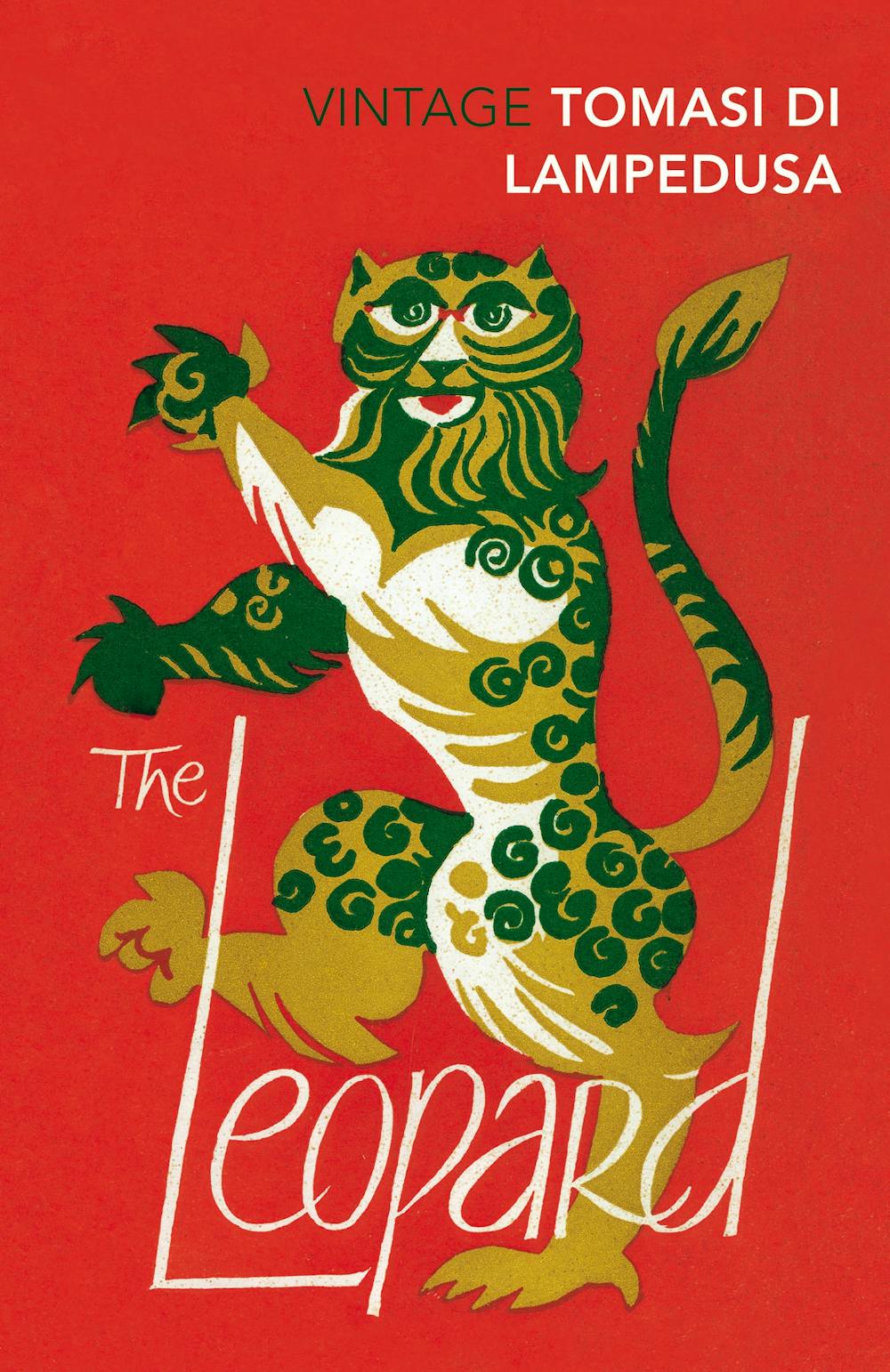
The Leopard (Il Gattopardo) is one of the greatest Italian literary works of the 20th century. Since its publication in 1958, it has been regarded as a classic of European literature. Written by a Sicilian nobleman and set in the 19th-century during the Risorgimento – the movement for Italian Unification – it recounts the decline and fall of Sicily’s aristocracy.
Rosary, macaroni, faded grandeur
The action begins in 1860 when Italian general and patriot Giuseppe Garibaldi and his thousand volunteers land in Sicily to take the island from the Bourbons. They aim to unify the Kingdom of Naples – also known as the Kingdom of the Two Sicilies – with the Italian peninsula under the monarchy of Victor Emmanuel II. Events in the novel mark the passing of feudalism and the advent of modernity.
Yet everyday activities foreground the novel: daily recital of the Rosary, evening readings around the fire, faded grandeur of meals where “monumental dishes of macaroni” are served among massive silver and splendid glass, a walk and hunting expedition in the sunburnt Sicilian countryside, a magnificent ball.
The central character of the story is the irascible and reclusive Don Fabrizio Corbera, Prince of Salina, an aristocratic landowner and lover of astronomy, faithfully accompanied by his Great Dane Bendicò.
His family’s ancestral coat-of-arms shows an African serval or ocelot (mistakenly translated as leopard). The prince’s favourite nephew, the impoverished ambitious and frivolous Tancredi Falconeri, opportunistically supports the unification efforts of Garibaldi.
Tancredi falls in love with the beautiful Angelica, leaving a cousin who loves him devastated and his aunt distraught. Angelica is the daughter of Don Calogero Sedàra, a member of the merchant class ascending to power.
The novel’s main tension lies in class struggle: between the falling elites represented by the house of Corbera and the climbing middle class represented by the unscrupulous Sedàra. The national unification led by Piedmont in Northern Italy – and by statesman Camillo Benso, Count of Cavour – will mark the end of the aristocracy’s as well as of the church’s privileges in Italy.
Don Fabrizio reluctantly realises the only way to ensure the career of his nephew, who aims to become a diplomat, is to give his blessing to Tancredi’s marriage with Angelica. The union will provide Tancredi with the money he will need to succeed in the new regime. It will also bestow a title of nobility on Angelica and her parents. By the book’s end, set in 1910, the prince has died and his line has ended.
The manuscript was initially rejected in 1956 and 1957. Important Italian publishers such as Mondadori and Einaudi thought it ideologically deficient, reactionary for its representation of an immobile history, and structurally weak. It also failed to align with the mainstream Italian literature of the time.
The manuscript was subsequently reviewed by writer Giorgio Bassani and published for Feltrinelli in 1958, a year after its author’s death.
Generally classified as a historical novel, The Leopard became a bestseller both in Italy and abroad, with 52 editions printed in the first four months. It won the prestigious Strega literary prize in 1959.
But critical debate erupted. The book appeared during an economic boom and when Italian intellectual culture was strongly politicised. Leftist intellectuals saw it as a backward, conservative portrayal of Sicilian elites written by a little-known man with no sense of progress.
After a few years, initial objections waned and the novel came to be appreciated for its writing and modern narrative structure.
With supple and ornate language, the book has an introspective storyline and alludes to the works of Shakespeare, Sterne, Tolstoy, Baudelaire, Keats, Proust and Stendhal. The narration is characterised by stylistic shifts that reflect both Prince Salina’s varying points of view and the unnamed but all-knowing narrator’s perceptions of history.
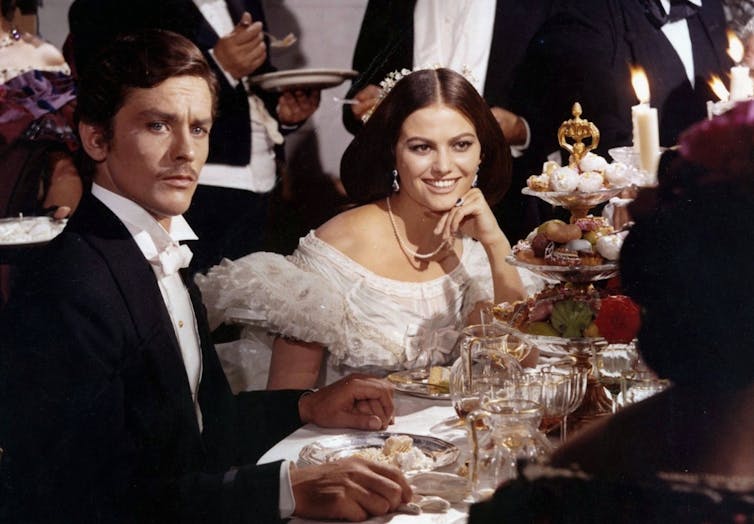
In 1963 director Luchino Visconti recreated The Leopard’s opulence in an unforgettable screen adaptation starring Burt Lancaster.
‘Nostalgia very similar to Gone With The Wind … says The New York Times!’
Meditations on history and humanity
Although The Leopard is a representation of 19th century Sicilian aristocracy, it is also a contemplative and ironic distancing from this same world. It is, above all, a novel that provides a profound meditation on transition and historical causality.
Besides, The Leopard is an ambitious political book. Critical interpretations of the novel have divided on whether the author was bemoaning the decline of the traditional ruling class, mercilessly critiquing it, or reflecting on the limits of political reforms.
In the plot, we can find similarities between the Bourbons’ supremacy and fascism, between Garibaldi’s conquest and the allied occupation at the end of the second world war. The book foreshadows political life in the newly unified kingdom and economic transformations that paved the way for corruption and criminal organisations in post-1945 Italy.
As journalist and author, Luigi Barzini, once said, the book “made all us Italians understand our life and history to the depths.”
The most memorable – and misread – line in the book is
If we want things to stay as they are, things will have to change.
Spoken by Tancredi, it references Sicilian society’s resistance to change. It is also the narrator’s rumination on modern Italy with its various paradoxes and divisions.
The Leopard is a family saga, a psychological novel, a meditation on death and on the loss of collective memory. It has been read as a lyrical and prophetic contemplation on the experience of modernity and on the risks that it involves, such as ambition, and loss of beauty and traditions.
A solitary, melancholic man, author Tomasi di Lampedusa was deeply aware of his own mortality. The Leopard was his only novel that, together with a collection of short stories and literary studies, was published posthumously. His book would sell more than 3.2 million copies, be translated into more than 37 languages, and rightly honoured as an “immortal” masterpiece.
Ernest Hemingway was affectionately called “Papa,” but what kind of dad was he?
In my role as Associate Editor of the Hemingway Letters Project, I spend my time investigating the approximately 6,000 letters sent by Hemingway, 85% of which are now being published for the first time in a multivolume series. The latest volume – the fifth – spans his letters from January 1932 through May 1934 and gives us an intimate look into Hemingway’s daily life, not only as a writer and a sportsman, but also as a father.
During this period, Hemingway explored the emotional depths of fatherhood in his fiction. But his letters show that parenting could be a distraction from what mattered most to him: his writing.
‘No alibis’ in the writing business
Hemingway had three sons. His oldest, John – nicknamed “Bumby” – was born to Ernest and his first wife, Hadley, when Ernest was 24 years old. He had Patrick and Gregory with his second wife, Pauline.
Hemingway initially approached fatherhood with some ambivalence. In her 1933 memoir “The Autobiography of Alice B. Toklas,” Gertrude Stein recalls that one evening Hemingway came to visit and “announced…with great bitterness” that he was “too young to be a father.”
As the fifth volume of letters opens in January 1932, Hemingway is trying to finish “Death in the Afternoon,” his nonfiction account of bullfighting, in a household with a six-week-old baby, a three-year-old who ingests ant poison and nearly dies, a wife still recovering from a C-section, along with all the quotidian problems of home ownership, from a leaky roof to faulty wiring.
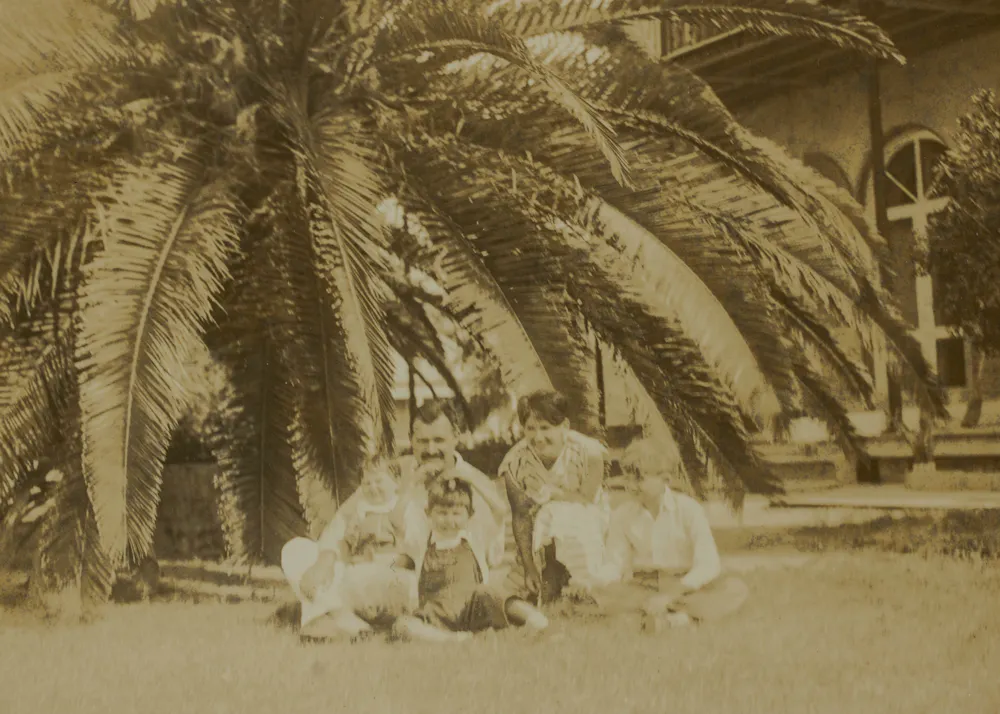
Ernest Hemingway and Pauline Pfeiffer Hemingway, with Gregory, Patrick and Bumby in Key West, 1933. Princeton University Library, Author provided
Hemingway explained to his mother-in-law, Mary Pfeiffer, that if his latest book fell short, he couldn’t simply take readers aside and say, “But you ought to see what a big boy Gregory is…and you ought to see our wonderful water-work system and I go to church every Sunday and am a good father to my family or as good as I can be.”
There are “no alibis” in the writing business, Hemingway continued, and “a man is a fool” to allow anything, even family, to interrupt his work. “Taking refuge in domestic successes,” he added, “is merely a form of quitting.”
For Hemingway, work didn’t simply entail sitting at a desk and writing. It also included the various adventures he was famous for – the fishing, hunting, traveling and socializing with the people he met along the way. Though he would teach the boys to fish and shoot when they were older, when they were very young he didn’t hesitate to leave them with nannies or extended family for long stretches of time.
This separation was particularly hard on the youngest, Gregory, who, from a very young age, was left for months in the care of Ada Stern, a governess who lived up to her last name. Patrick sometimes joined his parents on their travels or stayed with other relatives. Bumby, the oldest, divided his time between his father and his mother in Paris. The children’s lives were so peripatetic that at the Letters Project we maintain a spreadsheet to keep track of their whereabouts at any given time.
‘Papa’ explores fathers and sons in his fiction
However, it would not be accurate to say that Hemingway did not care about his children. In the latest volume of letters, three are addressed to Patrick, two of them decorated with circled dots, a Hemingway family tradition called “toosies,” which represented kisses.
In his letters to his kids, Hemingway would sometimes draw dots called ‘toosies,’ which represented kisses. Princeton University Library, Author provided
In Hemingway’s fiction, we can see the depth of that paternal feeling, and in his letters, the domestic moments that inspired him.
In November 1932, with his two youngest sons ill with whooping cough and being cared for by their mother at their grandparents’ home in Arkansas, Hemingway postponed a trip to New York to stay in Key West with Bumby.
“He is a good kid and a good companion,” Hemingway wrote his editor, Maxwell Perkins, “but I do not want to drag him around the speakies [bars] too much.”
That same month Hemingway worked on the story of a father and son traveling together that would become “Fathers and Sons” in the collection “Winner Take Nothing.” It’s one of the only stories in which Nick Adams – a semi-autobiographical recurring character – is portrayed as a parent, and the reflective, melancholy piece was written just three years after Hemingway’s own father had died by suicide.
In the story, Nick is driving along a stretch of highway in the countryside with “his son asleep on the seat by his side” when he starts thinking about his father.
Nick recalls many details about him: his eyesight, good; his body odor, bad; his advice on hunting, wise; his advice about sex, unsound. He reflects on viewing his father’s face after the undertaker had made “certain dashingly executed repairs of doubtful artistic merit.”
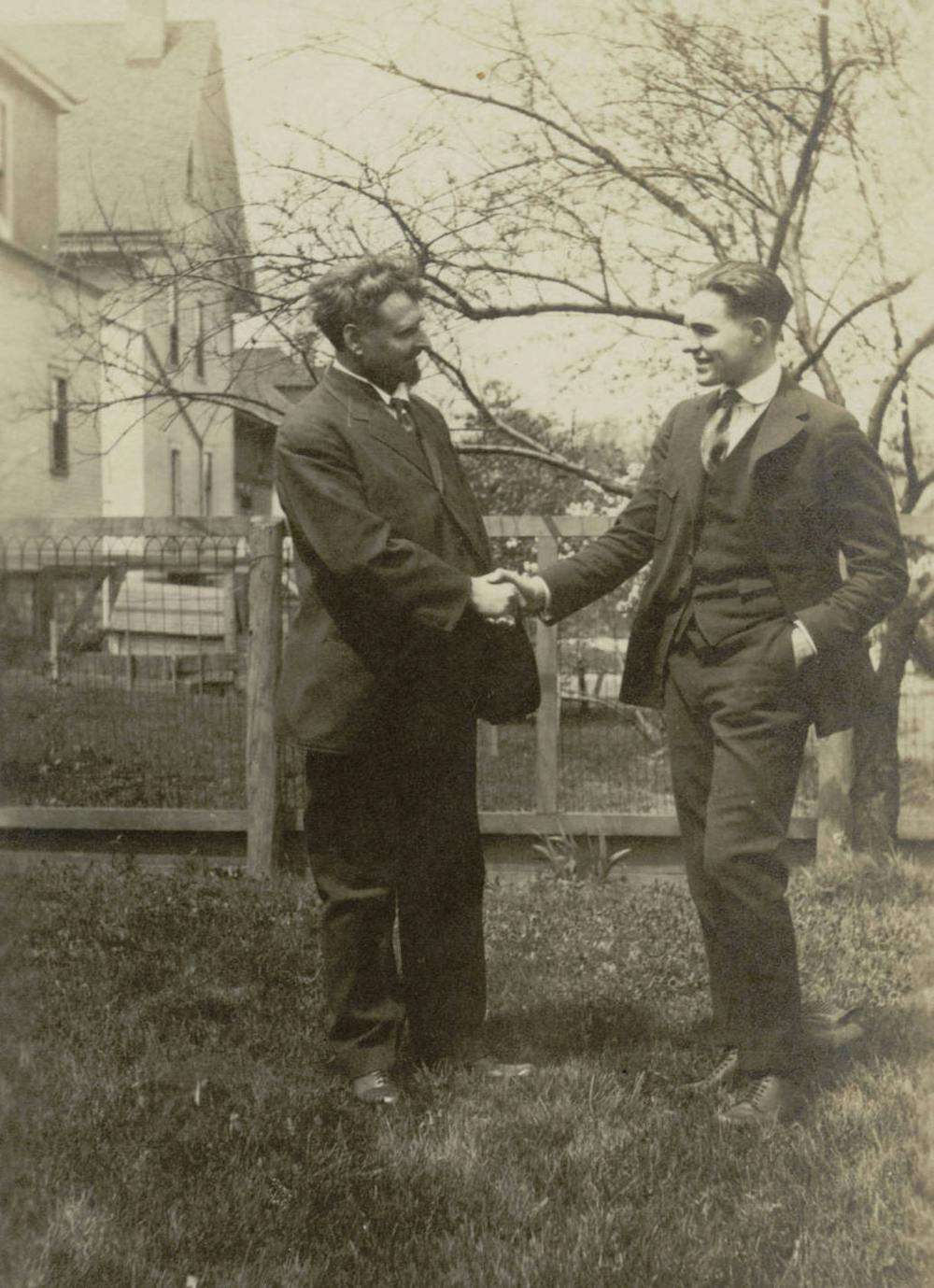
Clarence Edmonds Hemingway and Ernest Hemingway in Oak Park, Illinois, circa 1917-1918. Ernest Hemingway Foundation of Oak Park/Oak Park Public Library, Oak Park, Illinois., Author provided
Nick is surprised when his son starts to speak to him because he “had felt quite alone” even though “this boy had been with him.” As if reading his father’s thoughts, the boy wonders, “What was it like, Papa, when you were a little boy and used to hunt with the Indians?’”
Hemingway’s letters show that another story in the collection, “A Day’s Wait,” was inspired by Bumby’s bout with influenza in the fall of 1932. It is a seemingly lighthearted story about a young boy’s misunderstanding of the differences between the centigrade and Fahrenheit scales of temperature. Like Bumby, the protagonist, “Schatz” – one of Bumby’s other nicknames, a term of endearment in German – attends school in France but is staying with his father when he becomes ill. Schatz had learned at school that no one can survive a temperature of 44 Celsius, so, unbeknownst to his father, he spends the day waiting to die of his fever of 102 Fahrenheit.
But there is more to this story than the twist. “You don’t have to stay in here with me, Papa, if it bothers you,” the boy tells him. “It doesn’t bother me,” his father replies. He unwittingly leaves his son to believe, for an entire day, not only that the boy is going to die, but that his death is of no importance to his father.
In this slight story – one of those stories he told Perkins was written “absolutely as they happen” – we find an unexpected Hemingway hero in the form of a nine-year-old boy who bravely faces death alone.
Though he once wrote that he wanted “Winner Take Nothing” to make “a picture of the whole world,” Hemingway also seemed to understand that no one ever truly knows the subjective experience of another, not even a father and son.











 At the BookShelf
You must be logged in to post a comment.