Unknown's avatar

Did a censored female writer inspire Hemingway’s famous style?


File 20190327 139374 14kkvab.jpg?ixlib=rb 1.1
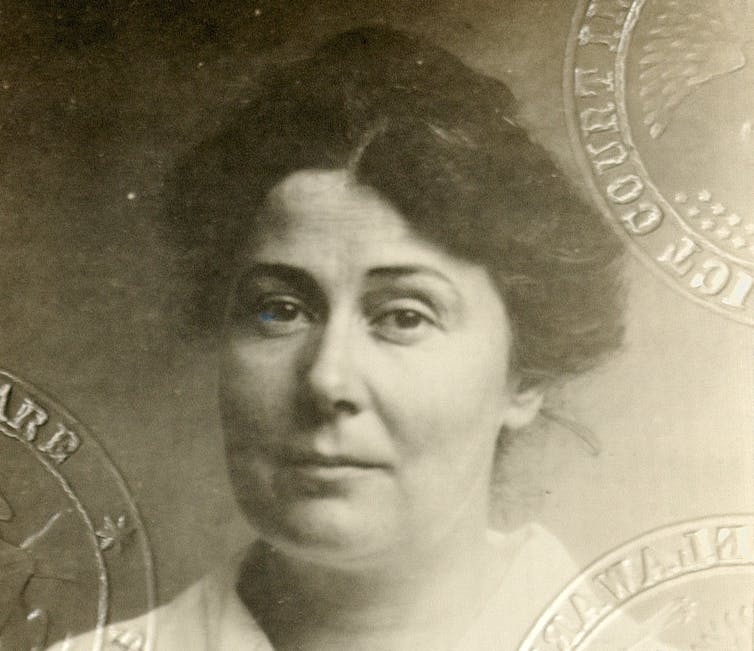
A photograph of Ellen N. La Motte soon after completing ‘The Backwash of War’ in 1916.
Courtesy of the National Archives, College Park, Maryland, Author provided

Cynthia Wachtell, Yeshiva University

Virtually everyone has heard of Ernest Hemingway. But you’d be hard-pressed to find someone who knows of Ellen N. La Motte.

People should.

She is the extraordinary World War I nurse who wrote like Hemingway before Hemingway. She was arguably the originator of his famous style – the first to write about World War I using spare, understated, declarative prose.

Long before Hemingway published “A Farewell to Arms” in 1929 – long before he even graduated high school and left home to volunteer as an ambulance driver in Italy – La Motte wrote a collection of interrelated stories titled “The Backwash of War.”

Published in the fall of 1916, as the war advanced into its third year, the book is based upon La Motte’s experience working at a French field hospital on the Western Front.

“There are many people to write you of the noble side, the heroic side, the exalted side of war,” she wrote. “I must write you of what I have seen, the other side, the backwash.”

“The Backwash of War” was immediately banned in England and France for its criticism of the ongoing war. Two years and multiple printings later – after being hailed as “immortal” and America’s greatest work of war writing – it was deemed damaging to morale and also censored in wartime America.

For nearly a century, it languished in obscurity. But now, an expanded version of this lost classic that I’ve edited has just been published. Featuring the first biography of La Motte, it will hopefully give La Motte the attention she deserves.

Horrors, not heroes

In its time, “The Backwash of War” was, simply put, incendiary.

As one admiring reader explained in July 1918, “There is a corner of my book-shelves which I call my ‘T N T’ library. Here are all the literary high explosives I can lay my hands on. So far there are only five of them.” “The Backwash of War” was the only one by a woman and also the only one by an American.

In most of the era’s wartime works, men willingly fought and died for their cause. The characters were brave, the combat romanticized.

Not so in La Motte’s stories. Rather than focus on World War I’s heroes, she emphasized its horrors. And the wounded soldiers and civilians she presents in “The Backwash of War” are fearful of death and fretful in life.

Filling the beds of the field hospital, they are at once grotesque and pathetic. There is a soldier slowly dying from gas gangrene. Another suffers from syphilis, while one patient sobs and sobs because he does not want to die. A 10-year-old Belgian boy is fatally shot through the abdomen by a fragment of German artillery shell and bawls for his mother.

War, to La Motte, is repugnant, repulsive and nonsensical.

The volume’s first story immediately sets the tone: “When he could stand it no longer,” it begins, “he fired a revolver up through the roof of his mouth, but he made a mess of it.” The soldier is transported, “cursing and screaming,” to the field hospital. There, through surgery, his life is saved but only so that he can later be court-martialed for his suicide attempt and killed by a firing squad.
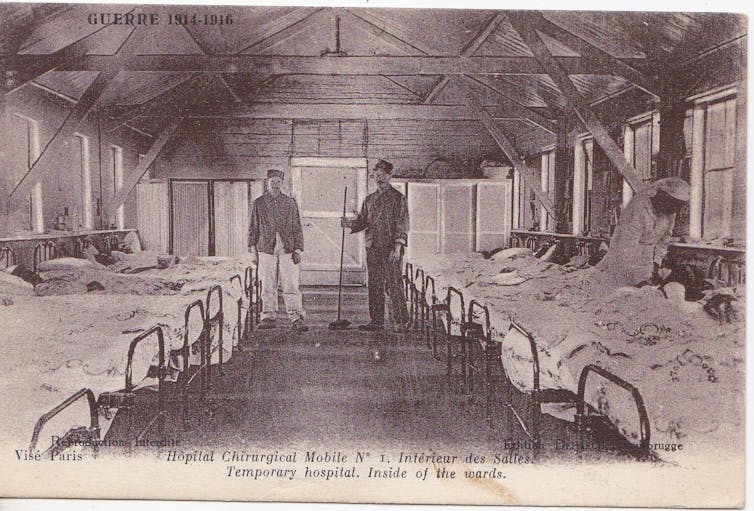
A postcard of the French field hospital where La Motte worked.
Cynthia Wachtell

After “The Backwash of War” was published, readers quickly recognized that La Motte had invented a bold new way of writing about war and its horrors. The New York Times reported that her stories were “told in sharp, quick sentences” that bore no resemblance to conventional “literary style” and delivered a “stern, strong preachment against war.”

The Detroit Journal noted she was the first to draw “the real portrait of the ravaging beast.” And the Los Angeles Times gushed, “Nothing like [it] has been written: it is the first realistic glimpse behind the battle lines… Miss La Motte has described war – not merely war in France – but war itself.”

La Motte and Gertrude Stein

Together with the famous avant-garde writer Gertrude Stein, La Motte seems to have influenced what we now think of as Hemingway’s signature style – his spare, “masculine” prose.
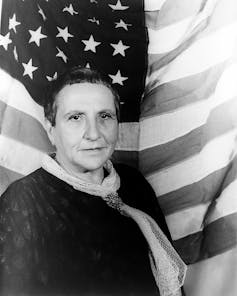
Gertrude Stein – who would go on to mentor Hemingway – was close friends with La Motte.
Library of Congress

La Motte and Stein – both middle-aged American women, writers and lesbians – were already friends at the start of the war. Their friendship deepened during the first winter of the conflict, when they were both living in Paris.

Despite the fact that they each had a romantic partner, Stein seems to have fallen for La Motte. She even wrote a “little novelette” in early 1915 about La Motte, titled “How Could They Marry Her?” It repeatedly mentions La Motte’s plan to be a war nurse, possibly in Serbia, and includes revealing lines such as “Seeing her makes passion plain.”

Without a doubt Stein read her beloved friend’s book; in fact, her personal copy of “The Backwash of War” is presently archived at Yale University.

Hemingway writes war

Ernest Hemingway wouldn’t meet Stein until after the war. But he, like La Motte, found a way to make it to the front lines.

In 1918, Hemingway volunteered as an ambulance driver and shortly before his 19th birthday was seriously injured by a mortar explosion. He spent five days in a field hospital and then many months in a Red Cross hospital, where he fell in love with an American nurse.

After the war, Hemingway worked as a journalist in Canada and America. Then, determined to become a serious writer, he moved to Paris in late 1921.

In the early 1920s Gertrude Stein’s literary salon attracted many of the emerging postwar writers, whom she famously labeled the “Lost Generation.”

Among those who most eagerly sought Stein’s advice was Hemingway, whose style she significantly influenced.

“Gertrude Stein was always right,” Hemingway once told a friend. She served as his mentor and became godmother to his son.

Much of Hemingway’s early writing focused on the recent war.

“Cut out words. Cut everything out,” Stein counseled him, “except what you saw, what happened.”

Very likely, Stein showed Hemingway her copy of “The Backwash of War” as an example of admirable war writing. At the very least, she passed along what she had learned from reading La Motte’s work.

Whatever the case, the similarity between La Motte’s and Hemingway’s styles is plainly evident. Consider the following passage from the story “Alone,” in which La Motte strings together declarative sentences, neutral in tone, and lets the underlying horror speak for itself.

“They could not operate on Rochard and amputate his leg, as they wanted to do. The infection was so high, into the hip, it could not be done. Moreover, Rochard had a fractured skull as well. Another piece of shell had pierced his ear, and broken into his brain, and lodged there. Either wound would have been fatal, but it was the gas gangrene in his torn-out thigh that would kill him first. The wound stank. It was foul.”

Now consider these opening lines from a chapter of Hemingway’s 1925 collection “In Our Time”:

“Nick sat against the wall of the church where they had dragged him to be clear of machine-gun fire in the street. Both legs stuck out awkwardly. He had been hit in the spine. His face was sweaty and dirty. The sun shone on his face. The day was very hot. Rinaldi, big backed, his equipment sprawling, lay face downward against the wall. Nick looked straight ahead brilliantly…. Two Austrian dead lay in the rubble in the shade of the house. Up the street were other dead.”

Hemingway’s declarative sentences and emotionally uninflected style strikingly resemble La Motte’s.

So why did Hemingway receive all of the accolades, culminating in a Nobel Prize in 1954 for the “influence he exerted on contemporary style,” while La Motte was lost to literary oblivion?

Was it the lasting impact of wartime censorship? Was it the prevalent sexism of the postwar era, which viewed war writing as the purview of men?

Whether due to censorship, sexism or a toxic combination of the two, La Motte was silenced and forgotten. It’s time to return “The Backwash of War” to its proper perch as a seminal example of war writing.

Cynthia Wachtell is the editor of a new edition of:

The Backwash of War: An Extraordinary American Nurse in World War IThe Conversation

Johns Hopkins University Press provides funding as a member of The Conversation US.

Cynthia Wachtell, Research Associate Professor of American Studies & Director of the S. Daniel Abrham Honors Program, Yeshiva University

This article is republished from The Conversation under a Creative Commons license. Read the original article.

Unknown's avatar

The bias hiding in your library


File 20190221 195876 ih5u64.jpg?ixlib=rb 1.1
Library subjects and call numbers can be the subject of controversy.
jakkaje808/shutterstock.com

Amanda Ros, Texas A&M University

For many years, the Library of Congress categorized many of its books under a controversial subject heading: “Illegal aliens.”

But then, on March 22, 2016, the library made a momentous decision, announcing that it was canceling the subject heading “Illegal aliens” in favor of “Noncitizens” and “Unauthorized immigration.”

However, the decision was overturned a few months later, when the House of Representatives ordered the library to continue using the term “illegal alien.” They said they decided this in order to duplicate the language of federal laws written by Congress.

This was the first time Congress ever intervened over a Library of Congress subject heading change. Even though many librarians and the American Library Association opposed Congress’s decision, “Illegal aliens” remains the authorized subject heading today.

Cataloging and classification are critical to any library. Without them, finding materials would be impossible. However, there are biases that can result in patrons not getting the materials they need. I have worked in university libraries for over 20 years, and I’d like to highlight some issues of bias that you need to be aware of in order to find what you’re looking for.

How library catalogs work

The U.S. does not have an official national library. However, the Library of Congress fills this role on several fronts.

Many libraries across the U.S. adopt policies established by the Library of Congress, such as their call numbers and subjects for cataloging books. Its subject headings system is one of the most popular in the world.

Subjects are used to assign call numbers, so that items on similar topics are grouped together. An item will have only one call number, but it can have multiple subjects.

Using a specific system ensures consistency. For example, imagine how many variations of “William Shakespeare” you might have to search for if libraries did not use the authorized term “Shakespeare, William, 1564-1616.”

The ‘straight white American man’ assumption

In April 2018, I presented my research into issues of library bias in the Library of Congress Classification and Subject Headings at NCORE, the National Conference on Race and Ethnicity in Higher Education in New Orleans.

Today, when I search for subjects containing “women” or “men,” the results are unbalanced. There are 4,065 subject terms containing “women” and only 444 containing “men.”

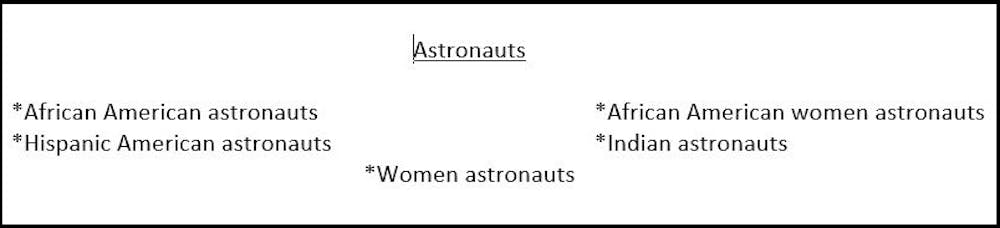
One example of bias is subjects containing the word “astronauts.”

Women are designated with “Women astronauts” and “African American women astronauts,” but there is no subject heading for male astronauts. A book about astronauts who are men would have the general subject “Astronauts,” unless the racial identity prompted the use of a subject like “Hispanic American astronauts” or “Indian astronauts.” Likewise, a book about Russian astronauts would have a geographic subdivision added: “Astronauts – Soviet Union” instead of “Russian astronauts.”

Official Library of Congress subject headings involving astronauts.
Amanda Ros, CC BY

Without gender, race or geographic qualifications, “Astronauts” can be assumed to mean white American men in terms of library subjects.

Another exercise I did was to search for professions that are traditionally perceived as female. Nurses, for example, were divided equitably, with subjects for both “Male nurses” and “Female nurses.” However, under “Prostitutes,” there was only a “Male prostitute” subject heading, revealing the generic assumption that most prostitutes are female.

Official Library of Congress subject headings for three professions traditionally perceived as female.
Amanda Ros, CC BY

This is not to say that there aren’t positive changes occurring. For example, in the late 1970s, “Afro-Americans” replaced “Negroes.” This was in turn replaced by “African Americans” or “Blacks” in 2000. In 2001, “People with mental disabilities” replaced “Mentally handicapped” and “Retarded persons.”

Gender identity is also an area where positive changes have been made. LGBT subjects have been distinguished and classed under “Sexual minorities” since 1972, rather than being under the subject “Sexual deviations,” as they previously were. “Sexual deviations” does not even exist as a subject heading anymore.

In December, the Library of Congress changed the broader term from “sexual minorities” to simply “persons,” in order to align with how other minorities are handled.

The classification dilemma

Many items cover multiple subjects, yet a single physical item can only be shelved in one location. Selecting a call number automatically devalues other subjects, but it must be done.

For example, take the book “Women of the Depression: Caste and Culture in San Antonio, 1929-1939.” Would you classify it under women’s history, Depression of 1929, Texas history or somewhere else?

Catalogers rely upon publisher-assigned subjects and summaries to help assign library subjects. These subjects, the Book Industry Standards and Communications codes, consist of 52 main categories, which are not as specific as Library of Congress subject headings. This can result in incorrect subjects being applied.

For example, I recently cataloged a book about basketball. The BISAC subject was “sports.” While it’s true that basketball is a sport, if I assigned “sports” as the main subject, it would be classed somewhere around GV704, but if I assigned the subject “basketball” it would be classed under GV885. Between these numbers, there could be books covering rules, the Olympics, equipment, air sports, water sports, winter sports and roller skating before the “Ball sports” starting with baseball. This difference could result in the patron not finding the book if browsing the shelves where the other basketball books are.

So the issue is that, by prioritizing certain subjects over one another, it might be more difficult for readers to find what they’re looking for. Women’s history books (HQ1121) may be far away from books about the Depression of 1929 (HB3713); therefore, someone looking for books about the Great Depression might not find the book she needed if it was classed in women’s history.

In my experience, catalogers try to be unbiased when applying subject headings and call numbers. But established subjects are created and adapted based on societal norms. If you can’t find what you need in your library, be aware that the term you use today might not be the term that was previously created. Ask your librarian for help.The Conversation

Amanda Ros, Coordinator of Monograph Copy Cataloging, Texas A&M University

This article is republished from The Conversation under a Creative Commons license. Read the original article.

Unknown's avatar

Six books that shock, delve deeply and destroy pieties: your guide to the 2019 Stella Prize shortlist


File 20190404 131404 16pnsat.png?ixlib=rb 1.1
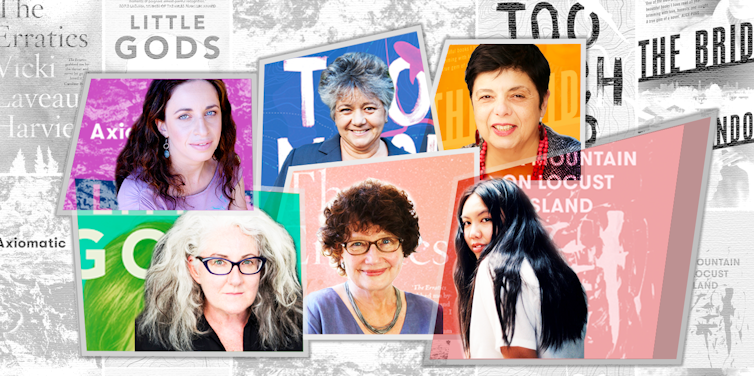
This year’s Stella Prize shortlist is difficult to sum up or pin down – but the experiences of young people are a recurring theme.
Stella Prize/The Conversation

Camilla Nelson, University of Notre Dame Australia

Young people – how they think and feel, how institutions (families, schools, clinics, courts) fail them – are a recurring theme in the books shortlisted for the 2019 Stella Prize.

These six surprising books – four novels, a memoir and a collection of essays – cover subject matter as diverse as grief, loss, history, childhood, and Indigenous resistance. They make risky aesthetic choices. Some feature dazzling experiments with language, structure and form. Despite, or, more likely, because of this, they also have a tight grip on reality.

They are searing and often searching; intent on excavating the “present’s beating heart”. They share an attitude that is daring, sometimes darkly funny, always serious and thoroughly unsentimental. These books are difficult to sum up or pin down. Here is our critical guide to them.

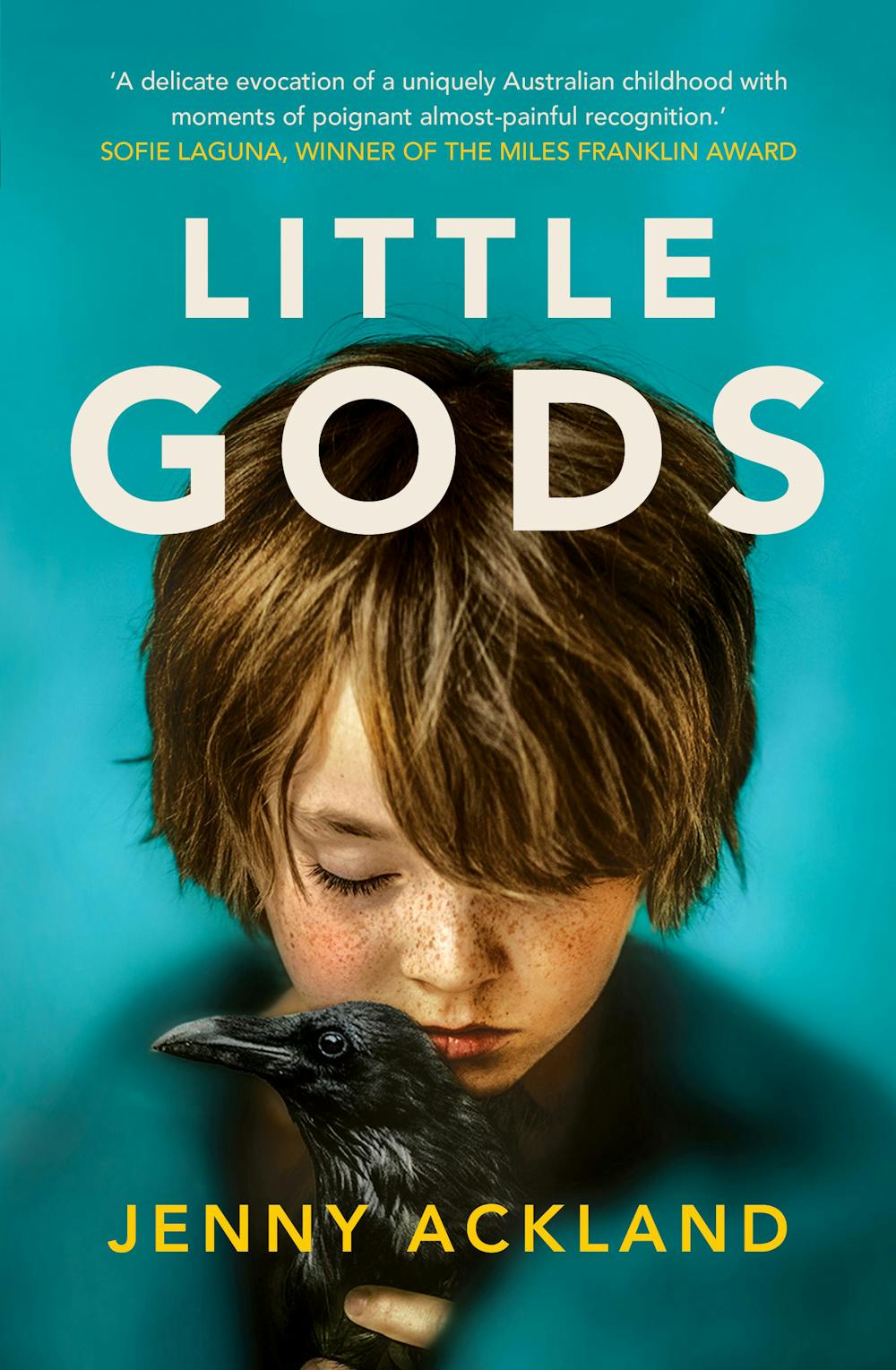
Little Gods, Jenny Ackland

Olive May Lovelock is blessed with the sunny kind of optimism that is typical of an Australian childhood, set against the broad flats of the Mallee. She saves a joey, and tames a raven named Grace. She checks the warm wombs of roadkill for babies. Olive wears an old pair of binoculars around her neck to “see things better”, but life proves deceptive.

There are secrets here. A mother who rarely hugs or pays attention to her daughter, an unmarried sister whose baby is taken away at birth, an uncle who loses his pregnant wife in a car accident.

When Olive finds out she had a baby sister who died – a secret that “everyone knows”, as the local school bully tells her, but nobody is allowed to tell – she is determined to find out what happened. Olive pieces together the answers out of fragments of her own memory, and those of the children around her. But memories are deceptive, “[they] get you where they want you, not the other way around”. The answers prove dark in a way that is breathless, soul-crushing and peculiarly Australian.


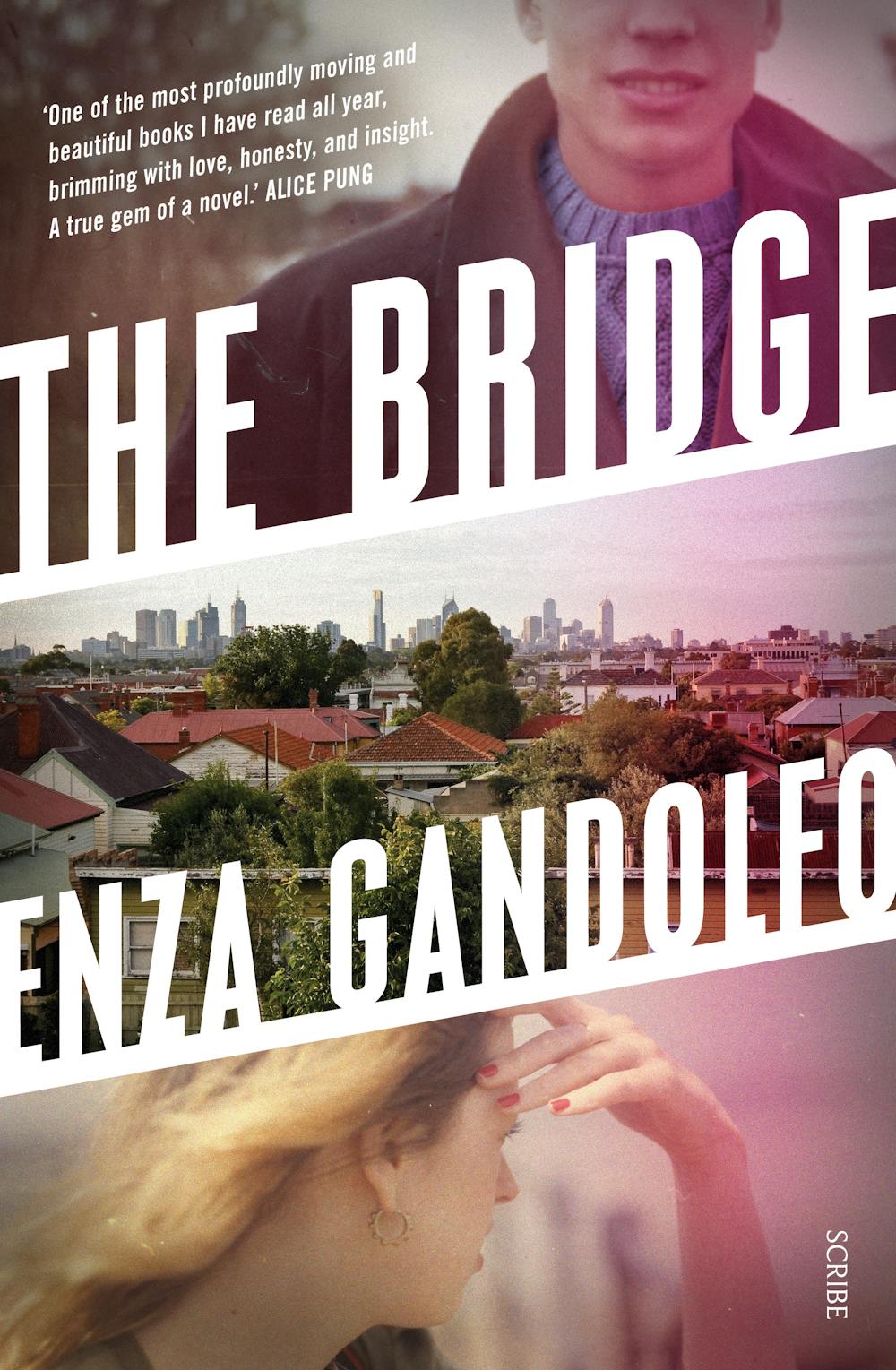
The Bridge, Enza Gandolfo

In October 1970, Melbourne’s Westgate Bridge – a “nation building project” that ought to have been a symbol of the brave, bold modern city – collapsed in Australia’s worst industrial accident, leaving 35 workers dead.

The opening pages of Gandolfo’s book conjure the physical terror of that moment, “[…] the men were falling, falling off, falling through the air”, she writes, “bashed by the flying debris; their arms reached for the sides of the girder, for something, but there was nothing”.

In Gandolfo’s imagining, the Westgate Bridge becomes the site of another horror 40 years later. Jo and her best friend, Ashleigh, a granddaughter of one of the Westgate survivors, are on the verge of finishing high school, flush with the future, when their lives are shattered by a car crash – senseless, alcohol-fuelled.

This novel, set among migrant communities in Yarraville in Melbourne’s west, explores how accidents of this magnitude not only waste the lives of those who die, but continue to haunt the living, who must struggle for a lifetime with the weight of trauma. This is a book about guilt, ambiguity and moral culpability. It searches amid half-made lives, misguided dreams and murky realities, asking stern questions about responsibility and remorse.


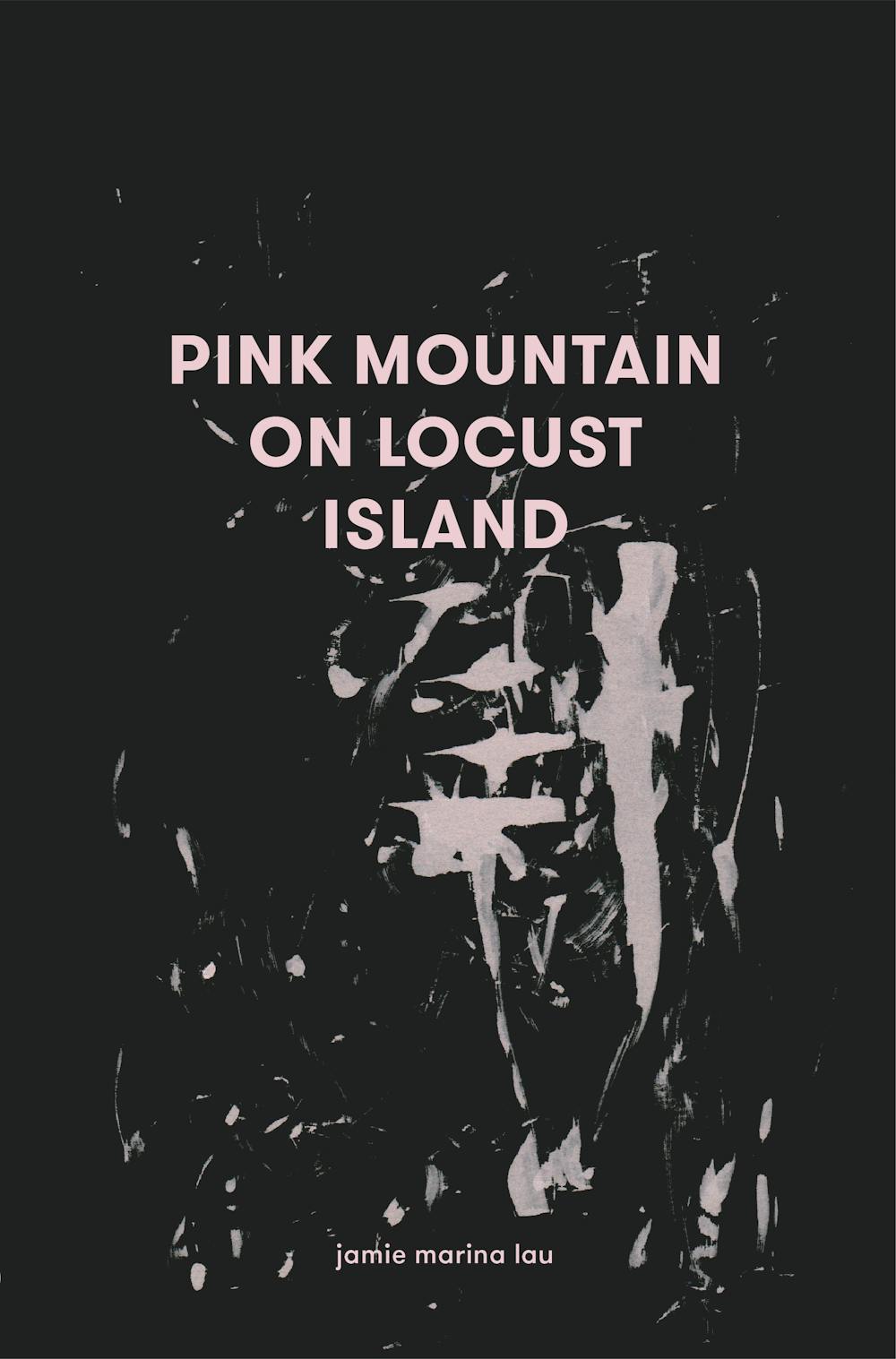
Pink Mountain on Locus Island, Jamie Marina Lau

Lau’s debut novel is a head trip of a book, filled with the shards of broken sentences. Written in short chapters, it embraces a contemporary reality that veers wildly between boredom and violence, mediated through retro technologies, including grainy VHS videos, and YouTube tutorials. It is sometimes hard to tell what is real and what is believable – whether there is, as Lau writes, any difference between “a false-alarm scream and a death-scream”.

But the book is always emotionally true to the chaotic inner life of its young protagonist, 15-year old Monk, whose world hovers between childhood and adulthood, English and Cantonese, familial neglect and a desperate desire to be noticed.

At one stage, Monk’s father asks, “Would you look away if somebody was forcing you to look at their emotions?” Lau doesn’t give us the chance. She makes sure we look, straight-on.

Monk’s mother is absent in Shanghai, her artist father is addicted to Xanax and alcohol, and she is infatuated with a “messiah” figure named Santa Coy, who ignites all their lives – pulling Monk into a dangerous world of drugs, pushers and parties. Lau’s book captures the voice of its teenage protagonist and a new kind of transcultural millennial life in the digital age.


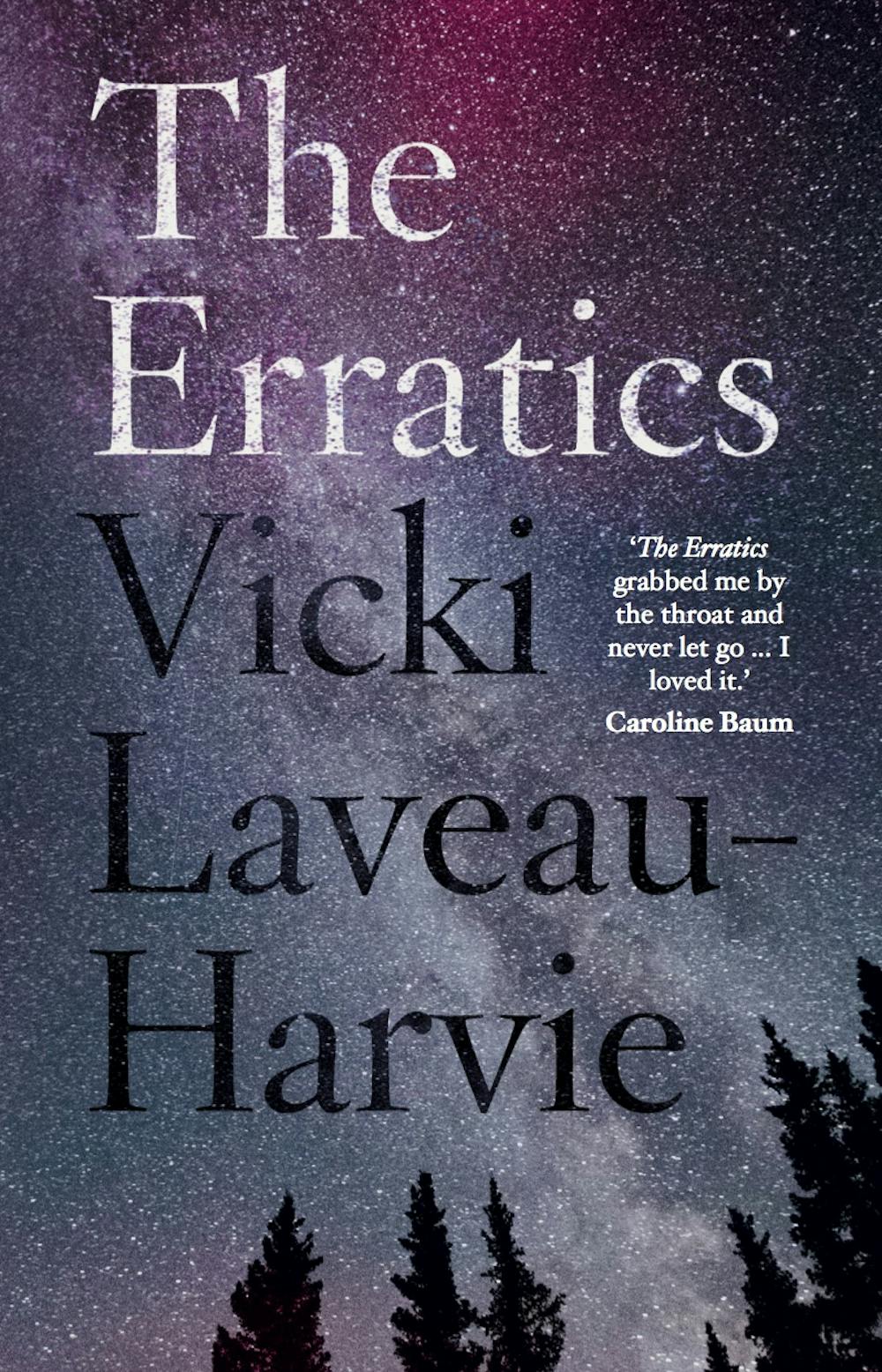
The Erratics, Vicki Laveau-Harvie

Vicki Laveau-Harvie’s memoir tells the story of an estranged daughter’s journey home, when she is summoned to care for a mother with a fractured hip. Vicki’s mother suffers from some kind of undiagnosed mental illness, which has caused her to isolate herself and her husband from the world on their rural property, set in an eerie landscape in a remote region of Alberta, Canada. Vicki’s father suffers from dementia, and Vicki and her sister are convinced their mother has been slowly starving him to death.

Vicki’s mother is clearly unwell, and probably has been for their entire lives. She also possesses extraordinary powers of persuasion, convincing doctors, nurses and, at times, her own ailing husband that she has no daughters, or only one daughter who is dead, or only two daughters who have both disappeared.

Says Vicki: “I have a vision of my mother’s influence making its way through my father’s mind, filling the tiny spaces left by the rounded contours of his brain, solidifying around the synapses until not even his thoughts are his own.”

There are hints here of childhood trauma – reasons for leaving, reasons for not caring, or even trying to care. Vicki’s sister has long ago changed her name because “hearing her childhood name cast her back into the black chasms of before”.

The prose style is numb, clinically distant. It is sometimes difficult to empathise with the detached narrator and the care she cannot – or will not – show. But this is a startling memoir of family damage. We can only guess, “where there is nothing, there must have been pain”.


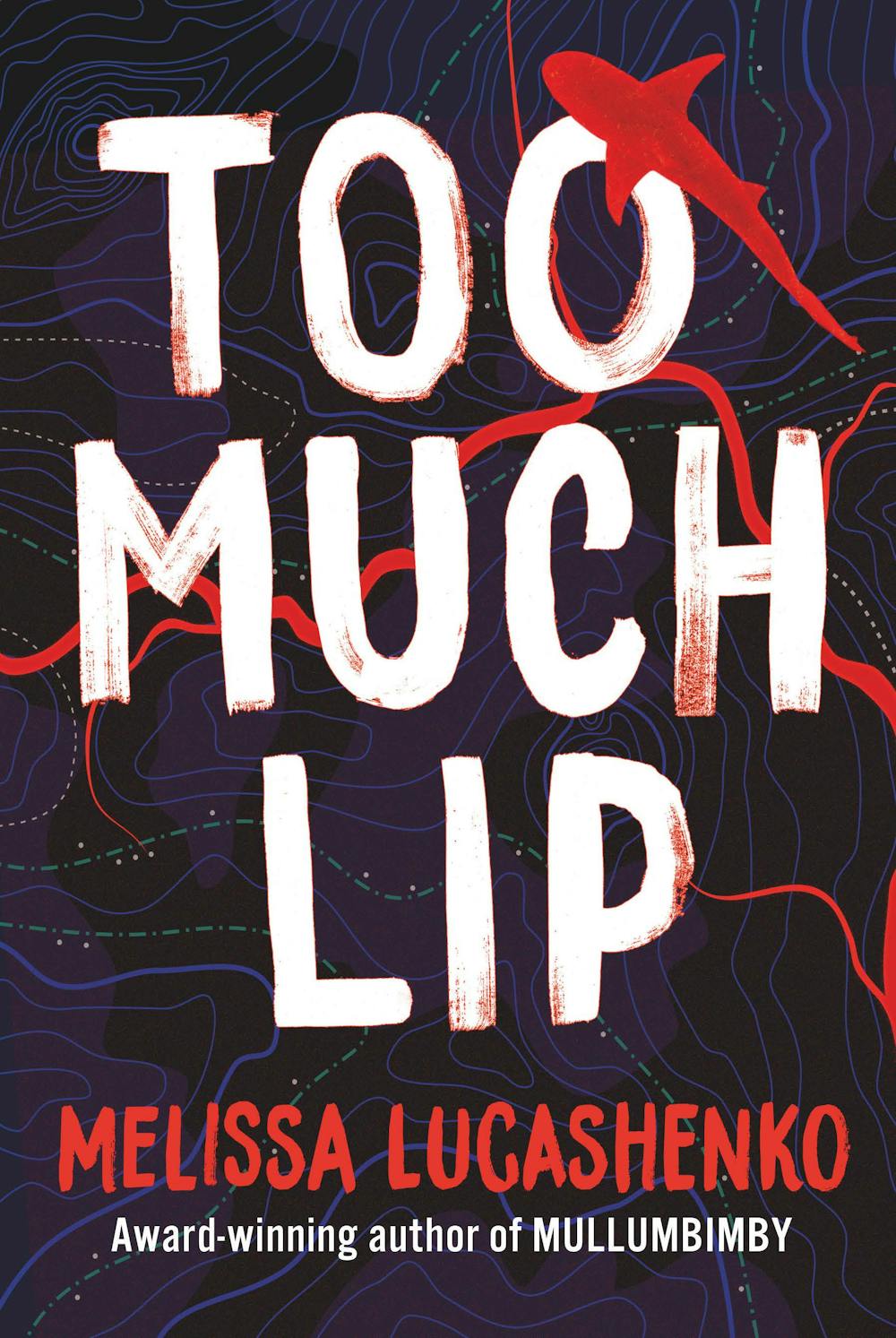
Too Much Lip, Melissa Lucashenko

Kerry Salter enters the pages of Too Much Lip on a stolen Harley Davidson Softail, “a dozen blue eyeballs popping fair outta their moogle heads at the sight of her”, with Kerry – “blackfella du jour” – barely resisting the “urge to elevate both middle fingers as she rode past”.

She has come to say goodbye to her grandfather, Pop Owen, and to say hello to a mother who spends way too much time “on the turps”. This is a book about colonial violence, contemporary state-sponsored violence, diffuse racism, and their relationship to domestic violence, searing child abuse, family dysfunction and intergenerational trauma.

Kerry and her siblings cope in different ways, mostly thorough crime, alcohol and “too much lip”. But when the local mayor, a shady real estate agent whose grandfather terrorised Indigenous people, wants to build a prison on land that has spiritual, cultural and personal significance to Kerry’s family, they pull together and fight to save their river. Resistance for the Salters is less about the Native Title Act, and more about missing sister Donna’s commercial know-how.

Lucashenko’s book is shot through with defiance and anger; present day thefts are offset by the memory of historical ones. Hers is a darkly funny, searingly violent world, in which there are no easy fixes – only hard, complicated truths.


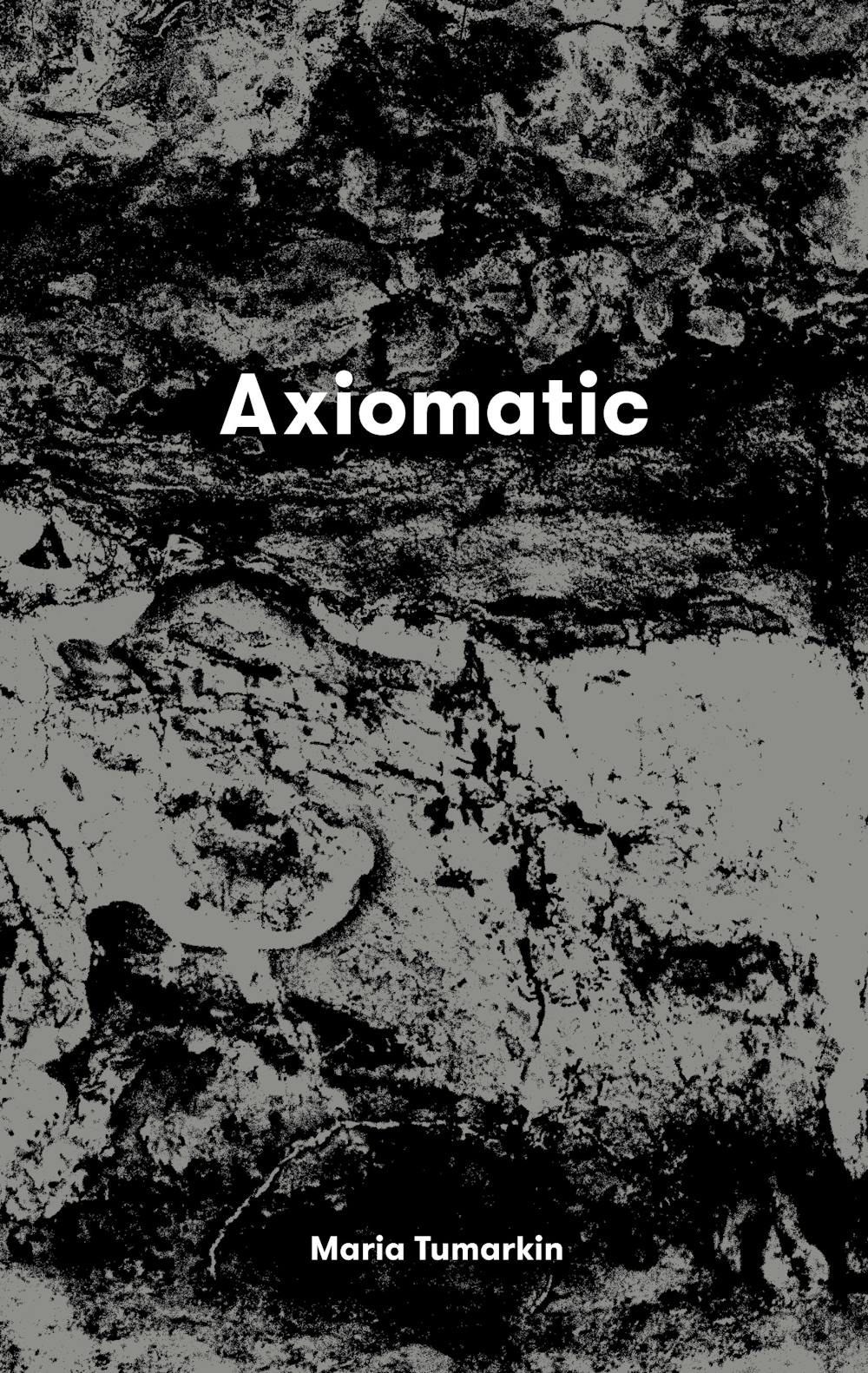
Axiomatic, Maria Tumarkin

To say that Maria Tumarkin’s essay collection scrutinises our ideas about “History” and the past is inadequate. This book rips into our pieties, interrogates our easy platitudes, and forces us to see the world – words, things, people, feelings – in new ways. History is exactly the right subject for Tumarkin, because there is no easy forgetting in the world she describes, just as there is seemingly no limit to “how much sorrow and pain about the world a person can carry inside”.

Each essay in the collection takes an axiom about history and tests it against our gritty present day realities. In “History Repeats Itself”, Vanya, a community lawyer, helps young people on a collision course with the criminal justice system “who live their lives on a highway where they are repeatedly hit by passing trucks”. In “Those Who Forget the Past Are Condemned to Re – ”, a child flees a stepfather’s violence only to be returned to a house of blood and broken teeth.

Her essay “Time Heals All Wounds” is a harrowing examination of teenage suicide. One boy writes in a suicide note: “Please do not assume you know why. Even I’m not completely sure.”

Facing all this would not be possible without Tumarkin’s sonorous wisdom; her capacity to turn things, words, people, sentences over on the page to see what they’re made of. Lucid and grave; this book is a revelation.


The winner of the 2019 Stella prize will be announced in Melbourne on April 9.The Conversation

Camilla Nelson, Associate Professor in Media, University of Notre Dame Australia

This article is republished from The Conversation under a Creative Commons license. Read the original article.

Unknown's avatar

Don’t worry, a school library with fewer books and more technology is good for today’s students


File 20190329 139374 1z0c9i3.jpg?ixlib=rb 1.1
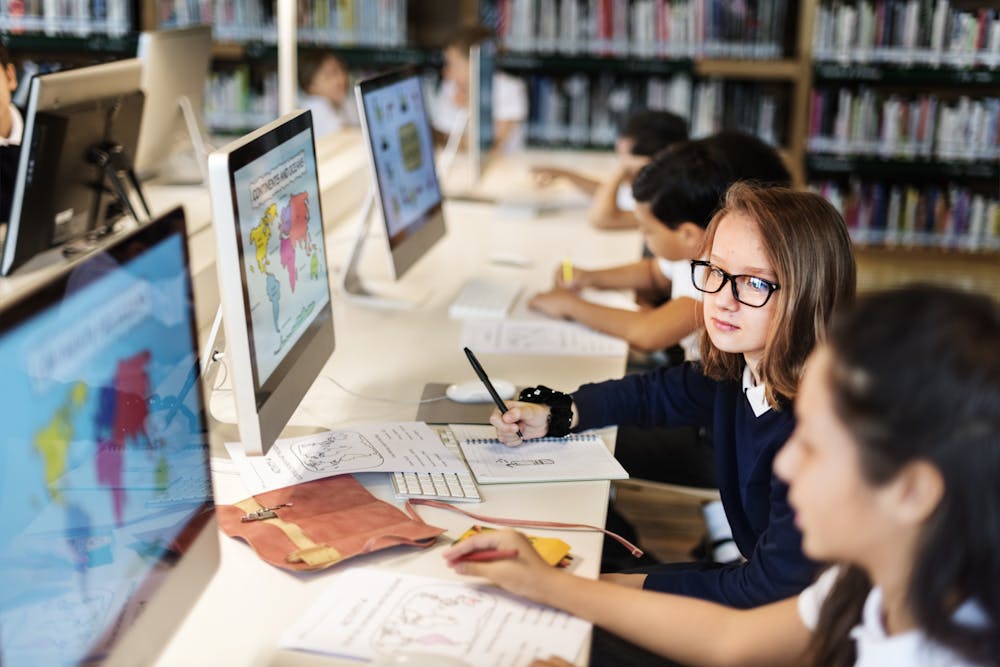
School libraries are no longer just places where books are stored.
from shutterstock.com

Elizabeth Tait, RMIT University; Huan Vo-Tran, RMIT University; Paul Mercieca, RMIT University, and Sue Reynolds, RMIT University

A recent article about a new approach to a school library sparked vigorous discussion on social media. Many worried the school had completely abolished traditional library services. The article describes how a Melbourne school changed its library to a technology-focused centre staffed by “change adopters” who host discussions with students and encourage creative thinking.

https://www.facebook.com/plugins/post.php?href=https%3A%2F%2Fwww.facebook.com%2FtheageAustralia%2Fposts%2F10156915483491422&width=500

The school’s principal was forced to defend the library’s restructure. She wrote that its traditional purpose hadn’t been lost.

The College Library has been transformed into a Learning Centre that continues to offer all library services to students and staff, including a significant collection of fiction and non-fiction books, journals, newspapers, magazines and other print resources, as well as online access to other libraries.

This school’s approach isn’t unique. Many schools have reconfigured their library spaces to embrace a model of integrating library services – where traditional library resources are combined with technology. Some have installed new technologies in so-called “maker spaces”. These are where students can be creative, often using technologies such as 3D printers and recording suites.

The purpose of today’s libraries isn’t only to maintain the traditional roles of promoting reading, developing information literacy and providing access to a collection of books and other resources. Today’s school libraries are fundamental to broader digital literacy, information provision and developing critical evaluation of information.


Read more:
Technology hasn’t killed public libraries – it’s inspired them to transform and stay relevant


The importance of the library

School libraries improve student achievement. A synthesis of international studies demonstrates that having a library leads to successful curriculum outcomes, including information literacy and positive attitudes to learning. It also improves academic achievement through higher test or exam scores.

A detailed study of 30 teacher librarians in Australia showed they also play a key role in supporting students with special educational needs. They do this by identifying readers and students at risk and working with them to improve both educational and social outcomes.

Teacher librarians have dual educational and librarianship qualifications. This means they have knowledge of pedagogy and curriculum combined with library and information management skills.

Today’s students need guidance in interpreting online information.
from shutterstock.com

Libraries and library staff have consistently responded to the changing needs of society. And library professionals have been at the forefront of embracing technology: from establishing the first computer labs in schools in the 1980s through to working with students and teachers to use new technologies such as 3D printing, robotics, gaming and recording suites in learning and creativity.


Read more:
Technology and learning in the classroom: six tips to get the balance right


Libraries and technology

There is a lack of understanding of what librarians can do for a school community and a belief children don’t need help with learning how to use technology. Information can be inaccessible, and misunderstood, without proper instruction, guidance and support. This is especially true for students from disadvantaged backgrounds who don’t have good access to the internet at home, or those with learning differences.

As the evidence base for what makes an effective library grows, it’s becoming recognised that

the 21st century school library professional is a digital leader, an innovator, a creator, a promoter, a resource and research specialist, a curriculum adviser, and much more.

Teacher librarians educate children in the core skills of searching and evaluating information. They also support and empower students in areas such as digital citizenship. This enables children to fully participate and engage with the complex digital landscape.

As Chelsea Quake, a teacher librarian at a Melbourne public school, told us:

Students leave school reading fake news, turning to Instagram for answers to their health questions, and falling flat on their first university paper, because they never truly learnt how to research.

Skills such as information and digital literacy are core requirements for civic participation. Young people have tremendous opportunities to leverage the power of technologies to ensure their voices are heard about issues that will affect them and their children in the future. And they need new and evolved library services to help them get there.


Read more:
Friday essay: why libraries can and must change


The Conversation


Elizabeth Tait, Lecturer in Information Management, RMIT University; Huan Vo-Tran, Lecturer, Business IT and Logistics, RMIT University; Paul Mercieca, Lecturer, Business IT and Logistics, RMIT University, and Sue Reynolds, Senior Lecturer, Business IT and Logistics, RMIT University

This article is republished from The Conversation under a Creative Commons license. Read the original article.
Unknown's avatar

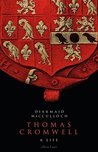
Finished Reading: Thomas Cromwell – A Life by Diarmaid MacCulloch


Thomas Cromwell: A LifeThomas Cromwell: A Life by Diarmaid MacCulloch
My rating: 3 of 5 stars

This is a very detailed and well-written work, however, it is a chore to read. It is a must-read for students of the Tudor (specifically Henry VIII) era and I cannot imagine a better treatment of the timeframe covered.

View all my reviews

Unknown's avatar

No Posts This Week


I have been battling poor health now for months and I have reached the point of peak exhaustion (if that is a thing). I’ll be taking extended leave during May, along with a lengthy break from the Blogs, with the aim being that of taking the opportunity to recover and recharge the batteries. However, I also need an immediate break and so will not be posting to any of my Blogs this week. I have to try and get through work through April, in order to get through to May and my extended break. This may prove to be a very difficult task and even perhaps prove unattainable, yet that is the goal. Each day closer makes the remaining time that little bit easier to contend with. So, in short, there will be no posts for the remainder of this week and I will then start to bring the Blogs back ‘online’ again after that – at least until my extended break in May.