School children read books at Palipis beach in Mandar, West Sulawesi.
The books were brought by library boat.
Pattingalloang, which was part of a network of moving libraries called Pustaka Bergerak. Urwa/Pustaka Bergerak, CC BY-NC-SA
It was a sunny day at a public elementary school in a rural area near Yogyakarta. Students lined up to return the books borrowed from Helobook, a non-profit organisation that regularly lends books for free to schools in the province’s outskirts.
The kids looked happy and laughed a lot because this was their opportunity to access new, interesting books and movies.
Their school’s own library collection was mostly made up of books from government aid in 1990s, published by state-owned publisher Balai Pustaka. The books were out of date and there weren’t enough of them.
These students were also disadvantaged by the fact that their nearest book store is 15 kilometres away and the nearest public library is about 20 kilometres away. This is a problem because these students are from low-income families who can’t afford to travel to borrow books.
Are Indonesians interested in reading?
Low rates of interest in reading among Indonesians is something frequently referenced in news reports from media like Kompas, The Jakarta Post and Antara, which quote data supposedly sourced from UNESCO. These stories quote that one in every 1,000 Indonesians has a high interest in reading. But an exploration of UNESCO’s database and a request for this data have both failed to confirm these statistics.
This perception has also been reinforced by officials and public figures, who have raised the same concerns.
Students of public elementary school in Sleman regency, Yogyakarta, look at books brought by literacy community Helobook. Lukman Solihin, Author provided
Last year, a Central Connecticut State University study put Indonesia’s literacy rate at 60th out of 61 countries, one above Botswana. Officials and public figures also quote this but the ranking is not about reading interest. It’s about computer access, newspaper circulation, and reading comprehension, among other things.
A National Socio-Economic Survey by Indonesia’s Central Statistics Agency showed the country’s TV audience reached 91.5% in 2015 while newspaper readers sat at 13.1%, the lowest point since 1984.
This low rate of reading might not be due to a lack of interest but rather a lack of opportunity to read.
Book access and library condition
Let’s take a look at the data that could serve as a parameter to understand reading interest. First, school library data.
In 147,503 primary schools we only have 90,642 libraries, that’s 61.45%. The percentage shrinks more when we look at the condition. From the total 90,642 libraries, only 28,137 are in good condition (19% of schools, 31% of total libraries). Junior high and high schools have similar situation.
The quantity of village or subdistrict libraries is the same. From 77,095 villages, Indonesia has only 23,281 libraries or about 30%.
The number of book stores is also much lower compared to the vastness of the archipelago. The biggest book store network, Gramedia, has only 100 stores in only a handful of big cities, out of the 514 cities and regencies of Indonesia.
The number of book stores, school and public libraries show how limited the access to books is for many Indonesians. How would people develop some reading interest if access to books is limited?
Library quality and communities of readers
Nurturing reading interest begins with making books available. Unfortunately, the number and condition of school and public libraries are far from adequate. Some school libraries might have a decent building, but the collection is an entirely different matter.
Libraries often serve a dual purpose, such as a storage room or sports hall. One library in Sleman in Yogyakarta, for example, is complete with a ping pong table to indicate its “flexible” function.
The government has instructed schools to allocate budget – increased to 20% of the government school funds in July from previously 5% – for library development and buying textbooks. But most of the funds are spent to buy school textbooks. The result is underdeveloped reading interests among students because of the inadequate book collection; students are bored with outdated books.
Amid this inadequacy, communities of readers in these have proven valuable. These communities open mini libraries in neighbourhoods. One example is the moving library network, Pustaka Bergerak. The growth of these communities is massive and sporadic, as readers reaching out to underrepresented and remote areas.
The government estimated there were over 6,000 mini libraries across the country. Meanwhile, as of August 2017, the Pustaka Bergerak network recorded reaching 312 communities, and counting.
This network has library ponies, libraries on rickshaw, libraries on bicycles, libraries on boats, and even a mobile herbal drinks seller that brings books to lend for free.
Villagers, mostly children, welcome a library pony in Rangkasbitung, Banten province. The volunteer spirit of literacy communities helps develop reading interests in off-the-beaten-track places in Indonesia. Mohammad Hashemi Rafsanjani/Pustaka Bergerak, CC BY-NC-SA
This movement has had a positive response from the government. After a meeting between literacy activists and President Joko Widodo on May 2 this year, the government, through state postal company PT Pos Indonesia, allowed citizens to send books free of charge to the communities registered in this list on the 17th day every month.
Small in scale but big in spirit
Communities of readers are usually built on the members’ love of books and their aspiration to share. Enthusiasm, idealism and capacity to build network are key to the growth of literacy communities and have less to do with the existence or the absence of government funds.
The network has been facilitated by Community Libraries Forum, initiated by the government. Pustaka Bergerak network has also shown great passion in their social media account, enabled by initiator Nirwan Ahmad Arsuka.
Children borrow books brought by a library pony in Manokwari, West Papua. Ali Sunarko/Pustaka Bergerak, CC BY-NC-SA
The number of these communities of readers, compared to the geographical and population size of the country, is perhaps minuscule. Nevertheless, this movement deserves an appreciation for its impact: nurture reading interest.
An example of the success of these communities is Pustakaloka Rumah Dunia in Serang, Banten. This community enabled a scavenger’s son to finish higher education, a fried snack seller to become a journalist, and a farmer’s son to become a poet. Their stories are compiled in a book Relawan Dunia (World Volunteers).
Discovering books also changed Muhidin Dahlan’s life. He was a kampung boy in Sulawesi’s remote area, who was curious about books, before he moved to Yogyakarta to become a writer and an activist in Indonesia Boekoe, a community known for its dedication in archive management, book publishing and establishing Radio Buku. His story is written in a book, Aku, Buku, dan Sepotong Sajak Cinta.
Unlike formal education institutions like schools, the success of reader communities is not measured quantitatively, like how many people have their access to books improved, or how large their book collection is. But the lack of impact in this area is dwarfed by their spirit, their effort to share the importance of books and the efforts to help others access books. Literacy, in this case, is not merely about reading materials and knowledge, but also about volunteer spirit.
The author is doing a research on literacy movement by communities in Yogyakarta, in Anthropology Department in Gadjah Mada University.
There is a chapter towards the end of Stuart Kells’s The Library: A Catalogue of Wonders, in which the author envisions the library of the future as one in which “dreary hordes of students” stare mindlessly at “computers and reading machines”, ignorant of the more refined pleasures of paper and ink, vellum and leather.
This – the death of the book – is a familiar lament recounted by bibliophiles everywhere; a tragic epic in which the Goliath of technology slays the David of art and culture.
It may be superficially appealing to some. And yet, it misses the reality that writing itself is also a technology. Along with the wheel and the lever, it is one of the greatest technologies ever invented. The history of writing predates the invention of the book. It parallels and is a part of the history of other technological forms.
The history of the library is replete with mechanical marvels.
An illustration of a bookwheel from 1588. Wikimedia Commons
Take, for example, the book wheel, the scholar’s technology of the 16th century, an ingenious mechanical device operated by foot or hand controls, allowing a reader to move backwards and forwards across editions and volumes, referencing many different books as quickly possible.
Closer to our own century, there’s the Book Railways of the Boston Public Library installed in 1895, with tracks laid around every level of the stack to transport books. Or the ultra-modern teletype machine and conveyor belt used to convey book requests by the Free Library of Philadelphia in 1927. Or the current book retrieval system used at the University of Chicago, which boasts a system of robotic cranes.
Unlike Kells, I think there is a fabulous quality to the dream of an infinite library that can assemble itself in bits and bytes wherever a reader calls it into being. It sits well with the democratic dream of mass literacy.
It may well take an archaeologist – working a thousand years from now – a lifetime to unlock the data in our already defunct floppy discs and CD Roms. Then again, it took several hundred years of patient work before Jean-François Champollion deciphered Egyptian hieroglyphs in 1822, and even longer for Henry Rawlinson to unlock the secrets of the cuneiform scripts of ancient Mesopotamia.
Of course, Kells’s new book is not a history of reading or writing. It is a history of books as artefacts. It tells of books of doubtful or impeccable provenance, discovered in lost libraries or inaccessible private collections, purloined by book thieves, or crazed and nefarious book collectors, or at the behest of rich or royal patrons. It is a narrative – albeit with an unfortunate, cobbled together quality – brimming with strange anecdotes about a small handful of books owned by a small handful of people; lost books yielding strange surprises, from discarded condoms to misplaced dental appointment slips.
Kells’s favoured haunts are the chained libraries of medieval monks, and the bawdy or scandalous collections of wealthy 18th century patrons. The library of St Gall, for example, which houses one of the largest medieval collections in the world. Or the Bodleian at Oxford, which was never intended to be an inclusive collection, but rather, as its founder Thomas Bodley put it, sought to exclude “almanackes, plaies, and an infinit number” of other “unworthy matters” which he designated “baggage bookes” and “riff-raffe”.
Tourists at the Bodleian Library in 2015. shutterstock
I am a great lover of books. I have been lucky enough to while away the hours in libraries from Beijing to St Petersburg, Belgrade and Buenos Aires. But in an age of economic disparity and privatised public services – of pay walls, firewalls and proprietary media platforms, not to mention Google and Amazon – it is difficult to feel convinced by this bibliophile’s nostalgic reveries.
Embodying an idea of society
More than 20 years ago, when I was living in New York, eking out a living as a copyeditor and more often as a waitress, I became a regular at the 42nd Street Library (also known as the New York Public Library), on Fifth Avenue between 40th and 42nd Streets, a few blocks from the apartment that I shared in Midtown.
It was not just the size of the collection that drew me in – the 120 kilometres of bookshelves housing one of the largest collections in the world – or the ornate ceilings of the main reading room, which ran the length of a city block, with 42 oak tables for 636 readers, the bookish dimness interrupted by the quiet glow of reading lamps. I was fascinated by the library’s pneumatic system.
This labyrinthine contraption, which had been state-of-the-art around the dawn of the 20th century, sent call slips flying up and around through brass tubes descending deep underground – down seven stories of steel-reinforced book stacks where the book was found, then sent up on an oval shaped conveyor belt to arrive in the reading room.
The pneumatic system – with its air of retro, steampunk or defunct book technology – seemed to intimate the dream of a future that had been discarded, or, at least, never actually arrived. Libraries are not just collections of books, but social, cultural and technological institutions. They house not only books but also the idea of a society.
The main reading room of the New York Public Library. Mike Segar/Reuters
The predecessors of the New York Public Library, the Carnegie libraries of the 1880s, were not just book stacks but also community centres with public baths, bowling alleys, billiard rooms, and in at least one strange instance – at the Allegheny library in Pittsburgh – a rifle range in the basement.
Earlier in the 18th century, with the rise of industrial printing technologies and the spread of mass literacy, not only libraries but as many as a thousand book clubs sprang up through Europe. They were highly social, if occasionally rowdy places, offering a space not only for men but also women to gather. Monthly dinners were a common feature. Book club rules included penalties for drunkenness and swearing.
So too, the fabled Library of Alexandria – where Eratosthenes invented the discipline of geography and Archimedes calculated the accurate value of Pi – was not a collection of scrolls but a centre of innovation and learning. It was part of a larger museum with botanical gardens, laboratories, living quarters and lecture halls. Libraries are social places.
Lost libraries
Kells’s Catalogue of Wonders is at its best when it recounts the stories of these ancient libraries, charting the accidental trails of books, and therefore ideas, through processes of translating, pirating and appropriation. And the trades and technologies of papermaking that enabled them.
The library of the Pharaoh Ramses II in the second millennium BCE contained books of papyrus, palm leaves, bone, bark, ivory linen and stone. But “in other lands and other times,” Kells writes,
books would also be made from silk, gems, plastic, silicon, bamboo, hemp, rags, glass, grass, wood, wax, rubber, enamel, iron, copper, silver, gold, turtle shell, antlers, hair, rawhide and the intestines of elephants.
A page from the 13th century Devil’s Bible. Benedictine monastery of Podlažice/Wikimedia Commons
One sheep, he says, yields a single folio sheet. A bible requires 250. The Devil’s Bible, a large 13th-century manuscript from Bohemia, was made from the skin of 160 donkeys.
Ptolemy founded the Library of Alexandra around 300 BCE, on a spit of land between a lake and the man-made port of Pharos. He sent his agents far and wide with messages to kings and emperors, asking to borrow and copy books.
There are many stories about the dissolution of this library: that it was burnt by invading Roman soldiers or extremist Christians or a pagan revolt – or that a caliph ordered the books be burnt to heat the waters of the urban bathhouses. Or just as likely, as Kells points out, the scrolls, which were made of fragile papyrus, simply disintegrated.
But the knowledge contained in the scrolls never entirely disappeared. Even as the collection dissipated, a brisk trade in pirated scrolls copied out in a nearby merchant’s district ensured that the works eventually found their way to Greece and Constantinople, where other libraries would maintain them for another thousand years.
Destroyed collections
One thing that Kells fails to address in his book is the problems that arise when books are excluded, destroyed, censored and forgotten. And, indeed, when libraries are decimated.
Any list of destroyed libraries makes startling reading: The libraries of Constantinople sacked by the Crusaders, the Maya codices destroyed by Franciscan monks, the libraries of Beijing and Shanghai destroyed by occupying Japanese forces, the National Library of Serbia destroyed by the Nazi Luftwaffe, the Sikh Library of the Punjab destroyed at the behest of Indira Gandhi, the Library of Cambodia destroyed by the Khmer Rouge.
More recently, thousands of priceless manuscripts were burnt in the Timbuktu library in Mali and rare books spanning centuries of human learning were burnt at the University of Mosul. Yet more book burnings have been conducted by ISIS, in a reign of cultural devastation that includes museums, archaeological sites, shrines and mosques.
There is also destruction for which the so called “Coalition of the Willing” must accept responsibility. Dr Saad Eskander, the Director of the Iraq National Library and Archive, reported the devastation of the library in a diary posted on the British Library website: archival materials 60% lost, rare books 95% lost, manuscripts 25% lost.
An Iraqi man collects books from the destroyed Iraqi national library in Baghdad in April 2003. Gleb Garanich/Reuters
There may be something not quite right in mourning the death of books in a time of war, as people are dying. But the problem remains that without books and documents, the history of the world can be rewritten.
Indeed, as Iraqi librarians sought to preserve the bookish remains of their country in the still working freezer of a bombed out Iraqi officer’s club, the US military quietly airlifted the archives of the Baathist Secret Police out of the country.
These are the dark places where, as George Orwell once said, the clocks strike thirteen, and Kells does not go.
Of course, the great irony of censorship and book burning is that books are destroyed because it is believed that they are important, and they possess a certain power.
Libraries of the future
In the age of the globalisation of everything – and the privatisation of everything else – libraries can and must change. It is seldom discussed that one of the great destroyers of books are actually libraries themselves, bearing cost cuts, and space limitations. But this process can be ameliorated by companies such as Better World Books that divert library books from landfill, finding new owners and funding literacy initiatives – you can even choose a carbon neutral footprint at the checkout.
Libraries, by which I mean public libraries that are free, open and accessible, will not become extinct, even though they face new competition from the rise of private libraries and the Internet. Libraries will not turn into mausoleums and reliquaries, because they serve a civic function that extends well beyond the books they hold.
Libraries can and must change. Quiet study areas are being reduced, replaced not only by computer rooms but also by social areas that facilitate group discussions and convivial reading. There will be more books transferred to offsite storage, but there will also be more ingenious methods of getting these books back to readers.
There will be an emphasis on opening rare books collections to greater numbers of readers. There is and must be greater investment in digital collections. Your mobile phone will no longer be switched off in the library, but may well be the very thing that brings the library to you in your armchair.
The much heralded “death of the book” has nothing to do with the death of reading or writing. It is about a radical transformation in reading practices. New technologies are taking books and libraries to places that are, as yet, unimaginable. Where there will undoubtedly be new wonders to catalogue.
Josephine Wilson has won the 2017 Miles Franklin award for her novel Extinctions. Judging panel chair Richard Neville stated Wilson’s novel, “explores ageing, adoption, grief and remorse, empathy and self-centredness”. It takes a skillful and thoughtful novelist to pack so many “big issues” into a single narrative, but Wilson has achieved it, and the novel has won considerable recognition.
Josephine Wilson with her novel Extinctions. Peter Marko
The Miles Franklin is, arguably, the apogee of Australian literary prizes, and Extinctions is a worthy addition to the list of earlier winners, among a worthy bunch of shortlisted entries.
The novel began its successful life when it was just a manuscript, and won the inaugural Dorothy Hewett Award in 2015. Since then it has been enthusiastically reviewed by critics and peers: in the Sydney Morning Herald (by Dorothy Johnston), in the Sydney Review of Books (Roslyn Jolly), in the Australian Book Review (Gillian Dooley), and in pretty well every other review outlet in Australia. It was featured on the ABC Books and Writing show and Wilson has fronted up to a number of literary festivals. I’m confident Extinctions will be set on Australian literature courses across the country.
Wilson has nailed key anxieties and preoccupations that characterise the current moment. Ageing, of course, thanks to the population bulge; cultural loss, especially for members of the Stolen Generations; environmental crisis associated with the Anthropocene (the age in which human impacts have come to dominate Earth); and the conflicts that are at the heart of storytelling – in this case, within the family, and with the self.
The central character, Fred Lothian, is a retired academic engineer, whose specialisation is concrete and Modernist design. He finds himself widowed, estranged from his daughter, avoiding his seriously brain-injured son. He is a damaged and dissatisfied man, hiding in his retirement villa, where every inch of space is cluttered with the material objects he has not been able to discard.
Wilson observes and records all this with a cool eye, and records too the distress, anxieties and ethical struggles faced by the other characters, particularly Fred’s daughter, Caroline. An adopted child (“of course she wasn’t really stolen”, says Fred. “We adopted at the end of that period”), she doesn’t feel able to name herself as Aboriginal, knows she resembles no one in her circle, and fears she is recognised by no one. Compounding this emotional burden, she is researching species extinction for an exhibition she is preparing.
The redeeming element is Jan, Fred’s neighbour at the retirement village. She is, effectively, the positive side of the coin, the mirror of both Fred and Caroline. Her warmth, her direct engagement with Fred’s obdurate misery, and the clarity of her understanding begin to shake loose some of the accreted history around the other characters.
“In the end”, reads the preface to Extinctions, “all is allegory”. But allegory has material effects, and the stories we tell ourselves, and the connections we draw within those stories, have the capacity to lead us to or away from extinction. For much of the book, and reflected in the drawings and other images scattered through it, extinction seems the inevitable conclusion.
Let me give Jan the last word, because she delivers what seems to me the coda to the narrative. Watching a child playing on a beach, she reflects: “At that moment, anything was possible”. As the novel draws to its conclusion, that more hopeful premise seems true.
The 2017 Miles Franklin Award winner will be announced tonight, but I’m not taking bets on who it’s likely to be. Each shortlisted novel is by a first-time nominee. Each is of satisfyingly high literary quality and very different in voice, logic, focus and story.
But they do have one feature in common: each includes as a key character an author, or authors. I’m not sure I have ever read a shortlist where the protagonists of each volume shared an occupation. Of course all five include heartbreak, loss and death — that is, after all, de rigueur for literary fiction — but the focus on the lives and works of writers, and on narratives about narrative, presents as though the Australian literary community as one turned to look inward, and then wrote down what it saw.
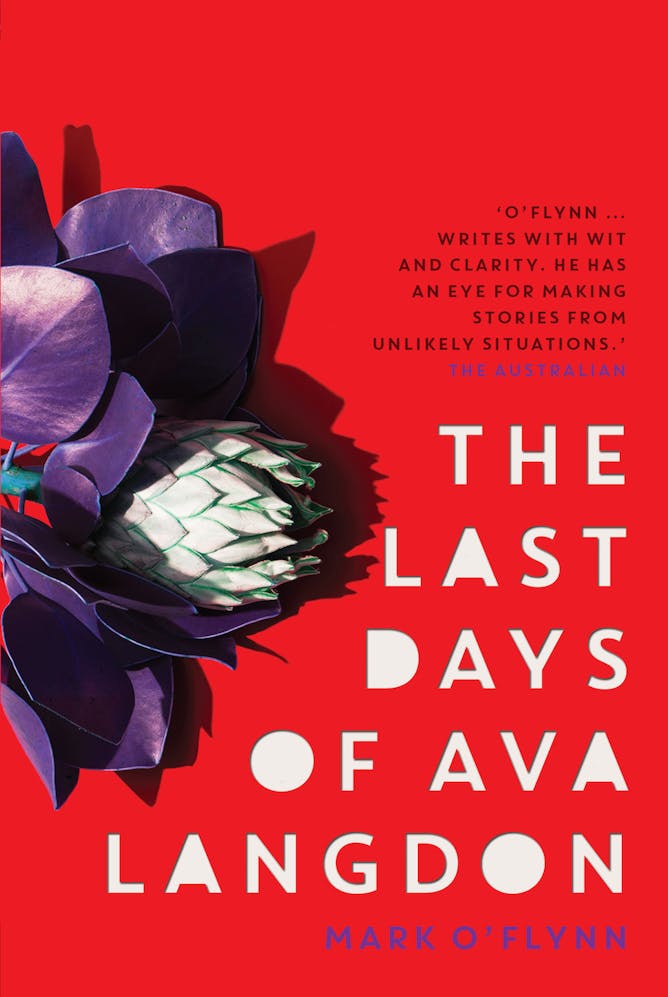
I started with Last Days of Ava Langdon, by poet and novelist Mark O’Flynn. This book, which channels the Australian-New Zealand writer Eve Langley, opens with the rhythm and pulse of a prose poem:
Sound of the sea slapping at the green and greasy legs of pier. The crashing of dishes. A cartoon whale.
This, on the very first page, sets the tone for the rest of the novel, one that vividly renders the glorious Blue Mountains environment (and its small towns with their country values), and the portrait of a writer who might have been, should have been, no longer is.
O’Flynn presents his Langley/Langdon as immensely sympathetic, and stunningly irritating. “All her life”, says the narrator, “has been the pursuit of the perfect line”.
While any writer must surely doff the cap to that pursuit, Ava’s single-mindedness has been more destructive than productive. She valiantly channels Oscar Wilde, refuses to acknowledge that she is ancient and frail, ignores the squalor of her home, and flickers between hope and hopelessness about her writing. She is a damaged person, a dada artist. She has lost her family and friends and she dies alone.
Still, Ava’s imagination (to say nothing of her splendid dress sense) brings a degree of sentience to the world, casting it in a luminous light. O’Flynn’s novel brings to bear a cold but tender gaze on “the last days” of someone who, but for fortune, could have been an extraordinary Australian artist.
Misfits in an unforgiving world
Philip Salom, another poet, gives us Waiting. It relies on the skill of poetic diction and the narrative traction of strong characters, the “looking awry” that so often accompanies mental illness, and the urgency to connect, to find a safe haven in an unforgiving world.
He juxtaposes together two pairs of difficult people to propel the narrative. The first two are Big (a cross-dressing, over-performing “crazy professor”) and his partner Little (quiet, crushed Agnes, the troubled lamb of god). They have effectively fallen out of history and are, Agnes reflects, “two characters in a novel who have no further story”.
The second pair, by contrast, are the inheritors of a further story: designer/landscaper Angus (coincidentally Agnes’ cousin) and the linguist Jasmin. They are creeping by fits and starts toward a relationship, but unlike Big and Little, who cling together for the most part in real intimacy, Jasmin and Angus struggle to connect, given their tendency to compete with each other, and their misunderstandings of each other’s values and professions. For Angus, the physical shaping of the material world is what matters. For Jasmin, it is the socio-political positioning of work that matters.
The novel is set against the increasingly threatening qualities of bushfire in the Australian environment, and the increasingly constrained options for those who do not or cannot fit into middle class conventions. The characters’ stories play out, to an end that promises consolation, at least.
Not so isolated
With Emily Maguire’s An Isolated Incident, we leave the poets and misfits and return to the “real” world: small-town New South Wales, and the struggle to make a living, maintain an identity, and retain hope for the future.
Chris Rogers, a barmaid and some-time prostitute, is faced with the loss of her beloved younger sister Bella, whose body is found on the side of the road, raped and murdered. May Norman, an ambitious journalist, attaches herself to Chris to report on the story and the unfolding investigation. So far, so crime thriller.
But actually, this is more an analysis of mourning, woven through with a biting critique of the social and legal context in which, in Australia, one woman is murdered each week, on average, by someone close to her. At one point May reflects on yet another appalling story of such violence, and observes:
This had nothing to do with what had happened to Bella and what happened to Bella had nothing to do with Tegan Miller and none of it had to do with the rich Sydney housewife left out to rot in the street which had nothing to do with the Nigerian girls stolen as sex slaves…
The unwavering attention paid to violence against women and to the commercial exploitation of suffering renders the title bitterly ironic: all these “isolated incidents” add up to a deeply felt and troubling novel.
Extinctions of all kinds
Josephine Wilson’s Extinctions is the winner of Dorothy Hewett Unpublished Manuscript prize, so has already made a significant mark on the literary landscape. It offers a tragic portrait of the various ways in which extinction looms — environmental, personal, cultural.
We see the sorrows, indignities and regrets of old age, as viewed through the eyes of retired theoretical engineer Fred Lothian, who fills his home with designer furniture rather than with his family.
We see the heartbreak of a wasted life, in his brilliant son, Callum, who was left with acquired brain injury following a car accident. And we see the struggle for identity in his adopted daughter, Caroline, who researches species extinction and is disconnected from her own Indigenous heritage. Together, these stories present an overwhelming narrative of loss, failure and distress.
But there is the possibility of an alternative in the form of Fred’s neighbour Jan. Though like Fred and his family, she has suffered great loss, she brings a wonderful energy and resilience, and a refusal to resign herself to extinction. Instead, she presses Fred to start over, to find a more productive way to be.
Literary satire
Finally, we come to Ryan O’Neill’s Their Brilliant Careers: The Fantastic Lives of Sixteen Extraordinary Australian Writers, one of the funniest novels I’ve read in a long time. He sails close to the wind of defamation (were the original authors still alive), unmercifully lampooning the models for his “extraordinary Australian writers”.
Like a supremely confident stand-up comic, he pushes the joke from initial humour through infuriating repetition to helpless laughter. And along the way, he shows impressive knowledge of Australian literary culture, so erudite readers can play the game of “spot the reference”. We see the sexism that runs through literary culture. We revisit the poetry wars— “a knife fight in a phone booth” — in the character of Arthur rhutrA, an author of whom it was said that: “the only constraint he couldn’t overcome was his lack of talent”.
We bump into parallel-universe versions of Ern Malley, Australia’s most infamous literary hoax, and radio characters Dad and Dave. We meet the litigious Stratford, self-proclaimed original author of works plagiarised and made famous by Hemingway, Fitzgerald, Joyce.
We are confronted by the rightwing racist Edward Gayle (writer for the journal Quarter) and the communist Francis McVeigh, whose early memory of reading Marx’s Manifesto “terrified me so much I had nightmares for the next six months”. Literary giant after literary giant, publisher after publisher, is kneecapped by these excoriating and hilarious accounts of the players, their work, and the impossibly interwoven lives they lead.
Compassionate voices
There is a surprising degree of compassion in the narrative voice that relates each of these novels, even when they are also characterised by sharp-eyed and sharp-tongued commentary. The characters are damaged — as are most human beings — but (with the exception of some of O’Neill’s writers) they are rarely people of ill will.
The narrators, in each case, maintain the distance required of an objective observer, yet cannot help but record small acts of humanity, the struggle to manage, to be recognised and to recognise others. This makes them, as a group, the most heart-warming selection of shortlisted novels that I have read for some time.
The scene: a field in southwest England. The sun is shining for a quintessentially British event, the Great Dorset Steam Fair. A six-and-a-half tonne steamroller takes centre stage. This, the Lord Jericho, goes head-to-head with a computer hard drive, and in a battle of old and new technologies, rolls over it several times. Then, just to be on the safe side, the hard drive is placed in a steam-powered stone crusher.
Pratchett, author of the much-loved Discworld series, wrote more than 60 books in his lifetime. But it was his wish that any unfinished works remained unpublished, and so he instructed that the hard drive containing his remaining works be crushed by a steamroller.
Raising Steam
Commenting on BBC Radio Four’s Today programme, authors Patrick Ness and Samantha Norman asserted Pratchett’s absolute right to determine the future of his unfinished work. In recent years, though, both authors have completed unfinished novels by other writers. In Norman’s case, it was The Siege Winter, a book by her late mother, Ariana Franklin. For Ness, it was Siobhan Dowd’s A Monster Calls, now adapted into a hit film.
For each of these canonical authors, their unfinished texts add to our accumulated knowledge of their writing, their rich imagination, and the development of their thinking. After completing Dorothy L Sayers’ last novel, Jill Paton Walsh went on to create warmly regarded new novels featuring Lord Peter Wimsey and Harriet Vane. J R R Tolkien’s son Christopher likewise has worked painstakingly on unfinished works by his father, including The Children of Hurin.
Unlike Pratchett, the strict instructions left by some authors about their legacy have been ignored, sometimes to the reader’s benefit. Max Brod’s decision to counter Franz Kafka’s wish for destruction is to literary history’s benefit, as it led to the publication of The Trial, The Castle, and Amerika. Emily Dickinson left no instructions on what to do with the approximately 1,800 unpublished poems she wrote before her death in 1886. Fortunately, her sister Lavinia took it on as her mission to see them made public.
When Swedish crime novelist Stieg Larsson died suddenly, unmarried and with no will, his estate came under the control of his father and brother. They commissioned ghostwriter David Largenrcrantz to create new works using Larsson’s characters, with the latest, The Girl Who Takes an Eye for an Eye due in September 2017. Larsson’s bereaved long-term partner is in possession of the author’s laptop which is believed to hold Larsson’s last unfinished novel, but she has refused to turn it over to his family.
Reaper Man
The biographical figure of the author has, despite Roland Barthes’ critical articulation of “The death of the Author” in 1967, never been more present. Now, readers have unprecedented access to the names on the spines of their books, thanks to festivals, talks and social media.
While some authors may not want to show the struggle of their early drafts to the world, there is both an industry (famous author’ manuscripts can sell for high figures) and scholarship attached to them. Formal archives of Pratchett’s work exist in Senate House in London, for example – including some tantalising glimpses replete with coffee stains and notes to the publisher. Salman Rushdie has even given a desktop computer and several laptops to Emory University in the US.
There is no doubt that Pratchett was within his rights to deprive readers of these last rough-hewn gems, though understandably fans may be disappointed with his choice. However, the rumours swirling around the appearance of Go Set a Watchman – the original version of Harper Lee’s To Kill a Mocking Bird – suggest that elderly and infirm authors can potentially be preyed upon. Pratchett’s wish to control his literary legacy was consonant with his advocacy for assisted dying. He, more than anyone else, understood the power of letting things come to an end.
As an author who had “Death” as one of his major recurring characters, Pratchett had thoroughly tested its presence in human life. But now, even knowing that Pratchett’s crushed hard drive will soon feature in an exhibition, we can’t but regret the loss of these early, unfinished drafts, which contained the very last doorway into the Discworld.
The Day After Tomorrow’s apocalyptic depiction of climate change is a little embellished. But such storylines can ignite conversations with people that mainstream science fails to reach. 20th Century Fox
Climate change – or global warming – is a term we are all familiar with. The warming of the Earth’s atmosphere due to the consumption of fossil fuels by human activity was predicted in the 19th century. It can be seen in the increase in global temperature from the industrial revolution onwards, and has been a central political issue for decades.
Climate scientists who moonlight as communicators tend to bombard their audiences with facts and figures – to convince them how rapidly our planet is warming – and scientific evidence demonstrating why we are to blame. A classic example is Al Gore’s An Inconvenient Truth, and its sequel, which are loaded with graphs and statistics. However, it is becoming ever clearer that these methods don’t work as well as we’d like. In fact, more often than not, we are preaching to the converted, and can further polarise those who accept the science from those who don’t.
One way of potentially tapping into previously unreached audiences is via cli-fi, or climate-fiction. Cli-fi explores how the world may look in the process or aftermath of dealing with climate change, and not just that caused by burning fossil fuels.
Recently, I participated as a scientist in a forum with Screen Australia, looking at how cli-fi might communicate the issues around climate change in new ways. I’m a heatwave scientist and I’d love to see a cli-fi story bringing the experience of heatwaves to light. After the forum, Screen Australia put out a call for proposals for TV series and telemovies in the cli-fi genre.
We absolutely need and should rely on peer-reviewed scientific findings for public policy, and planning to stop climate change and adapt to it. But climate scientists should not expect everyone to be as concerned as they are when they show a plot of increasing global temperatures.
Cli-fi has the potential to work in the exact opposite way, through compelling storylines, dramatic visuals, and characters. By making people care about and individually connect to climate change, it can motivate them to seek out the scientific evidence for themselves.
Imagined worlds
The term “cli-fi” was coined at the turn of the millennium, but the genre has existed for much longer. One of the earliest examples is Jules Verne’s The Purchase of the North Pole, where the tilt of the Earth’s axis is altered by human endeavours (of the astronaut, not industrial kind), bringing an end to seasonal variability.
Goodreads
More modern examples of cli-fi take their prose from real-life contemporary issues, imagining the effects of human-caused climate change. Some pieces of cli-fi are perhaps closer to the truth than others
Could the thermohaline circulation (which carries heat around our oceans) shut down, bringing a sudden global freeze, as The Day After Tomorrow suggests? There is evidence that it will, but perhaps not as quickly as the film imagines.
Is it possible that fertility rates will be affected by climate change? The television-adapted version of Margaret Atwood’s The Handmaid’s Tale blames pollution and environmental change for a world-wide plummet in fertility, thus giving a cli-fi undertone to the whole dystopian series. While there is no scientific evidence to currently back this scenario, as a new parent, it struck a chord with me personally. The thought of a world where virtually every couple is unable to experience the joys of parenthood, particularly due to climate change, is quite distressing.
Poster for The Road Warrior, the second in the first Mad Max trilogy. Kennedy Miller Productions
Cli-fi also underpins the highly acclaimed Mad Max movie series. In a dystopian near-future, fossil fuel resources have depleted and the social and environmental impacts are vast. Australia has become a desolate wasteland and our society has all but collapsed.
Although such a scenario will be unlikely to occur in the next couple of decades, it is not completely unrealistic. We are burning fossil fuels far faster than they are forming, with some predictions that accessible sources will run out in the next century.
And some of our famous ecosystems are already very sick thanks to climate change.
And then there is Waterworld. Yet another dystopia, where there is no ice left on Earth and sea levels have risen 7.5km above current levels. Civilisations exists only in small settlements, where inhabitants dream of the mythical “dry land”. While the movie overestimates exactly how much water is locked away in ice (sea levels can only rise by up to 60-70 metres), many major global cities would be inundated and no longer exist. And while it will take thousands, not hundreds of years for complete melting to take place, sea level rise is already posing a problem for some coastal settlements and small islands. Moreover, Arctic ice is predicted to completely melt away well before the end of this century.
Sure, the scientific evidence underpinning these storylines is embellished to say the least, But they are certainly worth deliberating over if they ignite conversations with people that mainstream science fails to reach.
The power of fiction
In the long run, cli-fi might encourage audiences to modify their everyday lives (and maybe even who they vote for) to reduce their own carbon footprint.
From personal experience, some audiences tend to disengage from climate change because of how overwhelming the issue may seem. Global temperatures are rising at a rate not seen for millions of years, and we are currently not doing enough to avoid dangerous climate change. Understandably, the scale and weight of climate change likely encourages many to bury their heads firmly in the sand.
To this audience, cli-fi also has an important message to deliver – that of hope. That it is not, or will it be ever, too late to combat human-caused climate change.
Imagining a future where green energy is accessible to everyone, where global politicians work tirelessly to rapidly reduce emissions, or where new technologies are discovered that safely and permanently remove greenhouse gases from the atmosphere are absolutely worth air time. Cli-fi can act as prose for science. And on the topic of mitigating climate change, there is no such thing as too much prose.



 The author is doing a research on literacy movement by communities in Yogyakarta, in Anthropology Department in Gadjah Mada University.


 The much heralded “death of the book” has nothing to do with the death of reading or writing. It is about a radical transformation in reading practices. New technologies are taking books and libraries to places that are, as yet, unimaginable. Where there will undoubtedly be new wonders to catalogue.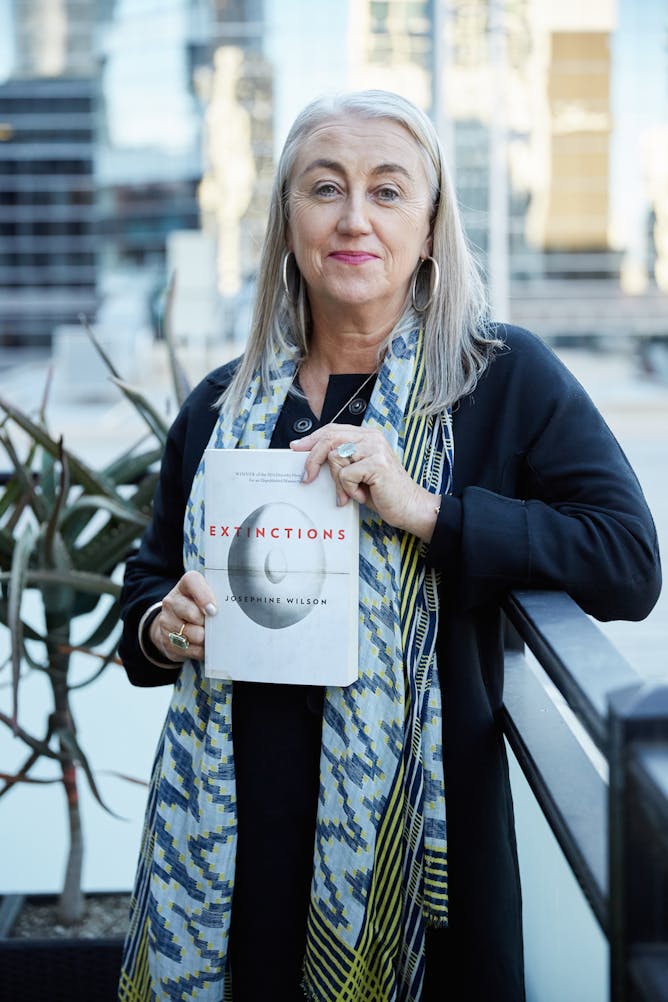
 Let me give Jan the last word, because she delivers what seems to me the coda to the narrative. Watching a child playing on a beach, she reflects: “At that moment, anything was possible”. As the novel draws to its conclusion, that more hopeful premise seems true.


 The narrators, in each case, maintain the distance required of an objective observer, yet cannot help but record small acts of humanity, the struggle to manage, to be recognised and to recognise others. This makes them, as a group, the most heart-warming selection of shortlisted novels that I have read for some time.

 As an author who had “Death” as one of his major


 Imagining a future where green energy is accessible to everyone, where global politicians work tirelessly to rapidly reduce emissions, or where new technologies are discovered that safely and permanently remove greenhouse gases from the atmosphere are absolutely worth air time. Cli-fi can act as prose for science. And on the topic of mitigating climate change, there is no such thing as too much prose.
 At the BookShelf
You must be logged in to post a comment.