

Unknown's avatar

‘Goodreads’ readers #ReadWomen, and so should university English departments


The social network website Goodreads provides insight into what some women are reading.
(Flip Mishevski/Unsplash)

Karen Bourrier, University of Calgary

Even in the 21st century, women writers are often consigned to what American novelist Meg Wolitzer has called “the second shelf.” Women’s novels are designed and marketed with a female audience in mind and publishers still presume that novels about women won’t appeal to male readers. Unfortunately, even in 2021 there may be some truth to this presumption.

This sexism can be seen in the continued speculation that female-identifying novelist Elena Ferrante is actually a man.
Vanity Fair contributing editor and book columnist Elissa Schappell summarized the assumptions behind the speculation: the novelist’s prolific output of “serious” books that interweave history, politics, violence, sex and domestic life, while “unflinchingly showing women in an unflattering light.”

Books by female-identifying authors are also less likely to be reviewed in prestigious literary magazines. In 2019, more than 60 per cent of reviews in magazines including London Review of Books, The Atlantic, and Harper’s, were of books written by men. This is actually an improvement since 2010, when between 69 per cent and 80 per cent of reviews in these magazines were of male-authored books.

The popular #readwomen hashtag on Twitter has been one response to the marginalization of women authors or sexism about their work. The social network website Goodreads can also provide insight into what women are reading.

Reading women

My collaborative research with data science professor Mike Thelwall has explored the reading habits of a cohort of mostly female readers (76 per cent) on the popular social network site Goodreads. As a group, Goodreads users also skew younger, whiter and more educated than the general population.

We examined what books readers read on Goodreads compared to what university professors assign in the classroom, using data from the Open Syllabus Project.

In past decades, researchers relied on handwritten diaries, letters and surveys of readers to find out how everyday readers responded to the books they read. Goodreads, which collects book reviews and ratings from 90 million members, offers one portal into reading habits.

On average, women Goodreads users read twice as much as male Goodreads users, and are more willing to read books by both male and female authors.

We scraped data from Goodreads and found that most Goodreads book club members were likely to have read books in common by women authors.

These women authors fell into two categories: young adult authors (J.K. Rowling, Suzanne Collins, Stephanie Meyer and Veronica Roth) and 19th- or early 20th-century authors (Jane Austen and Harper Lee). The popularity of young adult series by women, including the Harry Potter and Hunger Games series, means that 13 of the 19 most popular titles are by women.
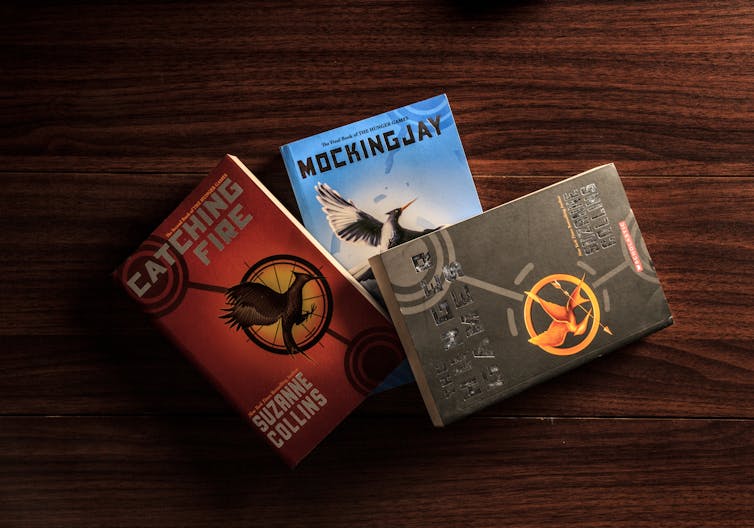
Cover of three books from the Hunger Games series
A study found that that most Goodreads book club members were likely to have read books in common by women authors.
(Shutterstock)

Compared to what professors teach

In a second study, we compared what books Goodreads users read to what university professors assign in the classroom, using data from the Open Syllabus Project. The Open Syllabus Project originated at Columbia University. It amasses syllabi, or college reading lists, from openly accessible university websites. Open Syllabus currently has a corpus of over nine million syllabi from 140 countries.

Our study focused on Victorian literature, literature published during Queen Victoria’s reign (1837-1901), which is both commonly taught at the university level and still read by general readers.

For the most part, we found that Goodreads users read books — including classic works by Charles Dickens, Arthur Conan Doyle and Oscar Wilde — about as often as university professors taught them.

However, we also found that the books that Goodreads users read more often than they were assigned in university tended to be by women writers, to feature strong female protagonists and to be aimed at a young adult audience — or all three.

Taking women writers seriously

This research is important because it suggests that professors who want to connect to students should take women writers more seriously.

Women writers show up less often than male writers on university syllabi. A survey conducted at McGill University in 2018 showed that 73 per cent of writers assigned on the university’s English literature syllabi are men.

Unfortunately, this is no surprise: English Prof. John Guillory’s work on canon formation captures the state of college English classes 30 years ago (and sometimes even more recently) when it was not uncommon for English professors to teach only white men.

Works by women writers are formative for many readers. For example, Wuthering Heights and Jane Eyre are often among the first “adult” novels that young English-language readers read. Their combination of romance and strong female protagonists continues to appeal to 21st-century readers outside the classroom.

Our study also showed that Frances Hodgson Burnett’s The Secret Garden and A Little Princess, and Lewis Carroll’s Alice’s Adventures in Wonderland — three works of young adult fiction featuring girls — were also read more on Goodreads than we would predict given how often they were assigned on syllabi.


Read more:
Jane Eyre translated: 57 languages show how different cultures interpret Charlotte Brontë’s classic novel


It is more than time that publishers, book reviewers and university professors give women writers the respect they deserve. In an era of declining English majors when most English majors are women, English departments can at least start by assigning more women writers.The Conversation

Karen Bourrier, Associate Professor of English, University of Calgary

This article is republished from The Conversation under a Creative Commons license. Read the original article.
Unknown's avatar

Universities Investigating High Cost of Academic Ebooks


The link below is to an article reporting on UK universities investigating the high cost of academic ebooks.

For more visit:
https://goodereader.com/blog/digital-education/uk-universities-investigating-the-high-cost-of-ebooks

Unknown's avatar

How Toni Morrison’s legacy plays out in South Africa’s universities


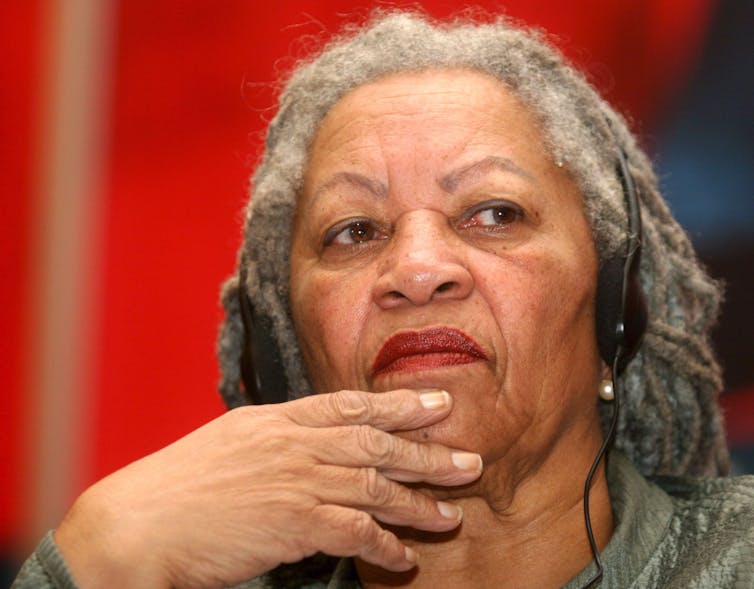
Toni Morrison’s legacy echoes across the world.
EPA-EFE/Arturo Peña-Romano

Aretha Phiri, Rhodes University

I first encountered Toni Morrison during my undergraduate years at Rhodes University in South Africa where her Pulitzer Prize-winning novel, Beloved (1987), was taught as part of an American Literature course.

It moved me in ways that no other academic account of transatlantic, African American slavery had. Beloved is set in the 19th century. It tells the story of a runaway slave who commits infanticide rather than seeing her child returned to slavery. As with Morrison’s entire fictional oeuvre, the novel profoundly embodies and humanises black life.

Part of what motivated Morrison – who has died at the age of 88 – was impatience at how black literature was typically taught as sociology but was considered intellectually and artistically bereft.

In her Tanner lecture series delivered at the University of Michigan in 1988, she defiantly stated, in defence of a generically marginalised African American presence:

We have always been imagining ourselves … subjects of our own narrative, witnesses to and participants in our own experience … We are not, in fact, ‘other’. We are choices.

The inspiration provided by her fictional writing and critical scholarship around the ideological, artistic and scholarly place of black literature helped carve out an imaginative and actual space for the likes of me – a black African female – within a predominantly white and male, largely Eurocentric literary and intellectual establishment.

Today, I teach at the same university where I first read Beloved and discovered this remarkably talented, intellectually formidable African-American woman novelist. And her work continues to echo. Not just for me, but for the new generation of literature students who cross my path each year.

A complicated place in the canon

In some ways, perhaps Morrison is even more relevant in South African universities today than she’s ever been. Race is a topic that’s simultaneously sanitised and amplified in the country’s everyday discourse. Morrison’s determined refusal to shy away from race reverberates across the Atlantic, resonating with students who still live the enduring political and economic legacies of racial colonialism and apartheid.

On the face of it, the country’s demands for social redress would seem to align with Morrison’s thinking. But a closer reading shows how her fiction strains against the confines of parochial societal interpretations and exercises. It makes the demand for more than superficial change implemented along purely racial lines. It insists on an interrogation and re-imagining of the entire architecture and workings of race.

This reveals how Morrison’s place in both the African-American and global literary canon is quite complicated. It also makes clear why it is that she appeals to so many of my students, across the (proverbial) divide. Each year I watch students from varied racial, social, cultural, economic and gender (or gendered) backgrounds engage with her novels in my classroom. Their readings are intuitive and discerning. This yields often interesting and vigorous discussions, and even heated debates, that reflect the complexity and applicability of her experiences and intellect – and theirs.

Take her debut novel, The Bluest Eye (1970). It provides a delineation of racial self-hatred, incest and familial violence that critiques the deleterious effects of white hegemony. But it also controversially explores and confronts the internalised delimiting contours of black counter-narratives.

The book’s feminist focus on the sexual abuse of women speaks to the damaging effects of patriarchal ideologies and practices within black communities. It resonates with all people in South Africa – a country with incredibly high rates of gender violence.

Jazz (1992) is another Morrison novel whose complex existential narratives require equally complex interpretations. Structurally, it mimics the musical genre’s polyvocal, sometimes cacophonous, intonations to trace the lives of African Americans across time and space. It’s a tough read for two reasons.

First, it requires that students have an appreciation of the technical workings of the artistic cultural form that is jazz. Second, the novel demands from them a critical inquiry into and participatory reading of the experiences of “a people”; of histories that are both outside of and intersect with their own.

This is particularly important at a time when calls are rampant in South African higher education circles for the “Africanisation” of curricula. These calls appeal to contemporary nationalist demands and are in direct contrast to Morrison’s stated intolerance of “lazy, easy, brand-name applications”. Instead, she and her work insisted on the painstakingly “hard work” of non-prescriptive and interrogative, “border-crossing” analysis.

The measure of a life

In her 1993 Nobel Prize speech, Morrison stated:

We die. That may be the meaning of life. But we do language. That may be the measure of our lives.

And that is the measure of Toni Morrison’s life. Her dense, demanding prose reflects our continued need – in post-apartheid South Africa’s university classrooms, and elsewhere – to meditate critically and consciously upon our own fragile and imperfect existences. Her narratives put forward morally responsive and socially transformative ways of being in the world. Morrison’s legacy, then, is not just to literature: it is to the imperatives of social justice and to the ideals of humanity not yet realised.The Conversation

Aretha Phiri, Senior lecturer, Department of Literary Studies in English, Rhodes University

This article is republished from The Conversation under a Creative Commons license. Read the original article.

Unknown's avatar

Shift away from ‘publish or perish’ puts the public back into publication


Andrew Walker, Australian National University

Earlier this year, I visited the library at the Australian National University with my son so he could borrow some books for an essay on Chinese history. Wandering past shelf after shelf, he asked me, “How does it feel to be writing another book that no-one will read?”

It was just another teenage jibe, but in policy terms it was a prescient analysis.

In recent weeks there have been reports that the government is considering making publication output much less important in the formulae that allocate research funding to universities.

Prime Minister Turnbull has signalled a desire to move away from a “publish or perish” culture to a new set of academic incentives that prioritises engagement and impact.

With more than A$1 billion per year in research grants on the table, even a marginal change in allocation methods could see big changes in the dollars flowing to some fields of study.

There is real concern among some academics that the changes will be unfair: scientists will be able to demonstrate impact in the form of patents, commercial spin-offs and industry engagement much more readily than their colleagues in the social sciences or humanities.

When the new Chief Scientist, Alan Finkel, talks about the importance of demonstrating “a measurable return on investment,” historians, anthropologists, philosophers and linguists are understandably anxious.

But is a defensive reaction necessary?

Change on the way

Those of us who work in the social sciences and humanities place a great value on the persuasiveness of our words. We can write; not perfectly, but better than most. New and genuinely public forms of publication, rather than the semi-private domain of journals and monographs, provide us with powerful platforms for our academic passions.

We don’t need to be afraid of funding formulae that focus on the quality of societal engagement rather than the quantity of journal articles or monographs.

But it will take a change of attitude and of academic practice.

If we continue to shape our careers around the twice-weekly lecture (to a diminishing class of students) and two journal articles per year (in good quality journals, so our peers can praise them without reading them) our future will be much narrower than it could be.

Academic websites would be a good place for reform to start. Most departmental webpages are online ghost towns, attracting negligible traffic despite the effort and angst put into producing and, intermittently, maintaining them. They do very little to generate broader societal impact via outreach or engagement.

Rather, they exist primarily to reassure academic units of their own existence. They are like sacred totemic objects that symbolise the unity of the academic clan – they are brought out from seclusion in times of social crisis (such as a managerial attempt to rationalise unread online content), briefly venerated, and then forgotten. And one of the ironies of university life is that the managers of websites regularly complain that they struggle to receive content.

Effective engagement and outreach will require a much more nimble academic posture. We need to diversify the way we write. It’s time to stop looking down our nose at public commentary as a second rate form of academic communication. We can rediscover the power of images and sounds.

An ability to operate effectively in the online world should gradually become a baseline academic selection criteria; just as important as the ability to give a lecture or write a chapter.

Rising to the challenge

In no way should this diminish the importance of basic, speculative and even eccentric research. I am an anthropologist and, as my son kindly pointed out, I know what it’s like to write books and articles that don’t exactly fly off the shelves. But I have spent the past decade combining formal promotion-friendly publication with blogging, opinion pieces and media interviews.

The ideas, inspiration and energy flow two ways: from formal research to public outreach and back again. Some of my research has been rather esoteric (spirit beliefs in northern Thailand, anyone?) but I have always enjoyed using insights from that work in public discussions about power, politics and democracy.

Have I been able to demonstrate, or even measure, the impact of my public outreach? To some extent, but certainly not perfectly. Working on this will be challenging and, at times, frustrating.

But engaging in the debate will be more productive than retreating behind a “nobody understands our worth” barricade. There are many qualitative and quantitative tools that we can use to demonstrate our engagement and impact. It will seem like sacrilege to many, but perhaps re-tweets could become an academic metric that sits alongside citation rates?

The challenge laid down by the government is not to abandon pure research or scholarly writing, but to put the public back into publication.

It’s a challenge we should embrace.

The Conversation

Andrew Walker, Professor of Southeast Asian Studies, Australian National University

This article was originally published on The Conversation. Read the original article.