
The link below is to an article that takes a look at how to read books.
For more visit:
https://bookriot.com/2018/10/03/how-to-read-a-book/

The link below is to an article that takes a look at how to read books.
For more visit:
https://bookriot.com/2018/10/03/how-to-read-a-book/
The link below is to an article that takes a look at how to make more time for reading.
For more visit:
https://www.goodreads.com/blog/show/1394-13-ways-book-lovers-make-more-time-for-reading
The link below is to an article that looks at how to organise your ‘to be read’ books.
For more visit:
https://bookriot.com/2018/09/10/ways-to-organize-your-tbr-pile/
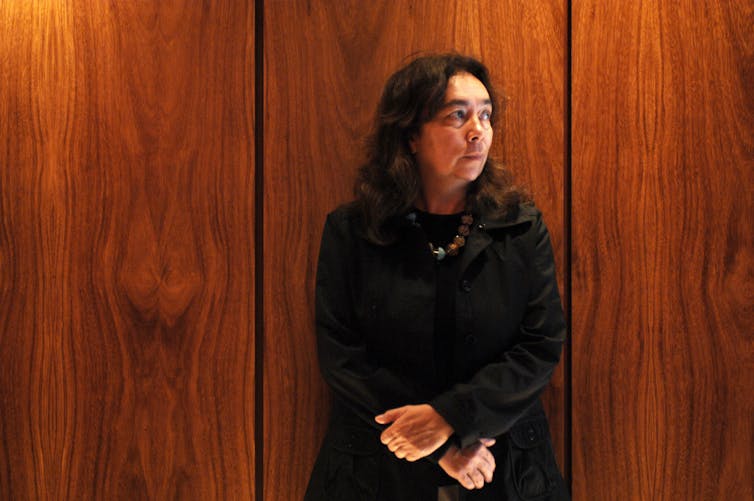
Tony Hughes-D’Aeth, University of Western Australia
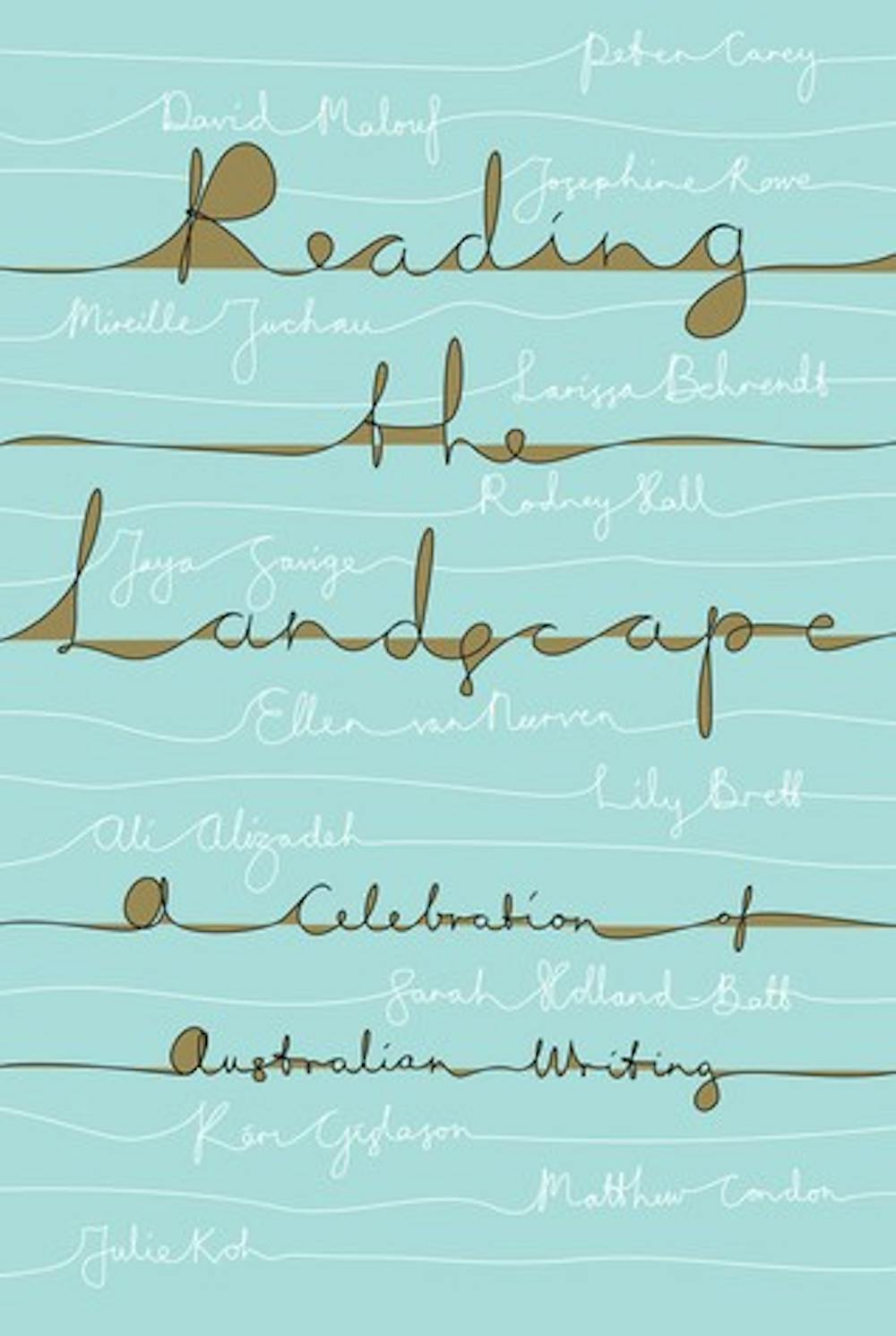
Review: Reading the Landscape, a Celebration of Australian Writing (UQP).
It is actually quite difficult to imagine what Australian literature would look like without the University of Queensland Press (UQP). Since it was established in 1948, it has done as much as any Australian publisher to shape Australian creative writing. The title of this excellent anthology Reading the Landscape refers to this literary landscape rather than any thematic interest in Australia’s land.
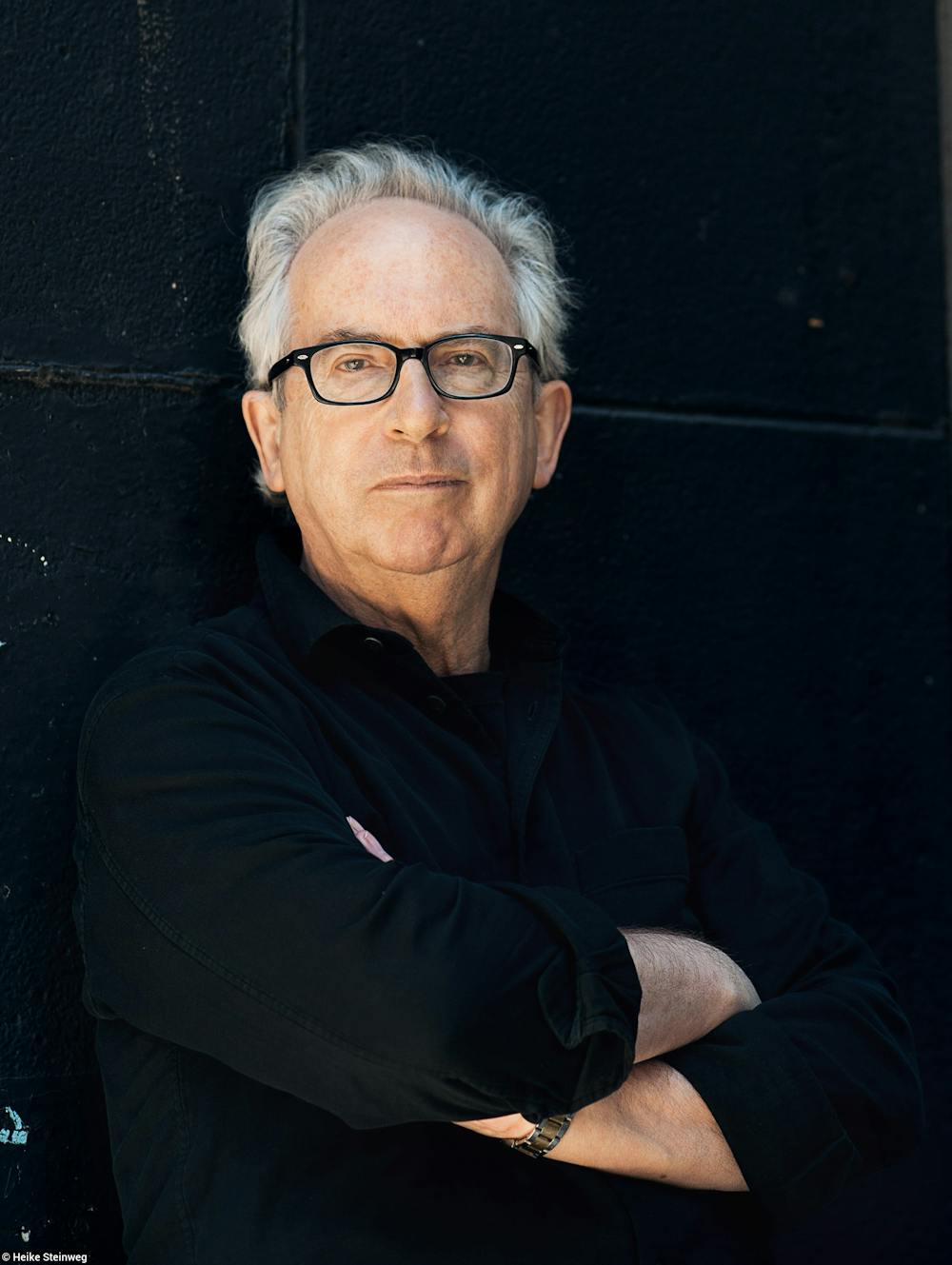
Whether writers like David Malouf, Rodney Hall, Peter Carey, Doris Pilkington-Garimara and Alexis Wright would have become the writers they became without UQP is a moot point. One assumes, with the benefit of hindsight and the stratosphere they now inhabit, that they certainly would have. How could we not have Oscar and Lucinda, Remembering Babylon, Follow the Rabbit-Proof Fence and Carpentaria? How could they not exist? But the fact is that each of these writers, and dozens of others, were first published by UQP.
Against considerable economic pressures, UQP is one of a handful of Australian university presses that continue to produce quality scholarly publications for academic and general markets. While academic scholarship is considered the natural province of a university press, UQP is distinctive in having developed significant fiction and poetry lists from the late 1960s.
Recently, the University of Western Australia’s UWAP has followed UQP in developing fiction (and creative nonfiction) and poetry lists, and last year UWAP author Josephine Wilson won the Miles Franklin for her novel Extinctions. But UQP’s record of discovering, nurturing and supporting Australian writers, is really without peer in the other Australian university presses, and unique in world terms.
Reading the Landscape is a cross-section of living writers who currently publish with UQP or have in the past. At least three generations feature — those who debuted in the 1970s and 80s, those who appeared for the first time in the 90s and 2000s, and the current range of new writers.
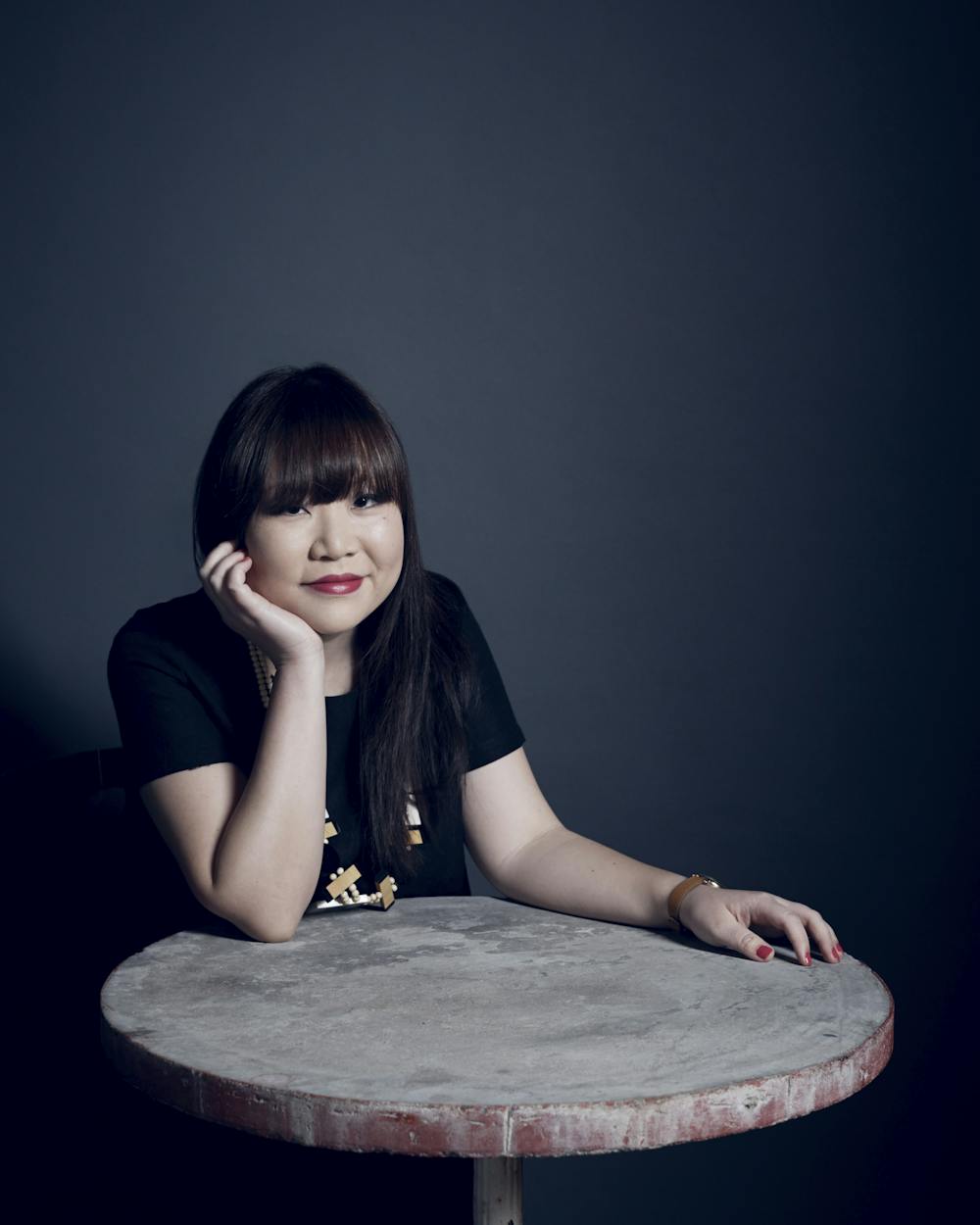
In the first generation, we see not only Malouf, Carey and Hall, but important writers like Nicholas Jose, Peter Skrzynecki and Gabrielle Carey. In the next generation, there are writers like Lily Brett, Melissa Lucashenko, Larissa Behrendt, David Brooks, Venero Armanno and Samuel Wagan Watson. And finally, we have writers only recently to emerge such as Jaya Savige, Julie Koh and Ellen van Neerven.
Those familiar with some of those writers will be reminded, in this anthology, of just why they have been celebrated. Rodney Hall’s Glimpses of Lost Europe, for instance, is a charming reminder of his effortless brilliance. It begins in 1954 like this:
Dr Bródy – philosopher, philologist and metaphysician – was grateful to find work in Brisbane as an umbrella salesman.
And spins outwards from there. Various trends and movements suggest themselves from these contributions. One is the turn towards factual stories in the genre now known as creative non-fiction. Another is the rise of the young-adult genre as a powerful and lucrative publishing phenomenon.
One of the creative non-fiction highlights of this anthology is Patti Miller’s riveting account of her uncle’s hang-gliding accident. Icarus is the spellbinding story of a quiet and meticulous man who becomes, in his 60s, a devoted hang-gliding enthusiast, only to have his spine shattered by an accident while landing.
I was also taken by the quality of the poetry by younger writers like Savige, van Neerven and Ali Alizadeh. Their respective poems were by turns spiky and lyrical, smouldering and rueful. The way that they mix politics and memory, urgency and metaphysics, affirms the continuing possibilities of poetic expression in what often seems like an increasingly prosaic age.
Perhaps most significant, though, is the rise of Indigenous writing visible in the contributions from acclaimed authors like Lucashenko, Behrendt, Wagan Watson and van Neerven (the last three each won the David Unaipon award).

The appearance of modern Indigenous writing is often dated to the publication by Jacaranda Press, another largely independent Brisbane press, of Kath Walker’s (Oodgeroo Noonuccal’s) We are Going in 1965. UQP published Kevin Gilbert’s People are Legends: Aboriginal Poems in 1978, and as Bernadette Brennan reminds us in her fine introduction to Reading the Landscape, the press contributed very significantly to the emerging study of Indigenous writing with seminal monographs on the subject by J.J. Healy and Adam Shoemaker.
Many of the key Indigenous writers to follow in the wake of Oodgeroo, Kevin Gilbert, and Jack Davis have come through UQP, although the WA presses Fremantle Press and Magabala Books have also been crucial. In van Neerven, in particular, one sees a worthy successor to Oodgeroo, as invidious as that comparison might seem. Oodgeroo’s trademark mixture of acerbic humour and gut-punching honesty shines through van Neerven’s verse, and her poem 18C is a fitting conclusion to the anthology.
Written in answer to the recent controversies that have surrounded the anti-vilification provision of Australia’s Racial Discrimination Act, the poem’s 18 stanzas thread in and out of the complexities of black life. The final stanza, and the book’s last words are these:
Courage is telling them what you think of that play, that script they try and write us in will no longer contain us, bring me a new coat of oppression, this one’s wearing thin.
Tony Hughes-D’Aeth, Associate Professor, English and Cultural Studies, University of Western Australia
This article is republished from The Conversation under a Creative Commons license. Read the original article.
The link below is to an article that takes yet another look at the audiobook vs reading debate.
For more visit:
http://time.com/5388681/audiobooks-reading-books/
The link below is to an article that takes a look at slow reading.
For more visit:
https://www.theguardian.com/books/2018/sep/14/joe-moran-pleasures-of-slow-reading
The link below is to an article that looks at whether there has ever been time to read?
For more visit:
https://lithub.com/have-we-ever-had-enough-time-to-read/
Jean Twenge, San Diego State University
Most of us spend much more time with digital media than we did a decade ago. But today’s teens have come of age with smartphones in their pockets. Compared to teens a couple of decades ago, the way they interact with traditional media like books and movies is fundamentally different.
My co-authors and I analyzed nationally representative surveys of over one million U.S. teens collected since 1976 and discovered an almost seismic shift in how teens are spending their free time.
Increasingly, books seem to be gathering dust.
By 2016, the average 12th grader said they spent a staggering six hours a day texting, on social media, and online during their free time. And that’s just three activities; if other digital media activities were included, that estimate would surely rise.
Teens didn’t always spend that much time with digital media. Online time has doubled since 2006, and social media use moved from a periodic activity to a daily one. By 2016, nearly nine out of 10 12th-grade girls said they visited social media sites every day.
Meanwhile, time spent playing video games rose from under an hour a day to an hour and a half on average. One out of 10 8th graders in 2016 spent 40 hours a week or more gaming – the time commitment of a full-time job.
With only so much time in the day, doesn’t something have to give?
Maybe not. Many scholars have insisted that time online does not displace time spent engaging with traditional media. Some people are just more interested in media and entertainment, they point out, so more of one type of media doesn’t necessarily mean less of the other.
However, that doesn’t tell us much about what happens across a whole cohort of people when time spent on digital media grows and grows. This is what large surveys conducted over the course of many years can tell us.
While 70 percent of 8th and 10th graders once went to the movies once a month or more, now only about half do. Going to the movies was equally popular from the late 1970s to the mid-2000s, suggesting that Blockbuster video and VCRs didn’t kill going to the movies.
But after 2007 – when Netflix introduced its video streaming service – moviegoing began to lose its appeal. More and more, watching a movie became a solitary experience. This fits a larger pattern: In another analysis, we found that today’s teens go out with their friends considerably less than previous generations did.
But the trends in moviegoing pale in comparison to the largest change we found: An enormous decline in reading. In 1980, 60 percent of 12th graders said they read a book, newspaper or magazine every day that wasn’t assigned for school.
By 2016, only 16 percent did – a huge drop, even though the book, newspaper or magazine could be one read on a digital device (the survey question doesn’t specify format).
The number of 12th graders who said they had not read any books for pleasure in the last year nearly tripled, landing at one out of three by 2016. For iGen – the generation born since 1995 who has spent their entire adolescence with smartphones – books, newspapers and magazines have less and less of a presence in their daily lives.
Of course, teens are still reading. But they’re reading short texts and Instagram captions, not longform articles that explore deep themes and require critical thinking and reflection. Perhaps as a result, SAT reading scores in 2016 were the lowest they have ever been since record keeping began in 1972.
It doesn’t bode well for their transition to college, either. Imagine going from reading two-sentence captions to trying to read even five pages of an 800-page college textbook at one sitting. Reading and comprehending longer books and chapters takes practice, and teens aren’t getting that practice.
There was a study from the Pew Research Center a few years ago finding that young people actually read more books than older people. But that included books for school and didn’t control for age. When we look at pleasure reading across time, iGen is reading markedly less than previous generations.
So should we wrest smartphones from iGen’s hands and replace them with paper books?
Probably not: smartphones are teens’ main form of social communication.
However, that doesn’t mean they need to be on them constantly. Data connecting excessive digital media time to mental health issues suggests a limit of two hours a day of free time spent with screens, a restriction that will also allow time for other activities – like going to the movies with friends or reading.
Of the trends we found, the pronounced decline in reading is likely to have the biggest negative impact. Reading books and longer articles is one of the best ways to learn how to think critically, understand complex issues and separate fact from fiction. It’s crucial for being an informed voter, an involved citizen, a successful college student and a productive employee.
<!– Below is The Conversation's page counter tag. Please DO NOT REMOVE. –>

If print starts to die, a lot will go with it.
Jean Twenge, Professor of Psychology, San Diego State University
This article was originally published on The Conversation. Read the original article.
Ameneh Shahaeian, Australian Catholic University
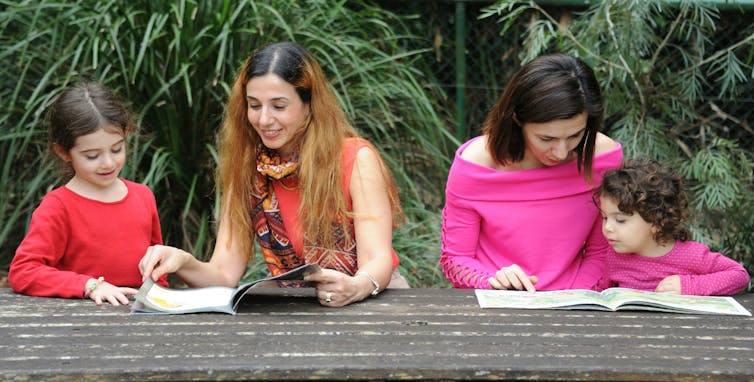
There is magic in stories. We all remember hearing them as children, and we loved them. Imaginary adventures set in faraway places. Tales about how the dishwasher isn’t working. It doesn’t matter! Whether made up by parents or read from books, kids love to hear stories.
Our recent work showed reading to children positively impacts long term academic achievement more than many other activity (including playing music with them, or doing craft). We found the more frequently parents read to their children, the better their children’s NAPLAN scores in different areas.
Read more:
If you can only do one thing for your children, it should be shared reading
In our most recent study, we asked parents to read a wordless storybook to their three to five-year-old children titled The Wolf and Seven Little Goats. We also tested children in many areas of their important cognitive skills, such as language proficiency, memory, self-control, and friendship skills.
Through examining the different ways parents tell stories, we have pinpointed which elements of shared reading are most beneficial for children’s cognitive development.
Perhaps the most important aspect of reading to children is to tune in to your child. Listen to your child’s cues. Do they like the story? Do they know the vocabulary? Are they paying attention to the pictures more, or the text?
Try to coach your child, not to instruct them. Instead of saying: “look they are going to cook some food, maybe they are hungry”, you can ask “what are they doing?” or “why do you think they’re doing that?”.
Be sensitive about whether they are listening and engaged or uninterested and disengaged. If they are disengaged, are there questions you can ask to make them more interested? Do you think they’ll like a different type of story better? The best books for your child are the ones they enjoy most.
Read more:
Research shows the importance of parents reading with children – even after children can read
Parents who ask lots of questions engage in a more fun and informative way with their children. Ask them if they know the vocabulary, if they can guess what the characters are going to do next, and why they’ve done what they’ve done.
These questions are not only helpful because they help children gain new knowledge and ways of thinking, it also helps strengthen the emotional bond between parent and child. Children like to feel they’re a part of the task, not that they’re being told how to do things.
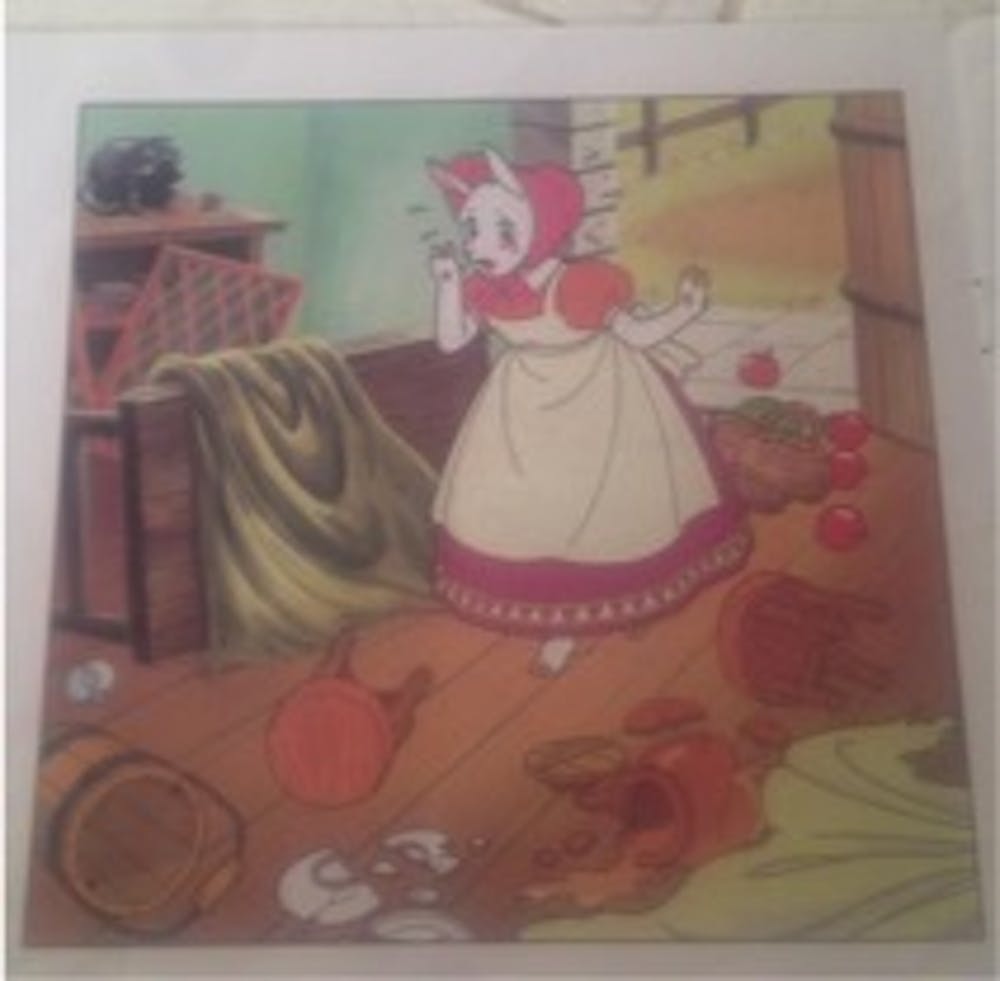
In our study, we gave parents a wordless picture book. An important difference we observed between parents was some only describe what they see. Some go beyond the picture.
For example, when the mother goat in the picture book comes home and sees the door to the house open, one parent said:
When their mother came home and was looking forward to seeing her children and hugging them and telling them a story, she suddenly saw that the door is open. She was shocked!
Another parent said:
The mother came home and saw the door is open; she went inside and looked for the children.
This parent is only describing the picture.
The first parent is imagining what is beyond the picture and text. This is a richer way to tell a story to children, and ultimately leads to better cognitive developmental outcomes for children. This is because it teaches abstract thinking, which is the basis for many of the higher order cognitive abilities such as problem solving and critical analysis.
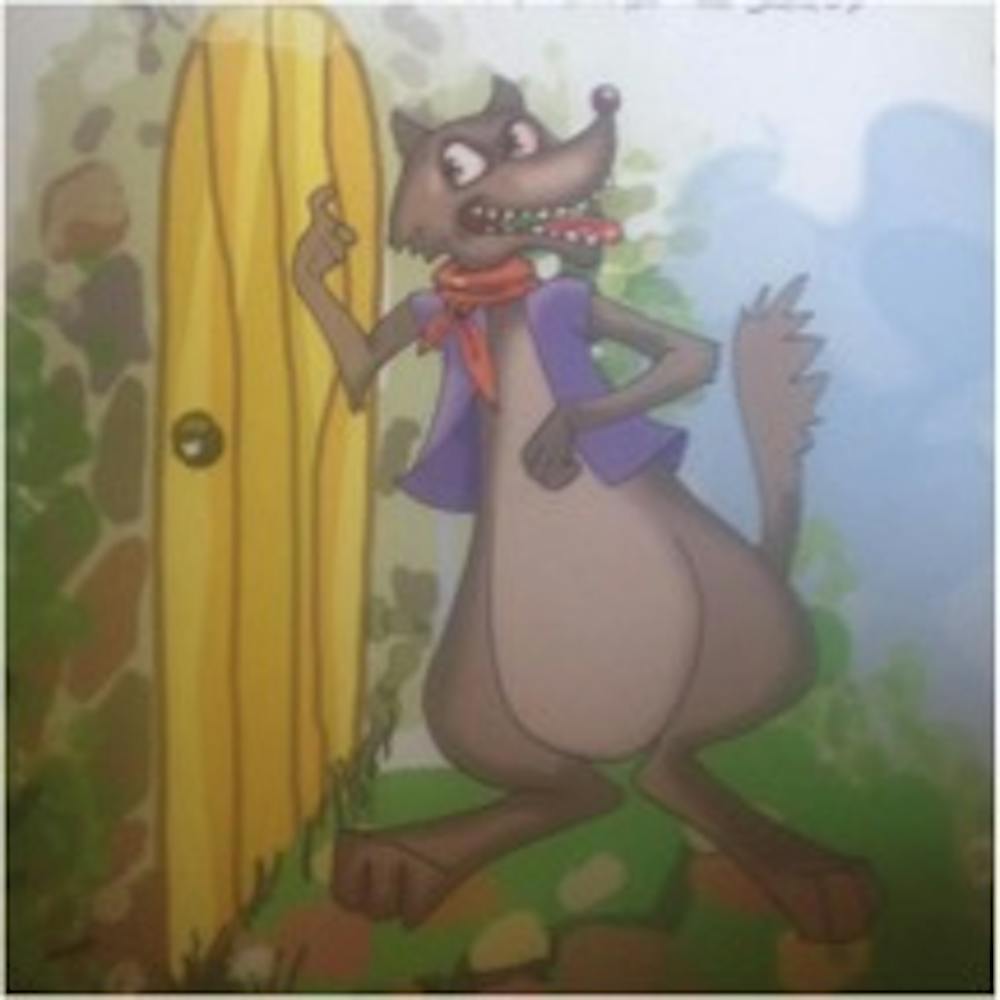
Another element that has a strong link to the development of children’s cognitive skills is the way parents build logical links between different parts of the story.
Often the events in books unfold very quickly. One minute, the wolf eats the little goats, and the next minute he is found by the mother. Some parents try to make the sequence of events more logical than others.
For example, in this picture, when the wolf is coming to knock on the door, one parent said:
The wolf, who realised the mother is not home, came and knocked on the door.
This sentence is lacking logical links. How did the wolf know the mother is not home? Why should he come and knock on the door? What did he want?
Another parent said:
The wolf, who was sunbathing in the bush, saw that the mother is going to get some food. He thought, oh, the little goats are alone at home, and it’s a good time for me to go and trick them and maybe get a good lunch!
The parent here is clearly providing logical links between these different parts of the story.
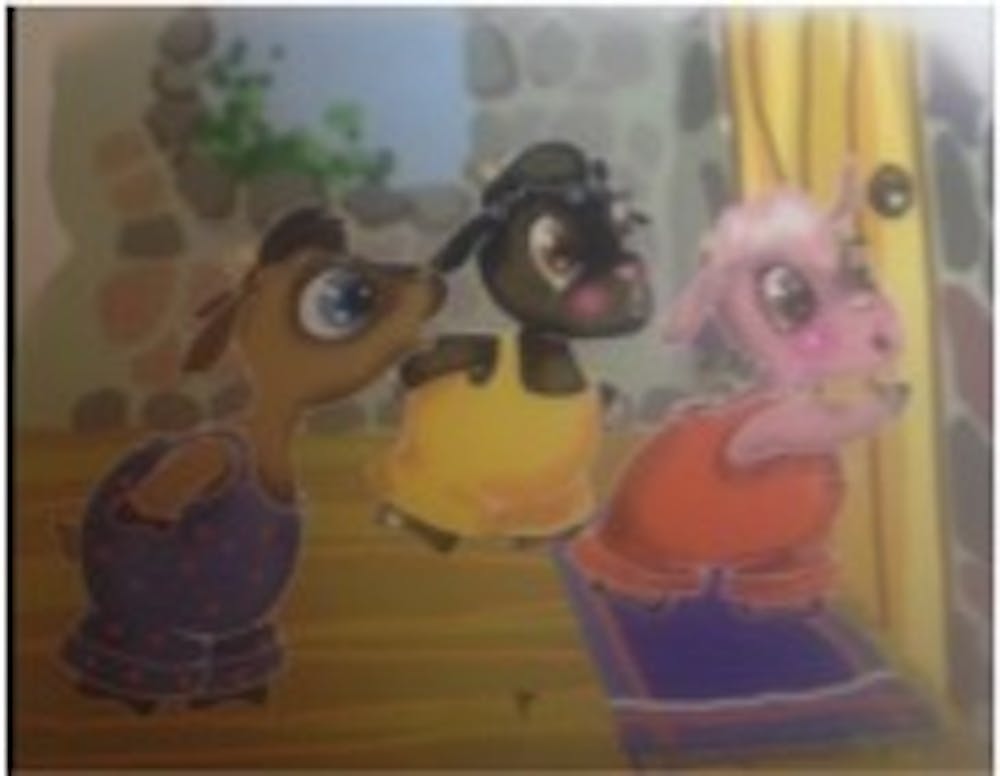
We also found most parents add many details to the story to make it more interesting or comprehensive. But relevant details are the most useful in terms of improving children’s learning. Relevant details are the kind of details that help make the story easier to understand.
For example, one parent said:
The little goat, who was wearing the yellow shirt and was the smallest said: ‘we shouldn’t open the door! How do we know this is our mother? She has just left.’
Here, wearing a yellow shirt is a descriptive detail, but it doesn’t add much to the story.
Another mother said:
The smallest one, who was also the cleverest and very careful, said…
This second parent is clearly adding a detail (that the smaller one is also the cleverest and careful) that makes the story more meaningful and easier to follow.
Read more:
Enjoyment of reading, not mechanics of reading, can improve literacy for boys
<!– Below is The Conversation's page counter tag. Please DO NOT REMOVE. –>

We found parents who not only describe the events of a story but also discuss abstract concepts related to emotions, desires and thoughts tend to have children who are better cognitively skilled. These children develop a better understanding of others’ emotions, better friendship skills, and even improved memory and higher order cognitive skills that are useful in later life. These lead to academic success as well as better skills to build friendships and perform well in social relationships.
Ameneh Shahaeian, Research Fellow in Developmental and Educational Psychology, Australian Catholic University
This article was originally published on The Conversation. Read the original article.
The link below is to an article that takes a look at some lessons on scholarly reading.
For more visit:
https://www.chronicle.com/article/Lessons-on-the-Craft-of/244134

 At the BookShelf
You must be logged in to post a comment.