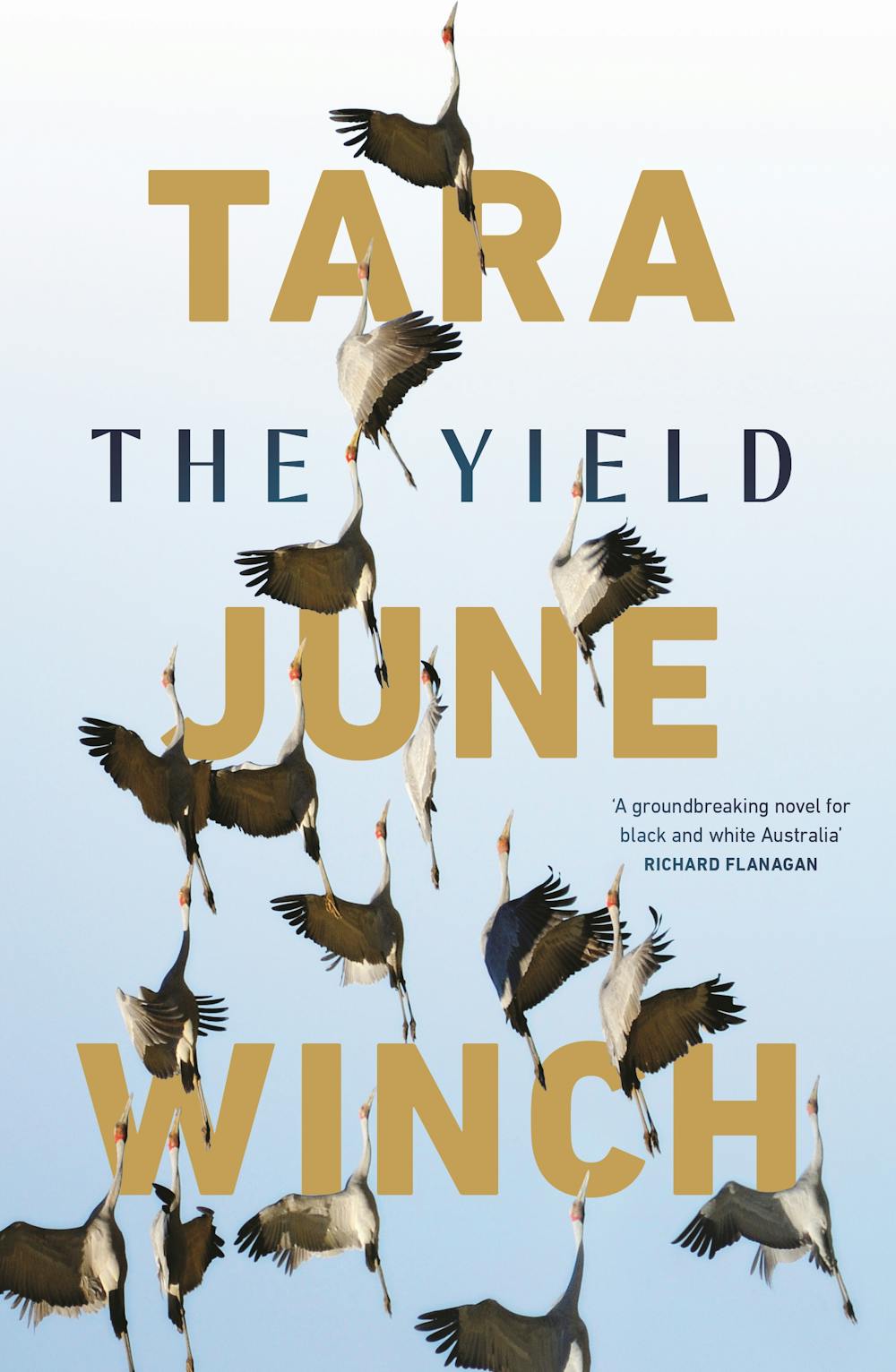
This remarkable novel opens and closes in the voice of Albert Gondiwindi, the recently deceased grandfather of one of the main characters, August.
Albert was born, he says in the first sentence, on Country known as Ngurambang; and he explains how to pronounce the word. “Ngu-ram-bang. If you say it right it hits the back of your mouth and you should taste the blood in your words”.
Throughout the novel, his voice keeps re-emerging as he steadily builds a body of Wiradjuri words, and the memories that ground their definitions.
His is one of three main stories that weave their way through Tara June Winch’s The Yield, this year’s Miles Franklin winner. A second story is that of Albert’s granddaughter, August, who comes home for his funeral. August has been living in England for ten years with her “terrible inheritance” (the elements of which unpack across the novel); she provides a key point of focalisation.
The third story comes out of history, and is presented in the form of notes, reports and letters written by the Reverend Ferdinand Greenleaf, who positions himself as the defender of what he terms “the decent Natives whom I have lived amongst”, residents of the Mission he established in 1880 “to ameliorate the condition of the Native tribes”.
While Greenleaf does take a stand against the brutality of the police and townspeople, his compassion is predicated on paternalism, rather than respect. Consequently, his “contributions” play a role in the colonisation of the region, and in Albert’s life.
Albert was born, as he says, on Ngurambang, but he started life in a temporary fringe area called Tent Town before he “and all the other kids were taken away”, stolen from family and culture.
The Yield: the violent history of the region is salted throughout the novel. tc
The violent history of the region is salted throughout the novel: cloaked, in Rev Greenleaf’s writings; expressed vividly in Poppy Albert’s stories; painfully in August’s memories and contemporary experiences and shamefully in the names of local places.
There is the ironically named Prosperous Mission; it stands near the town of Massacre Plains, close to Poisoned Waterhole Creek. The town itself is reached by way of the Broken Highway; the sick and dying of the region find themselves in Broken Hospital and Broken Hospice.
The deployment of such names contains a bitter truth, because although these are fictional places, there are locations right across Australia that unblushingly retain the evidence of racism and genocide. It is writers like Winch, and artists like Julie Gough, who draw attention to this practice and to the history that lies behind it.
History seldom remains tidily in the past, as so many writers have observed; and Poppy Albert too makes it clear: “there are a thousand battles being fought every day because people couldn’t forget something that happened before they were born”. And also, arguably, because what happened before we were born continues to have consequences.
The processes of colonisation that began in the 18th century; the impact of what led to the establishment (and naming) of Massacre Plains; the building of the mission and farm – all combine to shape and (attempt to) limit August’s life, and that of her family.
And these she must experience again when she returns to Australia, to the continuing absence of her disappeared sister Jedda, to Eddie – ex-schoolfriend and scion of Prosperous Farm – and to the testing family relationships she had left behind. Once back, she finds herself involved not just in piecing together her past, but also in a battle to protect her grandmother’s home, and the remnants of the beloved and deeply damaged river, from the depredations of Rinepalm mining company.
That battle itself highlights the very different communities cohabiting. For the urban protesters, it is about the broad problem of environmental destruction. For cousin Joey, it is about resistance to the original act of invasion. (“They want to take land that wasn’t theirs to take, land was given that wasn’t theirs to give!”)
And for August, it seems to offer a point of resolution: “As they walked August thought that grief’s stint was ending. She whispered to Jedda and to Poppy: I am here”.
I won’t say any more about the story; it is, after all, not mine to tell. But I will say that it is a powerful and a deeply moving book. While it is unstinting in its critical gaze at sociopolitical disasters, it also shows the forms resistance can take.
Albert’s dictionary is part of this resistance: it is in language that culture and memory and ways of seeing and thinking function, and survive. Albert’s work to recover language, to set out words and definitions, provides a memorial to those who were steamrollered by history, and a reminder that “we are here still”.
It seems sometimes literary fiction performs a bellwether function: signalling changes; alerting us to the directions in which a society is headed.
The 2020 Miles Franklin shortlist seems to bear this out in six novels whose topics shimmer with relevance: the continuing wounds of colonisation (for people and the environment); language and all its possibilities and failures; ditto families; and the issues that are intrinsic to fiction, like conflict and character, trauma and resilience, sex and art. And, in the case of these six novels, lost or vanished family members and the uncertain status of the dead.
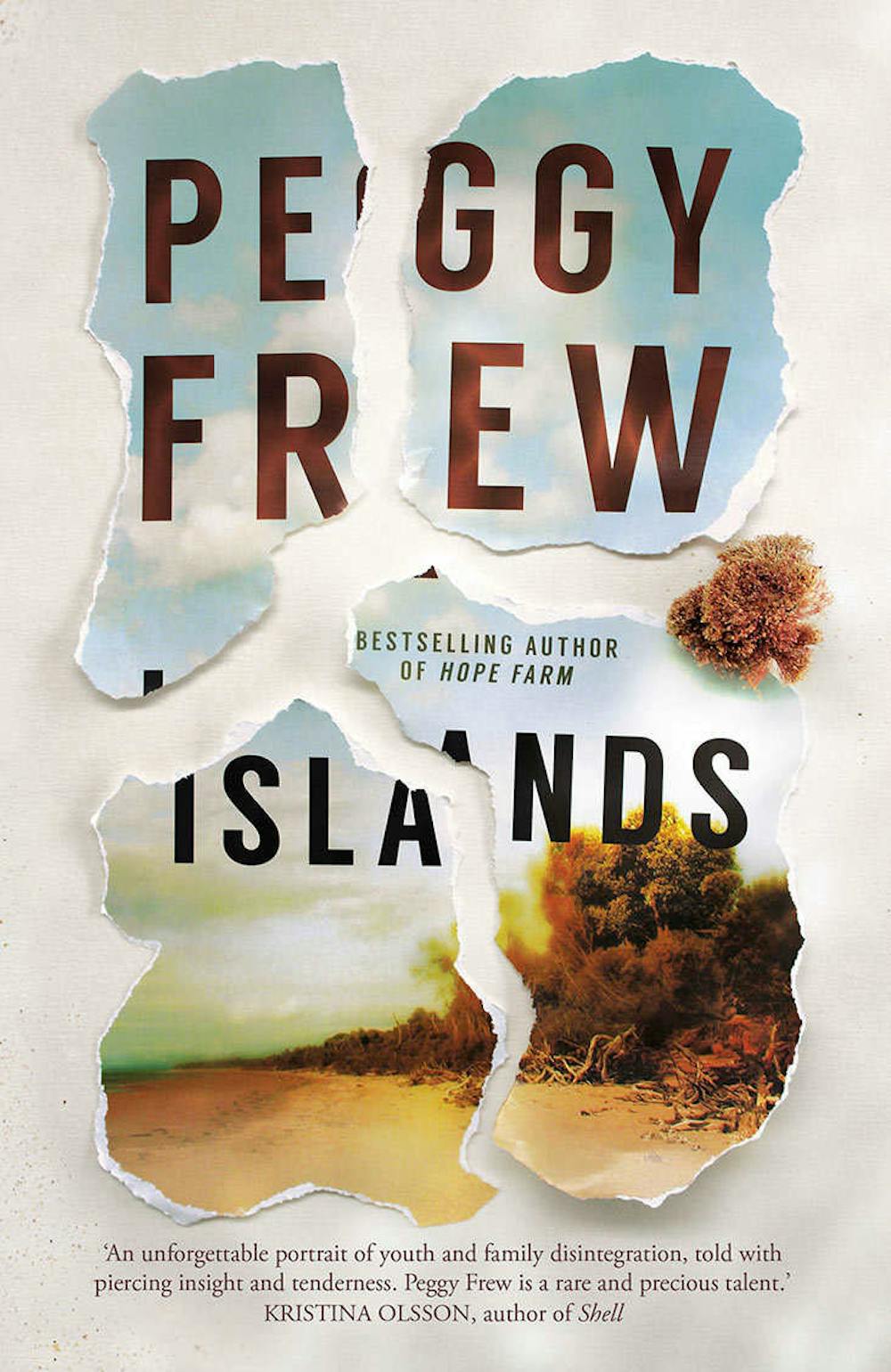
Islands
Peggy Frew’s Islands reads like a sequence of vignettes, focused through members of the Worth family and other, more tangential, characters. Frew demands and rewards a reader’s attention, because the impact of her structure is a lapidary arrangement of different voices, times, geographies.
The overall effect is of fragments of impressions, a prism that reflects and deflects the light cast by childhood: the presence and absence of the younger sister Anna, and then of the rejected mother and the incompetent father, until the remaining sister, Junie, is left almost alone, with every breath freighted by the disappearance of her sister:
Junie can look back on the past, when Anna was there. She can see, behind her, that world, where things were aligned. And then there is a signpost, a marker, which is Anna being gone. And after that the void opens …
The Yield
Tara June Winch’s The Yield is another story of family crisis, of a daughter gone missing, a family stranded in the midst of the enduring trauma of invasion and the newer catastrophe of environmental mismanagement. All that, and then the death of grandfather Albert Gondiwindi and the impending loss of their family home.
This sounds like an unrelieved tragedy but the novel is full of light, not least because of the writing: practically every sentence is a marvel, language that does not merely describe but perfectly fits the world of things. The characters, too, are beautifully rendered, with Albert and his widow Elsie demonstrating how one can live fully and hold close all that seems lost.
As his legacy, Albert has left a dictionary full of words from his apparently lost language, which come with advice and responsibilities:
The spirit woman was empty-handed and showed me her hands … and she said, ‘Wanga-dyung.’ ‘What’s that mean?’ She said, ‘It means lost, but not lost always.’ I said okay, and she told me to practise it.
The “not lost always” is bequeathed to his sad granddaughter August, who starts learning, as grandmother Elsie insists, “We aren’t victims in this story anymore”.
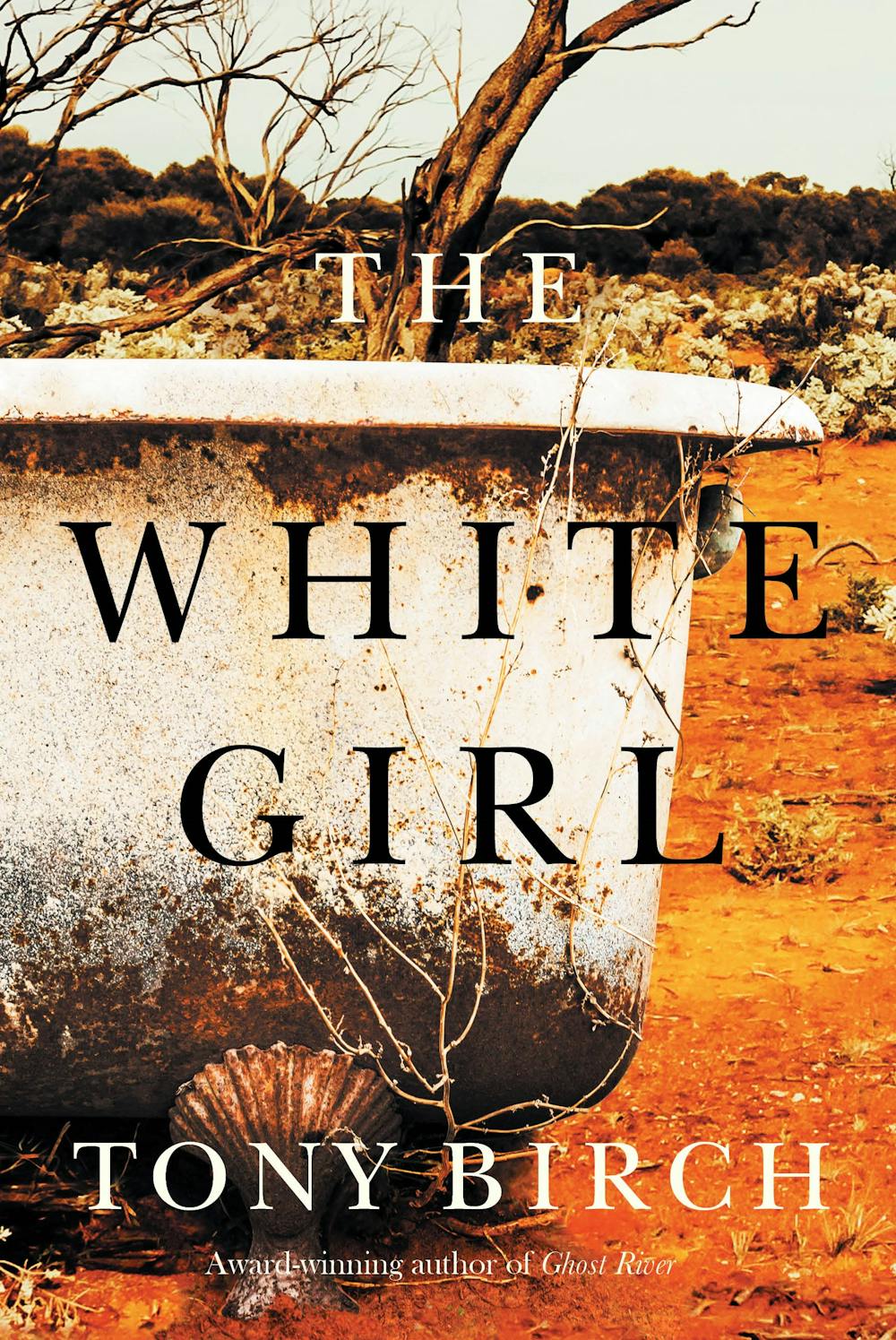
The White Girl
Another lost daughter, another unresolved mourning is at the heart of Tony Birch’s The White Girl, set during the period of the Aborigines Protection Act, which permitted white people to insult, assault, and confine Indigenous people without legal consequences.
Odette, grandmother of the eponymous “white girl”, has struggled to preserve her right to raise the baby, Sissy, left behind when her daughter disappeared. She struggles to maintain dignity in the face of unremitting abuse. When a local thug says to her, “I thought there was none of your lot left around here”, she replies, “Oh, my people are still here, son … We’ve always been here and we’re going no place”.
The name Odette recalls the swan: always just out of reach, always poised, always gracious. But she is also tough and decisive. When it’s time to leave town, illegally, to protect her granddaughter, and Sissy says, “We’re in trouble, aren’t we, Nan?”, Odette merely laughs:
Trouble? Our people have been in one sort of trouble or another from the first day we set eyes on a white person.
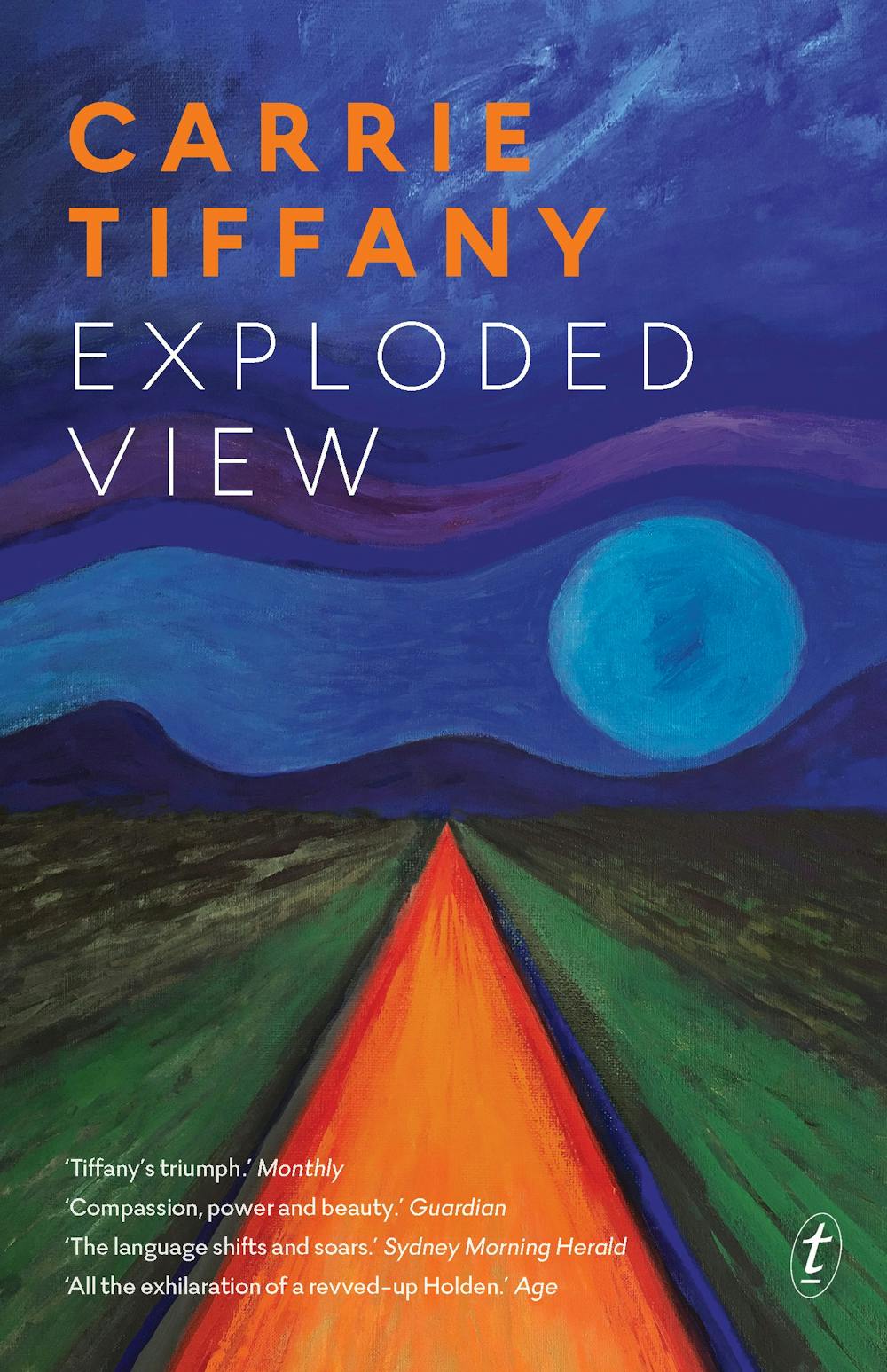
Exploded View
It wasn’t a good year for daughters.
Carrie Tiffany’s Exploded View works like a negative Bildungsroman, focusing on a girl who practices elective mutism because “You have to stop listening to yourself to be able to speak”.
She avoids human contact, creeping into neighbours’ homes when they are out, creeping out of her own home at night, entirely dissociated and alone. This is not surprising given her backyard mechanic and abuser “Father Man”; her Mother who escapes into fantasies; her isolation from friends and protectors. She identifies with car bodies and engines but also assaults them — dropping sewing needles into their delicate moving parts, hacking holes into pipes. She insists, “There are many happy times in my family”, but her example of a happy time is only the hunt for Mother’s lost contact lens.
There seems little hope in the exploded view this novel offers of abused adolescents, but it is leavened by her determination not to cave in: “You are only lost to others”, the unnamed girl? observes, “not inside yourself”.
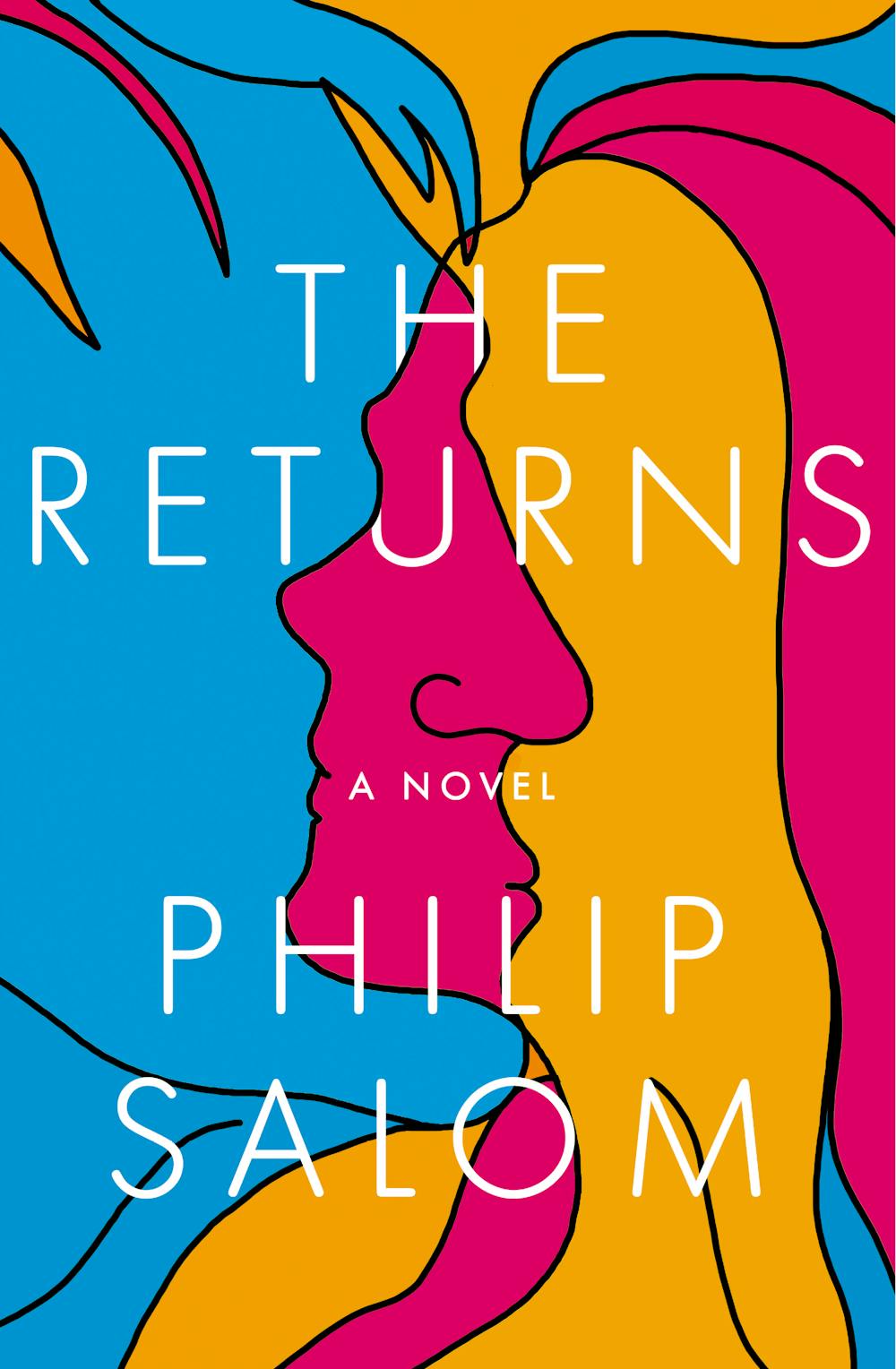
The Returns
In The Returns, Philip Salom produces what in some lights reads like a metafiction.
It is the story of Trevor, an artist turned bookseller turned bookseller-artist whose dead father returns, inconveniently, to trouble him. It is the story of Elizabeth, daughter of an ex-cultist, a book editor who suffers from face blindness and recognises people by their shape and smell. It is the story of the art sector where only artists with a track record can expect to be exhibited, where “the book publishing scene looks like property management sometimes. Safe books in safe suburbs”.
Salom is a poet, and great swathes of this novel show this lineage:
[S]o many people want art to be romantic gestures and a clutch of the bowels, a dazzle born of insanity (first), suffering (second) or heroin, or beautiful lovers or genius from the fucking stars. Oh, art! Our body is made of stardust! No, it’s not.
Set in a slice of Melbourne struggling for recognition, between the dog shit and motor accidents and incompetent criminals, the cool eye of the painter and the cool voice of the editor deliver a cocktail of tenderness, irreverence and sometimes laugh-out-loud humour in the face of what feels a little like disaster.
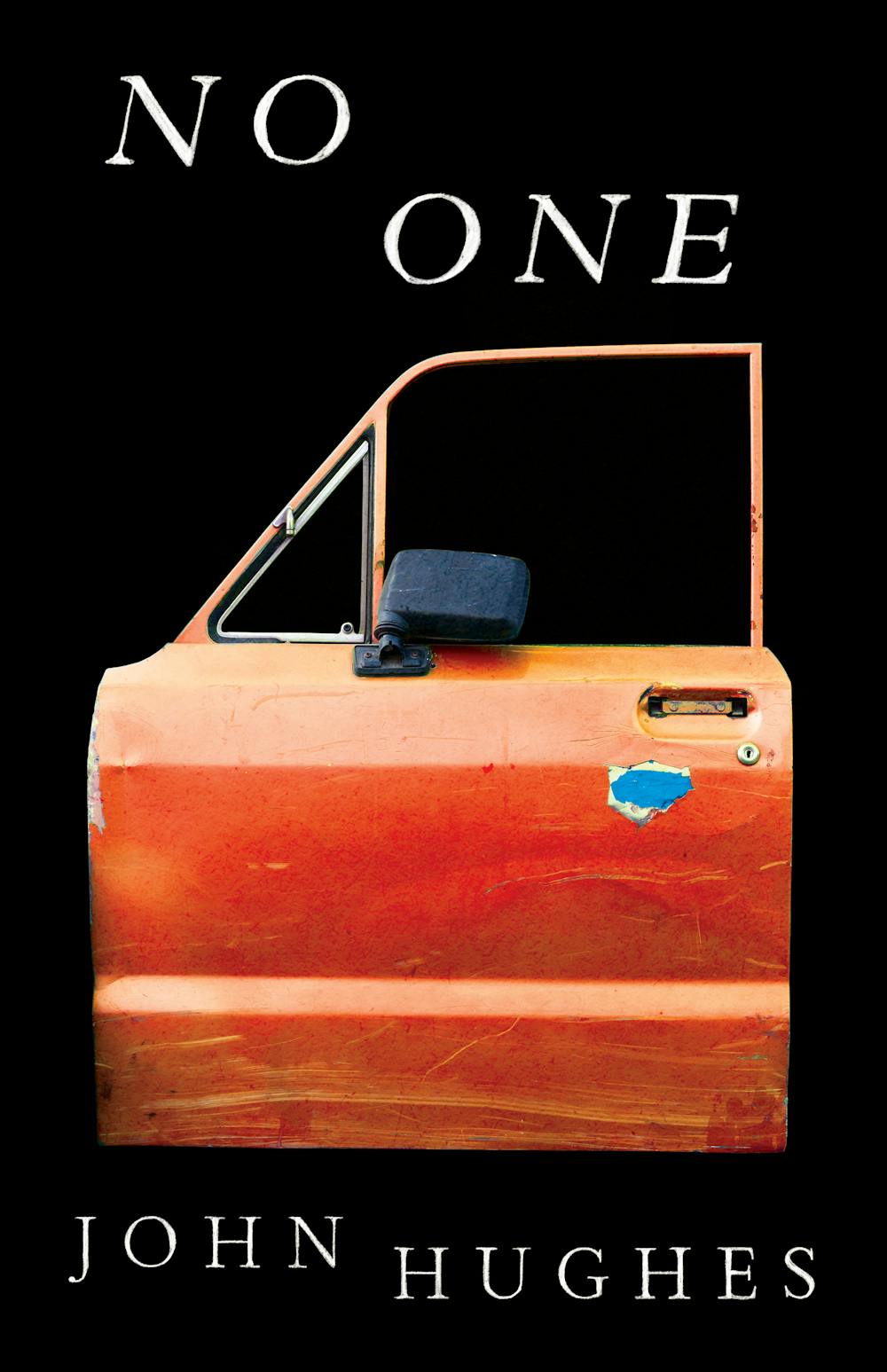
No One
John Hughes’ No One follows the lonely narrator through his attempts to determine who or what he hit while driving past Redfern station one night. He can’t resolve the problem: there is no data to work with, and the absence in this accident operates as a sort of allegory for his life. He cannot, after all, resolve his own history – his lost homeland and parents, his invisibility.
“It’s like we walk on water”, he says, “so little trace do we leave of ourselves.” Even the strange relationship he develops with a young woman he calls the Poetess – one who carries the scars of her own abusive past – is built on water.
The narrative also seems an allegory of Australian history. Speaking of his history lecturer, he recalls:
You can’t alter historical injustice in the present, he said. Two hundred years after the fact – he was talking about colonisation – the crime continues, only it’s a criminal-less crime now, which means it can never be solved.
While this novel is desperately sad, the writing is exquisite, and the narrative offers the promise one can adapt; it is possible to achieve at least small moments of resolution.
The winner of the Miles Franklin will be announced on Thursday July 16.
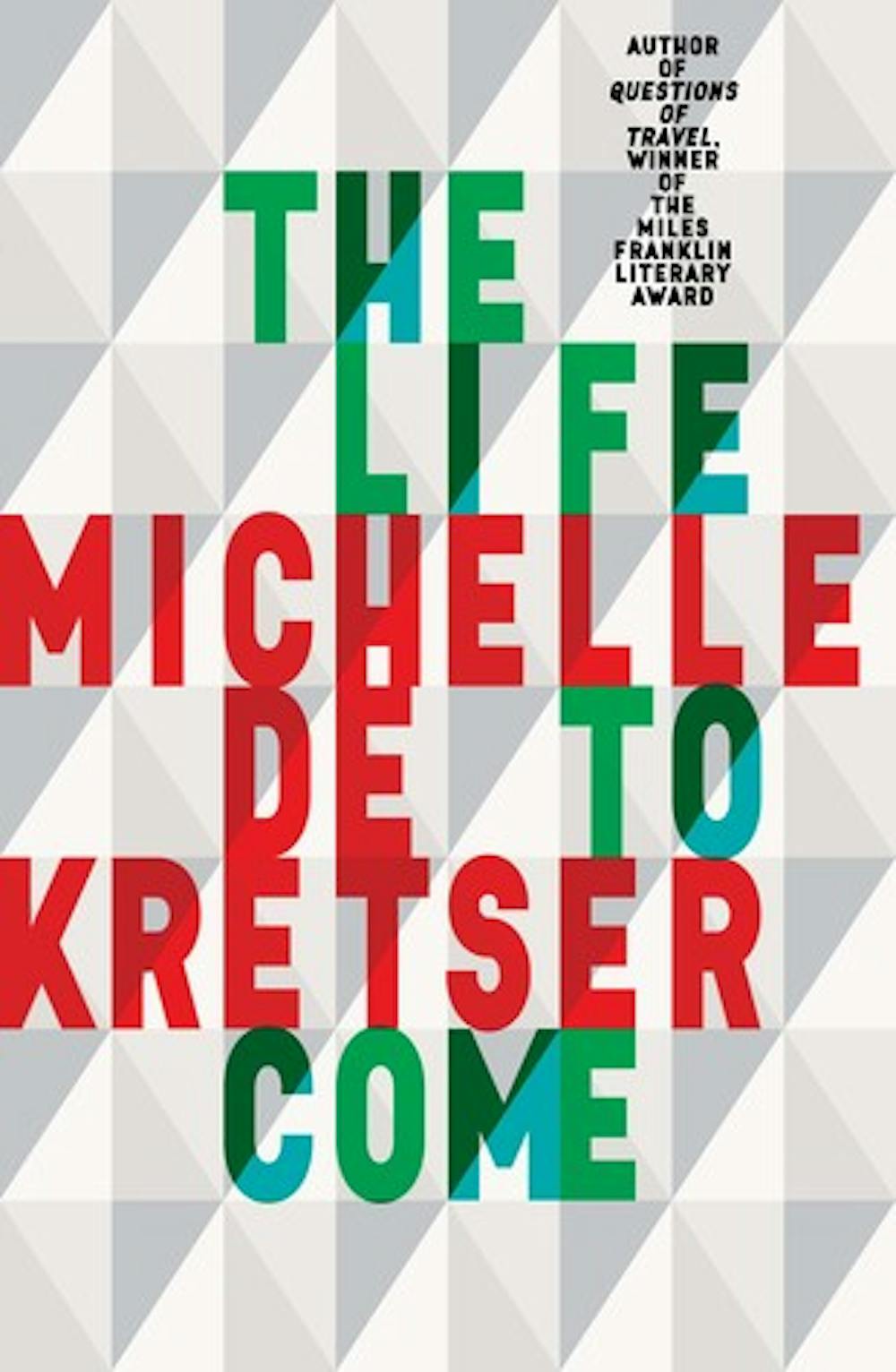
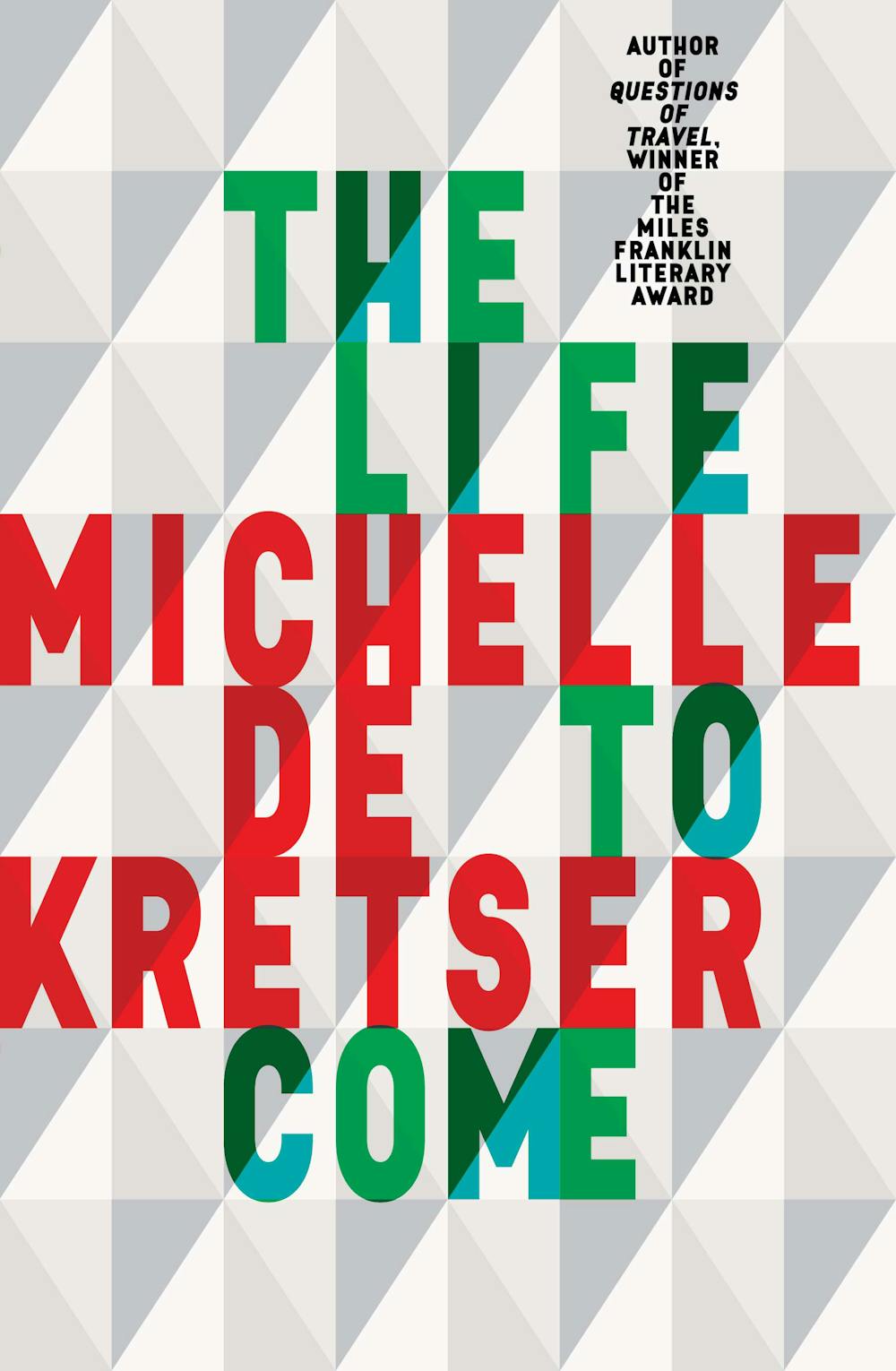
Michelle de Kretser’s The Life To Come, which has won the 2018 Miles Franklin Award, begins with an epigraph from Samuel Beckett’s Endgame:
CLOV: Do you believe in the life to come?
HAMM: Mine was always that.
This tragicomic exchange sets up, brilliantly, the novel that follows. When I asked de Kretser about her selection of this quote, she replied that she is interested in the hollowness behind the lives of her characters. Each falls short of the life they might have lived; each hears the echo of a life that could have been; and that echo hollows out the life they are in fact living.
The focus on characters is important here; it relies not so much on the plot as on a study of individuals, who in this work are entirely “rounded”, realised in their fullness and their complexity. Characterisation, says de Kretser, is important to her; she is interested in crafting individuals who are perplexing – who at one moment are likeable, even admirable, and who then frustrate us with their shortcomings.
Certainly I was absorbed by the characters who populate the book. In the summary of the Miles Franklin shortlisted novels earlier this week, I mentioned the two novelists, Pippa and George: interesting but deeply flawed individuals.
Other characters include Cassie and Ash, the mismatched couple of the second section, where Ash, a highly intelligent Anglo-Sri Lankan man, presents a clear-eyed perspective on Australia, but is also thoughtless, and treats women poorly; while Cassie, his temporary love, patronises the “Ashfield Tamil” (who this section is titled after), in whose grocery story she performs her own idea of multiculturalism, drawing on her upbringing as a child “whose emptiest make-believe had been labelled “creativity” by her parents”.
Next we meet Céleste, French-Australian translator, whose life has not delivered what she might have hoped, and who hovers on the edges of the lives of others: her cashed-up Australian family; her happily-enough married lover Sabine; and Pippa, who drifts through the whole novel, disrupting and exploiting others, and being herself crushed by all she is not able to achieve.
Then in the final section we follow Christabel and Bunty from their childhood days in what was still called Ceylon, through to Bunty’s dementia and death. Christabel has the final words for this section and for the book. Her perpetual frail optimism allows her to move through small opportunities and large disappointments: from childhood, when she “sat on a step and waited for her life”, to the final scene where, alone in the park, she sits, surrounded by the ghosts of the past, and watches what she perceives as Bunty’s dog come toward her, while she waits, “joyful and triumphant”.
Every character in this novel is complex, frustratingly unfulfilled, marked by kindness, selfishness, or dumb selflessness. But they are always, entirely, convincing.
De Kretser reminded me of a line from Shirley Hazzard’s Bay of Noon: that fiction has a commitment to veracity, while life need not be lifelike – indeed, it can be preposterous. The lives in this novel are not-quite preposterous; rather, they are marked by great veracity. At times they annoyed me: I wanted them to smarten up their acts, be kinder to themselves and to each other, be more reflexive.
<!– Below is The Conversation's page counter tag. Please DO NOT REMOVE. –>
But I did not, at any point, want to lose touch with them. De Kretser says that she aims to provide readers with the kinds of characters and stories that will interest them, that will urge them to go on reading, to immerse themselves in the world of this book. The characters in this novel are complex, three-dimensional, absorbing. They might irritate you, break your heart; but they will be worth your attention.
The Miles Franklin authors with their novels, clockwise from top left: Felicity Castagna, Eva Hornung, Kim Scott, Michelle de Kretser, Catherine McKinnon and Gerald Murnane. Courtesy Perpetual/ Copyright Agency/ Martin Ollman/Timothy Hillier. Eva Hornung image: Noni Martin., CC BY-NC-ND
The Miles Franklin award is famously for “a novel which is of the highest literary merit and presents Australian life in any of its phases”. That’s a very broad palette, yet for most of the award’s existence — 1957 to the present — it has recognised a rather narrow field of “Australian life”.
The 60 novels honoured to date include 42 written by 28 men, and 18 written by 14 women. Almost to a person, these winning authors are Anglo-Australian. While their narratives cover an impressive range of issues, topics, periods, structure and narrative voice, it is notable that in a country described by our prime minister as “the world’s most successful multicultural society”, the Miles Franklin seems to have remained a bastion of monoculture.
Until recently, that is. Women authors are appearing more frequently – on the shortlists and as prize winners – and the cultural and linguistic heritage of authors is similarly expanding. This year the mix of shortlist authors, and the content of their novels, is impressively diverse.
Border Districts
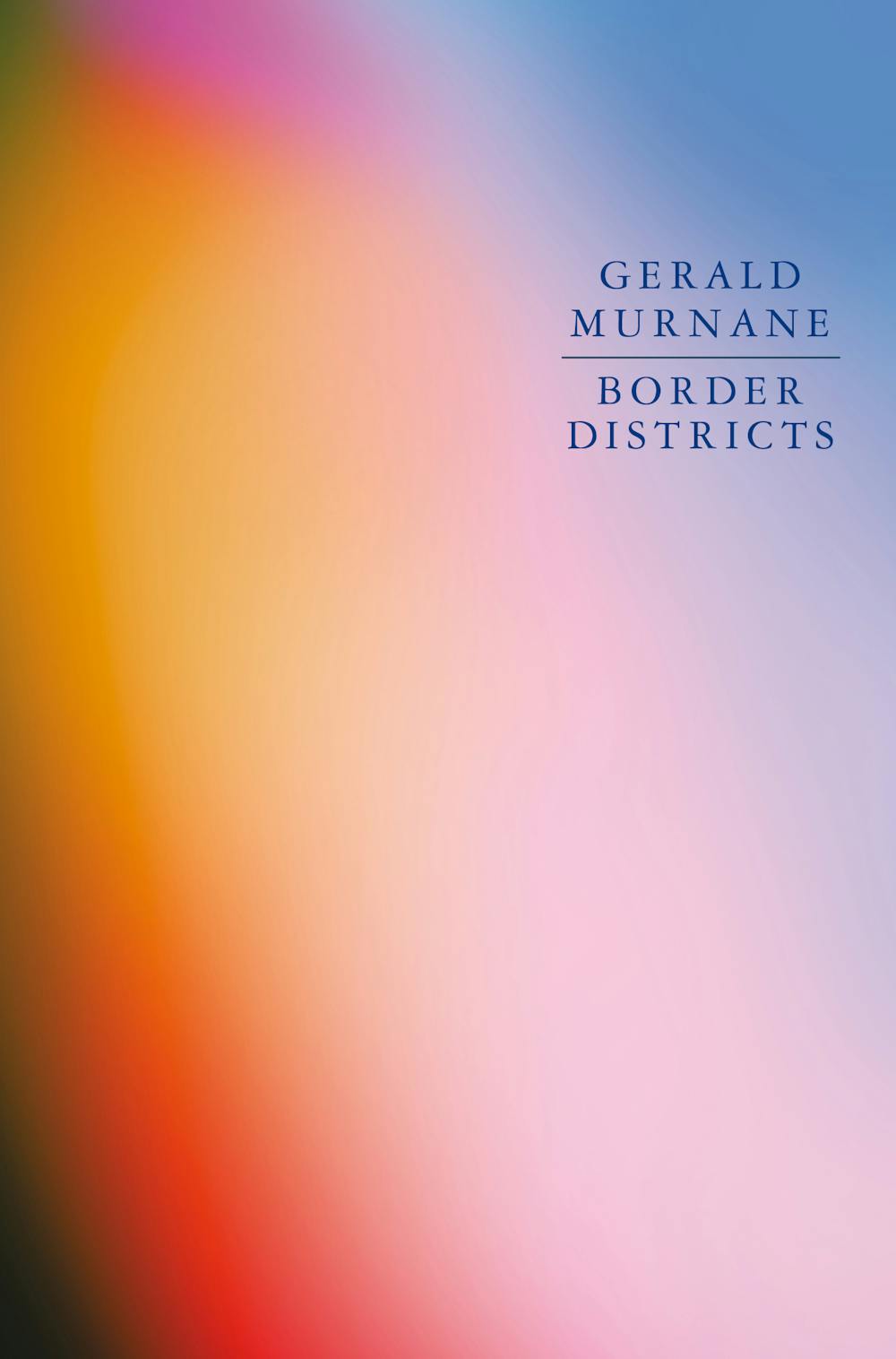
Gerald Murnane’s Border Districts is explicitly a literary novel, one with no overt plot and really only one voice. The narrator is fastidious to the point of primness, narrow and self-absorbed: a fussy old man who drifts into Grandpa Simpson moments, telling stories that wander from point to point with no apparent destination. Yet this work is also a remarkable account of memory, its fractures, and its fragments. This gives the lie to the narrator’s insistence that he is writing a report, not a novel, and casts a gentle melancholy over the work.
The unnamed narrator seems to have lived a life at arms length, remaining encased in abstractions, neglecting to experience anything at first hand. What I found the most desolate image in the novel is his childhood collection of glass marbles. The material expression of his life’s effort to “recollect” and “preserve” his memories and moods, they are no more than tiny flashes of colour, frozen in their glass bubbles, seeing and saying nothing.
In his sense of colour, and his hankering for the clarity of memory, is the suggestion that he contains within himself another man, one who yearns to feel.
No More Boats
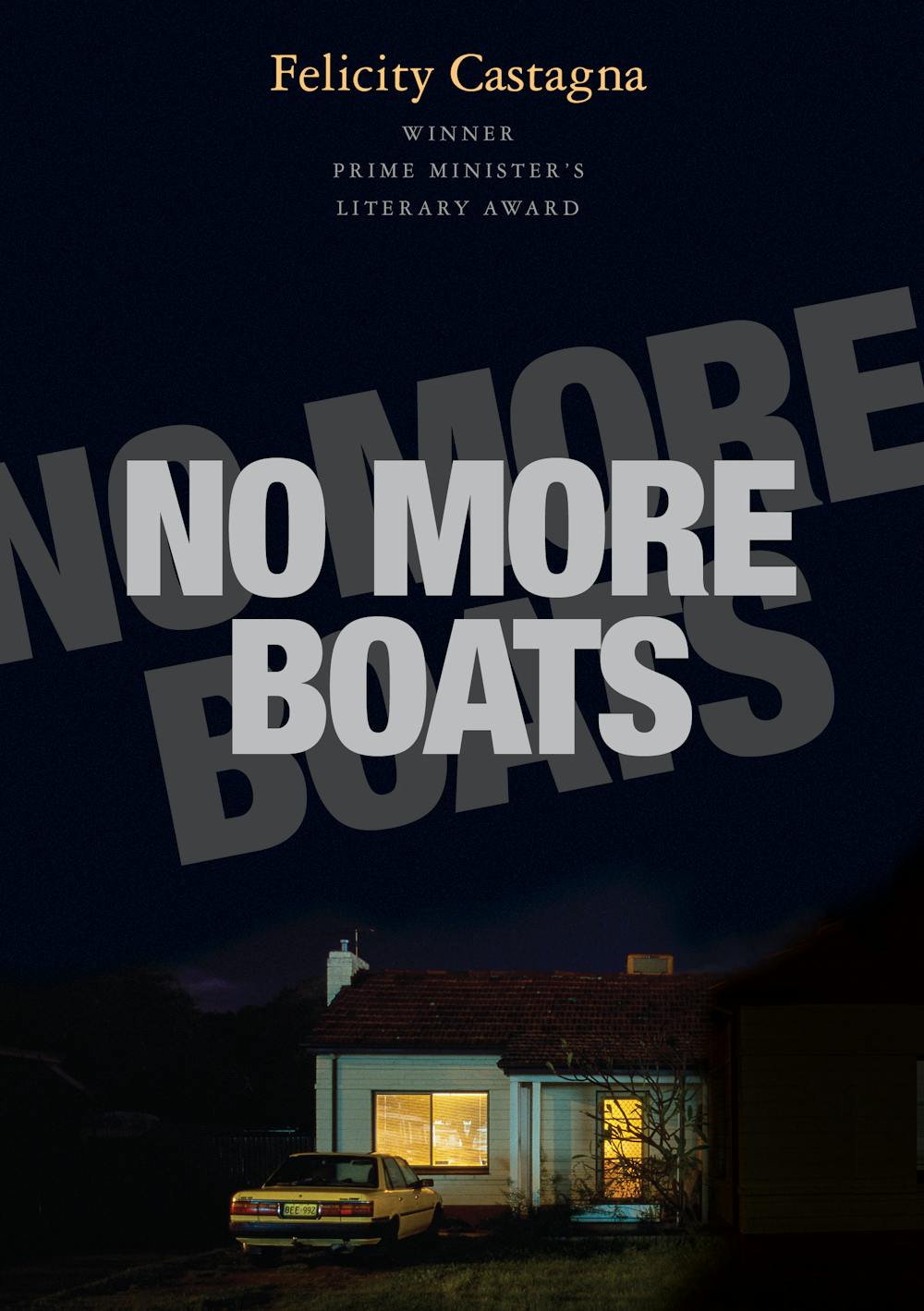
Felicity Castagna’s No More Boats opens in 1967, the year Harold Holt disappeared and, through the magic of narration, incorporates in the opening pages what is yet to come: 2001, the Tampa crisis, the September 11 attacks. In these pages, Antonio, the protagonist, is both young Italian migrant, and the ageing man who has become the face of: “We will decide who comes to this country …”
He and Rose live in Parramatta, where young men like their son Francis are testing out models of masculinity; where young women like their daughter Clare are crafting lives beyond their parents’ oversight; a rich human zoo that provides the stage for a brilliantly observed and sensitively recounted novel illuminating the politics of identity, family, community and nation.
His family are forced to confront the public scandal of Antonio’s xenophobia, to understand why a migrant in a migrant community could be so thoroughly seduced by the violent logic of the hard right. There are no real answers, of course; but beyond the family’s distress and the community’s upheaval is the shadow of two centuries of Australia struggling against “too many boats”.
The Last Garden
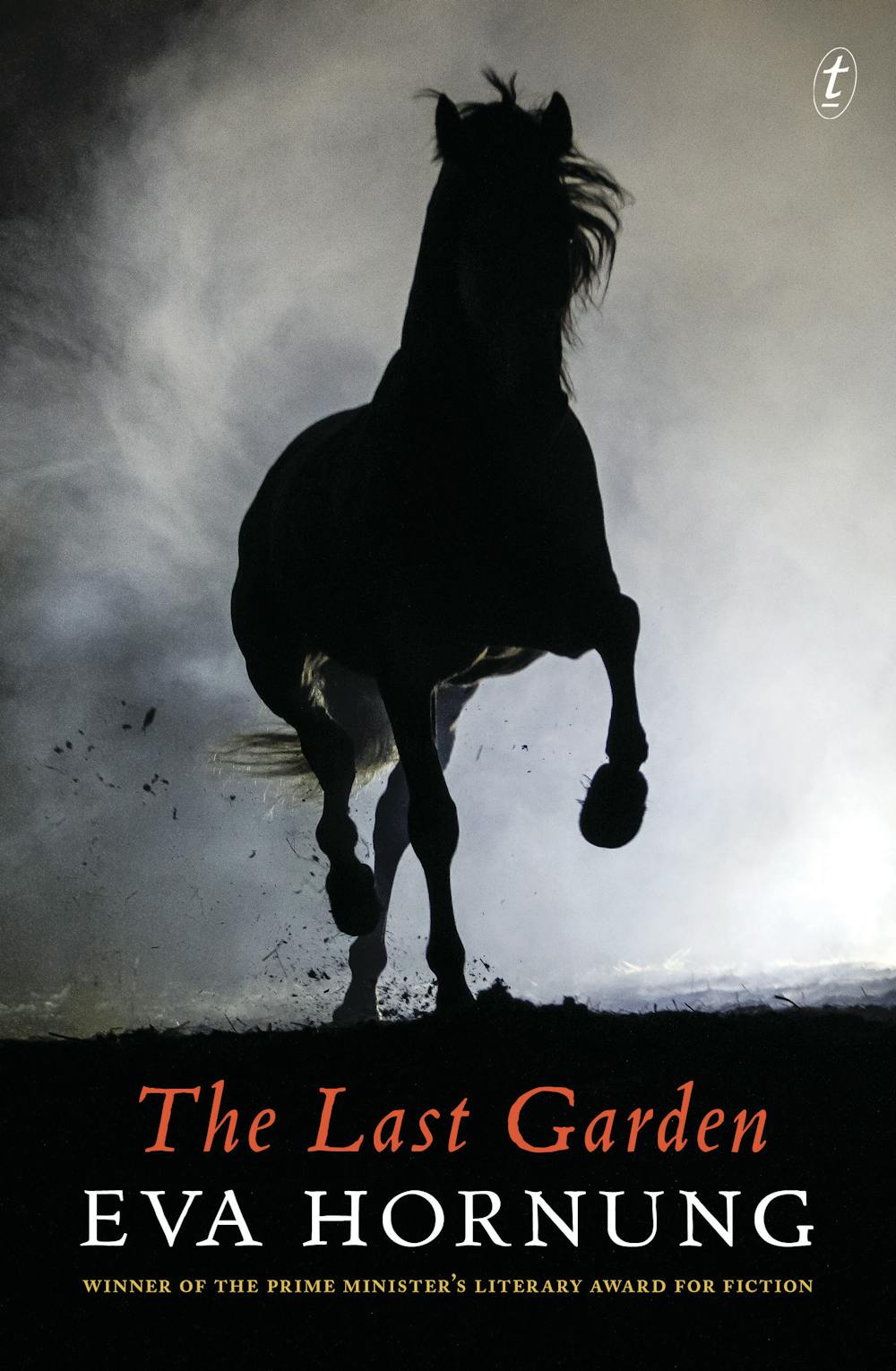
Eva Hornung’s The Last Garden is based in a South Australian religious community named – perhaps ironically – Wahrheit. There is little truth here though, and easily as many secrets and violences as are found beyond Wahrheit’s boundaries. These are flushed out by the tragedy that opens the novel, where Matthias Orion, not-fully-committed member of the church, destroys everything he can reach on his property, and slaughters first his wife and then himself.
Their 15-year-old son Benedict arrives home from boarding school to discover this horror; and even as it breaks him, so too it marks the end of the community’s Nebelung, their mythical home. The novel is told through a careful interlacing of Benedict’s and the pastor’s perspectives. The latter fails miserably to care sufficiently for the deeply traumatised Benedict, who after all has become “part of the wound” the community finds itself suffering.
Left largely to himself, and to the horses that escaped his father’s murderous rampage, and to the fox that stands in for that angel of death, Benedict lives with, and like, the animals. In that living he finds a way to recover some sense of self, and to re-enter his community: though whether as messiah or as restored son is uncertain.
The Life to Come
The Life to Come, Michelle de Kretser’s new novel – actually a discontinuous narrative in five sections – offers an insider-outsider view of contemporary Australian society through the shifting focalisations, points of view and voices that comprise the sections. The threads that weave it together are Pippa, a self-satisfied, hyper-performative, not-quite-good-enough novelist, and “real” novelist George Meshaw, who disdains her shallow conceits and her populist writing style.
Pippa is the more visible of the two. She spends much of the novel charming and then disappointing friends, and struggling under the burden of her mother-in-law’s condescension, while always firmly focused on herself. George appears principally through his novels – the last of which, along with Pippa’s last, are tossed in the bin by Pippa’s disenchanted neighbour, who had hoped to find warmth and meaning in these works, but found only words.
While the stories are set in Sydney and in Paris, with references also to Sri Lanka, the twin foci of this novel (for me, at least) are, first, an excoriating critique of Australian colonialist attitudes and politics, and next the burning realisation that – as one character observes – “The only life in which you play a leading role is your own”; we are all merely bit players in the lives of others.
Storyland
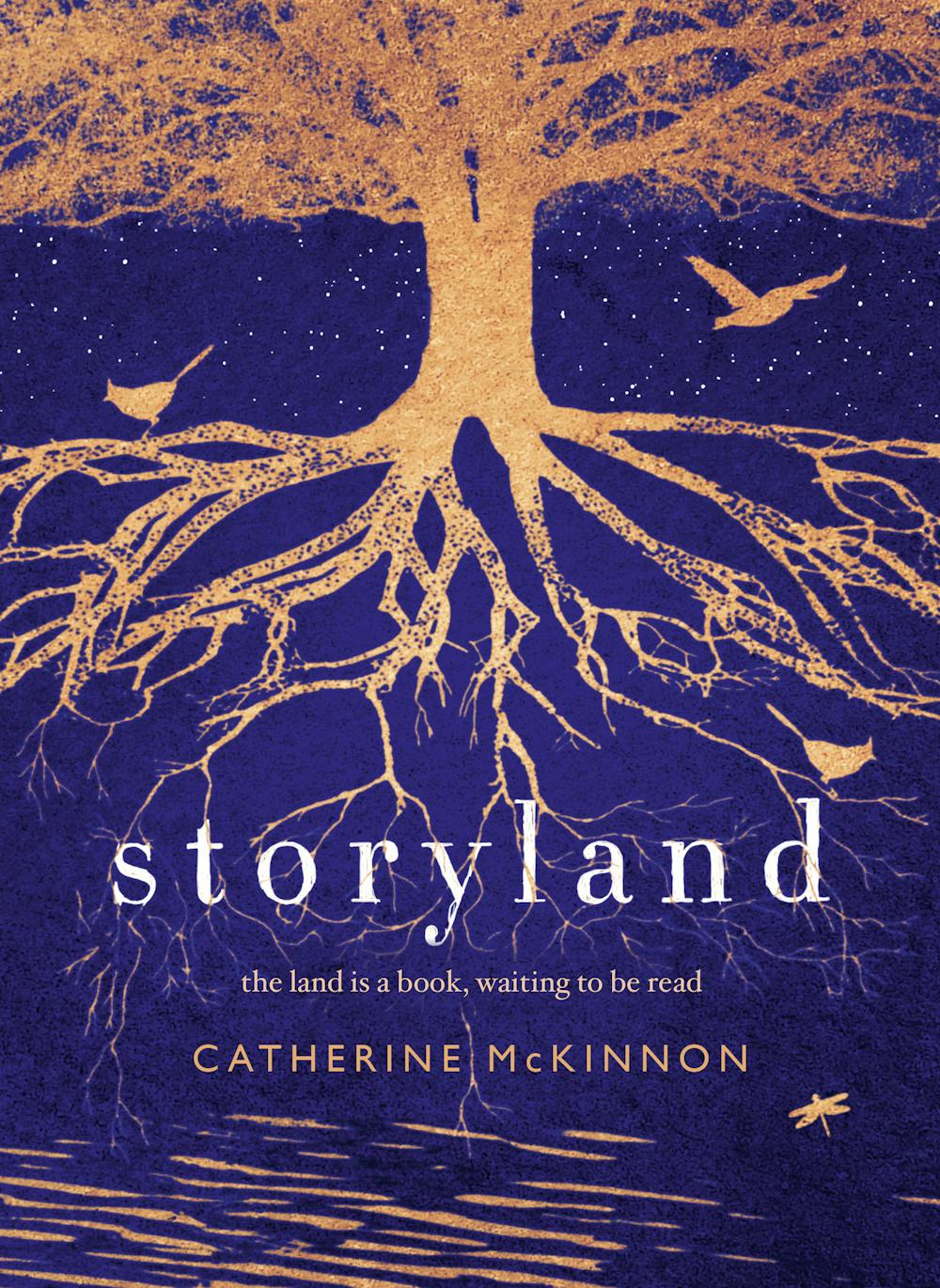
Catherine McKinnon’s Storyland is also structured in five discrete sections, the transitions here being characterised by the pulsing of time, rather than the geographical shifts of de Kretser’s work. Storyland starts and ends in the Illawarra region, during the early days of colonisation, where the possibility of trust or friendship between the local Wadi Wadi people and the invading British is constantly thwarted.
The sections between swoop up through the 19th and 20th centuries to a post-apocalypse future, and then cascade down again. Key elements – a river, a cave, a clever man’s axe – appear in each time period, connective tissue that binds them together. Characters too reappear, individuals or their descendants struggling with colonial society and its mores, with missed opportunities for connection, with the collapse of the environment and human society.
I read this novel as a migrant, and as a person of European descent, so I am not well positioned to evaluate the merits of McKinnon’s use of Aboriginal language and representation of the Aboriginal characters, but for me they were both convincing and moving. Story is not politics, but in it we can find ways to review ourselves and our histories, and perhaps begin to find points of conciliation.
Taboo
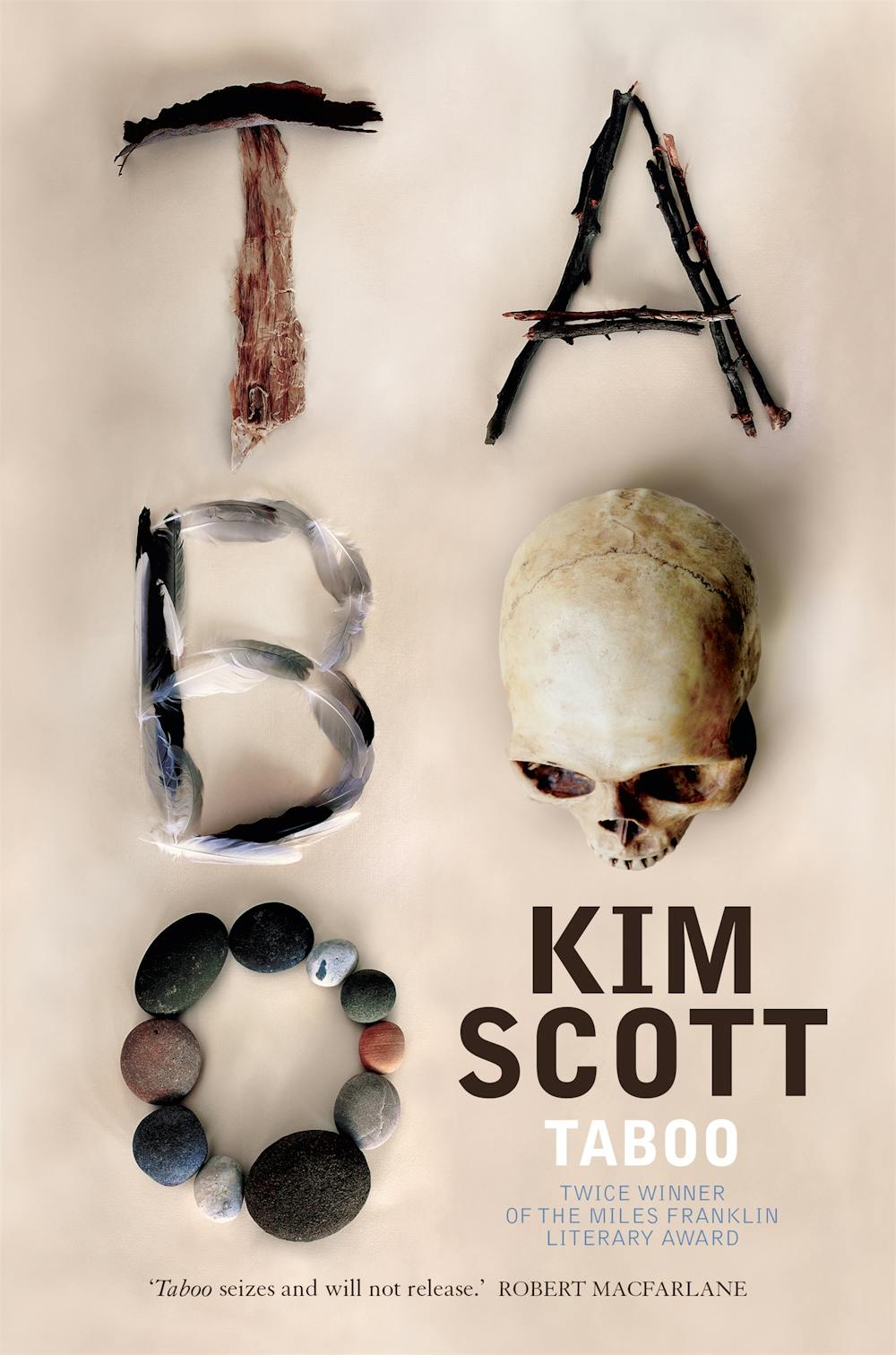
Taboo, by Kim Scott, is located squarely in the post-Apology present, when the Australian government can express regret for the Stolen Generations while maintaining the Northern Territory Intervention; and when Aboriginal communities across the country are building new ways to enter the future without deserting the past.
Focalised primarily through the young woman Tilly, daughter of an Aboriginal man who, toward the end of his life, realised the power of language to heal his community’s wounds, it follows the people of Kepalup and their establishment of a Peace Park to settle the ghosts of local Aboriginal people slaughtered by the ancestors of local pastoralists.
Though the novel is necessarily tragic – killings, stolen children, wrecked lives – it also has something generous and pragmatic at its heart. Says Uncle Wilfred of the white community: “Sorry for the history, they say. Know it’s our country, our ancestral country. They’re not gunna give the land back, but know we’re the right people.”
Despite the record of massacre, despite the clumsy interventions by white people – well-meaning but condescending, unaware of how little they know of Noongar culture – the community turns to recovering their language, retelling stories, reclaiming culture, and finding “magic in an empirical age”.
These six novels convincingly meet the criteria of the Miles Franklin, providing accounts of Australian life in all its phrases, in stories of “the highest literary merit” that craft a kaleidoscopic portrait of this society.
<!– Below is The Conversation's page counter tag. Please DO NOT REMOVE. –>
The winner of the Miles Franklin will be announced at the Melbourne Writers Festival on Sunday 26th August from 4pm at Deakin Edge, Fed Square.









 At the BookShelf