Unknown's avatar

Brittany Higgins’ memoir will join a powerful Australian collection reclaiming women’s stories of trauma. Here are four


Marina Deller, Flinders University

Brittany Higgins has signed a book deal with Penguin Random House Australia. Not just any book — a memoir.

Higgins says her book will be a chance to tell “a firsthand account of what it was like surviving a media storm that turned into a movement”.

Memoir can help readers explore and understand trauma from a very personal perspective. Research suggests writing can be used to work through, or even heal from, trauma. It is a chance for a writer like Higgins,
who alleges she was raped in a senior minister’s office, to reclaim her story.

Here are four powerful Australian examples of women’s memoirs about trauma and abuse.

1. Eggshell Skull by Bri Lee
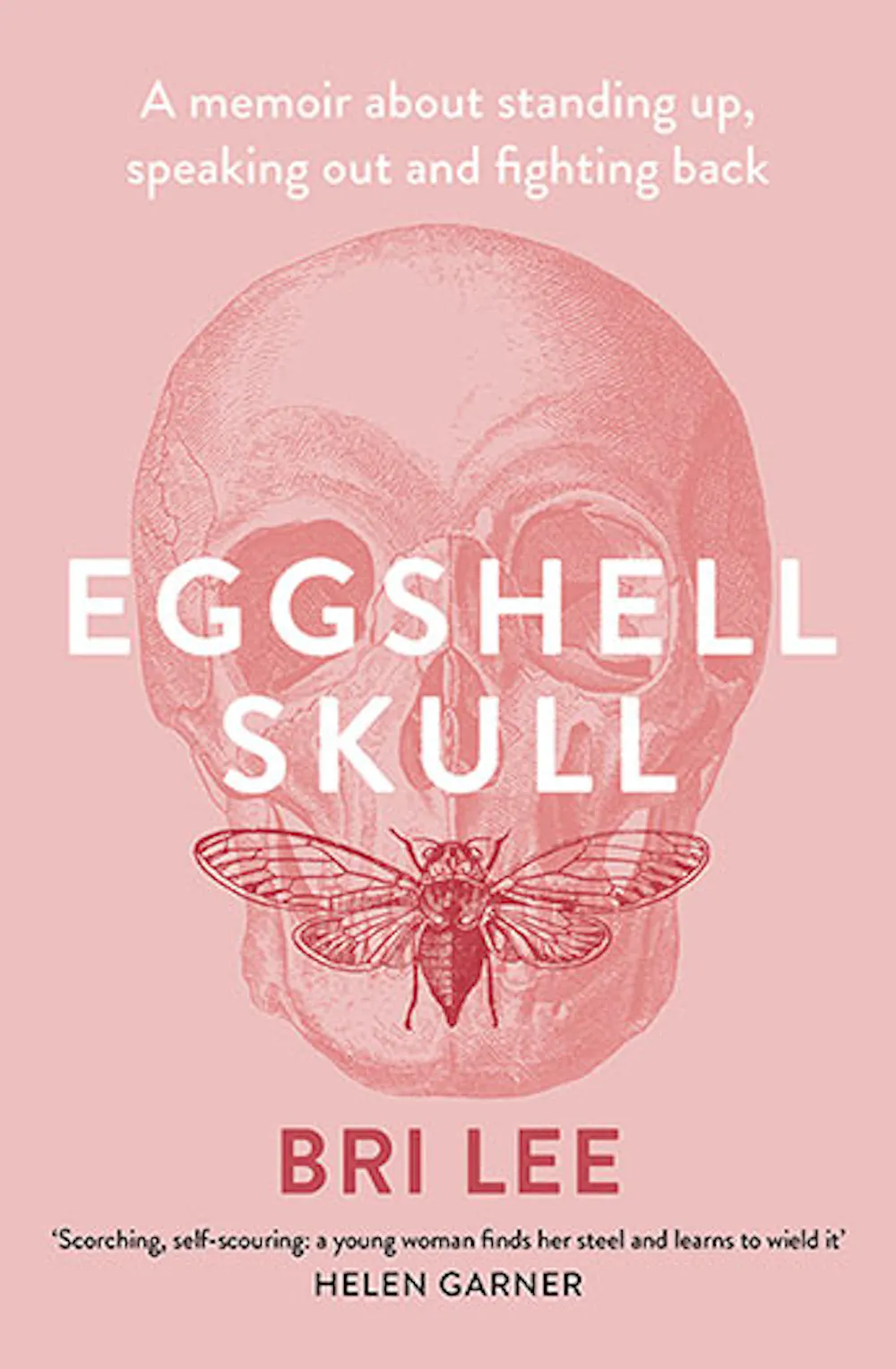
book cover: eggshell skull

Allen & Unwin

Sydney-based author, writer, and researcher Bri Lee witnessed justice and heartbreak while working as a judge’s associate in the Queensland District Court. Two years later, she took her own abuser to court.

Although the abuse occurred in childhood, Lee pursued a conviction for the perpetrator (a family friend) in young adulthood. In her 2018 book, she acknowledges that the longer the time between an incident and investigation, the more potential hurdles may arise; her journey for justice is far from straightforward.

Lee acknowledges this in the way she explores personal, public, and legal discourse surrounding abuse. She jumps back and forth in time, and weaves her story with others in the Australian legal system in a blend of journalistic and personal storytelling. This approach also acknowledges trauma can affect memory. Details can be unbearably clear, difficult to remember, or both.

Through poetic reflection, and searing critique, Lee carves a space for her story.


Read more:
This week’s news has put sexual assault survivors at risk of ‘secondary trauma’. Here’s how it happens, and how to cope


2. No Matter Our Wreckage by Gemma Carey
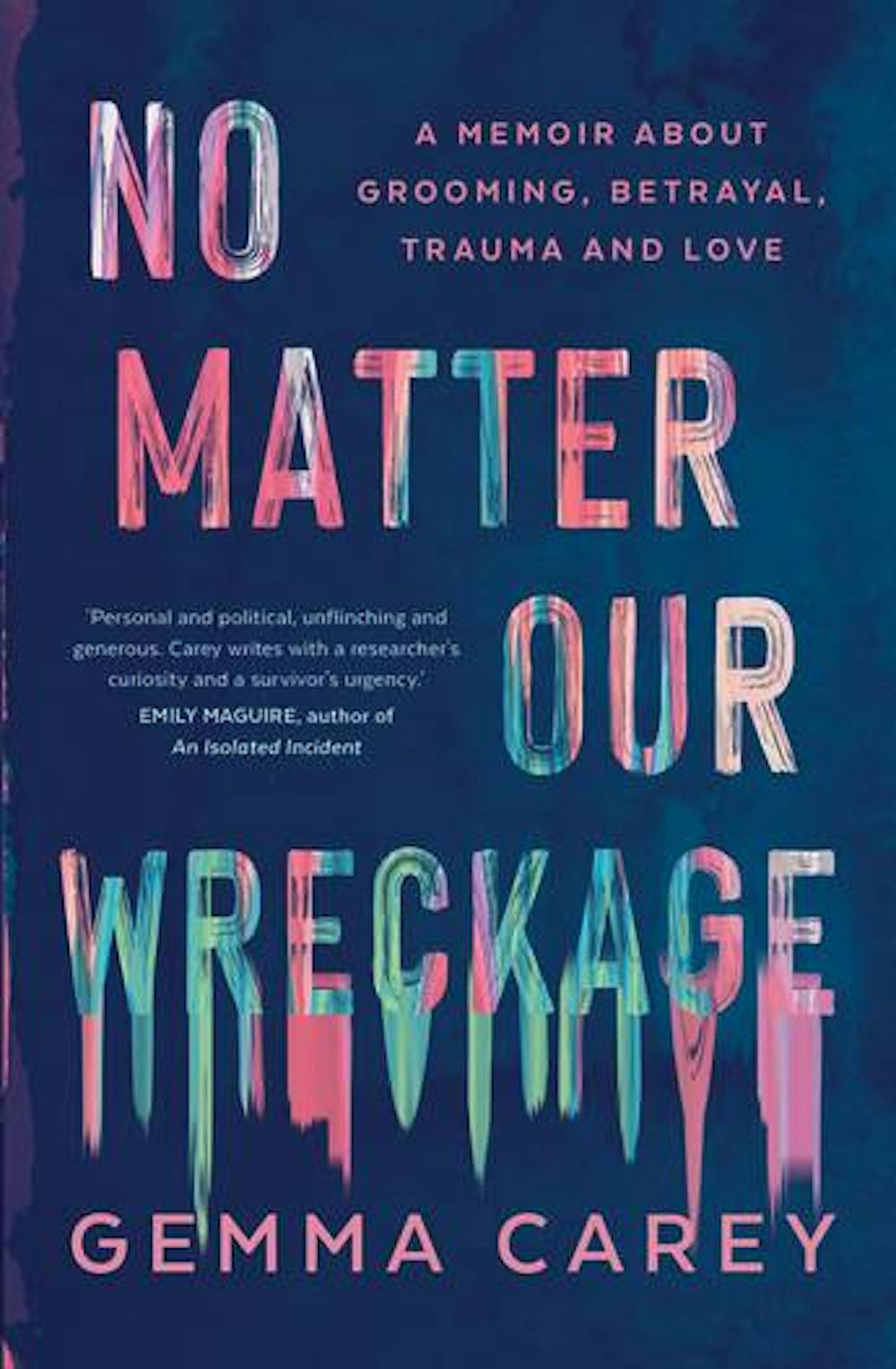
book cover: No matter our wreckage

Allen & Unwin

From age 12, Gemma Carey was groomed and abused by a man twice her age. In young adulthood, Carey discovers her mother knew about the abuse. When her mother dies, the enduring effects of this betrayal surface.

Family memoirs are often taboo; family memoir about child abuse and complicity even more so. Despite fraught themes, the Sydney-based author and academic writes with rigour and honesty. Her 2020 memoir asks us to examine social — and family — structures which allow these injustices.

Carey’s tone is dark but inquisitive. She speaks directly to readers, incorporating research, and unpicking the threads of trauma and grief.

Carey emphasises writing about abuse doesn’t always fit a mould. In an interview, she explains, “Writing trauma stories that will change societal narratives around abuse and victims involves showing the contradictions that exist in trauma and grief”.

In her book, she reflects on her younger self,

I was broken and trying to work out how to fix myself … no one had ever given me the tools… I had to figure it out on my own.

This rebuilding took time. At 12, Carey buried her experience, at 17 she successfully took the perpetrator to court, in adulthood, she wrote her memoir.


Read more:
Friday essay: why we need children’s life stories like I Am Greta


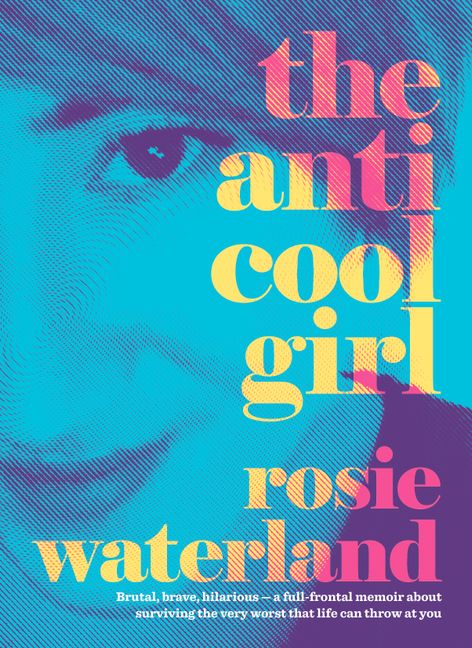
3. The Anti-Cool Girl by Rosie Waterland
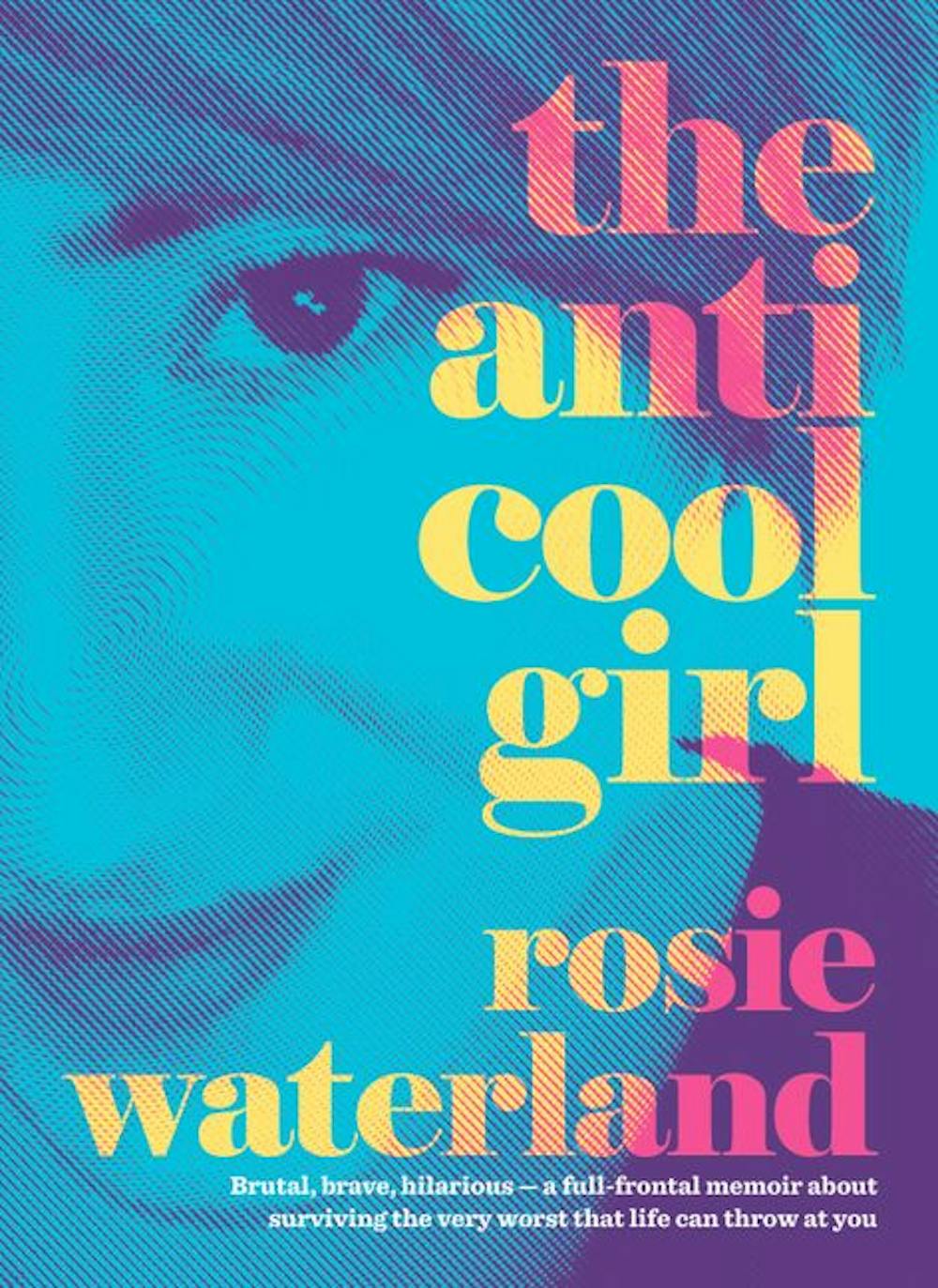
book cover: the anti cool girl

Harper Collins

In The Anti-Cool Girl (2018), comedian and writer Rosie Waterland reveals a turbulent childhood; drug and alcohol-addicted parents, absent family, death and loss, poverty, mental health struggles, and sexual abuse experienced within the Australian foster care system.

Waterland writes unflinchingly. She tackles difficult subjects with intelligence and humour. Each chapter is addressed to herself: “You will be in rehab several times before you’re ten years old”, or “Your foster dad will stick his hands down his pants, and you will feel so, so lucky”. Like Carey, Waterland acknowledges trauma often manifests in ways which might seem “odd” or “unconventional” to others.

While comedic throughout, Waterland approaches her trauma with care and, understandably, anger. She later lamented that she was unable to name her abuser, due to fears of litigation.

The Anti-Cool Girl, blending humour and pain, remains a testament to Waterland’s endurance and survival.

4. The Girls by Chloe Higgins

book cover: the girls

Pan Macmillan

Chloe Higgins’ sisters — Carlie and Lisa — died in a car accident when Higgins was 17. In her 2019 memoir Higgins — a Wollongong-based author and academic — asks us to consider the nature of ongoing grief and the way trauma stretches over different experiences.

Higgins’ grief influences her sexual experiences in often troubling ways — but the way she discusses it is revolutionary. She explores the weaponisation of sex, how it is a form of self-harm; sex and substance abuse, and the pleasures and pressures of sex work.

She jumps between stories of gentility (caring lovers, exploration, sex clients who felt more like friends) and horror stories featuring coercion and fear, threats, and sex without consent. Higgins examines her own experiences and links them to memory, identity, and control.

In her Author’s Note, Higgins reflects: “Publishing this book is about stepping out of my shame”.

These are not the only parts of me, but they are the parts I’ve chosen to focus on … Since that period of my life, I have begun to recover.

These books signal the importance of memoir as a platform where personal trauma stories are told, reclaimed, and witnessed. They are a valuable (and intimate) contribution to the conversation about trauma and sexual abuse in Australia.


Read more:
Inside the story: writing trauma in Cynthia Banham’s A Certain Light


The Conversation


Marina Deller, PhD Candidate, Flinders University

This article is republished from The Conversation under a Creative Commons license. Read the original article.
Unknown's avatar

The Boundaries of a Memoir


The link below is to an article that looks at the boundaries of memoirs.

For more visit:
https://lithub.com/what-are-the-boundaries-of-a-memoir/

Unknown's avatar

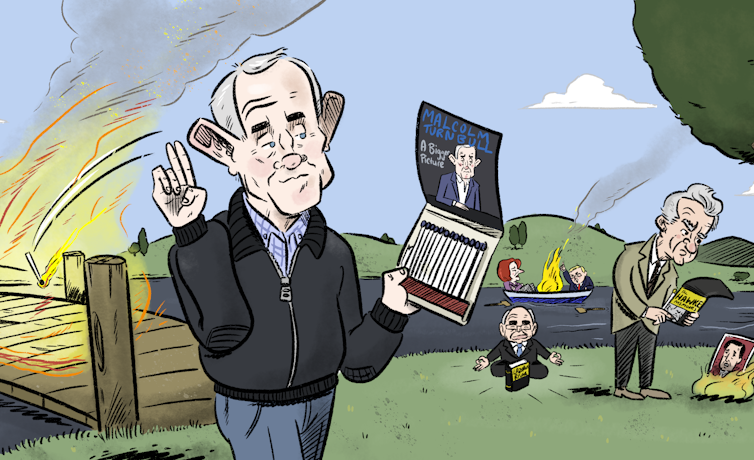
Secrets and scandals: where Malcolm Turnbull’s memoir fits in the rich history of prime ministerial books


Wes Mountain/The Conversation, CC BY-ND

Joshua Black, Australian National University

Landing in the middle of the coronavirus pandemic, it may seem strange former prime minister Malcolm Turnbull’s memoir has generated so much political controversy.

Turnbull has been accused of hypocrisy and championing socialism, and has been threatened with expulsion from the Liberal Party.


Read more:
Politics with Michelle Grattan: Former Prime Minister Malcolm Turnbull on his autobiography, ‘A Bigger Picture’


In A Bigger Picture, Turnbull deals candidly with his antagonists inside the Coalition, who fought him bitterly on the same-sex marriage reform and climate policy. Similarly, he names and shames those he blames for the leadership insurgency of August 2018. All of this was expected, but none of it must please the current government.

But is the book any more inflammatory than previous prime ministerial memoirs?

Political controversy is a trademark of political memoir publishing in Australia. A Bigger Picture is just another page in that story.

Until the 1960s, prime ministerial memoirs were the exception, not the rule. Between 1945 and 1990, just three former prime ministers chose to publish books about their political lives. Two of them – Billy Hughes and Robert Menzies – produced two books each, and both political veterans sought to avoid “telling tales out of school”. Both seemed more interested in foreign affairs, particularly our imperial relationship to the UK in the case of Menzies.

The dismissal of the Whitlam government provoked both Sir John Kerr and Gough Whitlam to publish their memoirs. After reading extracts of Kerr’s Matters for Judgement, Whitlam decided to “set the record straight immediately” by writing The Truth of the Matter. His second book, The Whitlam Government, was also designed to make a political splash. Promising to explain the “development and implementation” of his policy program, the book was timed for release on the tenth anniversary of the dismissal itself, ensuring maximum publicity.

Since then, political controversy has accompanied prime ministerial memoirs, in part because incumbent political parties and leaders have had a vested interest in how these books might affect their popularity.

In his 1994 political memoir, Bob Hawke accused his rival and successor, Paul Keating, of calling Australia “the arse-end of the world” during an argument about the Labor leadership. Further, Hawke accused Keating of failing to support Australia’s involvement in the Gulf War against Saddam Hussein’s invasion of Kuwait in 1990.

Keating, who was attacked in parliament in October 1994 over the claims, called both allegations “lies”. Hawke offered to take a lie-detector test to prove his sincerity. Senior ALP figures recorded their outrage at Hawke’s memoir. But Hawke hit back, describing them as “precious self-appointed guardians of proper behaviour”.

Hawke’s predecessor also damaged his relationship with his own party in the process of publishing his memoirs. Malcolm Fraser’s Political Memoirs, written with journalist Margaret Simons, was recognised as one of Australia’s top ten books of 2010. His outspokenness – in the book and in his post-prime-ministerial life more generally – earned him many attacks from Coalition MPs.

John Howard handled the politics of his memoirs better than most politicians. Though the book was antagonistic toward his former treasurer, Peter Costello, Howard promised to “deal objectively” with events and relationships in Lazarus Rising. Ever the party stalwart, Howard and his publishers re-issued the book after the 2013 election with a new chapter that touted Tony Abbott’s “high intelligence, discipline […] good people skills”.

Kevin Rudd and Julia Gillard both publicly took aim at one another in their memoirs, which made for plenty of media fodder. In My Story, Gillard described Rudd’s leadership as a descent into “paralysis and misery”. Rudd returned fire, calling her book her “latest contribution to Australian fiction”. However, he was unable to dent the book’s commercial success.

Four years later, Rudd in The PM Years accused Gillard of plotting “with the faceless men” to become prime minister. In a bid to patch over the historic rifts, he subsequently promised the Labor Party’s 2018 National Conference that the “time for healing” had come.

Critics of Turnbull’s book – such as Sky News’ Andrew Bolt and 2GB’s Ben Fordham – have argued that he and his publishers, Hardie Grant, were wrong to “betray confidences” and divulge “private conversations”.

In reality, political memoirs have always pushed against conventions of political secrecy. In the 1970s, British cabinet minister Richard Crossman published his Diaries, which included detailed descriptions of how cabinet functioned. The British establishment subsequently conducted the Radcliffe review into political memoirs and diaries. It found such material should be kept secret for 15 years, but that civil servants could do little to stop their political masters from publishing.

In 1999, Australia’s Neal Blewett was warned that publishing his A Cabinet Diary, recorded seven years earlier, could lead to prosecution under the Crimes Act because it revealed confidential cabinet discussions. Calling the public service’s bluff, Blewett published anyway. He explained in the book that “a few egos will be bruised, but cabinet ministers are a robust lot”. His diary shed significant light on the trials and tribulations of a ministerial life.

Since then, countless MPs and ministers have published books that claim to accurately represent personal conversations, some based on private notes (as Costello claimed in his memoirs), others on diary entries (as is the case in Turnbull’s book). In recent years, politicians have reproduced text messages and email exchanges in their books, as Bob Carr did in his 2014 book, Diary of a Foreign Minister. In each version of history, the author is the essential policymaker.


Read more:
View from The Hill: Malcolm Turnbull gives his very on-the-record account of Scott Morrison


In his book, Turnbull reveals private conversations and WhatsApp exchanges with colleagues, world leaders, public servants and more. His accounts of cabinet discussions are hardly ground-breaking: cabinet debates about the economy and national security under the Abbott government, for instance, were thoroughly detailed in Niki Savva’s The Road to Ruin, while the acrimonious debates about energy policy, same-sex marriage and home affairs inside the Turnbull government were laid bare in David Crowe’s Venom. Similarly, Turnbull’s criticisms of News Corporation’s biased reporting have been aired elsewhere, and stop short of Rudd’s argument in The PM Years that Rupert Murdoch should be the subject of a royal commission.

Turnbull’s book is another addition to the history of incendiary political memoir publishing in Australia. Political parties and their media associates have confirmed once again that a successful parliamentary memoir requires deft political management.

Ultimately, A Bigger Picture is not the compendium of revelations that some may perceive. Instead, it is another picture of politics in which “character” and “leadership” reign supreme at the expense of all other political forces.The Conversation

Joshua Black, PhD Candidate, School of History, National Centre of Biography, Australian National University

This article is republished from The Conversation under a Creative Commons license. Read the original article.

Unknown's avatar

The Difference Between Memoir and Autobiography


Unknown's avatar

Whose line is it anyway? The murderer, his mother, and the ghost writers


Christopher Kremmer, UNSW Australia

This is a story about stories. Who writes them. Who owns them and what happens when the two things get muddled. It’s a story about true stories, life stories, stories written by amateurs and professionals. It sounds a warning to the growing number of readers who aspire to publish their own memoirs, and those who write the lives of others.

“Who owns the story?” is the question that lies at the heart of Sonya Voumard’s new book The Media and the Massacre, published this month to coincide with the 20th anniversary of Martin Bryant’s murderous rampage at Port Arthur in Tasmania.

In it, Voumard ponders the case of Bryant’s mother, Carleen, a woman widely reviled by genetic association for the sins of her son, but driven as a mother to tell her side of the story.

It goes like this. After two suicide attempts triggered by the reporting of the 10th anniversary of the massacre, Carleen Bryant writes a 15,000 word memoir of her life before and since that terrible Sunday, April 28th 1996, when Martin Bryant slaughtered 35 men, women and children.

She is not a fluent writer, so friends suggest she seek help from professionals. A literary agent is found, and a journalist, Robert Wainwright of The Sydney Morning Herald is recommended. A $200,000 book deal with a major publisher is mentioned.

Ms Bryant forwards a copy of her memoir to Wainwright, but there are hiccups early on when he passes it on – allegedly without her knowledge – to her daughter, seeking the daughter’s involvement in the project.

A June 2007 meeting in Hobart, at which Wainwright’s wife – another Herald journalist Paola Totaro – joins the writing team, smooths over the trouble. However, when the journalists’ nine-page draft outline of their proposed book – entitled Martin My Son – arrives, relations deteriorate rapidly.

In Voumard’s words, Carleen Bryant became “convinced that the story they (the journalists) wanted to tell was not hers but theirs”. In October 2007, Bryant withdrew from the project, and requested that Wainwright and Totaro return her personal documents and other materials. They did so some months later, by which time all contact between the parties had ceased.

There was, therefore, as Voumard tells it, considerable surprise on the part of Bryant and her friends when, in May 2009, Wainwright and Totaro published Born or Bred? Martin Bryant: the making of a mass murderer. In it, they included at least 29 extracts from her as yet unpublished memoir, allegedly without her permission.

The ins and outs of the legal proceedings that followed cannot be briefly summarised. They are, in any case, subject to the confidentiality clause of an out of court settlement. Bryant also complained to the Australian Press Council, the Media Entertainment and Arts Alliance (MEAA), the Sydney Morning Herald and Fairfax Books claiming breach of copyright. But the publication and sale of Born or Bred? was not impeded.

Voumard, a Sydney-based former journalist and now a writer and academic, and some of the people she quotes in her book, including the criminal lawyer Greg Barns and Ms Bryant’s lawyer Steven Lewis of Slater and Gordon, feel that an injustice was done. Wainwright and Totaro reportedly claimed they were given the memoir “freely and without caveat”, but in Voumard’s view, Bryant had simply agreed to the preparation of a draft outline.

The literary intersections of journalism, creative non-fiction, book publishing and “ghost-writing” are crowded, with a variety of conflicting interests but no single code of ethics.

Is a journalist bound by copyright laws when someone eager to tell own their story hands them their unpublished account of a highly newsworthy subject without conditions attached? Are they bound by their various journalism codes of ethics when writing books, rather than news stories?

As Wainwright and Totaro wrote in the preface to their book, it was Carleen Bryant who withdrew from “their” project, not the other way around. “When she withdrew, the project turned instead into a hunt for the truth and answers.”

This statement, however, sits awkwardly with what appears to have been a lack of any attempt at fact-checking with their albeit uncooperative star source in the months immediately prior to publication.

Voumard’s book, though far from perfect – neither Bryant nor the journalists could be persuaded to talk to her – it is a useful contribution to our understanding of these important issues and the questions they raise.

Although primarily focused on the Bryant-Wainwright-Totaro conflict, she engages with a range of other journalistic and literary approaches to reporting on violent crime, including Carol Altmann’s After Port Arthur (2006).

Voumard talks to a number of senior Australian journalists who reflect on the fact that Port Arthur inspired a new and more mindful approach to the impact of their craft when interviewing traumatised people – a theme later expanded on by Columbia Journalism School’s Dart Center Asia-Pacific.

As a journalist herself, Voumard knows where to look for the Fourth Estate’s ethical weaknesses, and is critical of her own.

“Not all journalists are the same …,” she writes. “At our best, we do good work – bear witness, seek truth, give voice, explain. At our worst we exploit our subjects.”

For Carleen Bryant, having her say via the agency of professional writers was a once in a lifetime chance to achieve a longed for public understanding of the cross she has had to bear.

As one of her close friends tells Voumard, Bryant

wanted to establish herself in the minds of the people of Hobart as she was, rather than as others believed. She wanted them to know that she wasn’t a terrible mother, or the mother of a monster, that she did her best in every way for her son, that she had a loving husband.

But when a story involves hot button issues like mass-murder, journalists’ ethical compasses veer toward the perceived “public interest”, an approach that is not known for its sensitivity to the feelings or views of anyone associated with the killer.

Journalists remain publishers’ first pick for ghost-writing assignments because they write quickly and colourfully, are not afraid of imposing a given meaning on a set of available facts, know what makes headlines and meet their deadlines. But for some stories, that is not the ideal approach.

As Voumard writes,

Carleen Bryant lost the ability to say to others who she was. Her life story and that of her family had been appropriated, attacked, raked over and profited from by so many media organisations for so many years that her identity effectively disintegrated.

Ms Bryant, whose only son was sentenced to 1,035 years prison without parole, has spent most of the past 20 years living alone in a caravan park an hour’s drive north of Hobart. She eventually published her own book, My Story (2010), with a small, but empathetic Hobart-based publishing house

The publisher, Michael Ludeke, took the unusual step of inviting his new author to collect her book from the printers, telling her,

You should come and see this too. This is your book. The people at the printers would like to meet you.

A happy, if not perfect ending to an amateur life writer’s long struggle to be heard.

The Conversation

Christopher Kremmer, Senior Lecturer in Journalism, School of the Arts & Media, UNSW Australia

This article was originally published on The Conversation. Read the original article.

Unknown's avatar

How to Write Memoirs


The link below is to an article that takes a look at how to write memoirs.

For more visit:
http://www.huffingtonpost.com/lj-charleston/how-to-write-memoir_b_7853654.html

Unknown's avatar

100 Biographies and Memoirs


The link below is to a listing of Amazon’s 100 biographies and memoirs to read in a lifetime.

For more visit:
http://www.amazon.com/100biographies

Unknown's avatar

Article: Taliban Victim Malala Yousafzai Writing Memoir


Unknown's avatar

Article: Great Memoirs


The link below is to an article that looks into what makes a great memoir.

For more visit:
http://www.huffingtonpost.com/holly-robinson/writing-a-memoir_b_1772696.html

Unknown's avatar

Free Book: KFC Republish Colonel Sanders’ Memoir


The link below is to an article concerning a memoir by Colonel Harland Sanders, the founder of Kentucky Fried Chicken. It is available for free via Facebook. To get it you need to like KFC on Facebook and authorize the app. With that being the case, you could argue it isn’t quite free.

For more visit:
http://www.mediabistro.com/galleycat/kfc-to-republish-colonel-sanders-memoir-on-facebook_b52390