
Unknown's avatar

Guide to the classics: The Great Gatsby


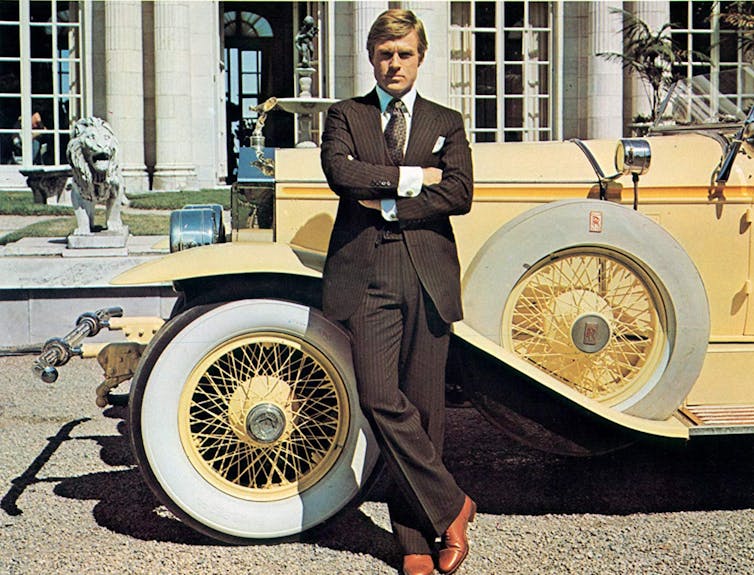
Robert Redford played the golden Gatsby in 1974.
IMDB

Sascha Morrell, Monash University

The Great Gatsby, F. Scott Fitzgerald’s 1925 masterpiece of the Jazz Age, ushers readers into a corrupt but glittering world of cocktails, fast cars, stolen kisses and broken dreams. Status anxiety and conspicuous consumption generate a dazzling, often surreal poetry as the novel unfolds over a single summer in Long Island, New York. Beneath them trembles an ominous sense of malaise.

The novel is narrated in the first-person by Nick Carraway, a well-to-do Yale graduate from the Midwest, whose limited acquaintance with the millionaire Jay Gatsby is the reader’s only window onto the mysterious title character.

Fitzgerald’s editor Max Perkins complained to the author that Gatsby’s characterisation was too vague — that readers “can never quite focus upon him” — but this criticism missed the point. Jay Gatsby is not a man but “an unbroken series of successful gestures”, the product of an age — not unlike today’s culture of Instagrammable celebrity — in which identity is less a matter of innate qualities than of projecting an image.

Fittingly, the only God invoked in Gatsby appears on a billboard, in the famous image of oculist Dr J.T. Eckleberg’s gigantic blue eyes looking down on events in admonition.
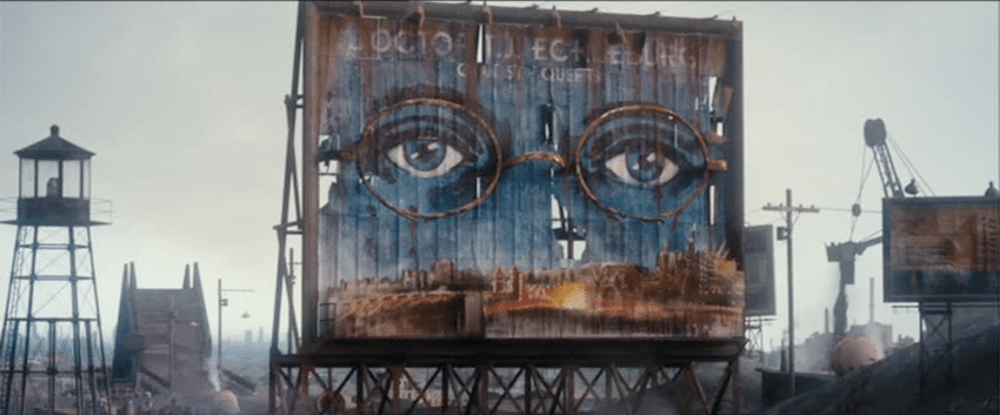
Oculist Dr J.T. Eckleberg’s all-seeing eyes, here in Baz Luhrmann’s film, look down on events.
ResearchGate, CC BY

The Great American novel

Although short in length, The Great Gatsby is widely recognised as an exemplar of that most elusive of literary phenomena: the Great American Novel. It achieves aesthetic greatness as a self-conscious tour de force, the product of Fitzgerald’s desire “to write something new – something extraordinary and beautiful and simple [and] intricately patterned” as he wrote in a 1922 letter to Perkins.

Its American-ness is likewise self-conscious: one of Fitzgerald’s working titles was Under the Red, White, and Blue, and Nick’s account of Gatsby’s rise and fall exposes deep flaws and fissures underlying the American Dream of unlimited social mobility.
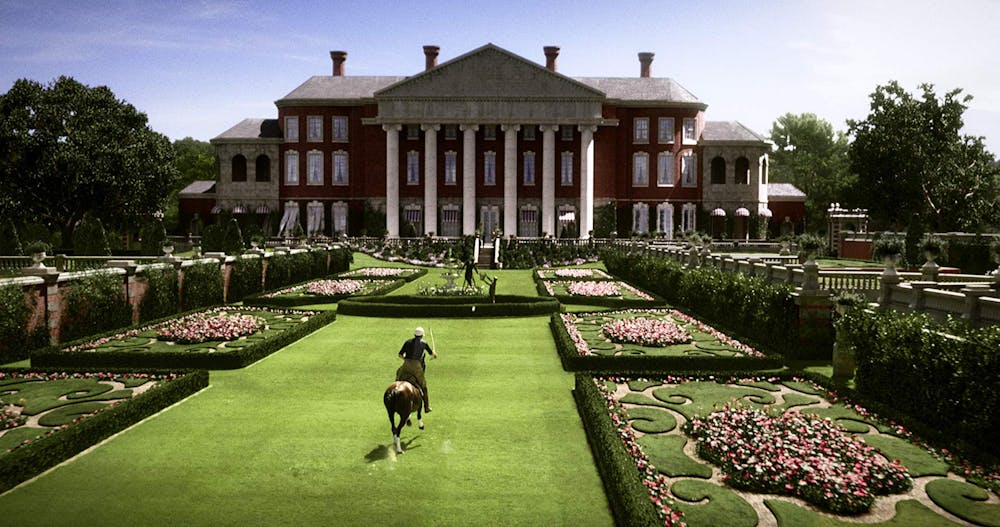
Jay Gatsby’s mansion represents the realisation of the American dream.
IMDB/Warner Bros. Pictures

Affirming the presence of class prejudice in the land where all men were supposedly created equal, Gatsby constructs a fragile romance across the gulf between old and new money — a gulf that separates Gatsby from his love interest Daisy and her husband Tom Buchanan. Whereas Daisy and Tom come from established families, Gatsby lacks pedigree. The sources of his vast wealth are the subject of much speculation as his colossal mansion dwarfs those of other millionaires with freshly-minted fortunes.

Erosion of orthodoxies

Like many of his modernist contemporaries, Fitzgerald was fascinated by the erosion of old orthodoxies and traditional constraints in the aftermath of the first world war. For women, many taboos on dress and deportment were lifting, and Gatsby’s female characters play sports, dance wildly, and drink and smoke to excess — even in the midst of Prohibition. Yet for all its “spectroscopic gaiety”, such license brings little fulfilment.
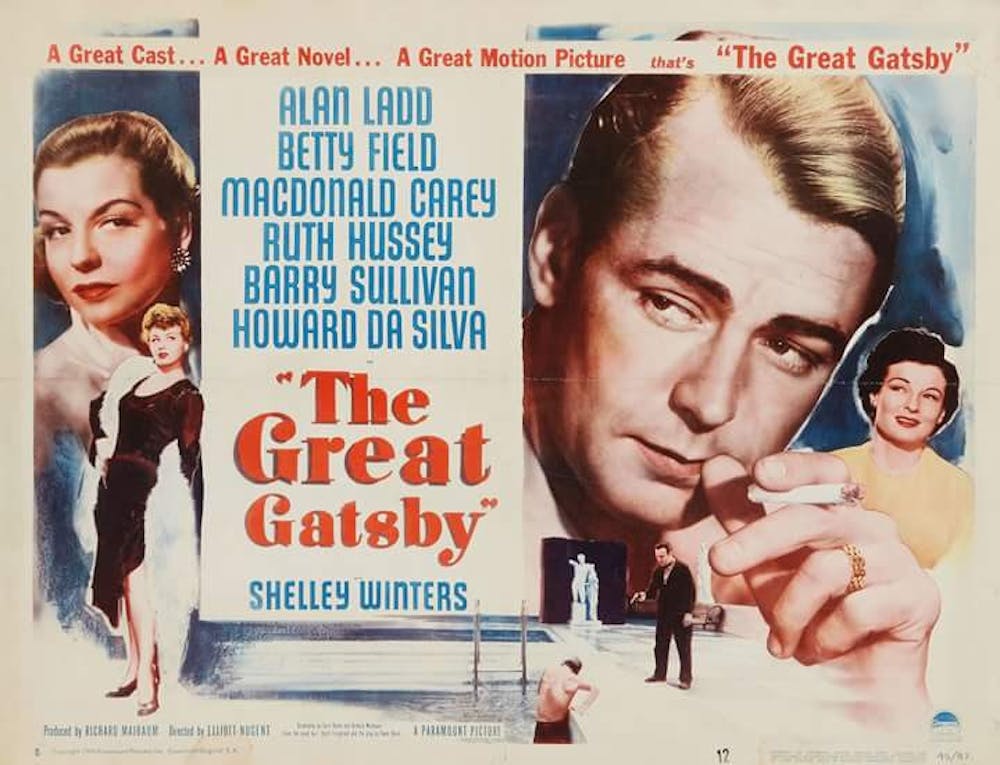
Shelley Winters starred in the 1949 film adaptation.
IMDB/Paramount

In Chapter 1, the jaded Daisy expresses a sense of crippling ennui: “I think everything’s terrible anyhow […] And I KNOW. I’ve been everywhere and seen everything and done everything […] God, I’m sophisticated!”

Those with the right connections can afford to be amoral. When Daisy accidentally runs down Myrtle and flees the scene in Gatsby’s “monstrous” car, Tom manages a cover-up, shifting the blame onto Gatsby. As Nick reflects:

They were careless people, Tom and Daisy — they smashed up things and creatures and then retreated back into their money or their vast carelessness […] and let other people clean up the mess they had made.

Social mobility and the question of race

In the year of Gatsby’s publication, US President Calvin Coolidge announced “the chief business of the American people is business”, and in Fitzgerald’s novel it seems that “the pursuit of happiness” — that vague third term in the Declaration of Independence — has been reduced to the pursuit of material success.
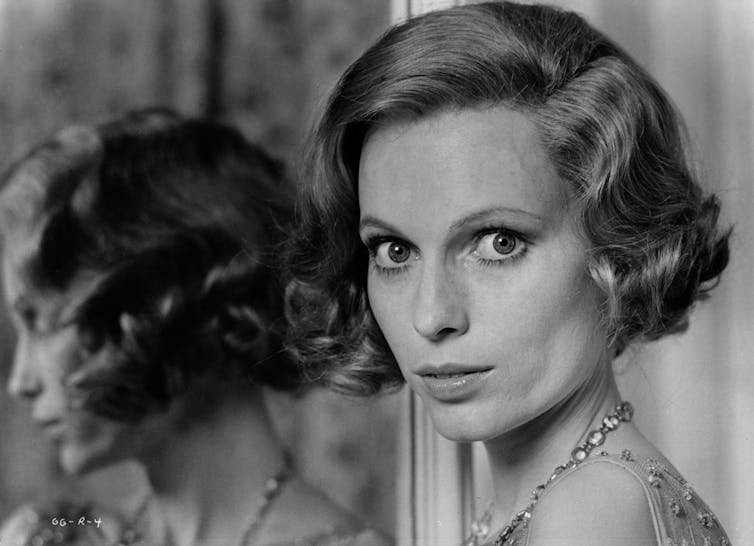
Daisy, played in 1974 by Mia Farrow, is a blue-blooded society belle.
IMDB

Even romance and tragedy obey the logic of boom and bust. Nick reports in stockbroking language that Gatsby’s failure “temporarily closed out my interest in the abortive sorrows and short-winded elations of men”, and Gatsby’s love for Daisy — a golden girl whose voice is “full of money” — is as deeply rooted in class and material aspirations as in sexual or personal attachment.

He desires not only Daisy but what winning her would symbolise. Indeed when the penniless Gatsby first met her, Daisy’s social elevation as a Kentucky debutante is said to have “increased her value in his eyes”.

Gatsby’s publication coincided with a high water mark of racism and xenophobia in the United States. The Johnson-Reed Immigration Act of 1924 introduced strict immigration quotas, while the revitalised Klu Klux Klan peaked at four million members in the same year. The novel has drawn criticism for its marginalisation of African Americans: one would hardly know from Fitzgerald’s novel that the Harlem Renaissance was underway. Fitzgerald is credited with naming the Jazz Age, but largely erases its origins.

Gatsby does lampoon racial bigotry through Tom Buchanan, who spouts “impassioned gibberish” about “the white race” being submerged. Fitzgerald alludes here to two influential eugenicist studies of the period, Madison Grant’s The Passing of the Great Race (1916) and Lothrop Stoddard’s The Rising Tide of Color (1920).

Nick calls Tom a “prig”, but he too associates race with class difference when the spectacle of “three modish negroes” driven by a “white chauffeur” prompts his reflection that this is a world where “anything can happen … even Gatsby”.

Sensuous prose

Fitzgerald’s prose is never more richly sensuous than when dealing with the strange alchemy of affluence, and the film adaptations by Jack Clayton (1974) and Baz Luhrmann (2013) struggle to do justice to Fitzgerald’s verbal pyrotechnics.

Even the intense colour and movement of Baz Luhrmann’s Gatsby struggled to match Fitzgerald’s prose.

How can one portray “a scarcely human orchid of a woman” sitting in “ghostly celebrity” under a white plum tree, as a Hollywood actress is described? Like the cover of the novel’s first edition, Gatsby’s halls are “gaudy with primary colors”. His parties swell to “yellow cocktail music”, while a “green light” shines from Daisy’s dock across the bay.
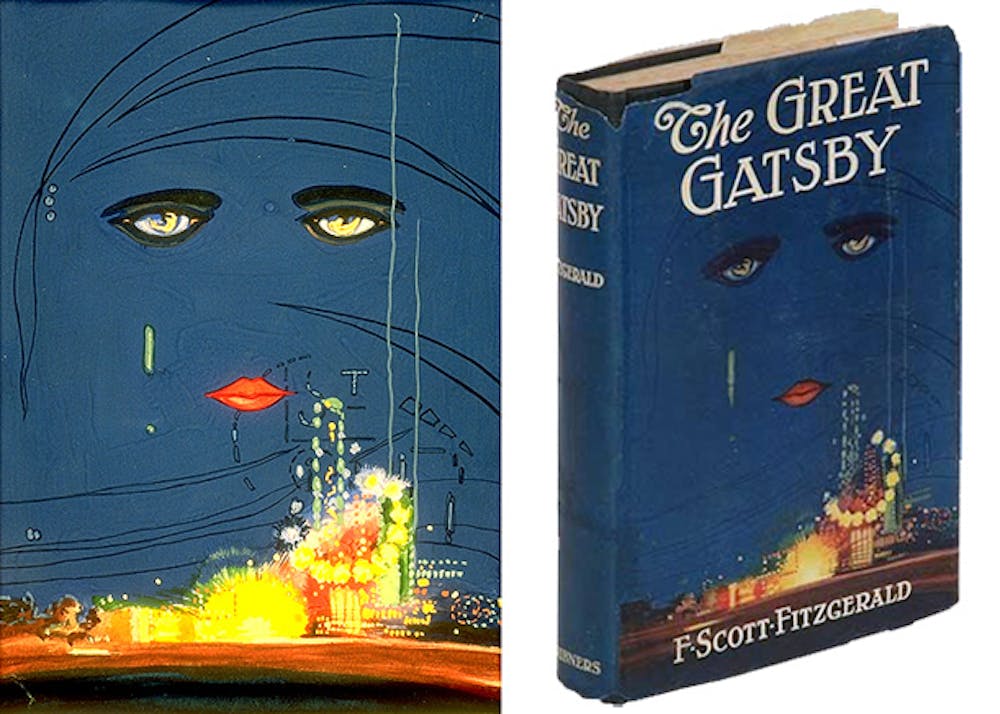
At left, Francis Cugat’s original gouache painting for The Great Gatsby. A first edition of the book (right).
USC

In the novel’s closing paragraphs, Gatsby’s faith in this green light symbolises the vagueness of an American commitment to an endlessly receding future glory: “tomorrow we will run faster, stretch out our arms farther”, Americans assure themselves, only to find themselves “boats against the current, borne back ceaselessly into the past”.

Indeed, Gatsby’s plan for the future is precisely to “repeat the past” by recovering “some idea of himself that had gone into loving Daisy … I’m going to fix everything just the way it was before”.

Neither Gatsby’s ambitions or the nation’s can stand much scrutiny. Even before his fall, Gatsby’s “dream […] was already behind him” in “the dark fields of the republic”, leaving a “foul dust” in its wake.

Still, what Nick most admires in Gatsby is his “heightened sensitivity to the promises of life” and Fitzgerald implies that this “extraordinary gift for hope” might be the essence of the American Dream.The Conversation

Sascha Morrell, Lecturer in English, Monash University

This article is republished from The Conversation under a Creative Commons license. Read the original article.
Unknown's avatar

What we can learn from reading Sylvia Plath’s copy of ‘The Great Gatsby’


File 20181204 34154 1i44dcg.jpg?ixlib=rb 1.1
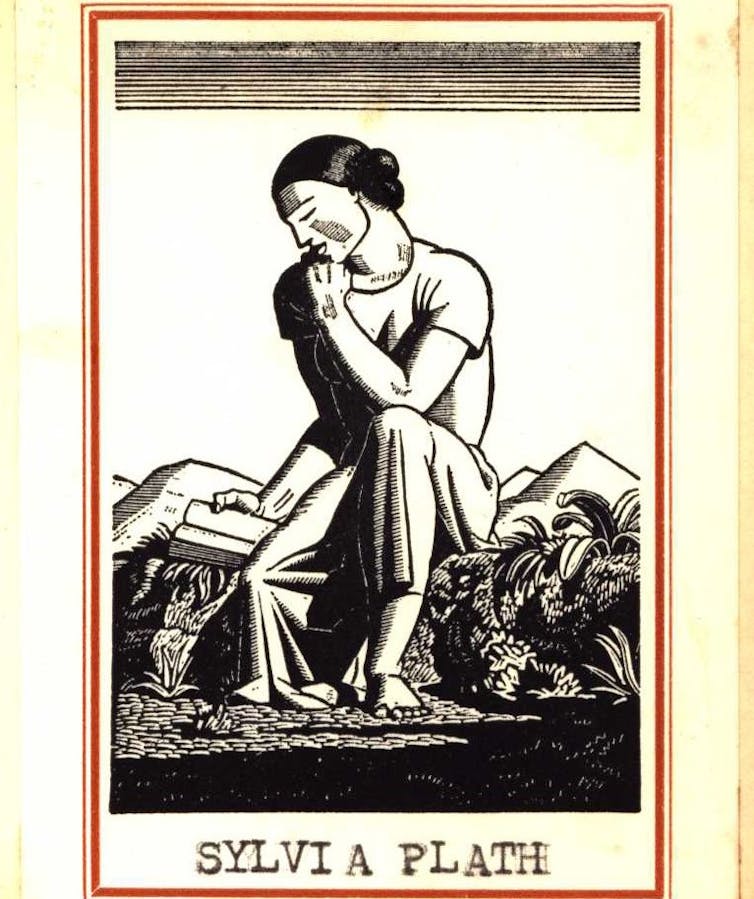
Sylvia Plath stuck this bookplate into the front cover of her copy of ‘The Great Gatsby.’
Source, Author provided

Jeanne Britton, University of South Carolina

As a rare books curator, I get to interact with first editions of novels I love, illustrated versions of my favorite poets’ works, and lavish editions of historical engravings.

In 2015, I started using the University of South Carolina’s first edition of “Lyrical Ballads” in my survey of British literature courses. Written by William Wordsworth and Samuel Taylor Coleridge, this collection of poems is commonly thought to have launched British Romanticism.

I would bring the volume to class to discuss its visual appearance as a printed text. But each time I shared the volume with a new group of students, we found ourselves drawn to the comments written in the book’s margins by its early owner, John Peace.

Peace was, I learned, an acquaintance of Wordsworth. And some of his comments in the margins of one of the volume’s most well-known poems, “Tintern Abbey,” explore the poem’s themes of memory, place and return.

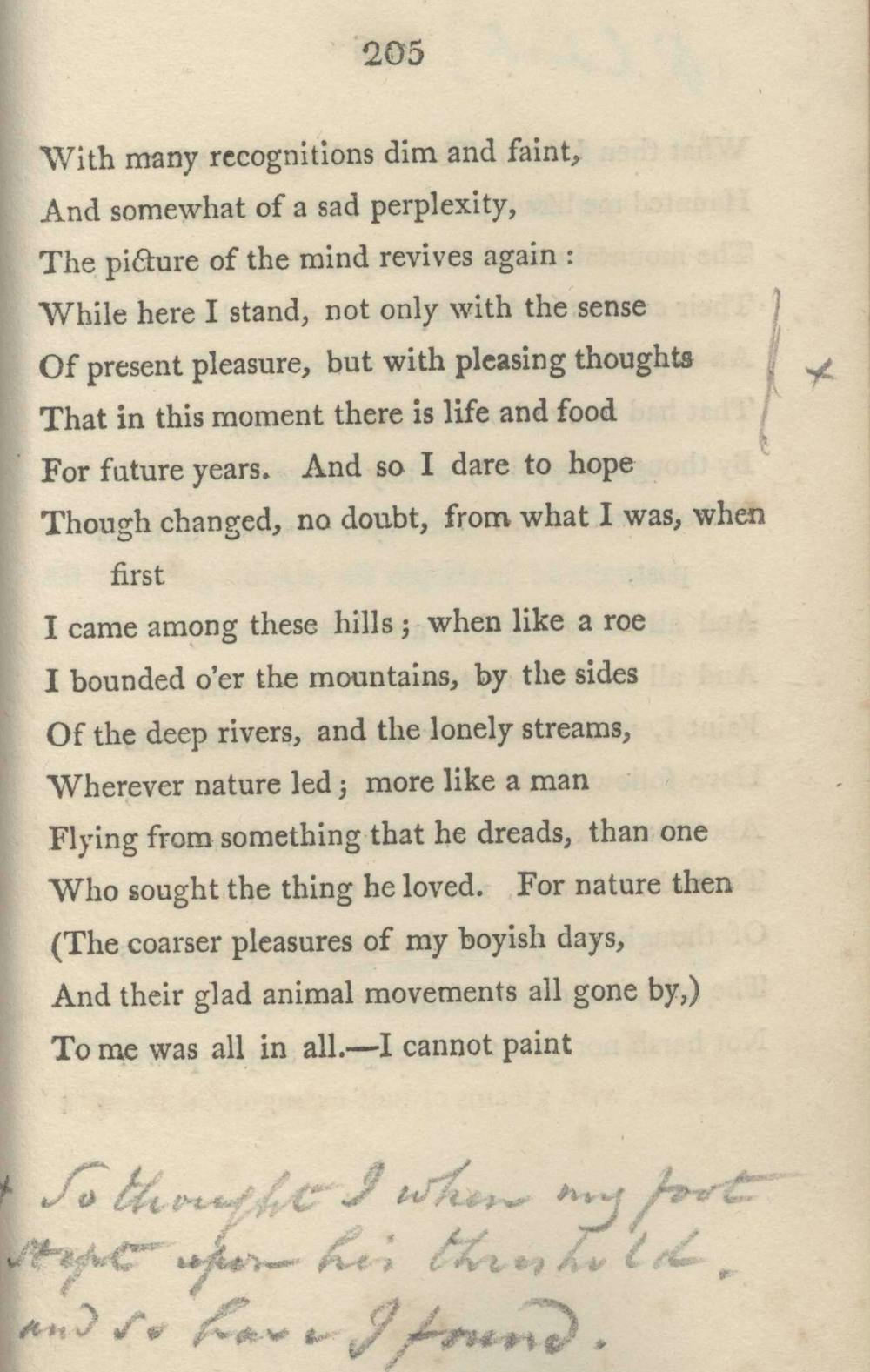
‘So thought I… and so have I found,’ John Peace writes, reacting to ‘Tintern Abbey.’
Source, Author provided

In this poem, Wordsworth describes his return to the Wye River valley after an absence of five years. He also recalls his memories of his first visit to the valley and looks forward to the memories this second visit will create.

“In this moment,” he writes, “there is life and food / For future years.”

When Peace responds to these lines, he describes a different kind of experience – visiting the poet in his home – in a similar way: “So thought I when my foot first step’t upon his threshold, and so have I found.”

It is a singular piece of literary history, and it’s one example of how the study of words written in the margins of historic texts – called “marginalia” – can illuminate the history of reading in new ways.

As prominent book historian Roger Chartier has noted, marginalia can reconstruct past reading experiences through the “sparse and multiple traces” ordinary readers left behind.

One particularly vivid example that is far from ordinary is Sylvia Plath’s copy of “The Great Gatsby.”

Reading ‘Gatsby’ with Sylvia Plath

Acquired by the University of South Carolina in 1994 from a former professor, the Matthew J. & Arlyn Bruccoli Collection of F. Scott Fitzgerald includes Fitzgerald’s personal ledger, a flask from his wife Zelda, and early drafts of his works.

It also includes an inexpensive 1949 edition of “The Great Gatsby.” Compared to other items in this collection, it might not seem like anything special.

But the book’s owner – and the words she wrote in its margins – are quite noteworthy.

The bookplate identifies Sylvia Plath as the owner of this copy, which she most likely read as an undergraduate at Smith College. Some marginal comments were probably notes she took during lectures about the novel. But others show the way Fitzgerald’s novel sparked her imagination and inspired her own work.

She wrote on almost every page, underlining passages in black and blue ink, drawing stars beside her favorites and occasionally writing notes – some quite arresting – in the margins.

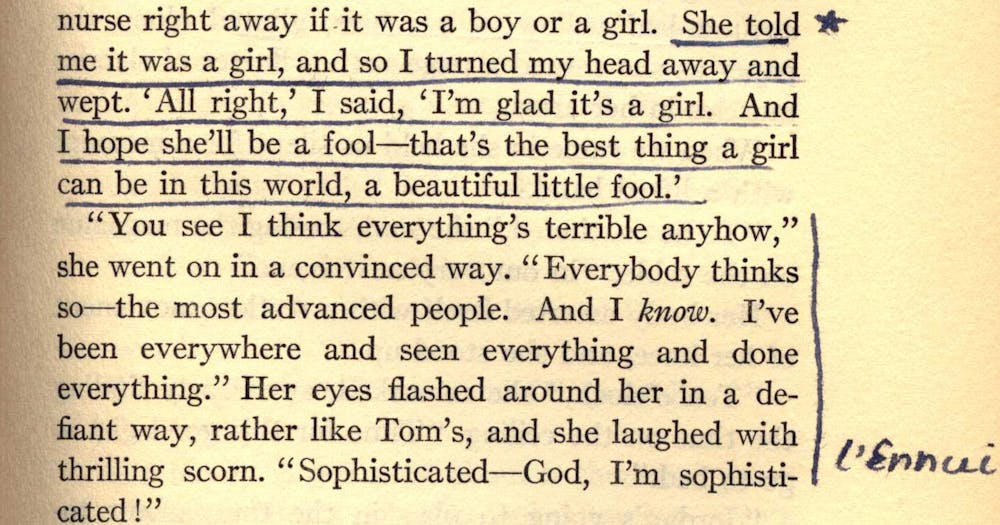
Plath wrote “L’Ennui” – a French word that describes a feeling of listlessness and boredom – next to a description of the character Daisy’s world-weary view of life: “I’ve been everywhere and seen everything and done everything.” “L’Ennui” would become the title of a poem Plath is thought to have written shortly after reading this novel.

Sylvia Plath wrote ‘L’Ennui’ – the title of a future poem of hers – in the margins of ‘The Great Gatsby.’
Source, Author provided

Other notes are, in the context of Plath’s painful life and tragic suicide, haunting.

She writes that Daisy shows a “desire for a secure future” – a longing that seems to have struck a chord for Plath.

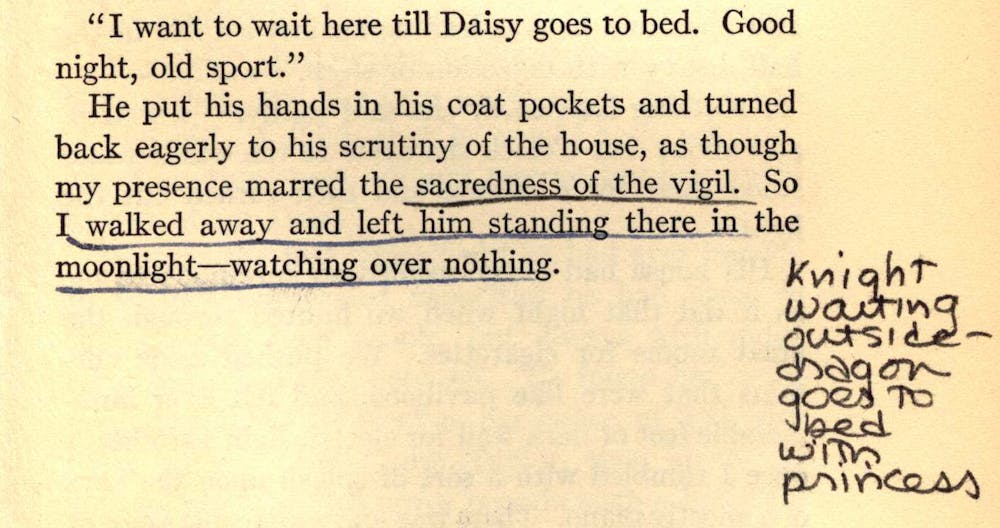
On another page, she hints at masculine aggression when she comments, as Gatsby watches the Buchanans from outside their home, “knight waiting outside – dragon goes to bed with the princess.” This was a motif that would reappear in her own life: In her recently published letters, Plath details the physical and emotional abuse her husband, the poet Ted Hughes, inflicted upon her in the months before her death.

Some of Plath’s notes are poignant, given what would transpire over the course of her life.
Source, Author provided

Sylvia Plath’s copy of “The Great Gatsby” speaks to the value of marginalia. As Makenzie Logue, a student of mine who is currently studying the volume, put it, preserving these notes means that you can “read The Great Gatsby with Sylvia Plath.”

Making marginalia accessible

In recent years, marginalia left by ordinary readers has become a subject of large-scale data collection efforts.

At the University of Virginia, English professor Andrew Stauffer leads a team that has made a book’s annotations, inscriptions and insertions discoverable as part of UVA’s online library catalog. Any user will be able to find such markings through a simple online search.

At the University of California, Los Angeles, librarians are developing ways to discover marginalia digitally – and quickly – across large digital collections.

Using the methods developed at the University of Virginia, my colleague Michael Weisenburg and I have organized searches for historical markings in library books at the University of South Carolina. Student workers and library staff have enhanced records for annotated volumes in the school’s online catalog.

While digital technology has made marginalia more accessible, digital reading has made the actual habit of writing in books much less common.

What would Sylvia Plath and John Peace have done if they had a Kindle? Would they have still left traces of their reactions to the texts – so valuable to scholars today – behind?The Conversation

Jeanne Britton, Curator, Irvin Department of Rare Books and Special Collections, University of South Carolina

This article is republished from The Conversation under a Creative Commons license. Read the original article.
Unknown's avatar

What we can learn from reading Sylvia Plath’s copy of ‘The Great Gatsby’


File 20181204 34154 1i44dcg.jpg?ixlib=rb 1.1
Sylvia Plath stuck this bookplate into the front cover of her copy of ‘The Great Gatsby.’
Source, Author provided

Jeanne Britton, University of South Carolina

As a rare books curator, I get to interact with first editions of novels I love, illustrated versions of my favorite poets’ works, and lavish editions of historical engravings.

In 2015, I started using the University of South Carolina’s first edition of “Lyrical Ballads” in my survey of British literature courses. Written by William Wordsworth and Samuel Taylor Coleridge, this collection of poems is commonly thought to have launched British Romanticism.

I would bring the volume to class to discuss its visual appearance as a printed text. But each time I shared the volume with a new group of students, we found ourselves drawn to the comments written in the book’s margins by its early owner, John Peace.

Peace was, I learned, an acquaintance of Wordsworth. And some of his comments in the margins of one of the volume’s most well-known poems, “Tintern Abbey,” explore the poem’s themes of memory, place and return.

‘So thought I… and so have I found,’ John Peace writes, reacting to ‘Tintern Abbey.’
Source, Author provided

In this poem, Wordsworth describes his return to the Wye River valley after an absence of five years. He also recalls his memories of his first visit to the valley and looks forward to the memories this second visit will create.

“In this moment,” he writes, “there is life and food / For future years.”

When Peace responds to these lines, he describes a different kind of experience – visiting the poet in his home – in a similar way: “So thought I when my foot first step’t upon his threshold, and so have I found.”

It is a singular piece of literary history, and it’s one example of how the study of words written in the margins of historic texts – called “marginalia” – can illuminate the history of reading in new ways.

As prominent book historian Roger Chartier has noted, marginalia can reconstruct past reading experiences through the “sparse and multiple traces” ordinary readers left behind.

One particularly vivid example that is far from ordinary is Sylvia Plath’s copy of “The Great Gatsby.”

Reading ‘Gatsby’ with Sylvia Plath

Acquired by the University of South Carolina in 1994 from a former professor, the Matthew J. & Arlyn Bruccoli Collection of F. Scott Fitzgerald includes Fitzgerald’s personal ledger, a flask from his wife Zelda, and early drafts of his works.

It also includes an inexpensive 1949 edition of “The Great Gatsby.” Compared to other items in this collection, it might not seem like anything special.

But the book’s owner – and the words she wrote in its margins – are quite noteworthy.

The bookplate identifies Sylvia Plath as the owner of this copy, which she most likely read as an undergraduate at Smith College. Some marginal comments were probably notes she took during lectures about the novel. But others show the way Fitzgerald’s novel sparked her imagination and inspired her own work.

She wrote on almost every page, underlining passages in black and blue ink, drawing stars beside her favorites and occasionally writing notes – some quite arresting – in the margins.

Plath wrote “L’Ennui” – a French word that describes a feeling of listlessness and boredom – next to a description of the character Daisy’s world-weary view of life: “I’ve been everywhere and seen everything and done everything.” “L’Ennui” would become the title of a poem Plath is thought to have written shortly after reading this novel.

Sylvia Plath wrote ‘L’Ennui’ – the title of a future poem of hers – in the margins of ‘The Great Gatsby.’
Source, Author provided

Other notes are, in the context of Plath’s painful life and tragic suicide, haunting.

She writes that Daisy shows a “desire for a secure future” – a longing that seems to have struck a chord for Plath.

On another page, she hints at masculine aggression when she comments, as Gatsby watches the Buchanans from outside their home, “knight waiting outside – dragon goes to bed with the princess.” This was a motif that would reappear in her own life: In her recently published letters, Plath details the physical and emotional abuse her husband, the poet Ted Hughes, inflicted upon her in the months before her death.

Some of Plath’s notes are poignant, given what would transpire over the course of her life.
Source, Author provided

Sylvia Plath’s copy of “The Great Gatsby” speaks to the value of marginalia. As Makenzie Logue, a student of mine who is currently studying the volume, put it, preserving these notes means that you can “read The Great Gatsby with Sylvia Plath.”

Making marginalia accessible

In recent years, marginalia left by ordinary readers has become a subject of large-scale data collection efforts.

At the University of Virginia, English professor Andrew Stauffer leads a team that has made a book’s annotations, inscriptions and insertions discoverable as part of UVA’s online library catalog. Any user will be able to find such markings through a simple online search.

At the University of California, Los Angeles, librarians are developing ways to discover marginalia digitally – and quickly – across large digital collections.

Using the methods developed at the University of Virginia, my colleague Michael Weisenburg and I have organized searches for historical markings in library books at the University of South Carolina. Student workers and library staff have enhanced records for annotated volumes in the school’s online catalog.

While digital technology has made marginalia more accessible, digital reading has made the actual habit of writing in books much less common.

What would Sylvia Plath and John Peace have done if they had a Kindle? Would they have still left traces of their reactions to the texts – so valuable to scholars today – behind?The Conversation

Jeanne Britton, Curator, Irvin Department of Rare Books and Special Collections, University of South Carolina

This article is republished from The Conversation under a Creative Commons license. Read the original article.
Unknown's avatar

Not My Review: The Great Gatsby, by F. Scott Fitzgerald (1925)


The link below is to a book review of ‘The Great Gatsby,’ by F. Scott Fitzgerald.

For more visit:
http://www.theguardian.com/books/2014/sep/08/100-best-novels-great-gatsby-scott-fitzgerlad-robert-mccrum

Unknown's avatar

Not My Review: The Great Gatsby by F Scott Fitzgerald


The link below is to a book review of ‘The Great Gatsby,’ by F. Scott Fitzgerald.

For more visit:
http://www.theguardian.com/childrens-books-site/2013/sep/12/review-great-gatsby-f-scott-fitzgerald