
The link below is to an article that goes in search of the first comic book.
For more visit:
https://bookriot.com/what-was-the-first-comic-book/

The link below is to an article that goes in search of the first comic book.
For more visit:
https://bookriot.com/what-was-the-first-comic-book/
The link below is to an article reporting on ‘The Far Side’ and its new online era. The Far Side by Gary Larson is one of my (if not my favorite) favorite comics. Great news!
For more visit:
https://www.theguardian.com/books/2019/sep/16/the-far-side-trails-new-online-era-for-gary-larsons-beloved-cartoons
David Anderson, Swansea University
The British economy was in a volatile state 80 years ago, as the world teetered on the brink of war. Business was tough for all, and yet printing and publishing was expanding with Dundee-based DC Thomson & Co, publisher of newspapers, magazines and comics, especially prominent.
Spurred on by the success of weekly newspaper comic strips Oor Wullie and The Broons, and its “big five” action story papers for boys, Thomson decided in 1937 to create another quintet of comics for boys and girls, this time focused on humour.
The Dandy became the first of these comics to launch in December 1937, featuring characters Korky the Cat, Keyhole Kate, Hungry Horace and the enduring Desperate Dan. Under the editorship of the indomitable Albert Barnes (whom the square-jawed Desperate Dan is said to be modelled on), The Dandy introduced a new style of comic drawing to generations of schoolchildren. Taking inspiration from existing British and American styles, such as the use of hand drawn speech bubbles, The Dandy’s team of experienced scriptwriters and talented artists developed a humour that celebrated slapstick and derided authority figures.
The following summer, a “great new fun paper” arrived – The Beano. Now close to publishing its 4,000th edition, the very first issue of The Beano came complete with a free whoopee mask when it was released on July 30, 1938. Deriving its name from a 19th century colloquialism for celebration, party, or other merry occasion, The Beano was intended to be a feast of fun.
The 28-page publication was a mixture of mostly black and white comic stories, short comic strips, and text stories. With characters such as Big Eggo (an inquisitive ostrich), Lord Snooty (and his pals), and Pansy Potter (the strong man’s daughter), The Beano enjoyed an immediate readership, with 442,963 copies of the first issue sold.
It wasn’t just about the laughs. During World War II, The Dandy and The Beano became important propaganda tools in the fight against Nazism and Fascism. Adolf Hitler, Hermann Göering, and Benito Mussolini were lampooned in each comic, and copies of The Beano were sent to soldiers serving overseas to boost morale.
Scripts and advertisements followed patriotic themes, too, urging readers to aid the war effort on the home front by gathering waste paper for recycling. Lord Snooty’s storylines often reminded children of the importance of gas masks for protection against chemical attack during air raids. Thrilling adventure stories, such as Tom Thumb, and Jimmy and His Magic Patch, enthralled war-weary readers with fantastic escapist tales in far flung, fairytale locations.
The war scattered Beano artists and writers far and wide, while paper rationing and ink shortages forced a smaller page count. Yet publication continued, albeit fortnightly, alternating with The Dandy.
A third pre-war Thomson comic, The Magic, which launched a few weeks before the outbreak of hostilities, ceased publication in 1941 because of paper scarcities. Thomson’s ambition to create another big five was never fully realised.
After the war, The Beano staff returned with renewed energy and enthusiasm, successfully taking on new comics such as The Eagle (1950), also published in Britain, and the competing medium of TV. Circulation increased dramatically – in April 1950, The Beano reached the peak of its popularity, recording a weekly sale of 1,974,072, the highest to date, for issue 405.
In 1948, Biffo the Bear ousted Big Eggo from the front cover after market research indicated children preferred their cartoon strip characters to more closely resemble people. It was an important moment in the comic’s history, when many of The Beano’s longest running stories, focused on child characters, full of tricks and tomfooleries, began to appear for the first time in all their mischievous, madcap magnificence. One such character was the “world’s wildest boy”, Dennis the Menace, who burst onto the pages of The Beano in 1951.
In 1953, artist Leo Baxendale brought to life The Bash Street Kids, Little Plum, and Minnie the Minx, with Roger the Dodger, by Ken Reid, also debuting that year. In the 1960s and 70s, further new characters were introduced, including Billy Whizz (“the world’s fastest boy”) and Baby-Face Finlayson (“the cutest bandit in the west”).
Since the 1980s, Beano storylines have increasingly reflected shifting social trends, and adjustments have been made to the language and look of characters. Dennis, for example, is no longer known as a menace and his nemesis, Walter, is no longer a “softy”.
While the digital age has undoubtedly impacted sales, The Beano has, for the most part, embraced the challenges, and is now available online as well as in print. Now the world’s longest running weekly comic (following the demise of The Dandy in 2012), The Beano has endured because it celebrates its past, while evolving to survive the future.
 The comic has entertained children and adults for more than three generations, a riotous celebration of comic art, anarchy and absurdity. It is part of Britain’s individual and collective memory, part of the fabric of its social and cultural history. Happy Birthday, Beano!
David Anderson, Senior Lecturer in American History, Swansea University
This article was originally published on The Conversation. Read the original article.
Brad Ricca, Case Western Reserve University
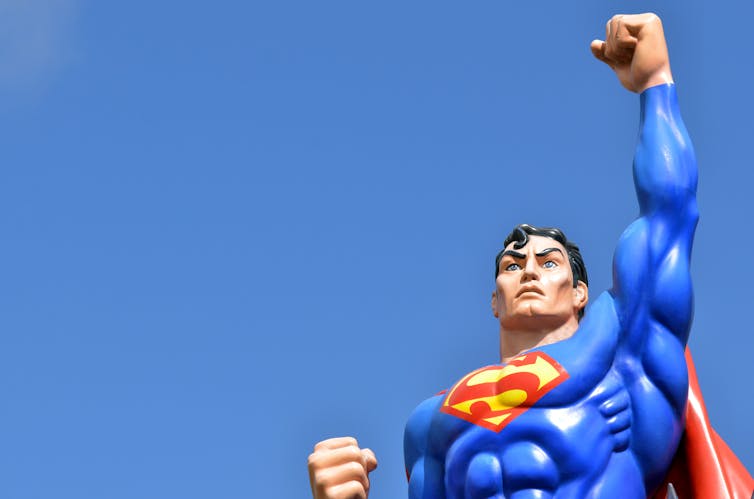
Superman – the first, most famous American superhero – turns 80 this year.
The comics, toys, costumes and billion-dollar Hollywood blockbusters can all trace their ancestry to the first issue of “Action Comics,” which hit newsstands in April 1938.
Most casual comic book fans can recite the character’s fictional origin story: As the planet Krypton approaches destruction, Jor-El and his wife, Lara, put their infant son, Kal-El, into a spaceship to save him. He rockets to Earth and is taken in by the kindly Kents. As he grows up, Kal-El – now known as Clark – develops strange powers, and he vows to use them for good.
But the story of the real-life origins of Superman – a character created out of friendship, persistence and personal tragedy – is just as dramatic.
When I was a kid growing up in Cleveland, my dad would regale my brother and me with stories of Superman’s local origins: The two men who had concocted the comic book hero had grown up in the area.
As I became older, I realized I wanted to understand not only how, but why Superman was created. A 10-year research project ensued, and it culminated in my book “Super Boys.”
In the mid-1930s, Jerry Siegel and Joe Shuster were two nerds with glasses who attended Glenville High School in Cleveland, Ohio. They worked on the school newspaper, wrote stories, drew cartoons, and dreamed of being famous. Jerry was the writer; Joe was the artist. When they finally turned to making comics, a publisher named Major Malcolm Wheeler-Nicholson gave them their first break, commissioning them to create spy and adventure comics in his magazines “New Fun” and “Detective Comics.”
But Jerry and Joe had been working on something else: a story about a “Superman” – a villain with special mental powers – that Jerry had stolen from a different magazine. They self-published it in a pamphlet titled “Science Fiction.”
While “Science Fiction” only lasted for five issues, they liked the name of the character and continued to work on it. Before long, their new Superman was a good guy. Joe dressed him in a cape and trunks like those of the era’s popular bodybuilders, modeled the character’s speedy running abilities after Olympic sprinter Jesse Owens, and gave him the bouncy spit-curl of Johnny Weissmuller, the actor who played Tarzan. It was a mishmash of 1930s pop culture in gladiator boots.
When they were finally ready, they started pitching Superman to every newspaper syndicate and publisher they could find.
All of them rejected it, some of them several times. This continued for several years, but the duo never gave up.
When Superman finally saw print, it was through a process that is still not wholly clear. But the general consensus is that a publisher named Harry Donenfeld, who had acquired the major’s company, National Allied Publications (the predecessor to DC Comics), bought the first Superman story – and all the rights therein – for US$130.
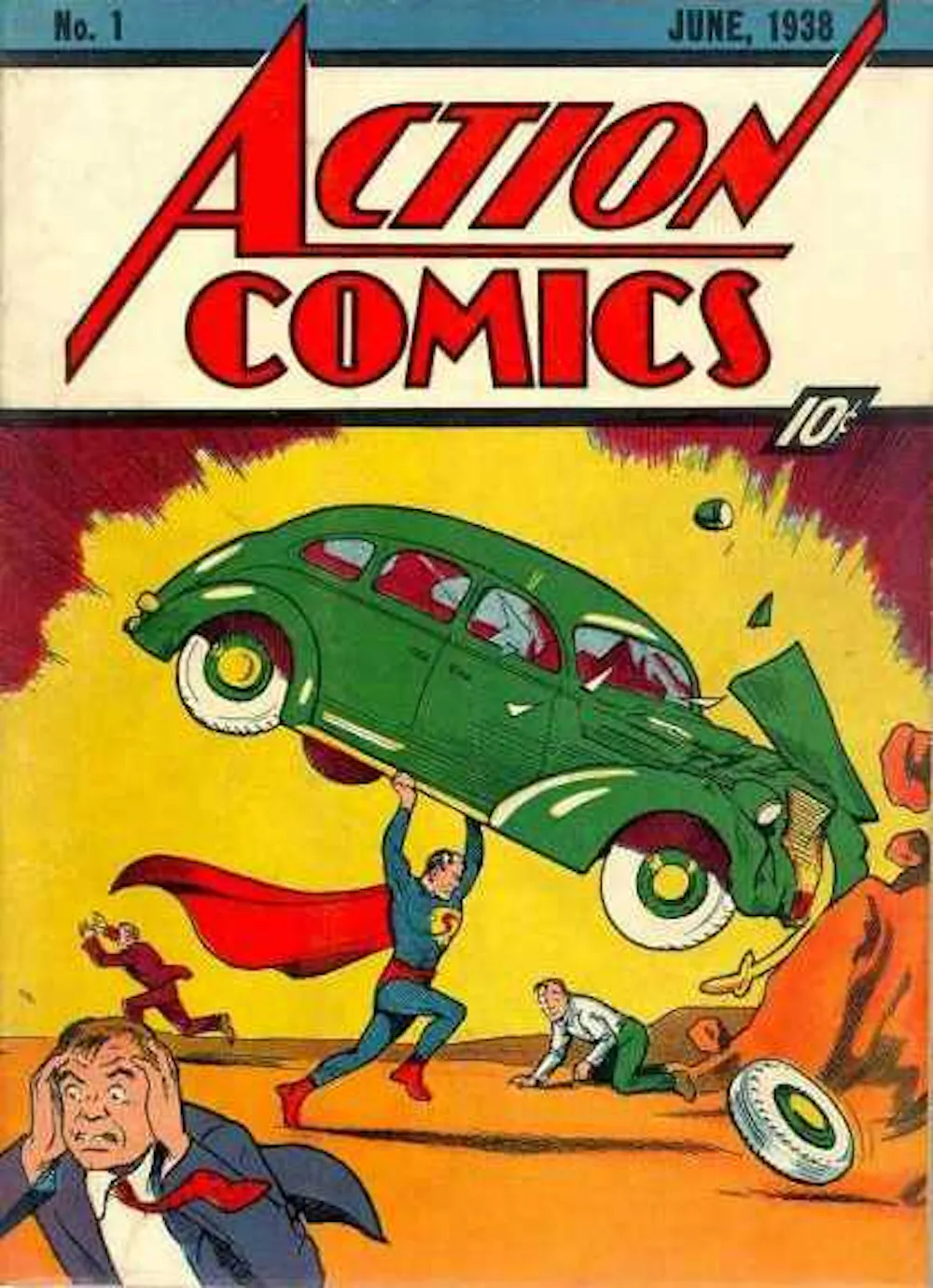
The world was introduced to Superman in “Action Comics” No. 1, on April 18, 1938, with the Man of Steel appearing on the cover smashing a Hudson roadster. The inaugural issue cost 10 cents; in 2014, a copy in good condition sold for $3.2 million dollars.
When the comic became a runaway hit, Jerry and Joe regretted selling their rights to the character; they ended up leaving millions on the table. Though they worked on Superman comics for the next 10 years, they would never own the character they created, and for the rest of their lives repeatedly filed lawsuits in an effort to get him back.
But there is another more personal piece to the puzzle of Superman’s origins.
On June 2, 1932, Jerry’s father, Michel, was about to close his secondhand clothing store in Cleveland when some men walked in. Michel caught them trying to steal a suit, and ended up dying on the spot – not in a hail of gunfire, but from a heart attack.
Jerry was 17.
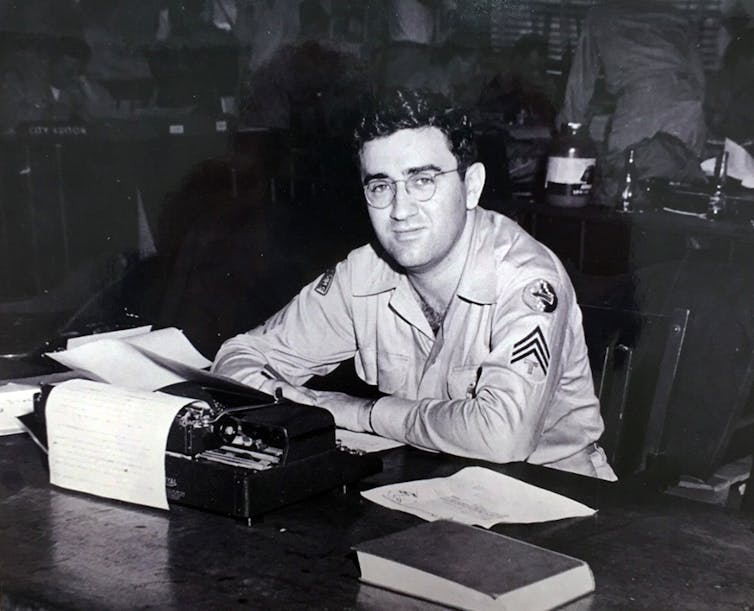
Some believe Jerry may have created Superman as a fantasy version of his own father – as someone who could instantly transform from a mild-mannered man into a hero capable of easily overpowering petty thieves. Indeed, some of the early Superman stories feature Jor-El out of breath (as Michel often was from heart disease) and show criminals who faint dead when confronted by Superman. As many victims of childhood trauma often do, Jerry may have used Superman to re-enact his father’s tragic death over and over in an attempt to somehow fix it.
In Superman’s never-ending battle of good versus evil, this same story is repeated again and again on the page, in cartoons and in movies. It’s seen in kids who pretend to be Superman, tucking towels in at their neck and playing out battles in their backyards.
 Why is Superman’s 80th birthday important? It isn’t just about celebrating a “funny book” about a guy who has heat vision and can fly. It’s about using fantasy to make sense of the world, plumbing personal tragedy to tell a story, and using art to envision a more just and safe society.
Brad Ricca, Lecturer of English, Case Western Reserve University
This article was originally published on The Conversation. Read the original article.
The link below is to an article that looks at 125 sites for free comics on the Internet.
For more visit:
http://www.getfreeebooks.com/?p=10400
The link below is to an article that reports on the Calvin and Hobbes comics being released as ebooks.
For more visit:
http://www.teleread.com/comics/calvin-and-hobbes-to-be-published-as-ebooks/
Do you have a serious reading problem? Are you a Bookaholic? Then this comic linked to below will certainly amuse you.
For more visit:
http://twentytwowords.com/2012/07/22/bookaholic/
The link below is to a comic, which is supposed to be amusing and perhaps a bit, ‘why fix it if it isn’t broke.’ What do you think? Slightly amusing perhaps?
For more, visit:
http://www.nytimes.com/interactive/2012/03/30/books/review/snider01.htm
 At the BookShelf
