Unknown's avatar

Anaesthesia: the gift of oblivion and the mystery of consciousness – book review


Anaesthesia: the gift of oblivion and the mystery of consciousness – book review

File 20170720 23989 1de877o
A new book explores consciousness, awareness and memory when under the knife.
from http://www.shutterstock.com.au

Kara Allen, University of Melbourne

The French refer to the emergence from general anaesthesia as “réanimation” – literally to restore consciousness. This is a crucial attribute – that consciousness will return following the desired period of oblivion. This is skilfully explored in Kate Cole-Adams’ book Anaesthesia.

Cole-Adams delves into questions about consciousness and self. Are we restored fully to self or does the experience of anaesthesia change us in a way that may not be measurable? The result is a nuanced, powerful book, grounded in Cole-Adams’ decision to undergo scoliosis surgery, and developed around the analogy of submerging in a bottomless sea and breaking into wakefulness like a swimmer surfacing from the depths.

Anaesthetists have a short time to establish rapport with a patient who is quite literally putting their life in our hands. We know our purpose is to provide unconsciousness and analgesia, so short-term harm can take place for long-term gain. Cole-Adams writes eloquently:

It is a form of denial that enables them to act upon us in ways that would otherwise be unthinkable. To ignore the ghostly griefs and joys and hopes that trail each of us into the operating rooms, and to get on with the vital business of slicing, splicing and excision.

Occasionally the book strays into the sensational, particularly with reference to studies investigating situations where people have become aware while under anaesthesia, but don’t have a memory of this happening. But predominantly, Cole-Adams writes compassionately and competently about the art and science of anaesthesia, and of practitioner and patient.

As a practitioner, it’s fascinating and beautifully written. Some 50% of the population of Australia and New Zealand are not sure that anaesthetists are doctors, so a book that outlines the contribution of a specialist anaesthetist is very welcome.

Much of Cole-Adams’ focus is on two of the biggest aims of anaethesia: rendering the person unaware of what is happening, and ensuring they don’t remember it later. She also explores the complex question of consciousness – if we don’t form memories of an experience, and have no detectable conscious perception at the time, does the experience cause us harm?

Awareness and recall under the knife

Cole-Adams explores the phenomenon where people become aware during surgery, and can remember it. This is known as “awareness with recall”. There’s no doubt awareness with recall is an important problem with profound implications for the patient.

Anaesthesia by Kate Cole Adams.

A large study found the number of patients aware during surgery was extremely low (measured by validated questionnaires administered after the operation), although some procedures (such as those with very large volumes of blood lost) and patients (such as those with severe heart or lung disease) were at higher risk than others.

Most cases were brief and not associated with distress or pain. Compassionate, timely disclosure of the events leading to the awareness and psychological support decreased long-term implications such as post-traumatic stress disorder, which could otherwise be severe.

She examines several “spooky little studies” that found people were aware under anaesthetic, but spends less time on the studies that failed to find evidence these things occur. The popular press like to focus on graphic and shocking stories, but it’s important to remember these are rare and extreme cases.

She also explores “perception under anaesthesia” – where a person may show a preference for certain words or images they heard or saw under anaesthesia. Studies have shown the overwhelming majority of patients have no detectable memories or evidence of consciousness under general anaesthesia.

And does it matter if someone perceives they’re in surgery while under anaesthetic if they don’t remember it afterwards? We don’t have enough information to say perception while undergoing surgery won’t affect someone psychologically if they don’t remember it. The process of surgery and post-operative recovery can all take a psychological and physical toll. It’s an interesting question, but almost impossible to answer.

Awareness is a rare but real problem that should be examined, whereas we’re not really sure perception under anaesthesia exists. And if it does, we don’t know if it would affect the patient at all since they have no memory of it.

Consciousness

Consciousness is a continuum – from drowsy through to completely inert. In situations where sedation is required, anaesthetists will administer drugs to cause amnesia, reduce pain and occasionally cause brief periods of unconsciousness. There are no hard and fast barriers between sedation and general anaesthesia – “deep sedation” often looks very much like general anaesthetic.

As consciousness recedes, harm to heart and lung function are more likely. This is particularly concerning when sedation is administered by health professionals without specialty training or indeed medical training. Only the term “specialist anaesthestist” is protected, so a less qualified person may administer anaesthesia or sedation, for example by the proceduralist in cosmetic surgery or dentistry. It’s one thing to put a patient to sleep; it may be a more difficult task to wake them up again.

This is fundamentally a story, not a scientific text, and has the potential to be slightly alarming for the uninitiated. We are fortunate in Australia that anaesthesia is extremely safe and highly reliable, but often there is emphasis on complications in the media. Cole-Adams has thought deeply about these topics, resulting in a book that is an exploration of the psychological, physiological and at times philosophical roles of anaesthesia and the implications for modern surgery.

The ConversationFor the interested reader, it’s an outline of the science, with an emphasis on the unknown. For the practitioner, it’s a patient experience, eloquently expressed. There’s much more to anaesthesia than meets the eye, and this book provides a glimpse into the depths.

Kara Allen, Clinical Lecturer, Anaesthetist, University of Melbourne

This article was originally published on The Conversation. Read the original article.
Unknown's avatar

Not My Review: First We Were IV, by Alexandra Sirowy


Unknown's avatar

Not My Review: The Nevernight Chronicle (Book 2) – Godsgrave, by Jay Kristoff


Unknown's avatar

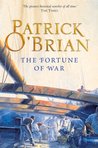
Finished Reading: Aubrey/Maturin Book 06 – The Fortune of War, by Patrick O’Brian


The Fortune of War (Aubrey/Maturin Series, Book 6) (Aubrey & Maturin series)The Fortune of War (Aubrey/Maturin Series, Book 6) by Patrick O’Brian
My rating: 4 of 5 stars

View all my reviews

Unknown's avatar

The enduring power and tragedy of Malcolm Lowry’s Under the Volcano, 70 years on


File 20170718 10334 1lm85a2

Comisión Mexicana de Filmaciones/Flickr, CC BY-SA

Mark Goodall, University of Bradford

Under the Volcano by the British novelist and poet Malcolm Lowry is considered one of the most influential novels of the 20th century. But given the wrangling that took place during the book’s development, it’s a miracle that it was ever published.

The book took Lowry years and many rewrites to complete, and even then faced many rejections. In a famous letter to Jonathan Cape, who eventually published the book in 1947, Lowry remains defiant. He was an expert letter writer and often spent more time on these than on his novels. The publisher had suggested various rewrites to the manuscript and Lowry replied with a 32-page response detailing precisely (and with consummate literary skill) how and why it was not possible for him to change a word, how all of it was “absolutely necessary”. Incredibly, the publisher relented.


Alistair Leadbetter, CC BY-SA

When the novel finally came out, it unhappily clashed with the publication of The Lost Weekend by Charles R Jackson, another tale of a hopeless alcoholic (adapted into a successful film by Billy Wilder). Nevertheless, critics hailed the novel as a masterpiece and Lowry was contracted for his next book. For a brief time, Under the Volcano was even a set text for anyone studying English language and literature. But Lowry never recovered from the strain of having to follow-up his classic work. He could not, as it were, scale and conquer such a monumental peak again.

2017 marks the 70th anniversary of the novel’s publication and the 60th anniversary of the death of its author. A conference on Malcolm Lowry is being held in his birthplace of Liverpool to commemorate this anniversary and to explore the legacy that Under the Volcano has left.

A life and death in Mexico

The novel, set in Mexico on the Day of the Dead in 1938, details the final 24 hours in the life of a doomed British consul named Geoffrey Firmin. Firmin, a chronic alcoholic, is clearly based on Lowry himself, who, lacking the conventional work ethic and social conformity expected by his strict Methodist father, battled problems with drink and depression all his life. Firmin’s pathetic attempts at holding together a marriage, a career, and the promise and duty of his privileged upbringing against the backdrop of a looming World War ends in utter catastrophe.

The novel, retelling the previous year of Firmin’s shambolic life, details the psychology of a personal collapse as Firmin tries to escape a violent world he cannot understand. The volcano in the title actually refers to two volcanoes, the still-active Popocatepetl and dormant Iztaccihuatl, which loom ominously over the town of Quauhnahuac – more commonly known as Cuernavaca – south of Mexico City, where the events of the book are set.

One of the underlying themes of the book is the occult. Numbers fascinated Lowry and the 12 chapter structure of the novel is significant. As Lowry explained in his letter to Cape, this represents the 12 hours in a day (most of the action happens on a single day) and the 12 months of the year (the novel also looks back over the previous year). The novel uses Nietzsche and Ouspensky’s concept of eternal recurrence or circular time: it opens in the present day, but then spools back to the same point a year earlier, giving the sense that Firmin is repeating the same futile trajectory over and over again. Lowry was a student of the esoteric Jewish Kabbalah sect, within which the number 12 is of symbolic importance. “I have to have my 12,” Lowry argues, since “it is as if I hear a clock slowly striking midnight for Faust”.

Another theme is the hallucinatory aspect of the novel which fascinated subversives, particularly in France where the translated version was, and still is, warmly received. Lowry vividly recounts Firmin’s numerous mescal-infused visions, and the final tragic scenes of the novel pass by as if a dream, or more accurately, a nightmare.

The French avant-garde lettrist and situationist writers were so taken with Under the Volcano that they devised various drinking games to mimic the Consul’s nocturnal ramblings. These consciousness-altering adventures, chaotic rejections of the status quo, were later theorised as the “dérive” (drift) and formalised in the practice of psychogeography – a now somewhat fashionable technique for academics and novelists such as Will Self and Iain Sinclair.

Art imitating life

Lowry’s own personal fate echoed that of his writing. In many ways, Lowry did not help himself. Many of his key works were lost, mislaid, forgotten or destroyed by fire (Lowry admitted in a letter how that particular infernal element seemed to “follow him around”). His only respite was his brief time living in a shack near Dollarton, Vancouver. Photographs of him near the end show a man hollowed out by existence. He died in mysterious circumstances aged 57 in Ripe, Sussex.

Under the Volcano is a difficult modernist work to get into, and was soon dropped from the teaching curriculum. Yet it has inspired film adaptations – including John Houston’s 1984 film starring Albert Finney and Jacqueline Bisset – cabarets, and even a jazz suite:

Graham Collier’s The Day of the Dead, inspired by Under the Volcano.

A small group of dedicated scholars from North America is developing new perspectives on Lowry including critical editions of his lost novels Swinging the Maelstrom, In Ballast to the White Sea and an earlier version of his masterpiece Under the Volcano, together with a brand new set of essays, Malcolm Lowry’s Poetics of Space. Meanwhile, writers, poets and artists from Lowry’s hometown, Liverpool, have issued a handsome tome, Malcolm Lowry From the Mersey to the World, about the global dimension to Lowry’s work.

The ConversationUnder the Volcano may be neglected – but to anyone of a certain age it has a powerful resonance, and still has the power to enthrall new generations of readers today.

Mark Goodall, Head of Film and Media, University of Bradford

This article was originally published on The Conversation. Read the original article.

Unknown's avatar

Not My Review: The Life of Samuel Johnson LLD, by James Boswell (1791)


The link below is to a book review of ‘The Life of Samuel Johnson LLD,’ by James Boswell.

For more visit:
https://www.theguardian.com/books/2017/jul/24/100-greatest-non-fiction-books-all-time-a-life-of-samuel-johnson-james-boswell

Unknown's avatar

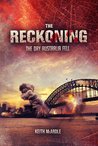
Finished Reading: The Reckoning – The Day Australia Fell (The Unforeseen – Book 1), by Keith McArdle


The Reckoning: The Day Australia FellThe Reckoning: The Day Australia Fell by Keith McArdle
My rating: 2 of 5 stars

View all my reviews

Unknown's avatar

Not My Review: Daughter of Smoke & Bone (Book 2) – Days of Blood & Starlight, by Laini Taylor


Unknown's avatar

Not My Review: A Vindication of the Rights of Woman, by Mary Wollstonecraft (1792)


The link below is to a book review of ‘A Vindication of the Rights of Woman,’ by Mary Wollstonecraft

For more visit:
https://www.theguardian.com/books/2017/jul/17/100-best-nonfiction-books-vindication-rights-woman-mary-wollstonecraft

Unknown's avatar

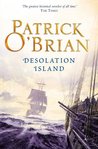
Finished Reading: Aubrey/Maturin Book 05 – Desolation Island, by Patrick O’Brian


Desolation Island (Aubrey/Maturin Series, Book 5) (Aubrey & Maturin series)Desolation Island (Aubrey/Maturin Series, Book 5) by Patrick O’Brian
My rating: 4 of 5 stars

View all my reviews