Unknown's avatar

Book review: Open Minds explores how academic freedom and the public university are at risk


Peter Tregear, The University of Melbourne

Academic freedom has become a common topic of Australian public debate. Yet the concept is rarely examined or critiqued in detail.

That has not stopped it becoming a totemic issue for many on the political right. They consider Australian universities to be increasingly prone to doctrinaire and censorious attitudes. In particular, they point to issues of identity politics, climate change and other so-called “progressive” causes.


Read more:
University free speech bill a sop to Pauline Hanson and other critics, but what difference will it make?


Prominent cases include the 2018 sacking of geophysicist Peter Ridd by James Cook University and protests against Bettina Arndt’s visit to the University of Sydney to give a controversial speech on date rape that same year. The federal Coalition government responded by commissioning the Independent Review of Freedom of Speech in Australian Higher Education Providers by former chief justice Robert French.

Cover of Open Minds book

Black Inc.

Open Minds: Academic Freedom and Freedom of Speech of Australia, by constitutional law experts Carolyn Evans and Adrienne Stone, is the first book-length examination of the French Review and the idea of academic freedom that lies behind it. The authors are especially well qualified to comment on both the context and specific recommendations of the review.

What is academic freedom?

Among many helpful insights, Evans and Stone point out that academic freedom is not the same thing as freedom of speech. The latter is already at least partially protected by various specific and implied rights to freedom of speech in law.

The exercise of academic freedom, however, as Geoff Sharrock has noted in The Conversation, invokes a particular kind of social relationship. It is both public-facing and aims to be an expression of a public good.


Read more:
Feel free to disagree on campus … by learning to do it well


Academic discourse seeks to be both well-reasoned and true. An academic opinion is thus different to an academic merely expressing their personal views.

For instance, climate scientists do not need to “believe” in climate change. Instead they must justify any assertion they make based on rigorous standards of scientific evidence and proof.

Thus, as Evans and Stone note, universities do not provide academic staff with an untrammelled right to say what they like on any issue. Theirs is a more narrowly conceived right based on an underlying obligation to justify their public utterances through the application of disciplinary expertise and values.

Adrienne Stone, one of the authors of Open Minds, discusses the distinction between academic freedom and freedom of speech.

The most contentious debates about academic freedom in Australia have not been about such academic concepts, however. Instead they have been more interested in trying to out a perceived underlying left-wing bias. This shows how skewed the understanding of academic freedom has become in Australia.


Read more:
How a fake ‘free speech crisis’ could imperil academic freedom


The French Review found no substantial evidence of any organised attempt to limit the capacity of students to encounter alternative political ideas. Evans and Stone note:

If anything, today’s students are less radical and politicised than their predecessors.

The federal government followed up the French Review by commissioning Sally Walker to report on universities’ adoption of a code of free speech.

What are the real threats?

Glyn Davis’s foreword draws attention to concerns he also expressed in a recent Conversation article. He says threats to academic freedom might arise from direct government intervention, or from the rise in tied grants from big business, or from philanthropic trusts directing teaching and research.


Read more:
Special pleading: free speech and Australian universities


What has been much less self-evident, or at least less acknowledged, is the possibility that the very way Australian universities are now constituted and governed may pose an even more fundamental threat.

What, after all does “institutional autonomy” mean when universities are now so closely regulated and controlled by their senior managers and councils, and by the market forces they have unleashed to help fund their operations?

Early on, Evans and Stone assert:

[Universities] are not commercial institutions, nor are they instruments of government. They are special communities dedicated to teaching and research.

But towards the end of their book, they implicitly suggest things might not be so rosy:

Academics should not be required to support the university’s brand or to avoid embarrassing it if doing so comes at the expense of academic freedom. On the contrary, academics should be able to speak out about research, teaching and university governance even when doing so involves harsh and even disrespectful criticism.


Read more:
Governing universities: tertiary experience no longer required


It is easy for academics to conclude that essentially unaccountable senior university administrators, not disciplinary professors or other disciplinary experts, have become the ultimate determiners of a particular discipline’s educational and research priorities, and thus of the true limits of academic freedom in its broadest sense.

As Ron Srigley has noted of US campuses:

Ask about virtually any problem in the university today and the solution proposed will inevitably be administrative. Why? Because we think administrators, not professors, guarantee the quality of the product and the achievement of institutional goals. But how is that possible in an academic environment in which knowledge and understanding are the true goals? Without putting too fine a point on it, it’s because they aren’t the true goals any longer.

In such a context, even an everyday event like the Australian National University’s recent announcement of a brand relaunch can start to seem much less benign. The university itself describes it as part of a “journey to foster cohesion, reduce the issue of brand fragmentation and use research to address the cognitive dissonance between how we see ourselves versus how our community and the world sees us”.

Brand managers, like most senior university managers, are generally not practising academics. Thus, they should not be expected to understand, let alone articulate or defend, academic freedom.


Read more:
Unis are run like corporations but their leaders are less accountable. Here’s an easy way to fix that


One of the many ways Open Minds may prove to be of lasting value is in helping academics question the propriety of such managerial pronouncements, by framing them properly as issues of academic freedom.

This is why academic freedom is a central concern for Academics for Public Universities. We would argue this issue ultimately requires us to reexamine and revitalise the underlying public character of our universities.

That, too, is something we now need to defend.The Conversation

Peter Tregear, Principal Fellow, The University of Melbourne

This article is republished from The Conversation under a Creative Commons license. Read the original article.

Unknown's avatar

Finished Reading: Hitler and the Habsburgs – The Führer’s Vendetta Against the Austrian Royals by James McMurtry Longo


Hitler and the Habsburgs: The Führer's Vendetta Against the Austrian RoyalsHitler and the Habsburgs: The Führer’s Vendetta Against the Austrian Royals by James McMurtry Longo
My rating: 4 of 5 stars

View all my reviews

Unknown's avatar

Finished Reading: Fascism – A Warning by Madeleine K. Albright


Fascism: A WarningFascism: A Warning by Madeleine K. Albright
My rating: 3 of 5 stars

View all my reviews

Unknown's avatar

Finished Reading: The Anarchy – The Relentless Rise of the East India Company by William Dalrymple


The Anarchy: The Relentless Rise of the East India CompanyThe Anarchy: The Relentless Rise of the East India Company by William Dalrymple
My rating: 3 of 5 stars

View all my reviews

Unknown's avatar

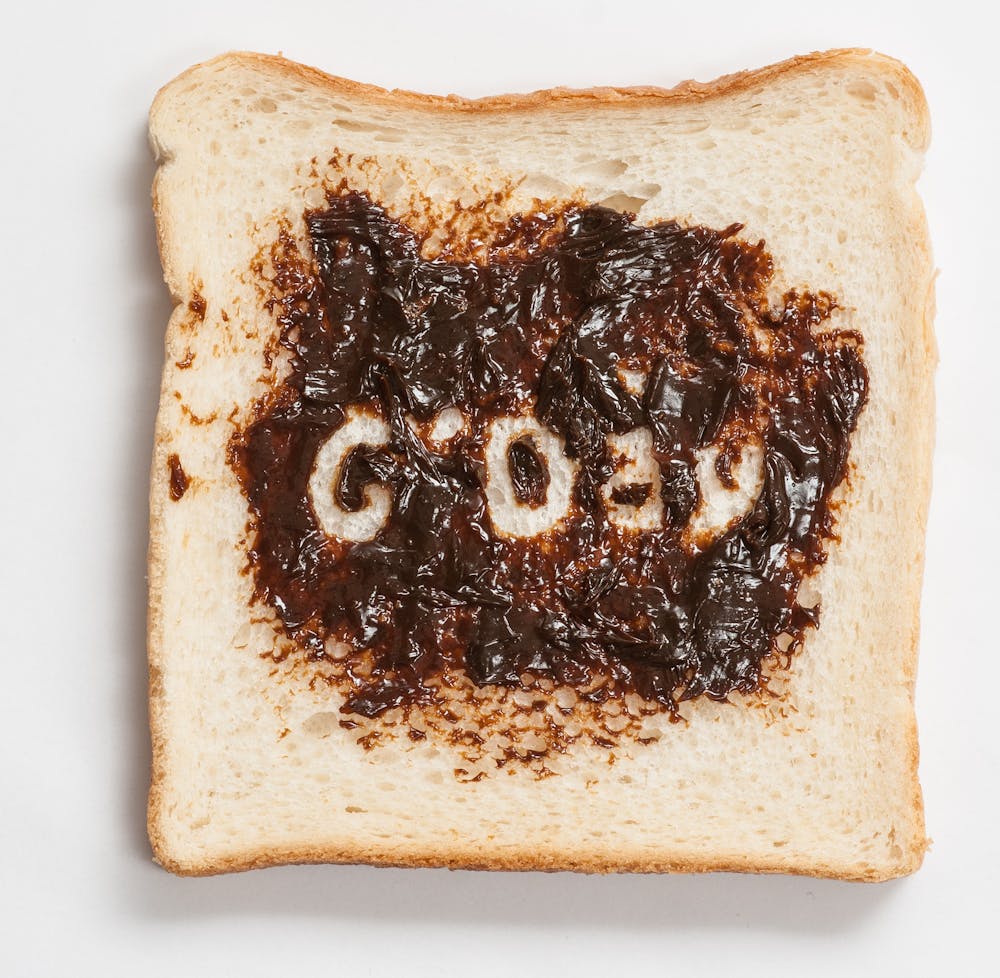
Youse wouldn’t believe it: a new book charts the 11-year making of a ‘people’s dictionary’ for Australia


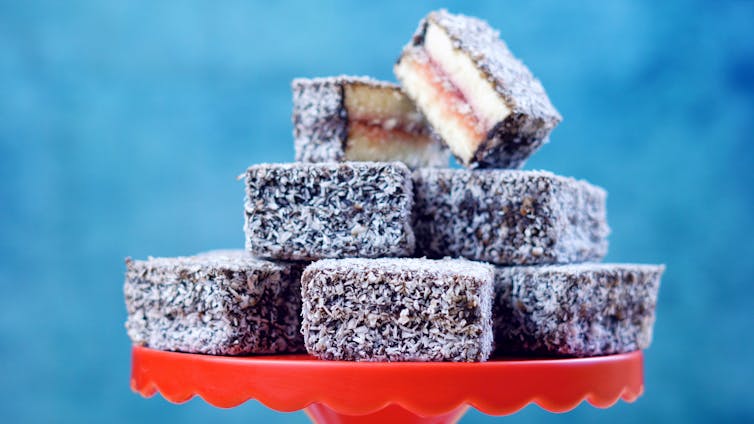
Even the dictionary entry defining lamingtons proved controversial …
shutterstock

Roslyn Petelin, The University of Queensland

Review: More Than Words: The Making of the Macquarie Dictionary by Pat Manser (Pan Macmillan)

In 1973 Pat Manser answered an advertisement in the Sydney Morning Herald seeking a research assistant to work on phonetic transcriptions for a dictionary of Australian English.

Now, nearly 50 years later, she has published her monumental account of the making of this dictionary, which in the words of Thomas Keneally, “paid the Antipodean tongue the great compliment of taking it seriously”.

If you’re a word aficionado, you’ll love this book. I could not put it down until I had read through to the end of the final section, which contains the wonderful launch presentation speeches for all eight editions of the Macquarie Dictionary.


Read more:
Gogglebox and what it tells us about English in Australia


The beginnings

John Bernard, a chemist who was appointed Associate Professor in the Department of English and Linguistics at Macquarie University in 1966, had published a paper in Southerly in June 1962 about the need for a dictionary of Australian English. He argued that we need

a dictionary of our own because our idiom, usage, invention and especially pronunciation are sufficiently different from those of other Englishes.

In December 1969, Brian Clouston, who had founded Jacaranda Press in Brisbane, agreed to fund a dictionary that would be

aggressively Australian, not to be encyclopedic, not to be illustrated, to be in one volume, and to be ready in two years.

Bernard’s colleague at the university, Professor Arthur Delbridge, was appointed chair of the editorial committee to compile the book. He argued for a “people’s dictionary” that would “hold up a mirror directly to contemporary Australian speech and writing”.

The critical decision at the outset was whether to describe how people use the language or prescribe how people should use the language.

Should the new dictionary describe how language was used or prescribe its use?
shutterstock

The father of English lexicography, Samuel Johnson, whose prescriptivist A Dictionary of the English Language was published in 1755, felt “the duty of the lexicographer was to correct or proscribe”. The Oxford English Dictionary, published in 1928, had also been prescriptive.

However, the Macquarie editorial committee was “adamant that its dictionary was to be descriptive”, a move now standard in English language dictionaries. The committee wanted as comprehensive a dictionary as possible, so spoken as well as written words were included.

Johnson’s dictionary took seven years to compile. The Oxford dictionary took 70 years. Rather than two, Macquarie’s dictionary took 11 years.

The Macquarie lexicographers had started work in 1970; the first edition was published in 1981. The 8th edition, published in 2020, and its thesaurus contain more than 300,000 Australian words and definitions.

It is no surprise there were controversies to contend with in the years it took to compile the first edition.


Read more:
Togs or swimmers? Why Australians use different words to describe the same things


Controversies

The test for inclusion of words and expressions is currency. How often do you hear people say, “I’ll see youse later”? That particular Australianism is included in the dictionary because, as an entry explains:

English you does not distinguish singular from plural. The form youse does provide a plural, contrasting with singular you, but there is strong resistance to it, in spoken as well as written language, and it remains non-standard.

Other tests include whether a word is accepted by the language community, whether it’s used extensively, or whether it’s too individual or specialised. Is it likely to stand the test of time? Is the entry well supported by citations?

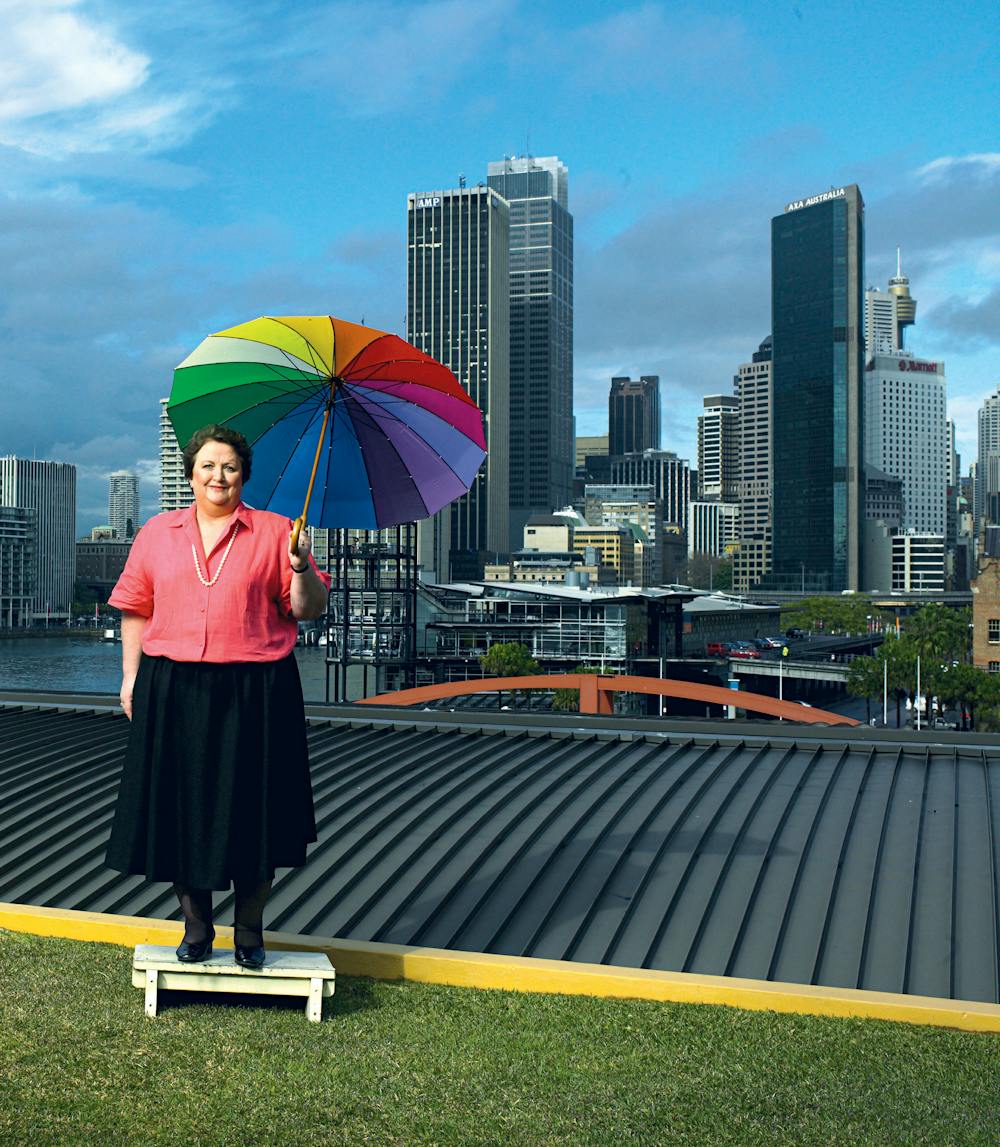
Language is forever changing, so the challenge for a dictionary is its capacity to remain up to date. Manser amusingly illustrates the growing acceptance of “literally” to be understood as “figuratively” with a quote from Amanda Vanstone:

But I can assure you that we are literally bending over backwards to take into account the concerns raised by colleagues.

Amanda Vanstone poses (literally) for a photograph for Australian Women’s Weekly in 2006.
Tim Bauer/AAP

As the recipient of elocution lessons in my early education I was fascinated to learn about the dictionary’s engagement with spoken English pronunciation. Then there is the fraught question of the description of iconic foods. Should Lamingtons be dipped only in thin chocolate icing and coconut? Not necessarily. There are pink jelly lamingtons and, more recently, Tokyo lamingtons, which have apparently landed with flavours of matcha and black sesame.

Manser’s least favourite word is mansplain, Word of the year in 2014. She hoped it would be ephemeral … but it was recently just nudged out by “fake news” for word of the decade.


Read more:
The horror and pleasure of misused words: from mispronunciation to malapropisms


A cocktail

The dictionary was launched on 21 September 1981 as The Macquarie Dictionary because it would “add prestige to the dictionary to be associated with a university”, as the Oxford one was.

A special cocktail, the Macquarie, was created to mark the occasion: “Champagne, mango juice, Bitters, Grand Marnier, and a whole strawberry to float on the top”.

The reviews were glowing, except for one condescending and scathing review by the editor of the second edition of the Oxford English Dictionary. Robert Burchfield, a New Zealander, accused the committee of a “charming unawareness of the standards of reputable lexicography outside Australia”.

The new dictionary sold very well: 50,000 copies in its first year and another 50,000 copies over the next 18 months. Within ten years there were 23 spin off editions.

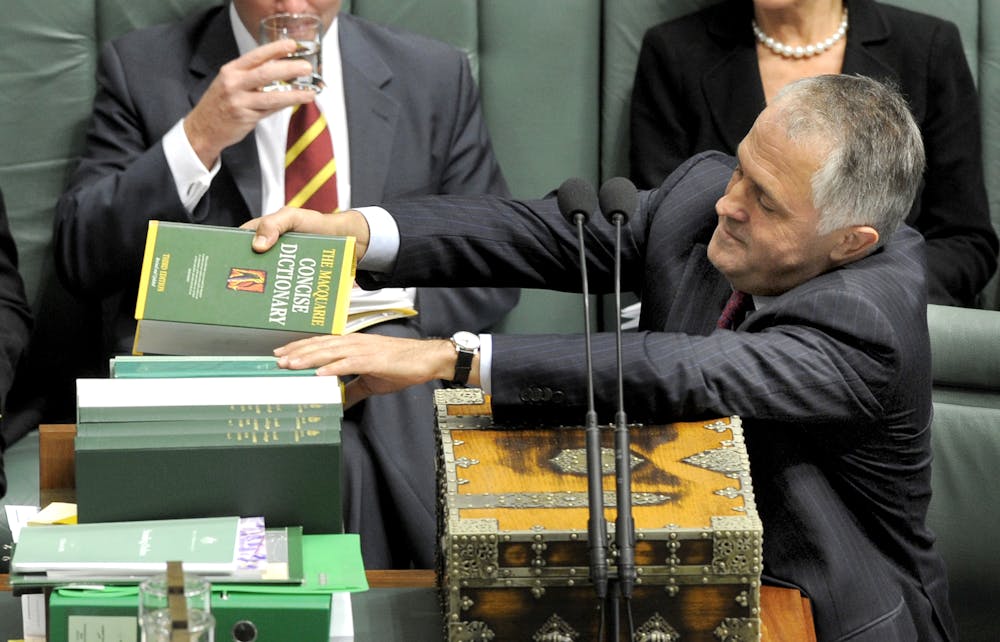
Malcolm Turnbull avails himself of a dictionary in 2008 during parliamentary question time.
Alan Porritt/AAP

Currently, there are more than 150 spin offs. There was even a Macquarie Bedtime Story Book for Children. There are, of course, other dictionaries of Australian English, such as Oxford University Press’s Australian National Dictionary, a dictionary of Australianisms first published in 1988. There was also an Australian version of the Collins British English Dictionary, which the Macquarie staff regarded as essentially British.

In 1976, the Macquarie offices moved to a former market gardener’s cottage on the campus of Macquarie University. Called “the cottage”, it sounds reminiscent of James Murray’s scriptorium in Oxford, where he oversaw the creation of The Oxford English Dictionary. In 1980, Macquarie Library Pty Ltd became the publisher and has held the copyright ever since, though Macmillan bought the dictionary in 2001.

Macquarie embraced Indigenous Australian issues with Macquarie Aboriginal Words in 1994 and the Macquarie Atlas of Indigenous Australia in 2005. As Ernie Dingo put it at the time: “This book is a White step in the Black direction”.

Manser, who went on to become a high-level public servant, has done painstakingly detailed research for this book, with great support from former colleagues.
It is well written in short chapters. I would have liked to see an index and a time-line, but I hesitate to quibble in the face of such a splendid historical document.The Conversation

Roslyn Petelin, Course coordinator, The University of Queensland

This article is republished from The Conversation under a Creative Commons license. Read the original article.

Unknown's avatar

Aliens in Lagos: sci-fi novel Lagoon offers a bold new future


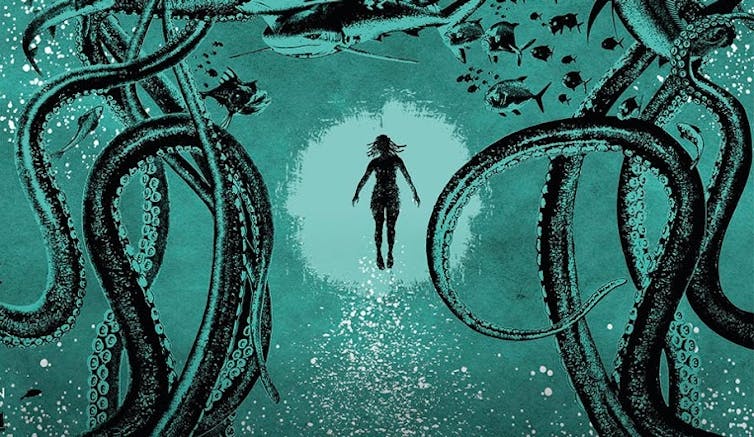
Detail from the cover of Lagoon, a novel by Nnedi Okorafor.
© Joey Hi-Fi/Hodder & Stoughton

Gibson Ncube, University of Zimbabwe

In his satirical essay How to Write About Africa, the late Kenyan writer and journalist Binyavanga Wainaina advocated for a rethinking of clichéd and stereotypical representations of the continent. Wainaina was in favour of looking beyond the despair that has plagued and continues to plague Africa.

African science fiction is a literary genre which tries to imagine utopic futures of the continent. Nigerian-American novelist Nnedi Okorafor calls her brand of sci-fi “Africanfuturism”. She explains in her blog that Africanfuturism is “concerned with visions of the future” and that “it’s less concerned with ‘what could have been’ and more concerned with what can/will be.”

Okorafor is on an upward global sci-fi trajectory, especially with the adaption of her acclaimed novella Binti into a major TV series – among several proposed projects involving her African protagonists. Considered especially against the background of the phenomenal success of the sci-fi blockbuster movie Black Panther, Okorafor’s rich body of work matters when it comes to the representation of black lives.

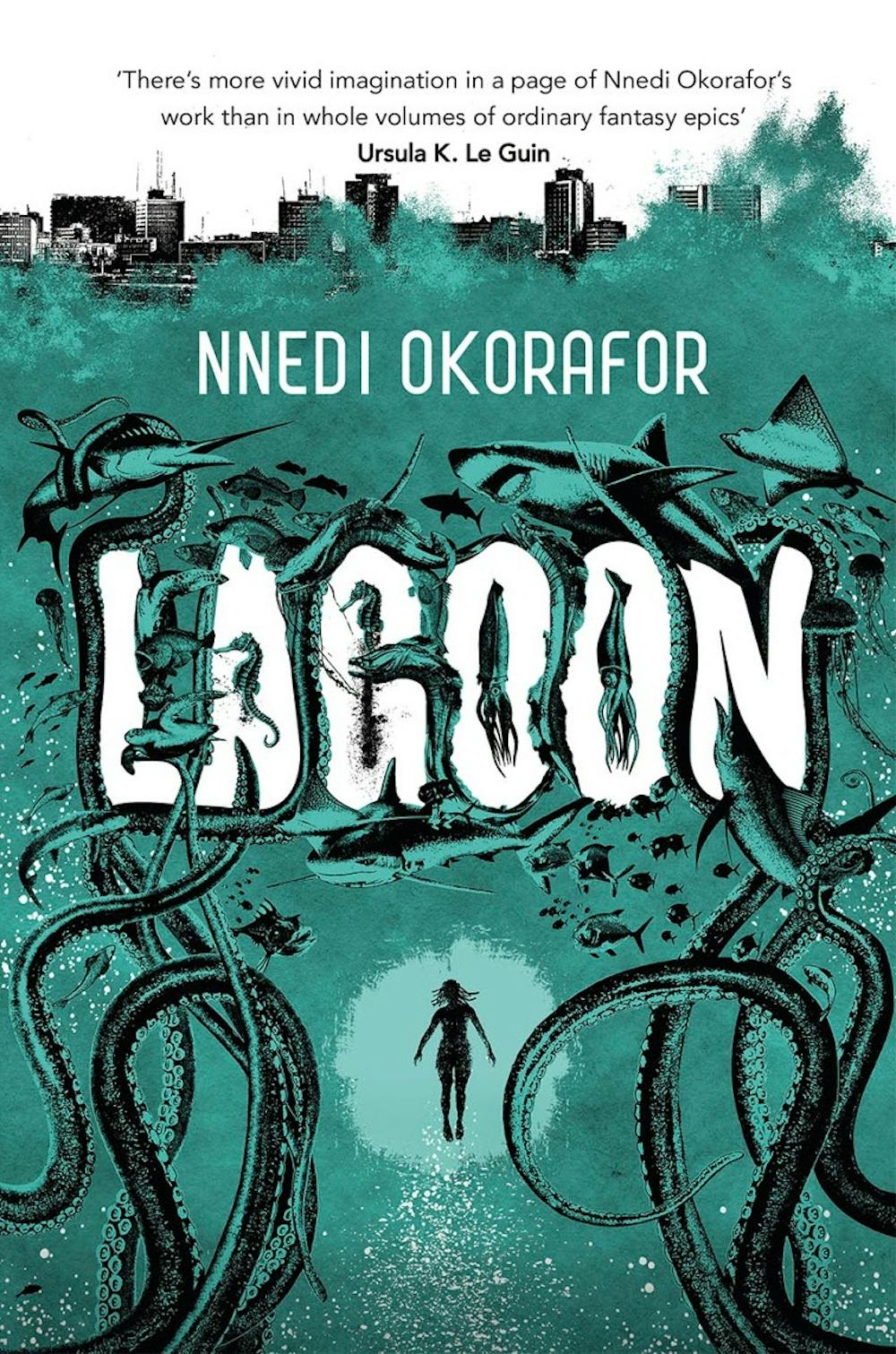
A book cover in green, black and white reading, 'Nnedi Okorafor Lagoon' with a quote from Ursula la Guin and an illustration of a human form swimming through sea creatures and tentacles towards the light.

Joey Hi-Fi/Hodder & Stoughton

Her 2014 novel Lagoon recounts the story of the arrival of aliens in Nigeria. The aliens make their landing in the ocean, in the lagoon close to the city of Lagos. The novel focuses on Ayodele, the alien ambassador, and her interactions with three humans: a marine biologist named Adaora, a musician from Ghana named Anthony and a military man named Agu. Ayodele has shapeshifting capabilities that allow her to change her form. She transforms fluidly between human, animal and inanimate forms.

As I have observed in my analysis, Lagoon, through its shapeshifting alien protagonist, challenges long held ideas of how gender and sexual identities are considered in Africa.

That which does not resemble us

Lagoon cheerfully disregards many literary norms. A mythical spider called Udide Okwanka, for example, recounts the story – which is also told from multiple perspectives. But particularly innovative is how Lagoon imagines a bold alternative future in which there is a liberation of identities and desires from rigid norms.

In Ayodele’s interactions with humans, she questions how they live and think. Through her shapeshifting capabilities, she defies what humans consider the “normal” ways of being.

Ayodele is portrayed as queer. By queer I mean that her identity defies established gender identity categories. In the novel, she is referred to as “a woman … man … whatever” and as a “woman, thing, whatever she was”. This fluid identity blurs the boundaries of what has been normalised as “correct”.

The narrator of Lagoon explains that Ayodele’s fluid identity makes her dangerous. The danger lies in that Ayodele dismantles a well established system that denigrates ways of being that are different or stray from what is considered normal. Ayodele’s identity makes humans uncomfortable. In the novel, Ayodele states

Human beings have a hard time relating to that which does not resemble them.

It is when humans are made uncomfortable that it becomes possible to start imagining different futures. The familiar is defamiliarised and stereotypes are disregarded.

Becoming visible

In Lagoon, Ayodele’s difference compels a queer student organisation called Black Nexus to come out of hiding and to confront societal stereotypes. Before the arrival of Ayodele and the aliens, Black Nexus only met clandestinely once a month. Ayodele’s presence emboldens them to come out of the closet and confront their own insecurities.

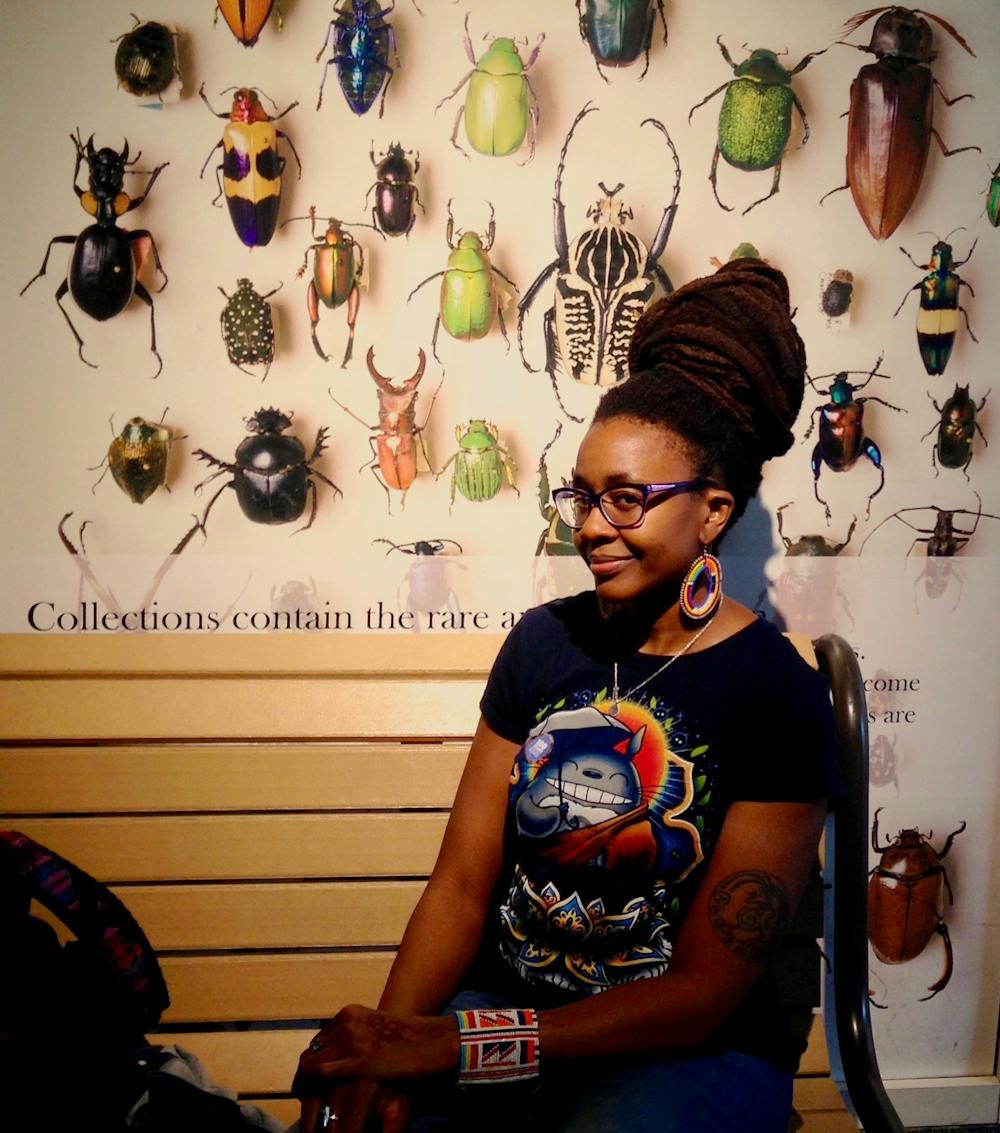
A woman with a wry smile and large hairstyle sits in front of a museum display of insects.
Portrait of Nnedi Okorafor with insects.
Cheetah Witch/Wikimedia Commons, CC BY-SA

Of particular interest, the group is encouraged by how Ayodele challenges Father Oke, a bishop in a local diocese. Father Oke is known to speak out against queer individuals and for equating queer relations to bestiality. The Black Nexus group see in Ayodele a possible ally and a radical force that could change how they are viewed in Nigeria – a country where same-sex relations are criminalised.

By becoming visible, the members of Black Nexus defy the ways of thinking that marginalise them and render them invisible in Nigeria.

What if?

In my reading, Ayodele’s shapeshifting capabilities represent a need to rethink identities so that they are liberated from the limiting ways in which humans consider them. The novel imagines a future in which different forms of otherness are granted space to be and to flourish. Ayodele hints at this future, saying:

Last night, Lagos burned. But like a phoenix, it will rise from the ashes – a greater creature than before.

Lagoon’s Africanfuturist vision requires a reader who is actively engaged in co-creating the alternative future that the novel is constructing: one in which identities are freed from restrictive thinking that refuses to recognise difference and diversity.

The reader is a central participant in this process because the writer, the reader and the text are engaged in a creative conversation. This conversation involves challenging the present and past misrepresentations of Africa. And it involves striving to envision counter-futures that contrast the present and past. The reader is required to be an active participant in meaning making.

I conclude by quoting Okorafor, who explains in a 2017 talk that sci-fi plays an important role in imagining possible futures. She tells her audience:

So much of science fiction speculates about technologies, societies, social issues, what’s beyond our planet, what’s within our planet. Science fiction is one of the greatest and most effective forms of political writing. It’s all about the question, “What if?”.The Conversation

Gibson Ncube, Associate Professor, University of Zimbabwe

This article is republished from The Conversation under a Creative Commons license. Read the original article.
Unknown's avatar

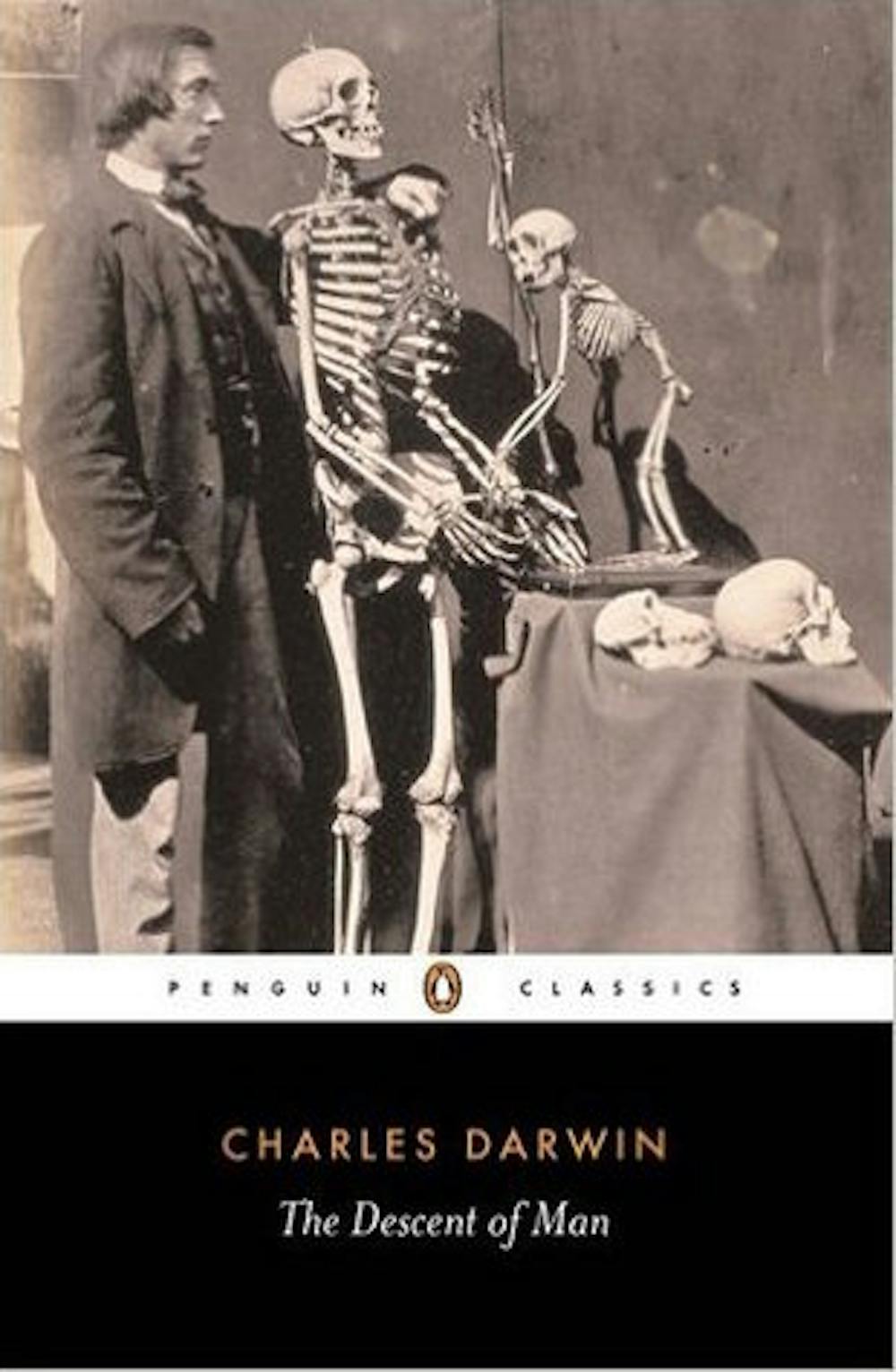
Guide to the classics: Darwin’s The Descent of Man 150 years on — sex, race and our ‘lowly’ ape ancestry


Jared Rice/Unsplash

Ian Hesketh, The University of Queensland and Henry-James Meiring, The University of Queensland

When Charles Darwin’s theory of evolution was first published in On the Origin of Species in 1859, the book was conspicuously silent about how his theory applied to humans.

Darwin believed the subject of human evolution was so “surrounded with prejudices” he was determined to avoid it entirely.

It was only when he became frustrated by the way others conceived of human evolution that he took up the subject himself. His two-volume The Descent of Man, and Selection in Relation to Sex was published on 24 February 1871.

Revisiting this work 150 years on, it is striking how some of Darwin’s most radical claims — such as humanity’s ape-like ancestry — are now taken for granted while some of his other views were clearly embedded in Victorian racial and gender stereotypes.


Read more:
Guide to the classics: Darwin’s On the Origin of Species


Sexual selection

Darwin’s objective in Descent was threefold: to consider whether humans were descended from a pre-existing form; to consider the nature of human development; and to consider the differences between the “human races”.

In coming to terms with these issues, Darwin focused on the theory of sexual selection.

Darwin’s earlier theory of natural selection explained how the struggle for limited resources led to adaptations that were beneficial to certain individuals of the same species at the expense of others.

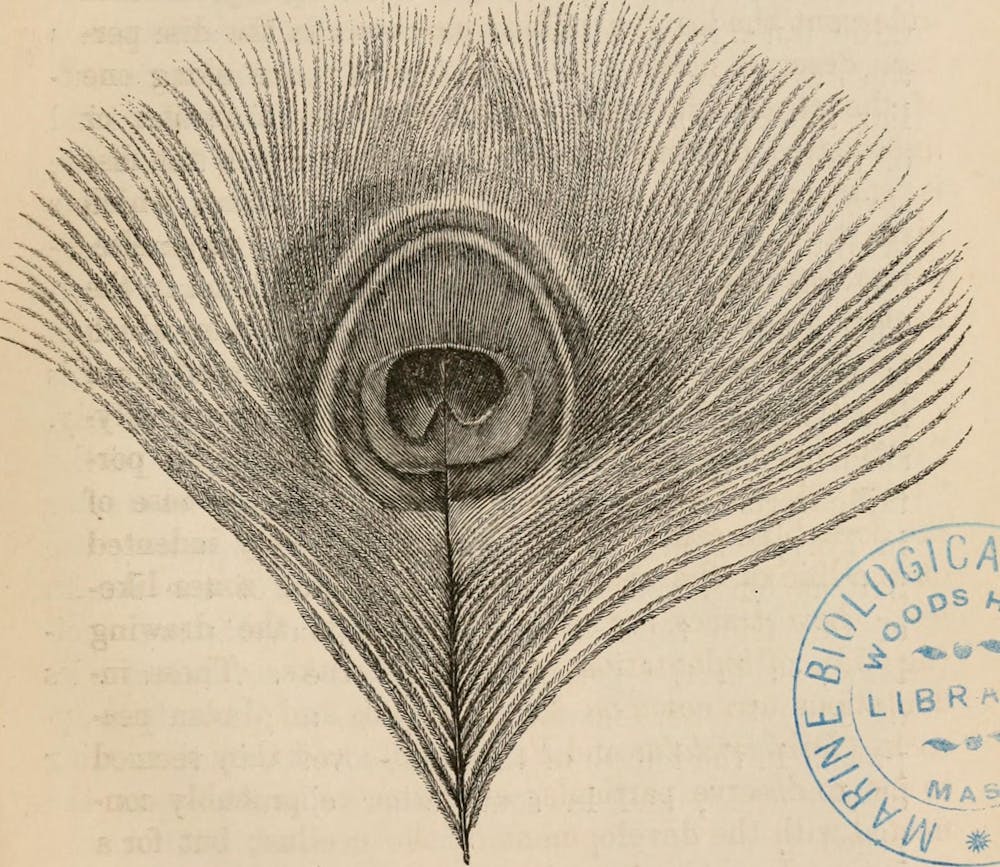
Black and white illustration
An illustration of a peacock feather as published in The Descent of Man.
Wikimedia Commons

Sexual selection, in contrast, explained how the struggle for mates led to adaptations with no survival benefit. The bright plumages of male birds of paradise and the spectacular tail of the peacock were a product of mate choice by female birds, he wrote.

A similar process, he theorised, explained the development of specialised weapons for battle, such as the large horns of beetles: a result of males struggling against one another to secure mates.

Applying this principle to humans, Darwin argued that in the early stages of humanity’s development, men took the power of selection away from women. Men struggled against other men to select their mates, he wrote, and so became stronger and more intelligent over time, while women became more nurturing in their pursuit to attract mates through the cultivation of fashion.

It is not difficult to see how this theory of sexual selection naturalised Victorian gender relations.


Read more:
How Darwin’s sexual selection theory co-stars in ‘The Handmaid’s Tale’


The development of the races

For Darwin, sexual selection also explained how different human races had developed.

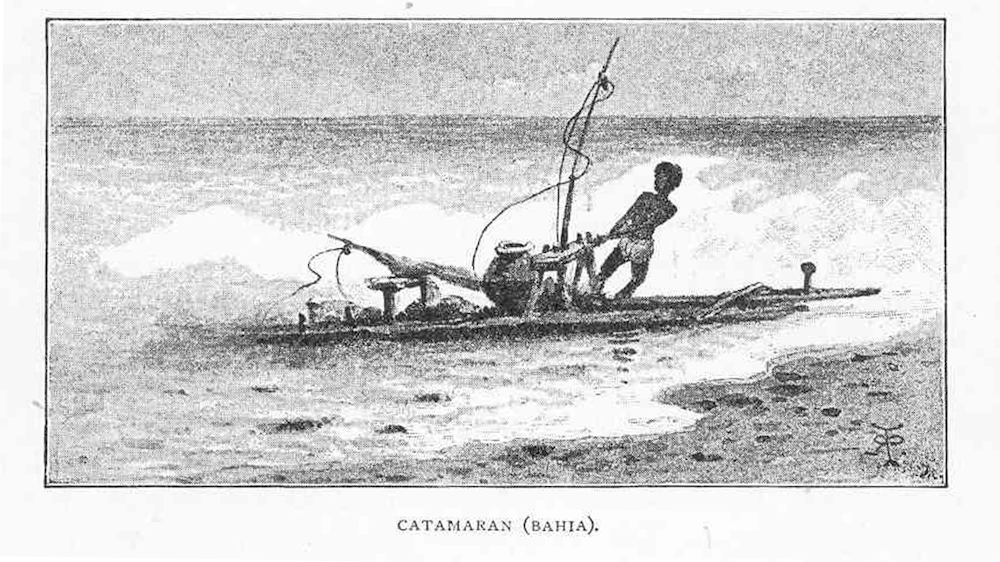
While he was committed to the theory of monogenism, believing humans were a single species, he also adhered to a racial hierarchy. As historian of science Evelleen Richards shows in her recent book, Darwin’s encounters with Indigenous peoples during his Beagle voyage, circumnavigating the globe between 1831 and 1836, led him to perceive vast physical and intellectual differences between the human races.

Black and white illustration
RT Pritchett’s drawing of a catamaran off the Brazilian state of Bahia, as seen on the Beagle Voyage.
Freshwater and Marine Image Bank at the University of Washington

He came to believe many of those differences could be explained by the processes of sexual selection. Differences in skin colour were, for Darwin, the result of diverse aesthetic preferences, which subsequently led to the development of distinct races. And as the races diverged, they were further shaped by inherited customs and social practices.

By accepting a racial hierarchy in this scheme, Darwin believed Indigenous peoples, or “savages” as he called them, represented “early stages” in human development.

In the final observation of the book, Darwin confessed he would rather be related to a “heroic little monkey” than to a “savage who delights to torture his enemies”.

His deeper message, however, was that readers should be consoled by the fact some of the nobler qualities of humans were shared by many of the great apes — even if they seemed to be absent from humanity’s “early stages”.

What makes humans moral?

The Descent of Man included three chapters dedicated to the subject of mind and morals. Darwin aimed to show there was “no fundamental difference between man and higher mammals” in their moral and mental faculties.

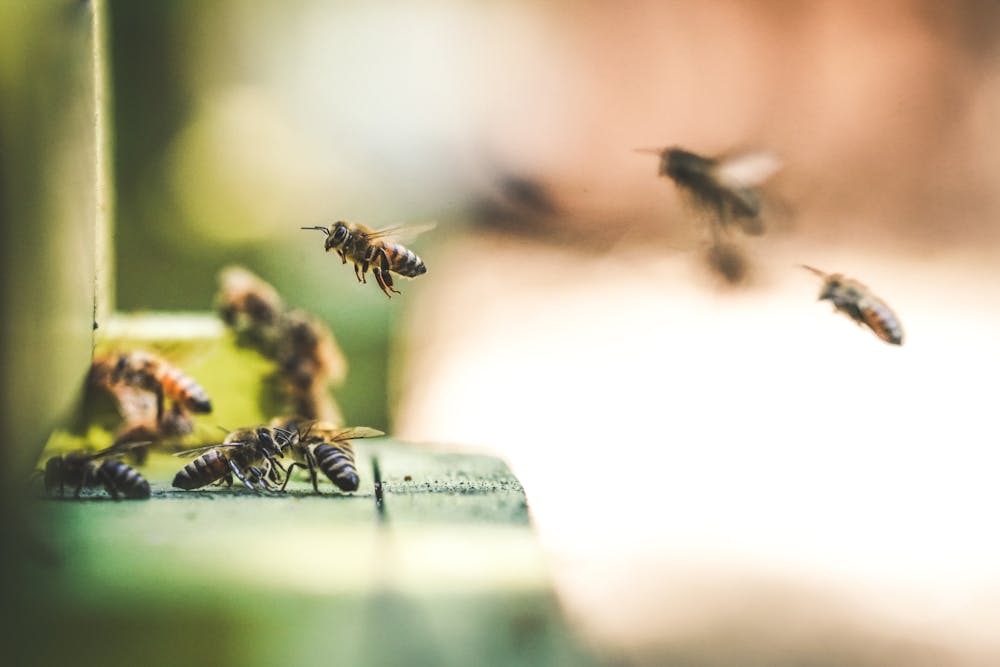
His moral theory relied heavily on animal observations, including those of dogs, apes, and even bees. He insisted humans shared the capacity to feel guilt, shame, and compassion with other social animals — therefore moral conscience was not unique to humans.

Darwin’s theory rejected essentialist and religious categories of “right” and “wrong”. He postulated different animals developed different moral systems depending on their environment and social structures, famously using bees as an example.

If, for instance, to take an extreme case, men were reared under precisely the same conditions as hive-bees […] our unmarried females would, like the workerbees, think it a sacred duty to kill their brothers, and mothers would strive to kill their fertile daughters; and no one would think of interfering.

Morality was the product of factors related to the struggle for survival and reproduction, and not divinely ordained.

Bees!
Morality, wrote Darwin, was not absolute: if humans evolved like bees, our understanding of right and wrong would be very different.
Eric Ward/Unsplash

Reception

Even though plant and animal evolution was largely accepted by the scientific community at the time, the subject of human evolution was still highly contentious. Darwin’s views were heatedly debated in the press and in public.

A reviewer for the Edinburgh Review observed:

no book of science has excited a keener interest than Mr. Darwin’s new work on the ‘Descent of Man.’ In the drawingroom it is competing with the last new novel, and in the study it is troubling alike the man of science, the moralist, and the theologian. On every side it is raising a storm of mingled wrath, wonder, and admiration.

By the end of 1871, the work was translated into Dutch, German, Italian and Russian.

Despite its commercial success, The Descent of Man was heavily criticised. At the beginning of 1872, Darwin lamented “hardly any naturalists” agreed with him on sexual selection.

Charles Darwin, as an ape, holds a mirror up to another ape.
Darwin was frequently caricatured in the press as an ape, as here in a colour lithograph by F. Betbeder.
Wellcome Collection, CC BY

Most naturalists felt Darwin attributed too much power to female choice, and they rejected the idea other animals could possess an aesthetic sensibility.

It was Darwin’s analysis of morality, however, that caused the greatest outrage. He stood accused of undermining the foundation of Christian society by advocating moral relativism.

Leading feminist Frances Power Cobbe rejected Darwin’s theory of morality as “simious”, while The Times thundered Darwin’s ideas could encourage “the most murderous revolutions”.

Darwin received hate mail from offended readers like Mr. D. Thomas, who referred to him as a “venerable old Ape”. Darwin began to be regularly caricatured as an ape in the press.

Descent today

Certain aspects of Descent hold up well, such as Darwin’s speculation humans originated from Africa, as evidenced by multiple fossil discoveries in the mid-20th century, notably by Mary and Louis Leakey.

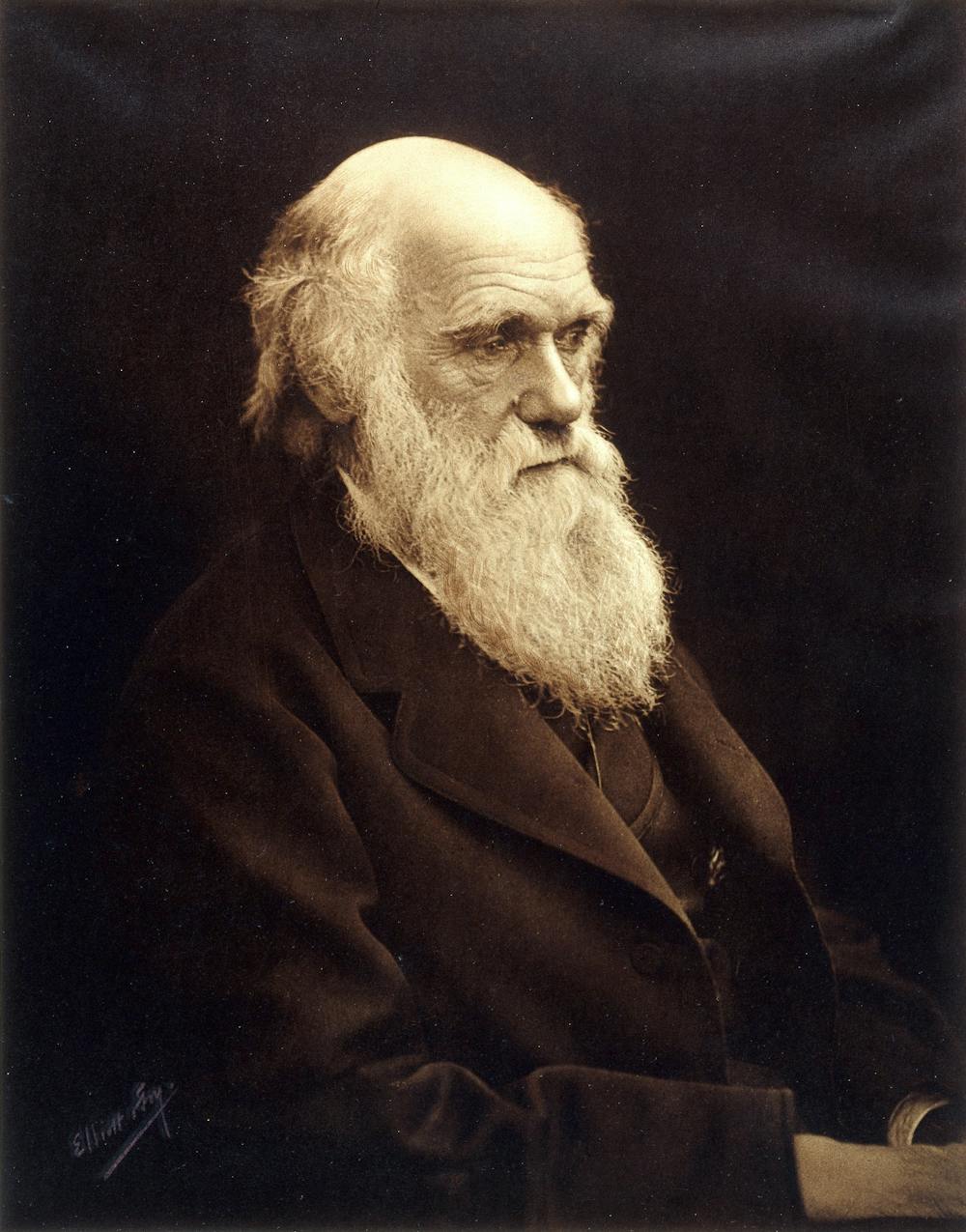
Charles Darwin.
Wellcome Collection

Many of his controversial insights in relation to morality have been central to recent debates about “evolutionary ethics” among moral philosophers considering the relationship between our understanding of morality and evolution.

And his theory of mind and morals informed the development of multiple scientific disciplines in the 20th century, including evolutionary psychology, neuroscience, and psychoanalysis.

The same cannot be said about Darwin’s theory of sexual selection. While the idea of “female choice” has been revived several times, such as in Robert Trivers’s parental investment theory which argues the sex that takes on the primary caring role has the greatest choice in a mate, there is very little consensus on the relationship between mate choice and beauty.

Moreover, most evolutionists consider male combat — as Darwin wrote about in horned beetles — a form of natural selection, rather than sexual selection.

And when it comes to Darwin’s general views of race and gender, he very much appears a man of his time and social background.

Today, what is most compelling about The Descent of Man is how Darwin’s portrayal of humans was made within the context of a system of evolution that applied equally to all of nature. At a time when other evolutionists stressed humanity’s uniqueness, Darwin instead sought to uncover man’s “lowly nature”.The Conversation

Ian Hesketh, ARC Future Fellow and Association Professor, The University of Queensland and Henry-James Meiring, PhD Candidate, The University of Queensland

This article is republished from The Conversation under a Creative Commons license. Read the original article.
Unknown's avatar

Book review: Claire Thomas’s The Performance triggers burning questions


Stanley Li/Unsplash

Cecily Niumeitolu, University of Sydney

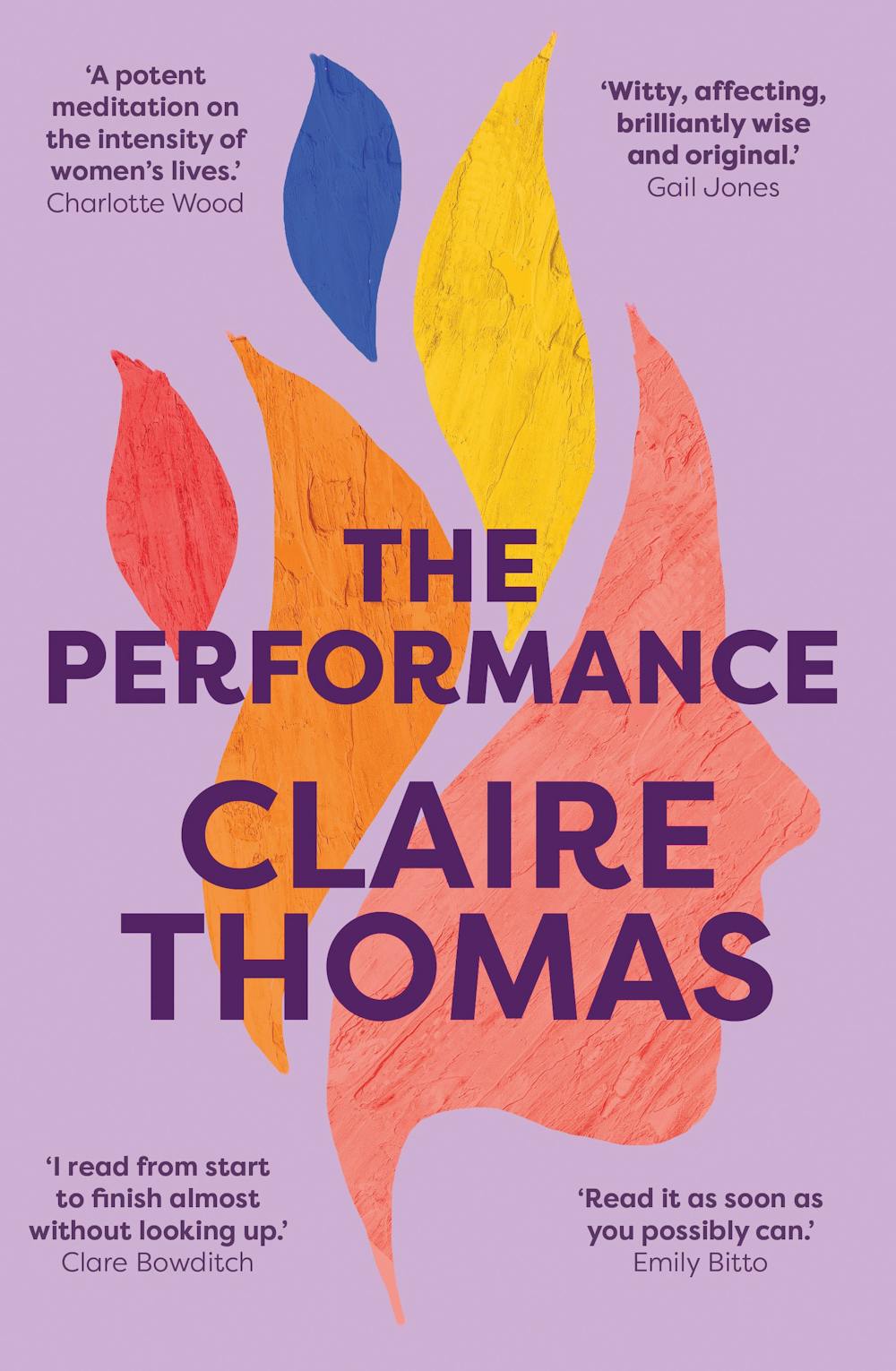
Book review: The Performance by Claire Thomas.

Theatre and its constant recreation, allows for the possibility of the political. Sometimes this is manufactured by directors as they place a loaded question on stage. Sometimes it occurs as an unexpected interruption to the usual flow of a performance.

Claire Thomas explores the possibility of both in her new novel The Performance.

Historically, Samuel Beckett’s Waiting for Godot (1953) has been a rallying point for theatre practitioners and audiences living through a state of crisis: waiting through incarceration, dispossession, racial segregation, or the wake of environmental disaster.

But what if our waiting for tomorrow succumbs to an earth that waits for no one?

At the centre of The Performance is another Beckett drama, Happy Days (1961).

Winnie’s tangential recollections and gestures on stage reverberate into the perspectives and memories of three complex women stuck in the auditorium, watching the play: Margot, the world-weary professor with a theatre subscription; Ivy, the philanthropist lured to donate more money through the offer of free tickets; and Summer, the usher working under duress.

The Performance book cover

The audience watches Winnie as the earth increasingly swallows her, and her terminal happiness. Happy Days is a play adequate to contemporary times: the sixth mass extinction.

The Performance is set against Australia’s bushfire season. Just as Winnie’s parasol catches alight in Happy Days, there is the latent hazard the cool theatre could go up flames. As Ivy watches the play, she thinks: “Climate change is the key moral question of the age”.

And yet, as Thomas explores through her characters, what about those who are not scientists, engineers, policy makers, experts, activists and politicians directly involved in the challenge of global warming?

“The world is a swarm of need, and Ivy knows she cannot save it,” writes Thomas.

Margot, Ivy and Summer do not truly choose to watch Happy Days. It is more so their place in the theatre that night happens through their financial entanglements.

The bodily functions and reactions — ranging from disdain to intimacy — are conducted through Winnie’s words and her pace. Inseparable from this shared performance is the site and its time:

Summer is feeling worried, so worried, but she cannot work out if she’s worried about Winnie, or herself, or the blazing world outside, and where the blood is pooling or spilling at this moment, inside a certain body or beyond it.

Breathe, Summer. Remember to breathe.

Phrasing the musical

Actors and directors who collaborated with Beckett have recounted how he directed his plays for stage, television and radio in musical terms.

The voice he wrote for demanded a certain colour, accent, tone, rhythm. The cast were his instruments and elements.

Billie Whitelaw, Beckett’s favourite female actor, said Beckett “conducts me, something like a metronome”.

Of Happy Days, she mused how “terribly courageous” Winnie was.

Every day, an institutional bell rings, and life demands of Winnie one more day. One more day to apply her lipstick, play her music box, kiss her revolver, to speak in “the old style”: meagre defences in a life barely witnessed, barely there.

And when these props fail Winnie — and when her companion Willie exists only as a possibility out of sight — she sings in hope of an ear in the darkness. She holds on.

The Performance echoes Beckett’s musicality. Thomas tends to the base, cloying, funny, fragile disturbances that make theatre an imperative act. She gives breadth to her characters’ thoughts in tension to the daily performances they play in the role of mother, grandmother, friend, wife, lover, daughter.


Read more:
Billie Whitelaw was one of Beckett’s greatest actors – she suffered for her art


She opens up the care it takes for these characters to not leap into easy connection, to allow space for their own and a stranger’s difference. She teases out how ideals and identities fall short of life’s ambiguity.

She gently holds the inescapable paradoxes of wanting, needing and enduring in these strange-becoming-stranger times.

Dissonances of life and art

The Performance is a poetics of the political, without preaching or judgement: it triggers burning questions. This is achieved through the novel’s clever structure. Chapters are a compilation of different points of view with no character’s point winning out over the others.

These perspectives converge in the middle of the book — an interval — which then affects the chapters after.

This book itches at sore points of neoliberalism, class, privilege (and lack thereof), race and Australia’s violent colonial history, gender, sexuality, and the bruises and yearnings that join, alter, or wear away the crossing paths of strangers, friends, and family.

For the treasure hunter, motifs and fragments of visual art, drama, and fiction weave through the plot. There are gestures towards the theatre novel like Virginia Woolf’s Between the Acts (1941).

And for those interested in Beckett’s biography, there are snippets of his life, body of work and Happy Days itself threaded throughout — both pointedly and hidden.

Written with passion, The Performance is a brave book: unafraid of confronting the dissonances of living in a modern Australia.

The Performance is out now through Hachette.The Conversation

Cecily Niumeitolu, PhD Candidate, University of Sydney

This article is republished from The Conversation under a Creative Commons license. Read the original article.
Unknown's avatar

Book review: The Husband Poisoner is about lethal ladies and dangerously tasty recipes


Unsplash/Sunbeam Photography, CC BY

Rachel Franks, University of Newcastle

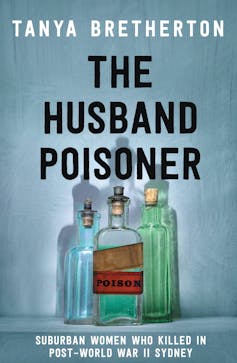
Book review: The Husband Poisoner, by Tanya Bretherton (Hachette).

Agatha Christie’s first novel, The Mysterious Affair at Styles (1920), introduces her iconic Belgian detective, Hercule Poirot, and features her famous quip: “poison is a woman’s weapon”.

Of course, poison — sometimes referred to as Inheritor’s Powder — is not gender specific. Rather, poison can simply be the preferred means of murder for clever criminals. Those who, as sociologist and author Tanya Bretherton points out:

… believed the perfect murder was possible if it could be made to look like something else entirely and no one even realised that a crime had been committed.

The title of Bretherton’s fourth book, The Husband Poisoner: Suburban women who killed in post-World War II Sydney (2021), suggests a work focused on damaged, disgruntled or daring wives in the early 1950s who were looking for the perfect solution to an immediate problem. But she goes further to look at how other family members were also targeted. She also gives some clues to explain why seemingly ordinary women decided to try their hand at murder.


Read more:
Friday essay: from convicts to contemporary convictions – 200 years of Australian crime fiction


Fact versus fiction

In a novel, writers usually ensure death by foul means is quickly established and everyone is a suspect. In real life, the poisoner’s goal for such a scheme is to make sure the idea of murder is never considered, death is something that is just … well, just unfortunate. Nobody is a suspect.

Poison is available to men and women, as the poisoner and the poisoned. This is a fact showcased when Emily Inglethorp, mistress of Agatha Christie’s Styles Court, unknowingly consumes strychnine. Yet, there is an unsettling number of examples of fictional and real-life female villains dispensing with people as easily as they might deal with a bug. This has long generated anxiety around the type of woman who might poison her husband instead of going through a messy divorce.

Some of this anxiousness is because there is a very specific type of malevolence present when one person decides to poison another. Poison requires planning — the methodical undertaking of procurement, delivery and the hiding of evidence. A show of grief or shock is helpful, but there is plenty of time for that. Poison is often slow.

Bretherton is an excellent story teller. Indeed, this book reads like good crime fiction with dialogue deployed to push the stories forward. From Yvonne Fletcher’s disposal of two husbands to Caroline Grills and her four victims, the women are vivid. You can see their desperation, their motivation, their living conditions, their terrible taste in fashion and their wickedness.


Read more:
From crime fighters to crime writers — a new batch of female authors brings stories that are closer to home


These women also have something crucial in common: they chose thallium. Discovered in the mid-1800s, thallium — a colourless, odourless tasteless metal — is highly toxic and indiscriminate when it comes to killing insects, rats, and people.

Another thing these women share is a strange mix of cowardice and bravado. Sure, poison might circumvent an ugly confrontation, but it is a brutal way to kill somebody. To sit and watch, and to wait it out. Bretherton does not hold back in describing how the victims suffered.

Bretherton’s interest in the social context of crime is clear, as is her understanding of social change in Australia across the 20th century. The time frame for this work showcases a world that was changing rapidly, but one in which progress on women’s rights was painfully slow. This was a period that pre-dated no-fault divorce and saw women’s minimum wages set at only 75% of men’s wages.

It was also a time when rats presented a serious public health issue in Sydney, and so rat poison was easy to buy. For some, these conditions would inspire murderous plans. Although there were several high profile cases and prosecutions in the 1950s, we may never know how many people fell victim to rat poison.

The Sydney crime wave also inspired the 2011 television movie Recipe for Murder.

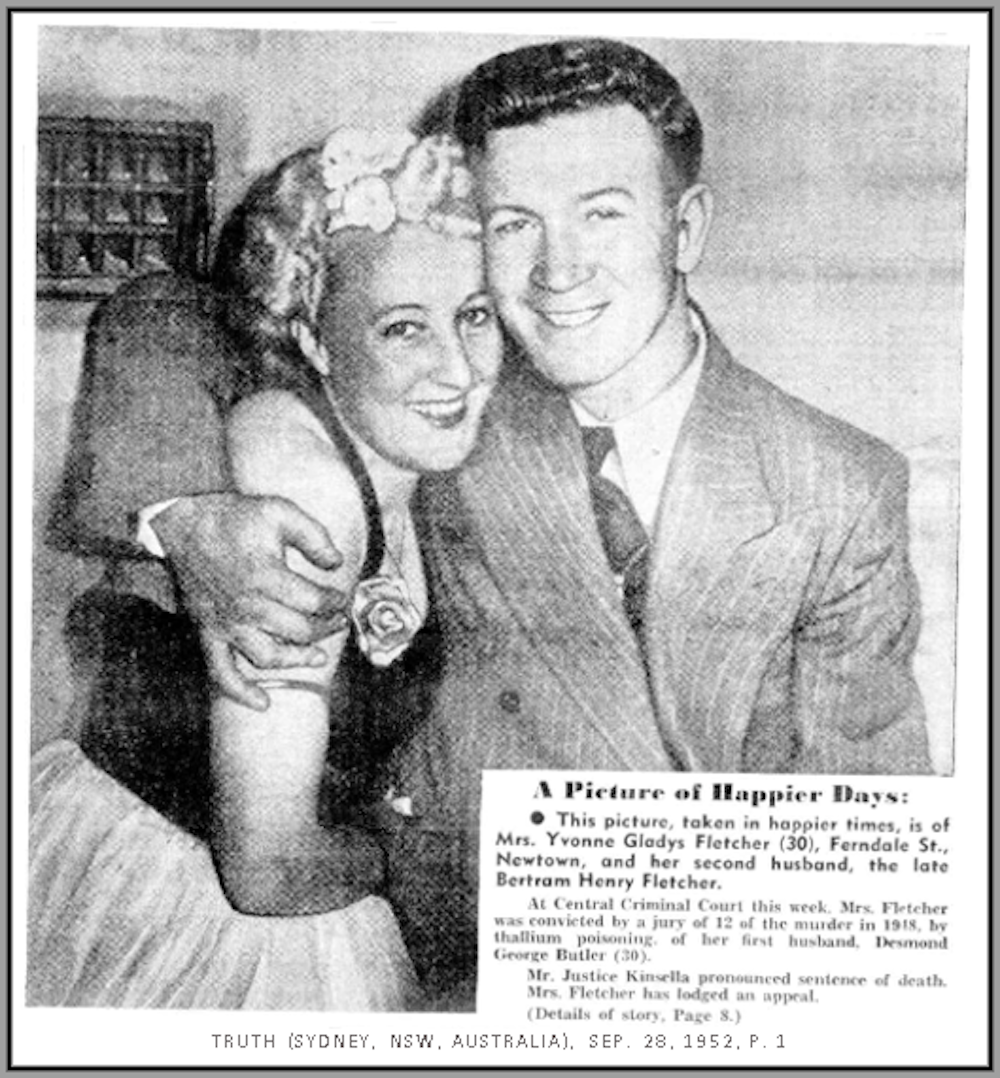
Newspaper clipping
The Fletchers in happier times.
Truth newspaper

A recipe for murder

Bretherton sets this work apart from most other true crime texts through her integration of recipes. Poison is not easily administered in neat doses via a teaspoon. It needs a vehicle.

In exploring how women served up thallium in beverages and meals, she reinforces the subterfuge required to poison somebody by including recipes from a family cookbook compiled by her own mother. If you enjoy a good, home-made split-pea soup, then it is possible you might have a slightly uncomfortable moment the next time that dish is served.

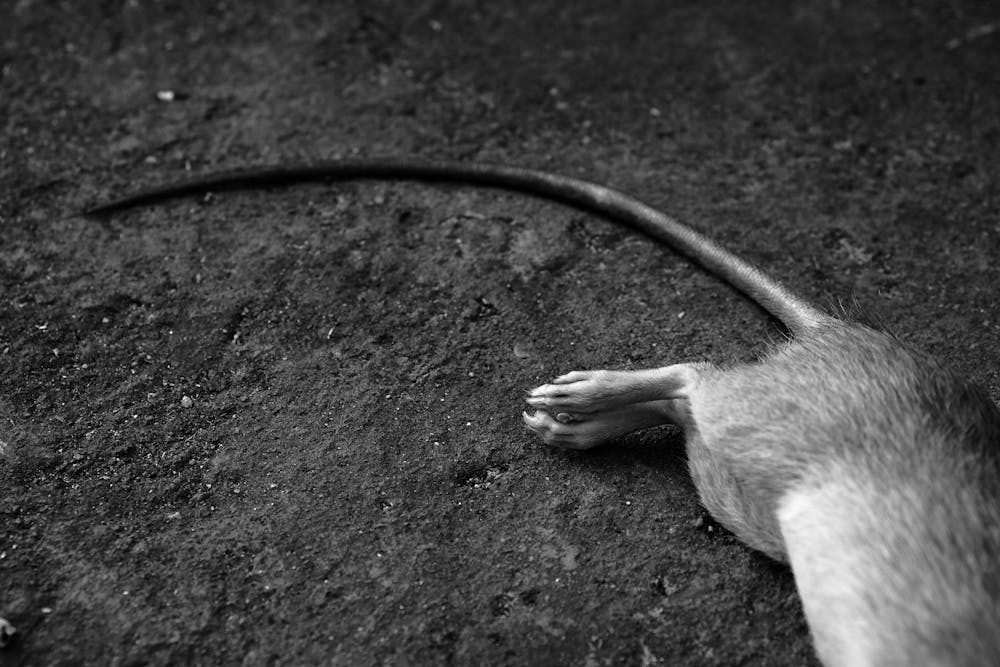
Dead rat's tail
Not just for rats …
Shutterstock

This is one of the great fears of poison that Bretherton makes plain — it is so very domestic. All the killer really needs to do is concentrate on staying calm and pretending everything is normal. Set the table. Put out a potato and bacon pie. Ask, “Another cup of tea, dear?”

Typically, food in true crime is evidence for a timeline: the suspect was seen leaving a particular restaurant around 11pm; or the victim, based on stomach contents, was thought to have died between this hour and that hour. But the women in Bretherton’s book take familiar comforts and turn them into weapons. The “crime and dine” approach, more commonly seen in crime fiction, is very effective in The Husband Poisoner.


Read more:
Friday essay: the meaning of food in crime fiction


The cases included have obviously been well researched, and there are several pages of endnotes. The book would have benefited from an index.

Bretherton’s work on the “thallium craze” offers a fascinating, if fiendish, cut of Sydney’s chaotic social fabric in the mid-20th century. Those who enjoyed her previous volumes and those interested in some of our darker histories will quickly devour The Husband Poisoner. Although, you might want to make your own cup of tea before curling up to do a bit of reading.The Conversation

Rachel Franks, Conjoint Fellow, School of Humanities and Social Science, University of Newcastle

This article is republished from The Conversation under a Creative Commons license. Read the original article.
Unknown's avatar

Guide to the classics: Alice’s Adventures in Wonderland — still for the heretics, dreamers and rebels


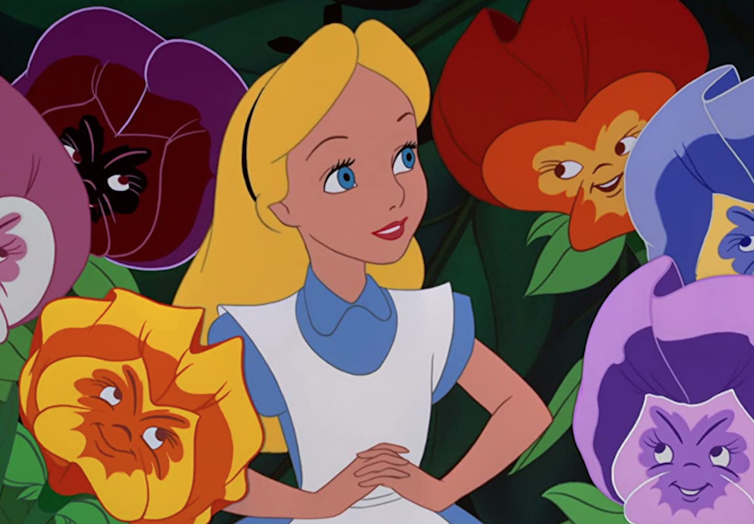
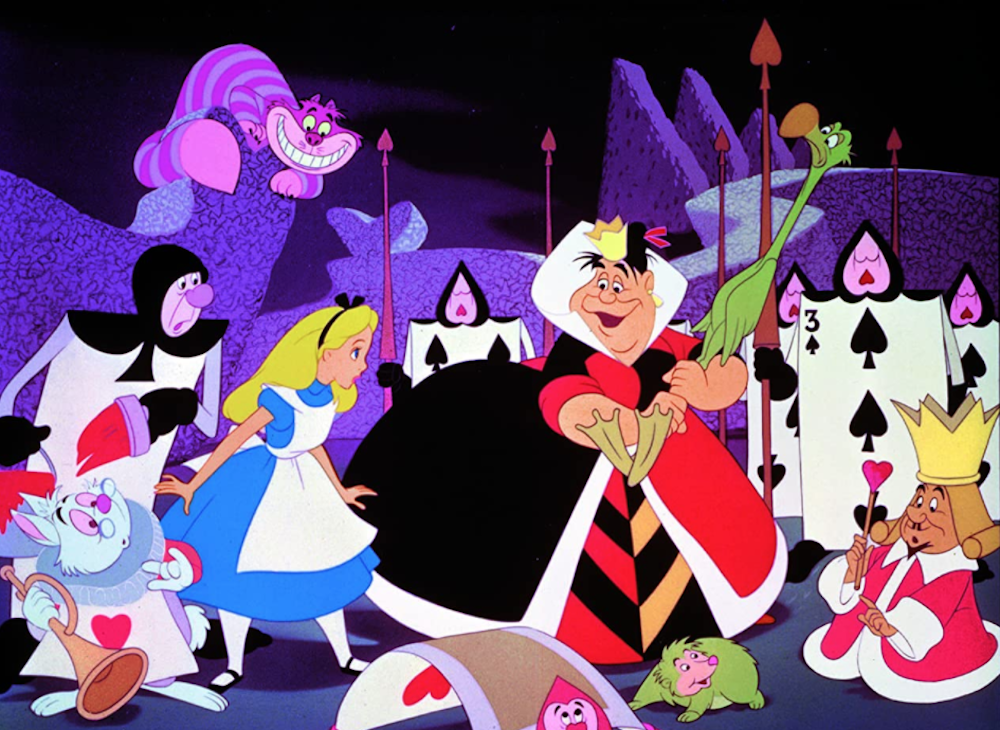
Walt Disney Animation Studios, Walt Disney Productions

Dr Jamie Q Roberts, University of Sydney

Alice! A childish story take
And with a gentle hand
Lay it where Childhood’s dreams are twined
In Memory’s mystic band,
Like pilgrim’s withered wreath of flowers
Plucked in a far-off land.

What is it that draws us back to Alice’s Adventures in Wonderland (Alice for short), both individually and collectively? What is it that makes Alice, in the words of literary critic, Harold Bloom, “a kind of Scripture for us” — like Shakespeare?

For we are drawn back. Since the publication of Lewis Carroll’s story, in England in 1865, it has never been out of print and has been translated into around 100 languages.

There have been numerous movie adaptations and many other works inspired by the story. Perhaps the greatest is a little-known, 1971 short film by the US Department of Health, Education and Welfare encouraging children not to do drugs.

One fears the film might not have had the desired effect: while the speed-addicted March Hare provides a salutary example of how poorly things can go on his drug of choice, the Mad Hatter’s performance on LSD is a little too compelling.

Beyond the page and screen, a quick Google search reveals Alice-inspired art — from graffiti to Dali — tattoos, music, video games and shops.

Alice has strong mainstream appeal; this was entrenched by Disney’s 1951 movie Alice in Wonderland (which is also responsible for people getting the title of the book wrong). However, Alice has become iconic for many subcultures, especially those with darker proclivities. Try exploring “zombie Alice” or “goth Alice”, or watching the new Netflix series, Alice in Borderland, which is set in Tokyo. (Alice is big in Japan).

And this brings us again to the beginning of the conversation (Alice reference here for the boffins): What draws us back?


Read more:
Guide to the Classics: The Secret Garden and the healing power of nature


Striking a blow against the adult world

The story begins with bored, seven-year-old Alice sitting on a riverbank with her older sister. Alice doesn’t care for the book her sister is reading because it doesn’t have pictures. She falls asleep and follows a dapper but flustered rabbit down a rabbit hole and into Wonderland.

In Wonderland she moves through a series of surreal vignettes in which she verbally tussles, but struggles to connect with, a stream of characters, such as the hookah-smoking Caterpillar, the Duchess, the Mad Hatter, the Cheshire Cat and the Queen of Hearts.

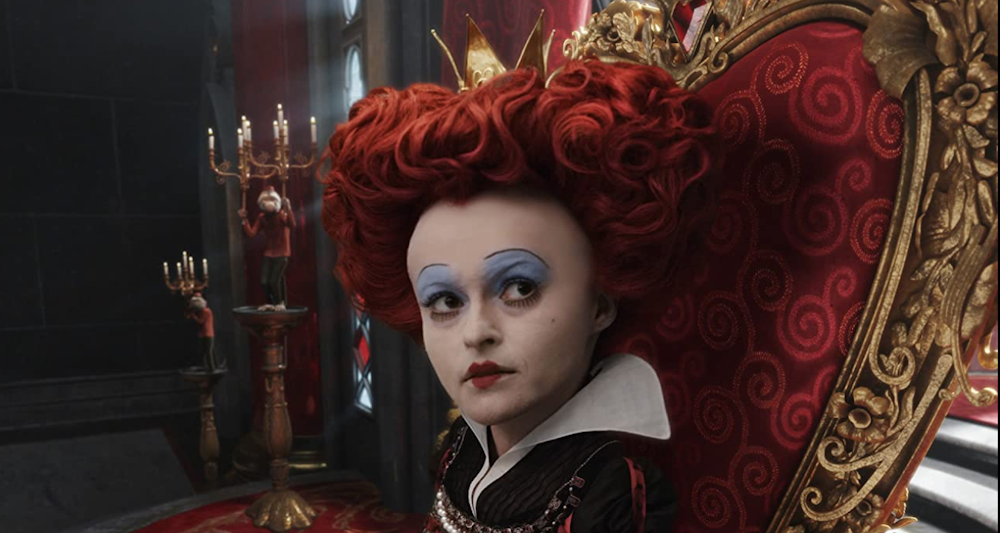
Helena Bonham Carter as the Queen of Hearts in Tim Burton’s 2010 film version of Alice in Wonderland.
Disney Enterprises Inc

We are drawn back to the book by the first-rate banter between Alice and these memorable characters. Consider the following from the Mad Hatter’s tea party:

“Then you should say what you mean,” the March Hare went on.
“I do,” Alice hastily replied; “at least — at least I mean what I say — that’s the same thing, you know.”
“Not the same thing a bit!” said the Hatter. “You might just as well say that ‘I see what I eat’ is the same thing as ‘I eat what I see’!”
“You might just as well say,” added the March Hare, “that ‘I like what I get’ is the same thing as ‘I get what I like’!”
“You might just as well say,” added the Dormouse, who seemed to be talking in his sleep, “that ‘I breathe when I sleep’ is the same thing as ‘I sleep when I breathe’!”
“It is the same thing with you,” said the Hatter[.]

Notably, many of the creatures Alice meets stand for the real adults in her life, in that they scold her, order her about, try to teach her morals and make her recite poetry.

It is this transformation of the adult world into a mad place and the elevation of the viewpoint of the child that also draw us back. When we read Alice, not as children, but as adults, we strike a blow against the adult world, which some of us, at least, have never quite adjusted to.

The Cheshire Cat provides the greatest indictment of Wonderland-as-adult-world when he says to Alice, “we’re all mad here”. The cat is the only creature in the book who connects with Alice. Mark this, reader: It is the one who can connect with children who is also able to see the world for what it is — mad!

A champion of childhood

The West does have a long history of romanticising childhood. Wordsworth, in his 1807 Immortality Ode, writes:

Heaven lies about us in our infancy!
Shades of the prison-house begin to close
Upon the growing Boy.

But even if the “romantic childhood” is a creation of bourgeois 19th century England — of the likes of Wordsworth and Carroll — it is a powerful and arguably noble notion. So let us follow it a little farther down the rabbit hole.

While Alice is the child-hero of the story because she pushes back against the mad adults in Wonderland, she herself is on the cusp of adulthood.

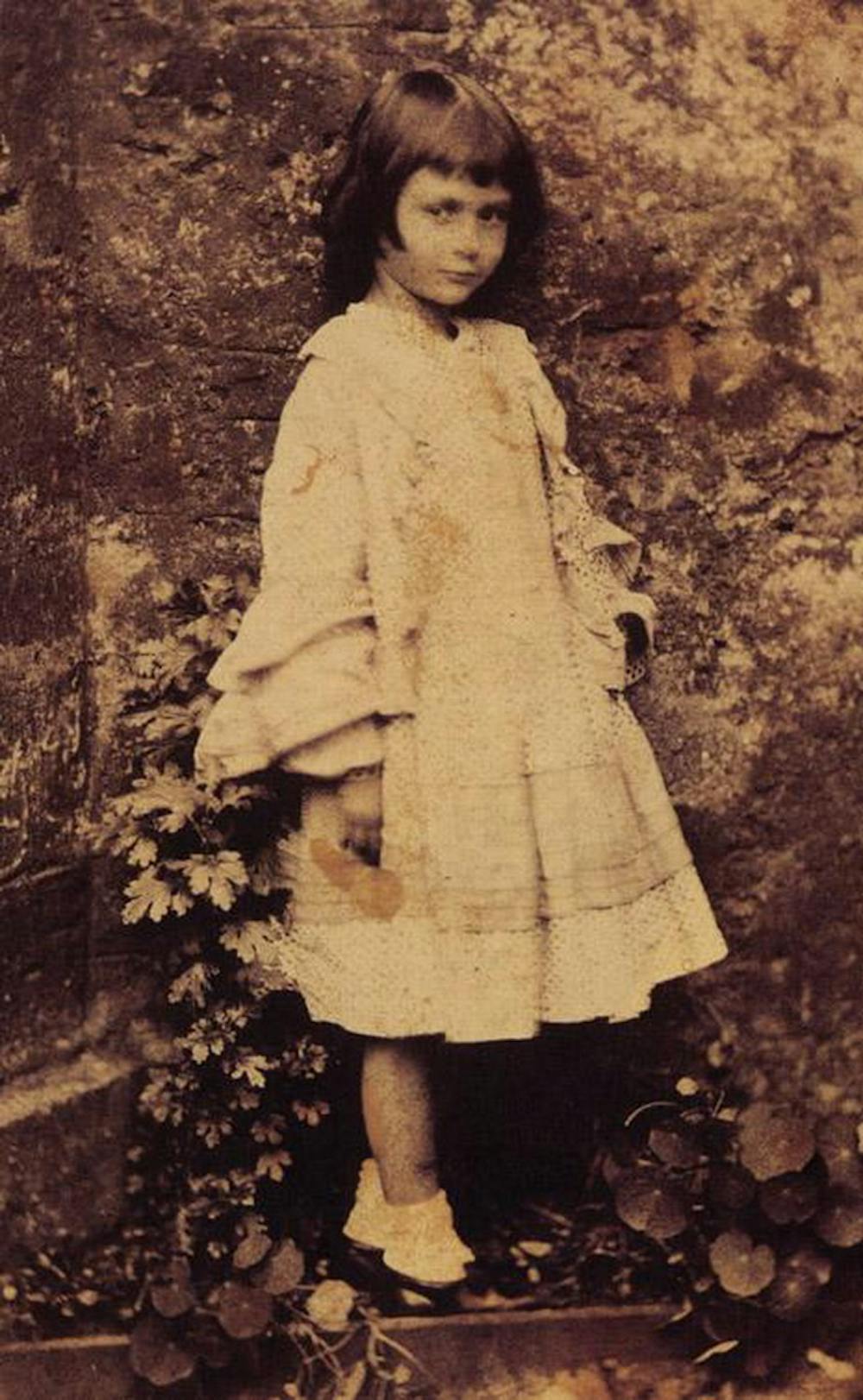
Alice Liddell, photographed in 1862.
Wikimedia Commons

This tragedy is alluded to in the poem, dedicated to the real Alice — Alice Liddell — with which the book begins (the key stanza appears at the start of this article).

Liddell was, in her childhood, Carroll’s friend. The first version of Alice was told to Liddell and her two sisters in 1862 on a boat ride along the Thames in Oxford.

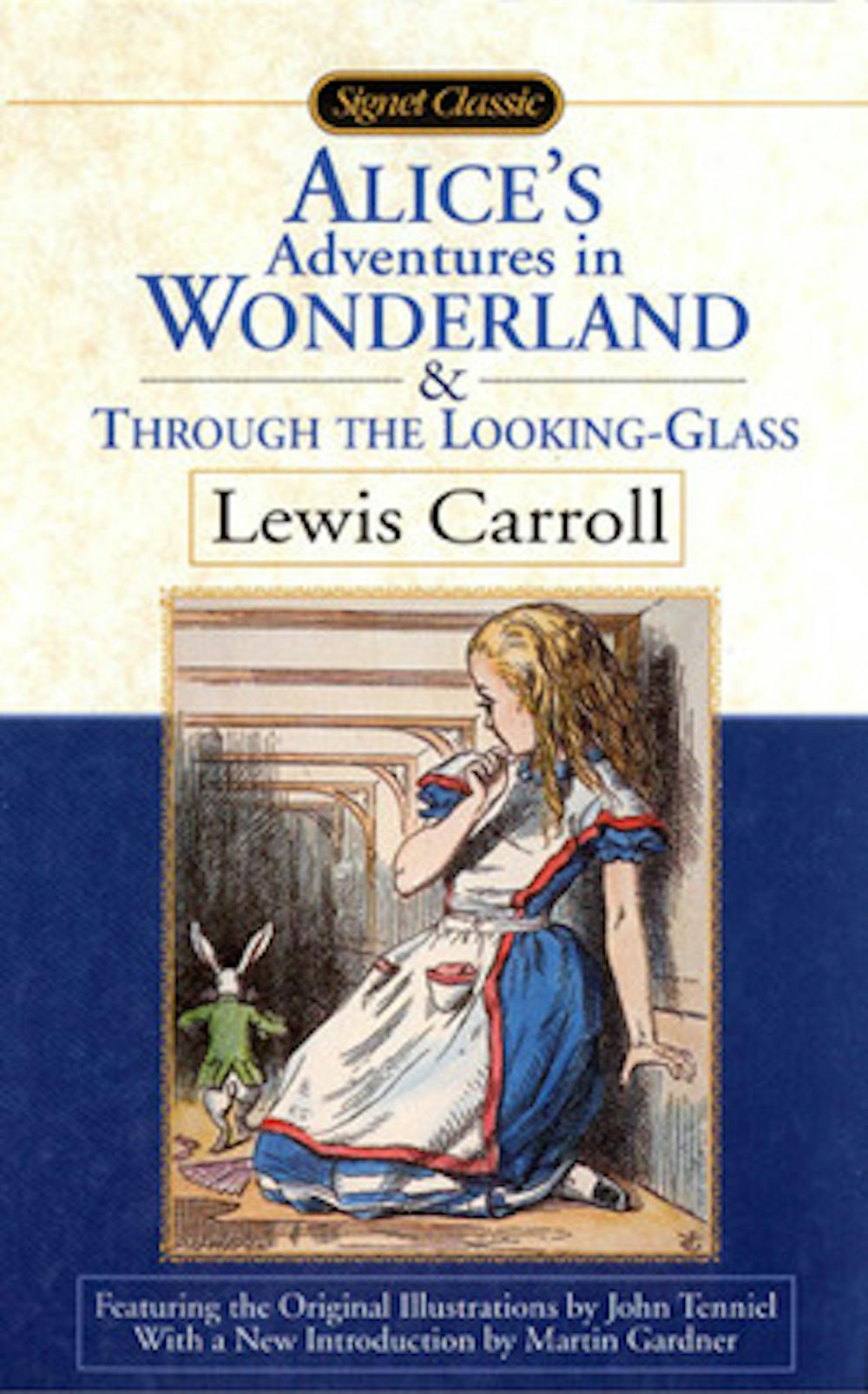
A 1907 edition of the book.
Wikimedia Commons

The tragedy of growing up is reinforced in the story itself. While Alice’s imagination is able to create Wonderland, it cannot sustain it. In the final scene in Wonderland, Alice is watching a trial where many of the characters are playing cards. Frustrated by the illogical trial, she shouts, “You’re nothing but a pack of cards!” and is transported back to the real world.

This leads us to think Wonderland itself is the hero of Alice: the champion of childhood. It is in Wonderland that time has stopped — as we learn at the Mad Hatter’s tea party — and where authority is impotent. Despite the Queen’s repeated edict, “Off with her/his head”, no one ever really dies.

‘The Carroll myth’

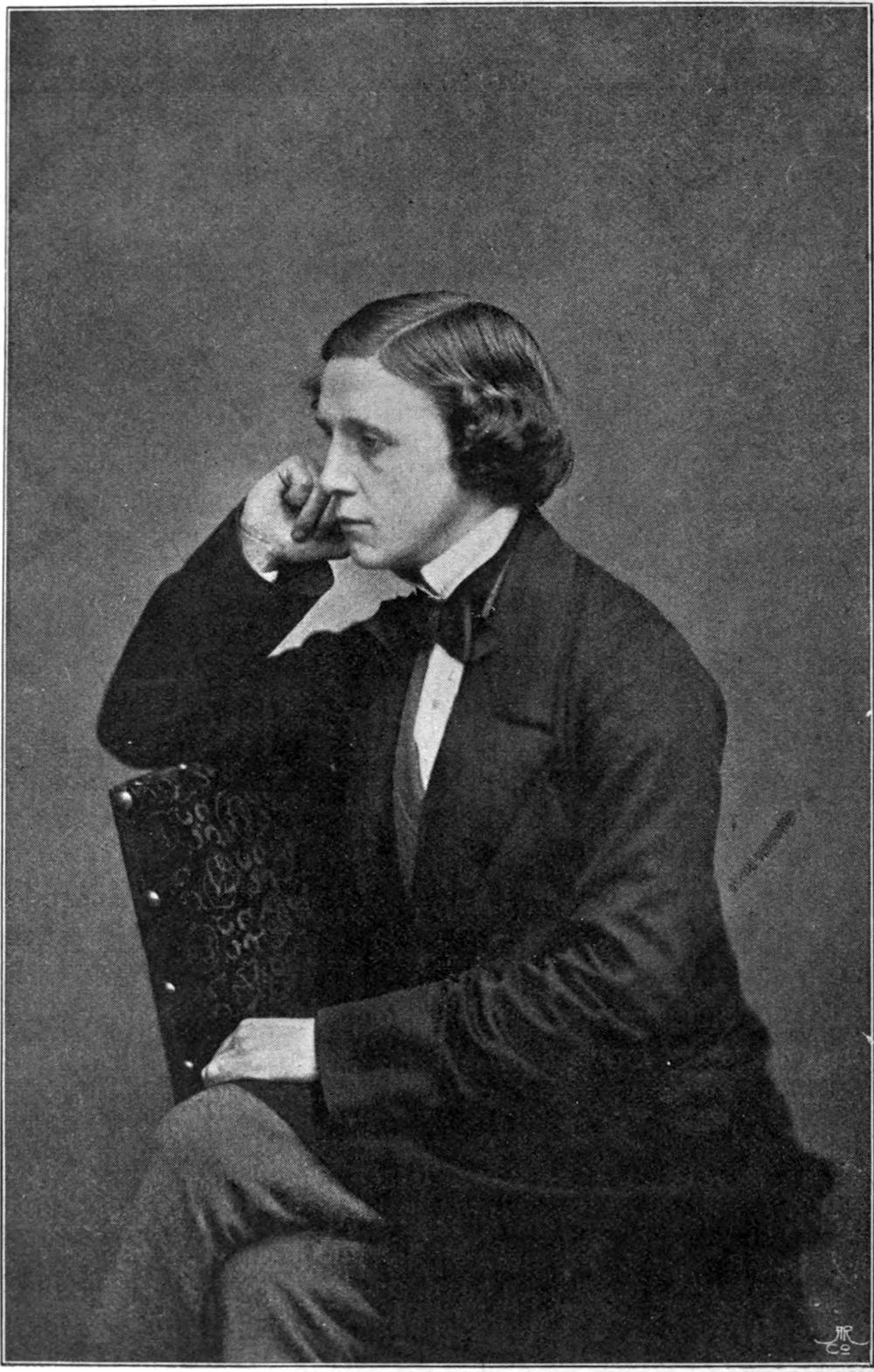
Lewis Carroll aged 23.
Wikimedia Commons

However, beyond Alice and Wonderland is Carroll himself. As Karoline Leach writes, in her remarkable book about “the Carroll myth”, at the centre of Alice lies, “the image of Carroll; a haunting presence in the story, a shifting dreamy impression of golden afternoons, fustiness, mystery, oars dripping in sun-rippling water.”

Lewis Carroll is the pen name of Charles Lutwidge Dodgson (not easy to say quickly, unlike “Lewis Carroll”), who taught mathematics at Oxford.

The “Carroll myth”, which was as appealing in the 19th century as it is now, is that Dodgson, through his alter ego Carroll, and his many (chaste) relationships with children, in particular, Alice Liddell, found a way back to the immortality of childhood that Wordsworth spoke about.

So, when we read Alice, we are ultimately communing with this mythical Carroll, and this is no small thing.


Read more:
Guide to the classics: Orwell’s 1984 and how it helps us understand tyrannical power today


Trolling pieties

Beyond the banter and the homage to childhood, we are drawn back to Alice because it contains a timeless contribution to the 1860s version of our own culture wars. Where we have political correctness, the 19th century Anglophone world had its own buzz-killing piety, at times foisted upon children — and adults — through verse.

David Bates, a 19th century American poet, is likely responsible for the now thankfully forgotten poem, Speak Gently (“Speak gently to the little child!/Its love be sure to gain/Teach it in accents soft and mild:/It may not long remain.)

Carroll’s glorious parody, which is spoken in Chapter 6 by the Duchess, a negligent mother, is:

Speak roughly to your little boy,
And beat him when he sneezes:
He only does it to annoy,
Because he knows it teases.

Here, and in other Alice poems such as “You Are Old Father William”, Carroll is trolling all those for whom piety is a mask for power. And like the pious, the politically correct are more concerned with their own superiority than with doing good.

An image from the 1951 film version of Carroll’s book.
Walt Disney Animation Studios, Walt Disney Productions

To cement the link between then and now, it is worth quoting from Stephen Fry’s recent objection to political correctness. It is as if Fry is providing us with the key to Alice and even to Carroll himself. “I wouldn’t class myself as a classical libertarian,” Fry says,

but I do relish transgression, and I deeply and instinctively distrust conformity and orthodoxy. Progress is not achieved by preachers and guardians of morality but […] by madmen, hermits, heretics, dreamers, rebels and sceptics.

We are drawn back to Alice’s Adventures in Wonderland because when we read it, we become the heretics, dreamers and rebels who would change the world.The Conversation

Dr Jamie Q Roberts, Lecturer in Politics and International Relations, University of Sydney

This article is republished from The Conversation under a Creative Commons license. Read the original article.