“One of the most infuriating habits of these people was their love of superfluous words,” thinks the colonial district commissioner to himself in the final chapter of Chinua Achebe’s Things Fall Apart. It is from the only section of this groundbreaking novel that is not written from the perspective of Africans. Telling of the colonisation of the Igbo from their point of view, the line foreshadows much: how colonisation will attempt to write African perspectives, deemed “superfluous”, out of their own histories, but also that, “infuriatingly” enough for an oppressor, the colonised Africans wield words of their own.
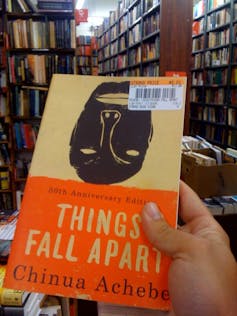
The great African novel? Paull Young via Flickr, CC BY-SA
Published 60 years ago this year by Heinemann in London, Things Fall Apart has sold more than 10m copies and been translated into more than 50 languages. It follows Okonkwo, a renowned warrior from a fictional Igbo village in early 20th-century eastern Nigeria. In straightforward and evocative prose, Achebe depicts how a culturally rich and well-governed society is destabilised by the arrival of Christian missionaries and British colonialists. Okonkwo is a flawed hero, but his attempts to confront the forces transforming his village speak to a long history of anti-colonial resistance.
Now considered essential reading in many African Studies and English Literature courses, Things Fall Apart can hardly be dissociated from the emergence of the African novel and modern African writing in general. However, Achebe’s debut also sparked a formative debate on language and African literatures. With English so intimately entwined with colonial history, the fact that the novel hailed as inaugurating a modern, independent Africa’s literature was also written in English became a point of contention. Was Things Fall Apart upholding a Western model, or confronting and subverting it?
Language is power
Language is never ahistorical or apolitical, but it carries an especial charge in post-colonial contexts. Educational, administrative and religious institutions had conducted life in the colonies in the language of the coloniser. Speaking it would often mean access to privileges, while speaking only African languages could mean economic disadvantage at best, physical punishment at worst. With this history in mind, Achebe and his contemporaries had to ask: did reaching global audiences to challenge their perceptions about Africa matter more than enriching their own languages by helping African readerships flourish?
The debate extended beyond the question of use and reach: it was also about post-colonial identities. Language provides the names, value systems and and discourses by which we “know” our world and ourselves. A dominant language dominates the terms by which your reality is constituted. To prioritise reading and writing in European languages could perpetuate colonial structures after independence, once again delineating who could speak, on what terms, and by what criteria African writers would be judged.
Forging identity
Whether to foster post-independence African literary cultures in European or African languages fuelled the historic 1962 African Writers Conference at Makerere University in Uganda. Many of its participants went on to become well-known literary voices from the continent. These included the first African Nobel laureate Wole Soyinka, a Nigerian poet and playwright; Grace Ogot, one of the first Anglophone female Kenyan writers to be published; and Christopher Okigbo, who together with Achebe established Citadel Press. Also prominent were Kofi Awoonor, a Ghanaian poet and diplomat who was among those killed in the 2013 attack in Westgate shopping mall in Nairobi, and Lewis Nkosi, whose literary career in exile from South Africa spanned nearly every genre.
There was division on the issue. Kenyan playwright and academic, Ngugi wa Thiong’o – then a student at Makerere – believed that the restoration of cultural memory rested on rehabilitating mother tongues. Now a major voice in African letters who writes mostly in Gĩkũyũ, Ngugi argued that, without this “decolonisation of the mind”, they would otherwise be forever living by moral, ethical and aesthetic values not their own.
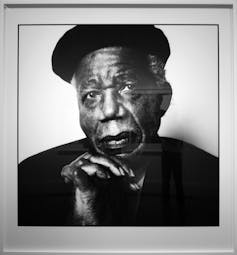
Portrait of Chinua Achebe by Steve Pyke (2008) New Yorker, CC BY-SA
Born into a family of Christian converts in eastern Nigeria in 1930, Achebe was educated in local Anglican schools and went onto become one the first graduates of the University of Ibadan. So English was indeed a part of his identity in ways not every Nigerian would have shared. But Achebe was therefore all the more aware that education and religion were complex facets of colonialism. Things Fall Apart dramatises this with nuance in the character of Nwoye, who rebels after his brother’s death by converting to Christianity.
Achebe advocated a “both” rather than an “either/or” approach in his 1965 essay The African Writer and the English Language. He argued that the African writer, in “fashioning out an English which is at once universal and able to carry his peculiar experience”, would bring about a far more subtle rejection of the historical dominance standard English represented.
Clearing ground
Ultimately, English was one factor that helped Things Fall Apart, as it did other works of African literature, to transcend national boundaries for six decades. But these probing political and cultural questions were carried right along with it – and they informed a legacy of African thought on the meaning and purpose of literature, which the continent’s contemporary voices can stand on today.
When African writers choose to contribute to literatures in their mother tongues, this can only be positive. But when they chose to reach the world’s Anglophone readers, it is as Achebe envisioned it: with “a new English, still in full communion with its ancestral home but altered to suit its new African surroundings”.
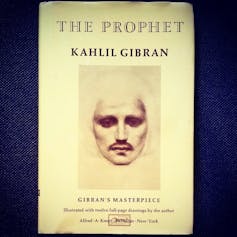
Kahlil Gibran (original spelling at birth “Khalil”) is a strange phenomenon of 20th Century letters and publishing. After Shakespeare and the Chinese poet Laozi, Gibran’s work from 1923, The Prophet, has made him the third most-sold poet of all time.
This slim volume of 26 prose poems has been translated into over 50 languages; its US edition alone has sold over 9 million copies. Its first printing sold out in a month, and later, during the 1960s, it was selling up to 5,000 copies a week.
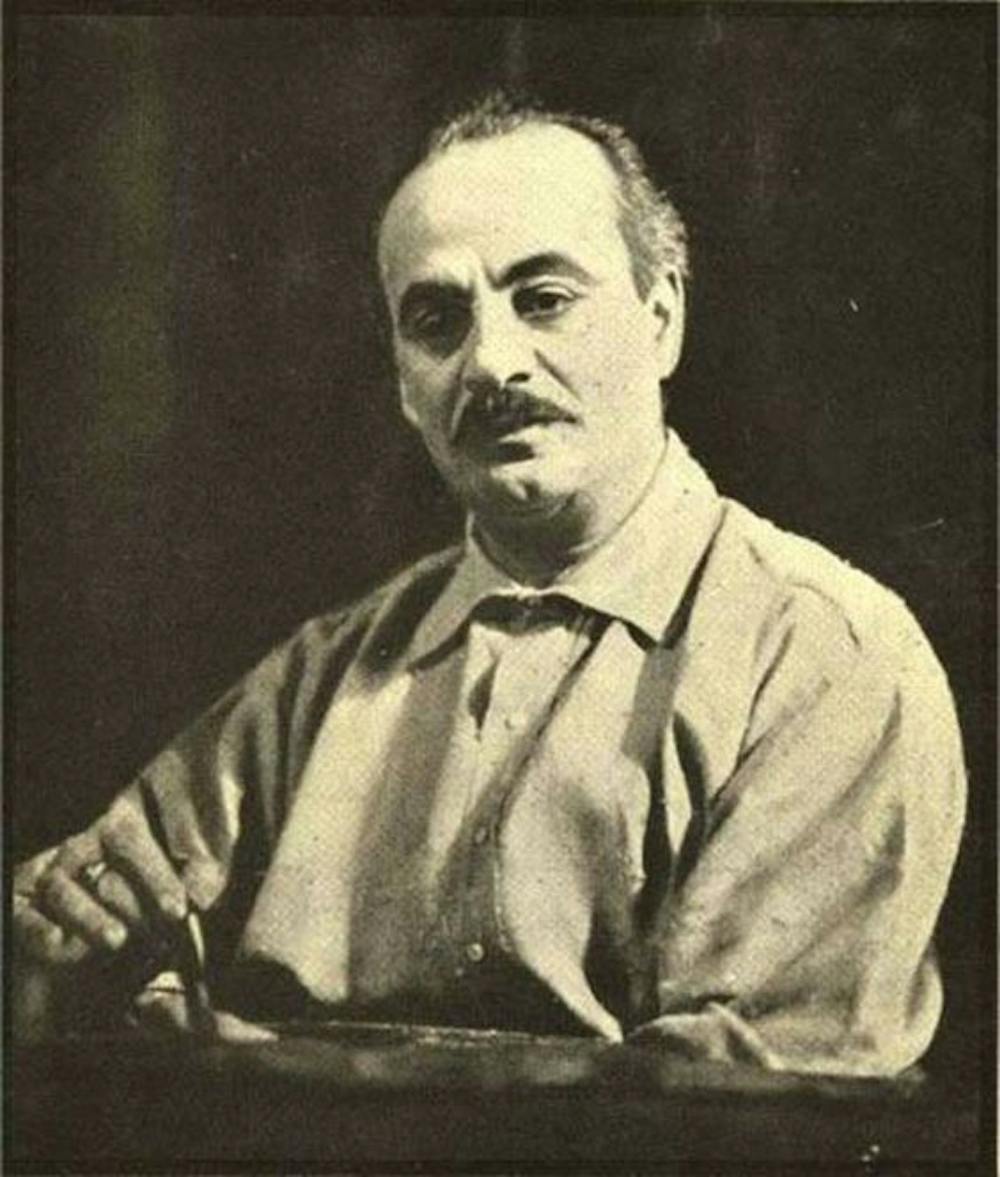
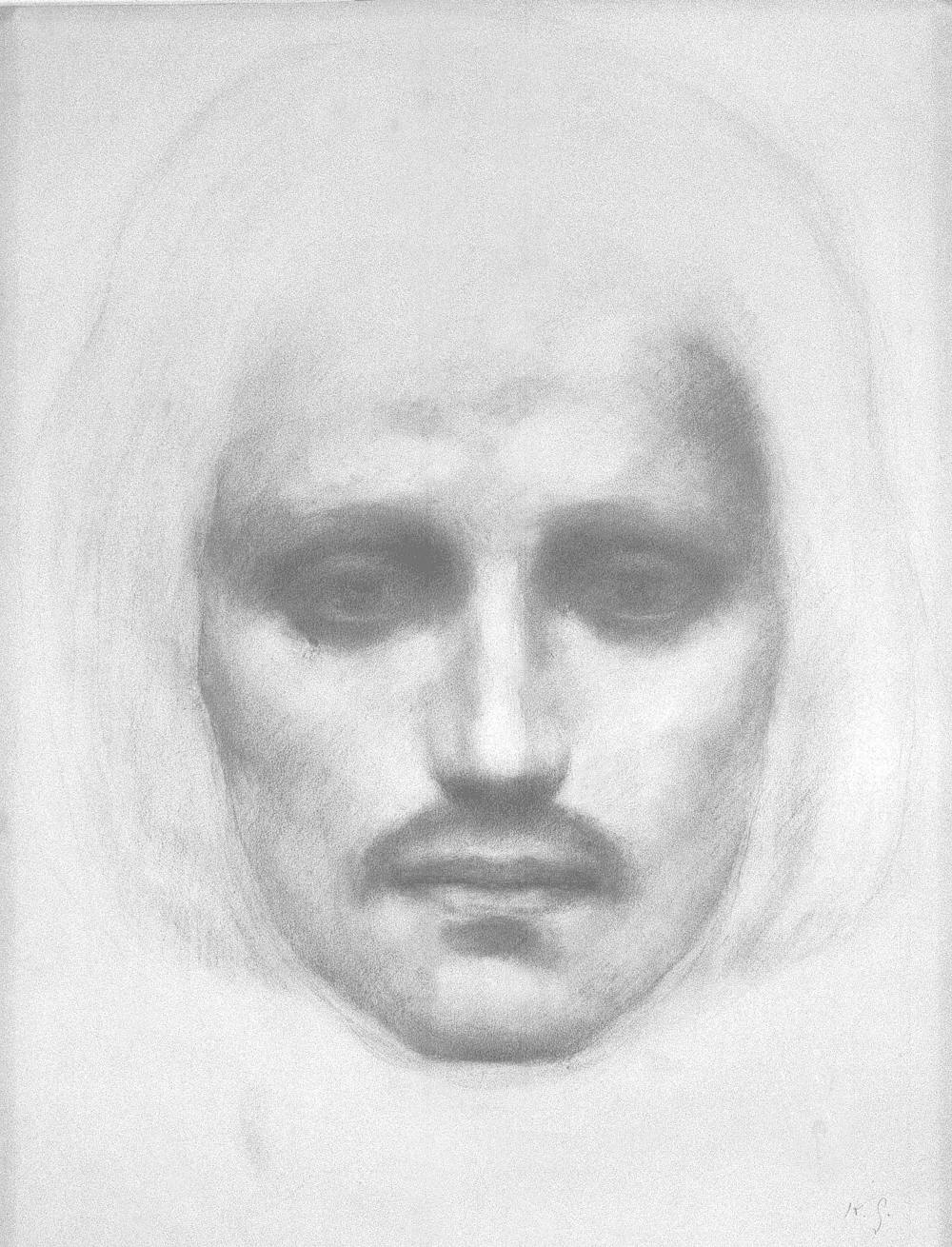
Kahlil Gibran. Gibran Museum
It has seemingly been able to speak to various generations: from those experiencing the Depression, to the 1960s counter culture, into the 21st century. It continues to sell well today.
What is fascinating about the Gibran/Prophet phenomenon is the bile of critics in the West in relation to the work. Outside of English-speaking countries, the Lebanese-born Gibran attracts far less disdain. Professor Juan Cole, from the University of Michigan, has noted that Gibran’s writings in Arabic are in a very sophisticated style.
The midwife of the New Age
The Prophet is interesting for a number of reasons, not only for its ability to sell. It is written in an archaic style, recalling certain translations of the Bible (Gibran was intimate with both the Arabic and King James versions) and has an aphoristic quality that lends itself to citation — for weddings, funerals, courtships — and accessibility. There are at least two high schools named after its author and it was quoted in a eulogy given at Nelson Mandela’s funeral.
The Prophet declares no clear religious affiliation, while at the same time operating in a quasi-spiritual or inspirational register. Many might even class it in that category of writing known as “wisdom texts”.
Gibran has been referred to as the midwife of the New Age, due to the role The Prophet played in opening a space for spiritual or personal counsel outside organised religion and its official texts. The Prophet appears to embrace all or any spiritual tradition (or at least to exclude none explicitly), and this vagueness or openness (depending on one’s reading) may account for part of its widespread appeal.
The book, which presents advice on a number of core aspects of being human — such as love, parenting, friendship, Good and Evil, and so on — employs a simple narrative device.
An exiled man, Almustafa, who has been living abroad for 12 years, sees the ship that will carry him back “to the isle of his birth” approaching. Filled with grief at his imminent departure, the townspeople gather and beseech him to give them words of wisdom to ease their sorrow:
In your aloneness you have watched with our days, and in your wakefulness you have listened to the weeping and laughter of our sleep.
Now therefore disclose us to ourselves, and tell us all that has been shown you of that which is between birth and death.
Gibran himself had been in the US for 12 years at the time of writing and, it could be argued, was in a kind of exile from Lebanon, the country of his own birth.
Among many subjects, The Prophet offers contemplations on marriage:
… stand together yet not too near together:
For the pillars of the temple stand apart,
And the oak tree and the cypress grow not in each other’s shadow.
On children:
You may give them your love but not your thoughts
for they have their own thoughts
You may house their bodies but not their souls,
for their souls dwell in the house of tomorrow, which you cannot visit, not even in your dreams.
And pain:
Even as the stone of the fruit must break, that its heart must stand in the sun, so we must know your pain.
The woman behind the poet
Biographers have emphasised Gibran’s tendency to pretension, to self-aggrandising, to fictionalising his own history, and his relations with women such as his sister, Marianna (who supported him with menial work), and especially his patron and confidante, Mary Haskell.
The latter remained devoted to him her entire life and also financed much of his lifestyle, enabling his artistic projects up until and beyond his success with The Prophet. Haskell had a penchant for enabling the less fortunate (although she herself was not wealthy), and Gibran was not her first project of this kind.
She continued to edit his work discreetly well into her own marriage, to which she had resigned herself after their engagement stalled. Gibran had a tendency to get involved, as Joan Acocella writes in her detailed New Yorker piece, with older women who could be useful to him.
He was a beautiful, “oriental” young man. Having grown up, from the age of 12, in the ghettos of Boston’s South End, he survived by hoisting himself, or finding himself flung, into more privileged circles thanks to his looks, his talent (he could paint and write) and his “mysterious” appeal of being the “other”.
Anglo-Americans could, in other words, accessorise with him. And they did. He was “discovered” by Fred Holland Day, a teacher, who dabbled in the worlds of Blavatsky and the occultism that was de jour, and who liked to photograph young men, both in exotic garments and out.
In Gibran’s case, since evidence suggests that he evaded a sexual relation with Haskell, he at least did not leave her with the financial burden of children (not uncommon in his time). He ended his life primarily close to his sole-remaining sibling, Marianna and his secretary, and later biographer, Barbara Young.
Due to the extensive number of edits that Haskell offered on most of Gibran’s works across his career (including his first publication, a short poem), it is almost certain that “his” output — like many artistic achievements — might be more accurately deemed a collaboration. The enduring convention of signing works with a singular name has tended to result in the eclipsing of efforts of crucial contributors, often women.
Despite the indifference of Western critics to Gibran’s work, Gibran’s credentials were not shoddy; he was a trained artist (at the Académie Julian) had his first exhibition at 21, and produced over 700 works in his lifetime, including portraits of Yeats, Jung and Rodin.
Gibran died young, at age 48, from cirrhosis of the liver, due to a propensity for large quantities of arak, supplied to him by his sister, Marianna. One wonders whether Gibran was able to find any solace in his own words in his final days of frailty.
In The Prophet, he (and, we could speculate, Haskell) write(s):
Trust the dreams, for in them is hidden the gate to eternity … For what is it to die but to stand naked in the wind and to melt into the sun?
And what is it to cease breathing but to free the breath from its restless tides, that it may rise and expand and seek God unencumbered?
Only when you drink from the river of silence shall you indeed sing.
Gibran has been criticised for his style of playing confoundingly but reassuringly on opposites, which, some argue, can mean anything. (One must note, however, that this unsettling of binary structures is a feature of enduring wisdom texts such as the Tao Te Ching, as well as recalling writings of Sufism and other traditions.)
Furthermore, for the son of destitute immigrants, who rose to fame via his beauty, talent and a blind conviction of his own specialness (which he nourished along with a small obsession with Jesus Christ, the subject of a later, and arguably better work), perhaps life had presented to him its own stark dualities: abjection/acclaim; poverty/wealth; indifference/desire; disdain/popularity; exoticism/racism.
For someone who undoubtedly “made it” (according to the grim criteria of the New World), Gibran may well have had more than a kernel of wisdom and know-how for those trying to survive its heartless, capricious climes. The fact is that millions of people have found momentary respite in his shifting, evocative words.
In a century where authority figures – whether political or representing various spiritual traditions – have seemed not only to fail their flocks, but to have actively betrayed them, Gibran’s perhaps fuzzy but lyrical advice has come to fill a vacuum of integrity and leadership. We need not badger readers of this work (who included, incidentally, the likes of John Lennon and David Bowie) who might use it to express their love, notate their grief, or ease their existential terrors.
The Prophet has worked as a widespread balm, as effectively as anything quick and concise can. Cheaper than an ongoing tithe to pharmaceutical companies, at $8.55, the going rate at Book Depository, it neither incites hatred, nor violence, nor religious divisiveness.
It says the kinds of things that we sometimes wish a trusted other might say to us, to calm us down. In these aggravated times, perhaps we can appreciate its sheer benignity and leave its boggling success be.
In 1996, a graduate student named Mark Robson was creating a digital catalog of the University of Leeds’ Brotherton Library when he discovered a small manuscript on the shelf. The elegantly titled “Poems Breathed Forth by the Noble Hadassas” contained 120 poems and a half-finished prose romance.
As far as Robson could tell, the manuscript hadn’t been read in over 250 years. He hadn’t heard of the “Noble Hadassas” – nor had anyone he asked.
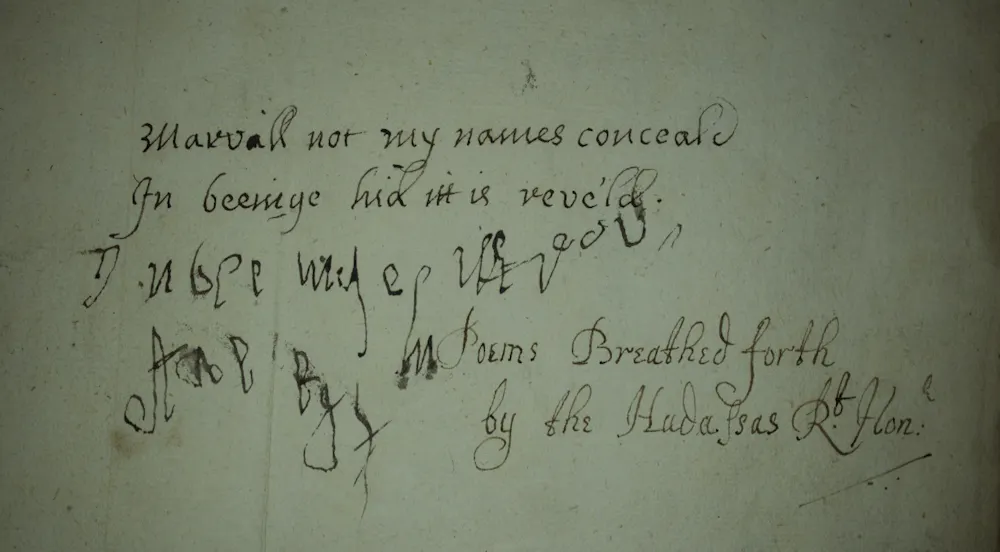
But a riddle scribbled in the manuscript offered a hint about her true name: “Marvel not my name’s concealed / In being hid it is revealed.”
In the Biblical story of Esther, “Hadassah” is Esther’s Jewish name. In early modern England, “Hester” and “Esther” were versions of the same name. They’re also anagrams. That allusion to “Esther” – in addition to a couple of references to an estate named Broadfield – gave scholars just enough evidence to search public records for possible authors.
The mystery manuscript turned out to be a collection of poems by a 17th-century English woman named Hester Pulter.
At first glance, the verses of a self-taught, unpublished poet might not seem remarkable. But Pulter was writing in an era of chaos and change in England. She was eager to explore some of the most exciting scientific ideas of the time. And in a time when women were expected to be silent and chaste, she took risks in her poetry and confidently expressed her ideas.
Now, a collaboration between literary scholars across the globe is bringing Hester Pulter’s poems to the public, in the form of an open-access digital edition called The Pulter Project, which launched on Nov. 15, 2018.
Who was Hester Pulter?
Pulter was born into the aristocratic Ley family in 1605 and married Arthur Pulter when she was relatively young. After marrying, she spent much of her life at the isolated Pulter estate, which was over a day’s journey from London. She wrote most of her poems at home and would occasionally travel to London to visit other family members.
Since Pulter mainly kept to herself and rarely left her home, most of what we know about Hester comes from public records. She gave birth to 15 children, only two of which survived to adulthood, and lived through the English Civil War, which lasted from 1642 to 1651.
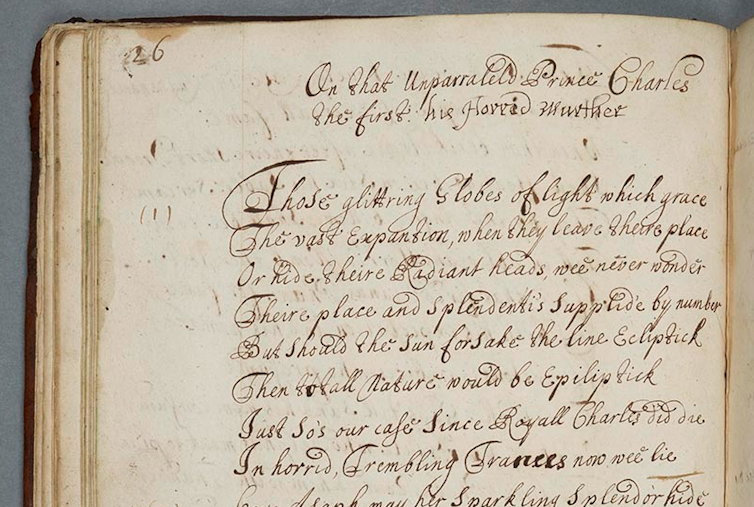
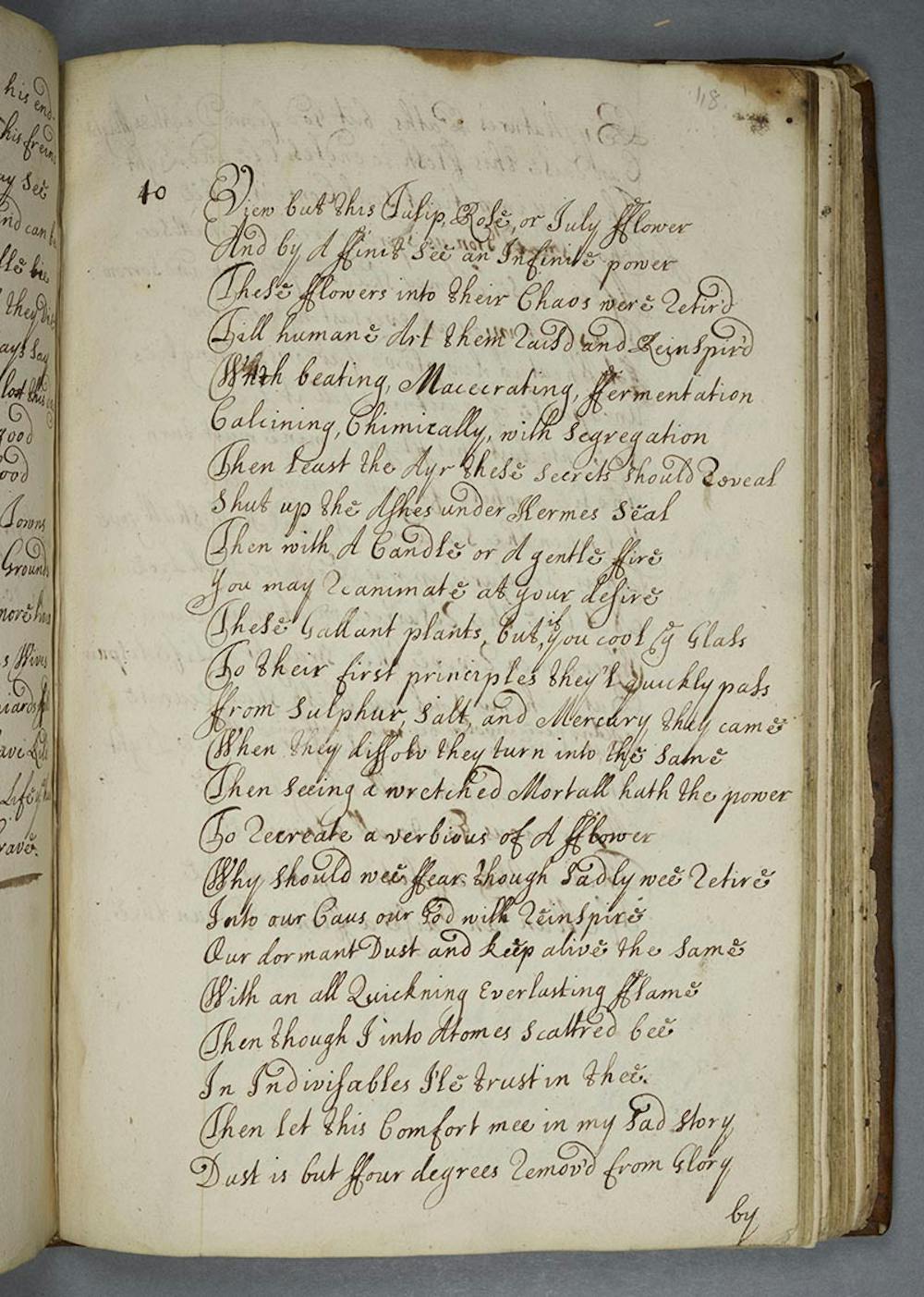
The original manuscript of Hester Pulter’s ‘View But This Tulip.’ University of Leeds Library, Brotherton Collection, MS Lt q 32
Literary scholar Alice Eardley, who produced the first scholarly edition of Pulter’s works in 2014, has suggested that Pulter’s relative isolation inoculated her from pressure by readers or literary society to conform to a certain style or subject matter. It gave her the freedom to write innovative, opinionated, emotionally complex poetry.
Pulter’s poems, which range from the political to the autobiographical, appear to have been written throughout the 1640s and 1650s. In the 1660s, Hester worked with a scribe to create a presentation copy of her draft poems, making notes and annotations on the manuscript.
It’s likely she never intended to publish her poems, however. In 17th-century England, women who published risked being seen as vulgar and sexually suspect. In order to avoid slander, the few women who did publish usually wrote about topics more aligned with proper womanly values: household guides, devotional books and diaries or memoirs of their husbands.
An aristocratic woman like Hester would have been expected to behave modestly, keep quiet and focus on her household rather than write about political conflicts and scientific experimentation. Pulter’s small family may have read her work, but it seems that her poems sat untouched after her death until they were rediscovered in 1996.
Poetry that’s observant, personal and political
Although Pulter lived a relatively isolated existence, her poems reveal a deep intellectual engagement with the most pressing issues and ideas of the mid-1600s. From the references she makes in her work, it’s clear that she had read works of natural history, alchemy and descriptions of America like William Wood’s “New England’s Prospect.”
She also appears to have kept up with major scientific discoveries, including Galilean astronomy and the microscope. In “Universal Dissolution,” she acknowledges Galileo’s discoveries, describing the sun as the “front and center of all light,” the star around which all other “orbs perpetually do run.”
Pulter was also a keen observer of nature. In “The Pismire,” she describes watching an ant colony at work for an afternoon. “View But This Tulip” shows off her familiarity with alchemy and early experimental practices, and in it she begins to think about the human body as composed of recyclable atoms. These poems place her within a culture of experimental observation that was part of the rise of modern science.
And she certainly didn’t shy away from expressing her political views.
Hester’s parents were Royalists – supporters of Charles I – and she remained a Royalist even when many of her extended family and neighbors supported Parliament instead. Many of her poems express grief at the havoc the civil war caused in England, and mourn a breakdown of religious and social hierarchy.
But her political poems avoid outright tribalism. Instead, they’re nuanced and well-informed, and they critique the ruling class for their role in social collapse.
Pulter is equally comfortable writing about personal experiences like her illnesses or a child’s death. She surveys the effects of time on her body in “Made When I Was Sick, 1647,” and in “Upon the Death of My Dear and Lovely Daughter, Jane Pulter,” deals with the grief of losing yet another child. It’s tinged with envy of parents with healthy children:
    All you that have indulgent parents been,
    And have your children in perfection seen
    Of youth and beauty: lend one tear to me,
    And trust me, I will do as much for thee,
    Unless my own grief do exhaust my store;
    Then will I sigh till I suspire no more.
She also expresses early feminist ideas, and addresses, in complex ways, how society constricts women’s behavior, devalues their work and diminishes their intellectual value.
From “Why Must I Thus Forever Be Confined?”:
    Why must I thus forever be confined
    Against the noble freedom of my mind?
    Whenas each hoary moth, and gaudy fly
    Within their spheres enjoy their liberty.
Reaching new readers
Hester Pulter is clearly worth knowing. Her works speak to the major issues of 17th-century England and provide a rare lens on English culture.
In an effort to bring Pulter’s poems to the public, early modern literature professors Wendy Wall and Leah Knight created The Pulter Project. They collaborated with a host of other scholars from the U.S., Canada, Australia and England to create a free, digital edition of Pulter’s works.
The Pulter Project allows readers to toggle between scans of the manuscript, basic and annotated editions of poems, and explanatory notes. Readers can also explore “curations” for each poem, which are images and selections from texts relevant to the content of a given Pulter poem.
Editors draw on their expertise of 17th-century English culture to contextualize the poems and also make connections to modern culture. The curated materials for “Made When I Was Not Well,” for example, discuss “invisible woman syndrome,” the social phenomenon of women disappearing from public view when they reach middle age, or are ridiculed and criticized for attracting public attention.
Curations for “My Love is Fair” explore racialized beauty standards, topics just as relevant for 17th-century readers as they are for today’s intersectional feminists.
The Pulter Project shows what’s possible when the literary canon is expanded to include new writers and more women. Poets like Hester Pulter change our understanding about who could – and did – participate in the scientific, political and intellectual debates of centuries ago.
Johannesburg was always a much photographed place from its earliest days. It was a city that grew up with photographers and their cameras. As a town of migrants and immigrants, people wanted to send postcards and photographic souvenirs back home.
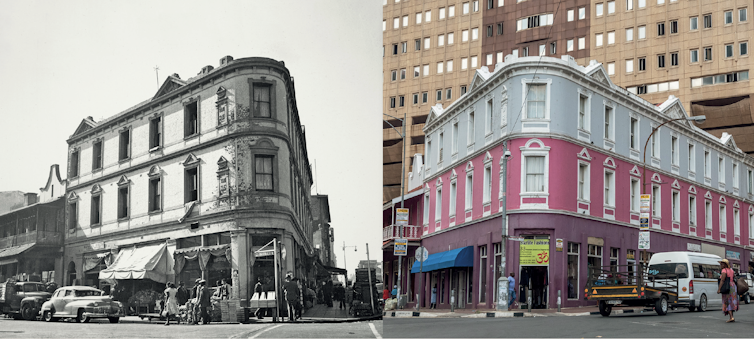
Some proof is in a new book, Johannesburg Then and Now, by history blogger, Marc Latilla. It is a series of photographic juxtapositions of early photographs of the city – dating from the 1880s to the 1940s – with contemporary images of the same street scene or building by photographer Yeshiel Panchia.
The book is descriptive rather than analytical, with the emphasis on Johannesburg buildings, places and streets and not its people. Latilla’s love and passion for his city comes through in his descriptions.
Young city
At a mere 132 years Johannesburg is a young city compared with cities of the world. London and Rome go back over 2000 years.
It started as a mining camp with a gold bonanza once George Harrison had found gold on the Main Reef in 1886. The new mining settlement was named Johannesburg – the origins of the name and who precisely was the “Johannes” of Johannesburg is still in dispute. The camp grew over time to a city. Today it is a metropolis that dominates the province of Gauteng, both as the provincial capital and the financial heartland of South Africa.
Johannesburg is a fractured city, divided in all sorts of ways. Geographically it’s split by the mines of the Witwatersrand – one can still see their remains south of the city while the north has a very different landscape.
Another divide was created by the railway which cut the town in half with the most affluent suburbs to the north and the less affluent to the south.
The city’s economic divide was also evident in the architectural styles of the residential areas which reflected status: from the working class, to the lower and upper middle class, and then at the very top end the grand estates on the northern ridges for the Randlords and newly enriched capitalist class.
The town was also divided by race from its earliest days. While there was always economic integration, segregated residential areas for different racial groups were the norm. The township of Soweto was created in the 1930s when the white government started separating black people from white people.
This policy of racial and class separation was perpetuated further when apartheid became official policy in 1948. It also led to forced removals of black people to townships outside the “white” city.
Growing in circles
Johannesburg has always grown in concentric circles. Municipal boundaries were periodically extended, mapped and basic services of water, sewerage, lighting, tramways financed by an increasing number of ratepayers brought into the net to support the city. Soweto, once the internationally recognised site of the 1976 youth uprising, is now part of the city, but so is the glitzy new glass and concrete post-modern city of Sandton.
The Johannesburg that has been captured in this book though is the old Johannesburg; what was called the Central Business District and its surrounding suburbs. This is Johannesburg from 1886 to a date more or less 50 years later when the city celebrated its jubilee with the Great Empire exhibition at Milner Park in 1936.
I should declare an interest – I was first asked by Penguin Books if they could use an image of an old early title deed that I had written about and then to give the book a preliminary early opinion. As historian I found myself drawn in to assist in some fact checking and comments to help the author. Of course the selection of photographs and his commentary remain his entirely.
The old photographs were taken by countless unknown and mainly anonymous photographers. They are remarkable in their own right. It was so much more difficult to take and make a photograph in 1900 than in our digital age. Those old photos in black and white are works of art as much as are the perfect colour and light reflected images of today. The sources of the old photographs are primarily from collections held by the University of the Witwatersrand, Museum Africa and the Transnet Heritage library. The early photographs are tend to be undated, so that the “then” can be any time from circa 1890 to the 1930s and even later, while the now photographs are all in colour and clearly belong to the last few years.
Superb find
My favourite photo is the old aerial view of the Harrow Road redevelopment when the first Johannesburg freeway was engineered (Harrow has since been renamed after a famous Johannesburger, the liberation struggle stalwart Joe Slovo). The photo allows us to see precisely how Harrow Road was widened and changed direction in the fifties. This single photo is a superb find.
A book such as this makes a contribution to heritage because it captures, assembles and documents the old and now the new. Where old photographs have been found recording what a particular building looked like and the building is still there, such photographic documentation strengthens the heritage preservation case.
However, none of the grit, crime, grime, litter or lack of maintenance we battle against today is visible in the modern photographs. This is the Johannesburg we don’t see: the crisis of homelessness and densification of dwellings. Who, for example, would know in the photo of Plein Street park that it is actually now a dormitory area for dozens of homeless people without jobs? Is it the city or history or harsh economic realities that has failed them? Of course one can argue that modernization and urbanization always left victims and the city of gold did not bring fabled wealth to all .
Johannesburg Then and Now is a fascinating book. It’s important for cities to preserve their pasts , because “Roots” matter as much as “shoots”. This book can perhaps start a discussion about what ought to be appreciated and “saved”. The book will remind city planners to include heritage in their planning for a 21st century city.
Johannnesburg Then and Now is published by Penguin.






 At the BookShelf
You must be logged in to post a comment.