Unknown's avatar

Black feminist writers in South Africa raise their voices in a new book


Detail from the cover of the book Surfacing.
Wits University Press

Desiree Lewis, University of the Western Cape and Gabeba Baderoon, Penn State

In the third decade of the new millennium, despite many publishers still seeing black women’s writing as having a limited market, readers have far more access than before to publications by writers from the global South. In particular, the perspectives of black women are certainly more visible in the public domain.

Yet gaps and erasures – based on intellectual authority, financial resources and visibility in the knowledge commons – mean that it’s still easier for work by black, postcolonial and decolonial feminists from global centres to secure publication and wide distribution.

As a result, the growing audience of radical young readers grappling with questions about race, gender, sexuality and freedom in global peripheries often have to turn to critical writing outside their national contexts, which inflect the topics they want to explore. Even for many restless and radical readers in the global North, much remains silenced and absent.

A book cover for 'Surfacing' with the names of the contributors written out in ink pen italics across the surface of the book.

Wits University Press

In the new book Surfacing: On Being Black and Feminist in South Africa, South African author Zukiswa Wanner has contributed a piece titled Do I Make You Uncomfortable? about writing in a white publishing industry.

It reminds us that black women writers in South Africa have distinct experiences of being stereotyped. Wanner sums this up in her confrontation with one reviewer who described her work as “chick lit”.

And if black women are the majority in South Africa and I am therefore the standard, shouldn’t it just be called a good book? And I was chick lit versus what? Could she point out to me the male authors in South Africa whose books she’d referred to as ‘cock lit’? Take (JM) Coetzee, with his women characters who aren’t well-rounded and don’t seem to have any agency; was he cock lit?

Undocumented and innovative

Surfacing traces a path within black South African feminist thought in 20 dazzling chapters. The collection shows how radical black South African women have been part of several traditions of undocumented intellectual and artistic legacies. In the book Mary Hames recalls, for example, the radical spaces outside conventional classrooms in which she studied banned material during the anti-apartheid struggle.

Our aim as editors was to show how writers in the academy, fiction-writing, journalism and the art world are grappling innovatively with essential topics. Like the politics of self, the complexities of sexual freedoms and identities beyond the blunt frameworks of human rights models. And how to think about “knowledge” more completely and adventurously.

The rich descriptions and interpretations of local realities in Surfacing refine the categories of transnational and black feminism. They bring the breadth of black feminist engagement in the south of the continent into fuller view.

Sara Baartman and Winnie Mandela

The book is acutely aware of the contrast between the absence of acknowledgement of most black South African women writers and the way certain women, like Khoi historical figure Sara Baartman and activist and politician Winnie Mandela, have been made into global icons. It therefore starts with reflections on them.

Sara Baartman has been exhaustively examined in the north and Winnie Mandela has been the subject of numerous biographical, fictional and non-fictional projects by white scholars.

Intervening into this legacy, author Sisonke Msimang writes an emphatically self-reflexive study which reframes Winnie Mandela. Yet in doing so her interest “was never about ‘cleaning up’ her image or revising facts. It was about recognising that the facts about her required contextualisation.”

Most publications by black South African women are seen as testimonial or fictional. But the contributors of Surfacing seek both to contribute to and to interpret existing bodies of knowledge. In addition, the collection will undoubtedly be remembered for its enthralling writing.

New narratives

Many chapters take the elastic form of the personal essay. For example, academic and poet Danai S. Mupotsa draws on poetry to talk about experiences of both intimate and public scale. Academic and author Pumla Dineo Gqola pens a playfully serious letter to the South African artist Gabrielle Goliath. And photographer and curator Ingrid Masondo collaboratively authors an essay with the photographers about whom she writes.

In other pieces, academic and author Barbara Boswell recounts her fascinating exchanges with feminist student activists during the #RhodesMustFall protests in her essay about the meanings of pioneering feminist author Miriam Tlali for the present. Academic Grace Musila’s delightful My Two Husbands unfurls the experience of being a brilliant student whose intellectual accomplishment was seen by some men as undermining theirs. Yet within her family her education constituted a cherished and defining achievement.


Read more:
Rest in power, Miriam Tlali: author, enemy of apartheid and feminist


Several chapters in the collection trace the intersections of religion and feminist thinking in South Africa. Academics Sa’diyya Shaikh and Fatima Seedat offer vivid reflections as Muslim feminists on the costs of feminist neglect of the gender of divinity. Dancer, choreographer and academic jackï job’s striking memoir traces a shift from Christian expectations of how to be a “lady” to finding a language in dance for becoming “more than just this body”. And scholar and activist gertrude fester-wicomb recounts her experience as a Christian lesbian anti-apartheid activist of the constrained spaces for queerness during the 1980s.

How to recover histories in the face of reticence is evocatively described by essayist and novelist Panashe Chigumadzi. Through patient listening, she discovers how to hear the language of her grandmother’s silences. In The Music of My Orgasm, anthologist, essayist and poet Makhosazana Xaba movingly testifies to the heritage of feminism she received from her grandfather and her mother. She describes how she learned to cultivate the pleasures of her own body as a force of radical sexual and political liberation.

In their tender relationship to the land on which they grow organic food and medicine, historian and farmer Yvette Abrahams and sociologist and activist Patricia McFadden’s chapters map a visionary future of sharing and abundance.

Why these writings matter

Throughout the book, it is therefore made clear that foregrounding the positionality of the writer – the social and political contexts that shape their identities – can deepen what is being said.

Who the author is and what perspective she speaks from are in fact integral to her view of the world.

Contrary to advocates of “universality” and “detachment”, this stance seeks to strengthen growing efforts to “surface” the rich diversity of ways of seeing and understanding our world.

Surfacing: On Being Black and Feminist in South Africa is available from Wits University PressThe Conversation

Desiree Lewis, Professor of Gender Studies, University of the Western Cape and Gabeba Baderoon, Associate Professor of Women’s, Gender and Sexuality Studies and African Studies, Penn State

This article is republished from The Conversation under a Creative Commons license. Read the original article.

Unknown's avatar

A controversial US book is feeding climate denial in Australia. Its central claim is true, yet irrelevant


Ben Rushton/AAP

Ian Lowe, Griffith University

My heart sank last week to see conservative Australian commentator Alan Jones championing a contentious book about climate science which has gained traction in the United States.

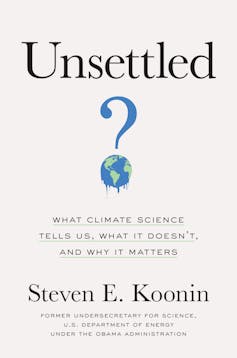
Cover of 'Unsettled' by Steven Koonin

BenBella Books

The book, titled Unsettled: What Climate Science Tells Us, What It Doesn’t, and Why It Matters, is authored by US theoretical physicist Steven Koonin. Notably, Koonin is not a climate scientist.

As the title suggests, the book’s bold central theme is that climate science is far from settled, and should not be relied on to make policy choices in areas such as energy, transport and economics.

Jones cited Koonin’s book in a Daily Telegraph column last week. He decried the “nonsense” of governments in Australia and abroad aiming for net-zero carbon emissions, saying it was as though Koonin’s book “didn’t exist”.

So does the book hold up? I have been researching and writing about climate change since the 1980s. I wanted to give the book a fair reading, so I put any preconceived thoughts aside and tried to fairly weigh up Koonin’s arguments. If true, they would be very important findings.

Koonin frames his book as a brave attempt to reveal how the climate science we’ve been relying on all these years is, in fact, uncertain. But the book’s major flaw is to imply these uncertainties are news to climate scientists.

This is patently untrue. Science is never settled. But there is enough confidence in the science to justify significant climate action.

'There's no Planet B' sign with smoke stacks
Scientific uncertainty does not justify climate inaction.
Shutterstock

Uncertainty is par for the course

Koonin opens the book by saying he accepts that Earth is warming, and humans are contributing to this. But he muddies the waters with passages such as the following:

Past variations of surface temperature and ocean heat content do not at all disprove that the (approximately 1℃) rise in the global average surface temperature anomaly since 1880 is due to humans, but they do show that there are powerful natural forces driving the climate as well.

In other words, Koonin says, the real question is “to what extent this warming is being caused by humans”.

Steven Koonin
The book’s author, Steven Koonin, is not a climate scientist.
Kelly Kollar

No rational person could deny that natural forces drive the climate. The climate record shows significant climate changes long before humans existed; clearly we’re not responsible for the planet being much warmer many millions of years ago.

However the five assessment reports of the Intergovernmental Panel on Climate Change have expressed steadily increasing confidence that humans are the dominant cause of global warming this century.

Koonin attacks former US secretary of state and now Biden climate envoy, John Kerry, who once said of climate change “the science is unequivocal”.

It is true to say climate science is somewhat uncertain. Science is always a work in progress. Scientific integrity demands a willingness to look carefully at new data and theories to see if they require us to revise what we thought we knew.

But Koonin is wrong to imply scientists are somehow unaware of, or deny, this uncertainty. To the contrary, I have heard decision-makers express exasperation when we scientists seek to qualify our advice on the basis that our knowledge is limited.

Every reputable climate scientist I know is always willing to look at new data. But policy-makers must make decisions based on the current scientific understanding.

Koonin states, accurately, that few in the general public receive scientific information directly from research papers. Most people receive climate change information after it’s been filtered by governments and the media – which, in Koonin’s mind, often overstate the seriousness of climate change.

However Koonin fails to note the opposite forces at play – governments and media organisations, such as the Murdoch press in Australia and Fox News in the US, which systematically misreport climate science and underestimate the climate threat.


Read more:
Climate explained: why is the Arctic warming faster than other parts of the world?


Polar bears on melting ice
Humans are the dominant cause of global warming this century.
Shutterstock

Ignorance is not bliss

Koonin concludes by questioning the wisdom of reaching net-zero emissions in the second half of this century – a central goal of the Paris Agreement. He argues that when one balances the cost and efficacy of slashing emissions “against the certainties and uncertainties in climate science”, the net-zero goal looks implausible and unfeasible.

This is effectively an assertion that ignorance is bliss: because we don’t have perfect understanding that allows us to make exact projections about the future climate, we should not take serious action to reduce emissions.

Koonin proposes a different response: for society to adapt to a changing climate, and embrace “geoengineering” technology to artificially control Earth’s climate.

Both adaptation and geoengineering have their place in the climate response. But neither are sufficient substitutes for dramatically cutting carbon emissions.


Read more:
Solar geoengineering is worth studying but not a substitute for cutting emissions, study finds


wind turbines
The world must urgently reduce emissions.
Shutterstock

Proceed with caution

Under the Hawke government, science minister Barry Jones was one of the first public figures in Australia to sound warnings about climate change.

Jones and I both appeared on a panel at a landmark climate conference in 1987. I recall Jones, when asked how decision-makers should respond, said we should consider the consequences of both acting and not acting.

If policymakers acted on inaccurate climate science, Jones argued, the worst that would happen is our energy would be cleaner – albeit, at that time, more expensive. But if the science was right and we ignored it, the consequences could be catastrophic.

Jones was essentially describing the precautionary principle, which is contained in a number of international treaties including the UN’s Rio Declaration, which states:

Where there are threats of serious or irreversible damage, lack of full scientific certainty shall not be used as a reason for postponing cost-effective measures to prevent environmental degradation.

The principle demands we act to avoid disastrous outcomes, even if the science is uncertain. Because the uncertainty works both ways: things might get worse than we expect, rather than better.

The fundamental point of Koonin’s book is true, but irrelevant. The science is not settled – but we know enough to act decisively.


Read more:
Even without new fossil fuel projects, global warming will still exceed 1.5℃. But renewables might make it possible


The Conversation


Ian Lowe, Emeritus Professor, School of Science, Griffith University

This article is republished from The Conversation under a Creative Commons license. Read the original article.

Unknown's avatar

Not My Review: Discworld (Book 3) – Equal Rites by Terry Pratchett


Unknown's avatar

Not My Review: The Mistborn Saga (Book 5) – Shadows of Self by Brandon Sanderson


Unknown's avatar

Not My Review: The Way Through the Woods – Of Mushrooms and Mourning by Long Litt Woon


Unknown's avatar

Guide to the classics: Shakespeare’s sonnets — an honest account of love and a surprising portal to the man himself


Giovanni Cariani, Portrait of Two Young Men. The bulk of the sonnets are addressed to a young man known as the ‘fair youth’.

Dr Jamie Q Roberts, University of Sydney

Most of us are familiar with Shakespeare’s plays. Even if we aren’t Shakespeare geeks, chances are we’ve waded through five or six in school, seen several movie adaptations and been to an “in the park” production.

And then there is the constant background of Shakespearean quotations and references colouring our lives, from recognisable lines like “let slip the dogs of war”, to the oh, I didn’t know Shakespeare wrote that cliches, such as “one fell swoop” or “wear my heart upon my sleeve”.

However, apart from a few hits, Shakespeare’s sonnets are less known.


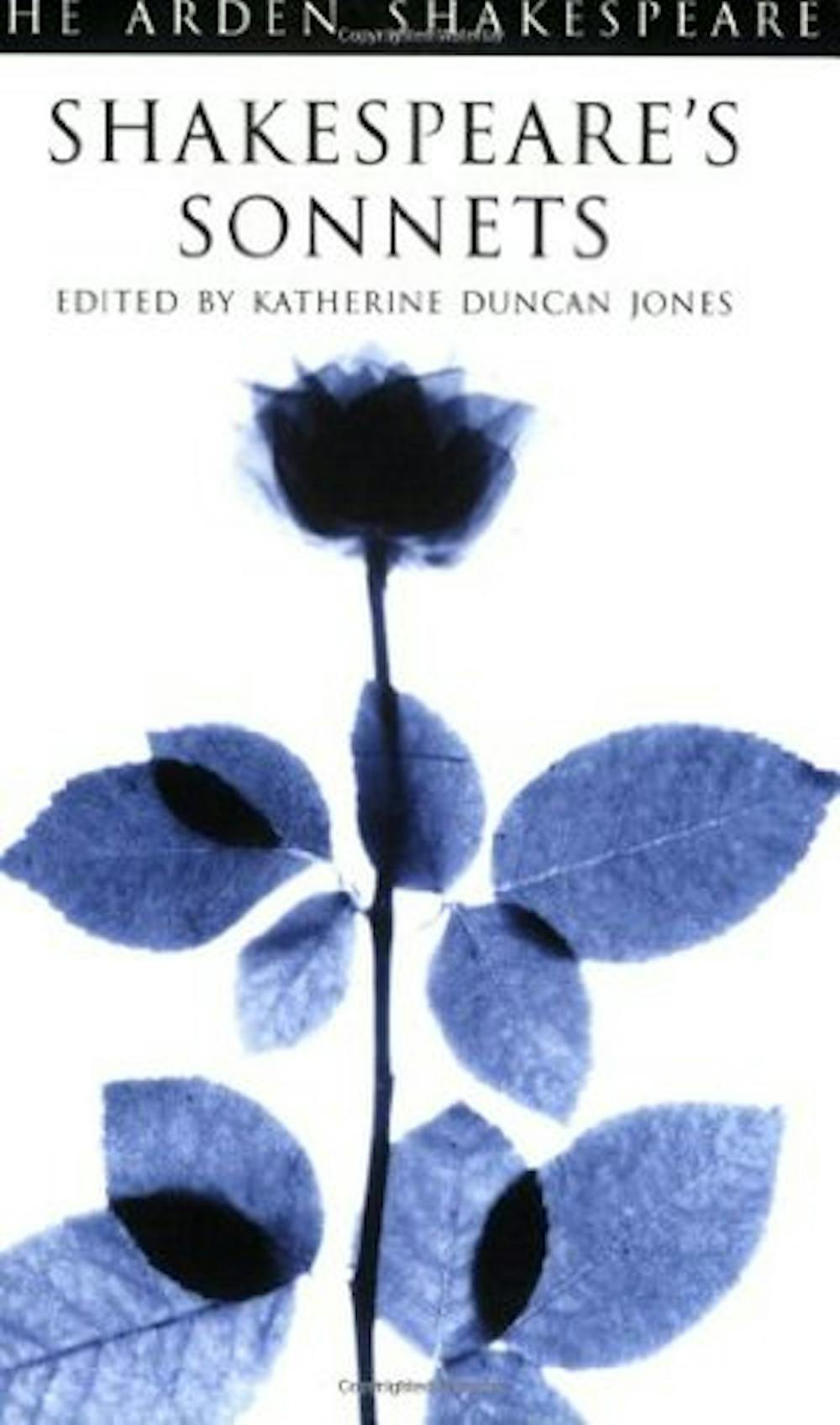
goodreads

Fortified with a familiarity with the plays, a virgin journey into the sonnets is as good a literary adventure as anyone could hope for. It is both unsettling and beguiling.

The Shakespeare of the plays is god-like: he is everywhere in his creations as a masterful and unifying presence, and yet he is aloof. If I had to take a punt, I’d say he was wise, wry — the kind of person who knew how to do life right.

Thus it is a shock to meet the Shakespeare of the sonnets. This Shakespeare is frail (sonnets 29 and 145), obsessed (28), judgmental (130), fickle (110) and self-pitying (72). And so we are drawn in. We begin to ponder how much of himself Shakespeare reveals in the sonnets, and, if he is in there, how one of the most remarkable humans could be so like the rest of us.

What is a sonnet?

A sonnet is a short poem, traditionally about love. The “English” or “Shakespearean” sonnet has a standard form. There are 14 lines, each with five “beats”.

Each beat has two syllables, with the second being stressed. This is known as “iambic pentameter”. Try it out with the most famous line from the sonnets: “Shall I compare thee to a summer’s day?” (18)

The sonnet has three “quatrains” — stanzas with four lines — and a final rhyming couplet — two lines that rhyme. The couplet packs a certain punch that turns the sonnet on its head or provides the key to the sonnet or something similar.


Read more:
Explainer: poetic metre


A brief overview

When we talk about Shakespeare’s sonnets, we are usually referring to the 154 sonnets published in 1609 when Shakespeare was about 45. The sonnets were likely written and revised throughout Shakespeare’s adult life (though there is debate).

Keeping to the tradition, Shakespeare’s sonnets are about love. But they take us into love’s maelstrom. The sonnets speak, often in the most raw fashion, of jealousy (61), fear (48), infidelity (120) and love triangles (41, 42), but also of the simple happiness that love can bring (25). Because of this, according to poet and essayist Anthony Hecht, young lovers make up the most substantial readership of the sonnets.

The bulk of the sonnets (1-126) are addressed to a young man, often referred to as the “fair youth”.

The dedication to the sonnets.
Author provided

The last 28 are mostly addressed to or about a woman: “the dark lady”. The real-life identities of both figures are not known. However, the dedication to the sonnets, which some consider to be a code, may contain the youth’s identity (see this article by amateur Shakespeare scholar, John Rollett).

Within these two broad sets there are smaller groupings. Sonnets 1 to 17 are known as the “procreation sonnets”, while 78 to 86, which reveal that another poet is drawing inspiration from the fair youth, are referred to as the “rival poet” sequence.

And throughout, two and sometimes three sonnets are directly linked as if they were a longer poem (for instance 66, 67 and 68 — look out here for the objection to the silly wigs everyone wore).


Read more:
Friday essay: 50 shades of Shakespeare – how the Bard sexed things up


The fair youth sequence

There are several recurring themes here.

A number of sonnets address the pain of being apart (such as 44 and 45). And in 49 we see the persona’s anxiety about parting permanently when he imagines the time “when thou [the fair youth] shalt strangely pass, / And scarcely greet me with that sun, thine eye.”

But we also witness the persona drawing on his love for the youth to fortify himself against unhappy memories. The well known 30 begins with:

When to the sessions of sweet silent thought / I summon up remembrance of things past, / I sigh the lack of many a thing I sought, / And with old woes new wail my dear time’s waste.

It finishes with the lines, “But if the while I think on thee, dear friend, / All losses are restor’d, and sorrows end.”

There are also the themes of time’s destruction of beauty and the horror of death. And hand-in-hand with these, we see the persona searching for ways for the youth to achieve immortality.

In 12, one of the “procreation sonnets”, the youth is encouraged to seek immortality by having children. It finishes with: “And nothing ‘gainst Time’s scythe can make defence, / Save breed, to brave him, when he takes thee hence.”

However, even more poignant are the persona’s many explicit attempts to preserve the youth through his poetry — a quixotic enterprise that, remarkably, has worked. This is best exemplified in 18. We read:

Nor shall Death brag thou wander’st in his shade, / When in eternal lines to time thou growest. / So long as men can breathe, or eyes can see, / So long lives this, and this gives life to thee.

Portrait by John Taylor, thought to be of Shakespeare.
Wikimedia Commons

A common discussion is whether the fair youth sequence reveals that Shakespeare was gay or bisexual. Unless the sonnets are a wild fabrication, Shakespeare certainly wasn’t straight.

However, we should, as scholar Dennis Kay reminds us, be cautious of “applying a modern understanding of, and attitudes toward, homosexuality to early modern culture.” Read 20 and see what you think.

Not all the sonnets in the fair youth sequence are addressed to the youth. An exception is another of the evergreen sonnets: 116. This ode to the eternal nature of love begins with:

Let me not to the marriage of true minds / Admit impediments. Love is not love / Which alters when it alteration finds, / Or bends with the remover to remove: / O, no! it is an ever-fixed mark.

Returning to sonnet 66 (my favourite), although the final couplet addresses love, the sonnet stands out because its focus is not love, but the corruptions of the world.

In it, the persona objects to “folly (doctor-like) controlling skill” and “art made tongue-tied by authority.” Here we are reminded of the battles many who are capable and spirited must fight against soulless bureaucracies and the censorious.

The dark lady sequence

The “dark lady” is “dark” because when she is introduced in 127, her complexion and eyes are described as black:

In the old age black was not counted fair, / Or if it were, it bore not beauty’s name; / But now is black beauty’s successive heir, / And beauty slander’d with a bastard shame.

And later in the sonnet we read: “my mistress’ eyes are raven black.”

In the dark lady sequence, the persona suffers familiar torments. But there are also several instances of humor — the fair youth sequence is almost humorless.

In sonnet 135 and 136 the persona puns bawdily and relentlessly on the world “will”: “Wilt thou, whose will is large and spacious, / Not once vouchsafe to hide my will in thine?”

But the stand-out is 130. Here the persona pointedly declines to use tired comparisons to praise the attributes of his mistress.

We read: “My mistresses’ eyes are nothing like the sun”, and, “And in some perfumes is there more delight / Than in the breath that from my mistress reeks.”

Then come the glorious lines: “I grant I never saw a goddess go; / My mistress when she walks, treads on the ground.”

Their reception

The sonnets were not much read for nearly 200 years after their publication, but since then they have only grown in popularity. This was, perhaps, assisted by Wordsworth’s own sonnet: “Scorn Not the Sonnet”. (I know, it’s hard not to laugh.)

Today, lines from the sonnets turn up from time to time in popular culture. Naturally, in “Dead Poets Society” sonnet 18 is recited.

So what do the sonnets mean for us today? Many things. Most commonly, they have come to stand for perfect love, but this is likely because few readers make it past two of them: sonnets 18 and 116.

For those who do read further, the sonnets provide a more honest account of love, while exploring other substantial themes such as fear of death and the search for immortality.

The sonnets can also be enlisted to support social and political causes, from freedom to sexuality. And then there is the possible portal they provide into Shakespeare the man.

Ultimately though, we read on because of Shakespeare’s inimitable commingling of beauty and truth — if the two can be separated. And because each reading reveals that we are still only splashing about in the shallows of an immeasurable ocean.The Conversation

Dr Jamie Q Roberts, Lecturer in Politics and International Relations, University of Sydney

This article is republished from The Conversation under a Creative Commons license. Read the original article.

Unknown's avatar

Book review: Geoffrey Robertson makes the case for naming and shaming human rights abusers


A.M. Ahad/AP

George Newhouse, Macquarie University

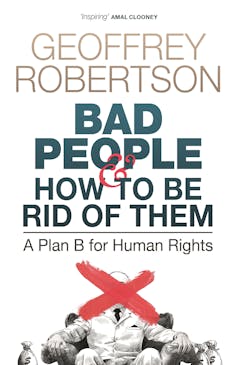
Geoffrey Robertson is one of Australia’s most acclaimed international jurists and human rights advocates. His latest book, Bad People – and How to Be Rid of Them, explains the history of international human rights law and acknowledges its failings.

Bad People is not a textbook; it is aimed at anyone with an interest in the international human rights framework and its enforcement mechanisms.

Most importantly, it is a call to action for Australians and others in democracies to demand the introduction of “Magnitsky laws”.

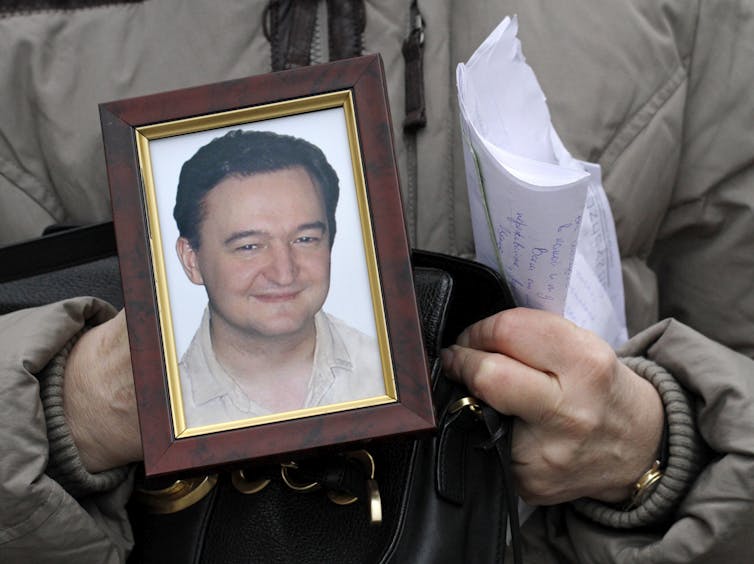
Magnitsky laws are named after a Russian whistleblower, Sergei Magnitsky, who was tortured and died after exposing a massive tax fraud scheme involving Russian officials. These laws seek to combat human rights abuses by naming, blaming and shaming individuals, denying them the right to enter democratic nations, stripping them of ill-gotten funds, and barring them and their families from local schools and hospitals.

Magnitsky was a Moscow lawyer and tax auditor.
Magnitsky was a Moscow lawyer and tax auditor who died in custody in Russia at the age of 37.
Alexander Zemlianichenko/AP

The US was the first country to pass such laws in 2012 to sanction Russian officials and Chechen warlords, sending a strong signal to the Kremlin that action could and would be taken for human rights breaches.

Since then, the US has used the Global Magnitsky Act to impose sanctions on more than 200 individuals and entities from two dozen countries, including Saudi Arabia, China, South Sudan, Myanmar, Iraq and Cambodia.

Robertson’s response to the failure of the international human rights framework is to promote powerful Magnitsky laws as a “plan B” to coordinated international action.

Bad People – and How to Be Rid of Them, by Geoffrey Robertson.
Penguin Books Australia

How international courts have been weakened

Robertson charts the rise of human rights immediately after the horrors of the second world war, and then despairs of the growing trend of nations retreating from the jurisdiction of international courts or refusing to comply with their rulings.

Robertson describes how the United Nations succeeded in establishing a coherent human rights regime, but failed to carve out effective accountability mechanisms to enforce breaches. Instead, enforcement relies on individual nations’ leaders being motivated to legislate human rights into their domestic laws.

Although the UN Universal Declaration of Human Rights has been broadly accepted, punishment for war crimes and crimes against humanity has been inconsistent and complex.

Consequently, Robertson argues the International Criminal Court (ICC) does not serve as a deterrent to perpetrators of most human rights abuses.

Eroded confidence in international law

The book provides a useful history of the ICC and the way the US, China and Russia have limited its operations by using their veto powers when legal action is proposed against them or their allies.

In the past four years, for instance, Russia has vetoed ICC action 14 times, China five times and the US twice. Robertson suggests the mere threat of a veto by superpowers behind the scenes have seen other initiatives withdrawn.

As a result, Robertson laments the once-powerful ICC is now confined to punishing rebel warlords and leaders of pariah countries.

More than 70 years after the Universal Declaration of Human Rights, the growing threats of isolationist foreign policies and anti-democratic regimes are pulling at the threads of our international human rights framework. Shifting geopolitical balances and the populist politics of Vladimir Putin, Xi Jinping, Narendra Modi, Donald Trump and the Brexit campaign have eroded confidence in a global system of law and order.


Read more:
Australia must do more to ensure Myanmar is preventing genocide against the Rohingya


Australia is not immune from this trend. In February 2020, the ICC prosecutor described Australia’s offshore detention regime as “cruel, inhuman, or degrading treatment”.

But, the ICC decided not to prosecute the Australian government, despite saying its actions appeared “to constitute the underlying act of imprisonment or other severe deprivations of physical liberty” forbidden under international law.

The problem with Magnitsky laws

Robertson’s solution is to impose sanctions against individuals, corporations and other entities.

He argues Magnitsky laws are not an alternative to coordinated international criminal justice, but an assertion of the fundamental values that countries insist should be respected by other nations.

The problem is these types of sanctions can be abused for political reasons. We have already seen the tit-for-tat actions of nations that bring sanctions against the citizens of their enemies, such as the Russian counter-sanctions against US citizens in 2013, including former Vice President Dick Cheney’s chief of staff.


Read more:
Canada’s growing challenges with economic sanctions


Among democratic nations, it is unlikely Magnitsky laws would ever be used against friendly allies. Can you imagine any of Australia’s allies sanctioning an Australian official for a First Nations’ death in custody or for the over-representation of First Nations people in the country’s criminal justice system?

If enforcement of human rights breaches is seen as political or inconsistent, then Magnitsky laws may not be the universal panacea Robertson suggests. However, this doesn’t mean the push for individual accountability is not justified. As he writes,

human rights are not rights in any meaningful sense unless they are capable of enforcement.

Robertson leaves us with a sensible pathway to a better world through laws that hold individuals accountable for their evil deeds. Magnitsky sanctions might, at least, make murderers, crooks and abusers think twice before implementing their plans.


Geoffrey Robertson will be speaking across Australia in the coming weeks, with engagements in Melbourne on May 22 and Sydney on May 25 and 26, to be followed by Brisbane, Adelaide and Perth.The Conversation

George Newhouse, Adjunct Professor of Law, Macquarie University

This article is republished from The Conversation under a Creative Commons license. Read the original article.

Unknown's avatar

Guide to the Classics: Montesquieu’s Persian Letters at 300 — an Enlightenment story that resonates in a time of culture wars


Knox Peden, The University of Queensland

We have recently seen a spate of books defending the Enlightenment, the period of efflorescence in 18th-century Europe that helped shape the modern world.

At the vanguard has been the Harvard psychologist Steven Pinker, who titled his most recent monument to scientific progress Enlightenment Now. The book earned Bill Gates’s endorsement but was widely criticised by historians since it was not an assessment of the Enlightenment at all, but a compilation of data showing us why life was now better than ever.

Other advocates have been more subtle, stressing that what set the Enlightenment apart from preceding eras was less its confidence in reason per se, than its focus on the secular (as opposed to the sacred) as the space in which happiness ought to be pursued and quite possibly achieved.

Readers might wonder: who could be against this? But Pinker and his allies are pushing back on a tendency to see in the overweening self-confidence of the Enlightenment a blueprint for the horrors of the 20th century. The view is not without merit. The Enlightenment may have given us a new way to think about rights, but it also gave us the atom bomb.

Moreover, its conviction that the same naturalistic perspective that led to scientific innovation could be applied to populations has given rise to social engineering in multiple, often sinister forms.

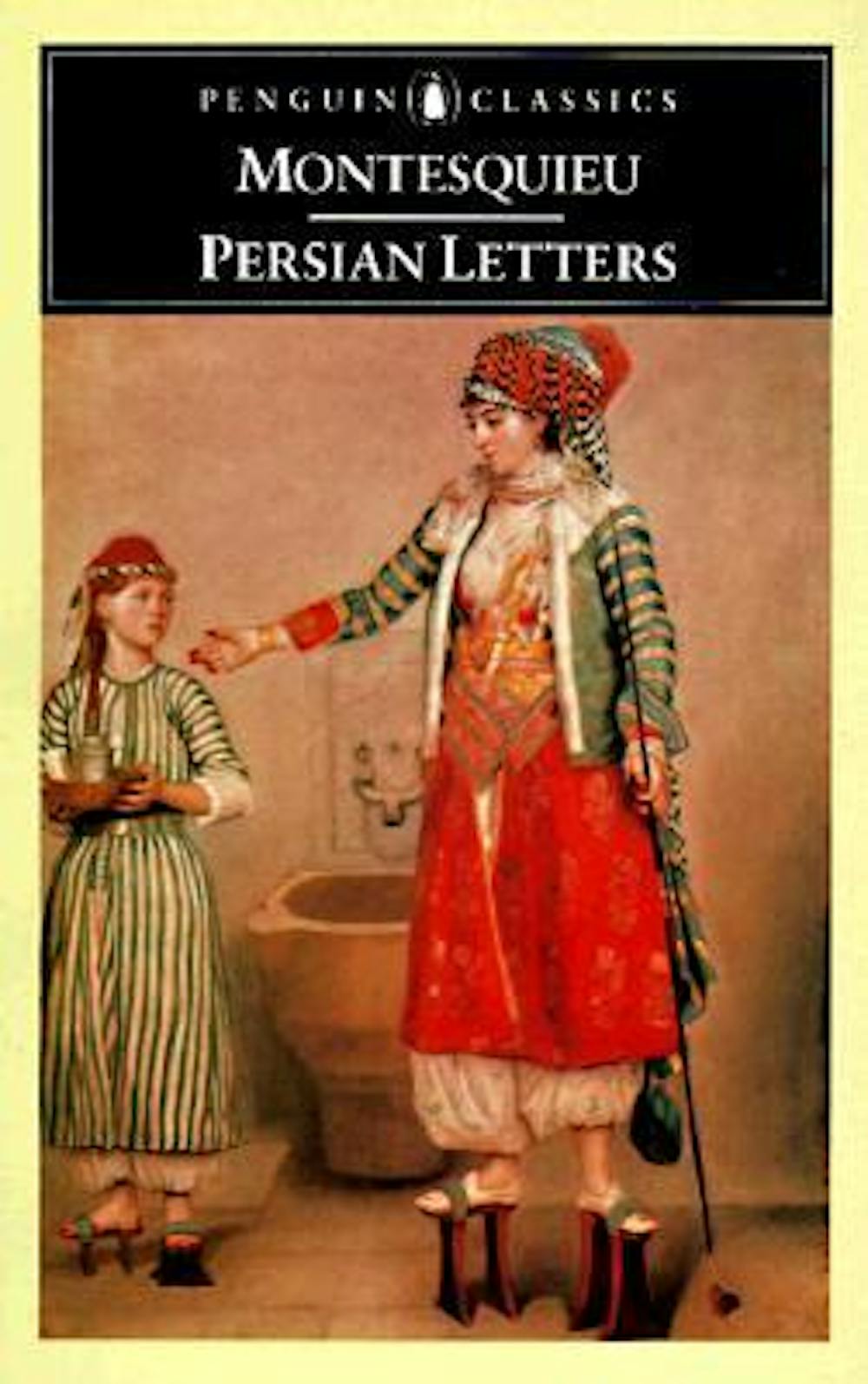
This year marks the 300th anniversary of the publication of a book that contemporaries saw as inaugurating the Enlightenment in France: Montesquieu’s Persian Letters.

Given its exalted status, one would expect to find in Persian Letters an ode to human ingenuity and a confident projection of progress. But its contents are much more surprising — and relevant — than that.

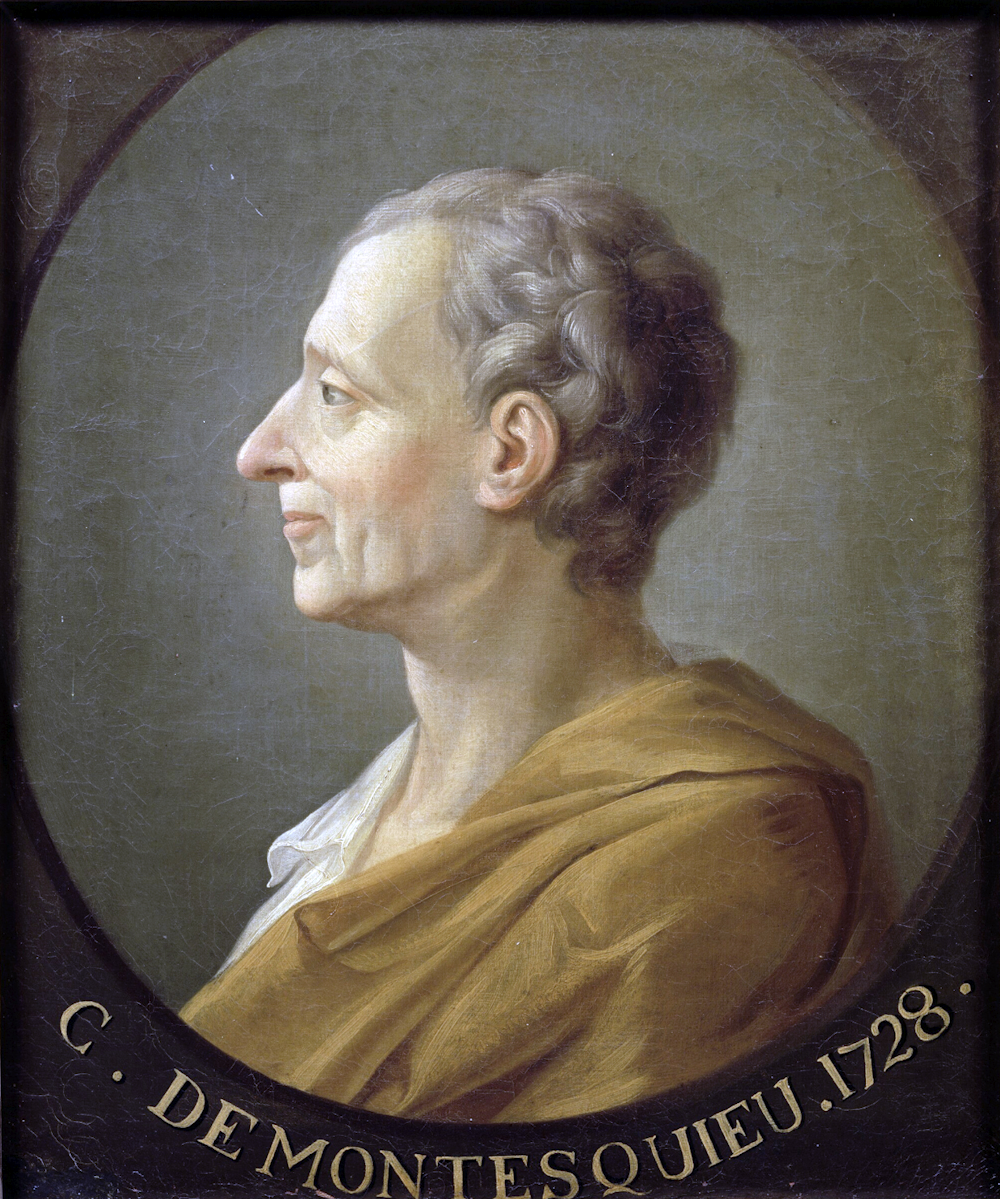
The book’s author, Charles-Louis de Secondat, Baron de La Brède et de Montesquieu — Montesquieu, for short — was an odd sort, an aristocrat with a sympathy for republics and a voracious intellectual appetite.

Born in 1689, he came of age at a time of French predominance in Europe. A lawyer by training, he began writing during the “Regency”, a period of social dynamism that followed the death in 1715 of Louis XIV, the Sun King, when his great-grandson Louis XV was too young to rule on his own.

A new kind of fiction

In 1721 Montesquieu introduced France to a new kind of fiction, a novel composed entirely of letters, mainly authored by Usbek and Rica, two Persians who have travelled to Paris and delight in reporting their bemusement at its customs. The device allows Montesquieu to make the more familiar features of European life appear idiosyncratic.

An anonymous painting of Charles de Secondat, Baron de Montesquieu.
Wikimedia Commons

The nature of the work also gives Montesquieu ample space to deal with subjects that still divide us: the varieties of government, the extravagances of metaphysical speculation, and the dilemmas of tolerance.

In this regard, we can see Persian Letters as a set of working notes for the book that earned Montesquieu his place among the giants of modern political thought: The Spirit of the Laws, published in 1748. With its case for a “separation of powers” as crucial to a well-functioning republic, this volume inspired Thomas Jefferson and the authors of the US constitution.

Providing a typology of regimes — republics, monarchies, despotisms — and tracing their relationship to material factors from climate to geography, The Spirit of the Laws more or less launched the discipline of political sociology. More prophetic still was the book’s concern for how despotism lies in wait for any regime that sees a loss of civic virtue.

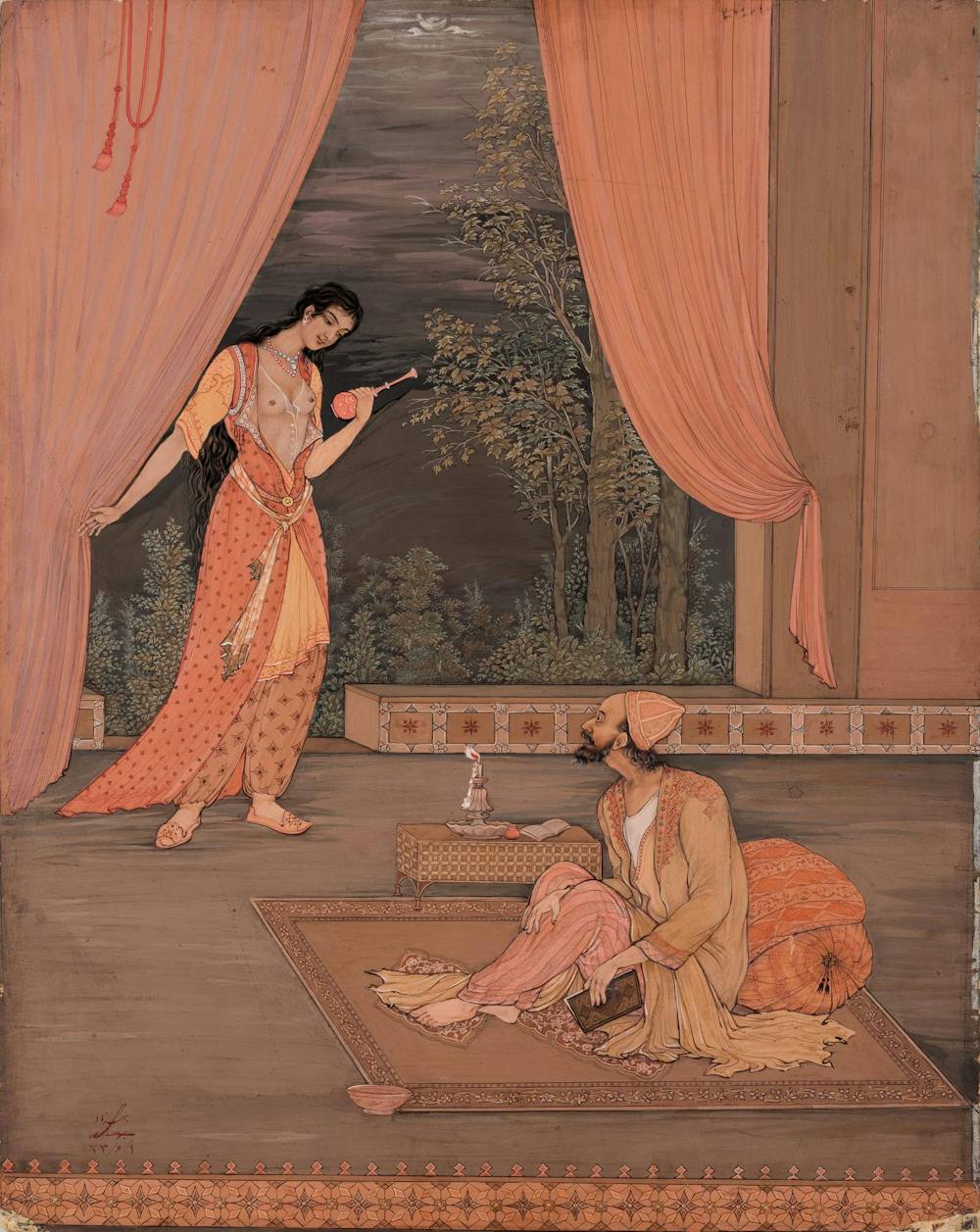
All of this material is dealt with ironically in Persian Letters. The worry about despotism is signalled through what passes for a plot in the book. As Usbek becomes accustomed to Parisian society, he becomes distant from his seraglio (or harem) in Persia.

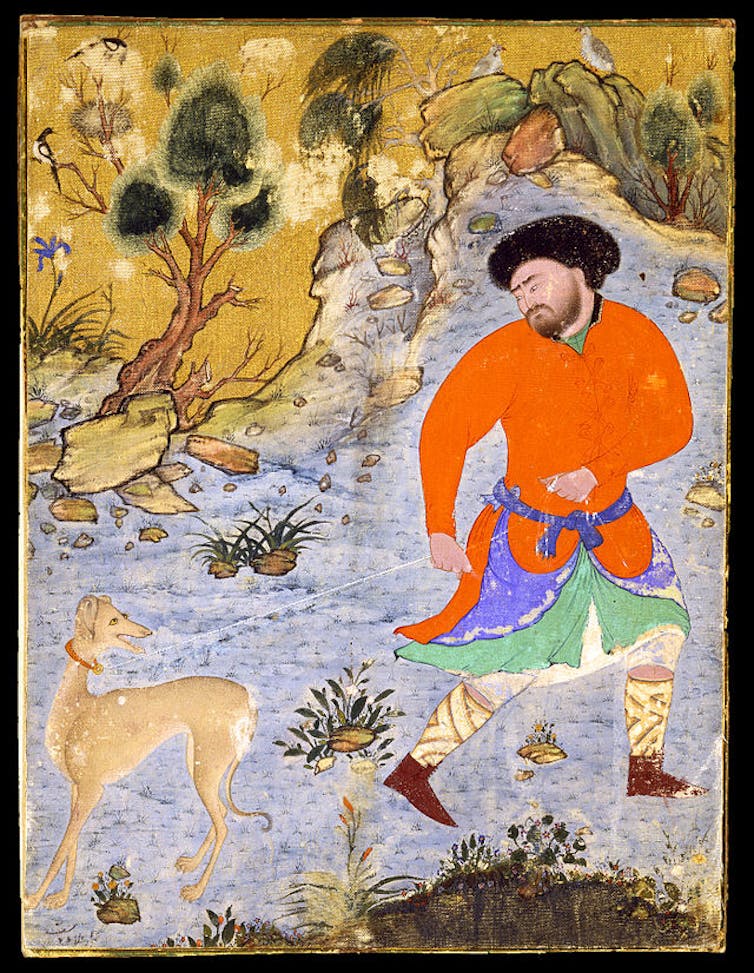
Persian miniature by Hossein Behzad.
Iranian National Museum.

A revolt ensues in which the women, corrupted by having to live in a degraded state and no longer fearful of their absent authority, stage a bloody uprising. The story ends with a letter from Usbek’s favourite wife Roxane, who is committing suicide, pen in hand.

Constant vigilance

This ghastly conclusion makes for an instructive contrast with the playful tone otherwise permeating the book. Throughout the letters, there is much mirth at Frenchmen who distract themselves with philosophical rumination while their society becomes mired in conflict and sedition.

The irony is to the point; political stability is a matter of constant vigilance, irrespective of the nature of the regime in question.

With his portrayal of the seraglio, a question insists: is Montesquieu indulging in Orientalism, a projection of his Western prejudices on to figures from the East?

Perhaps. And yet Montesquieu never loses sight of the fictional nature of his construction. To see Europe through the eyes of another is to imagine yourself in the position of the other, not to occupy it.

Not coincidentally, this relationship between how we present ourselves and who we are is one of the key themes of the work.

In one of the early letters, Rica recounts the wonder he aroused walking the streets of Paris.

I therefore resolved to set aside my Persian clothing and dress instead as a European, to see whether anything in my appearance would still astonish. From this test, I learnt my true worth: stripped of my exotic finery, I found myself appraised at my real value, and I had good reason to complain of my tailor, through whom I’d lost, in an instant, the attention and esteem of the public.

In reflecting on whether the clothes make the man, Rica suggests the social nature of our identities. In effect, we are as we are seen. But recognising this fact only increases Rica’s desire for public approval.

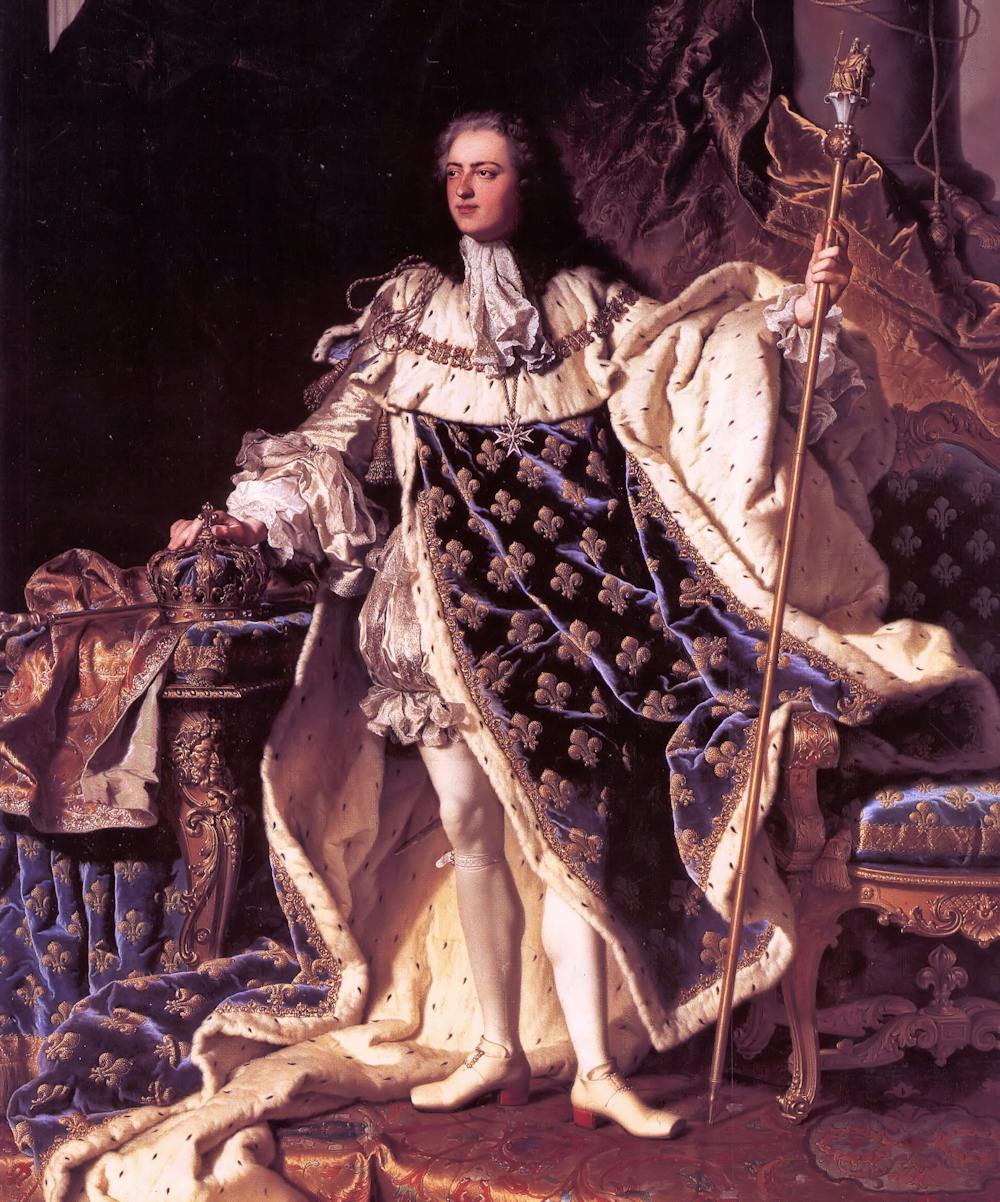
Elsewhere Usbek remarks that in order to remain powerful a monarch must supply not only necessities, but luxuries. And yet the obsession with luxury — both as a pleasurable experience and opulent display — affects or indeed infects everything, even religion, which is mercilessly pilloried throughout Persian Letters.

Louis XV in Coronation Robes, Hyacinthe Rigaud, 1730.
Wikimedia Commons

The society Montesquieu satirises is one in which moral debates fail to find resolution because agreement is hardly the goal; vindication is. The need for social vindication breeds conflict. We seek out peers who advance what we take to be our interests rather than working with others to discover sites of common interest.

In this aspect, the paint on Usbek and Rica’s portrait of modern life hardly seems dry.

“The reader is urged to note,” Montesquieu wrote in a later edition of Persian Letters, “that the entire charm of the work resides in the constantly recurring contrast between actual reality and the singular, naïve, or strange manner in which reality is perceived”.

The mirror Montesquieu presents to society is one in which its vanities appear in all their absurdity.

With earnestness an increasingly dominant virtue in today’s culture wars, we’d likewise do well to rediscover the charm, indeed the humility, in appreciating the inevitably partial nature of our views.

More than celebrations of science or promises of progress — both of which tend to a self-righteousness foreign to Persian Letters — this seems to be a form of enlightenment we could use, for now.The Conversation

Knox Peden, Senior Lecturer in European Enlightenment Studies, The University of Queensland

This article is republished from The Conversation under a Creative Commons license. Read the original article.

Unknown's avatar

Book shows the folly of painting Mandela as either saint or sellout


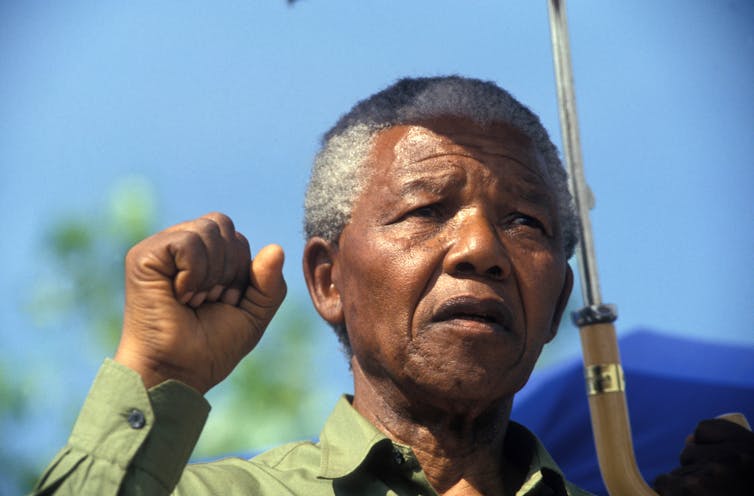
Nelson Mandela at the commemoration of the 1960 Sharpeville massacre in 1994.
Georges MERILLON/Gamma-Rapho via Getty Images

Colin Bundy, University of Oxford and William Beinart, University of Oxford

There are two widely available views of Nelson Mandela, the first post-apartheid president of South Africa. The first is a reverential and uncritical celebration of his life and achievements. It resonated in the obituaries and eulogies when Mandela died in December 2013.

Madiba (his clan name) was “sent by God”, said Irish newspaper magnate Tony O’Reilly, who’s said to have been a friend of Mandela’s. His purchase of South Africa’s then largest newspaper company, Argus Newspapers, was made possible by Mandela’s support. Former American president Barack Obama declared that Mandela

changed the arc of history, transforming his country, the continent and the world.

A second prevailing view is hostile and dismissive. By 2015, a reputation that had appeared invincible was being shredded in some media outlets, on the streets and especially on university campuses across South Africa. The critique centred on the 1994 negotiated settlement that ended apartheid. It accused Mandela of betraying the black majority to appease the economically powerful white minority.

Both narratives – Mandela as secular saint or Mandela as sellout – are poor history. The suggestion that Mandela single-handedly achieved democracy is as intellectually threadbare as its mirror image: that he was responsible for the failure to transform social and economic relations after 1994.

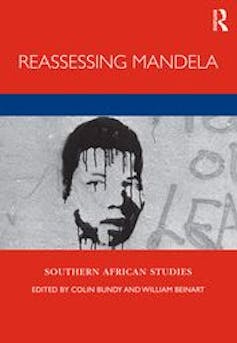
Our edited collection, Reassessing Mandela, provides a scholarly counterweight to the two polarised positions. It attempts to begin the task of revisiting the canonical biographies, rethinking aspects of Mandela’s life and his politics, and evaluating how he is and should be remembered.

Reassessing Mandela

The first aspect of Mandela’s life reassessed in the book is his family and its background, his childhood and youth, and his Thembu lineage. Two chapters – by the late Phil Bonner and by Xolela Mangcu – complement one another in intriguing ways. Both historians remind us that Mandela’s 1994 autobiography, Long Walk to Freedom, is an unreliable text. Some of its flaws are replicated in the work of others.

Bonner’s archivally based chapter corrects some of the shaky chronology in Long Walk. It identifies Mandela’s father Gadla Mandela as “a significant if little recognised historical figure” but shows that Mandela’s own account of his father defying the white magistrate cannot be read as history.

Mangcu’s chapter challenges Mandela’s own account of his descent. He locates him within a history of the Thembu royal house’s “pragmatic co-operation” with colonial rule. Mandela did not mention this.

Mangcu emphasises the history of “African political modernity” in the Transkei, a territory comprising a number of African kingdoms and chiefdoms annexed in the 19th century. He also considers Gadla’s role in the local administrative body (Bungha), where he is portrayed as resisting both missionary influence and colonial regulations.

Bonner and Mangcu underline the complexity of “indirect rule” in the Transkei. They correct the tendency to discuss Mandela’s early years through a lens of rural nostalgia.

Mandela’s political activism

A second broad area of reassessment emerges from three chapters which consider Mandela’s relationship with the South African Communist Party (SACP), his activism and especially his leadership in underground politics. Tom Lodge produces a fine-grained account of Mandela’s “association with South Africa’s communist left”. His is a study of friendships and social networks, of left-wing readings and writings, and of political alliances and tactics.

Paul Landau’s chapter focuses on the period between the 1960 Sharpeville massacre of black protesters by apartheid police, and Mandela’s arrest in August 1962. It traces the efforts to implement the M-Plan – a template for an underground structure of the liberation movement, the African National Congress (ANC).

Mandela and a small group of like-minded colleagues sought to use the plan to transform the ANC into a militant vanguard movement willing to employ violence against the state.

Thula Simpson’s chapter reconsiders Mandela’s role as commander-in-chief of umKhonto we Sizwe, (an armed wing set up by the ANC and SACP). He suggests that its campaign of urban sabotage was more effective than generally acknowledged.

Three other chapters cast new light on different aspects of Mandela’s life: his marriage to Winnie Madikizela-Mandela; his years in jail on Robben Island, and his role in the human rights discourse that shaped South Africa’s new constitution.

Shireen Hassim provides a compelling rereading of

one of the most iconic political marriages in history.

First, she establishes Mandela’s wife Winnie’s own political career and significance. She says it offered “a form of intimate political leadership” to young activists. Secondly, she explores the complex relationship between Winnie’s political trajectory and Nelson’s, and how a widening political divide accompanied the breakdown of the marriage.

Martha Evans examines four visits by journalists to Robben Island between 1964 and 1977, their interactions with Mandela and their published accounts. She discusses Mandela’s capacity to capitalise on brief contacts from an apparent position of weakness, and shows how incarceration enhanced his iconic status.

Recalibrating Mandela

These chapters are book-ended by Colin Bundy’s introduction and Elleke Boehmer’s postscript. Boehmer explores how memories of Mandela are constructed and contested, and what fresh interpretations can teach us.

This collection treats Mandela not as an individual miracle-maker or traitor to the cause of transformation. It shows him as one political actor, alongside a multitude of others, within complex political and social forces.

It suggests that scholarship on Mandela will continue to explore and explain his politics and his ability to assert leadership. It will also continue to explore the contradictions and continuities of his personal makeup, and his determination over decades to bring people together. All this, while negotiating the corrugated terrain of race and identity in South Africa.The Conversation

Colin Bundy, Honorary Fellow of Green Templeton College, University of Oxford and William Beinart, Professor, University of Oxford

This article is republished from The Conversation under a Creative Commons license. Read the original article.

Unknown's avatar

Not My Review: The Inverted World by Christopher Priest